Category: Standorte

  • Smart City Strategy Zug

    Smart City Strategy Zug

    The challenges of urban growth, from the climate crisis to transport logistics and urban densification, call for holistic approaches. Zug is focusing on digitalisation as a key strategy. With its strong technological basis and the active involvement of all urban stakeholders, the Smart City Strategy Zug offers innovative answers to the questions of the future.

    Intelligent administration and citizen-centred services
    The city of Zug is striving for an efficient, citizen-centred administration that facilitates access to services and promotes transparency. Digital technologies, such as open data and smart administrative processes, offer citizens access to municipal services regardless of time and place. This customer-friendly approach strengthens the dialogue between the city and the population and makes Zug a pioneer for modern city administration.

    Strengthening social participation and digital skills
    With its smart city strategy, Zug is creating new platforms for the participation of all social groups. Digital channels expand dialogue and promote the right to have a say, especially for younger generations and less mobile people. Educational programmes are designed to improve the digital skills of both the population and the administration and prepare the people of Zug for the opportunities and challenges of the digital transformation.

    Smart mobility for sustainable mobility and quality of life
    Smart mobility is a central pillar of the strategy. Innovative technologies and alternative forms of transport are intended to reduce commuter traffic, cut emissions and improve the quality of life. Zug is focussing on real-time data, intermodal mobility and the expansion of emission-free modes of transport. The goal: clean, safe and sustainable mobility that enriches city life.

    Innovative business location
    With its dynamic start-up scene and innovative sectors such as fintech and blockchain, Zug creates an attractive environment for high-tech companies and qualified specialists. The Smart City strategy strengthens the location’s profile and connects companies that are committed to a sustainable economy and circular processes. In this way, Zug is not only positioned for the future as a place to live, but also as a business location.

    Sustainability and environmental protection through smart technologies
    Promoting energy efficiency and CO2 reduction is a key objective of the strategy. Digital applications such as “smart metering” enable a transparent presentation of energy consumption and promote the conscious use of resources. The city is focussing on the expansion of renewable energies and the intelligent use of existing infrastructure – a clear commitment to climate protection and sustainable urban development.

  • New energy centre for the Limmat Valley

    New energy centre for the Limmat Valley

    A team led by the architectural firm Penzel Valier AG from Zurich has won the study contract for Limeco ‘s Limmattal EnergyCentre (LEZ), as detailed in a press release. The project, which Limeco describes as a generational project, includes the construction of a new waste incineration plant and the expansion of the wastewater treatment plant in Dietikon. Limeco will produce CO2-neutral energy for the Limmat Valley from waste and water.

    According to Limeco, the aim of the study contract was to develop an overall concept in which the LEZ blends into its surroundings and the various requirements of the neighbouring areas are taken into account. At the same time, the project should be easy to expand and remodel.

    The winning project “successfully mediates between the Silbern industrial estate and the floodplain landscape”, Stefano Kunz, Chairman of the Board of Directors of Limeco and chairman of the assessment panel, is quoted as saying in the press release. It “coherently and stringently combines the social, local and operational requirements” and thus creates great added value.

    The waste incineration plant will reach the end of its service life by 2034 and therefore needs to be rebuilt. The WWTP is to be expanded by 2050. According to Limeco, it is committed to engaging in dialogue with its sponsoring municipalities, the local population, the canton and nature and environmental protection organisations when planning the project. The results of the participatory process launched in 2020 are documented in two white papers. It was used as the basis for the study contract.

    The project designs of the six teams that competed for the study contract will be made available to the public on 18 and 19 January and 1 February at Heimstrasse 46, 8953 Dietikon.

  • Findings from the Canton of Zurich’s “Fokus Standort” programme

    Findings from the Canton of Zurich’s “Fokus Standort” programme

    In order to position the canton of Zurich as an attractive business location in the long term, the Department of Economic Affairs is focusing on dialogue and collaboration. Current trends and challenges, including digitalisation, skills shortages and regulatory developments, were analysed at the “Fokus Standort” event.

    The discussion was based on the “Canton of Zurich location trend analysis”, which identified four key influencing factors: artificial intelligence and automation, demographic change, increasing regulatory density and economic uncertainty in relation to the EU.

    Workshops on key location topics
    Challenges and solutions were discussed in depth in four topic-specific workshops.

    Skilled workers: How can the labour market situation be stabilised through a better work-life balance, technological innovations and longer working lives?

    Technology: What role does artificial intelligence play in companies and educational institutions, and how can digital skills be promoted in a targeted manner?

    Regulation: How can companies be relieved in order to ensure competitiveness despite increasing administrative requirements?

    Mobility: What concepts can reduce travelling distances and promote sustainable transport solutions?

    The measures developed are now to be further developed in working groups and translated into concrete recommendations for action.

    Demographic change and labour shortage
    Government Councillor Carmen Walker Späh opened the discussion on demographic change. She emphasised that the rising number of retirees and the low number of new recruits represent a major challenge for the labour market. In addition to a better work-life balance, technological efficiency improvements and longer working lives are key solutions.

    In the concluding panel discussion with leading business and industry representatives, further strategies to combat the labour shortage were discussed. The Canton of Zurich is thus focussing on a constructive exchange in order to make the business location fit for the future.

  • Aargau reapplies for membership of the GZA

    Aargau reapplies for membership of the GZA

    The canton of Aargau has applied for renewed membership of the GZA. According to the cantonal state chancellery in a press release, rejoining the regional marketing organisation would offer the best effect in terms of presenting Aargau as a business location abroad at the lowest risk. The alternatives considered were the establishment of an own presence abroad and the expansion of existing marketing activities.

    The canton of Aargau was already a member of the GZA from 2007 to 2010 as part of a trial membership. However, the membership was not extended as the regional location promotion “focused on tax-optimising companies at the time”, “for which the canton of Aargau was of no interest”, according to the press release. However, the GZA is now “focussing on innovative sectors that are already strongly represented in the canton of Aargau”. The canton of Aargau hopes to attract new companies from sectors such as life sciences, energy technology, mechanical engineering and digital technologies by rejoining the GZA.

    “We don’t want growth at any price, but rather to attract companies with high added value, good jobs and innovative products,” said Dieter Egli, Mayor of the Canton of Aargau, in the press release. “For this to succeed, we must be able to address companies directly in the foreign target markets.” To this end, the GZA aims to publicise Aargau as a business location abroad and find companies interested in setting up in Switzerland. The Canton of Aargau’s location promotion organisation will then suggest specific potential locations and clarify further questions.

  • Property sale strengthens liquidity and reduces debt

    Property sale strengthens liquidity and reduces debt

    Swiss Estates AG, based in Freienbach, has sold several properties on Badenerstrasse in Zurich to a private limited company with effect from the end of 2024, the real estate company announced in a press release. A profit was realised from the sale of the properties, which were acquired in 2007 and have been continuously developed since then, reducing Swiss Estates’ liabilities by around CHF 30 million. At the same time, the company’s liquidity has been “significantly strengthened”, writes Swiss Estates.

    The real estate company intends to use the profit realised in the annual financial statements as a result of the transaction to pay out a dividend. Its exact amount currently depends on the calculation of the property gains tax by the City of Zurich’s tax office. Swiss Estate expects a profit of several million francs for the 2024 annual financial statements.

    One of the reasons given by the real estate company for the sale of the properties at Badenerstrasse 288 – 296 is that the value appreciation cycle of the properties has essentially come to an end. In addition, Swiss Estate intends to concentrate on properties with purely residential use in future. The company is currently negotiating the acquisition of five new properties.

  • New facility management branch opened in St.Gallen

    New facility management branch opened in St.Gallen

    Hälg Facility Management AG will also have a presence in St.Gallen from the new year. The Zurich-based company, which was founded in 2000, is thus expanding its network to eastern Switzerland. It already has branches in Zurich, Bern, Münchenstein BL and Rotkreuz ZG. The company is part of Hälg Holding AG, based in St.Gallen. With 1144 employees at 27 locations in Switzerland, the group is active in building technology and property management.

    Markus Haldimann, the long-standing Managing Director of Hälg Facility Management AG, will take over the strategic management of the new branch, according to a company press release. Daniel Weber will be responsible for operational management as site manager. After training as a polymechanic, Weber completed a degree in facility management and continued his training in new energies. He will be responsible for providing services on site and further developing the St.Gallen team.

    “The expansion of our range of services here in St.Gallen not only strengthens our regional presence, it also offers our customers real added value,” Marcel Baumer, co-owner of the Hälg Group, is quoted as saying. “In addition to services in the area of building technology, we can now also offer our high service quality and expertise in the area of facility management.”

  • Rental prices in Switzerland rise slightly again

    Rental prices in Switzerland rise slightly again

    The monthly rental index compiled by the digital property marketplace Homegate in collaboration with Zürcher Kantonalbank closed at 128.1 points in November. Compared to the previous month, the index rose by 0.3 per cent, Homegate reported in a press release. This means that “the brief decline in October has levelled out again and the advertised rental prices are once again at the level of September 2024”. A year-on-year increase in advertised rents of 3.1 per cent was observed across Switzerland.

    Within the cantons, Homegate’s experts only identified major changes compared to September in individual cases. The canton of Graubünden stands out the most with a 4.4 per cent decline in asking rents. However, “such outliers” are mostly short-term changes, according to the press release. Only the canton of Nidewalden reported an increase in rents of more than 2 per cent month-on-month at 2.1 per cent.

    The experts attest that the eight Swiss cities included in the index are returning “to the expected normality”. They attribute this primarily to the 1.6 per cent growth in asking rents in Zurich and Lausanne. The other six cities analysed showed only marginal changes compared to September. In a year-on-year comparison, however, significant growth was observed in all eight cities. This was strongest in the city of Lucerne at 7 per cent.

    Homegate is a division of SMG Swiss Marketplace Group AG. This combines the digital marketplaces of TX Group, Ringier and Mobiliar.

  • New indoor golf facility with high-tech training in Hildisrieden

    New indoor golf facility with high-tech training in Hildisrieden

    Golf Sempach has expanded its golfing facilities to include an indoor area. According to a press release, from 17 January 2025 golfers will be able to train indoors in first-class conditions in Hildisrieden. Modern technologies allow for maximum training efficiency. For example, precise target lines for putting can be created on the indoor field by means of projection. The practice facility for pitching and chipping provides effective training for all types of shots.

    During swing analysis, radar systems provide detailed club and ball data with more than 40 parameters. Data acquisition is supplemented by a moving floor that can simulate variable ground inclinations. In addition, three high-speed cameras record movement and ball contact from every angle for later video analyses.

    In a fitness area, golfers can tackle targeted endurance, stability and strength training on the latest generation of Technogym equipment, thus creating “the perfect basis for a biodynamically optimised and precisely controlled golf swing”.

    As Golf Sempach reports, the Performance Centre sets new standards throughout Europe. “The high-end technology used meets Professional Tour standards and gives ambitious players in Switzerland access to world-class training facilities,” Daniel Weber, Managing Director and owner of Golf Sempach, is quoted as saying.

  • Sustainable office space for global headquarters in Baden

    Sustainable office space for global headquarters in Baden

    Colliers Switzerland has leased 1530 square metres of office space on the fifth floor of Konnex Baden to the Harting Technology Group. According to a press release, the new global headquarters of the provider of industrial connection technology is to be built there and will start operations in October 2025.

    Harting has its headquarters in Eskelkamp in North Rhine-Westphalia and its Swiss headquarters in Volketswil ZH. Harting connection technology is used in the transmission of data and electricity in areas such as transport, electromobility, renewable energy generation, automation and mechanical engineering, according to the press release. From the new central office, top managers with supra-regional operations will take over the global management of the company. Harting’s decision to move to Konnex was influenced by the high sustainability standards at Konnex, among other factors.

    An innovative city-within-a-city concept is to be realised in Konnex, with a range of services and amenities, including restaurants, shops for everyday needs, fitness, childcare and co-working. The Konnex building is located in the city centre, just a five-minute walk from Baden railway station and 20 minutes from Zurich.

    Colliers Switzerland, based in Zollikon, previously traded as SPGI Zurich AG. The property management company is a subsidiary of the Intercity Group.

  • Zug Economic Area – Facts and Figures Zug

    Zug Economic Area – Facts and Figures Zug

    Located within the Greater Zurich Area (GZA), Zug is one of the world’s leading economic regions. The location boasts an excellent infrastructure, great potential for young talent and political and economic stability.

    Both the municipalities and the canton of Zug are constantly evolving and adapting to the requirements. With innovative projects, such as a bypass to relieve congestion in the centre of Cham, lake water that will regulate the temperature in the houses in residential areas in the future and exciting projects, such as the Association for Decarbonisation or the Climate Charter Zug, the canton is shaping a modern image with ambition.

    Numerous areas of historical significance are being renovated and converted to create attractive mixed-use developments comprising residential, work and commercial space.

    As a result, Zug remains a canton worth living in, which is also reflected in a high level of life satisfaction.

    Zug is not only appreciated by its 133,000 residents, numerous independent ratings and studies also confirm Zug’s outstanding position. For example, Zug has been ranked first among the Swiss cantons in the Credit Suisse and UBS rankings for 24 years. The basic principles of business friendliness, service orientation and a culture of innovation make the canton of Zug an ideal partner for companies, educational institutions and research institutes.

    Testimonials

    Andreas Klopp
    General Manager Roche Diagnostics International AG

    “Rotkreuz is located in the Zurich-Zug life sciences cluster and offers ideal conditions for driving innovation thanks to its excellent infrastructure and high quality of life. For over 50 years, Roche in Rotkreuz has been contributing to the health of patients worldwide with diagnostic solutions.”

    Dr Katja Buller
    Vice President, Head of Corporate Affairs International, Biogen

    “Local and international specialists,
    “Local and international specialists, a multi-layered infrastructure and professional cooperation with the authorities have made the canton of Zug the ideal location for our international headquarters for more than 20 years”

    Katharina Gasser
    President of the Zug Chamber of Commerce

    “Our members appreciate the business-friendly conditions in the dynamic and innovative Canton of Zug. The authorities are service-orientated, make decisions quickly and work efficiently; the unique “spirit of Zug” is palpable.”

    Hanspeter Rhyner
    Chairman of the Executive Board, Zuger Kantonalbank

    “Zuger Kantonalbank combines tradition and modernity. This is precisely the DNA of the attractive location of the Canton of Zug. Digital AND personal –
    this is how we meet the needs of our customers in line with this DNA. And we can fulfil all needs and accompany you through life.”

  • Labour Office sets course for the future

    Labour Office sets course for the future

    The Office of Labour is responding to changes in the world of work, including demographic change, labour shortages and advancing digitalisation. The organisation aims to become more efficient, customer-friendly and digital by 2030. A key objective is to offer jobseekers and companies modern services and simplified access to information.

    Hans Rupp, Head of the AFA, explains: “85 per cent of applications are already made digitally, and the trend is rising. Our customers want central points of contact and uncomplicated processes, which we want to provide through optimised digital offerings.”

    Consolidation of locations for greater efficiency
    The AFA’s services are currently spread across 16 RAV locations throughout the canton. In future, five to seven central locations will take over these tasks. This adjustment will be implemented gradually and is based on in-depth analyses. No job cuts are planned.

    Hans Rupp continues: “The previous structure dates back to a time when public transport was not yet so well developed. Today, centralisation allows us to reduce space and maintain specialisations and individual consultations in the long term.” By centralising, teams can be expanded and resources deployed more efficiently. At the same time, the organisation remains scalable so that it can react flexibly to rising unemployment.

    Added value for Zurich as a business location
    Carmen Walker Späh, Director of Economic Affairs, emphasises the strategic importance of the modernisation: “Our aim is to position the Employment Office as a modern and customer-oriented centre of expertise for the labour market. This will not only benefit our customers, but also Zurich as a business location.”

  • Urdorf defines 2030 property strategy

    Urdorf defines 2030 property strategy

    According to a statement, the Urdorf municipal council has approved the Urdorf 2030 property strategy. The specific development planning and investment requirements will be reviewed and concretised as part of project developments and in coordination with the users’ requirements planning. The corresponding projects will be developed from 2025 onwards and submitted for decision-making in accordance with the competences in the municipal ordinance, according to the municipality’s press release. The detailed report can be viewed and downloaded online. The construction measures set out in the report, whether renovation, new construction or extension, could cost up to 110 million Swiss francs, spread over the coming years and decades.

    It also lists all the individual measures and the timetable, from schools and kindergartens to structural changes to the fire brigade or the municipal administration. The idea of consolidating them in a single large municipal building in the centre was rejected. The municipal council and planners set two time horizons for concrete planning and subsequent construction: from 2025 to 2029 and from 2030 to 2033.

    The municipality conducted an online consultation from 15 December 2023 to 15 January 2024 to record the needs relating to the municipal properties. A total of 444 people took part. In August, the Urdorf municipal council then presented the key points of the property strategy to the population at a public event in the centre hall.

    According to the report now presented, the property portfolio of the municipality of Urdorf comprises a total of 69 properties in the buildings category. 35 of these are administrative assets and one property is part of the municipality’s financial assets.

  • “Vision 2040 “AROVA HALLEN in Flurlingen

    “Vision 2040 “AROVA HALLEN in Flurlingen

    One step on a long journey has been taken: all those involved in the consultation process have signed the utilisation and development concept (NEK) for the AROVA HALLEN site. The Cantonal Office for Spatial Development ARE accompanied the upstream informal process in an advisory capacity without a signature. This means that the planning realisation can be addressed and discussed.

    Culturally unique and economically viable
    The AROVA HALLEN site is currently registered in the regional structure plan as a workplace area and is clearly differentiated from others by its historic building fabric. This represents both an obligation and an opportunity. The aim of the NEK is to put the site on a sustainable and economically viable footing and thus provide a forward-looking response to the challenges of spatial development in the Weinland region.

    Goals and visions for a mixed neighbourhood
    The main objective of the NEK is to maintain and strengthen the location as a place to work and to value the architectural heritage. The plan is for high-quality internal development that brings living and working closer together. “Vision 2040” envisages the creation of around 250 new flats by 2040 without reducing the existing 400 jobs. The focus is on modern forms of living and working as well as a lively neighbourhood with moderate traffic, complementary specialist shops and restaurants.

    Working and living in harmony
    The NEK thus follows the idea of mixed utilisation – living and working are moving closer together. Due to the historic building fabric, the site is particularly suitable for moderately disruptive businesses and services. The “Vision 2040” target image shows how the site can be developed into a modern business park that reduces mutual emissions and creates a lively neighbourhood.

    Current developments and plans
    In addition to the long-term goals, there are numerous current measures to strengthen the image and identity of the site. By focussing on the preferences of potential tenants, additional space has already been let. Interim uses and temporary events are also planned for the future. Following the fire in the beautiful WERKHALLE, the damage was repaired and a meeting point for tenants and their customers is to be created on the ground floor.

    Coordination and information
    The AROVA HALLEN utilisation and development concept is closely coordinated with the settlement development strategy of the municipality of Flurlingen. Further information and the final report can be downloaded at www.arovahallen.ch.

  • Construction of the world’s largest building

    Construction of the world’s largest building

    With a height and width of 400 metres each, the Mukaab will surpass the Empire State Building in New York almost twenty times over. Construction work has now begun in the desert state and the megaproject is due to be completed by 2030. The cube will offer a variety of flats, shops and leisure facilities, strengthening Riyadh’s position as an up-and-coming tourist metropolis. Saudi Arabia is investing 50 billion dollars in the north-west of the capital to create a new urban landscape.

    Virtual reality and artificial intelligence
    The outside of the Mukaab is to be equipped with virtual reality technology to transport visitors to fascinating landscapes. Inside, artificial intelligence will create holograms and simulations that project different places and times at breathtaking scale. The building will thus become a kind of digital adventure park that will attract visitors from all over the world.

    Prestigious projects with challenges
    Mukaab is part of Crown Prince Mohammed bin Salman’s “Vision 2030”, which aims to turn Saudi Arabia into a global tourist destination and business centre. The city of Neom and the linear megaproject “The Line” are also part of this ambitious plan. However, the plans for “The Line” have already been scaled back considerably due to logistical and financial hurdles. Instead of 170 kilometres, the structure will only be 2.4 kilometres long by 2030. It is uncertain whether it will ever reach the planned capacity for 9 million people.

    The Jeddah Tower – a long construction history
    Another mega project, the Jeddah Tower, was originally planned to be the tallest building in the world. After years of delays, the height was reduced from 1600 metres to 1007 metres. Construction began in 2013, but after a five-year break, the project is progressing slowly. The Jeddah Tower could be completed in 2029 at the earliest and become the new record holder.

    Criticism and controversy
    The Mukaab has already caused controversy. The design of the giant cube reminds many of the Kaaba in Mecca, the central shrine of Islam. This similarity is causing criticism in the conservative kingdom, as some citizens consider the construction to be disrespectful.

    It remains to be seen whether the Mukaab project will be realised on time or, like other Saudi megaprojects, run into difficulties. However, the size and ambition of these construction projects show the transformation that Saudi Arabia is undergoing. A transformation that is set to turn the country into a global tourism and business centre and will extend far beyond the oil era.

  • Expansion of the Schoch office in the Zurich area

    Expansion of the Schoch office in the Zurich area

    Büro Schoch Werkhaus AG took over Mohn Bürokultur at the beginning of October. The Zurich-based company, which specializes in office furnishings, will in future operate as a branch of Büro Schoch Werkhaus AG in Winterthur. The takeover is part of the company’s growth strategy for the Zurich economic area, the specialist for working environments announced in a press release. The purchase price was not disclosed.

    The Mohn Bürokultur brand will also be retained under the umbrella of Büro Schoch Werkhaus AG. Management will also remain in the hands of Markus Mohn, according to the press release. The merger will expand Büro Schoch Werkhaus AG’s offering in the design of working environments.

  • Schaffhausen economic area – an area for makers

    Schaffhausen economic area – an area for makers

    Schaffhausen has developed very successfully as a business location in recent years. Thanks to the canton’s reliable and targeted location strategy, numerous companies have set up headquarters and expanded their activities in Schaffhausen over the past 25 years. Today, the many companies with internationally oriented headquarters functions are just as much a part of Schaffhausen’s corporate landscape as the innovative manufacturing companies that continue the canton’s industrial tradition. Schaffhausen companies are particularly successful in the pharmaceutical and chemical industries, in mechanical engineering and in the plastics industry. The life science cluster in Schaffhausen is one of the largest in Switzerland and makes up a significant part of the regional economy. Thanks to the traditionally strong manufacturing industry with its focus on exports and the high density of internationally orientated company headquarters, Schaffhausen today has the fifth highest gross domestic product GDP per capita of all cantons. A success for the canton, which accounts for around one per cent of Switzerland’s population.

    With its industrial expertise, Schaffhausen is also successfully positioning itself as a leading region in the development and application of pioneering technologies at the interface of industry and digitalisation. These include smart mobility, food tech and advanced materials. This is why Schaffhausen is investing in the development of expertise networks – with a pioneering spirit and innovative strength.

    Recipe for success for the location
    The targeted investments in the framework conditions are Schaffhausen’s recipe for success. Today, the business location impresses with the best conditions for healthy growth. With moderate taxes, real estate at attractive prices and low labour costs, companies have more to invest in. Thanks to excellent road and rail connections to the nearby Zurich international airport, Schaffhausen is quick and easy to reach. As part of the Zurich metropolitan area and closely networked with the economic region of southern Germany, Schaffhausen companies also benefit from well-trained specialists and the proximity to numerous universities. The quality of life in Schaffhausen with its many attractive residential options attracts companies and new workers, who become new residents. Short distances to authorities and network partners help to find the right contacts. Decisions are made quickly. Schaffhausen as a business location is proud of its pioneering spirit and doer mentality.

    Testimonials

    Christos Asimakopoulos

    CFO EMEA, ASPAdvanced Sterilisation Products

    “The business-friendly attitude, the short distances and the openness of the authorities and the business development organisation – that’s what convinces me about Schaffhausen.”

    Dr Stephanie Striegler

    General Manager Janssen Supply Chain Schaffhausen

    “One of the location’s main strengths is its well-trained, highly qualified specialists”

  • Konnex Baden invites you to visit

    Konnex Baden invites you to visit

    Following extensive renovations, the modernized Konnex commercial building will be unveiled to the business world and the public at a pre-opening on Thursday, 26 September 2024. According to a press release, the complex includes offices, furnished apartments, conference rooms and a wide range of restaurants. The event is intended to herald a new era for modern working. Dr. Stephan Sigrist, founder of the think tank W.I.R.E., has been announced as a speaker. He will talk about the future of the world of work in an era characterized by artificial intelligence.

    In addition to office and work space, 42,000 square meters of space will be available for services and offerings such as restaurants, stores for everyday needs, fitness, childcare and coworking. The energy concept meets high environmental standards. Photovoltaic systems and the CO2-neutral energy supply from Regionalwerk Baden support the climate targets.

    The first tenants have moved into the premises: online retailer Apfelkiste, IT service provider Aveniq, mechanical engineering group Liebherr, energy management expert Schneider Electric, coworking provider Office Lab and co-living serviced apartment provider Citi Pop. An industry mix that underlines “the attractiveness of the flexible space and modern facilities”. Other companies will further enrich the Konnex environment, it is said.

  • Zurich University of the Arts honours ten years of the Toni-Areal

    Zurich University of the Arts honours ten years of the Toni-Areal

    Zurich University of the Arts has two reasons to celebrate at the start of the winter semester, writes the ZHdK in a press release. Firstly, 711 people are starting a Bachelor’s or Master’s degree programme in music, design, fine arts, cultural analysis and mediation or the performing arts and film. The university is also celebrating the tenth anniversary of its Toni-Areal campus.

    The ZHdK has set up its own website for this retrospective. Interested parties can gain an insight into everyday life at the university or be guided through the conversion of the Toni-Areal from a dairy to a campus in pictures. The two architects from back then present their thoughts on the Toni site on the website. The opening of the campus to the public and the involvement of students in its redesign are also discussed. Since the completion of the Toni site, the number of ZHdK locations has been reduced from 37 to two. In addition to the Toni site, only the Gessnerallee site is still in operation.

  • Schaffhausen – an economic success story

    Schaffhausen – an economic success story

    The new high-rise buildings on the former Alusuisse site in Neuhausen am Rheinfall came to life at the beginning of 2024. The flats are occupied, the shops are open and work is underway in the 7000m2 of office and laboratory space. 100 years ago, an aluminium plant stood on what is now the Rhyfall Village. After the Second World War, a research centre for materials technology was established. Decades later, plans grew for new living and working space – which have now been realised. The Schaffhausen steel foundry has also undergone a similar transformation process: instead of heavy industry, there are flats, a school, commercial space and offices. Strategies are developed, patents are managed and markets are cultivated all over the world. Today, people and companies are once again putting down roots in the canton of Schaffhausen. At the end of the 1990s, the reality was different.

    Joining forces to emerge from the crisis
    Structural change hit the industrial canton of Schaffhausen with full force: Within just a few years, the corporate landscape changed drastically and tax revenues collapsed. Eleven per cent of all jobs were lost – more than in any other canton. Those who could, moved away. To turn the tide, the business associations launched the WERS project – Economic Development Region Schaffhausen. The city and canton supported it. 150 demands served as the basis for groundbreaking decisions in Schaffhausen politics in 1997.

    Active location promotion as the key
    One central measure was the creation of a cantonal economic development agency. The mission was clear and still applies today: to publicise the business location, attract new companies and support existing companies in maintaining jobs. In addition to providing impetus for the continuous improvement of the framework conditions for the economic development of the canton, the Economic Development Agency is the central point of contact and information centre between business, politics and administration. The goal: competitive industrial companies and SMEs, globally orientated service providers, more tax revenue.

    The companies came. The first production company, Wunder-Baum, was founded in 1998 and Tyco was the first US multinational with a headquarters. To date, more than 600 other companies have settled here. They have created around 2,800 new jobs and, thanks to a lot of additional tax revenue, scope for investment in favour of the location.

    Improving the “Schaffhausen product”
    Particularly in the early days, some companies decided against Schaffhausen because the location did not fulfil their requirements. There was a lack of centralised offices, generous living space, an international school and good transport links to the airport. In order to change this, the “Schaffhausen product” was gradually improved and the attractiveness of the location was promoted with the help of business development. This includes the establishment of the ISSH international school, the ITS Industry and Technology Centre to promote innovation and technology among SMEs, the go-tec! Laboratory for future STEM specialists. The introduction of the half-hourly service to Zurich main station, the direct connection to the airport and the expansion of the A4 motorway were also supported. In the canton, the regional S-Bahn railway between Trasadingen and Thayngen was expanded to complement the regional buses. The gradual reduction in taxes for individuals and companies was another key factor in favour of the location. Many projects have been successfully realised. Others are still under discussion. These include a university programme tailored to the needs of industry and a campus for innovation and technology.

    From product development to supply development
    On the property side, these developments in the canton have led to an increasing demand for offices, commercial space and living space. Various central sites have been developed over the last two decades. These include the Landhaus and Urba(h)n developments near the railway station in the town of Schaffhausen and the transformation of the former steel foundry into a residential and working quarter close to the town centre. In Neuhausen am Rheinfall, the development along Zentralstrasse, combined with the residential construction activity around the Industrieplatz and the gradual opening up of the SIG site, were decisive factors. While this area is still in the process of transformation, the Rhyfall Village has been filling with life since the beginning of 2024 – thanks to jobs and new residents.

    25 years of joint efforts
    25 years ago, the course was set jointly in the canton of Schaffhausen: Business and politics joined forces and began an active location development policy with common objectives. After WERS came the visions for Schaffhausen in 2008 and the “next.” development strategy in 2022. It is clear that the canton is developing dynamically as a location. Today, not only are the windows of the new flats in converted factories illuminated, but the entire business location and living space shines in a different light. In an intercantonal comparison, Schaffhausen has undergone a unique development: no other canton has improved so much in the comparison of competitiveness indicators (UBS 2023). Schaffhausen has not only become a popular location for international companies, but also for people from Switzerland, as the intercantonal migration balance shows. This is no coincidence, but the result of targeted measures and joint efforts. Continuing this success story is both a mission and a motivation for the committed forces in the canton.

  • Six projects have been nominated for prizes from the Swiss Business Location Network

    Six projects have been nominated for prizes from the Swiss Business Location Network

    Six projects from Baden AG, Neuchâtel, St.Gallen, Thusis GR, Greater Geneva Bern area and Central Switzerland have been nominated for the Network Location Switzerland Awards 2024, the umbrella organization of Swiss location and business promotion agencies announced in a press release. A total of twelve projects applied for the annual award for targeted, effective and innovative projects in the areas of location marketing, location development and business promotion. The nominees will have the opportunity to present their projects to a jury in mid-September.

    The nominees are the city center project BAUZONE 5400 – submitted by the BAUZONE 5400 consortium and the city of Baden, the Jimmy Jackson marketing campaign – submitted by the Greater Geneva Bern area, the Industrial Smart Map platform – submitted by the canton of Neuchâtel, the DynREK 2.0 planning tool – submitted by OSRI AG, the Sankt location marketing campaign – submitted by the City of St.Gallen location promotion agency and the Thusis location STORY – submitted by Viamalastorys.ch AG. They were evaluated according to the criteria of strategic approach, organizational form, relevance for stakeholders, innovation, practical relevance and long-term impact.

    The jury will select the winning projects from the nominees in September. The award ceremony will take place as part of the Dialog conference on November 21 at the Wankdorf Stadium in Bern. At the same event, Network Location Switzerland will also honor the location manager of the year.

  • New Managing Director and change of Board of Directors at the location promotion organisation

    New Managing Director and change of Board of Directors at the location promotion organisation

    Lukas Huber is to head Greater Zurich Area AG(GZA). The Board of Directors of the location marketing organisation has appointed the relocation expert, who has been working for the organisation since 2002, as the successor to Sonja Wollkopf Walt, GZA announced in a press release. Wollkopf Walt will be leaving the location promotion organisation at her own request at the end of 2024. A symbolic handover of office will take place on 20 August as part of GZA’s 25th anniversary celebrations.

    Lukas Huber joined GZA as an analyst in 2002. The business economics graduate later took over responsibility for the Life Sciences division. The designated Managing Director is currently COO and Market Manager Asia for the location marketing organisation.

    “We would like to thank Sonja Wollkopf Walt for her many years of outstanding work and her constant 100 per cent commitment to the Greater Zurich Area AG,” said Balz Hösly, Chairman of the Board of Directors of GZA, in the press release. “With Lukas Huber, GZA will be able to continue on its successful course and expand its focus on innovation, sustainability and a strong market presence.”

    In the same press release, GZA announces a change to the Board of Directors. Reto Bleisch, Head of the Office for Economy and Tourism of the Canton of Graubünden, will replace Christoph Schärrer. The Delegate for Economic Development of the Canton of Schaffhausen is stepping down from his post as scheduled. “This change is part of GZA’s corporate governance, which aims to reflect a variety of perspectives on the Board of Directors,” the press release explains.

  • Opening of the liug.innovation centre in Chur

    Opening of the liug.innovation centre in Chur

    The liug.innovation centre in Chur has been handed over for use. The centre is planned, owned and operated by Liechtenstein-based ITW Ingenieurunternehmung AG. According to the company, Mayor Urs Marti and Victor Zindel, Head of Regional Management/Economy Contact Centre of the City of Chur, took part in the opening ceremony.

    ITW describes the semi-circular building with integrated piazza by Chur architects Bearth & Deplazes as Chur’s new landmark. It is modelled on a Roman amphitheatre. Its Rhaeto-Romanic name Liug means place or square: “A place for innovation, a place for encounters,” said liug project manager and member of the management team, Oliver Bossi, in a press release.

    According to its own advertising, the liug.innovation centre offers 11,200 square metres of space for work, research, workshops, education, congresses, laboratory activities, fitness, events, catering and services. Equipment and layouts can be changed and utilised on a modular basis. A total of up to 300 workstations could be created there.

    In a video, Bossi explains that the difference between the liug.innovation centre and conventional buildings is “certainly the mix of renowned and young companies that will have space here”. In addition, the liug.innovation centre will be partially open to the public. According to him, the project represents another milestone for ITW in the canton of Graubünden.

  • Zug uses OECD minimum tax for location promotion

    Zug uses OECD minimum tax for location promotion

    In response to the imminent introduction of a global minimum tax for large international companies from 2024, which could potentially affect the canton’s competitiveness, the canton of Zug has developed plans to compensate for any locational disadvantages. The planned measures include the complete reinvestment of the expected additional revenue of around CHF 200 million per year in three priority areas: social infrastructure, innovative projects and sustainable development initiatives.

    Focus on social and innovative projects
    The planned social measures are aimed at making life more attractive for the population and the local economy. These include investments in needs-based childcare provision, higher contributions to public schools and measures to improve the living and working environment. In the area of infrastructure and innovation, the focus is on future-oriented projects. Initiatives such as the “Blockchain Zug Joint Research Initiative” and the “ETH Learning Factory Zug” are intended to increase competitiveness and quality of life in the canton by promoting sustainable energy supply and storage.

    Legal framework and financial planning
    In order to achieve these goals, the cantonal government is proposing a new “Location Development Act” that will introduce an efficient and flexible system of subsidies for sustainability and innovation. From 2026, CHF 150 million per year is earmarked for subsidies, with the maximum subsidy amount being approved annually by the Cantonal Council from 2029. This approach is intended to provide companies in the canton of Zug with planning and legal certainty.

    Finance Director Heinz Tännler emphasises that the planned measures are essential in order to maintain Zug as a preferred residential and business location. The public consultation on the new law will run until 15 September 2024 and the law is due to come into force on 1 January 2026. These strategic decisions demonstrate Zug’s commitment to maintaining its leading position despite global tax changes and remaining an attractive location for companies and skilled labour.

  • Opening of the Innovaare innovation park

    Opening of the Innovaare innovation park

    The Innovaare Park, the largest innovation hub of its kind, was officially opened on 25 April 2024. Federal Councillor Guy Parmelin and other prominent figures from politics, business and research, including Dieter Egli, Vice President of the Aargau cantonal government, and PSI Director Prof Dr Christian Rüegg, attended the ceremony. The park, which is already 80 per cent let, serves as a strategic hub and is the largest tenant of the neighbouring Paul Scherrer Institute.

    Dr Christian Brönnimann, CEO of Park Innovaare, emphasised the importance of this facility: “The official opening of Park Innovaare is the result of a collaborative effort by many stakeholders, including shareholders, the canton, the federal government, investors and PSI. This collaboration has created a pioneering meeting place for industry and cutting-edge research.”

    Thanks to its direct neighbourhood to the PSI and the use of its research infrastructure, the Innovaare Park offers ideal conditions for technology transfer from science to industry. It focuses on key technologies in the fields of photonics and quantum technologies, life sciences, advanced manufacturing technologies, energy and sustainability.

    Andreas Rickenbacher, President of Switzerland Innovation, explains the overarching vision: “Switzerland is recognised worldwide for its innovative strength. Park Innovaare plays a central role in optimally networking our academic institutions with the economy and thus translating research results into marketable products and services.”

    Park Innovaare has already met with a high level of acceptance: “We have attracted 21 companies so far, including 15 spin-offs from PSI, ETH or FHNW, two technology transfer centres and several large international companies”, says Robert Rudolph, CEO of Park Innovaare. With a current occupancy rate of around 80 per cent, the park is already showing its best side shortly after opening and is optimistic about the future.

  • The heart of Switzerland pulsating with diversity and innovation

    The heart of Switzerland pulsating with diversity and innovation

    Zurich’s geographical and demographic structure contributes to its unique character. With its division into 12 districts and 34 neighbourhoods, nestled between the banks of the Limmat and the Uetliberg, Zurich offers a picturesque backdrop for its 428,700 inhabitants and 1.4 million people in the entire agglomeration. A remarkable 32% of the population, which comes from 172 nations, reflects the city’s international presence and openness.

    Zurich’s economic landscape is characterised by diversity and strength. The financial sector, which represents a quarter of local economic output, and the booming creative industries with 39,000 jobs emphasise Zurich’s role as an economic powerhouse. With a high tourism rate, underpinned by 3.4 million annual overnight stays and a major air and rail transport hub, Zurich is also a key centre of attraction for international visitors. In addition, a diverse cultural scene, with world-class museums and a historically valuable old town, enriches urban life. Festivals, art and music events as well as the natural recreational areas on Lake Zurich and the Uetliberg offer residents and visitors a high quality of life.

    Zurich thus not only stands for a successful combination of cultural diversity and economic dynamism, but also for a progressive attitude towards the future. This city shows how modern urbanity can be designed in harmony with historical heritage and natural beauty, and sets itself as a leading example of innovation and quality of life in a global context.

    Foundations for a vibrant city
    Zurich Urban Development is a division of the Department of the President of the City of Zurich and reports directly to the Mayor. It comprises five areas and its remit is to provide the foundations and strategies for socio-spatial urban development. The team deals with a variety of topics and is committed to an integrated and user-orientated understanding of urban development and planning. This includes, for example, preparing studies and expert reports, conducting impulse projects and representing socio-spatial aspects in projects led by third parties. Urban development also takes on coordination and special tasks. An important focus of the work is the involvement of the population. Participatory processes and workshops are organised in order to incorporate citizens’ ideas and concerns into urban development. In this way, the City of Zurich creates broad acceptance for a number of projects and strengthens the sense of togetherness in urban society. In addition, an intensive exchange with other municipal offices and external partners is maintained in order to ensure holistic and sustainable urban development. The aim is to further develop Zurich as a vibrant, diverse and liveable city.

    Strengthening the location for tomorrow
    Economic development promotes dialogue between politics, administration and business and advocates good framework conditions. It supports young entrepreneurs and projects that strengthen the future viability of the location and make it visible both nationally and internationally. The Economic Development Agency attaches great importance to sustainable urban development. It is committed to ensuring that the business community is given greater consideration and involvement in order to achieve the City of Zurich’s sustainability goals. The targeted promotion of education and innovation is an important building block for strengthening the location for tomorrow. The Economic Development Agency is committed to ensuring that educational programmes are closely linked to the needs of the economy in order to secure qualified specialists for the future. It also supports innovation projects and technology transfer in order to drive the regional economy forward and create new jobs. Through this holistic approach, economic development contributes to strengthening the location in the long term and making it fit for the future.

    Key to promoting growth
    Innovation and digitalisation in companies are actively promoted by economic development. Targeted funding programmes and consulting services support companies in using future-oriented technologies and strengthening their competitiveness. The Economic Development Agency is also committed to the creation of qualified jobs and the training of skilled labour. It works closely with educational institutions and companies to ensure that young talent is trained in a customised way and to combat the shortage of skilled workers in the long term.

    Impetus for the future
    An important aspect of business development is the promotion of start-ups and innovative business ideas. By providing targeted support and advice, young entrepreneurs are encouraged to realise their ideas and lead them to commercial success. The Economic Development Agency regularly organises events and networking meetings to promote the exchange between established companies and start-ups and to create synergies. In this way, Zurich can be further strengthened as an innovative and attractive location for start-ups.

  • Shaping Zurich’s future: First location day sets new accents

    Shaping Zurich’s future: First location day sets new accents

    On “Location Day”, an initiative of the Zurich Department of Economic Affairs, leading figures from business, science and the Zurich government came together to formulate joint visions for the future direction of Zurich as a business location. The aim of the event was to identify innovative ideas and measures through constructive dialogue in order to strengthen Zurich as a business location in the long term.

    The discussions focussed on the canton’s core strengths, such as its dynamic entrepreneurial landscape, cutting-edge research and education as well as its high-quality infrastructure. In a series of panels and workshops, topics such as technology, skills shortages, business development, mobility and sustainability were explored in greater depth. The workshops generated a large number of proposals that are now to be developed further in order to realise practical solutions for Zurich as a business location.

    A study on the attractiveness of the Canton of Zurich as a business location, prepared especially for the “Location Day”, served as a basis for discussion. It analysed key factors influencing the business location and identified both the canton’s strengths and areas with potential for improvement. Based on these findings, the participants were able to address specific areas requiring action and channel them into productive channels.

    Due to the positive response and the recognisable need for ongoing exchange between the various sectors, the Department of Economic Affairs has already announced that it will establish the “Location Day” as an annual event. This emphasises the Canton of Zurich’s commitment to further positioning and strengthening itself as an innovative and future-oriented business location.

  • Strategy idea “Limmat Valley City” shows potential

    Strategy idea “Limmat Valley City” shows potential

    Thomas Sevcik entwickelte in den letzten Monaten eine Strategieidee für eine zukünftige Limmattalstadt. Er erkennt im Limmattal eine ausgeprägte Modernität und eine Stadt, die in erster Linie durch die Menschen geformt wird. Ausserdem hat er noch viele Vorschläge für eine der interessantesten und dynamischsten Regionen im Land. Denn: Was im Limmattal heute und morgen passiert, betrifft übermorgen die ganze Schweiz.

    Das Limmattal steht exemplarisch für den Wandel von Agglomerationen in der ganzen Schweiz und für die enormen planerischen Herausforderungen, welcher dieser mit sich bringt. Für eine umsichtige Raumentwicklung braucht es politischen Willen, eine breite Diskussion und vor allem ein gemeinsames regionales Verständnis.

    Den Wandel kreativ gestalten
    An der Generalversammlung der regionalen Standortförderung Limmatstadt vom 15. August 2023 stellte Thomas Sevcik den rund 200 Gästen seine Strategieidee erstmals vor. Der Autor hat viele mutige Ideen für die Region. Zu den Prägendsten gehören eine Hochschule, der Ausbau der Shopping-Raststätte Würenlos zu einem Mobilitäts- und Kommunikationshub sowie die Neuplanung des Rangierbahnhofs. Die Strategie zeigt auf, wie viel möglich ist – aber auch, wie viel noch getan werden muss.

  • Record attendance at the 9th Real Estate Summit

    Record attendance at the 9th Real Estate Summit

    On Tuesday, 4 July 2023, the 9th Real Estate Summit took place at The Hall in Dübendorf, organised by FRZ Flughafenregion Zürich – Wirtschaftsnetzwerk & Standortentwicklung. Under the motto “Mobile. Sustainable. Collaborative.” experts and interested parties from the construction and real estate sector met to discuss the future of the industry and exchange views on current trends and challenges. With 640 registered guests, the 9th Real Estate Summit had a record turnout.

    The event began with “meet & match” talks and a barbecue lunch, which provided ideal opportunities to make contacts and network: 434 1:1 conversations took place. The Real Estate Summit opened at 1:30 p.m. with a musical warm-up featuring Carole Brunner (singer of the band Ginger and the Alchemist).

    André Ingold, President of the FRZ Zurich Airport Region and Mayor of Dübendorf, gave an overview of current topics and the largest construction projects in the region. In an interview with the new FRZ Managing Director Rahel Kindermann Leuthard, the future focus topics of the FRZ Zurich Airport Region were discussed.

    Sylwina Spiess (Ringier AG) moderated the FRZ flagship event. The guests enjoyed exciting presentations by experts from various fields, such as real estate market analysis, construction projects, green urban development and digitalisation.

    The future of the real estate market
    Ursina Kubli, Head of Real Estate Analytics at Zürcher Kantonalbank, opened the expert presentations with an insight into the current demand and supply trends in the real estate market. The following three topics would shape the real estate market: Digitalisation, demographics and decarbonisation. Office buildings with high accessibility – such as in the airport region – are comparatively well utilised. Overall, the major consolidation on the office market in the canton of Zurich has so far failed to materialise.

    In the airport region, office space in older buildings is increasing more strongly than those in the middle age range of 10 to 30 years. But new buildings are also increasingly remaining empty. Another trend: residential space is becoming increasingly scarce – also in the airport region. Conversion of offices into living space is therefore increasingly being examined.

    According to Kubli, measures against climate change are more topical than ever. Even if artificial intelligence (AI) is asked for the three driving factors for office real estate in the next 75 years, sustainability is one of the top three topics – along with technological progress and new working environments. The long-term increase in demand for office space results from a growing global economy. Kubli: “Companies prefer the proximity to Zurich Airport for international business travel and access to global markets.”

    New forms of collaboration in the construction sector
    Marco Faiss, co-founder of em2, shed light on new forms of collaboration in the construction sector. Innovative strategies and practices improve the efficiency and effectiveness of construction projects. Special emphasis is placed on teamwork, communication and tapping the potential of all participants. Inspiring organisations and individuals think, communicate and act in the same way – they operate from the “inside out”. This implies emphasising the “why” over the “how” and the “what”. He refers to Simon Sinek’s Golden Circle concept.

    According to Faiss, the interaction of people, values and concerns creates unpredictable new, emergent phenomena. Established patterns of thought are replaced in the process. Marco Faiss refers to methodical phase thinking, a process for partner acquisition, role development, a remuneration model (open book), and communication at eye level serve as instruments for structuring the process. His advice: “Run a construction project like a business.”

    The method includes identifying specific requirements, finding the best partners for these requirements, unrestricted investment in these partners without unilateral hedging, communication at eye level, investment in the organisation, and alignment with the principle that those who can do something best should do it. Everyone defines their own service specifications, every hour worked is paid for and successes are celebrated together.

    The lever of neighbourhood mobility
    Bernd Hofer, CEO of Freo Switzerland AG, and Sophie Stigliano, Director at Urban Standards GmbH, then spoke about “Green Only Development and the lever of neighbourhood mobility”. FREO focuses on sustainable construction and operation of buildings with a focus on the needs of future generations and respect for planetary impact limits. Their “Green Only Development” concept significantly reduces energy demand and greenhouse gas emissions and optimises costs by focusing on climate architecture and efficient, tailor-made solutions. It also integrates advanced mobility management that optimises traffic flow and promotes sustainable transport options, and uses a digital platform to manage these services.

    Involving users at an early stage
    After an extended coffee break, Hannes Pichler, Director of Real Estate at ETH Zurich, continued the series of lectures and spoke about integrated project management in the context of the circular economy and digitalisation. He presented the Real Estate department of ETH Zurich, which manages a real estate portfolio worth around 5 billion Swiss francs, including around 200 buildings with a main usable floor space of approximately 540,000 m². Between 2022 and 2029, a new physics building will be constructed on the Hönggerberg campus.

    Pichler spoke about the advantages of integral project delivery models and the challenges that can arise due to information asymmetries and different goals between client and contractor, also known as the principal-agent problem. He presented approaches to minimise these problems, including the early involvement of users and the definition of a functional specification.

    He also emphasised the importance of an early, integral approach to overcome the challenges posed by the megatrends of circular economy and digitalisation. Pichler showed various examples of successful projects and emphasised the need for integrated planning across all life cycles of a project and the importance of digitalisation to improve transparency and error analysis.

    Reset strategies in the decade of radical change
    The last presentation of the day came from Jens-Uwe Meyer, MBA Meyer, a book author and digital entrepreneur. He spoke about “Reset! Strategies for the Decade of Radical Change”. Today, more than ever, we would live in a “VUCA world”. VUCA stands for “Volatility, Uncertainty, Complexity, Ambiguity”. New artificial intelligence tools promote this ambiguity. Meyer highlights both positive and negative aspects – from its role in education and business to its potential dangers and impact on jobs. He provides an overview of the development of AI technology and applications from 2011 (with IBM’s Watson) to 2023 (with ChatGPT4).

    Among the most pressing issues are climate change and sustainability per se. Due to the demographic situation, the fight for the best talent is intensifying. In order to remain competitive, innovation management is crucial. He points to innovation barriers, including lack of processes, lack of strategies, openness and enthusiasm, and lack of courage and creativity. Meyer appeals to “discontent” – as an incentive for continuous improvement and innovation.

    The information part of the summit ended with another performance by Carole Brunner and then offered space for further exchange at the concluding Apéro Riche.
  • Winterthur sets priorities for an attractive interplay of living and working

    Winterthur sets priorities for an attractive interplay of living and working

    Word has spread about the high quality of life in the city of Winterthur. More and more people live, work and study here. The city in the Zurich economic region currently has over 120,000 inhabitants, around 75,000 employees, almost 11,000 university students and around 11,000 students at vocational schools. The municipal forecast predicts a population growth to around 135,000 people by 2040. Winterthur wants to use this growth as an opportunity to develop existing urban qualities by setting spatial priorities.
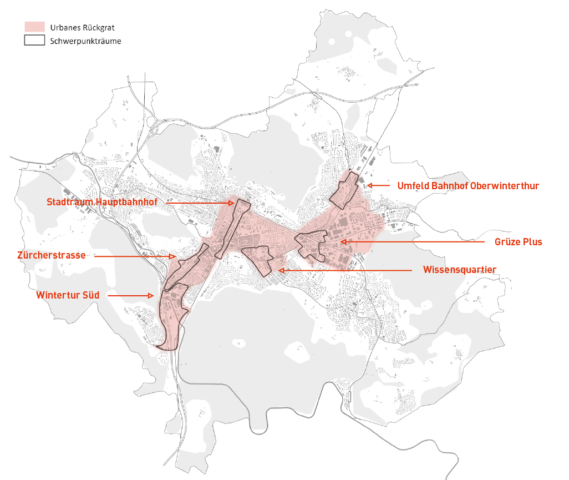
    The majority of this development is to be driven and directed within Winterthur’s already very dynamic urban backbone (see diagram), complementing the existing settlement structure. The city is to be densified along the main traffic axes from Töss in the southwest to Oberwinterthur in the northeast and the diversity of uses is to be increased.

    Densification along the urban spine
    From an urban planning perspective, there are six areas with enormous growth and densification potential. The city concentrates on six priority areas along the urban spine (cf. diagram): Winterthur South, Zürcherstrasse, Main Station Urban Area, Knowledge Quarter, Grüze Plus and the surroundings of Oberwinterthur railway station. Here, more living space, new jobs, and additional recreational and cultural spaces are to be created. Attention will be paid to a high quality of supply that enables short distances and thus also contributes to net zero by 2040.

    Careful development of the neighbourhoods
    The existing neighbourhoods will not be forgotten – on the contrary. The spatial focus on high-quality inner development along the urban spine relieves them of the pressure of densification. Selective densification remains possible in suitable locations, so that the residential offer there can also be developed in a diverse manner and the qualities of the outdoor spaces can be improved. The objective set out in the “Spatial Development Perspective Winterthur 2040” to promote so-called “5-minute neighbourhoods” is an important concern of the city and contributes to a sustainable interplay of living, working and open space and thus to maintaining the high quality of life so highly valued today.

    Office for Urban Development, Winterthur
  • Winterthur: The location for innovation and entrepreneurship

    Winterthur: The location for innovation and entrepreneurship

    Formerly an industrial stronghold, Winterthur has now developed into an important technology location and a true birthplace for innovative start-ups. The economy is broadly diversified and employment figures are increasing every year. Today, industrial software is written and sensors for smart factories are developed in the brick halls of yesteryear. Today, the former industrial city of Winterthur is home to an enormous amount of technical know-how. It began professionally training technical specialists at an early stage. The Sulzer industrial group, for example, founded its first in-house vocational school as early as 1870, and shortly afterwards the Technikum, today’s Zurich University of Applied Sciences ZHAW, was established. Other vocational schools and universities followed. Today, the Winterthur region is a hotspot for practice-oriented education and research, which favoured its transformation into a technology city.

    ZHAWfuels the innovation system
    The ZHAW, Switzerland’s largest university of applied sciences with around 11,000 students, engages in close research cooperation with the private sector, so that the enormous amount of knowledge produced every day at the ZHAW flows into companies and fuels the innovation system. This is why the location marketing organisation House of Winterthur networks local companies with the ZHAW or refers to specific innovation support programmes when visiting companies. Its core task is also to promote the strengthening of the regional innovation system.

    Focus on health, energy and machinery
    Companies choose a location primarily on the basis of its innovation potential. House of Winterthur makes these innovation systems visible and shows their development potential. In the case of relocations, the extent to which a new company enriches the innovation system is always central. As cooperation between companies is becoming increasingly important in the innovation process, House of Winterthur organises various networking events, such as tech lunches or specific smart health events. To strengthen the region’s most important innovation ecosystems, House of Winterthur, Technopark Winterthur and the Winterthur Chamber of Commerce and Employers’ Association launched a cluster initiative focusing on health, energy and machinery. The mix of industry, a lively start-up scene, cultural and leisure activities ensures that Winterthur is and remains attractive for workers as well as for residents and families.

    Testimonials

    Christian Fehrlin
    Owner and CEO DEEPIMPACT


    “As a long-time resident and business owner, I can count on competent, reliable support from the city. The location promotion offers valuable advice and information on the development of our company in Winterthur. An ideal location for software development, with more favourable prices and a pleasant working atmosphere, in close proximity to Zurich.”

    Dr Suzanne Thoma
    CEO and VRP Sulzer


    “Sulzer has been rooted in Winterthur since 1834. The same innovative and pioneering spirit that established Sulzer as a technology leader back then still drives us today. Our technologies sustainably solve urgent problems of our society, and we continue to invest where we started – just as we did two centuries ago.”

    Bernhard Winter
    CEO Scewo AG

    “We are very satisfied with the Winterthur location. Not only the development of our stair climbing wheelchair takes place here, but also the production, which we moved here a few weeks ago.”

    Fabrice Billard
    CEO Burckhardt Compression AG

    “Winterthur is convincing as an attractive business location due to its location in the Zurich economic area, its well-trained workforce and the high quality of life for employees.”

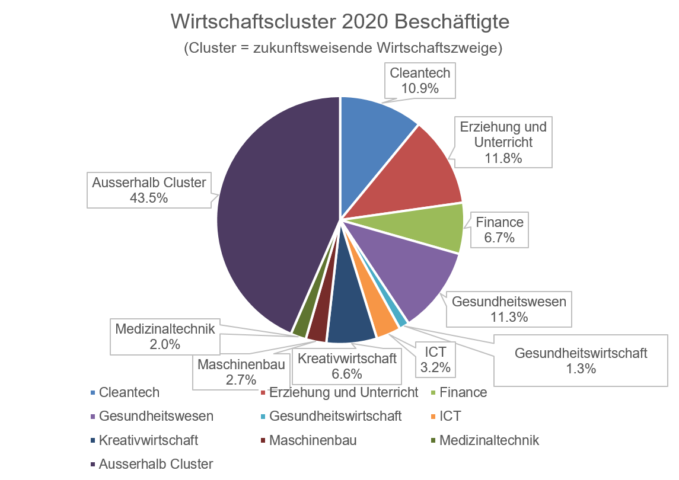
    Business Cluster 2020