Category: Company

  • New president elected for regional energy supplier

    New president elected for regional energy supplier

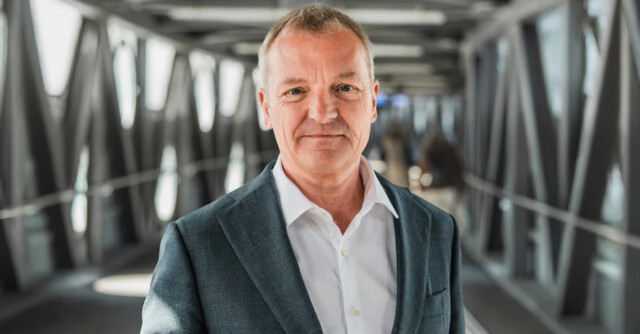
    According to a statement issued on 25 February, Limeco’s Board of Directors has been reconstituted for the term of office until 2027. It has elected Rolf Schaeren as its new Chairman. Schaeren will take up his post on 1 May. Schaeren was Chief Financial Officer of the City of Dietikon from 2006 to 2022.

    He is a professor of accounting and financial management at the University of Applied Sciences and Arts Northwestern Switzerland. He has been a member of the Board of Directors of Elektrizitätswerke des Kantons Zürich (EKZ) since 2014 and has chaired it since 2021.
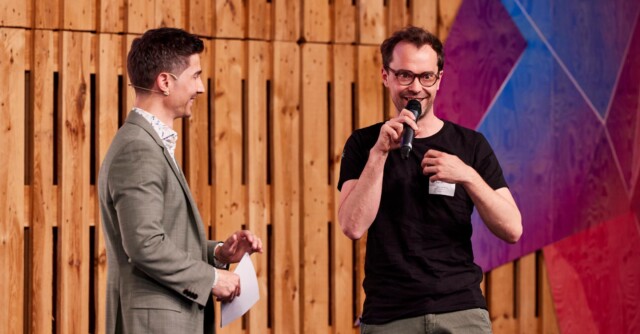
    Schaeren succeeds Stefano Kunz. The Schlieren building committee member served on the board of directors for twelve years.

    “Limeco plays a central role in the region’s energy and waste disposal supply,” Schaeren is quoted as saying in the announcement. “I am very much looking forward to continuing Limeco’s successful development together with my colleagues on the Board of Directors and tackling future challenges in the interests of the supporting municipalities.”

  • Society for affordable housing aims to create permanently affordable living space

    Society for affordable housing aims to create permanently affordable living space

    The new real estate company GEW aims to raise private capital for permanently affordable housing for people with low to medium incomes in Switzerland. GEW was founded in December 2025 against the backdrop of an increasing shortage of affordable housing in Switzerland, according to a press release. It will develop, build, acquire and operate residential properties with rents in the affordable segment of the local market, which are to be below the 50th percentile in the respective municipality.

    GEW aims to contribute to social stability in Switzerland through its work. Rising rents, a lack of building land reserves, restrictive regulations and high land and construction costs have meant that housing production can no longer keep pace with demand. “When housing becomes a concern, new answers are needed,” said Reto Brüesch, Managing Director of GEW, in the press release. “We are convinced that the private sector can and must take on part of the responsibility with entrepreneurial thinking and a clear focus on the common good.”

    The GEW model is based on three pillars: efficient development and construction, cost-effective operation and low capital costs due to low risk. This creates an economically viable approach that combines affordable rents with entrepreneurially responsible investments. “Investing in GEW creates affordable housing in Switzerland while also generating a fair return and a positive social impact,” explains Daniel Kusio, Chairman of the Board of Directors of GEW. He is supported on the Board of Directors by real estate economist Donato Scognamiglio and Balz Halter, Chairman of the Board of Directors of the Halter Group.

    While municipalities can use GEW to create affordable housing without excessive financial burden, owners benefit from transparent models such as sale, building rights or contributions in kind. Investors, in turn, gain access to a long-term investment with a stable income structure.

  • Property portfolio grows despite stable income

    Property portfolio grows despite stable income

    The real estate company PSP Swiss Property has announced its 2025 business results. Property income reached 349.2 million, down 0.2 per cent on the previous year’s result. On a like-for-like basis, however, growth of 1.3 per cent was achieved, mainly due to index adjustments. Profit excluding property gains amounted to 225.4 million, or 4.91 Swiss francs per share. Net profit rose by 8.9 per cent to CHF 408.5 million, mainly as a result of higher portfolio revaluations of CHF 231.1 million. Earnings per share increased to CHF 8.91 and the dividend per share to CHF 3.95.

    The portfolio value rose to CHF 10.1 billion at the end of 2025, with 150 investment properties and ten development properties. The revaluation was mainly driven by successful lettings in high-street retail in Zurich and rising market tenant expectations in prime locations. The vacancy rate was 3.5 per cent. The average remaining term of leases (WAULT) was 4.9 years, and 5.3 years for the largest tenants.

    Overall, the Swiss market for commercial properties remained stable, according to the report. In 2025, high-quality office space in central locations was in particular demand. In Geneva and Zurich, demand for city centre locations remained high, while the markets in Bern and Lausanne remained stable. In Basel, the oversupply of office space continued. The investment market picked up over the course of the year thanks to moderately falling interest rates and improved financing conditions.

    PSP expects the market to continue to develop positively in 2026, with stable rental demand in its core business. According to the company, low interest rates are likely to support the transaction market, while high-quality properties remain in short supply. The company therefore intends to invest selectively, exploit opportunities with long-term value growth potential and continue its shareholder-friendly dividend policy.

  • Transformation programme proves effective at access technology specialist

    Transformation programme proves effective at access technology specialist

    Dormakaba generated total sales of CHF 1.362 billion in the first half of the 2025/26 financial year, i.e. up to 31 December 2025, representing a decline of 4.1 per cent compared with the same period of the previous year. While volumes were down, “consistent price realisation” resulted in organic growth of 2.0 per cent, according to a statement. Adjusted earnings before interest, taxes, depreciation and amortisation (EBITDA) amounted to CHF 211.9 million, 1.9 per cent less than in the same period of the previous year. The EBITDA margin, on the other hand, increased from 15.2 to 15.6 per cent.

    “In the first half of 2025/26, we continued to consistently implement our transformation and increased our adjusted EBITDA margin. We are on track with the implementation of our strategy and have realised the planned cost savings from our transformation programme ahead of schedule,” CEO Till Reuter is quoted as saying in the press release.

    The company confirms its forecast for the full year 2025/26. Dormakaba expects organic net sales growth of between 3 and 5 per cent, an adjusted EBITDA margin of more than 16 per cent and an adjusted operating cash flow margin of between 11.5 per cent and 12.5 per cent. This margin was 4.5 per cent in the first half of the year, compared with 7.4 per cent in the same period last year.

  • Communities on Lake Zurich strengthen economic networking

    Communities on Lake Zurich strengthen economic networking

    The Gold Coast location promotion agency has published its first annual programme. The association was founded in September 2025 by the eleven municipalities of the Meilen district and the Office for Economic Affairs of the Canton of Zurich.

    According to a press release, members benefit from free participation in events, excursions and background discussions, direct access to decision-makers and increased visibility. The first general meeting will take place on 15 April in Stäfa, Zurich. Dr Moritz Lechner, co-founder and co-chairman of the board of directors of Sensirion, will speak as a guest speaker.

    The press release also mentions a members’ lunch with a workshop visit to Micro Mobility Systems AG in Küsnacht and a members’ morning snack at the Zumikon municipal administration. This will be followed in August by an after-work excursion to Seepark Uetikon, where apartments for around 600 people are being built on the site of a former chemical factory. An excursion to the Zurich Cantonal Council is also planned.

  • Research develops climate-friendly alternative to cement

    Research develops climate-friendly alternative to cement

    The production of cement as a binding agent for concrete accounts for 8 per cent of global carbon dioxide emissions. Researchers from various European universities and institutes are working under the leadership of the Karlsruhe Institute of Technology (KIT) in Germany to develop alternatives to cement. According to a press release, the Zug-based building materials manufacturer Holcim is involved in this research work as part of the European C-SINK project.

    The research focuses on magnesium-containing silicates, which react with CO₂ to form magnesium carbonate in a targeted, accelerated mineralisation process. This additive could be the new binder for concrete, replacing Portland cement clinker. The material is currently being tested in the KIT laboratories with the participation of all parties involved. This involves close integration of simulation, experimental research and large-scale, realistic testing at the Materials Testing Institute in Karlsruhe. “We can use simulations and machine learning to predict which concrete formulations will work,” says Frank Dehn, head of the Institute for Solid Construction and Building Materials Technology and the Karlsruhe Materials Testing and Research Institute at KIT, quoted in the press release. “We then use experiments in a targeted manner to verify these predictions. In this way, we want to develop reliable parameters that show that concrete with the new binder is climate-friendly and meets the requirements for load-bearing capacity, durability and safety.”

    The project is funded by the European Innovation Council (EIC) as part of the Pathfinder programme “Towards cement and concrete as a carbon sink”. In addition to KIT and the coordinating PAEBBL AB (Sweden), the Technical University of Delft (Netherlands), the Catholic University of Leuven (Belgium), the Agencia Estatal Consejo Superior de Investigaciones Científicas and PREFABRICADOS TECNYCONTA S.L. (both Spain) are also involved, with support from Holcim Technology. The project is funded with 4 million euros over a period of four years.

  • New cooperation improves precision in surveying and construction

    New cooperation improves precision in surveying and construction

    Fixposition announced a collaboration with Topcon Positioning Systems at the Geo Week 2026 trade fair. The fair is taking place in Denver, Colorado, until 18 February 2026. According to a press release, the Schlieren-based specialist in real-time kinematic (RTK) and visually assisted positioning will provide its solutions to the Californian company. The technologies developed by the spin-off of the Swiss Federal Institute of Technology Zurich, founded in 2017, are to be integrated into the high-precision satellite-based positioning systems of the Californian company Topcon.

    Topcon offers high-precision GNSS (Global Navigation Satellite System) positioning technologies for geomatics, construction and agricultural applications worldwide, according to Ron Oberlander, head of Topcon’s Geomatics platform. The integration of Fixposition’s visual positioning technologies will help his company create added value for its customers.

    “Fixposition has developed technology that improves satellite positioning and benefits users even when working inside buildings and transitioning between indoor and outdoor areas, without disrupting the workflow, by combining RTK-GNSS with artificial intelligence to ensure positioning accuracy. We see this AI-powered technology as an innovative integration into our next-generation GNSS solutions.”

    Zhenzhong Su, CEO and co-founder of Fixposition, says he is “proud to deliver Fixposition’s xFusion, Vision and multimodal fusion positioning technology to support Topcon’s next-generation GNSS solutions. We look forward to bringing this new solution to market and helping surveying professionals in geomatics, construction and agriculture achieve faster results and do more without compromising on quality, even in environments where GNSS connections are difficult.”

  • Relocation marks new stage of development

    Relocation marks new stage of development

    HKGhas decided to relocate within Baden-Dättwil. According to a press release, the engineering and consulting firm will be located at Täfernstrasse 14A in Baden-Dättwil from 1 March 2026. The new location offers more space than the previous address at Im Langacker 20.

    For HKG, this marks “a new chapter in the further development of the location,” according to the company. The relocation will create space for further growth and the future of the electrical engineering, building technology and energy consulting provider, which was founded in 1978 according to its own information.

    The additional space will create a better working environment “for creative ideas, efficient collaboration and future-oriented work”. Employees will be able to develop their full potential in a “modern home” and implement projects even more successfully.

  • Valais municipalities launch online.vs.ch

    Valais municipalities launch online.vs.ch

    In four pilot municipalities in Valais, the confirmation of residence is available as a digital service, simply, regardless of location and around the clock. The service is provided via the online.vs.ch portal, which has been set up since January 2025 as a joint access point for digital services from the canton, municipalities and semi-public institutions. By the end of the year, all 122 municipalities in Valais should offer this online service, taking their residents’ services a further step towards end-to-end digital processes.

    A portal for modern government services
    By launching this service, the canton and municipalities are responding to the growing expectations of the population and businesses for simple, accessible contact with the authorities at any time. As the project organiser, the canton of Valais is responsible for financing the project and is working closely with the pilot municipalities to design and introduce the services. The aim is to consistently simplify administrative procedures, avoid media disruptions and make digital interaction the preferred option for contact with the administration.

    Electronic identification increases security
    Until now, many online applications have been based on web forms with subsequent manual identity checks. Identification is now carried out electronically via online.vs.ch, which simplifies the completion of forms, speeds up processing and increases data security. Users can choose between two types of connection, including the AGOV public authority login provided by the federal government, which does not require a password and is based on modern authentication technologies. This provides better protection for personal information and at the same time makes access to digital administrative services more convenient.

    Expansion of the offering
    Since going live at the beginning of 2025, over 40 cantonal administration services have already been integrated. Further services from the canton, municipalities and semi-public organisations will follow step by step. In the long term, the portal should become the central access point for all digital services of the Valais authorities and thus bring the cantonal digitalisation strategy to life.

  • Startup accelerates engineering simulations with AI

    Startup accelerates engineering simulations with AI

    Hardware development and material testing today rely heavily on physics-based simulations for design, validation and production. These calculations often take hours or days and incur high costs, which delays projects and pushes back production launches. Engineers therefore often reduce model complexity to shorten calculation times, at the expense of accuracy and proximity to real operating conditions.

    Physics-aware AI for faster workflows
    Fainite is developing a physics-aware AI platform that speeds up and simplifies existing simulation workflows. The engine learns from physics-based simulations and can derive accurate predictions without relying on large historical data sets. Engineers set up new workflows in minutes, run simulations much faster and can intelligently reuse previous results, even with limited amounts of data. An integrated AI agent guides them through complex steps, suggests settings and makes advanced analyses usable for broader teams.

    cHF 150,000 for scaling and market entry
    The CHF 150,000 from the Venture Kick programme will be used to expand the technology to additional engineering disciplines and use cases and to build a scalable platform with next-generation functionalities. At the same time, the funds will strengthen the team structure and go-to-market activities in order to accelerate deployment at industrial companies. The company is thus addressing around 9 million hardware engineers worldwide whose work is currently slowed down by slow, complex simulation processes.

    Founding team with physics and AI expertise
    The start-up was founded by researchers and engineers from Caltech, ETH Zurich, the University of Cambridge and Google, including CEO Alex Donzelli, Chief Scientist Prof Burigede Liu and ML Lead Matthias Bonvin. The team is complemented by former executives from established simulation software manufacturers, bringing together in-depth expertise in deep learning, computational physics and industrial simulation platforms. According to Alex Donzelli, Venture Kick’s funding, feedback and network have been instrumental in moving quickly from technical validation to the first industrial applications.

  • Orientation in a tight property market

    Orientation in a tight property market

    Bilanz reminds us that the Swiss property market is still “bubbling”. The gap between supply and demand remains wide, and construction activity in many places is not sufficient to meet the demand for residential property. According to real estate surveys, experts expect prices to continue to rise in 2026, particularly for single-family homes and condominiums, while land prices in centres such as Zurich will reach new highs. At the same time, market indicators such as the UBS Swiss Real Estate Bubble Index are warning of increasing overvaluation risks, even though experts currently categorise the risk of an acute bubble as moderate.

    Why Bilanz has chosen the “Top Property Experts 2026”
    Local market knowledge and professional support are becoming increasingly important in this environment. Bilanz and the market research institute Statista have therefore once again identified the “Top property experts in Switzerland 2026”. The award was given to 125 companies that were recommended with above-average frequency in areas such as buying and selling, letting, property management, property valuation, client representation, financing and proptech. The best list is intended to help owners and buyers find suitable partners, from marketing a home to financing a new purchase.

    Recommendations from professionals and customers
    For the ranking, Statista surveyed industry experts and customers who have used property services in recent years. Based on over 2,000 participants, the 125 most recommended companies were identified and included in the list in alphabetical order. Additional key figures such as company size were also taken into account. Bilanz emphasises that the ranking does not replace a complete market overview, but offers a sound guide in a complex market.

  • Industrial site makes way for hotel and modern office space

    Industrial site makes way for hotel and modern office space

    According to a statement, HGC, a building materials supplier operating throughout Switzerland, is relocating its Lucerne site. This move is in response to the development of the former industrial area of Tribschen into a central urban district.

    HGC already relocated its regional transport business to its new site in Inwil last September. The company will also serve all its regional customers from there over the next two years.

    The old site in Tribschen is being converted. The old building at Tribschenstrasse 7/9 was demolished last year. The new Boutiquehotel 6000 is being built here. The new headquarters of the Central Swiss Builders’ Association will be located in the attic.

    The building on the neighbouring property at Tribschentrasse 11 will be converted using the existing supporting structure. The upper five floors will be rented out as offices under the name Tribschen Office. Half of the space has already found tenants. A commercial enterprise and the HGC collection business will be set up on the ground floor.

    HGC has been using the Tribschen site since the early 1920s. The complete renovation and conversion will allow it to benefit from the development of the neighbourhood.

    HGC was founded as a cooperative in 1899 and has its headquarters in Zurich. It trades in building materials and related products. It belongs to its more than 3,000 cooperative members in all construction sectors.

  • Direct real estate strategies for family offices and investors

    Direct real estate strategies for family offices and investors

    Blacklake has founded Blacklake Investment Partners AG in Zug. Its aim is to provide real estate investors and family offices with direct access to real estate opportunities in Europe that are identified beyond traditional market offerings. “Blacklake Investment Partners focuses on real estate opportunities across Europe that are not accessible to the broader market due to their complexity or special circumstances,” said Christoph Schumacher, founding partner and new CEO of Blacklake Investment Partners, in a statement published by the investor portal “Trading View”.

    The business model covers all phases of the investment cycle, from analysis and transaction to the implementation of exit scenarios. The target group includes Swiss, German and international private clients, single and multi-family offices, and (semi-)professional investors. The founding team combines international investment, consulting and corporate management expertise, including at Credit Suisse, Swissair, Union Investment, KPMG and Ernst & Young Real Estate.

    The Zug-based company is affiliated with the Blacklake Group via Hamburg-based Blacklake GmbH and positions itself specifically as an interface between investment opportunities and capital. According to the information provided, the group has reorganised, repositioned, refinanced and transacted real estate and real estate financing with a transaction volume of around €3 billion for German clients since the end of 2022.

  • International cooperation is gaining importance in digital construction

    International cooperation is gaining importance in digital construction

    The software provider Revizto, based in Lausanne, has announced its membership of buildingSmartin a press release. The international organisation buildingSmart, based in Hertfordshire, UK, is committed to improving work processes, for example through internationally valid and open standards for Building Information Modelling (BIM).

    By joining, Revizto is responding to the problem that construction projects are becoming increasingly complex and technically sophisticated. Greater interdisciplinary and international cooperation is needed. As a result, standards and rules must be adapted to the market situation. “Open standards are increasingly crucial to the way the AECO industry works,” said Arman Gukasyan, founder and CEO of Revizto, in the announcement regarding companies in the architecture, engineering, construction and operations (AECO) sectors. “As a Swiss company, joining buildingSMART organisations in Germany, Austria and Switzerland allows us to intensify our involvement in regional communities that are driving the adoption of openBIM. By working closely with project teams in ongoing programmes, we can help link standard development to the practical requirements of project delivery – improving team coordination, minimising risk and working more efficiently.”

    Revizto plans to participate in regional initiatives, working groups and knowledge-sharing activities as part of its memberships and to support the ongoing progress towards open, efficient digital construction practices in the DACH region.

  • Swiss speciality chemicals drive expansion in the sealant market

    Swiss speciality chemicals drive expansion in the sealant market

    Sika has announced the acquisition of Akkim, a Turkish company specialising in adhesives and sealants. The Zug-based specialty chemicals group aims to expand its customer reach and strengthen its market position in the global adhesives and sealants industry. According to a statement, the acquisition is expected to be completed in the third quarter of 2026.

    Akkim, based in Istanbul with two production facilities in Turkey and Romania, distributes adhesives and sealants for the construction sector via a wide-ranging customer network. Established distribution channels in Eastern Europe, Central Asia, the Middle East and North Africa enable it to serve a broadly diversified customer base. According to the announcement, net sales in 2025 amounted to the equivalent of CHF 220 million.

    Sika expects the greater geographical reach to provide significant growth opportunities. “The acquisition will enable Sika to establish a highly efficient production and export hub for sales-oriented adhesives and sealants, which will support long-term growth in this segment,” the statement said.

    Sika also intends to use Akkim’s additional expertise and broad network to expand its e-commerce business and offer complementary products such as repair mortars and sealing solutions through cross-selling.

  • European network opens up new opportunities for Baden in health tourism

    European network opens up new opportunities for Baden in health tourism

    The city of Baden has become a new member of the European Historic Thermal Towns Association (EHTTA). According to a statement, its aim is not only to raise awareness of the importance of Baden’s thermal springs, which date back to Roman times, at a European level, but also to foster exchanges with other spas.

    Membership facilitates joint projects in cultural, health and medical tourism. With its membership, Baden is positioning itself “clearly as a modern cultural and spa town with international appeal,” Mayor Markus Schneider is quoted as saying in the press release.

    TourismusRegion Baden AG is responsible for the operational implementation. “EHTTA membership is much more than just a label for Baden,” Andrea Portmann is quoted as saying. “It is a strategic tool for further developing our positioning in the international market and establishing new partnerships in the field of medical and health tourism,” says the managing director of TourismusRegion Baden.

    The EHTTA is delighted to welcome Baden as a new member. “Baden is an important spa town with a strong history and a clear vision for the future,” says Riccardo Mortandello, EHTTA President and Mayor of Montegrotto Terme.

    The more than 50EHTTA members in 20 countries now include Baden-Baden and Baden bei Wien, as well as Budapest, Karlsbad, Spa, Vichy and Viterbo.

  • Industrial company once again ranks among the most sustainable worldwide

    Industrial company once again ranks among the most sustainable worldwide

    KONE has made it onto the A list in the sustainability ratings for companies just published by CDP, known as the CDP Scores 2025. This list comprises the top 4 per cent of the more than 22,100 companies from around the world that were assessed. The ratings range from D to A and show how ambitious and effective companies are in terms of climate, water security and forests.

    According to a press release, the lift manufacturer has been disclosing its data via CDP since 2009 and has now achieved a CDP rating of A or A- for the 13th consecutive time. At the end of January, KONE was ranked 54th in this year’s Global 100 Most Sustainable Corporations in the World list by Corporate Knights, placing it second among engineering companies.

    “This recognition reflects our systematic efforts to integrate sustainability into everything we do – from our products and services to our operations and partnerships,” said Kirsi Simola-Laaksonen. He is KONE’s Senior Vice President and responsible for sustainability and the environment.

    He goes on to explain that the proportion of renewable drives in KONE lifts will have increased significantly by 2025. This has improved the energy efficiency of the products and reduced both the company’s own CO2 emissions and those of its customers. As over 99 per cent of emissions come from the product and value chain, the company is “actively working with suppliers to identify opportunities to reduce emissions from the materials used in our products”.

    KONE has been headquartered in Espoo, Finland, since 1910. KONE (Switzerland) AG has been operating in Switzerland since 1996. The company employs over 60,000 people in more than 70 countries.

  • New platform provides early information on building applications

    New platform provides early information on building applications

    With Baugesuche Pro, Zurich-based Houzy AG has developed a “Switzerland-wide construction alert for your own neighbourhood,” as it describes the service in a press release. Owners, tenants or prospective buyers can use it to get an overview of building applications in their neighbourhood, which previously required studying official gazettes or municipal websites.

    “Transparency about the immediate environment is the basis for smart real estate decisions,” Houzy’s COO and CMO Nicolas Steiner is quoted as saying in the press release. “With Baugesuche Pro, we now offer everyone – from long-time homeowners to tenants planning to buy a flat – a tool to better understand the dynamics in their own neighbourhood without tedious research.”

    Users can register with Houzy and enter the location of their property or their desired neighbourhood. They will then receive a notification for every new building application within a relevant radius.

  • New process brings decorative high-performance wood into series production

    New process brings decorative high-performance wood into series production

    The Koster AG Holzwelten joinery, a family business based in Gossau, has developed what is known as marble wood in collaboration with Empa. Marble wood is characterised by a pattern of fine black lines caused by a fungus. This unique wood, once a rare chance find, is now produced in an annexe of the carpentry workshop using stainless steel containers, laboratories and climate and vacuum chambers. According to a press release, the product is now being marketed under the name Myrai.

    As part of a joint Innosuisse project, the carpentry workshop and Empa developed a standardised, scalable process for the targeted production of marbled wood. In a vacuum chamber, boards made from native hardwoods such as maple, beech or ash are brought to the correct moisture content, sterilised and inoculated with the fungus. They then spend several weeks in a climate chamber to allow the fungus to grow and the resulting patterns to develop. Finally, the wood is dried in a technical process and the fungus dies.

    “The special thing about this fungus is that it does not break down the highly lignified areas of the cell wall, so the wood retains a high degree of bending stiffness,” says Empa researcher and fungus expert Francis Schwarze, who works for the Cellulose & Wood Materials Laboratory in St. Gallen, quoted in the press release.

    The resulting marbled wood is particularly suitable for decorative applications such as furniture, interior design and musical instruments. As part of the project, the carpentry workshop has developed expertise in controlling and refining the appearance of the wood. Jakob Koster, former CEO of Koster AG Holzwelten, will now focus on the sale and further innovation of marbled wood. According to Koster, demand is already high. The carpentry workshop and Empa also already have new ideas for further collaboration.

  • Positive employee reviews earn Top Company award

    Positive employee reviews earn Top Company award

    The ERNE Group has been named a Top Company three times by the German employer portal kununu. According to a press release, the awards went to ERNE AG Bauunternehmung and ERNE AG Holzbau from Laufenburg, as well as HUSNER AG Holzbau from Frick. The employer seal is awarded to companies that receive consistently positive ratings from their employees. According to the press release, this confirms the ERNE Group’s appreciative and development-oriented corporate culture.

    Kununu assesses employers in German-speaking countries based on independent employee reviews. Satisfaction, trust and continuity within the company are evaluated using clearly defined criteria. Overall, around 5 per cent of the companies assessed qualify for the kununu employer seal.

    “This award is only possible thanks to our employees. Their open feedback, daily commitment and active solidarity are what make ERNE the employer it is,” says the ERNE Group’s announcement. “Whether in everyday work or at joint events, team events and the ERNE Fäscht, our culture of togetherness is a central part of our identity.”

    The award also confirms the Group’s commitment to balancing tradition and innovation and working together to overcome challenges with creative solutions.

  • Digitalization in the DNA

    Digitalization in the DNA

    The DNA of SMG Real Estate has been summarized in one word since day 1 and with ImmoScout24 and Homegate for over two decades: Digitalization. With targeted investments in AI innovations, marketing and cybersecurity, SMG Real Estate is continuously developing its platforms and offering real estate professionals future-proof products and services for a digital competitive edge in the market.

    Achieving unprecedented efficiency with AI
    Artificial intelligence acts as a booster when it comes to making real estate agents and managers not only more efficient but also more successful in the long term. It accelerates the development of innovative products that create real added value for real estate professionals and free up valuable time – time for personal advice and support for their customers. A concrete example: thanks to the AI-based creation of advertisement texts in Business Manager, real estate professionals at SMG Real Estate save an average of 14 minutes per advertisement.

    Maximum reach thanks to full marketing power
    Visibility is and remains a decisive factor in real estate marketing. With dedicated marketing activities, SMG Real Estate invests specifically in addressing its platform brands, including ImmoScout24 and Homegate, to reach a wide target group. The aim is to lead the most relevant interested parties directly to the listings, strengthen the market opportunities of business customers and position the two brands as the top real estate platforms in Switzerland in the long term. Attention-grabbing content combined with target group-specific social media campaigns raise awareness among property seekers and set the course for real estate properties to be in the right place at the right time.

    Reliability and security as the basis for customer success
    With hundreds of thousands of visitors to SMG Real Estate’s platforms every day, reliability is a basic requirement. Accordingly, a team of over 100 tech specialists ensures that the required systems function efficiently and with the latest technology at all times. The same applies to cybersecurity: thanks to state-of-the-art protection mechanisms, two-factor authentication and integrated access control, data is even better protected. This allows real estate professionals to focus fully on their marketing. In summary, these and other extensive investments by SMG Real Estate are not only pursuing an optimal price-performance ratio, but also a competitive advantage for their customers in the highly competitive real estate market thanks to noticeable innovation and performance. Because only those who can sustainably position themselves in the market and stand out will have the best possible marketing opportunities.

    You can find more information here

  • Operational recovery shows effect in industrial environment

    Operational recovery shows effect in industrial environment

    According to a statement, the Schindler Group achieved sales of CHF 10.947 billion in the 2025 financial year, a decline of 2.6 per cent compared to the previous year. In local currencies, however, growth of 1.3 per cent was recorded. Order intake amounted to CHF 11.313 billion (-0.9 per cent, 3.1 per cent in local currencies). Adjusted operating profit in local currencies even rose by 12.3 per cent. Schindler generated a net profit of CHF 1.073 billion, an increase of 6.2 per cent.

    “2025 marks the final year of our operational recovery,” said Schindler CEO Paolo Compagna. “Four years after facing particular challenges in 2022, I am pleased to say that we have emerged from this phase as a stronger and more resilient company.”

    For the current year, Schindler expects “revenue growth in the low to mid-single-digit percentage range in local currencies.” The EBIT margin target is 13 per cent (2025: 12.6 per cent, adjusted EBIT margin 13.3 per cent). “Our priority for 2026 is to grow in a targeted manner and maintain our focus on further improving operating margins,” says Compagna.

  • Digitalisation drives strategic expansion

    Digitalisation drives strategic expansion

    According to a press release, pom Consulting AG is celebrating its 30th anniversary this year. The company was founded by Peter Staub and Professor Hansruedi Schalcher as a spin-off from the Swiss Federal Institute of Technology Zurich. It was based on a research project on the integration of tasks, data and processes in the construction industry.

    The consulting firm now offers its services in real estate, infrastructure and construction not only in Zurich, but also in Basel, Bern, Lausanne and St. Gallen, as well as in Berlin, Frankfurt and Cologne. It employs over 130 people, has advised over 800 clients and carried out around 8,000 projects.

    According to a press release, pom is now entering its “next strategic growth phase”. It intends to focus on the further development of its digital services, the automation of customer processes and the targeted expansion of its team.

    In doing so, it can rely on the Zurich-based investment company White Peaks Capital, which became an investor in the summer of 2025. The family-owned investor, which specialises in SMEs, is the ideal partner, Peter Staub, founder and chairman of pom, explained in a press release at the time. “This partnership gives us the basis to accelerate our growth in a sustainable manner while remaining true to our roots.”

  • Digital assistant makes everyday rental life easier

    Digital assistant makes everyday rental life easier

    Zurich-based LIVIT AG has launched a chatbot supported by artificial intelligence (AI). According to a press release, the chatbot, called Livio, is designed to guide tenants digitally through a catalogue of essential questions about renting and living. The real estate service provider, a subsidiary of Swiss Life, wants to expand its digital offerings with this innovation.

    The chatbot draws exclusively on verified content from the LIVIT website, which is constantly updated and expanded by an in-house team of experts from the fields of property management, communication and digital business. Livio is currently in a beta phase.

    “Livio enables us to assist tenants in a straightforward manner. Recurring enquiries are answered automatically, while employees can focus more on individual concerns,” said David Rivière, Head of Management at LIVIT AG, in the press release. Livit is collaborating with the Zurich-based AI company Typewise on the technical implementation of the chatbot.

  • Large area awaiting redevelopment for residential and commercial use

    Large area awaiting redevelopment for residential and commercial use

    HIAG Immobilien AG plans to transform the old Metalli industrial site on the Birs river in Dornach into a mixed-use area for living, working and leisure over a period of up to 20 years. The master plan for the new Wydeneck site envisages 70 per cent residential use for the area of over 130,000 square metres. At least 30,000 square metres are earmarked for commercial and business use. This creates the potential for 600 jobs.

    From the perspective of the Schwarzbubenland location promotion agency, this is not enough. According to a statement, it is calling for the site to be made attractive for the creation of as many high-quality jobs as possible. The focus on residential use carries “the risk of losing valuable commercial space for the future due to short-term profit considerations”.

    Representatives of the location promotion agency, HIAG Immobilien and the municipality have therefore met to discuss the future of the site. HIAG pointed out that “thanks to flexible and forward-looking building and zoning regulations, a higher proportion of commercial use is also possible in principle”.

    Swissmetal will leave the site by the end of 2026. The existing temporary uses can then be expanded. Major structural changes are to be carried out in line with the expansion of the infrastructure. From 2030, the new Dornach-Apfelsee S-Bahn station will connect the site directly to public transport.

  • New innovation programme strengthens the canton of Jura

    New innovation programme strengthens the canton of Jura

    According to its announcement, the location and investment promoter Basel Area Business & Innovation is launching a comprehensive innovation programme for the canton of Jura. It is called InnoJura and expands the agency’s activities. In addition to the Switzerland Innovation Park in Allschwil and the one on the Novartis Campus in Basel, it has also been managing the Switzerland Innovation Park Basel Area – Jura in Courroux since 2019. Since 2022, Courroux has been hosting the Medtech Congress, the Accelerators i4Challenge and DayOne Tech, all of which promote the establishment and development of start-ups.

    According to the information provided, InnoJura builds on the experience gained in this process. The new programme is divided into three parts. It includes the InnoJura Accelerator, the entry point for start-ups. Young companies from industry-intensive sectors are prepared for partnerships with SMEs through coaching, group sessions and seminars.

    The programme also includes the InnoJura Academy. This is the entry point for SMEs. It is aimed at industrial companies that want to benefit from external innovations and collaborate with start-ups in expert-led workshops and practical modules. Finally, the InnoJura platform is the third element that brings start-ups and SMEs together. Sébastien Meunier, Director of SME Innovation at Basel Area Business & Innovation, has no doubt: “I am convinced that InnoJura will be met with great interest among companies in the Jura.”

  • Modular furniture system optimises waste management in the office

    Modular furniture system optimises waste management in the office

    Lista Office LO is expanding its office furniture brand of the same name with a modular system for waste management. According to a press release, the LO Value modular system offers sliding and pull-out containers in various sizes, reversible doors and interchangeable magnetic or adhesive labels.

    Fronts that open at the touch of a finger and generous disposal flaps with handles or foot pedals are designed to reduce contact points and the risk of contamination. Freely integrable PET and can presses compress the volume of waste. This in turn reduces the effort required for storage, transport and management.

    According to the information provided, the available LO Value variants are designed to fit into any design concept. As a colourful counterpoint, it attracts attention, while in monochrome it can blend in with its surroundings – depending on “whether the call for waste separation is to be implemented discreetly or as a visual exclamation mark”.

  • New distribution centre strengthens fresh produce logistics

    New distribution centre strengthens fresh produce logistics

    Denner opened its third distribution centre for chilled products in Mägenwil on 2 February 2026. This is the food retailer’s response to the strong demand for these goods. According to a press release, it is the first chilled distribution centre to be certified according to the Minergie standard. Denner is creating 70 additional jobs there.

    The additional location will supply 250 of the 872 stores with fresh produce. Together with the three distribution centres for non-chilled goods, Denner will in future supply its branch network from six logistics locations.

    Denner is working on expanding its branch network and wants to add more fresh products to its range. The new building took two years to construct and, according to CEO Torsten Friedrich, “symbolises the growth” of Denner. The aim is to secure the logistics for the growing demand for fresh food. In addition, travel distances have been reduced. This could save 120,000 transport kilometres per year. A 10,000 square metre storage area has been created in Mägenwil. It allows more than 700 products to be stored and cooled at between 2 and 5 degrees Celsius.

    The Minergie certificate attests to the new building’s energy efficiency during operation. Waste heat from the energy-intensive operation of the cooling system is used for heating. The entire electricity requirement is generated by photovoltaic systems on the roof and on the south façade. In addition, eight charging stations for trucks and ten for passenger cars can be powered. Another new building for uncooled products is scheduled to go into operation in Aclens VD in 2027.

  • Steel profiles expand digital planning software

    Steel profiles expand digital planning software

    The steel profiles from Pestalozzi AGwill be available in LogiKal from April, according to a statement from the Dietikon-based company. The software was developed by the German company Orgadata and is used for planning window construction. According to the statement from Pestalozzi, it is also used for planning projects involving doors and façades.

    A total of more than 400 suppliers have stored their components in the software. Open interfaces allow LogiKal to be connected to machine control systems, enterprise resource planning (ERP) and computer-aided design (CAD) software. An integrated automatic error check also reduces costly calculation errors, according to Pestalozzi.

    The Dietikon-based company describes the integration of steel profiles into LogiKal as a “digital milestone”.

  • Canton of Zurich continues to grow

    Canton of Zurich continues to grow

    The canton of Zurich continues to grow, but the major growth spurt of recent years is over for the time being. At the end of 2025, the civil resident population was 1,628,081 – an increase of just under 13,000 residents or 0.8 per cent compared to the previous year. Apart from the coronavirus years, this is the smallest increase since 2005 and thus a clear sign of a phase of more moderate momentum.

    Immigration most important growth driver
    Population growth continues to be driven primarily by immigration from abroad. Over 80 per cent of the increase is attributable to people of foreign nationality settling in the canton for the first time. Although net migration from abroad has fallen slightly compared to the previous year, it has returned to roughly the same level as before the war in Ukraine. The internal migration balance with the other cantons remains slightly negative and has hardly changed for several years. Zurich is losing about as many people within Switzerland as it is gaining.

    Births and deaths
    The birth balance accounts for less than a fifth of growth. Although initial estimates show a slight increase in births and a slightly lower number of deaths, the overall surplus remains low. This confirms the trend that the population is growing primarily “from the outside”, while the demographic momentum within the country is levelling off.

    Cities and small municipalities are growing the fastest
    The spatial picture is divided into two parts. Cities with a population of over 10,000 account for more than two thirds of growth. The city of Zurich alone accounts for almost a third of the cantonal increase, growing by 4,008 people. It was followed by Dübendorf and Uster, while Winterthur recorded the weakest growth since the turn of the millennium with an increase of 355 people.

    Relative to the size of the municipality, however, the small municipalities recorded the strongest growth. Flaach, Hüntwangen and Wila recorded growth rates of between 4 and a good 5 per cent, underlining the fact that even rural municipalities in the canton can benefit from the influx.

    Regions are shifting
    All regions in the canton are growing, but at different rates. Weinland and Furttal are leading the way with growth rates of 1.1 and 1.0 per cent respectively. Twice as high as in the Winterthur region, which will bring up the rear in 2025. While the areas close to the city in the north and east have recently seen above-average growth, the city of Zurich and the Limmat Valley are now above the cantonal average, while the Glattal and the Winterthur region are falling behind.

    Foreign population strongly characterised by Europe
    At the end of 2025, around 472,000 people of foreign nationality lived in the canton. This represents 29 per cent of the total population. Their number continues to grow, albeit at 1.5 per cent, the slowest rate since the introduction of full freedom of movement with the EU in 2007. Almost two thirds come from an EU or EFTA country, over 80 per cent from Europe.