Category: Construction

  • Guidelines to strengthen the circularity of construction projects

    Guidelines to strengthen the circularity of construction projects

    The Madaster Switzerland association and partners from politics, business and science have developed a guideline that can be used to measure the circularity of construction projects in terms of their material mass, Circular Hub reports in a press release. The knowledge and network platform for circular construction in Switzerland acts as the coordination centre for the project Making circularity measurable. The guide “Making circularity measurable: a Swiss circularity indicator” is primarily aimed at planners of construction projects.

    “This guide marks a historic moment for the construction and property industry in Switzerland,” said Patrick Eberhard, President of the Madaster Switzerland association, in the press release. “For the first time, it offers the possibility of making the circularity of buildings measurable and thus supports the vision of transforming the Swiss building stock into a circular material store.” The guidelines can be used for the planning of new buildings as well as for building renovations. In addition to European standards, the specific conditions of the Swiss construction industry are also taken into account.

    The guidelines provide clients, architects and planning offices with assistance in integrating quantified specifications into the tendering process. At a political level, the guidelines should make it possible to quantify specifications for the circular economy in the construction sector.

    A complete list of the companies and organisations involved in the project can be found in the press release. The guidelines have already undergone initial practical testing in pilot projects. The Madaster platform is being used to calculate circularity and analyse specific property data.

  • Benetics presents strong growth

    Benetics presents strong growth

    Benetics has developed software that can be used to efficiently coordinate work on construction sites. Since entering the market in October 2023, the Zurich-based proptech has recorded strong growth. According to an article on startupticker.ch, 25 companies, mainly from the electrical industry, are already using Benetics’ digital application. Most of these are companies with 10 to 15 employees, while the largest customer has over 100 employees using the software.

    “Our app-based tool hardly needs any time for onboarding, makes construction plans digitally usable and, in addition to other functions, has photo documentation of the work done and an integrated intelligent translation service,” Benetics co-founder and CEO Ferdinand Metzler is quoted as saying in the article. Users can enter texts and voice messages in their native language. They are then automatically translated into the languages used by the other participants.

    Benetics is currently run by 13 people, nine of whom come from the development industry. Many of them, including the two other co-founders Aaron Shon and Johan Tibell, previously worked at Google, according to the article. “With our development team, we are quick to implement customer input,” says Metzler. The company also has extensive expertise in big data and artificial intelligence.

  • HSLU launches Master in Collaborative Spatial Development

    HSLU launches Master in Collaborative Spatial Development

    Lucerne University of Applied Sciences and Arts is offering a new Master’s degree course in Collaborative Spatial Development from this autumn semester. The programme is open to students from disciplines such as spatial planning, urban planning, architecture, landscape architecture, environmental sciences, economics and social sciences, the HSLU explains in a press release. “More than ever, the spatial development of the future needs interdisciplinary and transdisciplinary teams to find appropriate solutions to current challenges,” Tabea Michaelis is quoted as saying in the press release. She will lead the new Master’s degree programme together with her colleague Amelie-Theres Mayer.

    The programme aims to prepare its graduates for the complex challenges of future spatial transformation processes. The focus is on dealing with changing requirements and increasingly scarce resources. The teaching programme includes involving groups with different requirements in the planning process and mediating between them.

    “We don’t see spatial development as a product, but as a process,” explains Michaelis. According to the co-director of the degree programme, the aim of such processes is to create climate-friendly, open and adaptable spaces. “Planning these spaces requires a holistic understanding of building culture that starts from the existing building stock and keeps an eye on the political and legal framework as well as economic viability.” To this end, students are expected to work together with potential project clients in a practical manner.

  • Successful spatial development in the canton of Neuchâtel

    Successful spatial development in the canton of Neuchâtel

    The latest data shows that the canton of Neuchâtel has experienced positive development in various areas of spatial planning. Population growth has stabilised and the number of jobs has risen steadily, indicating robust economic strength. The active involvement of the municipalities in revising their development plans to meet the requirements of the Federal Spatial Planning Act and the cantonal master plan is particularly noteworthy. By the end of 2023, 16 out of 27 municipalities had already submitted their revision files, a step that underlines the consistent adaptation to the prescribed density requirements and the reduction of underutilised building zones.

    One notable aspect of the report is the progressive densification of economic zones, which leads to a more efficient use of available land without compromising the quality of life. Exemplary neighbourhoods illustrate the potential to combine densification with a high quality of life. The availability and quality of public transport has also improved, which supports the canton’s Mobility Strategy 2030. The introduction of new parking regulations and the promotion of soft mobility are further steps towards reducing private transport and promoting more environmentally friendly modes of transport.

    These developments are particularly important for property experts, as they influence the framework conditions for investments and the development of new projects. Strategic densification and the promotion of sustainable mobility concepts offer new opportunities for the development of future-oriented property projects. In addition, measures to protect agricultural land and reduce energy consumption contribute to more sustainable development, which can increase the value of property in the long term.

    In conclusion, the report notes that despite the encouraging developments, challenges remain, particularly with regard to the ageing population and the need to develop adapted forms of housing. The ongoing revision of local development plans and the focus on sustainable neighbourhoods and high-quality public spaces will be key issues in future spatial planning. For property management professionals, this report provides a sound basis for strategic decision-making and underlines the importance of forward-looking planning in the dynamic landscape of the property market.

  • Introduction of the Swiss circularity indicator for sustainable construction projects

    Introduction of the Swiss circularity indicator for sustainable construction projects

    In order to comply with the principles of the circular economy, which aims to minimise resource consumption, waste and emissions through the circular use of materials, the measurable circularity of construction projects is of crucial importance. The newly introduced guidelines create a basis for objectively assessing and increasing circularity in the construction and property sector in Switzerland. It aims to make the effectiveness of measures to achieve resource efficiency comparable and invites all industry participants to actively contribute feedback and implement the guidelines in their projects.

    The guidelines, which can be used for both new buildings and renovations, offer planners and architects a practice-orientated methodology for estimating the material circularity of their construction projects. It is based on European standards and the specific requirements of the Swiss market and supports the industry in implementing circular construction methods.

    The application of the guideline in initial pilot projects has already shown how material flows can be optimised and disposal routes made more efficient as early as the planning phase. Based on this experience, building owners can now include quantifiable circularity requirements in tenders, which enables architects and planners to evaluate different construction alternatives in terms of their sustainability. The guide also makes it easier for authorities and legislators to quantify and systematically demand circular economy principles in the construction sector.

    The guide was developed through the initiative of the Madaster Switzerland association in collaboration with a wide range of stakeholders, including the Federal Office for the Environment (FOEN), property owners, standardisation and certification organisations as well as experts from science and practice. The Madaster platform serves as a central tool for calculating and analysing the circularity data.

    The open invitation to feedback from the industry ensures a continuous improvement process and promotes the further development of the guideline. This approach underlines the joint endeavour to make the construction and real estate industry in Switzerland more sustainable and to effectively implement the principles of the circular economy.

  • Griesser protects passive house in Barcelona from the sun

    Griesser protects passive house in Barcelona from the sun

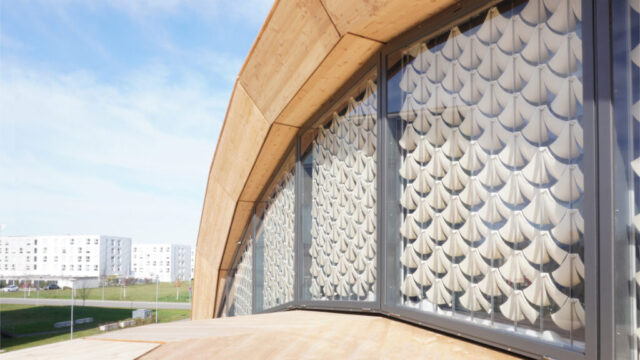
    According to a press release, Griesser, the sun shading manufacturer based in the St.GallenBodenseeArea, has supplied and installed the sun shading solution for an older terraced house in Barcelona that has been converted into a CO2-neutral passive house. The planning and consultancy firm Energiehaus Arquitectos in Barcelona, which specialises in the renovation of energy-efficient buildings, renovated the building to create a completely CO2-neutral property. The building is called “ShowPass“, where “Pass” stands for passive house. According to Griesser, it is the first CO2-neutral building renovated in Barcelona to receive certification from Ecómetro in Madrid and EnerPHit certification from the Passive House Institute in Darmstadt, a standard for the modernisation of old buildings with passive house components.

    For the external solar shading, the Spanish architectural firm opted for Metalunic Sinus slat blinds from Griesser. According to the press release, the Swiss sun shading specialist is thus making a key contribution to the CO2 neutrality of the building.

    Micheel Wassouf, CEO of Energiehaus Arquitectos, is quoted as saying that sun protection is not only a functional benefit but also a creative design tool. The design of the Griesser slat blinds makes a significant contribution to the aesthetics of the building. They harmonise perfectly with the larch wood façade. “Sun protection should be seen as a creative design tool and not as a dry fulfilment of duty,” continues Wassouf.

    Griesser AG, headquartered in Aadorf, produces in its own factories in Switzerland, Austria and France and sells its products in over 20 countries.

  • Residents of Eastern Switzerland would reduce living space

    Residents of Eastern Switzerland would reduce living space

    Nikola Vukovic and Raphael Dietrich have developed options for easing the housing market in Eastern Switzerland in their final thesis for the Master’s degree programme in Real Estate Management at OST – Ostschweizer Fachhochschule. “The Swiss population lives too generously,” Vukovic and Dietrich are quoted as saying in a corresponding OST press release. However, according to the findings of the two researchers, many residents of Eastern Switzerland would be prepared to reduce their living space.

    Specifically, 43 per cent of 379 participants in a survey as part of the master’s thesis stated that they could do without living space. A guest room or a hobby room were particularly frequently rated as unnecessary. However, alternatives are needed, “such as a central guest room that would be easy to rent in the flat block,” explains Vukovic.

    The Master’s students have also identified a high level of willingness among the population to move into a smaller flat. However, the problem here is that there are not enough small flats available, according to the press release. The price can also be an obstacle: “Nobody would give up a four-room flat for 1,000 francs for a smaller flat that costs the same or more,” says Vukovic.

    Urban centres could be eased by moving to more rural regions. In the survey, around 95 per cent of respondents indicated a willingness to do so. “However, the respondents would not move without conditions,” explains Dietrich. “Incentives would have to be created to encourage people to move away from urban centres.”

  • Analysis and outlook for construction prices

    Analysis and outlook for construction prices

    The Construction Price Index 2023 reveals a complex dynamic in Swiss building construction, with moderate price increases influenced by a mix of international market conditions, currency effects and local economic factors. The industry faces challenges, including a changing labour market and declining construction activity, which require strategic adjustments. The report provides key insights for property industry management professionals to make informed decisions and anticipate future developments.

    The analysis of material prices for building construction shows a differentiated development: while the KBOB material price index only recorded a slight increase of 0.6 per cent in November 2023 compared to the previous year, a look at individual materials reveals significant differences. For example, prices for reinforcing steel fell sharply by 28 per cent, while fresh concrete and bricks saw price increases of 9.5 and 36 per cent respectively. These price developments reflect a normalisation of international market prices and the effects of the appreciation of the Swiss franc, which reduced import costs for building materials. However, this was offset by rising energy and fuel prices, which affected the cost of materials.

    The situation on the labour market in the construction industry and wage trends remain of strategic importance. Following a temporary increase in job vacancies in spring, the rate stabilised at 2.1% in the third quarter of 2023 and thus remains above the ten-year average. Demographic trends are intensifying the challenges facing the construction industry, which is contributing to continued upward pressure on wages.

    Construction activity, particularly in the area of residential and office space, has declined continuously since 2021. Investment in new building permits has fallen compared to the average values of the last five years, which is due to high financing costs and a subdued economic outlook. These developments could lead to increased price competition and impact profitability in the construction sector.

  • Zurich as an economic magnet

    Zurich as an economic magnet

    A study recently published by the cantonal Office of Economic Affairs (AWI) on Zurich’s attractiveness as a business location compared the canton with international business centres such as Munich and London. The “Location Day” provided a platform to discuss these results and develop further strategies. According to AWI Director Fabian Streiff, although Zurich is in a good position, it faces challenges in the cost environment and a shortage of skilled labour.

    An international comparison showed that Zurich performs better than Munich when it comes to recruiting skilled labour, although the shortage of skilled workers is also noticeable here. Discussions revealed that more efficient processing of work permits and better utilisation of domestic potential are necessary to maintain competitiveness.

    Another topic was support for start-ups. While some called for more government support, others warned of the consequences of too much regulation through state intervention.

    The digitalisation of the healthcare system and the use of artificial intelligence were identified as key areas for the future. A more efficient exchange of data and the implementation of digital processes could not only reduce the workload of medical staff, but also increase the attractiveness of the location for specialists from abroad.

    Technology, skilled labour, entrepreneurship, mobility and sustainability were the key topics discussed in workshops. The discussions showed that Zurich has great potential that needs to be exploited, particularly in the areas of sustainability and digitalisation.

    The “Location Day” ended with an appeal from Government Councillor Carmen Walker Späh to fully utilise the existing potential and set the right course for the future. The results of the day should serve as a basis for concrete measures to further strengthen Zurich as an attractive business location.

  • Building projects in cities under the microscope

    Building projects in cities under the microscope

    The Federal Office’s statistics point to a decline in the vacancy rate, which is attributable to declining construction activity and growing population density. This leads to a significant supply gap of around 10,000 flats per year. This shortage is becoming increasingly noticeable in urban areas in particular, which emphasises the urgency of swift measures to prevent the housing shortage from worsening.

    The demand for urban densification in accordance with spatial planning laws poses major challenges for property developers. Stricter regulations and an excess of bureaucratic hurdles make the construction process more complex and lead to rising costs. Appeals and lengthy legal procedures delay construction projects and increase rents.

    Various measures are needed to facilitate residential construction in urban areas: Structure and utilisation plans must be revised and obstacles to densification removed. By abolishing or adapting utilisation ratios and boundary distances, more living space can be created and green spaces preserved.

    Furthermore, building regulations for high-density development should be simplified. Outdated noise protection regulations, regulations on shadow impact and aesthetic regulations must be modernised or abolished. A reduction in objections and an acceleration of legal procedures are necessary in order to realise construction projects more efficiently and relieve the housing market.

    One promising solution could be to simplify urban construction planning and at the same time optimise public participation in order to improve the realisation and acceptance of projects. This would not only shorten construction times, but also reduce costs and ultimately create affordable housing.

    A balanced combination of economic efficiency and social responsibility is the key to the healthy development of the property market. By focussing on innovative building concepts, sustainable development practices and forward-thinking urban planning, cities can continue to grow and flourish without compromising quality of life.

  • Swiss economy facing global challenges

    Swiss economy facing global challenges

    Europe, including Switzerland, is lagging behind in terms of global economic growth, partly due to increasing bureaucratisation, which is slowing down innovation. Yu points out that technology giants based in the USA and China in particular, such as Google and Nvidia, contribute significantly to the economic growth of their regions. In contrast, Europe tends to lag behind in the digital transformation, which leads to a dangerous dependence on traditional industries.

    Although Switzerland has successful global market leaders in the pharmaceutical, banking and food industries, the increasing focus on compliance and regulations has fostered a risk-averse culture that prevents innovation, according to Yu. To counteract this, Swiss companies need to align themselves more closely with innovation centres such as Silicon Valley or the Chinese technology market.

    One concrete example of such an orientation is Novartis, which is expanding its research centre in the USA. Yu argues that although Switzerland is geographically located in Europe, its companies should think and act globally in order to remain competitive.

    For Swiss economic policy, this means making Switzerland a more attractive location for investment in start-ups and technology, reducing bureaucracy and not repeating the same mistakes as other countries. By diversifying and controlling risk in all markets, Swiss companies can strengthen their position and prevent a loss of prosperity.

  • Strategies against urban heat islands: The importance of green spaces and water

    Strategies against urban heat islands: The importance of green spaces and water

    The challenge facing urban and industrial centres in the face of global warming is the phenomenon of heat islands, which is exacerbated by a combination of climate change and urbanisation. The overheating of urban areas results from a lack of vegetation and an excess of heat-absorbing surfaces such as concrete and asphalt. The high density of buildings and the lack of air circulation on narrow streets further exacerbate the problem.

    To combat the negative effects of these heat islands, such as increased energy costs for air conditioning, air pollution and health risks, cities such as Zug and Zurich have begun to integrate comprehensive climate analyses and models into urban planning. The aim is to design new neighbourhoods in such a way that they contribute to reducing heat and do not lead to the creation of heat islands.

    However, the adaptation of existing structures requires additional efforts. Many cities are exploring a combination of greening, the creation of water features and the use of building materials that absorb less heat. One example of this is the city of Sion, which has built a Japanese garden on the roof of an agricultural school and created a pond in front of the school building. In addition, soil sealing is being broken up and replaced with lighter-coloured asphalt to reduce heat storage.

    It is clear that individual measures are not enough to solve the complex problem of heat islands. A holistic approach based on the motto “More green and blue instead of grey” is required to maintain and improve the quality of life in urban areas, even in hot summer conditions.

  • Digitisation of building permit procedures in the canton of Zurich

    Digitisation of building permit procedures in the canton of Zurich

    As part of its efforts to modernise and digitalise administrative processes, the canton of Zurich has taken a decisive step to simplify and speed up the building permit procedure. From 1 April 2024, the procedure for submitting building applications will be completely digitalised with the introduction of the platform. This development marks a step forward in the administration and processing of building projects by reducing paper consumption and increasing efficiency.

    Since its launch in February 2020, the platform has already made a significant contribution to simplifying the building permit process. It enables a smooth exchange of information between applicants, authorities and other parties involved and supports the entire process from submission to approval of a building project. Until now, however, the process was not completely paperless, as legal provisions prevented the exclusive use of digital means.

    The latest amendments to the Planning and Building Act, the Building Procedure Ordinance (BVV) and the Special Building Ordinance I, which were passed by the Government Council, remove these hurdles. The new legal basis paves the way for a fully digitalised building permit procedure. Building Director Martin Neukom emphasises the importance of this development and stresses that the implementation of this digital project will create a customer-oriented and resource-saving service that meets today’s requirements and simplifies the processing of building applications for all parties involved.

    To ensure full implementation, all cities and municipalities in the canton of Zurich must switch to the new, exclusively electronic process within three years. This changeover promises to make the building permit process more efficient and environmentally friendly, which represents a significant innovation for property management professionals.

  • Halter starts construction of ZenO in Oberdorf

    Halter starts construction of ZenO in Oberdorf

    The Schlieren-based construction and property company Halter AG is building 49 flats and a branch of the anchor tenant Aldi Suisse for the pension fund of the canton of Nidwalden. The investment volume for the ZenO project is estimated at CHF 30 million. According to a press release, a design by Mirlo Urbano Architekten GmbH from Zurich is being realised for ZenoO. The plan is to build a new centre on the former Landsgemeindeplatz in Oberdorf.

    According to the project description, an area of 1,100 square metres is intended for commercial use, with a further 130 square metres for offices and small businesses. Apart from a small commercial space, the ground floor has already been let.

    With retail and additional service areas on the ground floor, the project offers “optimal supply options for the small flats on the upper floors”. The target group is mainly employees from the surrounding Bürgenstock and Engelberg tourist regions, professionals from nearby companies such as Pilatus and SWISSINT, as well as singles and couples of all ages.

    ZenO will make an important contribution to strengthening the community and will positively promote local development. “It will not only improve the townscape, but also create new living space and jobs,” says Judith Odermatt-Fallegger, Mayor of Oberdorf.

    Planning permission was granted in December 2023, construction is due to start in July 2024 and completion is planned for spring 2026. In order to be able to start construction, the building lease agreement was signed in January 2024 between the municipality of Oberdorf, the Pension Fund of the Canton of Nidwalden as the investor and Halter AG as the overall provider. Halter was also awarded the contract for the initial letting of the project.

  • New construction and renovation of the Sempach training centre

    New construction and renovation of the Sempach training centre

    In view of the increasing requirements in civil defence, Lucerne feels it has a responsibility to fundamentally modernise the infrastructure of the Sempach training centre. In addition to renovating the existing buildings, the project also includes the construction of new functional facilities to meet the challenges of modern training and operational conditions. This reflects the efforts to develop the centre into a leading competence centre for civil protection in the region.

    The planned special credit is intended to finance both the structural improvements and the implementation of sustainable energy solutions. The canton is thus sending out a strong signal in favour of the future viability and sustainability of its civil protection services. The vote in March will show whether the people of Lucerne are prepared to invest in this pioneering measure, which will not only increase safety, but can also serve as a model for sustainable construction.

  • Bern plans to revitalise the Historical Museum

    Bern plans to revitalise the Historical Museum

    The Bern Historical Museum, which is over 130 years old, is about to undergo extensive modernisation and expansion. Following a thorough examination, the Education Commission has recognised the need for comprehensive modernisation and strategic expansion and recommends that the Grand Council approve the project planning credit of CHF 2.5 million. This step is important in order to press ahead with the detailed planning and cost estimates for the refurbishment, extension and integration into the newly designed Museumsquartier Bern.

    The Museum’s Board of Trustees has already set the course for a comprehensive renovation, which envisages both a complete refurbishment of the existing historic building and a modern extension. The planned extension is intended to improve accessibility, open up the museum garden and integrate it into the museum quarter. The new building will also make the museum barrier-free and support modern exhibition concepts.

    The Burgergemeinde Bern has already approved a loan of the same amount, and the City of Bern is expected to make its decision later this year. The Education Commission emphasises the advantages of the project, which will not only improve the museum’s infrastructure, but also increase the attractiveness of the site for visitors and open up new opportunities for cultural events and special projects.

    The approval of the project planning credit by the Grand Council is an important milestone for the project, which promises significant added value for the cultural landscape of the canton and the city of Bern. Following approval by the Grand Council and subsequent approval by the electorate, planning work should begin in autumn 2024, with the new museum building scheduled to open in summer 2027.

  • 4. Competition Gardens & Public Spaces Valais 2024

    4. Competition Gardens & Public Spaces Valais 2024

    The competition is open to innovative and high-quality projects in the field of public spaces and infrastructure that have been realised in the last five years and are open to the public. The prize recognises the work of landscape architects, planners and gardening companies whose projects have strengthened the link between the built and natural environment and enriched the landscape aesthetics of Valais.

    This year’s jury, which is made up of experts from the horticultural sector in western Switzerland, has the task of selecting the most worthy projects by 30 April 2024. The detailed application guidelines can be viewed at www.jardinsuisse-valais.ch

  • Shaping Zurich’s future: First location day sets new accents

    Shaping Zurich’s future: First location day sets new accents

    On “Location Day”, an initiative of the Zurich Department of Economic Affairs, leading figures from business, science and the Zurich government came together to formulate joint visions for the future direction of Zurich as a business location. The aim of the event was to identify innovative ideas and measures through constructive dialogue in order to strengthen Zurich as a business location in the long term.

    The discussions focussed on the canton’s core strengths, such as its dynamic entrepreneurial landscape, cutting-edge research and education as well as its high-quality infrastructure. In a series of panels and workshops, topics such as technology, skills shortages, business development, mobility and sustainability were explored in greater depth. The workshops generated a large number of proposals that are now to be developed further in order to realise practical solutions for Zurich as a business location.

    A study on the attractiveness of the Canton of Zurich as a business location, prepared especially for the “Location Day”, served as a basis for discussion. It analysed key factors influencing the business location and identified both the canton’s strengths and areas with potential for improvement. Based on these findings, the participants were able to address specific areas requiring action and channel them into productive channels.

    Due to the positive response and the recognisable need for ongoing exchange between the various sectors, the Department of Economic Affairs has already announced that it will establish the “Location Day” as an annual event. This emphasises the Canton of Zurich’s commitment to further positioning and strengthening itself as an innovative and future-oriented business location.

  • Timber Finance informs about CO2 methodology in timber construction

    Timber Finance informs about CO2 methodology in timber construction

    Timber Finance has been working since 2022 to establish timber construction on the market for CO2 storage certificates. The company recently received an ICROA CO2 certificate standard for its methodology developed for this purpose, Timber Finance announced in a press release. The competence centre for modern timber investments expects its CO2 storage technology to be finally recognised in the course of the year.

    For the pilot phase of the methodology, Timber Finance is inviting interested parties from the property development, architecture, engineering, project development and real estate sectors as well as general and total contractors to register their planned or ongoing timber buildings as pilot projects for CO2 certification. On 8 February, the Competence Centre will also be hosting an online seminar on the topic. According to the event announcement, the approach of generating financing contributions for timber construction projects via CO2 storage certificates will be explained in detail.

  • Corentin Fivet becomes the new head of the Smart Living Labs

    Corentin Fivet becomes the new head of the Smart Living Labs

    Corentin Fivet will take over as head of the Smart Living Lab at the Fribourg branch of the Swiss Federal Institute of Technology Lausanne(EPFL) in spring. He has been a professor at EPFL since 2016 and, according to a press release, has developed pioneering methods for the reuse of concrete slabs, walls and beams made of wood or steel. The Smart Living Lab celebrates its tenth anniversary in 2024.

    When Fivet took up an assistant professorship at the EPFL in Fribourg, his field of research was still in its infancy, according to the press release. “It was easy to review the literature, as hardly anything had been published,” he is quoted as saying. At that time, the reuse of load-bearing structures was not as widespread as it is today. And the Smart Living Lab itself was also in its early stages. The Smart Living Lab is a joint initiative of three Swiss universities – EPFL, the School of Engineering and Architecture Fribourg(HEIA-FR) and the University of Fribourg.

    “We now have around a dozen research groups that have achieved numerous successes – including some that have been recognised internationally. My appointment as academic director of the centre marks the beginning of the next phase,” Fivet is quoted as saying.

    Fivet will take over as Academic Director of the Smart Living Lab on 1 April 2024 and will work alongside Martin Gonzenbach, who will continue as Operational Director. Fivet will continue to pursue the Smart Living Lab’s goal of serving as a catalyst for sustainability and well-being in the built environment, according to the press release. One of its first goals will be to expand the centre’s training courses for architects, civil engineers, construction managers and property managers.

  • Redesign of the Bauen+Wohnen trade fair in Lucerne for 2024

    Redesign of the Bauen+Wohnen trade fair in Lucerne for 2024

    In the centre of Lucerne, on the shores of Lake Lucerne, the KKL will serve as the venue for the Bauen+Wohnen 2024 trade fair. The KKL designed by Jean Nouvel, which harmoniously combines nature and architecture, symbolises the progressive orientation of the trade fair. This reorientation focuses on a high-quality exhibition with informative specialist presentations and offers the ideal setting for visitors to successfully realise their construction projects.

    The trade fair organisers have responded to feedback from visitors and exhibitors and developed a compact concept that focuses on efficiency and benefits. Exhibitors benefit from optimised logistics and attractive packages that promote customer contact. In addition, Friday will be specially designed for planning, architecture and property management professionals, enabling a valuable exchange of knowledge and networking.

    Marco Biland, trade fair organiser, is delighted with the full booking and the positive response to the new concept. In addition to the exhibition, the programme for the three-day event also includes lectures, advisory services and panel discussions, which offer both experts and the general public important insights and suggestions. The special energy show, organised in collaboration with the canton and city of Lucerne and other partners, will be a key highlight.

    Overall, the Bauen+Wohnen Messe Luzern 2024 represents a significant step towards future-proof and sustainable construction practices and is establishing itself as an indispensable meeting place for the property sector in Central Switzerland.

  • ETH Zurich starts construction of the digitally printed “White Tower” in Mulegns

    ETH Zurich starts construction of the digitally printed “White Tower” in Mulegns

    ETH Zurich has completed the construction of the first columns for the 30 metre high “White Tower” in Mulegns, a project that pays tribute to the historic emigration of the Graubünden confectioners. The tower will not only be an architectural masterpiece, but also an important cultural venue.

    The use of revolutionary robotic manufacturing technology will halve the amount of concrete used and offer an unprecedented variety of shapes. This modular construction method allows the tower to be erected and dismantled several times.

    The tower, which will redefine the silhouette of the village of Mulegns, is a symbol of hope for the small village on the old Julier Pass route. Mulegns, which currently has only 14 inhabitants and belongs to Savognin, is to be revitalised and protected from extinction through this project.

    The column components will be manufactured at the ETH in Zurich before being assembled in Savognin. The ground-breaking ceremony is planned for April, and the official opening by Federal Councillor Guy Parmelin and ETH President Joël Mesot is scheduled for 25 June.

    The project, which will cost CHF 4.1 million, is being financed by public funds, foundations and private sponsors. Once completed, the “White Tower” will not only be an impressive example of progressive architecture, but also a driving force for culture and tourism in the region.

  • New approaches in Swiss environmental and building legislation

    New approaches in Swiss environmental and building legislation

    At a recent meeting, the UREK-N adopted a decisive draft bill by a majority of 14 votes to 8 with one abstention. The draft, which was developed as part of parliamentary initiative 19.409, provides for the right of appeal by associations in the NCHA to be modified so that smaller and medium-sized construction projects, in particular residential buildings with a floor area of less than 400 square metres, are no longer covered by this right. These projects must be located within the building zones in order to be exempt from the regulation. The Commission emphasises that this amendment is in line with the right of appeal enshrined in the Environmental Protection Act (EPA), which only applies to larger projects with environmental impact assessments.

    Despite the approval of the amendment, there was also opposition within the Commission. A minority emphasised the importance of the right of appeal for the protection of historical and natural heritage and spoke out against the changes. Other minorities suggested reducing the reference area to 250 square metres or exempting certain flats from the new regulations.

    In addition to this important legislative amendment, the committee also dealt with the Federal Act on Supervision and Transparency in the Wholesale Energy Markets. The Commission entered into the deliberations without a countermotion, as it recognises the importance of appropriate supervision of these markets, particularly in view of the economic relevance of a secure electricity supply. The need to ensure that Swiss regulations do not deviate unnecessarily from EU requirements was emphasised.

    Furthermore, differences regarding the proposal on the Swiss circular economy, particularly with regard to the relaxation of the municipal waste monopoly, were largely resolved. However, there was still disagreement on the unpackaging of unsold biogenic products.

    In other business, the committee rejected a motion on densification and non-profit housing construction and unanimously submitted a postulate on optimising the use of energy wood. Finally, various umbrella business associations, environmental organisations and industry representatives were consulted on the implementation of the parliamentary initiative “Laying the foundations for a CO2 border adjustment system”.

    The committee meetings took place in Bern under the chairmanship of National Councillor Christian Imark and partly in the presence of Federal Councillor Albert Rösti, and important steps were taken to adapt Swiss environmental and building legislation.

  • Long-term cost benefits and environmental friendliness of heat pumps

    Long-term cost benefits and environmental friendliness of heat pumps

    The decision to replace or renew a heating system is a long-term investment. Many consumers focus mainly on the initial installation costs, but often neglect to calculate the total costs over the life cycle of the heating system. In a new study, researchers at the Fraunhofer Institute for Solar Energy Systems ISE have analysed the costs of various heating technologies in existing residential buildings over a period of 20 years. They took into account future energy prices and the development of CO2 prices. Their conclusion: heat pumps and district heating are not only more climate-friendly, but also cheaper than gas heating in the long term.

    The study focused on existing residential buildings and took into account the subsidies that came into force on 1 January 2024 as part of the Building Energy Act (GEG) and the funding guideline “Federal funding for efficient individual building measures”. The researchers assessed the costs of replacing heating systems and analysed the emissions of various technologies.

    “When investing in a new heating system, all expected costs, in particular the energy costs including the CO2 price component, should be taken into account over the entire life cycle,” explains Robert Meyer from Fraunhofer ISE. According to the study, switching to heat pumps or district heating also results in a positive cost balance for old buildings.

    The study showed that heat pumps in single-family homes are not only more environmentally friendly, but also more economically advantageous. The use of photovoltaics for self-consumption can further reduce overall costs. Even in apartment blocks, switching to heat pumps or district heating is more cost-effective than a new gas heating system.

    The study included various heating technologies such as gas condensing boilers, air source heat pumps (with and without photovoltaic systems), geothermal heat pumps, pellet heating systems and district heating. The researchers recommend providing consumers with transparent information on expected emissions and energy prices, including CO2 prices, to facilitate decision-making.

  • Launch of the competition for the “Aerogel Architecture Award 2024”

    Launch of the competition for the “Aerogel Architecture Award 2024”

    The fourth “Aerogel Architecture Award” is looking for inspiring examples of the use of aerogel in architecture and construction. The competition, which takes place in the categories “Realised Solutions” and “Student Designs”, offers a unique platform to present and honour innovative ideas and projects. An expert jury will select the finalists from all submissions, who will compete for the “Aerogel Architecture Award 2024” at an event on the Empa campus in Dübendorf on 12 July 2024.

    Architecture and civil engineering firms with projects in the areas of renovation, refurbishment or new construction can take part. Students of architecture and civil engineering are also invited to submit their designs and proposals for the use of aerogel. All projects will be assessed in a selection process that will be held in English. Realised renovation projects for listed buildings that have been improved with aerogel insulation materials will be particularly recommended.

    The award ceremony on 12 July 2024 in the NEST building on the Empa campus in Dübendorf will be available as a public livestream. The winning projects will not only receive recognition and public attention, but will also be published in international journals and on online platforms.

    Interested parties are invited to submit their projects in the form of a ZIP or RAR file by the closing date. Submissions should include a PDF poster in A1 format, JPEG images of the project, details of the use of the aerogel insulation and a registration form with a detailed description of the project. By entering the competition, participants agree to the publication of their project and confirm that they respect the rights to images, graphics and drawings of their submissions.

  • SVIT five Real Estate Symposium 2024: Innovative ways of recruiting skilled labour

    SVIT five Real Estate Symposium 2024: Innovative ways of recruiting skilled labour

    The shortage of skilled workers is one of the biggest challenges in the property industry. To counteract this, the SVIT five Real Estate Symposium 2024 will bring together leading experts to discuss new approaches to recruitment. Jan-Egbert Sturm, renowned professor of applied economic research, will share his predictions for the future of the industry. Markus Steckeisen, experienced entrepreneur and head of studies at the HWZ, and Yannick Blättler, entrepreneur and expert on Generation Z, will contribute their perspectives. The symposium serves as an essential information and networking platform for the property sector to develop and implement innovative solutions to the shortage of skilled workers. With this focus, the annual Real Estate Symposium is establishing itself as a must for professionals in the property industry.

  • National Council sets new priorities for the environment, spatial planning and energy

    National Council sets new priorities for the environment, spatial planning and energy

    The National Council’s Committee for the Environment, Spatial Planning and Energy (UREK-N) has decided to restrict the right of appeal of environmental protection organisations in smaller residential construction projects. The amendment to the Federal Act on the Protection of Nature and Cultural Heritage aims to adapt the legal framework for small and medium-sized residential construction projects in order to equalise unequal financial resources between parties.

    In addition, the Commission has begun discussing the Federal Act on Supervision and Transparency in Wholesale Energy Markets in order to ensure appropriate supervision and transparency. As part of the discussion on an electricity market agreement with the EU, the Commission discussed the economic importance of a secure electricity supply and the need to harmonise Swiss regulations with those of the EU.

    In the area of the circular economy, the Commission resolved most of the differences with the Council of States, particularly with regard to the relaxation of the municipal waste monopoly. However, there is still disagreement on the question of whether unsold biogenic products should be unpackaged.

    Further discussions by the committee included the partial revision of the Environmental Protection Act, which focuses on noise protection and the remediation of contaminated sites. The motion “Combating the housing shortage with densification and non-profit housing construction” was rejected by the committee, as it is of the opinion that the existing legal basis is already sufficient. A postulate on optimising the use of energy wood was also submitted.

    The committee meetings on 22 and 23 January 2024 were chaired by National Councillor Christian Imark and were partly held in the presence of Federal Councillor Albert Rösti in Bern.

  • Röfix Academy invites you to the Umwelt Arena

    Röfix Academy invites you to the Umwelt Arena

    Röfix AG, based in Sennwald, is organising several events at its Röfix Academy in February. On Monday, 29 February, an information event for specialist contractors, architects and planners, dealers and DIY stores, investors and private builders will take place at the Umwelt Arena in Spreitenbach from 12 noon to 5 pm. The programme includes topics such as: “Thinking from the ground up – challenges in basement renovations” and “From masonry to surface design”. According to the invitation on the Umwelt Arena website, the programme will focus on creativity, techniques and materials for the best results. Another topic is “Focus on thermal façade refurbishment” Practical examples with successful detailed solutions will be presented.

    The Röfix Academy describes itself as a platform where experienced speakers not only impart their theoretical knowledge, but also present practical examples. The aim is to provide insights into the use of modern construction techniques and building materials. This direct integration of real project experience enables participants to gain concrete insights into the application of modern construction techniques and building materials. The Academy is intended to promote a lively transfer of knowledge between planners and contractors and provide an opportunity to expand one’s own network of experts.

    Röfix AG is part of the Fixit Group based in Freising, Germany. According to the website, it is the umbrella brand for the five established building material brands Fixit, Greutol, Hasit, Kreisel and Röfix. The Group employs around 2,500 people at 69 locations in 18 European countries.

    The Umwelt Arena invitation includes a link to register for the Academy event series.

  • Wingtra’s mapping drones support the French construction industry

    Wingtra’s mapping drones support the French construction industry

    Wintgra and SITECH France, a digital construction and digital solutions company owned by Trimble, have entered into a partnership. According to an announcement from Wingtra, this collaboration brings together its own mapping drones as a supplier of valuable geodata with SITECH’s expertise in the use of digital technologies for earthworks, road and linear projects, topographical measures, quarries and technical landfills. The French company is based in the Île-de-France region.

    As SITECH enables the seamless integration of Wingtra’s reliable data acquisition, this partnership will advance the industry with improved geodata. This will serve to model construction sites more efficiently, improve project planning and optimise processes.

    According to the press release, both partners are supporting proactive companies in building smarter. This emphasises their commitment to innovation, productivity and reducing the carbon footprint in the construction industry.

  • Circular economy in the construction industry pays off

    Circular economy in the construction industry pays off

    Incorporating the circular economy into building construction and urban planning could significantly reduce carbon emissions, according to a new white paper entitled Building circular: Maximising CO2 abatement and business opportunities: Maximising CO2 abatement and business opportunities). It was published jointly by the World Economic Forum and the consulting firm McKinsey & Company and presented at the annual meeting in Davos.

    The built environment currently accounts for around 26 per cent of the global greenhouse gas emissions that cause climate change. The white paper emphasises that by 2030, more sustainable circular approaches to consumption and production could save 13 percent of carbon emissions from the built environment. By 2050, this could be 75 per cent.

    This could result in annual net gains of 46 billion dollars by 2030 and 360 billion dollars by 2050. The calculations are based on an analysis of the CO2 footprint of six building materials: Aluminium, cement, glass, plaster, plastic and steel.

    “Newly conceived design, technology and innovative business models can significantly reduce waste, conserve resources and unlock economic value,” according to a McKinsey press release. It describes the white paper as a “call to action for leaders in the public and private sectors”. Lighthouses” or pilot projects that demonstrate the feasibility and scalability of circular economy models could also be crucial to the spread of better green building practices.