Category: Construction

  • Redesign of the Schlössli Collab Lucerne

    Redesign of the Schlössli Collab Lucerne

    On 17 April, Axon Active Holding AG began the expansion and renovation of its headquarters in Schlössli Schönegg, high above Lucerne. Following the renovation, the Schlössli will operate under the name Schlössli Collab Luzern, according to an article in the “Luzerner Zeitung” on the ground-breaking ceremony. Axon co-founder and owner Stefan Muff is quoted as saying that the Axon Group wants to drive forward the digital transformation from here. To this end, Schlössli Collab Lucerne wants to offer innovators a home.

    At the ground-breaking ceremony, Lucerne’s Director of Construction and Economic Affairs Fabian Peter (FDP) praised the commitment of the internationally active group of software companies to Lucerne as a location. According to the report, Axon Active will invest around CHF 15 million in the expansion and conversion of its headquarters. The work should be completed by autumn 2026. The group’s approximately 40 employees in the Schlössli are currently housed in a building belonging to the energy supplier EWL on Sternmattstrasse in Lucerne.

  • Increased efficiency in construction through negative emission technologies

    Increased efficiency in construction through negative emission technologies

    In order to ensure a clear distinction between the greenhouse gas emissions of the building and the negative emissions, these should be reported separately. Offsetting at the building material and component level is not recommended. Although buildings with net-zero greenhouse gas emissions are not yet achievable, they could be within reach in the future if greenhouse gas emissions from the production of building materials such as cement, steel, brick or glass are massively reduced.

    In order to significantly reduce urban emissions by 2035/2040, the implementation and accounting of negative emissions technologies (NET) in the building sector is essential. A recently completed study has developed methods for integrating NETs into urban carbon reporting and formulated clear recommendations for the building sector in Switzerland.

    A key finding of the study is that biogenic CO² and CO² extracted directly from the atmosphere must be stored for thousands of years in order to have a lasting impact on global temperatures. Temporary storage is not enough, as it cancels out the positive effects of subsequent re-emissions. A binding guarantee of permanence is therefore essential to ensure recognised NET accounting.

    The study recommends accounting for NET in accordance with the SIA 2032 and 2040 standards. To ensure transparent accounting, it is essential to distinguish between negative emissions and greenhouse gas emissions from the building. Offsetting at material and component level should be avoided. The SN EN 15804 standard has shortcomings, as it shows an even balance of biogenic CO² even with permanent sequestration. It is important to use clear and precise language to emphasise the credibility of the statements.

    Timber construction offers the greatest potential for negative emissions. Other renewable raw materials such as straw or hemp lime are promising but not yet widely used. Research should focus on ensuring durability and increasing the contribution of forced carbonation in mineral building materials. Although a net-zero greenhouse gas balance for buildings is not currently achievable, an important step in this direction can be made by drastically reducing emissions in the production of building materials.

    The study emphasises the need for increased efforts to reduce greenhouse gas emissions, particularly in the production of building materials. It is recommended that local authorities provide financial support for the development of NET in order to achieve the desired climate targets.

  • Urgent fight against subsidence; major cities are sinking

    Urgent fight against subsidence; major cities are sinking

    China has experienced an unprecedented construction boom in recent decades, which is now having serious consequences. Together with the sharp increase in groundwater use, this is causing the country’s cities, particularly the metropolises of Shanghai and Beijing, to sink noticeably. Experts warn that without appropriate measures, the situation could take on catastrophic proportions, similar to what has already been observed in Tokyo, where countermeasures were successfully taken.

    The phenomenon of sinking cities can be observed globally and affects metropolises such as Venice, Jakarta, Bangkok and New Orleans. These cities are particularly at risk due to rising sea levels and simultaneously sinking soil. Without intervention, there is a risk of serious flooding. The cost of damage to infrastructure such as buildings, roads and supply lines is immense. In China alone, the annual damage costs amount to an estimated 1.5 billion dollars.

    The causes of subsidence are manifold and include excessive groundwater abstraction, heavy construction and the draining of wet soils. A Chinese research team has analysed the effects of these developments in detail and presented alarming data: Almost half of China’s urban areas are sinking by more than three millimetres a year, and 16 per cent by more than ten millimetres. The problem is particularly acute in the megacity of Beijing.

    The research carried out by Zurui Ao and his team at South China Normal University in Foshan is based on satellite measurements of 82 major Chinese cities. These show that around 29 per cent of China’s urban population lives on increasingly sinking ground, which equated to around 270 million people in 2020.

    Massive groundwater extraction is a global problem. When water is replaced by air between sediment particles, these particles become more compacted, causing the ground to sink. This phenomenon is particularly pronounced in Jakarta, where the ground is sinking by up to 25 centimetres a year in some parts of the city. The consequences are serious: saltwater intrusion, destroyed infrastructure and considerable water losses are forcing the city to continuously pump affected areas dry.

    This example shows the urgent need to develop and implement effective strategies to tackle this global problem in order to minimise long-term damage and risks.

  • Growth 2050″ project of the Canton of Zurich

    Growth 2050″ project of the Canton of Zurich

    In view of the forecasts predicting growth of 450,000 people in the canton of Zurich by 2050, the canton’s high level of attractiveness and quality of location are obvious. The coming years will be characterised by the challenge of shaping and sensibly managing growth, which is why this is a focus of government policy for 2023-2027. The “Growth 2050” project is being coordinated by the Department of Construction and aims to identify the strategic challenges and develop a consolidated cantonal objective. All policy areas are affected, which is why interdisciplinary cooperation is planned at cross-directorate level as well as with municipalities, regions and other stakeholders. The project report and implementation agenda should be available by spring 2027 to ensure sustainable planning and implementation.

  • Opening of the Innovaare innovation park

    Opening of the Innovaare innovation park

    The Innovaare Park, the largest innovation hub of its kind, was officially opened on 25 April 2024. Federal Councillor Guy Parmelin and other prominent figures from politics, business and research, including Dieter Egli, Vice President of the Aargau cantonal government, and PSI Director Prof Dr Christian Rüegg, attended the ceremony. The park, which is already 80 per cent let, serves as a strategic hub and is the largest tenant of the neighbouring Paul Scherrer Institute.

    Dr Christian Brönnimann, CEO of Park Innovaare, emphasised the importance of this facility: “The official opening of Park Innovaare is the result of a collaborative effort by many stakeholders, including shareholders, the canton, the federal government, investors and PSI. This collaboration has created a pioneering meeting place for industry and cutting-edge research.”

    Thanks to its direct neighbourhood to the PSI and the use of its research infrastructure, the Innovaare Park offers ideal conditions for technology transfer from science to industry. It focuses on key technologies in the fields of photonics and quantum technologies, life sciences, advanced manufacturing technologies, energy and sustainability.

    Andreas Rickenbacher, President of Switzerland Innovation, explains the overarching vision: “Switzerland is recognised worldwide for its innovative strength. Park Innovaare plays a central role in optimally networking our academic institutions with the economy and thus translating research results into marketable products and services.”

    Park Innovaare has already met with a high level of acceptance: “We have attracted 21 companies so far, including 15 spin-offs from PSI, ETH or FHNW, two technology transfer centres and several large international companies”, says Robert Rudolph, CEO of Park Innovaare. With a current occupancy rate of around 80 per cent, the park is already showing its best side shortly after opening and is optimistic about the future.

  • Beatrice Lifart tritt als neue CEO an

    Beatrice Lifart tritt als neue CEO an

    Since joining the company in 2000 as Head of Human Resources, Beatrice Lifart has steadily developed her career. She has filled her most recent position as Deputy CEO with her deep understanding of the organisation and her exceptional management skills. Under her leadership, Human Resources has focused heavily on driving employee development and advancement, which in turn has been the foundation for high customer satisfaction.

    As a member of the Executive Board and in her role as Deputy CEO, Lifart has made a decisive contribution to the company’s success. She has also demonstrated her ability to combine strategic foresight with a strong focus on customer orientation in various interim management positions, including as head of construction management. This experience makes her the ideal manager to continue positioning Livit successfully in a rapidly changing industry.

    Hermann Inglin, Chairman of the Board of Directors, emphasises Lifart’s significant influence on the company’s image: “Beatrice Lifart has made a significant contribution to Livit being perceived today as an innovative and future-oriented company. Her outstanding customer focus and strategic vision have set new standards in the industry.” With Beatrice Lifart at the helm, the Board of Directors is relying on an experienced manager who will ensure stability and quality in the further development of Livit. Her vision for the company, coupled with her commitment to innovation and customer satisfaction, promises a dynamic future for Livit.

  • Site development – strategies for a vibrant city

    Site development – strategies for a vibrant city

    The city of Zurich is undergoing constant change, characterised by rising population growth and increasing demand for residential and commercial space. Balanced urban development that takes into account the needs of residents and incorporates ecological and social aspects is crucial.

    The Office of Urban Development plays an important role in the planning and implementation of this development. By coordinating public and private interests and developing urban development projects, the Office helps to ensure that Zurich remains a vibrant and attractive city. In doing so, it preserves the architectural heritage and creates space for forward-looking construction projects.

    The municipal structure plan is a key instrument for the long-term development of the city. It defines strategic goals and measures for sustainable site development and serves as a guideline for the coordination of various interests and stakeholders. In view of the projected population growth up to 2040, targeted planning and densification of existing areas is essential.

    The municipal structure plan defines areas that are suitable for structural densification, as well as areas for public open spaces, municipal buildings and facilities. The focus here is on creating a liveable environment that meets the needs of residents and enables sustainable urban development.

    Overall, site development and spatial planning in Zurich is a complex challenge that requires close cooperation between various stakeholders. The Office for Urban Development is committed to a balanced and future-orientated development of the city that preserves its identity and meets the need for living, working and recreational space.

  • New catering project in Baden’s city centre on 1000 square metres

    New catering project in Baden’s city centre on 1000 square metres

    The catering and hotel company SV Group is setting up a restaurant with 300 seats and a terrace covering 1000 square metres at Konnex Baden. According to a press release, SV, headquartered in Dübendorf, will also be responsible for catering for guests in the conferencing area. The SV Group employs around 4800 people in Switzerland and will offer a catering service for the conference and meeting areas as well as event catering.

    According to the landlord’s press release, this means that the so-called city-within-a-city concept of Konnex Baden is increasingly taking shape. SPGI Zurich AG is responsible for the marketing and letting of Konnex Baden. Around 35,000 square metres of commercial space will be available following the total refurbishment.

    The city-within-a-city concept includes a range of services and amenities, including restaurants, shops for everyday needs, fitness, childcare and co-working. The Konnex building is located in the city centre, just a five-minute walk from Baden railway station and 20 minutes from Zurich.

    SPGI Zurich AG, based in Zollikon, is a subsidiary of the Intercity Group, an independent property services provider with group companies in Zurich, Lucerne, Bern, Basel, St. Gallen, Olten SO and Zug. Since 1993, the company has been an alliance partner of Cushman & Wakefield, a leading global provider of property services with headquarters in Chicago and 53,000 employees in 60 countries.

  • Viennese and German cities use new construction software

    Viennese and German cities use new construction software

    Two companies belonging to Wien Holding are working on the smino platform, according to a press release. According to the Rapperswil-Jona-based developer of construction software, Wiener Infrastruktur Projekt GmbH and Wiener Standort Entwicklung GmbH have used the app for two residential construction projects and the construction of a social centre. The reason for this is increasing cost pressure and the high demand for living space.

    Several German cities also want to use the app to save resources, time and money in urban development. According to the press release, Essen and Darmstadt are among the users. Essen is using it for the construction of a new comprehensive school, while in Darmstadt the app is being used for several projects, including the construction of the North Fire Station.

    The digital tool represents a solution in view of rising costs and the growing demand for living space, according to the press release. With smino, cities and municipalities can “successfully meet the challenges of modern urban development” and thus also make a sustainable contribution to the well-being of their residents.

    According to the company, the smino app connects developers, authorities, planners and contractors to form an efficient unit. Thanks to its central availability, workflows can be optimised and projects can be realised in a time and cost-efficient manner. It also makes communication between project participants more transparent.

    The Managing Partner of smino, Sandor Balogh, quoted in the press release, is delighted with the internationalisation. “The collaboration with local authorities underlines our endeavours to increase the efficiency and transparency of construction projects and promote sustainable, liveable cities.”

  • Maaglive a green heart for Zurich West

    Maaglive a green heart for Zurich West

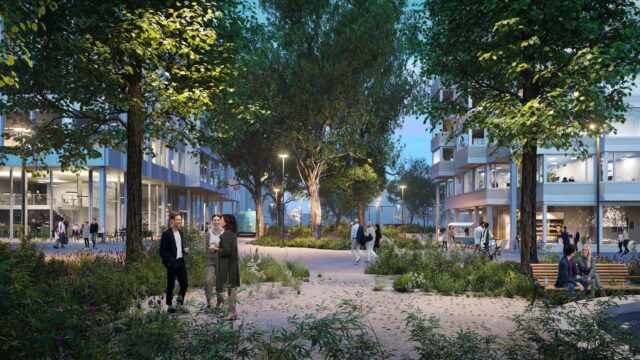
    In the heart of Maaglive, on the former Maag site, a multifaceted centre is expected to be created by the end of 2028. Consisting of the historic K building, a modern residential tower, a cultural pavilion and lively open green outdoor spaces, a new neighbourhood life will be created here.

    Maaglive focuses on neighbourhood revitalisation and new standards in urban development. The existing K building is and will remain a meeting point with catering and cultural facilities and co-working areas, while the cultural pavilion offers space for art and encounters. The residential tower complements the offer with living, working and catering space.

    The infrastructure on the neighbourhood square is tailored to the needs of residents, visitors and children and ensures a lively atmosphere. Events that attract residents and visitors alike will also take place here. The neighbourhood square is therefore a lively meeting place for the community. This green and traffic-free public area invites people to sit down, meet and play, surrounded by native trees. It connects the neighbourhood with the surrounding network of footpaths and cycle paths and serves as a natural extension of the urban living space, helping to reduce heat in the surrounding area.

    Maaglive combines sustainability with urban living. Thanks to flexible construction methods and the use of renewable energy sources, the new buildings fulfil the highest energy standards. The use of hybrid timber construction methods in the residential building emphasises the commitment to environmentally friendly design and positions Maaglive as a pioneer in sustainable urban development.

  • Value-added tax in the canton of Zurich – skilful solutions required

    Value-added tax in the canton of Zurich – skilful solutions required

    Pressure from the federal government
    The federal parliament has set the course with the revision of the Federal Spatial Planning Act (SPA) and the electorate has approved this amendment. Since 1 May 2014, the new Art. 5 para. 1bis to para. 1sexies RPG regulate the minimum requirements for the levy on added value.

    The amount of the added value levy in the canton of Zurich
    The canton of Zurich has fulfilled its obligation with the entry into force of the legislation on added value. A distinction is made between zoning and upzoning/rezoning. For single-zone developments, the canton charges 20% of the added value. The municipalities can stipulate a maximum levy of 40% for upzoning or rezoning. The estimated levy rates vary between 20% and 40%.

    When calculating the value-added levy, the municipalities can exercise a certain degree of discretion and allow certain deductions: Firstly, value-added levies of less than CHF 30,000 are not charged. In addition, the legislation provides for a flat-rate deduction of CHF 100,000. Furthermore, the municipalities determine an open area of between 1,200 m2 and 2,000 m2. Planning expenses can also be deducted from the added value.

    Assessment and legal protection
    In individual cases, the municipalities consult valuation companies to calculate the added value. In practice, it has been shown that these companies use their own databases, the data basis of which is hardly comprehensible for those affected. Nevertheless, certain corrections can sometimes be made at this stage. It is therefore worth examining such calculations in depth and analysing them.
    After granting the right to be heard, the authority determines the added value by means of a ruling. This can be appealed to the Building Appeal Court of the Canton of Zurich.

    Urban development contract – a useful instrument
    An alternative is the urban development contract (Section 21 MAG). In such a contract, the parties are free to agree on benefits in kind from the landowner instead of a payment. In this case, the added value and value of the services do not necessarily have to be estimated. In many cases, this gives the parties economic and spatial room for manoeuvre. Possible agreements could relate to the upgrading of publicly accessible areas, the promotion of public transport, participation in public facilities (e.g. crèche) or the creation of affordable housing. The landowner receives a means of upgrading their own development or its surroundings by offsetting the value-added tax to be paid; often a win-win situation.

    Solutions allow a lot of money to be used for your own development that would otherwise disappear into a state pot. It is advisable to consult a specialised law firm for the possibilities.

  • Timber construction company introduces new organisational structure

    Timber construction company introduces new organisational structure

    Pirmin Jung Schweiz AG, a timber construction company based in Sursee, wants to revise its organisational structure. According to a press release, the company is aiming for a flexible and agile structure based on the expertise of all employees. According to the press release, decisions will be made directly at the point of decision making, independent of a predetermined hierarchy. A management team of 16 people will take care of strategic decisions. At the same time, the new organisational structure will incorporate and implement ideas from all areas.

    “We are of the opinion that we can successfully master the increasingly complex tasks and issues for us as a company and in the projects if the people with the greatest expertise in the topic work on and decide on the issues in the spirit of Pirmin Jung,” company owner Pirmin Jung is quoted as saying in the press release. “The new organisational form is an agile organism that allows us to react flexibly to challenges and drive innovation. The projects and tasks that we work on as a company are at the heart of our organisation.”

  • App revolutionises asbestos control in buildings

    App revolutionises asbestos control in buildings

    Asbestos remains a major problem in the construction industry, even decades after it was banned. Improper renovation or demolition work on affected buildings can release dangerous asbestos fibres that pose a significant health risk. The latest VDI standard DIN 6202 Sheet 3 sets new standards for precise pollutant analyses, which can be efficiently implemented using the “IK Report App”.

    The app presented by Robin Krepp, Managing Director and co-founder of IK-Report GmbH, enables direct data acquisition on mobile devices, which reduces the need for subsequent digitisation and considerably simplifies the process of pollutant testing. The intuitive user interface and instant processing of data allows professionals to act quickly and accurately, without time-consuming manual steps.

    The app integrates advanced functions such as the linking of findings and the automatic calculation of the certainty of results in accordance with VDI 6202 Sheet 3. These functions allow precise planning of sampling and adaptation to new findings during the inspection. A further advantage is the avoidance of transmission errors through direct digital recording, which improves the accuracy of the data and the allocation of photos and site plans.

    In addition to recording asbestos, the app can also be used for other pollutants and supports the documentation and evaluation of air measurements and fire dampers containing asbestos. The range of applications of the IK Report app makes it an essential tool for the modern construction industry, which not only increases efficiency but also significantly improves health safety in construction.

  • The construction of a CO2-neutral cement plant in Lägerdorf

    The construction of a CO2-neutral cement plant in Lägerdorf

    The construction of the new Holcim cement plant in Lägerdorf marks a decisive step in the global endeavour to reduce the cement industry’s CO2 emissions. With a planned commissioning in 2028, the plant will be one of the first of its kind to operate completely CO2-neutral. The participation of high-ranking political and business leaders, including Dr Robert Habeck, Vice-Chancellor and Federal Minister for Economic Affairs and Climate Protection, and Daniel Günther, Minister-President of Schleswig-Holstein, underlines the importance of this project for German industry and global environmental policy.

    The “pure oxyfuel” technology is the centrepiece of the project. It makes it possible to capture almost all of the CO2 generated during cement production from the exhaust gases. Instead of conventional air, pure oxygen is used in the combustion process, which drastically reduces emissions. The captured CO2 is then processed and can either be reused in other industries or stored safely. This process represents significant progress in the endeavour to make cement production more sustainable.

    Dr Cetin Nazikkol, Member of the Executive Board of thyssenkrupp Decarbon Technologies, emphasises that cement is a fundamental building material, but its production releases significant amounts of CO2. The innovative technology from thyssenkrupp offers a sustainable solution to meet these challenges. The plant in Lägerdorf will be a model of how the cement industry can be transformed to minimise its environmental footprint while maintaining industrial production.

    The commitment to a climate-neutral future is also shared by local government representatives. Minister President Günther emphasises that Schleswig-Holstein is at the forefront of the energy transition and that the project in Lägerdorf is another milestone on this path. This development will not only protect the environment, but also promote new technologies and stimulate sustainable economic growth in the region and beyond.

  • Medusoil leads consortium to valorise construction waste

    Medusoil leads consortium to valorise construction waste

    Medusoil SA has been awarded the contract for a cooperation project to promote the utilisation of demolition and excavation waste in Switzerland, according to a press release. The contract was awarded by the Office for Innovation and Economic Development(SPEI) of the Canton of Vaud. Founded in 2018, the young company is a pioneer of innovative and sustainable binders for the construction materials sector.

    The collaboration involves partners such as Texum SA in Payerne, a company in the field of road stabilisation and fibre-reinforced concrete, and Argramat SA, a real estate developer with expertise in the field of materials. The consortium has set itself the goal of tackling one of Switzerland’s most pressing environmental problems: the upgrading of construction waste through the large-scale use of a recycling and biomineralisation plant.

    “Projects like these, which are carried out jointly and have an impact on sustainable construction, accelerate the transition to a sustainable economy and make an important contribution to the development of the construction world,” says Dimitrios Terzis, CEO of Medusoil. The consortium’s focus on waste utilisation fits perfectly with the growing need to tackle environmental problems in Switzerland and abroad, Terzis continued.

    The project fits into the framework of SPEI’s co-operation initiatives in the field of sustainable construction, according to the press release. The most important aspects of these include the establishment of a production line for new building materials or the valorisation of construction waste, the development of practices for the reuse, deconstruction, renovation and replacement of construction elements and materials, as well as the development of innovative construction techniques to improve sustainability.

  • RTAG constructs new building in Altstätten

    RTAG constructs new building in Altstätten

    RTAG, a property service provider based in the St.GallenBodenseeArea, has broken ground on its new headquarters. According to a press release, the 1000 square metre office building was planned and designed by the architectural firm göldipartnerarchitekten ag from Altstätten. It contains 40 modern office workstations on three floors. The building itself is intended to be a functional and design focal point on Churerstrasse, one of the gateways to Altstätten, according to the press release. It is also characterised by its environmentally friendly construction. Heating and cooling will be provided by geothermal heat pumps and a photovoltaic system. The building envelope on the upper floors will be clad in wooden panelling. The surroundings will be landscaped with native plants and the roof will be extensively greened. The wood-aluminium windows used will also be designed to be environmentally friendly. The new building should be ready for occupancy in summer 2025.

    Roger Stieger, founder and third partner at RTAG, is quoted in the press release as saying that the decision to stay in Altstätten and plan a new building was a logical one. “Our roots are in Altstätten, we have grown from here and we want to continue to develop successfully from here in the future.”

  • Halter establishes competence centre for urban development and architecture

    Halter establishes competence centre for urban development and architecture

    Schlieren-based real estate developer Halter is creating a new centre of excellence for urban planning and architecture. According to a press release, it will be set up within the company under the responsibility of Christof Glaus, former Senior Partner at Stücheli Architekten in Zurich. The centre will support the areas of developments, overall services and renovations, particularly in the early strategic phases of project development. The establishment of the competence centre is scheduled to begin in April.

    As a Halter Group company, Halter AG shares the vision of establishing a circular economy in order to achieve the net-zero sustainability target for all projects. This requires a structural change in the property and construction industry that promotes and demands integrated collaboration models, the company continues.

    The new team for urban development and architecture is directly affiliated to the CEO of Halter AG and supports the areas of development, overall services and renovations in the early strategic phases of project development with urban development and architectural feasibility studies. The close and cooperative partnership with external, recognised urban planners, architects and open space planners remains of central importance.

    “In Christof Glaus, we have gained a renowned urban planner and architect who has been responsible for many outstanding designs and their realisation during his successful career,” says Maik Neuhaus, CEO of Halter AG. Glaus’ skills as a jury member or chairman of numerous competitions are also undisputed.

  • The heart of Switzerland pulsating with diversity and innovation

    The heart of Switzerland pulsating with diversity and innovation

    Zurich’s geographical and demographic structure contributes to its unique character. With its division into 12 districts and 34 neighbourhoods, nestled between the banks of the Limmat and the Uetliberg, Zurich offers a picturesque backdrop for its 428,700 inhabitants and 1.4 million people in the entire agglomeration. A remarkable 32% of the population, which comes from 172 nations, reflects the city’s international presence and openness.

    Zurich’s economic landscape is characterised by diversity and strength. The financial sector, which represents a quarter of local economic output, and the booming creative industries with 39,000 jobs emphasise Zurich’s role as an economic powerhouse. With a high tourism rate, underpinned by 3.4 million annual overnight stays and a major air and rail transport hub, Zurich is also a key centre of attraction for international visitors. In addition, a diverse cultural scene, with world-class museums and a historically valuable old town, enriches urban life. Festivals, art and music events as well as the natural recreational areas on Lake Zurich and the Uetliberg offer residents and visitors a high quality of life.

    Zurich thus not only stands for a successful combination of cultural diversity and economic dynamism, but also for a progressive attitude towards the future. This city shows how modern urbanity can be designed in harmony with historical heritage and natural beauty, and sets itself as a leading example of innovation and quality of life in a global context.

    Foundations for a vibrant city
    Zurich Urban Development is a division of the Department of the President of the City of Zurich and reports directly to the Mayor. It comprises five areas and its remit is to provide the foundations and strategies for socio-spatial urban development. The team deals with a variety of topics and is committed to an integrated and user-orientated understanding of urban development and planning. This includes, for example, preparing studies and expert reports, conducting impulse projects and representing socio-spatial aspects in projects led by third parties. Urban development also takes on coordination and special tasks. An important focus of the work is the involvement of the population. Participatory processes and workshops are organised in order to incorporate citizens’ ideas and concerns into urban development. In this way, the City of Zurich creates broad acceptance for a number of projects and strengthens the sense of togetherness in urban society. In addition, an intensive exchange with other municipal offices and external partners is maintained in order to ensure holistic and sustainable urban development. The aim is to further develop Zurich as a vibrant, diverse and liveable city.

    Strengthening the location for tomorrow
    Economic development promotes dialogue between politics, administration and business and advocates good framework conditions. It supports young entrepreneurs and projects that strengthen the future viability of the location and make it visible both nationally and internationally. The Economic Development Agency attaches great importance to sustainable urban development. It is committed to ensuring that the business community is given greater consideration and involvement in order to achieve the City of Zurich’s sustainability goals. The targeted promotion of education and innovation is an important building block for strengthening the location for tomorrow. The Economic Development Agency is committed to ensuring that educational programmes are closely linked to the needs of the economy in order to secure qualified specialists for the future. It also supports innovation projects and technology transfer in order to drive the regional economy forward and create new jobs. Through this holistic approach, economic development contributes to strengthening the location in the long term and making it fit for the future.

    Key to promoting growth
    Innovation and digitalisation in companies are actively promoted by economic development. Targeted funding programmes and consulting services support companies in using future-oriented technologies and strengthening their competitiveness. The Economic Development Agency is also committed to the creation of qualified jobs and the training of skilled labour. It works closely with educational institutions and companies to ensure that young talent is trained in a customised way and to combat the shortage of skilled workers in the long term.

    Impetus for the future
    An important aspect of business development is the promotion of start-ups and innovative business ideas. By providing targeted support and advice, young entrepreneurs are encouraged to realise their ideas and lead them to commercial success. The Economic Development Agency regularly organises events and networking meetings to promote the exchange between established companies and start-ups and to create synergies. In this way, Zurich can be further strengthened as an innovative and attractive location for start-ups.

  • Ground-breaking ceremony for Bern’s first PlusEnergy neighbourhood

    Ground-breaking ceremony for Bern’s first PlusEnergy neighbourhood

    Today’s ground-breaking ceremony symbolically marked the start of the PlusEnergy Aarerain neighbourhood in Worblaufen. Following an extensive development phase, preparations for the construction site began in September 2023.

    The new development will offer 189 flats for up to 400 residents. In addition to the flats, a daycare centre and studio spaces are also planned on the ground floors, which will enliven the neighbourhood square. The project’s slope path will provide barrier-free access to the Aare area and the municipality of Ittigen’s new leisure and water sports centre. “Good things come to those who wait,” is a well-known saying,” says a delighted Marco Rupp, President of the municipality. “The Aarerain project completes the reorganisation of the Aare area in Worblaufen and fits in perfectly with our sustainable basic ideas of urban development.”

    PlusEnergy neighbourhood produces energy surplus
    Over the course of the year, the new housing estate will produce more energy than it consumes in accordance with the PlusEnergy neighbourhood energy standard based on weighted criteria. This will be achieved through the consistent use of photovoltaics on the roofs and façades of the six to eight-storey buildings. The PV panels on the façades will be realised in a green-blue colour and reflect the play of colours of the Aare and the surrounding area. Heat is generated by means of geothermal probes; the geothermal probes are regenerated in summer by cooling the flats via the underfloor heating.

    The “PlusEnergy neighbourhood” energy standard launched by the Swiss capital region promotes sustainable development in the building sector with a simple and clear definition, thereby contributing to the implementation of the Swiss government’s Energy Strategy 2050. The cantons and municipalities are working together with renowned infrastructure companies and investors. Cantonal Councillor Christoph Ammann adds: “PlusEnergy neighbourhoods enable sustainable development – without compromising on living comfort. I am delighted when such flagship projects shine beyond the capital region.”

    Close to nature and sustainable
    However, the development will not only score points in terms of its positive energy balance. The sustainable project is characterised by attractive flat layouts, a natural living environment with a view of the Aare and the greatest possible preservation of the green spaces on the banks of the Aare. Keeping the green spaces free is made possible by the compact construction of the site in the eastern part of the plot. Thanks to this skilful urban planning in the sense of economical use of the land, a good half of the plot remains undeveloped and natural. The car-free neighbourhood square between the buildings offers a high quality of stay and counteracts overheating in summer with its differentiated paving and greenery.

    The symbolic ground-breaking ceremony on 9 April 2024 marked the official start of the development of the Aarerain PlusEnergy district in Worblaufen, a project by Losinger Marazzi in collaboration with the CPV/CAP Coop pension fund and the municipality of Ittigen. The architecture was designed by Fischer Architekten AG. This ultra-modern residential development is scheduled for completion at the end of 2026 and will not only offer 189 flats, but also communal facilities such as a daycare centre and studios to enliven the neighbourhood.

  • A controlled development in Corsier

    A controlled development in Corsier

    The densification strategy for this zone, which covers 55% of the buildable area of the municipality, proposes to further develop the Maisons-Neuves neighbourhood along the Route de Thonon with a zoning change, by locating a variety of housing and services there.
    As 45% of the territory is in agricultural zones and the natural environment is strongly represented, this densification strategy makes it possible to preserve and enhance these spaces and the municipal heritage.
    As the quality of life of the population is central, particular attention is paid to the development of public spaces. Improving the soft mobility network will also facilitate access to these living spaces and to neighbouring municipalities.
    This vision for the development of the villa area is in line with the 2030 cantonal structure plan.

  • Axept and PropBase join forces for property

    Axept and PropBase join forces for property

    The software companies PropBase from Neuhausen am Rheinfall and Axept from St.Gallen have agreed to work together in the property sector. According to a press release, the collaboration will focus in particular on processing large volumes of data in the areas of property ownership, asset management, construction companies, property management, property management and accounting. Both companies want to digitalise this complex data processing to a large extent and thus make the market more transparent and easily accessible for customers. PropBase provides web-based, constantly updated software that offers an overview of properties throughout Switzerland. Axept integrates seamless commercial management with its Abacus-based software. The programme package is specially designed for the Swiss market and complies with all legal requirements.

    According to the press release, the partnership in the software sector is intended to significantly advance the digitalisation of the real estate industry. Axept will also take over the implementation, support and training for PropBase programmes.

  • Prices for residential property rise by over 3 per cent

    Prices for residential property rise by over 3 per cent

    The market for owner-occupied residential property remains robust in the first quarter of 2024, according to Raiffeisen in its media release on the Q1 transaction price index. According to the report, prices for single-family homes rose by 1.4 per cent in the first quarter of 2024. This means they have become 3.9 per cent more expensive compared to the same quarter of the previous year.

    Single-family homes around Lake Geneva (+7 per cent) and in western Switzerland (+5.9 per cent) recorded the strongest year-on-year increases. In contrast, prices in Eastern Switzerland stagnated (+0.0 per cent).

    By contrast, prices for condominiums have risen the most in Northwestern Switzerland (+7.2 per cent) and Central Switzerland (+4.9 per cent) over the past four quarters. Prices rose only slightly in eastern Switzerland (+0.7 per cent) and on Lake Geneva (+0.9 per cent). Compared to the previous quarter, prices for owner-occupied condominiums fell by an average of 0.3 per cent.

    “Now that the SNB has heralded a downward turn in interest rates due to surprisingly low inflation figures, buying is once again somewhat more attractive than renting a comparable flat,” says Raiffeisen chief economist Fredy Hasenmaile. “This will increase the recently declining demand for residential property again and thus support price momentum.”

    Within the space of a year, prices for home ownership rose by 7.1 per cent, the most in central municipalities. In the condominium segment, urban municipalities recorded the strongest price increases (+4.4 per cent).

  • Extension to create more living space

    Extension to create more living space

    The densification of Swiss cities should also be realised upwards. This is what the FDP is calling for together with FDP Urban, an initiative of FDP city parties. According to a press release, they propose increasing the permitted building height in all residential zones by one to two storeys. In addition, the maximum permitted height of existing buildings should be increased by at least three metres.

    The increase in height would make it possible to build flats without building over existing green spaces. Areas with protected townscapes or listed buildings are to be excluded.

    The FDP points out that similar proposals have already been implemented in Geneva since 2008. The FDP City of Zurich is currently collecting signatures for its municipal popular initiative “More living space by adding storeys – neighbourhood-friendly and sustainable”. The FDP Switzerland submitted a 6-point plan against the housing shortage in 2023. It also proposed increasing the utilisation rate by adding storeys to buildings, among other things.

  • Ina Invest completes merger and increases market capitalisation

    Ina Invest completes merger and increases market capitalisation

    Ina Invest Holding Ltd has successfully completed the merger with its subsidiary Ina Invest Ltd announced in February. The Annual General Meeting of Ina Invest Holding Ltd approved the plans to simplify the company structure through a merger on 3 April, the real estate company announced in a press release. In future, the company will operate under the name Ina Invest Ltd.

    The merger also resulted in an increase in market capitalisation. To this end, 6,808,238 new registered shares were listed on the SIX Swiss Exchange. This increased the share capital by around 40 per cent to CHF 282 million.

    The shareholding structure has not changed as a result of the increase in market capitalisation. Implenia Ltd remains the main shareholder with a 41.1 per cent stake in Ina Invest Ltd. The second largest shareholder is BURO Holding AG with 15.7 per cent of the shares. The MV Immoxtra Switzerland real estate fund, Swiss Life Holding Ltd and the RoPas (CH) Institutional Fund each hold more than 3 per cent of the shares in Ina Invest Ltd.

  • City of Baden reviews development for the Galgenbuck area

    City of Baden reviews development for the Galgenbuck area

    In consultation with the canton of Aargau, the city of Baden is launching a cooperative workshop process to review the development guideline plan (ERP) for the Galgenbuck area in Baden-Dättwil, according to a press release. The ERP, which was drawn up in 2008, defines planning parameters and strategic objectives for the development of the plot and was revised in 2019. To date, it has not been possible to reach agreement on the development of Galgenbuck in the subsequent procedures. As a result, the zoning procedure has been blocked. At 15 hectares, the Galgenbuck site in Dättwil is the last large and contiguous settlement reserve in the city of Baden.

    “The workshop process allows for an open discussion. We are conducting it with the aim of jointly setting the right course for one of the last settlement reserves,” says Karin Bächli, Co-Head of Urban Development and Environment. The city of Baden, Baden Regio, the canton and experts are now to test the future viability of the Galgenbuck development plan on an interdisciplinary basis and reach a consensus on how to proceed.

    “This modern review of the ERP will provide the necessary certainty for future investors and users,” says Markus Schneider, Mayor of the city. The process, which has now been presented to those directly affected, should provide clarity on the next steps by 2024.

    According to the press release, the review of the ERP is running in parallel with the overall revision of Baden’s building and utilisation regulations. The master plan for the cantonal development centre in Dättwil is also being drawn up.

    The cantonal Department of Construction, Transport and Environment (BVU) has suspended the project for Mellingerstrasse, which was developed jointly with the city, until the results of the urban planning processes are available.

  • Holcim takes over Argentinian company Tensolite

    Holcim takes over Argentinian company Tensolite

    Zug-based building materials producer Holcim has signed an agreement to acquire Tensolite, an Argentinian manufacturer of innovative concrete construction systems, according to a press release. The company, which has plants and a distribution network in Argentina, Paraguay and Uruguay, had net sales of USD 22 million in 2023. Tensolite employs 155 people. All are to be taken over. The transaction is expected to be completed in the second quarter of 2024.

    “With the acquisition of Tensolite, we are further expanding our Solutions & Products portfolio in Latin America and worldwide,” Holcim’s Latin America CEO Oliver Osswald is quoted as saying. “Due to its leading position in innovative precast and prestressed concrete construction systems, Tensolite will be an important part of our further expansion into the most attractive markets while offering synergies with other business units such as our network of Disensa construction markets.” Holcim’s Disensa brand is the largest franchise network for building materials in Latin America.

    Tensolite was founded in 1979. Its concrete construction systems range from beams and roof tiles to customised products for large construction projects such as bridge girders, grandstands and pavements. Other innovations include cost-efficient, interlocking precast walls. They can be assembled by four people without the use of cranes or other machinery.

  • Zurich Airport builds new cargo hall

    Zurich Airport builds new cargo hall

    Flughafen Zürich AG is modernising part of its infrastructure with the construction of a new cargo hall. According to a press release, the building in the east of the airport will have an area of 9500 square metres. The airport’s oldest cargo halls date back to the 1950s and 1960s. They do not always meet today’s requirements, according to Flughafen Zürich AG.
    The new Rächtenwisen freight hall will be used by dnata Switzerland AG, a service provider for ground handling and freight. The new cargo hall will include 20 docking ramps for lorries, areas for import and export processes and for customs and security checks. It will also be possible to handle pharmaceutical and hazardous goods here. Offices are located on a mezzanine floor on the south side.

    In the past, it was mainly standardised pallet goods that were transported, according to the press release. Today, transport specialises in small goods and freight with different temperature and size requirements. This trend increases the need for suitable freight areas.

    The hall is planned as a concrete column construction with a wooden supporting structure and photovoltaic system on the roof. Construction is due to start in April 2024, with commissioning expected in 2027.

  • A visionary spatial planning concept for the future of the Zurich metropolitan area in 2050

    A visionary spatial planning concept for the future of the Zurich metropolitan area in 2050

    With almost 40% of the Swiss population and the majority of jobs, the Zurich metropolitan area is home to a significant proportion of national life and economic activity. The updated spatial planning concept Metro-ROK 2050, an update of the first Metro-ROK from 2015, defines ambitious planning objectives for this important economic and living space. It aims to promote sustainable development that fulfils both the needs of the population and the protection of the environment.

    The concept divides the area into four action areas: urban landscapes with urban centres, transitional landscapes with regional centres, cultural landscapes and natural landscapes. This categorisation makes it possible to develop targeted measures that guarantee a high quality of life and at the same time make the area ecologically sustainable.

    A core concern of the Metro-ROK 2050 is the protection of green spaces and the promotion of high-quality inner-city development. No expansion of the settlement area is planned until 2040 in order to stop urban sprawl and make better use of existing areas. The building culture should be based on the circular economy principle, take grey energy into account and protect biodiversity.

    The concept also places a strong focus on the sustainable use of resources and the promotion of energy efficiency. Innovative technologies and ecological construction projects should help to improve the carbon footprint and make the metropolitan area more resilient to climate change. Renewable energies and the reduction of soil sealing are just as much a focus as the promotion of public transport and sustainable mobility solutions. The aim is to significantly increase the proportion of environmentally friendly means of transport by 2050.

    The Zurich Metropolitan Area 2050 spatial planning concept represents a decisive step towards sustainable and future-proof development. With the positive acceptance of the recommendations for action by the Metropolitan Council on 3 November, a further milestone has been reached. The concept reflects the commitment of the participating cantons to work together to ensure a liveable and ecologically sustainable Zurich metropolitan area.

  • Swiss Chamber of Real Estate Agents strengthens quality standards

    Swiss Chamber of Real Estate Agents strengthens quality standards

    The Swiss Chamber of Real Estate Agents remains on course for success, as was announced at this year’s General Meeting in Zurich. The Board of Directors proudly announced an increase in the number of members to a total of 125. This growth underlines the members’ commitment to the SMK’s high quality standards.

    To become a member and receive the coveted quality label, estate agents must undergo strict quality management procedures and demonstrate their expertise in regular audits.

    As part of the Swiss Real Estate Association, the SMK brings together professional and independent estate agents who are committed to quality, continuous training and fairness in their advice. By establishing quality standards, the SMK actively campaigns against dubious business practices in the property sector.

    Ruedi Tanner, President of SMK, emphasises the importance of quality standards and the added value of the SMK quality label for members: “Our members are characterised by their comprehensive expertise and their commitment to the highest standards. The SMK quality label provides orientation in the market and enables our members to clearly differentiate themselves. At the same time, they can strengthen the trust of their customers with their certificate. The continuous growth in our membership is a direct result of our quality strategy.”

    The Board of Directors, consisting of experienced personalities from the property sector, was confirmed at the Annual General Meeting and continues to promote quality and professionalism in the estate agent sector.

  • 4B invests 35 million Swiss francs in Hochdorf

    4B invests 35 million Swiss francs in Hochdorf

    4B is investing around 35 million Swiss francs in a new machining centre and four new halls at its headquarters in Hochdorf. The Lucerne-based window and façade manufacturer also plans to install photovoltaic systems on both the old and new halls. “With this investment, we are laying the foundations for a new era and another 125 successful years in Hochdorf and Switzerland,” said 4B CEO Jean-Marc Devaud in a press release issued by the company.

    Construction work on the four new halls began on 27 March with the ground-breaking ceremony. It should be completed by the beginning of 2025. The first photovoltaic systems will be installed on the existing halls this year. Once the installation work on the new halls has also been completed, 4B in Hochdorf aims to produce around 3 gigawatt hours of electricity from solar energy every year. This is enough to cover the company’s entire electricity consumption in Hochdorf. In addition, 4B utilises the wood waste from production to generate heat in its own combined heat and power plant.

    “With the four new halls and the new machining facility, we are creating the basis for the long-term optimisation of our production processes,” explains Devaud. 4B is also planning to bring production processes that are currently outsourced back to Hochdorf. “We are also creating the flexibility to be equipped for the future,” says the company boss.