Category: Construction

  • Innovation Park Zurich gets its first new buildings

    Innovation Park Zurich gets its first new buildings

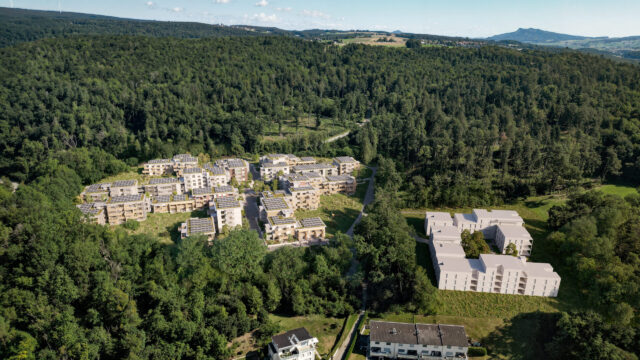
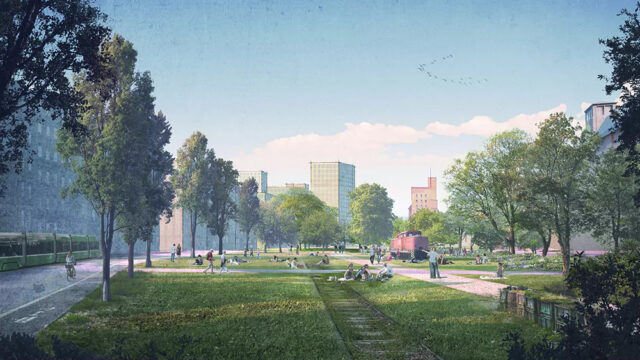
    The first development phase of the Zurich Innovation Park on the airfield site in Dübendorf is taking shape, the operator announced in a press release. Construction work on a total of seven new buildings on the apron of the site is set to begin this year. The projects were selected from a total of 28 proposals submitted last year in a global architectural competition.

    The projects now selected were developed by the architectural firms E2A, Roger Boltshauser, Mulder Zonderland and TEN from Zurich as well as Muoto from Paris and 3XN from Copenhagen. According to the current planning status, around 24 per cent of the total floor space is to be divided into office space, 8 per cent into laboratory space and 12 per cent into production space, for example for the manufacture of prototypes. A further 36 per cent is planned as flexible space for various uses. In addition, areas for utilities, services and research-related living are to be created. Catering, leisure and shopping facilities are also planned.

    With its own development, the Innovation Park Zurich aims to set an example for innovative urban development and sustainability. “Accordingly, special building typologies are being developed that can be used sustainably over long periods of time thanks to their flexibility and modularity and have a significantly reduced ecological footprint through the use of new technologies,” the press release states. Plans include the installation of an anergy grid and large solar panels on roofs and façades.

  • Pistor builds distribution center in Eastern Switzerland

    Pistor builds distribution center in Eastern Switzerland

    Pistor AG has broken ground in Sennwald for its new distribution center in Eastern Switzerland. According to a press release, Pistor will supply catering businesses, bakeries and hospitals in the cantons of Thurgau, St.Gallen, Appenzell Ausserrhoden and Innerrhoden, Graubünden, Glarus and the Principality of Liechtenstein primarily from Sennwald and no longer from its headquarters in Rothenburg.

    The new logistics building will cover 9,000 square meters and provide space for 16 truck ramps, logistics areas, offices and a truck wash supplied with rainwater. Solar panels will be installed on the roof. Part of the truck fleet will be electric. The wholesaler is investing 18.5 million Swiss francs in this project.

    Up to 24 employees are planned on site. Commissioning is scheduled for 2025. “For us, the start of construction is a moment we have been working towards intensively,” CEO Patrick Lobsiger is quoted as saying. “The Eastern Switzerland distribution center stands for the future orientation and innovative strength of our company.” The new head office enables more delivery days, shorter distances and, above all, sustainable delivery. Deliveries are made by rail at night before the goods are distributed from Sennwald by truck.

    “With this move, we are gaining another nationally active and innovative company in Sennwald,” says Sennwald’s mayor Bertrand Hug. “It is particularly pleasing that jobs will be created.”

  • Zurich economic region records 89 new companies

    Zurich economic region records 89 new companies

    The Greater Zurich Area AG and its partners attracted a total of 89 companies to the Zurich economic region last year. Compared to the previous year, the number of companies relocating to the region was 20 lower, Greater Zurich Area AG reported in a press release. “Last year was dominated by geopolitical uncertainties, inflation and a general mood of crisis, which had a direct impact on investment activity,” said Sonja Wollkopf Walt, Managing Director of the location marketing organization. “Despite a decline in the number of companies moving here, we are cautiously optimistic about the future.”

    The jobs created by the new companies in the first year also fell short of the previous year’s figure due to the lower number of new companies settling here. However, 1463 new jobs are to be created over the next five years, an increase of 13% compared to the plans of the companies settling in 2022. In addition, 62 percent of the companies relocating in 2023 are active in the focus industries defined by Greater Zurich Area AG. Almost three in ten of the new companies planning to relocate to the Greater Zurich Area.

    The location marketing organization highlights the establishment of the Boston Dynamics AI Institute in Zurich as one of the highlights of 2023. According to the press release, this flagship project is primarily due to the activities of the Swiss Federal Institute of Technology in Zurich in the field of artificial intelligence. It describes the reporting year as a “year of breakthroughs in the field of artificial intelligence technology”.

  • Construction of seven new buildings to begin this year

    Construction of seven new buildings to begin this year

    The Zurich Innovation Park is taking shape, as the operator announced in a recent press release. The first phase of the development, which includes the construction of seven new buildings on the apron of the site, will be launched this year. These projects were carefully selected from a total of 28 proposals submitted as part of a global architectural competition.

    The selected projects come from renowned architectural firms such as E2A, Roger Boltshauser, Mulder Zonderland, TEN from Zurich as well as Muoto from Paris and 3XN from Copenhagen. The planned use of the total floor area is divided into around 24 per cent office space, 8 per cent laboratory space and 12 per cent production space, including areas for the production of prototypes. The focus is on flexibility, with a further 36 per cent for a variety of uses and areas for utilities, services and research-related living. Catering, leisure and shopping facilities are also planned.

    The Innovation Park Zurich is pursuing an ambitious sustainability concept that is intended to lead the way for urban developments. Planned measures include the establishment of an energy grid and the installation of large solar panels on roofs and façades to ensure a reduced ecological footprint. By creating flexible and modular building typologies, the Zurich Innovation Park is aiming for long-term usability and sustainability while incorporating the latest technologies.

  • Federal Council supports restriction of the right of appeal for associations

    Federal Council supports restriction of the right of appeal for associations

    The National Council’s Committee for the Environment, Spatial Planning and Energy has drafted a proposal to restrict the right of environmental organisations to lodge complaints about smaller residential buildings within the building zone. This initiative aims to simplify the bureaucratic process of planning permission, particularly for small-scale construction projects.

    The Federal Council issued its opinion on this proposal on 27 March 2024 and supports the proposals of the UREK-N. It is in favour of restricting the right of appeal for residential buildings with a floor area of up to 400 m2 within building zones. This step should help to make the construction process more efficient for private developers and at the same time ensure the protection of important environmental and cultural heritage sites.

    In addition, the Federal Council agrees with the exceptions proposed by the UREK-N. In particular, the right of appeal by associations should remain in place for construction projects that affect important sites, historical sites and cultural monuments, as well as for buildings in sensitive areas such as biotopes or water areas.

    The bill is expected to be discussed by the National Council in the special session in April. This development illustrates the ongoing efforts to ensure a balanced approach between economic development and environmental protection in the construction industry.

  • Swiss municipalities keep proportion of second homes stable

    Swiss municipalities keep proportion of second homes stable

    The latest survey by the Federal Office for Spatial Development (ARE) shows that the proportion of municipalities that no longer permit new second homes remains significant. Around one in six Swiss municipalities is affected by this decision, and this figure has only risen slightly compared to the previous year.

    Interestingly, Switzerland now has a total of 340 municipalities with a proportion of second homes of over twenty per cent. In these municipalities, new second homes are only permitted under strict conditions, as stipulated in the Second Homes Act. Particularly affected are areas in the Alpine arc, the foothills of the Alps, occasionally in the Jura and on lakes.

    The municipalities carry out their annual housing inventories to determine the number of second homes. The results are published by the ARE at the end of March each year. Municipalities whose proportion of second homes is now over twenty per cent then have 30 days to comment and clarify their inventory. If the proportion remains above twenty per cent, the Second Homes Act, which regulates the construction of new second homes and is based on the Second Homes Initiative adopted in March 2012, applies.

    This development underlines the efforts of Swiss municipalities to regulate the issue of second homes in accordance with legal requirements and to maintain the balance between recreational and residential use in their regions.

  • Competition for construction project in Riedholz is complete

    Competition for construction project in Riedholz is complete

    Halter AG is developing the Attisholz site in the municipality of Riedholz. According to a press release issued by the property developer from Schlieren, the planning law basis for developing the site into a vibrant and sustainable living space over the next 25 years has been created with the land-use plan, which came into force in January 2022. A competition was organised for the warehouse building. This competition has now been concluded.

    The task was to add new storeys to the existing building to create attractive condominiums. In the past, the warehouse was used to store materials for cellulose production on the Attisholz site. During the development of the site, it has been used intensively in recent years as a venue for a variety of events, the report continues.

    According to the landowner Halter, five teams, known as work groups, were invited to develop a proposal for the extensions in collaboration with architectural firms. The process was overseen by an assessment panel consisting of experts in the fields of architecture and urban planning, representatives of the municipality of Riedholz and the Office for Spatial Planning of the Canton of Solothurn, as well as Halter AG.

    The committee unanimously decided to recommend the design and construction of the building envelope by Blumer Lehmann Holzbau in Gossau SG, together with Stücheli Architekten in Zurich, and the supporting structure by Anliker AG in Emmenbrücke LU for further processing.

    The projects for the Attisholz site can be viewed from Thursday 21 March in a public exhibition on the site in the so-called Eindampfanlage.

  • Researchers develop scenarios for Biel hospital site

    Researchers develop scenarios for Biel hospital site

    A new study by the Institute for Settlement, Architecture and Construction at Bern University of Applied Sciences provides initial impetus and possibilities for the further development and valorisation of the vacant hospital site in Biel’s Beaumont district. With the planned relocation of the Biel hospital centre to Brügg, one of the central development focal points for the coming years will be created there.

    According to a press release, the aim was to create a solid knowledge base on which architecturally sound and sustainable decisions can be made. A participatory approach allowed the needs and expectations of the population and relevant interest groups to be taken into account. Their opinions, demands and visions were collected through workshops, surveys and discussion rounds.

    As the study shows, there is the possibility that the site could become a place with a variety of uses that enriches the neighbourhood and becomes accessible and attractive for the entire urban population: “A variety of building types, for example, could enable a broad spectrum of uses, forms of housing and living spaces,” the press release states. “However, as the students’ work shows, the possibilities for valorisation and development of the site are almost limitless.”

    This independent research work by Bern University of Applied Sciences will now be made available to the city of Biel as the planning authority and Spitalzentrum Biel AG as the landowner for further work. In the next step, both will commission a feasibility study.

  • Alternative location for energy centre in Zurich

    Alternative location for energy centre in Zurich

    The feasibility study conducted by the Swiss Center of Applied Underground Technologies in collaboration with Amberg Engineering AG, Rapp AG and experts from ETH Zurich and Lucerne University of Applied Sciences and Arts has confirmed that there are underground locations in Zurich that are suitable for an energy centre. The focus is particularly on the construction of a cavern beneath the ETH machine laboratory. The disused Latentunnel could be used as an access shaft to ensure access without serious emissions.

    It would also be possible to use the Latvian tunnel as a location for a heat storage facility. According to the HSLU experts, all of CoolCity’s CO2 emissions could be avoided in this way. This would enable the city to achieve its climate targets more effectively than with the Selnau site, where the combustion of gas is planned to compensate for peak loads and excess heat would have to be discharged into the Limmat.

    An underground site also has advantages in terms of rapid realisation and costs. In contrast to the Selnau site, the location under the ETH does not require any permits from the monument protection authorities and minimises the impact on the groundwater. The SCAUT engineers estimate the additional costs for the construction of an energy centre at CHF 15 to 30 million compared to the Selnau substation, plus around CHF 20 million for a heat storage facility. However, this is offset by the advantages of a large above-ground building that can be used for decades, as well as the climatic and environmental benefits of an underground structure.

  • Economic development Freiburg successful despite challenges

    Economic development Freiburg successful despite challenges

    The Economic Development Agency of the Canton of Fribourg, or WIF for short, supports companies wishing to expand their activities in the canton or relocate here. It is also responsible for implementing the New Regional Policy (NRP) in the canton. Last year, the WIF supported a total of 40 company projects and 23 NRP projects. Of the business projects, 24 were expansions and 16 were new establishments. The majority of the 16 new establishments (10 projects) came from Switzerland. One example of a Swiss new establishment is the Algaltek GmbH project, which has settled on the AgriCo-Campus in St-Aubin. Algaltek is a biotech spin-off of the EPFL and specialises in the production of algae.

    Strengthening 1000 jobs in Fribourg companies
    In addition to expansions and new settlements, projects are also helping to strengthen existing jobs in the long term. Last year, around 1000 jobs were secured in the canton thanks to WIF measures. One example of this is SMG Swiss Marketplace Group AG in Flamatt. The WIF supported SMG in its search for a new location in order to retain the 160 jobs in the canton of Fribourg. The choice fell on the bluefactory site in the centre of Fribourg, an attractive location that is easily accessible for employees from all over Switzerland and especially from western Switzerland. The move is planned for the second half of 2024. “The work of the Economic Development Agency is geared towards the long term,” said State Councillor Olivier Curty, Director of Economic Affairs and Vocational Training. “Every year, its work has a profound impact on our economy, both quantitatively and qualitatively, which pleases me.” WIF Director Jerry Krattiger also emphasised that the WIF is increasingly supporting research and development projects. “The importance of R&D projects in Fribourg companies is increasing. in 2023, we supported 13 such projects, 6 of which were co-financed by Innosuisse at federal level.”

  • Development plan for the ZVB site was clearly approved

    Development plan for the ZVB site was clearly approved

    The ZVB acts as a mobility service provider in the service of the population. In order to be able to fulfil its mission in the future, an urgently needed new infrastructure is required, which is set out in the Areal An der Aa development plan. Today’s referendum Sunday marks a historic moment for ZVB: with 81.3% in favour, the electorate has clearly voted in favour of the future of ZVB and positioned itself behind the company.

    Cyrill Weber, Managing Director of ZVB, is delighted with the clear result and emphasised in his speech: “We have always worked to take all the concerns of our project into account and achieve the best possible result for everyone. Today’s vote shows me that our efforts are recognised and appreciated by the public.”

    Thanks to the positive decision, the construction project can move forward. With the new main base, ZVB will be able to promote the growth of mobility and drive forward the electrification of the fleet. ZVB employees, who currently work in outdated infrastructures, will have modern workplaces where they can give their best.

    By adopting the development plan, additional uses will be made possible on the company premises and the area will become more permeable and greener. The ZVB is very grateful for the great support it has received over the past weeks and months.

  • Will this environmentally friendly composite material make reinforced concrete superfluous?

    Will this environmentally friendly composite material make reinforced concrete superfluous?

    The production of cement is considered to be particularly harmful to the climate, which is why the construction industry is looking for alternatives to reduce CO2 emissions. Researchers at the German Institute of Textile and Fibre Research (DITF) in Denkendorf have developed such an alternative. The new composite material made of natural stone, carbon fibres and biochar could be an environmentally friendly alternative to reinforced concrete and has an excellent CO2 balance.

    Joint project DACCUSS-Pre
    The use of plant materials such as wood, straw or other plant fibres as building materials enables efficient carbon sequestration. But for the team in the DACCUSS-Pre project, short-term storage is not enough. They are working on a new building material called CFS (CarbonFibreStone), which consists of plant-based carbon fibres, biochar and hard rock. This building material should not only fulfil all technical requirements, but also remove more carbon dioxide from the atmosphere in the long term than is released during its production.

    CFS achieves this carbon sequestration in three different ways
    The conversion of carbon-rich biomass such as algae into carbon fibres makes it possible to store carbon in the building material in the long term. The hard stone in the CFS also contributes to the binding of CO₂. Stone dust is produced during the manufacturing process, which accelerates the weathering of the stone and thus binds carbon dioxide from the air in the stone through chemical reactions. Biochar, another durable and carbon-rich material obtained from plant parts, is used as an insulating layer between the stone slabs.

    Building façade realised
    In close cooperation with the company TechnoCarbon Technologies, the project has already made considerable progress – a first prototype in the form of a building element for house walls has been successfully realised. This consists of the aforementioned components carbon fibres, hard rock and biochar. Two natural stone slabs serve as the outer walls of the building element. The carbon fibres reinforce the side walls with the help of technical fabrics and take on the tensile load, similar to reinforcing steel in reinforced concrete. The biochar in turn serves as filling material and acts as effective insulation.

    BIO-carbon fibres from raw materials
    The carbon fibres developed at DITF Denkendorf consist of lignin, which is obtained from biomass. These fibres are characterised by their cost-effectiveness due to low raw material costs and their efficiency in binding carbon. Compared to conventional reinforcing steel, they do not rust, which extends their service life. Although their production requires more energy than that of steel, the amount used in construction is so small that the overall balance of energy and CO2 emissions is more positive than that of reinforced concrete. The use of solar energy and biomass during production and the natural weathering of the stone powder mean that the CO2 balance of the new building material is actually negative. This means that buildings can be constructed that actively contribute to CO2 reduction.

    Environmental impact of the building façade
    The researchers from Denkendorf report enthusiastically about the new demonstrator for a wall element in building construction. This is made of gabbro, a natural stone from India, which is not only visually appealing but also has a high load-bearing capacity, as load tests confirm. The top layer of the stone panels is made from bio-based carbon fibres, with the biochar coming from the renowned Convoris GmbH, which is known for its excellent thermal insulation values.

  • Enable inward settlement development despite noise pollution

    Enable inward settlement development despite noise pollution

    The UREK-S upholds the decision of the Council of States to build in areas subject to noise pollution, provided that controlled ventilation is installed and windows are used primarily for lighting purposes. In these cases, it is not necessary to comply with noise limits with open windows. The Commission is convinced that these regulations will favour the creation of living space in central locations and thus promote inward settlement development.

    With regard to construction in the vicinity of airports, the Commission rejects a new specific aircraft noise limit, as proposed by the National Council. It favours the Federal Council’s regulation, which allows exceptions to the requirements for aircraft noise. In its opinion, this regulation allows denser construction despite aircraft noise.

    The Commission proposes deleting the provision on maximum speeds on traffic-orientated roads from the law. Speed reductions should not be prohibited in principle, but should be implemented through measures that have already been adopted.

    With regard to the remediation of contaminated playgrounds, the Commission confirms the decision of the Council of States on private children’s playgrounds and home gardens with pollutant contamination by a casting vote of the President. It rejects the idea that the federal government should be able to provide compensation from the VASA Contaminated Sites Fund for voluntary remediation. The Commission is in favour of the remediation of contaminated private playgrounds and gardens, but without using federal funds. Cantons can provide financial support for remediation if they so wish. Some members request that the National Council be followed, except with regard to the regulation that the owners must in principle pay for the remediation costs.

  • HWZ teaches artificial intelligence in the property sector

    HWZ teaches artificial intelligence in the property sector

    The new MAS Digital Real Estate Management HWZ course at the Zurich University of Applied Sciences(HWZ) is designed to provide further training in the opportunities that process optimisation offers the real estate sector. The part-time continuing education programme is aimed at managers and specialists in real estate management.

    In a press release, study director Dr Peter Staub points out that the real estate sector is still lagging behind almost all other sectors in terms of digitalisation, “in some cases significantly”. The entire sector would be “well advised to adapt new technologies now and quickly catch up in terms of digitalisation and AI”. Otherwise, relevant cost and earnings optimisation and a clear strategy against the shortage of skilled workers “can hardly be achieved”.

    Artificial intelligence is the key to modernising the industry, Markus Streckeisen is quoted as saying. He has overall responsibility for real estate products at the HWZ and is head of the existing MAS in Real Estate Management HWZ programme. “Data management, platform solutions and automation steps reduce running costs and drive innovation,” including in terms of sustainability and the circular economy.

    The programme, which can be booked in three modules, focuses on smart business models, data-based value creation and sustainable lifecycle management. Collaborations with lecturers from universities such as the University of St.Gallen and the Swiss Federal Institute of Technology in Zurich are planned. Start date is September 2024.

  • Reinforcement for the jury of the Real Estate Awards

    Reinforcement for the jury of the Real Estate Awards

    In autumn 2023, jury members Stephan Lüthi and Peter Staub decided to step down. The panel is now complete again: Anita Horner and Gaétan Kameni join long-standing Real Estate Award jury members André R. Spathelf, Karin Aeberhard and Daniel Löhr.

    Anita Horner worked at Immoveris and Swiss Prime Site Solutions, among others, before moving to Cardis Sotheby’s International Realty. In 2021, she set up her own business and founded Immo Solutions Atelier, a company specialising in property marketing. Anita Horner was also President of Wipswiss for four years and is currently President of the property information platform Immoday.

    Gaétan Kameni is Head of Finance & Services in Asset Management Real Estate at Zürcher Kantonalbank. He has over 20 years of professional experience in property investment management. Before joining ZKB, Gaétan Kameni worked at Losinger Marazzi, Mobimo and as Head of Real Estate at PKE Vorsorgestiftung. He holds degrees in architecture and business administration as well as a Master of Science in Real Estate (CUREM).

    Mara Schlumpf, Managing Director of Real Estate Award AG, is delighted with the prestigious addition: “With Anita Horner and Gaétan Kameni, we have been able to attract two exceptionally qualified and knowledgeable jurors for the Real Estate Award, which makes me very proud. I am looking forward to working with the newly composed jury and would like to thank the former jurors Stephan Lüthi and Peter Staub for their valuable commitment.”

    Companies have until the end of May to submit their projects for this year’s edition of the Real Estate Award. The projects will then be submitted to the jury, which will nominate three companies per category.

    Contact: Mara Schlumpf / mara.schlumpf@realestateaward.ch

  • Agenda for the canton of Solothurn March session 2024

    Agenda for the canton of Solothurn March session 2024

    Reorganisation of building and planning
    One of the core issues, agenda item 5 (RG 147/2023), concerns the revision of the Planning and Building Act and the Cantonal Building Ordinance. The need for amendments arose from various proposed changes and questions raised, which necessitated a re-examination by the Environment, Building and Economic Commission (UMBAWIKO). After intensive discussion, the UMBAWIKO submitted new proposals, which were only partially approved by the Government Council.

    Reform of building insurance
    Another important project, agenda item 45 (RG 225/2023), includes the first amendment to the cantonal constitution, a comprehensive revision of the law on building insurance and an adjustment to the tariff of fees. After the Buildings Insurance Act has basically functioned well since its introduction in 1972, current developments make a complete revision necessary. The Justice, Environment and Culture Commission (JUKO) has carefully examined the bill and submitted proposals for amendments, which are supported by both the Government Council and the Finance Commission (FIKO). As a constitutional amendment is on the agenda, two readings are planned in the Cantonal Council.

    This agenda illustrates the Canton of Solothurn’s commitment to meeting the challenges of the times through targeted legislative amendments and at the same time setting the course for sustainable development.

  • Basel Area a magnet for life sciences and start-ups

    Basel Area a magnet for life sciences and start-ups

    Under the aegis of Basel Area Business & Innovation, the tri-cantonal agency for location promotion and innovation promotion, the region has achieved impressive results in terms of both company relocations and start-ups, which, although slightly below the previous year’s level, are well above the multi-year average. The life sciences sector in particular is showing a strong commitment to the region, which emphasises its position as the leading Swiss location in this sector.

    The Basel Area is characterised by a highly networked ecosystem that provides the basis for the development of innovative solutions. The newly established and founded companies are planning to create around 700 new jobs over the next few years, which will further strengthen the region’s economic dynamism. Companies from 17 different countries, including major biotech start-ups from the USA, have decided in favour of Basel, attracted by the region’s high quality of life and international orientation.

    The Basel Area is thus continuing to establish itself as an attractive destination for future-oriented industries, with the consulting, life sciences and construction sectors standing out in particular. The commitment of Basel Area Business & Innovation is making a significant contribution to positioning the region as an innovative and forward-looking location both nationally and internationally.

  • Digital standstill in the property industry

    Digital standstill in the property industry

    The sixth edition of the “Digital Real Estate Index” shows a slight decline in the digital maturity of the industry for the first time since 2020, with a rating of 4.6 on a scale of 1 to 10. Despite progress made by planners and construction companies through Building Information Modelling (BIM), the development among owners and investors is lagging behind expectations.

    Although two thirds of the companies surveyed invest more than one percent of their turnover in digitalisation, there is a downward trend among larger companies. External factors such as interest rate changes and supply chain problems appear to be hampering digital transformation, while regulatory requirements in the area of sustainability are acting as a catalyst for digitalisation efforts.

    While AI and machine learning are still lagging behind expectations in terms of their applicability and integration into the industry, BIM is consolidating itself as an important technology for the entire life cycle of buildings. The use of smart building technologies is increasing, with the focus on resource conservation and other benefits such as user experience and comfort initially taking a back seat.

    The study shows that the property industry is at a critical point in its digital evolution. Despite the obvious potential of digital technologies and the need for greater integration to increase efficiency and sustainability, concrete measures and investments are needed to drive the digital transformation forward. The study provides important insights and serves as a guideline for future developments in the digital landscape of the property industry.

  • Geberit Group navigates through difficult financial year 2023

    Geberit Group navigates through difficult financial year 2023

    2023 was a challenging year for the Geberit Group, characterised by a slowdown in the construction industry in Europe and a change in demand that increasingly focused on heating systems. Despite a significant decline in volumes and pressure on the sanitary industry, the company managed to improve operating margins – a testament to its agile production and logistics processes, lower energy costs and efficient price management. Although the increased strength of the Swiss franc posed a challenge, the effects were largely offset by the robust corporate structure.

    This resilience enabled the Group to consolidate its market leadership in the sanitary ware sector and expand its market share. Although net sales fell by 9.1 % to CHF 3,084 million, operating cash flow (EBITDA) increased by 1.4 % to CHF 921 million, which corresponds to a remarkable EBITDA margin of 29.9 %. Despite a 12.6 % decline in net profit to CHF 617 million due to a one-off tax benefit in the previous year, the net return on sales remains strong at 20.0 %. Earnings per share fell by 10.2 % to CHF 18.39, but continue to reflect the Group’s financial robustness.

  • Horw optimises properties in terms of energy technology

    Horw optimises properties in terms of energy technology

    The municipality of Horw wants to gradually optimise the energy efficiency of its municipal properties. The first step will be taken by 2028 with the Kastanienbaum and Hofmatt school buildings, the fire station building, the works yard, a council-owned apartment block on Roseneggweg and the cloakroom building at the Seefeld sports centre, the municipal administration announced in a press release. Further buildings, including the other municipal school buildings and the community centre, are to follow by 2036. Optimisation measures are already planned for a total of 17 buildings.

    The municipal council wants to fulfil the residents’ council’s mandate to reduce the CO2 emissions of the municipal building stock as much as possible before 2040. The plans for the 17 properties that have now been selected are specified in the supplementary report Climate-friendly building stock in the municipality of Horw. According to the report, the CO2 emissions of the 17 properties can be reduced by around 75 per cent. The costs for the corresponding measures are estimated at a total of CHF 17 million.

    When it comes to energy-efficient refurbishments, properties and measures should be prioritised appropriately. “The potential for reducing greenhouse gases, as well as the structural condition of the properties and the life cycle of the individual parts of the building, are essential for prioritising the properties,” the press release states. Thermal insulation, a switch to climate-friendly energy sources or the installation of solar systems are mentioned as possible measures. The costs should “remain at an acceptable level and be spread over the planned period”.

  • Densification despite noise pollution in the airport communities

    Densification despite noise pollution in the airport communities

    The Zurich Cantonal Council decided on Monday to allow the airport communities of Oberglatt, Niederglatt and Niederhasli to build additional apartments despite existing noise pollution. This reclassification in the structure plan allows densification in municipalities that have already grown together. Local authorities supported the decision for additional living space, which could provide room for around 5,000 people.

    This decision was opposed by the Greens, the AL and parts of the SP, who expressed concerns about the increasing number of people affected by noise. According to the critics, the planned densification was a clear contradiction to the noise problem.

    Barbara Franzen from the FDP recognized a conflict of interest with airport policy, but emphasized that the settlement area already had the character of an “urban residential landscape”. Stefan Schmid from the SVP supported densification and argued that population growth made this measure necessary.

    Building Director Martin Neukom from the Green Party also supported the reclassification and emphasized that the affected municipalities wanted this development. Although he recognized a conflict of interest, he pointed out that there was potential for inner densification and that the areas were well developed.

  • Neue Bauvorschriften zur Lärmbelastung: Chancen für Immobilienentwicklung

    Neue Bauvorschriften zur Lärmbelastung: Chancen für Immobilienentwicklung

    In der Schweiz stehen wir vor der Herausforderung, den Wohnungsmarkt zu erweitern und gleichzeitig die Lebensqualität der Bewohner zu gewährleisten. Insbesondere in städtischen Gebieten mit hoher Lärmbelastung ist es wichtig, einen Kompromiss zwischen innerer Verdichtung und dem Schutz vor Lärm zu finden. Der Nationalrat hat nun eine Lösung vorgeschlagen, die diese beiden Ziele in Einklang bringt.

    Die neuen Bauvorschriften ermöglichen es, in lärmbelasteten Gebieten neue Wohnungen zu errichten, ohne die Gesundheit und das Wohlbefinden der Bewohner zu gefährden. Ein zentraler Punkt ist die Anforderung, dass in jeder Wohneinheit mindestens ein lärmempfindlicher Raum über ein Fenster verfügen muss, bei dem die Immissionsgrenzwerte eingehalten werden. Dies stellt sicher, dass Bewohner trotz der Nähe zu Verkehrswegen oder anderen Lärmquellen einen ruhigen Rückzugsort haben.

    Darüber hinaus müssen die übrigen Räume entweder über eine kontrollierte Wohnraumlüftung verfügen oder es muss ein ruhiger, privat nutzbarer Aussenraum vorhanden sein. Diese Massnahmen tragen dazu bei, den Lärmschutz zu gewährleisten und gleichzeitig die Möglichkeiten für Immobilienentwickler zu erweitern.

    Der Ständerat hatte im Dezember für noch grosszügigere Erleichterungen plädiert, während die Ratslinke eine vorsichtigere Herangehensweise bevorzugte. Letztendlich wurde ein ausgewogener Ansatz gewählt, der den Bedürfnissen sowohl der Bewohner als auch der Immobilienbranche gerecht wird.

    Für Kadermitarbeiter im Fachbereich Immobilien und Standortförderung eröffnen sich durch diese neuen Regelungen interessante Perspektiven. Die Möglichkeit, in lärmbelasteten Gebieten zu bauen, erweitert den Handlungsspielraum und erfordert gleichzeitig eine sorgfältige Planung und Umsetzung. Es ist wichtig, die Bedürfnisse der Bewohner und die gesetzlichen Anforderungen gleichermassen zu berücksichtigen, um nachhaltige und attraktive Wohnprojekte zu realisieren.

    Die Immobilienbranche sollte sich auf diese Veränderungen vorbereiten und die Chancen nutzen, die sich aus der ausgewogenen Balance zwischen innerer Verdichtung und Lärmschutz ergeben. Die Zukunft des Wohnungsbaus in lärmbelasteten Gebieten liegt in der intelligenten Integration von Architektur, Technologie und Nachhaltigkeit – eine Herausforderung, der sich Kadermitarbeiter mit Weitblick stellen können.

  • Cancellation of the building permit for the Brunaupark housing estate

    Cancellation of the building permit for the Brunaupark housing estate

    The administrative court’s decision to revoke the building permit for the Brunaupark housing estate was based on complaints from residents, particularly with regard to the protection of the neighbouring “Im Laubegg” housing estate. This is categorised as a group of buildings of national importance in the Federal Inventory of Swiss Heritage Sites. The planned Brunaupark development, which required an exceptional licence under water protection law, should have taken into account the requirements of the Nature and Cultural Heritage Protection Act, but this was not done sufficiently. This led to a serious procedural deficiency and to the appeal being upheld.

    In addition to the legal basis of the appeal, the building permit was examined in connection with the cantonal requirements for site developments. Although the building permit authority demanded a number of changes to the surrounding design in order to ensure the protection of the “Im Laubegg” estate, there was no clear idea of the exact surrounding and front garden design. This points to inadequacies in the main building permit, which calls into question the legality of the construction project.

    The Administrative Court therefore accepted the appeal VB.2023.00209. The parties are free to appeal this judgement to the Federal Supreme Court, which could lead to further legal developments.

  • Walo brings flooring to suissetec grischun

    Walo brings flooring to suissetec grischun

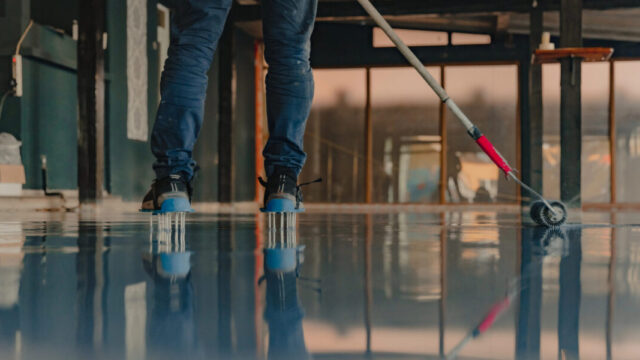
    The Dietiker construction company Walo Bertschinger is installing a new floor covering on the construction site of suissetec grischun, the Graubünden trade association, in Chur. According to a Walo message on Facebook, a workshop for apprentices in the heating and plumbing trades is being built there.

    According to this information, 450 square metres of FAMA hardwood flooring will be installed. Walo’s hardwood flooring is characterised by outstanding properties, from thermal insulation and sweat resistance to high mechanical resistance and easy maintenance.

    The flooring is perfect for workshops, production areas, warehouses, laboratories and technical rooms. With purely natural raw materials and no plastic content or artificial colour pigments, the FAMA hardwood flooring is not only ecological, but also extremely practical, according to the Walo press release. The floor covering in the training workshop is warm to the feet, environmentally friendly and non-slip.

    The suissetec grischun website states that suissetec is the leading contractors’ and industry association for the plumbing, building envelope, sanitary, heating, ventilation, air conditioning and refrigeration sectors. Under its umbrella, it brings together contractors, planning companies, manufacturers and suppliers. One of the main tasks of suissetec grischun is to protect the interests of its members at regional level, for example by commenting on consultations or in direct contact with those responsible. According to the self-description, suissetec grischun also takes on important issues in apprentice training and operates a training centre for prospective professionals in the building technology sector in Chur.

  • Nüssli celebrates topping-out ceremony for eight-court sports hall

    Nüssli celebrates topping-out ceremony for eight-court sports hall

    Nüssli Schweiz AG, based in the St.GallenBodenseeArea, has celebrated the topping-out ceremony for the first eight-court sports hall built in Europe in the German town of Monheim am Rhein. According to a press release, the topping-out crown was erected on 26 February 2024. Nüssli was awarded the general contract for the construction of the sports centre in November 2022. construction began in 2023 and the building, which has two levels with four gyms each, is due to be handed over to sports operations after the 2024 summer holidays.

    “The pace is impressive. In fact, we are still so close to the schedule for this major construction project, which was ambitious from the outset, that we will probably be able to put the hall into operation as early as October,” Daniel Zimmermann, Mayor of Monheim, is quoted as saying in the press release. “You won’t even be able to tell from the outside that Europe’s largest sports hall is being built here, because we’re also going inside the site for the construction.”

    According to the company, the new sports facility in Monheim will have over 4,400 square metres of pure sports space in the eight halls on the basement and ground floor. Additional gymnastics rooms will be built on the upper floors. Changing rooms, technical facilities and utility rooms will be built on a further 3000 square metres. The individual halls on each floor can also be combined into large halls if required. Retractable grandstands can accommodate 500 spectators in the basement and 100 spectators on the ground floor.

    An innovative steel construction and the use of prefabricated components enabled a short construction time. In addition, the high-quality building materials used – including timber components for 600 wall, ceiling, roof and façade parts – ensure a long service life, according to the press release.

  • Holcim posts record result

    Holcim posts record result

    Holcim generated sales of 27.01 billion Swiss francs in the 2023 financial year, the globally active Zug-based building materials group announced in a press release. This corresponds to a year-on-year decline of 7.5 percent. On an organic basis, however, growth of 6.1 per cent was achieved.

    Holcim reported a record recurring operating result at EBIT level of 4.76 billion Swiss francs in the year under review. The corresponding margin rose from 16.3 percent to an “industry-leading” 17.6 percent, writes Holcim. At 3.09 billion Swiss francs, net profit before impairments and disposals was 39.3 percent higher than in 2022. “With record results in 2023, Holcim is stronger today than ever before,” said Jan Jenisch, Chairman of the Board of Directors and CEO of Holcim, in the press release. “We were able to implement our Strategy 2025 two years earlier than planned.”

    Holcim can also point to successes in terms of sustainability. For example, CO2 emissions in relation to sales were 20 per cent lower in the reporting year than in the previous year. At 8.4 million tonnes, 24 percent more construction and demolition material was recycled than in the previous year. Six Holcim projects for carbon capture, utilisation and storage are now registered for funding from the European Union’s Innovation Fund. In addition, Holcim’s low-emission cement ECOPlanet already accounted for 19 percent of Group-wide cement sales in 2023. In the previous year, the share was still 7 percent. At the same time, the share of low-emission concrete ECOPact in ready-mix concrete sales rose from 13 to 19 percent.

  • Bern University of Applied Sciences reorganizes the Department of Architecture

    Bern University of Applied Sciences reorganizes the Department of Architecture

    According to a press release, Bern University of Applied Sciences(BFH) wants to ensure that sustainable construction becomes a matter of course. To this end, it is giving its Department of Architecture, Wood and Construction a new structure. Five new institutes will focus on a holistic view of the planning and construction industry.

    The Institute for Infrastructure and Environment will operate at regional level. The Institute for Settlement, Architecture and Construction and the Institute for Timber Construction will focus on districts and buildings. Finally, an Institute for Building Materials and Bio-based Materials will be established, as will the Institute for the Digital Construction and Timber Industry.

    These newly founded institutes will be active in education, further education and applied research. “The education and research landscape will play a central role in achieving the global sustainability goals,” said Professor Peter Staub, Director of the Department of Architecture, Wood and Construction at BFH. “We are taking responsibility and consistently focusing on this with a view to future generations.”

    Among other things, BFH is currently researching wood-based materials with mineral binders that can be reused and a more environmentally friendly concrete for geotechnical applications underground. In addition, a team is currently focusing on the question of how brownfield sites can be used in a recyclable way so that this use brings life to the vacant spaces.

  • Beschleunigung der Baubewilligungsprozesse dringend erforderlich

    Beschleunigung der Baubewilligungsprozesse dringend erforderlich

    Angesichts dieser Entwicklungen werden in verschiedenen Kantonen Massnahmen diskutiert, um die Baubewilligungsverfahren zu straffen. So plant der Kanton Luzern, das bestehende Bewilligungsverfahren durch ein einfacheres Meldeverfahren zu ersetzen, während im Kanton Freiburg Baugesuche automatisch als genehmigt gelten sollen, falls die Bearbeitungsfrist überschritten wird.

    Der Schweizerische Baumeisterverband (SBV) setzt sich auf allen Regierungsebenen für eine Beschleunigung der Baubewilligungsprozesse ein. Als Lösungsansatz gilt unter anderem die Digitalisierung der gesamten Prozesskette, von der Planung bis zur Realisierung. Ebenso wichtig ist die Bekämpfung grundloser Einsprachen, die lediglich dem Ziel dienen, Bauvorhaben zu verzögern. Der SBV befürwortet eine Begrenzung der Einsprache Möglichkeiten auf relevante Aspekte und eine Einführung von Kostenbeteiligungen bei Einsprachen, um den Missbrauch des Systems einzudämmen.

    Die Initiativen zur Vereinfachung der Baubewilligungsprozesse und zur Verhinderung missbräuchlicher Einsprachen sind entscheidend, um die dringend benötigte Schaffung von Wohnraum zu fördern und die Wohnungsknappheit effektiv zu bekämpfen. Mit diesen Massnahmen soll sichergestellt werden, dass Bauprojekte zügig und effizient realisiert werden können, ohne dass der rechtliche Schutz der Bürgerinnen und Bürger beeinträchtigt wird.

  • Increased efficiency in property management

    Increased efficiency in property management

    Although intergenerational living concepts have the potential to strengthen coexistence in neighbourhoods, many owners of large property portfolios are reluctant to implement them. The reason for this lies in the lack of experience with the administrative burden of these special forms of housing, which differ significantly from conventional offers.

    In order to meet these challenges, an orientation framework and a toolbox have been developed that offer insights into the necessary administrative tasks and questions that need to be clarified. The aim is to provide owners, portfolio managers and property managers with a clear guideline to simplify the realisation of such innovative forms of housing. These useful tools emerged from an intensive exchange of experience organised by Zimraum and Stratcraft, in which various stakeholders took part. In a total of four brown bag meetings, essential topics such as marketing, letting, operational management and advice on project development were discussed and solutions developed.

    With the new orientation framework and the toolbox, SVIT Zurich is providing important impetus for the property sector by not only paving the way for the implementation of community-promoting forms of housing, but also helping to rethink and redesign housing for the elderly.

  • Arbon as a pioneer in location promotion

    Arbon as a pioneer in location promotion

    The “Initiative Zukunft Arbon” recently organised its first major network meeting, a gathering of innovators and decision-makers that focused on the wealth and potential of the region. Host Daniel Camen from Insel auf Rädern GmbH created an inspiring atmosphere for the exchange of ideas and visions. Mayor René Walther and SECO Ambassador Dr Eric Jakob emphasised the importance of regional networking and Arbon’s unique economic potential.

    Samuel Struhs, project manager of the initiative, emphasised the importance of collective commitment. According to Struhs, the initiative thrives on the active participation and commitment of its members, who are shaping the network of the future. A cosy evening with chestnuts and mulled wine provided the perfect setting for a lively exchange and making new contacts.

    Andy Suter from A.Vogel AG presented Phyto Valley, an example of successful cooperation in natural medicine that makes the Lake Constance region and Thurgau internationally visible. This cluster illustrates the strength of joint efforts and the global significance of local innovations.

    The “Initiative Zukunft Arbon” stands for a dynamic community characterised by diversity and the common will to shape a prosperous future. The event confirmed the path taken and motivated those involved to actively continue and support the regional development processes.