Category: Trends

  • Acquisition in North America strengthens portfolio for precast concrete parts

    Acquisition in North America strengthens portfolio for precast concrete parts

    Holcim has acquired the Canadian Langley Concrete Group Inc. Jaime Hill, Head of the North America region at Holcim, described this strategic step in a company statement as “a natural extension of our growth strategy”. This combines the technical expertise of the Langley Concrete Group in precast concrete parts with Holcim’s own activities. The enlarged portfolio also increases Holcim’s reach.

    The acquisition reportedly includes two state-of-the-art production facilities in the province of British Columbia, located in the cities of Chilliwack and Duncan. From there, the region will be supplied with dry and wet mix concrete products for above and below ground infrastructure applications, including manholes, pipes, boxes and other components for municipal, commercial and industrial applications.

    Langley Concrete President Mark Omelaniec says he is proud of what his family has built over 75 years. The family is “confident that Holcim is the right partner to take it forward as the growth opportunities in British Columbia continue. This transition offers long-term opportunities for our team and our customers.”

  • Expansion of the S-Bahn infrastructure in Frankfurt

    Expansion of the S-Bahn infrastructure in Frankfurt

    DB InfraGO AG has commissioned Implenia to build the inner-city section of the Nordmain suburban railway in Frankfurt. Specifically, the construction and real estate company from Opfikon is to realise the underground section of the S-Bahn from Konstablerwache via the new S-Bahn station Frankfurt (Main) Ost (tief) to Fechenheim for the Deutsche Bahn subsidiary. The contract is worth over 200 million euros, Implenia announced in a press release.

    The contract includes the starting excavation pit Trog and the excavation pit for the underground S-Bahn station Frankfurt (Main) Ost (tief), a series of ancillary excavation pits and engineering structures, as well as two tunnel tubes approximately 1.2 kilometres long. They will be constructed by mechanised tunnelling. Implenia will also carry out extensive dewatering measures and provide a range of specialised civil engineering services. Work is scheduled to start at the beginning of 2026 and be completed by 2031.

    “The further expansion of a functioning transport infrastructure is central to the sustainable development of our cities,” said Erwin Scherer, Head Division Civil Engineering at Implenia, in the press release. “I am delighted that Implenia, with its many years of experience and extensive expertise, is able to contribute to improving public transport in the densely populated Rhine-Main region.”

  • Property fund launches new capital increase

    Property fund launches new capital increase

    The fund management of Swiss Prime Site Solutions is preparing a new short-term capital increase for the Akara Swiss Diversity Property Fund PK (Akara Diversity PK ). The Asset Management Division of Zug-based property company Swiss Prime Site announced in a press release that not all subscriptions were taken into account in the 14th capital increase completed in mid-May due to high demand. To rectify this situation, Swiss Prime Site Solutions intends to raise a further CHF 85 million. The subscription period for the 15th capital increase begins on 11 June and ends on 20 June.

    The Akara Diversity PK is restricted to tax-exempt pension funds, social security and compensation funds domiciled in Switzerland and investment funds consisting of such funds. The new capital increase will be carried out while safeguarding the subscription rights of existing shareholders. The ownership of 25 existing shares entitles the holder to acquire one new share at the issue price of CHF 1148. If not all subscription rights are utilised, new investors will be eligible. The fund units are to be paid out on 27 June.

    Swiss Prime Site Solutions intends to use the new funds raised to expand the fund’s property portfolio and finance ongoing projects. If possible, the debt ratio should also be further reduced, according to the press release.

  • AI-based weather forecasts for energy and agriculture

    AI-based weather forecasts for energy and agriculture

    The Zurich-based start-up Jua.ai has closed a Series A financing round totalling over 9 million Swiss francs, according to an article on startupticker.ch. The financing round was led by Ananda Impact Ventures and Future Energy Ventures and supported by existing investors such as 468 Capital and Promus Ventures. Jua plans to use the funding to accelerate the market launch of its Earth Intelligence Platform. This will enable more accurate weather forecasting to help energy traders make faster and more profitable decisions.

    The platform is powered by Jua’s artificial intelligence (AI) model EPT-2.0 and is designed to significantly outperform the weather forecasting performance of conventional numerical weather models and AI models from large technology companies. Precise weather forecasts are particularly important for sectors such as energy, agriculture, aviation and shipping. The AI-based earth simulation is intended to provide a consistent and physically simulating platform to enable reliable decisions in various sectors in the face of increasing weather extremes and weather changes.

    Jua 2024 has already secured around 13 million Swiss francs in its seed financing round. As part of this year’s capital increase, Marvin Gabler, co-founder and architect of EPT-2.0, has now been appointed as the new CEO. He succeeds Andreas Brenner, who has led Jua since its foundation in 2022. With Gabler at the helm, the company intends to focus on scaling its platform in the energy sector and expanding into new markets. “With our Earth Intelligence Platform, we have transformed the world’s most advanced Earth simulation into a real-world decision engine,” Gabler is quoted as saying in the article. “This is a fundamental step towards shaping our planetary future.”

  • Lift refurbishment with a focus on comfort and safety

    Lift refurbishment with a focus on comfort and safety

    KONE has replaced the outdated lifts of a competitor in the Im Tiergarten neighbourhood of Zurich for 466 occupied rental flats. Within 18 months, the lift manufacturer from Brüttisellen installed a total of 46 of its MonoSpace 500DX lifts in one of Zurich’s largest residential complexes.

    According to a company statement, this model adapts flexibly and with millimetre precision to the existing shaft. The payload of most of the passenger lifts has been increased from 320 to 480 kilograms. The new cabins are also significantly larger. According to KONE, they are monitored around the clock via the company’s digital asset management system and serviced proactively. This should lead to around 30 per cent fewer breakdowns.

    The owners had decided to forego vacancy notices and to carry out further refurbishment measures while the building was occupied. According to KONE, it was able to adhere to the tight schedule thanks to a special logistics concept with overnight delivery and close coordination with the owners and residents.

    The successful complete replacement in the Im Tiergarten development is one of KONE’s largest lift modernisation projects in Europe to date. According to Christian Herbst, KONES Director of Modernisation for Germany, Austria and Switzerland, “it shows that we are well positioned to meet an increasingly important demand in the market: the efficient modernisation of even a large number of installations, in close coordination with partners and under difficult conditions such as renovating while the building is occupied”.

  • New innovation centre for thermal coating solutions

    New innovation centre for thermal coating solutions

    OC Oerlikon Corporation AG, a thermal spray and coating solutions company headquartered in Pfäffikon, has invested CHF 40 million in its new innovation and production centre on the Reichhold campus in the canton of Aargau. The company is now celebrating the laying of the foundation stone for the new site, construction of which is due to begin shortly, according to a press release. Commissioning is scheduled for the first quarter of 2027. With 250 employees in future, the facility will bring together research and development, engineering, production and sales in one building complex.

    Oerlikon plans to develop modern thermal spray technologies and laser-based technologies as well as provide various services at the Reichhold Campus. “The new Campus Reichhold will play a central role in the further development of our aerospace and general industry businesses by bringing together the entire value chain in a collaborative environment,” said Prof Dr Michael Süss, Executive Chairman of Oerlikon, in the press release.

    The technology developed at the Reichhold campus is intended to improve heat resistance, durability and corrosion protection in industrial high-performance components. In future, it will be used primarily by customers in the aerospace, automotive and general industry sectors. A test rig for aerospace turbine components will also enable the validation of thermal spray coatings under real-life conditions.

    In addition, Oerlikon plans to implement comprehensive measures to reduce the environmental impact in the areas of energy consumption, mobility and resource management at the new site.

  • How the tenants’ association is sabotaging housing construction

    How the tenants’ association is sabotaging housing construction

    At first glance, the tenants’ association’s initiative, for which the collection of signatures began on June 3, 2025, sounds like a good thing: lower rents, more protection for tenants, more say. But if you don’t allow yourself to be dazzled by fine-sounding titles, you’ll realize that this initiative combats symptoms – and cements the causes.

    Of course, rising asking rents are a real burden, especially in urban centers. But the impression that this is a conspiracy on the part of landlords falls short of the mark. The figures are clear: according to the Federal Office for Housing, there is an annual shortage of up to 10,000 apartments – with a simultaneous increase in households of around 50,000 units. The fact that asking rents are rising is not surprising – it is the result of growing excess demand.

    And this is precisely the problem with the initiative. It wants to correct pricing administratively instead of eliminating the structural bottlenecks on the housing market. Capping yields may seem popular in the short term, but in the long term it deprives residential construction of important investment incentives. Private investors – including pension funds and insurance companies – are currently responsible for a large proportion of new construction activity. Curtailing their profitability scares off capital and risks a further shortage.

    The myth of the yield-hungry investor is a false one. More than half of rental apartments in Switzerland belong to pension funds, insurance companies or pension schemes – in other words, ultimately to the population itself. Anyone who cuts their returns is jeopardizing our retirement provision. The housing market is not a playground for socially romantic experiments, but a complex system that has to reconcile supply and demand. Anyone who undermines this mechanism is not solving any problems – they are exacerbating them.

    The right of first refusal for non-profit housing is also tricky. It effectively means expropriation with a bureaucratic detour – and a further step towards a state-controlled housing market. I warn against this: such an intervention may be ideologically motivated, but in practical terms it will mainly result in delays and inefficiency. Non-profit housing construction is justified, but it is no substitute for the market-driven volume that we urgently need.

    Instead, we need realistic solutions. SVIT Switzerland has formulated 20 specific demands in its housing agenda: faster and coordinated approval procedures, a reduction in objections, promotion of redensification and space-efficient housing. Tenancy law itself must also become more differentiated: It protects existing tenants too much and not enough those who are urgently looking for an apartment. This is neither fair nor efficient.

    In short: the housing shortage will not be solved by more regulation, but by more apartments. Anyone who hinders new construction, whether out of ideological conviction or a false sense of justice, ultimately only widens the gap between supply and demand – and thus harms the very people they claim to be protecting.

  • Building culture in focus, NRP 81 begins

    Building culture in focus, NRP 81 begins

    Am 13. und 14. Mai 2025 traf sich die NFP-81-Community erstmals persönlich in Thun. Rund 80 Vertreterinnen und Vertreter aus 13 Forschungsteams präsentierten ihre Projekte in kurzen Vorträgen und gewährten dabei Einblick in die beeindruckende thematische Breite des Programms. Ergänzt wird diese akademische Vielfalt durch die 45 Praxispartnerinnen und -partner, die mit ihrem Praxiswissen die Forschungsarbeiten bereichern. Insgesamt sind über 130 Personen direkt am Programm beteiligt. Ein klares Zeichen für die starke Verankerung des NFP 81 in Wissenschaft, Wirtschaft und Gesellschaft.

    Impulse aus der Praxis: Stadt Thun als Gastgeberin
    Der erste Veranstaltungstag endete mit zwei aufschlussreichen Vorträgen von Dr. Raphael Lanz, Stadtpräsident von Thun und Florian Kühne, Stadtarchitekt von Thun. Beide betonten die entscheidende Rolle eines offenen Dialogs in der Baukultur und die Bedeutung interdisziplinärer Zusammenarbeit. Diese Perspektiven lieferten wichtige Impulse für die Arbeit in den Forschungsprojekten, die das Ziel haben, ökologische und soziale Fragen in der Baukultur stärker zu verknüpfen.

    Austausch über gemeinsame Herausforderungen
    Der zweite Veranstaltungstag diente dazu, die gemeinsamen Herausforderungen und Schnittmengen der vielfältigen Forschungsvorhaben zu identifizieren. Dr. Oliver Martin vom Bundesamt für Kultur und Prof. Ivana Katurić, Co-Autorin eines Handbuchs für das New European Bauhaus, gaben den Auftakt für einen intensiven Austausch. In gemischten Breakout-Sessions diskutierten die Teilnehmenden engagiert darüber, wie sich unterschiedliche Perspektiven und Kompetenzen bündeln lassen, um innovative und nachhaltige Lösungen für den gebauten Raum zu entwickeln.

    Gemeinsame Vision und positives Fazit
    Zum Abschluss des Treffens zeigte sich Prof. Dr. Paola Viganò, Präsidentin der Leitungsgruppe, erfreut über den intensiven Austausch und die Aufbruchstimmung: «Ich freue mich zu sehen, dass hier eine Gruppe entsteht, die ein gemeinsames Ziel teilt. Wir alle möchten mit diesem Programm den Diskurs über den ökologischen und sozialen Wandel des gebauten Raums voranbringen.» Dieser Satz bringt das gemeinsame Selbstverständnis der Teilnehmenden auf den Punkt: Das NFP 81 ist keine Aneinanderreihung isolierter Projekte, sondern eine Gemeinschaft mit einer gemeinsamen Mission.

    Transparenz und Partizipation
    In den kommenden Tagen werden auf der Webseite des NFP 81 die Porträts der einzelnen Projekte aufgeschaltet. Neben prägnanten Beschreibungen der Forschungsvorhaben werden dort auch die Praxispartner vorgestellt, die im Programm eine tragende Rolle einnehmen. Dieser transparente Einblick soll nicht nur den Austausch innerhalb der Community fördern, sondern auch eine breitere Öffentlichkeit ansprechen und zum Mitdenken und Mitwirken einladen.

  • Investment plans weaken in 2025, record high in 2026

    Investment plans weaken in 2025, record high in 2026

    According to the latest KOF Investment Survey, Swiss companies are planning to increase their gross fixed capital formation by 2.9% in nominal terms in 2025 compared to the previous year. This means that the expected growth is not only below the historical average, but also below the forecasts of the last survey in autumn 2024. Construction investment in particular, which has been the main driver of Swiss investment activity to date, is expected to increase by 4.5%, but is showing a noticeable slowdown compared to expectations from the previous year. Equipment investment is expected to grow by 2.2% and research expenditure by 2.5%.

    In the services sector, optimism has dampened noticeably. Instead of the previously forecast growth of 4.7 percent, companies are only expecting an increase of 3.1 percent. In the construction industry, fixed asset investments are even forecast to fall by 1.1%, a significant correction compared to the previously expected stagnation. In manufacturing, on the other hand, the outlook remains largely stable, with a forecast increase of 1.4%.

    Tariff announcement weighs on investment security
    A key reason for the subdued expectations is the US tariff announcement from April 2025, which envisages a tariff rate of 31% for Swiss imports into the USA. With the help of a quasi-experimental analysis, the KOF was able to show that the announcement had a noticeable effect on investment decisions. Companies that completed their questionnaire after April 2 reported an increase in reduced investment plans. Before the announcement, around 30 percent of companies were planning to reduce their investment in equipment. After the announcement, this proportion rose to 35%, while the proportion of companies with unchanged plans fell from 40% to 36%.

    Similar patterns can be seen in construction investment, while research expenditure appears to have remained largely unaffected. Companies that were already planning expansion investments stuck to their plans. In contrast, many companies that had not previously planned any changes scaled back their plans, a clear indication of the increased uncertainty.

    Significant increase in investment uncertainty
    The certainty of investment realization also deteriorated following the customs announcement. The proportion of companies that rate their investment plans as more uncertain rose from 12% to 22%. At the same time, the proportion of those who did not notice any change in security fell from around two thirds to 56%. The proportion with an improved security assessment remained constant at around 21%.

    Focus on rationalization and climate investments
    The changed environment has influenced companies’ investment motives. Expansion investments, traditionally risky, are increasingly viewed with caution. Instead, the idea of rationalization is gaining in importance. The role of environmental and climate protection investments is also growing. While 60% of companies took corresponding measures last year, 69% intend to invest in climate protection and adaptation to extreme weather conditions over the next three years. This is despite the fact that almost a third of companies state that they are not currently directly affected by climate change. At the same time, the proportion of companies that see the transition to more climate-friendly standards as an opportunity has fallen from 42% to 39%. The proportion of those who see it as a risk, on the other hand, has risen to 28%.

    Optimistic forecasts for 2026
    The picture for 2026 is completely different. Never before since the KOF surveys began have so many companies planned to increase their investments. 28% of the companies surveyed are planning to invest more in equipment, while the figure for construction investment is as high as 29%. At the same time, the proportion of companies expecting a decline has fallen significantly to just 14%. Companies from the manufacturing and service sectors are particularly optimistic.

    Opportunities and risks at a glance
    The KOF analysis underlines the high adaptability of Swiss companies. While geopolitical risks such as US customs policy are leading to investment cuts and uncertainty in the short term, many companies are focusing on growth and climate investments in the long term.

  • New findings from 45,000 building permits

    New findings from 45,000 building permits

    The white paper “Retrofitting the Future, The Costs, Timelines, and Strategies Shaping Swiss Real Estate”, which was produced in collaboration with E4S, combines comprehensive data analyses with practical recommendations for action. The aim is to paint a realistic picture of renovation activity in Switzerland. The researchers have systematically investigated the dynamics of renovations, both in terms of speed and costs as well as the type of projects.

    Findings from 45,000 building permits
    By analyzing more than 45,000 building permits issued, the report provides a detailed overview of the actual pace of renovation in Switzerland for the first time. The results show that positive trends are definitely emerging. At the same time, however, it is clear that only a small proportion of renovations are directly aimed at improving energy efficiency. This means that the transition to more climate-friendly buildings has so far remained incomplete.

    Strategic importance of real estate funds
    A central aspect of the report is the role of real estate investment vehicles (REIVs) in achieving the climate targets by 2050. In order to achieve these targets, REIVs must mobilize an average of 13 percent of their net assets, or CHF 28.3 billion, for energy improvements. However, the study points to major differences between the individual market players when it comes to implementing these investments. Some will have to go far beyond the average requirement.

    New tools for well-founded decisions
    The white paper is part of a series of CRML initiatives designed to provide decision-makers with a solid data basis.

    PRESS Scoresa comprehensive ESG rating system for over 126 Swiss real estate funds that takes environmental and social criteria into account.

    PRESS Index: The first sustainable stock market index based on ESG performance metrics, creating transparency in the real estate sector.

    ES Score Whitepaper: An in-depth analysis of 20,000 buildings managed by REIVs to identify regional differences and prioritize investments.

    These tools have a common goal, they make change in the real estate sector measurable and highlight areas for action that often remain hidden. This creates a basis on which decision-makers can not only react, but also proactively steer.

    Focus on future-oriented strategies
    “By combining current data and project typologies, we can move from a theoretical and retrospective view to a concrete and prospective reading of ongoing changes,” explains Dr. Nathan Delacrétaz, one of the authors of the report. Together with his colleagues, Professors Eric Jondeau and Fabio Alessandrini, he makes it clear that it is not enough to simply manage the status quo for existing buildings.

    The researchers emphasize that REIVs will have to focus more on three strategic approaches in future: adapting their portfolios through targeted acquisitions and sales, renovating existing buildings and developing new, energy-efficient properties. The targeted upgrading of underperforming properties will also play a key role in improving the sector’s energy balance in the long term.

    Quantitative basis for the real estate turnaround
    The white paper provides a rare insight into the actual dynamics of renovation and construction activities in Switzerland. It makes it clear that building permits are a key indicator of progress towards climate neutrality, but also a warning. Only if these renovations are specifically geared towards energy efficiency and climate neutrality can the targets set be achieved.

  • Precise timing for perfect thin films

    Precise timing for perfect thin films

    Piezoelectric thin films are indispensable components in a wide range of electronic applications. They are used in frequency filters, sensors, actuators and tiny energy converters. Their ability to convert electrical voltage into mechanical movement and vice versa makes them a central component of modern communication technology. However, the production of these highly sensitive layers is a complex matter. Their quality determines the performance and durability of the end products.

    HiPIMS process with new possibilities
    High Power Impulse Magnetron Sputtering (HiPIMS) is a well-known process for coating substrates with high-density layers. High-energy pulses are generated in a vacuum chamber environment, which knock atoms out of the target material. These atoms are deposited as a thin film on the substrate. For piezoelectric applications, such as aluminium nitride coatings, the process has not yet offered an optimal solution. This is because along with the desired target ions, argon ions from the process gas also reach the substrate, which leads to undesirable inclusions.

    Avoiding argon inclusions
    Argon, a common process gas in magnetron sputtering, is chemically inactive, but it can remain in the coatings in the form of inclusions. This is problematic for piezoelectric coatings as they are operated under high electrical voltages. Even small amounts of argon lead to an electrical breakdown and jeopardise the functionality of the components. In classic HiPIMS process control, however, it is difficult to eliminate the argon ions as they hit the substrate at the same time as the target ions.

    Timing as a decisive factor
    Under the leadership of Sebastian Siol, the team led by PhD student Jyotish Patidar has developed precise timing in order to accelerate only the target ions and avoid argon inclusions. As the argon ions are faster and reach the substrate first, the accelerating voltage is applied to the substrate with a delay. At this point, the argon ions have already flown past and can no longer penetrate the growing layer. This results in piezoelectric layers of outstanding quality that were previously not possible with HiPIMS.

    A new standard for sensitive substrates
    The researchers call this innovative process “Synchronised Floating Potential HiPIMS”. Particularly noteworthy is the possibility of creating layers on non-conductive substrates such as glass or sapphire. Normally, no electric fields for ion control can be applied to such substrates. By utilising the so-called “electron shower”, which is generated with the magnetron pulse, ions can nevertheless be accelerated at the right moment. The substrate is briefly negatively charged so that the desired ions are introduced in a targeted manner.

    Practical relevance for semiconductor and quantum technologies
    Lower process temperatures protect the sensitive components in semiconductor production and enable the coating of temperature-sensitive components. At the same time, a high layer density and associated resistance is achieved, which is crucial for a long service life of the components. The possibility of depositing layers on insulating substrates also opens up completely new applications in photonics and quantum technologies that previous methods could not achieve.

    Cooperations and next steps
    The Empa team has not reached the end of its research with these successes. The group is already working on optimising the process with machine learning and high-throughput experiments. At the same time, collaborations are being established with other research institutions and industrial partners in order to bring the technology into application. Research into ferroelectric thin films, which pose similar challenges in terms of precision and material purity, is already underway.

  • Monument becomes a home with history

    Monument becomes a home with history

    It only took nine months to turn the listed Gütsch farmhouse in Lauerz SZ into a modern detached house. Strüby now reports on this in a press release. The company was commissioned to carry out the extensive conversion and renovation work. Strüby was able to contribute its strength and experience in dealing with listed buildings in project development, architecture, engineering and implementation.

    The early, close, constructive and solution-oriented collaboration with the cantonal monument preservation authority and its head Monika Twerenbold proved its worth, “so that the result was extremely satisfactory for everyone involved,” Kilian Boog, Head of the Conversion division at Strüby Unternehmungen, is quoted as saying.

    A lot has been done on the outside and inside, with the late medieval block building from 1492/93 “largely retaining its original character”. In combination with modern elements, an architectural “jewel” has been created that is “full of history and stories and fascinates with its symbiosis of old and new”.

    The wooden cladding, roof and windows were renewed. The outer shell was given an energy-efficient refurbishment, while the heating technology inside was switched to an energy-efficient heat pump and photovoltaics. When planning the rooms, emphasis was placed on highlighting existing “handcrafted details, interesting signs of use, religious symbols to protect against evil spirits and decorative elements”. The floor plan and room heights remained unchanged.

  • New study emphasises the importance of new replacement construction for relieving housing pressure

    New study emphasises the importance of new replacement construction for relieving housing pressure

    “Unloved but necessary replacement new builds” is the title of Raiffeisen Switzerland ‘s study “Real Estate Switzerland – 2Q 2025“. According to the study, replacement new builds create an average of four new flats for every demolished flat. “Despite criticism, there is often no alternative to replacement construction in order to combat the housing shortage without further urban sprawl, as gentler forms of densification, such as conversions and extensions, are not sufficient to maximise the use of scarce building land,” Raiffeisen Switzerland’s Chief Economist Fredy Hasenmaile is quoted as saying in a press release issued by the banking group on the study. He recommends paying “greater attention to social and ecological compatibility” in order to maintain social acceptance of new replacement construction.

    According to the authors of the study, the situation on the rental housing market remains characterised by excess demand. Falling interest rates could boost construction activity, according to the press release. “However, it is questionable whether the high construction levels of the past can be achieved again even under negative interest rates, as regulatory hurdles and the very limited availability of building land continue to dampen the potential,” says Hasenmaile.

    The study identifies an increase in demand on the owner-occupied property market as a result of falling interest rates. The banking group’s experts have also observed a rising demand for office space. This is due to employment growth and an increased office presence. “After several years of rather mixed prospects, the outlook for office properties has recently brightened noticeably,” says Hasenmaile.

  • IPO launched for North American business

    IPO launched for North American business

    Holcim’s new North American company Amrize is to be traded on the stock exchange for the first time on 23 June. This has now been announced by the Zug-based building materials group. The necessary authorisations have now been granted.

    Holcim announced at the Investor Day in March 2025 that the business in the north of the American continent was to be spun off. The background to this is the US government’s investment programmes worth billions over the next eight to ten years, the potential of which Holcim intends to fully exploit through its Chicago-based subsidiary.

    Shareholders will receive one Amrize share for each Holcim share held. The spin-off will be tax-neutral in Switzerland and tax-free in the USA. The Amrize shares will start trading on the same date on both the New York Stock Exchange and in Zurich. There they will be included in the Swiss Market Index (SMI) and the Swiss Leader Index (SLI).

    The company has reportedly secured debt financing of USD 3.4 billion in the form of bonds, a USD 2 billion credit facility and a USD 2 billion commercial paper programme. In addition, Amrize has a bridge loan of 1.7 billion dollars.

    With over 1,000 locations and 19,000 employees, Amrize will become the largest provider of construction solutions focussing exclusively on the North American market. According to Holcim’s NextGen Growth 2030 strategy, Amrize will realise a number of smaller acquisitions from an estimated total capital allocation capacity of CHF 18 to 22 billion by 2030. Excess capital will be used for large strategic acquisitions and share buybacks. The operational headquarters will be in Chicago, while the company’s registered office will remain in Zug.

  • Construction activity remains stable

    Construction activity remains stable

    Construction activity realised a small year-on-year increase of 0.4 percent to CHF 4.7 billion in the first quarter of 2025, the Swiss Federation of Master Builders(SBV) reported in a press release. It estimates construction activity to be stable despite the international trade conflicts. For the year as a whole, the association expects construction activity to grow by 1.1 per cent year-on-year.

    The SBC experts observed different developments in the individual sectors of the construction industry in the quarter under review. Commercial construction, for example, was 7 per cent weaker than in the first quarter of 2024. By contrast, construction activity in public building construction increased by 23 per cent at the same time. In civil engineering, a decline in private construction activity was largely offset by growth of 2.8 per cent in the much stronger public civil engineering sector. The bottom line is that construction activity in civil engineering fell by around 2 per cent.

    In the press release, the SBC emphasises the “surprisingly” positive development in residential construction. At CHF 1.7 billion, turnover here was 2.4 per cent higher than in the same quarter of the previous year. The SBC experts consider the 11 per cent year-on-year growth in new orders observed at the same time to be “particularly pleasing”. They attribute this to the increased number of building applications in the previous year, which is now “gradually being reflected in the order books”.

  • Design guidelines for historic residential quarter

    Design guidelines for historic residential quarter

    Negotiations are underway for the design and further development of the Winterthur terraced single-family housing estate Eigenheimquartier for 120 owner-occupiers. Urban planners OSRI from Lucerne, the Eigenheimquartier Winterthur association and the cantonal monument preservation authority are involved in the process. The results should lead to greater legal certainty and faster building permits for the historic properties, according to a press release from OSRI.

    The housing estate known as the “self-help colony” dates back to the period after the First World War. It was built as a counter-reaction to the great housing shortage and is one of the most important small housing estates in the canton of Zurich with a historically significant residential character, according to OSRI.

    The appearance is characterized by a “generally simple design language”. In order to maintain uniformity, the current negotiations are subject to a design guideline, which was drawn up on behalf of the cantonal monument preservation authority and with the participation of the landowners. This is intended to set out criteria that must apply when redesigning the existing 90 detached and 28 semi-detached houses. Specifically, the following questions will be addressed: Should the rows of houses once again have a uniform color scheme? What shape can skylights have? How much can the ridge height increase after the roof has been insulated?

    OSRI is responsible for deadlines, documentation and communication in the process. In the fall, it is planned to let the residents have their say. Their results will be presented at an information and dialog event and put up for debate.

  • Pressure pipes protect police centre from groundwater

    Pressure pipes protect police centre from groundwater

    The new police centre in Niederwangen is under construction and will house the entire cantonal police command infrastructure. According to a press release, four pressurised water pipes have been laid in the ground beneath the new building. Debrunner Acifer AG from St.Gallen supplied high-pressure PE pipes for these so-called culverts.

    Culverts serve as diversions and are usually used to cross under roads, canals or rivers, according to the press release. They are necessary for the new police centre due to the high groundwater level. They keep the water in check so that it does not press against the building from below. The rainwater that crosses the site is also diverted with the help of the culvert and drained away together with the groundwater.

    In contrast to conventional pipes, culverts are always filled with water, making them pressurised pipes. Debrunner Acifer supplied high-pressure PE pipes for these pipes. “High-pressure PE pipes are not required for normal wastewater pipes. Thanks to the gradient, the water always flows away and does not remain permanently in the pipe. However, culverts are always filled with water – and the pipes have to be able to withstand this,” says Gerhard Peter, head plumbing fitter at Ramseyer und Dilger AG in Bern, which laid the Debrunner Acifer pipes.

    All four culverts were completed in December 2024. However, it will still be a while before the cantonal police can take possession of their new police centre. the project is expected to be completed and the building ready for occupation in 2028.

  • The world’s tallest 3D-printed building is in Graubünden

    The world’s tallest 3D-printed building is in Graubünden

    The Graubünden cultural foundation Nova Fundaziun Origen has realised the world’s tallest 3D-printed building together with the Swiss Federal Institute of Technology in Zurich(ETH). The new landmark of the mountain village of Mulegns at the foot of the Julier Pass is called Tor Alva, the white tower. According to an ETH report, it was inaugurated in the presence of Federal Councillor Guy Parmelin and ETH President Joël Mesot. Parmelin expressed his conviction that the building “will become a place of cultural and touristic encounter” and can stop the place from dying out.

    Tor Alva was printed in five months on the ETH Hönggerberg campus. The parts were then assembled in Savognin GR and transported to Mulegns by heavy goods vehicle along the Julierstrasse. This pioneering building, which is reminiscent of the tradition of Graubünden confectioners, demonstrates how digital construction enables load-bearing structures without formwork. Over four storeys, 32 sculptural columns of white concrete grow upwards, becoming increasingly slender and finally joining together at the very top to form a kind of open dome.

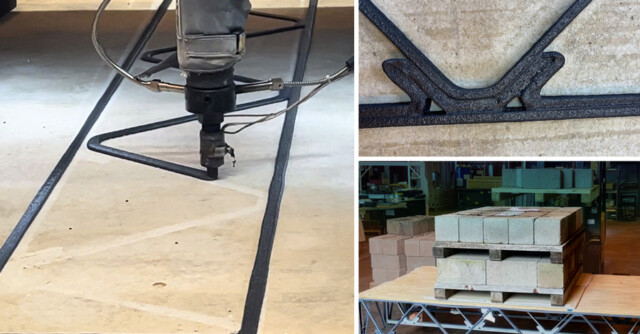
    An industrial robot applied the concrete layer by layer. A new mix was developed at ETH for this purpose, as well as the innovation of a reinforcement that grows with the building together with the ETH spin-off Mesh and Zindel United. A second robot places ring-shaped reinforcement bars in the fresh structure every 20 centimetres. In addition, vertical longitudinal reinforcement bars were inserted after printing. In addition, the researchers developed a new test procedure that allows the load-bearing capacity of 3D-printed concrete to be reliably calculated for the first time.

    Guided tours of the White Tower will be offered daily from 23 May. From July, it will also serve as a venue for theatrical performances. The tower in Mulegns will stand for around five years. After that, it can be dismantled and rebuilt elsewhere.

  • Protect property more effectively against squatters

    Protect property more effectively against squatters

    On Monday, the Council of States adopted the Federal Council’s proposal to amend the Civil Code by a large majority. Owners should now be able to reclaim their property themselves within a “reasonable period” after becoming aware of an occupation. Previously, the condition “immediately” applied. This change gives owners more flexibility and room for maneuver in the event of unlawful occupation.

    Rapid eviction even in the case of unknown squatters
    The second key amendment to the law is also intended to enable homeowners to obtain an eviction more quickly, especially if the number or identity of the squatters is unclear. This should prevent unlawful occupations from continuing in the long term and owners from having to bear high follow-up costs.

    Controversial voices from the Council of States
    However, the bill was not uncontroversial. Carlo Sommaruga, SP member of the Council of States from Geneva, criticized the tightening of the law as superfluous, as many squats are regulated by interim use agreements anyway. According to Sommaruga, rising rents and the housing shortage are much more relevant in this context.

    Further process in parliament
    Although there is still a small difference of opinion between the two chambers, the way has basically been paved for a stronger position for owners in the case of squatting. The bill now returns to the National Council for finalization.

  • Clean energy from the summer for the winter

    Clean energy from the summer for the winter

    The growing amount of solar power in summer holds enormous potential that has so far remained untapped in the winter months. In the pilot project in Bassersdorf, surplus solar power is converted into methanol using Power-to-X and stored in the compact Hybridbox®. This innovative energy center reliably provides electricity and heat in winter, even when conventional heating systems reach their limits.

    Methanol as the key to a secure energy supply
    “Green methanol allows us to store surplus electricity locally and use it in winter with low emissions, a crucial component for a secure energy supply,” explains Boris Meier from OST. Methanol is liquid, easy to store and climate-friendly, making the Hybridbox® a flexible energy system that adapts intelligently to individual needs. Maximum efficiency is achieved by combining it with photovoltaics, battery storage and a heat pump.

    Emergency power supply and cost control
    The system is also impressive in the event of a power failure. The locally stored methanol guarantees an uninterrupted supply to the building. In addition, the high level of self-sufficiency ensures stable operating costs in the long term, a clear advantage over rising energy prices. Especially in areas without a gas or district heating connection, the system offers a real alternative to old oil or gas heating systems.

    Successful partnership for sustainable building
    The joint project shows how practical cooperation works. “The combination of energy efficiency, security of supply and CO2 reduction makes the Methanol-Hybridbox® a sustainable solution,” says Roger Balmer.

    Bringing sustainability to life
    Buildings are responsible for around a third of CO2 emissions in Switzerland. Reason enough to break new ground. The Bassersdorf project not only provides a convincing technical solution, but also makes the energy cycle tangible for visitors to the new “Sustainable Building” exhibition in the Umwelt Arena. Developers, investors and interested parties can experience how the climate-neutral living of tomorrow can be realized today. A model that can have an impact far beyond Bassersdorf.

  • Insight into building permits and renovation dynamics

    Insight into building permits and renovation dynamics

    With the white paper “Retrofitting the Future”, the CRML at HEC Lausanne, together with E4S, is presenting a sound basis for assessing progress in the building sector. The analysis of over 45,000 building permits issued in 2024 provides a precise picture of how the Swiss real estate sector is progressing towards climate neutrality and where it is still encountering obstacles.

    Lots of potential, little energy efficiency
    The study shows that significant trends are emerging in the renovation of buildings. However, only a small proportion of renovations are directly aimed at improving energy efficiency. Although the transition to low-emission buildings has begun, it is not yet sufficient to achieve the ambitious climate targets.

    Financial challenge for real estate funds
    The report also highlights the role of real estate investment vehicles (REIVs). In order to achieve the climate targets by 2050, they would have to mobilize an average of 13 percent of their net assets, a total of CHF 28.3 billion, for energy-efficient renovations. Some market players will have to invest far more than this average, as the authors emphasize.

    Data-based perspective for the future
    “By combining current data and detailed project typologies, we create a bridge from theoretical analysis to a concrete basis for action,” explains Dr. Nathan Delacrétaz, co-author of the white paper. Together with Professors Eric Jondeau and Fabio Alessandrini, he is thus providing a decisive impetus for the urgently needed real estate turnaround in Switzerland.

  • ProKilowatt 2025 tenders set new standards

    ProKilowatt 2025 tenders set new standards

    The submission phase for projects and programs to increase electricity efficiency in the industrial and service sectors as well as in households has been running since November 2024. With 49 applications submitted by mid-April 2025 alone, interest is around 30 percent higher than in the previous year. A record that underlines the potential for sustainable energy savings.

    Flexibility for companies – paperless and plannable
    The uncomplicated, digital application process and prompt processing within just four weeks make it easier for companies to integrate efficiency projects into their operational planning in a way that fits perfectly. Larger projects with a subsidy of up to six million francs can also be submitted at any time from this year onwards – a milestone for ambitious projects such as the replacement of large production facilities or the bundling of smaller measures.

    Concrete savings
    A project in the retail sector has already been approved for up to six million francs. Replacing existing refrigeration units will save an annual amount of electricity equivalent to the consumption of 4,500 households. Projects in industry also range from the replacement of presses and the optimization of printing machines to more efficient blowers in wastewater treatment plants.

    Competitive tenders as an instrument for the future
    The ProKilowatt program is financed by the Swiss Federal Office of Energy and implemented by CimArk SA in Sion. The subsidy, financed via a surcharge on the high-voltage grids, provides impetus for an energy-saving and competitive economy. The next deadline for project applications is November 2, 2025 – an important date for all companies that want to reduce their energy costs with innovative measures and contribute to the energy transition at the same time.

  • Cham Swiss Properties optimizes “Rocket & Tigerli”

    Cham Swiss Properties optimizes “Rocket & Tigerli”

    Das Hochhaus „Rocket“ mit 100 Metern Höhe und die drei angrenzenden Wohngebäude „Tigerli“ sollen in der Lokstadt nicht nur Wohnen und Arbeiten ermöglichen, sondern auch städtebauliche Akzente setzen. Die Stadt Winterthur hat Anfang April 2025 die Baubewilligung erteilt. Allerdings mit strengen Auflagen, die vor allem die öffentliche Nutzung von Erd- und Dachgeschoss betreffen. Cham Swiss Properties AG, hervorgegangen aus der Fusion von Ina Invest und Cham Group, nimmt diese Auflagen ernst und will in enger Abstimmung mit den Behörden Optimierungen vornehmen.

    Formaler Rekurs als Zwischenschritt
    Obwohl es von externen Seiten keine Einsprachen gab, hat die Eigentümerin selbst einen Rekurs gegen die Baubewilligung eingelegt. Hintergrund ist die Notwendigkeit, die Detailvorgaben der Stadt zu präzisieren und in einem konstruktiven Dialog mit dem Amt für Städtebau und dem Amt für Baubewilligungen abzustimmen. CEO Thomas Aebischer erklärt: „Das ist eine Formalie. Entscheidend ist für uns der inhaltliche Austausch, damit Rocket & Tigerli der städtebaulichen Bedeutung vollauf gerecht werden.“

    Zentrale Punkte der Nachbesserung sind eine attraktive, öffentlich zugängliche Dachterrasse und publikumsorientierte Nutzungen im Erdgeschoss, wie Cafés und Gastronomieangebote am Dialogplatz. Diese Anpassungen sollen die Aufenthaltsqualität und die Einbindung in die Lokstadt fördern.Ein Ziel, das auch der Stadt Winterthur wichtig ist. Der Rekurs schafft die rechtliche Grundlage, um diese Punkte sorgfältig zu prüfen, ohne den laufenden Projektplan zu gefährden.

    Keine Verzögerung trotz Rekurs
    Cham Swiss Properties zeigt sich zuversichtlich, dass der Zeitplan eingehalten wird. Bereits jetzt ist klar; Rocket & Tigerli bleiben Meilensteine für den urbanen Holzbau in der Schweiz. Das Ensemble nutzt das Potenzial des zukunftsweisenden Holzhybridbaus und steht für nachhaltige Stadtentwicklung mit hoher architektonischer Qualität. Bis Ende 2028 soll das Projekt abgeschlossen sein, mit Wohnungen im Hochhaus und Hotelnutzungen in den unteren Geschossen.

    Bedeutung für Winterthur
    Für die Stadt Winterthur bedeutet das Projekt nicht nur ein neues Wahrzeichen, sondern auch zusätzliche Impulse für das Quartier Lokstadt. Als Teil einer umfassenden Transformation stärkt Rocket & Tigerli die Position der Stadt als attraktiver Wohn- und Wirtschaftsstandort und unterstreicht die Bedeutung nachhaltiger, innovativer Bauvorhaben.

  • Master plan for the Jenny site

    Master plan for the Jenny site

    The approximately 30-hectare Jenny site of Fritz Caspar Jenny AG is deeply rooted in the industrial history of the Glarus region. Where textile production has taken place since 1834, a multi-layered site with new prospects is being created today. The proximity to Ziegelbrücke railroad station, the size of the site and the existing infrastructure make the area a key location for economic and urban development in the canton.

    Planning with vision and participation
    A strategic master plan was developed as part of a multi-stage process, based on comprehensive test planning with four interdisciplinary teams. The resulting findings form the basis for a long-term development that is aligned with regional spatial planning, economic potential and social diversity. The winning design by Blättler Dafflon Architekten with Tony Fretton Architects and Studio Vulkan impressed with its strong combination of nature, building culture and open spaces.

    Diverse use as a location strategy
    The site already combines a variety of uses. From the Carlsberg Supply Company to creative work and residential forms such as Loft Z25 and the Glarus cantonal vocational school. The master plan builds on this diversity and expands it to include new educational, service and residential facilities. A hotel project is also being examined. The aim is to permanently establish and sustainably revitalize the Jenny site as a business, residential and educational location.

    Building culture as an identity-forming element
    Respectful treatment of the architectural heritage is central to the development. The site is part of the inventory of sites worthy of protection in Switzerland. Existing buildings of architectural and historical significance are to be preserved and integrated in a targeted manner. The listed riding stable, for example, is intended to enrich the new site concept as a defining element and contribute to the identity of the location.

    Focus on the legal framework
    The implementation of the master plan requires adapted land use planning. The project is currently awaiting the legal validity of land use planning II of the municipality of Glarus Nord. The first steps towards rezoning have been taken, but key legal requirements are still outstanding. Once this process has been completed, the development potential of the Jenny site can be fully exploited. A decisive step for the future of the site.

  • Swiss tax landscape in transition

    Swiss tax landscape in transition

    In 2025, the average corporate income tax rate in Switzerland fell from 14.6% to 14.4%. The canton of Zug remains the front-runner with just 11.85%, while Bern (20.54%), Zurich (19.61%) and Valais (17.12%) occupy the upper ranks in the tax ranking. At first glance, this is a sign of the attractiveness of the business location, but the dynamics are more nuanced.

    In fact, some cantons have even increased their tax rates slightly. Geneva, for example, rose from 14 to 14.7 percent, while Basel-Stadt will increase its rate to 14.53 percent in 2026. This is due to the introduction of the global minimum tax rate of 15% for companies with high profits. Cantons that were previously regarded as low-tax locations are adapting in order to cushion the threat of the additional tax and retain revenue themselves. For investors, this means that while the tax advantage remains, flexibility is required in order to be able to react to cantonal differences and future adjustments.

    Location remains competitive
    There has also been a slight decrease in the top tax rates for private individuals. From an average of 32.7 percent to 32.5 percent. Geneva (-1.7 percentage points) and Schwyz (-0.61) in particular have lowered their rates. However, the ranking remains stable. Schwyz (21.98%), Zug (22.68%) and Nidwalden (24.1%) remain at the top. Geneva, Vaud and Bern remain the most expensive cantons for top earners. For real estate developers and highly skilled workers, these locational differences in income tax remain a decisive factor, especially for international projects.

    Global minimum tax Stability in Switzerland, uncertainties internationally
    Over 50 countries worldwide have already implemented the minimum tax of 15 percent for large companies. However, the USA, the original driving force behind the initiative, has not yet adopted the OECD guidelines into national law. On the contrary, the new US administration is increasingly questioning the project. Experts such as Stefan Kuhn from KPMG Switzerland emphasize that, in the worst-case scenario, these uncertainties could lead to a return of tax competition or special digital taxes. For Switzerland, however, the signal is clear: the global minimum tax is becoming a reality here too. The stability of implementation and the ability to plan remain a locational advantage over uncertain international developments.

    Cantons boost location attractiveness with targeted projects
    In parallel to the tax adjustments, many cantons are investing in location promotion projects. Lucerne, Basel-Stadt, Zug and others have already adopted programs to support local companies and new relocations. For real estate developers, this means opportunities for new projects, incentives for investment in commercial and residential space and a solid basis for long-term viable business models.

    At the same time, it is clear that it is not tax policy that determines the attractiveness of a location, but also the accompanying measures such as infrastructure, securing skilled workers and digitalization. This is where new spaces for innovative projects are created for developers and investors,

    especially in a market environment that is characterized by growing demands for sustainability and resource efficiency.

    Industrial policy and tariffs
    In addition to taxes, international trade issues are once again gaining in importance. Discussions about US tariffs, bilateral trade agreements and strategic industrial policy are driving reindustrialization worldwide. For Swiss locations, this means that the demand for suitable production and logistics space could increase. At the same time, the protection of strategic industries is once again receiving greater political support, which could open up new areas for investment in high-tech and industrial production.

    Switzerland remains strong – eyes on Ireland and Asia
    In an international comparison, Switzerland remains on a par with other top European locations. Ireland taxes corporate profits at 12.5 percent, Hungary at 9 percent. Guernsey, the Bahamas and the Cayman Islands remain low-tax havens with zero percent, but this is no comparison for Switzerland. Instead, the location competes with attractive metropolises such as Hong Kong (16.5%) or Singapore (17%), which entice with additional incentive programs. China, India and Brazil also continue to rely on other tax strategies with high rates (25-34%), but selectively offer low effective burdens for strategic industries. Switzerland remains competitive and complements this advantage with a stable political and legal framework.

  • New study on residential mobility

    New study on residential mobility

    The desire for a new living environment is particularly strong among the so-called best agers, the 45 to 79-year-olds. The departure of children or the transition into retirement creates new freedom. However, suitable housing offers that do justice to this phase of life are rare. Many best agers therefore remain in apartments that no longer suit their needs. Digital exchange platforms, neutral housing advice or targeted information events could help to realize these relocation wishes, but such offers are still lacking across the board.

    Challenges for young families
    Younger generations are also affected. The desire to move into their own home is widespread among young families. However, high property prices, a shortage of supply and strict financing requirements make this dream a distant prospect for many. For young adults in particular, home ownership remains virtually unaffordable.

    Innovative models as a way out
    The study highlights alternative models such as installment plan, small-scale home ownership, temporary home ownership or building lease solutions. These concepts could open up new perspectives. Making home ownership possible with an easier entry point or better aligning the transition to a home with the stage of life. However, these models are not yet widespread in Switzerland, are often still unknown or are not easy to implement legally.

    Impetus from politics and business needed
    New impetus from politics and business is needed to change this. Municipal housing strategies, targeted funding programs and pilot projects could help to increase residential mobility. Equally important are innovative financing models that also give lower-income households and young families access to suitable housing.

    Central role of the municipalities
    The municipalities play a key role here. They could specifically establish new forms of housing and advisory services that make it easier for people to change their housing situation. In this way, living space can be better utilized and adapted to growing demand, a decisive factor for sustainable residential development. The “Housing Study Series” thus provides important findings and concrete starting points for all players in the housing industry. It is clear that residential mobility is more than just an individual need. It is a key factor for sustainable housing development in Switzerland.

  • BeOne Medicines anchors itself in the Basel Area

    BeOne Medicines anchors itself in the Basel Area

    BeOne Medicines, formerly BeiGene, has officially relocated its headquarters to Switzerland. Already present in Basel since 2018, the global oncology company is now permanently anchored in the heart of one of Europe’s most innovative biotech hotspots. Basel not only boasts more than 30,000 highly qualified life sciences specialists, but also excellent conditions for regulatory cooperation and international networking.

    Strategic impetus for research and development
    BeOne pursues a vertically integrated innovation strategy that combines basic research, clinical development and production under one roof. The company has one of the most extensive oncology pipelines in the world. With more than 50 investigational compounds, including a BTK inhibitor already approved in 75 countries, BeOne addresses both hematological diseases and solid tumors. Development is based on future technologies such as multispecific antibodies and protein degradation products.

    Site selection as part of a global expansion strategy
    The Basel Area will thus become the European hub of BeOne’s clinical activities. As early as 2024, 13 new drug candidates were transferred to clinical trials. A peak value even compared to Big Pharma. More than 40 trials are currently underway in Europe, involving over 3,000 patients. BeOne employs more than 11,000 people worldwide on six continents, with a rapidly growing proportion in Switzerland.

    A gain for the location and for investors
    For Basel as a location, BeOne’s decision means a clear gain in international visibility, jobs and investment momentum. For investors and project developers in the life sciences, there are new opportunities along the entire value chain, from laboratory space to clinical study centers and production. The proximity to science, talent and regulatory authorities creates ideal conditions for further growth.

  • Foundation stone laid for cutting-edge biomedical research

    Foundation stone laid for cutting-edge biomedical research

    On May 23, the University of Basel celebrated the laying of the foundation stone for the new biomedicine building on the Schällemätteli Life Science Campus together with project partners and guests from politics and science. From 2030/31, around 700 researchers will have access to a state-of-the-art infrastructure here, the University of Basel announced in a press release. “With this building, we are not only creating space for excellent research, but also promoting close spatial networking between the university, clinics and industry,” Rolf Borner, Director of Infrastructure & Operations at the University of Basel, is quoted as saying in his speech at the laying of the foundation stone.

    In the new Biomedicine building, the University intends to bring together the units of the Department of Biomedicine, which are currently spread across six different locations. It conducts research at the interface between basic science and medical application, mainly on tumor diseases, the immune system, regenerative medicine and neurosciences.

    Construction work on the building, which is over 40 meters high and has eleven floors, has been underway since 2023 and the shell is due to be completed next year. In addition to laboratories, the plans include lecture halls, seminar rooms and a lounge to promote scientific exchange. The project is being realized by the construction and real estate company Implenia from Opfikon as total contractor.

    At the groundbreaking ceremony, the University of Basel also launched the new Basel BioMed Symposium conference series. The first edition on May 23 was dedicated to the value chains of biomedical research.

  • Geothermal energy in underground structures

    Geothermal energy in underground structures

    Engineers from the Laboratory of Soil Mechanics(LMS) at EPFL have investigated the use of geothermal energy in two very different applications: in a subway station and in an underground data center . In this Innosuisse project, the researchers, together with the internationally active engineering firm Amberg Engineering from the canton of Zurich, focused on optimizing air conditioning through the improved use of energy geostructures.

    These are building components that are located in the ground and can be used for heat conduction. These include energy piles, floor slabs and basement walls. The two studies were published in the journal “Tunnelling and Underground Space Technology”.

    The transferable models developed by the team took into account either most of the physical factors of the underground railroad infrastructure or the capacity to dissipate excess heat through geothermal activation, in addition to the geometry of the building and mechanical ventilation.

    Among other things, the researchers found that a geothermal system in an underground data center pays for itself in three to seven years. If geothermal energy replaces the heat generated by gas boilers, annual CO2 emissions at the typical site in this case study could be reduced by 45 percent.

    Sofie ten Bosch, a civil engineer at LMS and lead author of the study, was able to apply her PhD research to two specific applications in these two studies. She says: “The technology to assess the potential of geothermal energy in a given area is now mature and we see that the industry is ready to explore new opportunities for the optimal use of this sustainable heat source.”

  • sfb course in building automation HF increases efficiency in companies

    sfb course in building automation HF increases efficiency in companies

    Students on the Building Automation HF programme at sfb – Höhere Fachschule für Technologie und Management develop innovative projects for practical application, almost all of which are implemented, according to the press release. This benefits the Swiss economy, for example in the context of the Energy Strategy 2050 or other efficiency improvements. According to the sfb, the programme, which focuses on energy efficiency and building informatics, provides knowledge on how to operate the trades in a complex building as energy-efficiently as possible. 90 per cent of the final theses have a practical relevance, and it is not uncommon for students to make a career leap as a result. This is demonstrated, for example, by alumni Fabian Haist, who has completed further training to become a qualified building automation engineer HF and was available to answer questions for a series of sfb interviews.

    Based on his experience as an electrical planner, Fabian Haist prepared for his next career step with the sfb further training programme. “It played a key role in helping me to reach my current position, as a lot of the content was a perfect fit for my job profile,” he is quoted as saying. As an energy engineer at the Office for Environment and Energy of the Canton of Basel-Stadt (AUE), he is now responsible for implementing the cantonal energy law.

    In his diploma thesis, he planned an energy-related operational optimisation in a Basel school building and further developed the enforcement practice. According to Fabian Haist, the analysis has shown that even simple energy optimisations can lead to considerable savings: Energy savings of 15 per cent and cost savings of 17 per cent had been achieved in the Basel school building. The measures he has defined should now simplify the verification of operational optimisation.

    According to the sfb, the further education programme in building automation takes six semesters to complete, provided that the student has completed relevant vocational training. In addition to building automation, the module content includes data security, digital construction, renewable energies and fire protection. Skills in leadership, communication and teamwork are also taught. Details are available at information events in person and online as well as from a further education counselling service. The next start date is 13 August 2025.