Category: Trends

  • Construction of new soil treatment plant for more sustainable concrete

    Construction of new soil treatment plant for more sustainable concrete

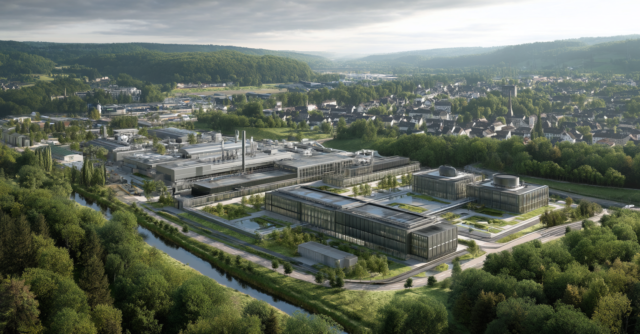
    STRABAG has broken ground for the construction of a wet-mechanical soil processing plant in Bürglen, according to a press release. The new plant will enable the extraction of recycled concrete from soil material and construction waste. STRABAG is also investing in a new building for its subsidiary Beton AG at the site.

    According to the company, the plant works like a “washing machine for stones”. The raw material from soils and building rubble is crushed with a crusher and then washed. In the next step, the clean stone is separated from metal, plastic, glass or wood and screened.

    The processed stones are then mixed with cement and water to produce new concrete for building houses and bridges as well as for road construction. The aim is to reduce the consumption of raw materials and promote a sustainable circular economy. “This protects the environment because we don’t have to extract as much new primary gravel from the earth. It also produces less waste,” they say.

    Installation of the plant technology is scheduled to begin in November 2025, with commissioning scheduled for autumn 2026. Production is set to begin in 2027.

  • Development plans are being revised and expanded in Hünenberg

    Development plans are being revised and expanded in Hünenberg

    OSRI AG from Lucerne is supporting the Zug municipality of Hünenberg in the implementation of two development plans. According to a press release, the urban planning and spatial development company is to assist the municipality with the transfer of existing development plans, to finalise the planning basis and to coordinate with cantonal authorities. The aim is to create a consistent, legally compliant basis.

    Parallel to this work, OSRI is to draw up a development plan for the Langrüti conservation area. This will integrate the building structure, the open space planning and the urban planning connection.

    With this joint project, Hünenberg aims to drive forward sustainable community development in which the existing buildings are harmonised with future developments.

  • Mirror pyramid opens up new perspectives for art and architecture

    Mirror pyramid opens up new perspectives for art and architecture

    Nüssli Schweiz AG from Hüttwilen has been commissioned by the town of Monheim am Rhein to build an extension to the Mack Pyramid, according to a press release. The pyramid was designed in 1990 by artist Heinrich Mack and architect Horst Schmidges.

    Nüssli has been awarded the construction contract as general contractor by Art Hub Immobilienverwaltungsgesellschaft der Stadt Monheim. The Thurgau event construction company will realise the architectural design H Eins by students Ruth Martin and Malte Grobenstieg, whose design won a competition organised by the Kulturkreis der deutschen Wirtschaft.

    In the new building, another mirror-inverted pyramid will be placed on top of the existing Mack building. Both the two newly created floors and the renovated old pyramid will offer spacious exhibition rooms for contemporary art. Storage and exhibition space for collections will also be created.

    The topping-out ceremony for the building is scheduled for 8 March 2026, Heinrich Mack’s 95th birthday. The first exhibitions are then scheduled to begin in autumn 2026 and full operation in June 2027.

    “We are proud that the city of Monheim am Rhein is once again relying on our extensive expertise and we are very much looking forward to successfully implementing this special project together with our partners,” said Andy Böckli, Group CEO of Nüssli, in the press release. The company has already realised the construction of an eight-court sports hall in Monheim from 2023 to 2025. This sports hall, currently the largest in Europe, was inaugurated on 31 March 2025.

  • Campus in Biel/Bienne celebrates laying of foundation stone

    Campus in Biel/Bienne celebrates laying of foundation stone

    On 6 May, the foundation stone was laid for the new Biel/Bienne campus of Bern University of Applied Sciences on the former Feldschlösschen site near Biel railway station. An education and research centre for around 2,350 students and lecturers is to be built here by 2028, the Canton of Bern ‘s Department of Construction and Transport announced in a press release. Together with the federal government and a private partner, the Canton of Bern is raising around CHF 400 million for the construction of the new campus.

    The Bern University of Applied Sciences will unite its Departments of Engineering and Information Technology as well as Architecture, Wood and Construction at the Biel/Bienne campus. According to the press release, the open architecture of the new site will promote interdisciplinary exchange and creative collaboration. The campus is designed as a cloverleaf of three building wings around a common centre.

    “An inspiring environment is being created here that focuses on openness, interdisciplinarity and high standards of infrastructure and quality,” said Cantonal Councillor Christoph Neuhaus, Director of Construction and Transport of the Canton of Bern, in the press release. “The new campus is being built as a modern timber construction – a project that stands for sustainable, climate-friendly construction.” Glenda Gonzalez Bassi, Mayor of Biel/Bienne, sees the future campus “as a central location for the development of our region, for the education of our young generation and for attracting the talent that our economy needs now more than ever.”

  • Occupational pension provision with high interest rates

    Occupational pension provision with high interest rates

    The year 2024 was a success for the pension funds. Thanks to positive developments on the capital markets, an average net asset performance of 7.4 % was achieved. Only 0.8 % of the institutions still had a shortfall at the end of the year. Active insured persons also benefited. Their retirement assets earned an average interest rate of 3.76 %, well above the statutory minimum interest rate of 1.25 %.

    Market risks remain
    Despite the positive outlook for 2024, OAK BV urges caution. Market distortions due to geopolitical tensions are already weighing on the current year. It therefore remains essential to build up and maintain fluctuation reserves in order to cushion potential losses and stabilise the system in the long term. A stress test carried out shows that the pension funds are currently well positioned.

    Focus on collective and joint schemes
    The Supervisory Board continues to focus on collective and joint schemes, which look after around 75% of active insured persons. In this heterogeneous structure, the OPSC sees risks due to conflicts of interest, competitive pressure and insufficient reserves in the event of rapid growth. New guidelines on the distinction between interest and benefit improvements and on transactions with related parties are intended to increase transparency and stability.

    The next development step
    In addition to ongoing supervision, the OPSC BV is providing impetus for the further development of the system. A more standardised supervisory practice, clearer rules for brokerage and auditing as well as a risk-oriented reporting obligation should make the system fit for the future. The evaluation of the LOB structural reform will show where there is a need for legislative action.

    Robust system, remain vigilant
    Occupational pension provision in Switzerland is solid and resilient at the end of 2024. But the challenges remain. Long-term security can only be guaranteed with consistent supervision, structural development and a clear focus on the interests of the insured.

  • When construction comes to a standstill, the country comes to a standstill

    When construction comes to a standstill, the country comes to a standstill

    Bridges, tunnels and buildings are the backbone of our prosperity. But what happens when there is no one left to maintain them? The civil engineering profession is losing popularity and with it the knowledge that keeps our built environment alive is dwindling. The number of students has halved in the middle of a country that cannot survive without a functioning infrastructure.

    Image problem with consequences
    Engineering is not suffering from a lack of relevance, but from a lack of perception. Between dusty clichés and publicly failed major projects, young talents prefer to lose themselves in IT and business administration. Yet the profession is crucial for the future and more exciting than ever.

    Digital thinking instead of analogue routine
    Adrian Wildenauer shows how things can be done differently. As a professor at Bern University of Applied Sciences, he doesn’t ask his students to “press buttons”, but to have a deep understanding of systems. Digital planning is not taught as a tool, but as an attitude to rethink processes and transform the industry.

    Structures instead of individual items: Time for industrial standards
    The Swiss construction industry is still planning project after project as a prototype. According to Wildenauer, this is inefficient, expensive and not very sustainable. This will change with the upcoming digital product passport. Anyone who wants to deliver in future will have to provide proof of data and quality. The pressure for standardisation is increasing.

    Diversity instead of dogma
    Women in particular would excel in training, but often disappear before starting their careers. An industry that only clings to traditional role models is squandering enormous potential. Interdisciplinary, diverse teams are needed, because the construction of the future requires new perspectives.

    Building means shaping the future
    Wildenauer’s appeal is clear: engineering is not a profession like any other. It is both foundation and progress. Those who build create value for generations. But without young people who see this profession as an opportunity, there is a risk of a silent standstill.

    Act now before it’s too late
    Engineering professions need to be retold, taught in a modern way and socially upgraded. This is the only way for Switzerland to remain structurally and economically viable. It is about much more than buildings. It is about our common foundation.

  • Preliminary project cantonal school Ausserschwyz in Nuolen

    Preliminary project cantonal school Ausserschwyz in Nuolen

    The demolition of the 1947 school building offers a unique opportunity to redefine the urban development of the site. A new school and village square will be created that opens up towards Seestrasse and the village. The historic Patres building will be freed from extensions and staged as a solitaire, restoring it to its original splendour.

    Modern school buildings
    The new school wing will be realised as a compact timber construction that will house classrooms and a canteen with a view of the lake. The existing gymnasium will be converted into an assembly hall and can be used flexibly as a singing hall. New music rooms and improved administrative areas will complement the available space. The buildings from 1967 and 1982 will be retained and adapted to today’s requirements with targeted interventions. A new access structure ensures a clear separation between school operations and escape routes, which enables versatile use without fire safety restrictions.

    Open space design with a historical reference
    The open space concept connects the school site with its surroundings and creates high-quality recreational areas. The newly designed square with numerous trees and a water basin is reminiscent of the site’s history as a former spa hotel. The existing sports area will be retained, supplemented by car parking spaces and equipment rooms. A metal footbridge crosses the Mühlebach canal and connects the campus with the lakeshore.

    Construction method and energy supply
    The new building fulfils the high sustainability standards and is certified according to SNBS and Minergie-A. Heating is provided by a groundwater heat pump, which also enables recooling in summer. In addition, the roof area is equipped with photovoltaic elements to generate part of the operating energy itself. Efficient mechanical ventilation ensures a pleasant indoor climate.

    An educational centre with a future
    With the renovation and partial new construction of the Ausserschwyz cantonal school in Nuolen, a future-oriented school centre is being created that combines tradition and modernity. At the same time, the new school site blends harmoniously into the townscape and will become an open, lively meeting place for the whole community.

  • Historic site becomes new cultural and educational centre

    Historic site becomes new cultural and educational centre

    The city of Schaffhausen is pursuing an ambitious goal with the redevelopment of the Kammgarn site: to transform the historic area into an attractive location for culture, education and socialising. The Schaffhausen electorate approved this project back in August 2020.
    The comprehensive redesign not only creates a better connection to the urban fabric, but also new utilisation options. In addition to the existing entrances from Baumgartenstrasse, Rheinuferstrasse and Rheinstrasse, a new passageway will be created along Klosterstrasse. This strengthens the connection with the old town and increases the attractiveness of the neighbourhood. The Kammgarn area will become part of a “string of pearls” of meeting places along the banks of the Rhine, which will enhance the area in the long term.

    More quality of stay through new open spaces
    The redesign of the Kammgarnhof will transform the inner courtyard, which was previously used as a car park, into a car-free zone. Green spaces, seating and a water feature will increase the quality of stay and turn the courtyard into a central meeting place. The redesign will enable a variety of uses for events, culture and recreation.

    Another core element of the development is the construction of a single-storey underground car park with around 90 parking spaces under the courtyard. This will make the entire area above ground car-free and open up new possibilities for use. A pergola will be erected in front of the west wing, while a spacious terrace will be created in front of the north wing.

    Modern infrastructure for culture and education
    The west wing of the Kammgarn site is being prepared for new uses as part of the refurbishment. The library and toy library will move into the ground floor and first floor. Glazed façades offer passers-by a glimpse into the world of books and games.
    The Schaffhausen University of Teacher Education will move into the second and third floors, while the fourth floor will be available for other tenants. The diverse use of the site reinforces its importance as an educational and cultural centre.

    Construction progress and archaeological work
    Construction officially began in September 2024 with the symbolic ground-breaking ceremony. Prior to this, archaeological rescue excavations were carried out, during which significant finds from the last 1000 years were discovered.

    Work is currently underway on the underground car park and the redesign of the courtyard. At the same time, the renovation of the west wing is progressing. In addition to structural measures, the façades and roof are being renovated and preparations are being made for the interior work.

    The first floor slab for the new courtyard was concreted in January 2025. To protect the valuable trees, a retaining wall (Rühlwand) is being erected around the large chestnut tree in the courtyard.

    A new meeting place for Schaffhausen
    After the remodelling, the Kammgarnhof will be an attractive place for locals and visitors to the city. Reading, meeting friends or enjoying concerts – all this will be possible in the redesigned surroundings.

    The construction of the underground car park is being financed jointly with IWC Schaffhausen, the direct neighbour of the site. This close collaboration will result in a sustainable solution that improves both the flow of traffic and the quality of life.

    A lively neighbourhood with a future
    The comprehensive renovation and redesign will transform the Kammgarn site into a modern cultural, educational and meeting centre. The connection to the old town and the Rhine will be strengthened, while new uses will enrich Schaffhausen’s cityscape. The project is scheduled for completion at the end of 2026 – a significant step for the long-term development of the city.

  • House of wood in Sursee shows the future

    House of wood in Sursee shows the future

    With six storeys made of wood, complemented by a variety of uses including offices, flats and communal areas, the Haus des Holzes impressively demonstrates the potential of modern timber construction. The entire construction, apart from the basement, is made of Swiss timber, 94 per cent of which comes from local forests. The building material grows back within just 80 minutes, a strong testament to the ecological sustainability of regional resources.

    Circular thinking consistently implemented
    The building is designed in such a way that future generations can dismantle it and reuse the building elements used. This recyclability is a key innovation driver for companies in the timber and construction industry, making sustainability tangible in practice and increasingly asserting itself as a sales argument to a climate-conscious clientele.

    Digital methods as a driver for efficiency
    A special feature of the project is the consistent use of digital planning methods. The entire building was modelled, planned and implemented using building information modelling. Tradesmen worked directly with digital models on mobile devices, an approach that raises the use of materials, construction coordination and efficiency to a new level.

    Regulatory freedom as an innovation advantage
    Switzerland offers an ideal environment for progress in timber construction with practical training, material-independent fire protection standards and flexible SIA guidelines. These framework conditions enable engineers to develop creative solutions that would be held back by rigid standards elsewhere.

    Global pioneering role in view
    The project sees itself as a driving force for the international future of timber construction. With expertise, innovative spirit and the intelligent use of digital tools, Switzerland is positioning itself as a global trendsetter. This is also evident in the largest ongoing project, the planned Dock A at Zurich Airport, where Pirmin Jung Switzerland is playing a key role in the timber-based planning.

  • Zurich Stadelhofen is open to the public

    Zurich Stadelhofen is open to the public

    With 80,000 travellers a day, Zurich Stadelhofen is a central transport hub in the city. However, the three existing tracks are overloaded and limit the growth of the S-Bahn. The construction of a fourth track and an additional tunnel in the direction of Tiefenbrunnen will massively increase capacity. An expansion that will have an impact far beyond the city limits.

    More capacity, better connections
    The expansion should enable up to 50 per cent more train movements. It paves the way for a comprehensive quarter-hourly service throughout the entire Zurich S-Bahn network. An improvement that will benefit not only the city of Zurich but also the 6 neighbouring cantons. The project involves several sections, including a new main access, improved passages and additional platform access in the Kreuzbühl-/Mühlebachstrasse area.

    Ten years of construction and an investment of CHF 1.1 billion
    The project will take around ten years to complete. If everything runs smoothly and there are no objections, construction should start in the second half of the 2020s, with commissioning scheduled for the 2030s. The estimated costs amount to around 1.1 billion Swiss francs. A significant but necessary step for a sustainable mobility infrastructure.

    Transparency and participation – project open to the public at
    The project will be open to the public in Zurich and Dübendorf from 14 May to 12 June 2025. The complete plans can be viewed in Zurich and those for the Zürichberg tunnel in Dübendorf. SBB specialists will be on hand to answer questions. A planned major expansion with room for dialogue.

  • Tanja Zimmermann takes over the presidency

    Tanja Zimmermann takes over the presidency

    On 6 May 2025, Tanja Zimmermann was elected as the new President of the Board of Trustees of Technopark Zurich. She succeeds Lothar Thiele, who has chaired the board since 2019. The change not only gives the innovation hub new leadership, but also sends a clear signal in favour of diversity and future orientation.

    Impetus from research and technology
    Zimmermann’s career has been characterised by interdisciplinary research and the targeted bridging of science and industry. As Director of Empa, she has been promoting sustainable innovations at the interface between the laboratory and the market for many years. She is now contributing this expertise to the strategic development of the Technopark, an ecosystem that connects start-ups, research institutions and companies.

    Technopark as a workshop for the future
    For Zimmermann, Technopark Zurich is a place where ideas grow and become reality. “This is where visionary research meets entrepreneurial action. This is the ideal breeding ground for innovation,” she says. As the new President, she wants to create targeted framework conditions that promote forward-looking developments and strengthen synergies.

    A clear commitment to Switzerland’s innovative strength
    With the election of Tanja Zimmermann, Technopark Zurich is sending a strong signal for strategic expertise, sustainable orientation and the promotion of a sustainable business location.

  • Schwamendingen gets its Ueberlandpark

    Schwamendingen gets its Ueberlandpark

    After five and a half years of construction, the Schwamendingen enclosure was officially inaugurated. With the transfer of traffic to the extended Schöneichtunnel, the motorway noise disappears and in its place a park is created that sets new standards. The overland park is around one kilometre long, thirty metres wide and connects the neighbourhood with a green ribbon.

    More than just noise protection, a symbol of urban planning courage
    Federal Councillor Albert Rösti praised the project as a prime example of national road construction that is compatible with residential areas. The enclosure was the result of clear political will at all federal levels. Government Councillor Carmen Walker Späh also emphasised the importance of great visions for the design of vibrant, resilient cities.

    Green spaces as a climate strategy and meeting place
    For city councillor Simone Brander, the park is far more than just a design element. It counteracts the overheating of the urban climate, creates a quality of stay and strengthens social cohesion. Robust, native plants were planted, a conscious decision as the park does not require artificial irrigation.

    A park for everyone and a meeting place
    The Überlandpark was opened to the public on 10 May 2025. The neighbourhood celebrated with a pavilion, information stands and a wide range of culinary delights. The new park is open to everyone. A space for recreation, encounters and the future.

  • How Lucerne is actively designing new workspaces

    How Lucerne is actively designing new workspaces

    At the beginning of April 2025, representatives from Lucerne municipalities and regional development agencies met for the third “Location and economic development in the municipalities” forum. The event was organised by Lucerne Economic Development and the Association of Lucerne Municipalities. The forum at Lucerne University of Applied Sciences and Arts focussed on the question of how municipalities can strategically secure and develop areas for economic activities.

    Cantonal framework and digital tools
    After the opening by Ivan Buck, Director of Lucerne Economic Development, and VLG President Sibylle Boos-Braun, the Business Development team presented practice-orientated tools. These included a guide and the digital tool from start.swiss, which enables automated welcome processes for new companies in the municipality. A step towards efficient administration and location management.

    Cantonal planning as a driving force
    André Duss from the canton of Lucerne presented the planned measures for the development of workplace areas in the draft cantonal structure plan. The focus was on areas for the expansion of local companies and attractive locations for new settlements. Coordination between the canton and municipalities is to play a central role in this.

    Regional practical examples provide impetus
    Specific projects were used to illustrate how municipalities are already taking action today. LuzernPlus demonstrated successful area management with LuzernNord, flanked by developments in LuzernSüd, LuzernOst and Rothenburg-Station. The Sursee Plus pilot project, presented by Matthias Senn, also showed how densified construction in work zones can also work for land-intensive companies. Florian Furrer from Schüpfheim gave an insight into the municipal process of zoning new employment areas, an example of forward-looking planning at municipal level.

    Municipalities are actively shaping the future with
    The forum made it clear that location and business promotion starts locally. Innovative approaches, digital tools and targeted cooperation between the canton, municipalities and regions are creating new spaces for entrepreneurial development. Lucerne shows how the future is being realised.

  • Quality label strengthens ceramics industry with 121 Platinium certifications

    Quality label strengthens ceramics industry with 121 Platinium certifications

    A total of 121 tiling, trading and mixing companies from the ceramics industry have received Platinium certification this year, CERUNIQ announced in a press release. The quality label is awarded by the association of leading installation companies and specialist retailers in the ceramics industry to companies for the high quality and professionalism of their work. “Platinium embodies consistency, quality and stability,” CERUNIQ Central President Konrad Imbach is quoted in the press release from his speech on the occasion of the awarding of the label.

    Of the certified companies, five received the label for the first time, while the others were recertified. The canton of Lucerne is represented by nine of the recertified companies. Specifically, Bacchetta Baukeramik GmbH from Horw, Bühlmann Keramik AG from Hochdorf, DÄHLER KERAMIK GmbH from Weggis, Häfliger Plattenbeläge AG from Rain, JÖRI PLATTEN AG from Egolzwil, MUHEIM KERAMIK AG from Weggis, P. Bachmann AG from Urswil/Hochdorf, Ziswiler GmbH, Keramik, Naturstein, Ofenbau from Eschenbach and Zwimpfer – Platten AG from Sursee were awarded the label.

    This year’s certification took place “under stricter requirements”, writes CERUNIQ. Particular emphasis was placed on the training and further training of apprentices and employees, the quality of advice, precision in the execution of the work and the professional and customer-oriented handling of complaints. The next Platinium certification is scheduled for 2027.

  • Researcher investigates solar reflection for better yields

    Researcher investigates solar reflection for better yields

    SLF researcher Anja Mödl investigates how snow-covered terrain reflects sunlight. Her findings should make photovoltaic systems more efficient. The measurements take place in Meierhoftälli near Davos at around 2,400 meters above sea level.

    The researcher uses sensors to examine the sunlight reflected by the snow cover. According to the press release, the majority of sunlight is reflected by the snow in the direction of incidence. Sunlight is thus largely reflected in the direction of other mountain slopes.

    The snow surface reflects different wavelengths to different degrees. The intensity of certain wavelengths thus becomes stronger over time than in the originally incident light. Mödl is investigating how spectra differ at different locations.

    The measurements should enable photovoltaic systems to generate electricity even more effectively. Optimally positioned systems should then also be able to use the light reflected from neighboring slopes.

    The sensors measure wavelengths between 340 and 2500 nanometers. Photovoltaics only use the range between 500 and 1100 nanometers. According to Mödl, the larger spectrum makes it possible to gain further insights into rock warming and snow melting.

    Measurements are also planned for the coming season. “In order to make a well-founded statement, I need to record data under different conditions,” says the researcher.

  • Study shows potential for renewable energy in Frauenfeld

    Study shows potential for renewable energy in Frauenfeld

    The municipal utility company of Frauenfeld, Thurplus, and researchers from the Swiss Federal Laboratories for Materials Science and Technology (Empa) have presented the results of a two-year study entitled “Energy Perspectives 2050”. As detailed in a press release, the study developed scenarios that show which technologies, energy requirements and infrastructures could be used to achieve net-zero emissions in the specified period.

    According to the study, 80 percent of buildings in Frauenfeld are still heated with oil or natural gas. However, decarbonization could be achieved with the technologies already available today, such as district heating, heat pumps, photovoltaics and battery storage. However, to replace the existing fossil heating systems by 2040, 250 buildings a year would have to be equipped with renewable heating technologies. District heating plays a central role here, but solar systems also have great potential. Solar energy, which currently covers 18 percent of Frauenfeld’s electricity requirements, could be increased almost fivefold by 2040, according to the press release.

    The study was carried out in collaboration with Urban Sympheny AG, a spin-off of Empa. The project was supported by the Swiss Federal Office of Energy (SFOE), the Office for Energy of the Canton of Thurgau and the Office for Building Construction and Urban Planning of the City of Frauenfeld.

  • Ground-breaking ceremony for large-scale solar project

    Ground-breaking ceremony for large-scale solar project

    The Baden-based energy service provider Axpo is building a solar power plant above Tujetsch, in the immediate vicinity of the Lai da Nalps reservoir. According to a press release, it will generate 11 gigawatt hours of solar power with an output of 8 megawatts per year from 2028.

    At least 10 per cent of this should be connected to the grid by the end of 2025 in order to meet the requirements of the Solar Express. Further construction stages will be completed during the summer months of the following years, and the plant should reach its full production capacity in 2028. SBB will purchase the solar power for the railway power supply over a period of 20 years. This could cover the annual electricity needs of 2,000 households.

    At the ground-breaking ceremony, the importance of the solar project for the energy transition was emphasised. “Energy production in winter is key for Switzerland – alpine solar plants like NalpSolar make an important contribution when demand is at its highest,” Antoine Millioud, Head of the Solar Division at Axpo, was quoted as saying. Axpo also expects NalpSolar to provide important insights into the technology and realisation of large-scale solar projects in challenging alpine locations.

    Martin Cavegn, Mayor of Tujetsch, emphasised the potential of the plant for a sustainable energy future and value creation in the region. The location right next to the Nalps reservoir combines existing infrastructure with new climate-friendly technology. This brings advantages for local value creation and makes Switzerland’s electricity supply more secure.

  • More inflows to Valais, losses in Zurich and Vaud

    More inflows to Valais, losses in Zurich and Vaud

    A total of 37,816 companies moved within Switzerland last year, CRIF AG reported in a press release. The credit agency analysed the corresponding movements of companies within Switzerland. According to its surveys, 80.6 per cent of companies relocated within the canton. Only 7470 companies moved to another canton.

    Valais ranks first in terms of inflows from other cantons, with a net inflow of 88 companies. The canton of Valais was able to attract companies from the cantons of Vaud and Geneva in particular. The cantons of Appenzell Ausserrhoden and Fribourg also recorded high net immigration of 65 and 39 companies respectively. The canton of Appenzell Ausserrhoden mainly attracted companies from St.Gallen, Zurich and Zug. Companies from the cantons of Vaud, Bern and Geneva were the main movers to Fribourg.

    At the other end of the scale are the cantons of Zurich, Vaud and Lucerne. The canton of Zurich lost a net total of 133 companies to other cantons in Switzerland. From the cantons of Vaud and Lucerne, 87 and 61 companies respectively moved to other cantons.

    The cantons of Zug, Aargau and Schwyz were the main beneficiaries of the migration from the canton of Zurich. Many companies from Vaud relocated to the cantons of Geneva, Valais and Fribourg. Companies from Lucerne mainly relocated to the cantons of Zug, Zurich and Aargau.

  • New course director for Real Estate Management at the HWZ – focus on digitalisation and AI

    New course director for Real Estate Management at the HWZ – focus on digitalisation and AI

    Facchinetti brings with him extensive experience in digitalisation, innovation and PropTech. “We are convinced that he will offer students great added value thanks to his broad network and expertise,” says Markus Streckeisen, Head of Real Estate Programmes at the HWZ.

    In future, the new programme director will be responsible for three practical CAS programmes, which can be completed individually or in modules over several years up to a Master’s degree:

    • CAS Smart Real Estate Business (start: March 2025)
    • CAS Smart Real Estate AI, Data & Value (start: September 2025)
    • CAS Smart Real Estate Life Cycle Management (start: September 2025)

    “I am looking forward to working with experts from the field to impart future-oriented skills that are necessary for the challenges of our time,” says Facchinetti.

    The part-time continuing education programme, centrally located at Zurich Main Station, is aimed at specialists and managers who want to strengthen their digital skills in the real estate sector – practical, modern and future-proof.

  • New tool facilitates coordination between 2D and 3D

    New tool facilitates coordination between 2D and 3D

    Revizto has added a number of new features to its integrated collaboration platform for the architecture, engineering, construction and operations (AECO) industry. As the Lausanne-based company explains in a press release, the new tools and improvements in Revizto 5.16 are designed to optimise workflows and enable smarter collaboration at every stage of a project.

    “Every improvement in this version has been designed to enable teams to coordinate more efficiently and make more informed decisions in real time,” CEO and founder Arman Gukasyan is quoted as saying. “All these improvements are the result of extensive discussions with our customers and feedback from our users. This is just another step in our journey to create a new standard for collaboration in the AECO industry.”

    New features include the ability for users to view a 2D sheet and a 3D model, including issues and markers, side-by-side, and the ability to instantly jump from a position in 2D to the corresponding position in the 3D model without having to switch between tabs. Further improvements relate to the selection field, object isolation and optimisation of the scheduler. The new “Required objects” collision function automates the coordination process, which can now also be carried out overnight.

  • New building for organic vegetable production opened

    New building for organic vegetable production opened

    Terraviva ag is hosting an open day in Kezers on 17 May. The occasion is the official inauguration of the producer organisation’s new premises for organic vegetables, according to a press release from the BioGemüse Seeland association. Terraviva is a member and project organiser of the BioGemüse Seeland regional development project (PRE).

    The programme for the open day includes the inauguration of the premises and a vegetable market with a presentation. This will provide an insight into the processes and preparation. Regular guided tours of the new company building will be complemented by activities for families and children.

    PRE BioGemüse Seeland aims to support and strengthen organic vegetables from the region, from cultivation to marketing. To this end, the umbrella brand PASSION SEELAND bio:logique has been created. Producers of organic vegetables and organic winegrowers from the Seeland region as well as producers of other organic products from the canton of Fribourg have joined forces here.

  • Modernization ensures fresh water in the spa

    Modernization ensures fresh water in the spa

    Shortly before Easter, the Wellness Hotel Stoos modernized the water technology in its Wellness & Spa. Aqua Innovation GmbH was involved as a partner, as the Rotkreuz-based company specializing in water and air treatment systems explains in a post on LinkedIn. The Aqua Innovation team put in a few extra hours to ensure that the system was back in operation in time for Easter.

    Specifically, Aqua Innovation was responsible for the installation of a high-precision programmable logic controller (PLC) and the installation of a chlorine dosing system with integrated pH control. The new control system makes it possible to monitor and control all parameters from temperature, water flow and filter cycles to chemical water treatment centrally via the building management system. “We’ll save a personal test of the system for later,” writes Aqua Innovation with a wink in the article.

  • Swiss conveyor technology manufacturer increases earnings

    Swiss conveyor technology manufacturer increases earnings

    The Schindler Group generated total global sales of 2.73 billion Swiss francs in the first quarter of 2025, the Ebikon-based group of companies specializing in elevators, escalators and passenger conveyor belts announced in a press release. Year-on-year, this corresponds to growth of 2.5 percent in local currencies. In the same period, order intake increased by 6.0 percent in local currencies to 2.95 billion Swiss francs.

    At CHF 329 million, operating profit at EBIT level was 13.4% higher in local currencies than in the first quarter of 2024. The EBIT margin increased by 1.1 percentage points to 12.0%. Net profit amounted to CHF 257 million, compared to CHF 232 million in the same period of the previous year.

    “In the first quarter, we recorded more orders, increased margins and higher cash flow,” said Schindler CEO Paolo Compagna in the press release. “Our focus remains on our strategic priorities while keeping an eye on the volatile macroeconomic environment, in particular the weakening market indicators for the Americas region.” For the year as a whole, Schindler expects revenue growth in the low single-digit range. The EBIT margin should be maintained at around 12 percent. In the medium term, the Group aims to achieve an EBIT margin of 13 percent.

  • FORUM UZH Centre for Education and Research

    FORUM UZH Centre for Education and Research

    The FORUM UZH is a milestone for the structural and academic development of the University of Zurich. The new building comprises a total of 37,000 m² of usable space and will not only accommodate the predicted growth in student numbers, but also set new standards in teaching, research and sustainability. The new centre will bring together the faculties of law, economics and modern philology. These will be complemented by modern libraries, sports facilities for secondary schools and the Academic Sports Association as well as publicly accessible cafeterias and commercial areas.

    Architecture and spatial concept
    The FORUM UZH consists of a terraced base for teaching and university life, a trapezoidal structure hovering above for research and a central courtyard. The structure is set back from Rämistrasse to create a spacious front zone with city balconies that blends in with the urban surroundings. The façade design with horizontal ceiling panels and vertical brise soleils gives the building a striking depth effect and allows for flexible light regulation inside.

    At the centre of the building is the eponymous Forum, a light-flooded hall that is a lounge, meeting and work space all in one. It connects all levels and can be used for university and public events for up to 2,000 people.

    Flexible learning environment and modern infrastructure
    The FORUM UZH offers a variety of innovative teaching and learning spaces. Five lecture theatres and several seminar rooms can be used flexibly and are equipped with state-of-the-art technology to enable hybrid teaching models. There will also be a spacious teaching and learning centre with over 700 student workstations. The university library will be united under one roof on the upper floors.

    Sustainability and innovative construction
    The FORUM UZH is based on a sustainable timber-concrete hybrid construction method that reduces CO² emissions while offering a high quality of stay. The intensively greened roof not only serves as a fifth façade, but also as an ecological compensation area with a habitat for flora and fauna. A photovoltaic system supplies its own electricity, while over 50 large trees on the redesigned town square have a positive impact on the microclimate.

    Thanks to the modular design, UZH saves as much CO² as would be released by the construction of 77 detached houses. The building will be certified in accordance with the SGNI Gold standard and Minergie P.

    Integration into the urban environment
    The FORUM UZH will not only be open to the university community, but also to the city’s population. The libraries, catering areas and neighbourhood shops will be open to the public and the Gloriaterrasse will be a green meeting place where people can linger. The urban design will create a direct link between the university quarter and the surrounding neighbourhoods.

    Construction schedule and next steps
    Following the completion of the preliminary project, construction work began in August 2024. Completion is scheduled for 2028 and the building will be occupied in 2029. Until then, students and researchers at the University of Zurich will be able to follow the development of this project of the century at close quarters.

  • More efficient cleaning solutions for construction and industry

    More efficient cleaning solutions for construction and industry

    According to a press release, the Frutiger Company based in Winterthur had a successful week at the Bauma trade fair in Munich with a lot of professional exchange. Many visitors took advantage of the world’s leading trade fair for construction machinery, building material machines, mining machines, construction vehicles and construction equipment to find out about the newly structured product range.

    There was particular interest in the MobyDick On tire washing system produced by Frutiger, a joint development with the Swiss Federal Institute of Technology in Zurich, according to the press release. With its flow-optimized geometry and innovative nozzle positions, it sets new standards in terms of efficiency and washing power.

    In addition to manufacturing MobyDick tire washing systems, Frutiger specializes in cleaning systems for dust control and rough cleaning of wheeled and tracked vehicles and other construction machinery (demucking).

    All three divisions were on display at Bauma, newly divided into the Standard Line and the Tailor Made Line. The new structure of the portfolio allows for the fast and efficient provision of standardized solutions for common requirements and tailor-made systems for individual challenges.

    Adaptive MobyDick systems were presented as an innovation in dust control. They have been expanded to include self-sufficient variants and offer improved flexibility on platforms with an integrated generator and water tank or on mobile towers. Frutiger also demonstrated a complete demucking system for cleaning construction and military vehicles. The solution helps to save costs for personnel, downtime and water consumption.

  • Zurich housing protection initiative increases value at risk for real estate portfolios

    Zurich housing protection initiative increases value at risk for real estate portfolios

    In February 2024, the Zurich housing protection initiative was submitted with over 20,000 signatures. Initiated by the Tenants’ Association, SP, Greens and AL, it is intended to give municipalities more leeway to intervene in the housing market in future. The vote is planned for 2026. However, property owners should already be analyzing the potential effects on their portfolios.

    Flexible framework with unclear consequences
    The cantonal bill is limited to framework definitions. Municipalities are given the right to define temporary rent caps in the event of housing shortages, conversions, demolitions or conversions into property. Whether and how these are implemented is at the discretion of the municipalities. Any municipal decree would be subject to a referendum. However, based on examples such as Basel-Stadt or Geneva, many municipalities are likely to adopt similar instruments.

    Risks to value retention and investment momentum
    The potential “value at risk” for real estate portfolios lies in restrictions on rent adjustments, uncertainty in project development and a declining willingness to invest. Experience from other cantons shows that rent caps dampen new construction and renovation activities, which can lead to supply bottlenecks and the erosion of residential quality in the medium term. Existing properties in tight markets are particularly affected.

    Strategies required to minimize risk
    For institutional investors, a differentiated scenario analysis is recommended, which takes into account possible reductions in value as well as tax and regulatory consequences. Strategic diversification, active asset management and timely communication with local authorities will be crucial in order to secure room for maneuver.

  • How efficiently do heat pumps work

    How efficiently do heat pumps work

    Heat pumps are considered a key technology for the energy transition in the building sector. But how efficiently do they work in everyday life? Researchers at ETH Zurich have analyzed 1023 systems in ten European countries over a period of two years as part of the largest field study to date. The results show that actual efficiency varies greatly, with a number of dramatic deviations from the technical standards.

    Misconfiguration and oversizing
    Many heat pumps are incorrectly set up or oversized. The heating curve is often set too high, night setbacks lead to unnecessary additional heating and high heating limits extend running times. In Switzerland, 41% of the systems tested were found to have an excessive temperature range. 17 % of the air source heat pumps in the international study were even below the applicable efficiency standards.

    Digital tools as a solution
    The researchers are calling for uniform European standards for the digital monitoring of heat pumps. Intelligent control systems and algorithms could continuously analyse operating efficiency and provide suggestions for optimization. Initial pilot projects with smart meters and AI-supported data evaluation in Switzerland confirm this potential.

    Efficiency increases acceptance
    Efficient operation not only reduces electricity consumption, but also increases confidence in the technology. This is crucial for establishing heat pumps as a climate-friendly solution across the board. The ETH studies show that the technology is ready; what is needed now are standards, monitoring and greater awareness of its operation.

  • Cyber threats require cross-border solutions

    Cyber threats require cross-border solutions

    Cyber attacks are increasing in their sophistication and reach. The latest BACS semi-annual report shows how perpetrators operate internationally and what methods they use to bypass filters and reach new victims. Over 62,000 reports of cyber incidents were received in 2024. Private individuals are particularly frequently affected, but companies are also increasingly reporting CEO fraud, phishing and fraudulent prize draws.

    New technologies, new tricks
    Attackers are adapting. Instead of traditional text messages, they use RCS and iMessage to bypass security mechanisms. Deceptively genuine fake calls or the targeted flooding of email accounts with spam are now also part of the repertoire. Criminals do not shy away from misusing well-known brand names for their own purposes and spreading malware.

    Digital dependencies as a risk
    Global incidents such as the faulty CrowdStrike software update, which affected over 8.5 million systems, show just how fragile the digital infrastructure is. Delays in security standards such as the CVE program also underline the risks of one-sided technological dependency.

    Swiss response Mandatory reporting
    On April 1, 2025, the statutory reporting obligation for cyberattacks on critical infrastructure came into force in Switzerland. Operators in the energy, transport, administration and healthcare sectors are obliged to report serious attacks to the BACS within 24 hours. The regulation has been closely coordinated with international standards and EU directives and strengthens cross-border cooperation in the event of an emergency.

    Early warning through international networking
    In order to better manage global risks, Switzerland is intensifying bilateral exchanges with partner countries and organizations. The aim is to achieve an efficient, internationally coordinated flow of information on current threat situations and robust protection for critical infrastructures, both nationally and internationally.

  • Swissgrid invests in the grid of the future

    Swissgrid invests in the grid of the future

    The transmission grid is the basis for a secure electricity supply in Switzerland and its importance is growing. Decarbonization, decentralization and digitalization are fundamentally changing the energy system. Swissgrid is responding to these developments with the “Strategic Grid 2040” project and has identified 31 key projects that need to be implemented by 2040. Around CHF 5.5 billion is to be invested in the expansion, modernization and controllability of the grid.

    Growing demands on the grid
    The transformation of the energy supply is leading to new burdens. Electricity consumption is rising sharply due to heat pumps, electromobility and data centers. At the same time, feed-in from volatile, decentralized sources is increasing. International electricity flows are increasing due to wind farms and solar farms in Europe. To meet these challenges, Swissgrid is focusing on targeted grid reinforcements, new phase-shifting transformers to control electricity flows and the comprehensive renovation of existing infrastructure.

    Planning with foresight and consideration
    The NOVA principle (grid optimization before grid reinforcement before grid expansion) is at the heart of the strategy. The grid is only expanded when all other options have been exhausted. This minimizes costs and environmental impact. At the same time, coordinated planning with cantons and partners and early involvement of the public will increase acceptance and speed up the planning process.

    Networking beyond national borders
    Swissgrid is not only planning for Switzerland, but also for the European energy future. A closer connection to the European grid and integration into a future supergrid should help to transport electricity more efficiently across continents. A regulated electricity agreement with the EU remains crucial for this integration.

  • Digitally visible, locally present

    Digitally visible, locally present

    In the digital world, two aspects remain as relevant as they are challenging: visibility and proximity. Their successful implementation is the key to success, especially for real estate professionals. This is because both sellers and buyers, as well as estate agents, often have regional roots.

    At the same time, this presents an opportunity that SMG Real Estate’s Visibility can put into practice in the best possible way. The innovative solution places real estate agencies exactly where potential sellers are particularly present – in combination with a focus on the desired region. For as little as CHF 99, Visibility helps agencies to present themselves in the best possible light on ImmoScout24 and Homegate. This makes them visible where current and potential sellers are looking for reliable partners. This not only increases their reach in the relevant region, but also strengthens the professionalism of their presence – which leads to more sales mandates. In addition, visibility is maintained permanently, even if no advertisements are placed temporarily.

    Find out more:

    swissmarketplace.group