Tag: Digitalisierung

  • Federal Council wants to accelerate residential construction

    Federal Council wants to accelerate residential construction

    According to its communication, the Federal Council is examining measures to accelerate residential construction. With its report of 22 April 2026, it is responding to five postulates from the National Council and Council of States. It is part of the federal government’s housing shortage action plan. The Federal Council has instructed the Federal Department of the Environment, Transport, Energy and Communications to submit a consultation draft by the end of 2026.

    One of these measures should create the legal basis for a national interest in housing construction. Such a legal basis would then take precedence over, for example, the protection of the townscape or listed buildings. The Federal Council is also having the restriction of the right of appeal for private individuals and the admissible complaints examined. In addition, the procedural costs for objections that are proven to be an abuse of rights could be imposed on the objectors, namely if the objection is clearly aimed solely at preventing or delaying a project.

    However, the sovereignty for planning and building authorisation procedures lies with the cantons. The Federal Council can therefore only recommend that they introduce a digital authorisation procedure and set binding deadlines in order to speed up the process. The Federal Council also recommends that planning applications should only be published once they are complete. It also points out that many licensing authorities do not have sufficient staff or expertise to process complex dossiers.

  • Zurich tests AI in the building permit process

    Zurich tests AI in the building permit process

    From April 2027, the canton of Zurich will require all municipalities to use the eBaugesucheZH platform. This lays the foundation for digitization, but only the foundation. The content of the applications will continue to be processed in different systems, depending on the municipality or canton. This historically evolved system landscape leads to media disruptions, manual coordination rounds and data inconsistencies.

    What the FHNW study shows
    The Building Directorate commissioned the FHNW Institute of Digital Construction to conduct a potential study along the entire process chain. 15 fields of action were identified, from initial digital information to building acceptance. The greatest short-term potential lies at the very beginning. Chatbots for the initial consultation, structured submission support and automated preliminary checks could immediately improve the quality of submitted applications and significantly reduce queries. Many improvements can already be achieved with rule-based systems, without generative AI.

    Prototype with the city of Kloten
    The Innovation Sandbox for AI of the Office of Economic Affairs tested an AI-based preliminary check for the notification procedure together with practice and technology partners, including the city of Kloten. For simple projects such as solar installations or heat pumps, a rule-based system automatically clarifies the admissibility and choice of procedure, and an AI then checks the completeness and quality of the entries. 3336 tests were evaluated. The results are encouraging, even if the reliable interpretation of complex plan representations remains an open challenge.

    Humans remain responsible
    Both studies agree that complete automation is currently not realistic. Where decision-making logic is clearly defined, rule-based systems are preferable to generative AI. The authority to make decisions remains with humans. Legal issues relating to data protection, liability, transparency and copyrighted blueprints as AI training material must be examined in depth before any implementation.

    The results are now being incorporated into the further development of eBaugesucheZH. Individual applications are to be tested in pilot municipalities. Zurich is thus demonstrating how the careful, step-by-step use of AI can work in a complex administrative domain.

  • When cantons go from being a drag to a location factor

    When cantons go from being a drag to a location factor

    In several cantons, digital building permits are no longer a vision of the future, but part of everyday life. Building applications are submitted via central platforms, distributed digitally and reviewed in standardized processes. This relieves the burden on administrations, planners and building owners and makes procedures more transparent for all parties involved.

    Pioneers rely on clear cantonal solutions and cooperation. Shared platforms reduce costs, pool expertise and prevent isolated solutions. At the same time, digitalization is only effective if it is not thought of as an IT project, but as a change to the entire process, from submission to decision.

    Who already approves digitally
    Several cantons use canton-wide platforms to submit and process building applications electronically. Bern with “eBau”, Zurich with “eBaugesucheZH”, Graubünden with ebau.gr.ch or Valais with “eConstruction” show what a digitally managed procedure looks like, in some cases obligatory or with transitional periods. Other cantons such as Solothurn or Aargau rely on the common open source solution Inosca and are introducing their systems in stages.

    However, the degree of digitization differs significantly. In some cantons, digital submission is mandatory; in others, analog and digital channels run in parallel or there are only pilot municipalities. There is no complete, up-to-date overview across Switzerland, and not every platform already maps the process fully digitally end-to-end.

    Politics between speed and legal protection
    Politically, the building permit process is caught in the crossfire. On the one hand, there is the housing shortage, energy and climate targets, and on the other, federalism, appeal rights and complex technical specifications. Business associations are calling for shorter deadlines and more binding regulations, while municipalities and cantons are insisting on their own responsibilities and limited resources.

    Digitalization reveals these tensions. It makes it clear how many places a dossier affects, where there are snags and how different practices are between the cantons. However, it does not replace political decisions. Whether objections are restricted, procedures harmonized or deadlines shortened remains a question of power, not software.

    Costs, benefits and risks
    For administrations, the switch to digital procedures is a tour de force. New specialist applications, interfaces, training and change management cost time and money. Smaller municipalities in particular are reliant on cantonal platforms and joint solutions to carry the burden.

    On the other hand, there are tangible effects. Fewer interruptions to a process, fewer multiple entries, faster workflows. Even more important are the indirect effects. Every shortened approval week reduces project and financing costs, increases the ability to plan and makes a location more attractive. At the same time, the handling of data remains sensitive. Transparency, data protection and acceptance must be carefully balanced.

    From e-dossier to intelligent inspection
    The digitalization of building permits is only just beginning. In the short term, the aim is to introduce cantonal platforms across the board, eliminate media disruptions and manage building applications digitally throughout. At the same time, expectations are growing. Planners want digital interfaces, investors want reliable deadlines and municipalities want more control options.

    In the medium term, the focus will shift to automated plausibility and rule checks, the integration of planning and construction data and AI-supported assistance. They can speed up procedures, enforce standardization and direct resources to those cases where political or technical decisions really need to be made. Whether building permits in Switzerland go from being a drag to a strategic locational advantage will depend on how consistently politicians and administrators manage this change and whether they are prepared to shake up rules, roles and routines.

  • Trust company expands offering with industry software for construction SMEs

    Trust company expands offering with industry software for construction SMEs

    Gewerbe-Treuhand AG, based in Lucerne, is expanding its range of industry software. According to a press release, the company is now offering AbaBau software from Abacus Business Solutions AG for SMEs in the ancillary construction industry.

    The company in Thalwil ZH is a subsidiary of Abacus Research AG. It develops this specialised software with an expert team of 80 employees.

    As an Abacus partner, Gewerbe-Treuhand not only organises the distribution of the construction software, but also supports the SMEs that use it with the practical and process-optimising introduction and implementation in practice.

    Companies using the software also have the option of calling in their fiduciary partner in the event of staff shortages or temporary substitutions for administrative tasks, according to the press release.

    Gewerbe-Treuhand is already a sales partner of Abacus Research AG in 2019. The new partnership with Abacus Business Solutions builds on this collaboration.

  • PropTech remains invisible and indispensable

    PropTech remains invisible and indispensable

    Mr. Schwyter, you are one of the pioneers of the Swiss PropTech scene. How did your journey in the digital real estate market begin?
    After my time at Homegate, I asked myself how I wanted to use my knowledge further. The digitalization of the real estate industry was an obvious choice. Before the pandemic, however, hardly anyone was interested in this topic. It was Covid-19 that gave it a huge boost. From then on, digitalization was widely accepted and I found my place in the PropTech scene.

    What early experiences at Homegate still shape your view of PropTech today?
    Above all, the joy of experimenting and developing new approaches together. We wanted to create solutions that would advance the industry as a whole. This attitude is still with me today. Being open, working in an interdisciplinary way and testing boldly.

    How digital is the Swiss real estate industry really, if you leave out the marketing jargon?
    Pom’s Digital Real Estate Index has been below five on a scale of zero to ten for years. This clearly shows that the sector has a lot of potential for improvement. There is progress, but not a continuous digitalization push. Overall, we are more at the beginning of a professional digital transformation.

    Where does Switzerland stand in an international comparison? Pioneer or laggard?
    Switzerland has around 480 PropTech companies, which are small but qualitatively strong and diverse. Germany is significantly higher with more than 1,200 companies. We have areas where we are very good and others where there is potential for expansion. Overall, I would describe us as a solid, well-developed ecosystem.

    In your opinion, which PropTech segments are the most advanced?
    Platform solutions in the broad sense, i.e. not just marketplaces such as data platforms, service platforms and ecosystems. This is where we see the greatest professionalization and maturity.

    What kind of startups do you think will be the first to disappear and why?
    Startups that only cover one isolated process step and cannot be integrated. Real estate companies need solutions that combine several process steps or can be easily integrated into existing systems. Silo products will hardly be viable in the future, neither technically nor economically.

    Where do you see obstacles to digitalization in Swiss real estate companies?
    The industry is highly fragmented. A company with 20 or 30 employees is already considered large. Many have neither internal IT skills nor a budget for larger digitalization projects. This also means a lot of work for providers. Instead of five major customers, you have hundreds of small ones. This structure slows down digitalization.

    Which three megatrends will shape the PropTech landscape in the coming years and why?
    Clearly data, sustainability and artificial intelligence. Data is the basis for every well-founded decision. Sustainability is not possible without data, especially with ESG, and AI is a trend that is highly polarizing. However, the impact only comes when the data quality and organization are right.

    Are there technologies that have long been ready for the international market but have not yet arrived in Switzerland?
    No. Everything that is internationally relevant is generally available in Switzerland in high quality. The challenge lies not in the technology, but in its consistent application and integration.

    What does it take for administrations to become more open to technology and more courageous?
    A clear digitalization strategy, because without a target image, any tool introduction is pure actionism. Companies need to understand that digitalization is a cultural and transformation process and not an IT project. Employees need to be supported and motivated, especially in an environment with high staff turnover.

    How can you recognize the quality of a PropTech company?
    The team. The key question is: do the people have the skills, perseverance and openness to really implement an idea? Markets change, products change and only a strong team can support this change. The team is therefore more important than the idea.

    Which approaches manage to map the entire life cycle?
    Not individual all-in-one products, but integrated cycles. When condition analysis, refurbishment planning and facility management are linked via clean data flows, for example, a genuine life cycle is created. Integration is the key.

    In which phases do you see the greatest untapped potential?
    Clearly in the area of construction technology. How we build, what materials we use, how planning and construction processes work – major changes are imminent here. We are already much further ahead in terms of operations and marketing.

    Are the regulatory framework conditions more of a driver or a brake?
    Startups want fewer hurdles and some things have been improved. However, issues such as the tax treatment of founder shares remain complex. Overall, we should reduce regulation. Innovation does not come from new regulations, but from entrepreneurial freedom.

    What political steps would be necessary for the sector to digitalize faster?
    I am clearly in favour of less government. The real estate industry will digitize itself for economic reasons. If companies can win more mandates and improve quality with the same employees, they will use digital solutions. Without any new political requirements.

    What cultural and organizational stumbling blocks do you encounter most often?
    The misconception that digitalization is a tool issue. In reality, it’s about processes, collaboration and roles. Many underestimate the cultural change. High staff turnover also makes it difficult to establish a digital culture.

    Which developments will irreversibly change the industry?
    Anything that simplifies or automates repetitive tasks and thus creates productivity gains. Whether you call this digitalization or efficiency enhancement is irrelevant. AI is one component, but not the only one.

    If you had to found a new PropTech today, in which area would it be?
    Probably in the area of marketing, because there is a lot of creative potential there. At the same time, I would like to see existing solutions grow more strongly. We have enough good providers, we don’t necessarily need any more.

    Where will PropTech Switzerland be in 2030?
    PropTech will be indispensable, but not in the spotlight. It’s not “sexy” like climate or energy issues. PropTech doesn’t make the headlines, but it ensures that the industry functions digitally, data-based and efficiently. This is precisely why PropTech will play a central role in the long term.

  • Strategisches Wachstumsprogramm setzt auf Digitalisierung und Effizienz

    Strategisches Wachstumsprogramm setzt auf Digitalisierung und Effizienz

    Sika hat ein strategisches Wachstumsprogramm vorgestellt. Das weltweit operierende Unternehmen für Spezialchemie mit Sitz in Baar will mit dem Fast-Forward-Programm sowohl Investitionen als auch an anderer Stelle Einsparungen im dreistelligen Millionenbereich vornehmen, heisst es in einer Mitteilung.

    So will Sika im Bereich digitaler Transformation 120 bis 150 Millionen Franken investieren. Für effiziente Strukturanpassungen in China und anderen Märkten wird für das laufende Jahr mit einem Umfang von 80 bis 100 Millionen Franken gerechnet. Parallel zu den Investitionen will das Unternehmen in verschiedenen Bereichen jährlich 150 bis 200 Millionen Franken einsparen, mit „voller Wirkung ab 2028″. Zudem bestätigt Sika seine Strategie 2028 und damit ein angestrebtes Umsatzwachstum zwischen 3 und 6 Prozent.

    „Sika lanciert das Fast Forward-Programm aus einer Position der Stärke. Wir verzeichnen die höchste Gewinnmarge unserer Unternehmensgeschichte und machen Sika mit Fast Forward fit für die Zukunft“, wird Thomas Hasler, CEO von Sika, in der Mitteilung zitiert. „Wir investieren gezielt in Digitalisierung und Effizienz, um weltweit noch näher an unseren Kunden zu sein. Unser Ziel ist es, digitaler Spitzenreiter in unseren Märkten zu werden – als Grundlage für weiteres Wachstum und zur langfristigen Stärkung unserer hohen Profitabilität.“

  • Smart access solutions

    Smart access solutions

    Salto was founded in 2000 in the Basque Country with the vision of developing flexible and wireless access systems. The company quickly grew into an international group of companies with over 1,850 employees and more than 100,000 installations at 10 million access points. Today, the industry leaders Gantner and Vintia are also part of the “Salto Wecosystem”

    Pioneering technologies and continuous milestones
    The Salto Virtual Network, a virtual, highly secure locking system, revolutionized the industry back in 2002. The introduction of Salto Wireless in 2008 laid the foundation for wireless, real-time networked access control. A milestone for large-scale projects and flexible building structures. With JustIN Mobile, Salto launched mobile access solutions back in 2015 and further developed access management with cloud platforms

    New solutions for the future
    2025 With XS4 Face, Salto is focusing on biometric access control via facial recognition and combining this with mobile user registration. The new ID management system Salto IDM expands the portfolio with comprehensive identity management functions. Continuous product series and functional enhancements ensure that the company keeps its finger on the pulse

    User-centered design and global partnership
    Salto remains a driver of innovation, driven by user-centered design, reliability and social responsibility. The solutions provide secure and convenient access to over 40 million people every day, from educational campuses to healthcare and large companies. The anniversary underlines the company’s ambition to continue offering open, secure and smart access experiences for the connected world.

  • Energy self-sufficiency for buildings and 6G

    Energy self-sufficiency for buildings and 6G

    Traditional sensor solutions are cumbersome. They contain environmentally harmful substances such as lead or rare earths, require costly maintenance and often cause hazardous waste due to batteries. The new sensors are based on lead-free aluminium nitride and use special metamaterials produced using 3D printing. These focus metamaterials bundle vibration energy, such as vibrations from rail or road traffic, exactly where it is needed on the sensor (“rainbow trapping”). This maximises the efficiency with which vibration energy is converted into electricity for the sensor

    The result is a prototype just 300 micrometres long, i.e. smaller than a five-wheeler, which obtains its energy directly from the environment, works completely without a battery and transmits data wirelessly in real time.

    From bridges to 6G stations
    The potential applications are diverse. In structural monitoring, the sensors enable continuous, maintenance-free monitoring of bridges, tunnels and high-rise buildings, especially in places that were previously difficult to reach. They provide continuous data on material fatigue, vibrations or any damage and offer the possibility of equipping critical infrastructures with early warning systems. For example, to detect earthquake movements or damage to the terrain.

    Another field is opening up with 6G technology. High-frequency, energy-autonomous microsensors will enable a very dense sensor network, which is essential for the next generation of digital communication. The new technology will become a key element for real smart cities.

    Sustainability, ethics and regulatory added value
    The elimination of lead and rare earths not only protects the environment. The innovation is also beneficial from a regulatory perspective, as no special disposal is required and global supply chains become more independent. The use of freely available materials also increases the economic feasibility and scalability of such solutions.

    Interdisciplinary partnership and funding landscape
    The technology is the result of a major collective research effort. From mathematical modelling at Imperial College, materials research in Zurich and Milan, through to industrial implementation by the project partners Multiwave and STMicroelectronics. The project was funded by the EU’s Horizon 2020 programme and the EIC Pathfinder, which specifically bridge the gap between basic research and concrete applications, bringing sustainable, microscale sensor technology to where it is most urgently needed – on buildings, in remote areas and in the network technology of the future. The combination of energy self-sufficiency, robust material selection and integrated digitalisation is exemplary for a construction and infrastructure sector that combines ecological transformation and technical innovation. The project thus provides a construction kit for an Internet of Things that works with the environment instead of against it. Pioneering and immediately applicable in practice

  • Hotel castle wins prestigious design award

    Hotel castle wins prestigious design award

    Dormakaba, which specialises in access and locking systems, has won the ICONIC AWARD from the German Design Council with its Quantum Pixel hotel lock. The digital lock, which is integrated directly into the door leaf, enables access with mobile devices at any time thanks to its compatibility with NFC, Bluetooth Low Energy and digital wallets. The Quantum Pixel can also be activated with RFID (Radio Frequency Identification) access media such as access cards, key fobs and wristbands.

    The versatility of the lock thus increases convenience for hotel guests, according to a press release from dormakaba, while at the same time simplifying the administration of hotel management with the digital allocation of access rights. With a choice of different surfaces, lever handle versions and two escutcheon designs, the access solution can also be configured to suit the hotel’s taste.

    “Global technological and user-centred aspects are decisive in the design. The honouring of our Quantum Pixel electronic hotel lock with the prestigious ICONIC AWARD shows once again that dormakaba brings innovative solutions with high customer benefits to the market,” Bernhard Heitz, Head of Strategic Product Design, is quoted as saying in the press release.

    According to the German Design Council, the ICONIC AWARD honours outstanding achievements in architecture, interior design and product innovation and strengthens international exchange in the construction and design industry. In 2025, the winners were selected from over 560 entries in five main categories and 42 sub-categories.

  • G15 Symposium: Progress instead of regulations – breaking free from constraints, shaping the future

    G15 Symposium: Progress instead of regulations – breaking free from constraints, shaping the future

    Despite its supposed resilience, Switzerland is no longer an island where global industry impulses have no effect. Issues such as digitalization, housing shortages and climate pressure are increasing the pressure on market players to act. At the same time, regulation remains a key area of tension. How much state intervention is appropriate so that innovation does not come to a standstill, but undesirable developments are corrected? It is precisely this interplay that the Group of Fifteen symposium is dedicated to with positions and multi-perspective contributions

    Positions from reputation to regulation
    This year’s panel brings together experts from a wide range of disciplines. Prof. Dr. Christian A. Schaltegger will focus on the balancing act between image, influence and innovation. For him, an environment of trust is essential if the industry is to develop sustainable and forward-looking investment models.

    Prof. Dr. Christian Kraft uses empirical examples to shed light on the extent to which the use of AI can help to safeguard investment decisions despite regulatory uncertainties. His experience shows that data-based decision-making aids are becoming increasingly important. However, this creates both new opportunities and risks.

    Use concepts and participation as levers
    Dr. Sibylle Wälty from ETH Zurich introduces a new urban planning perspective with the 10-minute neighborhood model. She shows how dense, heterogeneous neighborhoods strengthen urban qualities and achieve sustainable added value. The focus is on the aspect of social acceptance and the early involvement of local stakeholders.

    Legal expert Dr. Wolfgang Müller describes the often underestimated influence of rights of objection and their effect on project sponsorship and time horizons, between democratic participation and a brake on innovation.

    Transformative approaches and industry dialog
    It is important to look ahead. Paolo Di Stefano presents practical strategies to ensure that real estate portfolios remain resilient even under changing conditions. In the “Future Talk”, National Councillor Beat Walti and Government Councillor Esther Keller will discuss what the sector could look like in ten years’ time. In particular, how legislation, sustainability and social change should intertwine to enable progress instead of stagnation.

    Platform for dialog and transformation
    The Group of Fifteen is more than just an industry network. It offers an independent platform for dialog that regularly brings together experts from the fields of real estate, law, politics and science to develop new approaches. They constructively support the industry’s transformation process, provide guidance and raise awareness and that, ultimately, collaboration, openness and commitment form the basis for genuine innovation.

    Further information can be found at:
    https://group-of-fifteen.ch/

  • Digital management of real estate portfolios

    Digital management of real estate portfolios

    Real estate is very different in terms of use, typology and construction method. What they all have in common is a life cycle with different renewal intervals. In order to balance out the structural ageing process with targeted measures and to plan the portfolio with an eye to the future, up-to-date data on the condition, use and potential of the individual properties is required. The systematic consolidation of this information ensures that both short-term maintenance work and long-term investment projects can be managed in a timely and appropriate manner

    System levels and life cycles as a management tool
    Classification into system levels is helpful for planning adaptations and renovations.

    • The primary system comprises the load-bearing structure
    • The secondary system comprises the building envelope and durable installations
    • Further levels relate to interior fittings, technical equipment and short-lived elements

    If the useful lives of the system levels are defined in stages (e.g. 12, 24, 48, 96 years), coordinated renewal cycles are created almost automatically, from which investment packages can be derived. The overall renewal is particularly relevant. This is a turning point in the middle of the building’s life cycle, when all important components can be thoroughly overhauled and the property can be adapted to new requirements

    Lever for transparency and control
    Digitalization has long been the central driving force for targeted and sustainable property management. Specialized software solutions such as portfolio and asset management platforms enable the efficient collection, evaluation and analysis of large volumes of data. Application examples show that renewal cycles and investment volumes can be easily calculated, simulated and documented. Overall portfolio performance becomes more transparent, management more flexible and decisions are fact-based rather than intuitive

    A particularly effective approach is the visualization of portfolio data in the form of matrices or bubbles. Individual properties are strategically positioned in terms of key valuation figures, while historicizations make long-term development lines visible. This allows weaknesses, opportunities and critical points in time for investments to be identified and addressed in a targeted manner

    Life cycle management and networking
    The integration of a life cycle perspective and digital tools is becoming the standard for sustainable portfolio management. Early analyses and forecast-based investment planning create added value for owners, users and management bodies. Technology, such as cloud solutions or AI-supported analytics, increases the scalability and efficiency of management, facilitates the interaction between demand and supply and creates a reliable basis for sustainability and ESG reporting

    These approaches are essential for owners of public real estate portfolios, as the focus is on long-term usage strategies and maintenance management. The overall refurbishment of a building becomes a strategic decision point for further development, conversion or sale. Successful portfolio management means that all relevant data is consolidated and continuously reflected in the dialog between stakeholders – supported by digital tools that actively drive change in the real estate sector.

  • “The construction industry is more agile than many people think”

    “The construction industry is more agile than many people think”

    “I love what we do,” says Kull. “If you do it professionally, building is still economically attractive.” However, she emphasizes that legal requirements, objections and lengthy procedures slow down the construction process considerably. However, the pandemic has shown how adaptable the industry is: “We didn’t have to close any construction sites. That was resilience in action.”

    For Kull, the industry’s strength lies in its ability to adapt to new conditions. She points to the high level of legal certainty in Switzerland, but warns against the increasing “deceleration” caused by long procedures and appeals that tie up billions. This applies equally to companies, investors and public clients.

    Digitalization raises efficiency potential
    Kull describes the often-cited productivity crisis in the construction industry as outdated. Digitalization and building information modeling have revolutionized production and communication processes. “Today, we work with clear timeframes, just-in-time deliveries and digital coordination between all trades,” she explains.

    Projects based on the “BIM to Field” principle have led to efficiency gains of 10 to 15 percent at the company. “This has a direct impact on quality, deadlines and costs. It is the justified expectation of our customers,” says Kull. Complex projects in particular, such as the Circle at Zurich Airport, have accelerated the company’s digital transformation.

    New collaboration in the construction industry
    Kull has observed that general and total contractors have become more open to flexible contract models. Development Switzerland is specifically promoting integrated models in which planning and execution are more closely interlinked. “Many of the ironclad rules in the classic general contractor/total contractor contract are no longer sacrosanct,” she explains.

    The goal is a cooperative culture in which companies share risks and exploit opportunities together. “A provider is ill-advised if it insists on yesterday’s contracts.” Kull sees the diversity of models, from the alliance approach to overall responsibility models, as a response to the increasing complexity of projects.

    Generational change and new work culture
    Internal structures are also changing. The use of digital tools is a matter of course for younger generations. “Software solutions, AI and communication tools such as Teams have massively changed the way we work. Travel times have been reduced and decision-making paths have become shorter.” This also makes the industry more attractive as an employer.

    For Kull, the agility of JV/TU companies also includes the ability to attract and retain talent. “Our projects are our calling card,” she says. “Young people apply to us because they want to be involved in large, visible construction projects.”

    Political hurdles and responsibility
    In addition to technological and organizational innovation, Kull calls for political realism. According to her, the ever-longer approval procedures and the large number of objections are paralyzing residential construction. “We have projects that have been in preparation for over a decade. This ties up enormous resources and deters investors.”

    She describes the current spiral of regulation as “toxic”. The demand for more and cheaper apartments is justified, but is at odds with increasing regulations. “There needs to be a rethink in administration and politics. More cooperation, less mistrust.”

    Conclusion: Openness as a principle for success
    Rebecca Kull makes it clear that the construction industry must shape its own future, digitally, cooperatively and boldly. “BIM is a disruptive principle, similar to CAD in planning in the past. Those who open up will benefit. Those who stand still will be left behind.” The construction industry, she says, has long been a reflection of society, more agile, more demanding and more networked than ever.

  • Forum Bauen digital Schweiz focuses on smart cities

    Forum Bauen digital Schweiz focuses on smart cities

    The next Forum Bauen digital Schweiz / buildingSMART Switzerland of the Zurich-based platform of the same name will take place on 21 October between 1.30 and 5 p.m. in Schlieren. The event will be hosted by property company Halter, as detailed in an announcement.

    The digital Switzerland / buildingSMART Switzerland platform is committed to the digital transformation of the Swiss construction and property industry and organises its forum twice a year in this context. At the event on 21 October, the focus will be on smart cities and sustainable urban development. The keynote speeches will be given by Sarah Schalles, Director of the Seed Next Generation Living initiative, and Ole Bühlmann from Halter AG. Further presentations will round off the event, which will end with a drinks reception.

    Registration for the forum can be made online.

  • Five mobility trends are driving the real estate industry

    Five mobility trends are driving the real estate industry

    Parking was a marginal topic for a long time. Today, it is seen as the key to optimizing the value of properties. This is because outdoor spaces, once pure infrastructure, are becoming strategic earnings factors thanks to digital technology. “Parking space is no longer a necessary evil, but an integral part of the value chain,” says Jakob Bodenmüller, CEO of Wemolo. His company operates over 3,500 locations across Europe with 2.5 million parking transactions every day and sees an industry that is reinventing itself.

    1.Free-flow technology, the farewell to the barrier
    Cameras instead of barriers with license plate recognition enable parking management without physical barriers, ticket loss or maintenance costs. User vehicles are digitally identified and authorized users park automatically. This reduces operating costs by up to 60 percent while improving the customer experience.

    Mixed-use districts benefit in particular. Retailers, service providers and residents can manage spaces as required, for example on a time-limited or quota-based basis. Third-party parkers are automatically recognized and sanctioned. According to Wemolo, their share drops by up to 85 percent within the first few months.

    2.Shared parking – new sources of revenue through cooperation
    What is a supermarket during the day can become a residential area at night. Shared parking uses free time slots in private spaces and opens them up to third parties in a controlled manner. Supermarkets, office buildings or retail parks can generate additional revenue of up to 80 euros per parking space per month without any structural investment.

    The model is a liberating blow for cities. Around a third of inner-city traffic is caused by the search for a parking space. If private parking space can be managed digitally, traffic volumes can be reduced and space efficiency increased. “We orchestrate instead of opening up and control always remains with the operator,” emphasizes Dominic Winkler

    3.E-mobility as a business model
    Charging points are not only a regulatory obligation, but also a revenue driver. Those who charge stay longer, a measurable advantage for retailers. Studies show that every additional minute of charging extends the length of stay and increases sales by over one percent.

    By linking e-mobility and smart parking, charging infrastructure can be dynamically controlled, priced or offered as a premium service. Integration into the parking management system significantly reduces costs and at the same time boosts the ESG performance of a property.

    4.Parking Intelligence uses data as a management tool
    Parking data becomes corporate intelligence. Automatically recorded key figures provide information on occupancy, dwell time, customer frequency and seasonal patterns. Facility and asset managers can use this information to adapt rental models, optimize personnel planning or develop targeted marketing strategies.

    For the first time, Parking Intelligence creates a data-based foundation for location decisions. This turns parking space into a mirror of actual asset performance, making it measurable, comparable and controllable.

    5.AI space monitoring, from parking space to portfolio sensor
    The next stage of digitalization lies above the asphalt. 360-degree cameras and AI analytics monitor outdoor areas in real time, detect garbage, vandalism or snow and automatically report service tickets to facility managers.

    This drastically reduces monitoring costs, maintenance contracts are evaluated objectively and standards can be managed centrally. This is a particular advantage for portfolios with hundreds of locations. The first operators are already testing how monitoring data can also be used to optimize locations.

    Parking space as a new asset
    The future of the real estate industry no longer lies just in buildings, but in front of them. Expo Real 2025 showed that thinking digitally about parking space changes the business model of a property.

    “The challenge is not to be aware of trends, but to implement them,” says Bodenmüller. Parking management is becoming the interface between mobility, ESG and value creation. A dynamic market in which standing still is finally a thing of the past.

  • New ways to combat stock shortages

    New ways to combat stock shortages

    With a vacancy rate of around one percent for apartments, free space in the Swiss real estate market is extremely scarce. Away from the housing market, however, other problems arise with storage space. Storage spaces of less than 100 square meters in particular are often vacant because the effort involved in viewings, fixed price negotiations and physical contracts is disproportionate to the return. Neither owners nor administrators find the time-consuming letting process worthwhile, as fees and monthly rents are low and resources would be better spent on high-margin properties.

    Digital innovation for the management of small storage spaces
    Since the beginning of 2025, the Swiss start-up storabble has been using fully automated processes to solve this problem. The company offers outsourcing solutions for renting out vacant storage space and takes care of all administrative tasks. This includes tenant search, identification, verification, contract processing, key management and debt collection. Even risks such as debt collection claims or damage are outsourced, reducing the burden on owners and administrators.

    Automated processes for greater efficiency
    The business model is based on specially developed software and a digital marketplace where around 12,000 people across Switzerland can find potential rental properties every month. Full automation reduces costs and effort and also makes it possible to rent out low-value space profitably. Owners of well-known portfolios are already processing vacancies with the company.

    Economic relevance and outlook
    The rental income missed due to vacant warehouse space corresponds to around 0.02 percent of the total portfolio value on the Swiss real estate market each year. In view of a market value of CHF 6 trillion, this results in economically relevant potential for digitally efficient solutions. The outsourcing model opens up new economic benefits for very small spaces and is an example of digitalization and increased efficiency in the real estate sector. At the same time, the smart management creates relief in the sector and can serve as a blueprint for other special properties.

  • ZHAW pools expertise in new competence group

    ZHAW pools expertise in new competence group

    A new unit is being created at the ZHAW Institute of Facility Management to actively shape the digital transformation of the real estate and construction industry. The Smart Building Management competence group is dedicated to the question of how buildings and sites can be intelligently planned, used and managed. The aim is to develop digital technologies, data-based services and integral strategies along the entire real estate life cycle in a user-oriented manner. A particular focus is on smart buildings, smart workplaces and resilient infrastructures that are geared towards the needs of society, the economy and the environment.

    International experience and in-depth industry knowledge
    The new head Andrea González has over 15 years of international experience in urban planning, real estate development, architecture, sustainability and digitalization. She has overseen large and complex projects in Europe and Asia, from site analysis, planning and construction through to operation, refurbishment and conversion. Her expertise in the application of innovative smart building strategies, the use of digital tools such as BIM and artificial intelligence as well as sustainable construction methods is particularly noteworthy.

    Her management experience ranges from leading interdisciplinary project teams to overall responsibility as Head of Real Estate and Architecture at a Swiss company. As a specialist, she combines economic thinking with a spirit of technological innovation and sustainable solutions.

    Building bridges between science and practice
    In addition to her work in real estate and construction practice, Andrea González has been active in research and teaching for many years. She has taught and conducted research at ETH Zurich, the University of Liechtenstein, the Universidad Politécnica de Madrid and the Tokyo Institute of Technology, among others. Her scientific work focuses on the integration of digital technologies such as artificial intelligence, digital twins and predictive analytics in planning and development processes.

    In publications and conference contributions, she has intensively examined the transformation of urban spaces and the future of smart buildings and smart cities. She is also involved in teaching at all levels, from Bachelor’s and Master’s degree courses to continuing education programs, and contributes to the development of new academic formats.

    Forward-looking perspectives for Smart Building Management
    With the appointment of Andrea González, the ZHAW is sending a strong signal for the further development of the real estate and construction industry in the direction of digitalization, sustainability and resilience. In future, the new Smart Building Management competence group will provide impetus for practical research and innovative solutions that support both companies and institutions in the transformation of their infrastructures.

  • Sunrise CIO Anna Maria Blengino honored

    Sunrise CIO Anna Maria Blengino honored

    With this award, Confare and EY Switzerland are recognizing the role of IT managers as key drivers of innovation and corporate development. Blengino has resolutely driven forward the modernization of the process, system and data landscape at Sunrise in Opfikon ZH, thereby demonstrating the strategic importance of modern IT infrastructures.

    “Anna Maria Blengino shows how IT creates strategic added value – not as a support function, but as a driver of innovation and transformation,” explained jury chairman Jan Leitermann, Head of Technology Consulting Switzerland at EY. Its clear roadmap, consistent customer focus and positioning of IT as a growth driver were particularly highlighted.

    Other award winners as top CIO of the year
    In addition to Blengino, three other IT managers were also honored:

    • Raymond Schnidrig, Partner and CTO at Partners Group
    • Benedikt Schmid, CIO and Data Officer at MS Reinsurance
    • Matthias Bryner, CIO of the Zurich Children’s Hospital

    These award winners exemplify the diversity of digitalization strategies that Swiss companies are driving forward – from global financial players to central healthcare institutions.

    Jury from science and business
    The Confare Swiss CIOAWARD jury is made up of renowned experts from the worlds of business and science. Chaired by Jan Leitermann, the 2025 panel included Stella Gatziu Grivas (FHNW), Christian Russ (ZHAW), Reinhard Riedl (all-acad.com), Alec Joannou (Global CIO ABB) and Daniel Fiechter (CIO Stobag, 2024 award winner).

    Visibility for digital leaders
    The award ceremony in Zurich underlined the extent to which digital technologies are at the center of public interest through artificial intelligence, cloud computing and data-driven business. Leitermann emphasized: “We make the people behind these innovations visible.”

    The Swiss CIOAWARD thus focuses on the creative power of IT managers – as a key factor for competitiveness and transformation in an increasingly digital economy.

  • Small cities are increasingly interested in the smart city

    Small cities are increasingly interested in the smart city

    The Zurich University of Applied Sciences (ZHAW), based in Winterthur, has published the Swiss Smart City Survey 2024. The report shows that small cities in particular are investing in smart solutions, according to a press release. The ZHAW survey also recorded an increase in the number of respondents.

    A total of 403 smart city projects were reported by the participating cities and municipalities in the survey. Specifically, these include categories such as Smart Governance, Smart Environment, Smart Mobility, Smart People, Smart Living and Smart Economy. 97 projects fall into the Smart Environment category, most of them in the field of photovoltaics. This is twice as many as in 2022.

    However, the report still shows great potential for development. The topic of smart cities is being actively addressed in 29% of the cities surveyed, while 18% are still in the initial phase. “Many cities are not yet in a defined smart city development phase – a clear sign that there is enormous development potential here,” said Vicente Carabias, Head of Sustainable Energy Systems and Smart Cities at the ZHAW, in the press release. “At the same time, the survey shows that more and more cities are embracing the topic of smart cities. The data from the Swiss Smart City Survey highlights the high market potential for science and companies, which can play an active role in the development of smart infrastructures.”

  • Small cities drive smart transformation

    Small cities drive smart transformation

    In the current survey, 403 projects from 124 cities were recorded, with digitalization and sustainability being the most important topics. Most initiatives relate to the smart environment, in particular renewable energies such as photovoltaics and resource-saving technologies. This dynamic underscores the transformation that Swiss cities are striving to achieve in order to reduce their carbon footprint and create innovative living spaces.

    Commitment and growth opportunities for small cities
    The number of participating cities has increased significantly. More and more municipalities are formulating their own smart city strategies, appointing responsible parties and working on pilot projects for digital transformation. Nevertheless, the survey shows that almost 80 percent of cities have not yet implemented fully developed processes and are only in the early stages of development. This is a strong signal of existing development potential and market opportunities for players from business and science.

    Governance, participation and infrastructure
    The key dimensions include smart governance, citizen engagement and co-creation. The increase in projects in digital citizen services and smart infrastructure, such as resource conservation or smart mobility, points to the need to expand and strengthen internal organizational competencies within city administrations.

    Market potential and next steps
    The authors of the study emphasize that the dynamics of smart city initiatives are high, but that there is still room for improvement in terms of design and organization. The market potential for companies and research is correspondingly high. Smart infrastructure and innovative projects offer numerous opportunities for cooperation and investment.

    Small cities as drivers of the smart future
    Small Swiss cities are proving to be the driving force behind the smart city transformation. With growing commitment, a clear focus on sustainability and digitalization and an increasing number of concrete projects, they are gaining in importance and creating new opportunities for a sustainable and networked urban landscape.

  • Digital guest platform strengthens Glarus as a business location

    Digital guest platform strengthens Glarus as a business location

    The GlarnerlandPass combines the registration system, guest card and travel guide in an integrated system and links tourism, culture and trade on a common platform. It is being implemented as part of the realignment of tourism, which began with the merger of all organisations in 2024. Under the new umbrella brand “Glarnerland”, an overall Alpine experience with a strong regional identity is being created just outside Zurich, which will be digitally visible, combinable and bookable.

    Guest centricity and digital proximity
    The application accompanies the guest along the entire customer journey and enables interactive communication in real time. Not only overnight guests are taken into account, but also day guests, second home owners and locals. For guests staying overnight, public transport throughout the canton is included in the pass. A strong signal for sustainable mobility.

    Added value through local networking
    Tourism companies, businesses and cultural institutions are actively involved. A common understanding of digital processes is created in workshops and focus groups, new products are developed and additional sales channels are opened up. This close collaboration strengthens the regional economy and creates real added value in the Glarus region.

    Sustainable management and modern technology
    The platform allows flexible management of visitor flows and provides valuable impetus for sustainable destination development through the data collected. Technologically, the system is based on proven, modular solutions from leading destinations and utilises the connection to discover.swiss.

    Visibility through ESAF 2025
    The Swiss Wrestling and Alpine Festival 2025 offers an ideal opportunity to present the pass to a wide audience. The combination of Alpine authenticity, digital innovation and an integrative location strategy makes the project a showcase for the future of tourism.

  • Digitised road network for the district of Horgen

    Digitised road network for the district of Horgen

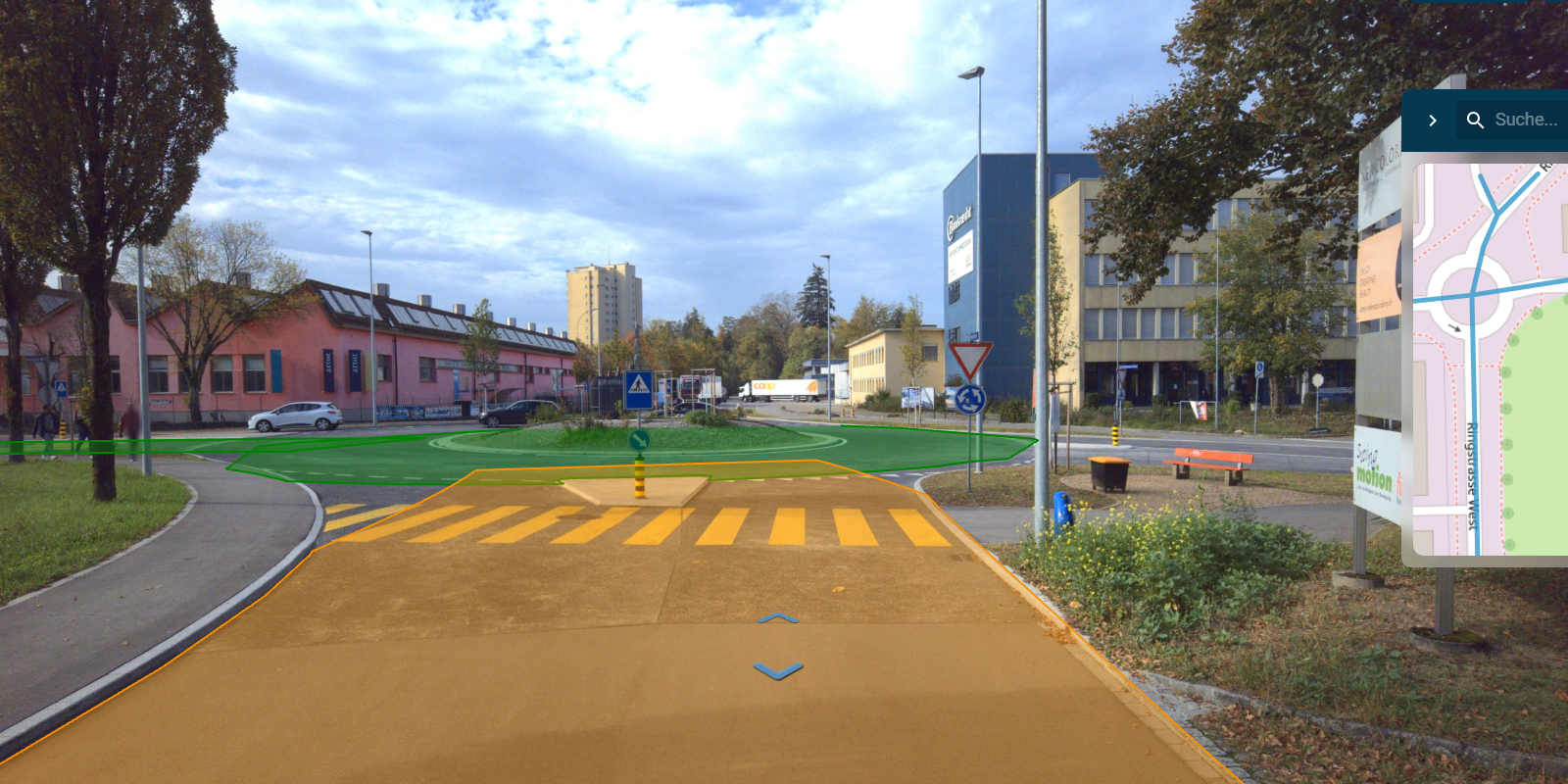
    From mid-July 2025, iNovitas from Baden will be mapping the streets in the district of Horgen. The company is creating a three-dimensional digital image of the public road network, according to a press release. The data obtained from the model is intended to form a basis for the areas of administration, utilities management and planning. The digital image reduces the time and effort required for inspection trips and inspections and should therefore provide an efficient organisation for maintenance and planning directly from the office.

    The municipal and cantonal roads of Adliswil, Kilchberg, Langnau am Albis, Rüschlikon, Thalwil and Oberrieden will be digitised. The municipality of Horgen had already commissioned iNovitas to carry out this work at an earlier stage. The data is recorded exclusively on public roads. According to the press release, people and number plates are anonymised, thereby protecting personal rights. The captured image and geodata is provided via the web-based infra3D platform and is only available to authorised specialists or administrative bodies with the appropriate authorisation.

  • Apply now for the Digital Journey Challenge 2025

    Apply now for the Digital Journey Challenge 2025

    The digital transformation is unstoppable and offers enormous opportunities for small and medium-sized enterprises in particular. The Digital Journey Challenge 2025, launched by the Centre Suisse d’Électronique et de Microtechnique (CSEM), is aimed at companies and start-ups that want to take their innovative strength to a new level with digital technology.

    The focus is on promoting pioneering projects in areas such as artificial intelligence, the Internet of Things (IoT), automation and other key technologies. Applicants receive professional guidance, technological expertise and up to CHF 100,000 in financial support.

    Three strong arguments in favour of your participation
    Technology Boost
    Access to CSEM expertise in eight key technologies

    Financial support
    Up to CHF 100,000 for development time, consulting and technology transfer

    Strengthen market position
    Greater visibility, more media presence, access to expert networks

    Simple application process, big impact
    Participation is straightforward. Interested parties download the factsheet, describe their idea and submit the form. All information and conditions are available on the CSEM website. The application deadline is 15 September 2025.

    Success story
    The 2024 winning project shows just how effective the challenge can be. Varioprint AG impressed with its AI-supported 3D inspection solution for printed circuit boards. Their project “AI in Every Pixel” addresses a global growth market and accelerates quality control in the electronics industry in the long term.
    Apply now and play an active role in shaping your digital transformation.

  • 6G Europe network shapes digital transformation

    6G Europe network shapes digital transformation

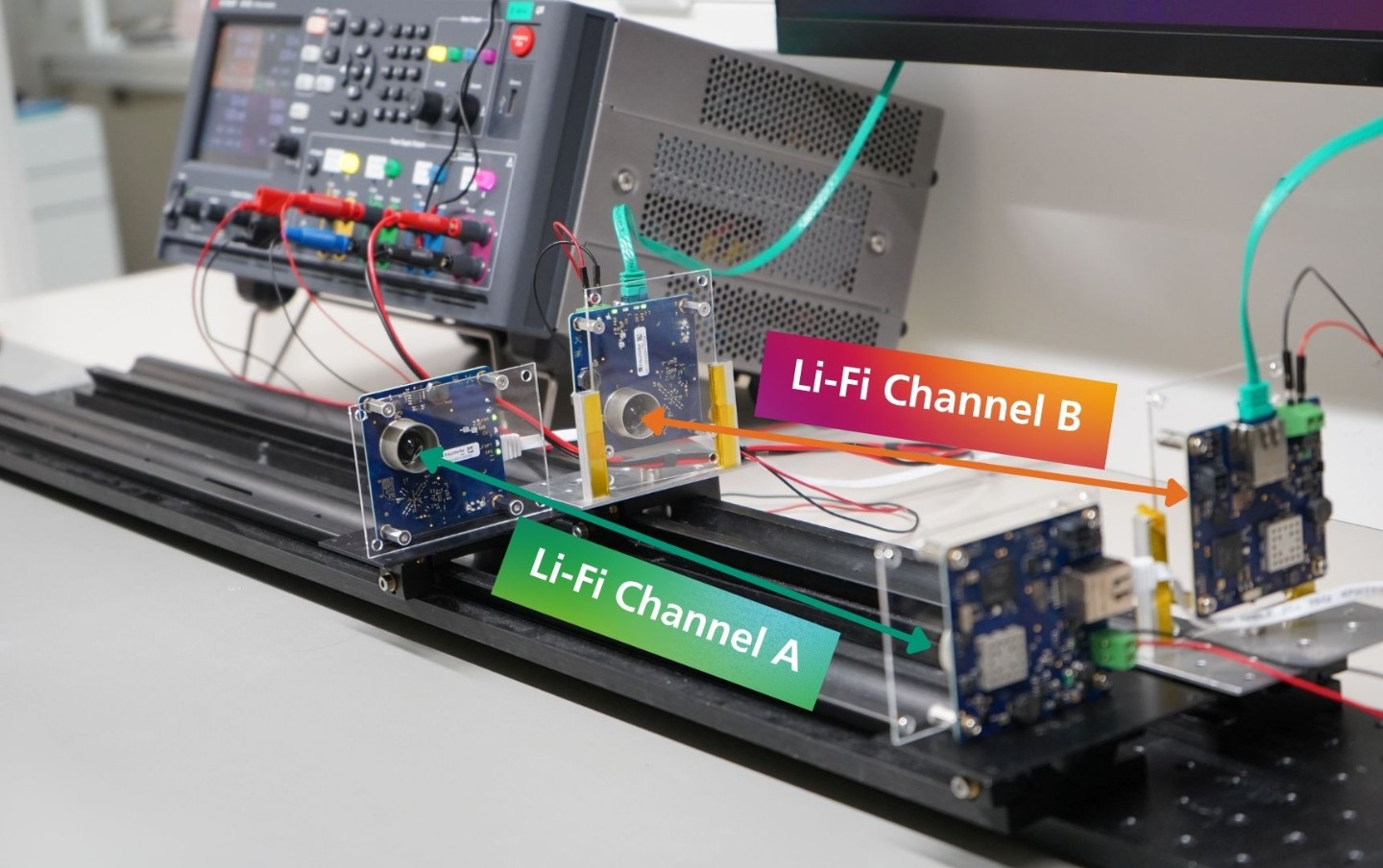
    The wireless transmission of time-critical data was previously considered a technical hurdle, especially in industrial applications with high safety requirements. The Fraunhofer Institute for Photonic Microsystems has now developed a solution that sets new standards. A modular testbed for time-sensitive networking that combines real-time analysis with energy-efficient operation and enables wireless data transmission via Li-Fi for the first time.

    Li-Fi utilises light for data transmission and offers high speed, low latency and high reliability. Ideal conditions for the mobile use of autonomous robots or machines on factory floors. In combination with TSN, this creates an infrastructure that is not only more flexible, but also more robust and cost-efficient. Elaborate cabling becomes superfluous, without compromising on data security.

    Energy efficiency as a key factor
    Energy consumption was a key development issue. Especially in mobile applications, energy efficiency is crucial for the operating time. With the new testbed, Fraunhofer IPMS is offering a realistic basis for comparing TSN networks and their energy consumption for the first time.

    The aim is to extend the operating time of devices through targeted optimisation and at the same time reduce the load on infrastructures. This is supported by TSN standards such as IEEE 802.1AS, which ensure high-precision time synchronisation and redundant data paths – essential for safety-critical scenarios.

    Research for 6G
    The Ostbayerische Technische Hochschule Regensburg is also working on the future of digital communication. At the renowned European Conference on Antennas and Propagation (EuCAP) 2025, Professor Dr Susanne Hipp and her team presented their latest research on wave propagation in the 6G frequency range beyond 100 GHz.

    Verena Marterer is researching the dielectric properties of textiles for smart sensors in the healthcare sector. Franziska Rasp is working on antenna concepts for vehicle communication, a core element for autonomous driving. Both projects impressively demonstrate how broad and practical the potential applications of future mobile communications technologies will be.

    6G as a platform for the digital transformation
    The introduction of 6G from 2030 will bring enormous changes. Transmission rates of up to 1,000 gigabits per second, extremely low latency times, massive device density and new services such as immersive environments in the metaverse or remote medical care in real time.

    Europe is actively positioning itself. Fraunhofer, Telekom, Vodafone and other players are driving basic research forward. Germany is funding development with over 700 million euros. The first pilot projects are planned from 2028. New devices, chips and frequency technologies will form the technical basis, with AI, cloud-edge computing and sustainability as guiding principles.

    Europe is reinventing the digital infrastructure
    What was previously considered a dream of the future is becoming reality. Wireless real-time communication, energy-saving networks and ultra-precise high-frequency technology are merging to create a new generation of infrastructure. The impetus from research institutions such as the Fraunhofer IPMS or the OTH Regensburg proves that Europe is ready to take a leading role in the 6G era – sustainable, intelligent and connected.

  • Walz 4.0 brings construction into the digital future

    Walz 4.0 brings construction into the digital future

    The Institute of Constructive Design at the ZHAW Department of Architecture, Design and Civil Engineering in Winterthur is taking over the Swiss lead in the Interreg project Walz 4.0. Together with universities and foundations from Germany, Austria and Liechtenstein, the aim is to create an educational and practical network by 2028 that merges traditional craftsmanship with innovative university research and digital tools.

    Walz 4.0 is more than just a symbolic name. It deliberately draws on the journeymen’s travelling trade, a centuries-old form of experiential learning, and transfers it to the reality of modern higher education. Concrete construction projects, sustainable materials and digital applications are used to bring the transformation of construction to life.

    Building sustainably means rethinking
    Circular construction as the foundation for a new building culture. “In view of the climate crisis, circular construction in the sense of building on existing buildings and reusing components is more important than ever,” explains project manager Andri Gerber from the ZHAW. This is precisely where Walz 4.0 comes in: historical building fabric is preserved, materials are reused and new constructions are created in the spirit of resource conservation.

    Special attention is paid to practical teaching. Craftsmen and students work together in teams on renovation and construction projects. Digital tools are used as well as centuries-old techniques. This turns theory into lived experience, a key success factor in the fight against the shortage of skilled labour and for a resilient construction industry.

    A European network for innovation
    Four countries, seven institutions, one common goal. Walz 4.0 brings together partners from four countries.

    Switzerland: ZHAW Winterthur (lead partner), OST – Ostschweizer Fachhochschule, Denkmalstiftung Thurgau

    Germany: HTWG Konstanz (overall coordination), OTH Regensburg

    Austria: FH Vorarlberg

    Liechtenstein: University of Liechtenstein

    New learning centres, exchange formats and digital tools are being developed together. The aim is to create a cross-border dialogue that increases both the quality of construction and the attractiveness of skilled trades. The funding totalling around 5 million euros comes from the European Regional Development Fund, Switzerland and the Principality of Liechtenstein.

    Building bridges for the next generation
    The great strength of Walz 4.0 lies in its interdisciplinary nature. Architects, heritage conservationists, civil engineers and craftsmen think and build together. The results should not only have an impact in specialist circles, but also provide impetus for politics, education and property development.

    At the same time, the project creates space for experimentation. New construction methods are being tested, digital planning processes optimised and craftsmanship re-evaluated. The aim is a resilient, locally anchored and ecologically responsible construction industry, supported by people who have mastered their craft and are willing to learn new things.

  • Smart City Aarau networked, user-centered and environmentally friendly

    Smart City Aarau networked, user-centered and environmentally friendly

    Aarau is facing complex social and technological developments. In order to respond to this in a future-oriented manner, the city is pursuing a networked, creative and efficient approach with its Smart City strategy. The focus is on concrete benefits for the target groups and environmentally friendly processes. Digital technologies are only used where they create real added value.

    Five basic principles for smart impact
    Based on experience from the first strategy period from 2021 to 2025 and proven models from other cities, Aarau has defined five high-impact approaches.

    Networking: Projects interlock across departments and are implemented collaboratively.

    Meeting needs: Solutions that are actually needed are developed in dialog with the population.

    Testing: Innovation also means trying things out. Pilot tests help to minimize risks and make ideas practicable.

    Environmental protection: Sustainability is a must. All projects take environmental aspects into account and rely on renewable resources.

    Technology as a means to an end: Technology is used in a targeted manner and only if it contributes to the solution.

    Smart City Team as enabler
    The municipal Smart City Team supports employees in the idea and project phase. It helps to identify target groups, hone project ideas and develop testable solutions. Formats such as kick-off meetings, workshops or support for complex projects through to implementation are available. The motto: implement projects with real benefits for Aarau or consciously reject them.

    Targeted support and smart vessels
    The Smart City Team also works in the background. It monitors trends, networks stakeholders and promotes knowledge transfer via formats such as the “Smart City Newsroom”. It also supports projects financially via the Smart City Investment Loan and helps to create participatory vessels.

    Measuring impact and learning
    The strategy is based on the IOOI impact model and measures not only outputs but also outcomes and long-term impacts. The aim is for all municipal specialists to apply user-centered methods, plan their projects in a networked manner, implement them in a resource-efficient way and integrate digital technologies in a meaningful way by 2034.

    Smart City Aarau thinks ahead
    The city of Aarau is reinterpreting Smart City as a method for developing sustainable, liveable urbanity. The focus is on people, not technology. This turns complexity into innovation and ideas into concrete future solutions for Aarau.

  • Cooperation strengthens digital precision in infrastructure construction

    Cooperation strengthens digital precision in infrastructure construction

    Amberg Technologies AG from Regensdorf, part of the Amberg Group, is joining forces with Topcon Positioning Systemsfrom Livermore in the US state of California. The aim of the cooperation is “to enable interoperability between Topcon’s sensor solutions and Amberg Technologies’ software and hardware platforms for rail and tunnel applications”, the two international partner companies write in a joint press release. The background to this is the endeavor of Amberg and Topcon to be able to offer joint customers “fully integrated solutions”.

    Amberg Technologies specializes in measurement solutions for the construction of roads, railways, subway railroads and other infrastructure. Founded in 1981, the Regensdorf-based subsidiary of the Amberg Group also offers measurement solutions for monitoring such infrastructure. Topcon Positioning Systems, which belongs to the Tokyo-based Topcon Corporation, develops, produces and distributes precision measurement and workflow solutions for the construction, geodata and agricultural sectors.

  • Swissbau 2026 rethinks the construction industry

    Swissbau 2026 rethinks the construction industry

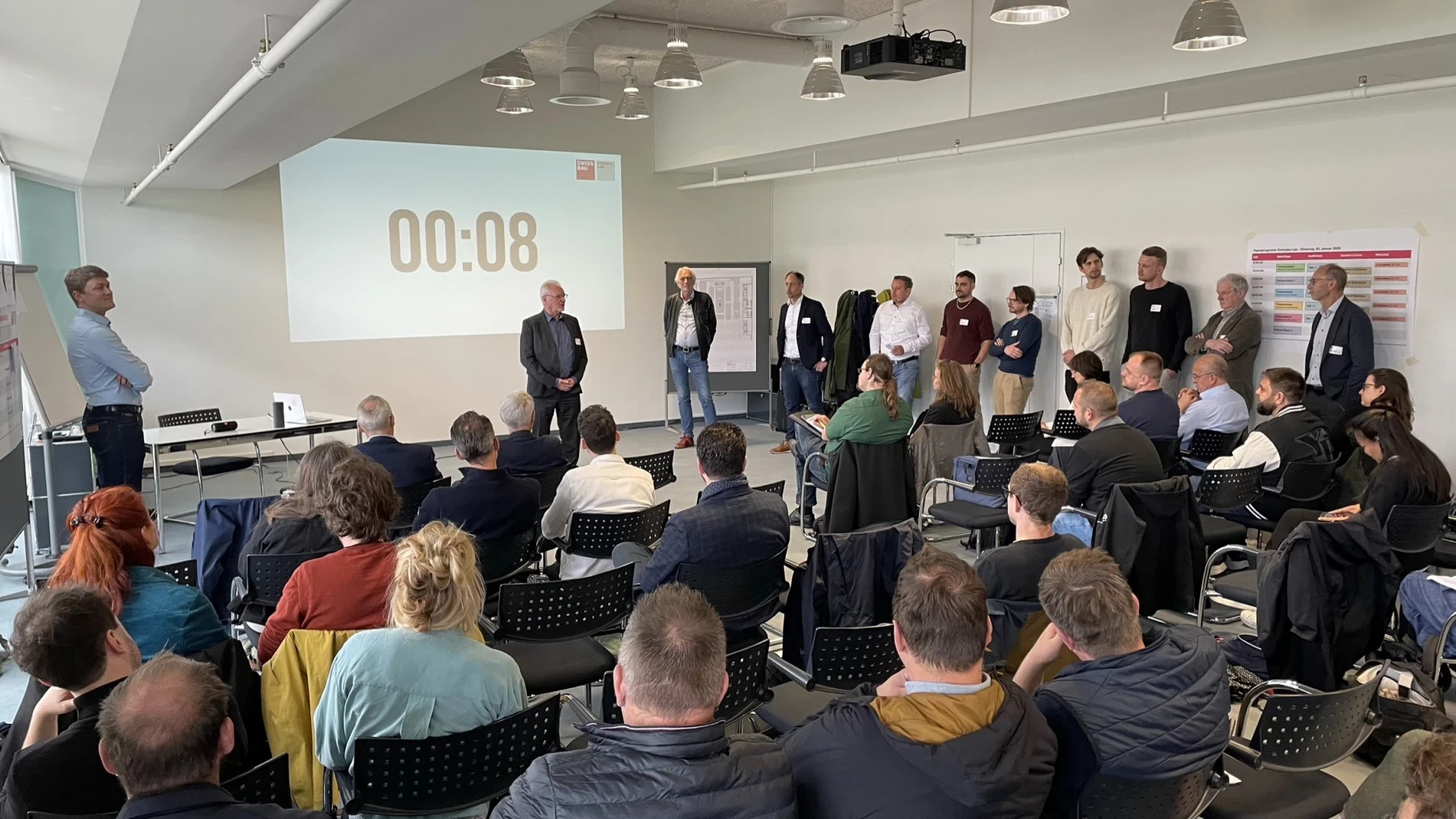
    With a clear focus on content and new formats, Swissbau Lab 2026 is sending out a strong signal. The transformation of the construction and real estate industry will no longer just be discussed, but brought to life. The four key topics “Smart technologies”, “Digitalization in the planning and construction process”, “Circular economy” and “Climate change” structure the programme. Current challenges meet real solutions, which are jointly designed by partners from business, science and start-ups.

    The event starts with a clear appeal to the industry. Tobias Hofmeier and Fabian Cortesi emphasize the role of Swissbau Labs as a networking platform for thinking and implementing the most pressing issues of the present. In 2026, the innovation workshop will not only be larger in terms of space, but also more in-depth in terms of content. The newly created workshop area in particular will create space for direct experience, practical applications and new technologies. This will be hands-on, interactive and directly on site. An additional trade fair day on Saturday will also focus more on interior design and contact with end customers.

    Dialogue instead of individual opinions
    Partners present current projects and pioneering solutions on the Main Stage. In a pointed, interdisciplinary manner and in exchange with experts. The contributions show how technological and structural innovation can work together if they are conceived in a networked way and implemented across disciplinary boundaries. Christoph Schaer from suissetec emphasizes the importance of synergies through digitalization. Markus Weber from Bauen digital Schweiz calls for a common language in the construction data space. Margarete Olender from the FHNW sees not only ecological, but above all economic potential in the circular economy. Sibylle Wälty from Resilientsy advocates robust local infrastructures as a response to climate change.

    The daily live demonstrations in the workshop area make Swissbau Lab 2026 a trade fair of action. Innovations are not only presented, but demonstrated in real time. Technologies, materials and processes can be tried out, evaluated and discussed. Another highlight is the Speakers Corner, where projects, workflows and digital solutions are presented in pitch format and critically evaluated in the subsequent talk.

    A place where new standards are created
    In 2026, Swissbau Lab will once again be a place where the industry outgrows itself, with new approaches, genuine cooperation and the will to change. The challenge is no longer whether digitalization will come, but how it will become the new normal. Amidst a plethora of digital solutions, the question of how people, technology and value creation can interact optimally remains central.

    For the Swiss construction and real estate industry, Swissbau Lab 2026 offers both orientation and exchange. Anyone who wants to actively shape change will find ideas, partners and inspiration here.

  • High-tech timber construction meets craftsmanship

    High-tech timber construction meets craftsmanship

    For centuries, wood was regarded as a traditional craft material. Today, however, it is driving an ecological and technological revolution in the construction sector. Automation, artificial intelligence and digital planning are transforming the timber construction industry. The mix of proven carpentry skills and modern technology makes it possible to implement projects faster, more economically and more sustainably.

    Hybrid systems
    Hybrid timber construction makes targeted use of the respective advantages of timber and concrete. Load-bearing structures made of glulam are combined with reinforced concrete layers. Such composite ceilings enable large spans, reduce the weight and improve the physical properties of the building. Prefabrication increases efficiency on the construction site. Examples such as the Timber Peak in Mainz demonstrate the economic and urban development potential of this technology.

    The potential of transparent wood
    Researchers are working on a material that replaces glass: transparent wood. By removing the lignin and filling the cell structure with polymer resin, a material is created that lets light through, is robust and offers excellent thermal insulation. Applications range from windows and light-flooded façades to building-integrated solar panels. Ideal for energy-efficient architecture with high design quality.

    3D printing with wood
    Wood filaments enable the additive production of smaller objects with the feel and look of real wood. Although this technology is not yet suitable for structural timber construction, new areas of business are opening up in the fields of interior design, model making and individual components. Large-format printing with wood composites in combination with robotics and generative design is already under development.

    Wood foam the next generation of insulation
    Wood foam is a completely bio-based insulating material made from waste wood. Manufactured without synthetic binders, it offers good insulation values, is dimensionally stable and can be recycled. The first industrial applications are about to enter the market. Wood foam is a promising alternative to traditional foams, especially for projects with a focus on sustainability.

    Augmented reality on the construction site
    AR technologies bring digital construction plans directly to the construction site. Using tablets or AR glasses, fitters can view component positions and pipe systems with millimetre precision. This speeds up assembly processes, avoids errors and improves communication between the planning office and the execution team. Initial pilot projects show clear time and cost benefits.

    Artificial intelligence as a planning assistant
    From automated floor plan development to quality assurance on timber surfaces. AI is increasingly being used throughout the entire construction process. Particularly exciting are systems for material optimization that minimize waste and maximize the use of residual materials. Ageing simulations and adaptive machine control systems are also becoming a reality.

    Robotics is revolutionizing manufacturing
    Robotic arms that mill, screw and assemble are no longer a dream of the future. Today, collaborative robots work side by side with skilled workers. They take on heavy or monotonous tasks and increase precision. Research projects in Zurich, Biberach and Austria show that robots can be used economically in timber construction. The combination of AI, sensor technology and robotics will enable virtually autonomous production in the future.

    Timber construction is becoming an investment in the future
    The timber construction of tomorrow stands for efficiency, sustainability and design diversity. For investors and project developers, it offers opportunities to realize properties economically and future-proof. Especially where ESG criteria, construction time and location quality are decisive for market success. Intelligent timber construction is more than just a trend, it is a strategic advantage for Switzerland as a business location.

  • New AI agents to increase efficiency in real estate consulting

    New AI agents to increase efficiency in real estate consulting

    PriceHubble AG wants to set new standards for the finance and real estate industry. To this end, the Zurich-based company specializing in digital solutions for the finance and real estate industry has launched three specialized AI agents. “They combine high-quality real estate data with automation and generative AI”, PriceHubble explains in a press release.

    The AI agent PriceHubble Companion provides advice and personalized insights into real estate. The PriceHubble Copilot supports work processes from valuing a property to answering complex customer inquiries. The PriceHubble Analyst is trained to recognize and interpret trends and developments. Each of the three agents can be customized and integrated into existing internal processes.

    With the three new agents, PriceHubble aims to support banks, asset managers, property managers, portfolio managers and real estate agents in overcoming specific challenges. “AI agents are the logical next step – for us and for the market,” said Stefan Heitmann, CEO and founder of PriceHubble, in the press release. “Accurate, transparent data combined with sophisticated, customizable solutions are the key to excellent customer experiences, more efficient advice and real ROI in finance and real estate.”

  • PropTech start-up develops AI solution for property

    PropTech start-up develops AI solution for property

    The start-up Nestermind, which specialises in AI-supported automation solutions in the real estate sector, has successfully completed a substantially oversubscribed pre-seed financing round, according to a press release.

    The fresh capital will be used to further develop the technology and boost the company’s national and international market presence. The Agentic AI software developed by Nestermind enables easier management of property listings, better customer communication and faster sales processes.

    “We are proud to have such experienced and strategically valuable partners at our side who share our vision of taking property marketing to a new level,” said co-founder and CEO Lucas Pelloni.

    The platform opens up new ways for players in the property industry to network in a data-driven ecosystem. “We are thus creating enormous efficiency potential and paving the way for a new way of working in the property industry,” co-founder and CTO Severin Wullschleger is quoted as saying.

    According to the company, the software is particularly tailored to the needs of smaller SMEs in the property sector. By automating tasks such as lead generation and CRM management, they can increase efficiency and save time without having to invest in complex systems.

    According to the press release, the financing was concluded with the participation of a round of investors comprising “well-known personalities from the property sector, renowned family offices and leading property companies”. The amount was not disclosed.