Reaktion auf die digitale Revolution Die Initialzündung für die Initiative kam durch die Erschütterung anderer Branchen, die von der digitalen Revolution überrollt wurden, wie etwa die Hotellerie durch Booking.com. Hoteliers sind mittlerweile gezwungen, auf dieser Plattform zu diktierten Konditionen zu inserieren. Dieses Beispiel zeigt: Wenn Akteure die Kontrolle über ihre Kundenschnittstellen und Daten verlieren, werden sie leicht zum Spielball der Marktführer.
Am Beispiel der Hotellerie wissen wir, dass selbst grosse international tätige Unternehmen zu klein sind, um im Wettbewerb um Daten und Kundenschnittstellen eine dominante Rolle einzunehmen. Daher braucht es strategische Zusammenschlüsse, damit Rahmenbedingungen geschaffen werden können, die die Existenz aller Akteure nachhaltig sichern. Mit der Next Property AG ist ein solcher Zusammenschluss für die Immobilienwirtschaft entstanden. Die Initiative umfasst, seit der Lancierung im 2016, über 500 Aktionäre, welche die aktuellen Marktentwicklungen als bedrohlich einstufen und die Vision der Brancheninitiative unterstützen.
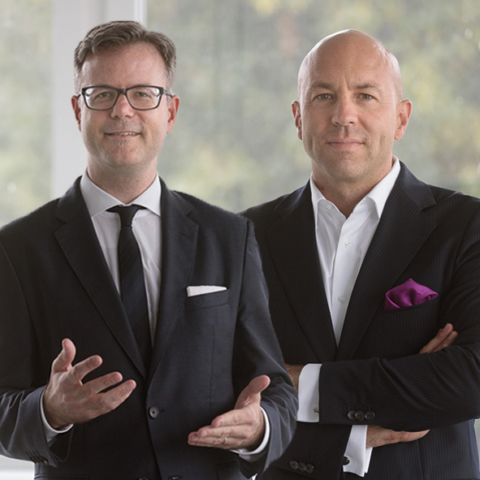
Selbstbestimmung durch Datenhoheit «Daten sind Schlüsselressourcen. Wer die Daten kontrolliert, kontrolliert die Zukunft.», sagt Mario Facchinetti, mandatierter Geschäftsführer der Next Property AG. Der Ansatz ist klar: Die Kontrolle über Daten und Kundenschnittstellen in der Branche zu behalten, damit diese auch in Zukunft unabhängig und selbstbestimmt bleibt. Im Rahmen dieser Vision hat die Next Property AG im 2017 die Gelegenheit genutzt, um sich an der Immobilienplattform newhome.ch zu beteiligen. Durch dieses strategische Investment kann die Branche den Wettbewerb fördern und die Bedingungen sowie Ausrichtung des branchenfreundlichen Immobilienmarktplatzes aktiv mitgestalten.
Bestätigung der Initiative Im 2021 fusionierten die führenden Schweizer Immobilienmarktplätze, was die Befürchtungen der Initianten bestätigte und die Bedeutung der Next Property AG, die sich für einen Markt mit gesunden Alternativen einsetzt, unterstrich. Somit wurde es wichtiger denn je, Immobilieninserate vorzeitig oder exklusiv auf newhome.ch zu publizieren. Damit liegt das Insertions- und Suchverhalten in der Kontrolle der Aktionäre. Sie haben es selbst in der Hand, ihre Objekte mit Vorlauf oder exklusiv auf der branchenfreundlichen Immobilienplattform zu inserieren und somit das Suchverhalten für professionell vermarktet Immobilien zu ihren Gunsten zu steuern.
Digitalisierung: Fair statt zentralisiert Die Digitalisierung ist zentral für die Organisation von Prozessen und ein wesentlicher Faktor für die Zukunftsfähigkeit von Unternehmen. Sie darf jedoch nicht auf Kosten etablierter Wirtschaftsstrukturen und regionaler Arbeitsplätze gehen. Branchenakteure müssen sich gemeinsam dafür einsetzen, dass die digitale Wertschöpfung nicht zu stark zentralisierte Strukturen entwickelt. Stattdessen sollten sie sicherstellen, dass Marktteilnehmer ihre Existenzgrundlage sichern können, damit eine nachhaltige Entwicklung möglich ist. Für die Branche ist es wichtig, die Digitalisierung mit langfristiger Perspektive voranzutreiben, um deren Chancen zu nutzen und Risiken zu minimieren.
Dank der Aktionäre der Next Property AG und ihrem Investment in die newhome.ch AG haben Schweizer Immobilienakteure eine erfolgsversprechende Chance die Kontrolle über ihre Daten und die digitale Kundenschnittstelle zu behalten und die Marktbedingungen mitzubestimmen.
Like many other sectors, the construction and property industry is facing major challenges. Digitalisation is progressing inexorably, revolutionary technologies are emerging and sustainability requirements are constantly increasing. There is also a shortage of specialists with digital skills. “Our response to these challenges is the establishment of the ‘Digital Next Gen’ Expert Group,” says Genova. “Our aim is to bring together digital talent from across the industry and work together on innovative solutions for a sustainable and digitalised future.”
Genova brings extensive expertise from his professional career and his studies. A trip to China was particularly formative, where he gained valuable insights into digital transformation. The Digital Next Gen initiative offers him a platform to use his skills and drive forward the digital transformation in the construction and property industry.
Objectives of the “Digital Next Gen” Expert Group Establishing a centre of excellence for digital technologies and trends to effectively tackle the digital challenges facing the construction industry.
Identify and promote innovative digital solutions and business models in Switzerland
Creating bridges between research, business and practice in order to put innovative ideas and technologies into practice more quickly.
“We aim to play a leading role in shaping the digital transformation in the construction industry,” emphasises Genova.
Opportunities and challenges of the digital evolution Digitalisation offers significant opportunities for the construction industry, such as efficiency gains, cost reductions, more environmentally friendly construction practices and the development of new business models. However, there are also challenges such as high investment costs, data protection issues and a shortage of skilled labour. “We must tackle these challenges with determination in order to fully exploit the opportunities of digitalisation,” says Genova. “The future belongs to the brave and the pioneers, and we are ready to take on this role.”
Upcoming digital technologies and trends The construction industry is at the beginning of a new era, characterised by groundbreaking digital technologies. Artificial intelligence (AI), robotics, blockchain, the Internet of Things (IoT) as well as augmented reality (AR) and virtual reality (VR) are some of the key technologies that will revolutionise the industry. “We are ready to pave the way for this digital revolution and face the challenges that lie ahead,” explains Genova.
Talent sought for the Expert Group The Expert Group is looking for talented individuals with extensive expertise in digital technologies such as AI, IoT, blockchain, AR/VR and 3D printing. In addition to technological skills, an innovative spirit, experience in the construction industry, the ability to work in a team and an understanding of sustainable construction practices are important. “We are counting on a new generation of talent who are ready to take the lead in this technological revolution,” concludes Genova.
Digitalisation is not only a challenge, but also an opportunity to fundamentally transform the construction and real estate industry. The “Digital Next Gen” Expert Group is ready to actively shape this transformation and create a sustainable, digitalised future.
On 17 April, Axon Active Holding AG began the expansion and renovation of its headquarters in Schlössli Schönegg, high above Lucerne. Following the renovation, the Schlössli will operate under the name Schlössli Collab Luzern, according to an article in the “Luzerner Zeitung” on the ground-breaking ceremony. Axon co-founder and owner Stefan Muff is quoted as saying that the Axon Group wants to drive forward the digital transformation from here. To this end, Schlössli Collab Lucerne wants to offer innovators a home.
At the ground-breaking ceremony, Lucerne’s Director of Construction and Economic Affairs Fabian Peter (FDP) praised the commitment of the internationally active group of software companies to Lucerne as a location. According to the report, Axon Active will invest around CHF 15 million in the expansion and conversion of its headquarters. The work should be completed by autumn 2026. The group’s approximately 40 employees in the Schlössli are currently housed in a building belonging to the energy supplier EWL on Sternmattstrasse in Lucerne.
On 16 April 2024, Tamedia announced plans for a new digital hub to accelerate the digital transformation within the company. This centre of digital expertise will work directly with the various brands and editorial teams to support the transformation of business processes. The hub will bring together expertise in the areas of product management, experience, reach, artificial intelligence, data analysis and technology.
In the first phase, the Digital Hub is intended in particular to expand the reach of Tamedia’s digital offerings and increase user engagement while maintaining the company’s high journalistic quality standards. By integrating these key functions, Tamedia is emphasising the importance of strong digital presences for the future of the media company.
Patrick Rexroth, who will take up his new role as Chief Digital Officer on 1 May 2024, brings with him extensive experience in the digital economy. Before joining Tamedia, Rexroth held senior digital roles at Yahoo! Germany, the start-up PAKX and most recently at Condé Nast Germany, where he led teams in audience development and global innovation. Together with Regula Marti, Chief Product Officer, and Franz Bürgi, Chief Information Officer, he will set up and manage the Digital Hub.
Jessica Peppel-Schulz, CEO of Tamedia, emphasised the importance of the Digital Hub as a milestone for the company’s digitalisation and expressed optimism about Rexroth’s ability to accelerate Tamedia’s digital transformation. This strategic move positions Tamedia at the forefront of digital media innovation.
The application uses sophisticated technology to authenticate physical documents and objects. Deviations from the original are displayed on the screen in real time. The process is based on the scanning of a QR code and the subsequent analysis of the document by the app. The app compares the captured images with the original, which is stored in encrypted form on a server. It is particularly important to emphasise that the app only displays relevant deviations, without taking impairments such as coffee stains or wrinkles into account.
The Thenti app is the result of a collaboration between Martín Ochoa and David Basin, who founded the ETH spin-off Thenti. It combines digital authentication principles with the physical world, a step that was deemed necessary to do justice to the duality of digital and physical documents. The City of Zurich proved to be the ideal partner for the pilot project, as the authenticity of debt collection register extracts is of essential importance.
Extension to three-dimensional objects The research work on which the app is based is funded by the Werner Siemens Foundation’s Centre for Digital Trust. The experience gained from the pilot project in Zurich will contribute to the final development of the solution. Thenti’s business model, which provides for free use of the app for certain checks, but also offers a subscription model, is interesting.
A future goal of the Thenti app is to extend its capabilities to three-dimensional objects, such as luxury watches. This would take the app to a new dimension of authenticity verification and offer added value for both consumers and manufacturers. The technology promises to be able to recognise even minor, individual features of products, providing effective protection against counterfeiting.
A contribution to security and confidence building The development and implementation of the Thenti app represents significant progress in the fight against the counterfeiting of documents and goods. For professionals and managers in the property and location promotion sector, this technology offers a new level of security and trust. By connecting the digital and physical worlds, the Thenti app makes a valuable contribution to the integrity of documents and products.
The sixth edition of the “Digital Real Estate Index” shows a slight decline in the digital maturity of the industry for the first time since 2020, with a rating of 4.6 on a scale of 1 to 10. Despite progress made by planners and construction companies through Building Information Modelling (BIM), the development among owners and investors is lagging behind expectations.
Although two thirds of the companies surveyed invest more than one percent of their turnover in digitalisation, there is a downward trend among larger companies. External factors such as interest rate changes and supply chain problems appear to be hampering digital transformation, while regulatory requirements in the area of sustainability are acting as a catalyst for digitalisation efforts.
While AI and machine learning are still lagging behind expectations in terms of their applicability and integration into the industry, BIM is consolidating itself as an important technology for the entire life cycle of buildings. The use of smart building technologies is increasing, with the focus on resource conservation and other benefits such as user experience and comfort initially taking a back seat.
The study shows that the property industry is at a critical point in its digital evolution. Despite the obvious potential of digital technologies and the need for greater integration to increase efficiency and sustainability, concrete measures and investments are needed to drive the digital transformation forward. The study provides important insights and serves as a guideline for future developments in the digital landscape of the property industry.
The property industry faces the challenge of adapting to rapid technological developments in order to remain competitive. Digital tools and platforms offer innovative solutions to optimise management processes and improve interaction with tenants. By implementing property management software, for example, incoming rent can be monitored, maintenance requests can be processed efficiently and communication with tenants can be digitalised. These systems make it possible to record relevant data centrally and make it available at any time, which speeds up decision-making processes.
Another aspect of digital transformation is the use of data analysis and artificial intelligence to identify market trends and optimise portfolio management. Predictive analytics can help to forecast future market developments and make investment decisions based on sound data. In addition, digital technologies enable the creation of new services, such as virtual tours of properties, which are invaluable, especially in times of social distancing.
The integration of smart home technologies into property management also offers significant benefits. Automated systems for heating, lighting and security can reduce operating costs and increase living comfort for tenants. At the same time, this increases the attractiveness of the property on the market.
For a successful digital transformation, however, it is crucial that companies in the property sector not only invest in the right technology, but also train their employees accordingly. A willingness to adapt to new ways of working and continuous training are essential in order to fully exploit the benefits of digitalisation.
In summary, the digital transformation of the property industry offers numerous opportunities to simplify processes, reduce costs and improve service for tenants. By making strategic use of digital technologies, property companies can increase their efficiency and secure a decisive advantage in a highly competitive market. It is time to seize the opportunities of digitalisation and lead property management into the digital age.
The construction industry is increasingly facing the challenge of making its processes sustainable and efficient. According to Moritz Lüscher, digitalisation plays a key role in achieving these goals. By optimising construction processes with digital tools, small and medium-sized enterprises (SMEs) can also strengthen their competitiveness without having to invest in large purchases.
Digitalisation is increasingly influencing the awarding of construction contracts, with sustainability and digitalisation skills coming to the fore. SBV supports its members in harmonising the requirements of clients with their own skills and thus effectively implementing the digital transformation.
The trend towards a sharing economy also offers new opportunities in the construction industry. Construction companies can efficiently share machinery and equipment, thereby saving costs and resources. Digital platforms, such as Faroo, make it easier to rent and hire construction equipment and promote the shared use of resources.
In order to approach digitalisation strategically, it is crucial for construction companies to determine their level of digital maturity and develop a suitable strategy based on this. SBC supports this with personalised advice and tools for self-assessment and strategy development. The aim is to achieve a customised digital transformation, which can range from pure process automation to comprehensive digital master plans.
Finally, the involvement of employees in the digital transformation process is of central importance. Promoting digital skills and creating a common understanding are essential in order to utilise the new technologies effectively and secure the company’s long-term success. Digitalisation in the construction industry will continue to gain in importance in the coming years. New technologies and requirements, such as AI and BIM, will drive the industry forward and model-based construction could become the new standard in ten years’ time. The SBC is endeavouring to prepare its members for this future and accompany them on the path to digital transformation.
As part of its efforts to modernise and digitalise administrative processes, the canton of Zurich has taken a decisive step to simplify and speed up the building permit procedure. From 1 April 2024, the procedure for submitting building applications will be completely digitalised with the introduction of the platform. This development marks a step forward in the administration and processing of building projects by reducing paper consumption and increasing efficiency.
Since its launch in February 2020, the platform has already made a significant contribution to simplifying the building permit process. It enables a smooth exchange of information between applicants, authorities and other parties involved and supports the entire process from submission to approval of a building project. Until now, however, the process was not completely paperless, as legal provisions prevented the exclusive use of digital means.
The latest amendments to the Planning and Building Act, the Building Procedure Ordinance (BVV) and the Special Building Ordinance I, which were passed by the Government Council, remove these hurdles. The new legal basis paves the way for a fully digitalised building permit procedure. Building Director Martin Neukom emphasises the importance of this development and stresses that the implementation of this digital project will create a customer-oriented and resource-saving service that meets today’s requirements and simplifies the processing of building applications for all parties involved.
To ensure full implementation, all cities and municipalities in the canton of Zurich must switch to the new, exclusively electronic process within three years. This changeover promises to make the building permit process more efficient and environmentally friendly, which represents a significant innovation for property management professionals.
In Wittenbach-St.Gallen, on 22 January 2024, Abacus Research AG announced the successful launch of its new industry software AbaPlato. This is one of the first in Switzerland to be directly connected to Justitia 4.0, the justice platform from Justitia.Swiss. According to COO Raffaelle Grillo, AbaPlato is able to automatically integrate court documents into mandate dossiers and transmit them securely to Justitia.Swiss, including digitally signed acknowledgements of receipt. The direct connection eliminates the need for intermediate storage, which enables immediate availability of the documents in the mandate dossier and a significant increase in efficiency in the law firm’s work. In addition, the entire process is made more secure and transparent.
At the beginning of October 2023, a remarkable shift began in the mortgage market. The benchmark rates for three- and five-year fixed-rate mortgages fell below the Saron rate. Ten-year mortgages followed suit in early November, with the average rate for these falling from 3.11% in June to 2.39% in December.
Stability for Saron mortgages The Saron mortgage, which has remained stable since the Swiss National Bank (SNB) decided to leave the key interest rate at 1.75% in September, is currently at 2.63%.
Results of the mortgage provider survey A survey of 50 mortgage providers revealed that over 90% expect the SNB to leave the key interest rate unchanged on 14 December 2023. Providers forecast stable interest rates for shorter terms of up to five years, while longer terms are expected to see more volatility and a downward trend in interest rates. The biggest concerns of those surveyed are inflation, a possible recession and the economic situation in Europe.
Recommendations for mortgage holders
Switching to fixed-rate mortgages may be worthwhile at present, as they are more favourable than Saron mortgages.
Long-term fixed-rate mortgages are still recommended for customers looking for planning and budget security.
If flexibility is required, variable-rate mortgages or a combination of Saron and fixed-rate mortgages could make sense.
Comprehensive advice that takes various financial aspects into account is essential for a sustainable financing decision.
Conclusion: These developments in the Swiss mortgage market emphasise the need for careful and informed decision-making for mortgage borrowers, especially in a rapidly changing interest rate environment.
According to a joint press release from SMG Swiss Marketplace Group and Mobiliar, the Zurich-based digital network company has acquired a majority stake in Mobiliar subsidiary Flatfox. With the acquisition and sole control by SMG, Flatfox will be integrated into SMG Real Estate. Flatfox has already been involved in the digitalisation of the rental process in Zurich, Bern and Fribourg in recent years. With the ImmoScout24 and Homegate portals, SMG Real Estate now wants to drive this process forward throughout Switzerland. The aim is for users to benefit efficiently from Flatfox’s digital solutions throughout the rental process on SMG’s property marketplaces, according to the press release.
“In future, it will be even easier for tenants to find a new home – digitally and in the shortest possible time,” Martin Waeber, Managing Director Real Estate at SMG, is quoted as saying in the press release. The acquisition of Flatfox also offers benefits for corporate customers. “Combining the services of Flatfox and SMG Real Estate will enable them to organise their business even more efficiently, visibly and therefore more successfully in future,” says Waeber. The SMG Swiss Marketplace Group unites the digital marketplaces of TX Group, Ringier and Mobiliar.
Schlierem-based real estate developer Halter AG is reorganising its management structure. According to a statement, an ecosystem of sister companies with different construction and real estate services has grown up around the company over the past ten years. This has resulted in the need for further development at the top. Halter Holding has so far hardly appeared in public as a “silent” holding company.
In future, they will position themselves more strongly in the market. The construction and real estate industry’s path to a circular economy can only be successfully implemented with integrated value-added processes and models of cooperation in planning, execution and operation. This is linked to the use of digitalisation and digital technologies.
In the course of the organisational development, there will be personnel changes from 1 January 2024, according to the company’s statement. Maik Neuhaus will take over from Markus Mettler as CEO of Halter AG. Mettler will now become Chairman of the Board of Directors of Halter AG and Delegate of the Board of Directors of Halter Group. Balz Halter remains Chairman of the Board of Directors of Halter Group. Alexandra Stamou joins the Board of Directors of Halter AG and becomes Head of Innovation and Products of Halter Group.
The business unit Total Services of Halter AG, which is the largest unit with more than 200 employees, will be split up. From January 2024, there will be Halter Total Services German-speaking Switzerland and Halter Total Services French-speaking Switzerland. The new managing directors will be Diego Frey for German-speaking Switzerland and Fréderic Boy for French-speaking Switzerland. Both will then be part of the Halter AG Executive Board.
Vrbn studios now operates an online shop, according to a media release. The vrbn business unit specialises in consistent and high-quality architectural 3D models and 3D environments. This 3D content is now available in the online shop. According to vrbn CTO Matt Buehler, the new production is “a technological milestone that makes it possible to create believable, photorealistic cityscapes in a way that has never been possible before”.
According to a media release, the shop now offers “full-PBR, 3D urban environments and richly detailed 3D buildings (most also with three material variants) of various architectural typologies”. The content from vrbn studios is reportedly designed for quality and consistency, and can be easily used in large 3D environments for cost-conscious productions. Applications range from game cinematics to VFX (film & TV), XR and advertising to scientific simulations such as for autonomous driving.
“Tackling hidden costs in content sold on 3D marketplaces is one of the most important aspects of our value proposition,” vrbn CEO Chris Buhler is quoted as saying. “We often find that the cost of correcting cheap content is massively underestimated when calculating production costs.” This, he says, has a strong impact on other project budgets. “We see that our buildings and environments are a quick and easy way to create believable film-quality 3D environments, especially for small to medium-sized creative studios.”
“Our industry is doing well after three years of permanent crisis,” said Central President Gian-Luca Lardi, welcoming the more than 550 guests to the Construction Industry Day at the LAC Lugano Arte e Cultura cultural centre. “The master builders have learned to deal with the effects of the Ukraine war, just as they did before with the price increases and supply bottlenecks in the wake of the Corona pandemic.” And the future outlook is also quite positive in the medium to long term, according to Lardi. Construction activity should continue to grow, “albeit at a somewhat slower pace”. While strong growth is forecast for residential construction until 2040, mild growth to stagnation is expected in commercial construction, public building construction and public civil engineering. At the same time, builders can look forward to prices for building materials gradually falling again.
SBC study shows: Shortage of skilled workers endangers jobs The focus of this year’s networking event was on the shortage of skilled workers and what mix of measures can be used to combat it. Today, the search for suitable employees at all levels is a major challenge for many tradespeople, including master builders. And it can be assumed that the situation will get even worse. With far-reaching consequences. “Without enough qualified craftsmen, important construction projects in our country can no longer be realised,” Lardi explained. To prevent such a scenario, the Swiss Association of Master Builders commissioned the Demographics Competence Centre to conduct a “Study on the Long-Term Development of the Economy and Skilled Workers in the Main Construction Industry”. Now the results of the study are public: while the demand for skilled workers in the main construction sector continues to rise, the supply is falling. By 2040, the shortage of skilled workers in the most important professions in the main construction industry – measured in terms of construction volume – is expected to reach 16 percent. Without countermeasures, there would be a shortage of about 30 percent of the required employees, i.e. about 2,500 skilled workers, among bricklayers and masons alone. This has an impact on turnover: If no measures were taken, the construction industry would lose up to 800 million Swiss francs annually due to the lack of skilled workers, or 13 billion Swiss francs in total over the next 20 years, adjusted for prices.
Digitalisation and personnel recruitment as hopefuls The study points to several solutions against the shortage of skilled workers. “If we increase turnover per capita by 0.5 per cent annually, we can make up for 50 per cent of the shortage of skilled workers,” Gian-Luca Lardi reassured, however. This increase in productivity is to be achieved mainly with the help of digitalisation and through innovations. At the same time, the industry must do everything it can to “train more apprentices, keep skilled workers in the profession longer and ultimately recruit more lateral entrants”. In this way, the other half of the skills gap could be closed. The study points out several levers that can be tightened. For foremen and forewomen, where the shortage will develop less precariously than in other construction professions, lateral entrants already play an important role today. With targeted career and junior staff planning and support, the number of people in management positions can be increased. In apprenticeship training, it is very important to motivate young people to successfully complete their bricklaying apprenticeship and also to stay in the main construction trade in the long term. The decisive factor is not only the management and company culture, but above all the many great, “cool” construction projects that the young people can actively shape. Then they see that their work offers meaning and creates sustainable values.
Lardi ended his speech with an appeal to all project participants, i.e. builders, planners, specialists, construction companies and political decision-makers alike: “We will only be able to realise our future building park and infrastructures if we work together in true partnership and at eye level.”
The Zurich-based innovation partner for the digitalisation of construction product information, buildup, has agreed on a strategic cooperation with the Zug-based company smartconext, which specialises in digital order acquisition. Together, the two partners want to promote the digitalisation of the construction industry and here in particular the supplier industry, buildup explains in a statement. To this end, a joint offer will be created for manufacturers in the Swiss market.
Specifically, product information from buildup’s database will be integrated into smartconext’s automated order acquisition. For Dominik Mahn, founder and CEO of smartconext, this is a logical and consistent step in the further development of the company’s technology, according to the statement. The redirection to the products on the buildup platform creates “an intuitive customer journey with significant added value for architects and planners, as well as for the construction industry itself”. For buildup, in turn, the cooperation with smartconext will “strongly concretise the connection to various sales channels in order to open up further digital touchpoints for the manufacturer partners in addition to established partnerships”.
The Swiss Association of Master Builders(SBA) expects a growing shortage of skilled workers in the construction industry. It has therefore commissioned a “Study on the Long-Term Development of the Economy and Skilled Workers in the Main Construction Industry” from the Competence Centre for Demographics, the association informs in a press release. According to the study, which was presented at the end of June at the Construction Industry Day in Lugano, the shortage of skilled workers, measured in terms of construction volume, could reach about 16 percent by 2040. This would cause annual turnover losses of up to CHF 800 million and thus endanger jobs in the construction industry.
In Lugano, however, SBC Central President Gian-Luca Lardi also pointed out possible solutions. “If we increase turnover per capita by 0.5 per cent annually, we can make up for 50 per cent of the shortage of skilled workers,” Lardi is quoted as saying in the press release from his address at the industry’s traditional networking event. According to the association, this increase in productivity should mainly be achieved through digitalisation and innovation. At the same time, Lardi suggested “training more apprentices, keeping skilled workers in the profession longer and ultimately recruiting more lateral entrants”. In this way, the other half of the gap could be closed, according to the Central President.
As an IT and digitalisation partner for Swiss banks and insurance companies, Inventx addresses the steadily growing customer demand for security expertise with a comprehensive solution portfolio. The company advises customers in the areas of information security, cyber crime, cyber risks, secure enterprise architectures and zone concepts as well as future-oriented risk management. Thanks to its independent Cyber Resilience Centre with highly trained analysts, it keeps its finger on the pulse of current cyber-crime trends around the clock.
Reto Zeidler joins Inventx from process and digitalisation consultant Pragmatica, where as Head of Information and Cyber Security he was responsible for the company’s consulting expertise in these areas and led security projects as Principal Consultant. Before that, Reto Zeidler was Chief Managed Services Officer and a member of the executive board at the IT security service provider ISPIN. Other stations in his career included Associate Partner / Executive Advisor for IBM Security and Head of Cloud Security Services at Swisscom.
As an active member of the cyber security community, he is involved in the Information Security Society Switzerland (ISSS) and the Cloud Security Alliance. He is also a lecturer and expert in information security at the Lucerne University of Applied Sciences and Arts.
At Inventx, Reto Zeidler is responsible for the entire cyber security cluster, ensures sustainable and high-quality service provision and strategically aligns it with customer needs. He continuously develops the area and expands it in terms of personnel and technology.
Fabio Cortesi, CTO and Member of the Executive Board of Inventx AG, welcomes the new Head of Cyber Security: “We are pleased to have gained an experienced and highly competent security expert. Reto combines technical and leadership expertise at the highest level, always with a clear view of current and future customer needs.”
Reto Zeidler on his new role: “I am very much looking forward to taking the Cyber Security Cluster even further forward for our customers together with my team. We can build on an excellent foundation. Now we want to take the next development step.”
At this year’s Annual General Meeting of Wüest Partner AG, the partnership elected Jacqueline Schweizer to the real estate services provider’s Board of Directors. The 38-year-old has been with Wüest Partner since 2012 and has been a member of the partnership since 1 January 2022.
With her appointment, the Board of Directors will be expanded from four to five members. This expansion is taking place against the backdrop of the company’s dynamic development and with the aim of anchoring the strong growth areas of sustainability and digitalisation more firmly in the Board of Directors. It is also intended to advance the generational change in the Board.
“With the election of Jacqueline Schweizer, we were able to fully meet the desired profile of an additional Board member. As a partner with profound knowledge in data science, econometrics, geographic information systems (GIS) and sustainability, she will be an ideal addition to the Board,” explains Andreas Bleisch, Chairman of the Board of Directors.
Jacqueline Schweizer adds: “I look forward to contributing my knowledge in the areas of sustainability and digitalisation to the Board of Directors and thus making an even greater contribution to Wüest Partner’s success.” From May 2023, the Board of Directors of Wüest Partner AG will consist of Dr Andreas Bleisch, Andreas Ammann, Patrick Schnorf, Martin à Porta and Jacqueline Schweizer.
In the manufacturing sector, indicators for the machinery and vehicle manufacturing sector and for the wood and paper products sector are sending the strongest negative signal. A weak negative signal is sent by indicators covering the textile industry and the paper and printing sector.
Facility management is an industry that has been little digitised for a long time. Caretaker services are still planned manually and the result is not recorded anywhere. There is already a lack of recording of the services provided. ImmoTrack founder Ofer Becker explains: “Today, caretaker services are still planned with paper and pen. No one has an overview of maintenance work, much to the chagrin of tenants.” The result is dissatisfied customers and expensive maintenance costs.
To solve these problems, ImmoTrack has developed new software that uses artificial intelligence to digitise the entire process. In the future, ImmoTrack will optimise and automate the entire process, resulting in significant efficiency improvements. The new product represents more than 3.5 years of development work and a total investment of CHF 2.5 million, making ImmoTrack a pioneer in this field. According to Becker, caretakers were initially sceptical about artificial intelligence, but ImmoTrack is currently benefiting greatly from the ChatGPT moment and caretakers are open to new solutions that automate repetitive work and optimise results.
However, according to Becker, caretakers do not have to worry about running out of work in the future due to artificial intelligence: “We have found that in the facility management industry, around 40% of planned work is not carried out. By going completely digital, caretakers have more time for pending work, which benefits tenants, property managers and homeowners. This is in line with the recently published study by Amosa, the cantonal labour market authority, according to which low-tech industries, such as caretakers, are less negatively affected by digitalisation. Caretakers are not expected to be replaced by artificial intelligence or robots in the future.
At the moment, ImmoTrack is conducting a fundraising campaign to further develop the product. For example, weather data is to be networked directly with the system in the future in order to optimise maintenance work. The fundraising campaign is taking place on the new Arcton platform, and investors can invest in ImmoTrack until 30 June.
FinanceScout24 and Abilect have entered into a strategic partnership and are now offering digital solutions for the renovation and financing of real estate.the cooperation offers Abilect customers attractive financing solutions for their renovation projects. In return, FinanceScout24 customers benefit from a simple and efficient solution for organising, managing and implementing modernisation and renovation projects via the Abilect platform.
Partnership meets key need in construction This partnership brings two key requirements in the construction sector under one common denominator: financing options for property refurbishments and digital solutions that ensure the seamless awarding, management and execution of these works by suitable and vetted providers in the region. FinanceScout24 and Abilect jointly meet these needs for the benefit of customers. Thanks to the strategic partnership, clients can now not only create a project dossier, find qualified providers, manage and implement their projects, but also receive the best financing solution tailored to their needs.
Great potential for all involved “The new offer means considerable added value for our customers. By partnering with FinanceScout24, we are expanding our ecosystem, which now includes financing solutions,” said Esha Indani, founder and CEO of Abilect. “It’s never been easier for our customers to get the work they want or need done on their home seamlessly and without any nasty cost surprises.”
Jochen Pernegger, Managing Director at FinanceScout24, SMG Swiss Marketplace Group, also sees great potential in the new partnership for all parties involved: “Especially today, when energy efficiency and sustainability are increasingly in the foreground when renovating residential properties, the feasibility and not least the realisation of a project depend decisively on the financing.” He is convinced: “This partnership will further drive the growth of FinanceScout24 and offer an even wider range of customers the opportunity for simple, fast and independent comparisons for all their financing needs. This will make their lives even easier, in line with our vision – ‘as digital as possible, as personal as desired’.”
In future, Inventx customers will benefit from specific certified expertise around Microsoft Azure solutions and the strengthened partnership between the two companies. Inventx strategically relies on a hybrid approach in the accompaniment of projects in the empowerment of their customers to exploit the full potential of multi-cloud ecosystems. This enables Inventx customers to deliver services in a more agile, efficient, resilient and scalable way, while accelerating their digital transformation. The specific cloud mix in each case ensures that customers are and remain optimally positioned for their needs in the long term.
“We are proud of the confirmation of our expertise. Inventx has maintained an intensive collaboration with Microsoft since 2015. Now the way is clear to expand the Community Cloud we have built up with the Azure Cloud and thus to use the full potential of the cloud,” says Markus Stutz, Cluster Leader Multi-Cloud & PaaS at Inventx.
in 2022, the Microsoft Partner Network (MPN) became a differentiated Microsoft Cloud Partner Program (MCPP). The new programme allows end customers a more detailed and transparent assessment of their service provider’s competencies.
What is data protection and what is not? There is no regulation on the handling of factual data, such as the use of defined data formats or specifications on data consistency in construction projects. Unfortunately, such a regulation is largely lacking today, ultimately to the detriment of property owners. The Data Protection Act (DSG) regulates the processing of personal data by private individuals and companies, among others. In principle, every person should be able to determine the use of their data themselves. Swiss data protection law is designed in such a way that the processing of personal data by private individuals is generally permitted, provided that the principles laid down in the FADP (e.g. purpose limitation, data minimisation) are observed. The revised FADP will enter into force on 1 September 2023. In a real estate cycle, there are numerous starting points for handling personal data. Some areas are highlighted below:
Marketing by estate agents Through their activities, estate agents come into contact with interested parties whose customer and personal data they process. Brokers are therefore now legally obliged to draw up a data protection declaration. In it, they must inform the data subject, among other things, about what data is collected or processed for what purpose, what the processing modalities are and what rights he or she is entitled to. The declaration can be published on the website or in the GTC. If tenant profiles are used for the sales process, caution is required. Either personal data must be blacked out or the tenants must explicitly agree to the disclosure to prospective buyers or the tenancy agreements contain clauses that allow the disclosure in the sales process.
Management data Data is often processed as part of the management process: Tenant checks before conclusion of the contract, user data on the operation of a property, data from access controls (outside the property or to the tenant unit), network data, electronic concierge or smart solutions offered by the landlord (such as tablets in rented rooms, smart homes, etc.). The DPA creates an obligation for every service provider to account for the data they process and to ensure that it is handled in accordance with the law. It is therefore recommended to conduct an individualised data protection analysis. Such an analysis must take into account, among other things, the specific circumstances and data flows, the type of data and service provision, as well as the storage locations. The tenants must be informed of all processing of their personal data, unless there is a corresponding basis in the tenancy agreement.
Offer abroad If offers for sale are also made to persons in the EU area, the provisions of the European Data Protection Regulation (GDPR) must be observed. These are much stricter in some points than the regulations of the DSG. If necessary, the use of geo-blockers should be examined.
Seidel & Partner Rechtsanwälte AG specialises in legal issues for construction, planning and real estate. Our focus is on value-added and solution-oriented support for SMEs, investors, cooperatives and authorities. We strive for economically sensible solutions; litigation typical of lawyers is only a last resort for us.
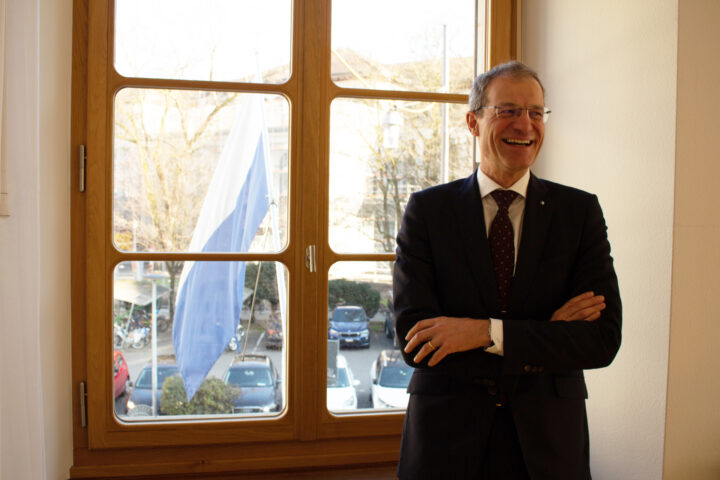
You have been a member of the government since 2011 and are running for a fourth term in April. What do you like about your current position as Finance Director of the Canton of Lucerne?
Even after 12 years, I consider it a privilege to be a government councillor in the Canton of Lucerne. For me, it is an exciting, varied and challenging task. As Finance Director, I take care of IT, real estate and personnel in addition to finances. I enjoy these cross-sectional functions and the resulting responsibilities. Our department is allowed to provide the resources that the other departments need in order to provide the corresponding services to the population.
Where do you see the greatest challenges at the moment?
From an overarching perspective, mobility and sustainability are among them, along with health care. Within the Finance Department, we have several interesting real estate projects that we are allowed to push ahead with – for example, the expansion of the Horw campus. With a budget of 365 million francs, this is the largest project in the Canton of Lucerne to date. We have also just submitted the building application for the cantonal administration at Seetalplatz in Emmen. We want to bundle the administration in this new building for about 175 million francs. One of the challenging tasks is the ongoing search for a location in the city of Lucerne for the Lucerne Museum and the Cantonal Court. Since we need several thousand square metres of space for both, the project is not entirely simple.
You are currently working on the revision of the Tax Act 2025. Are global uncertainties such as the climate problem or the war in Ukraine being taken into account?
In the Canton of Lucerne we are registering a very positive development. The tax law reform is intended to create the conditions for the Canton of Lucerne to remain an attractive location for natural persons and legal entities and to develop optimally. In 2000, we still had debts of 2.5 billion francs – today we have net assets of more than 300 million francs. We have achieved this thanks to an ambitious and demanding tax and financial policy. In parliament, we discussed a climate and energy report and are implementing the corresponding measures. The situation in Ukraine naturally affects many areas. Taking the current situation into account, we have created a stable foundation for the tax law reform and are looking forward to it positively.
You see yourself as a bridge builder between city and country. Where do the discrepancies lie?
In addition to the city and the agglomeration as an urban centre, there are many agricultural regions, especially in Lucerne’s hinterland. It is precisely this diversity that makes the canton interesting. We are centrally located, easily accessible and can offer attractive local recreation areas. In this respect, I don’t want to talk about discrepancies, but about different starting points. It is our task to keep these differences in mind in all decisions. An agglomeration city has different needs than a rural community in the Entlebuch. Thanks to the cantonal financial equalisation system, we can offer comparable services to the population in all municipalities.
You completed an apprenticeship as a draughtsman and then studied to become a civil engineer. To what extent does the knowledge you acquired then flow into your current job?
I am a great friend of the dual education system: vocational training is not better or worse than the academic path. It is simply different. During my apprenticeship, I learned to take responsibility for the work I do and to do it very accurately. This benefits me in my current job as finance director. Especially in the real estate sector, I know how construction projects are set up and I know the processes. Basically, an education like the one I enjoyed is a good basis for a broad range of tasks.
What strategy are you pursuing in your department in terms of digitalisation?
I am convinced that the digital transformation is an important basis for the further development of our society and economy. In this respect, we have developed a digital strategy that is geared towards the entire canton and is intended to ensure its future-oriented development. Within the administration, we want to provide our services in a contemporary – i.e. digital – manner. We have launched the service portal together with the Lucerne municipalities. It is intended to offer communal and cantonal services online. The plan is to create a digital gateway for all public services in the Canton of Lucerne. Our aim is not only to find an optimal solution for the administration, but also one that makes life easier for the residents.
What makes the Canton of Lucerne attractive for companies?
We offer good framework conditions, for example in profit taxation, which we halved in 2012. As a result, we were the canton with the lowest profit taxation of legal entities for several years – this has had a positive effect. With the planned revision of the tax law, we are ensuring that we will continue to be an attractive business location in the future. But our educational institutions are also an important factor. We have consciously invested in education and belong to the rather younger education cantons. We also benefit from our central location and the sufficient space available for businesses. We are aware that we are in a competitive environment with the neighbouring cantons. We have to move constantly in order to remain attractive.
The Canton of Lucerne relies on a special model for economic development.
Correct. We are the only canton in Switzerland that does not regulate business promotion at the cantonal level, but has outsourced it to a foundation. The companies are represented there as partners of the cantons and municipalities. We are convinced that it is important that the business community has a say in decision-making and feels valued. That is why we attach great importance to the maintenance of the existing business community and want to ensure good framework conditions for the private sector. We strive for qualitative growth and receive good feedback for our model.
What is the situation regarding urban sprawl in the Canton of Lucerne and what is being done about it?
We support the economical use of land and try to promote this with legal foundations. Densified building is the order of the day in our structure plan and in the communal zoning plans. Due to the Federal Spatial Planning Act, we now have 21 municipalities that have to reduce their building zones by up to 70 hectares – so-called rezoning municipalities. This is not an easy process, but we are keeping at it. With our structure plan, we want to enable development and at the same time take care of our cultural landscape.
There is a housing shortage, especially in the centres. What measures must be taken to alleviate the situation?
The public sector alone cannot solve this problem. What is needed here is interaction between the private sector, investors and the public sector. We create incentives for dense building by allowing higher utilisation. In addition, we make suitable areas available for residential buildings, such as at Seetalplatz or in Ebikon. In this way, around 200 flats can be realised.
Act instead of react – always one step ahead of the next crisis The world is changing differently and faster than expected. Various crises are developing in parallel and at different speeds: For example, the shortage of skilled workers is accompanied by higher raw material and energy costs, inflation and rising interest rates. The JLL Victor value development index for top office buildings, for example, has fallen more sharply than ever before in the major German cities. Values have fallen by 11.2 per cent over the course of 2022. Real estate companies have been permanently in crisis mode since Corona. “Whether it’s rising prices or a shortage of materials, as a company I have to be able to react to this quickly and flexibly. What does that mean for internal structures? Only if I have my documents and data at hand in high quality at all times without major searches can I flexibly buy or sell assets, design projects transparently, streamline processes. And so I am always one step ahead of the next crisis. A digital data strategy and a document management system based on it are exactly what we need. They form the basis for every decision,” says digitalisation expert Penn.
Enforcing warranty claims In challenging times, real estate companies look for ways to protect their margins. A perennial issue in asset and property management is the warranty. Warranty claims are often not asserted in time or not asserted at all, resulting in additional renovation costs for individual trades. This means that commercial property owners lose a lot of money. Often the knowledge about this lies with individual employees or even external property management partners. If they leave a company or the external property manager is changed, no one knows who is now obliged to do what. Or, if files and documents cannot be found at all or are not available quickly enough, sometimes deadlines simply expire. Then the portfolio owner or property manager is left with nothing and is stuck with the costs, and the portfolio performance drops. Here, too, a systematic DMS can bring transparency and remedy the situation.
Talk more honestly about digitalisation The real estate industry needs digital solutions that are tailored to its specific needs and at the same time establish standards. This is especially true for large companies that have to manage real estate in all lifecycle phases. “Software providers have made many promises in the past that have led to inflated expectations that have not been met and have left scorched earth,” says Penn and demands: “We need to be more honest about digitalisation. More honest in our expectations of a solution. More honest in what a solution can achieve. And more honest about what the path to a digital real estate economy looks like. Because successful digital projects always have one thing in common: an honest collaboration between provider and customer with a common goal and the users in focus.”
With the Dispatch on Location Promotion 2024-2027, the Federal Council is further developing the strategic foundations of federal location promotion. It is pursuing the following five goals with location promotion in the years 2024-2027: Improve the framework conditions for SMEs, strengthen regions, contribute to sustainable development, exploit the opportunities of digitalisation and strengthen the attractiveness of the business and tourism location. Compared to the period 2020-2023, the importance of sustainable development and digitalisation will be upgraded. In addition, location promotion will be geared even more strongly to the needs of the main target groups – SMEs and regions. In order to implement the goals, 23 concrete activities will be defined in the coming years by SECO and the mandated organisations (guarantee cooperatives, Swiss Export Risk Insurance, Swiss Association for Hotel Credit, Switzerland Tourism, Switzerland Global Enterprise). Some of them are implemented in cooperation with the cantons and other partners.
The focal points of location promotion In SME policy, the focus is on expanding EasyGov.swiss, the one-stop shop of the Confederation, cantons and municipalities for businesses. This can make a significant contribution to reducing the administrative burden on businesses. In the period 2024-2027, the scope of EasyGov services is to be further expanded in order to meet the needs of businesses for additional electronic government services. As part of the expansion of EasyGov, it is planned, for example, to be able to offer businesses a bundled process for moving companies (change of address) in the future. Further expansion is also planned in the area of aliens law notifications and permits for businesses.
In tourism policy, the focus is on the further development of investment promotion, sustainable development and the digital transformation of tourism. Another priority for the years 2024-2027 is the implementation of the recovery programme for Swiss tourism to counteract the effects of the Covid 19 pandemic.
The New Regional Policy NRP will enter its third eight-year multi-annual period (2024-2031) in 2024. The existing thematic funding priorities of “industry” and “tourism” will be continued. In addition to digitalisation, sustainable development and the “local economy”, which complements the export orientation of the NRP, will be given particular weight as cross-cutting themes.
Finally, the offer of support for the export industry, for example in relation to trade-related issues, and in particular access for Swiss exporters to large foreign infrastructure projects, will be further developed in line with demand and the “Team Switzerland” approach will be expanded. For example, various associations, federal offices, Switzerland Global Enterprise and Swiss Export Risk Insurance are increasingly conducting joint promotional activities abroad. These are aimed, among others, at general contractors who carry out large infrastructure projects. Further business opportunities are being identified in important markets.
Commitment credits and payment frameworks In order to continue and further develop the instruments of location promotion, the Federal Council is proposing commitment credits and payment frameworks totalling CHF 428.83 million to parliament for the years 2024-2027. For the years 2020-2023, an amount of around CHF 399 million was available. In addition, there is a payment framework for the creation of the Regional Development Fund in the years 2024-2031 amounting to CHF 217.3 million (reduced by CHF 12.7 million compared to the previous period 2016-2023).
Location promotion is implemented using the instruments of SME policy, tourism policy, the New Regional Policy (NRP) and foreign trade promotion.
Der Bundesrat entwickelt die strategischen Grundlagen zur Standortförderung des Bundes weiter. Mit seiner Botschaft für die Jahre 2024 bis 2027 verfolgt er laut einer Medienmitteilung fünf Ziele: Rahmenbedingungen für KMU verbessern, Regionen stärken, zur nachhaltigen Entwicklung beitragen, Chancen der Digitalisierung nutzen sowie die Attraktivität des Wirtschafts- und Tourismusstandorts stärken. Diese sind auch Bestandteile der Neuen Regionalpolitik, die 2024 in ihre dritte achtjährige Periode startet. Für die mandatierten Organisationen wurden 23 konkrete Aktivitäten formuliert.
Im Vergleich zur Periode 2020 bis 2023 wird die Bedeutung der nachhaltigen Entwicklung und der Digitalisierung aufgewertet. Ausserdem soll sich die Standortförderung noch stärker an den Bedürfnissen der Hauptzielgruppen, den KMU und den Regionen, ausrichten. So liegt der Schwerpunkt bei der KMU-Politik im Ausbau von EasyGov.swiss, dem Online-Schalter für Unternehmen zur elektronischen Abwicklung von Bewilligungs-, Antrags- und Meldeverfahren an einem einzigen Ort.
Den Fokus in der Tourismuspolitik setzt die Botschaft bei der digitalen Transformation der Branche und der Weiterentwicklung der Tourismusförderung. Zudem will der Bundesrat die Exportorientierung weiterentwickeln. So sollen sich etwa Promotionsauftritte im Ausland an Generalunternehmer mit grossen Infrastrukturprojekten richten.
Für die Instrumente der Standortförderung beantragt der Bundesrat dem Parlament Finanzmittel in Höhe von 428,83 Millionen Franken, rund 40 Millionen mehr als in der ablaufenden Periode. Dagegen soll der Zahlungsrahmen für die Äufnung des Fonds für Regionalentwicklung in den Jahren 2024 bis 2031 gegenüber der Vorperiode um 12,7 Millionen Franken auf 217,3 Millionen Franken reduziert werden.
In January 2022, LUKB announced that it would adapt its organizational structure in order to increase its clout in the areas of IT and digitization. The IT department, which currently reports to CFO Marcel Hurschler, will move to the previous Market Services department on January 1, 2023. At the same time, the asset management area will be moved from the Market Services department to Marcel Hurschler’s responsibility and the area of special advice (financial planning, pension, tax and inheritance law advice) will be reassigned to sales, i.e. to the Corporate Customers & Private Banking department. In the future, the Market Services department will focus even more on IT and digitization and will bear the new name “Technology & Services” from 2023.
In the course of this reorganization there will also be personnel changes: Leo Grüter, who has been a member of the management board of Luzerner Kantonalbank AG (LUKB) since 2010, will leave the management board at the end of 2022. The successor as Head of Corporate Customers & Private Banking will be Beat Hodel, who will head the previous Market Services department until the end of 2022.
As of January 1, 2023, Simon Kauth will take over management of the newly structured Department of Technology & Services. Simon Kauth received his doctorate in economics from the University of St. Gallen HSG in 1997. He has many years of professional experience both in banking and on the side of the providers of core banking software (Avaloq and Finnova), most recently at management level. Born in Thurgau, Simon Kauth lives with his family in Zollikon ZH.
“With his profile and his previous track record, Simon Kauth optimally fulfills our catalog of requirements for the management of the Department of Technology & Services: Strong IT background and profound know-how in banking,” says LUKB CEO Daniel Salzmann, explaining the choice of the new member of the management board. LUKB carried out a multi-stage selection process under the direction of Daniel Salzmann and with the support of external specialists.
Siemens Smart Infrastructure is launching an open, interoperable and fully cloud-based smart building suite, the Zug-based Siemens subsidiary announced in a press release. The various interest groups such as building users, real estate investors, real estate companies and facility managers can digitally combine their building data from different sources on Building X. The smart building suite can integrate third-party software, has a range of applications based on artificial intelligence and has built-in cyber security.
“We can now bring together all the data generated by systems in intelligent buildings in a single data pool,” Matthias Rebellius is quoted as saying in the statement. According to the board member of Siemens AG and CEO of Smart Infrastructure, this would allow “intelligent buildings to be implemented more quickly”, bringing the “vision of autonomous, climate-neutral buildings” closer. “Building X creates measurable data-based results in terms of efficiency, performance and user experience.”
An energy manager, an operations manager, a security manager and a 360° viewer are currently available on Building X. The suite can be obtained in the form of software as a service on a subscription basis. In addition, Siemens offers the Xcelerator Building Services, a program based on Building X, in which Siemens assumes responsibility for achieving customer goals. The report mentions the reduction of energy costs and the optimization of systems as examples.
The Institute for Digital Building at the FHNW has won Eder Martinez as a professor. According to a press release , the focus of his teaching will be on digital twins and the information lifecycle. “Anyone who wants to build with digital support and needs-oriented in the future must be able to collect, automate, map and process information in a targeted manner,” explains Manfred Huber, head of the institute, explaining the background to the focus.
Martinez received his master’s and doctorate degrees in Civil and Environmental Engineering from the University of California, Berkeley (UCB). Among other things, he worked as a civil engineer and specialist for cooperation processes on construction sites in Chile and Ecuador. He has also supported companies such as Hilti and Implenia in digital construction projects.
The FHNW only founded the Institute for Digital Building in 2018. According to the university, it has grown significantly since then. With Martinez, the second professorship in the field of information management will be filled this year.
Wir verwenden Cookies zur Unterstützung und Verbesserung unserer Dienste. Mit der Nutzung dieser Website erklären Sie sich mit der Verwendung von Cookies einverstanden. Weitere Informationen finden Sie in unserer Datenschutzerklärung.