Tag: Digitalisierung

  • A global centre for artificial intelligence

    A global centre for artificial intelligence

    A key component of this initiative is the new Alpine supercomputer, which was put into operation at the Swiss National Supercomputing Centre in Lugano in February 2024. With over 10,000 graphics processors, it is one of the most powerful computers in the world and offers Swiss scientists an infrastructure that was previously only available to the largest technology companies.

    AI development with a focus on specialised industries
    Instead of developing general AI models, Switzerland is focussing on industry-specific solutions, particularly in the fields of robotics, medicine, climate science and diagnostics. EPF Lausanne has already published a medical AI model that is specifically tailored to the healthcare sector.

    Open and transparent AI models
    The organisation deliberately focuses on transparency and open source. In contrast to the proprietary models of large corporations, Switzerland’s new large language models should be comprehensible to everyone. This applies to the data used as well as the training methods and results.

    Research for digital sovereignty
    ETH Vice President for Research, Christian Wolfrum, emphasises the importance of Switzerland’s digital independence: “Science must take on a pioneering role so that AI is not left to multinational corporations alone. This is the only way we can guarantee independent research and digital sovereignty.”

    Large computing volume for ambitious goals
    The plan is to utilise ten million GPU hours on the Alpine supercomputer within the next 12 months. This corresponds to an enormous computing power, as the same volume would have to work continuously for 1,100 years with one GPU. Switzerland is thus setting new standards in AI research.

    AI for industry and administration
    The initiative is intended to benefit not only science, but also Swiss companies, start-ups and public administrations. Swisscom CTO Gerd Niehage sees the initiative as an important building block for Switzerland’s digital future: “It accelerates the digital transformation and creates new skills that our country needs to play a leading role in the field of generative AI.”

    International collaboration and networking
    To drive their research forward, ETH Zurich and EPFL are working closely with the Swiss Data Science Centre and around a dozen other Swiss universities and research institutes. The initiative is also part of the European AI Excellence Network, which comprises around 40 leading AI research centres in Europe.

    The initiative is thus sending out a clear signal. Switzerland is positioning itself as a leading global hub for the development of transparent and responsible AI technologies
    AI technologies.

  • Zug as a global centre for blockchain technology

    Zug as a global centre for blockchain technology

    The Canton of Zug is supporting the establishment of the “Blockchain Zug – Joint Research Initiative” with a financial commitment of around CHF 40 million. This innovative cooperation project between the University of Lucerne and Lucerne University of Applied Sciences and Arts aims to develop Crypto Valley into an international centre for blockchain research. The Cantonal Council gave the go-ahead for the project in February 2024.

    New research institute at the University of Lucerne
    A central component of the initiative is the establishment of a Zug Institute for Blockchain Research at the University of Lucerne. With nine new chairs, an interdisciplinary research environment will be created to analyse the social, economic and legal aspects of blockchain technology. HSLU is contributing its expertise from the fields of computer science, finance and engineering, thus creating a unique synergy between technological innovation and a humanities perspective.

    Lighthouse project with international appeal
    The aim of the initiative is to establish Zug as a global centre for blockchain research. Finance Director Heinz Tännler emphasises the importance of this project: “Blockchain has the potential to transform many areas of our lives. With this initiative, we are ensuring that we are at the forefront of this development.” This is not only an investment in the technology of the future, but also a strategic measure to strengthen Zug as a business location.

    Technology meets society
    Unlike many purely technological research projects, the “Blockchain Zug – Joint Research Initiative” takes a broad approach. In addition to the technical foundations, the effects on the economy, politics and society are also being analysed. This emphasises the unique character of the project, which not only aims to drive innovation, but also to understand and shape social transformations.

    Long-term perspective and sustainable funding
    The initiative is designed for the long term. After five years of start-up funding from the Canton of Zug, the research network is to be placed on a sustainable financial footing. An external evaluation after three years will determine the way forward.

  • The future of location promotion in the canton of Zurich

    The future of location promotion in the canton of Zurich

    Together with Markus Müller, you have been co-heading the location promotion of the Canton of Zurich for over 15 months.
    What insights have you gained?
    Zurich stands out within Switzerland due to its economic size. This also means that we are not only heavily involved in cantonal issues, but are also active on the national and, in some cases, international stage. For example, we promote Switzerland as an AI location or share our findings on AI applications in the economy with international partners.

    At the same time, I find the close cooperation between business, science and administration as well as politics to be expedient when it comes to creating sustainably attractive framework conditions.

    Could you give us a brief overview of the current priorities of location promotion in the Canton of Zurich?
    The central focal points are:

    As just mentioned, the development of attractive, long-term location factors. Through close dialog with business and science, we identify trends at an early stage and provide targeted impetus for location development.

    Promoting innovation and strengthening our key sectors of finance, ICT, life science, food, clean and high-tech.

    Maintaining and strengthening the diversity of the industry structure. In this context, we also support companies that want to locate here – from the search for a location to obtaining permits.

    Our projects, programs and initiatives are based on these three pillars.

    What are the long-term visions of the cantonal location promotion department with regard to location development?
    The attractiveness of a business location depends on a number of different location factors. These range from target group-friendly regulations and digital government services to strong innovative power and the sustainable design of economic areas.we are pursuing the goal of being an attractive, leading and future-oriented innovation and business location with international appeal for companies and the population.

    Zurich is one of the most expensive places to live in the world. The high real estate prices and rents are also becoming an increasing burden for companies. What can location promotion do about this?
    We are committed at various levels not only to the attractiveness and prosperity of the economic area, but also to a high-quality and excellent quality of life. In this respect, the availability of living space also plays a role. One concrete application can be found, for example, in our Innovation Sandbox for artificial intelligence. In the current phase, we are supporting the use of AI in planning applications. We hope that the results will help us to find ways of reducing the building backlog and streamlining the building permit process.

    Housing subsidies are also located at official level. It promotes the provision of affordable rental apartments with attractive loans.

    The ageing population is affecting the real estate sector and the labor market. What significance does this fact have for the canton of Zurich and how can you respond to it?
    The topic of demographic shifts and the widening labor market gap has been on our minds for some time at various levels. Over the next few years, many experienced workers will retire – this will increase the competition for talent.

    On the one hand, we are working on various projects in the area of recruiting and retaining skilled workers and labor market participation. At the same time, we are currently developing new overarching approaches to demographics that will have a longer-term impact. One thing is clear: tackling the challenge of demography must be approached from a systemic perspective, meaning that many parties and stakeholders need to be brought to the table.

    How do you see the role of the canton in the Greater Zurich Area economic region?
    The Greater Zurich Area is one of the most innovative business locations in Europe – and the canton of Zurich plays a central role in this. As a leading innovation location, we create the framework conditions that companies need to develop successfully. Ultimately, the other cantons within the Greater Zurich Area also benefit from our strong position.

    As the economic engine of Switzerland, the Canton of Zurich is also the largest provider of funds for the Greater Zurich Area as a business location. At the same time, our Chief Executive Officer, Government Councillor Walker Späh, is President of the Board of Trustees of the Greater Zurich Area Business Location. The Canton of Zurich is also actively represented in the Greater Zurich Area economic region by the two cities of Winterthur and Zurich. This allows us to optimally represent our interests and coordinate the activities of the Greater Zurich Area as a business location with our own.

    How does the cooperation with other cantons within the Greater Zurich Area business location work?
    What joint projects are currently underway?
    Cooperation within the organization of the Greater Zurich Area business location focuses primarily on issues relating to relocation. We work very closely with other cantons in various other constellations and committees. For example, in the Zurich metropolitan area, but also on a smaller spatial level, such as in the Limmat Valley. However, not all cantons are always members of the Greater Zurich Area business location.

    Current cooperation projects include the 2nd phase of the Innovation Sandbox for Artificial Intelligence, which also includes the aforementioned building permit project, and the repositioning of the Limmatstadt regional location promotion program, in which we are thinking beyond the cantonal borders in functional areas and looking for solutions.


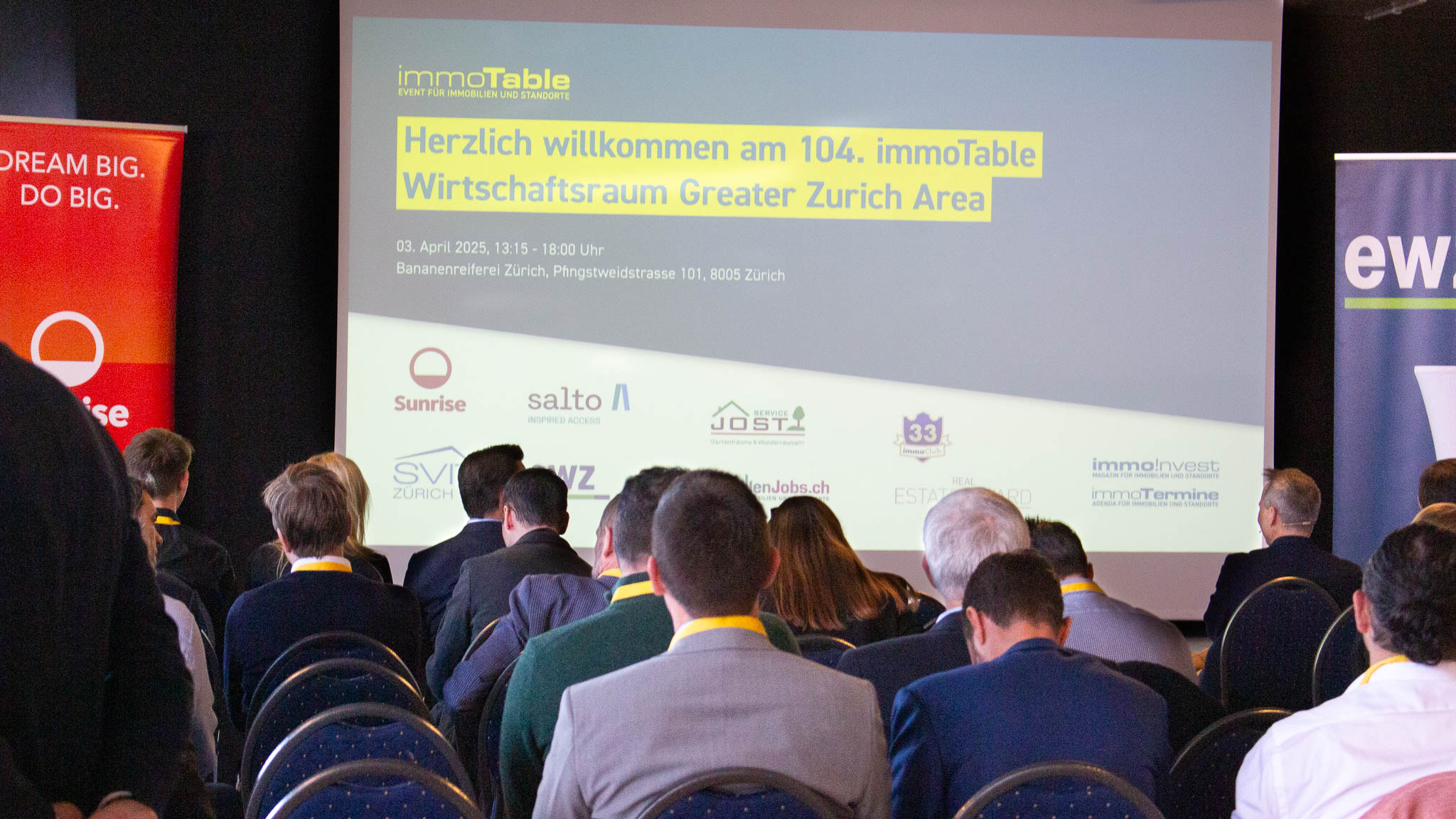
  • The 104th immoTable focuses on energy, location attractiveness and innovation

    The 104th immoTable focuses on energy, location attractiveness and innovation

    [smartslider3 slider=”46″]

    Setting the course for strong locations
    Samuel Mösle, Co-Head of the Zurich Cantonal Economic Development Agency, opened the event with a comprehensive overview of the situation. He outlined the current challenges in a global context and emphasized the role of the construction industry in the further development of Zurich as a business location. Topics such as digitalization, artificial intelligence and securing affordable housing play a central role in this. The aim is to further raise the profile of the canton of Zurich as an innovative and competitive economic area.

    Björn Slawik and Frank Koster from ewz presented the prospects for a decentralized and sustainable energy world. The focus was on the dynamic development of the Swiss solar market and new regulatory framework conditions from 2026. The introduction of local electricity communities, such as the ewz.solarquartier concept, will strengthen self-consumption of solar power at district level. The aim is to make efficient use of surpluses and promote the construction of new solar power plants in a market-oriented manner.

    Jan Frenzel from SMG illustrated how AI-supported systems are revolutionizing the world of customer relationship management. In addition to comparing CRM and ERP systems, he highlighted the potential of SaaS solutions for automating business processes. With intelligent tools, customer needs can be identified even more precisely in future – a key factor for positioning on the market.

    Location development and future trends
    Under the title “How can locations remain attractive?”, Beat Bachmann (Canton of Zug), Jakob Bächtold (House of Winterthur), Marc Lyon (Implenia Schweiz AG) and Albert Schweizer (City of Schlieren) discussed the future viability of locations. The topics ranged from demographic change and new forms of living and working to the question of how innovation and sustainability can be specifically incorporated into site development. The discussion showed that successful locations today have to offer more than just infrastructure. They need identity, networking and visions for the future.

    Outlook for the Real Estate Award 2025
    Mara Schlumpf provided information about the upcoming Real Estate Award, which will take place on October 2, 2025 at Trafo Baden. Outstanding projects and personalities from the real estate and construction industry will be honored in five categories. The event promises not only a gala with a networking character, but also exclusive visibility for innovation and quality in the industry.

  • Digital property information on the rise

    Digital property information on the rise

    The PLR-cadastre has long been a central tool for spatial planning and project development in Switzerland. It provides interactive information on public-law property restrictions, from building zones to protected areas. Now the Federal Council wants to modernise the legal basis for this. The rules for recording information in the cadastre are to be simplified, responsibilities clarified and duplication with the land register reduced.

    A key aim is to increase legal certainty. For example, the previous assumption that the contents of the cadastre are generally known will be removed. This is an important step towards better delimitation of responsibility and liability.

    Future model for the national property information portal
    The cadastre should now also contain general, abstract and officially binding regulations such as building and distance lines. These play a decisive role in the assessment of utilisation potential, for example in site developments or new construction projects near roads and bodies of water.

    In future, all information from the PLR-cadastre will be made centrally accessible via a national portal. This will make things much easier for everyone involved in working with land. This will provide investors, authorities, planning offices and project developers with transparent data on the ownership and utilisation structure at the click of a mouse.

    Setting the course by summer
    The consultation on the amendment to the law will run until 30 June 2025, paving the way for a property information system that meets the digital requirements of modern spatial and location development. The federal government is thus sending a strong signal in favour of planning simplification, investment security and data-based location promotion.

  • Digitalisation and AI as the answer to skills shortages and climate targets

    Digitalisation and AI as the answer to skills shortages and climate targets

    The construction industry needs both digitalisation and AI in response to increasing complexity and data density. According to a HSLU press release on the seminar organised by its Institute of Building Technology and Energy(IGE), both are also needed to increase efficiency in times of a shortage of skilled workers, declining productivity and an urgently needed reduction in greenhouse gases from buildings.

    This annual IGE event is aimed at specialists in energy, building and construction technology and architecture. This year’s event attracted 110 participants.

    Several speakers shed light on the latest developments in AI for the construction industry. For example, Bruno Michel from IBM Research spoke about “artificial stupidity” when generative AI generates incorrect information with poor training data from the internet. Jörn Plönnings from the University of Rostock also emphasised that a lack of training data is a major problem for the construction industry. However, AI is neither a curse nor a blessing, but simply a necessity in view of the increasing complexity and flood of data.

    Marcel Imfeld from Schindler Aufzüge and Roman Steffen from Trafiko spoke about intelligent mobility, which enables denser construction or fewer parking spaces in neighbourhoods, for example. The automated monitoring of buildings was also covered in various presentations.

    The HSLU presented its Lightscore project, which aims to launch an evidence-based integrative lighting assessment. It is also working on a new SIA standard for the energy efficiency of data centres. And finally, Roger Buser from HSLU reported on his journey through India with the emission-free solar vehicle Solar Butterfly made of ocean PET, where he encountered numerous innovative solutions to combat climate change.

  • Bernapark strengthens support for SMEs

    Bernapark strengthens support for SMEs

    The Centre for Innovation and Digitalisation (ZID) at ZID Bernapark AG is repositioning itself. Originally founded as a catalyst for early-stage start-ups, the centre’s scope of action will in future include SMEs and start-ups at all stages, the ZID announced in a press release. “The new strategy is an important step for the ZID”, Hans-Ulrich Müller, Chairman of the Board of Directors of ZID Bernapark AG, is quoted as saying. “It creates the basis for sustainable growth and strengthens our position as an innovation hub for SMEs in Espace Mittelland.”

    The ZID’s programmes are designed to offer practical solutions for current challenges in companies. In terms of content, the focus is on artificial intelligence, digital transformation and succession planning. In the first step of the transformation, the two formats KMU Update and KMU Upgrade will be introduced. KMU Update offers free networking formats such as skill share lunches and input workshops. KMU Upgrade is designed as a fee-based format for specific realisations.

    At the beginning of the year, the Swiss Venture Club also relocated its office to the ZID. The ZID is thus “expanding access to one of the largest SME networks in Switzerland”, according to the press release. “We are creating a platform that not only connects SMEs and start-ups, but also provides them with concrete tools for digital transformation,” explains Martin Hofer, Interim Managing Director of the ZID. “Our programmes are designed to implement innovations in a practical and efficient manner.”

  • Research into the preservation of bridges using artificial intelligence

    Research into the preservation of bridges using artificial intelligence

    Scientists at the Swiss Federal Institute of Technology in Zurich(ETH) are researching ways in which artificial intelligence (AI) can be used to optimise the maintenance, repair and construction of railway bridges. In collaboration with SBB, researchers at the Institute of Structural Analysis and Design are creating AI models of reinforced concrete bridges, according to a press release. With the help of large data sets, the machine learning programmes will provide information on the durability and service life of the bridges and assess which structure would be in a critical structural condition.

    “In Switzerland, too, a considerable proportion of infrastructure structures are approaching the end of their planned service life and need to be reviewed and, if necessary, reinforced,” said Sophia Kuhn, PhD student and member of the research group, in the press release. “We are developing a tool that helps to keep bridges in operation for as long as possible and thus conserve resources without taking disproportionate risks of accidents.”

    The models not only provide information on structural safety, but also deliver more precise data than conventional data acquisition for analysing stability. This should save engineers both time and resources in the maintenance of bridges.

    In a further step, the AI assistants developed by the research team will also help with the design of new bridges.

  • Winterthur invests in six smart city projects for 2025

    Winterthur invests in six smart city projects for 2025

    Since 2018, Winterthur has been focussing on smart city projects that make the city more efficient, sustainable and liveable. Already 27 projects have been successfully implemented. In 2025, the city will continue to focus on innovative solutions for mobility, digitalisation and ecological urban development.

    The subsidised projects for 2025 are wide-ranging. From the sustainable reuse of building materials to digital registration systems for school sports and an AI-supported cultural calendar. All projects aim to solve existing challenges with creative technologies and new approaches.

    Six funded smart city projects for 2025

    • Sponge city in action: Extreme weather events such as heat and heavy rain are becoming more frequent. This project is testing how green roofs and permeable soils can help to cool the city and better absorb rainwater. The effect of the sponge city elements is visualised in the Grüze innovation laboratory.

    • Winti Re-Use: Construction projects often generate large quantities of recyclable material that has previously been disposed of. A new platform ensures that construction waste is reused sensibly in order to conserve resources and protect the environment.

    • Spitex mobility: Spitex employees are out and about in the city every day – often in their own cars. This project is testing sustainable alternatives such as e-bikes and e-scooters to promote lower-emission mobility and create more flexible transport solutions for care staff.

    • Smart registration for school sports: A digital platform aims to make registering for school sports easier, faster and error-free. Parents and administration benefit from an optimised process that reduces bureaucracy.

    • CulturAI: Winterthur is a lively cultural city, but smaller events often remain in the shadow of larger events. An artificial intelligence (AI) analyses preferences and suggests individually suitable cultural events – even for users with little time for research.

    • Winbib : Unattended opening hours make libraries more flexible to use, so that books and media can also be borrowed in the evenings or at weekends.

    Smart City Winterthur 2030
    The city of Winterthur is pushing ahead with its smart city development in a targeted manner. On 1 January 2025, the City Council adopted the “Smart City Winterthur 2030” strategy. The aim is to actively promote innovation, create new networks for collaboration and further develop the city’s digital transformation.

    By promoting these six projects, Winterthur is demonstrating how modern, sustainable urban development can be achieved through creative approaches and the targeted use of technology.

  • Digitalisation strengthens customer focus

    Digitalisation strengthens customer focus

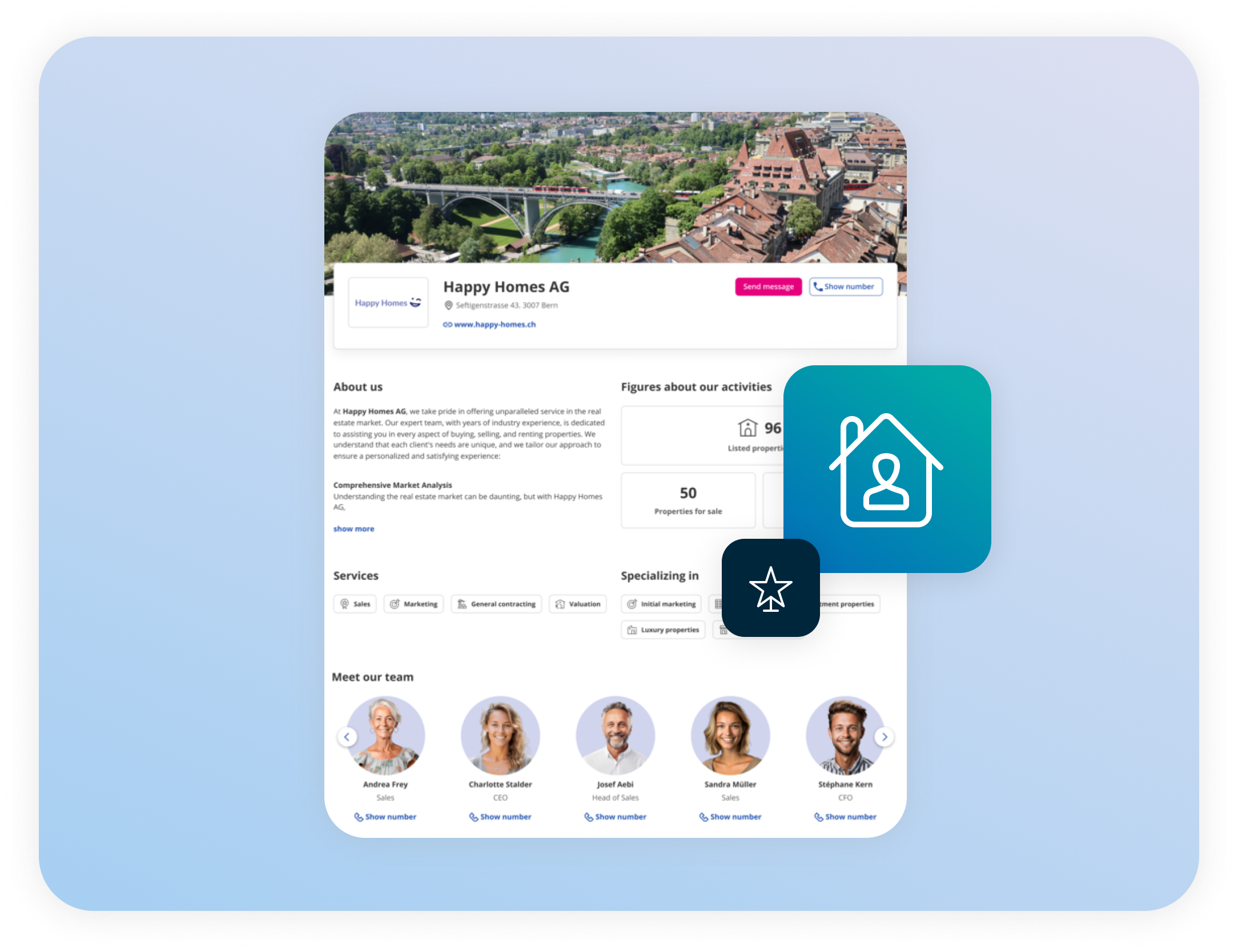
    At the turn of the year, SMG Real Estate integrated numerous new digital tools into the digital Business Manager for its customers, which provide specific support for letting and marketing. These include, for example, the digital showcase page, which professionally presents the portfolio and special services of property companies to interested parties. A personal introduction of the team with contact information and contact person portraits promotes a pleasant first impression and builds trust.

    Another new feature is the use of artificial intelligence (AI) and the automated creation of listings on SMG Real Estate’s property platforms. The entire process is made considerably easier. Once the address and a few specific details of a property have been entered, the advert is filled in automatically – supported by reliable data from IAZI. The property description can also be created automatically. The new AI solution is integrated into the Business Manager user interface and analyses property data and neighbourhood information to create professional descriptions that highlight the best features of each property.

    SMG Real Estate has also further optimised its marketing packages: 50% more ads in the search results list not only ensure more visibility, but also improve performance and thus the company’s own marketing success. A key factor in optimising the likelihood of closing deals quickly is, on the one hand, information relevant to decision-making and, on the other, the accuracy of the approach to potential interested parties. SMG Real Estate now provides the “Potential Map for Properties” tool for this purpose. Based on property valuations, estate agents can identify regions with potential sales potential and can therefore focus their marketing activities on particularly promising districts and regions.

    SMG Real Estate has also simplified day-to-day collaboration within the team. Customers can access the entire real estate ecosystem with just one login. This makes it even easier for them to benefit from daily updates in the Business Manager and gives them quick and convenient access to numerous third-party partner services.

    The product portfolio of third-party partners has also been expanded once again. The IAZI capitalised earnings value model not only makes it possible to quickly calculate property yields on the basis of current market data. The tool now also incorporates “natural hazards” on the basis of IAZI data and provides important decision-making aids for most cantons with regard to various natural hazards (including risks such as avalanches, landslides, rockfall, floods, storms, earthquakes, hail and surface runoff) and their hazard categories.

    Another example of additional services: If you place the HEDOlight widget on your own company website, it lays the automated foundation for new contacts and mandates. This is because potential home sellers can use the HEDOlight widget to obtain a free estimate of the value of their property based on IAZI’s hedonic method.

    And thirdly, SMG Real Estate’s exclusive partnership with the Residenture auction platform opens up new opportunities for estate agents to significantly increase the number of potential buyers for their properties. The leading Swiss platform for AI-supported property auctions provides estate agents with a legally compliant and transparent digital auction process. Bidding processes for properties advertised via SMG Real Estate can be started seamlessly with verified interested parties in a fast, traceable process.

    Letting and selling properties is becoming increasingly efficient with the use of digital tools. This not only creates additional convenience and higher performance for business customers, but also frees up time for important customer contact.

    If you want to get an overview of all the new digital products, take a look here.

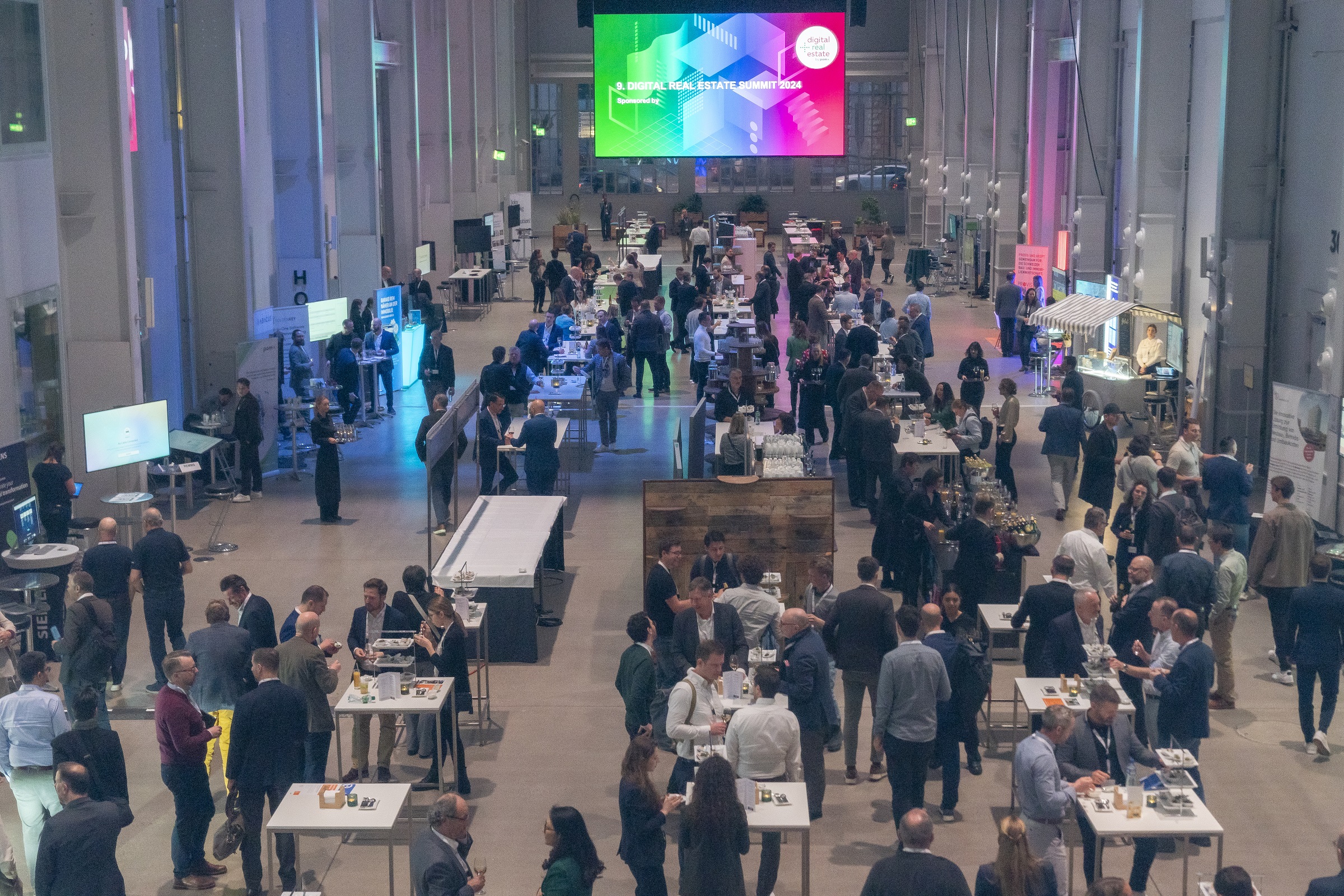
  • Digital Real Estate Summit: Innovation trifft Immobilien

    Digital Real Estate Summit: Innovation trifft Immobilien

    The Digital Real Estate Summit is the platform for all players in the property industry who see the digital world as an opportunity and want to tap into new business opportunities or further develop existing ones. An exhibition of digital products and systems that anticipate the future of the property industry will show what is already in practice today. Because many things are possible if you have the right information!

    Become part of the network and join us in Baden on 6 March 2025.

    The varied programme offers something for everyone who wants to play an active role in shaping the digitalisation of the real estate industry. Be impressed by inspiring keynotes in which renowned personalities share their visions and experiences. Gain new perspectives through practice-orientated workshops that will give you insights into current topics and best practices.

    The exciting exhibition will present the latest trends and developments in the industry. Whether smart buildings, digital platforms or AI-supported solutions – here you will find the innovations that will shape the market tomorrow.

    Of course, there will also be plenty of networking opportunities. Exchange ideas with other experts and visionaries at the 10th Digital Real Estate Summit 2025 and make valuable contacts. Culinary highlights will ensure that you can enjoy the day in a relaxed atmosphere.

    The Digital Real Estate Summit has been the leading platform for discussing the transformation of the property industry for years. Take the opportunity to network with other pioneers and expand your knowledge. Register now and become part of the most important industry event

    Be there when visionaries and industry leaders develop forward-looking solutions. Be inspired, actively shape the digital property world and celebrate the 10th anniversary of the Digital Real Estate Summit with us!

    Further information: https://www.digitalrealestate.ch

  • Smart City Strategy Zug

    Smart City Strategy Zug

    The challenges of urban growth, from the climate crisis to transport logistics and urban densification, call for holistic approaches. Zug is focusing on digitalisation as a key strategy. With its strong technological basis and the active involvement of all urban stakeholders, the Smart City Strategy Zug offers innovative answers to the questions of the future.

    Intelligent administration and citizen-centred services
    The city of Zug is striving for an efficient, citizen-centred administration that facilitates access to services and promotes transparency. Digital technologies, such as open data and smart administrative processes, offer citizens access to municipal services regardless of time and place. This customer-friendly approach strengthens the dialogue between the city and the population and makes Zug a pioneer for modern city administration.

    Strengthening social participation and digital skills
    With its smart city strategy, Zug is creating new platforms for the participation of all social groups. Digital channels expand dialogue and promote the right to have a say, especially for younger generations and less mobile people. Educational programmes are designed to improve the digital skills of both the population and the administration and prepare the people of Zug for the opportunities and challenges of the digital transformation.

    Smart mobility for sustainable mobility and quality of life
    Smart mobility is a central pillar of the strategy. Innovative technologies and alternative forms of transport are intended to reduce commuter traffic, cut emissions and improve the quality of life. Zug is focussing on real-time data, intermodal mobility and the expansion of emission-free modes of transport. The goal: clean, safe and sustainable mobility that enriches city life.

    Innovative business location
    With its dynamic start-up scene and innovative sectors such as fintech and blockchain, Zug creates an attractive environment for high-tech companies and qualified specialists. The Smart City strategy strengthens the location’s profile and connects companies that are committed to a sustainable economy and circular processes. In this way, Zug is not only positioned for the future as a place to live, but also as a business location.

    Sustainability and environmental protection through smart technologies
    Promoting energy efficiency and CO2 reduction is a key objective of the strategy. Digital applications such as “smart metering” enable a transparent presentation of energy consumption and promote the conscious use of resources. The city is focussing on the expansion of renewable energies and the intelligent use of existing infrastructure – a clear commitment to climate protection and sustainable urban development.

  • Efficient letting thanks to AI

    Efficient letting thanks to AI

    The Swiss real estate sector accounts for around 20 percent of GDP, but digitalisation is lagging behind. SMG Real Estate is setting new standards with an innovation offensive. Platforms such as ImmoScout24, Homegate and Flatfox now offer fully digital solutions that create listings faster, simplify viewings and optimise the entire rental process.

    A central component is the Flatfox Messenger, which is integrated into the aforementioned platforms. This WhatsApp-like communication solution bundles all exchanges between prospective tenants and landlords. Viewing appointments, applications and acceptances can be managed seamlessly – without the usual flood of emails.

    AI-supported adverts for maximum efficiency
    SMG Real Estate also relies on automation when creating adverts. Agents and property managers can generate a complete listing with just a few clicks. By entering the property address, all relevant data such as size and features are automatically added and an AI-supported text is created.

    This innovation saves an average of 14 minutes per advert. Extrapolated to the large number of daily adverts, this results in considerable time and cost savings. This leaves more time for the core business – direct contact with interested parties.

    Future-proof solutions for the sector
    The company wants to make the Swiss property sector fit for the digital future. The new technologies not only offer convenience and efficiency, but also contribute to the professionalisation and competitiveness of the sector.

    With this initiative, SMG Real Estate is proving that digital innovations are changing the property market for the long term and creating real added value for everyone involved.

  • Findings from the Canton of Zurich’s “Fokus Standort” programme

    Findings from the Canton of Zurich’s “Fokus Standort” programme

    In order to position the canton of Zurich as an attractive business location in the long term, the Department of Economic Affairs is focusing on dialogue and collaboration. Current trends and challenges, including digitalisation, skills shortages and regulatory developments, were analysed at the “Fokus Standort” event.

    The discussion was based on the “Canton of Zurich location trend analysis”, which identified four key influencing factors: artificial intelligence and automation, demographic change, increasing regulatory density and economic uncertainty in relation to the EU.

    Workshops on key location topics
    Challenges and solutions were discussed in depth in four topic-specific workshops.

    Skilled workers: How can the labour market situation be stabilised through a better work-life balance, technological innovations and longer working lives?

    Technology: What role does artificial intelligence play in companies and educational institutions, and how can digital skills be promoted in a targeted manner?

    Regulation: How can companies be relieved in order to ensure competitiveness despite increasing administrative requirements?

    Mobility: What concepts can reduce travelling distances and promote sustainable transport solutions?

    The measures developed are now to be further developed in working groups and translated into concrete recommendations for action.

    Demographic change and labour shortage
    Government Councillor Carmen Walker Späh opened the discussion on demographic change. She emphasised that the rising number of retirees and the low number of new recruits represent a major challenge for the labour market. In addition to a better work-life balance, technological efficiency improvements and longer working lives are key solutions.

    In the concluding panel discussion with leading business and industry representatives, further strategies to combat the labour shortage were discussed. The Canton of Zurich is thus focussing on a constructive exchange in order to make the business location fit for the future.

  • Graubünden supports digital innovation in timber construction

    Graubünden supports digital innovation in timber construction

    The canton of Graubünden is promoting the digital transformation of the construction process in prefabricated timber construction. Specifically, the cantonal government is providing up to CHF 666,131 for the SmartFlow System project from QUADRIN AG. The QUADRIN timber construction system, which belongs to Uffer in Surses, enables the construction of customised timber buildings from modular components.

    Uffer wants to digitalise QUADRIN in order to “meet the growing demand for increasingly large-volume temporary buildings”, explains the cantonal government in a press release on its funding decision. The total investment costs for SmartFlow System are estimated at around CHF 1.61 million.

    In the SmartFlow System project, Uffer wants to combine existing digitalised elements of its modular system, such as the planning of components and the control of production machines, and add further digital elements. To this end, the company plans to introduce digital tools for process control, quality assurance and increased efficiency. The use of mixed reality, which combines natural and artificial perception, is also planned to minimise errors in the construction process.

    According to the government of the canton of Graubünden, the project “brings an innovative, sustainable approach to the construction industry”, which could serve as a model for future process developments and motivate other members of the industry to “launch similar initiatives”. The funds for QUADRIN AG are being provided in accordance with the law to promote digital transformation in Graubünden.

  • Swiss construction industry 2025

    Swiss construction industry 2025

    By 2025, sustainability will no longer be a trend, but a matter of course. Building certificates such as Minergie or SNBS and circular construction will take centre stage. Companies that reuse building materials and offer innovative solutions will secure decisive competitive advantages.

    Digitalisation enters the next round
    The digital transformation is reaching new dimensions. Technologies such as IoT, AI-based planning software and digital construction site management tools are being used more widely. At the same time, promoting digital skills among employees is essential in order to actively shape digital progress.

    Skills shortage remains a challenge
    The industry continues to be characterised by a shortage of qualified workers. Companies are increasingly investing in training and further education programmes, focusing on international recruitment and pushing ahead with automation. Modern working conditions and attractive corporate values are becoming increasingly important.

    Focus on urban development and densification
    Urbanisation calls for innovative concepts such as car-free zones, mixed-use districts and urban greening. At the same time, affordable housing remains one of the key challenges. Creative solutions are needed to meet the needs of the population.

    Energy and raw material prices
    The energy crisis and the cost of building materials remain a dominant issue. Local and sustainable building materials are gaining in importance, while legal requirements are driving the expansion of renewable energies. Solar installations and innovative heating systems are setting new standards here.

    Collaboration as the key to success
    The increasing complexity of construction projects requires closer cooperation between architects, engineers and technology providers. Companies that focus on partnerships benefit from synergies and can realise projects more efficiently.

  • Labour Office sets course for the future

    Labour Office sets course for the future

    The Office of Labour is responding to changes in the world of work, including demographic change, labour shortages and advancing digitalisation. The organisation aims to become more efficient, customer-friendly and digital by 2030. A key objective is to offer jobseekers and companies modern services and simplified access to information.

    Hans Rupp, Head of the AFA, explains: “85 per cent of applications are already made digitally, and the trend is rising. Our customers want central points of contact and uncomplicated processes, which we want to provide through optimised digital offerings.”

    Consolidation of locations for greater efficiency
    The AFA’s services are currently spread across 16 RAV locations throughout the canton. In future, five to seven central locations will take over these tasks. This adjustment will be implemented gradually and is based on in-depth analyses. No job cuts are planned.

    Hans Rupp continues: “The previous structure dates back to a time when public transport was not yet so well developed. Today, centralisation allows us to reduce space and maintain specialisations and individual consultations in the long term.” By centralising, teams can be expanded and resources deployed more efficiently. At the same time, the organisation remains scalable so that it can react flexibly to rising unemployment.

    Added value for Zurich as a business location
    Carmen Walker Späh, Director of Economic Affairs, emphasises the strategic importance of the modernisation: “Our aim is to position the Employment Office as a modern and customer-oriented centre of expertise for the labour market. This will not only benefit our customers, but also Zurich as a business location.”

  • New initiatives for sustainable digitalisation and the economy

    New initiatives for sustainable digitalisation and the economy

    The SMG Swiss Marketplace Group has presented a new sustainability manifesto. According to a press release, the company intends to use the document to emphasise its commitment to sustainable business practices. The manifesto contains four central pillars that are intended to describe SMG’s future framework for action.

    These include integrity through good corporate governance and transparency, protecting the digital future through advanced cybersecurity and data protection, empowering employees by promoting an inclusive working environment and positive engagement through environmental and social initiatives.

    As part of its new sustainability strategy, SMG is committed to various initiatives, such as promoting electromobility, reducing carbon emissions in various business areas and improving energy efficiency in its data centres.

    The company sees its online marketplace Ricardo as an important example. “For 25 years, Ricardo has offered a real alternative for responsible consumption,” said Christoph Tonini, CEO of SMG, in the press release. “Thanks to its circular economy approach, which promotes the reuse of products, Ricardo is a key driver of sustainable consumer behaviour in Switzerland. Sustainability has been part of our DNA since the beginning and we are determined to extend this approach to our entire group.”

    The SMG Swiss Marketplace Group brings together the digital marketplaces of TX Group, Ringier and Mobiliar. These focus on property, automotive and finance, among others.

  • New principles for data exchange in the construction process

    New principles for data exchange in the construction process

    For over three decades, SIA 451 has formed the basis for standardised data exchange in the construction industry. Originally conceived as a guideline for bills of quantities, it defined how data fields should be structured and exchanged as early as 1992. Supplemented by modern requirements, such as the integration of images and memos, the standard has continuously adapted to the needs of the industry. Nevertheless, a fundamental revision was long overdue.

    New content and objectives of the revision
    The revised SIA 451 not only defines the processes and terms of information and data exchange, but also sets clear requirements for delivery objects, IT infrastructures and quality assurance. The introduction of a standardised information management process regulates the following aspects:

    Clear definition of interfaces and data structures
    Quality assurance:
    Standards for the testing and certification of software solutions.

    IT infrastructure:
    Requirements for technology and expertise of the players.

    These innovations ensure that the standard will continue to serve as the basis for advanced solutions and standards in the construction industry in the future.

    Relevance for construction practice
    The importance of SIA 451 for the construction process can hardly be overestimated. It is not only the basis for numerous software solutions, but also an essential component of communication between all stakeholders – from planning and procurement to the operation and maintenance of buildings. By promoting open standards, it creates transparency and access for all market participants. This strengthens collaboration and enables technological innovations to be integrated efficiently.

    A standard for the future
    The revision of SIA 451 represents a decisive step towards the digital transformation of the construction and planning industry. The revised content sets new standards for data exchange and creates a solid basis for future developments. SIA 451 thus remains an indispensable tool for everyone working in the construction industry.

  • Schallhausen brings sound diversity into the digital age

    Schallhausen brings sound diversity into the digital age

    Peter Neukomm emphasises that the continuous adaptation and implementation of the Smart City strategy enables Schaffhausen to respond to technological progress and thus create a more liveable city. With innovative projects, the city is ensuring future-oriented development with a focus on digitalisation and sustainability.

    One example of this constant striving for innovation is the new “Schallhausen” platform, which combines the city’s rich musical heritage with modern digital solutions. The platform is part of the Smart City urban development concept and aims to make the diversity of Schaffhausen’s music scene visible and audible.

    Musical history meets digital innovation
    Schaffhausen has always been a city of music with an impressive diversity in a very small area. With “Schallhausen”, this diversity can now also be experienced digitally. The platform offers both an online platform for musicians and an audio walk through the city’s musical history. From Bach to jazz, from punk to dialect – the musical diversity can be experienced through an innovative digital map that combines the geography of the city with its musical identity.

    Music venues and music trail
    Schallhausen is divided into two sub-projects: “Musikorte” and “Musiktrail”. The “music venues” enable musicians to present their works at various locations in the city. The endlessly expandable map is freely available to all artists with the associated anecdotes and memories. In this way, the city merges into a musical whole.

    The “Musiktrail” will be presented as part of the Schaffhausen Culture Days 2025 and offers a musical tour of the city that connects important places and personalities of Schaffhausen’s music scene. Original recordings, interviews and sound design create a unique musical experience that shows Schaffhausen as a city of music in a new light.

    Projects such as “Schallhausen” position Schaffhausen not only as an innovative city, but also as a culturally rich city worth living in.

  • Achieving success even more efficiently with digital tools

    Achieving success even more efficiently with digital tools

    In the current market situation, efficiency in marketing and management processes is more important than ever for property professionals. A quick letting or sale means lower costs. With optimised digital operating and communication processes, estate agents and property managers also gain valuable time to focus on the essentials: looking after tenants and owners. The new digital solutions from SMG Real Estate offer the ideal support to save time and money in the property business while improving the quality of customer communication.

    Automation and artificial intelligence (AI) are two important new details that SMG Real Estate is using to support its business customers in making the marketing process more efficient. New tools based on these technologies significantly simplify and speed up the listing process. All you need to do is enter the address and some specific data about the property and the advert is created automatically. The software accesses IAZI’s extensive database.

    In a matter of seconds, concise and appealing property texts are also created that optimally present the specific advantages of the property. The new AI solution is conveniently integrated into the Business Manager user interface and is available as an option.

    Strengthen customer loyalty through fast and professional communication

    Communication with potential prospective tenants is now much easier thanks to the Flatfox tools, which are also integrated into the Business Manager. The Flatfox Messenger enables efficient management of the entire rental process. From scheduling viewings to online application management and the automatic generation of rejections – everything can now be done with just a few clicks. This simplification creates space for the essential tasks, such as intensive support for owners and tenants. A particularly useful feature is the digital reference check, which allows quick access to all relevant information on prospective tenants and thus increases the chances of swift rental agreements.

    In addition, improved lead qualification ensures that all contact enquiries contain all the necessary information to qualify customers, including relevant financial aspects. Property professionals thus receive all decision-relevant information at a glance, which increases the chances of success in the letting process and facilitates faster deals.

    Last but not least, it provides access to a comprehensive digital ecosystem that includes numerous other partner services. Customers can now access all SMG Real Estate services via a single login. This means that they can access the entire SMG Real Estate ecosystem with just one login, including daily updates in the Business Manager and third-party services – all available in a centralised and user-friendly way.

    There has already been a lot of positive feedback from existing and new customers who have tested SMG Real Estate’s digital tools in a practical check. The numerous pieces of feedback flow directly into processes that are used to further develop the solutions and services on offer and work on additional innovations. The aim is to enable property professionals in Switzerland to digitally let and manage their properties with maximum efficiency and professionalism.

  • Trafo Baden shines under the sign of the Real Estate Award 2024

    Trafo Baden shines under the sign of the Real Estate Award 2024

    Mara Schlumpf, Managing Director and organiser of the awards ceremony: “I was delighted to honour the best in the construction and real estate industry with the numerous guests from business, politics and society. It was an unforgettable occasion.”

    The winners of the coveted crystal glass trophies were honoured in five categories:
    – Marketing: emonitor AG
    – Digital: Novalytica AG
    – Sustainability: Zurich Airport
    – Project development and innovation: Cham Group
    – Real Estate Personality of the Year: Dr Hans-Peter Bauer

    Another highlight of the evening was the impact speech by Patrizia Laeri, women’s promoter and fintech founder, who drew attention to the gender property gap. The inspiring speech impressively demonstrated the importance of equal rights in the property sector. Moderator Annina Campell led a sofa discussion with Councillor of States and FDP President Thierry Burkart, which also highlighted the political perspectives on the sector and its potential.

    Meanwhile, comedian Joël von Mutzenbecher provided plenty of laughs, while the band “The B-Shakers” rounded off the evening with their rockabilly sound.

    Real Estate Award AG would like to thank all participants and guests for the successful evening and looks forward to further innovative impulses for the future of the property sector.

  • Zurich utilities expand smart meter network

    Zurich utilities expand smart meter network

    According to a press release, the electricity utility of the city of Zurich(ewz), Energie 360° and the Zurich water utility (WWZ) are expanding the use of smart meters. They are replacing analog meters that are still read by hand. This allows consumption data to be recorded and transmitted more quickly. By reading electricity, water and gas digitally, customers would have more transparency about their consumption. For the water supply, there are additional advantages in terms of troubleshooting. Any leaks and pipe damage can be detected more quickly using digital water meters.

    Ewz has been working on the supply of digital meters since August 2024. Gas supplier Energie 360° has been involved in the expansion of smart metering systems since April. Ewz plans to replace as many conventional meters as possible with digital meters by 2029. Around 300,000 smart meters are to be available in the city of Zurich and a further 4,000 in the ewz supply area in Graubünden. WVZ has announced the installation of 33,000 smart water meters by 2036.

    “With the installation of smart meters, we are taking an important next step towards the digitalization of the supply networks,” said City Councillor Michael Baumer, Head of the Department of Industrial Operations.

    Like their predecessors, the smart meters will continue to be installed primarily in basements.

  • Working together for attractive management

    Working together for attractive management

    Malicious tongues (and long-standing market observers) claim that the property business in Switzerland runs smoothly, in good times and bad, and without much help from the property sector. However, the example of property management shows that not everything always goes well. The favourite scapegoat of tenants and the media has to take the rap when the reference interest rate rises and interest-related rent reductions are reversed. Or when service charges rise because energy costs explode. Or when arguments between neighbours escalate because the barbecue season has started. Or when rents rise because supply cannot keep up with demand.

    Property managers – or more precisely, the majority of them – have an exciting and demanding task: they have to satisfy two very different categories of customers: their clients, usually private owners and asset managers, for whom they are responsible for maintaining property portfolios and optimising property income, and their tenants, who expect their concerns to be met unbureaucratically, defects and damage to be rectified quickly, annoying neighbours to be dealt with and service charges to be minimised.

    This challenging task becomes a burden when clients demand more and more services for less and less money in order to support their returns, and when tenants make ever higher demands because they assume that rising housing costs go hand in hand with a higher level of service and that “no” is not an answer.

    The burden has consequences. On behalf of SVIT Zurich, we conducted an online survey of active and former property managers between October 2023 and January 2024 to find out how active managers view the profession, where former managers have moved to and under what conditions they would return to property management.

    The answers are sobering. Although 80% of active farmers identify with their work, a majority are considering changing jobs (Figure 1). It is particularly worrying that two thirds of the “seniors” are considering whether they should turn their backs on farming, and that one in nine team leaders has applied for a job outside of farming in the past six months. The sector risks losing its most experienced top performers.

    We do not believe that the property industry can afford to lose experienced managers. Owners and asset managers are already complaining that knowledge is lost with every turnover and tasks are left undone. The attempt to ensure continuity in property management with asset managers who have previously worked in property management themselves is understandable – but counterproductive. A blurred division of roles and responsibilities almost always leads to friction, and micromanagement contributes to managers looking for other areas of responsibility.

    Tenants also have a lot to lose. It is already being criticised that it is becoming increasingly difficult to find personal contacts behind apps and web forms, and that staff changes are causing concerns to fizzle out. Even the tenants’ association, which likes to portray landlords as “rip-off artists” and urges tenants to challenge rent increases and service charge bills “rather once too often”, should actually know that Switzerland as a tenant country cannot function without knowledgeable landlords.

    As difficult as it may sometimes seem, it is possible to make property management more attractive again. We believe that property management companies, clients and industry associations can achieve a great deal with a concerted effort.

    Property management companies can do more to relieve the burden on property managers in their day-to-day business and in dealing with large portfolios. In many administrations, work processes could be formalised, simplified, standardised and properly digitalised. Digitalisation zombies could be disposed of more quickly and management deficits could be addressed more actively. Services offered could often be defined more clearly in order to manage expectations and avoid conflicts; if conflicts escalate, managers could often be better protected from hostility.

    Clients could become more aware that quality has a price and that property management companies do not have a patent remedy for reducing operating costs with the often elusive – and sometimes deceptive – digitalisation dividends. The fact is that property management has become more demanding and complex, and that maintaining and renewing the building stock requires more people and expertise. Control is undoubtedly necessary in this context, but constructive cooperation is also required. Investing in asset micro-managers is of little use if it creates additional work for the management and takes away necessary resources.

    Finally, service providers and industry associations can expand the training and further education programmes on offer to better prepare managers for changing tasks and working methods.

    The traditional training path from clerk to property manager assumes that property managers can do everything that could contribute to maintaining the value and optimising the income of the building stock, from handing over rental properties and property accounting to developing maintenance strategies and supporting tenant improvements and renovations, and that three years of professional experience and a specialist certificate are enough to lead a management team.

    In addition to traditional all-rounders, the real estate industry also needs specialists who know how the energy and emission intensity of existing properties can be reduced at a reasonable cost, how redensification projects can be implemented without a lot of background noise or how shopping centres can be revitalised. This requires training and further education paths that give lateral entrants and newcomers the opportunity to play to their strengths without having to internalise all of their management knowledge. And there needs to be an awareness that value creation in the portfolio increasingly requires a team effort, in which other experts make a significant contribution alongside traditional property managers.

    It is up to the players in the property industry to reward this contribution appropriately.

  • Focus on smart and sustainable buildings

    Focus on smart and sustainable buildings

    According to a press release, Susanne Seitz is the first head of the Buildings Division at Siemens Smart Infrastructure. Previously, as Head of Sales and Marketing at Siemens Smart Infrastructure, she was responsible for the digital transformation of sales and marketing on a global level, among other things. Prior to that, she was a member of the Group Executive Management of Landis Gyr. The Swiss national studied environmental engineering at the Swiss Federal Institute of Technology in Zurich and holds an Executive MBA from the University of St.Gallen.

    Since October 1, the Buildings Division has bundled all building-related areas of Siemens. It has almost 30,000 employees worldwide and works with an ecosystem of partners in 60 countries. “Buildings cause more than 40 percent of annual global CO2 emissions worldwide and we have a responsibility to drive their decarbonization,” Matthias Rebellius, member of the Managing Board and CEO of Smart Infrastructure, is quoted as saying in the press release. “Smarter buildings create added value for owners, users, operators and the environment as a whole.”

    The new business unit is intended to further expand Siemens’ leading position in the building market. “With innovative technology, we can accelerate the transformation towards smarter, more autonomous and self-sufficient buildings by leveraging the benefits of artificial intelligence, IT/OT convergence and digital services,” Susanne Seitz is quoted as saying.

    Siemens Smart Infrastructure is based in Zug.

  • Schaffhausen economic area – an area for makers

    Schaffhausen economic area – an area for makers

    Schaffhausen has developed very successfully as a business location in recent years. Thanks to the canton’s reliable and targeted location strategy, numerous companies have set up headquarters and expanded their activities in Schaffhausen over the past 25 years. Today, the many companies with internationally oriented headquarters functions are just as much a part of Schaffhausen’s corporate landscape as the innovative manufacturing companies that continue the canton’s industrial tradition. Schaffhausen companies are particularly successful in the pharmaceutical and chemical industries, in mechanical engineering and in the plastics industry. The life science cluster in Schaffhausen is one of the largest in Switzerland and makes up a significant part of the regional economy. Thanks to the traditionally strong manufacturing industry with its focus on exports and the high density of internationally orientated company headquarters, Schaffhausen today has the fifth highest gross domestic product GDP per capita of all cantons. A success for the canton, which accounts for around one per cent of Switzerland’s population.

    With its industrial expertise, Schaffhausen is also successfully positioning itself as a leading region in the development and application of pioneering technologies at the interface of industry and digitalisation. These include smart mobility, food tech and advanced materials. This is why Schaffhausen is investing in the development of expertise networks – with a pioneering spirit and innovative strength.

    Recipe for success for the location
    The targeted investments in the framework conditions are Schaffhausen’s recipe for success. Today, the business location impresses with the best conditions for healthy growth. With moderate taxes, real estate at attractive prices and low labour costs, companies have more to invest in. Thanks to excellent road and rail connections to the nearby Zurich international airport, Schaffhausen is quick and easy to reach. As part of the Zurich metropolitan area and closely networked with the economic region of southern Germany, Schaffhausen companies also benefit from well-trained specialists and the proximity to numerous universities. The quality of life in Schaffhausen with its many attractive residential options attracts companies and new workers, who become new residents. Short distances to authorities and network partners help to find the right contacts. Decisions are made quickly. Schaffhausen as a business location is proud of its pioneering spirit and doer mentality.

    Testimonials

    Christos Asimakopoulos

    CFO EMEA, ASPAdvanced Sterilisation Products

    “The business-friendly attitude, the short distances and the openness of the authorities and the business development organisation – that’s what convinces me about Schaffhausen.”

    Dr Stephanie Striegler

    General Manager Janssen Supply Chain Schaffhausen

    “One of the location’s main strengths is its well-trained, highly qualified specialists”

  • Virtual reality for urban planning

    Virtual reality for urban planning

    Researchers at ZHdK and ZHAW have developed an innovative tool for participatory urban design. Using virtual reality (VR), residents and those responsible are given the opportunity to experience planned redesigns virtually. For example, the effects of traffic-calming measures on street noise, space conditions or bicycle and pedestrian traffic can be experienced through the senses of sight and hearing.

    In the Gestalte Zürich project, the researchers support the Zurich city administration in planning sustainable spaces in the city, explains the ZHdK in the project description. Gestalte Zürich is supported by the City of Zurich‘s Department of Urban Planning, the city’s Civil Engineering Department and the Zurich Transport Authority. Other practice partners are the organisations myclimate, umverkehR and Fussverkehr Schweiz. Prototypes of the VR tool could be tried out on 20 September at Zurich Park(ing) Day. The project, which will run until next year, is funded by the digitalisation initiative. Its aim is to strengthen cooperation between Zurich’s universities on the topic of digitalisation.

  • Revizto acquires investment from Summit Partners

    Revizto acquires investment from Summit Partners

    Revizto has secured a minority stake from global investor Summit Partners, based in Boston. According to a statement from the software provider for the construction industry, the fresh capital will be invested in expanding the team of employees, in product development and in the international growth of the company. Revizto offers cloud-based software for architects and civil engineers, in which projects are available in both 3D models and 2D plans and can be processed simultaneously. The company uses an app, virtual reality, construction plans supported by QR codes and other technological advances in the so-called AECO area (Architecture, Engineering, Construction, Operations). In June, the company received the Switzerland’s Best Managed Companies Award for its business ideas and management practices.

    “With Summit, we have found a partner that shares our commitment and enthusiasm for the digitalization of the AECO industry and aligns with our team’s DNA and people-oriented corporate culture,” said Arman Gukasyan, founder and CEO of Revizto, in the press release. “We are confident that this partnership will propel Revizto forward by providing us with perspectives and resources that will allow us to accelerate development and market expansion.”

    “With its innovative platform, Revizto has achieved enthusiastic user adoption across 80,000 projects worldwide and has achieved impressive, profitable growth,” said Antony Clavel, Managing Director of Summit Partners.

  • Swisspower launches platform for local electricity communities

    Swisspower launches platform for local electricity communities

    The municipal utility alliance Swisspower AG is launching a platform for local electricity communities (LEG). “With the Swisspower LEGhub , we are offering municipal utilities and energy suppliers an elegant solution for the administrative processing of local electricity communities, which would otherwise tie up a lot of time and resources,” said Orlando Gehrig, Head of Cooperation & Innovation at Swisspower, in a press release. Energie Thun AG, Eniwa AG, IWB, Regio Energie Solothurn and Stadtwerk Winterthur are participating in the project. LEGhub is to be integrated into the systems of energy suppliers. The resulting automation and digitalization of processes will significantly reduce the additional administrative workload for energy suppliers.

    The LEGhub takes up the idea of bringing electricity producers and consumers closer together in order to cooperate in the mutual supply of electricity. “For us at Stadtwerk Winterthur, the Swisspower LEGhub is the ideal solution for efficient LEG processing and simple support for our customers,” says Pascal Berchtold, Head of Metering Services at Stadtwerk Winterthur.

  • Generis AG continues business development

    Generis AG continues business development

    As the current service contract with Generis AG expires at the end of 2024, the Schaffhausen government decided to put the mandate to manage the economic promotion and regional and location development office out to public tender at an early stage. Generis AG prevailed over its competitors in the two-stage tendering process.

    Extension of the mandate until 2032
    The new service contract comes into force on 1 January 2025 and ends on 31 December 2032, ensuring continuity and stability in location development in the canton of Schaffhausen.

    Future-oriented measures
    Generis AG will continue its successful work, with a particular focus on digitalisation and demographic challenges. Close collaboration with local and regional partners remains central to this.

    Trust and stability
    The Schaffhausen cantonal government sees the renewed award of the mandate to Generis AG as a confirmation of its previous successes and expects it to further strengthen Schaffhausen as a business location.