Tag: immobilien

  • New event and work space opened in the former printing house

    New event and work space opened in the former printing house

    FlexOffice has opened its new location in Schlieren. The event venue in the JED, the former NZZ printing house, offers a wide range of possibilities in the area of office work, according to a message from the office rental company on LinkedIn.

    The flexible space can be organised for events from 80 to 150 people. It can be booked by users of individual workstations, workshop organisers and even larger meetings with theatre-style seating.

    The room is designed for “workshops, keynotes, team offsites, launches or networking nights”, according to the press release. Najat El Harat is responsible for event management and looking after the guests. An after-work programme with sport, relaxation and gastronomy is also planned. Bookings can be made now at FlexOffice, with early bookers receiving a 25 per cent discount for events in 2026.

  • Flexible billing systems strengthen local energy communities

    Flexible billing systems strengthen local energy communities

    The software company zevvy AG and Elektrizitätswerk der Stadt Zürich(ewz) are joining forces for electricity billing solutions. In future, ewz will also use the flexible billing platform, which calculates energy flows in multi-party buildings and neighbourhoods, as detailed in a press release. The zevvy software enables the billing of solar power for self-consumption (ZEV), virtual ZEVs (vZEV), tenant electricity and local electricity communities (LEG), as well as heating and water costs and charging stations for electric vehicles. In future, the platform will be used as a white label, i.e. under the ewz logo.

    According to the press release, ewz benefits in particular from the software’s integration capability, which can be used with various building technology systems, monitoring platforms, smart home providers and Internet of Things (IoT) solutions. This versatility enables a flexible system architecture for future energy services and reduces lock-in effects. This makes it more difficult to switch to other providers or systems.

    “We are delighted that other partners from the zevvy ecosystem are contributing to our success. The software enables work in the client system. For example, dSyde SA supports French-language projects and Prola Services GmbH helps with the initial migration effort,” says Cyrill Burch, CEO of zevvy.

    The background to the partnership is the increasing importance of shared solar power and the associated services and technologies. For example, active energy management in solar energy communities and the concept of local energy communities), which will be introduced in January 2026, require new solutions. Ewz wants to use the zevvy software to expand its range of energy billing services for property portfolios.

  • Business award recognises industrial expertise and regional roots in Thurgau

    Business award recognises industrial expertise and regional roots in Thurgau

    GLATZ AG from Frauenfeld has secured the Thurgau Business Award 2026, which is presented annually by the Thurgau Chamber of Commerce and Industry, the Thurgau Trade Association, the Thurgau Cantonal Bank and the Department of Home Affairs and Economic Affairs.

    According to a press release, the family business impressed the jury with its combination of cross-generational business activities, international competitiveness and regional loyalty. With its patented sunshade frames, a high level of vertical integration, an in-house sewing workshop and uncompromising quality standards, GLATZ AG is a trendsetter in shade solutions – at a time when the international low-cost market is squeezing out many competitors. The large sunshades from Frauenfeld, which can withstand wind speeds of up to 115 kilometres per hour, are exported from Thurgau to over 50 countries.

    “The company has been firmly rooted in Thurgau for over 130 years – and at the same time carries the quality and innovative spirit of Thurgau as a centre of industry out into the world,” says Thomas Koller, jury president of the Thurgau Business Award.

    The move to the new headquarters on Langfeldstrasse in Frauenfeld in 2024 shows that GLATZ AG will remain rooted in Thurgau in the future. The new building, which combines research and development, production, administration and a modern training centre under one roof, was also built with a focus on sustainability. Photovoltaic systems, energy-efficient heating and cooling systems and shorter transport routes reduce the CO2 footprint.

    The award ceremony will take place on 15 April 2026 at GLATZ AG in Frauenfeld.

  • New standard turns buildings into tradable CO₂ sinks

    New standard turns buildings into tradable CO₂ sinks

    The Global Construction C-Sink Standard from the Frick-based company Carbon Standards International has been the basis for issuing CO2 certificates for a biogenic building for the first time. They were issued by OPENLY, according to a press release. The Widnau-based pioneer for biogenic building construction and CO2 sinks in buildings offers these CO2 certificates together with the climate protection organisation myclimate.

    As a result, the first Global Construction C-Sink was registered in the publicly accessible Global C-Sink Registry. This means that the standard has an immediate effect, as the carbon is considered to have been stored from day one. The sink is precisely localised in the building and can be traded globally. “Certifying buildings as carbon sinks creates a measurable climate benefit, promotes sustainable construction and paves the way for tradable carbon credits that drive change in the construction industry,” OPENLY CEO Andy Keel is quoted as saying.

    The Global Construction C-Sink Standard verifies buildings and structures that contain biomass-derived and carbon-storing materials. This biomass, which includes hemp, straw, wood and biochar, represents carbon sinks. Each verified building can be registered in the Global C-Sink Registry. It is recognised by the Geneva-based International Carbon Reduction and Offset Alliance ( ICROA).

    According to Carbon Standards International, Swiss Re, Shopify, Atlassian, Banque Pictet, Woolgate Exchange Unit Trust, Celonis, Arup Group, Storebrand and Zooplus are among the first companies to use C-Sink credits based on the Carbon Standards of Carbon Standards International. In addition, the operator of the CO2 sink register is currently holding internal discussions about possible partnerships and collaborations.

  • Swissbau 2026 creates new synergies

    Swissbau 2026 creates new synergies

    Collaboration has always been the defining theme of Swissbau: meeting in person, acting together, helping each other move forward. For the next edition in January 2026, the trade fair organizer is increasingly focusing on positive synergies. Joint development is not only practiced in the Swissbau Focus & Lab collaboration platforms, the exhibition areas of the trade fair have also moved closer together both spatially and thematically. This is particularly evident in the newly staged Hall 1.2, which provides an atmospheric stage for the entire interior design sector.

    Trend world interior design for design enthusiasts
    Newly positioned in Hall 1.2, the Swissbau public will encounter a world of bathroom innovations, trendy surfaces, atmospheric lighting and high-quality contract furnishings. The shared level for interior design offers space for discoveries and an in-depth exchange with renowned manufacturers and new brands. The highlight: the new Trend World in Hall 1.2 is also open on Saturday. Thanks to the Swissbau Focus with partner lounges, info points and events, the weekend visit leads directly to the Trend World via escalators.

    Experience the trade up close
    Swissbau’s eye-catchers in Hall 1.0 on the first floor are undoubtedly two real construction projects that are being built and developed in parallel by various trade businesses. In a steel hall, metalworkers, electricians, gate and door builders demonstrate their skills. In the two-storey residential building, woodworkers, plasterers and tilers can be seen at work. Both buildings will be completed on the construction site after Swissbau. The “Treffpunkt Handwerk” has even more to offer: In addition to playful activity areas and a forum with practical topics, craft businesses and topic-specific exhibitors will be presenting themselves in the surrounding area. A spacious BauBeiz invites you to talk shop.

    Benefit from the exchange with experts
    Swissbau Focus in Hall 1.0 and Swissbau Lab in Hall 1.1 are the best examples of an interdisciplinary dialog on current challenges and future trends in the industry.
    Leading associations, institutions and universities will contribute their positions to the Swissbau Focus event platform. Trade visitors can discover and try out suitable products and market-ready solutions in the Swissbau Lab. Visitors will also benefit from an enlarged Swissbau Workshop, where they can scrutinize innovative applications in practice. Participation in the extensive program in the Swissbau Focus and Lab is included in the admission ticket. Event registrations are easy to complete on the Swissbau website and should not be missed in any trade fair preparation for an optimal gain in know-how.

    A colorful marketplace for plaster and paint
    A new-born cooperation with the Swiss Painting and Plastering Contractors’ Association SMGV offers insights into innovative techniques, high-quality materials and sustainable solutions in the creative sector in Hall 1.1. With its presence at the multi-industry trade fair, the association aims to position itself more strongly with architects, planners and other construction professionals. Highlights of the themed area include the “Swiss Prize for Plaster and Paint” exhibition and award ceremony on January 22 in the Swissbau Focus, live training sessions by two newly crowned Swiss champions for the WorldSkills in Shanghai, the “SMGV-Marktblitz Spezial” industry get-together on January 21 and 23 and a “Maler-Gipser-Stübli” for personal discussions. The SMGV training centers will present practical examples of their diverse industry sectors. In the painter-plasterer workshop, experienced craftsmen will show how facades are designed with decorative plaster structures.

    Valuable partnerships
    Before exhibitors and partners take command of the halls on Tuesday morning and unveil their innovations, Swissbau will be opened by Bauenschweiz, the umbrella organization of the Swiss construction industry. In discussions with people from politics and business, the core group of the finishing trade and building envelope, as the industry with the highest turnover, will focus on its importance, needs and further development at the opening ceremony. The continued relevance of Swissbau in 2026 is also demonstrated by renowned partnerships. The Swiss Society of Engineers and Architects (SIA), the Swiss brand LAUFEN and the new partner Abacus Business Solutions are making a major commitment and contributing their specialist expertise to the trade fair’s offering.

    Swissbau under new management
    Rudolf Pfander has been at the helm of Swissbau for 25 years and has successfully led it into the modern era. In order to take on new tasks for MCH Exhibitions & Events after the 2026 edition, he handed over the reins to his deputy Tobias Hofmeier in September. The 36-year-old from Lörrach has been in charge of Swissbau project management and the successful development of the Swissbau Focus and Lab collaboration platforms since 2020. Rudolf Pfander emphasizes: “Tobias is the perfect successor for Swissbau. He knows the needs of exhibitors, partners and visitors inside out and is also aware of the future development opportunities for the trade fair.”

    Swissbau 2026 – the leading platform for the construction and real estate industry in Switzerland

    Exhibition duration, opening hours
    20.- January 23/24, 2026
    Tuesday to Friday, 9 a.m. to 6 p.m
    Saturday additional day Interior Construction and Swissbau Focus, Hall 1.2 and Hall 1.0 South, 9 a.m. to 4 p.m

    Buy a ticket or redeem a voucher
    swissbau.ch/ticket

    Register for events
    swissbau.ch/events

    All information
    swissbau.ch

    Organizer
    MCH Exhibitions & Events GmbH, Swissbau, CH-4005 Basel

  • Ramon J. Kälin becomes a partner

    Ramon J. Kälin becomes a partner

    Since joining the company in September 2023, Ramon J. Kälin has provided decisive impetus. He is responsible for developing a Group-wide People & Culture strategy, modernizing the IT and collaboration infrastructure and central business development topics. An important milestone is the establishment of the new Pfäffikon SZ site as the third hub alongside Zurich and Zug. This growth in regional presence is in line with his entrepreneurial approach and strengthens Property One’s long-term position.

    Future-oriented leadership and commitment
    Kevin Hinder, Co-Founder and CEO of Property One, praises Ramon’s structured, solution-oriented approach and his excellent network as the cornerstones of the company’s future-oriented approach. Ramon J. Kälin also emphasizes the value of the joint commitment. The partnership offers him new opportunities to actively support the next development steps and shape the future of Property One.

    Industry expertise with responsibility
    He holds an MAS ZFH in Real Estate Management and is a federally certified real estate trustee. His commitment to the industry is reflected in his role as Vice President of SVIT Zurich, as a trustee of the Domicil Foundation and in various advisory board mandates. He also supports the next generation of the industry as an audit expert. He has been a Member of the Royal Institution of Chartered Surveyors since 2021.

  • G15 Symposium: Progress instead of regulations – breaking free from constraints, shaping the future

    G15 Symposium: Progress instead of regulations – breaking free from constraints, shaping the future

    Despite its supposed resilience, Switzerland is no longer an island where global industry impulses have no effect. Issues such as digitalization, housing shortages and climate pressure are increasing the pressure on market players to act. At the same time, regulation remains a key area of tension. How much state intervention is appropriate so that innovation does not come to a standstill, but undesirable developments are corrected? It is precisely this interplay that the Group of Fifteen symposium is dedicated to with positions and multi-perspective contributions

    Positions from reputation to regulation
    This year’s panel brings together experts from a wide range of disciplines. Prof. Dr. Christian A. Schaltegger will focus on the balancing act between image, influence and innovation. For him, an environment of trust is essential if the industry is to develop sustainable and forward-looking investment models.

    Prof. Dr. Christian Kraft uses empirical examples to shed light on the extent to which the use of AI can help to safeguard investment decisions despite regulatory uncertainties. His experience shows that data-based decision-making aids are becoming increasingly important. However, this creates both new opportunities and risks.

    Use concepts and participation as levers
    Dr. Sibylle Wälty from ETH Zurich introduces a new urban planning perspective with the 10-minute neighborhood model. She shows how dense, heterogeneous neighborhoods strengthen urban qualities and achieve sustainable added value. The focus is on the aspect of social acceptance and the early involvement of local stakeholders.

    Legal expert Dr. Wolfgang Müller describes the often underestimated influence of rights of objection and their effect on project sponsorship and time horizons, between democratic participation and a brake on innovation.

    Transformative approaches and industry dialog
    It is important to look ahead. Paolo Di Stefano presents practical strategies to ensure that real estate portfolios remain resilient even under changing conditions. In the “Future Talk”, National Councillor Beat Walti and Government Councillor Esther Keller will discuss what the sector could look like in ten years’ time. In particular, how legislation, sustainability and social change should intertwine to enable progress instead of stagnation.

    Platform for dialog and transformation
    The Group of Fifteen is more than just an industry network. It offers an independent platform for dialog that regularly brings together experts from the fields of real estate, law, politics and science to develop new approaches. They constructively support the industry’s transformation process, provide guidance and raise awareness and that, ultimately, collaboration, openness and commitment form the basis for genuine innovation.

    Further information can be found at:
    https://group-of-fifteen.ch/

  • Streamlined management with a focus on synergies

    Streamlined management with a focus on synergies

    Mobimo Holding AG is introducing a new management structure. As of the start of 2026, the Executive Board will consist of the five divisions Real Estate, Development, Finance, Corporate Centre and the newly established Acquisitions division, the Lucerne-based real estate company announced in a press release. The reorganisation is intended to ensure “that the company remains agile and successful on the real estate market, while at the same time making even better use of the synergy potential in operational processes”, writes Mobimo.

    The Executive Board previously comprised six divisions and members. In the new model, the former property management division will be added to the real estate division. Christoph Egli, former Head of Property Management, will leave Mobimo as part of the reorganisation of the management structure.

    The previous Portfolio and Transactions and Property Management divisions have been combined in the Real Estate division. The current Head of Portfolio and Transactions, Nadia Mastacchi, will take over the management of the division. The other divisions will also be managed by existing members of the Executive Board. As Head of Development, Marco Tondel will now also be responsible for Realisation. The previous Head of Realisation, Vinzenz Manser, will move to the newly created Acquisition division. The roles of Daniel Ducrey as CEO and Jörg Brunner as CFO will remain unchanged.

  • Architecture prize honours outstanding building projects in the canton of Zurich

    Architecture prize honours outstanding building projects in the canton of Zurich

    The Foundation for the Honouring of Good Buildings in the Canton of Zurich has awarded the Canton of Zurich Architecture Prize, which is presented every three years, for the eighth time. The jury honoured four projects in each of the categories of distinction and recognition for their design quality and innovative approach to current challenges, as detailed in a press release. The foundation is supported by the Canton of Zurich’s Building Department, the Zurich section of the Association of Swiss Architects, the Swiss Werkbund and Zürcher Kantonalbank.

    The Leutschenbach high-rise ensemble in Zurich and the complete refurbishment of the Im Birkenhof housing estate were recognised in the award category, as were the temporary sports buildings in the canton of Zurich and the Wallrüti school building in Winterthur.

    The ensemble of three residential buildings in Kleinandelfingen, the new extension to the Limmattal cantonal school in Urdorf, the communal living project in Roter Kamm in Zurich and the Hobelwerk, House D in Winterthur were recognised. The Swiss Life Arena in Zurich received the Audience Award. This was awarded in an online vote that ran from mid-April to the end of May.

    The foundation also honoured the Hobelwerk, Haus D in Winterthur with the sustainability award Der Grüne Leu. This honours architects who have dedicated themselves to ecological sustainability and developed their own aesthetic and architectural language.

    “Good architecture ensures well-being, efficiency and value retention. It takes sustainability into account in many dimensions. For example, in achieving the social objective of inward densification of our residential areas while at the same time creating valuable recreational spaces,” Heinz Stecher, Key Account Manager Construction/Real Estate at Zürcher Kantonalbank and member of the Foundation Board, is quoted as saying in the press release.

  • The profession of location promoter requires explanation

    The profession of location promoter requires explanation

    It is not yet possible to learn the profession of location promoter. However, since the mid-1980s, there have been contact points for economic and commercial matters at local city and even municipal level – formerly known as economic development. In the 1990s, the Winterthur region was known as a pioneer, not least after the decline of industry there.

    So from 1998, as the first location promoter and head of building construction for the city of Schlieren – alongside the cities of Winterthur and Zurich – I was literally out there alone in the wind. However, the real estate backpack I had acquired since 1981 and my MAS Real Estate Management, which I was also one of the first to complete, enabled me to do the balancing act in the niche segment of location promotion. The classics in the job of a location promoter include company relocations, cluster and site development, “one-stop shopping” by the administration for building permits, portfolio management and startup promotion, as well as much more.

    In Switzerland today, primarily each of the 26 cantons has a location promotion program. Unfortunately, not all of the 172 cities and municipalities with more than 10,000 inhabitants have a location promotion office, let alone an economic strategy. There, an internally appointed person in the administration is responsible. In most cases, this is the town clerk or, at most, the president of the town or municipality, more or less voluntarily and not specifically trained for this purpose. However, this also means that I greatly appreciate these municipal management bodies, as well as those of the town of Schlieren, where I can now look back on 28 years of service. Schlieren’s key figures show a very successful picture that is recognized by many parties. The number of legal entities in the town has increased by 100% since 1998, from 650 to 1,388. This also means an increase in jobs from around 12,000 to 21,000. The number of inhabitants has risen by 70% from 12,000 to 20,100. Here I represent the 1:1 situation (inhabitants in relation to jobs) in contrast to other well-known large Swiss cities.

    I would be delighted if, after my retirement, more real estate experts chose the profession of location promoter and also became involved in associations, ERFAS and networks. What is needed is trust in the local location promoters.

  • Energy location with future potential

    Energy location with future potential

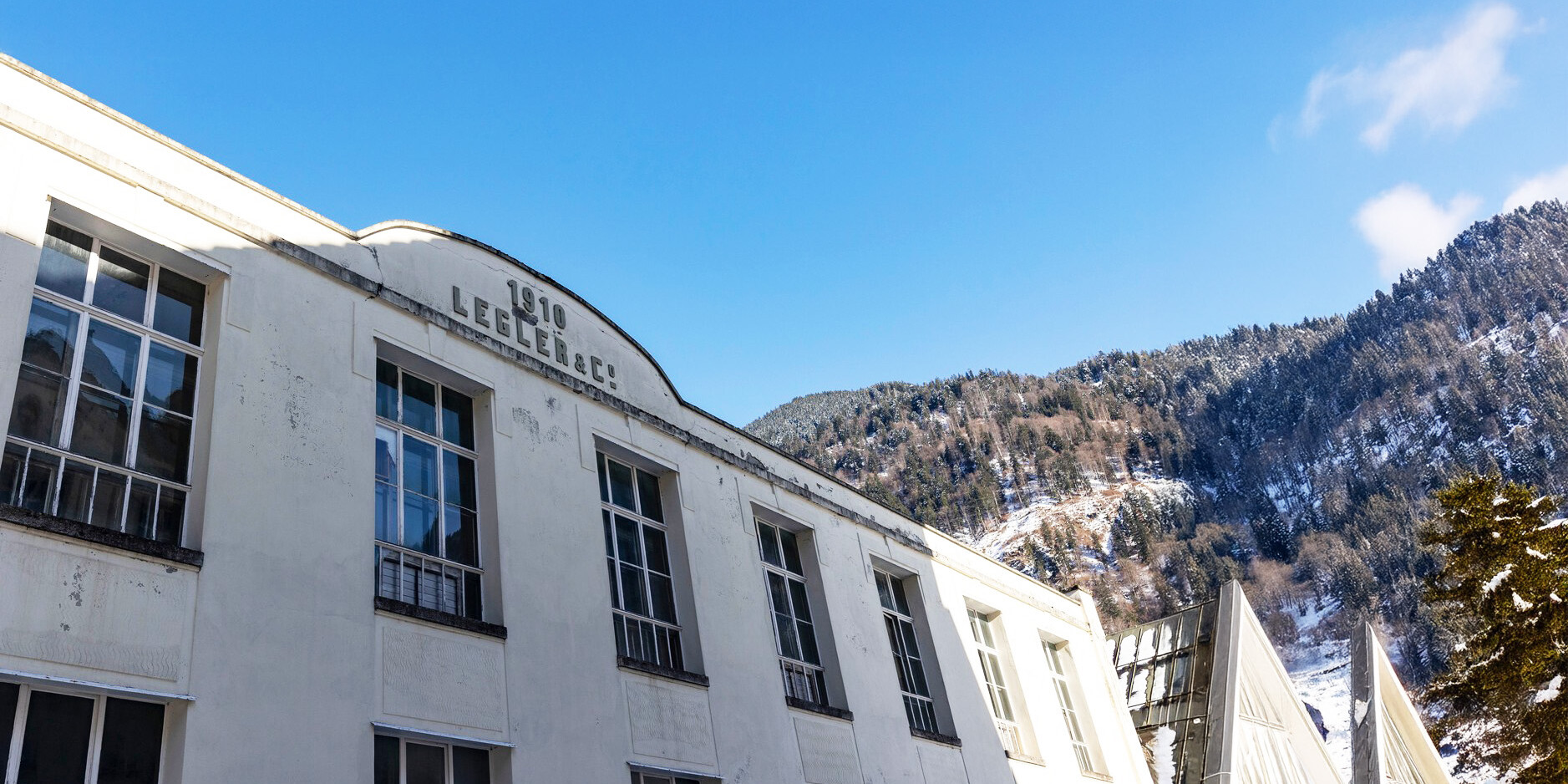
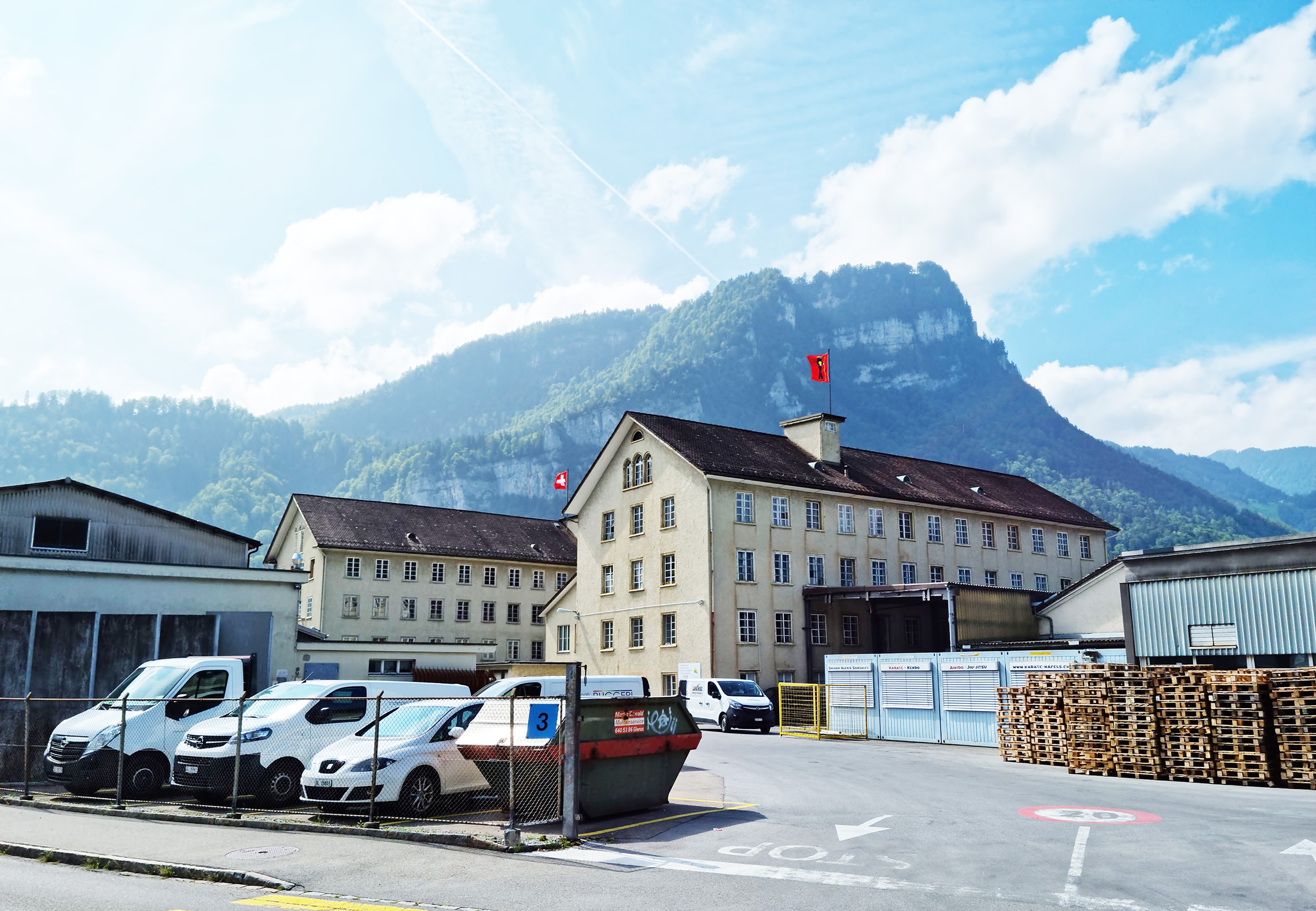
    With the purchase of the former Legler site by Hochdruckkraftwerk Diesbach AG and the simultaneous participation of the municipality of Glarus Süd, a new chapter has begun for the traditional factory site in Glarnerland. The operator of the local hydroelectric power plant has secured the site, including the power plant centre. At the same time, the municipality is acquiring agricultural land from the previous owner and will become the largest shareholder with a 40% stake.

    Energy meets site development
    The acquisition not only serves to preserve the historic power plant, but also opens up new opportunities for long-term site development. “We can offer areas ranging from 50 to several 1,000 square metres,” says Chairman of the Board of Directors Weber-Thedy.

    The municipality of Glarus Süd has secured two seats on the Board of Directors and an important land reserve of almost 30,000 square metres of agricultural land, which is earmarked for replacement measures or ecological compensation areas. The municipality is thus creating space for future developments.

    Long-term perspective with interim utilisation
    The potential of the Legler site is undisputed, but a new use takes time and requires careful planning. The aim is a mixed-use development with residential and office space that fits in with the landscape and the municipality. The first steps towards realisation are not expected before the next ten years.
    Until then, the site will be put to sensible interim use. The large halls will be rented out as storage space. They can be divided up flexibly, even if they are only suitable for certain purposes due to structural restrictions.

    Sustainability as a guiding principle
    The high-pressure power plant is focussing on environmentally friendly energy production and will renovate the plant to the latest standards in 2025. Earlier discussions about the expansion were postponed in favour of a sensitive approach to the landscape, but the roar of the Diesbach Falls is to be preserved.

    A boost for the Glarus region
    The acquisition of the Legler site is more than just a change of ownership. It is an example of forward-looking site development, supported by local energy production, public participation and a long-term perspective. The municipality of Glarus Süd is actively committed to the development of the site and at the same time minimises the risk of a prominent property falling into disrepair.

    The combination of energy infrastructure, property development and public involvement makes the project a beacon for the region and a role model for comparable sites in Switzerland.

  • New building in Sursee for cycling team

    New building in Sursee for cycling team

    According to an article in the “Luzerner Zeitung”, the Tudor Pro Cycling Team, currently based in Schenkon, is about to move to Sursee. The team would like to invest 18 million Swiss francs in a new six-storey headquarters there. The initiator is Sette Immo AG, which runs not only the professional team but also a junior team through its Sette Sports Group. Fabian Cancellara, a former racing cyclist, is not only team manager of the Tudor Pro Cycling Team, but is also active at Sette Immo AG.

    The team’s new headquarters is due to be completed in September 2026 and will provide space for storage, workshops, training and meeting rooms. Offices for the administration and recreation rooms for the drivers will also be built, as well as a showroom for the team. A photovoltaic system will also be installed on the roof.

    The team, which is sponsored by watch manufacturer Tudor from Geneva, is currently taking part in the Tour de France until the end of the month.

  • Digital guest platform strengthens Glarus as a business location

    Digital guest platform strengthens Glarus as a business location

    The GlarnerlandPass combines the registration system, guest card and travel guide in an integrated system and links tourism, culture and trade on a common platform. It is being implemented as part of the realignment of tourism, which began with the merger of all organisations in 2024. Under the new umbrella brand “Glarnerland”, an overall Alpine experience with a strong regional identity is being created just outside Zurich, which will be digitally visible, combinable and bookable.

    Guest centricity and digital proximity
    The application accompanies the guest along the entire customer journey and enables interactive communication in real time. Not only overnight guests are taken into account, but also day guests, second home owners and locals. For guests staying overnight, public transport throughout the canton is included in the pass. A strong signal for sustainable mobility.

    Added value through local networking
    Tourism companies, businesses and cultural institutions are actively involved. A common understanding of digital processes is created in workshops and focus groups, new products are developed and additional sales channels are opened up. This close collaboration strengthens the regional economy and creates real added value in the Glarus region.

    Sustainable management and modern technology
    The platform allows flexible management of visitor flows and provides valuable impetus for sustainable destination development through the data collected. Technologically, the system is based on proven, modular solutions from leading destinations and utilises the connection to discover.swiss.

    Visibility through ESAF 2025
    The Swiss Wrestling and Alpine Festival 2025 offers an ideal opportunity to present the pass to a wide audience. The combination of Alpine authenticity, digital innovation and an integrative location strategy makes the project a showcase for the future of tourism.

  • New growth momentum through strategic partnership

    New growth momentum through strategic partnership

    With the strategic participation of an entrepreneurial investor, the company is setting the course for the next stage of growth. The new partnership combines capital strength with technological and operational expertise. The aim is to consolidate the company’s market presence in its home market and expand internationally, particularly in the key areas of digitalisation, sustainability and artificial intelligence.

    Future-oriented strategy with a clear focus
    The new growth strategy focuses on three structural drivers: the digital transformation of the property sector, the industry’s growing role in climate protection and the increasing demand for sustainable, connected living spaces. At the same time, the proven corporate DNA remains intact, with the operational team and all partners staying on board and continuing to run the business.

    Technological scaling and international expansion
    Internationalisation will begin with the existing presence in Germany and will be expanded through targeted acquisitions. At the same time, the digital service portfolio will be expanded through the development of proprietary products, the automation of customer processes with “Agentic AI” and the strengthening of the team. The strategic partnership creates the necessary room for manoeuvre in terms of technology, personnel and geography.

    New opportunities for the German site
    There are also new opportunities for the team in Germany. As an agile location within the Group, it benefits from the stability of the company and the opportunities offered by a strategic growth partner. The combination of a proven structure and fresh dynamism should pave the way for successful expansion in a rapidly changing market environment.

  • The Landolt site in transition

    The Landolt site in transition

    What significance does the development of the Landolt site have for Glarus as a business location? What specific impetus do you expect for the local economy and the creation of new jobs?
    The site is already well utilised with many different SMEs. When the Landolt company moves out in the medium term, the old stock will be freed up. The Shedhalle, which we have already renovated and equipped the roof with a large PV system, is particularly interesting. We are in the process of attracting new tenants and offer a very attractive location with optimal logistics connections. Attractive new jobs are being created here.

    Temporary uses such as the planned mobility hub are a central element of the concept. What opportunities do you see in these temporary uses to revitalise the site during the development phase?
    This is one of the most important parts of the transformation. We would like to keep all of the existing tenants if possible. We maintain direct contact with them so that they can continue to develop within the site. The buildings with interim uses are let cheaply but not for long, whether as storage, car parks or hubs, but without major investment on our part. There is also room for creativity here.

    How are the canton of Glarus and the location promotion organisation involved in the project? Is there strategic coordination with cantonal development goals?
    We are in regular dialogue with the location promotion agency and are confident that the good location and the size of the space on offer will also attract larger SMEs to the canton of Glarus. Several companies are already interested in setting up here.

    Participatory planning is emphasised. How were local residents and businesses able to get involved and what findings from this process will be incorporated into the next steps?
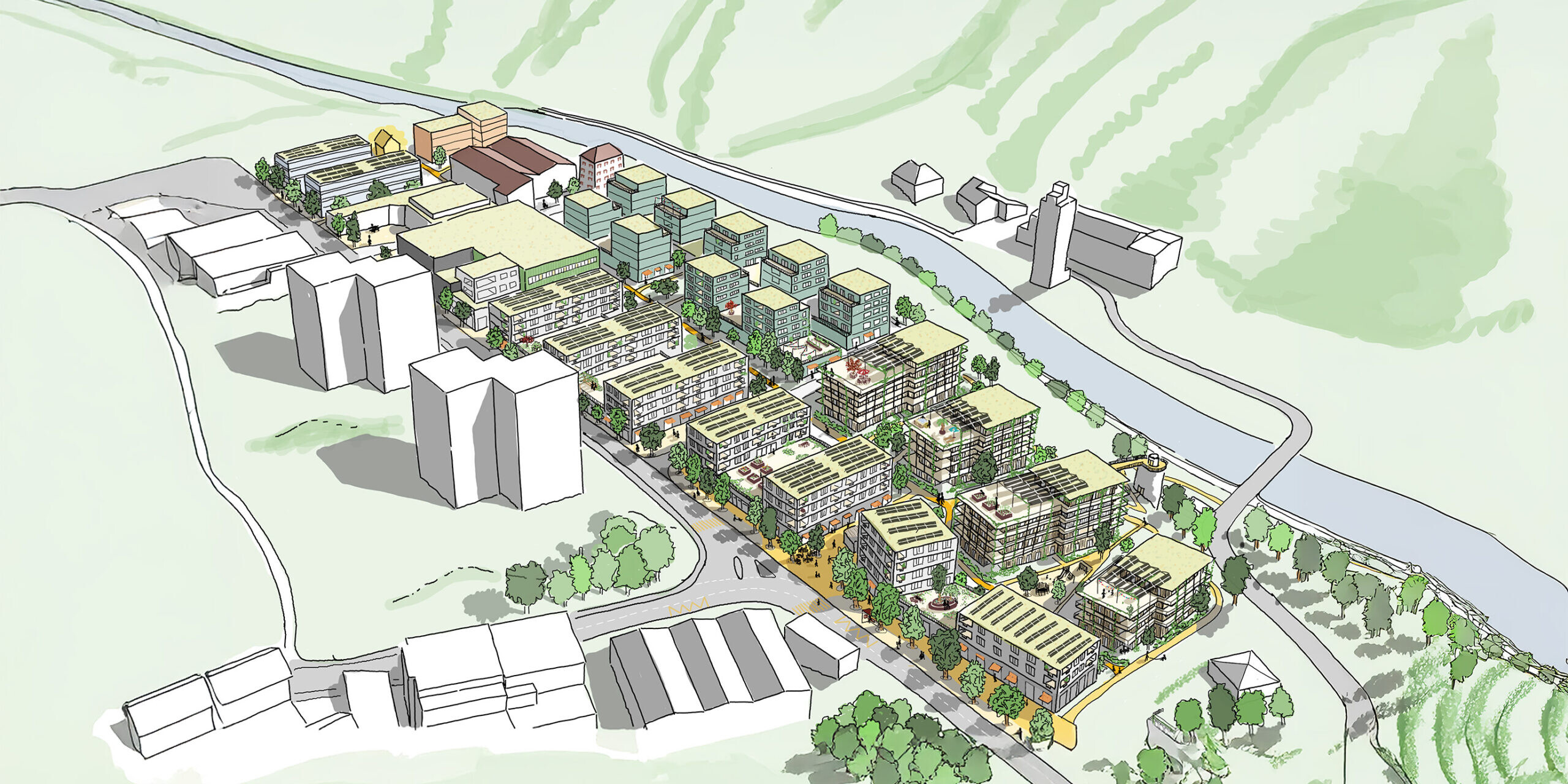
    With well-supported representation from the authorities and a specialist committee from the worlds of business and urban planning, as well as an international team of planners, the urban design, the relationships with the neighbours and the use and building distribution of the site were reworked. Many of the old spinning mill buildings are to be preserved and given a new lease of life.

    The current purely commercial area will be supplemented with various commercial offerings, and a small proportion of housing will also be possible. The very attractive location between the Chli Linthli and Mühlibach streams also invites walkers and residents to experience this beautiful and idyllic place.

    The planners are currently working with the design commission and the heritage conservation organisation to draw up the basic project. By the summer of 2025, it will be possible to show the future shape of the site, the expanded commercial offer and the variety of flats. We are very pleased with the excellent cooperation and are convinced that the careful handling of the existing buildings and the new buildings will create great added value for the users of the site, as well as for local residents.

    The development will take place in four stages. How will you ensure that the site remains lively, usable and attractive in the intermediate phases and does not become a long-term construction site?
    As already mentioned, part of the existing industrial buildings will be used for new purposes. The very old existing buildings, which will be vacant in the medium term after the Landolt company moves out, are to be rented out again quickly after conversion or modernisation. The various talent zones were defined for this purpose, and these form the stages. The development will be successively finalised with the completion of the respective zones.

    The innovation campus at Chli Linthli is intended to develop independently and in line with demand. Which target groups would you like to address here and which sectors could settle here?
    This site is already fully occupied with a wide range of businesses. The needs of the future will be accommodated here. The idea is to create a diverse range of businesses that require good networking within this area and function like a campus. However, we are also open to other ideas. Only time will tell what these are.

    How do you create long-term identity and loyalty on the site? What role do social, cultural or ecological offerings play for future users?
    The site already has a rich history. You can see this everywhere here. With a new use and the right approach, the culture will be preserved but also redefined. With our goal of sustainability, this process will also conserve resources. The use of natural building materials and simple architecture will create affordable working and living space that is healthy and worth living in. With its watercourses, green spaces, newly created neighbourhood squares, etc., the site offers a lot of spatial quality, but also a very attractive place to work, live and stay.

  • Government council plans infrastructure boost in Glattal

    Government council plans infrastructure boost in Glattal

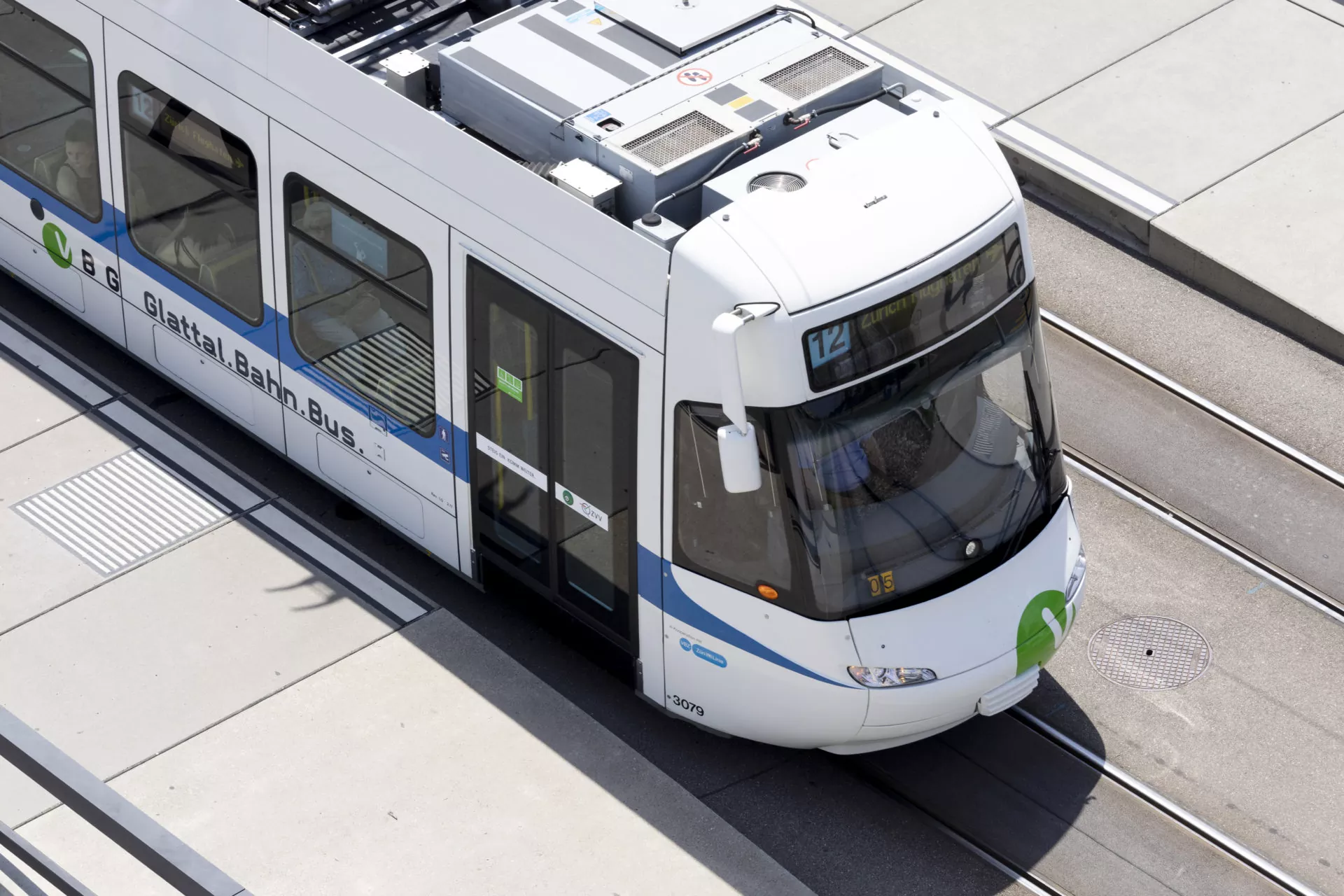
    The Glattal is one of the most dynamic development regions in the canton of Zurich, strategically located between Zurich, Winterthur and the international airport. The cantonal government is now proposing a total package totalling CHF 543 million to the cantonal council in order to strengthen the infrastructure in a targeted manner. Plans include the extension of the Glattalbahn railway to the Steinacker area, a main cycle link to Bassersdorf and flood protection measures on the Altbach.

    Mobility and environmental boost for the airport region
    The combination of railway expansion, cycling infrastructure and water protection addresses several key objectives of the cantonal development plan. The extended Glattalbahn railway will provide better connections to the industrial area of Kloten, while the main cycle link will create an environmentally friendly alternative for commuters. At the same time, the planned flood defences will protect the population and critical infrastructure such as the airport from natural hazards.

    Efficient implementation through synergies
    The close proximity of the three sub-projects requires joint planning and therefore offers ideal conditions for efficient implementation. Construction time, costs and disruption can be reduced by bundling the construction phases. Construction is scheduled to start in mid-2027 and will take around five years.

    Cost sharing by the federal government and municipalities
    Although the project volume totals CHF 543 million, the canton is only expected to contribute around CHF 290 million itself. The federal government is contributing up to 40 % to the railway and cycle path, and between 35 and 45 % to flood protection. Value-added contributions from the city of Kloten and private investors are also planned.

    Clear decision despite municipal rejection
    Although two municipal proposals for the development of the Steinacker area were rejected by the people of Kloten in 2024, the Glattalbahn itself was not part of this vote. Following a comprehensive review, the government council nevertheless considers the existing project to be the most appropriate solution, both economically and in terms of transport and spatial planning.

  • From a peripheral area to an urban neighbourhood with a vision

    From a peripheral area to an urban neighbourhood with a vision

    Buchholz stands for a new urban beginning. On an area of around 36,300 m², an independent urban quarter is being created that combines living, working, exercise and socialising. The previously heterogeneous structure is giving way to a clearly organised mix of uses that combines spatial quality with ecological responsibility. The centrepiece of the development is the “green centre”. A centre with a school, sports facilities and open space, framed by high-rise residential and commercial buildings.

    From industrial site to lively neighbourhood
    The development is the result of a successful study commissioned by the Zurich architecture and planning office helsinkizurich. This formed the basis for a finely balanced indicative project with a development strategy that provides for a staged, in-depth planning process. Realisation will take place in three phases – tailored to the different interests of the owners. Particular attention will be paid to the architectural heritage: elements such as the listed powder tower will be carefully incorporated and respectfully integrated into the urban context.

    Neighbourhood life at the bottom, quality of life at the top
    Commercial uses and communal areas in the plinth zones along Buchholzstrasse characterise the public face of the neighbourhood. Above, light-flooded flats open up wide views of the landscape. Meeting spaces, courtyards and access axes promote social interaction. The graduated public realm allows both retreat and participation, a principle that does justice to urban life.

    Blue-green infrastructure as the backbone
    In the Buchholz neighbourhood, sustainability is not a promise, but a reality. Well thought-out water management with rainwater retention and evaporation areas relieves the burden on the infrastructure and improves the microclimate. Green roofs, permeable paving and climate-active open spaces create quality of life, are ecologically effective and have a convincing design.

    Strong identity, clear address
    The new promenade along Buchholzstrasse not only creates a functional access route, but also an identity-forming address for the new neighbourhood. The district thus positions itself between the scenic Linth area and the urban centre – open, permeable, forward-looking.

    Urban development with impact
    Buchholz is an example of urban development that thinks long-term and takes a differentiated approach. The project creates new living space and a modern form of urban quality on the outskirts of Glarus – networked, sustainable and with a view to the big picture.

  • BRUGG Pipes opens production in the USA

    BRUGG Pipes opens production in the USA

    BRUGG Pipes is about to deliver the first pipe rings for its CALPEX PUR-KING flexible pipe system, announced the Kleindöttingen-based company, which is part of BRUGG Group AG in Brugg, in a press release. The pipe rings were manufactured in the new production hall of BRUGG Pipes and Rovanco Piping Systems in Joliet in the US state of Illinois. In April last year, BRUGG Pipes and Rovanco agreed to set up a joint venture in Joliet to start production in the USA.

    The partner companies have invested around 20 million dollars in the new plant. Under the management of Pirim Dahinden from Switzerland, between 3,000 and 5,000 feet of the CALPEX PUR-KING pipe system will be produced there each year. BRUGG Pipes specialises in the production of pipe systems for liquids, gases and heat.

    “With the new production facility in the USA, we are increasing planning security for our customers, reducing delivery times and transport costs and are also not affected by potential US tariffs,” said Martin Rigaud, CEO of BRUGG Pipes, in the press release. “This gives us a decisive competitive advantage in the current market situation.” According to BRUGG Pipes, around 80 per cent of the raw materials processed in the new plant come from the USA.

  • Where electricity will come from in 2050

    Where electricity will come from in 2050

    For Switzerland to become CO₂-neutral by 2050, transport, heat supply and industry must be largely electrified. Today’s electricity demand of 56 terawatt hours will increase to around 75 TWh by 2050. At the same time, 23 TWh will come from nuclear energy. The necessary reorganisation of the energy system is far-reaching in technical, economic and social terms.

    Massive expansion of renewable energy
    According to the EDGE report, around 60 % of electricity must be covered by new renewable energies by 2050, specifically 45 TWh per year. This would be possible with 28 TWh from photovoltaics, 13 TWh from wind power and 4 TWh from biomass. To achieve this, photovoltaic capacity would have to be quadrupled to 26.8 GW. Wind power would need to be expanded 80-fold to 8.4 GW, especially for winter operation. According to the researchers, this is hardly realisable without strong subsidies.

    Limiting electricity imports makes the system more expensive
    The new Electricity Act limits net electricity imports in winter to 5 TWh. In order to meet this target, an additional 80 % more wind power, 11 % more gas capacity and 10 % more solar capacity would be required. This would increase electricity generation costs by 20 % and electricity prices could more than double.

    Europe remains decisive
    If European electricity trading were to be severely restricted, e.g. through a 70 % reduction in cross-border grid capacities, Switzerland would have to expand wind power by a further 20 %. Supply costs would rise by an additional 8 %. A survey by the EDGE consortium shows the conflicting priorities. 60 % of the population would like to cooperate with Europe, while at the same time 70 % want energy independence and favour domestic energy sources.

    Investments flow abroad
    Another study shows that more than half of the annual investments made by Swiss energy suppliers in large-scale renewable energy projects are channelled mainly to Germany, France and Italy. Only 1 % of these funds are invested in Switzerland. There is a lack of suitable projects or framework conditions in Switzerland. This means that Switzerland is often financing the energy transition indirectly, but not at home.

    Net zero has its price
    The cost of living could rise between 2020 and 2050, for example due to CO₂ taxes, emissions trading or higher production costs. The annual consumption loss of a household could be 0.63-0.75 %, depending on the global climate protection pathway. Without offsetting options abroad, the costs could rise to up to 1%. In the long term, however, this would be more favourable than the consequences of unchecked climate change.

    The energy transition is feasible and challenging
    A CO₂-neutral electricity supply by 2050 is technically possible if photovoltaics and wind power are massively expanded, imports are used intelligently and investments are channelled in a targeted manner. Access to the European electricity market remains crucial. At the same time, we need broad social support and an understanding that inaction will be more expensive than a bold transformation.

  • Densification changes cities

    Densification changes cities

    The study “Construction activity and displacement”, carried out by ETH Zurich on behalf of the Federal Office for Housing, shows that over the last two decades, settlement development in Switzerland has clearly been inward-looking. New housing is being built in urban areas, primarily through replacement construction and the conversion of industrial and commercial zones, rather than on greenfield sites. In cities such as Basel, a quarter of new flats were built on former industrial sites.

    More flats despite fewer new builds
    Although the number of newly built residential buildings is falling slightly, the net number of flats continues to increase. This is due to the efficiency of densification. In Basel, Geneva and Lausanne, up to twice as many new units are being built per demolished flat than in Bern or Zurich. Densification is thus becoming the central lever for creating living space in densely populated areas.

    Who is being displaced?
    The downside of densification can be seen in the social composition of the neighbourhoods affected. In Zurich in particular, long-term tenants often lose their homes due to demolition or total refurbishment. Those who have to move out often have a significantly lower income, up to 40 per cent less than the average. In contrast, households with above-average incomes move into new builds.

    Migration and income as a risk factor
    The study also reveals structural disadvantages. Asylum seekers, refugees and people of African descent are disproportionately affected by displacement. This means that structural densification particularly affects those who are most dependent on affordable housing and who often can no longer find it in the same municipality. Nevertheless, a considerable proportion of those affected, up to 64 per cent, manage to stay within their municipality.

    Cities in transition – socially balanced?
    From a spatial planning perspective, densification is sensible and necessary. However, it not only changes the cityscape, but also the social structure of neighbourhoods. The challenge in the coming years will be to shape change in such a way that it does not lead to social division, but to mixed, resilient cities with living space for everyone.

  • Trèfle-Blanc the 400 million euro project gets underway

    Trèfle-Blanc the 400 million euro project gets underway

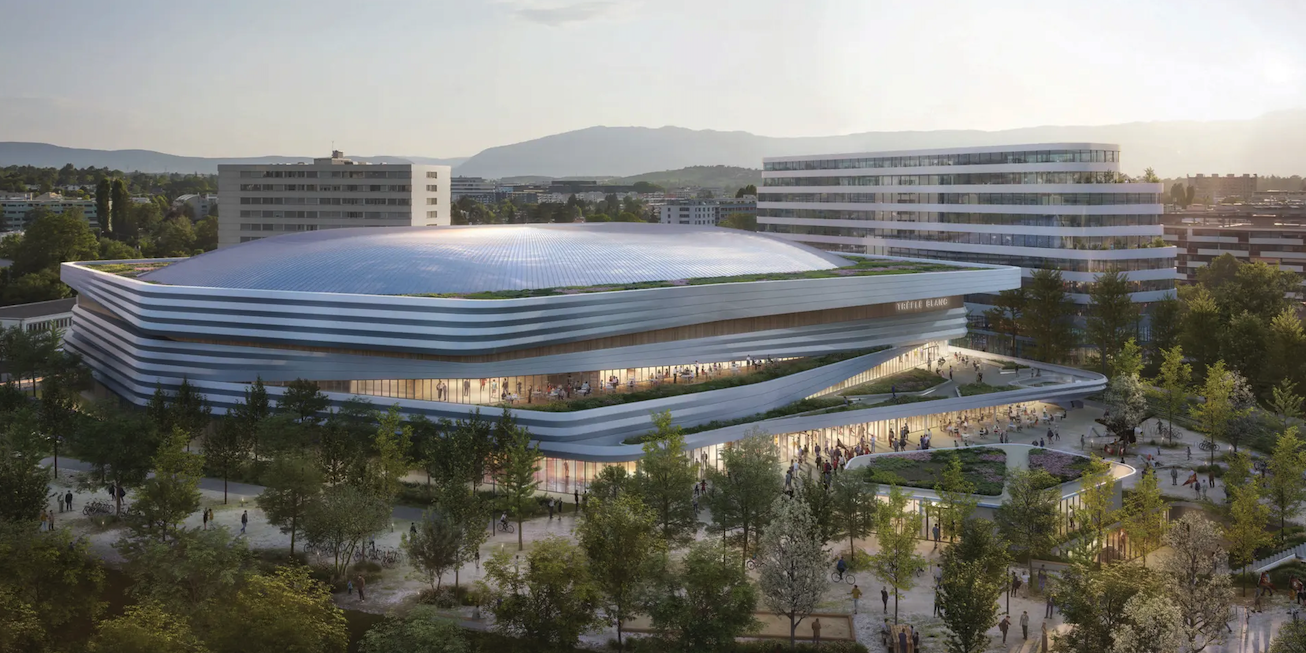
    The question of the actual costs of the Trèfle Blanc project caused speculation in the run-up to the project. Estimates ranged from 275 to 400 million francs. Now the Geneva government is providing clarity with the submission of a comprehensive investment bill. The initial discrepancy is not the result of a change of plan or “salami-slicing”, but of the detailed breakdown of the various funding sources and project phases.

    Initially, a credit of CHF 275.5 million will be submitted to the Grand Council for approval. This sum primarily covers the construction of two ice rinks (232 million), supplemented by costs for outdoor facilities (7.9 million), the tram connection (over 9 million), contingencies (9.3 million) and inflation (8.3 million). If this loan is approved by parliament, it could still be subject to a referendum if necessary.

    However, this sum does not represent the total costs for the canton, as CHF 17 million has already been spent on preliminary studies. This means that the total costs borne by the state to date already amount to CHF 293 million.

    Why it is 400 million
    The confusion surrounding the CHF 400 million is cleared up when the park-and-ride car park is included. This car park, whose construction will begin before the rest of the infrastructure, will provide 928 parking spaces for cars and 244 for motorbikes. It will cost an estimated CHF 99 million, a sum that is not directly requested by parliament. It will be financed by the Car Park Foundation, an autonomous public-law institution, which will borrow 75 million francs with the approval of the state, while the rest will come from its own funds. The repayment of this loan is secured in the long term by the income from the P R.

    The financing architecture
    It is essential to add this CHF 99 million to the total cost of the Trèfle Blanc project. Regardless of the source of financing used, this is public money, as the car park foundation is part of the public sector, similar to the Geneva utilities or the Geneva University Hospitals. This can also be seen in the consolidated financial statements of the Canton of Geneva. As the Presidential Department of the State Council confirms, everything is interconnected. A successful referendum against the 275 million loan would bring the entire project, including the P R, to a halt.

    The transparency in the cost breakdown of the Trèfle-Blanc project now creates the basis for an informed debate and paves the way for the realisation of this important infrastructure project, which will have a significant impact on Geneva.

  • Zurich military barracks become an education centre

    Zurich military barracks become an education centre

    After the cantonal police move out in 2022, the next phase in the history of the listed building will now begin. The 120-metre-long military barracks will become the new home of the education centre for adults. By 2029, a place for lifelong learning will be created in the centre of Zurich, supported by the cantonal baccalaureate school for adults and the EB Zurich vocational school. The aim is to open up new educational paths and career prospects for adults, from catching up on school-leaving qualifications to developing digital skills.

    Architecture with respect and a future
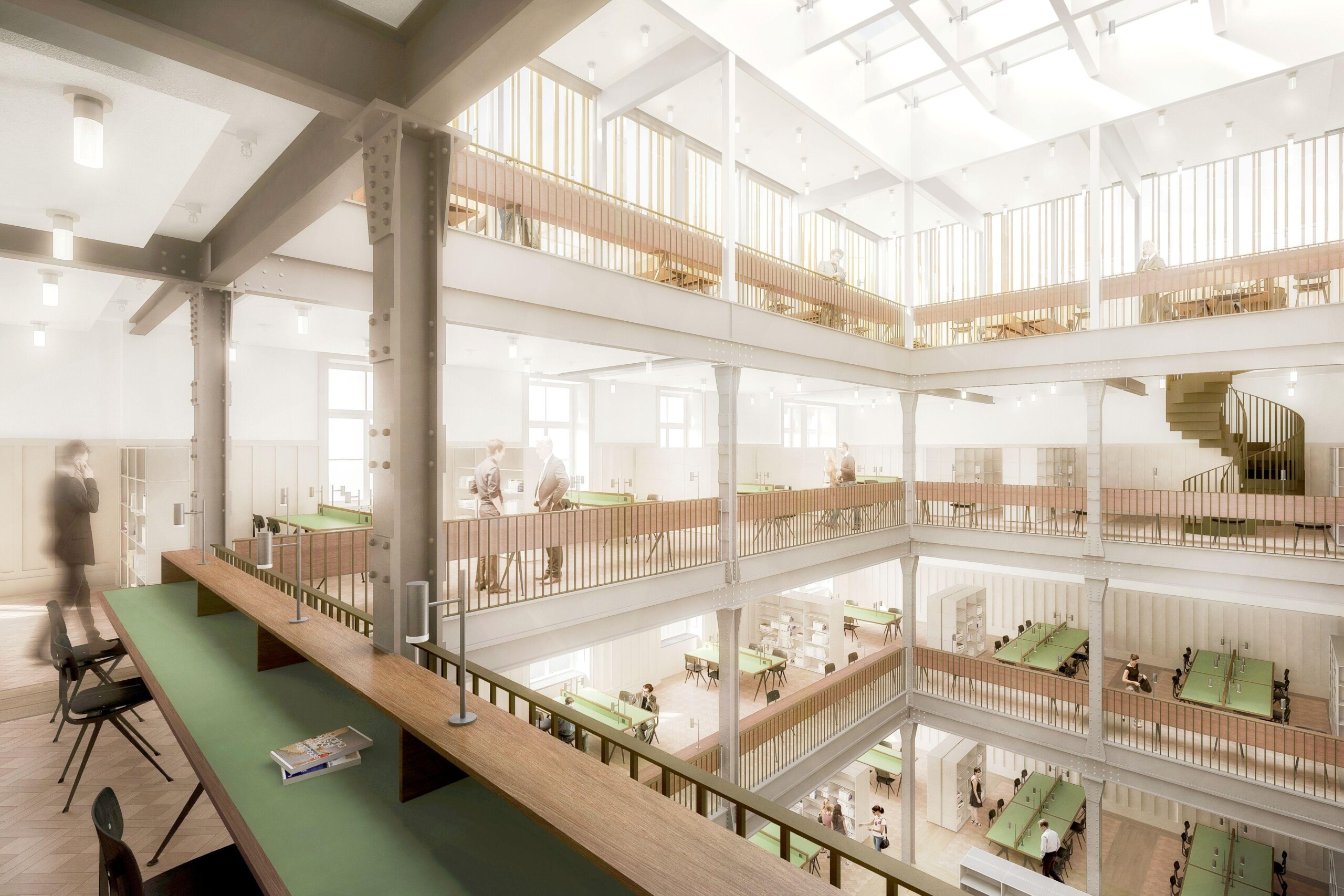
    The conversion project is based on the winning project from the 2019 architectural competition. The design by the “spillmann echsle / Takt” consortium combines respect for the historical building fabric with future-oriented educational architecture. The central atrium, a light-flooded inner courtyard with a glass roof, will be the centrepiece of the new learning space. At the same time, a public restaurant is being created on the ground floor in the former barracks canteens, including additional rooms for public-orientated uses.

    Sustainable renovation of a national cultural asset
    The technical, energy and structural renovation of the building is comprehensive. The badly damaged natural stone façade made of Bernese sandstone is being restored, windows replaced, modern building technology installed and a photovoltaic system installed on the main roof. In future, the building will be heated with district heating. The former barracks thus fulfils the highest standards in terms of energy efficiency and monument preservation.

    Investment in education and society
    With total costs of around CHF 180 million, the project is a significant contribution to educational and urban development. 122 million is earmarked for the renovation, while a further 58 million will go towards converting the building into an educational centre. The cantonal government and the cantonal council have already approved the funds. The school is due to open in spring 2029. A strong boost for Zurich as a centre of education and a symbol of the transformation of public spaces.

  • Think circularly, build together

    Think circularly, build together

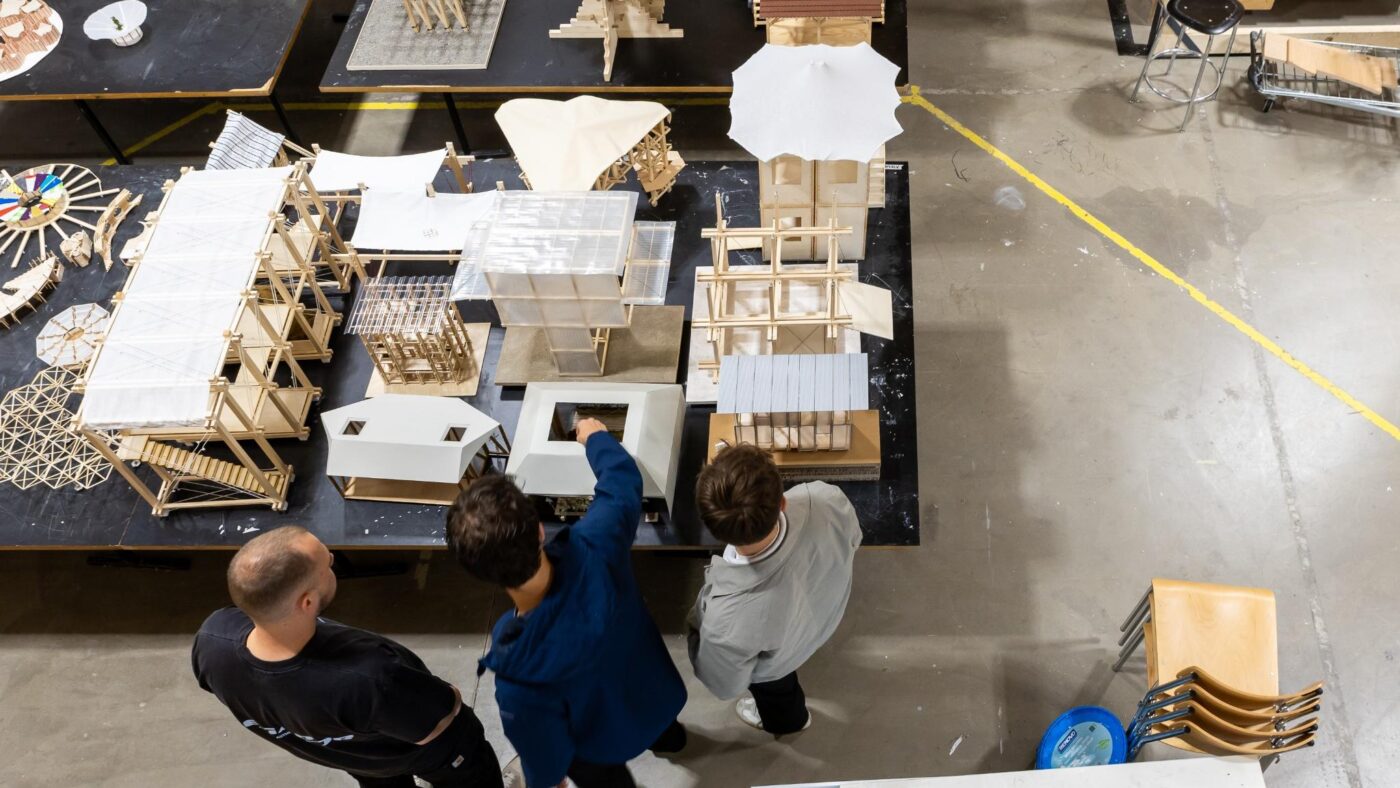
    The Circular Time Lab at Lucerne University of Applied Sciences and Arts brings together theory and practice, design and craftsmanship, teaching and urban development. It is an interdisciplinary project of the Competence Centre Typology & Planning in Architecture and the architecture degree programme at HSLU. Together with students from timber construction companies in the region, the students develop structures that are not only architecturally appealing but also fully reusable.

    The focus is on learning and designing together. The students gain an insight into manual processes and technical possibilities, while the trainees participate in design processes. The result is a deep understanding of resource-conserving construction that closes cycles and preserves material value.

    Experience architecture – in the centre of Lucerne
    Since June 2025, the results of this collaboration can be experienced at two central locations in the canton of Lucerne, on the Inseli near the railway station and at the Viscosi site in Emmenbrücke. There, airy wooden structures with colourful fabrics invite you to linger, observe and pause. They offer protection from the sun and rain and at the same time inspire reflection.

    The structures are more than just aesthetic interventions in the urban space. They are built statements in favour of a building culture that takes responsibility. Their open design invites people to engage in dialogue and makes sustainability visible and tangible. The “Lucerne Summer” thus becomes a field of experimentation for an architecture that aims for impact rather than permanence.

    Circularity instead of deconstruction
    Reuse is at the centre of the Circular Time Lab. The wooden pavilions are not designed as one-off buildings, but as temporary structures with a future. Existing timber components were used for the initial construction. All connections are detachable and all dimensions are retained. The pavilion will be dismantled in autumn 2025 and a new pavilion with a new function will be built from the same elements in 2026.

    This iterative approach not only conserves resources, but also trains planning thinking. After all, circular construction requires creativity and precision. How does an old beam fit into a new design? How do you create beauty without waste? These questions accompany the participants of the Circular Time Lab throughout the entire process and strengthen their skills for the sustainable construction of tomorrow.

    Part of an international network
    The Lucerne project is embedded in the European research programme BAUHALPS, Building Circular in the Alps. in this programme, 13 partner institutions from six countries are jointly developing new strategies for circular construction in the Alpine region. The Circular Time Lab serves as a living real-world laboratory. A place for experimentation, exchange and applied research.

    The cooperation not only opens up new perspectives for students and trainees, but also international networks. In this way, a local timber construction project becomes a building block for transnational change, an impulse that radiates far beyond Lucerne.

    The future begins on a small scale
    The timber structures of the Lucerne Summer may seem small at first glance. But they harbour big ideas: collaboration, circular economy, education and responsibility. The Circular Time Lab shows how sustainable construction can be anchored in education and made visible in public spaces. Because if you want to reuse materials, you first have to rethink ideas.

  • Fribourg.swiss brand strengthens international position

    Fribourg.swiss brand strengthens international position

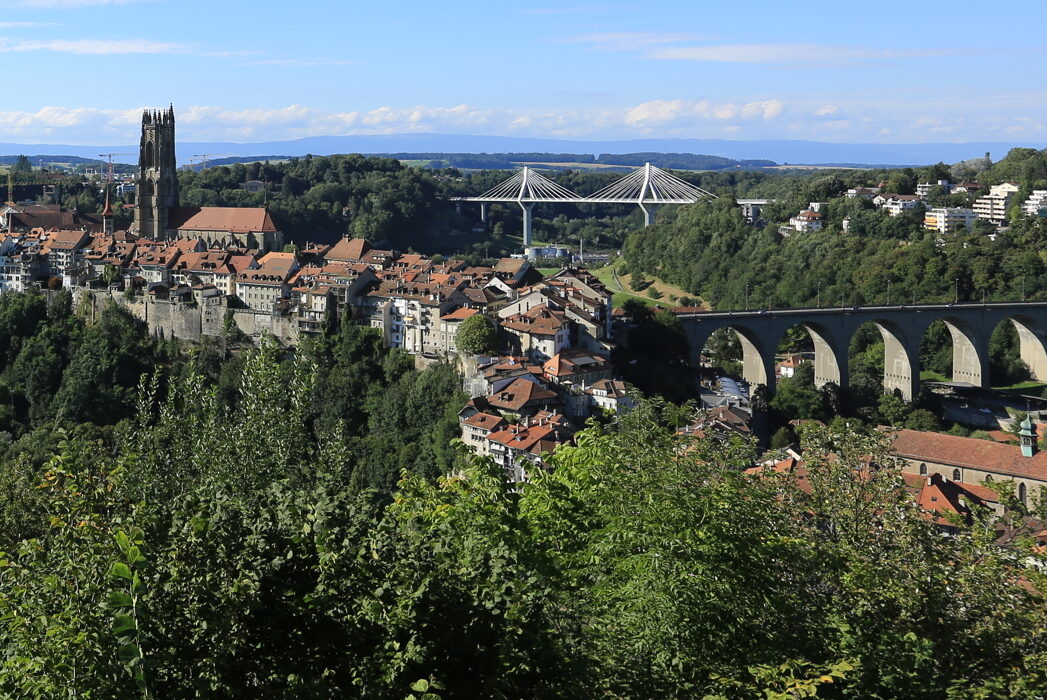
    The canton of Fribourg is sharpening its profile in global competition. With fribourg.swiss, the economic development agency is focusing on a clearer and internationally recognisable brand. The new platform is aimed specifically at companies, investors and innovation players in Switzerland and abroad. Thanks to the official domain extension “.swiss”, the affiliation to Swiss quality standards is emphasised in a compact, accessible and strong brand.

    Making excellence visible
    “fribourg.swiss is our strategic showcase to the outside world,” says WIF Director Jerry Krattiger. The focus is on companies, educational and research institutions as well as centres of excellence that shape the economy of the canton of Fribourg. Topics such as the bioeconomy, Industry 4.0, life sciences and technology transfer demonstrate the diversity and future viability of the location.

    Multi-channel communication for maximum reach
    The new brand is already active on all external channels, from the website to newsletters and international LinkedIn activities. The content is distributed worldwide via embassies, consulates and specialist networks. At the same time, the new brand identity also strengthens the internal perception of the economic strengths and creates a shared awareness within the canton.

    Visibility and identification
    With fribourg.swiss, the canton of Fribourg is opening a new chapter in location marketing. One that focuses on digital clarity, international reach and regional anchoring. The canton’s economic dynamism is thus becoming more visible and more widely recognised, both within and outside Switzerland.

  • Aargau shapes the future with a development model

    Aargau shapes the future with a development model

    The canton of Aargau is a dynamic region with a high quality of life and economic attractiveness. In order to secure this strength in the long term, the cantonal government has adopted the 2025-2034 development model (ELB). This formulates clear goals and lines of action that respond to the key challenges of our time: population growth, climate change, digitalisation and a shortage of skilled workers.

    The focus is on actively shaping the further development of the canton in close cooperation with municipalities, companies, research institutions and the population. The guiding principle “Together for Aargau” summarises this collaborative approach. The ambitions in the areas of economy, society, environment and administration can only be successfully realised by working together.

    Three strategic priorities for a strong region
    Think holistically and intensify economic development
    Aargau wants to continue to position itself as an attractive location for companies, research and innovation. To this end, targeted framework conditions are being created to maintain and expand value creation and employment in the canton.

    Shaping space, securing foundations
    In the area of conflict between living, working, mobility and nature, intelligent spatial planning is essential. The aim is to proactively manage conflicts of use and protect natural resources.

    Strengthening efficient municipal structures
    The public sector should act in an efficient, cooperative and citizen-centred manner. Municipal mergers, inter-municipal cooperation and digitally supported services form the basis for this.

    These priorities are underpinned by 30 specific areas of focus that are integrated into the task and finance plan and are reviewed annually.

    Sustainability requires room for manoeuvre
    The financial framework for implementing the strategy is secure. Even if structural deficits are expected from 2026, the well-filled equalisation reserve will allow the continuation of all planned measures until 2034. Tax relief will be reviewed depending on the situation and with a view to the overall financial situation. This ensures that the canton’s room for manoeuvre is also maintained in the long term.

    From vision to implementation
    The EFA will be implemented in stages and is closely linked to medium-term planning. Numerous projects are already underway as part of the existing development agenda, from energy-efficient construction and innovation promotion to integrative housing models. New projects will be initiated, prioritised and provided with suitable resources in future.

    Progress will be reported transparently on an annual basis. This is an important step towards a fact-based and trustworthy location policy. The cantonal government is thus committed to agile, dialogue-oriented management of cantonal development in close coordination with all relevant stakeholders.

    The 2025-2034 development model is much more than a political planning instrument. It is a powerful promise to a population that prioritises quality of life. To companies that are looking for reliability and innovation and to municipalities that want to help shape their future with confidence. Aargau is thus positioning itself as a modern canton with a clear compass. Economically strong, ecologically responsible and socially anchored.

  • SVIT Switzerland with new management

    SVIT Switzerland with new management

    With the handover of the chairmanship from Andreas Ingold to Michel Molinari, SVIT Switzerland has completed a significant generational change. Molinari, previously Vice President and CEO of BLKB Fund Management AG, is thus assuming responsibility for an association with over 2,600 members. At the same time, Cécile Berger-Meyer and David Zumsteg were elected to the presidency. Their predecessors, Andreas Ingold and Jean-Jacques Morard, were made honorary members for their many years of commitment.

    An association on the move
    2024 was an intensive year, with targeted political positioning, strategic projects such as the DACH cooperation and the tenancy law commentary. The successful new edition of “SVITPedia” and a high demand for training have made SVIT Switzerland a dynamic and adaptable organisation. The “eduQua” certification was renewed and training courses and examinations were successfully organised in all parts of the country.

    Strategic clarity and strong operational
    The positive development of the association over the past eight years is due to clear strategic decisions and the professionalisation of structures. The separation of strategy and operations, the introduction of a CEO model and the reorganisation of the Forum, Campus and Summit platforms have created a stable foundation. A strategic action plan for positioning has been developed and is currently being implemented. The aim is to further increase the visibility and effectiveness of the association.

    Political relevance strengthened
    The 2025 Delegates’ Meeting once again demonstrated the growing political relevance of SVIT Switzerland. The delegates approved a motion to no longer conclude sponsorship agreements with Swiss Marketplace Group AG in future. Current contracts will also be cancelled until they expire. The association is thus sending out a signal in favour of independence and clear representation of the industry’s interests.

    Visible, present, consistent
    With its new leadership and strengthened position, SVIT Switzerland aims to further expand its role as a leading professional and industry association. The three strategic pillars of training, politics and networking form the stable foundation for a future-orientated commitment. The Assembly of Delegates as part of the Swiss Real Estate Forum also provided the right stage for this in 2025, with inspiring impulses from personalities from politics, sport and business.

  • Erlenpark Näfels creates new living space

    Erlenpark Näfels creates new living space

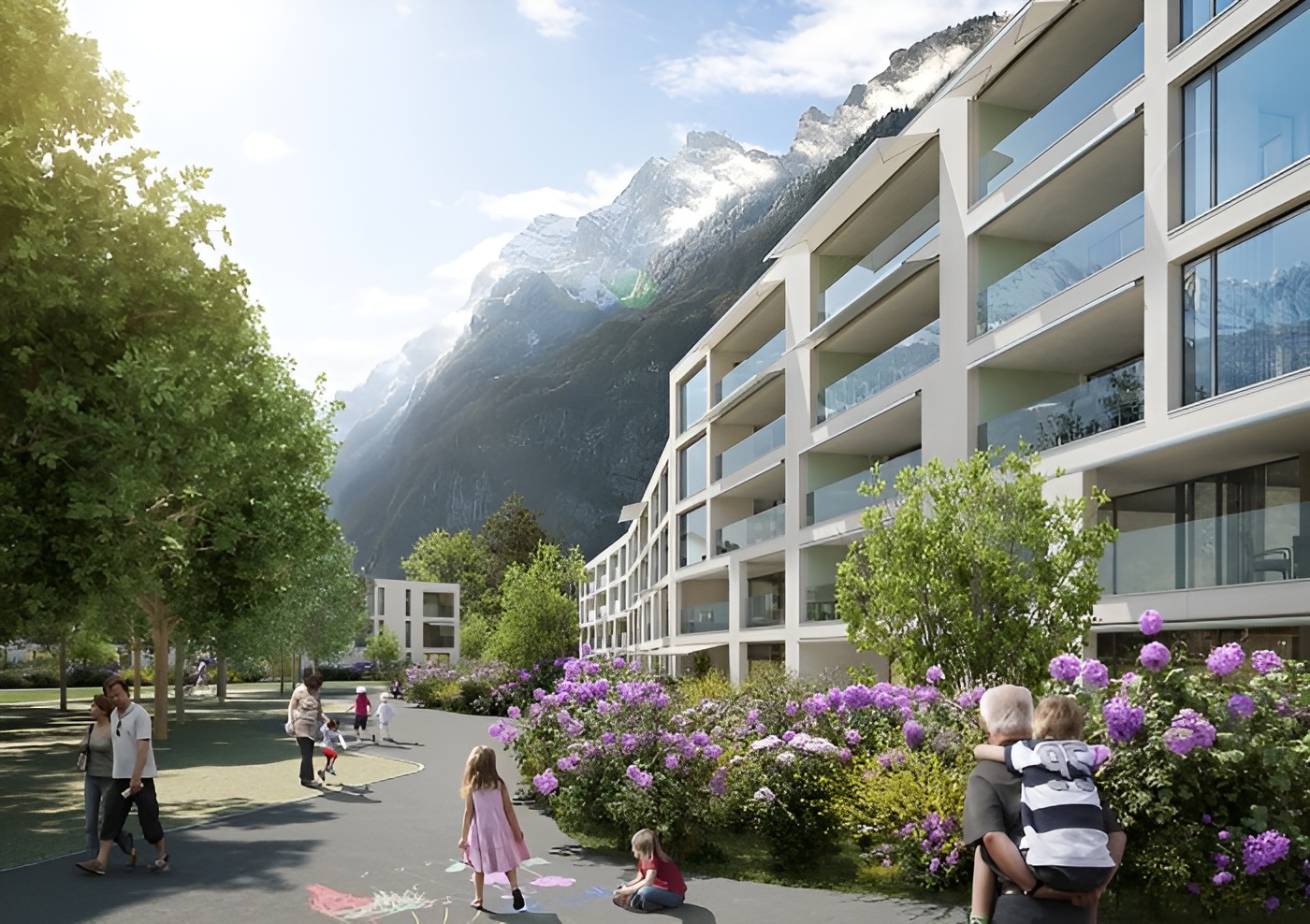
    On the 16,000 m² “Feld” site in Näfels, the municipality of Glarus Nord is realising a pioneering residential development together with FT3 Architekten AG. A total of ten apartment blocks with around 98 flats are being built in three rows of buildings. The flats are between 1½ and 5½ rooms in size and are aimed at people at all stages of life – from singles and families to senior citizens. The diverse range of apartments is intended to promote a social mix and revitalise the neighbourhood.

    Quiet inner courtyard as the centrepiece of the development
    The special geometry of the plot results in a diamond-shaped arrangement of the buildings, which enclose a green inner courtyard measuring around 6,800 m². It acts as the centre of the car-free development and offers space for people to meet and relax – protected from the noise of the surrounding traffic routes. The staggered residential buildings also provide a rhythmic structure and create architectural quality as well as optimal sunlight for the flats.

    Car-free and central access
    A central feature of the project is its consistently traffic-free design. Access and all parking facilities are bundled at a central point, keeping the entire residential area free of motorised traffic. This increases safety, creates attractive, liveable open spaces and meets the current requirements for residential and urban development.

    Signal for site development and building culture
    Municipal president Fritz Staub sees Erlenpark as a strong signal for municipal development. Shortly after the overall revision of the NUP II land use planning came into force, the project is an example of how high-quality, space-efficient residential construction projects can be realised in the canton of Glarus. The ground-breaking ceremony took place in April 2025 and the first construction phase will be completed by summer 2027, followed by the second and third phases by autumn 2028.

    Modern construction with high standards
    The planning and realisation by FT3 Architekten AG follows a clear architectural approach. Towards the street, the buildings appear closed and compact, while they open up towards the inner courtyard with generous balconies. The staggering of the storeys supports the natural lighting and gives the buildings a clear structure. Erlenpark is thus a successful example of modern, high-quality construction in the Glarus region. A project with a signal effect for site development in rural centres.

  • Rethinking linen

    Rethinking linen

    The Biäsche work area combines location qualities that are rare in this form. The motorway junction, a goods station and natural recreational areas are right on the doorstep. Between municipal boundaries, transport axes and the natural environment lies an area that is to be economically considered, intelligently planned and sustainably utilised. The plots are in public, private and cantonal ownership. A constellation that requires integrative development.

    From area to function
    There is currently a lack of maturity in terms of planning and building law. Without development and development planning, the potential remains unutilised. For this reason, a test planning procedure examined various utilisation scenarios and development strategies. The aim was to create a clearly positioned, marketable economic area that is ready for low-emission, high value-added businesses. Staging this development is key. The site can only be developed sustainably in the long term with flexible, compatible concepts.

    One location, many interests
    The municipality of Glarus Nord holds 3.8 hectares of undeveloped employment zone land in the Unterflechsen sub-area. The canton of Glarus owns a further 2.7 ha in the neighbouring Mittelflechsen area. There are specific interests for this area. A salmon farm and a new penal centre are under discussion. The area is supplemented by private land and existing uses. This diversity makes spatial coordination a key planning task.

    Infrastructure as a driver of development
    Biäsche is ideally positioned in terms of transport links. The area is served by national transport routes operated by SBB and FEDRO. However, future-proof development requires that motorised traffic, public transport, pedestrian and bicycle traffic as well as supply and disposal infrastructures are coordinated and planned with foresight. This is the only way to create a location that is economically attractive and ecologically responsible.

    Indicative project as the key to progress
    After the test planning for the Biäsche site development was completed in June 2023, the concepts of Ernst Niklaus Fausch Partner AG and Studio Vulkan Landschaftsarchitektur AG will be further developed into an indicative project by August 2025 as part of a synthesis phase. As a synthesis, the indicative project summarises the parameters of the site development that the signatories consider to be correct and shows the main features of how the site should develop in the short, medium and long term. This serves as the basis for the subsequent development plan and perimeter procedure.

  • Switzerland maintains its leading global position in the deep tech sector

    Switzerland maintains its leading global position in the deep tech sector

    The 50-page report, published by Deep Tech Nation Switzerland in collaboration with Dealroom.co, Startupticker and the VC firms Founderful and Kickfund, is the most comprehensive analysis of the Swiss deep tech ecosystem to date. The facts are impressive: with 60 per cent of all Swiss venture capital flowing into deep tech between 2019 and 2025, Switzerland leads the world, ahead of the US and other tech nations.

    The country also reached a new level with over USD 100 billion in company valuations created. Almost all late-stage financing rounds are supported by international investors, particularly from the US and the EU. This enables Switzerland to combine innovative strength with global visibility.

    Academic excellence meets entrepreneurial growth
    A key success factor lies in the close integration of research and entrepreneurship. Alongside Oxford and Cambridge, ETH Zurich and EPFL in Lausanne are among the four most active universities in Europe when it comes to founding deep-tech spin-outs. These academic hotspots are the origin of a growing number of scalable companies, supported by a strong patent density, international partnerships and an innovation-friendly funding landscape.

    AI, energy, robotics and techbio are gaining relevance
    Although biotech remains the dominant sector in terms of value creation and VC density, the Swiss deep tech ecosystem has broadened significantly in recent years. Start-ups in the fields of artificial intelligence, machine learning, robotics, ClimateTech, TechBio and energy systems are on the rise. Since 2021, the AI/ML sector has accounted for 23 per cent of all start-ups – almost double the proportion compared to the previous period.

    This structural change underlines the dynamism and future viability of the ecosystem. More than 1500 analysed companies testify to a remarkable breadth and depth, many of which are highly mature and have international scaling potential.

    Zurich, Lausanne, Basel and Geneva as key locations
    The innovation corridors of Zurich, Lausanne, Geneva and Basel are identified as strategic hubs where clusters for individual technologies are increasingly emerging.

    The report provides decision-makers with a data-based foundation for further improving the framework conditions. The report is an important tool for politics and business, particularly with regard to regulatory decisions, infrastructure and international positioning.

    Deep tech as Switzerland’s future expertise
    The Swiss Deep Tech Report 2025 shows a confidently operating ecosystem that is impressive in terms of capital, talent and technological maturity. Switzerland is positioning itself not only as an incubator for world-class technologies, but also as a location that consistently focuses on implementation, internationalisation and social relevance. With the now established monitoring and continuous data collection, Deep Tech Nation Switzerland creates a platform for long-term excellence and reaffirms Switzerland’s claim to leadership in the age of deep technologies.

    The full report is available for download here:

  • Walz 4.0 brings construction into the digital future

    Walz 4.0 brings construction into the digital future

    The Institute of Constructive Design at the ZHAW Department of Architecture, Design and Civil Engineering in Winterthur is taking over the Swiss lead in the Interreg project Walz 4.0. Together with universities and foundations from Germany, Austria and Liechtenstein, the aim is to create an educational and practical network by 2028 that merges traditional craftsmanship with innovative university research and digital tools.

    Walz 4.0 is more than just a symbolic name. It deliberately draws on the journeymen’s travelling trade, a centuries-old form of experiential learning, and transfers it to the reality of modern higher education. Concrete construction projects, sustainable materials and digital applications are used to bring the transformation of construction to life.

    Building sustainably means rethinking
    Circular construction as the foundation for a new building culture. “In view of the climate crisis, circular construction in the sense of building on existing buildings and reusing components is more important than ever,” explains project manager Andri Gerber from the ZHAW. This is precisely where Walz 4.0 comes in: historical building fabric is preserved, materials are reused and new constructions are created in the spirit of resource conservation.

    Special attention is paid to practical teaching. Craftsmen and students work together in teams on renovation and construction projects. Digital tools are used as well as centuries-old techniques. This turns theory into lived experience, a key success factor in the fight against the shortage of skilled labour and for a resilient construction industry.

    A European network for innovation
    Four countries, seven institutions, one common goal. Walz 4.0 brings together partners from four countries.

    Switzerland: ZHAW Winterthur (lead partner), OST – Ostschweizer Fachhochschule, Denkmalstiftung Thurgau

    Germany: HTWG Konstanz (overall coordination), OTH Regensburg

    Austria: FH Vorarlberg

    Liechtenstein: University of Liechtenstein

    New learning centres, exchange formats and digital tools are being developed together. The aim is to create a cross-border dialogue that increases both the quality of construction and the attractiveness of skilled trades. The funding totalling around 5 million euros comes from the European Regional Development Fund, Switzerland and the Principality of Liechtenstein.

    Building bridges for the next generation
    The great strength of Walz 4.0 lies in its interdisciplinary nature. Architects, heritage conservationists, civil engineers and craftsmen think and build together. The results should not only have an impact in specialist circles, but also provide impetus for politics, education and property development.

    At the same time, the project creates space for experimentation. New construction methods are being tested, digital planning processes optimised and craftsmanship re-evaluated. The aim is a resilient, locally anchored and ecologically responsible construction industry, supported by people who have mastered their craft and are willing to learn new things.