Tag: immobilien

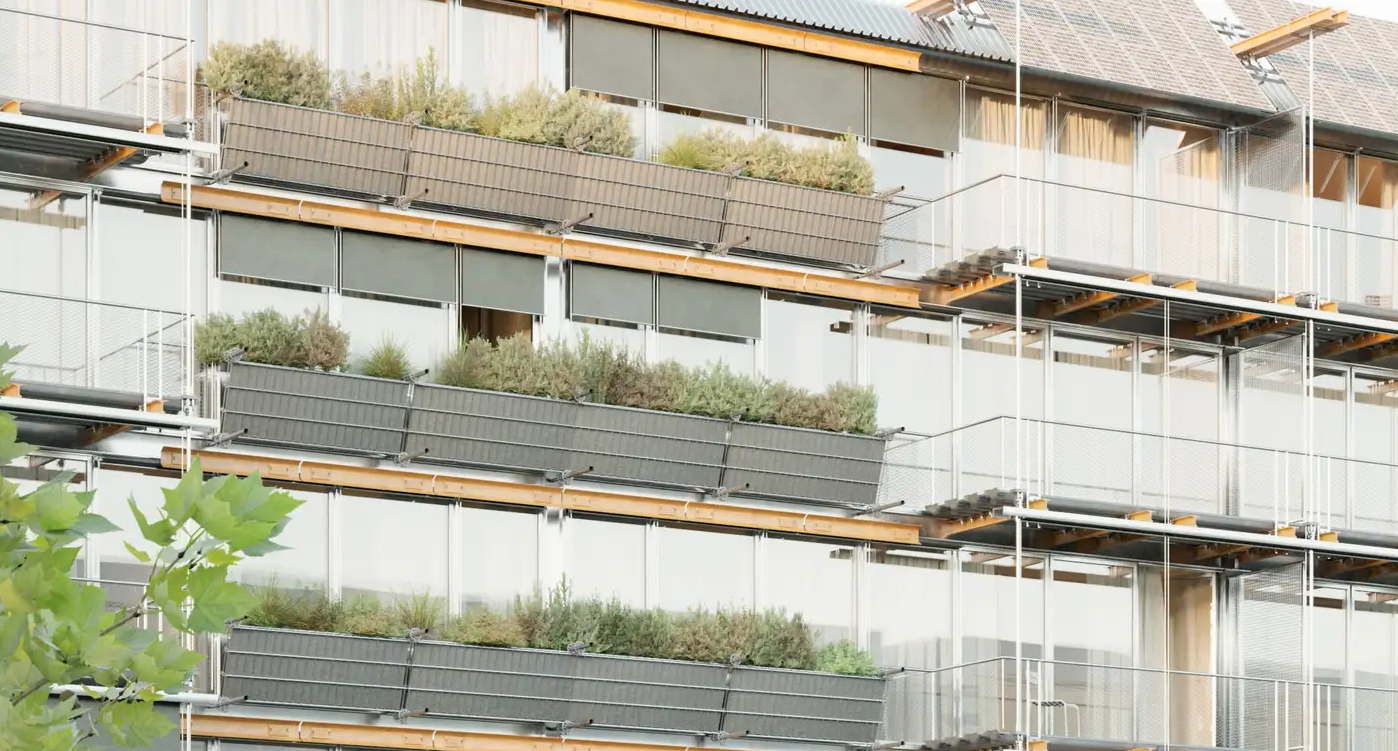
  • Building envelope as a living CO₂ filter

    Building envelope as a living CO₂ filter

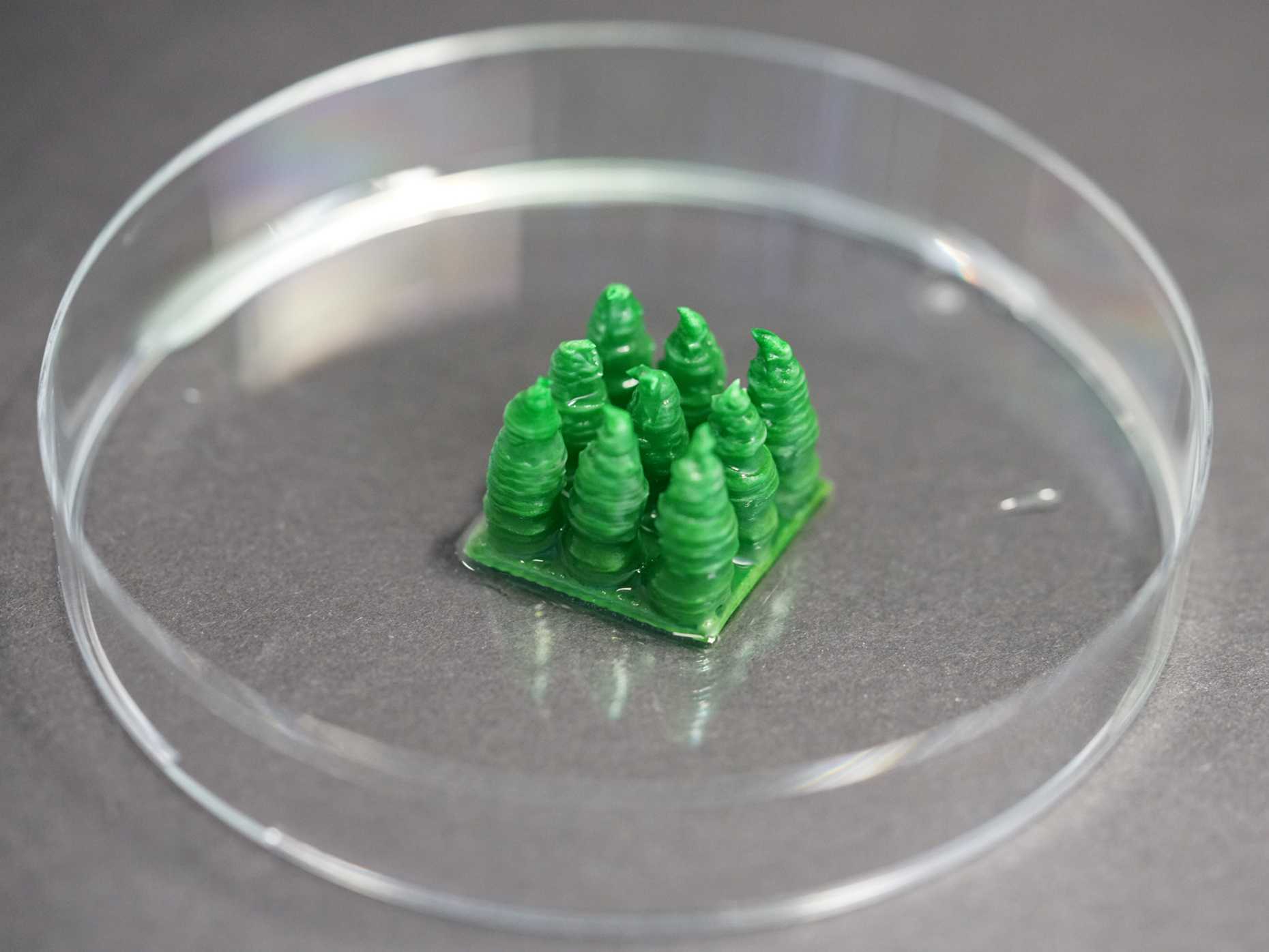
    The construction sector is considered one of the biggest sources of CO₂ emissions worldwide. Researchers at ETH Zurich are now pursuing a radically different approach. They have developed a living, organic building material that actively binds carbon dioxide from the atmosphere during its lifetime. Inside this material live cyanobacteria, also known as blue-green algae, which produce biomass via photosynthesis and also form carbon-containing minerals.

    The innovation combines biology, material science and 3D printing to create a promising concept for climate-neutral construction. The material is not only functional, but also structurally customisable. It can be moulded into freely selectable shapes, is lightweight and only requires sunlight, CO₂ and artificial seawater to grow.

    3D printing with photosynthesis in the system
    The project is led by Mark Tibbitt, Professor of Macromolecular Engineering at ETH. Together with his interdisciplinary team, he has succeeded in developing a hydrogel that stably coats the sensitive cyanobacteria and makes them printable at the same time. The result is a biologically active system that is architecturally mouldable and at the same time continuously binds CO₂.

    The double binding effect is remarkable. The material stores carbon both in the growing biomass of the bacteria and in the form of stable minerals. This creates a permanent carbon store that can potentially significantly reduce the carbon footprint of buildings.

    From the laboratory to the built environment
    The researchers see the primary area of application in the future in the building sector, for example as a façade coating. In contrast to conventional building materials, which cause emissions, this material could absorb CO₂ throughout its entire life cycle.

    Its implementation in architectural formats has already been tested at renowned platforms such as the Venice Biennale and the Triennale in Milan. The experience gained there shows that the concept can prove itself not only in the laboratory, but also in an architectural context.

    Potential for urban cycles
    The material is more than just an ecological experiment. It could become part of future urban material cycles. By not only housing users, but also serving as biological CO₂ sinks, buildings open up a new chapter in climate-conscious architecture.

    The ETH researchers’ findings have been published in the journal Nature Communications. An indication of the scientific relevance and level of innovation of the development. Now it is time to take the next steps towards scalability and long-term stability.

  • International expansion with a focus on emerging markets

    International expansion with a focus on emerging markets

    As part of its local-for-local strategy, Sika is expanding its presence in China, Brazil and Morocco. In China, the globally active speciality chemicals company for construction and industry has expanded its existing site in the Suzhou metropolitan region, Sika announced in a press release. The site produces polyurethane bonding and sealing solutions for the automotive, construction and industrial sectors.

    In Brazil, Sika has expanded its site near Belo Horizonte. In this strategically important industrial region of the country, Sika manufactures admixtures for ready-mix concrete, cement and mining. The company has built a new plant for mortar and admixtures near Agadir. From here, Sika intends to supply the south of Morocco and neighbouring markets.

    “These site investments reflect our customers’ trust in us and our long-term commitment to our markets,” said Sika CEO Thomas Hasler in the press release. “By expanding our local production capacities, we are not only improving flexibility, but also creating a resilient, sustainable foundation for our continued growth alongside our long-standing customers and partners.” Sika expects the construction industry in the three countries to grow by more than 4 per cent annually until 2028.

  • New residential neighbourhood planned in Weggis with 44 condominiums

    New residential neighbourhood planned in Weggis with 44 condominiums

    Halter AG has inaugurated work on the Chalet Weggis residential development with a ground-breaking ceremony, the Schlieren-based property developer announced in a post on LinkedIn. The ceremony is described there as “a significant milestone for this unique project on the Wyermatt site”. The residential development near Lake Lucerne comprises four buildings with a total of 44 condominiums.

    All four residential buildings stand on a common plinth level and are also connected by two contiguous basement levels, explains Halter in the project description. The basement levels house 62 garage spaces, bicycle storage rooms, private cellar compartments and technical and security rooms. Anyone buying a flat can design the interior fittings themselves using the Trend AG configurator.

  • Robust market in Lucerne

    Robust market in Lucerne

    The commercial property market in the canton of Lucerne is proving resilient, even in the international context of economic uncertainty. Switzerland’s gross domestic product grew by 1.3 per cent in 2024 and is expected to rise to 1.5 per cent in 2025. The canton of Lucerne benefits from its broadly diversified economic structure with strong sectors such as construction, finance and services.

    Bottleneck meets demand
    Demand for office space remains high, fuelled by continued employment growth in the service sector. At the same time, the construction volume of around CHF 50 million is well below the long-term average. This reluctance to construct new buildings is further reducing supply, causing rents to rise moderately but continuously – by an average of 10 per cent since 2015.

    Structural change weighs on
    Despite stable consumption indicators, the market for retail space remains under pressure. Online retail, changing consumer behaviour and geopolitical uncertainties are putting pressure on even highly frequented locations. Falling asking rents point to a prolonged period of weakness – there is currently no recovery in sight.

    Solid basis, new risks
    At less than one per cent, the vacancy rate for industrial space is well below the national average. Demand is stable and projects such as new business parks in Lucerne and the surrounding area are signalling momentum. However, trade tensions, particularly with the USA, could slow down this trend and cause a slowdown in the medium term.

    Plenty of potential, but growing pressure
    The new study by Luzerner Kantonalbank and Wüest Partner paints a differentiated picture. Office and industrial space is benefiting from Lucerne’s attractiveness as a location and the strong domestic economy. Retail space, on the other hand, remains the problem child. Future developments will be largely determined by international conditions.

  • The Glarus South residential park sets new standards

    The Glarus South residential park sets new standards

    In the centre of Glarnerland, nestled in the alpine landscape and with a direct S-Bahn connection to Zurich, a pioneering project is taking shape. The Glarus Süd residential park is ready for realisation. The building permit has been granted, the concept has been finalised and the surrounding area is ideally developed. The site is already home to an established health and prevention centre, a café, a hairdressing and beauty salon and versatile event spaces. Schools, shopping facilities, Spitex services and the railway to Braunwald are all within walking distance. The location combines living close to nature with urban connections.

    A pioneering project for new ways of living
    The project focuses on multi-generational living, supplemented by co-living and co-working facilities. The 51 flats are part of a holistic concept that is geared towards social mixing, encounters and shared use. The residential park is operated CO2-neutrally. The energy comes from its own production. The concept addresses key challenges such as demographic change, climate protection and the increasing need for flexible ways of living and working, while at the same time offering attractive prospects for investors who focus on valuable, socially relevant projects.

    Experience meets vision
    Hacontex AG from Zollikon is behind the project. The company, which has its roots in the textile industry, has consistently transformed itself over the last few decades. Today, Hacontex is active in sustainable energy production and property development. Managing Director Hans-Peter Keller and his team rely on entrepreneurial courage, regional roots and economic foresight. With projects in the Zurich agglomeration, in the canton of Schwyz and in Glarnerland, the company addresses future-oriented topics, always in the area of conflict between nature, technology and society.

    A project with a signalling effect
    The Glarus Süd residential park is more than just a property project. It is a stimulus for the region and a model for the sustainable transformation of rural areas. A place for all generations, for work, health, community and innovation is being created in the middle of the mountains. The combination of modern infrastructure, local roots and ecological responsibility makes the project an investment target with long-term added value.

    Now that construction is ready, the go-ahead is imminent. An investor is now being sought who shares the vision and has the courage to back a project that not only promises the future, but also builds it.

  • From industrial site to garden neighbourhood

    From industrial site to garden neighbourhood

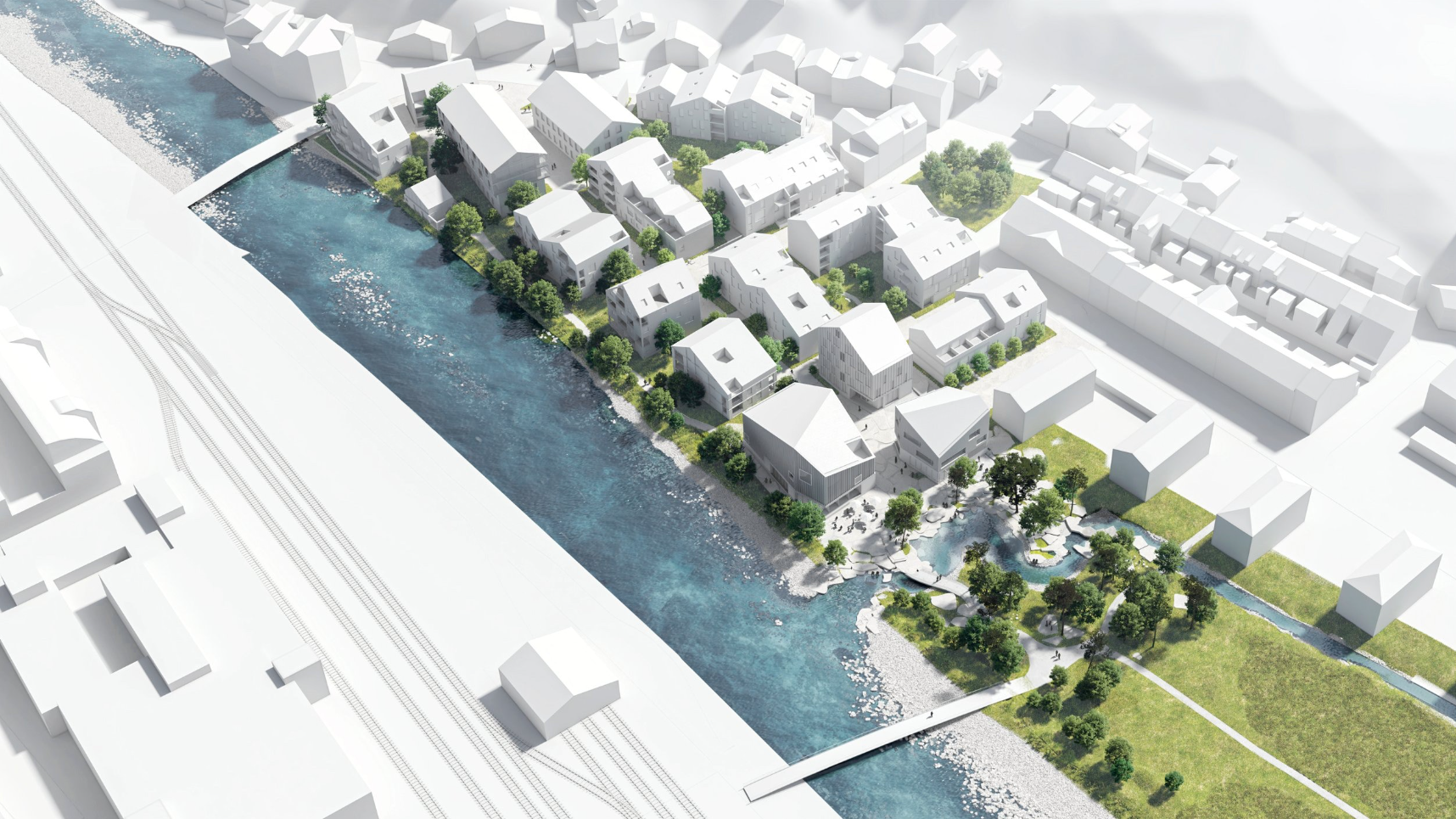
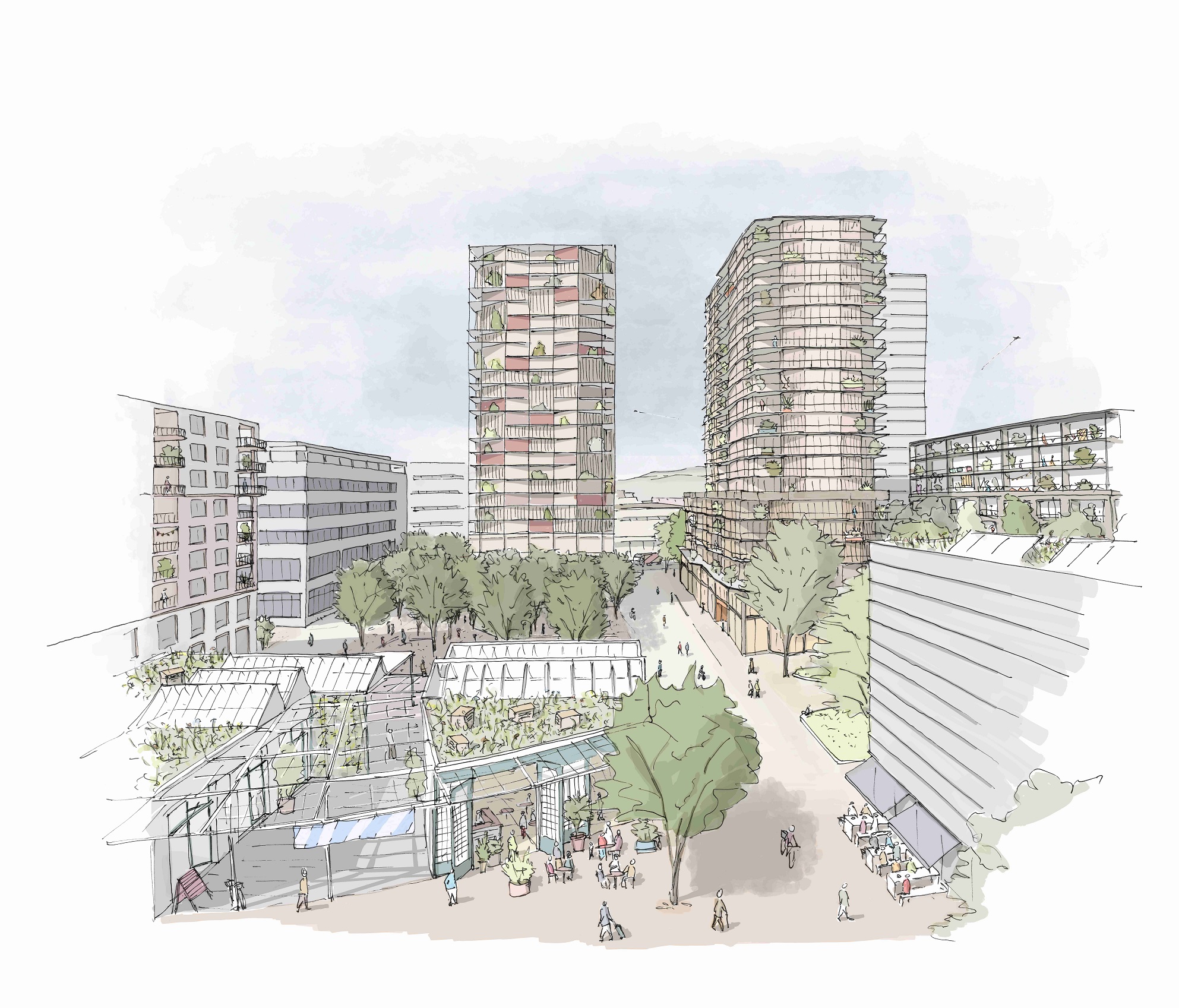
    The Kartoni neighbourhood shows how visionary urban development can succeed. On a former industrial site, a green residential neighbourhood with around 150 flats is being created, complemented by service and cultural facilities. What still exists as a planning sketch today will develop in several stages into a diverse living space that is open to all generations and lifestyles. The historical backdrop of Glarus will not only form the framework, but will also be further developed through modern architecture and sustainable construction methods.

    Town and country reconnected
    Glarus is more than just the canton’s capital, it is a way of life. Only an hour away from Zurich or St. Gallen, Glarus offers urban density and natural recreation at the same time. The Kartoni neighbourhood reinforces this quality. It builds a bridge between the district of Ennenda and the town centre, creating new paths and meeting places both spatially and socially. The municipal merger that took place in 2011 thus takes on a tangible architectural dimension.

    Water as a connecting element
    In future, the Linth will become the lifeline of the neighbourhood. Where previously sealed surfaces dominated, a public riverside space with direct access to the water is being created. The renaturalised canal interweaves with the river landscape and creates a playful counterpart to the structured design of the nearby Volksgarten. The area becomes a meeting place for walks, relaxation and shared experiences.

    Car-free garden neighbourhood
    The Kartoni neighbourhood relies on an underground solution for mobility. Directly after the Linth Bridge, an access road leads to a spacious underground car park, which means that the entire neighbourhood remains car-free above ground. The result is a garden neighbourhood that is open, green and criss-crossed by paths. The car-free design not only promotes peace and safety, but also sends out a strong signal in favour of a new way of living together in densely populated areas.

    The courage to take stages and a plan with a vision
    The development of the neighbourhood does not follow a rigid timetable, but reacts flexibly to political, economic and social conditions. Several planning strands are currently running in parallel: from the Hängg Tower to residential areas and the integration of a music school. The already approved development plan is being adapted to new requirements, particularly in relation to the neighbouring Dorfbach project in Ennenda.

  • Associations launch national pipe recycling project

    Associations launch national pipe recycling project

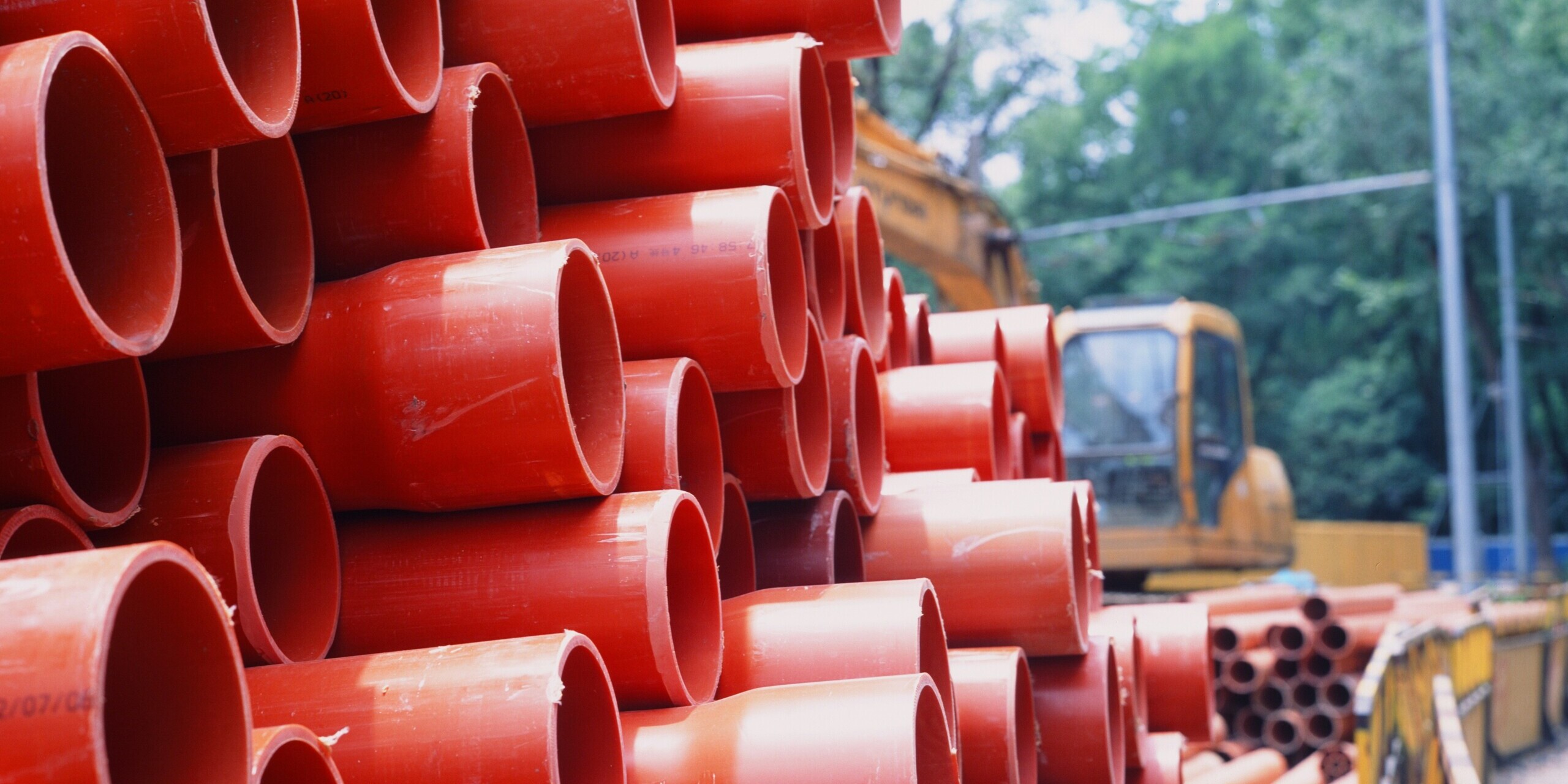
    The Association of Swiss Plastic Recyclers(VSPR), based in Batzenheid, and the Association of Plastic Pipes and Pipe Components(VKR), based in Aarau, have launched the Swiss Plastic Pipe Recycling(SPPR) project. The aim is to recycle plastic pipes across the board for the first time and return them to the material cycle. Stakeholders in the pipe value chain are supporting the project.

    According to a press release, the establishment of a nationwide network of collection centres is central to the project. There are currently already over 40 collection points. According to the initiators, the centralised collection of pipes improves the quality of the materials and enables efficient and transparent traceability along the recycling chain.

    Around 85,000 tonnes of plastic pipes are used in Switzerland every year. today, 30 per cent of these pipes are already made from recycled plastics, which mainly come from recycled plastic packaging. In future, however, these will be fed back into the production of new packaging, making new sources of raw materials necessary.

    Although plastic pipes are suitable for high-quality recycling, a nationwide take-back system has long been lacking. Swiss Plastic Pipe Recycling aims to tap into new material potential and urgently needed new raw material sources for high-quality recyclates through centralised pipe collection.

    Participating in the project are the Burkhalter Group in Zurich, Debrunner Acifer in St.Gallen, Eberhard in Kloten ZH, HakaGerodur in Gossau SG, InnoRecycling in Eschlikon TG, MCAM Symalit in Lenzburg, Meier Tobler in Schwerzenbach ZH, Geberit in Rapperswil-Jona and Georg Fischer in Schaffhausen. The VSPR also wants to support Swiss circular economy goals with the Swiss Plastic Pipe Recycling project. Recycling the plastic conserves primary resources and reduces CO2 emissions.

  • No more cold calling: search less, sell more

    No more cold calling: search less, sell more

    In direct contact with their clients, estate agents are undisputed professionals, from the presentation of the property to the closing of the sale. The challenge, especially in a market with drastic excess demand, lies in making these contacts in the first place. How do you find out who will soon want to sell their detached house or condominium? And how to stand out among the numerous real estate professionals in your own region?

    There must be a better solution than cold calling and flyers. And there is! Thanks to SMG Real Estate’s “Seller Leads” option, estate agents can quickly and easily gain direct access to a steady stream of new sales mandates. Each individual lead is personally checked and qualified by the SMG Real Estate team. This means that these are leads from owners with a genuine intention to sell and a willingness to become an estate agent. And that’s not all: the leads are also specifically assigned to a zip code.

    This careful pre-qualification guarantees contacts with a high probability of closing, which minimizes wastage and increases the chances of a mandate. Or to put it simply: Search less, sell more. Thanks to this established system, real estate professionals benefit not only at minimum risk, but also with maximum efficiency. This is because the offer goes beyond traditional lead portals by dealing with personally verified sales intentions instead of unqualified online inquiries. The focus is therefore clearly on quality rather than quantity thanks to leads that are exclusively allocated regionally.

    What’s more, the conditions are completely transparent: no minimum term or minimum purchase as well as predictable costs per lead and participation only if the mandate is successfully completed. All this guarantees flexible, success-based cooperation in the lead business. Once the contract has been concluded, the leads are activated directly in the Business Manager without the need for other systems. At the same time, each lead allocation to the respective real estate professional is clearly traceable and a refund is provided in the event of unfulfilled quality guidelines.

    In combination, seller leads from SMG Real Estate not only provide an unbeatable offer, but can also be ideally scaled as a sales channel. Not only can brokers grow through systematic mandate acquisition, they can also decide individually whether and how many qualified leads they would like to obtain based on their current resources. And this can be planned, because the sustainable pipeline secures future mandates and thus reduces idle phases. This creates the best possible relief and flexibility in day-to-day business.

    Find out more.

  • BLKB Fund Management AG launches sustainable property fund

    BLKB Fund Management AG launches sustainable property fund

    BLKB Fund Management AG, the Binningen-based subsidiary of Basellandschaftliche Kantonalbank(BLKB), has launched its first sustainable property fund. According to a press release, the BLKB (CH) Sustainable Property Fund will primarily invest in energy-efficient properties in Northwestern Switzerland and the neighbouring regions of Bern, Central Switzerland and Zurich. It is aimed at qualified investors who wish to invest in a high-quality property portfolio with a predominantly residential focus.

    The initial issue has a volume of up to CHF 160 million. BLKB also intends to invest in the fund. The proceeds of this issue are to be used to acquire a property portfolio with a market value of CHF 177 million. The portfolio, for which BLKB has already acquired seven of the eight properties in the past two years, consists of energy-efficient properties in good locations. It is characterised by a high proportion of residential properties with a low vacancy rate. Currently, 80 per cent of the property assets in the BLKB (CH) Sustainable Property Fund are located in Northwestern Switzerland.

    “The launch of the sustainable property fund with a focus on Northwestern Switzerland is an important milestone. The property sector offers attractive yield opportunities for investors and at the same time has a major impact on energy efficiency, which is particularly relevant for climate neutrality,” Michel Molinari, CEO of BLKB Fund Management AG, is quoted as saying in the press release.

    The subscription period is expected to run from 24 June to 23 July 2025 with payment on 30 July 2025.

  • sfb course in building automation HF increases efficiency in companies

    sfb course in building automation HF increases efficiency in companies

    Students on the Building Automation HF programme at sfb – Höhere Fachschule für Technologie und Management develop innovative projects for practical application, almost all of which are implemented, according to the press release. This benefits the Swiss economy, for example in the context of the Energy Strategy 2050 or other efficiency improvements. According to the sfb, the programme, which focuses on energy efficiency and building informatics, provides knowledge on how to operate the trades in a complex building as energy-efficiently as possible. 90 per cent of the final theses have a practical relevance, and it is not uncommon for students to make a career leap as a result. This is demonstrated, for example, by alumni Fabian Haist, who has completed further training to become a qualified building automation engineer HF and was available to answer questions for a series of sfb interviews.

    Based on his experience as an electrical planner, Fabian Haist prepared for his next career step with the sfb further training programme. “It played a key role in helping me to reach my current position, as a lot of the content was a perfect fit for my job profile,” he is quoted as saying. As an energy engineer at the Office for Environment and Energy of the Canton of Basel-Stadt (AUE), he is now responsible for implementing the cantonal energy law.

    In his diploma thesis, he planned an energy-related operational optimisation in a Basel school building and further developed the enforcement practice. According to Fabian Haist, the analysis has shown that even simple energy optimisations can lead to considerable savings: Energy savings of 15 per cent and cost savings of 17 per cent had been achieved in the Basel school building. The measures he has defined should now simplify the verification of operational optimisation.

    According to the sfb, the further education programme in building automation takes six semesters to complete, provided that the student has completed relevant vocational training. In addition to building automation, the module content includes data security, digital construction, renewable energies and fire protection. Skills in leadership, communication and teamwork are also taught. Details are available at information events in person and online as well as from a further education counselling service. The next start date is 13 August 2025.

  • Federal government selects five reserve power plants

    Federal government selects five reserve power plants

    Following its meeting on 14 May 2025, the Federal Council will conclude contracts with energy service providers for the operation of five reserve power plants. According to a press release, the Swiss Federal Office of Energy(SFOE) has conducted direct negotiations with potential providers in advance. Following the end of the tendering process in February 2025, the Federal Department of the Environment, Transport, Energy and Communications(DETEC) decided to select five projects with a total capacity of 583 megawatts (MW).

    The selected projects include the reserve power plant Monthey VS with 55 MW from CIMO, the reserve power plant Sisslerfeld 1 in the municipality of Eiken AG with 13 MW from Getec, the reserve power plant Stein AG with 44 MW from Getec, the reserve power plant Sisslerfeld 2 in Eiken AG with 180 MW from Sidewinder and the reserve power plant Auhafen in Muttenz BL with 291 MW from Axpo. All five plants will run on CO2-neutral fuel, according to the press release.

    The five projects should be ready for operation between 2027 and 2030. For the transition, DETEC is currently working on variants using hydropower, emergency power generators and consumption reserves.

  • Last key building in the airport area now belongs to one hand

    Last key building in the airport area now belongs to one hand

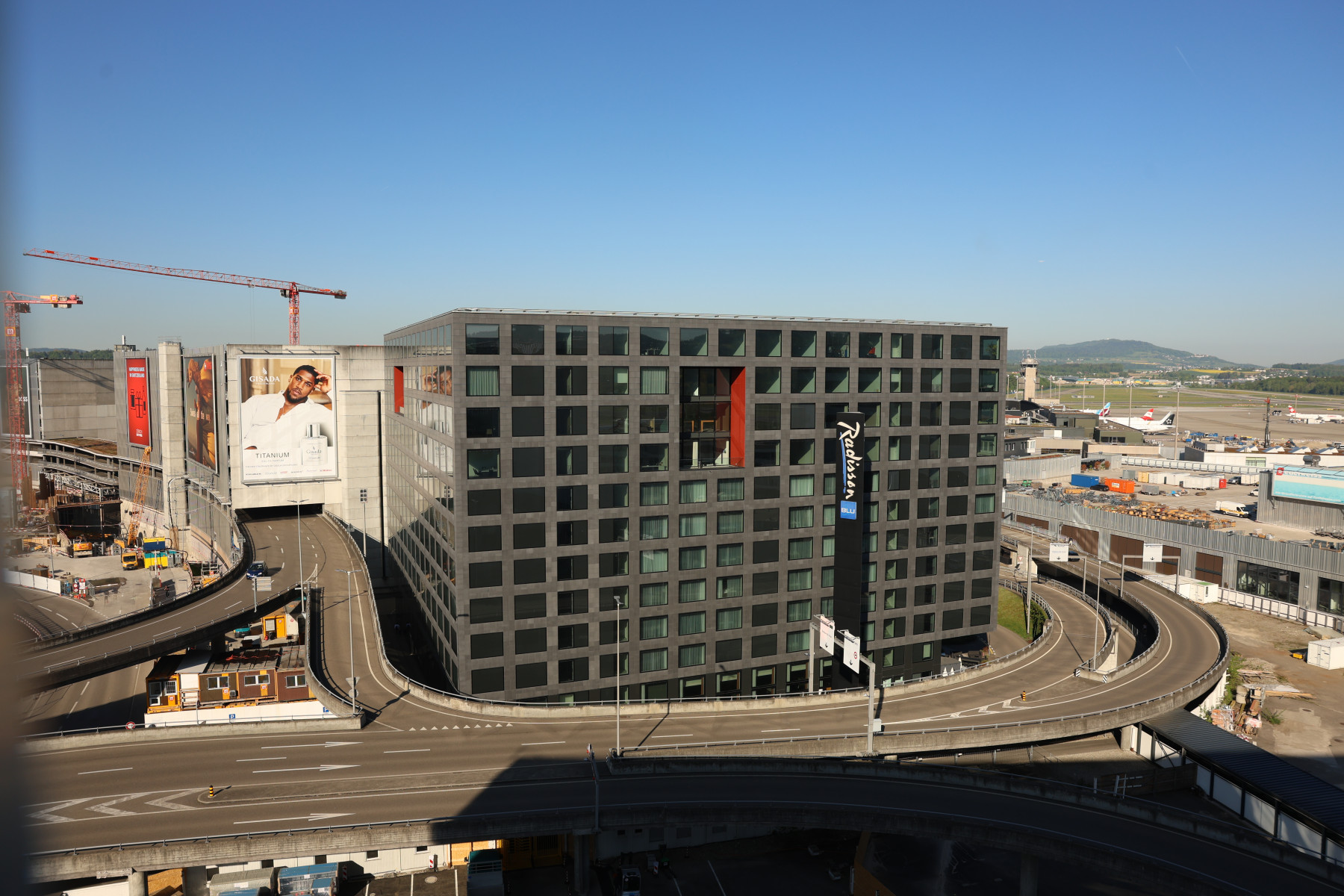
    Flughafen Zürich AG has announced the takeover of the Radisson Blu building in a press release. The previous owner, Al Maha Real Estate AG, has handed over the property in full for the purchase price of CHF 155 million. This is the last site within the airport perimeter that has not previously belonged to Flughafen Zürich AG.

    According to the press release, the building, which was constructed under building rights from 2005 and inaugurated in 2008 and is home to the Radisson Blu hotel chain as well as offices and a meeting and conference centre, was subject to a building rights agreement until 2080, which was terminated prematurely following its reversion to Flughafen Zürich AG. The rental agreement with Radisson Blu will continue. Hotel operations are to continue. In addition, there will be no changes to the existing utilisation.

    The strategic idea behind the complete takeover of ownership is the development and growth objectives of Flughafen Zürich AG in the central airport perimeter.

  • Smart City Aarau Strategy 2034

    Smart City Aarau Strategy 2034

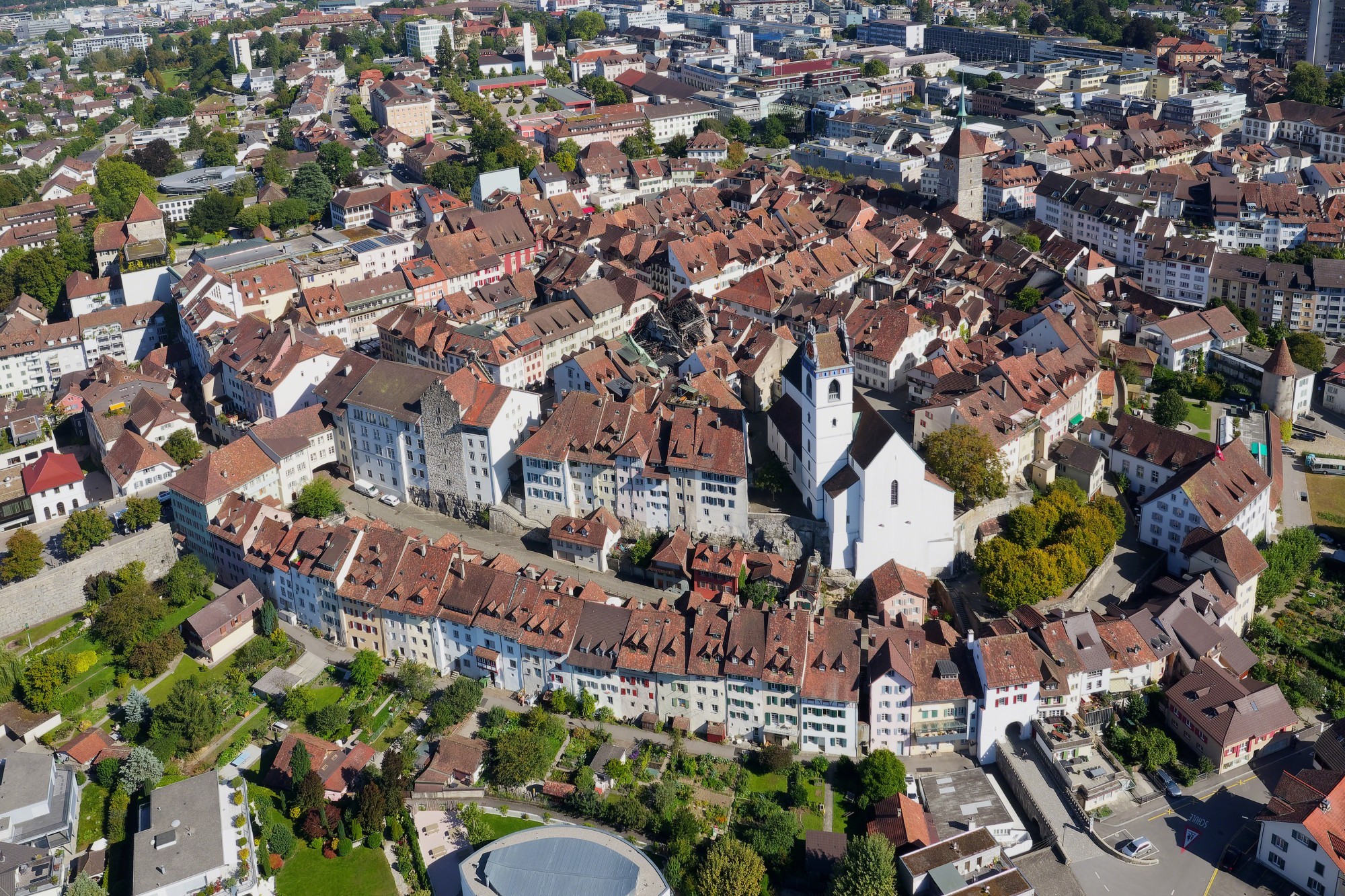
    With “Smart Aarau 2034”, the city is pursuing a forward-looking approach. The strategy does not rely on technological impetus alone, but sees digitalisation as a tool for solving complex challenges. The focus is on the needs of the population, cooperation between departments and resource-efficient implementation. Aarau is orientated towards the city’s existing development goals and integrates smart thinking into all urban projects.

    A methodological framework for real progress
    The change in strategy also means a rethink in terms of implementation. In future, projects will no longer be planned in secret, but developed in dialogue with those affected. A municipal team will provide methodical support to employees. From the initial idea to the actual tested project. Experience from the Smart City period to date shows that this approach is effective if it is applied consistently.

    Smart means networked and usable
    The new strategy puts an end to isolated islands of innovation. Instead, projects should be systemically conceived and networked across the city in future. The goal is a city that utilises its resources efficiently, can react to changes and introduces new solutions where they are actually needed. Digital tools will only be used if they contribute to quality of life or efficiency.

    Effectiveness instead of symbolic politics
    Aarau measures success not by the number of digital projects, but by their impact. The new strategic framework focuses on measurable progress. This applies to implementation, behaviour, awareness and everyday use. This makes smart thinking the new basis for urban development – comprehensible, user-centred and climate-friendly.

  • MFO-West becomes an urban neighbourhood

    MFO-West becomes an urban neighbourhood

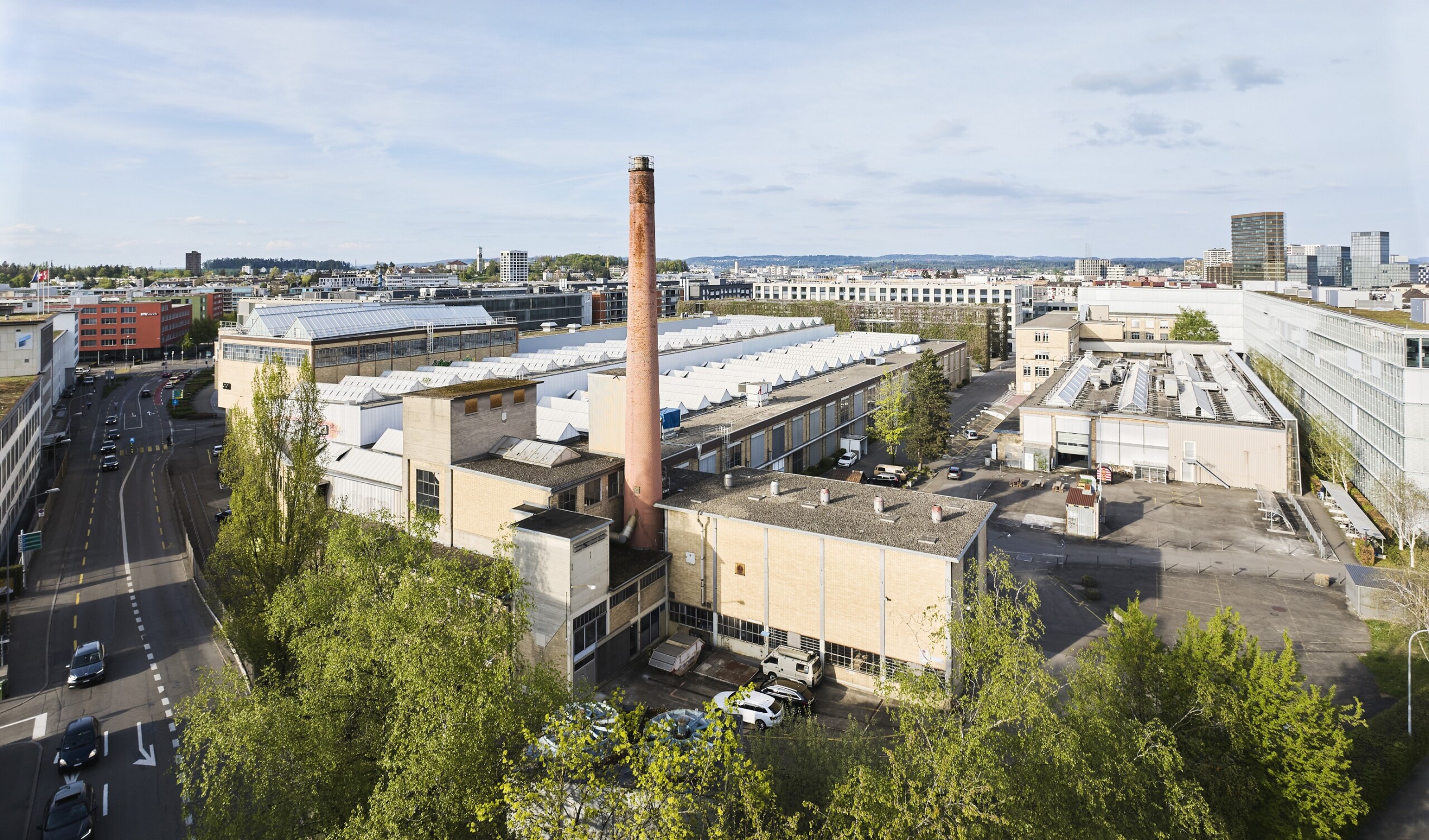
    The purchase of the 25,500 m² ABB site by the City of Zurich for a net CHF 106 million is more than just a land purchase. It is a strategic decision with a long-term impact. Thanks to the urban development contract concluded in 2021 and the special building regulations that come into force in 2025, Zurich can shape the future on a centrally located piece of the city. With high density, mixed uses and consistent citizen participation.

    Transformation through participation
    A key success factor is the early and transparent involvement of residents, associations and neighbourhood organisations. The needs of the neighbourhood were directly incorporated into the participatory strategy process. This turned an industrial site into an urban development concept with a high level of social acceptance. Urban planning thus not only gains space, but also trust.

    Mix of uses as a driver of innovation
    The utilisation concept envisages three new construction zones and three existing areas. A mix of non-profit housing, neighbourhood supply, creative commercial use and publicly accessible open spaces is planned. The House for Culture and Circular Economy is a flagship project for innovative urban utilisation. The combination of culture, sustainability and economic activity makes the site a catalyst for new value creation models in urban areas.

    Temporary use as an impetus for location quality
    Before construction work begins, halls and open spaces are used temporarily in a targeted manner. A strategy that brings life to the neighbourhood, promotes social contacts and creates identity even before construction begins. Interim uses are increasingly recognised as a success factor for the attractiveness of locations and resilience in transformation areas.

    Public-private partnership with a role model function
    ABB remains anchored in Oerlikon with 500 jobs and supports the development. The project shows how forward-looking urban development can work constructively with private owners. A model that can be transferred to other urban conversion sites. The combination of urban management and entrepreneurial willingness to co-operate points the way forward.

    MFO-West is not an isolated case, but an exemplary model for the urban transformation of former industrial sites. Those who invest in such development areas can help shape new urban qualities. From social integration and innovative utilisation concepts to sustainable value creation. In times of housing shortages, climate targets and new forms of mobility, sites like MFO-West are the key to the city of tomorrow.

  • Business opportunities in the Uri valley floor

    Business opportunities in the Uri valley floor

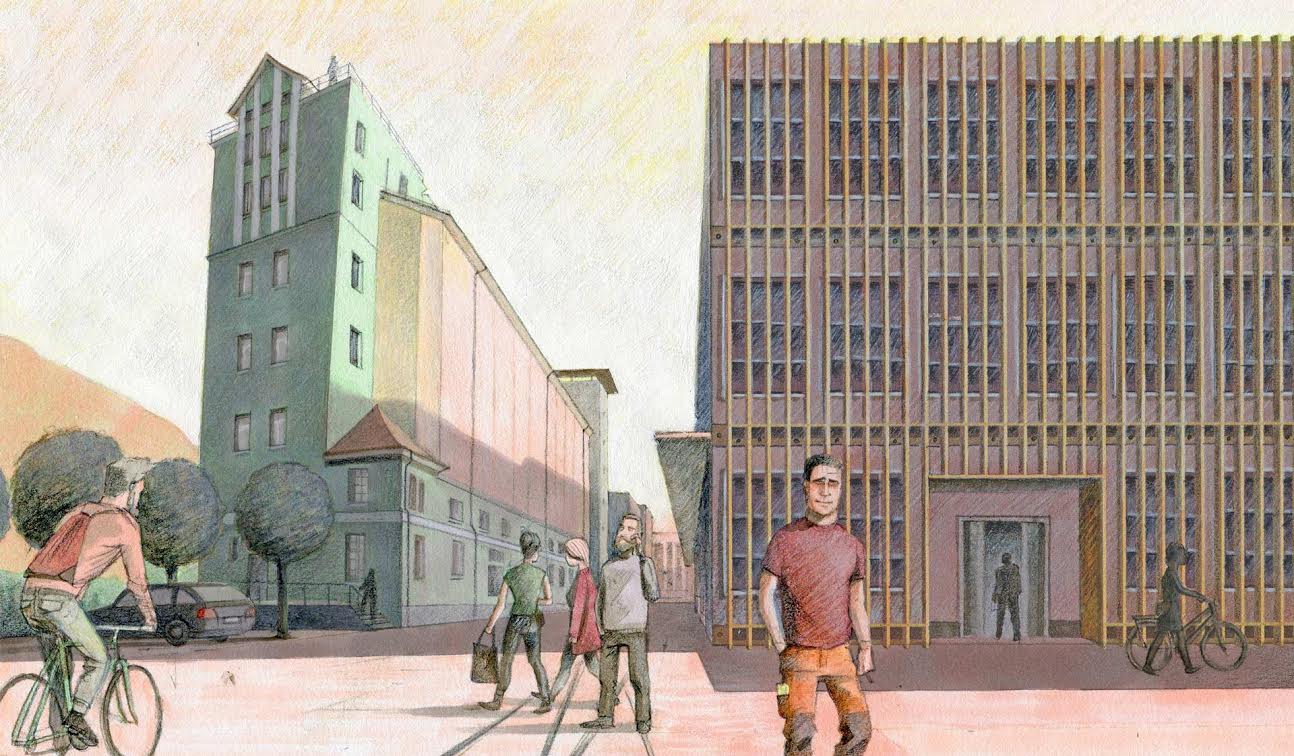
    Werkmatt Uri is one of the last large land reserves in the Uri valley floor. The first industrial uses with a direct railway connection were already established here during the First World War. The listed grain stores designed by architects Eduard Züblin and Robert Maillart in 1912/13 are particularly characteristic. These buildings will be preserved as landmarks and converted into an exhibition centre and art warehouse. The canton is investing in infrastructure to further develop the area between the new Altdorf cantonal railway station and the future Altdorf South motorway junction.

    Optimum location and economic impetus
    Uri is strategically located on the most important European north-south axis with the Gotthard Base Tunnel and the A2 motorway. The immediate proximity to the Altdorf intercity railway station and a modern bus concept promote the accessibility of Werkmatt. The improved accessibility provides impetus for economic and residential projects. With “Vena”, “Cubo” and “Strickermatte”, private investors have realised modern residential developments within walking distance.

    Development with vision
    Kässbohrer Schweiz AG has already recognised the added value of Werkmatt and relocated its headquarters to Altdorf in 2019. The new service building has created 30 qualified jobs in the areas of administration, sales, service, training, final assembly and production of special vehicles, mainly snow groomers. Werkmatt AG is also developing an innovative utilisation concept for building plots 9 and 13. The plans include a multifunctional centre with a business hotel with 80 rooms, co-working spaces, commercial and cultural spaces, restaurants and fitness and recreation areas.

    Targeted planning for sustainable growth
    As the owner, the canton of Uri is striving for a win-win situation with the future owners, users and investors in the area. The plots are to be sold and built on gradually over the next few years. The canton is developing the Werkmatt Uri site in a coordinated manner so that sustainable economic uses are created in the interests of the region as a whole. To this end, it is drawing up guidelines – including those relating to workplace density. The neighbourhood design plan serves as a planning instrument for investors and companies wishing to build on the site, which is binding on the owner and defines the parcel of land. It sets guidelines regarding utilisation, design and infrastructure.

    Success through co-operation
    Werkmatt Uri is an example of coordinated and sustainable site development. Companies benefit from a committed administration, short decision-making processes and needs-orientated solutions. The region expects the project to provide long-term economic impetus and create more than 1,000 jobs.
    Werkmatt Uri is therefore much more than just an industrial area, it is an economic driver and an attractive location for forward-looking companies.

  • Innovation campus in the heart of the Engadin

    Innovation campus in the heart of the Engadin

    The Engadin is known for its cultural diversity and breathtaking nature. At the same time, the region is increasingly focussing on innovation and sustainable development. The InnHub La Punt is a place where research, entrepreneurship and education come together.

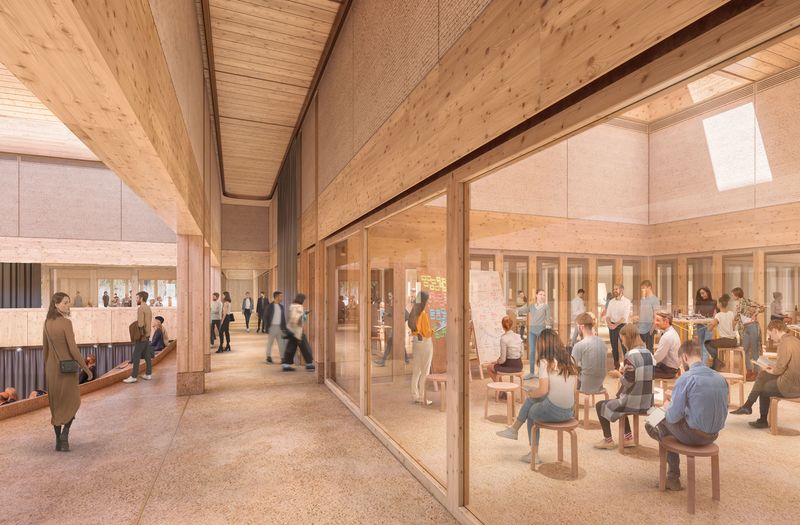
    The centre offers a wide range of uses over an area of 7,700 square metres. These include workshop and classrooms, coworking workspaces, an auditorium with 250 seats, a sports training infrastructure, a spa, a restaurant with bar and lounge, a sports shop, a tourist information centre, 44 hotel rooms and 8 tourist flats. The multifunctional premises create a dynamic environment for innovation and interdisciplinary dialogue.

    Construction begins in spring 2025
    Following a comprehensive planning phase in which the concept was further refined, construction of the InnHub La Punt will begin in spring 2025. The municipality issued the building permit in autumn 2023. The existing buildings will be demolished first, followed by the excavation and construction of the underground car park by summer 2026. The shell will be completed by mid-2027 before the interior work begins. The opening is scheduled for the end of 2028.

    In parallel with the municipality of La Punt Chamues-ch’s future projects, including the road bypass and the renaturation of the Chamuerabach stream, the InnHub will create a new centre that will revitalise the town and provide new impetus.

    Sustainability as a central building block
    A key component of the project is its sustainable approach. The building is being constructed from local wood, granite and lime mortar and is an example of the circular economy and ecologically responsible construction. “The InnHub is a matter close to my heart, as I have lived in the Engadin for years. It is an example of sustainability and innovative construction methods,” emphasised architect Norman Foster in a video message.

    The operation of the campus is also designed to be sustainable. The initiators, including Caspar Copetti, are not focussing on short-term profits, but on long-term positive effects for the region. The InnHub is intended to create new jobs, promote year-round tourism and establish an innovation ecosystem in the Engadin.

    New impetus for the economy and the community
    The InnHub La Punt will not only attract companies, start-ups and skilled workers, but also facilitate strong networking with the local population. The municipality of La Punt Chamues-ch sees the project as an important step for the further development of the region. “The campus will create a cultural and social meeting point in our village. The projects that are being created here will inspire future generations to come to La Punt,” says mayor Peter Tomaschett.

    In addition to the long-term effects for the region, the InnHub offers an InnHub PopUp even before its completion, which can be used as a co-working and event venue for locals, holiday guests and professionals until it opens.

    A milestone for the Engadin
    The InnHub La Punt combines innovation, sustainability and community in a unique way. With a clear focus on responsible development, it will radiate far beyond the Engadin and serve as a model for sustainable innovation centres in the Alpine region. The combination of state-of-the-art architecture, innovative working environments and regional roots makes the InnHub a forward-looking project that will provide new impetus for the Grisons as a business location.

  • LG site becomes an urban neighbourhood

    LG site becomes an urban neighbourhood

    The transformation of the LG site aims to create a lively, open district characterised by architectural quality and urban flair. The project is based on a development plan that ensures that urban development and architectural standards as well as social and ecological aspects are incorporated into the planning. In a study process, the team Salewski Nater Kretz, pool Architekten, Studio Vulkan Landschaftsarchitektur and mrs partner were selected as the winners, whose concept forms the basis for the neighbourhood development.

    Purchase of land by the city of Zug
    In order to influence the urban use and price development on the LG site in the long term, the city of Zug is planning to purchase a central plot of land on Theilerplatz. The cost of the plot amounts to CHF 65 million. This transaction will soon be dealt with by the Grand Municipal Council. This acquisition will enable the city of Zug to influence the design of the neighbourhood and ensure that affordable living space is created in the heart of Zug in the near future, as demanded by the people of Zug in June 2023 when they approved the 2000-apartment initiative.

    Remodelling work on the LG site
    While the long-term development plans for the upgrading of the LG site are in the political planning process, two existing buildings on the UBS Fund Management (Switzerland) AG site are currently being renovated. These are Gartenstadt 2a and the brick building at Zählerweg 3-9, both of which are adjacent to the Shedhalle with the “Freiruum”. This renovation is being carried out by property developer and total contractor Losinger Marazzi AG outside of the ordinary development plan procedure on the LGAreal and is being implemented in stages.

    Occupation by 2027
    The building at Gartenstadt 2a should be completed by mid-2026 and provide space for new commercial tenants. The 60 or so flats at Zählerweg 3-9, on the other hand, are expected to be ready for occupation in early 2027. If everything goes according to plan, the “Freiruum” will move into the ground floor of the 200-metre-long building at this time. Once the LG-Areal development plan comes into force, the Shedhalle can be renovated in a further stage in order to offer the “Freiruum” its long-term premises from 2029.
    New urban neighbourhood
    By 2032, the once “forbidden city” will become an open and mixed neighbourhood with an industrial character and urban flair. Around 1,200 flats and 2,300 jobs will one day be on offer. Theilerplatz, the heart of the new urban quarter, will be transformed into a central meeting place for neighbourhood residents and the city’s population with inviting places to spend time and green open spaces.

  • City of Winterthur extends agreement with location promotion organisation

    City of Winterthur extends agreement with location promotion organisation

    The new service agreement between the city of Winterthur and the House of Winterthur provides for an adjustment of the organisation’s tasks. The House of Winterthur should focus on strengthening the Winterthur Switzerland brand and on the strategic marketing of the location for business, education, culture and tourism, according to a statement from the city.

    This includes making the hidden champions among the companies and the diversity of the local business landscape visible. Innovation and knowledge transfer are to be strengthened through targeted networking and new event formats, among other things. The House of Winterthur will also actively support start-ups.

    Operational location promotion, on the other hand, will once again be the responsibility of the city. This includes company relocations, portfolio management and space brokerage.

    The city intends to support the House of Winterthur with CHF 760,000 per year between 2026 and 2029, CHF 100,000 per year less than before. The final say lies with the city parliament.

    In a statement, the House of Winterthur recalls that the city’s contribution was CHF 960,000 per year when the organisation was founded in 2017. Beat Schwab, President of the House of Winterthur, which is organised as an association, refers to the new management and other changes in personnel. “There is a spirit of optimism at House of Winterthur,” he is quoted as saying in the press release. “It would be a shame if excessive pressure to save money were to jeopardise this development and seriously impair the sustainable promotion of the location as well as the management of company relocations.”

    The association is supported by the city, the neighbouring municipalities and over 400 members.

  • Historic site becomes new cultural and educational centre

    Historic site becomes new cultural and educational centre

    The city of Schaffhausen is pursuing an ambitious goal with the redevelopment of the Kammgarn site: to transform the historic area into an attractive location for culture, education and socialising. The Schaffhausen electorate approved this project back in August 2020.
    The comprehensive redesign not only creates a better connection to the urban fabric, but also new utilisation options. In addition to the existing entrances from Baumgartenstrasse, Rheinuferstrasse and Rheinstrasse, a new passageway will be created along Klosterstrasse. This strengthens the connection with the old town and increases the attractiveness of the neighbourhood. The Kammgarn area will become part of a “string of pearls” of meeting places along the banks of the Rhine, which will enhance the area in the long term.

    More quality of stay through new open spaces
    The redesign of the Kammgarnhof will transform the inner courtyard, which was previously used as a car park, into a car-free zone. Green spaces, seating and a water feature will increase the quality of stay and turn the courtyard into a central meeting place. The redesign will enable a variety of uses for events, culture and recreation.

    Another core element of the development is the construction of a single-storey underground car park with around 90 parking spaces under the courtyard. This will make the entire area above ground car-free and open up new possibilities for use. A pergola will be erected in front of the west wing, while a spacious terrace will be created in front of the north wing.

    Modern infrastructure for culture and education
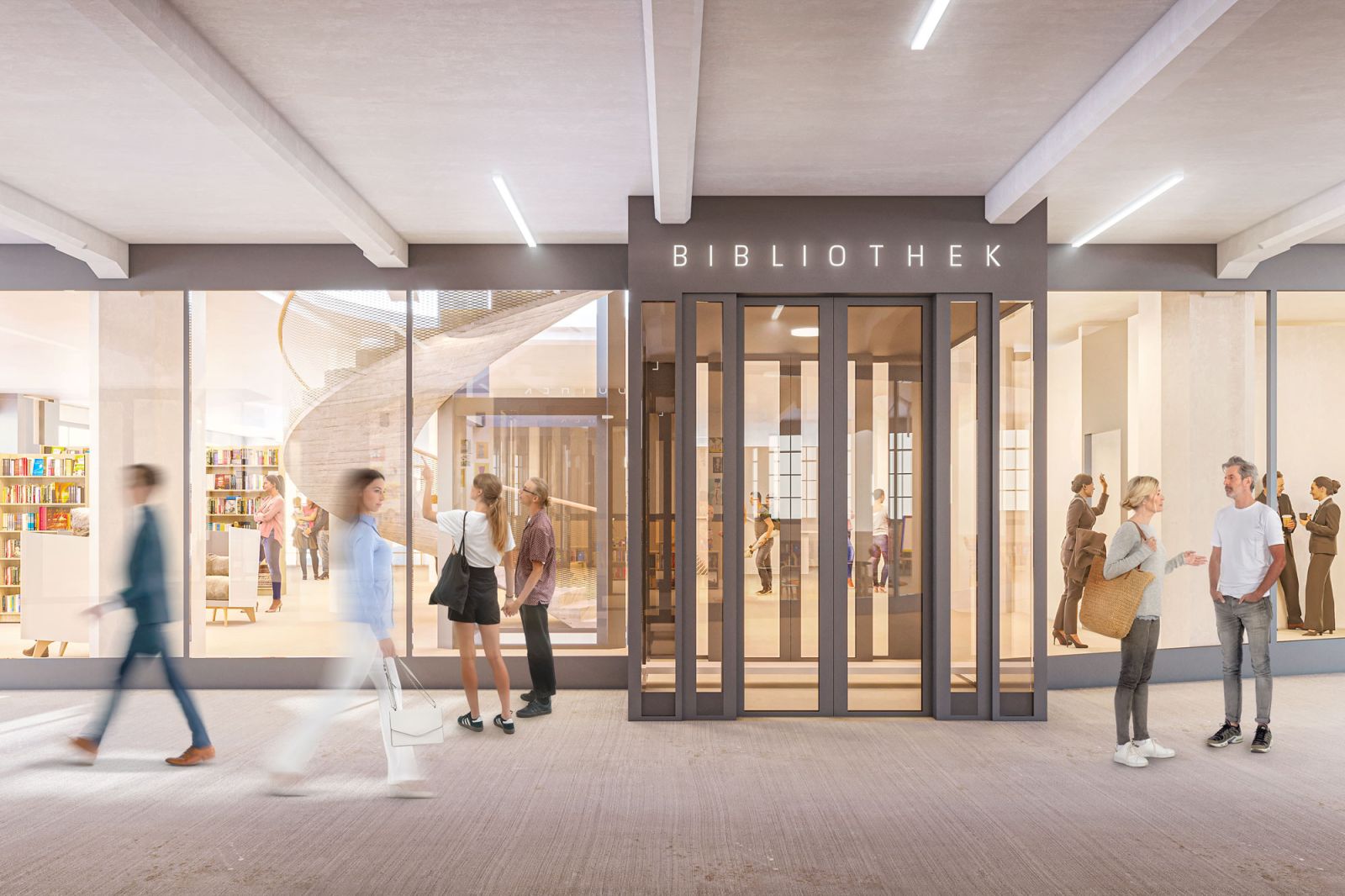
    The west wing of the Kammgarn site is being prepared for new uses as part of the refurbishment. The library and toy library will move into the ground floor and first floor. Glazed façades offer passers-by a glimpse into the world of books and games.
    The Schaffhausen University of Teacher Education will move into the second and third floors, while the fourth floor will be available for other tenants. The diverse use of the site reinforces its importance as an educational and cultural centre.

    Construction progress and archaeological work
    Construction officially began in September 2024 with the symbolic ground-breaking ceremony. Prior to this, archaeological rescue excavations were carried out, during which significant finds from the last 1000 years were discovered.

    Work is currently underway on the underground car park and the redesign of the courtyard. At the same time, the renovation of the west wing is progressing. In addition to structural measures, the façades and roof are being renovated and preparations are being made for the interior work.

    The first floor slab for the new courtyard was concreted in January 2025. To protect the valuable trees, a retaining wall (Rühlwand) is being erected around the large chestnut tree in the courtyard.

    A new meeting place for Schaffhausen
    After the remodelling, the Kammgarnhof will be an attractive place for locals and visitors to the city. Reading, meeting friends or enjoying concerts – all this will be possible in the redesigned surroundings.

    The construction of the underground car park is being financed jointly with IWC Schaffhausen, the direct neighbour of the site. This close collaboration will result in a sustainable solution that improves both the flow of traffic and the quality of life.

    A lively neighbourhood with a future
    The comprehensive renovation and redesign will transform the Kammgarn site into a modern cultural, educational and meeting centre. The connection to the old town and the Rhine will be strengthened, while new uses will enrich Schaffhausen’s cityscape. The project is scheduled for completion at the end of 2026 – a significant step for the long-term development of the city.

  • House of wood in Sursee shows the future

    House of wood in Sursee shows the future

    With six storeys made of wood, complemented by a variety of uses including offices, flats and communal areas, the Haus des Holzes impressively demonstrates the potential of modern timber construction. The entire construction, apart from the basement, is made of Swiss timber, 94 per cent of which comes from local forests. The building material grows back within just 80 minutes, a strong testament to the ecological sustainability of regional resources.

    Circular thinking consistently implemented
    The building is designed in such a way that future generations can dismantle it and reuse the building elements used. This recyclability is a key innovation driver for companies in the timber and construction industry, making sustainability tangible in practice and increasingly asserting itself as a sales argument to a climate-conscious clientele.

    Digital methods as a driver for efficiency
    A special feature of the project is the consistent use of digital planning methods. The entire building was modelled, planned and implemented using building information modelling. Tradesmen worked directly with digital models on mobile devices, an approach that raises the use of materials, construction coordination and efficiency to a new level.

    Regulatory freedom as an innovation advantage
    Switzerland offers an ideal environment for progress in timber construction with practical training, material-independent fire protection standards and flexible SIA guidelines. These framework conditions enable engineers to develop creative solutions that would be held back by rigid standards elsewhere.

    Global pioneering role in view
    The project sees itself as a driving force for the international future of timber construction. With expertise, innovative spirit and the intelligent use of digital tools, Switzerland is positioning itself as a global trendsetter. This is also evident in the largest ongoing project, the planned Dock A at Zurich Airport, where Pirmin Jung Switzerland is playing a key role in the timber-based planning.

  • Schwamendingen gets its Ueberlandpark

    Schwamendingen gets its Ueberlandpark

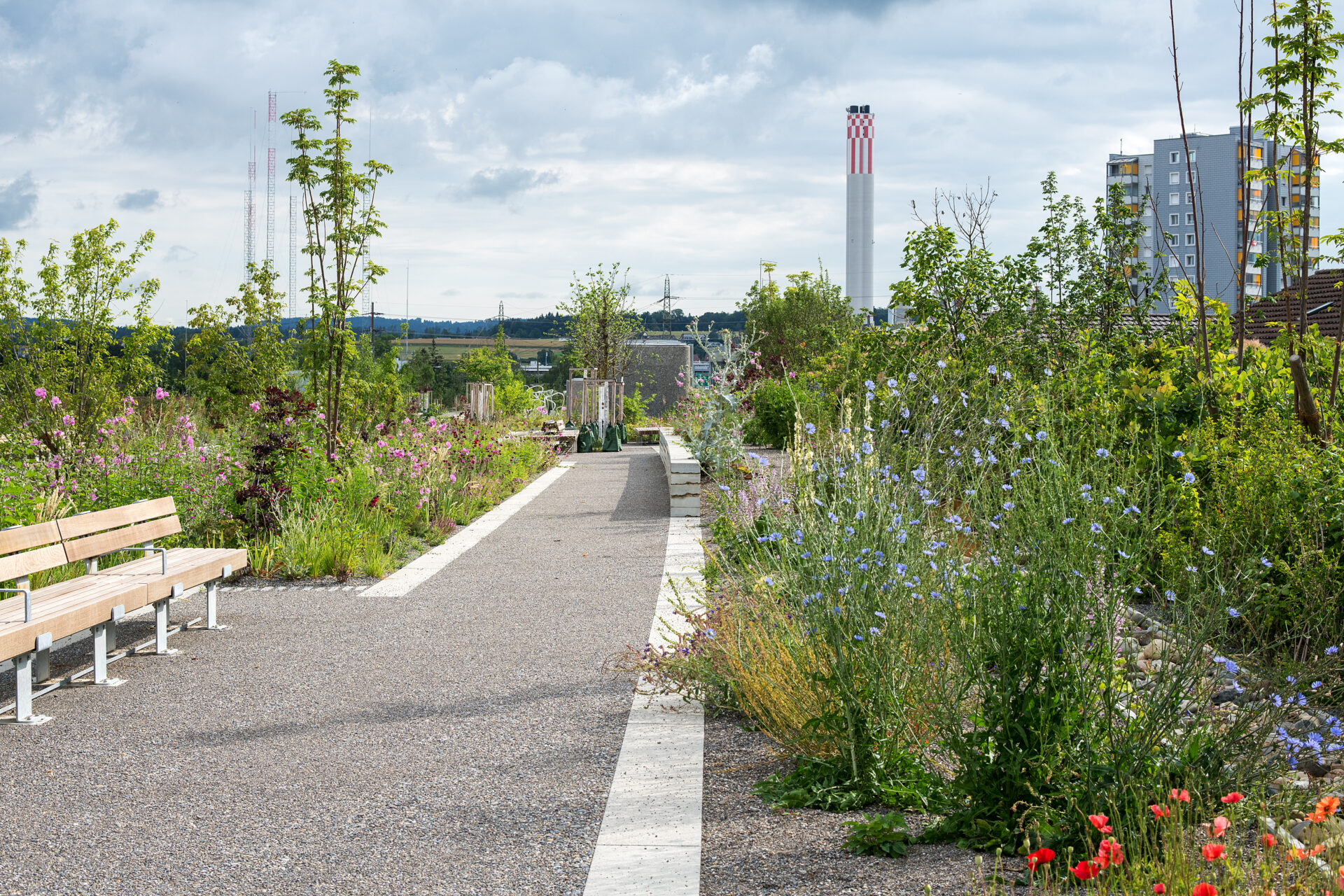
    After five and a half years of construction, the Schwamendingen enclosure was officially inaugurated. With the transfer of traffic to the extended Schöneichtunnel, the motorway noise disappears and in its place a park is created that sets new standards. The overland park is around one kilometre long, thirty metres wide and connects the neighbourhood with a green ribbon.

    More than just noise protection, a symbol of urban planning courage
    Federal Councillor Albert Rösti praised the project as a prime example of national road construction that is compatible with residential areas. The enclosure was the result of clear political will at all federal levels. Government Councillor Carmen Walker Späh also emphasised the importance of great visions for the design of vibrant, resilient cities.

    Green spaces as a climate strategy and meeting place
    For city councillor Simone Brander, the park is far more than just a design element. It counteracts the overheating of the urban climate, creates a quality of stay and strengthens social cohesion. Robust, native plants were planted, a conscious decision as the park does not require artificial irrigation.

    A park for everyone and a meeting place
    The Überlandpark was opened to the public on 10 May 2025. The neighbourhood celebrated with a pavilion, information stands and a wide range of culinary delights. The new park is open to everyone. A space for recreation, encounters and the future.

  • New course director for Real Estate Management at the HWZ – focus on digitalisation and AI

    New course director for Real Estate Management at the HWZ – focus on digitalisation and AI

    Facchinetti brings with him extensive experience in digitalisation, innovation and PropTech. “We are convinced that he will offer students great added value thanks to his broad network and expertise,” says Markus Streckeisen, Head of Real Estate Programmes at the HWZ.

    In future, the new programme director will be responsible for three practical CAS programmes, which can be completed individually or in modules over several years up to a Master’s degree:

    • CAS Smart Real Estate Business (start: March 2025)
    • CAS Smart Real Estate AI, Data & Value (start: September 2025)
    • CAS Smart Real Estate Life Cycle Management (start: September 2025)

    “I am looking forward to working with experts from the field to impart future-oriented skills that are necessary for the challenges of our time,” says Facchinetti.

    The part-time continuing education programme, centrally located at Zurich Main Station, is aimed at specialists and managers who want to strengthen their digital skills in the real estate sector – practical, modern and future-proof.

  • FORUM UZH Centre for Education and Research

    FORUM UZH Centre for Education and Research

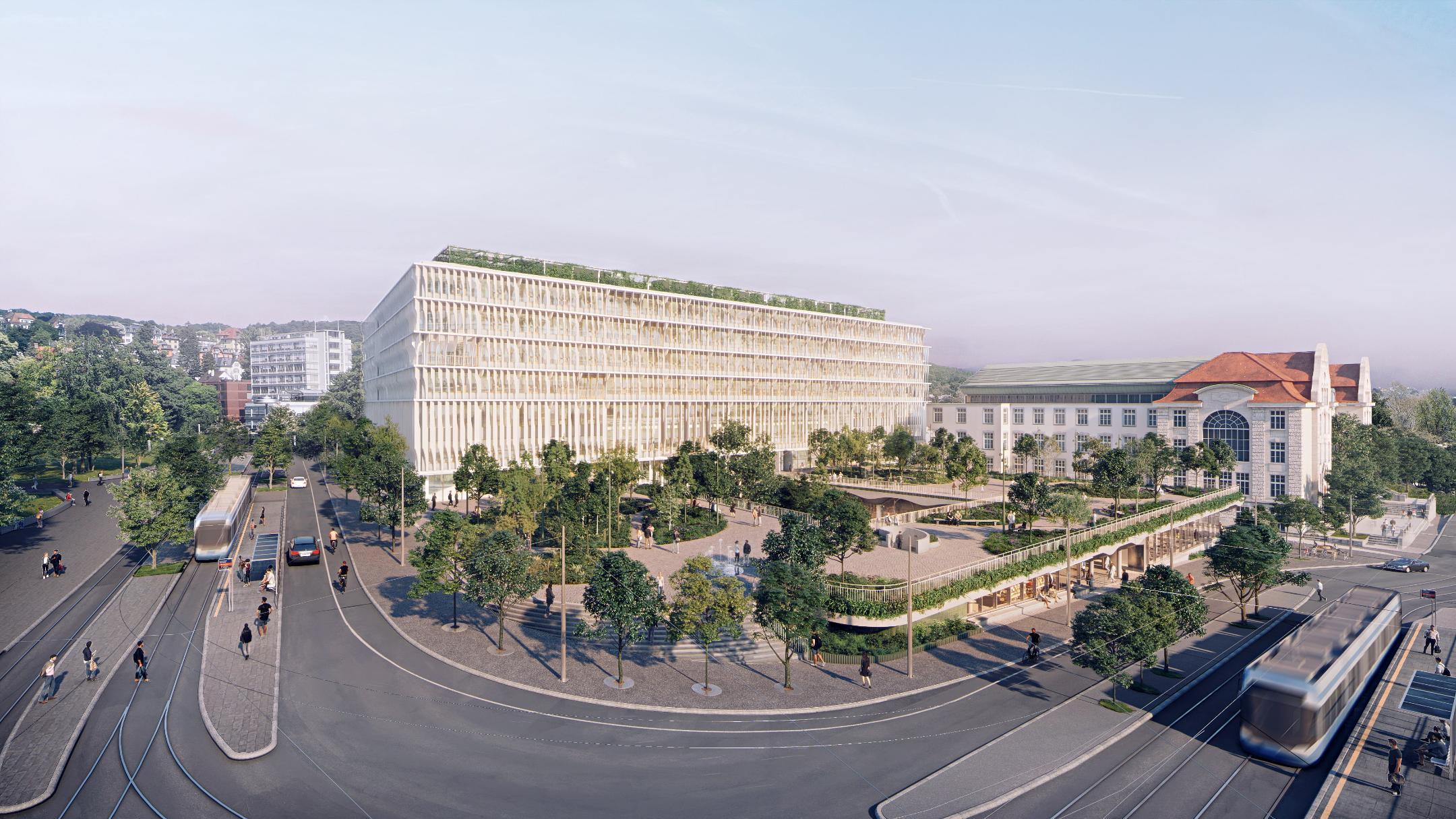
    The FORUM UZH is a milestone for the structural and academic development of the University of Zurich. The new building comprises a total of 37,000 m² of usable space and will not only accommodate the predicted growth in student numbers, but also set new standards in teaching, research and sustainability. The new centre will bring together the faculties of law, economics and modern philology. These will be complemented by modern libraries, sports facilities for secondary schools and the Academic Sports Association as well as publicly accessible cafeterias and commercial areas.

    Architecture and spatial concept
    The FORUM UZH consists of a terraced base for teaching and university life, a trapezoidal structure hovering above for research and a central courtyard. The structure is set back from Rämistrasse to create a spacious front zone with city balconies that blends in with the urban surroundings. The façade design with horizontal ceiling panels and vertical brise soleils gives the building a striking depth effect and allows for flexible light regulation inside.

    At the centre of the building is the eponymous Forum, a light-flooded hall that is a lounge, meeting and work space all in one. It connects all levels and can be used for university and public events for up to 2,000 people.

    Flexible learning environment and modern infrastructure
    The FORUM UZH offers a variety of innovative teaching and learning spaces. Five lecture theatres and several seminar rooms can be used flexibly and are equipped with state-of-the-art technology to enable hybrid teaching models. There will also be a spacious teaching and learning centre with over 700 student workstations. The university library will be united under one roof on the upper floors.

    Sustainability and innovative construction
    The FORUM UZH is based on a sustainable timber-concrete hybrid construction method that reduces CO² emissions while offering a high quality of stay. The intensively greened roof not only serves as a fifth façade, but also as an ecological compensation area with a habitat for flora and fauna. A photovoltaic system supplies its own electricity, while over 50 large trees on the redesigned town square have a positive impact on the microclimate.

    Thanks to the modular design, UZH saves as much CO² as would be released by the construction of 77 detached houses. The building will be certified in accordance with the SGNI Gold standard and Minergie P.

    Integration into the urban environment
    The FORUM UZH will not only be open to the university community, but also to the city’s population. The libraries, catering areas and neighbourhood shops will be open to the public and the Gloriaterrasse will be a green meeting place where people can linger. The urban design will create a direct link between the university quarter and the surrounding neighbourhoods.

    Construction schedule and next steps
    Following the completion of the preliminary project, construction work began in August 2024. Completion is scheduled for 2028 and the building will be occupied in 2029. Until then, students and researchers at the University of Zurich will be able to follow the development of this project of the century at close quarters.

  • Expansion of the headquarters to start this year

    Expansion of the headquarters to start this year

    CSS is planning to start construction work on the extension of its headquarters on Tribschenstrasse in Lucerne in the fourth quarter of this year. The building application will be submitted at the beginning of April, the Lucerne-based health, accident and property insurer is quoted as saying in a report in the Luzerner Zeitung newspaper. The new building and renovation of the commercial building acquired by CSS in 2015 should be completed by the end of 2027.

    CSS intends to use almost all of the space in the new building and the commercial building for its own needs. A bistro is only planned on the ground floor of the commercial building. The amount of the construction costs is not being communicated by CSS, at least not at the moment.

    The concept for the extension of the CSS headquarters is based on a design by Diener und Diener Architekten. The Basel-based architectural firm won a competition organised by CSS against nine competitors. The winning Lambris design envisages that the commercial building, which is classified as worthy of protection, will be enclosed by the extension.

  • Refinancing ensures stability and scope for investment

    Refinancing ensures stability and scope for investment

    Construction and real estate services provider Implenia AG has successfully placed a bond for CHF 220 million, according to a press release. The fixed-rate, non-subordinated bond was issued at par with a term of four years and an interest rate of 2.50 per cent. The bond is to be admitted to trading and listed on the SIX Swiss Exchange.

    The settlement of the bond, i.e. the mandatory accession of investors, is expected to take place on 30 April, it is further reported. UBS AG, Commerzbank Aktiengesellschaft, Raiffeisen Schweiz Genossenschaft and Zürcher Kantonalbank acted as joint lead managers (JLMs) and bookrunners or lead managers for the issue. JLMs are responsible for marketing the securitisation to investors and for executing the transaction on time and on budget.

    The issue proceeds will be used for general corporate purposes, according to the press release. This also includes the refinancing of existing debt, such as the repayment of the CHF 175 million bond maturing on 26 November 2025 and the EUR 30 million promissory note maturing on 9 June. The successful issue will enable Implenia to further strengthen the company’s financing structure, according to the press release.

    As a construction and real estate services provider, Implenia develops, realises and manages living spaces, working environments and infrastructure for future generations in Switzerland and Germany, the company said.

    Headquartered in Opfikon, Implenia employs over 9,000 people across Europe and generated sales of 3.6 billion Swiss francs in 2024.

  • Mobile office brings coworking to the countryside and the water

    Mobile office brings coworking to the countryside and the water

    Coworking provider Westhive from Zurich and AMAG are jointly realising an idea for mobile working in modern vintage double-decker buses, according to a press release. These have been converted into express buses and transformed into mobile workstations with a coffee bar, WLAN and power connections.

    Interested parties can book the mobile office via the Airbnb platform. The innovative offer will initially be available in Switzerland and will later be expanded internationally as part of Airbnb’s “global Live & Work Anywhere programme”.

    “Westhive Express brings the office on wheels – mobile, flexible and everywhere where there was previously no coworking offer,” it says. According to Andreas Widmer, co-founder of Westhive, the form of work stands for “freedom and movement”.

    The Westhive Express bridges the gap between classic mobility and modern working culture with a concept that is reminiscent of outdoor cafés. “In front of the bus, small tables with parasols invite you to take a creative break in the countryside – be it on the lakeshore, at a festival or in a rural community,” it says.

    For Philipp Wetzel, Managing Director AMAG Corporate Development, Innovation & Venture LAB, quoted in the press release, mobility, hospitality and productive work are combined as a “logical development of the digital lifestyle”.

    According to the press release, the first Westhive express bus will soon set off on its maiden voyage. Further mobile units are being planned.

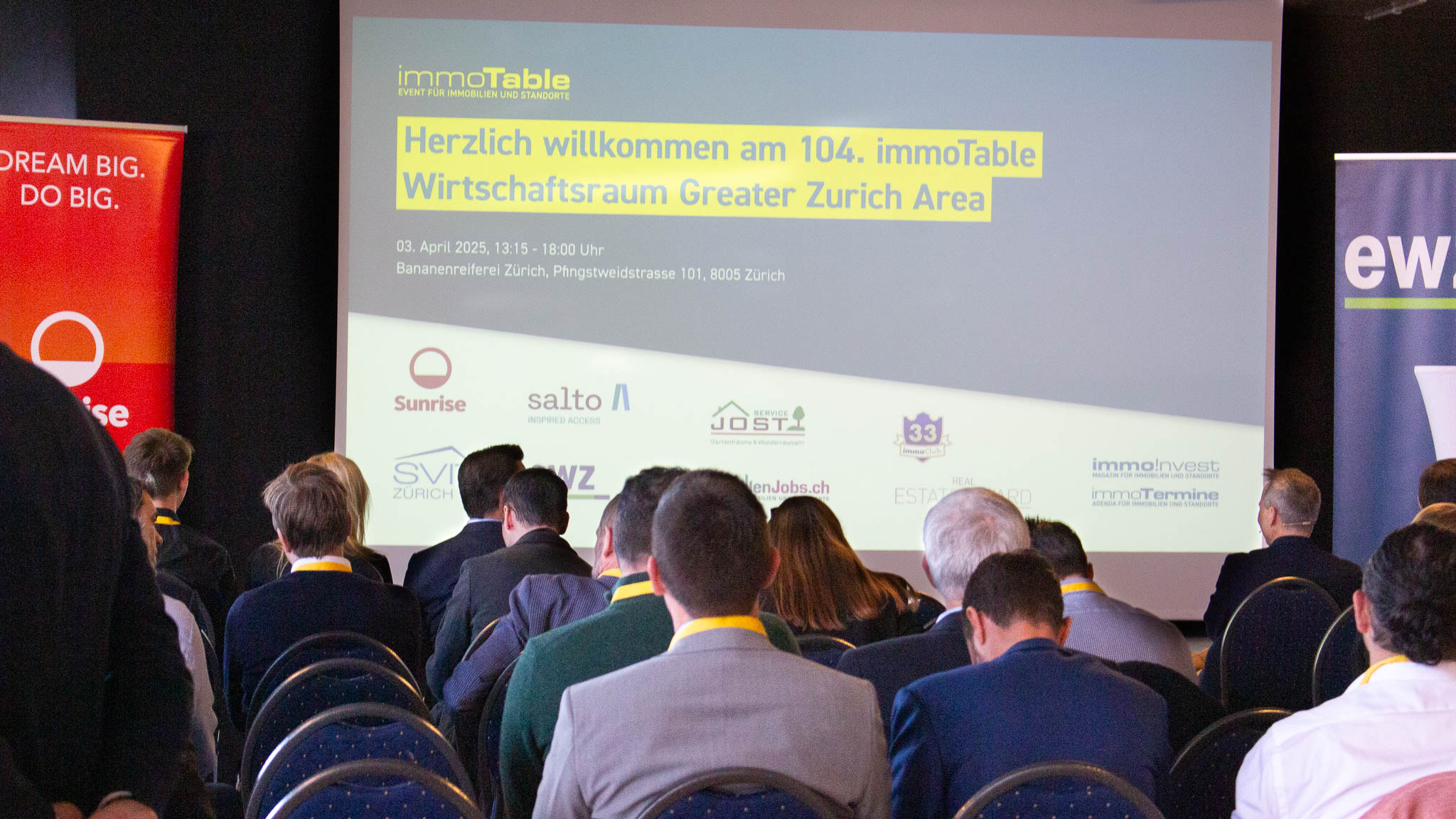
  • The 104th immoTable focuses on energy, location attractiveness and innovation

    The 104th immoTable focuses on energy, location attractiveness and innovation

    [smartslider3 slider=”46″]

    Setting the course for strong locations
    Samuel Mösle, Co-Head of the Zurich Cantonal Economic Development Agency, opened the event with a comprehensive overview of the situation. He outlined the current challenges in a global context and emphasized the role of the construction industry in the further development of Zurich as a business location. Topics such as digitalization, artificial intelligence and securing affordable housing play a central role in this. The aim is to further raise the profile of the canton of Zurich as an innovative and competitive economic area.

    Björn Slawik and Frank Koster from ewz presented the prospects for a decentralized and sustainable energy world. The focus was on the dynamic development of the Swiss solar market and new regulatory framework conditions from 2026. The introduction of local electricity communities, such as the ewz.solarquartier concept, will strengthen self-consumption of solar power at district level. The aim is to make efficient use of surpluses and promote the construction of new solar power plants in a market-oriented manner.

    Jan Frenzel from SMG illustrated how AI-supported systems are revolutionizing the world of customer relationship management. In addition to comparing CRM and ERP systems, he highlighted the potential of SaaS solutions for automating business processes. With intelligent tools, customer needs can be identified even more precisely in future – a key factor for positioning on the market.

    Location development and future trends
    Under the title “How can locations remain attractive?”, Beat Bachmann (Canton of Zug), Jakob Bächtold (House of Winterthur), Marc Lyon (Implenia Schweiz AG) and Albert Schweizer (City of Schlieren) discussed the future viability of locations. The topics ranged from demographic change and new forms of living and working to the question of how innovation and sustainability can be specifically incorporated into site development. The discussion showed that successful locations today have to offer more than just infrastructure. They need identity, networking and visions for the future.

    Outlook for the Real Estate Award 2025
    Mara Schlumpf provided information about the upcoming Real Estate Award, which will take place on October 2, 2025 at Trafo Baden. Outstanding projects and personalities from the real estate and construction industry will be honored in five categories. The event promises not only a gala with a networking character, but also exclusive visibility for innovation and quality in the industry.

  • Support for 91 foreign companies setting up operations

    Support for 91 foreign companies setting up operations

    In terms of location marketing, 2024 surpassed previous years in terms of quality, size and excellence. These are the results of GZA ‘s activities in the past year. As the location promoter explains in a press release, the GZA supported a total of 91 international companies in their expansion projects in this “year of top quality” together with the public location and economic development agencies of the joint economic area.

    The GZA describes it as “particularly pleasing” that four out of five of these relocations came from the actively marketed key technologies of cleantech and artificial intelligence, the strategic focus for 2024. “In 2025, sustainability and innovation will become even more of a strategic focus for the GZA,” Managing Director Lukas Huber is quoted as saying. “Since the beginning of 2024, we have been evaluating projects not only in terms of economic aspects, but also from an ecological and social perspective.”

    According to GZA, the most significant new additions include companies such as Revolut, Anthropic, OpenAI, the Robotics and AI Institute, BYD and Estun Automation. The strong international focus of these new companies confirms the attractiveness of the Zurich economic area for companies from the fintech, robotics, electromobility and artificial intelligence sectors.

    The Starlab Space project also deserves special mention. The Greater Zurich Area is thus also positioning itself as a central innovation location in the future sector of the new space economy. “The location factors that make up the success of the Greater Zurich Area – from quality of life and security to tax attractiveness, entrepreneurial-minded administrations, infrastructure and talent pool – must continue to be actively cultivated,” summarises GZA Chairman of the Board of Directors Dr Balz Hösly.

  • SBB continues to develop Basel

    SBB continues to develop Basel

    With the “Wolf Basel” project, SBB is transforming a 160,000 square metre site in the east of the city into a lively, sustainable urban quarter. The transformation is exemplary for the intelligent densification of urban spaces. Living, working, leisure and logistics are to coexist here in a new form that conserves resources, is sustainable and integrated into the existing urban structure.

    Construction work on the western part of the site will start in 2027. SBB has sought and found top architectural and functional solutions in two competitions. The jury, consisting of independent experts and representatives of the client and the Canton of Basel-Stadt, has now recommended the projects “Janus” by ARGE Experience from Paris with M-AP Architects from Lausanne and “Binaria” by ARGE Parabase GmbH and Confirm AG from Basel for realisation. The two new ten-storey buildings will offer around 300 flats and set standards in terms of sustainability, quality of living and architectural integration.

    Sustainability meets urban innovation
    The planned residential buildings reflect the changes in urban development. The flats are designed for different lifestyles, and communal areas in the ground floor zones promote social interaction. The roofs not only serve as a source of energy through photovoltaics, but also as water reservoirs and in some cases as accessible recreational areas. Photovoltaic elements on the façades, greenery, renewable heating systems and sophisticated systems for cooling in summer are all part of a comprehensive energy concept.

    The project also sets new standards in terms of construction. Screw connections replace adhesive joints, modular structures allow for later conversion or dismantling, making design for disassembly a reality. Wolf Basel thus presents itself not only as an urban development model, but also as a technical model for the future.

    Identity is created through dialogue
    Even before construction begins, the site will be opened up for interim uses, experiments and participation. A historic railway hall has recently been used as a temporary pickleball court, bringing movement to the centre of the development area. In addition, various spaces are available for longer-term uses in the areas of culture, leisure and catering. SBB is calling on people to submit creative ideas and play an active role in shaping the future neighbourhood.

    The opening is more than just a gesture, it is part of a strategy in which urban development is understood as a participatory process. This creates an emotional bond with the neighbourhood and its future identity at an early stage.

    Staged construction with vision
    Construction of Wolf Basel is scheduled to start in 2027. In the first phase, the residential buildings will be built in the western part of the site, including a third in the affordable segment by non-profit property developers. At the same time, the Urban Hub, a public space offering catering, sport, culture and services, will be developed in the middle section. In a second phase, expected from 2031, commercial and service buildings with around 1,000 workplaces will follow in the eastern section.

    The entire project is based on the legally binding development plan dated 2 May 2023 and is an example of the high-quality development of inner-city potential areas in Switzerland.

  • Canton of Zurich calls on Federal Council to act

    Canton of Zurich calls on Federal Council to act

    The pressure on the housing market is enormous. Demand is constantly rising, while supply is lagging behind. The canton of Zurich is particularly affected, where construction projects are increasingly being delayed or prevented by appeals. The consequences are rising rents, social tensions and growing political pressure to act. Five cantonal popular initiatives show how much the issue of housing concerns the population.

    Improvements are unnecessarily delayed
    Although new noise protection regulations have already been adopted, their implementation is still a long time coming. The Zurich cantonal government is calling on the Federal Council to bring the changes to the law into force quickly. This is because protection interests must not be allowed to block the expansion of urgently needed living space. A clear legal basis is essential for planning security and accelerated procedures.

    Protection instrument or strategic objection tool?
    The Government Council is particularly critical of the increasing direct application of the federal inventory ISOS, which actually serves to protect important sites. However, the inventory is increasingly being used to object to new construction projects. With serious consequences for inner densification. This problem is already very noticeable in Zurich, but it is increasingly spreading to other cantons.

    Although the cantonal government supports the announced round table on the ISOS issue, it is calling for concrete and timely solutions that must be developed together with the federal government, cantons and municipalities.

    Call for political prioritisation
    According to the cantonal government, the provision of housing is a key concern for the population and the economy. The federal government must strike a new balance between protection interests and structural development so that urgently needed housing construction is not blocked any further. The responsibility for this now lies with the relevant federal authorities.