Tag: immobilien

  • Change of leadership at the Swiss Chamber of Real Estate Agents completed

    Change of leadership at the Swiss Chamber of Real Estate Agents completed

    With the election of Patrizia Wachter Tanner, the Swiss Chamber of Real Estate Agents is responding to the increasing demands of the property market. The business economist with a Master’s degree in Real Estate Management succeeds Kurt Bosshard, who did not stand for re-election after ten years of dedicated service on the Board. Wachter Tanner manages Prefera Immobilien AG in Sargans and Alfina Prefera Immobilien AG in Chur and brings many years of management experience, industry expertise and entrepreneurial thinking to the Board.

    Her election by acclamation is an expression of the members’ confidence in her expertise and her commitment to the concerns of the sector. At the same time, Kurt Bosshard, CEO of Bosshard Immobilien AG in Ascona, was bid farewell with a big round of applause. His many years of commitment to the professionalisation of the real estate industry were honoured by the Executive Committee with thanks and recognition.

    Quality creates trust
    The SMK stands for certified quality in property brokerage and is thus continuing to gain in importance. With 127 members at the end of the 2024 financial year, there is a clear trend. More and more professional estate agents want to become part of the network and subject themselves to the demanding quality code. Membership requires strict quality management, which is regularly reviewed in audits. This creates trust for both sellers and prospective buyers.

    The need for sound advice is growing, particularly in an increasingly volatile and regionally diverse market environment. The SMK label is a reliable signal to the market. Those who carry it offer proven expertise, transparency and reliability in a sensitive business area.

    Strategically positioned for the future
    With the new Board of Directors, led by President Ruedi Tanner, SMK is signalling both stability and renewal. The combination of many years of industry experience and fresh impetus creates the basis for a strong position in a challenging market environment. with their certified expertise and qualified advice, the members of the Swiss Chamber of Brokers create decisive added value for their customers,” says Ruedi Tanner.

    The SMK thus remains the leading network for quality brokers in Switzerland and a key guarantor of credibility, expertise and sustainable market success.

  • Microsoft promotes Swiss AI innovation

    Microsoft promotes Swiss AI innovation

    Inait’s technology is based on two decades of neuroscientific research and represents a radical break with conventional AI approaches. The centrepiece is a cognitive platform called Digital Brain, which understands cause-and-effect relationships, learns from experience and adapts flexibly to new situations. This brings us closer to the goal of general, human-like intelligence. Beyond the narrow limits of today’s systems.

    Strategic alliance with global reach
    With Microsoft on board, inait now wants to scale its technology globally. The partnership focusses on joint product developments, market launch strategies and co-selling initiatives. The Azure cloud serves as the technological basis, while Microsoft’s international network paves the way into new markets. The first step will focus on the financial and robotics sectors.

    Revolution in fintech and robotics
    In the financial sector, inait’s AI is set to set new standards, for example through intelligent trading algorithms, more precise risk assessments and personalised advisory solutions. In industry, AI is creating new opportunities for adaptive robots that can operate in dynamic environments. The aim is for machines to master complex tasks autonomously and continue to develop.

    Switzerland as a business location and source of innovation
    The collaboration emphasises Switzerland’s role as a hotspot for pioneering AI development. For Microsoft Switzerland, the partnership is a strategic step. “inait’s neuroscience-inspired technology is groundbreaking,” says Catrin Hinkel, CEO of Microsoft Switzerland. “We see immediate opportunities for transformation, especially in fintech and robotics.”

    A milestone for cognitive AI
    The partnership not only marks a significant step for inait, but also an innovative impulse for the global AI market. The Digital Brain is a new approach that closes the gap between man and machine a little further and has the potential to change entire industries.

  • More transparency, more clarity in tenancy law

    More transparency, more clarity in tenancy law

    With the amendment to the ordinance, which comes into force on 1 October 2025, the Federal Council is responding to ongoing criticism of the lack of transparency in the determination of the initial rent. The most recent values of the reference interest rate and the national consumer price index must now be shown on the form for new lettings in cantons where forms are mandatory.

    The aim is to make it easier for tenants to recognise whether a rent is justified or contestable. This not only increases confidence in the rental housing market, but also makes it easier for investors and institutional landlords to plan ahead.

    Urban centres are particularly affected
    The change affects cantons with mandatory forms such as Zurich, Geneva, Basel, Lucerne and Zug. These are regions in which the majority of new tenancies are concluded. There, the official and private forms must be adapted and approved by 1 October 2025 at the latest. Failure to do so could result in the tenancy agreement being classed as invalid with regard to the initial rent. This is a legal risk that professional property owners should not ignore.

    At the same time, the Federal Council is easing the administrative burden for graduated rents. A simple written notification of the rent increase is now sufficient; an official form is no longer required.

    Foundation for a future-proof rent model
    The existing calculation model for rent adjustments, which dates back to the 1980s, is to be fundamentally revised. This is a political response to studies that judge the current model to be outdated. In future, the focus will be on realistic cost assumptions for capital, maintenance and administration, another development that is particularly important for institutional investors and project developers.

  • Basel property market under pressure

    Basel property market under pressure

    Despite moderate price trends compared to the rest of German-speaking Switzerland, residential property in the Basel region remains in demand. Prices are rising significantly in rural communities in particular, which is increasingly prompting potential buyers to extend their search radius. According to Marco Pirelli from Basellandschaftliche Kantonalbank, the fall in mortgage interest rates over the past two years has also fuelled demand. However, this has been accompanied by growing affordability problems. While prices for detached houses have remained stable, condominiums have risen slightly. The result is a 35 per cent increase in mortgage enquiries within one year.

    Examine financial options at an early stage
    Pirelli advises prospective buyers to consider financing at an early stage. “The choice of mortgage products and terms varies from person to person. Clarifying the financial scope with the bank in good time creates planning security.” For many people today, this is crucial in order to be successful in the tense market environment.

    Despite housing protection, prices are rising
    The rental market in Basel is also showing signs of continuing inflation. Fabian Halmer from Holinger Moll Immobilien AG points to structural causes such as an outdated building stock with a high need for renovation. Despite housing protection, rents are continuing to rise, particularly in Basel-Stadt, where 84 per cent of the population live in rented accommodation. Although the situation is not as tense as in Zurich or Geneva, the low vacancy rate of 0.7 per cent signals an acute housing shortage.

    Bottleneck due to too few building applications
    The number of building applications submitted in the canton of Basel-Stadt is particularly alarming. While an average of 784 building applications were recorded each year from 2014 to 2020, the figure fell to just 190 between 2021 and 2023. Halmer believes the new Housing Promotion Act is one of the causes. It protects existing tenants, but hinders new construction projects and makes it more difficult to move in or relocate. The resulting supply bottleneck is likely to lead to further increases in rents.

    Need for reform in legislation and planning
    The experts agree that without targeted adjustments to the Housing Promotion Act and accelerated authorisation procedures, the housing market in Basel is at risk of coming under further pressure. Development sites such as Klybeckplus or Dreispitz Nord could provide relief. Provided they are pursued consistently. A sustainable housing policy must not only focus on protecting existing properties, but also actively consider future growth.

  • Central Switzerland’s economy remains confident

    Central Switzerland’s economy remains confident

    The economic mood in Central Switzerland remains largely optimistic. According to the latest edition of “Finanzmonitor Zentralschweiz 2025”, an annual study conducted by the Institute of Financial Services Zug at Lucerne University of Applied Sciences and Arts and the Central Switzerland Chamber of Commerce and Industry, almost 65 per cent of the companies surveyed rate their economic situation as good. This shows an overall stable development despite slightly gloomier expectations compared to the previous year.

    Focus on expansion and skills shortage
    Around 60 per cent of companies are planning to expand, which indicates a continued willingness to grow. At the same time, the shortage of skilled labour remains a key challenge for the economy. Companies are finding it increasingly difficult to recruit qualified employees.

    International uncertainties affect export-oriented companies
    While small and medium-sized companies are reporting a stable business situation, larger export-oriented companies are more affected by global developments. Uncertainties in the USA, France and Germany in particular are having an impact on planning. In addition, protectionist measures by the new US government are increasingly becoming the focus of economic concerns.

    Exchange rate risks are becoming less significant
    Compared to the previous year, the strong Swiss franc is perceived as less of a problem. Despite an expected further appreciation against the euro, concerns about exchange rate fluctuations appear to be becoming less important.

    Less voluntary reporting, less effort
    Another topic covered by the Financial Monitor is sustainability reporting. The number of voluntarily active companies is declining, but it is clear that the actual effort required to prepare a sustainability report is less than many companies initially feared.

    Stability with growing challenges
    Central Switzerland’s economy remains optimistic, but faces structural and international challenges. There are prospects for growth, but issues such as a shortage of skilled labour, global uncertainties and regulatory requirements will have a significant impact on future development.

  • Government council shortens deadlines in the building permit procedure?

    Government council shortens deadlines in the building permit procedure?

    The Zurich cantonal government wants to optimise the building permit procedure and has proposed shortening the processing period from four to three months. This measure is intended to make the authorisation process more efficient and reduce planning uncertainty for building owners. A key factor in this acceleration is the digitalisation of processes, which should reduce the administrative burden.

    Political background to the change in the law
    The initiative to shorten the time limit stems from a motion by the FDP, SVP and GLP, which was passed by the Cantonal Council by 96 votes to 73 in February 2023. The cantonal government sees this as an opportunity to optimise processing times without jeopardising the quality of the examination procedures.

    No reduction in the preliminary review period
    Contrary to the request in the motion, the preliminary review period will not be reduced from three to two weeks. In doing so, the Government Council is responding to the feedback from the consultation process, according to which a preliminary review that is too short could slow down the procedure overall instead of speeding it up. A thorough preliminary review is seen as crucial for the smooth processing of planning applications.

    More efficient procedures for a dynamic construction industry
    The planned amendment to the law is intended to make construction in the canton of Zurich more efficient and easier to plan. The digital transformation of approval procedures could not only save time, but also minimise bureaucracy. It is now up to the Cantonal Council to decide on the proposed amendment to the Planning and Building Act.

  • Research into the mobility of tomorrow at UZH

    Research into the mobility of tomorrow at UZH

    Mobility is a fundamental social need and is subject to constant change. New technologies, alternative means of transport and political regulations are changing the way people get around. While public transport is the subject of intensive research, there has been a lack of comprehensive research into individual mobility to date. This gap is now to be closed by the newly founded research centre at UZH.

    Research with an interdisciplinary approach
    The “UZH Centre for the Future of Personal Mobility” investigates economic, ecological and social aspects of mobility. The focus is on topics such as climate policy, new drive technologies, digital networking and the future of charging and refuelling infrastructure. The centre also analyses the change in vehicle ownership and the role of autonomous vehicles, sharing models and app-based mobility services.

    Cooperation across disciplinary boundaries
    The centre will be based at the Institute of Business Administration in the Faculty of Economics and will cooperate closely with other disciplines. In addition to economics, geography, psychology, ethics and digital technologies will be involved in the research. The aim is to analyse mobility from a holistic perspective and translate scientific findings into practical solutions.

    Structure and development of the research centre
    At the heart of the centre is a professorship focusing on “Personal Mobility Management and Innovation”, which is scheduled to be filled in the second quarter of 2025. The professorship will be complemented by four doctoral positions and one postdoc position. The centre will be established gradually and integrated into UZH’s existing research structures.

    Scientific foundations for the mobility of the future
    By establishing the research centre, UZH is making an important contribution to shaping the mobility of tomorrow. Through interdisciplinary research and close collaboration with partners from science and practice, innovative solutions are to be developed that promote sustainable and efficient forms of mobility.

  • Direct investment as a driver of growth

    Direct investment as a driver of growth

    Direct investments are a central component of the global economy. They comprise equity investments in foreign companies with the aim of permanently influencing their business activities. The focus is on strategic control, market access and securing resources. In contrast to portfolio investments, which are primarily aimed at capital gains, direct investments have far-reaching economic effects for the countries of origin and recipient countries.

    Switzerland’s locational advantages
    Switzerland is one of the most attractive investment locations in the world. Factors such as legal certainty, a stable economy, highly qualified skilled labour and a well-developed infrastructure make the country particularly attractive for multinational companies. Many international corporations such as ABB and Novartis have their headquarters here, while global companies such as Google and Liebherr have branches in Switzerland.

    Global networking and economic effects
    As an investor and investment location, Switzerland benefits from international capital flows. Swiss companies expand abroad through direct investment, while foreign investors invest in Swiss companies. This not only promotes the exchange of expertise and technologies, but also strengthens economic dynamism. The pharmaceutical sector in particular plays a key role in bilateral investment flows, especially between Switzerland and the USA.

    Direct investments and their influence on growth
    Direct investments have a measurable influence on economic performance. Capital gains from Swiss investments abroad flow back into the domestic economy and have a positive impact on consumption and investment. At the same time, foreign direct investment in Switzerland creates employment and increases productivity. in 2022, foreign-controlled companies accounted for around 24 per cent of total gross value added, while 11 per cent of jobs were directly dependent on them.

    Increasing regulation as a challenge
    In recent years, direct investments have been subject to increasing political regulation. Tax adjustments and investment controls are intended to create transparency and prevent tax avoidance. At the same time, there is a growing debate about tighter controls on takeovers by foreign investors, particularly with regard to national security interests. These developments could impair the growth potential of future direct investments.

    Direct investment as a stabiliser and growth factor
    Switzerland benefits greatly from direct investment, both as a country of origin and as a recipient country. It promotes innovation, strengthens economic power and secures prosperity. However, increasing regulatory intervention could pose long-term challenges for the global flow of investment and economic growth.

  • Successful financing round enables expansion of concrete sensor technology

    Successful financing round enables expansion of concrete sensor technology

    Dietikon-based DuraMon AG successfully completed a financing round totalling 1.6 million Swiss francs for the seed extension in February, according to a press release. The round was led by venture capital and private equity investor QBIT Capital in Zurich, which had already led DuraMon’s seed financing round in June 2023. Sika in Baar, a key investor since June 2023, has extended its commitment by rejoining as a strategic partner alongside Helbling Equities and others, it added. The fresh capital creates the conditions for scaling and expansion beyond the DACH region.

    DuraMon is a spin-off of the Swiss Federal Institute of Technology in Zurich(ETH) that specialises in a new type of sensor technology that ensures long-term stable corrosion monitoring of concrete infrastructure such as bridges, tunnels, multi-storey car parks and parking garages. This enables the early detection and understanding of deterioration processes in concrete structures, according to the press release. This means that the right type of repair can be determined at the right time and in the right place in the structure, allowing building owners to optimise their maintenance strategies and reduce repair costs.

    The newly secured funding will enable DuraMon to automate and optimise key internal processes, namely automated data analysis and sensor installation, according to the press release. There will also be a strong focus on customer development and expanding DuraMon’s market reach beyond the DACH region into other European countries.

  • Digitalisation strengthens customer focus

    Digitalisation strengthens customer focus

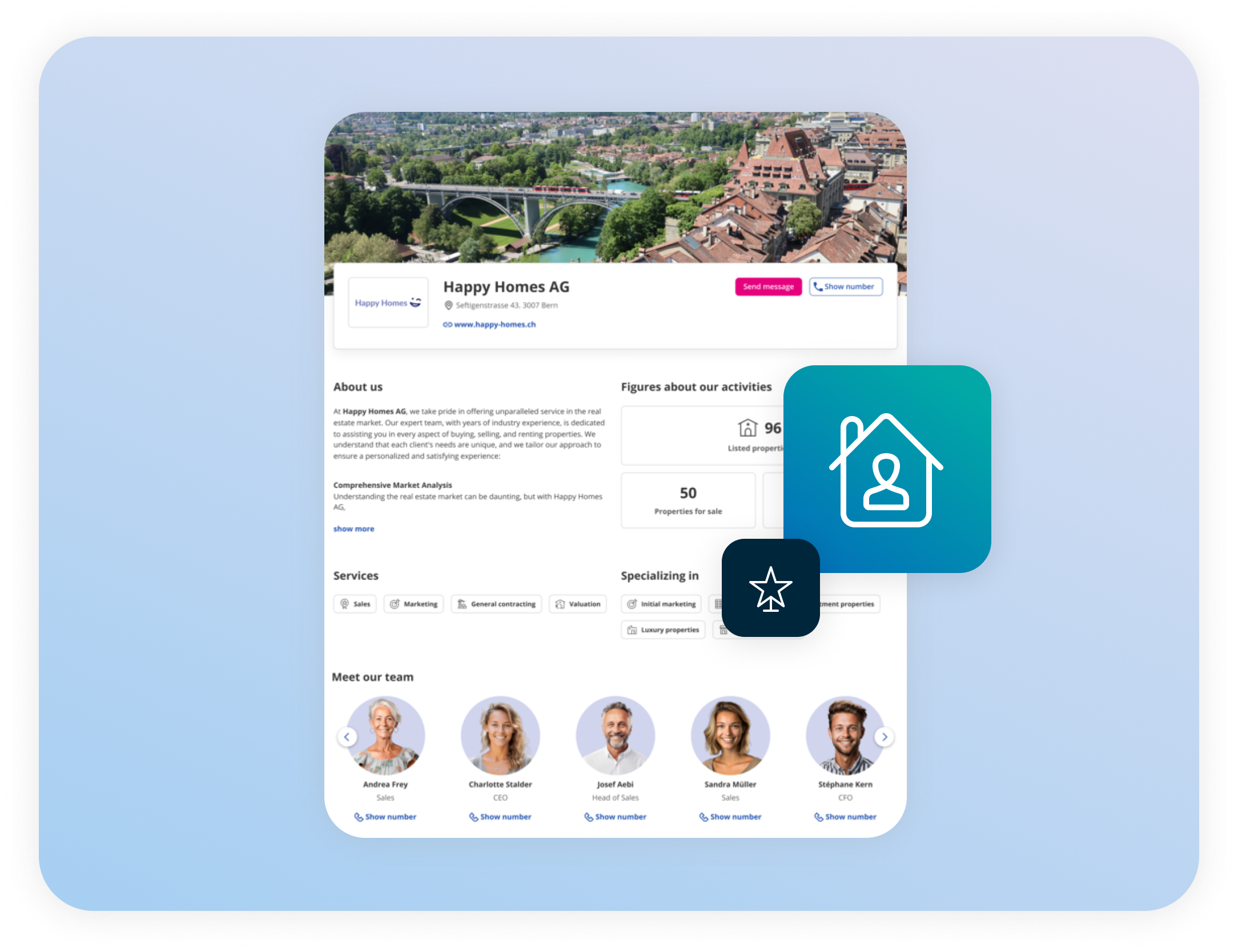
    At the turn of the year, SMG Real Estate integrated numerous new digital tools into the digital Business Manager for its customers, which provide specific support for letting and marketing. These include, for example, the digital showcase page, which professionally presents the portfolio and special services of property companies to interested parties. A personal introduction of the team with contact information and contact person portraits promotes a pleasant first impression and builds trust.

    Another new feature is the use of artificial intelligence (AI) and the automated creation of listings on SMG Real Estate’s property platforms. The entire process is made considerably easier. Once the address and a few specific details of a property have been entered, the advert is filled in automatically – supported by reliable data from IAZI. The property description can also be created automatically. The new AI solution is integrated into the Business Manager user interface and analyses property data and neighbourhood information to create professional descriptions that highlight the best features of each property.

    SMG Real Estate has also further optimised its marketing packages: 50% more ads in the search results list not only ensure more visibility, but also improve performance and thus the company’s own marketing success. A key factor in optimising the likelihood of closing deals quickly is, on the one hand, information relevant to decision-making and, on the other, the accuracy of the approach to potential interested parties. SMG Real Estate now provides the “Potential Map for Properties” tool for this purpose. Based on property valuations, estate agents can identify regions with potential sales potential and can therefore focus their marketing activities on particularly promising districts and regions.

    SMG Real Estate has also simplified day-to-day collaboration within the team. Customers can access the entire real estate ecosystem with just one login. This makes it even easier for them to benefit from daily updates in the Business Manager and gives them quick and convenient access to numerous third-party partner services.

    The product portfolio of third-party partners has also been expanded once again. The IAZI capitalised earnings value model not only makes it possible to quickly calculate property yields on the basis of current market data. The tool now also incorporates “natural hazards” on the basis of IAZI data and provides important decision-making aids for most cantons with regard to various natural hazards (including risks such as avalanches, landslides, rockfall, floods, storms, earthquakes, hail and surface runoff) and their hazard categories.

    Another example of additional services: If you place the HEDOlight widget on your own company website, it lays the automated foundation for new contacts and mandates. This is because potential home sellers can use the HEDOlight widget to obtain a free estimate of the value of their property based on IAZI’s hedonic method.

    And thirdly, SMG Real Estate’s exclusive partnership with the Residenture auction platform opens up new opportunities for estate agents to significantly increase the number of potential buyers for their properties. The leading Swiss platform for AI-supported property auctions provides estate agents with a legally compliant and transparent digital auction process. Bidding processes for properties advertised via SMG Real Estate can be started seamlessly with verified interested parties in a fast, traceable process.

    Letting and selling properties is becoming increasingly efficient with the use of digital tools. This not only creates additional convenience and higher performance for business customers, but also frees up time for important customer contact.

    If you want to get an overview of all the new digital products, take a look here.

  • Potentials and challenges of repurposing

    Potentials and challenges of repurposing

    Technical and economic challenges
    The conversion of commercial buildings into residential space requires considerable structural adjustments. Building depths, lighting conditions and infrastructure pose challenges that require high levels of investment. At the same time, conversion can be economically attractive if the rental potential for residential space is higher than that of office space. Creative concepts such as modular building elements or alternative living models such as co-living can facilitate realisation.

    Legal hurdles and political factors
    Building regulations, zoning plans and the NIMBY phenomenon (Not In My Back Yard) can delay or prevent projects. Early dialogue with authorities and residents can help to minimise resistance. In addition, politicians are increasingly willing to adapt the regulatory framework in order to facilitate conversions.

    Innovative practical examples
    Successful projects such as the conversion of the Rennbahnklinik in Muttenz or the pilot project on the former ZWHATT industrial site in Regensdorf show that sustainable living space can be created through flexible concepts, reduced construction costs and intelligent space solutions.

    Future prospects
    Conversions offer great potential for overcoming the housing shortage and for resource-saving urban development. Success requires innovative planning, political support and a co-operative approach between investors, authorities and the population.

  • Online tool for climate-neutral industrial processes

    Online tool for climate-neutral industrial processes

    Industry is facing the challenge of converting its processes from fossil fuels to renewable energies. High-temperature heat pumps offer an energy-efficient solution for temperature ranges from 100 to 200°C in particular. They can not only provide process heat, but also generate cooling at the same time, which makes them particularly attractive for many branches of industry.

    Interactive technology map for companies
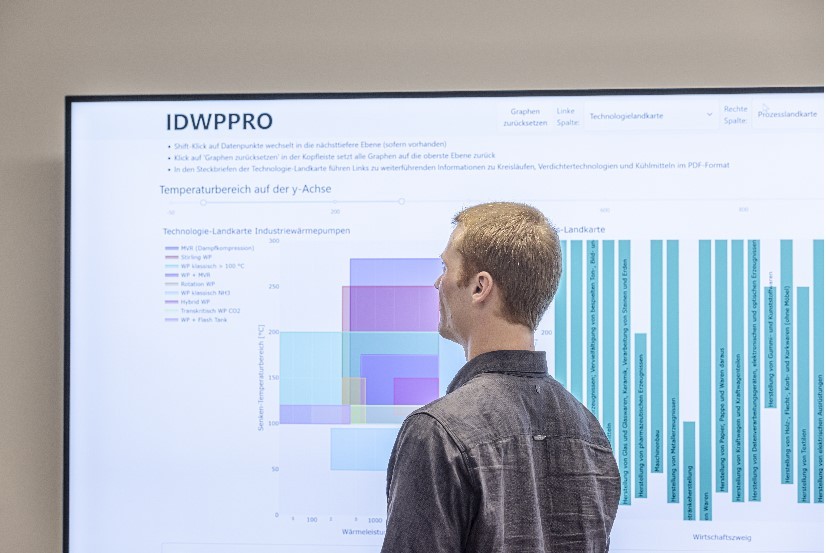
    In the research project “Identification of industrial heat pumps for process heat”, Fraunhofer ISE has developed an online tool that provides companies with targeted support in selecting the right heat pump technology.

    The tool offers

    • Visualisation of the available heat pump technologies in the temperature range and output
    • Allocation of heat pumps to specific industrial processes (e.g. cleaning, drying, cooling)
    • Interactive retrieval options for process temperatures in various industries
    • Detailed fact sheets on circulation processes, compressor technologies and refrigerants

    A contribution to climate-neutral industry
    The online tool is part of the Fraunhofer research topic “Climate-neutral industry”, which supports companies on their way to a CO₂-neutral energy supply.

    This includes:

    • Optimisation of potential energy savings
    • Utilisation of industrial waste heat
    • Integration of renewable energies (e.g. photovoltaics for in-house power supply)
    • Storage solutions for heating, cooling and electricity

    Special attention is also paid to the treatment of industrial waste water, which not only contains waste heat but often also valuable residual materials such as metals or acids. These can be efficiently recycled using modern recovery technologies.

    Participate and contribute data
    The data pool of the online tool is constantly being expanded. Manufacturers of heat pumps and industrial companies can get in touch with Fraunhofer ISE to integrate their data into the platform and thus drive development forward.

    With this new digital solution, Fraunhofer ISE offers companies an effective tool for decarbonising industrial processes and increasing energy efficiency – a decisive step on the way to climate-neutral production.

  • Digital Real Estate Summit: Innovation trifft Immobilien

    Digital Real Estate Summit: Innovation trifft Immobilien

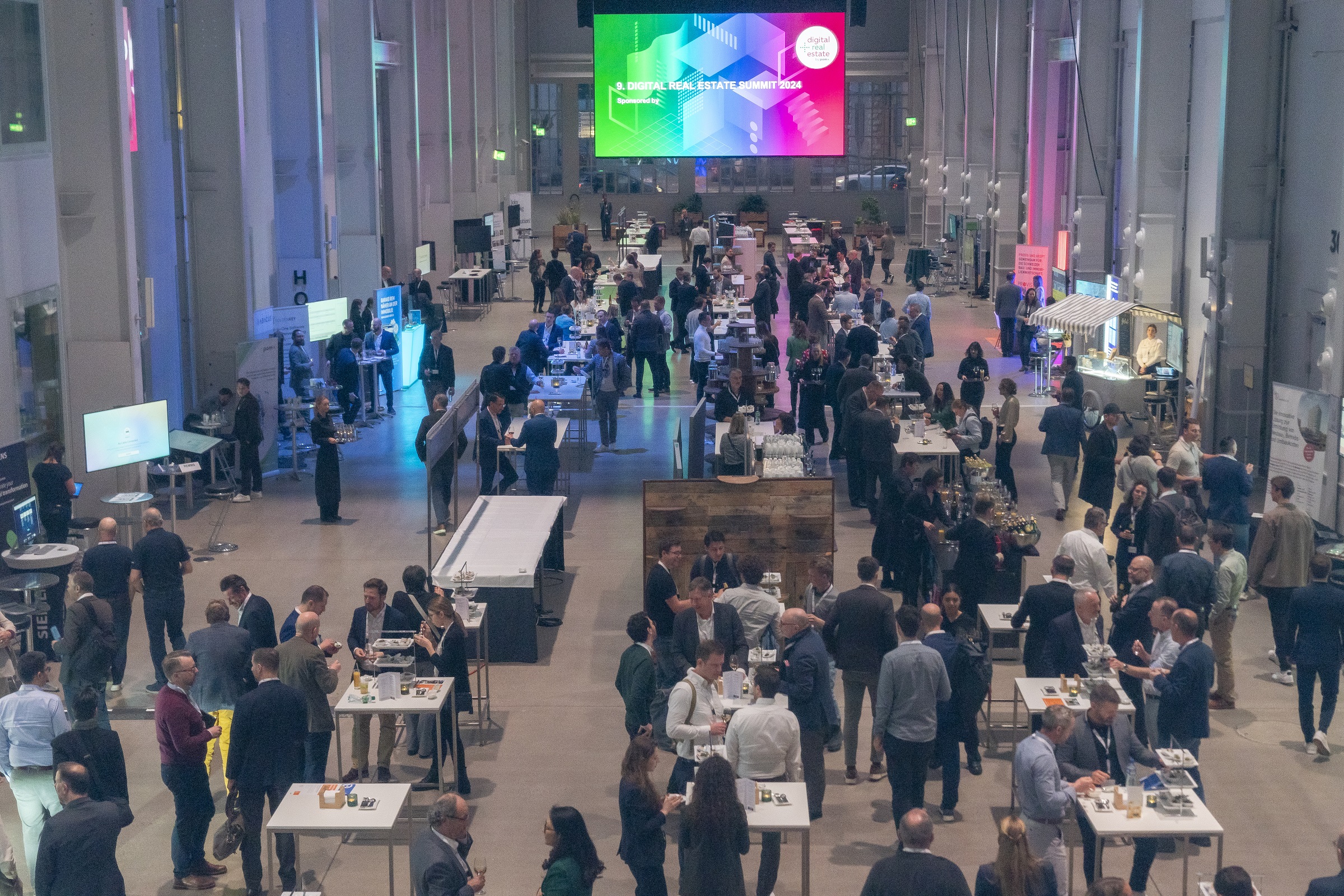
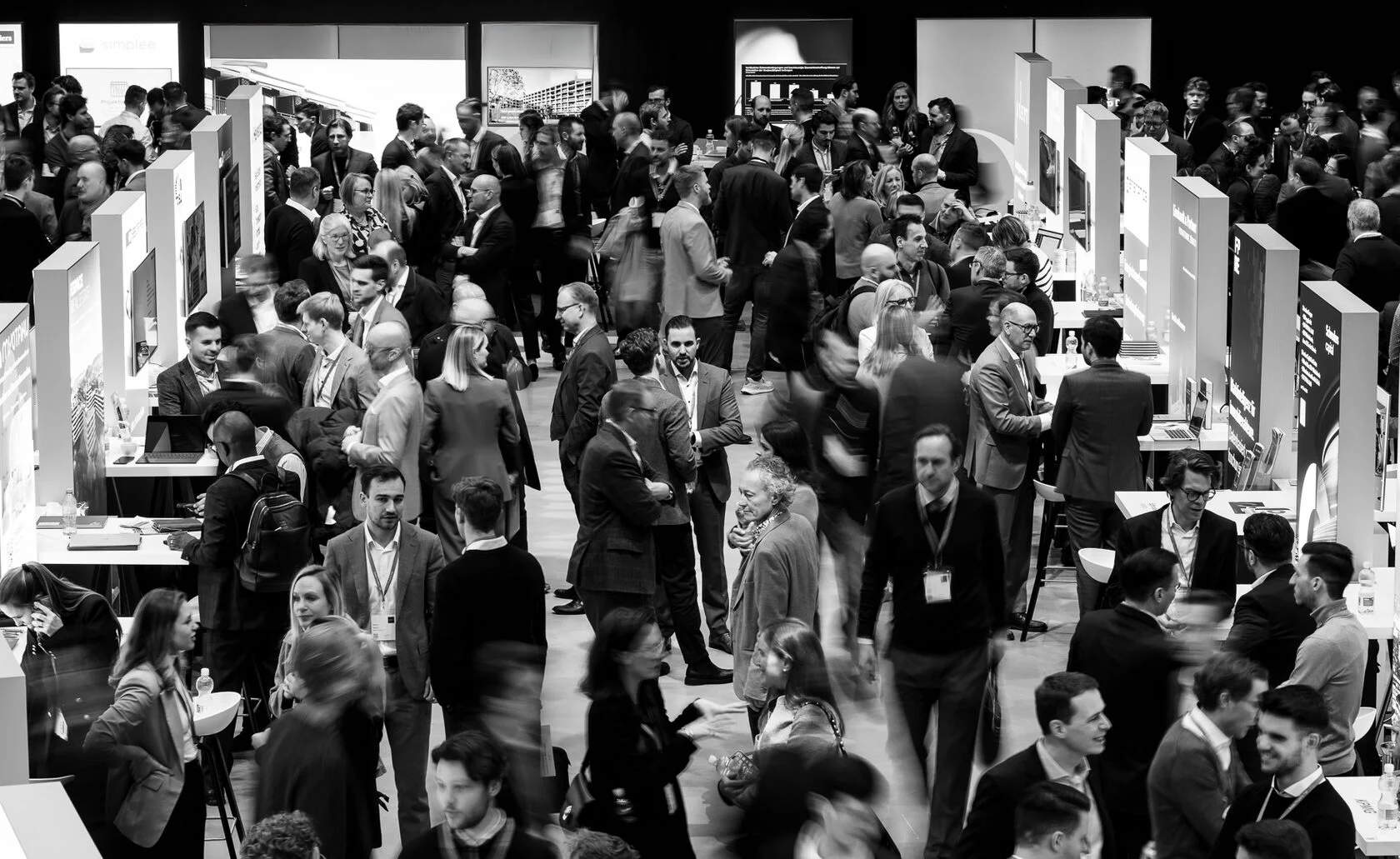
    The Digital Real Estate Summit is the platform for all players in the property industry who see the digital world as an opportunity and want to tap into new business opportunities or further develop existing ones. An exhibition of digital products and systems that anticipate the future of the property industry will show what is already in practice today. Because many things are possible if you have the right information!

    Become part of the network and join us in Baden on 6 March 2025.

    The varied programme offers something for everyone who wants to play an active role in shaping the digitalisation of the real estate industry. Be impressed by inspiring keynotes in which renowned personalities share their visions and experiences. Gain new perspectives through practice-orientated workshops that will give you insights into current topics and best practices.

    The exciting exhibition will present the latest trends and developments in the industry. Whether smart buildings, digital platforms or AI-supported solutions – here you will find the innovations that will shape the market tomorrow.

    Of course, there will also be plenty of networking opportunities. Exchange ideas with other experts and visionaries at the 10th Digital Real Estate Summit 2025 and make valuable contacts. Culinary highlights will ensure that you can enjoy the day in a relaxed atmosphere.

    The Digital Real Estate Summit has been the leading platform for discussing the transformation of the property industry for years. Take the opportunity to network with other pioneers and expand your knowledge. Register now and become part of the most important industry event

    Be there when visionaries and industry leaders develop forward-looking solutions. Be inspired, actively shape the digital property world and celebrate the 10th anniversary of the Digital Real Estate Summit with us!

    Further information: https://www.digitalrealestate.ch

  • Digital solution makes building renovations easier for owners

    Digital solution makes building renovations easier for owners

    HEV cooperates with Scandens. Founded in 2021 as a spin-off of the Swiss Federal Institute of Technology in Zurich(ETH), the company launched software around a year and a half ago that makes it easier to plan and implement energy-efficient building renovations. Thanks to the cooperation with HEV Zurich, the Scandens software is now also available to private homeowners for the first time.

    Using the Scandens internet application, which is based on artificial intelligence, they can check whether and which renovation measures make economic and ecological sense. According to the company, the machine learning algorithms used were developed at ETH Zurich and the Massachusetts Institute of Technology. The software combines them with the latest energy modelling techniques for digital twins and official planning standards.

    According to a press release from Scandens, the software displays over 500 renovation combinations and creates a plan that serves as the basis for implementation. “Our mission is to increase renovation rates in Switzerland and actively support owners in increasing the value of their properties,” Scandens co-founder Diego Sigrist is quoted as saying.

    According to HEV Director Albert Leiser, the association wants to provide “a future-oriented and practical solution” with this offer: “With Scandens, we can offer our members a very well-founded digital planning aid that saves time and promotes sustainable decisions.”

  • Renewables hold a high share of electricity and heat

    Renewables hold a high share of electricity and heat

    The conversion of the Swiss energy supply to renewable sources is only making slow progress. This is shown by the seventh benchmark study by the Swiss Federal Office of Energy(SFOE), in which 111 energy suppliers from all over Switzerland took part this time.

    According to the study, the share of renewables has stagnated compared to the sixth study in 2021/22 for the participating suppliers at just over 80 per cent for electricity, slightly below that for heat and just under 10 per cent for gas. Four suppliers have already met the targets for electricity with over 90 per cent, including Energie Wasser Bern(ewb) and Services Industriels de Genève with 95 per cent and Eniwa in Aarau and EWZ in Zurich with 94 per cent. In the heat sector, EWZ is ahead with 95 per cent and Energie Uster and Eniwa with 92 per cent target fulfilment each. In the gas supply sector, only ewb with 88 per cent and Technische Betriebe Glarus with 84 per cent are above 80 per cent target fulfilment.

    Digitalisation is a major challenge for small suppliers in particular. A quarter of them do not even have a strategy for this. Just under half have a strategy, but no specific targets.

    Energy efficiency measures are also lagging behind. Only 45 per cent of the participating electricity suppliers already have a strategy with quantified targets.

    According to a BfE press release on the study, the benchmarking itself has contributed to knowledge transfer in the sector with webinars, events and information material.

  • Research into concrete as a carbon sink

    Research into concrete as a carbon sink

    Researchers at the Swiss Federal Laboratories for Materials Science and Technology(Empa) want to remove large quantities of excess carbon dioxide from the atmosphere with the Mining the Atmosphere working group. According to a press release, 5 to 10 billion tonnes of carbon could be used annually as concrete aggregate. This would be enough to permanently store the excess CO2 within 100 years after the energy transition and thus bring the atmosphere back to a climate-friendly level. This is estimated to be 400 billion tonnes of carbon or the equivalent of around 1500 billion tonnes of CO2.

    However, surplus renewable energy is needed to realise this. This is the only way to convert the carbon dioxide into methane or methanol and then process it into polymers, hydrogen or solid carbon. “These calculations are based on the assumption that sufficient renewable energy will be available after 2050,” Pietro Lura, Head of Empa’s Concrete and Asphalt Department, is quoted as saying in the press release.

    However, the amount of building materials required worldwide far exceeds the surplus carbon in the atmosphere. “Even if sufficient renewable energy is available, the key question remains as to how these huge amounts of carbon can be stored in the long term,” Lura continues. The researchers see one approach here in the production of silicon carbide, which can be used as a filler in building materials and the production of asphalt. This should bind the carbon in the long term and have excellent mechanical properties. However, Lura describes the production process as extremely energy-intensive. Production still requires considerable material and processing research in order to make it economically viable.

  • Lighthouse Papieri Cham

    Lighthouse Papieri Cham

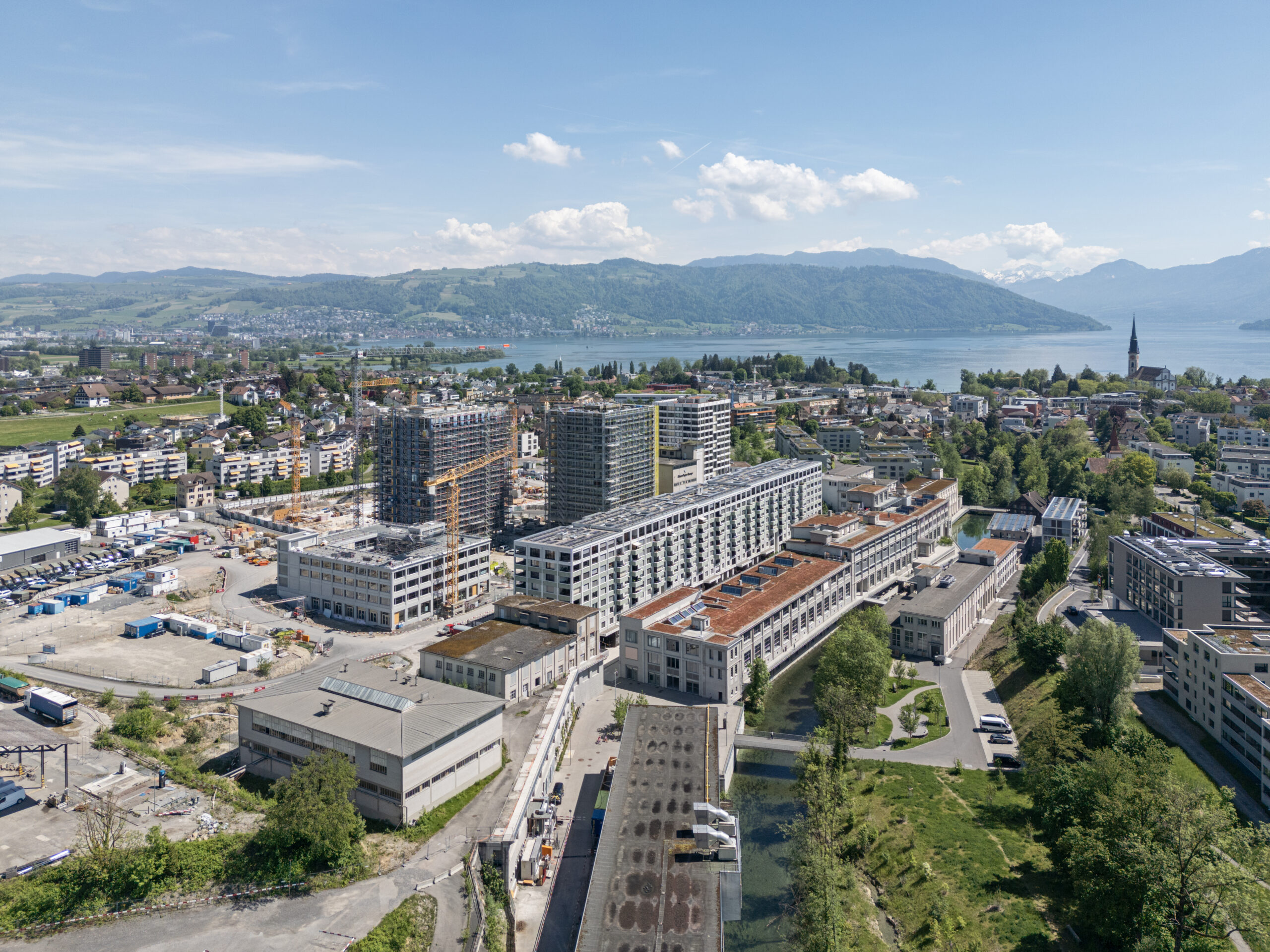
    People today are looking for the “as well as” – in the case of Papieri, it is the interplay of an urban lifestyle in close proximity to nature. On the one hand, the new district offers all the extras of a lively neighbourhood with practical services for everyday life, such as a wide range of shopping and dining options, childcare and cultural and sporting activities
    And catering facilities, childcare and cultural and sporting activities. On the other hand, you can find peace and quiet by the River Lorze or in one of the neighbouring recreational areas.

    Next Level Spaces
    In the third construction phase, a total of 10,000 m² of office, commercial and retail space will be created with the “Next Level Spaces”. Where and how people work has changed dramatically in recent years. Attractive and adaptable work concepts are needed to inspire employees. This leads to new requirements for buildings, such as a high degree of flexibility in order to fulfil a wide range of needs, from office layout to building services.

    The spaces in the “Next Level Spaces” can be flexibly designed and are over 6 metres high with a payload of up to one tonne per m², and intermediate floors can be installed as required. The user decides where intermediate floors are needed and can also create additional space at a later date. The “Next Level Spaces” offer future-orientated companies a wow location for offices, trade and Industry 4.0.

    Landmark boiler house
    The landmark at the heart of the site – the listed boiler house – will also be converted in the third construction phase. Where steam boilers used to be fired up, guests can expect a culinary treat in future. In spring 2026, the Segmüller Collection will expand its portfolio of unique gastronomy concepts such as Carlton, Loft Five, Roof Garden and Sablier in Zurich to Papieri-Platz in Cham and open a new grill restaurant with bar and lounge on the ground floor of the Kesselhaus. Industrial charm meets modern lifestyle, archaic fire cuisine meets refined elegance – a place that promises enjoyment for every taste. In the western section above, unique office space awaits new users in the former monument, while a fitness centre in the eastern section offers space for physical exercise.

    Sustainability
    Awarded the “Watt d’Or” by the Swiss Federal Office of Energy, the energy system of the Papieri site enables completely CO2-free operation and ultimately generates around 75% of the energy on site. In addition, the “Next Level Spaces” commercial building is certified with the internationally renowned “Leed Platinum” sustainability label. Resource-conserving construction is also already common practice at Papieri. For example, with the conversion of listed buildings such as the boiler house or an innovative timber-hybrid residential tower block. However, the most important contribution to sustainability is a long service life. Great attention is paid to this factor during development. Buildings must be flexible in order to meet the as yet unknown needs of a changing society in the future. An office building that can be converted into flats, for example, prevents premature demolition and thus contributes to sustainability. This is why Papieri constructs high-quality, adaptable buildings that will still be in favour for various uses decades from now.

  • Space for the future “An der Aa”

    Space for the future “An der Aa”

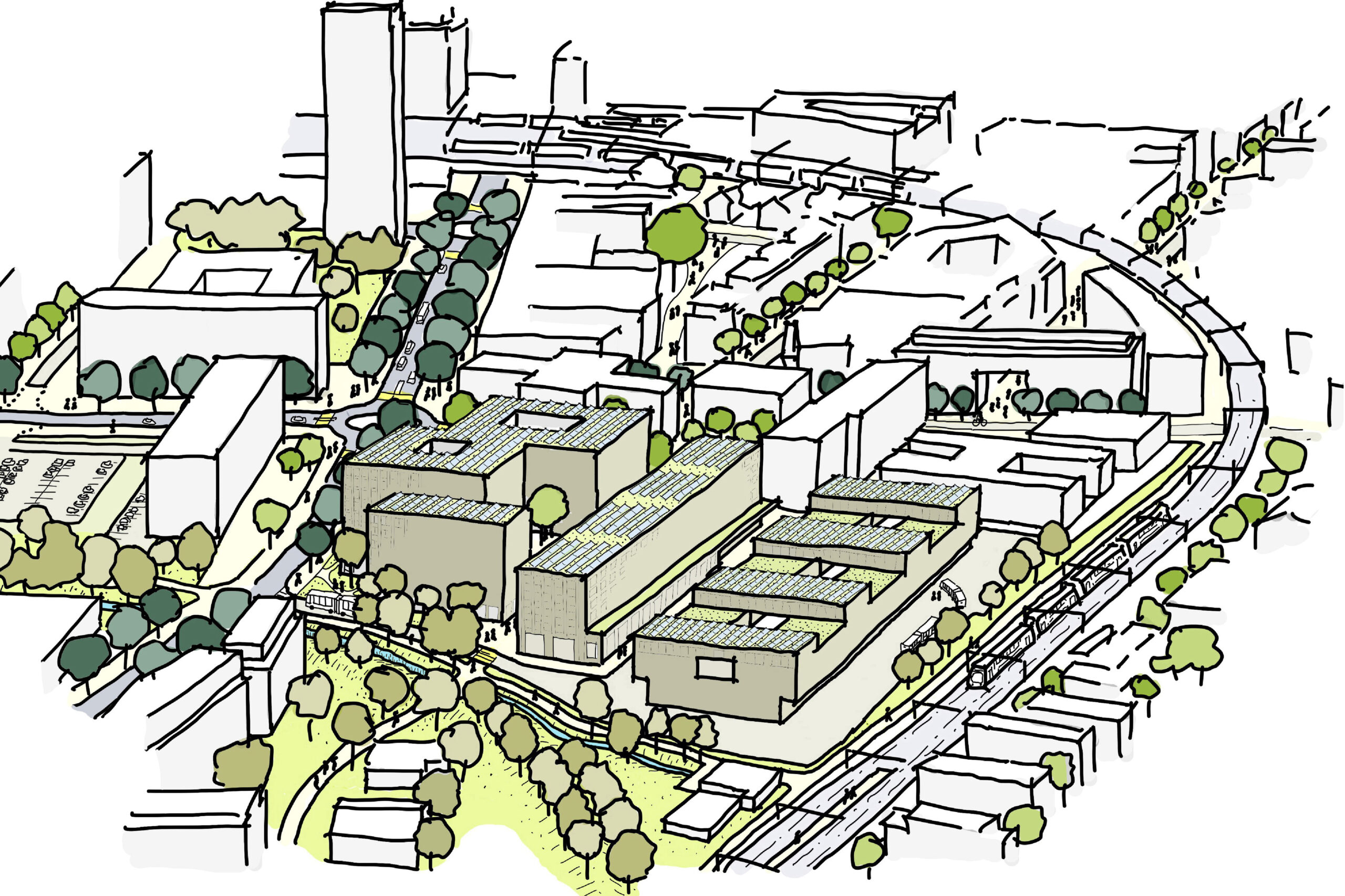
    The “An der Aa” project aims to repurpose and densify the ZVB site. Key elements include increasing the living and working space, a modern infrastructure for public transport and emergency services and opening up the neighbourhood to the local population. Of the planned flats, 40% are to be offered at an affordable price in order to meet the demand for affordable housing in Zug.

    Infrastructure for mobility and emergency services
    In the centre of the new district, a state-of-the-art building will be constructed to house the Zug rescue service and the cantonal administration. The proximity to the new ZVB main base will enable synergies, for example in vehicle maintenance. The new infrastructure will meet the increasing demands of public transport and rescue services and contribute to future-proof mobility.

    Focus on quality of life
    The site is being densified and ecologically upgraded. The Siehbach stream will be uncovered and a barrier-free footpath integrated. Green spaces and public squares will enliven the neighbourhood and provide space for recreation. The Schleifendamm will be secured as a biodiversity-rich oasis for plants and animals and contribute to the quality of life in the neighbourhood.

    Legitimisation and broad support
    Work on the “An der Aa” project has been ongoing for 14 years, involving various stakeholders from politics, administration and the public. With 81.3% approval in March 2024, the people of Zug have given their support to the development plan. Construction is scheduled to begin in 2025 and be completed by 2032. Thanks to this broad support, the neighbourhood will become a flagship for innovative urban development in Zug.

    Future prospects
    The project will change the face of Zug and meet the growing demand for residential and commercial space. The new infrastructure will create capacity for a significantly higher volume of public transport passengers and secure the operation of the emergency services.

  • Merger in timber construction secures jobs and expertise

    Merger in timber construction secures jobs and expertise

    The timber construction company Blumer Lehmann, based in the St.GallenBodenseeArea, has announced the takeover of Hächler Holzbau, as detailed in a press release. From 1 April 2025, Hächler customers will be served from the company’s headquarters in Gossau. All existing and new orders will be processed in the existing workshops. These will remain at the Neuenhof site.

    The takeover is intended to bundle the “first-class timber construction expertise” of both companies “into an impressively diverse range of services for sustainable timber construction solutions”, according to the statement. The focus is on classic timber constructions and prefabricated timber construction projects.

    With this step, a successful successor solution has also been found for Hächler’s timber construction division, the Wettingen-based Hächler Group announced in a separate press release. A solution for his succession had been worked on together with Managing Director Günter Ebner for some time. “The focus was on the secure future of our employees and maintaining our long-standing customer relationships.”

    According to the company, Blumer Lehmann specialises in solutions for the timber industry and in timber and silo construction. 500 employees at four locations provide craftsmanship services for a wide range of customer projects worldwide.

    Hächler Holzbau realises “small jobs and complex construction projects” using wood. According to the company, all employees will be taken on. Vocational training will also be continued.

  • Foldable and reusable formwork revolutionises concrete construction

    Foldable and reusable formwork revolutionises concrete construction

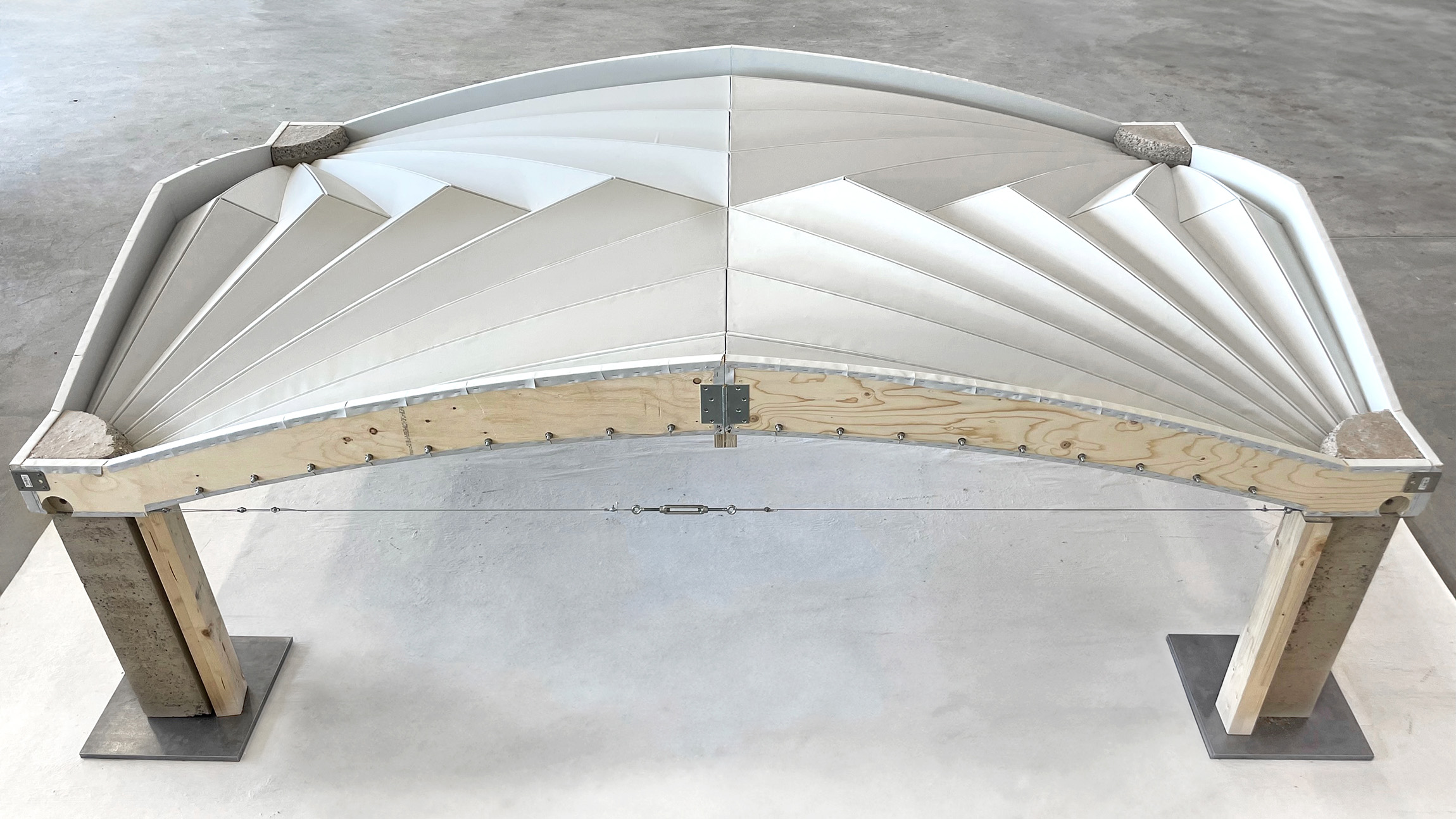
    Unfold Form is the name of the lightweight and reusable formwork for vaulted concrete structures. It was developed by architecture doctoral student Lotte Scheder-Bieschin in Philippe Block’s ETH research group. According to an ETH report, it saves up to 60 per cent concrete and up to 90 per cent steel compared to conventional ceilings.

    Unfold Form consists of thin, flexible plywood strips. They are connected to each other by textile hinges and can be unfolded like fans. Four such moulds are quickly and easily joined together in a wooden frame to form a load-bearing formwork with spikes. The concrete is poured on top. “The concrete absorbs these corrugations as ribs,” says the inventor. “These ribs help to transfer loads.”

    Once the concrete has hardened, the formwork can be removed from below, folded up again and used again. According to the information provided, the entire system for the prototype weighs just 24 kilograms, but can carry up to 1 tonne of concrete.

    “In addition to the material, you only need a template for the mould and a stapler.” The material for the prototype cost 650 francs. As the researcher emphasises, the formwork can be produced and set up without specialist knowledge or high-tech. This means it can be used worldwide, even with limited resources, for example in developing countries. The demand for new buildings is particularly high there.

    The second prototype was cast on site by the South African partner company nonCrete, which is committed to sustainable buildings and affordable housing. “The innovative formwork system,” says Scheder-Bieschin, “will one day be used to build high-quality, dignified and sustainable homes in South African townships.”

  • Record figures and creative impetus for the property sector

    Record figures and creative impetus for the property sector

    The 13th edition of the Swiss real estate trade fair for investors, which took place on 15 and 16 January 2025 in Hall 622 in Zurich Oerlikon, exceeded all expectations. With a record attendance of 5,167 trade visitors and 154 exhibitors, IMMO25 confirmed its leading role as the most important trade fair for the property and finance sector in Switzerland.

    Focus on forward-looking topics
    The trade fair offered a wide range of specialist topics along the entire value chain of the property industry. The focus was on current challenges and trends such as

    • The future of construction: innovative building concepts and sustainable architecture
    • The tenant of tomorrow: New demands and changing living concepts
    • Falling interest rates: effects on the property market and investment strategies
    • Sustainability: energy-efficient buildings and climate-friendly developments

    The motto “Growth through creativity” was reflected in the numerous innovative solutions that were presented and discussed at the trade fair.

    First-hand expert knowledge
    A highlight of the event was the IMMO Forum, which offered expertise and inspiration over two days with 35 panel discussions and 150 renowned experts. The debates were not only followed by trade fair visitors, but also by over 1,900 online viewers who followed the forum live.

    Review and outlook
    The organisers MV Invest and Swiss Circle were delighted with the great success of the trade fair and thanked all exhibitors, visitors, speakers and partners for their support. IMMO25 has once again proven that it is a leading platform for the property industry, providing impetus and promoting exchange between investors, developers and experts.

    The next edition of IMMO26 will take place for the first time on 14 and 15 January 2026 in Hall 550 in Zurich Oerlikon.

  • New measurement technology detects corrosion in reinforced concrete without intervention

    New measurement technology detects corrosion in reinforced concrete without intervention

    Retaining walls, tunnels and bridges made of reinforced concrete characterise the Swiss cityscape and infrastructure. However, many of these structures are already several decades old – and chemical changes in the concrete affect the steel used. If the reinforcing steel begins to rust, the structure loses stability. The damage is particularly problematic in inaccessible places where conventional testing methods fail.

    Electrochemical measurements as a new solution
    Until now, engineers have had to break open parts of the concrete to check for corrosion damage. A time-consuming and often inadequate procedure. Talpa has developed a new method that works via drainage pipes. A special probe is inserted into the pipe and uses electrochemical signals to measure the likelihood of corrosion in the surrounding reinforced concrete.

    “This has never been done before,” explains Lukas Bircher, one of the developers. “Previously, you had to remove entire concrete surfaces to find damage and could still easily miss a critical area.” With the new technology, entire sections of wall can now be systematically tested without destruction or costly construction work.

    Measurements during operation – without a construction site
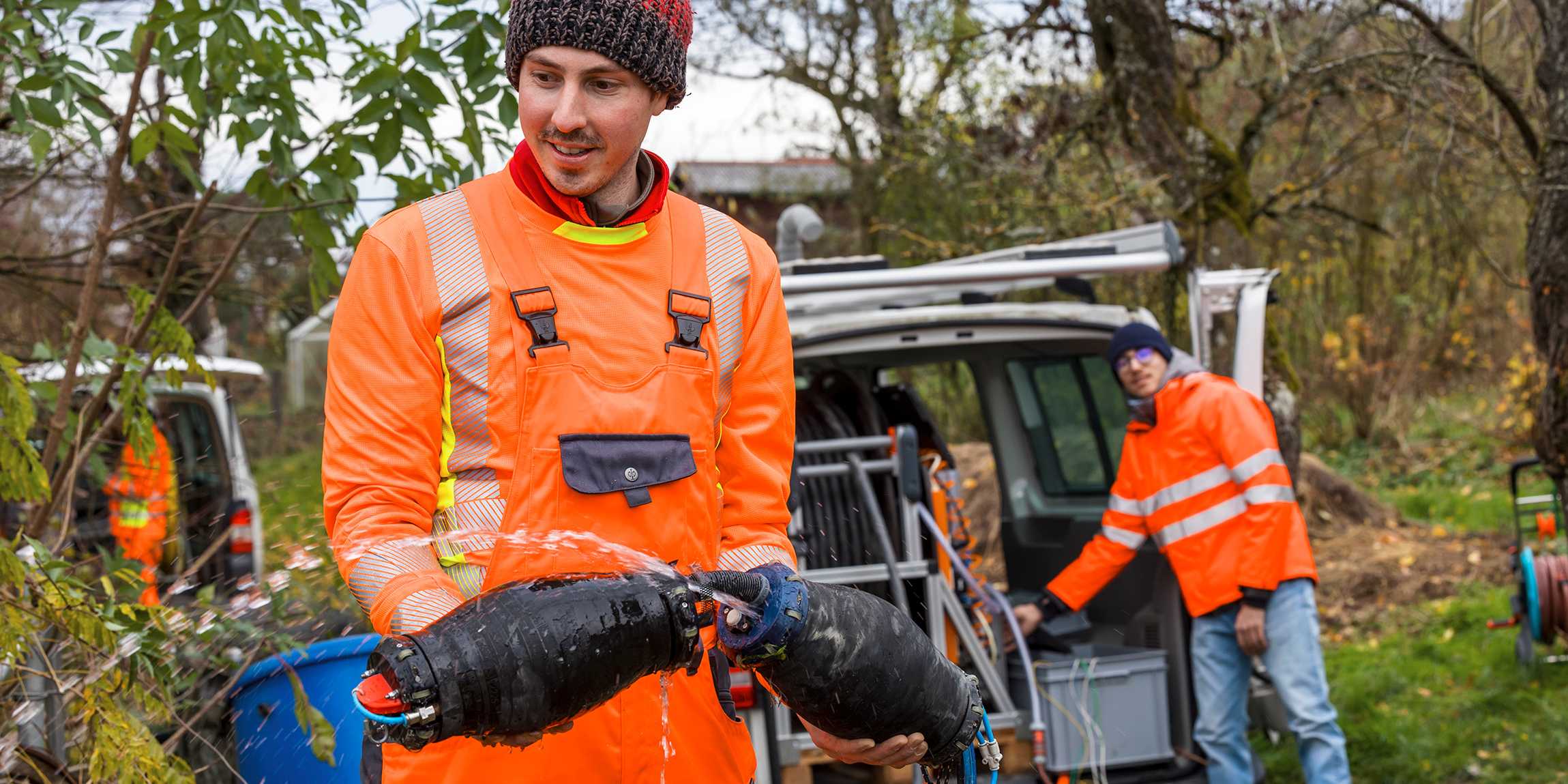
    The method has already been successfully tested, including on a 200 metre-long retaining wall in Zurich-Höngg. The principle is a probe that is inserted into the drainage pipe and fixed in place with inflatable seals. The system then directs water into the measuring area, creating a conductive connection between the electrodes of the probe and the steel in the concrete. Based on the recorded electrical signals, the team can recognise whether and to what extent corrosion is present.

    A new measurement is taken every 25 centimetres to record the condition of the entire section of wall. “This allows us to specifically identify those areas that actually pose a risk,” says Bircher. “This not only saves time, but also high costs for unnecessary interventions.”

    50 years after the construction boom – the need for renovation is growing
    Many of the reinforced concrete structures affected today date from the boom period between 1960 and 1980. Retaining walls from the 1970s in particular often contain cavities that favour corrosion. Previously, damage had to be identified by means of time-consuming spot checks, with a high risk of overlooking critical areas. The new method offers a comprehensive and reliable analysis for the first time.

    From research to start-up Talpa-Inspection
    The technology has such great potential that Bircher founds the start-up Talpa-Inspection together with two colleagues. The name “Talpa”, Latin for “mole”, symbolises the innovative way of making deeply hidden damage visible. Supported by an ETH Pioneer Fellowship, the team is further developing the technology and preparing to enter the market.

    Future prospects, automation and scaling
    The measurement is currently still partly manual, but the team is already working on an automated version. The aim is to make the probe more robust and further accelerate the measurement process. Demand is high. In Switzerland alone, there are over 1,000 kilometres of potentially affected reinforced concrete structures.

    “Our method offers a real opportunity to extend the service life of existing structures,” says Bircher. “We hope that it will soon establish itself as a standard procedure for structural diagnostics.”

  • AI accelerates perovskite solar cells for the mass market

    AI accelerates perovskite solar cells for the mass market

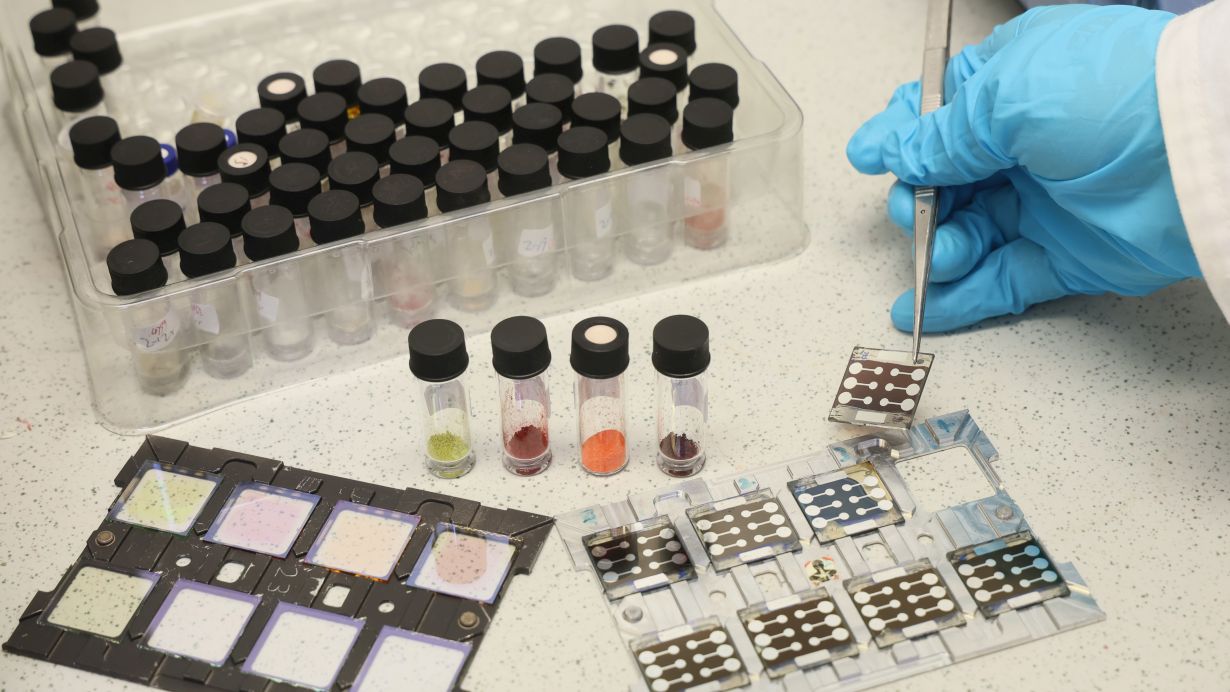
    Perovskite solar cells already achieve efficiencies of over 26% and are light, flexible and inexpensive to produce. They are considered a promising alternative to conventional silicon modules. However, challenges such as long-term stability and scalability still stand in the way of industrial utilisation.

    AI as the key to optimising production
    The Karlsruhe Institute of Technology (KIT) is researching how machine learning can improve the manufacturing process for perovskite cells. Deep learning models analyse material properties in real time and optimise the parameters for maximum efficiency.

    Detecting errors before they occur
    AI uses in-situ imaging techniques to monitor thin-film formation and detect errors at an early stage. This allows process deviations to be corrected immediately and expensive rejects to be avoided.

    Simulations for maximum efficiency
    AI-supported simulations allow production conditions to be precisely adapted. The control of the vacuum quenching time in particular plays a decisive role. AI optimises this process to ensure the best possible material structure.

    The path to market maturity
    The KIT study shows that AI is a key driver for the further development of perovskite photovoltaics. The technology could revolutionise the solar energy market and become industrially usable faster than ever with AI.

  • Empathy as a leadership competence

    Empathy as a leadership competence

    The construction and property industry and other sectors of the economy are facing increasingly complex challenges. Managers who not only manage functional processes but also take social and ethical aspects into account are more in demand than ever. In the two-day practical seminar at the FHNW, Prof Peter Gruber teaches proven techniques for using empathy in a targeted manner in day-to-day management.

    Empathy can be learnt
    According to Prof. Gruber, there are two forms of empathy: emotional, intuitive and rational-professional empathy. The latter is crucial for managers in order to understand employees without overburdening themselves emotionally. In management positions in particular, it is essential to consciously develop this skill in order to promote sustainable relationships and a healthy corporate culture.

    Leadership versus management: a fundamental difference
    While management primarily focuses on figures, data and facts, successful leadership also encompasses psychological, social and ethical dimensions. Gruber emphasises: “The main tool of a manager is the conversation, not the Excel sheet.” Leadership means not only demanding performance, but also recognising and supporting employees as people.

    Appreciative leadership as a success factor
    Modern leadership is both performance-orientated and people-oriented. Companies that focus on a respectful and meaningful work culture benefit in the long term from motivated employees and a positive working atmosphere. Enjoyment of work increases when employees recognise the meaning of their work, work in a climate of honesty and are encouraged.

    A seminar with practical added value
    The practical seminar “Leading with empathy” will take place on 17 and 18 September 2025 at the FHNW in Brugg. It is aimed at managers who want to develop their social skills in a targeted manner and implement sustainable, successful leadership.

  • Affordable living in Zug

    Affordable living in Zug

    The canton of Zug and the city of Zug suffer even more than other cantons and cities from a lack of living space. The canton of Zug has the lowest vacancy rate in the country at 0.2% for the fourth year in a row. The lack of supply and the persistently high demand are leading to strong competition for the few advertised rental flats: the re-letting period is record-breakingly short. There are plenty of affluent tenants moving in and out who are prepared to pay ever higher rents¹.

    Because asking rents are now 50% higher than the Swiss average, complaints that rental flats are no longer affordable have spread far into the middle classes². Even those with normal household incomes who want to move or relocate to the canton have little chance of accessing the housing on offer.

    In this context, the question arises as to what profit-orientated owners who have or would like to develop housing stock in the canton and city of Zug can contribute to the provision of housing for broad sections of the population.

    How should affordable housing be defined?
    The first question is how “affordable” housing should be defined. There is an object-orientated, a market-orientated and a target group-orientated approach³. Affordable housing can be defined as housing rents that are calculated using the maximum fixed investment costs for a residential property. For this calculation to work for yield-orientated owners, a consensus is needed on what constitutes a sensible limit for investment costs. The market-oriented approach categorises low-priced residential rents in certain quantiles of market rents. This requires a consensus on which quantiles are affordable. Finally, affordable housing rents are defined as those that are financially viable for tenants. This requires a consensus that households should not spend more than a third of their gross income – or more generously, their taxable income – on rent, for example.

    Room for manoeuvre via the subject-oriented approach
    The approach based on financial affordability is the most meaningful for a broad-based housing supply. Unlike the approach based on investment costs, this approach recognises that many people in the canton of Zug earn more than in other cantons and can therefore afford higher rents (Fig. 1). However, unlike the approach using the quantiles of market rents, it is not based on the willingness to pay of those moving in and out, but on the real income of the population. This approach helps to target the needs of specific income groups.

    An affordable flat for a person from the lower middle class living alone, who earns between 70 and 100% of the median income, should therefore cost between CHF 1,400 and 1,900 in the city of Zug. How much living space is offered for the price is decided by the provider based on his assessment of the marketability of a flat. Because affordability is based on the unit price of the flat and not the price per square metre, yield-oriented investors have more leeway to integrate affordable housing into their profitability calculations.

    Optimising the distribution of existing affordable housing
    Building flats takes a long time and is often associated with uncertain planning processes. Owners and investors are also not free to decide where and how much additional living space they want to realise. Owners have direct options for action with their portfolio: they can contribute to supplying the wider population if they optimise the distribution of their vacant rental flats. Every change of tenant offers the opportunity to consider the most suitable tenant in line with the “best owner principle”. Owners can instruct lettings teams to maximise the affordability of rental properties that are affordable to the middle class and choose the tenant who can least afford the property – assuming a full salary, for example. Letting teams simply need a matrix that shows them the maximum rental prices affordable for the middle class (or the targeted income group) for each number of rooms. If a vacant flat in the corresponding price range becomes available, the rule would apply.

    Conclusion
    In order to ease the situation in the housing market, the lengthy tasks of reducing barriers to housing construction and developing a cross-party understanding of how affordable housing is defined and how its provision should be regulated must be tackled. In the meantime, yield-orientated owners can make a contribution by approaching the provision of affordable housing with a subject-orientated approach that fits into their market logic. In doing so, they also remain fair to the legitimate interests of their direct stakeholders.

  • Smart City Strategy Zug

    Smart City Strategy Zug

    The challenges of urban growth, from the climate crisis to transport logistics and urban densification, call for holistic approaches. Zug is focusing on digitalisation as a key strategy. With its strong technological basis and the active involvement of all urban stakeholders, the Smart City Strategy Zug offers innovative answers to the questions of the future.

    Intelligent administration and citizen-centred services
    The city of Zug is striving for an efficient, citizen-centred administration that facilitates access to services and promotes transparency. Digital technologies, such as open data and smart administrative processes, offer citizens access to municipal services regardless of time and place. This customer-friendly approach strengthens the dialogue between the city and the population and makes Zug a pioneer for modern city administration.

    Strengthening social participation and digital skills
    With its smart city strategy, Zug is creating new platforms for the participation of all social groups. Digital channels expand dialogue and promote the right to have a say, especially for younger generations and less mobile people. Educational programmes are designed to improve the digital skills of both the population and the administration and prepare the people of Zug for the opportunities and challenges of the digital transformation.

    Smart mobility for sustainable mobility and quality of life
    Smart mobility is a central pillar of the strategy. Innovative technologies and alternative forms of transport are intended to reduce commuter traffic, cut emissions and improve the quality of life. Zug is focussing on real-time data, intermodal mobility and the expansion of emission-free modes of transport. The goal: clean, safe and sustainable mobility that enriches city life.

    Innovative business location
    With its dynamic start-up scene and innovative sectors such as fintech and blockchain, Zug creates an attractive environment for high-tech companies and qualified specialists. The Smart City strategy strengthens the location’s profile and connects companies that are committed to a sustainable economy and circular processes. In this way, Zug is not only positioned for the future as a place to live, but also as a business location.

    Sustainability and environmental protection through smart technologies
    Promoting energy efficiency and CO2 reduction is a key objective of the strategy. Digital applications such as “smart metering” enable a transparent presentation of energy consumption and promote the conscious use of resources. The city is focussing on the expansion of renewable energies and the intelligent use of existing infrastructure – a clear commitment to climate protection and sustainable urban development.

  • Der Switzerland Innovation Park Central

    Der Switzerland Innovation Park Central

    At Suurstoffi in Rotkreuz, the SIPC offers an inspiring environment that promotes dialogue and collaboration between over 120 partners from business, science and society. A vibrant innovation ecosystem is created here that efficiently translates new ideas into marketable solutions in the construction sector.

    Diverse formats to promote innovation
    In order to drive innovation, the SIPC works in five thematically focussed Future Labs, which specifically address current challenges such as the transformation to a circular economy in construction or new processing models
    in construction or new processing models. These labs are hybrid working environments with structured processes and formats that promote collaborative innovation. A variety of event and workshop formats as well as the digital community platform Jointcreate – a kind of “LinkedIn for innovation” – provide inspiration, empower participants and support the innovation process. The focus is always on implementation to achieve real impact. Financing and start-up advice as well as office and project space are available for this purpose.
    The SIPC also manages various programmes, such as the Circular Building Charter, an association of major real estate investors who are increasingly focusing on circular procurement and construction methods. The SIPC imparts knowledge in regular experience workshops. The open sharing of experiences in pioneering projects promotes dialogue within the industry.

    A contribution to the construction industry of tomorrow
    With its clear values – openness, fairness and professionalism – the SIPC makes a decisive contribution to the transformation of the construction industry. As a non-profit organisation, it pursues the motto “Building Excellence” and invites all interested parties to become part of this movement. Switzerland Innovation Park Central shows how innovation in the construction industry can promote not only technological progress but also social responsibility. By combining vision and practice, the SIPC is shaping a sustainable future and is an indispensable partner for anyone who wants to contribute to the construction industry of tomorrow.

  • Regional construction industry meets in Baden

    Regional construction industry meets in Baden

    On 15 May, city com baden wants to bring together the construction and property companies in the Baden region. To this end, the association of tradespeople and retailers in the city of Baden is organising the Industry Get-Together 2025. “The new event format promotes networking and the exchange of knowledge in the construction and property sector in the Baden region and creates synergies,” explains city com baden in a corresponding press release.

    Participants will be offered insights into the regional housing situation and the development of property prices. Innovative construction and environmental solutions are also on the agenda. Marcel Koller, Chief Economist at Aargauische Kantonalbank, and representatives of the Hächler Group have been booked as speakers. The infrastructure department of the city of Baden has been secured as a partner.

    Participation in the industry get-together is free of charge, but registration is required by 15 April. This can be done online or via a QR code in the press release. There, city com baden will also provide a contact for any queries.

  • Farewell party planned for the Raben-Bad in Baden

    Farewell party planned for the Raben-Bad in Baden

    Bagni Popolari heralds the end of the interim use of the Bad zum Raben. On 25 January, the thermal baths on Kurplatz in Baden will celebrate the end of the “Acts of Attention” exhibition, the association announced in a press release. At the same time, a temporary outdoor pool with natural thermal water on the Limmat promenade will invite visitors to take a dip.

    Bagni Popolari has been revitalising the previously closed Raben-Bad since 2017 with exhibitions, performances, music, readings, lectures and animated films, attracting thousands of visitors, according to the press release. However, the thermal baths now need to be thoroughly renovated in order to continue operating. Among other things, it needs solid pool technology, ventilation, new electrical installations and wheelchair-accessible toilets.

    The Raben cooperative, which emerged from Bagni Popolari, is responsible for the renovation. It was founded in 2022 to acquire the bathing floor in the former Badegasthof zum Raben. The Raben cooperative estimates that the necessary renovations will cost around CHF 4.5 million.

    1.5 million of this is to be raised through the sale of new cooperative shares and donations. The Raben-Genossenschaft intends to raise the remaining 3 million Swiss francs through donations from the public sector, foundations and sponsors as well as loans. “If everything goes well, Bagni Popolari will be able to celebrate the first vernissage in the renovated Bad zum Raben in 2027,” hopes the association.

  • Efficient letting thanks to AI

    Efficient letting thanks to AI

    The Swiss real estate sector accounts for around 20 percent of GDP, but digitalisation is lagging behind. SMG Real Estate is setting new standards with an innovation offensive. Platforms such as ImmoScout24, Homegate and Flatfox now offer fully digital solutions that create listings faster, simplify viewings and optimise the entire rental process.

    A central component is the Flatfox Messenger, which is integrated into the aforementioned platforms. This WhatsApp-like communication solution bundles all exchanges between prospective tenants and landlords. Viewing appointments, applications and acceptances can be managed seamlessly – without the usual flood of emails.

    AI-supported adverts for maximum efficiency
    SMG Real Estate also relies on automation when creating adverts. Agents and property managers can generate a complete listing with just a few clicks. By entering the property address, all relevant data such as size and features are automatically added and an AI-supported text is created.

    This innovation saves an average of 14 minutes per advert. Extrapolated to the large number of daily adverts, this results in considerable time and cost savings. This leaves more time for the core business – direct contact with interested parties.

    Future-proof solutions for the sector
    The company wants to make the Swiss property sector fit for the digital future. The new technologies not only offer convenience and efficiency, but also contribute to the professionalisation and competitiveness of the sector.

    With this initiative, SMG Real Estate is proving that digital innovations are changing the property market for the long term and creating real added value for everyone involved.