Tag: Immobilienbranche

  • PropTech remains invisible and indispensable

    PropTech remains invisible and indispensable

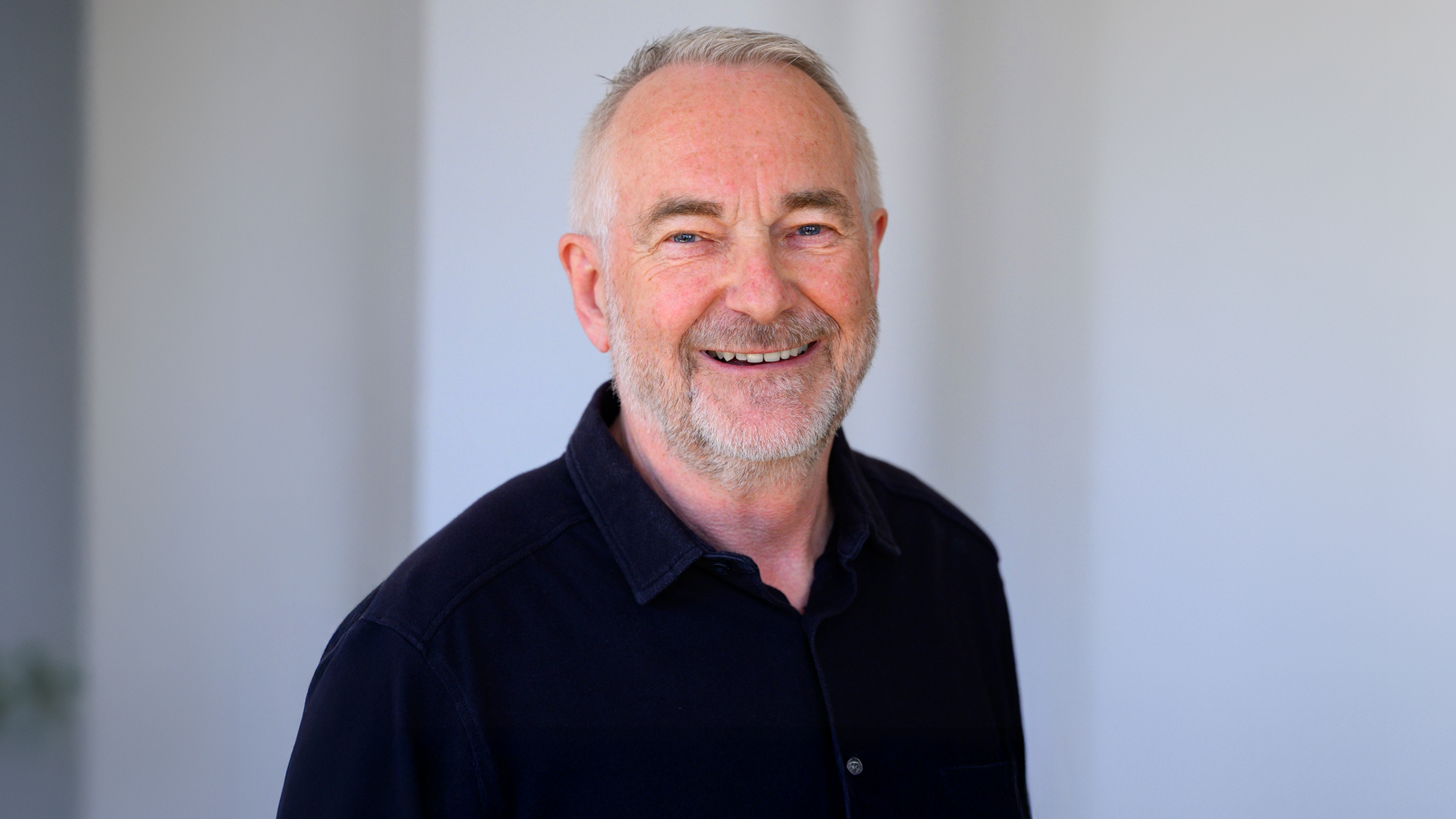
    Mr. Schwyter, you are one of the pioneers of the Swiss PropTech scene. How did your journey in the digital real estate market begin?
    After my time at Homegate, I asked myself how I wanted to use my knowledge further. The digitalization of the real estate industry was an obvious choice. Before the pandemic, however, hardly anyone was interested in this topic. It was Covid-19 that gave it a huge boost. From then on, digitalization was widely accepted and I found my place in the PropTech scene.

    What early experiences at Homegate still shape your view of PropTech today?
    Above all, the joy of experimenting and developing new approaches together. We wanted to create solutions that would advance the industry as a whole. This attitude is still with me today. Being open, working in an interdisciplinary way and testing boldly.

    How digital is the Swiss real estate industry really, if you leave out the marketing jargon?
    Pom’s Digital Real Estate Index has been below five on a scale of zero to ten for years. This clearly shows that the sector has a lot of potential for improvement. There is progress, but not a continuous digitalization push. Overall, we are more at the beginning of a professional digital transformation.

    Where does Switzerland stand in an international comparison? Pioneer or laggard?
    Switzerland has around 480 PropTech companies, which are small but qualitatively strong and diverse. Germany is significantly higher with more than 1,200 companies. We have areas where we are very good and others where there is potential for expansion. Overall, I would describe us as a solid, well-developed ecosystem.

    In your opinion, which PropTech segments are the most advanced?
    Platform solutions in the broad sense, i.e. not just marketplaces such as data platforms, service platforms and ecosystems. This is where we see the greatest professionalization and maturity.

    What kind of startups do you think will be the first to disappear and why?
    Startups that only cover one isolated process step and cannot be integrated. Real estate companies need solutions that combine several process steps or can be easily integrated into existing systems. Silo products will hardly be viable in the future, neither technically nor economically.

    Where do you see obstacles to digitalization in Swiss real estate companies?
    The industry is highly fragmented. A company with 20 or 30 employees is already considered large. Many have neither internal IT skills nor a budget for larger digitalization projects. This also means a lot of work for providers. Instead of five major customers, you have hundreds of small ones. This structure slows down digitalization.

    Which three megatrends will shape the PropTech landscape in the coming years and why?
    Clearly data, sustainability and artificial intelligence. Data is the basis for every well-founded decision. Sustainability is not possible without data, especially with ESG, and AI is a trend that is highly polarizing. However, the impact only comes when the data quality and organization are right.

    Are there technologies that have long been ready for the international market but have not yet arrived in Switzerland?
    No. Everything that is internationally relevant is generally available in Switzerland in high quality. The challenge lies not in the technology, but in its consistent application and integration.

    What does it take for administrations to become more open to technology and more courageous?
    A clear digitalization strategy, because without a target image, any tool introduction is pure actionism. Companies need to understand that digitalization is a cultural and transformation process and not an IT project. Employees need to be supported and motivated, especially in an environment with high staff turnover.

    How can you recognize the quality of a PropTech company?
    The team. The key question is: do the people have the skills, perseverance and openness to really implement an idea? Markets change, products change and only a strong team can support this change. The team is therefore more important than the idea.

    Which approaches manage to map the entire life cycle?
    Not individual all-in-one products, but integrated cycles. When condition analysis, refurbishment planning and facility management are linked via clean data flows, for example, a genuine life cycle is created. Integration is the key.

    In which phases do you see the greatest untapped potential?
    Clearly in the area of construction technology. How we build, what materials we use, how planning and construction processes work – major changes are imminent here. We are already much further ahead in terms of operations and marketing.

    Are the regulatory framework conditions more of a driver or a brake?
    Startups want fewer hurdles and some things have been improved. However, issues such as the tax treatment of founder shares remain complex. Overall, we should reduce regulation. Innovation does not come from new regulations, but from entrepreneurial freedom.

    What political steps would be necessary for the sector to digitalize faster?
    I am clearly in favour of less government. The real estate industry will digitize itself for economic reasons. If companies can win more mandates and improve quality with the same employees, they will use digital solutions. Without any new political requirements.

    What cultural and organizational stumbling blocks do you encounter most often?
    The misconception that digitalization is a tool issue. In reality, it’s about processes, collaboration and roles. Many underestimate the cultural change. High staff turnover also makes it difficult to establish a digital culture.

    Which developments will irreversibly change the industry?
    Anything that simplifies or automates repetitive tasks and thus creates productivity gains. Whether you call this digitalization or efficiency enhancement is irrelevant. AI is one component, but not the only one.

    If you had to found a new PropTech today, in which area would it be?
    Probably in the area of marketing, because there is a lot of creative potential there. At the same time, I would like to see existing solutions grow more strongly. We have enough good providers, we don’t necessarily need any more.

    Where will PropTech Switzerland be in 2030?
    PropTech will be indispensable, but not in the spotlight. It’s not “sexy” like climate or energy issues. PropTech doesn’t make the headlines, but it ensures that the industry functions digitally, data-based and efficiently. This is precisely why PropTech will play a central role in the long term.

  • Research and practice are moving closer together in the property market

    Research and practice are moving closer together in the property market

    The ERNE Group from Laufenburg and SwissREI are jointly awarding the “ERNE Swiss Master – Best Scientific Work in the Real Estate Sector 2026” prize. The nominated research teams from nine Swiss universities will present their work on 5 November 2026 at the Best of Research Congressat the Zurich University of Applied Sciences (HWZ).

    The award will be given to the contribution that combines scientific rigour with high practical relevance and provides concrete impetus for the further development of the real estate industry. According to a press release, the winner will be determined by a transparent process involving an expert audience from the real estate industry.

    “With our commitment, we promote practical research, strengthen the exchange between science and applied real estate practice, and contribute to the sustainable further development of our industry,” says Giuseppe Santagada, Group CEO of the ERNE Group.

    The Best of Research Congress is considered one of the leading events for applied real estate research in Switzerland and is organised by the Swiss Real Estate Institute, a foundation of the HWZ, and the Swiss Real Estate Association (SVIT). The ERNE Group is a construction and real estate service provider with activities in Switzerland, Germany and Luxembourg. The company focuses on a high degree of in-house production along the entire construction value chain and is strongly committed to the circular economy.

  • SVIT Zurich political talk “Zurich municipal council elections 2026”

    SVIT Zurich political talk “Zurich municipal council elections 2026”

    Municipal elections will be held in the city of Zurich on March 8, 2026. With regard to this important election in the largest municipality in our canton (with an impact beyond the cantonal borders), SVIT Zurich recommends candidates for election. They are members of the relevant commissions HBD/SE (Department of Buildings, Urban Development) and FD (Department of Finance) or hold important positions in their parties. Newcomers who are not yet members of the municipal council are also included. However, all seven candidates share a common interest: To advance a liberal housing and real estate policy for Zurich that addresses the current challenges on the housing market quickly and effectively.

    In the political talk, the candidates will explain where they stand up for housing policy and the real estate sector and will also be available to answer critical questions in person during the drinks reception. At the end of the event, our political guests will compete against each other in the SVIT Zurich political game “Build & Rent”. Who will win the game? Who will win the 2026 Zurich municipal elections? We are curious.

    Link to the candidate videos

    Link to registration for the political event

    Download:
    SVIT Zurich “Polit-Check” on the municipal elections

  • Highlights and winners of the Real Estate Award 2025

    Highlights and winners of the Real Estate Award 2025

    Federal Councillor Guy Parmelin opened the event with a concise and motivating welcome message. He praised the innovative strength and courage of the players to take on challenges and emphasized how important the real estate industry is for the future of Switzerland, its prosperity and the quality of its location – especially in times of global change.

    Visions and insights from Samih Sawiris
    Another highlight was the fireside chat with Samih Sawiris, the internationally renowned entrepreneur and urban developer. Sawiris provided exclusive insights into the complex tasks and visions of his projects, particularly in the Alpine tourism center of Andermatt. His sustainable and collaborative approach to the development of hotels, residential properties and infrastructure impressed the audience and highlighted the value of long-term investment for regional transformation.

    Networking, entertainment and an inspiring atmosphere
    The event offered plenty of space for networking and knowledge sharing. Visitors enjoyed a varied supporting program with culinary highlights, musical accompaniment by the band “Three of a kind” and humorous performances by comedian Benjamin Delahaye. The mixture of professional exchange, social get-togethers and entertainment created a successful atmosphere for knowledge transfer and industry cohesion.

    Discerning jury ensures objectivity and quality
    The winners were selected by a renowned jury of experienced industry professionals comprising André Robert Spathelf, Karin Aeberhard, Daniel Löhr, Anita Horner and Gaétan Kameni. The jury supplemented the public vote with a well-founded professional assessment to ensure a transparent and balanced result.

    The 2025 award winners – innovation, sustainability and leadership
    The winners awarded with trophies reflect the diversity and future orientation of the industry.

    Marketing: Avendo AG impressed with an innovative platform that digitally connects property owners, agents and tenants and optimizes the rental process.

    Digital: Evorest AG earned the prize for a digital rental deposit solution with attractive investment options, which was also highly rated by the public.

    Sustainability: Mobimo AG was recognized for its resource-saving renovation projects, exemplarily implemented in Zurich’s Friesenberg district.

    Project development and innovation: Stiftung Umwelt Arena Spreitenbach was recognized for the development of a methanol hybrid box for summer electricity storage.

    Real Estate Personality of the Year: Beatrice Bichsel, a leading strategic manager, received the crystal glass trophy for pioneering development at SBB and her commitment to modern urban development around railroad stations.

    The Real Estate Award 2025 was much more than just an award ceremony. It consolidates its role as a beacon for innovation, sustainability and excellence in the Swiss real estate and construction industry. A spirit of innovation, social responsibility and professional expertise determine the successes of today and pave the way for a prosperous, sustainable construction industry of the future.

  • Clear the stage for the best projects in the industry

    Clear the stage for the best projects in the industry

    When the doors of Trafo Baden open on October 2, 2025, the who’s who of the Swiss real estate, construction and finance world will gather for the Real Estate Award 2025 ceremony. In addition to the festive gala with dinner, the focus will be on inspiring impulses, networking and discussions about the future of the industry.

    A special highlight is entrepreneur and visionary Samih Sawiris, who will provide personal insights during the fireside chat, a conversation that promises new perspectives on entrepreneurial thinking and location development.

    Four categories, twelve finalists
    The start of ticket sales also marked the opening of public online voting. Until August 17, 2025, one vote can be cast daily in four forward-looking categories, each with three finalists.

    Digital: Evorest, Optiml, Quanthome

    Sustainability: IAZI CIFI, Mobimo, Neustark

    Project Development & Innovation: Element, UmweltArena, Xania

    Marketing: Avendo, maison.work, tRaumplaner

    The winners will be awarded live at the gala evening and jointly determined by the jury and the audience.

  • Construction activity remains stable

    Construction activity remains stable

    Construction activity realised a small year-on-year increase of 0.4 percent to CHF 4.7 billion in the first quarter of 2025, the Swiss Federation of Master Builders(SBV) reported in a press release. It estimates construction activity to be stable despite the international trade conflicts. For the year as a whole, the association expects construction activity to grow by 1.1 per cent year-on-year.

    The SBC experts observed different developments in the individual sectors of the construction industry in the quarter under review. Commercial construction, for example, was 7 per cent weaker than in the first quarter of 2024. By contrast, construction activity in public building construction increased by 23 per cent at the same time. In civil engineering, a decline in private construction activity was largely offset by growth of 2.8 per cent in the much stronger public civil engineering sector. The bottom line is that construction activity in civil engineering fell by around 2 per cent.

    In the press release, the SBC emphasises the “surprisingly” positive development in residential construction. At CHF 1.7 billion, turnover here was 2.4 per cent higher than in the same quarter of the previous year. The SBC experts consider the 11 per cent year-on-year growth in new orders observed at the same time to be “particularly pleasing”. They attribute this to the increased number of building applications in the previous year, which is now “gradually being reflected in the order books”.

  • Record figures and creative impetus for the property sector

    Record figures and creative impetus for the property sector

    The 13th edition of the Swiss real estate trade fair for investors, which took place on 15 and 16 January 2025 in Hall 622 in Zurich Oerlikon, exceeded all expectations. With a record attendance of 5,167 trade visitors and 154 exhibitors, IMMO25 confirmed its leading role as the most important trade fair for the property and finance sector in Switzerland.

    Focus on forward-looking topics
    The trade fair offered a wide range of specialist topics along the entire value chain of the property industry. The focus was on current challenges and trends such as

    • The future of construction: innovative building concepts and sustainable architecture
    • The tenant of tomorrow: New demands and changing living concepts
    • Falling interest rates: effects on the property market and investment strategies
    • Sustainability: energy-efficient buildings and climate-friendly developments

    The motto “Growth through creativity” was reflected in the numerous innovative solutions that were presented and discussed at the trade fair.

    First-hand expert knowledge
    A highlight of the event was the IMMO Forum, which offered expertise and inspiration over two days with 35 panel discussions and 150 renowned experts. The debates were not only followed by trade fair visitors, but also by over 1,900 online viewers who followed the forum live.

    Review and outlook
    The organisers MV Invest and Swiss Circle were delighted with the great success of the trade fair and thanked all exhibitors, visitors, speakers and partners for their support. IMMO25 has once again proven that it is a leading platform for the property industry, providing impetus and promoting exchange between investors, developers and experts.

    The next edition of IMMO26 will take place for the first time on 14 and 15 January 2026 in Hall 550 in Zurich Oerlikon.

  • ESG targets with REMMS integration

    ESG targets with REMMS integration

    With the integration of REMMS, the company is taking sustainability analysis in the property sector to a new level. REMMS (Real Estate Meta-rating and Monitoring on Sustainability) enables a comprehensive assessment of properties with regard to economic, ecological and social criteria. Users of the solutions can easily analyse properties and create benchmark comparisons, taking into account relevant standards such as AMAS, ASIP, CRREM, GRI, ICMA, SBA and SFDR.

    Seamless integration for maximum efficiency
    The central aim of the integration is user-friendliness. Asset and portfolio managers can use the REMMS platform without additional registration or signing a contract. The sustainability monitoring module in the software suite makes it possible to analyse property portfolios anonymously and with data support. Martin Schnider, Managing Director of reamis, emphasises: “Our solution supports customers in efficiently achieving sustainability goals and fulfilling regulatory ESG requirements.”

    A step towards a sustainable property industry
    The REMMS integration is not only an extension of the digital solutions, but also a contribution to the sustainable transformation of the property industry. The data-driven platform provides portfolio managers with precise analyses that facilitate strategic decisions.

  • immojob.ch becomes part of immobilienjobs.ch

    immojob.ch becomes part of immobilienjobs.ch

    The online job market immojob.ch is now part of immobilienjobs.ch. This strengthens the platform’s position as a job platform for specialists and managers as well as employers in the property sector and location promotion. Whether job search or recruitment, immojob.ch builds bridges between talents and companies that shape the industry.

    Diverse job offers for all sectors
    The world of property is diverse and so is the range of jobs on immojob.ch. The platform covers a wide range of fields such as administration, construction, management, architecture, development, facility management, IT/digital, finance, fiduciary, sales, marketing, public sector and many more.

    Whether you are an experienced specialist or an ambitious leader, this is where expertise and opportunity meet. Companies can find the right talent, while candidates can plan their next career move in a targeted manner.

    More than just a job market
    immojob.ch sees itself as a career platform that offers more than just job adverts. The focus here is on promoting careers and the further development of the property sector. Through targeted networking, employers and specialists are brought together to shape innovations together.

    Your partner for the future
    The integration of immojob.ch into immobilienjobs.ch is an important step towards offering specialists and managers even more targeted opportunities and making it easier for employers to access the best talent. Whether you are looking for your next challenge or the perfect addition to your team – immojob.ch will accompany you on this journey.

    Let’s shape the future of the property industry together.

  • Property sector facing change with obstacles

    Property sector facing change with obstacles

    Growing awareness of climate risks is increasing the pressure on the property sector to find solutions. According to the latest C-Change survey, 93 per cent of the investors surveyed take climate-related risks into account in their decisions. This trend reflects the increasing commitment to not only recognising climate policy requirements, but actively integrating them into the corporate strategy.

    Lack of data and knowledge
    Despite positive developments, there are obstacles to the implementation of decarbonisation measures. According to the survey, 61 per cent of companies lack the in-depth knowledge and qualitative data needed to take the right steps to reduce CO2 emissions. Aleksandra Smith-Kozlowska from ULI emphasises the need for systematic knowledge transfer and better availability of high-quality data.

    Transition risks on investment strategies
    The survey shows that transition risks are increasingly influencing investors’ strategies. 94 per cent of the companies surveyed report that the risks influence their portfolio decisions. Although 51 per cent make investments in properties with these risks and 30 per cent feel compelled to divest themselves of affected properties. The cost of retrofitting and the risk of asset losses are becoming the focus of attention.

    An instrument for risk mitigation
    The survey highlights the growing interest in a CO2 tax as a strategic tool for decarbonisation. 21 per cent of companies have voluntarily introduced internal carbon pricing mechanisms in the last 12 months. Around 71 per cent use a shadow price per tonne of CO2 to incorporate potential emissions costs into business planning

    Obstacles to the sustainable property industry
    Despite the progress made, there are concerns about competitiveness that have so far slowed down the industry-wide introduction of the carbon tax. Critical factors include lack of data consistency, lack of stakeholder support and uncertainty about the impact on financial results and operational strategies.

    As measures, the ULI calls for more intensive education and the introduction of clear guidelines. The ULI’s latest publications, including “Accelerating Accountability: The Case for Carbon Pricing” and “Universal Principles for Carbon Pricing in the Real Estate Sector”, are intended to help the industry establish carbon pricing as an integral part of the value chain and thus promote long-term sustainability goals.

  • ZEV energy communities as the key to the future

    ZEV energy communities as the key to the future

    The ZEV is an innovative solution for energy supply in properties. This form of cooperation allows owners and tenants to benefit from renewable energy that is generated and consumed jointly. ZEV makes it possible to cover energy requirements more efficiently, not only reduces operating costs, but also makes an important contribution to reducing CO₂ emissions. In the SVIT Zurich seminar series, the basics of ZEV are presented in detail and their relevance for property management is comprehensively examined.

    A legal framework for ZEV
    In order to successfully implement ZEV, it is essential to understand the legal framework. The seminar provides an overview of relevant regulations and legal aspects so that the legal requirements are known. This knowledge is crucial in order to avoid potential legal pitfalls and ensure legally compliant implementation.

    Focus on successful implementation
    Practical examples are used to illustrate individual building solutions and comprehensive site solutions. By analysing specific projects, participants will learn how these concepts not only work in theory, but are also successfully applied in reality. The exchange of best practices will encourage participants to develop innovative ideas for their own realisations.

    Efficient structures
    Another focus of the seminar is on organising the operation of ZEV in rental and condominium properties. Efficient management and transparent billing are crucial to the success of these projects. Experts will explain how an optimal operational organisation can be designed to maximise the benefits of the ZEV for all parties involved and guarantee smooth implementation.

    Future prospects
    Finally, we will take a look into the future. How will ZEV continue to develop in the property sector? What trends are emerging and what opportunities are there for professionals? The SVIT seminar not only offers valuable impulses for current practice, but also visionary perspectives for the property management of tomorrow. Let us drive forward the energy transition and establish ZEV as the key to a more sustainable property industry.

  • Trafo Baden shines under the sign of the Real Estate Award 2024

    Trafo Baden shines under the sign of the Real Estate Award 2024

    Mara Schlumpf, Managing Director and organiser of the awards ceremony: “I was delighted to honour the best in the construction and real estate industry with the numerous guests from business, politics and society. It was an unforgettable occasion.”

    The winners of the coveted crystal glass trophies were honoured in five categories:
    – Marketing: emonitor AG
    – Digital: Novalytica AG
    – Sustainability: Zurich Airport
    – Project development and innovation: Cham Group
    – Real Estate Personality of the Year: Dr Hans-Peter Bauer

    Another highlight of the evening was the impact speech by Patrizia Laeri, women’s promoter and fintech founder, who drew attention to the gender property gap. The inspiring speech impressively demonstrated the importance of equal rights in the property sector. Moderator Annina Campell led a sofa discussion with Councillor of States and FDP President Thierry Burkart, which also highlighted the political perspectives on the sector and its potential.

    Meanwhile, comedian Joël von Mutzenbecher provided plenty of laughs, while the band “The B-Shakers” rounded off the evening with their rockabilly sound.

    Real Estate Award AG would like to thank all participants and guests for the successful evening and looks forward to further innovative impulses for the future of the property sector.

  • New era and exciting finalists for the Real Estate Award 2024

    New era and exciting finalists for the Real Estate Award 2024

    This year’s event will be characterized by numerous innovations. In addition to the established gala dinner and the awards ceremony for the winners in the various categories, guests can look forward to exciting speeches and entertainment. Guest speaker Patrizia Laeri, an expert in finance and diversity, will provide insights into current trends. In addition, Council of States member Thierry Burkart will talk about the challenges facing the real estate industry in a discussion with moderator Annina Campell.

    The Real Estate Award 2024 not only offers a stage for innovative projects, but also enables participants to expand their network and exchange ideas with decision-makers in the industry. The networking aperitif provides the perfect setting for this before the gala dinner ceremony begins. The Real Estate Personality of the Year, who plays a special role in the industry, will also be awarded.

    In the Sustainability, Digital, Project Development & Innovation and Marketing categories, well-known companies and projects that impress with their innovative strength and contribution to the industry are in the final. Mara Schlumpf, Managing Director of Real Estate Award AG, explains the new direction of the award.

    Ms Schlumpf, what makes the Real Estate Award 2024 so special?
    Mara
    Schlumpf: “The award has been fundamentally revised. Not only have we revamped the design, we have also introduced new categories to reflect the current topics in the industry. There is a particular focus on the sustainability category, as it reflects the industry’s shift towards more environmentally friendly and socially sustainable projects.”

    What can guests expect from the event?
    Mara Schlumpf: “We are offering our guests a comprehensive program that combines both professional exchange and entertaining elements. In addition to honoring the finalists, we have created a varied experience with our speakers and musical accompaniment. Our aim is to provide an unforgettable evening that reflects the importance and transformation of the real estate industry.”

    The event sets new standards in the history of the Real Estate Awards and reflects the developments and trends in the industry. The Real Estate Award 2024 is not only a highlight for the participants, but an event that sets the course for the future of the real estate industry.

    Further information and tickets for the event can be found at www.realestateaward.ch.

  • New professorships in Real Estate Economics & Finance from autumn 2024

    New professorships in Real Estate Economics & Finance from autumn 2024

    CUREM is pleased to announce a significant expansion of its academic focus. From autumn 2024, two new professorships in the field of “Real Estate Economics & Finance” will be established, supported by three major funding partners from the real estate industry. This step not only marks a milestone in the history of CUREM, but also sets new standards for cooperation between academic research and practice in the real estate industry.

    The creation of these professorships underlines CUREM’s role as a leading provider of further education and research in the property industry in Zurich. The close exchange between science and practice is of central importance: “We are firmly convinced that the interplay between academic research and practical knowledge forms the basis of excellent further education,” says the CUREM management.

    Academic excellence meets practice-orientated teaching
    Two renowned academics have been recruited for the new professorships, who enjoy both international and national recognition and share the vision of academic excellence and practice-orientated teaching: Prof Dr Christian Hilber and Dr Francisco Amaral.

    An international expert in housing policy and urban development
    Prof. Dr Christian Hilber will take up a part-time professorship ad personam (20%) at the University of Zurich from autumn 2024. Hilber, who is currently Professor of Economic Geography at the London School of Economics (LSE), brings with him outstanding expertise in the field of housing policy and urban development. These topics are also highly relevant for Switzerland, where housing policy is facing major challenges.

    “It is a particular pleasure for me to be able to contribute my experience in Zurich. Switzerland is facing major challenges in the area of housing policy, and I am convinced that together we can develop solutions that are both economically and socially sustainable,” emphasises Prof. Hilber.

    In addition to his academic career, Prof. Hilber has extensive experience in advising governments and international organisations such as the OECD and the Asian Development Bank. His work at CUREM will further strengthen international networking and the practical exchange of knowledge.

    Focus on financial and real estate economics
    Dr Francisco Amaral, who will be an assistant professor (100%) at the University of Zurich from October 2024, brings valuable expertise at the interface of financial and real estate economics. His research focuses on the interactions between risk and return in housing markets under different macroeconomic conditions.

    “In Switzerland, as in many Western countries, the housing market plays a central role in the financial stability and well-being of society. To develop sustainable measures that make the market more resilient and affordable, we need to understand what factors influence risk and return,” explains Dr Amaral, who holds a PhD from the University of Bonn.

    With his extensive research experience, Dr Amaral contributes significantly to the scientific consolidation and further development of CUREM, particularly in the areas of financial market analysis and real estate economics.

    Strengthening Zurich as a centre for real estate research
    The establishment of these professorships is not only a decisive step for CUREM, but also for Zurich as a location. The expanded scientific focus will further strengthen Zurich as a leading hub for property research and teaching in Europe. The close cooperation between science and practice will promote the transfer of knowledge and contribute to the development of innovative solutions for current challenges in the property sector.

    A pioneering step for the property sector
    With the new professorships in “Real Estate Economics & Finance”, CUREM is sending a clear signal for the future direction of real estate research and teaching in Zurich. The combination of academic excellence with practice-orientated knowledge will not only strengthen CUREM in the long term, but also the entire property sector. Prof Dr Christian Hilber and Dr Francisco Amaral will bring with them valuable experience and fresh impetus that will contribute to the further development of the institute and to overcoming the challenges of the housing market.

    This exciting development marks the beginning of a new era for CUREM and the property sector in Switzerland. We look forward to the future collaboration and the new perspectives that these professorships will open up.

  • Real Estate Award 2024: The property event of the year is coming up!

    Real Estate Award 2024: The property event of the year is coming up!

    The event menu for the Real Estate Award ceremony on 24 October 2024 is set: In addition to a meat-based 4-course feast, guests can also look forward to a delicious vegan option. Just one of many innovations, as the Managing Director of Real Estate Award AG, Mara Schlumpf, explains: “Our guests can look forward to an unforgettable evening. In addition to a delicious culinary experience, encounters with well-known personalities from Swiss business and politics also have a fixed place in the exciting evening programme.” Whether on the red carpet, at a cosy aperitif or at an upscale gala dinner: there is hardly a better opportunity for networking in the real estate industry this year.

    On 24 October 2024, this year’s winners will be chosen in the categories Digital, Project Development and Innovation, Marketing and, for the first time, in the newly created Sustainability category. You can currently vote for your favourites at www.realestateaward.ch. The contenders for the coveted crystal glass trophies are

    Digital: Backbone, Novalytica, QAECY

    Project Development & Innovation: Cham Group, Redvolution, Topik

    Marketing: Emonitor, Fairmarkter, Properti

    Sustainability: Zurich Airport, Vaudoise&HRS, Zindel United

    In addition, the Real Estate Personality of the Year will be chosen by the renowned Real Estate Award jury. A good atmosphere is also guaranteed at the event: comedy and music round off the varied programme. “I’m already looking forward to the Real Estate Award ceremony in October,” says Mara Schlumpf. “The evening will set a new benchmark in the history of the award.”
    Tickets for the award ceremony and gala dinner are available at www.realestateaward.ch.

  • Skilled labour shortage – an industry analysis by SVIT Zurich

    Skilled labour shortage – an industry analysis by SVIT Zurich

    [smartslider3 slider=”19″]

    Examining the distribution of roles in property management and developing specialised profiles could reduce the frustration of managing large portfolios. Overall, the shortage of skilled labour in the property sector calls for far-reaching structural adjustments to improve working conditions and the satisfaction of professionals. It remains to be seen whether the sector will successfully implement these strategies.

    Structural problems and proposed solutions
    Experts agree that there are structural challenges that are difficult to change. Nevertheless, there are numerous opportunities for improvement, such as the simplification and standardisation of processes, efficient systems and intelligent digitalisation. In addition, the promotion of leadership skills could better overcome organisational challenges. Improved conflict management and the proactive promotion of talent and career changers are further possible steps to overcome the shortage of skilled labour.

    Shining a light on the distribution of roles in management
    The areas of responsibility of “Bewis” (managers) include activities that require specific skills and competences. The allocation of these tasks within a company is largely determined by the management business model. In order to reduce frustration when dealing with large portfolios, four different “Bewi” profiles were identified and corresponding solutions developed. All-rounders are supported by juniors and administrators. A more efficient support system could help to reduce the frustration of managing large portfolios.

    Digital management promotes clear processes, integrated systems and the use of artificial intelligence (AI). An advanced IT infrastructure is essential here. Specialists and integrated “Bewis” work in teams with other specialised experts. Attractive career paths and complementary skills are key success factors here. A narrowly defined area of responsibility could also help to minimise job frustration.

    Key to solving the skills shortage
    The skills shortage in the real estate sector is a multifaceted and complex problem that requires far-reaching structural and organisational adjustments. Some of the existing challenges can be tackled through clever conflict management, targeted promotion of talent and the adaptation of roles within property management.

    It remains to be seen how the sector will implement these strategic proposals to improve the working conditions and satisfaction of its professionals.

  • Optimal exam preparation for prospective property professionals

    Optimal exam preparation for prospective property professionals

    The member organisations SVIT Bern, SVIT Eastern Switzerland, SVIT Central Switzerland and SVIT Zurich are intensively involved in the training of their apprentices. One outstanding example of these endeavours is the three-day “QV-Campus” launched by the SVIT Young Zurich youth commission in 2017. This campus offers apprentices optimal preparation for the company qualification process (final apprenticeship examination).

    The graduates of this year’s campus have just received their exam results. As every year, most of the participants scored above average, which makes the association proud and emphasises the high quality of their training.

    During the QV-Campus, participants were tested in industry-specific lessons without grades in order to specifically identify and close any gaps in their knowledge. The most important exam topics were taught by experienced QV exam experts. The programme also included overcoming exam anxiety and various learning techniques. On request, learners received further support on site or via Zoom until the exam.

    With around 40 third-year learners taking part, the “QV-Campus” can be considered a success. The high level of motivation of all those involved contributed significantly to the positive outcome. “It gave me a wake-up call!” commented one participant, who was now also able to gain new and exciting insights into the subject of “Taxation”. Another participant commented: “I had planned to study intensively for four weeks before the QV, but after the QV-Campus I realise that this is not enough.”

    For many young people, activities such as going out, friends and sport take centre stage, and they often lack the motivation and ambition to prepare for their exams in a timely and structured manner. This is precisely where the QV-Campus comes in, by guiding apprentices to plan properly and showing them that relaxation and proper preparation are crucial for a successful apprenticeship qualification.

    After the Campus is before the Campus.

    Are you in your 3rd year of apprenticeship and want to be optimally prepared for the company qualification process?

    Then register for the QV-Campus 2025 at www.svit-young.ch.

  • Strategic cooperation improves property management processes

    Strategic cooperation improves property management processes

    Planon has announced a strategic partnership with PROMOS consult, a Berlin-based SAP partner specialising in residential and commercial real estate and facility management. The collaboration covers the DACH region. The globally active Dutch proptech company, which is represented in Switzerland with a branch in Technopark Zurich, also offers software solutions for property and facility management.

    According to Planon’s press release, the aim of this partnership is to optimise processes, simplify workflows and increase tenant satisfaction. Planon’s innovative solutions for facility management will be combined with PROMOS’ in-depth industry knowledge and broad portfolio of services for the core processes of property management.

    “We are convinced of the extensive opportunities that this partnership offers,” Planon COO Stephan Mau is quoted as saying. “Together, we will offer Promos SAP customers a forward-looking solution for property management.” PROMOS CIO Volker Schulz is “convinced that our customers will benefit from the combined expertise of both companies and that we will transform the German-speaking market in the long term”.

  • New cooperation between SVIT Zurich and “immobilienjobs.ch”

    New cooperation between SVIT Zurich and “immobilienjobs.ch”

    As part of the collaboration, “immobilienjobs.ch” creates exciting career opportunities for jobseekers by providing access to job offers in the property industry. This includes not only traditional jobs, but also innovative positions that arise as a result of changing industry requirements. The platform thus ensures that jobseekers and companies find each other in a modern, efficient and targeted way.

    SVIT Zurich members benefit from this co-operation. The job portal enables them to find qualified specialists more efficiently. In this way, staff shortages can be optimally and quickly eliminated, which in turn promotes the productivity and innovative strength of companies. It should be emphasised that “immobilienjobs.ch” is also an ideal platform for well-trained career changers who want to start their career with sound training and personal job coaching from SVIT Zurich. This allows them to present their skills and knowledge in the best possible way and facilitate their entry into the industry.

    A special offer for all SVIT Zurich members – “immobilienjobs.ch” offers them two job advertisements for the price of one. This exclusive offer ensures that the association’s members achieve maximum visibility and reach for their job offers, while at the same time reducing recruitment costs.

    Overall, this partnership offers clear advantages: it creates new career opportunities, promotes the recruitment of qualified specialists and efficiently integrates career changers into the property sector. The cooperation between SVIT Zurich and “immobilienjobs.ch” therefore represents a significant step towards more efficient and innovative personnel development in the property sector.

  • Digital next gen and AI usher in a new era

    Digital next gen and AI usher in a new era

    Like many other sectors, the construction and property industry is facing major challenges. Digitalisation is progressing inexorably, revolutionary technologies are emerging and sustainability requirements are constantly increasing. There is also a shortage of specialists with digital skills. “Our response to these challenges is the establishment of the ‘Digital Next Gen’ Expert Group,” says Genova. “Our aim is to bring together digital talent from across the industry and work together on innovative solutions for a sustainable and digitalised future.”

    Genova brings extensive expertise from his professional career and his studies. A trip to China was particularly formative, where he gained valuable insights into digital transformation. The Digital Next Gen initiative offers him a platform to use his skills and drive forward the digital transformation in the construction and property industry.

    Objectives of the “Digital Next Gen” Expert Group
    Establishing a centre of excellence for digital technologies and trends to effectively tackle the digital challenges facing the construction industry.

    Identify and promote innovative digital solutions and business models in Switzerland

    Creating bridges between research, business and practice in order to put innovative ideas and technologies into practice more quickly.

    “We aim to play a leading role in shaping the digital transformation in the construction industry,” emphasises Genova.

    Opportunities and challenges of the digital evolution
    Digitalisation offers significant opportunities for the construction industry, such as efficiency gains, cost reductions, more environmentally friendly construction practices and the development of new business models. However, there are also challenges such as high investment costs, data protection issues and a shortage of skilled labour. “We must tackle these challenges with determination in order to fully exploit the opportunities of digitalisation,” says Genova. “The future belongs to the brave and the pioneers, and we are ready to take on this role.”

    Upcoming digital technologies and trends
    The construction industry is at the beginning of a new era, characterised by groundbreaking digital technologies. Artificial intelligence (AI), robotics, blockchain, the Internet of Things (IoT) as well as augmented reality (AR) and virtual reality (VR) are some of the key technologies that will revolutionise the industry. “We are ready to pave the way for this digital revolution and face the challenges that lie ahead,” explains Genova.

    Talent sought for the Expert Group
    The Expert Group is looking for talented individuals with extensive expertise in digital technologies such as AI, IoT, blockchain, AR/VR and 3D printing. In addition to technological skills, an innovative spirit, experience in the construction industry, the ability to work in a team and an understanding of sustainable construction practices are important. “We are counting on a new generation of talent who are ready to take the lead in this technological revolution,” concludes Genova.

    Digitalisation is not only a challenge, but also an opportunity to fundamentally transform the construction and real estate industry. The “Digital Next Gen” Expert Group is ready to actively shape this transformation and create a sustainable, digitalised future.

  • Application deadline extended until the end of June

    Application deadline extended until the end of June

    Mara Schlumpf, Managing Director of Real Estate Award AG: “There have been many innovations at the Real Estate Award this year – a new category, the French version of the homepage – so we want to give potential applicants a little more time to submit their projects.” To apply, simply fill out the form on the homepage and attach a PDF with a maximum of 4 pages. “We are happy to accept applications in all national languages and also in English,” says Mara Schlumpf

    Companies from all over Switzerland have until 30 June to submit their projects for this year’s Real Estate Award. The award ceremony will take place on 24 October at the Trafo in Baden.

  • Influential voice in the property industry

    Influential voice in the property industry

    If you compare your figures from 2000 to 2024. What stands out?
    Prices have risen steadily both in the residential property sector and for apartment blocks with rental flats. The price of an average property of the same quality has more than doubled since 2000. On average across the country, an identical EEC has become 160 per cent more expensive, an EFH 120 per cent more expensive and an identical MFH 90 per cent more expensive. Home ownership corrected somewhat between 2014 and 2019 due to the introduction of “self-regulation” in mortgage lending in response to pressure. In some cases, however, the banks have put the brakes on themselves. In the case of yield-producing properties, the turnaround in interest rates from spring 2022 stands out, which had an impact on transaction prices, although the city of Zurich was little affected.

    What can you predict for the years 2030 and 2040?
    Both the UN and FSO population forecasts assume that Switzerland’s population will continue to grow. Due to the “number of heads”, it is to be expected that there will be a considerable additional demand for living space. In addition, socio-demographic changes are expected to lead to a further reduction in the size of households and thus to an increase in demand for housing. Demand is concentrated in the centres and agglomerations, with the latter becoming ever larger as the cities become “overcrowded”.

    What problems does the current property sector have?
    Switzerland generally only has luxury problems and the sector itself has few problems. People looking for housing will have difficulties because it cannot be provided where there is demand. On the one hand, this has to do with quantity and, on the other, with the speed of the processes, especially the authorisation processes. The result is that demand is displaced geographically and households with less purchasing power are at a disadvantage compared to those with the means to pay.

    Do you have any approaches to solving these problems?
    We economists assume that the shortage will cause rents and prices to rise. In the 1990s, when demand was weak and rents were falling, nobody called for regulation. For around two decades now, however, supply in the centres has lagged far behind demand and there is once again a major shortage. The alternatives for households are then smaller flats – if they can find one at all – or moving to urban centres where flats are still available.

    Have you changed the customer requirements for your company? How and why?
    No. We still have practically the same, mostly highly exciting, projects.

    How do you identify promising locations for property projects?
    It’s particularly about which promising industries are located where. For most sectors – or at least parts of them – the centres are preferred, so the demand for space in the centres is high. In addition, central locations are also very attractive for many households and proximity to the centre is preferred. Accordingly, the central question is how the agglomerations spread out in the area, which depends on building land reserves and densification potential and to a large extent on transport routes and journey times.

    What socio-demographic and economic indicators are decisive for your market and location analyses?
    We rely heavily on the demand segments that we have developed together with sotomo (residential) and CSL Immobilien (office, retail). It’s not just about the number of households or businesses, but also about their needs in terms of the location – in particular the quality of the micro-location – as well as the space or flats. In addition to the needs, the willingness to pay must also be taken into account.

    How do you assess the added value and development potential of complex properties?
    We use the DCF method for this, whereby the cash flows of planning, construction, letting or sale are localised on the time axis. Time is money; this must not be forgotten. It should also be noted that assumptions about the future are always made at the time of valuation. Expected values are therefore used and there is a risk that the expectations will not materialise. These risks must be taken into account in addition to the time conditions in the form of a safety margin.

    Is Switzerland being hit by the property bubble?
    The world has been flooded with money, although the flood has now been temporarily halted by the rise in interest rates. However, money is likely to remain cheap in the future due to the high debt burden and great general prosperity. In this respect, the developments on the property markets are logical. If there is a bubble, then it is a general capital market bubble.

    What else would have to happen for this to occur?
    We would speak of a bubble if prices decoupled from the fundamentals.

    Let’s go abroad. Prices in Germany have fallen. How is the property market in Germany and Austria doing? What do we have in common?
    Switzerland is in a very robust financial position and can also pursue an independent monetary policy. The Swiss National Bank demonstrated this on 16 March by cutting interest rates. This is a major difference to Germany and Austria, which are dependent on the decisions of the ECB. Another difference – at least compared to Germany – is that the mood in Switzerland is also poor due to the crises and wars, but not as miserable as in Germany. If you compare developments – e.g. property prices – over several cycles and crises, Switzerland is more cautious in both upward and downward movements than many foreign markets, which are correspondingly much more volatile.

  • Why Next Property AG?

    Why Next Property AG?

    Why does the property industry need Next Property AG?
    To create favourable framework conditions that enable industry players to operate as independently and self-determinedly as possible in a digital world without becoming a pawn in the hands of dominant companies.

    What is Next Property AG’s vision and how do you achieve it?
    We are committed to fair competition in the Swiss property industry on behalf of our shareholders. This includes the monitoring and risk assessment of technological developments and co-determination in the design of customer interfaces as well as the processing and monetisation of data generated by our shareholders in their day-to-day business.

    To realise this vision, we primarily need industry players who are willing to invest in their entrepreneurial future and share the idea that effective alliances are needed to have a say in a digital world. This is not about short-term success, but about ensuring that the provision of professional real estate services as we know them today remains attractive in the future.

    Doreal estate agents and managers have to fear for their business model?
    If we look at developments outside the real estate industry, digitalisation is undoubtedly leading to radical changes to long-established business models. In other words, digitalisation offers new opportunities to meet the current needs of employees, employers and customers. This realisation is not new, but we are finding that the maturity of the development is now such that the changes are increasingly being felt by companies in the property industry. Companies that adapt to the dynamics of the digital world need not worry about their business model.

    How can the property industry prepare for the challenges of the digital future?
    It has become clear that even large established industry players are too small to play a significant role in the digital developments of an industry. We therefore recommend that property companies join forces in a powerful interest group such as Next Property AG in order to work together for favourable framework conditions.

    Is there an example of this?
    A current example of this is the promotion of the property marketplace newhome, which adheres to agreed industry principles and in which the more than 500 Next Property AG shareholders are indirectly involved. Together, early or exclusive advertisements and targeted marketing campaigns are used to ensure that newhome becomes a regionally competitive marketplace alternative for professionally marketed properties. We recommend “newhome first”.

  • Losinger Marazzi implements climate strategy in its projects

    Losinger Marazzi implements climate strategy in its projects

    What climate strategy is Losinger Marazzi pursuing?
    Lennart Rogenhofer: With our climate strategy, we are pursuing the goal of reducing our CO² emissions by 30 per cent by 2030 compared to 2021. We will achieve this by focussing more on timber construction and renovation projects and by treating sustainability as a key issue in all projects. We are pursuing a scientific approach in accordance with the Science Based Targets Initiative, which also audits our target achievement, among other things.

    How is the strategy being implemented in practice?
    We have been fully integrating sustainability into our corporate strategy for years. Examples of this include the major projects Greencity in Zurich (Switzerland’s first 2000-watt site under development in 2012), Erlenmatt West in Basel (Switzerland’s first 2000-watt site in operation in 2013) and the sustainable Églantine neighbourhood in Morges in 2019.

    Following further in-depth steps in recent years, we are systematically implementing our climate strategy. Since 2019, we have been consistently preparing a carbon footprint for the construction and operation of buildings for each project – i.e. over the entire life cycle of a project and regardless of the environmental labels we are aiming for. This has enabled us to build up a database of experience that makes it possible to estimate and reduce the emissions of future projects.

    What goals is Losinger Marazzi pursuing with regard to timber construction?
    Timber construction is a focal point of Losinger Marazzi’s climate strategy. This involves focussing more on building materials with low CO2 emissions, such as wood. Our climate strategy aims to minimise the life cycle emissions of a building during its construction and operation from the design stage onwards. The increased use of wood is naturally an important element here, always according to the principle of “the right material in the right place”. This means focussing on local, lightweight, bio-based materials where they are best suited in terms of their technical properties and have the greatest impact on sustainability. In addition to a reduction in CO2 emissions, this can also mean better deconstructability or a contribution to a pleasant indoor climate, for example. We are already implementing this strategy in projects such as the Greencity construction site B6 (Vergé), the administrative building of the Canton of Lucerne and the BERN 131 service building.

    Current projects:
    Greencity Baufeld B6 (Vergé)
    In Zurich with an optimised energy concept (100 % renewable) and a materialisation fully geared towards sustainability (timber façade, lightweight interior walls, slim supporting structure, etc.)

    Administrative building of the Canton of Lucerne
    For around 1500 employees at Seetalplatz in Emmenbrücke (LU), including a timber atrium, SNBS Gold and Minergie-P-ECO certification

    Service building BERN 131
    In Wankdorf Bern with photovoltaic modules on the roof and façades, timber construction and SNBS Gold certification

    Côté Parc
    urban regeneration projects in Geneva and Spenglerpark in Münchenstein (BL), in which the focus was actively on utilising and upgrading the existing buildings instead of demolishing new ones

  • Sustainable properties are fit for the future

    Sustainable properties are fit for the future

    Residential and commercial properties need energy – and a lot of it. The Swiss building stock is responsible for 40 per cent of Switzerland’s final energy requirements and a third of domesticCO2 emissions. This is why property also plays a key role in the energy transition. However, striving for greater sustainability in the building sector not only makes sense from an ecological perspective, but also from an economic one. Investments to increase energy efficiency and switch from fossil fuels to renewable energies have a value-enhancing effect. And sustainable buildings are marketable in the long term. Migros Bank offers its corporate customers a free analysis to identify the optimisation potential in their property portfolio. Bernd Geisenberger, member of the Executive Board and Head of Corporate Clients, explains in an interview what opportunities sustainable real estate offers and how customers with a real estate portfolio can benefit from Migros Bank’s expertise.

    What is a sustainable property?
    Basically, a sustainable property is one that provides ecological, social and economic benefits in the long term. What this actually means for an individual building must be assessed on a case-by-case basis and cannot be generalised. The social and economic benefits in particular depend on the intended use of the building. This means that there can be major differences from case to case. In terms of environmental sustainability, the aim is to increase the building’s energy efficiency and reduce emissions, among other things.

    Migros Bank offers a free analysis of property portfolios. What is analysed?
    Together with customers, we examine residential or commercial properties for sustainability, yield, potential and marketability. Together with property experts, we have developed a tool for this purpose. This tool shows which investments have an impact on theCO2 emissions of the property portfolio, as well as the income and costs resulting from these investments. It often turns out that an energy-efficient refurbishment or an early replacement of the heating system, i.e. switching from fossil fuels to renewable energies, has a positive impact on profitability.

    What follows the analysis?
    A consultation in which we show our clients the opportunities and risks of their property. We also discuss possible strategic positioning of their portfolio on the market.

    You talk about opportunities. What exactly do these look like for sustainable buildings?
    If the energy efficiency of buildings increases, energy costs fall. This is directly noticeable. Of course, the investments – for example in the refurbishment of the building – have to be amortised. However, expensive energy costs mean that the amortisation period is short in many cases. Increased energy efficiency also increases the market value of the property. However, the increase in attractiveness is not only noticeable in the event of a sale, but also for rental properties. The demand for sustainable buildings with low ancillary costs is high. Tenants are prepared to pay more for sustainable living space. In addition to these measurable benefits, sustainable buildings also offer opportunities that cannot be directly quantified, such as improved reputation. By investing in sustainable property, a company can position itself as a responsible player. This often has the effect of strengthening relationships with customers, investors and partners.

    The trend towards greater sustainability in the property sector is picking up speed. Will the wind change again?
    Sustainability is not a passing fad, but essential in the long term. Addressing the issue at an early stage makes it easier to plan investments and thus increases the ability to act. Those who invest in sustainable property today are therefore better prepared for the challenges of the future.

  • Successes, prospects and highlights of the 100th immoTable in Zurich

    Successes, prospects and highlights of the 100th immoTable in Zurich

    As part of the 100th immoTable at Ambassador House, one of the top events for the real estate industry, not only was progress celebrated, but topics such as sustainable urban development and the shortage of skilled workers were also addressed. Sabine Billeter briefly summarized the developments of the last five years. Arun Banovi then presented the new industry-specific job platform, which is an important resource for skilled workers. ImmoMedia is responsible for several media vehicles, such as the immoNewsletter, www.immo-invest.ch, immobilienJobs.ch, immoTermine.ch, the magazine immo!nvest a platform for locations and real estate.

    The focus of the event was the discussion on Zurich’s development strategies, which were presented by Fabian Streiff, Head of the Canton of Zurich’s Department of Economic Affairs. He emphasized Zurich’s strong position compared to other European cities and outlined innovative projects such as the research being carried out by universities, colleges and ETH on topics such as drone infrastructure, regulating the last mile and connecting with co-working and meeting zones for pedestrians and cyclists as well as the public transport network. The increasing shortage of skilled workers and demographic challenges were also the focus of the discussion.

    Martin Schneider, Deputy Director of the City of Zurich’s Office for Urban Development, highlighted the need to create living space for the city’s predicted growth. He referred to the importance of flexible housing concepts and the need to adapt land use to noise protection and climate targets. He also spoke about urban expansion and densification in the context of ISOS, which illustrates the complexity of urban development.

    Sustainable construction was also discussed, represented by Jura Cement-Fabriken AG, which has set itself the goal of building sustainably with concrete by 2030. Reducing CO2 emissions by changing material compositions was highlighted as an important factor in future construction practice. EWZ has also set itself the goal of 100% climate-neutral heating and cooling. The approach was illustrated to the participants using the Guggach and Greencity projects.

    Finally, Stefan Fahrländer, owner of Fahrländer Partner Raumentwicklung, emphasized the need for political measures to speed up the construction process and thus improve responsiveness to market needs. His comments underlined the need for faster and more efficient implementation of construction projects in Switzerland.

    The event was rounded off with a performance by rapper and beatboxer Knackeboul, who summarized the content of the event in a dynamic rap. In this way, the combination of specialist knowledge and cultural integration was illustrated in an entertaining way.

  • Extension to create more living space

    Extension to create more living space

    The densification of Swiss cities should also be realised upwards. This is what the FDP is calling for together with FDP Urban, an initiative of FDP city parties. According to a press release, they propose increasing the permitted building height in all residential zones by one to two storeys. In addition, the maximum permitted height of existing buildings should be increased by at least three metres.

    The increase in height would make it possible to build flats without building over existing green spaces. Areas with protected townscapes or listed buildings are to be excluded.

    The FDP points out that similar proposals have already been implemented in Geneva since 2008. The FDP City of Zurich is currently collecting signatures for its municipal popular initiative “More living space by adding storeys – neighbourhood-friendly and sustainable”. The FDP Switzerland submitted a 6-point plan against the housing shortage in 2023. It also proposed increasing the utilisation rate by adding storeys to buildings, among other things.

  • Ina Invest completes merger and increases market capitalisation

    Ina Invest completes merger and increases market capitalisation

    Ina Invest Holding Ltd has successfully completed the merger with its subsidiary Ina Invest Ltd announced in February. The Annual General Meeting of Ina Invest Holding Ltd approved the plans to simplify the company structure through a merger on 3 April, the real estate company announced in a press release. In future, the company will operate under the name Ina Invest Ltd.

    The merger also resulted in an increase in market capitalisation. To this end, 6,808,238 new registered shares were listed on the SIX Swiss Exchange. This increased the share capital by around 40 per cent to CHF 282 million.

    The shareholding structure has not changed as a result of the increase in market capitalisation. Implenia Ltd remains the main shareholder with a 41.1 per cent stake in Ina Invest Ltd. The second largest shareholder is BURO Holding AG with 15.7 per cent of the shares. The MV Immoxtra Switzerland real estate fund, Swiss Life Holding Ltd and the RoPas (CH) Institutional Fund each hold more than 3 per cent of the shares in Ina Invest Ltd.

  • HWZ teaches artificial intelligence in the property sector

    HWZ teaches artificial intelligence in the property sector

    The new MAS Digital Real Estate Management HWZ course at the Zurich University of Applied Sciences(HWZ) is designed to provide further training in the opportunities that process optimisation offers the real estate sector. The part-time continuing education programme is aimed at managers and specialists in real estate management.

    In a press release, study director Dr Peter Staub points out that the real estate sector is still lagging behind almost all other sectors in terms of digitalisation, “in some cases significantly”. The entire sector would be “well advised to adapt new technologies now and quickly catch up in terms of digitalisation and AI”. Otherwise, relevant cost and earnings optimisation and a clear strategy against the shortage of skilled workers “can hardly be achieved”.

    Artificial intelligence is the key to modernising the industry, Markus Streckeisen is quoted as saying. He has overall responsibility for real estate products at the HWZ and is head of the existing MAS in Real Estate Management HWZ programme. “Data management, platform solutions and automation steps reduce running costs and drive innovation,” including in terms of sustainability and the circular economy.

    The programme, which can be booked in three modules, focuses on smart business models, data-based value creation and sustainable lifecycle management. Collaborations with lecturers from universities such as the University of St.Gallen and the Swiss Federal Institute of Technology in Zurich are planned. Start date is September 2024.

  • New ways of dealing with grey energy and housing allocation

    New ways of dealing with grey energy and housing allocation

    The property sector faces the challenge of reducing its carbon footprint. While institutional investors have already made progress, Fredy Hasenmaile points out that the next step is to consider grey energy – the energy used to construct properties and their materials. Previous efforts have focused mainly on the operational phase of properties, but including grey energy in the calculations could revolutionise the understanding of sustainability in construction.

    In his analysis, Hasenmaile also points to a problematic misallocation of living space in Switzerland, caused by the current tenancy law, which leads to a large discrepancy between asking rents and existing rents. Older households in particular remain in flats that are too large, as moving to smaller units is financially unattractive. This leads to inefficient utilisation of living space and an increasing housing shortage.

    The study by Raiffeisen Switzerland identifies enormous potential for improving the allocation of living space: if flats were distributed in such a way that each household had just one more room than people, 170,000 flats could be saved. This would not only alleviate the problem of housing shortages, but would also save considerable amounts of grey energy.

    In view of the expected increase in new rents and the resulting increase in disincentives, which also lead to vacancies and low tenant mobility, Hasenmaile appeals to the need to address the causes of this misallocation under tenancy law and to find innovative solutions for a more effective transfer of living space.