Tag: immoNews

  • New innovation programme strengthens the canton of Jura

    New innovation programme strengthens the canton of Jura

    According to its announcement, the location and investment promoter Basel Area Business & Innovation is launching a comprehensive innovation programme for the canton of Jura. It is called InnoJura and expands the agency’s activities. In addition to the Switzerland Innovation Park in Allschwil and the one on the Novartis Campus in Basel, it has also been managing the Switzerland Innovation Park Basel Area – Jura in Courroux since 2019. Since 2022, Courroux has been hosting the Medtech Congress, the Accelerators i4Challenge and DayOne Tech, all of which promote the establishment and development of start-ups.

    According to the information provided, InnoJura builds on the experience gained in this process. The new programme is divided into three parts. It includes the InnoJura Accelerator, the entry point for start-ups. Young companies from industry-intensive sectors are prepared for partnerships with SMEs through coaching, group sessions and seminars.

    The programme also includes the InnoJura Academy. This is the entry point for SMEs. It is aimed at industrial companies that want to benefit from external innovations and collaborate with start-ups in expert-led workshops and practical modules. Finally, the InnoJura platform is the third element that brings start-ups and SMEs together. Sébastien Meunier, Director of SME Innovation at Basel Area Business & Innovation, has no doubt: “I am convinced that InnoJura will be met with great interest among companies in the Jura.”

  • Schlieren and Zurich cooperate on the expansion of Schlieren North-East

    Schlieren and Zurich cooperate on the expansion of Schlieren North-East

    The cities of Schlieren and Zurich have agreed in a letter of intent to jointly plan and develop Schlieren Nordost. According to a statement issued by the city administration, the agreement specifically concerns a 324,000 square metre area within the overall site. This area is located in Schlieren and belongs to the city of Zurich.

    The aim of the contracting parties is to establish a “binding mission statement by 2030”. This will set out strategic goals and framework conditions for the future urban development and use of the area.

    The area is of considerable benefit to both cities. For Zurich, it is “an important land reserve”, while for Schlieren it plays a role in future urban planning. The cooperation is therefore “a basis for further planning steps and decisions” for both cities.

    Zurich wants to use the cooperation to clarify the future approach to its site “at an early stage and on a solid planning basis”. Various building rights will expire there between 2043 and 2050.

    Schlieren has been working on the further development of several large sites for a number of years. “The north-east remains the largest contiguous development area in the municipality,” it says.

  • Modular furniture system optimises waste management in the office

    Modular furniture system optimises waste management in the office

    Lista Office LO is expanding its office furniture brand of the same name with a modular system for waste management. According to a press release, the LO Value modular system offers sliding and pull-out containers in various sizes, reversible doors and interchangeable magnetic or adhesive labels.

    Fronts that open at the touch of a finger and generous disposal flaps with handles or foot pedals are designed to reduce contact points and the risk of contamination. Freely integrable PET and can presses compress the volume of waste. This in turn reduces the effort required for storage, transport and management.

    According to the information provided, the available LO Value variants are designed to fit into any design concept. As a colourful counterpoint, it attracts attention, while in monochrome it can blend in with its surroundings – depending on “whether the call for waste separation is to be implemented discreetly or as a visual exclamation mark”.

  • Solar diesel to make construction machinery more climate-friendly

    Solar diesel to make construction machinery more climate-friendly

    The construction company Eberhard Bau from Kloten will in future operate its machinery with solar diesel from the Zurich-based cleantech company Synhelion. The long-term purchase agreement, which has now been announced in a press release, provides for the use of renewable diesel from 2027 onwards. According to Synhelion, this will reduce net CO2 emissions by up to 100 per cent compared to fossil fuels. The sustainable fuels can be used in all existing combustion engines.

    Eberhard Bau is Synhelion’s first customer in the construction industry, which has had little leverage to defossilise construction machinery and construction sites. Until now, solar diesel has been used by companies in the aviation, shipping and road transport sectors. Construction machinery, however, is heavy, is used in undeveloped terrain and is difficult to electrify due to its high power requirements. Solar diesel provides a sustainable solution for CO2 reduction “where there was previously no viable alternative,” says Silvan Eberhard, Head of Logistics at Eberhard Unternehmungen.

    According to its own information, Synhelion has been operating the world’s first industrial plant for the production of solar fuels since 2024 with DAWN, which manufactures in Germany. The construction of the first commercial plant is in the planning stage and is scheduled to go into operation in 2027.

    In addition to Eberhard Bau AG, Swiss International Air Lines, Pilatus Aircraft, Zurich Airport, AMAG Group and the Lake Lucerne Shipping Company have signed purchase agreements for renewable fuel with Synhelion.

  • New distribution centre strengthens fresh produce logistics

    New distribution centre strengthens fresh produce logistics

    Denner opened its third distribution centre for chilled products in Mägenwil on 2 February 2026. This is the food retailer’s response to the strong demand for these goods. According to a press release, it is the first chilled distribution centre to be certified according to the Minergie standard. Denner is creating 70 additional jobs there.

    The additional location will supply 250 of the 872 stores with fresh produce. Together with the three distribution centres for non-chilled goods, Denner will in future supply its branch network from six logistics locations.

    Denner is working on expanding its branch network and wants to add more fresh products to its range. The new building took two years to construct and, according to CEO Torsten Friedrich, “symbolises the growth” of Denner. The aim is to secure the logistics for the growing demand for fresh food. In addition, travel distances have been reduced. This could save 120,000 transport kilometres per year. A 10,000 square metre storage area has been created in Mägenwil. It allows more than 700 products to be stored and cooled at between 2 and 5 degrees Celsius.

    The Minergie certificate attests to the new building’s energy efficiency during operation. Waste heat from the energy-intensive operation of the cooling system is used for heating. The entire electricity requirement is generated by photovoltaic systems on the roof and on the south façade. In addition, eight charging stations for trucks and ten for passenger cars can be powered. Another new building for uncooled products is scheduled to go into operation in Aclens VD in 2027.

  • Steel profiles expand digital planning software

    Steel profiles expand digital planning software

    The steel profiles from Pestalozzi AGwill be available in LogiKal from April, according to a statement from the Dietikon-based company. The software was developed by the German company Orgadata and is used for planning window construction. According to the statement from Pestalozzi, it is also used for planning projects involving doors and façades.

    A total of more than 400 suppliers have stored their components in the software. Open interfaces allow LogiKal to be connected to machine control systems, enterprise resource planning (ERP) and computer-aided design (CAD) software. An integrated automatic error check also reduces costly calculation errors, according to Pestalozzi.

    The Dietikon-based company describes the integration of steel profiles into LogiKal as a “digital milestone”.

  • Housing promotion at federal level

    Housing promotion at federal level

    The federal government’s housing subsidy programme is about to be extended. A majority of the National Council’s Economic Affairs Committee supports the Federal Council’s plans to continue subsidising the Fonds de Roulement in favour of non-profit housing construction from 2030. As well as renewing the commitment credit for contingent liabilities in housing promotion for the years 2027 to 2033. Low-interest, repayable loans are used to support cooperatives and other non-profit organisations in the construction, renovation and acquisition of affordable housing.

    The majority of the Commission sees this as a proven, targeted lever against the tight situation on many housing markets, both in cities and in tourist regions. However, more far-reaching demands for a more substantial increase in the Fonds de Roulement or an increase in the commitment credit failed due to tight federal finances. A minority of the committee does not even want to discuss the proposals and points to the high level of immigration as the main cause of the housing shortage. In their view, the housing issue should be solved via migration policy rather than additional subsidies.

    The situation is much more complicated with the planned cost-rent model in the Housing Promotion Act. The Federal Council wants to introduce a simplified, legally clearly supported cost rent model for indirectly subsidised non-profit housing that consistently aligns rents with the actual financing and operating costs and strengthens state rent control. However, the Commission did not specify how this model should work in detail. In particular, which calculation methods, flat rates and room for manoeuvre should apply to the providers. As the Federal Council would like to regulate the structure at ordinance level, the Commission is calling for more clarity before making a delegation decision. Following consultations with industry associations, cantons and experts, it has suspended its deliberations until the cost-rental model has been largely finalised. A resumption is planned for the third quarter of 2026. Indirect subsidies via Fonds de Roulement and guarantees are likely to continue, while the course still needs to be set for a new cost-rent regime in non-profit housing construction.

  • Riet II makes the supply more crisis-proof

    Riet II makes the supply more crisis-proof

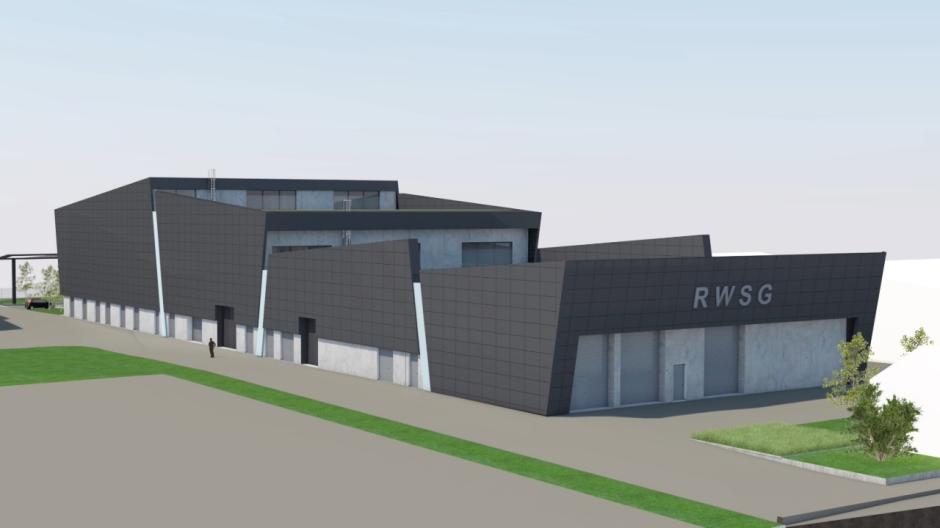
    The St.Gallen region is making its drinking water supply fit for the coming decades. With the decision in favour of the new Riet II lake water plant in Goldach, the existing plant in Frasnacht is being given a second pillar of equal value. Today, the supply of the twelve participating municipalities in Eastern Switzerland depends largely on this one source of supply in the event of an emergency. A risk that no longer fulfils the federal requirements for severe shortages. Riet II is intended to close precisely this gap and ensure supplies even if a plant fails or Lake Constance can only be used to a limited extent at times.

    The new plant will be realised on the site of the existing Riet high-pressure pumping station in Goldach. Around 60 million Swiss francs have been budgeted for construction and equipment. The costs will be borne by the twelve shareholder partners of RWSG Regionale Wasserversorgung St.Gallen AG in accordance with a new distribution model, which will be passed on to end customers via the water prices in future. The fact that all partner municipalities are unanimously in favour of the project and financing shows the high strategic importance: drinking water is treated as a critical infrastructure that must function just as robustly in the event of a crisis as it does in everyday life.

    With Riet II, the RWSG is expanding its role as the backbone of the regional water infrastructure. It is responsible for collecting raw water, treating it and transporting it to the municipal networks and supplies more than 150,000 people with drinking, process and extinguishing water. In future, it will operate two lake water works, Frasnacht and Goldach, as well as the Riet high-pressure pumping station and the associated transport pipelines. This will benefit urban centres such as St.Gallen and Arbon as well as smaller partner communities from Abtwil-St.Josefen to Teufen. The new plant is therefore more than just a construction project: it is a long-term promise of security for an entire region.

  • Spatial planning for municipalities since 1 January 2026

    Spatial planning for municipalities since 1 January 2026

    Federal framework, cantonal rules
    Parliament has reorganised the roles with regard to value-added compensation. One thing is clear: the obligation under federal law to pay value-added tax now only applies to individual zoning; the cantons are responsible for other significant planning advantages such as upzoning and rezoning. In the canton of Aargau, the equalisation of such advantages takes place within the framework of administrative contracts – not by means of decrees. For the municipalities, this means that they must actively negotiate, document properly and align their practices closely with cantonal law.

    Solar on façades
    Solar installations on façades are now generally not subject to authorisation in building and agricultural zones, provided they are deemed to be sufficiently adapted. The notification is made via the cantonal platform; the formal building permit procedure is no longer required. Art. 32abis RPV defines how adaptation is to be understood in concrete terms and at the same time opens up a certain amount of leeway for municipal design regulations. Municipalities can issue area-specific regulations, but may not excessively restrict the use of solar energy. Installations on cultural and natural monuments of cantonal or national importance as well as on buildings with substance protection or in sensitive local and landscape zones remain subject to authorisation.

    Solar above car parks
    In building zones, support structures for solar installations above or on the edge of car parks with 15 or more parking spaces are now considered directly compliant with zoning regulations. However, the municipalities can specify these basic regulations. They may designate areas where such structures are excluded or only permitted subject to conditions, or conversely declare smaller car parks to be zoning-compliant. This turns the car park into a strategic energy area. Provided that the municipalities utilise their autonomy and define clear objectives for townscape, climate protection and energy production.

    New planning principles
    RPG 2 introduces a new planning principle for the utilisation of underground space. In future, underground uses must be harmonised with above-ground uses and the affected interests at an early stage. At the same time, the priority of agriculture in the agricultural zone is expressly enshrined in the law. Agricultural uses are to be weighted more heavily than non-agricultural concerns, for example by easing immission control requirements if the agricultural interest prevails. For the practice of land use planning, this means less of a change of course than a shift in emphasis: the familiar balancing of interests in accordance with Art. 3 RPV remains, but is given clearer guidelines, which must be made visible in the planning report.

    Zoning-compliant and without planning obligation
    Installations for the production and transport of energy from biomass can be zoning-compliant in the agricultural zone under simplified conditions. It is now expressly stated that such zone-compliant biomass plants are not subject to planning requirements, even if they have a spatial impact. This is the legislator’s response to previous case law, which in some cases assumed a planning obligation for biomass-based energy plants. For municipalities and cantons, the discussion is thus shifting more in the direction of authorisation and requirement practice instead of land use planning.

    Building outside of building zones
    RPG 2 also brings noticeable changes outside of building zones. In principle, building applications can only be authorised with the approval of the canton. For municipal authorities, the main changes are in the material criteria against which projects are assessed. The priority given to agriculture will be strengthened and should also have an impact on the easing of odour and noise protection requirements.

    At the same time, the new law improves the framework conditions for plants that utilise renewable energies. Biomass plants in the agricultural zone are deemed to conform to zoning if they fulfil certain requirements and do not require prior planning, even if they are no longer subordinate to the agricultural operation but are merely part of it. For installations for the use of renewable energy and for thermal networks that do not conform to zoning regulations, the requirements for exceptional authorisations are relaxed, provided they contribute to the reduction of fossil fuels.

    Infrastructure, mobile radio and dismantling
    For infrastructure installations outside of building zones, the principle of bundling in locations that are as insensitive as possible now applies. Mobile radio installations can also be explicitly authorised outside the building zone if the location there offers significant advantages over a location within the building zone. Finally, the statute of limitations for dismantling orders will be standardised. Unlawful buildings and installations can generally no longer be demolished after 30 years, regardless of whether they are located inside or outside the building zone. Constellations in which police assets such as public order, peace, safety or health are jeopardised remain exempt.

    For the municipalities, the revised spatial planning law opens up new scope for solar energy, biomass, infrastructure and the prioritisation of agricultural interests. It will be crucial to actively shape this freedom, to anchor it in land use planning and authorisation practice and to document the new principles transparently.

  • Without materials research, there would be no progress

    Without materials research, there would be no progress

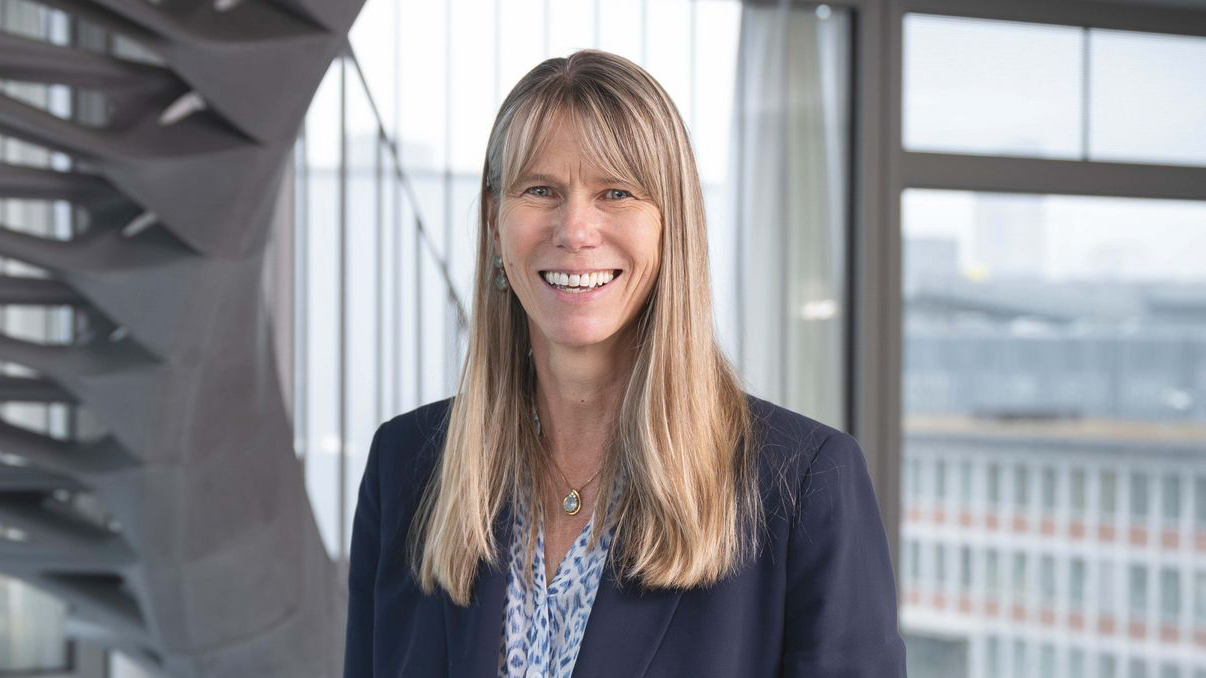
    For Tanja Zimmermann, materials research is the backbone of technological progress. Around two thirds of all innovations are based directly on new or improved materials, from batteries and medical sensors to building materials. Empa’s approach, which develops materials for construction, energy and health as a national competence centre, is correspondingly broad. This ranges from basic projects in the laboratory to feasibility studies with industrial partners. These include more efficient energy storage systems, new photovoltaic technologies and two-dimensional nanomaterials such as MXene, which could make electronics and sensor technology more compact and powerful in the future.

    applications for energy, health and construction
    In the health sector, Empa is working on textile sensors that enable long-term ECGs without traditional gel electrodes and thus avoid skin irritation. Other projects focus on intelligent materials in operating theatres, such as adhesives that seal leaks in the abdominal cavity and provide early warning of leaks thanks to integrated sensors.

    In construction, the focus is on the circular economy and resource efficiency. New concretes and composite materials should achieve the same load-bearing capacity with significantly less cement and steel, thus noticeably reducing the carbon footprint of buildings. At the same time, Empa is developing highly temperature-resistant materials for drones that can fly directly into sources of fire, as well as carbon fibre-reinforced plastics, which are increasingly making bridges and large structures lighter and more durable.

    CO₂ as a raw material
    Empa is going one step further with its “Mining the Atmosphere” initiative. The aim is not only to save CO₂, but to specifically extract it from the atmosphere and utilise it as a raw material. Researchers are investigating how carbon from CO₂ can be incorporated into ceramic materials such as silicon carbide or building materials such as concrete so that buildings themselves become carbon sinks. In the long term, such approaches should help to offset some of the historical emissions and make the transition from a CO₂-emitting to a CO₂-binding society. A “project of the century” that requires enormous amounts of renewable energy and close collaboration between research and industry.

    High-tech from nature
    Zimmermann also relies on a combination of natural principles and high-tech in wood research. She sees wood as Switzerland’s only large, indigenous, renewable resource that is light, stable and can be modified in many ways. The spectrum ranges from fire-retardant mineralised wood to antimicrobial surfaces and the use of fibrillated cellulose, whose nanofibres can form transparent gels, highly porous sponges or barrier films for food packaging. Such cellulose sponges can selectively absorb oil from water or bind CO₂ from the air. As a spray coating, they extend the shelf life of fruit and vegetables without the need for plastic film. More recent projects are creating “living materials”, such as printed structures made of nanocellulose and diatoms, which are intended to monitor water quality as biological sensors.

    Long-term projects such as “CarboQuant
    With “CarboQuant”, the Werner Siemens Foundation is supporting another long-term project at Empa. A laboratory that investigates carbon nanostructures for quantum technologies. The aim is to design graphene nanoribbons and nano-graphenes so precisely that their quantum effects can be utilised for electronic components at room temperature. For example, for sensors, communication or future quantum computers. Such projects show why foundations and public sponsors are central to Empa. Many material innovations take years or even decades before they can be scaled up and utilised commercially. For Zimmermann, however, it remains clear that without this staying power and without materials research, neither the technologies that make the energy transition possible nor many of the solutions that already make our everyday lives seem more natural than they are today would exist.

  • New role for H₂ heat

    New role for H₂ heat

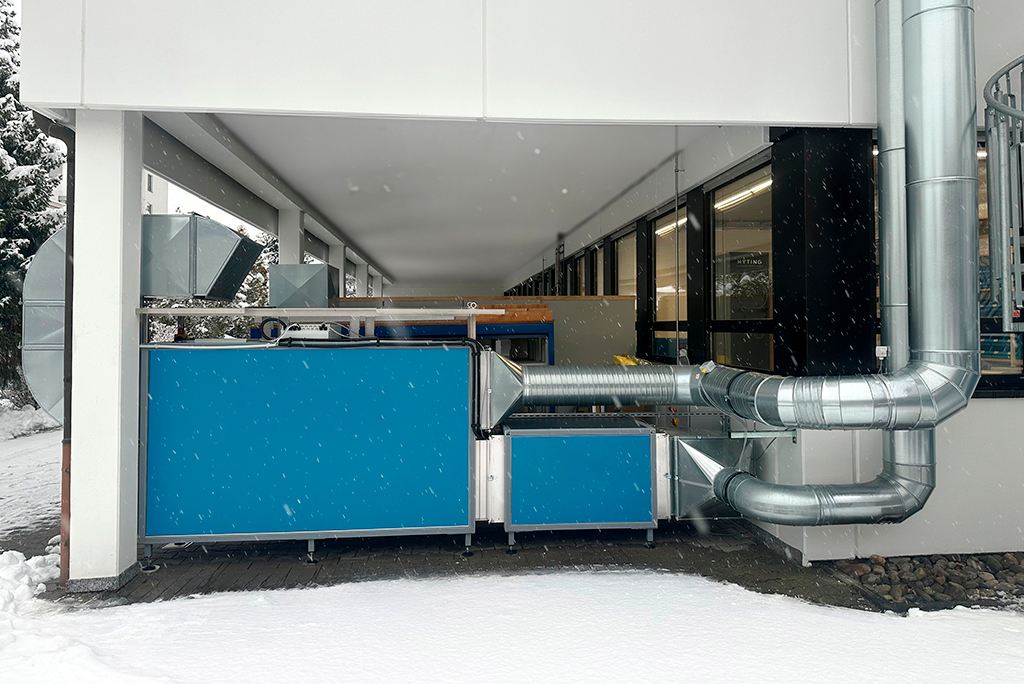
    In a production hall, an inconspicuous device is making heating technology history. The first catalytic hydrogen air heating system has been put into operation at a customer. The 10 kW system provides peak load heat for a production area of around 1,000 cubic metres for the pump manufacturer Flusys, using hydrogen from regional supplies. For the young company from Wiesbaden, this is more than just a field test. It is a practical test for a technology that is intended to replace fossil fuels in the heating sector in the future.

    Commercial and industrial buildings
    The company is deliberately targeting commercial and industrial buildings rather than single-family homes. This is where high heat demand, limited electrical connected load and increasing pressure to decarbonise come together directly. A purely electrical solution using large heat pumps often fails due to expensive grid connections or simply a lack of capacity. The hydrogen heating system covers the peak load, while a heat pump or another heat source takes over the base load.

    In Offenbach, the 10 kW unit works in a hybrid network with a heat pump. The heat pump supplies the production area during normal operation, while the H₂ heating system kicks in on particularly cold days or when capacity utilisation is high. This division of tasks allows the heat pump to be dimensioned smaller and reduces the required electrical connected load, a noticeable lever for investment and output prices. For locations with an existing or planned hydrogen infrastructure, the system thus becomes an economical component of the energy supply.

    The flameless hydrogen heating system
    Technologically, the company differs significantly from conventional condensing boilers or H₂ burners. The system works with a flameless, catalytic process. Hydrogen is mixed with ambient air, remains below the lower explosion limit and only reacts with the oxygen in the catalyser. Heat is generated, but no visible flame, as the process is based on controlled oxidation rather than combustion.

    The lower process temperatures mean that neither CO₂, NOx nor particulate matter are produced; the only by-product is water in the form of humidity. At the same time, flammable hydrogen concentrations are never used in the appliance, making the technology inherently safe. HYTING sees this as a kind of “plug-and-play heating” with hydrogen that utilises existing air ducts or ventilation systems and can be scaled in a modular design.

    Practical test, endurance test and approval
    The system is not the first endurance test for the young technology. A leading engineering service provider had previously accompanied a 2,500-hour endurance test that simulated around ten years of real operation. During the test, there were neither failures nor measurable wear and tear on safety-critical components. Continuous emission measurements confirmed the absence of CO₂, NOx and particulate matter emissions.

    The first customer system now marks the transition from the laboratory to industrial reality. Further systems are to follow in the course of the first quarter of 2026, also in commercial applications with existing hydrogen expertise.

    Where does the technology make sense
    Despite the attention, catalytic hydrogen heating is no substitute for gas heating or heat pumps in the broad market. Hydrogen is currently expensive, the infrastructure is limited and a comprehensive H₂ network for residential neighbourhoods is not in sight. For the foreseeable future, there is therefore no basis for economical use in single-family homes.

    The situation is different in industrial clusters, harbour regions or chemical parks, where hydrogen is already being produced or the hydrogen core network is being set up. This is where it can play to its strengths. As peak load heating in combination with heat pumps, as a supplement to industrial waste heat or as a flexible option in logistics properties with their own hydrogen production from PV surpluses. The role is thus clearly defined, not as a competitor to heat pumps, but as a building block in hybrid systems for companies that can utilise H₂ without major additional expense.

    Whether the niche becomes more will ultimately be decided outside the technology room. The price of hydrogen, the pace of grid expansion and political decisions will determine whether flameless H₂ heaters will be used more frequently in commercial buildings in the future or remain a specialised tool that is primarily used in places where hydrogen is already part of the energy mix.
  • Canton of Zurich continues to grow

    Canton of Zurich continues to grow

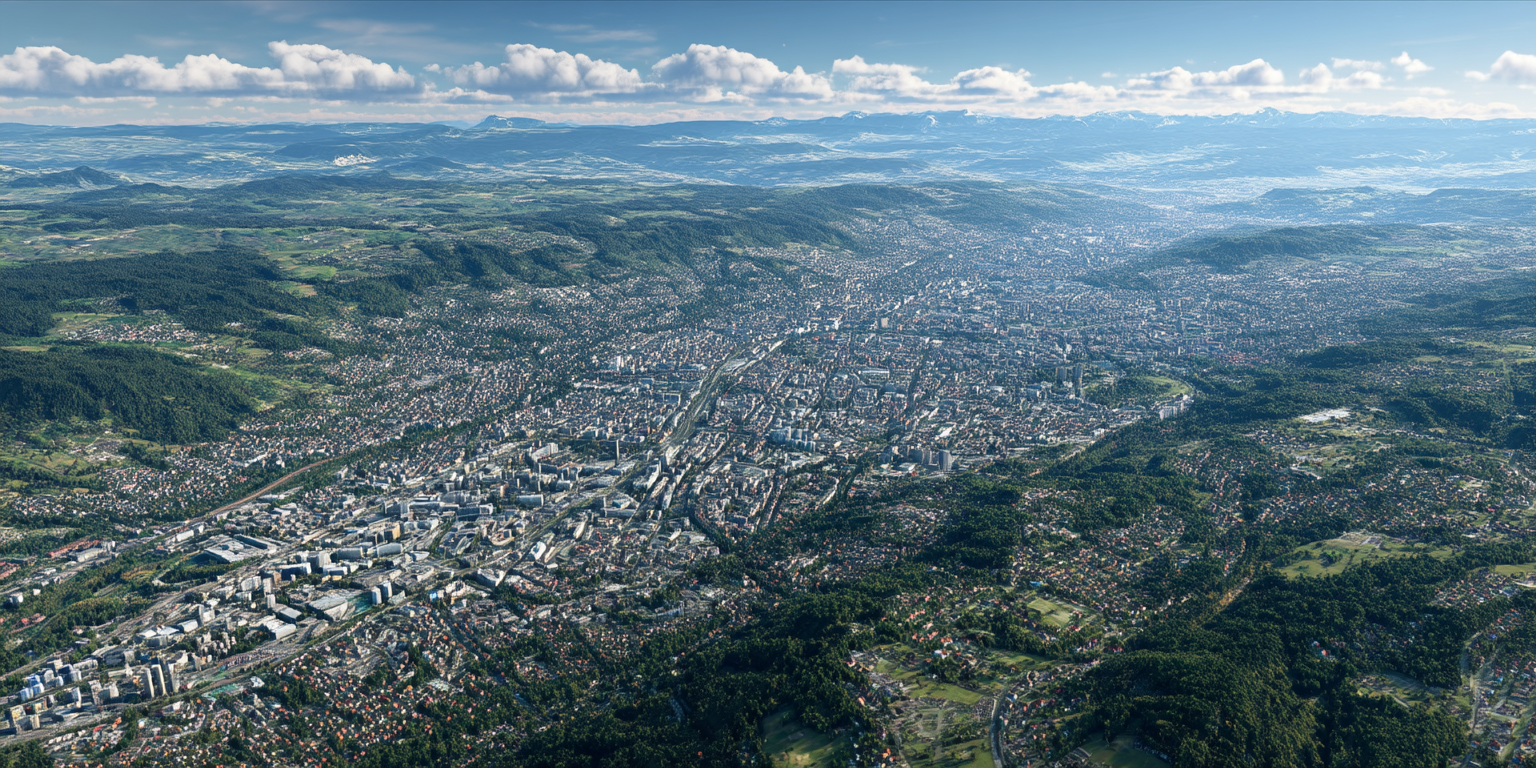
    The canton of Zurich continues to grow, but the major growth spurt of recent years is over for the time being. At the end of 2025, the civil resident population was 1,628,081 – an increase of just under 13,000 residents or 0.8 per cent compared to the previous year. Apart from the coronavirus years, this is the smallest increase since 2005 and thus a clear sign of a phase of more moderate momentum.

    Immigration most important growth driver
    Population growth continues to be driven primarily by immigration from abroad. Over 80 per cent of the increase is attributable to people of foreign nationality settling in the canton for the first time. Although net migration from abroad has fallen slightly compared to the previous year, it has returned to roughly the same level as before the war in Ukraine. The internal migration balance with the other cantons remains slightly negative and has hardly changed for several years. Zurich is losing about as many people within Switzerland as it is gaining.

    Births and deaths
    The birth balance accounts for less than a fifth of growth. Although initial estimates show a slight increase in births and a slightly lower number of deaths, the overall surplus remains low. This confirms the trend that the population is growing primarily “from the outside”, while the demographic momentum within the country is levelling off.

    Cities and small municipalities are growing the fastest
    The spatial picture is divided into two parts. Cities with a population of over 10,000 account for more than two thirds of growth. The city of Zurich alone accounts for almost a third of the cantonal increase, growing by 4,008 people. It was followed by Dübendorf and Uster, while Winterthur recorded the weakest growth since the turn of the millennium with an increase of 355 people.

    Relative to the size of the municipality, however, the small municipalities recorded the strongest growth. Flaach, Hüntwangen and Wila recorded growth rates of between 4 and a good 5 per cent, underlining the fact that even rural municipalities in the canton can benefit from the influx.

    Regions are shifting
    All regions in the canton are growing, but at different rates. Weinland and Furttal are leading the way with growth rates of 1.1 and 1.0 per cent respectively. Twice as high as in the Winterthur region, which will bring up the rear in 2025. While the areas close to the city in the north and east have recently seen above-average growth, the city of Zurich and the Limmat Valley are now above the cantonal average, while the Glattal and the Winterthur region are falling behind.

    Foreign population strongly characterised by Europe
    At the end of 2025, around 472,000 people of foreign nationality lived in the canton. This represents 29 per cent of the total population. Their number continues to grow, albeit at 1.5 per cent, the slowest rate since the introduction of full freedom of movement with the EU in 2007. Almost two thirds come from an EU or EFTA country, over 80 per cent from Europe.

  • Innovative materials in construction

    Innovative materials in construction

    Lightweight concrete in a single pour
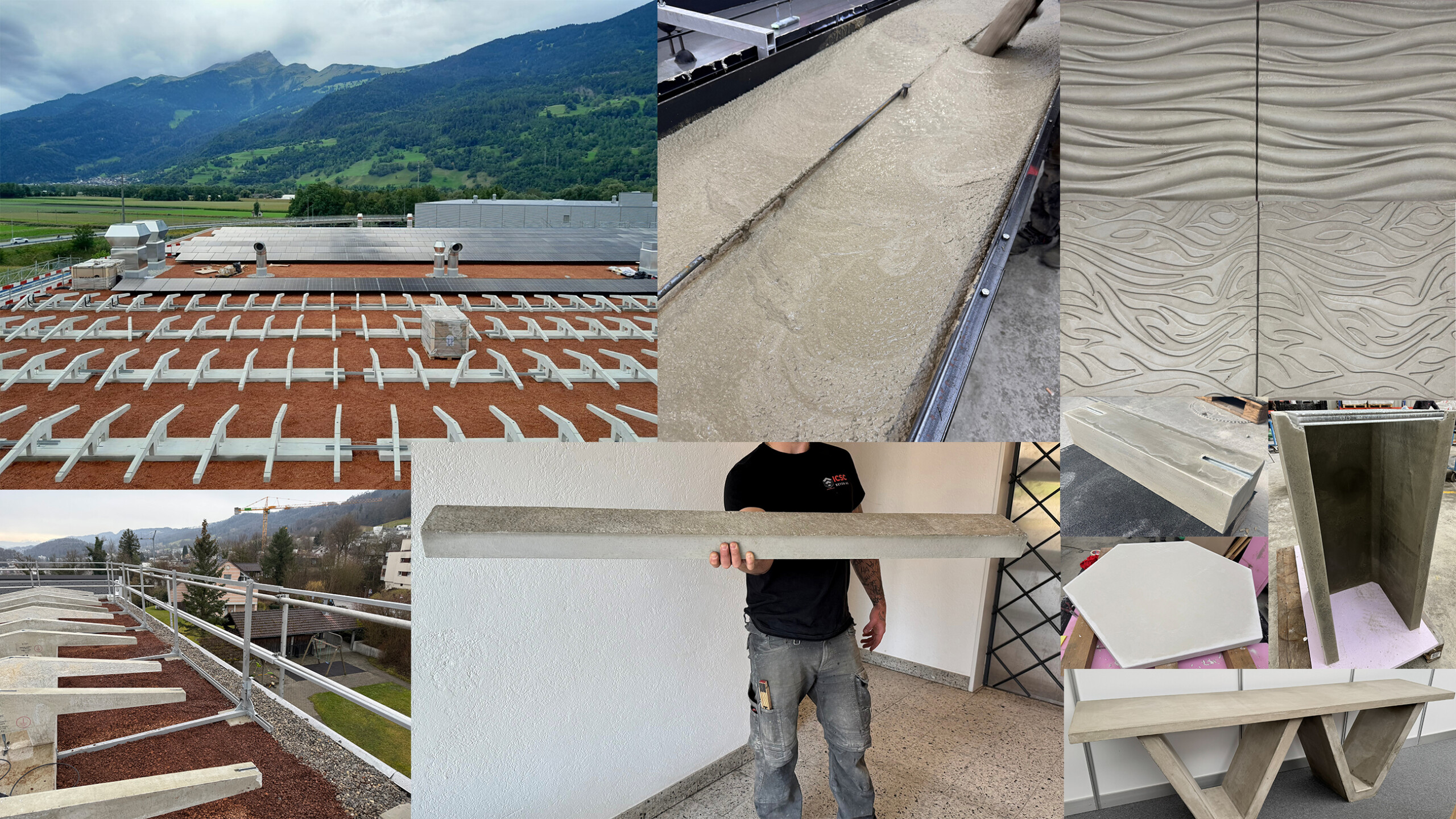
    ICSC Beton AG presented prefabricated parts made from its own lightweight concrete based on expanded glass, which are significantly lighter than normal concrete. At the same time, they have good insulation values, frost resistance and fire protection. This material is used to produce prefabricated elements that speed up construction processes and increase quality on the construction site. One focus is on lightweight concrete elements that combine static function, integrated ballasting and simple installation of solar modules, thus enabling roof renovation and solar installation in a single step. For experts in the audience, it became clear how prefabrication, lightweight concrete and photovoltaics can be combined to create sophisticated system solutions. With less weight, fewer interventions in the roof and more energy yield per square metre.

    Climate-neutral concrete on the construction site
    KLARK demonstrated how CO₂-saving concrete is already being used in building construction today. Without additional work for the construction site and with an externally tested climate impact. The concrete is based on the addition of biochar from waste wood, which permanently binds the carbon and stores hundreds of kilograms of CO₂ per cubic metre in the structure of the concrete. Technically, it largely behaves like conventional concrete. It can be pumped or processed by crane and remains fully recyclable. The stored CO₂ is not released again during demolition. In the Speakers Corner, it became clear that this opens up the opportunity for clients and planners to make measurable contributions to net zero strategies using familiar construction methods without having to reinvent processes and roles on the construction site.

    Climate additives for plaster and co.
    KohlenKraft presented a climate-positive building material that permanently binds CO₂ in the building and at the same time offers advantages in terms of building physics. The centrepiece is a climate additive based on biochar, which can be mixed into mineral building materials such as plasters and coatings, turning building components into long-term carbon stores. In addition to CO₂ storage, the systems aim to improve the indoor climate and regulate humidity. This is an argument that has met with great interest, particularly in refurbishments and high-quality interior fittings. The message to manufacturers, planners and construction companies is that climate effects can be integrated directly into existing products without having to fundamentally change processing and detailed planning.thinking in concrete, building with wood
    In the Speakers Corner, the TS3 technology used real projects to demonstrate how familiar design logic and a new timber construction technique come together. An important step in turning large-volume timber buildings from a pioneering project into an established option. Today, large-scale, biaxial load-bearing timber ceilings with column grids of up to 8 x 8 metres can be realised with a special end-face bonding of cross-laminated timber. Load-bearing structures that were long reserved for reinforced concrete. The panels are rigidly joined on site by grouting the joints with cast resin, resulting in beam-free, point-supported flat timber ceilings that can be treated like flat concrete ceilings in the design. For architects and engineers, this opens up great freedom in terms of floor plans and subsequent conversions, as non-load-bearing walls can be moved flexibly, while weight, construction time and carbon footprint are significantly reduced compared to concrete ceilings.

  • Generational change strengthens commitment to energy transition

    Generational change strengthens commitment to energy transition

    Reto Trittibach is the new owner and managing director of INES Energieplanung GmbH. According to a statement, André Joosten will be his deputy. With this new appointment, the Bern-based provider of energy supply solutions, founded 14 years ago, aims to maintain continuity.

    The aim of INES Energieplanung is to “support the energy transition with expertise and to the best of its ability”. Energy concepts for sites and district heating projects are developed. According to the company, INES contributes its expertise not only to the planning and construction of energy plants, but also to plant concepts. INES also acts as an energy consultant for the city of Bern.

    INES operates in the city and metropolitan area of Bern. Its main customers and cooperation partners include Marzili Wärmeverbund AG and the city of Bern.

    Founder Bruno Liesch shaped INES with a focus on sustainable energy solutions, heating networks and future-oriented energy planning. According to the announcement, he will continue to contribute his experience in project development on a part-time basis until the end of 2026.

  • New plants strengthen supply chains in growth markets

    New plants strengthen supply chains in growth markets

    Sika is manufacturing its products for the construction industry at five additional plants. According to its announcement, the specialty chemicals company, headquartered in Baar, sees this as an important step towards increasing production capacity and further strengthening its global supply chain in key growth markets.

    Sika has opened a new plant for concrete admixtures in Haines City, Florida. According to the information provided, the factory has the highest level of automation of all Sika admixture sites in the United States.

    In Puerto Tirol in the Argentine region of Chaco, Sika has inaugurated its eighth production facility in the South American country. After “several challenging years,” the local construction market has returned to a growth path, opening up new opportunities for Sika.

    In the Colombian city of Cali, a new factory produces mortar, tile adhesive, interior wall and acrylic coatings, and concrete admixtures. Production there will also be exported. Sika will also gain a foothold in the construction market in Bangladesh with a site in Narayanganj, benefiting from an estimated annual growth rate of over 7 per cent until 2029.

    In the Tanzanian city of Mwanza, Sika is banking on its location in an important and densely populated mining area. Accordingly, Sika produces special mortars for mining and construction, mortars, concrete admixtures and grinding aids for cement plants there. Sika serves local demand with the plant and exports to Burundi, Rwanda and the Congo.

  • New construction of the Fröschmatt School in Pratteln

    New construction of the Fröschmatt School in Pratteln

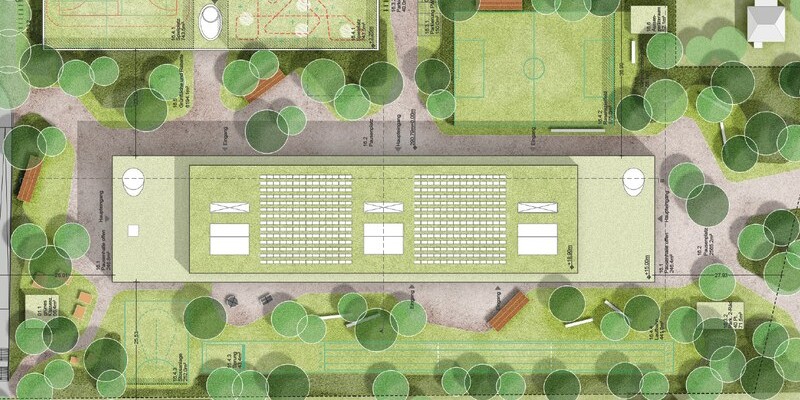
    The Fröschmatt School is Pratteln’s central secondary school and is currently undergoing a transformation. Due to a significant increase in student numbers and long-overdue renovations, it is becoming one of the largest and most modern school facilities in the canton of Basel-Landschaft. With an investment volume of just under CHF 119 million, a sustainable new building for around 36 classes and state-of-the-art educational requirements is being constructed on the existing site. The open competition was won by the winning design “Lungo” by Burckhardt Architekten AG, which integrates the school complex optimally into its park-like surroundings.

    Innovative architecture and flexible use
    The building ensemble is clearly structured. At the centre of the plot, the school building creates space for learning, meeting and development. The gyms, located in the north-east, including an all-weather area on the roof, are being built as separate pavilions. State-of-the-art hybrid timber construction and flexibly designed interiors meet the requirements for sustainability and future viability. Surrounding balconies provide protection from the sun and become lively terraces.

    Planning with the region in mind
    The schedule is ambitious. Construction of the main building will begin in 2026, with occupancy scheduled for 2029. The gyms will be completed by 2031. In the meantime, lessons will continue uninterrupted thanks to a specially constructed, sustainable temporary facility on the Hexmattwiese and in parts of the old building. The entire complex not only promotes contemporary teaching, but also enhances the attractiveness of Pratteln as a location and its development prospects.

  • Return of the wild waters at Schänzli

    Return of the wild waters at Schänzli

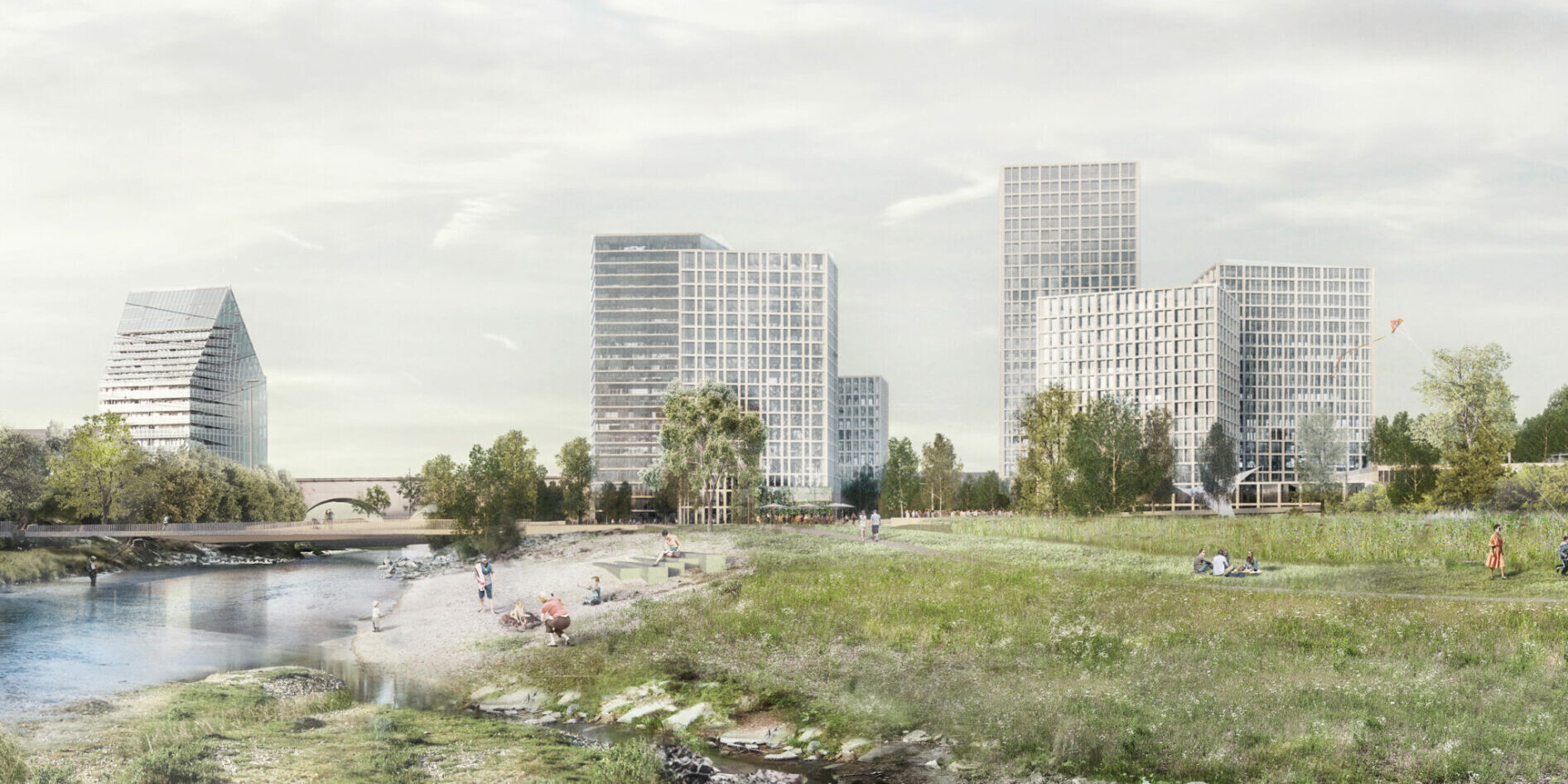
    The Schänzli site marks the beginning of a new era in landscape planning along the River Birs. The winning project, “Aqua fera” by Berchtold.Lenzin Landscape Architects, Versaplan and Holinger, frees the river from its rigid form and gives it freedom of movement. Shallow water zones, low-water channels and near-natural banks create habitats for fish, birds and amphibians, strengthen groundwater protection and make the floodplain landscape accessible again.

    Visitor guidance via wooden walkways, piles of branches and defined paths protects sensitive areas, while a refreshment bar and small event areas at the northern entrance provide space for people to meet. Towards the south, the terrain becomes quieter, merging into the Vogelhölzli nature reserve and opening up new perspectives on a revitalised Birs. Noise barriers along the motorway shield the area and at the same time form a new connection to the Käppeli district.

    City on the river
    The new Am Schänzli quarter borders directly on the nature reserve. Three high-rise buildings with around 400 flats, offices, restaurants and leisure facilities, together with spacious open areas and commercial space, form a lively urban fragment at the gateway to Basel. The development meets the SNBS Gold Standard, focusing on photovoltaics, heat recovery, green roofs and a compact design with biodiversity zones between the buildings.

    The mobility strategy prioritises slow traffic. Cycle, foot and tram connections link the neighbourhood with Basel-Stadt, the Birspark recreational area and the Hagnau sites. The principle of “open space through density” demonstrates its power here: a better quality of life through compact, intelligently organised construction.

    Cooperation and implementation
    The site development is financed by value-added levies on landowners in Hagnau and through public-private cooperation with the municipality of Muttenz. The neighbourhood planning process, which was approved after intensive public participation, forms the basis for the coordinated overall development of Hagnau East, Hagnau West and the Schänzli site.

    Construction of the high-rise buildings began in spring 2025 and will be completed in stages by 2029. While Am Schänzli is growing, the southern river area remains undeveloped and is becoming the backbone of a coherent green network between the city and the countryside.

    A model for the future of cities and nature
    The Schänzli project is symbolic of the new generation of Swiss urban development: ecologically regenerative, architecturally precise, socially integrated. It proves that economic density and ecological diversity are not mutually exclusive, but can reinforce each other.

    With “Aqua fera”, the Birs is not only being renaturalised, it is being reintroduced into everyday urban life. Muttenz is thus demonstrating how forward-looking planning can harmonise open space, climate resilience and urban quality of life. The Schänzli is becoming a living transition between city and nature and a powerful symbol for the return of wild waters.

  • Relocation creates development opportunity with lake view

    Relocation creates development opportunity with lake view

    Because it no longer meets the current requirements for a modern health centre, Lucerne Cantonal Hospital will be relocated to Schenkon together with the Seeblick nursing home. According to a statement, the canton, as the owner, and the city of Sursee want to plan an attractive future for the 47,000 square metre site.

    Initial assessments indicate that the site is suitable for mixed-use development with residential and commercial premises. This would allow for the creation of residential facilities for families, couples, singles and senior citizens, with services and restaurants completing the site. The site, located above Lake Sempach, is in close proximity to the old town of Sursee and already has good access to various modes of transport.

    “The move opens up a unique opportunity to repurpose the previous location in Sursee,” said Reto Wyss, member of the cantonal government, in the announcement. “This attractive site with lake views in a good location is to be rezoned for this purpose. The next planning steps will show what is feasible and where.” The planning phase for the new neighbourhood is set to begin in spring 2026, when the hospital starts to move. Various meetings with the local population and interest groups are planned. The site is expected to be vacant from 2034 and could be redeveloped. The possibility of incorporating the existing building fabric is also being considered.

  • Portfolio approach drives electric mobility in residential properties

    Portfolio approach drives electric mobility in residential properties

    According to a press release, Helvetia Baloise Holding AG, the insurance company formed in December 2025 from a merger between Helvetia and Baloise, is promoting e-mobility together with its partner Energie 360°. The energy and e-mobility company, which is 96 per cent owned by the City of Zurich, has already taken over more than 150 charging stations in 13 properties, mainly in western Switzerland, the Mittelland and Basel.

    As Reto Baschera, head of the mobility group at Energie 360°, emphasises, the expansion is “demand-driven and geared to the requirements of the tenants”. According to the information provided, six further properties are currently in the planning stage, with more to follow gradually. The focus is on a harmonised portfolio approach with a hardware-independent billing solution that takes into account different building types and product characteristics. Helvetia Baloise has a total of around 845 properties in Switzerland with approximately 30,000 apartments.

    “For me in strategic procurement at Helvetia Baloise, it was crucial to find a partner who sees electromobility not as a single product, but as an integrated part of a large real estate portfolio,” says Karin Hauser of Baloise Asset Management AG. “In our collaboration with Energie 360°, we particularly appreciate the structured approach, the reliable implementation and the ability to pragmatically map different starting points in our properties.”

  • New high-rise project boosts housing supply near the station

    New high-rise project boosts housing supply near the station

    Pensimo Management AG, based in Zurich, has acquired a building site from ABB in Oerlikon through its investment foundations Turidomusand Pensimo. According to a press release, the company plans to build a complex with 500 apartments, including a high-rise building and commercial premises, on the north side of Oerlikon railway station on the newly designed Max-Frisch-Platz.

    “We are very pleased with the acquisition of this property,” said Stefanie Krautzig, transaction manager at Pensimo, in the press release. “This is a very rare investment opportunity for a development project of this size in such a central location.” The building regulations for Neu-Oerlikon, which were partially revised in 2022, provide a good basis for planning and developing the area. “In order to evaluate an architectural solution for this central and prominent location that is attractive to the public and future residents, we will launch a competition among teams of planners,” said Krautzig.

    Construction is expected to begin in 2029. The seller, ABB, is also pleased with the sale of the former industrial site and is convinced that “this will contribute to the further development of Zurich Oerlikon into a lively and diverse neighbourhood,” said Nora Teuwsen, Chair of the Executive Board of ABB Switzerland.

  • Growth strategy in the building technology market continues

    Growth strategy in the building technology market continues

    The Burkhalter Group, a full-service provider of cross-trade building technology, is acquiring Enplan AG, which specialises in the planning of heating and ventilation systems and efficient energy concepts. The company has been operating in the regional market since 1984, employs five people and generates annual sales of around CHF 0.6 million.

    Enplan AG will be merged with Längle & Staub GmbH in St. Gallen, which belongs to the Burkhalter Group, and will continue to operate at its current location as Enplan, a branch of Längle & Staub GmbH. All employees will be retained.

    Secondly, the Burkhalter Group is acquiring Elektro Gasser AG, which has been active in the electrical and telecommunications (ICT) sectors since 1991. The company employs seven people and generates annual sales of around CHF 2 million. Elektro Gasser AG will be gradually integrated into TZ Stromag, which belongs to the Group. At the same time, a branch of TZ Stromag will be established at the Lalden site under the name Gasser Elektro ICT, while Elektro Gasser AG will continue to operate as an independent company until further notice.

    With these acquisitions, the Burkhalter Group is continuing its growth strategy. It provides services in the fields of heating, cooling, ventilation, air conditioning, sanitation and electrical engineering and is headquartered in Zurich.

  • New managing director takes over umbrella organisation of funding foundations

    New managing director takes over umbrella organisation of funding foundations

    The board of SwissFoundations, the association of Swiss grant-making foundations, has appointed Jasmina Ritz as its new managing director. According to a statement, she will replace Katja Schönenberger in mid-March, who is returning to an operational foundation after two years at SwissFoundations. Jasmina Ritz was co-initiator of the cross-cantonal location promoter Limmatstadt AG, where she served as managing director for many years. She thus brings with her extensive experience in advocacy, networking and managing an umbrella organisation.

    “The SwissFoundations board is delighted to have gained in Jasmina Ritz a strong leader with many years of experience at the interface between business, politics and society,” says the SwissFoundations press release.

    Ritz worked in the Limmat Valley for around 15 years. She was initially head of location promotion for the city of Dietikon and later co-founded Limmatstadt, where she served as managing director and vice-president of the board of directors. Most recently, she headed the Bern-based Deep Tech Switzerland Foundation, where she was responsible for developing an international fellowship programme.

  • Technology fund supports AI-based energy optimisation

    Technology fund supports AI-based energy optimisation

    Scandens can finance upcoming business developments with a guarantee from the technology fund. According to a statement by Dominik Bucher, co-founder and CCO of the Zurich-based cleantech company, receiving this guarantee confirms its approach: “Enabling the right investment decisions for real estate portfolios – economically sound and future-proof” while making the best possible decisions for the climate and the environment. “We are delighted to be part of the technology fund,” said Bucher.

    Founded in 2021 as a spin-off from the Swiss Federal Institute of Technology Zurich, the company launched software in 2023 that makes it easier to plan and implement energy-efficient building renovations. With this artificial intelligence-based internet application, owners of real estate portfolios as well as private homeowners can check whether and which renovation measures make economic and ecological sense.

    According to a statement from Scandens, the software displays over 500 renovation combinations and creates a plan that serves as a basis for implementation. This is intended to save time and promote sustainable decisions.

    With the technology fund, the federal government promotes innovations that reduce greenhouse gases or resource consumption, favour the use of renewable energies and increase energy efficiency. Guarantees make it easier for innovative companies to take out loans. The guarantee is granted to banks or other suitable lenders. To cover guarantee losses, a maximum of CHF 25 million per year from the proceeds of the CO2 levy is paid into a technology fund.

  • Digital marketplace promotes circular economy in construction

    Digital marketplace promotes circular economy in construction

    Zirkular GmbH, based in Basel, has launched its new platform , rematerial. According to a press release, the new online DIY store will offer high-quality, reusable building components. For example, it will offer LED lights that have been reconditioned by specialist companies and now come with a guarantee. Components can also be reserved for a month or stored temporarily for up to 24 months for just-in-time deliveries. The building components collected from demolition sites are stored in a systematic manner.

    The rematerial platform can be used in conjunction with thePlanularplanning tool, which was also developed by Zirkular. In this module, architects, planners and builders can select the components required for their respective projects from a database. The path of the building material can be traced through the steps of source object, component, warehouse and target object.

    With both modules, Zirkular GmbH supports sustainable construction through circular economy, as demonstrated, for example, in construction projects such as the Lysbüchel Süd neighbourhood in Basel.

  • New headquarters combines industrial history with modern architecture

    New headquarters combines industrial history with modern architecture

    Electrification and automation group ABBis planning a new global headquarters in Zurich Oerlikon, according to a press release. The 80 million Swiss franc project reflects the history of the company and the city of Zurich and will create a modern workplace for around 500 employees.

    The location chosen is the historic ABB building, which will be renovated and modernised in accordance with heritage protection requirements. The historic building will be complemented by a six-storey new building in the inner courtyard, replacing the Chicago Hall event venue, which is not listed.  The new building will have a brick façade in keeping with the existing architecture and will be constructed using a material-efficient wood composite construction method. Supported by ABB technologies and photovoltaic systems, low energy consumption is to be achieved. The new headquarters covers a total area of around 10,800 square metres. Plans include a 280-square-metre lobby with exhibition space and a 450-square-metre media area.

    For Morten Wierod, CEO of ABB, the choice of location is a commitment to Switzerland and the city of Zurich, “where our global headquarters have been located since the merger of BBC and Asea in 1988. One of our predecessor companies – Maschinenfabrik Oerlikon (MFO) – was also based here for many decades. The combination of a historic building and state-of-the-art facilities will create an inspiring environment for cooperation and innovation.”

    Detailed plans for the new headquarters are expected in 2026/2027. The building is scheduled to be completed and ready for occupancy by 2031. Until then, ABB will remain in the Cityport building in Zurich Oerlikon.

  • Historic thermal baths get a green future

    Historic thermal baths get a green future

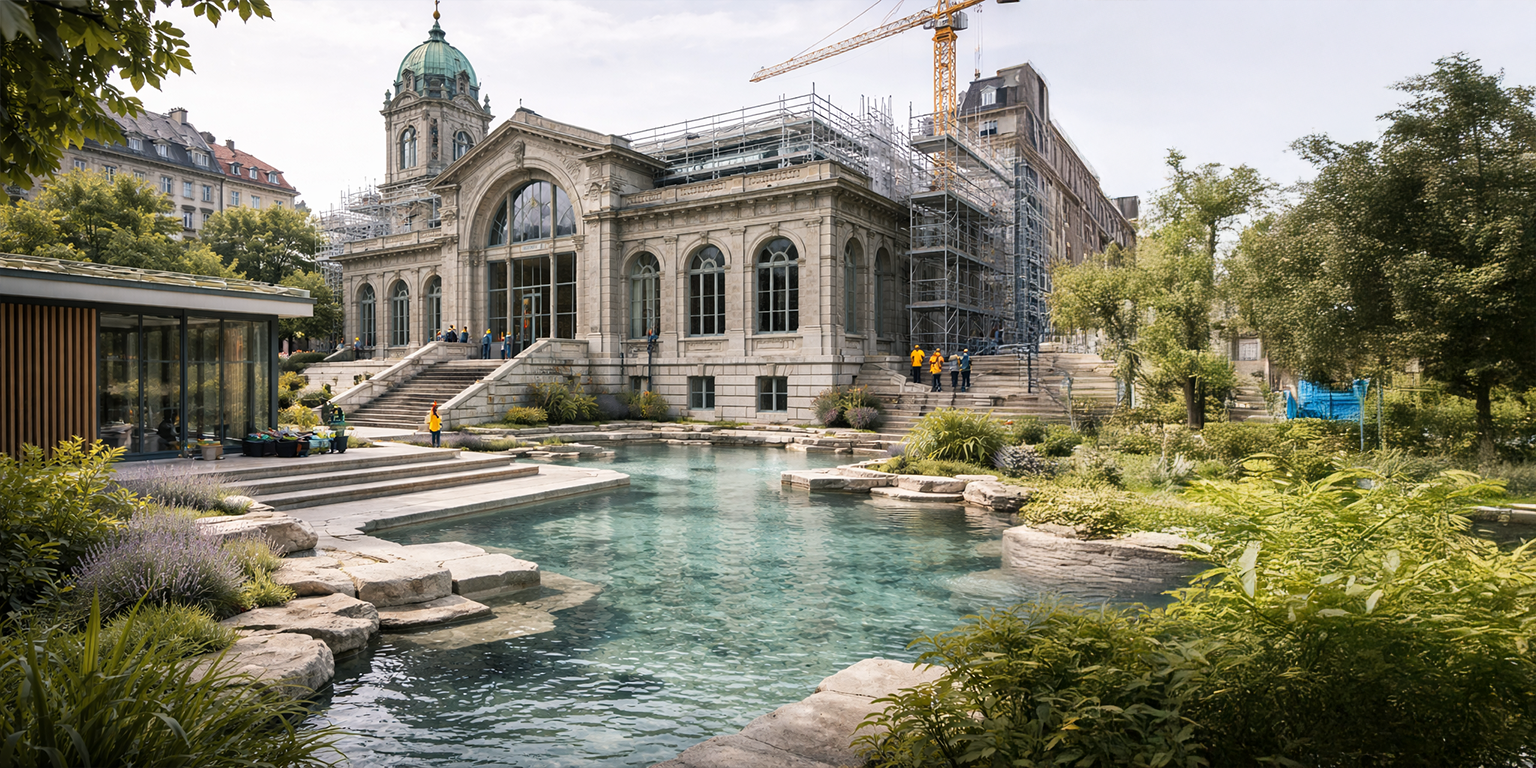
    The city of Baden and the canton of Aargau have granted the Bad zum Raben cooperative planning permission to renovate the Bad zum Raben swimming pool. According to a statement issued by the cooperative, the renovation will combine monument preservation, water hygiene, fire and flood protection, and efficient operations. Once financing has been secured, the renovation is scheduled to start at the end of 2026 and be completed in early 2028.

    “We are very pleased about this important milestone. The building permit gives us planning security and is the basis for further fundraising,” said Andreas Rudow, co-president of the Bad zum Raben cooperative, in the press release. “With the project approved, it will be easier to find funding.”

    The total cost of the renovation will be around CHF 4.5 million. While CHF 1 million has already been covered by own funds, donations and initial funding commitments, the remaining financing is to be secured through contributions from the public sector, foundation fundraising, donations and the sale of cooperative shares. The Bad zum Raben cooperative is also continuing to seek additional members and is symbolically selling components of the future baths.

    The renovation aims to preserve the historic building fabric and enable the communication of history and culture through sustainable bathing operations and flexible use. In addition to four pools with natural thermal water, the Bad zum Raben will feature a small bistro, a stage for cultural events, rooms for art and relaxation, and a bathing media library. The entrance area will offer insights into the history of the old bathhouse and the historic water system. After the renovation, thermal water will also be used to heat the showers in the baths and the apartments on the former hotel floors.

  • Location promotion is being strategically realigned

    Location promotion is being strategically realigned

    The Lucerne Cantonal Council supports the further development of location promotion. According to a statement, it passed the corresponding bill during its January session and amended the law on economic promotion and regional policy. It now provides for a package of measures for location promotion worth around CHF 300 million per year.

    This is the canton’s response to the OECD minimum tax, which will require large international companies to pay more tax in future. According to an earlier press release explaining the motivation behind the package of measures and its contents, this means that the canton will lose its competitive advantage of low corporate income tax and fears that tax revenues and jobs could be lost.

    Accordingly, the measures now approved in favour of the economy focus on promoting innovation, improving the tax burden and framework conditions with regard to digitalisation, the development of commercial space, the availability of commercial and residential space, and a “customer-oriented” administration. The measures in favour of the population concentrate on improvements in the tax burden, work-life balance, culture and digitalisation.

    In addition, the Cantonal Council has decided that self-service shops without sales staff and with a maximum area of 30 square metres may be open daily from 5 a.m. to 10 p.m. A restriction to farm shops was rejected by an extremely narrow margin. Shops with at least four charging stations for electric vehicles, each with a minimum of 150 kilowatts and a simultaneous minimum total charging capacity of 300 kilowatts, are treated in the same way as petrol station shops. The SVP and SP announced a referendum against the proposal.

  • New technology paves the way for virtually CO2-free cement

    New technology paves the way for virtually CO2-free cement

    Holcim has agreed to acquire a strategic stake in Capsol Technologies, a specialist in post-combustion carbon capture solutions based in Oslo. This was announced in a statement by the building materials supplier. The focus is on HPC (hot potassium carbonate) technology, an energy-efficient chemical absorption process for capturing CO2 from gas streams, combined with an integrated heat recovery system. Holcim intends to use this technology to promote the large-scale production of virtually CO2-free cement and meet growing customer demand for climate-friendly building materials.

    “By combining Holcim’s expertise in cement production and on-site CO2 capture with Capsol’s safe and efficient technology, we have an additional lever to drive decarbonisation and achieve profitable growth,” said Ram Muthu, Head of Operational Excellence at Holcim. “This strategic investment brings us one step closer to large-scale production of virtually CO2-free cement.”

    The investment was preceded by a CapsolGo demonstration project at Holcim’s Dotternhausen plant in Germany in 2025, where Capsol successfully tested its technology in an industrial environment. The investment expands Holcim’s portfolio of decarbonisation technologies within its open innovation ecosystem. Through Holcim MAQER Ventures, the Group’s corporate venture capital unit, Holcim has made 19 investments to date and reviews more than 500 start-ups in the field of sustainable construction solutions each year.

  • Global ranking confirms long-term climate strategy

    Global ranking confirms long-term climate strategy

    KONE ranks 54th in this year’s Global 100 Most Sustainable Corporations in the World ranking by Corporate Knightsin Toronto, Ontario, Canada. In the Machinery industry group, the lift and escalator manufacturer even ranks second among 397 companies worldwide. In Finland, where KONE has had its headquarters in Espoo since 1910, it is the highest-ranked engineering company, as it is in Switzerland, where KONE (Switzerland) AG has been operating since 1996. The company employs over 60,000 people in more than 70 countries.

    In 2024, KONE was awarded the German Sustainability Award as the most sustainable company in the lifting and conveyor technology category. KONE is the first company in its industry to define ambitious and scientifically based climate targets for 2030, according to a press release. “For KONE, leadership in the industry always means leadership in sustainability,” said Kirsi Simola-Laaksonen, Senior Vice President for Sustainability and Environment. “This ranking is clear, independent proof of the progress we are making.”

    The company is committed to aligning its activities with the goal of limiting global warming to 1.5 degrees Celsius. “We understand that sustainable business is good business for our customers, their customers and for us,” said Simola-Laaksonen. “We continuously monitor how sustainable solutions impact our business and are increasing the share of our revenue from products and services that contribute to climate protection. Together with our customers, we develop smart and sustainable buildings, enabling better urban living.”

  • Co-operation to leverage the potential of the Silbern industrial estate

    Co-operation to leverage the potential of the Silbern industrial estate

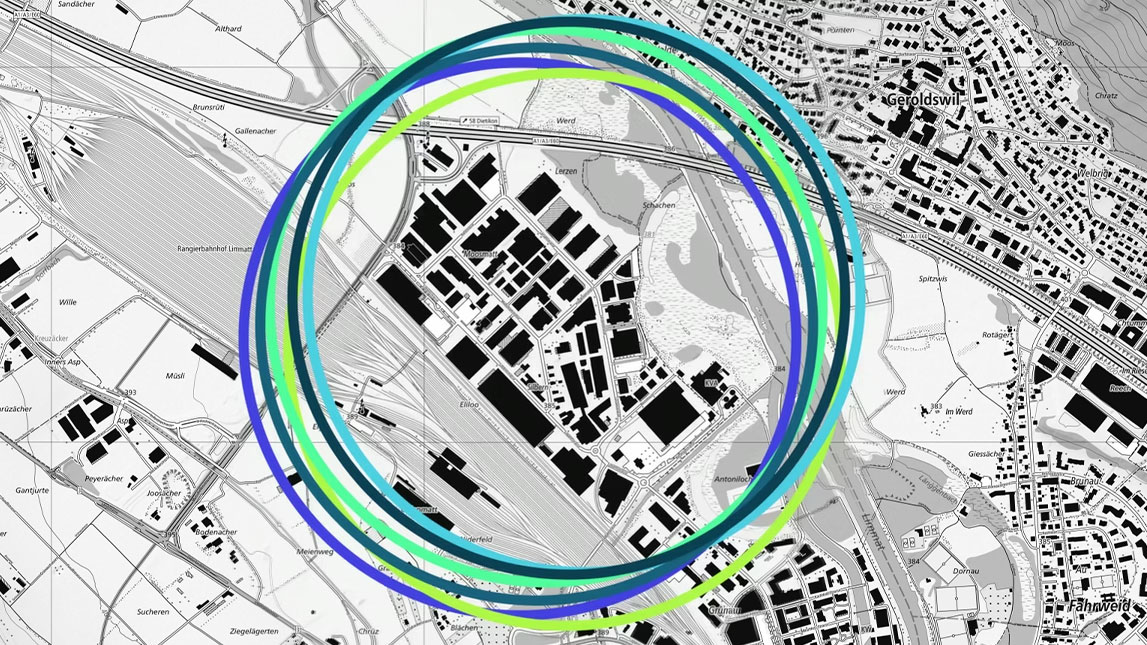
    Today, Silbern is an important location for production, trade and shopping and contributes significantly to the economic strength of the region. At the same time, the area has hardly developed at all over the years in terms of urban development and urban space and lags behind the potential of other business locations in the region. This is precisely where the new alliance comes in. It wants to initiate qualitative further development instead of merely managing the existing utilisation.

    Integrative approach instead of individual interests
    In the Silbern Future Alliance, IG Silbern, Limeco, BirdLife, the city of Dietikon and the canton of Zurich are working together in a long-term, collaborative framework. The approach is clear: the economy, mobility, environment and nature are planned and managed together. The aim is to recognise conflicting objectives at an early stage and to develop solutions in a coordinated and transparent manner based on interests.

    Vision and charter as a binding framework
    The result of a two-year mediation process led by Joris Van Wezemael is a common vision, supplemented by a binding charter. Both create orientation, define guidelines and strengthen reliability in the cooperation. This gives companies and landowners a framework within which they can actively shape development. With more planning security and clear expectations regarding the compatibility of economic, ecological and social concerns.

    Sustainable economic and living space
    The alliance sees itself as a long-term cooperation with a clear ambition. Silbern is to develop into a location that offers attractive framework conditions for companies, improves accessibility and at the same time strengthens natural and living spaces. Infrastructure is seen as key, as part of the solution, for example by converting waste materials into energy and new resources.

    Common will as a success factor
    The next step requires concrete projects and the sustained will of all those involved to share responsibility. Entrepreneurs, property owners, the public sector, infrastructure operators and nature conservation organisations have already developed a better understanding of each other and mutual respect in the dialogue to date. This basis of trust is crucial if the shared vision is to be realised and Silbern is to make the leap from an underestimated working area to a future-oriented economic and living space.