Tag: immoNews

  • Swiss construction project focuses on sustainable earthen architecture abroad

    Swiss construction project focuses on sustainable earthen architecture abroad

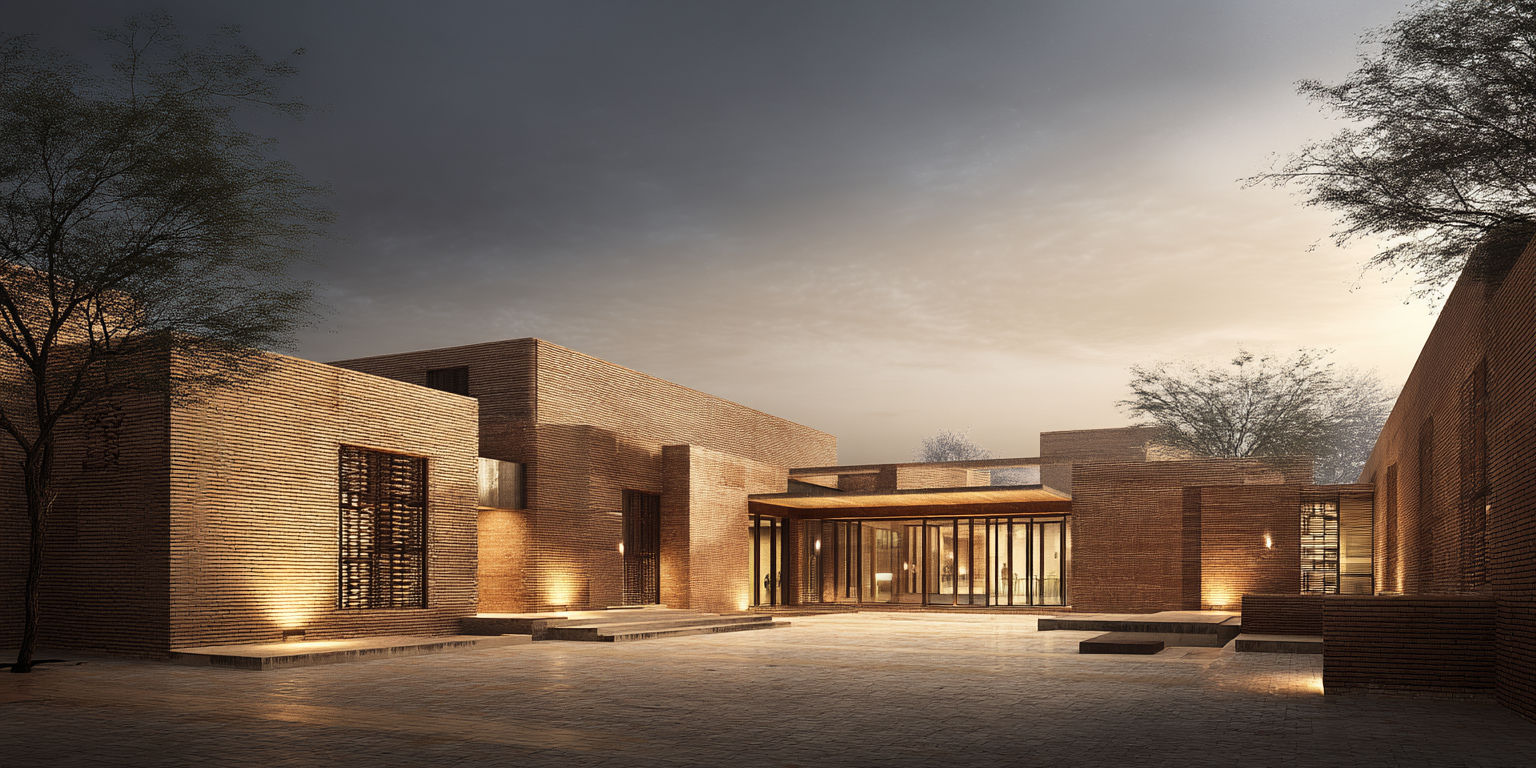
    The go-ahead has been given for the construction of the new Swiss Embassy in the Cameroonian capital, Yaoundé, and according to a press release, Dietikon-based Oxara AG is playing a key role in the project. The public building will be constructed using pressed clay bricks. Oxara is supplying its Oxabrick Loko stabiliser for the red raw material, which is available in abundance locally.

    The design for the embassy building is by the Basel-based architectural firms Caesar Zumthor Architekten and Nord Architekten and comprises an office block, a residence and a connecting building, all grouped around a courtyard. The buildings are to be constructed sustainably using local resources.

    On its website, Oxara – a company founded in 2019 – has launched a series reporting on the progress of the construction work. “In West Africa, clay is perceived as a sign of poverty and rurality, whilst concrete dominates in cities as a status symbol,” Oxara’s project manager Jonathan Ensslin is quoted as saying there. “It therefore sends a strong signal that the new Swiss embassy is being built with clay.”

    Oxara’s non-toxic mineral activator transforms clay into a stable and water-repellent building material. According to the company, this makes clay construction faster, less labour-intensive and scalable. At the same time, it is circular and low-carbon.

    Tests in the Oxara laboratory had shown that the material is well suited for use with Oxabrick Loko. However, the laboratory results could not initially be replicated on site. With the help of local materials researcher Berardin Beauderic Kenne Diffo, who had already got to know Oxara during his PhD at the Swiss Federal Institute of Technology Zurich, the mixing ratios were adjusted. A test wall comprising around 7,000 clay bricks is currently being completed. Construction work on the new embassy is then set to begin.

  • The circular economy is gaining in importance in the construction and civil engineering sectors

    The circular economy is gaining in importance in the construction and civil engineering sectors

    According to a press release, INDUNI & CIE AG has developed solutions to promote the reuse of reinforced concrete from existing buildings. The three-stage approach covers the demolition, transport and storage of materials before reconstruction begins.

    In the first stage, concrete elements are crushed during the demolition of buildings in such a way that they are already suitable for later reuse. The parts are then transported to various storage sites in the Lake Geneva region using the company’s own logistics. Finally, the concrete elements are integrated into new projects by the company’s structural and civil engineering teams.

    INDUNI is also supporting Matériuum’s 10th anniversary. The Geneva-based association for the protection of natural resources helps to “promote the reuse of building materials” and “support the transition to a circular economy”, writes INDUNI in a further statement. The company thus makes it clear that it intends to “continue its commitment to more responsible and circular construction”.

    Founded in 1917 and based in Lancy, INDUNI & CIE AG is active in building construction and civil engineering in French-speaking Switzerland.

  • Confidence in Swiss property is growing

    Confidence in Swiss property is growing

    According to a press release from EY Switzerland, 98 per cent of property investors continue to view the Swiss property market as attractive. The Zurich-based audit and advisory firm reports this in its latest “Property Investment Market Trend Barometer”. Last year, only 93 per cent expressed a positive interest.

    For the study, EY surveyed 96 experts and investors who have been actively involved in the Swiss property market in recent years. Of those surveyed, 35 per cent of investors rated the Swiss market as “very attractive” last year; in the new survey, this figure had risen to 46 per cent. Nine out of ten respondents believe that new-build activity can be significantly boosted by simplified, digitalised planning permissions. Three-quarters see digitalisation as a driving force, yet only 16 per cent already use artificial intelligence for their business operations.

    Residential property remains in vogue in the top nine centres (Basel, Bern, Geneva, Lausanne, Lugano, Lucerne, St Gallen, Zurich and Zug), whilst demand is lower in rural areas. Demand for office and logistics properties has risen in the centres. Office properties in particular are in greater demand, with a ratio of 58 per cent to 48 per cent (2025). In the logistics sector, the trend remained virtually unchanged: 51 per cent to 52 per cent (2025).

    “Geopolitical uncertainties – such as US tariffs, international trade conflicts, the war in Ukraine or global financial market risks – are having an increasing impact on the Swiss property market as exogenous disruptive factors, particularly in centres with a strong international focus,” says Daniel Zaugg, Sector Leader Real Estate, Construction & Building Materials at EY in Switzerland, quoted in the press release. “These effects are reinforcing existing trends towards regional polarisation by widening the gap between highly internationalised markets such as Geneva and Zurich and more domestically oriented regions. Nevertheless, Switzerland remains a politically and economically stable location overall – and in uncertain times even positions itself as a ‘safe haven’ for capital.”

  • Partnership drives smart urban development in the region

    Partnership drives smart urban development in the region

    The City of Thun and the Smart Regio Thunersee association have signed a cooperation agreement. According to a press release, the collaboration will be guided by the Smart City Thun vision.

    “The partnership aims to drive innovation in a targeted manner, use resources efficiently and further develop the city of Thun and the Thunersee region as an attractive place to live and do business,” said Councillor Andrea de Meuron, Head of the Finance, Resources and Environment Department, in the press release.

    The Smart City project, developed as early as 2021/22, aims to make Thun “liveable, progressive and resource-efficient”. Digitalisation is to be used to increase the efficiency of services. At the same time, there is also a desire to bring together the various forces within society.

    The agreement now concluded is intended to strengthen selected innovation and networking formats. As concrete projects, Thun-based SMEs are planning to use cargo bikes for inner-city transport; an information day on this will take place on 2 June 2026. In the autumn, the focus will be on the circular economy in construction. “We don’t just want to discuss smart projects, but actually initiate and implement them, working closely with the city and the local community,” says Markus van Wijk, President of the Smart Regio Thunersee association.

  • Climate project establishes CO2 storage within the building materials cycle

    Climate project establishes CO2 storage within the building materials cycle

    According to a press release, the climate protection programme run by zirkulit Beton AG in Kloten has now been officially registered as a project aimed at increasing carbon sequestration capacity. This makes it the first project for CO2 storage in circular concrete to be approved by the FOEN in Switzerland. The programme comprises several CO2 storage facilities operated in partnership with concrete manufacturers at various locations across Switzerland.

    As part of the programme, biogenic CO2 is captured from Swiss biogas plants, transported to recycled concrete plants and, there, brought into contact with granulate from demolition concrete in the storage facilities developed by zirkulit. The CO2 reacts with the cement paste contained in the concrete aggregate to form calcium carbonate and is thereby permanently bound in a mineral form. This aggregate is then used to produce circular concrete.

    “This creates a permanent carbon sink within a durable building material,” says zirkulit Beton AG, “a key lever on the path to net-zero in the building sector.” This underscores its commitment to actively contributing to the transformation towards a circular and climate-friendly construction industry.

    The programme is financially supported by the Klimarappen Foundation. Together with the partners of zirkulit Beton AG, it is funding the project as one of five national pilot projects for negative emission technologies and carbon capture and storage. Klimarappen is providing a total of 50 million Swiss francs for this purpose. Funding is provided under a multi-year supply contract for the CO₂ removals achieved through the programme.

  • The city is exploring new approaches to reducing waste and resource consumption

    The city is exploring new approaches to reducing waste and resource consumption

    The Government Council of Basel-Stadt is currently reviewing a pilot project with the Bern-based start-up Pretty Good aimed at the more systematic collection and repair of used or only slightly damaged everyday items. This is evident from a responseto a motion tabled in the Grand Council.

    The cantonal government refers to pilot projects carried out in Bern and Zug with Pretty Good. Their results showed that such an approach brings environmental benefits and is economically viable. However, these projects are not yet financially self-sustaining. This would also be the case for a pilot project in Basel. The cantonal government will therefore seek to bring further investors on board.

    If a pilot project goes ahead in Basel, the local second-hand goods and repair sector is to be involved. The aim is to build up a strong network of repair shops and sales outlets.

    Waste Management Recycling in the City of Bern and Pretty Good launched a pilot project in 2023, under which functional and slightly damaged everyday items could be handed in at two of the city’s waste collection centres. Of these, 74 per cent were refurbished, and almost 84 per cent of those were subsequently sold. A large proportion of the items were electronic goods. The project was supported by the industry association Swico, the Berner Kantonalbankand the Burgergemeinde Bern.

    Pretty Good is organised both as an association based in Langnau i.E. and as a limited liability company based in Bern. Following the pilot in Bern, the project was expanded to other locations in the canton of Bern and in Zug.

    The Basel Cantonal Government responded to a motion tabled by SVP member of the Grand Council Beat K. Schaller and other members of the Grand Council.

  • New building standard defines climate neutrality across the entire life cycle

    New building standard defines climate neutrality across the entire life cycle

    The Minergie Association, based in Basel, has introduced the Minergie Net Zero Standard for new builds and building renovations. It has now presented the standard at an event in Zurich.

    Until now, there have been no specific guidelines for building owners, planners, local authorities and companies on “constructing buildings whose carbon footprint is truly zero over their entire life cycle”, says Fabian Peter, Lucerne cantonal councillor and president of Minergie, in a press release. Minergie Net Zero offers a transparent and credible framework.

    According to the press release, Minergie Net Zero buildings generate “very low greenhouse gas emissions over their defined 60-year life cycle”. Regarding the procedure, it states that once the life-cycle emissions have been determined, the carbon stored in the building is deducted from the remaining emissions. This improves the carbon footprint in line with the Climate Act. For the remaining emissions, a balance is created using negative emission certificates.

    To achieve net-zero by 2050 as a country, “avoidance” alone does not go far enough as a measure. With Minergie Net-Zero, this could be achieved as early as 2026, albeit “with very high requirements”, says Andreas Meyer Primavesi, Managing Director of the Minergie Association. “We factor in grey emissions. And are therefore significantly stricter than the laws coming into force in the next few years,” he is quoted as saying. The canton of Basel-Stadt is aiming for net-zero by 2037, whilst many institutions want to be there by 2040.

    According to the information provided, Minergie is the Swiss building standard for comfort, efficiency and climate protection for new builds and renovations. The three well-known building standards – Minergie, Minergie-P and Minergie-A – can be extended to include the ECO designation.

  • Start of construction marks an important step for renewable electricity generation

    Start of construction marks an important step for renewable electricity generation

    According to a press release, Kraftwerk Meiental AG celebrated the start of construction of the Meiental power station in the municipality of Wassen with an official ground-breaking ceremony on 11 March. The actual construction work began back in September. Work is currently underway on the penstock and the new power station control centre.

    The power station utilises water from the Meienreuss. This is collected at an altitude of 1,317 metres and channelled through a 3,250-metre-long penstock to the new hydroelectric power station, which is situated at an altitude of 1,100 metres in Fedenbrügg. With a capacity of 10 megawatts, the power station is expected to generate around 34 gigawatt-hours of electricity per year. It is scheduled to come into operation at the end of 2028.

    A total of 40 million Swiss francs is being invested. The canton of Uri and the municipality of Wassen anticipate additional tax revenue, whilst the canton and the Corporation of Uri expect water rights fees of half a million Swiss francs per year. “We are utilising our local hydropower, strengthening regional value creation and, at the same time, making an important contribution to a climate-friendly energy supply,” Uri State Councillor and Director of Public Works Hermann Epp is quoted as saying in the press release.

    Kraftwerk Meiental AG is owned by the cantonal energy supplier energieUri AG, the canton and the Corporation of Uri, as well as the municipality of Wassen.

  • Local energy cooperatives are driving the expansion of solar energy

    Local energy cooperatives are driving the expansion of solar energy

    Since the start of the year, owners of solar panels have been able to sell their surplus electricity locally via local electricity communities (LEG). The City of Zurich’s electricity utility (ewz) offers a straightforward way to do this with its new product, ewz.solarquartier.

    According to a press release, 130 such electricity communities are already feeding their surplus electricity into the grid. In return, they receive a guaranteed purchase price of 14 centimes per kilowatt-hour. Already 6,000 customers are purchasing this electricity from ewz.

    The product is designed to promote the use of roof space for solar installations. “With our LEG product ewz.solarquartier, we have created a further economic incentive to ensure that solar installations are not simply built, but that high returns can be achieved in the long term,” Corinne Pellerin, Head of Market and Customers at ewz, is quoted as saying in the press release. The local use of the electricity also reduces the load on the grid.

    The Allgemeine Baugenossenschaft Zürich (ABZ) is already feeding in the surplus electricity from all its installations. “Thanks to the LEG solution from ewz.solarquartier, it was clear to us that we would register all 28 photovoltaic installations in our housing estates within the city limits,” says Eliane Hurni, Head of Buildings and Environment and a member of the Executive Board at ABZ.

    In total, there are currently almost 2,900 photovoltaic systems installed in the city, with a peak output of almost 100 megawatts. They produce around 80 gigawatt-hours of electricity per year. By 2040, production is set to rise to 500 gigawatt-hours.

  • Weather conditions and impairment charges are weighing on business performance

    Weather conditions and impairment charges are weighing on business performance

    According to a press release, BKW generated revenue of CHF 4,543.6 million in 2025. In the previous year, the figure stood at CHF 4,772.3 million, representing a decline of 4.8 per cent. The decline in operating profit before interest and taxes was significantly more pronounced. In 2025, BKW posted a profit of CHF 561.0 million, compared with CHF 789.9 million the previous year. Net operating profit fell from CHF 550.4 million the previous year to CHF 351.1 million in 2025.

    BKW attributes the decline partly to a value adjustment on its stake in the Wilhelmshaven coal-fired power station on the North Sea coast of Lower Saxony. This adjustment amounts to CHF 113.7 million at the operating profit level and CHF 90.9 million at the net profit level. BKW holds a 33 per cent stake in the power station.

    Secondly, the weather-related decline in electricity generation from hydro and wind power weighed on the result in the Energy Solutions business segment. Even before the impairment charge, this was down 18.6 per cent on the previous year. The result of the Power Grid business segment, at CHF 130.6 million, was 7.0 per cent below that of the previous year.

    In contrast, the result of the Infrastructure & Buildings business segment rose significantly by 40.6 per cent to CHF 80.0 million. Revenue for the business segment remained constant at CHF 1.98 billion.

    BKW expects earnings of between CHF 650 million and CHF 750 million for 2026.

  • Graubünden builds bigger, more expensive, longer

    Graubünden builds bigger, more expensive, longer

    128 construction sites do not mean relief, but concentration. Instead of many small interventions, the focus in 2026 will be on complex infrastructure projects that require more manpower, longer construction times and higher budgets. Traffic light systems will be used at 67 of the 128 construction sites to guide traffic through in an orderly fashion. The Graubünden Civil Engineering Office has set clear priorities.

    La Punt freed from through traffic
    The largest project is the La Punt bypass in the Engadin. In future, a 584-metre-long tunnel will run under the village center and a 55-metre-long bridge will cross the Inn. The total costs amount to 80 million Swiss francs and the construction period is eight years until 2033. After the ground-breaking ceremony in September 2025, the preliminary cuts in the Arvins area will be made in 2026. It is a relief for La Punt and a leap in quality for the Engadin.

    New tunnel for the Surselva
    Between Disentis and Curaglia, a new 500-metre-long tunnel will replace the dilapidated Las Ruinas tunnel and its two galleries. The work will take three years and traffic will remain in operation throughout the construction period. As the new tunnel runs directly next to the existing one in some places, night-time closures are unavoidable. An intervention that requires consideration, but is necessary.

    malix five years of work before completion
    On the Julierstrasse between Chur and Malix, the signs are pointing to the finale. The section lies in a landslide area and has been stabilized, widened and straightened over five years. The final work should be completed by July. As a visible sign of the new start, the section will be given a cycle lane. A project that was born out of necessity and ends up as a modern stretch of road.

    infrastructure as an investment
    Graubünden’s 2026 construction season shows that infrastructure is not a matter of course. Operating 1360 kilometers of cantonal roads through alpine terrain, landslide areas and flood zones requires continuous investment. Fewer construction sites, larger projects – this is not a cost-cutting exercise, but a strategic decision for sustainable quality.

  • Rent cap eats its own children

    Rent cap eats its own children

    Since the Housing Protection Ordinance came into force in Basel-Stadt in May 2022, planning applications for rental apartments have plummeted by 76 percent. in 2024, only 151 new-build apartments were completed in the city canton, less than a quarter of the long-term average. While Zurich recorded a 20 percent increase in building applications in the same period, construction activity in Basel effectively came to a standstill.

    No renovation, buildings fall into disrepair
    Regulation not only slows down new construction, it also paralyzes the renewal of existing buildings. Craft businesses are complaining about a lack of orders; individual companies are looking for work 40 kilometers away in Fricktal. Necessary energy-efficient renovations are not being carried out and properties are falling into disrepair. This ultimately affects the tenants themselves and thwarts any claim to climate protection.

    Geneva 40 years of regulation, 40 years behind
    Geneva has had one of the strictest tenant protection laws in Switzerland since 1983. The result is sobering. 83.5 percent of residential buildings over 40 years old have never been comprehensively modernized, compared to 47.6 percent in Basel and 41.3 percent in Zurich. New tenants in Geneva pay an average of 30 percent more per square meter than existing tenants. Strict tenant protection therefore primarily protects those who already have an affordable apartment. Not those who are looking for one.

    The real problem, too little supply
    If you want to reduce rents, you have to increase supply. This means faster approval procedures, more densification, more replacement new builds and extensions and fewer objections. The Zurich Cantonal Council has already drawn up two counter-proposals that focus on better framework conditions rather than bans. This is the right direction.

    What Zurich needs to decide
    The housing market in the canton of Zurich is under pressure, that is real. But a rent cap does not solve the problem, it exacerbates it. Basel and Geneva are not a theory, but a living warning. On June 14, Zurich has the choice of learning from its mistakes or repeating them.

  • Who pays, who lives, who benefits?

    Who pays, who lives, who benefits?

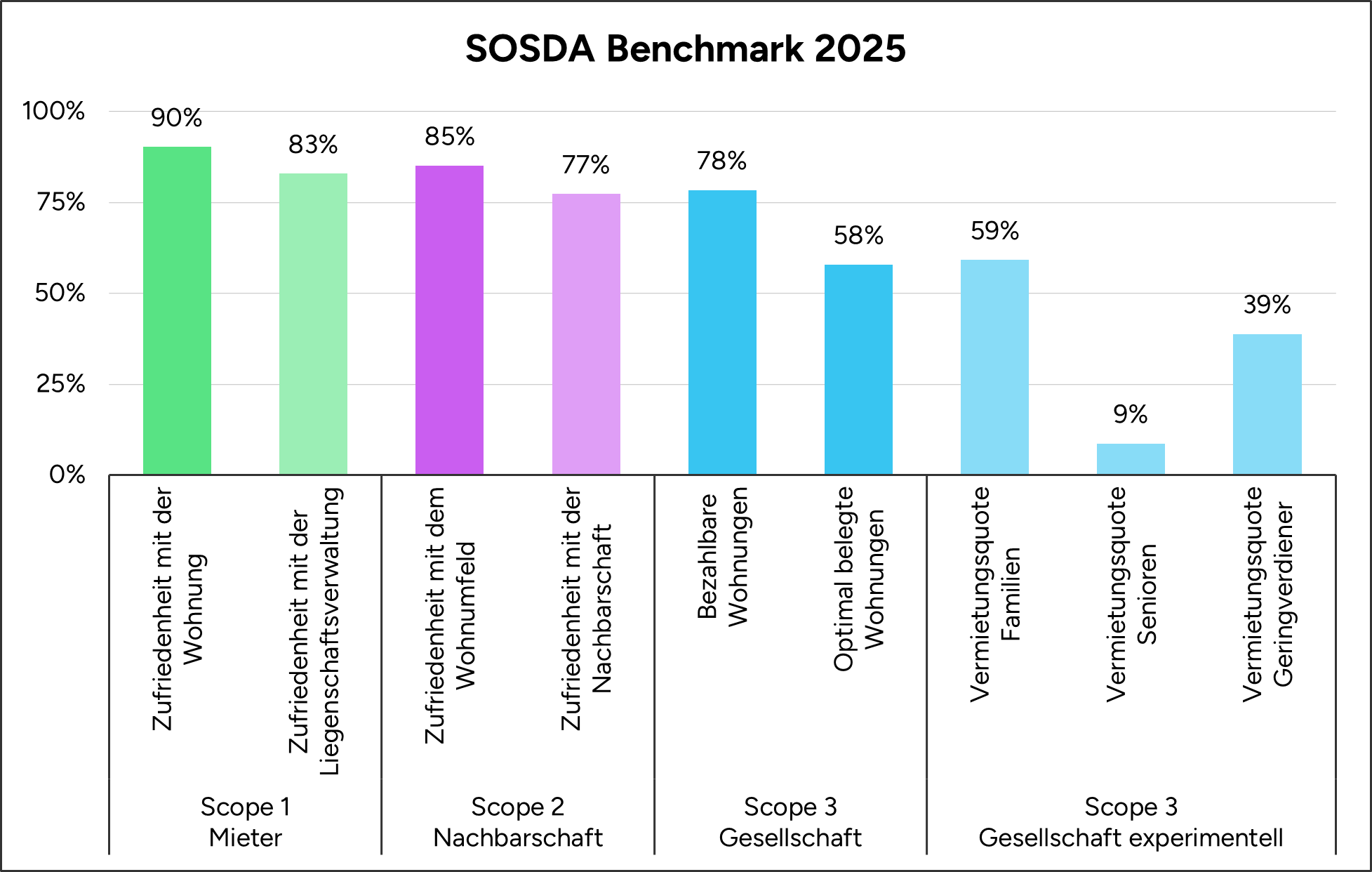
    The SOSDA framework developed by Zimraum and Stratcraft records the social performance of residential real estate along nine key figures in three scopes: tenants, neighborhood and society. The data pool comprises 30 portfolios with around 68,500 apartments from 17 owners. These include pension funds, investment foundations, listed funds and non-profit housing developers. A database that allows comparisons to be made for the first time.

    Affordability is holding up better than expected
    78 percent of the apartments in the data pool are considered affordable according to the SOSDA definition. The net rent accounts for less than a third of the monthly taxable median income in the respective municipality. Even in the new-build segment, this figure is 58 percent. In institutional portfolios, 48 percent of new-build apartments reach this threshold. This contradicts the widespread view that new construction and affordability are fundamentally mutually exclusive.

    High satisfaction, solid management quality
    Tenant satisfaction is remarkably high. 90 percent of respondents are somewhat to very satisfied with their apartment. 83 percent also give their property management good marks. The residential environment is also impressive. 85 percent are satisfied with their neighborhood, 77 percent rate the neighborhood conditions positively. Quality is obviously not a product of chance in the Swiss housing market.

    Family apartments remain under-occupied
    When it comes to occupancy efficiency, the benchmark reveals a structural weakness. Only 58 percent of apartments fulfill the “room minus 1” rule. For family apartments with four or more rooms, this proportion drops to 41 percent. Although non-profit portfolios perform slightly better than institutional portfolios when it comes to family apartments, the difference remains small. This is a clear area for optimization for all market participants.

    Letting practice under the magnifying glass
    For the first time, the benchmark also documents to whom apartments are actually let. The range is considerable. Depending on the portfolio, between 46 and 100 percent of family apartments went to households with children. Only 9 percent of apartments were rented to senior citizens. The proportion of affordable apartments that went to low-income households varied between 30 and 50 percent. The database is still limited, but the direction is clear. Social performance can no longer be ignored in the future.

  • Successful job coaching from SVIT Zurich!

    Successful job coaching from SVIT Zurich!

    SVIT Zurich actively supports job searches in the real estate sector. Applicants are not left to their own devices: On request, they can receive targeted support when entering the real estate industry. An experienced real estate professional accompanies them as a personal coach, analyzes their initial situation together and defines effective measures for a successful job search. In this way, participants acquire additional skills that improve their application chances in the long term.

    The job placement service is free of charge for members and non-members alike, provided they have completed or are currently attending the “Career changer assistant in real estate management and marketing” or “Real estate management clerk” course at SVIT Zurich in Oerlikon. With this offer, the association is making an active contribution to combating the shortage of skilled workers and at the same time ensuring that the candidates placed have a sound basic education in the industry at SVIT Zurich.

    More and more members are making use of this qualified specialist resource – with consistently positive feedback. They benefit from the opportunity to build up new team members according to their needs and deploy them in the long term. In addition, many candidates bring valuable additional skills from their previous professional life.

    Interested parties can register by sending an e-mail to diana.waly@svit.ch. SVIT Zurich has an official permit from the Canton of Zurich for private employment agencies.

    Further information on the process and application videos of current candidates can be found at the following link:

    https://www.svit.ch/de/svit-zuerich/themen-services/einstieg-die-immobilienbranche-bewerbungsvideos-quereinsteiger

  • That’s what it’s all about: usage and operating concepts as the key to needs-based sports facilities

    That’s what it’s all about: usage and operating concepts as the key to needs-based sports facilities

    From a competition venue to a facility for leisure and exercise
    Over the last five decades, the sporting behaviour of the population – whether on an individual basis or in organized sport – has changed dramatically. New training habits, a significant rise in population figures, increasing professionalization in club sport and changing social needs have led to facilities having to perform significantly better today than they did 50 years ago. This also includes aspects such as gender and age equality, which are now taken for granted.

    Accordingly, at the beginning of every infrastructure project, the focus should not be on the structural solution, but on the question of a suitable utilization and operating concept (including a profitability analysis). All too often, however, a planner is hastily commissioned before the project fundamentals and dependencies on other institutions and projects have been identified. The result is then the development of volumetric options, but not strategic options for the communities concerned. As a specialist in strategic utilization and operational concepts, BPM Sports has more than 20 years of experience in this field.

    So what characterizes a good utilization and operating concept? In principle, it comprises three key levels:

    • Strategic-conceptual: purpose, target groups, offer, business case, strategy, sponsorship
    • Operational-conceptual: Maximum utilization and use with added value
    • Operational: staffing requirements, maintenance, visitor management, self-financing of maintenance

    At the strategic level, the question of the raison d’être – the purpose of the facility – must be answered. This needs to be sharpened and clearly defined for all stakeholders. The better this is done, the easier it will be to communicate with taxpayers and the parties ultimately involved in the planning.

    The key elements include

    Political leadership: sports facility projects require broad support. Perceptible, continuous and strong political leadership is therefore essential.

    Addressed target groups: The user groups and their needs must be identified. This includes recording routines and expectations, but also future developments. Frequencies and capacities derived from this are key to optimally utilizing the facility for both users and operators.

    Sharpened offer: The available space and functionalities are formulated in a targeted manner, with a focus on energy and personnel costs. These are based on the formulated needs, with a direct impact on the follow-up costs of a facility.

    Construction costs vs. follow-up costs: The latter are (too) often overshadowed and only tend to come into focus in a later project phase. An early consideration of the follow-up costs is helpful to ensure the financial viability of a system.

    System strategy: An effective lever for predicting operating costs and earnings potential. Particularly in the case of seasonal facilities such as outdoor pools or ice sports facilities, complementary or supplementary offers can increase income and influence resource requirements.

    Operator model: There is a wide variety of models here. Different organizational forms (administrations, public limited companies, private-public partnerships) offer different advantages, whereby PPPs have become increasingly established in recent years and offer new opportunities, especially for less profitable club and popular sports.

    Other success factors at operational and conceptual level are

    Utilization: Generating high utilization is a challenge. This is because it does not always go hand in hand with profitability due to the different purchasing power of the target groups and unavoidable wear and tear. Checkrooms and loading areas are also a decisive factor. If they were neglected during construction to save money, this has a negative impact on capacity and therefore on maximum utilization.

    Staff: Employees of sports facilities are identification factors. In order to optimally promote this potential, it is important to keep operating routes short and clear and to design efficient work processes. This can be ensured with the appropriate layout of the facility and the individual rooms.

    Conclusion: A utilization and operating concept for sports facilities is a complex interplay of strategic, operational and economic factors. Correctly compiled and applied, it forms the basis for the long-term success and profitability of a facility.

    BPM Sports is a specialist for public sports infrastructures operating throughout Switzerland and based in Bern. With over 20 years of experience in consulting, monitoring and supporting a wide range of sports facility projects and operations, the company, founded in 2006 by owner Rainer Gilg, is one of the leading service providers in this field.

  • New production facility strengthens international industrial location

    New production facility strengthens international industrial location

    The new global Toblerone competence center in Bern now covers 90 percent of global demand for the iconic triangular chocolate. Guy Parmelin officially inaugurated the expanded plant on March 10. “We are incredibly proud of the new Toblerone production line and the modernization of logistics and infrastructure,” said plant manager Thomas Kauffmann in a press release.

    Mondelēz International, the Chicago-based parent company of Bern-based Mondelez Schweiz Production GmbH and Mondelez Schweiz GmbH in Opfikon, has invested 65 million Swiss francs in the installation of this new, state-of-the-art production line. This is one of the largest investments in the company’s chocolate production network in the past ten years.

    “If there is one product that represents Switzerland worldwide, it is chocolate,” said Parmelin in his speech, according to the press release. “And Toblerone has a very special place among Swiss chocolates.” It is “a symbol of Swiss identity and quality par excellence. Identity and quality. As President of the Swiss Confederation and Minister of Economic Affairs, I am therefore particularly pleased that around 90 percent of Toblerone production will continue to be made here in Bern on this new production line.”

    Toblerone is exported from Switzerland to more than 120 countries around the world. As Mondelēz emphasizes, the iconic 118-year-old brand is well positioned to grow globally in the premium segment, benefiting from its high brand awareness and leadership position in the World Travel Retail business. “We have always been proud to manufacture here in Switzerland,” said Iain Livingston, President for Toblerone and World Travel Retail. “The investment underlines our strong commitment to the site and is a key milestone on our journey to lead global growth in the premium chocolate segment.”

  • Historic Spa District gets a new perspective for use

    Historic Spa District gets a new perspective for use

    Verenahof AG, based in Baden, wants to revitalize the building complex in Baden’s Spa District. To this end, it concluded a contract with the city on February 5. According to a press release, this forms the basis for the development and use of the complex and is intended to provide planning security.

    Verenahof AG has developed a utilization concept in collaboration with the city and the cantonal monument preservation authorities. This envisages combining assisted living for older people with cultural offerings and publicly accessible uses. The technical feasibility has already been examined. Now a building application and a cost estimate are to be drawn up within twelve months under the management of Verenahof AG.

    “The concept for services in the areas of prevention, rehabilitation and healthy ageing is a perfect fit for this historically valuable location for Baden,” said Markus Schneider, Mayor of Baden, in the press release. “The Spa District has been investing in health since Roman times – it is important for Baden and the region that this offering continues to be expanded in the future.”

    The complex has been vacant since the closure of the Verenahof, Bären and Ochsen hotels in 1987 and 2004. It has been under national protection since 2019. As the owner of Verenahof AG, the Bad Zurzach Baden Health Promotion Foundation has examined several uses, including for a rehabilitation clinic. These possible uses came up against the economic and structural framework conditions as well as the requirements for the preservation of historical monuments.

  • Data partnership transforms decision-making processes in the property portfolio

    Data partnership transforms decision-making processes in the property portfolio

    OPTIML and Scaler have entered into a strategic partnership. According to a press release, the aim is to combine Scaler’s infrastructure for sustainable property data with OPTIML’s decision-making intelligence. This is intended to provide portfolio managers with a data-driven, verifiable and dynamic basis for decisions on refinancing and capital allocation, as well as insights into a sensible sequence for sustainable investments in existing portfolios.

    To this end, the new partners intend to contribute their respective expertise. Scaler offers a data infrastructure for buildings and portfolios that encompasses operational, technical and sustainability data. OPTIML’s proprietary Real Estate Decision Intelligence (REDI) software, a spin-off from the Swiss Federal Institute of Technology Zurich (ETH), combines this data with digital building models of engineering quality.

    In addition to optimising investments and their sequencing, the partners cite further benefits of their collaboration, including the harmonisation of data flows for assets and portfolios across systems and regions, the improvement of analysis for retrofitting and investment scenarios, and the strengthening of reporting to regulators and investors with verifiable and decision-relevant results.

    “By combining Scaler’s data infrastructure with OPTIML’s decision intelligence, we offer portfolio managers a closed-loop system in which every investment decision is based on real performance data and is continuously optimised as conditions change,” says Scaler co-founder and CIO Luc Van De Boom. The partnership bridges the gap between operational data and institutional capital decisions, explains OPTIML co-founder and CEO Dr Evan Petkov: “Data alone does not create an advantage. Investors need optimisation and governance to transform this data into actionable measures. Together, we offer real estate professionals a dynamic decision-making system for the world’s largest asset class.”

  • Wind measurements provide the basis for new energy projects

    Wind measurements provide the basis for new energy projects

    According to a press release,Zürich Wind will begin wind measurements in Zünikon, in the municipality of Wiesendangen, during the week of 16 March. The 125-metre-high mast does not need to be connected to the electricity grid. It is powered entirely by solar panels and a battery storage system. Two further measurement masts are to be erected in Ossingen and Rickenbach after the Easter holidays.

    The masts are to collect data on wind conditions and bat activity at their locations for at least one year. This data will form the basis for a yield forecast. If this indicates that the use of wind energy at this location is economically viable, Zürich Wind will commission an environmental impact assessment as the next step.

    Zürich Wind publishes the measurement data on its website. “Zürich Wind is one of the first project developers in the Swiss wind energy sector to publish wind measurement data as early as the data collection phase,” says Pascal Müller of Zürich Wind in the press release.

    Zürich Wind is a joint venture between the electricity utilities of the canton and the city of Zurich, EKZ and ewz, and the municipal utility of Winterthur.

  • Spectacular cultural building sets new architectural trends

    Spectacular cultural building sets new architectural trends

    Nüssli, the construction services provider based in Hüttwilen, celebrated the topping-out ceremony for the extension to the Mack Pyramid in Monheim am Rhein on 8 March 2026, in the presence of the building’s namesake, Heinz Mack. With this extension, the company – which specialises in temporary event structures – is realising an “architecturally ambitious construction and cultural project”, writes Nüssli in a press release.

    Thanks to the installation of a load-bearing steel structure shortly before the topping-out ceremony, the double pyramid is already a prominent feature of the townscape. “The structure is characterised by sophisticated geometry, high design standards and complex structural engineering,” the statement says. According to the city, the building is intended to provide a culturally significant architectural landmark. Exhibition spaces for contemporary art are to be created.

    According to the press release, the Thurgau-based company is contributing its experience with complex special-purpose structures such as pavilion architecture, exhibition design, as well as façade designs, sculptures and exhibits. “At various world exhibitions, we have learnt to turn extraordinary forms and complex structures into reality. It is precisely this expertise that is now being put to full use in the Mack Pyramid,” says Udo Baader, Head of Project Management Special Projects. The opening is scheduled for June 2027.

    Alongside the progress of the construction, the day also focused on the pyramid’s namesake, Heinz Mack. The sculptor was among the visitors, celebrating his 95th birthday. “Despite all the plans, I can’t quite picture it yet. The main thing is that the light remains,” he is quoted as saying. The light is part of his artwork inside the building, the press release states.

  • Consumer cooperatives are becoming increasingly important

    Consumer cooperatives are becoming increasingly important

    Following the acquisition of Blockstrom AG, ista swiss ag is now also able to offer billing solutions for self-consumption groups (ZEV). According to a press release, the company acquired the energy service provider Blockstrom on 4 March 2026. The co-managing directors Claudio Wyss, Marcel Lack and Urs Martin Springer will continue to work for the company. The Bern office will remain in place.

    Springer founded Blockstrom in 2017 together with Marcel Lack. The company has developed solutions for communities that generate their own electricity locally and can supply it both to end consumers and to the distribution grid. Springer sees the acquisition primarily as an opportunity for further growth: “The ZEV market has come of age,” he is quoted as saying. “Over the next few years, high volume will be more important than rapid product development. Ista swiss ag is the ideal partner for us to establish our solutions more broadly in the market and scale them further.”

    Blockstrom is committed to a consistently digital approach. According to the company’s own description, this “delivers efficient processes and minimal error rates: all energy consumption is recorded using smart meters, transmitted via the internet, visualised in real time and stored in the cloud.” Blockstrom customers now also have access to ista swiss’s range of services, including billing for water and heating consumption.

    With the acquisition of Blockstrom, ista swiss is further expanding its expertise as a full-service provider of modern integrated energy solutions, according to ista swiss Managing Director Guillaume Dubois. “Property owners and managers gain a single point of contact for all energy-related matters – from metering, billing, monitoring and energy data management to ZEV and electric mobility.”

  • Industrial firm stabilises turnover and invests in new sites

    Industrial firm stabilises turnover and invests in new sites

    According to a press release, the Kistler Group managed to keep its turnover stable in 2025: at 424 million Swiss francs, it fell by 1 per cent on a currency-adjusted basis and by 5 per cent in Swiss francs. The company cites the strong Swiss franc in particular as a negative factor, but also the stagnating German automotive industry and geopolitical and economic uncertainties, including those related to US tariff policy. Order intake fell short of the company’s expectations, down 2 per cent on a currency-adjusted basis and 6 per cent in Swiss francs.

    “My first year as CEO was challenging, but we have set an important course – including through adapted regional structures that enable us to respond even more flexibly to varying market conditions,” Marc Schaad is quoted as saying. He is cautiously optimistic about the 2026 financial year. “We plan to continue growing through targeted investments, particularly in Asian markets such as China.”

    For Asia, Kistler is planning a new headquarters in the Malaysian capital, Kuala Lumpur. In the US, Kistler has strengthened its management team. In Germany, the focus is on developing new applications to offset declining sales in the automotive sector. New products are also set to contribute to the Group’s growth in 2026. Nine per cent of revenue is channelled into research and development.

    In Winterthur, Kistler is pressing ahead with preparations for a new, highly automated sensor factory. “The smart factory is a long-term investment for us and a clear commitment to Winterthur as a location,” said Schaad. The company is currently “in an intensive planning and clarification phase”.

  • Intercantonal development project focuses on mobility and efficiency

    Intercantonal development project focuses on mobility and efficiency

    Voters in St. Gallen have approved the sale of two plots of land owned by the Canton of St. Gallen to the Canton of Thurgau, as well as the provision of compensation in the form of crop rotation areas. According to a statement from Regio Wil, this is a “landmark decision” for the Wil region. The plots are to form the WILWEST development area, which is intended to combine environmentally friendly mobility, energy efficiency and regional cooperation as a sustainable economic zone. At the heart of the project is a new junction with the A1 motorway, complemented by improved bus, rail and cycle connections for the entire region.

    For the Wil region, the project creates prospects for new jobs, reduced traffic congestion and coordinated, sustainable spatial development, the statement says. The decision by St. Gallen’s voters is also a strong signal for intercantonal cooperation between St. Gallen and Thurgau, as well as for the 22 municipalities of Regio Wil.

    The St. Gallen electorate had initially rejected a special loan for the WILWEST project in September 2022. The project was subsequently comprehensively revised, particularly in the area of sustainability. Among other things, land use was optimised, soil sealing reduced, and car traffic and the number of parking spaces cut.

    The priority now is to ensure sustainable implementation, to develop the area in a land-conserving manner and in phases, and to continue to take the concerns of the public into account. Regio Wil intends to remain actively involved in the process in the future.

  • Swiss energy consumption has risen slightly

    Swiss energy consumption has risen slightly

    According to an initial estimate by the Swiss Federal Office of Energy (SFOE), energy consumption in Switzerland in 2025 was slightly higher than in the previous year. Consumption rose to 778,630 terajoules. In the previous year, it had stood at 776,220 terajoules.

    Energy from petroleum products again accounted for the largest share in 2025. This supplied 351,420 terajoules. In the previous year, the figure had been 354,810 terajoules. Electricity consumption rose to 209,340 terajoules, compared with 207,040 terajoules in the previous year. Gas consumption fell from 95,480 to 93,840 terajoules. Consumption of biogenic fuels, biogas, solar energy and geothermal heat rose from 38,390 to 40,090 terajoules.

    The SFOE points out that the estimate is provisional. The final figures for final energy consumption are due to be published on 18 June.

  • Modern office location underscores strategic development

    Modern office location underscores strategic development

    The Landis Gyr Group is moving into new headquarters. The Zug-based energy management specialist, which operates worldwide, is relocating to a new state-of-the-art office building within Cham, Landis Gyr announced in a press release. The new global headquarters is located at Alte Steinhauserstrasse 14, just a few steps away from the old headquarters on the same street. This will ensure a smooth transition, the press release states.

    “With the new headquarters, we are sending a clear signal of continuity and innovation,” Landis Gyr CEO Peter Mainz is quoted as saying in the press release. “Cham remains a key location for us, where we are shaping the future together with our employees and partners.” Mayor Georges Helfenstein interprets the move within Cham, among other things, as “the result of the municipality’s forward-looking and reliable economic management”.

  • Multi-domain strategy strengthens position in the digital marketplace

    Multi-domain strategy strengthens position in the digital marketplace

    Schoop Co.,a family-run business based in Baden specialising in landscaping, roofing and solar installations, is now adopting a multi-domain strategy. The main company website has been split into specialist sections covering landscaping, roofing and photovoltaics, as well as the company’s own careers portal. According to a company statement, the division into four domains is intended to improve online reach and visibility.

    Search engines and artificial intelligence (AI) assistants favour websites with a clear focus, according to Schoop Co. The multi-domain strategy, with its four specialised websites, is therefore intended to help customers and job seekers find the relevant Schoop site more quickly.

    Whilst Schoop Gardening specialises in the design, maintenance and construction of gardens, Schoop Roofing is the point of contact for the renovation, construction and maintenance of all types of roofs, as well as for green roofs, terraces and fall protection. At Schoop Photovoltaik, customers can access a full range of services relating to solar installations – from consultation and planning through to professional installation. Finally, Schoop Karriere is aimed at job seekers looking for a career at Schoop in the fields of flat roofing, solar technology or landscaping.

  • Wind and solar power ensure a stable electricity supply in the regional energy system

    Wind and solar power ensure a stable electricity supply in the regional energy system

    According to a statement from the operator BKW, the Swiss Energypark in the supply area of the Société des Forces électriques de La Goule generated a total of 134.45 gigawatt-hours of electricity in 2025. This represents 81 per cent of the region’s total consumption of 166.96 gigawatt-hours. In the previous year, the Energypark had generated 139.6 gigawatt hours.

    Wind energy once again contributed the largest share to electricity production, with a total of 86.50 gigawatt hours. The Juvent wind farm alone generated 72.6 gigawatt hours. Although this is less than the 91.1 gigawatt hours of the strong previous year due to low wind speeds, wind energy remains a reliable source of electricity, particularly during the winter months.

    The La Goule hydroelectric power station supplied 16.29 gigawatt hours, its worst result in decades. In the previous year, the figure had been 17.6 gigawatt hours.

    Solar energy, by contrast, grew significantly. In 2025, it supplied a total of 31.66 gigawatt hours, accounting for 24 per cent of total production. In the poor year of 2024, the figure had been just 13.6 gigawatt hours.

    The Swiss Energypark covers an area of 251 square kilometres between the cantons of Bern and Jura. 21,000 people live here.

  • Historic hotel complex is being repositioned in stages

    Historic hotel complex is being repositioned in stages

    Halter AG aims to breathe new life into the listed Sonnenberg complex in Seelisberg. The Schlieren-based property developer is currently in the process of gradually redeveloping the historic hotel complex, Halter states in a post on LinkedIn. According to the project description, the Hotel Sonnenberg is to remain as the core building and will once again be used as a hotel upon completion.

    In the former Hotel Kuhn, which will also remain largely unchanged, Halter plans to create apartments. Further apartments are to be built in two new buildings south of the hotel. Existing additional buildings to the north will be repurposed and incorporated into the hotel complex.

    The historic hotel complex attracted international attention in the 1970s. At that time, the Sonnenberg complex had been acquired by the Transcendental Meditation movement. From 1972 onwards, and for more than three decades, the Grandhotel Sonnenberg served as the headquarters of the movement led by the guru Maharishi Mahesh Yogi. Felice Zenoni’s documentary Namaste Seelisberg, screened for the first time at the 61st Solothurn Film Festival, explores this era. Halter supported the film project and facilitated filming on the site.

  • Global employer rating strengthens position in the competition for talent

    Global employer rating strengthens position in the competition for talent

    Holcim has secured the Global Top Employer award from the Top Employers Institute for the second year running. According to a press release, a total of 27 Holcim subsidiaries across all regions have been certified as Top Employers. With 27 certified markets, Holcim achieved a global score of 87 per cent, thereby exceeding the global benchmark.

    The Top Employers Institute rated Holcim particularly highly in the areas of Ethics & Integrity, Learning and Business Strategy. These results reflect the performance-oriented corporate culture that drives the Group’s NextGen Growth 2030 strategy, the press release states.

    “A strategic growth driver of our NextGen Growth 2030 strategy is our performance culture and the value we create for employees, customers and shareholders. We call this the Holcim Spirit, which is focused on purpose, people and performance,” CEO Miljan Gutovic is quoted as saying. “This award belongs to our more than 45,000 colleagues who embody the Holcim Spirit every day and make Holcim an outstanding place to work.”

    For the Top Employer award, companies are assessed against global standards in the areas of career development, learning, well-being and remuneration. Companies recognised as Global Top Employers must also be certified as regional Top Employers in a minimum number of countries and regions – including the country where their global headquarters are located.

    Holcim is headquartered in Zug, Switzerland, and employs more than 45,000 people globally across 43 markets, including Europe, Latin America, Asia, the Middle East and Africa.

  • City wants to acquire industrial building for archive and temporary uses

    City wants to acquire industrial building for archive and temporary uses

    The Biel Municipal Council is proposing to the City Council that it purchase the industrial property at Mattenstrasse 133. According to the announcement, the building is intended to serve as the new city archives from 2033 onwards. Prior to that, it will be used as a temporary gymnasium and library.

    The industrial property at Mattenstrasse 133 was built in 1959 for Maveg AG, a trading company for construction machinery. The building comprises three large halls and an administration building and is listed as worthy of preservation in the building inventory.

    From winter 2026/27, the large hall of the property is to replace the Collège des Platanes’ gymnastics facilities. Since 2024, these have only been usable to a limited extent due to structural problems. Until the gymnasiums are renovated, the city wants to create a temporary solution by simply expanding the hall.

    Later, during the planned complete renovation of the city library on Neumarktplatz starting in 2031, the property will serve as a temporary library location. There are hardly any suitable rental solutions available in the city centre for the library’s approximately 1,700 square metres of floor space.

    After the library moves out, the building will be used permanently as the city archives from 2033 onwards. The city has been looking for a new solution for this for years, as the current premises no longer meet legal requirements and the archive holdings are spread across several locations.

    The municipal council is applying to the city council for two loans totalling CHF 3.890 million for the purchase of the property and the temporary provision of the gymnasium. The city council will make its decision on 19 March.