Tag: Kreislaufwirtschaft

  • Sustainable circular economy in the construction industry

    Sustainable circular economy in the construction industry

    One of the key challenges facing the construction industry is the reduction of CO2 emissions. By decarbonising processes and procedures in the gravel, concrete and recycling industry, companies can make an important contribution to sustainability. The autumn event offers an industry roadmap to help companies identify and implement sensible measures to reduce emissions.

    Optimising concrete as a building material for sustainable construction projects
    Concrete is still one of the most widely used building materials in the world. However, sustainability also plays a decisive role here. The autumn event will show how the sustainability properties of concrete can be optimised and used in a targeted manner. At the end of a building project, the question arises as to how materials can be reused. Options such as renovation, refurbishment or recycling offer sustainable solutions, which will be discussed at the event.

    Pollutant control and separation as the basis of the circular economy
    A successful circular economy requires the targeted separation and control of pollutants. This begins with the planning of a construction project and continues with material treatment and disposal. At the autumn event, the key aspects of pollutant separation will be explained, which are essential for achieving sustainable results in dismantling projects.

    Dealing with persistent substances such as PFAS
    Per- and polyfluorinated alkyl compounds (PFAS) are a group of persistent substances that are increasingly becoming the focus of environmental research. These substances are ubiquitous and pose a particular challenge in the circular economy. The autumn event will provide insights into the possibilities and limitations of dealing with PFAS and highlight solutions that can be implemented in practice.

    Innovative decarbonisation projects in practice
    A highlight of the autumn event is the presentation of the world’s largest electric melting furnace for rock wool. This innovative project shows how decarbonisation is implemented in practice and what potential lies in the production of stone wool. Experts will gain practical insights into the technical developments and their contribution to a sustainable circular economy.

  • Sika focuses innovation strategy on sustainability

    Sika focuses innovation strategy on sustainability

    At the Capital Markets Day on October 3 in Zurich,Sika explained the company’s plans for future growth. Sustainability and the circular economy are of great importance. This was already indicated by the motto of the Capital Markets Day. It was “Unlocking growth – longevity and circular economy in construction and industry”.

    According to the globally active specialty chemicals group for construction and industry, increased requirements in terms of sustainability and the circular economy are changing the entire construction industry. “Climate change and the increasing scarcity of resources are megatrends that require sustainable, long-lasting solutions in construction,” Thomas Hasler, CEO of Sika, was quoted as saying in a press release on Capital Markets Day. Longevity brings ecological and economic benefits for both new buildings and renovation projects. “These positive aspects can be further enhanced by the use of recycled materials,” says Hasler. Sika is therefore “consistently aligning its own innovation strategy with these trends”. In addition, the Group has “a comprehensive portfolio of technologies that combine performance and sustainability”.

  • KohlenKraft sponsors Zurich Climathon

    KohlenKraft sponsors Zurich Climathon

    KohlenKraft is one of the sponsors of the Climathon inZurich. This is according to an announcement from Runway, the sponsor of early-stage start-ups based at Technopark Winterthur. The Runway Incubator is a program of the Center for Entrepreneurship at the Institute for Innovation and Entrepreneurship at Zurich University of Applied Sciences (ZHAW).

    The Climathon is a 32-hour format organized once a year by the Impact Hub Zurich. The event serves to find and develop ideas for climate protection in Zurich. This year, it will take place on November 1 and 2 at the Zurich Kraftwerk.

    The start-up company KohlenKraft, founded in 2023, is also based at Technopark Winterthur. Last year, the park headlined a short portrait of the start-up’s move into its premises with the sentence: “Runway start-up KohlenKraft is getting ready for revolution”. KohlenKraft has set itself the task of supplying the construction industry with climate-positive materials. Its products such as plaster, wall plaster for industrial use, bricks and thermal insulation made from biochar absorb more CO2 during their service life than they emit.

    KohlenKraft also closes the cycle: The biochar is made from biomass waste, reduces the need for raw materials such as sand and thus contributes to a circular built environment. This is why KohlenKraft was also supported by the Circular Building Industry Innovation Booster. The Innosuisse program supports the transition to a circular economy in the Swiss construction industry through systematic innovation.

    CEO Charles Gerike-Roberts and CTO Moritz Keller have already received several awards. in 2022, the two KohlenKraft founders won the FrontRunner Award at the ZHAW Sustainability Challenge. They took first place in the ZHAW Startup Challenge 2023 and were class winners in the Startup Campus and Innosuisse Business Concept course.

  • Successful return of ineltec with a focus on innovation

    Successful return of ineltec with a focus on innovation

    A new start that convinces
    The return of ineltec was a complete success. The trade fair, which took place on 11 and 12 September 2024 at Messe Zürich, attracted a large number of visitors and impressed both exhibitors and trade visitors. With a clear focus on efficiency and innovation, the trade fair presented its innovations on compact, focussed stands that encouraged direct interaction between visitors and suppliers.

    Enormous visitor interest and exciting innovations
    ineltec attracted an impressive number of visitors: the halls were already packed on the opening day. Professionals from all over Switzerland crowded around the exhibitors’ latest developments and products. Exhibition Director Noëlle Marti was overwhelmed by the response: “The enormous interest and positive feedback from our visitors exceeded all expectations. It’s a wonderful feeling when our intensive preparatory work pays off in this way.”

    Breadth and depth of the range – the right thing for everyone
    With a clearly structured trade fair layout and a wide range of exhibitors, ineltec offered something for everyone: whether it was about smart building, the circular economy, electromobility or innovative technologies – trade visitors were able to search specifically for the topics relevant to them and find what they were looking for. The clear layout, which enabled visitors to move efficiently through the various exhibition stands, was particularly appreciated.

    Expert knowledge in the Speakers Corner
    A highlight of the trade fair was the extensive lecture programme in the Speakers Corner. Here, industry experts presented their latest developments and tools, including on the topics of artificial intelligence, electrical systems and electromobility. The moderated innovation pitches, organised by Electrosuisse, tested the presented technologies for their practical suitability – a valuable source of knowledge for all participants.

    Focus on young talent
    ineltec paid particular attention to promoting young talent. A total of 16 training classes visited the trade fair and were given guided tours to gain an insight into the latest developments in the industry and potential career opportunities. The promotion of young talent was supported by EIT.swiss, which presented the winners of a competition with high-quality measuring devices – a motivational boost for the next generation of the electrical industry.

    Networking and interaction at the highest level
    In addition to the professional highlights, the trade fair also offered space for entertainment and interaction. At the second marketplace, visitors were able to take part in virtual reality simulations, skill tests and interactive demonstrations – an ideal opportunity to exchange ideas with colleagues and experience new technologies up close.

    A strong network and supportive partners
    EIT.swiss, the professional organisation for the electrical industry, was a strong partner of the trade fair and made a significant contribution to its success. Director Simon Hämmerli was delighted: “ineltec has once again proven that it is the perfect place to promote dialogue and networking within the industry. The large number of visitors shows that interest in technological development is unbroken.”

    Ineltec 2024 was a complete success and impressively demonstrated that the industry is lively and forward-looking. With the successful restart, the electrical industry is already looking forward to the next edition, which will take place on 9 and 10 September 2026.

  • Oxara, KIBAG and Holcim Switzerland join forces

    Oxara, KIBAG and Holcim Switzerland join forces

    Oxara, KIBAG and Holcim Switzerland are joining forces to establish the cement substitute Oxacrete Oulesse across the Swiss construction market, according to a press release. According to the press release, cement production accounts for around 5 percent of annual greenhouse gas emissions in Switzerland. The collaboration between Oxara, based in Dietikon, KIBAG in Zurich and Holcim in Zug addresses the urgent need for scalable, circular and decarbonizing technologies. After validating the Oulesse technology and evaluating the market potential of this solution, Oxara, KIBAG and Holcim are now planning to officially enter the market together.

    With Oxacrete Oulesse, the construction industry can be made more sustainable by promoting the reuse of demolition materials and closing loops. This can significantly reduce the environmental impact of building materials and serve up to 10 percent of the Swiss concrete market. The production of Oxacrete Oulesse uses recycled materials and the binder offers a low-carbon alternative to conventional cement.

    “This partnership is a further step towards achieving our sustainability goals,” says Clemens Wögerbauer, Head Commercial and Sustainability at Holcim Switzerland. Holcim has already developed a framework for decarbonizing the cement industry in 2022 with experts from science, civil society and industry. This emerged from a partnership with the British Science Based Targets Initiative(SBTi). “We have visionary and innovative partners at our side who fit perfectly with our mission: To combine a circular economy with decarbonization,” Wögerbauer continues.

  • Punkt Rufer supports Bern in the circular economy

    Punkt Rufer supports Bern in the circular economy

    Punkt Rufer is developing a program for the Civil Engineering Department of the City of Bern(TAB). According to a press release from the Bern-based consultancy firm for corporate and sustainability development, the two-year project consists of five modules aimed at strengthening the circular economy in future construction projects and existing infrastructure. According to a post on LinkedIn by Philipp Rufer, Owner & Managing Partner of Punkt Rufer AG, the collaboration focuses on knowledge transfer, a lean innovation process and pilot projects derived from this.

    As part of the sustainable development of the city of Bern, the city administration wants to act as a role model and pursue the goals of Agenda 2030 in all areas. This includes a resource-conserving local and regional economy that functions in a circular economy. Punkt Rufer accompanies the project from the initiation, through the conception, development and implementation of a selected circular economy strategy. After implementation, the TAB employees receive final support with the aim of creating a motivated attitude towards the circular economy.

  • New trade association “Building Material Circulation Switzerland” founded

    New trade association “Building Material Circulation Switzerland” founded

    The merger of arv Baustoffrecycling Schweiz and FSKB Fachverband der Schweizerischen Kies- und Betonindustrie has been formalised. Around 400 members have created the new “Baustoff Kreislauf Schweiz” association, which pools the strengths of the two industries. The aim is to expand expertise, anticipate future challenges and actively shape the future of the Swiss construction industry.

    Unified representation of interests for the circular economy
    “Baustoff Kreislauf Schweiz” is the only industry organisation in the construction industry that represents the interests of all those involved in the circular economy. The association represents more than 1,000 Swiss gravel quarries, concrete plants and recycling centres. In cooperation with planning authorities, it will create framework conditions to ensure the sustainable supply of mineral raw and building materials to the construction industry and secure around 100,000 jobs in the construction industry.

    Focus on a sustainable circular economy
    The association is committed to the environmentally friendly utilisation of mineral raw materials, particularly in view of the increasing scarcity of resources. The aim is to keep building materials in circulation and to promote innovative technologies and methods for the extraction and processing of recycled building materials. Cooperation with universities and research institutes is being intensified in order to create a centre of excellence for the sustainable construction industry.

    Securing resources and ecological integration
    A central concern of “Building Material Cycle Switzerland” is the security of supply of mineral raw materials and the professional disposal of deconstruction materials. In view of increasingly scarce land and stricter protection regulations, the association will work to ensure that construction sites continue to be supplied with high-quality building materials. In addition, the ecological integration of gravel pits as a habitat for flora and fauna will be promoted by ensuring high-quality recultivation and renaturalisation of the areas once extraction is complete.

    Broad-based board and expertise
    Lionel Lathion, President of the Lathion Group SA, becomes the first President of “Baustoff Kreislauf Schweiz”. He will be supported by Vice-Presidents Christoph Duijts, CEO of KIBAG, and Stefan Eberhard, owner of stefan eberhard ag. The 14-member board covers a broad spectrum of expertise and regions and will intensify cooperation with the cantonal associations. The new office brings together the expertise and experience of 19 employees from various fields to serve as a competent point of contact for politicians and authorities.

  • Award for innovative circular economy in the construction industry

    Award for innovative circular economy in the construction industry

    Researchers from Lucerne University of Applied Sciences and Arts(HSLU) have won the Sustainability Challenge organised by the German Sustainable Building Council(DGNB) together with the Technical University of Munich(TUM). According to a press release, the circularWOOD project was awarded first place in the research category. Sonja Geier, Deputy Head of the Competence Center Typology & Planning in Architecture(CCTP) at HSLU, and Sandra Schuster from TUM accepted the award in Stuttgart on 18 June 2024 as part of the DGNB’s Sustainability Day.

    The CO2-neutral and ecologically high-quality raw material wood is becoming increasingly popular in the construction industry The circularWOOD research project aims to introduce this important raw material into a circular economy. “Today, wood does not remain part of the material cycle long enough,” Sonja Geier is quoted as saying in the press release. According to the press release, circular construction with the CO2-neutral building material wood will make an important contribution to achieving climate protection goals.

  • Zurich’s dynamic step into the circular economy

    Zurich’s dynamic step into the circular economy

    The implementation of “Circular Zurich” began in early February with the presentation of a detailed agenda that is specifically tailored to the needs of the city administration. However, the strategy also offers small and medium-sized enterprises (SMEs) numerous starting points. By adapting individual measures, SMEs can not only act in a more environmentally friendly way, but also benefit financially in the long term.

    Steps for implementation in SMEs
    One fundamental aspect of the circular economy is the efficient recycling and separation of recyclable materials. Sara Graf, project manager at Entsorgung + Recycling Zürich (ERZ), emphasises the importance and simplicity of this measure for companies: recyclable materials such as paper, cardboard, PET bottles, glass and aluminium cans can often be recycled free of charge, which leads directly to savings in disposal costs. But recycling is just the beginning.

    Minimising material consumption and optimising processes
    Sonja Gehrig, who heads up the city-wide coordination of “Circular Zurich”, points out that it is important to think beyond the boundaries of the company. Analysing one’s own material consumption and optimising production processes are crucial steps. Ecologically sustainable product design that promotes the reparability and durability of products can not only save companies money, but also lead to new business models such as product hire.

    Extending consumption and use phases
    The final step involves maximising product lifetimes through strategies of sharing, reusing, repairing and remanufacturing. This not only allows products to be used for longer, but also helps to conserve resources. Second-hand platforms and company initiatives that internalise the circular economy are playing an increasingly important role in the circular economy.

    The city as an innovation laboratory
    Zurich sees itself as a testing ground for new, circular ideas and products. City experts are ready to support companies that are striving for innovative solutions. This proactive approach not only strengthens the city’s infrastructure, but also promotes the widespread adoption of circular economy principles.

    With “Circular Zurich”, the city of Zurich is positioning itself as a pioneer in the circular economy, demonstrating how a sustainable transformation can be realised in urban areas through concrete measures and cooperative approaches.

  • Leading by example: circular building in the city of Zurich

    Leading by example: circular building in the city of Zurich

    The circular economy is an important lever for achieving the political net-zero targets. Like many other cities around the world, Zurich is also committed to the circular economy: in 2022, a strategy for the circular economy was adopted with “Circular Zurich”. in 2023, Zurich became the first Swiss city to sign the “Circular Cities Declaration”.

    The intelligent use of resources is particularly important in construction. With the “Charter for Circular Construction”, politicians and businesses set an example in 2023 and made a joint commitment to conserving primary resources and landfill space and reducing CO2 emissions from their own construction activities.

    Initial findings from two pilot projects
    But how do the political commitments affect specific construction projects? What challenges does circular construction pose? And how are the planning and construction processes changing? The City of Zurich’s Office for Buildings is gaining answers to these questions through two pilot projects.

    The city gained initial experience with the procurement, storage and processing of reused building components during the renovation of the Mööslistrasse 2023 kindergarten (Bischof Föhn Architekten, Zurich). Washbasins and toilets were dismantled, cleaned and refurbished on site. Plant troughs from the balconies were reused as outdoor space boundaries. Where possible, the built-in furniture was sourced from the city’s own stock. Thanks to component screening, steel beams, wooden pergolas, fire doors and kitchen elements from other buildings were identified, dismantled and reinstalled. So-called “component hunters” were deployed for everything that was not found in the city’s used parts warehouse.

    The second pilot project, the new “Juch-Areal” recycling centre, is much more comprehensive. The Office for Buildings launched an architectural competition with re-use requirements for the project in 2022. The competition participants were able to use a digital catalogue of components or use other available components from non-urban sources for their designs. The buildings also had to be designed in such a way that they could later be used as a component mine themselves (design for disassembly).

    The projects submitted show that it is possible: Yes, it is possible. The jury was particularly impressed by the high quality of the competition entries, which were created despite – or perhaps thanks to – the new specifications. The building material of the winning project by Graber Pulver Architekten AG (Zurich) dismantles the hall of the previous recycling centre and rebuilds it at the new location with only minor adjustments. Disposed books, magazines and clothes are used as insulation material. Sheets of recycled glass and aluminium, old kitchen covers, doors and table tops protect the façade from the weather. Discarded scaffolding is turned into storage shelves.

    It is in the nature of things that pilot projects precede a standardised introduction on a broad scale. This is also the case with circular construction. The realisation of the two projects in Zurich shows that many questions still need to be clarified: How can components be catalogued? How can availability be checked? Where will they be stored? Who assumes legal liability?

    The planning and construction processes will change as a result of cycle-orientated construction, because the component mines must be known as early as possible, preferably at the beginning of the planning phase. Building Information Modelling (BIM) facilitates the reuse of components, the planning of their dismantlability and the development of future component mines.

    Significant savings in indirect greenhouse gas emissions in the pilot projects
    The pilot projects show that this approach is worthwhile. According to a subsequent calculation, the consistent reuse of building components saved a good 30% of greenhouse gas emissions during the renovation of the Mööslistrasse kindergarten. Current calculations even predict a 40% saving in greenhouse gas emissions for the Juch-Areal recycling centre compared to a conventional new building.

  • Building materials and recycling industry join forces

    Building materials and recycling industry join forces

    The trade association arv Baustoffrecycling Schweiz and the FSKB Fachverband der Schweizerischen Kies- und Betonindustrie are joining forces for a sustainable future for the construction and recycling industry. They have joined forces to form the Swiss Building Materials Recycling Association, the new association announced in a press release. Baustoff Kreislauf Schweiz represents more than 1000 Swiss gravel quarries, concrete plants and recycling centres and thus covers over 80 percent of companies active in the extraction and recycling of mineral building materials.

    Baustoff Kreislauf Schweiz is convinced that the future belongs to the circular economy. The association wants to use innovative technologies and methods in its own sector to extract mineral building materials in an environmentally friendly way and keep them in circulation. Gravel pits are to be renaturalised as habitats for flora and fauna once gravel extraction has ended. In this way, nature is “naturally integrated into the circular economy”, according to the press release.

    At the same time, Baustoff Kreislauf Schweiz is focussing on supplying Switzerland with gravel and concrete. The large and localised areas required for the processing of mineral building materials are becoming increasingly scarce due to protection regulations and other uses, explains the association. It therefore wants to work to “ensure that the supply of high-quality building materials to construction sites remains guaranteed in the future and that these are professionally processed for reuse”.

  • Disposal security thanks to long-term landfill planning

    Disposal security thanks to long-term landfill planning

    The sustainable organisation of waste management and the careful use of resources are playing an increasingly important role in today’s society. In the canton of Zurich, this is clearly demonstrated by targeted efforts to promote the circular economy, which has led to a significant reduction in the amount of waste that ends up in landfill sites. Nevertheless, there is waste that cannot be integrated into the material cycle and therefore requires safe disposal.

    The canton’s Building Department has identified 23 new, suitable sites for landfills in an extensive and broadly supported process. These sites serve as the basis for a partial revision of the cantonal structure plan and make a significant contribution to securing waste disposal in the long term. The aim is to precisely determine future landfill volume requirements and at the same time select sites in such a way that transport routes for disposal are optimised and environmental impact is minimised.

    Particular attention is being paid to reducing waste from construction activities, which accounts for the largest proportion of landfill volumes. Significant volume reductions can be achieved through measures such as sorting construction waste and cleaning contaminated excavated material. From 2030, a significant reduction in the annual landfill volume is expected compared to today. Over a period of 40 years, it is estimated that a total of around 17 landfill sites will be required, strategically distributed across the canton to further improve the efficiency and sustainability of waste disposal.

    This long-term planning and commitment to a sustainable circular economy show how responsible behaviour and innovative solutions can ensure safe and environmentally friendly waste disposal.

  • Prix SVC Eastern Switzerland 2024 goes to Zindel United

    Prix SVC Eastern Switzerland 2024 goes to Zindel United

    Zindel United from Maienfeld has won this year’s Prix SVC Ostschweiz, the Swiss Venture Club(SVC) announced in a press release. The prize honours innovative companies in the region for outstanding achievements that enable sustainable economic success to be realised. “Zindel United realises its vision – developing complete solutions from ideas for future generations, inspiring people and protecting the environment in the process – in an exemplary and pioneering manner,” said jury president Andrea Fanzun in the press release, quoting from his laudatory speech.

    Zindel United specialises in construction-related services. The family-run company, now in its eighth generation, is committed to the circular economy in the construction industry. To this end, Zindel United relies on local raw materials and, according to the company, “is making a relevant contribution to achieving the 2050 climate targets with Switzerland’s first demonstrably CO2-neutral concrete”.

    Märchenhotel AG from Braunwald GL and Huber Fenster AG from Herisau AR were awarded the silver and bronze medals in the competition. The multi-award-winning Märchenhotel for families with children has developed into one of the largest tourist employers in the canton of Glarus since it was founded in 1977. Huber Fenster AG, now in its fifth generation, specialises in custom-made windows and façade elements that meet the architect’s specifications.

  • Bern University of Applied Sciences reorganizes the Department of Architecture

    Bern University of Applied Sciences reorganizes the Department of Architecture

    According to a press release, Bern University of Applied Sciences(BFH) wants to ensure that sustainable construction becomes a matter of course. To this end, it is giving its Department of Architecture, Wood and Construction a new structure. Five new institutes will focus on a holistic view of the planning and construction industry.

    The Institute for Infrastructure and Environment will operate at regional level. The Institute for Settlement, Architecture and Construction and the Institute for Timber Construction will focus on districts and buildings. Finally, an Institute for Building Materials and Bio-based Materials will be established, as will the Institute for the Digital Construction and Timber Industry.

    These newly founded institutes will be active in education, further education and applied research. “The education and research landscape will play a central role in achieving the global sustainability goals,” said Professor Peter Staub, Director of the Department of Architecture, Wood and Construction at BFH. “We are taking responsibility and consistently focusing on this with a view to future generations.”

    Among other things, BFH is currently researching wood-based materials with mineral binders that can be reused and a more environmentally friendly concrete for geotechnical applications underground. In addition, a team is currently focusing on the question of how brownfield sites can be used in a recyclable way so that this use brings life to the vacant spaces.

  • Introduction of the Swiss circularity indicator for sustainable construction projects

    Introduction of the Swiss circularity indicator for sustainable construction projects

    In order to comply with the principles of the circular economy, which aims to minimise resource consumption, waste and emissions through the circular use of materials, the measurable circularity of construction projects is of crucial importance. The newly introduced guidelines create a basis for objectively assessing and increasing circularity in the construction and property sector in Switzerland. It aims to make the effectiveness of measures to achieve resource efficiency comparable and invites all industry participants to actively contribute feedback and implement the guidelines in their projects.

    The guidelines, which can be used for both new buildings and renovations, offer planners and architects a practice-orientated methodology for estimating the material circularity of their construction projects. It is based on European standards and the specific requirements of the Swiss market and supports the industry in implementing circular construction methods.

    The application of the guideline in initial pilot projects has already shown how material flows can be optimised and disposal routes made more efficient as early as the planning phase. Based on this experience, building owners can now include quantifiable circularity requirements in tenders, which enables architects and planners to evaluate different construction alternatives in terms of their sustainability. The guide also makes it easier for authorities and legislators to quantify and systematically demand circular economy principles in the construction sector.

    The guide was developed through the initiative of the Madaster Switzerland association in collaboration with a wide range of stakeholders, including the Federal Office for the Environment (FOEN), property owners, standardisation and certification organisations as well as experts from science and practice. The Madaster platform serves as a central tool for calculating and analysing the circularity data.

    The open invitation to feedback from the industry ensures a continuous improvement process and promotes the further development of the guideline. This approach underlines the joint endeavour to make the construction and real estate industry in Switzerland more sustainable and to effectively implement the principles of the circular economy.

  • New approaches in Swiss environmental and building legislation

    New approaches in Swiss environmental and building legislation

    At a recent meeting, the UREK-N adopted a decisive draft bill by a majority of 14 votes to 8 with one abstention. The draft, which was developed as part of parliamentary initiative 19.409, provides for the right of appeal by associations in the NCHA to be modified so that smaller and medium-sized construction projects, in particular residential buildings with a floor area of less than 400 square metres, are no longer covered by this right. These projects must be located within the building zones in order to be exempt from the regulation. The Commission emphasises that this amendment is in line with the right of appeal enshrined in the Environmental Protection Act (EPA), which only applies to larger projects with environmental impact assessments.

    Despite the approval of the amendment, there was also opposition within the Commission. A minority emphasised the importance of the right of appeal for the protection of historical and natural heritage and spoke out against the changes. Other minorities suggested reducing the reference area to 250 square metres or exempting certain flats from the new regulations.

    In addition to this important legislative amendment, the committee also dealt with the Federal Act on Supervision and Transparency in the Wholesale Energy Markets. The Commission entered into the deliberations without a countermotion, as it recognises the importance of appropriate supervision of these markets, particularly in view of the economic relevance of a secure electricity supply. The need to ensure that Swiss regulations do not deviate unnecessarily from EU requirements was emphasised.

    Furthermore, differences regarding the proposal on the Swiss circular economy, particularly with regard to the relaxation of the municipal waste monopoly, were largely resolved. However, there was still disagreement on the unpackaging of unsold biogenic products.

    In other business, the committee rejected a motion on densification and non-profit housing construction and unanimously submitted a postulate on optimising the use of energy wood. Finally, various umbrella business associations, environmental organisations and industry representatives were consulted on the implementation of the parliamentary initiative “Laying the foundations for a CO2 border adjustment system”.

    The committee meetings took place in Bern under the chairmanship of National Councillor Christian Imark and partly in the presence of Federal Councillor Albert Rösti, and important steps were taken to adapt Swiss environmental and building legislation.

  • National Council sets new priorities for the environment, spatial planning and energy

    National Council sets new priorities for the environment, spatial planning and energy

    The National Council’s Committee for the Environment, Spatial Planning and Energy (UREK-N) has decided to restrict the right of appeal of environmental protection organisations in smaller residential construction projects. The amendment to the Federal Act on the Protection of Nature and Cultural Heritage aims to adapt the legal framework for small and medium-sized residential construction projects in order to equalise unequal financial resources between parties.

    In addition, the Commission has begun discussing the Federal Act on Supervision and Transparency in Wholesale Energy Markets in order to ensure appropriate supervision and transparency. As part of the discussion on an electricity market agreement with the EU, the Commission discussed the economic importance of a secure electricity supply and the need to harmonise Swiss regulations with those of the EU.

    In the area of the circular economy, the Commission resolved most of the differences with the Council of States, particularly with regard to the relaxation of the municipal waste monopoly. However, there is still disagreement on the question of whether unsold biogenic products should be unpackaged.

    Further discussions by the committee included the partial revision of the Environmental Protection Act, which focuses on noise protection and the remediation of contaminated sites. The motion “Combating the housing shortage with densification and non-profit housing construction” was rejected by the committee, as it is of the opinion that the existing legal basis is already sufficient. A postulate on optimising the use of energy wood was also submitted.

    The committee meetings on 22 and 23 January 2024 were chaired by National Councillor Christian Imark and were partly held in the presence of Federal Councillor Albert Rösti in Bern.

  • Ecocycle technology from Holcim receives award

    Ecocycle technology from Holcim receives award

    Holcim’s Ecocycle technology has been named a “beacon of the circular economy in the built environment”, according to a press release. This was announced as part of a joint initiative by the consulting firm McKinsey & Company and the World Economic Forum at its annual meeting in Davos. The award recognises pioneering solutions that demonstrate a novel, unique approach to the circular economy, proven and substantial impact of high value, and significant scale and maturity.

    Holcim already operates over 100 of its Ecocycle recycling centres. According to their own figures, they recycled almost 7 million tonnes of construction waste into new building solutions in 2022. This corresponds to over 1,000 lorry loads per day. This network is to be expanded to 150 locations by 2030. In Europe alone, the Group plans to recycle over 20 million tonnes of construction waste. Ecocycle makes it possible for concrete, cement and aggregates to contain between 10 and 100 per cent recycled demolition materials without compromising on performance.

    “With our advanced recycling of demolition materials, we can already reduce the carbon footprint of cement by up to 40 per cent,” Holcim’s Head of Sustainability Nollaig Forrest is quoted as saying. “This is just the beginning. With our innovations and partnerships along the entire value chain to further develop building standards, we want to accelerate the transition to circular construction in all the urban centres in which we operate.”

  • Solar industry wants to reuse used photovoltaics

    Solar industry wants to reuse used photovoltaics

    SENS eRecycling, the industry association Swissolar and the Biel-based Department of Engineering & Information Technology at Bern University of Applied Sciences are working with other partners to promote the circular economy in the solar industry. As part of the Swiss PV Circle project, they want to extend the lifespan of photovoltaics by creating business models for the reuse of used modules, according to a press release.

    The project is based on the observation that photovoltaic modules still have 90 per cent of their original output even after 20 years. Nevertheless, they are often discarded because they are either damaged or the operators want to upgrade to more powerful models.

    The partners want to collect data on the modules used in Switzerland and make this available to all stakeholders via a digital platform. The development of business models also involves ensuring an infrastructure for the dismantling, storage and testing of used modules, including their labelling. It should also be possible to track the modules throughout their entire service life.

    The module manufacturers Meyer Burger Technology and 3S Swiss Solar Solutions in Thun, Helion Energy in Cham ZG as an installer and operator of systems, the energy supplier CKW as well as KWB Planreal in Widnau SG and Reiling PV-Recyling GmbH & Co. KG from Münster in North Rhine-Westphalia, two specialists in the recycling of photovoltaic systems, are also participating in Swiss PV Circle.

  • Recycling construction waste instead of landfilling it

    Recycling construction waste instead of landfilling it

    In the canton of Zurich, around 1 million tonnes of waste end up in a landfill each year. Most of this comes from construction activities – even though a large proportion of all construction waste is already used as recycled building material, for example in road and earth construction or for the production of recycled concrete. Landfill capacities in the canton of Zurich are scarce, and the construction of new landfills is becoming increasingly costly and difficult. The Department of Construction therefore wants to adapt the specifications for the treatment and recycling of construction waste with the aim of ensuring that in future even more waste is returned to the material cycle and does not end up in a landfill. This will also conserve natural resources.

    Recycling up to 100,000 tonnes of additional waste per year

    By far the largest part of the waste produced during the construction of buildings, roads and infrastructure is excavated material, i.e. soil and rock. If this is contaminated by pollutants, it must first be treated in a soil washing plant or a thermal plant before it can be recycled as construction material. Up to now, the Department of Construction has stipulated that at least 50 per cent of excavated and excavated material with low and low levels of pollution must be treated during excavation work. This quota is now to be increased to 75 per cent. This would mean that between 80,000 and 100,000 tonnes of polluted construction waste could be treated each year and returned to the material cycle as recycled construction materials.

    Dismantling material only in exceptional cases directly to landfill

    The demolition or conversion of existing buildings also generates around 2.5 million tonnes of construction waste per year in the Canton of Zurich. Of this, about 90,000 tonnes are deposited directly in a landfill. In future, only those demolition materials that are explicitly listed will be allowed to go directly from the construction site to a landfill. This list includes materials for which no recycling process exists to date, such as ceramics, porcelain or expanded clay. All other deconstruction materials must first be taken to a sorting or processing plant. This new regulation is intended to ensure that demolition materials are reprocessed into new building materials wherever possible.

    The specifications for the recycling of construction waste are laid down in a guideline (“Treatment rule for contaminated construction waste, bullet trap material and demolition materials”), which must be applied to construction projects in the canton of Zurich. The Construction Directorate has submitted the adaptation of this guideline to the stakeholders concerned for comment by the end of September.

  • New professions through the circular economy?

    New professions through the circular economy?

    Prof. Dr. Stephen Wittkopf, how do you find a flat that is built according to the principles of the circular economy? That would be very difficult at the moment. In Switzerland, there are only a few residential buildings that have been built according to the principles of the circular economy, in Winterthur for example. In industry and office buildings, people are already a bit further ahead.

    The idea of reuse is very plausible. Why is it only being implemented hesitantly? Because not everything that is built today is suitable for reuse. In many buildings there are so-called composite materials. This means that different materials such as concrete, wood or steel have been glued together. You can’t just separate them. This creates an enormous amount of construction waste. Of all the material that is imported into Switzerland, i.e. clothes, computers, food and other commodities, by far the largest part is destined for the construction sector. That is, for roads, bridges and buildings. All of this is enormously weight-intensive. The construction sector therefore clearly has the greatest potential for saving material and energy through reuse.

    Is the circular economy only about reusing, or also about rebuilding or continuing to build? The concept of the circular economy can indeed be defined so broadly that it includes all reuse. The question of how to preserve and repurpose existing buildings is the first level of the circular economy. The second level is the reuse of building components and the third level is about recycling and reprocessing materials.

    How would new buildings have to be designed so that the components can be reused decades later? The materials must be separable and the components repairable. This means that the purest possible materials are central, which are not glued together but provide stability with plugs and screws. Repairability is important for the longevity of the individual components. It must not be the case that you have to throw away an entire window just because the window handle no longer works. And last but not least, meticulous documentation is important so that it can be traced later which materials are where. At the moment, this is not yet sufficiently recorded.

    Components are continuously being developed; my grandmother had front windows that could be removed, today there is triple glazing. Is it realistic to reuse them in 50 years? Many products are so good today that a noticeable improvement can only be achieved with much greater effort. And you don’t have to reuse components one to one. In the case of windows, there is a good example from the canton of Zurich: older, double-glazed windows were supplemented with a third glazing; as a result, the improved windows could be reused in a new building.

    That sounds as if the reuse of materials completely changes the work for architects. Yes, it requires a radical change. Architects’ work no longer starts on a greenfield site. They have to incorporate existing materials and the availability of products into their concept. But this paradigm shift does not have to become a design or economic obstacle; it can lead to a new language of form.

    So the client must also be on board. Exactly, they play at least as important a role. The client can shape the brief differently, and specify, for example, that only second-hand materials are to be sought and that planning is to be based on this. It will certainly be a complex puzzle – but other industries also work with complex and flexible supply chains. The construction industry is lagging behind.

    What is the situation in terms of profitability? Can the circular economy in construction be profitable? It can, but not without effort and not overnight. It needs new business models, but also financial support, because it is currently a niche market. However, I am firmly convinced that this will change.

    And what might the new business models look like? Maybe one day we will rent recyclable materials – windows, doors, wood or concrete – instead of buying them. Or we design a new building from the outset as a material store for later buildings. This results in a completely new basis for calculation, because the material costs do not have to be amortised in their entirety. The materials could be traded on material exchanges – by the way, this is already done in other countries like Denmark. Maybe even new professions will emerge, such as component hunters.

    That sounds exciting. So it changes the whole concept of new buildings? Definitely. If the future of a building is taken into account, it will be built in such a way that it can be converted with as little effort as possible. Society is changing, and with it the needs for living space. A neighbourhood that was once designed for families may no longer fit the needs of the now older generation decades later. If the family flats can be converted into smaller ones with relatively little effort, money, materials and energy can be saved.

    In which areas of the construction industry would you describe Switzerland as progressive? Switzerland is already quite advanced in the reuse of concrete. Today, natural stone or gravel is replaced by processed construction waste that would otherwise end up in landfill. In addition to reuse, this has the advantage of saving landfill fees. In large new construction projects, building concepts are also becoming more and more flexible. In general, I observe a growing interest in circular economy among building owners. In Switzerland, the canton of Zurich has a pioneering role. And we, as a university, are of course researching the topic and have the task of sensitising a young generation to the issue by giving high priority to used materials in our training and further education courses.

  • New Empa and Eawag campus takes shape

    New Empa and Eawag campus takes shape

    The Swiss Federal Laboratories for Materials Testing and Research (Empa) and the ETH Domain’s water research institute, Eawag, are expanding their campus on the Empa site in Dübendorf, which will soon go into operation under the name co-operate, according to a media release. The architecture and design of the extension are conceived as a “signpost” for climate and environmentally friendly building and show approaches for less resource consumption and minimal CO2 emissions, for more circular economy through less material consumption as well as for gaining and saving energy, it says.

    A attractive building has been erected near the entrance to the campus. The construction is a wood-concrete car park, which was realised by Implenia using a hybrid construction method. Instead of concrete ribbed ceilings, wooden beam ceilings were used over an area of 9300 square metres. As a result, the building requires considerably thinner concrete layers and reduces the consumption of cement, which is “harmful to the climate”.

    According to Kevin Olas, head of Empa’s real estate division, lighting, electrical lines and sewage pipes had to be installed with consideration for the aesthetics of the hybrid construction. In addition, the modular construction method using prefabricated parts had to be used in view of climate change. This meant that parts of the building could be converted into workshops, for example.

    In addition to building materials such as steel, concrete and wooden elements, human “raw materials” can also be recycled: urine, for example, is suitable as a raw material for fertiliser production because it contains the nutrients nitrogen, phosphorus and potassium. The urine collection system NoMix-WCs installed in the laboratory building creates the raw material for the recycled fertiliser Aurin. This is marketed by the Eawag spin-off Vuna.

    Other building blocks on the campus include photovoltaics, recycled asphalt and no asphalt in the landscaping, which focuses on promoting biodiversity and provides for the planting of a diverse flora.

    Source: empa.ch

  • Circular economy in construction gains ground

    Circular economy in construction gains ground

    About 120 experts from the construction industry, planning and building owners met in June at the second specialist conference on the circular economy in construction organised by Kästli Bau AG. Kästli Bau AG writes in a corresponding press release that the conference showed a great willingness on the part of companies, planners and building owners to approach each other. “The transformation is underway,” Ronald Flühmann, project manager for technology at Kästli Bau AG, is quoted as saying in his contribution to a panel discussion at the conference. “What is needed now is an end to silo thinking so that we can move forward together.”

    Many examples of the end of this silo thinking could be found at the symposium. “If all sides insist on their point of view, there is no moving forward,” speaker and panel guest Urs Neuenschwander, Head of Marketing and Sales at Energie Thun AG, is quoted from his contribution. Panelist Michael Beyeler, vice-president of the suisse.ing regional group in Berne and co-owner of BSB+Partner Ingenieure und Planer AG, was convinced that the common optimum can be achieved through good communication and early input of specialist knowledge.

    During the discussion, Sarah Weber, representing the Swiss Federal Railways (SBB), one of the largest clients in the Swiss construction industry, signalled her willingness to engage in dialogue, writes Kästli Bau AG. The practice-oriented expertise of the planning and construction experts “is valuable for us,” the deputy head of environment/sustainability at SBB Infrastructure is quoted as saying. “We want to walk the path to more sustainable projects together with our suppliers.”

  • New JED building in Schlieren to be built with zirkulit

    New JED building in Schlieren to be built with zirkulit

    The new building on the JED site in Schlierem is being constructed by the developer Swiss Prime Site in accordance with the principles of sustainability. According to a media release, the concrete is circular. This first circular concrete was developed by Eberhard Unternehmungen. It is now produced by Zirkulit AG, which was founded in Kloten in 2021.

    Thanks to a special recipe, zirkulit surpasses all previously known types of concrete in terms of sustainability. For the first time, zirkulit concrete combines the conservation of resources with a minimal CO2 footprint and can be used throughout the entire house, the statement says. With the installation of 8300 cubic metres of zirkulit concrete in the new JED building, a total of more than 10,000 tonnes of primary resources were saved and 83 tonnes of CO2 were bound in the material, it continues. The use of the concrete reinforces the transformation to a circular economy.

    JED (Join.Explore.Dare) is the site of the former NZZ printing works. Swiss Prime Site has already converted existing buildings there, which are used by the anchor tenants Halter and Zühlke. The new building will add office and laboratory space on five floors with a rentable area of 14,000 square metres.

  • “Charter for Circular Building” twelve big ones make headway

    “Charter for Circular Building” twelve big ones make headway

    Despite great progress in recent years: Too many valuable, non-renewable raw materials are still irretrievably lost during construction. And the net zero target is still a long way off. The construction and operation of buildings and infrastructures are responsible for about 50 percent of the raw material demand, one third of the CO2 emissions and over 80 percent of the waste produced in Switzerland. If the construction industry is to become more sustainable and fit for the future, the consumption of non-renewable raw materials in construction must decrease and grey greenhouse gas emissions must fall.

    Against this background, twelve of the largest public and private construction clients in Switzerland are setting out on the path towards a circular economy. Together, they are responsible for around CHF 4 billion of building construction investments per year. By signing the “Charter for Circular Construction”, they have committed themselves to a joint ambition to reduce the use of non-renewable primary raw materials to 50 percent of the total mass by 2030, to record and greatly reduce grey greenhouse gas emissions, and to measure and greatly improve the circularity of renovations and new buildings.

    In the construction and maintenance of their properties, innovative solutions are to be developed to achieve these goals: refurbish instead of building new, build for the long term, reduce material use, reuse. The participating companies confirmed this today by signing the charter in NEST, Empa/Eawag’s modular research and innovation building in Dübendorf. They are determined to take decisive steps forward in the circular economy in the Swiss construction industry. They want to learn together and invite other building owners to join the charter.

    With the Charter, a number of the most important Swiss construction clients have committed themselves to the circular economy. The Charter is open to other partners. The charter partners want to pool their knowledge and experience in order to promote the development of the circular economy in the Swiss construction industry, in the awareness of their great responsibility for sustainable, climate-friendly construction in Switzerland.

    The focus is on voluntary cooperation and networking driven by a pioneering spirit, and on joint learning with the aim of triggering concrete steps towards circular construction.

    The common ambition is to reduce the use of non-renewable primary raw materials to 50 percent of the total mass by 2030, to record and strongly reduce the emission of indirect greenhouse gas emissions, and to record and strongly improve the circularity of renovations and new buildings. The first signatories of the charter are: Allreal; AXA Investment Managers Schweiz AG, Baudirektion Kanton Zürich, Bundesamt für Bauten und Logistik BBL, Empa, Hochbaudepartement Stadt Zürich, Post Immobilien Management und Services AG, Swiss Prime Site, Swiss Life Asset Management AG, UBS Fund Management (Switzerland) AG, Zug Estates and Zurich Invest AG.

  • Berne location promotion supplements promotion criteria

    Berne location promotion supplements promotion criteria

    In future, the Canton of Bern’s location promotion agency will also assess the environmental performance of a company applying for support. It has now included corresponding sustainability elements in its assessment criteria. The other criteria that have been applied up to now remain valid, according to a statement by the cantonal administration. In particular, this applies to the two key criteria of innovation content of the investment project and value creation for the Bernese economy.

    In accordance with the new criteria, companies are now asked to fill out an online questionnaire for self-assessment. According to the report, the questions are aimed at important aspects of the circular economy. Companies that achieve less than 25 per cent must take improvement measures before they are eligible for funding. However, the location promotion agency assumes that this value will increase in parallel with the growing demands for sustainability.

    The questionnaire is a simple tool for companies to quickly take stock of their measures to promote sustainability and the circular economy, it adds. It is also available to companies that do not apply for financial support from the authority.

  • New double kindergartens made from re-use components

    New double kindergartens made from re-use components

    This semester, the architecture students of the 6th semester part-time are dealing with the question of how new double kindergartens can be created for the city of Basel from the building component catalogue of the Roche South Basel deconstruction project.

    An ambitious and experimental task and a pilot project
    After visiting the South Area on the Roche Campus in Basel, the students analyse the buildings that will soon be deconstructed for their resource potential for a future as double kindergartens. This is a pilot project, as there is currently no established industry for re-use parts. “New buildings” constructed from re-use resources are a step towards a circular economy in the construction industry. The 10-R cascade and Crade-to-Cradle are brought to the fore as theoretical foundations.

    For this ambitious and experimental task, the Department of Architecture, Wood and Construction at the Bern University of Applied Sciences is working with experts from the companies Gruner, CSD Ingenieure and Erne Holzbau. Every week, different speakers with knowledge and experience in the field give input and take part in the table discussions with the students.

    In partnership with the city of Basel and the Roche company, the students will develop proposals for the further use of the building components by the end of the semester. In the process, living spaces for children will be created by rejoining the building components.

    Re-use for Kidsdesign studio
    The “Re-Use for Kids” design studio is about finding ways to design and build new kindergartens from a catalogue of components from a deconstruction project. The aim is to find principles and parameters that enable a stringent architectural design when reusing building components. The effects of the reused parts on the structure, construction, spatial arrangement and atmosphere of the architecture are examined.

    Addressing the topic requires the inclusion of a wide variety of issues in the design process and is therefore an interdisciplinary task. Various external experts contribute their expertise in the design studio, thus creating a realistic teaching situation.

  • Holcim launches platform for recycling construction waste

    Holcim launches platform for recycling construction waste

    Zug-based building materials giant Holcim has launched an internal digital platform for recycling construction waste. According to a media release, this is intended to efficiently distribute, process, shred and assemble demolition materials into new construction solutions. The platform, called ECOCycle, is designed to help in the transition of construction to circularity.

    This will reportedly allow Holcim to recycle 100 per cent of its construction waste. For example, decarbonised raw materials are reused in low-carbon cement formulations. Aggregates can be reused in concrete and fillers in road construction.

    “With our ECOCycle technology, we can build cities from cities by recycling 100 per cent of demolition materials for new solutions, so everything is reused and nothing is lost,” Holcim CEO Jan Jenisch is quoted as saying in the media release. Recyclable construction is imperative in the face of a growing world population and urbanisation.

    Holcim is currently building a residential complex in the UK that is half made of ECOCycle granulate. This granulate in turn consists entirely of recycled demolition material. In France, a residential complex is being built for which Holcim is using exclusively recycled concrete. And in Switzerland, the company offers a cement that consists of one-fifth old construction waste.

  • Werkstadt Zurich: Transformation into a climate-friendly neighbourhood

    Werkstadt Zurich: Transformation into a climate-friendly neighbourhood

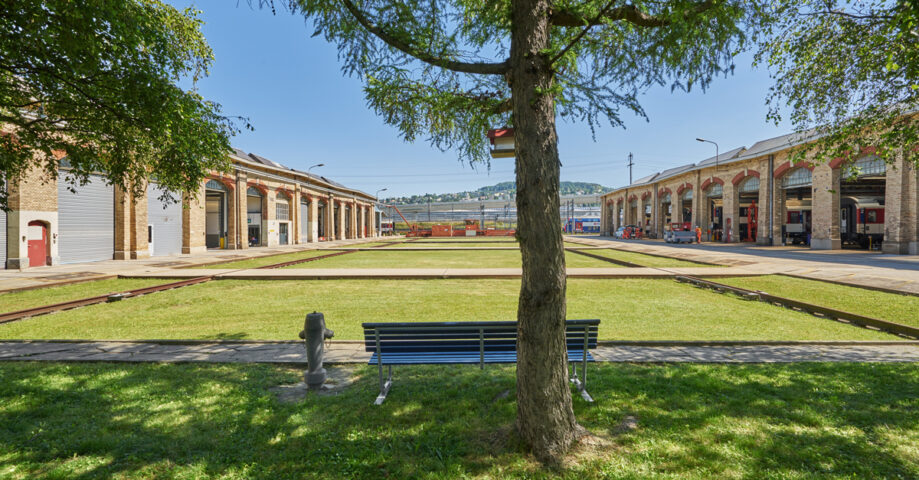
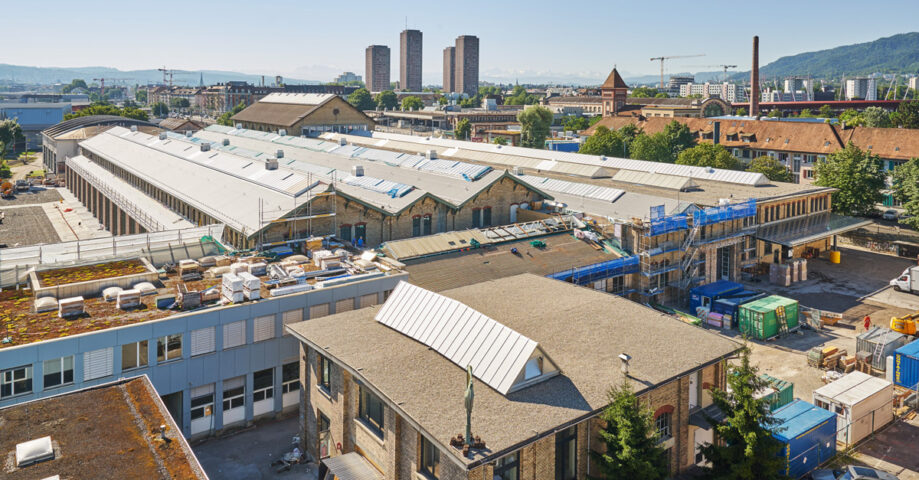
    SBB is transforming the 42,000-square-metre Werkstadt site in Zurich into a vibrant urban space, to be completed by 2035. This will preserve the fabric of its historic buildings, which will one day be joined by both new buildings and extensions to create an exciting cluster. The transformation of the former SBB workshops will be exceptionally sustainable, featuring climate-conscious building measures, circular economy elements and an innovative energy concept.

    Developing existing buildings
    In close coordination with the monument preservation authorities, the existing buildings will be gradually renovated and joined by new buildings and extensions in the coming years. At the heart of the site, the former carriage workshop ‘Building Q’ will allow for a diverse usage mix under one roof from 2023. The development will offer an exciting interplay between the fabric of historic buildings, structural densification and public use of outdoor space.

    © SBB AG, Martin Zeller

    Environmentally friendly construction
    ‘SBB wants to be climate-neutral by 2030, and climate-compatible construction is an important factor in achieving this objective,’ said Gabriele Bühler, Project Manager at SBB. Various climate-conscious building measures have been incorporated into the planning of the site. That includes configuring the new buildings to promote the circulation of cool air currents. Where possible, the roof water will be allowed to seep into an above-ground system for further cooling. Surfaces will remain unsealed where possible. The transformation follows a systemic approach that considers the building along its entire life cycle. The aim is to keep CO2 emissions as low as possible. To ensure circularity, all construction components are recorded on the Madaster platform. There is also a particular focus on reusing components. 

    Energy concept: 100% renewable
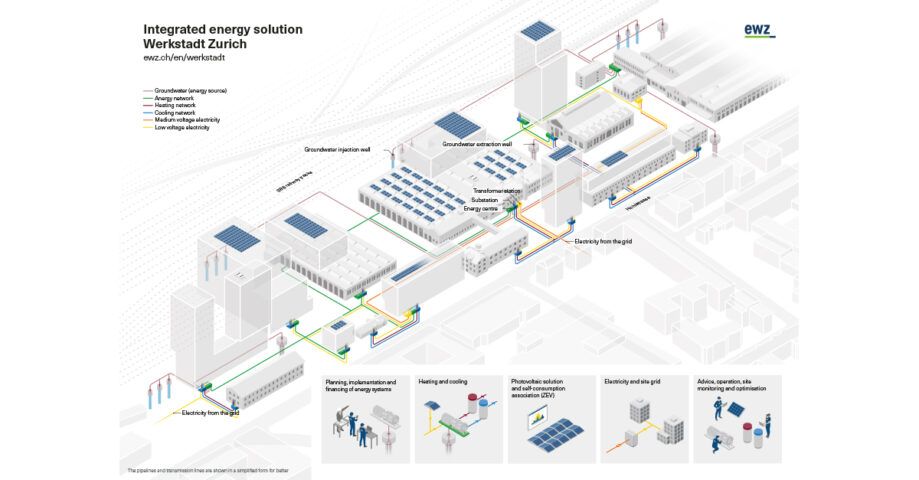
    ewz was able to win SBB’s public tender with an energy solution based on 100 per cent renewable energies. Groundwater, which is collected in four wells on the site, serves as a source of heating and cooling. From these wells, the water flows to the energy centres in the larger buildings, which house heat pumps and cooling machines that bring the water to the required temperature. An anergy network connects all the buildings and ensures that excess energy is exchanged between the building groups. For example, excess heat or cold in one building can be used in another. This system also has the advantage of not requiring groundwater boreholes in every building: the smaller buildings are connected to the energy centres via a local heating network. Heating and cooling is generated without any CO₂ emissions, as the rest of the electricity also comes from renewable sources. The use of a monovalent energy system will ultimately lead to a CO2 reduction of over 2,100 tonnes per year.

    High self-consumption of solar power
    ewz also plans, finances, creates and operates the transformer systems and medium-voltage lines to supply the site with electrical energy. ‘Some of the electricity that the people in the Werkstadt use on the site is produced there using photovoltaics,’ explains Markus Fischer, Head of Sales at ewz Energy Solutions. To this end, SBB and ewz want to make the best possible use of the roof areas for solar power production. Both the roof of Building Q, at the centre of the site, and the roofs of other buildings with a suitable structure and orientation for generating solar power are to be kitted out with photovoltaic systems. SBB requires its tenants on the site to form a self-consumption association (ZEV). ‘When completed, the ZEV will consist of around 300 parties that will use locally produced electricity on the site. This allows us to achieve a high self-consumption rate, which, in turn, makes a significant contribution to the cost-effectiveness of the photovoltaic systems,’ says Markus Fischer. He expects self-consumption on the Werkstadt site to be almost 100 per cent when completed.

    © SBB AG, Martin Zeller

    The benefits of contracting
    For the owner, this form of collaboration has various benefits, including keeping financial risks and management costs very low. If a system fails, ewz makes sure it gets back into operation as quickly as possible. To ensure that the system can be operated efficiently, ewz will start undertaking energy-related operational optimisations shortly after commissioning. As part of an ongoing process, the systems will be optimised and adapted to the actual needs relating to their use. By extension, this ensures that they consume as little energy as possible, generate minimal costs and offer maximum convenience for users.

    Werkstadt Zürich is a successful example of a forward-looking approach to repurposing a historic industrial site. With the targeted renovation and expansion of existing buildings and a ground-breaking energy concept, the developers – together with the planners and ewz – are creating added value for future users and the environment alike. Find out more about the Werkstadt site’s innovative energy concept here.


    https://www.ewz.ch/en/business-customers/real-estate.html

  • Green light for digitally manufactured concrete staircase

    Green light for digitally manufactured concrete staircase

    It is one of the big challenges in the upcoming NEST unit “STEP2”: a concrete staircase whose shape is reminiscent of a human spine. Although the unit is still in the planning stage, parts of the stairs have already been produced as prototypes. Because the unit pursues a great goal: only what has a future in the construction industry will be built. Together, the partners work consistently towards market readiness – and this is also the case with the staircase.

    “Over the past two years, the project team has jointly developed a completely new concept for the production of customised concrete components. This was only possible because the experts along the entire value chain worked together at eye level,” says Enrico Marchesi, innovation manager at NEST and project manager of “STEP2”, with conviction. The interdisciplinary project team was put together together together with the scouting and incubation experts of the main partner BASF. It is made up of the architectural firm ROK, which is responsible for the project management, the ETH Chair of Digital Building Technologies, 3D printing experts from the BASF subsidiary BASF Forward AM and the 3D printing company New Digital Craft, experts from the precast concrete manufacturer SW Umwelttechnik, engineers from the engineering firm WaltGalmarini and the experts from the Empa spin-off “re-fer”.

    Customised solutions
    The “STEP2” staircase impressively demonstrates how concrete structures can be realised with the help of computer-aided design and the latest 3D printing technologies. By using 3D-printed formwork, it is possible to create more complex shapes than with previous special formwork. At the same time, the amount of material required can be significantly reduced.

    The process enables customised concrete solutions that can be optimally adapted to the respective application and have a high level of detail. In addition, it also holds great potential in restoration, for example in the renovation of historical buildings.

    High complexity
    The design of the staircase comes from the ETH Chair of Digital Building Technologies. Based on this, the project team developed a complex, parameter-based formwork system for the individual steps, which is produced using 3D printing. “It was important for us to use digital fabrication in such a way that we can produce extremely filigree concrete elements. A key criterion for the system was the reusability of the formwork for the production of multiple steps. At the same time, we had to take into account the requirements of 3D printing and the material, as well as the conditions when filling the formwork,” explains Benjamin Dillenburger, head of the “Digital Building Technologies” team. In order to meet all these requirements, the exchange within the entire project team was of central importance.

    “In order for the 3D-printed formwork to be used for several stages, we used a suitable coating. In terms of sustainability, we opted for a material that can be detached from the formwork again. This is the only way we can ensure that the material is separated by type,” says Jörg Petri from “New Digital Craft”. He and the “Virtual Engineering” team from “BASF Forward AM” brought their years of know-how in the 3D printing field to the project.

    “For BASF Forward AM, the project is an important milestone in demonstrating that the materials used can withstand the high demands. It pays into our strategy to realise formwork using 3D printing as an alternative to conventional mould making,” says Anke Johannes, Director Sales Europe at BASF Forward AM. For the formwork material, the team chose Ultrafuse® PET CF15 filament because of its excellent properties for concrete formwork applications. In the end, the concept for manufacturing and assembling the formwork elements was ready.

    The endurance test
    Now the time had come to turn the stairs into reality. SW Umwelttechnik produced the steps in its own factory with the help of the formwork. Ultra-high-strength fibre-reinforced concrete was used as the material. “Our concrete allows for very thin, complex shapes that could not be realised with normal reinforced concrete. It’s great that we can demonstrate this so impressively with the staircase in the “STEP2″ unit,” says a pleased Klaus Einfalt, CEO of SW Umwelttechnik.

    The WaltGalmarini engineering office is responsible for calculating and assessing the statics. To check whether the calculated values correspond to reality, the steps were sent to Empa. There they were subjected to various load tests by Empa experts under the supervision of the engineering office. The first prototype consisting of three stages, which were all tested individually, largely fulfilled expectations and at the same time provided new findings for optimising the system.

    In the subsequent prototype, not only the statics but also the construction of the staircase system was put to the test. Three steps were threaded on top of each other and clamped together using “memory-steel”, an innovative prestressing technique developed by Empa spin-off “re-fer”. In the process, bars of the type “re-bar R18” were placed in predefined cavities and mechanically anchored. The pre-stressing was done by heating with electricity. Afterwards, further tests were carried out to analyse how loadable the steps are individually and the system as a whole. The result: the engineers deemed the overall system reliable.

    “I am very pleased that the staircase could not only convince on paper, but now also in practice. This represents an extremely important milestone in the project for us,” says Michael Knauss from ROK. With this “proof of concept”, the production of the final staircase can now take place – another important step towards the realisation of the NEST unit “STEP2”.