Tag: Kreislaufwirtschaft

  • The future of the construction and real estate industry is called the circular economy

    The future of the construction and real estate industry is called the circular economy

    The construction industry produces the most waste in Switzerland with a share of 84 percent. This makes it all the more important to establish the so-called circular economy: the materials and products used in construction should be returned to the cycle after the life cycle of a building. The three “R’s” are decisive: reduce, reuse and recycle. In a functioning circular economy, as little waste as possible is produced. However, according to a study by the economic researchers at the Swiss Federal Institute of Technology (KOF) and the Bern University of Applied Sciences (BFH), only 8 to 12 per cent of Swiss companies are involved in the circular economy.

    One company that has dedicated itself to precisely this endeavour is Madaster. in 2017, the company was founded in the Netherlands and expanded to Switzerland a year later as its first international location. Madaster sees itself as a cloud platform that enables users to transparently present the data of their construction projects. Users can create a material passport based on a BIM (IFC) or Excel document. This is possible for new buildings as well as for existing properties. Components and materials used are recorded – the system automatically supplements the data with information on recyclability, separability, sustainability as well as financial value, thus creating a valuable data source. Madaster thus enables the planning and use of buildings as raw material storage facilities. In the long term, this should drastically reduce the amount of waste and CO2 emissions during construction.

    The industry recognised the added value of this service early on: “More and more builders and their service providers are using the material passport, creating best-practice examples from which the industry can learn. Because those who build circularly build for the future,” explains Marloes Fischer, CEO Madaster Services Switzerland. The company distinguishes between strategic partners, so-called Kennedys, who have supported the development, launch and implementation of the online platform financially and conceptually, and partners that include developers, architects, contractors, consultants, engineers or banks. “11 Kennedys have supported the launch of Madaster in Switzerland. Currently, Madaster has over 30 partners,” Fischer elaborates. In addition to the Federal Office for Energy and the Environment (Bafu), other well-known names such as Eberhard, Mobimo, Pirmin Jung, Integral Baumanagement AG and Swiss Prime Site are listed among Madaster’s partners and Kennedys.

    Enormous potential of the circular economy
    Holcim Switzerland is also one of Madaster’s well-known partners. By 2050, the company wants to produce exclusively climate-neutral and fully recyclable building materials. To achieve this transformation, Holcim is working with various levers and clearly defined interim targets for 2030. The company sees enormous potential in the circular economy to effectively address challenges such as climate change or resource scarcity. With innovative solutions, Holcim returns waste to the material cycle and reuses concrete again and again.

    For example, Holcim produces the world’s first resource-efficient cement called Susteno 4. Industrially processed mixed granulate is used as a grinding material. In addition, a large part of the fossil fuels is replaced by alternative materials, such as waste or sewage sludge. Since its launch in 2018, cement has become the second-largest product in the Holcim portfolio with a share of 10 percent. The sustainable concrete Evopact is also based on Susteno cement and saves 10 percent CO2 compared to standard concrete. Holcim aims to generate a quarter of ready-mixed concrete sales with this by 2025. Bettina Kallenbach, Marketing Manager Holcim Central Europe West, is convinced: “Concrete will be difficult to replace in the near future. But concrete is a building material that makes sustainable construction possible on a wide variety of levels – as long as you face up to the challenges.”

    Holcim has been dealing with topics such as the circular economy, decarbonisation and renewable energy for a long time. Kallenbach is convinced: “For net zero, Carbon Capture and Use and Storage (CCUS) will be an important lever. Holcim is working on scalable measures and solutions in this regard.” In addition, Holcim already operates several recycling processing plants throughout Switzerland. Together with partners, the company is thus pursuing the goal of processing high-quality new building materials for the respective local market from regional excavated material, concrete and mixed demolition waste. At the same time, this increases the use of alternative raw materials and fuels in cement production and saves primary resources and landfill space throughout Switzerland.

    Holcim cites the renovation of the Aroser tunnel as an example: the large quantity of contaminated excavated material is processed at the Untervaz cement plant and made into cement, which is then used in the 300-metre-long tunnel. This closes the building material cycle. With its subsidiary “Geocycle”, the company also significantly reduces CO2. With “co-processing” in the plants, the company ensures the thermal utilisation of combustible waste and recycles mineral waste into new clinker and cement. This enabled the group to save around 150,000 tonnes of CO2 in 2021 by recycling 160,000 tonnes of combustible industrial waste in cement production.

    Thanks to Madaster, building materials in existing buildings are given an identity and a value
    The fact that the circular economy has great potential is also shown by the study mentioned above. According to this study, innovative Switzerland has advantages in creating the transformation and generating sustainable competitive advantages. At present, however, the possibilities and knowledge to adapt existing products and services to a circular economy are often still lacking. The parliamentary initiative “Strengthening the Swiss circular economy” aims to create new framework conditions for a modern and environmentally friendly circular economy. The consultation in October 2022 showed that a large majority welcomes the anchoring of resource conservation and the circular economy in the Environmental Protection Act.

    In the construction industry, the focus is currently on recycling, one of several possible entries into circular construction. Fischer says: “The business activities of companies are likely to move increasingly in the direction of manufacturing recyclable products, circular tenders and competitions, and documenting materials and components used in buildings.” Madaster offers a sophisticated tool for the latter in particular. Bettina Kallenbach agrees: “A cadastre of installed materials is an important building block with regard to closing cycles. Future generations must have access to data that shows which building materials are used where and in what quality. This gives building materials in the inventory an identity and a value. Madaster provides the central digital platform for this.”

    Considering that Switzerland aims to halve greenhouse gas emissions by 2030 and that emissions from transport, buildings and industry must be reduced by up to 90 per cent to achieve climate neutrality in 2050, sustainable and circular working becomes all the more important. The first companies like Holcim are setting a good example. But here the entire real estate and construction industry has the chance to take a pioneering role.
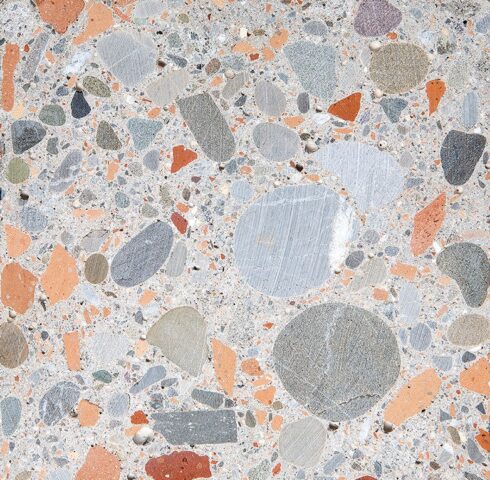
    CO2-enriched recycled concrete EvopactRECARB, which Holcim supplied to V-Zug for the new “Zephyr Ost” building.
  • Swiss Prime Site lays the foundation stone for the JED site

    Swiss Prime Site lays the foundation stone for the JED site

    The JED (Join.Explore.Dare) in Schlieren will receive a “sustainable keystone”, as stated in a press release from Swiss Prime Site . On September 22, the real estate company from Zug laid the foundation stone for a new building with office and laboratory space, which should be ready for the first tenants to move into from mid-2024. In addition to representatives from Swiss Prime Site and other project participants, Stefano Kunz, Head of the Construction and Planning Department of the City of Schlieren , also took part in the ceremony.

    JED is the site of the former NZZ printing works. Swiss Prime Site has already converted existing buildings there and thus “turned the area into a think and work tank for business, industry and trade”, as CIO Urs Baumann said on the occasion of the laying of the foundation stone. The existing buildings are used by the anchor tenants Halter and Zühlke . The new building will now add office and laboratory space to the area on five floors with a rentable area of 14,000 square meters. Anchor tenants could also be won with Superlab Suisse and FlexOffice .

    The new building will be built according to the principles of the circular economy, and certification according to SNBS Gold (Swiss Sustainable Building Standard) is being sought. “Swiss Prime Site has successfully managed to give the former self-contained NZZ area new life and flair through new paths and the open and spacious architecture,” City Councilor Stefano Kunz is quoted as saying.

  • Foundation stone laid on the JED campus

    Foundation stone laid on the JED campus

    Since 2018, the former location of a large industrial printing plant has been transformed into a modern place of work and living space with diverse and flexible types of use

    transformed. Urs Baumann, CIO Swiss Prime Site Immobilien: “The revitalization and the change of use initiated with the conversion of the existing buildings have turned the area into a think and work tank for business, industry and trade. The gratifyingly high level of first-time lettings proves that large spaces that interact with one another are very much in demand. The new building perfectly complements the existing ensemble with laboratory and office space.» Stefano Kunz, City Councilor of Schlieren adds: "Swiss Prime Site has successfully managed to give the former self-contained NZZ area new life and flair through new paths and the open and spacious architecture." The new building, which is being built on a land reserve of the site, with five floors, a rentable area of over 14,000 m2 and its unique external appearance, is particularly aimed at tenants who need large, connected and adaptable areas. According to the project plan, the first tenants will move into the building from mid-2024 .

    "Space as a Service" in the attractive Life Science Hub Schlieren
    The JED campus forms a center for know-how transfer, innovation and entrepreneurship and brings together companies from a wide range of industries and sizes. In addition to the already established anchor tenants Zühlke and Halter in the existing buildings, two more will be added in the new building with Superlab Suisse and FlexOffice and will ensure an additional strengthening of the ecosystem. According to their business models, they will offer space as a service to various start-ups and companies as "Space as a Service". Superlab Suisse focuses on young companies in the life sciences sector and offers them fully equipped laboratories with flexibly scalable services. After Lausanne and Basel in 2023, the third location operated by Superlab Suisse will be opened in Schlieren from 2024. FlexOffice already successfully offers fully equipped office space for SMEs in several Swiss cities and is now planning another location on the JED campus. «With Superlab Suisse and FlexOffice, we already had two successful anchor tenants at the time the foundation stone was laid, which fit perfectly into the existing structure of the area and the adjacent cluster. Together with the neighboring Wagi area, we will continue to strengthen the economic cluster and the infrastructure for companies in the life sciences sector and beyond,” concludes Urs Baumann.

  • Lenzburg gets recyclable coworking space

    Lenzburg gets recyclable coworking space

    Project developer gutundgut has realized a coworking space on the site of the former toy factory Wisa Gloria in Lenzburg according to the principles of the circular economy. All the materials used for the approximately 400 square meters of office, meeting and creative space have already been used somewhere before, explains gutundgut in a statement on the coworking space Gloria , which was inaugurated in mid-September.

    "With Gloria we wanted to prove that it is possible to build sustainably and cost-effectively without having to compromise on quality and aesthetics," Christian Müller is quoted as saying in the statement. "The numerous, very positive responses from our guests on the opening weekend show that this was a success," says the partner and architect of the Zurich project developer.

    According to the announcement, Gloria can also shine with a pioneering achievement in sanitary facilities: a dry toilet has been installed in an office building for the first time in Switzerland. In addition to the range of jobs, the Gloria should also serve as a "feel-good and meeting place for business and culture", explains Rafael Enzler, partner of gutundgut and co-initiator of the project. "The existing gastronomy, event and cultural offerings in the former Wisa Gloria factory area offered an ideal setting for this."

  • Madaster wins Integral Baumanagement as a partner

    Madaster wins Integral Baumanagement as a partner

    Madaster wants to strengthen the circular economy in the construction and real estate sector. To this end, it offers digital tools on its platform, such as material passports and indices for recording the economic and circular value of buildings. In addition, companies that are committed to the circular economy in the construction and real estate sector are networked. With Integral Baumanagement AG , the Swiss register for materials has now gained another comrade-in-arms, Madaster Switzerland informs in a statement . The company based in Olten provides overall services in the planning and realization of buildings for builders and real estate owners.

    With the decision to make Integral Baumanagement AG fit for Madaster, “we are investing in a better future and thus making a significant contribution to achieving climate neutrality in construction,” Mauro Giorgini is quoted in the statement. The managing director of Integral Baumanagement AG relies on Madaster to catalog the materials used in the building and to determine their value, suitability for reuse and their impact on the environment. “In this way, we can lay the foundation for a sustainable future and optimal market positioning of your property with our customers.”

    Madaster’s building records record data about the materials used in a building. “We live in a closed system and resources are finite,” explains Marloes Fischer in the statement. For the managing director of Madaster Services Schweiz AG, individual buildings as well as entire areas and cities should be used as “gold mines for material”. “If we write down what’s there now, we’ll make building the future easier.”

  • Builders' Association pleads for replacement new buildings

    Builders' Association pleads for replacement new buildings

    At its annual media conference, the Swiss Builders’ Association ( SBV ) presented its action plan for the aggressive modernization of buildings . In order to achieve the climate goals, the pace of building renovation must be tripled, the SBV explained in a statement at the media conference. In its action plan, the association advocates new replacement buildings in particular. They are “an integral part of the circular economy and save much more energy and pollutants than old buildings,” says the statement.

    In the action plan, the SBV calls, among other things, for the establishment of a utilization bonus of 30 percent for replacement new buildings. They should also be put on an equal footing with energy-related refurbishments when it comes to funding. In addition, the SBV pleads for a limit to the number of protected buildings and for the equal importance of densification with the protection of the townscape. The recycling of building materials, which is still being tested, should also “not be slowed down by over-regulation”, according to the action plan.

    At the annual media conference, the SBV also addressed the situation in the construction industry. It “proved to be an important and stable pillar of the Swiss economy during the two years of the corona pandemic,” the statement said. Last year, with more than 91,500 full-time positions, the level before the outbreak of the pandemic was reached again.

    Your association sees delivery problems and increased prices for many building materials as a risk for the industry. The SBV explains that six out of ten construction companies have been affected by them in the past few months. The industry is also assuming high prices for building materials for the current year. A rise in interest rates is also expected in the medium term, which could make real estate less attractive as an investment.

  • Holcim and Bloomberg are looking for circular cities

    Holcim and Bloomberg are looking for circular cities

    The Zug-based building materials producer Holcim and the New York media company Bloomberg want to research together what makes cities role models for the circular economy and thus catalysts for sustainable growth. According to a press release , the two companies want to work together in this regard to identify good examples and place them in a global showcase. To this end, they announced the first Circular Cities Barometer.

    According to Holcim CEO Jan Jenisch, the circular economy is “an opportunity of our time”. “My vision for the construction industry is to build more new things out of old ones, with recycled materials in every new building.” He wants to better understand how cities can be enabled for more circular economy.

    This would require identifying key drivers that drive progress, as well as bottlenecks that need to be addressed, says Lauren Kiel, general manager for Bloomberg Green at Bloomberg Media. “By better understanding the structure of this important work, we can enable circular living for all.”

    As cities grow, they are at the forefront of the transition from a linear to a circular economy, Holcim said. Cities had the “critical mass” to make a difference with widespread access to recyclable materials. “As our world builds the equivalent of New York City every month, the construction sector has a key role to play in the shift to a circular economy.”

  • Madaster wins pom + as a partner

    Madaster wins pom + as a partner

    Madaster wants to strengthen the circular economy in the construction and real estate sector. For this purpose, it offers digital tools such as material passports and indices for recording the economic and circular value of buildings on its platform. In addition, companies are networked that are committed to circular economy in the construction and real estate sectors. With pom + Consulting AG ( pom + ), the Swiss cadastre for materials has now won another comrade, Madaster Switzerland informs in a message . The consulting company pom +, based in Technopark Zurich, specializes in construction and real estate companies.

    "In order to really achieve the goal of climate neutrality in the construction and real estate industry, an all-round view from planning to use is just as important as anchoring a sustainable real estate strategy," says Jürgen Marc Volm, partner and expert for circular economy at pom +, in the message quote. "Thanks to the data transparency over the entire project life cycle on Madaster, we can combine our expertise with the potential to answer future-oriented questions about the correct use of materials and material dismantling more easily."

    Madaster's building passports record data about the materials used in a building. In this way, future recycling of the material is made possible. The networking should make it easier for companies to disseminate knowledge in circular construction and to jointly develop approaches for a circular construction and real estate industry. With pom +, Madaster has gained a new partner "who integrates the concept of circularity in all services over the entire life cycle," says Marloes Fischer, Managing Director of Madaster Services Switzerland.