Tag: Nachhaltigkeit

  • The Circle receives certification for sustainability

    The Circle receives certification for sustainability

    The Circle is expected to receive LEED Platinum certification in the spring of next year, HRS informs in an interview on the portal of the real estate company from Frauenfeld. HRS realized the area at Zurich Airport as a general contractor in collaboration with Amstein + Walthert , the main building technology planner responsible. For the highest standard of the green building classification developed by the US Green Building Council , a project must achieve 80 or more points.

    The LEED classification tries to “map all aspects of sustainable building”, explains Christian Appert from Amstein + Walthert in an interview. According to the CEO of the engineering service provider based in Zurich, The Circle was able to score points in a number of categories. As examples, Appert cites, among other things, drinking water savings through rainwater tanks, a combination of photovoltaics and greenery on the roofs as well as generous infrastructure for bicycles. The Circle has shown that “even large projects can be very sustainable,” says Appert.

    With the certification, The Circle will be “the largest LEED Platinum project in Europe and one of the ten to twenty largest in the world,” explains Rebecca Kull in an interview. According to the COO of HRS, this is “a superlative with great charisma” for Switzerland. Talking about sustainability is easy, says Kull. The decisive factor, however, is “lived sustainability”.

  • Ecospeed Scout enables comprehensive environmental assessment

    Ecospeed Scout enables comprehensive environmental assessment

    The company Ecospeed , founded in 2002, develops web-based software for the accounting of environmental indicators for authorities, companies and people, informs the Zurich company in its online portrait . Ecospeed has launched software that can be used to measure the environmental impact of products, processes and locations. The Ecospeed Scout is based on the standard for comprehensive environmental assessment published in May 2021, eco-scout .

    The history of the life cycle assessment begins as early as 1978, according to a corresponding time table . At that time, the owner of Frisco-Findus AG, which is now part of Nestlé, submitted an environmental assessment for his company entitled "The ecological accounting". In the following years, Migros, the Federal Office for the Environment and the German Volkswagen group took up the method and refined it. The now valid eco-scout standard was then created from 2020 by a German-Swiss working group with the support of large companies, the Federal Office for the Environment, the German Federal Environment Ministry and the German Federal Environment Agency. In 2021, "the first software for environmental assessments based on the eco-scout standard from Ecospeed AG / Zurich" will be launched, according to the online journey through time.

    Over 18,000 entries on materials, processes, modes of transport, energy sources, infrastructure systems and types of waste from the life cycle assessment database of the Swiss ecoinvent center can be used to create the environmental assessment. The software creates an inventory analysis in which the national and EU-wide environmental goals and specifications are also taken into account. Based on the inventory balance, the environmental impact is then calculated in so-called environmental impact points (UBP).

  • Kompotoi is a finalist in the Swiss Excellence Product Award

    Kompotoi is a finalist in the Swiss Excellence Product Award

    Kompotoi is among the six finalists for the Swiss Excellence Product Award 2021 . Swiss Excellence has now announced this. The Zurich start-up convinced the jury with its mobile and sustainability-focused composting toilets. The award ceremony will take place on September 16 in the Technopark Winterthur. With the Swiss Excellence Product Award, the Swiss Excellence Foundation claims to make a contribution to promoting entrepreneurship and Switzerland as a technology and innovation location.

    Kompotoi says it offers a “beautiful, user-friendly and sustainable alternative” to conventional toilets. They are “absolutely odor-free” and are made from wood “by hand in Switzerland”. You can get by without plastic, chemicals, electricity and flushing water. “We have developed a better solution than the conventional one for the mobile toilet area. It’s simple and obvious. That is why customers are enthusiastic about our product, ”said Kompotoi in his presentation for the Green Business Award , for which the company has also been nominated.

    Instead, the collected residues are converted into stable humus soil using a combined process technology of fermentation and composting. “One kilo of compost stores an average of 0.2 kg of CO2,” said Kompotoi when asked about the environmental benefits of their product. “Kompotoi produced around 100 tons of compost in 2019, that’s around 20,000 kilograms of stored CO2. If all mobile toilets in Switzerland were operated as compost toilets, 13,200 tons of CO2 could be sustainably stored in the soil. “

    Kompotoi rents out its wooden toilets for larger festivals, for example. The company is also planning systems in the public sector or for single and multi-family houses. Kompotoi also sells toilet solutions for garden houses, hunting lodges and alpine huts.

    With Kompotoi, two more start-ups are competing for the Swiss Excellence Product Award: Hivewatch and Smartbreed . Three companies have also been nominated in the SME category: Advanced Osteotomy Tools – AOT AG , Qumea and Rheonics . All start-up finalists are already supported with a three-year coaching from the start-up sponsor genisuisse .

  • The federal government is also aiming for net zero for soil protection

    The federal government is also aiming for net zero for soil protection

    With its Soil Strategy Switzerland, the Federal Council wants to counteract further soil loss through soil activity, erosion or pollutants. The main concern is that no more land is lost net in Switzerland by 2050. The booklet just published by the Federal Office for Spatial Development in the series “ Forum Spatial Development ” with the title “Dealing with the soil sustainably – the responsibility of spatial development” shows how it can be possible to preserve the soil in the long term.

    It is no coincidence that this goes hand in hand with the also declared net zero target for CO2 emissions, according to Damian Jerjen, Director of the Association for Spatial Planning EspaceSuisse, in a press release by the Federal Office for Spatial Development: "Spatial planning is responsible for its instruments to use for climate protection and thus also to protect the soil. ”Because, on the one hand, these must make a maximum contribution to climate protection. On the other hand, they would help to adapt to the inevitable consequences of climate change.

    In the booklet, Adèle Thorens Goumaz, Councilor of States (Greens / VD) and biodiversity expert, calls for greater specialist knowledge of soil quality to be developed. The decentralized decision-making structure represents an obstacle to sustainable soil management. In an interview, she suggests that we first come to an agreement on the agriculture of the future. "Only then should we start working on spatial planning, not the other way around."

    A report also included in the booklet describes the renaturation work after the construction work on the Ceneri Base Tunnel has been completed. There, enormous masses of earth are returned to their original parcel. They are built into fertile soil and can be used for growing vegetables after a few years.

    The booklet can be ordered in writing and for a fee from the Bern Federal Office for Buildings and Logistics . It is also available online and free of charge with audio contributions and photo series.

  • Urban Land Institute has a new chairman

    Urban Land Institute has a new chairman

    Jürgen Marc Volm has started his two-year term of office as the new chairman of the Urban Land Institute (ULI) Switzerland. He succeeds Birgit Werner. As it is said in a media release , it has increased the number of members and increased activities significantly.

    She acknowledges that Volm's “passion for real estate” is reflected in his career, “in which he has combined academic know-how with the successful development of a company. He is an enrichment for us as we want to continue growing and strengthen contacts with current and future industry leaders. "

    In addition to his work as a partner and board member of pom + Consulting AG , based in Technopark Zurich , Volm is also the program manager of the master's degree in International Project Management at the Stuttgart University of Applied Sciences (HFT). As a Master of Engineering in International Project Management from HFT Stuttgart and Master of Business Administration from Liverpool John Moores University , the graduate civil engineer has extensive business management knowledge.

    According to his own information, as chairman the focus is on promoting the sustainability debate according to the so-called ESG (environmental, social, governance) criteria, "especially with regard to the areas of circular economy and social responsibility". In addition, he wants to introduce the ULI UrbanPlan at Swiss schools and universities. The participants receive basic knowledge of urban renewal. He is also planning a ULI NEXT program. It is intended to connect the next generation of managers between the ages of 35 and 45 in the DACH region.

    "ULI Switzerland has developed rapidly in the DACH region," says Marnix Galle, chairman of ULI Europe . “And we look forward to the next phase of growth under Jürgen's leadership. He will use the ULI platform to help shape the future of the built environment in Swiss communities and to inspire a new generation of real estate experts. "

  • Madaster wins Allco AG as a partner

    Madaster wins Allco AG as a partner

    Madaster wants to strengthen the circular economy in the construction and real estate sectors. To this end, it offers digital tools such as material passports and indices for recording the economic and circular value of buildings on its platform, Madaster explains in a press release . According to her, Madaster Services Schweiz AG has won a new colleague in Allco AG. Together, Madaster and Allco want to make it easier for companies to access building passes and promote their use.

    "As a general contractor for complex construction, conversion and renovation projects, we have a great responsibility", Allco managing director Urs Meier is quoted in the press release. "It is clear to us that Madaster is an important part of systematic and always transparent sustainability planning over the life cycle of a building." The company uses the Madaster tool, among other things, for the renovation of a property in Zurich for Swiss Prime Site .

    In building passports, data about the materials used in a building are recorded. In this way, future recycling of the material is made possible. Allco's specialist knowledge should help Madaster make “material data usable over the entire life cycle of buildings”, explains Marloes Fischer in the press release. "This is how circular building works", says the managing director of Madaster Services Switzerland.

  • Sulzer and Blue Planet are working on CO2-negative concrete

    Sulzer and Blue Planet are working on CO2-negative concrete

    Sulzer and Blue Planet want to work together to accelerate the transition to a sustainable cement industry. For this they have now entered into a partnership. The Californian specialist for CO2 capture and mineralization uses technologies from the Winterthur company to reduce CO2 in order to lower greenhouse gas emissions from industrial operations.

    According to a press release from Sulzer, Blue Planet has developed a profitable CO2 capture, use and storage system that captures CO2 from a variety of emission sources such as power plants, refineries, steel and cement plants. The CO2 is mineralized in solid, crystalline form and thus permanently bound. The granulate is added to concrete as a 70 to 90 percent main component. As usual, these aggregates are then bound by cement. With a share of 7 percent, cement makes a significant contribution to global CO2 emissions. But the CO2 footprint of the cement in the concrete is "more than compensated for" by the CO2 bound in the synthetic limestone aggregates, according to Sulzer.

    "We are pleased to be able to contribute our expertise in circular applications to such a future-oriented project," said Sulzer's Chemtech division manager, Torsten Wintergerste, quoted in the press release. "It will help reduce carbon emissions from industrial applications and the cement sector – a major concern of our customers."

  • AEW Energie AG puts salt battery into operation

    AEW Energie AG puts salt battery into operation

    In the future, AEW will provide its AEW myHome customers with an environmentally friendly alternative to lithium-ion batteries. For this purpose, the energy supplier in the Aarau area has added a salt battery storage system from Innovenergy GmbH to its range, according to a media release . The provider from Meiringen BE assembles and sells the battery system.

    The salt battery can be integrated into the overall AEW myHome system. This consists of a heat pump, photovoltaic system with storage, electric charging station and a smart controller. This makes the new type of battery suitable for single and multi-family house owners who want to generate, store and use their own energy. They are suitable wherever a lot of energy is produced and average power is required.

    The salt-based battery storage has an energy density similar to that of a lithium-ion battery and has a service life of at least 15 years. In addition, the salt battery is maintenance-free and 100 percent recyclable. The robust salt battery storage system can neither burn nor explode and also runs in extreme temperatures between -20 degrees and 60 degrees Celsius.

    According to a press release, 32 percent of the table salt-based battery is made up of normal table salt, which comes from Swiss salt pans. This ensures short transport routes. In addition, it contains iron, nickel and ceramics.

    All of these advantages come at a price: A salt battery costs around a third more than a conventional battery. “Nonetheless, we are feeling the growing need for ecology and sustainability. We are sure that more and more customers will consider this storage solution, ”said Patrick Seiger from the AEW myHome team in the press release.

  • Implenia impresses with sustainability

    Implenia impresses with sustainability

    In the current sustainability ranking from Sustainalytics , Implenia has further expanded its leading position in environmental, social and governance matters, the real estate company from Dietlikon informs in a press release . In concrete terms, Implenia had increased its overall rating by 5 to 84 points compared to the previous year. Implenia also took the top spot among a total of 66 real estate companies examined in the three individual sub-categories of environment, social affairs and governance.

    “This outstanding result confirms our ambitious path and we will continue to pursue it with our new sustainability goals”, Anita Eckardt, Chairwoman of Implenia’s Sustainability Committee, is quoted in the press release. “From CO2 reduction on our path to climate neutrality to the highest standards of a sustainable supply chain and circular economy, the twelve goals cover a broad spectrum of what we want to achieve in the coming years.” Implenia is making the full Sustainalytics report available on the Internet Disposal.

    Sustainalytics, based in Amsterdam, specializes in assessing the sustainability of listed companies. The evaluation is also of financial importance. More and more investors and institutional investors are showing interest in whether sustainability strategies are effective and affect supply chains and product delivery. The annual appraisal gives you an independent assessment of your investments. Implenia is currently receiving “more favorable financing terms” due to its very good rating, writes the real estate company.

  • Zurich is the most sustainable city in Switzerland

    Zurich is the most sustainable city in Switzerland

    The British IG Bank has compiled a list of the most sustainable Swiss cities. According to this, Zurich is considered the most sustainable city in Switzerland. Lausanne, Bern, Lucerne, St.Gallen, Lugano, Geneva and Basel follow Zurich.

    For its ranking, the bank used government data sources from the eight largest cities. She then combined the results with evaluations from international agencies. The focal points in determining sustainability included air quality, the use of public transport, the proportion of recreational areas, the population density and the proportion of populated areas.

    IG Bank emphasizes that Zurich is not only the most sustainable, but also the largest city in Switzerland. This makes the top position all the more impressive. Zurich did well in all areas. However, the use of public transport was particularly decisive. According to the bank, 67.1 percent of residents use some form of public transport. This is one of the main reasons for the good air quality in the city. As a further highlight, IG Bank highlights the fact that Zurich has its own government department for sustainable building. This focuses on creating a 2000 watt society.

    IG Bank is convinced that current and future investments will be strongly oriented towards sustainability. The aim of their ranking is to "highlight Switzerland's commitment to sustainability". In addition, the data should serve as an “indicator for future trends and show what other big cities could do to repeat Switzerland's success”.

  • Sika supports the introduction of Swiss eco-cement

    Sika supports the introduction of Swiss eco-cement

    LC3 stands for Limestone Calcined Clay Cement and was developed by the Swiss Federal Institute of Technology in Lausanne ( EPFL ). It is a sustainable cement product that has a clinker content that is up to 50 percent lower than that of traditional cement. Clinker makes a significant contribution to CO2 emissions during cement production. In LC3, a large proportion of clinker is replaced with a new additive, which means that overall less CO2 is emitted in cement production.

    The Zug-based construction chemicals group Sika wants to support the market launch of LC3, as he writes in a press release. He wants to develop and offer special cement additives and concrete admixtures that help customers adapt their materials to the properties of LC3. This should enable the water consumption, workability, hardening and durability of the LC3 concrete to remain the same compared to conventional products. According to its own statements, Sika is also ready for “comprehensive product tests with interested customers”.

    "With these new LC3 products, we are putting the goals of our sustainability strategy into practice," said Frank Höfflin, Sika's head of technology, in the press release. “Our aim is to act as an enabler for sustainability in the construction industry and to develop more environmentally friendly and more efficient products,” he emphasizes.

  • Zurich is the most sustainable city in Switzerland

    Zurich is the most sustainable city in Switzerland

    The British IG Bank has compiled a list of the most sustainable Swiss cities. According to this, Zurich is considered the most sustainable city in Switzerland. Lausanne, Bern, Lucerne, St.Gallen, Lugano, Geneva and Basel follow Zurich.

    For its ranking, the bank used government data sources from the eight largest cities. She then combined the results with evaluations from international agencies. The focal points in determining sustainability included air quality, the use of public transport, the proportion of recreational areas, the population density and the proportion of populated areas.

    IG Bank emphasizes that Zurich is not only the most sustainable, but also the largest city in Switzerland. This makes the top position all the more impressive. Zurich did well in all areas. However, the use of public transport was particularly decisive. According to the bank, 67.1 percent of residents use some form of public transport. This is one of the main reasons for the good air quality in the city. As a further highlight, IG Bank highlights the fact that Zurich has its own government department for sustainable building. This focuses on creating a 2000 watt society.

    IG Bank is convinced that current and future investments will be strongly oriented towards sustainability. The aim of their ranking is to "highlight Switzerland's commitment to sustainability". In addition, the data should serve as an “indicator for future trends and show what other big cities could do to repeat Switzerland's success”.

  • Sonova inaugurates zero-energy building

    Sonova inaugurates zero-energy building

    Sonova Holding AG has realized one of the first zero-energy company buildings in Murten, Freiburg, writes the hearing aid manufacturer from Stäfa in a press release . The new Wireless Competence Center will accommodate 180 employees from the Phonak Communications subsidiary and serve the development of miniaturized communication and hearing protection systems. The new building is part of Sonova's sustainability program. By the end of the year, the hearing aid manufacturer wants to have made all of its business operations CO2-neutral.

    “As one of the first zero-energy company buildings in Switzerland”, the new building in Murten “also belongs to the first generation of CO2-neutral buildings worldwide,” Sonova CEO Arnd Kaldowski is quoted in the press release. According to her, the building adapts to the respective outside climate, so that the temperature inside is always between 21 and 26 degrees. High and perfectly adapted window areas guarantee maximum natural light incidence and regulate the air renewal via controllable ventilation blades. The humidity is regulated by walls and ceilings plastered with lime.

    A photovoltaic system installed on the roof of the building will generate around 260,000 kilowatt hours of electricity per year, the press release further explains. This is more than Sonova needs to run its Competence Center. The excess electricity is to be fed into the power grid.

  • Live and work in stackable towers

    Live and work in stackable towers

    The plans of the association Vision Zukunft Bösch are ambitious: 3000 jobs for 600 companies are to be created on 30 hectares in Hünenberg on the Bösch site. The aim is to upgrade the area and make it a leading location for innovative SMEs in the service, trade and industry sectors. Keeas designed the first development model in 2018 on behalf of the Zugwest Economic Region Association. At the same time the club was
    Vision of the future of Bösch founded.

    The challenge in developing the area: space is limited. So that numerous companies can still settle, three high-rise buildings are to be built. These are not classic high-rise buildings, but stackable towers: Energy self-sufficient boxes are attached to large lifts. Companies could easily grow taller here: Additional boxes can be flexibly stacked.

    Creative SMEs in particular are likely to feel addressed by this location: there are slides instead of stairs. But the topics of energy and sustainability are also taken into account. Due to its high daily consumption, Bösch offers optimal conditions for the installation of photovoltaic systems on the roofs. The waste heat from the nearby Perlen paper mill could be used as heating and cooling energy.

    A range of e-cars, car sharing and e-bikes through to pooled company and visitor parking spaces is conceivable. The so-called energy and mobility hub works with large batteries. These optimize the energy consumption of the solar systems and charge electric vehicles at the same time. Truck and commercial ramps are to be built around existing commercial buildings. In addition, an autonomous bus is planned that will provide direct access to the IT campus and the Rotkreuz train station.

    The municipality of Hünenberg owns a piece of land in the immediate vicinity of the International School im Bösch, which it would make available for the construction of a reference company. This future “Campus Bösch” is likely to lay the foundation for the overall project. The vision is constantly being developed.

  • Unique office and commercial space on the Papieri site

    Unique office and commercial space on the Papieri site

    Tailor-made office space and studios for every business idea
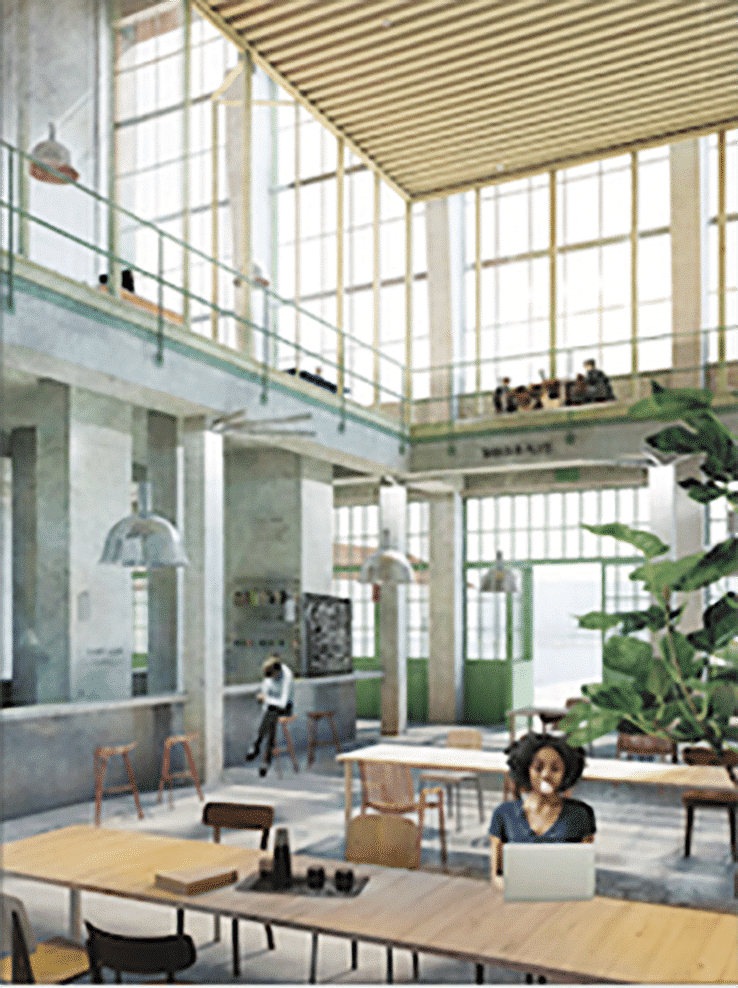
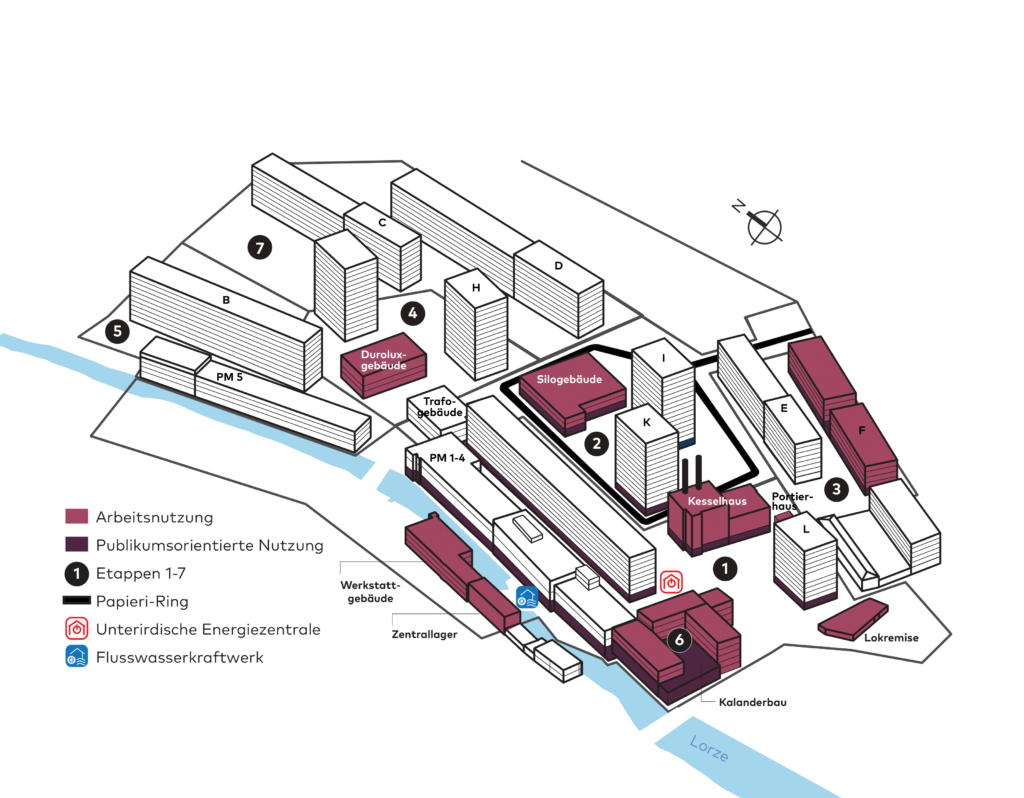
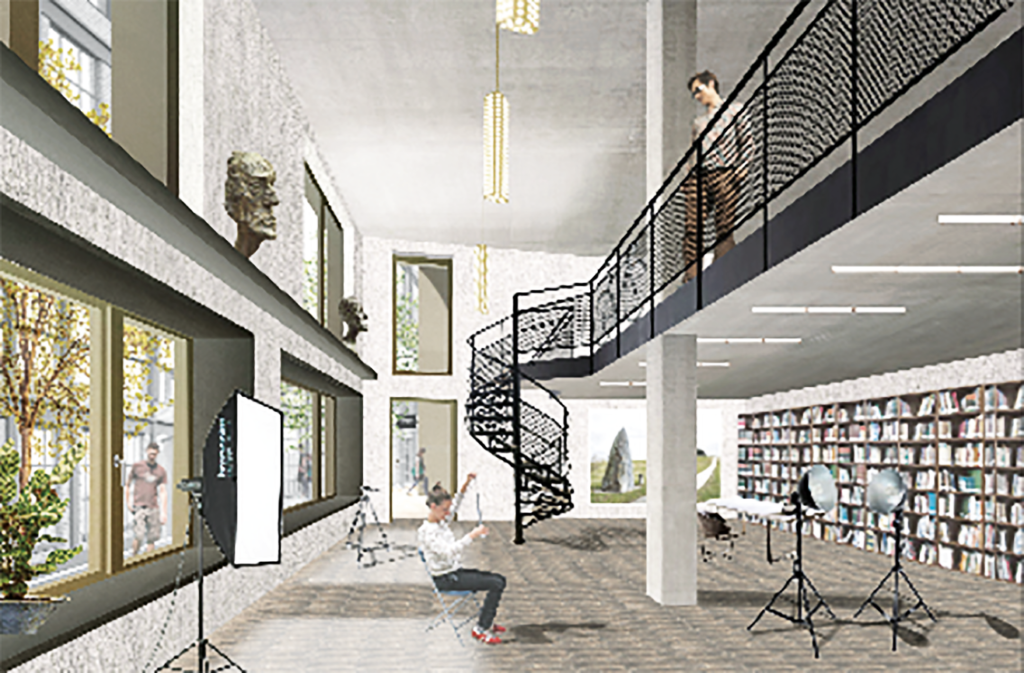
    Spread over the entire area, an extraordinary variety of areas will emerge over the next few years, which are suitable for the most varied of uses and sizes of businesses. Do you want 5m high rooms with industrial charm or something more modern in a contemporary new building with a representative appearance? Do you only need a small retreat to fine-tune your latest ideas, or as an anchor tenant would you like to play a key role in the planning process for your new headquarters? Everything is possible on the Papieri site and, thanks to the state-of-the-art infrastructure with fiber optic connections, you don't have to compromise anywhere. Areas from 50 m2 to 5,000 m2. Move-in from the end of 2022.

    Kesselhaus bistro with coworking.

    Lively ground floors for small businesses and services
    Lively ground floors are an important quality feature of any functioning quarter. Whether gastronomy, graphics office or physiotherapy, whether yoga room, flower shop or showroom: Innovative ideas with added value for residents and visitors are very welcome on the Papieri area. Areas from 100 to 1,000 m2. Move-in from the end of 2022.

    Sustainability is a top priority
    Thanks to our own hydropower plant on the Lorze and large-area photovoltaic systems on the roofs, all buildings are cooled and heated 100% CO2-neutrally. In addition, around a third of the electricity consumed is produced on site. All parking spaces are prepared for electromobility and are equipped as required. In addition, there are several quick charging stations available on the site. Don't own a car? Car and bike sharing offers ensure that you are still mobile.

    Maisonette studios in the new building.

    Become part of a lively neighborhood
    As a tenant, you can benefit from the attractive framework conditions on the Papieri site. Do you need a room for a new employee for a few months? Book a micro apartment directly on the area! Fancy a business lunch? The future Kesselhaus bistro is only a stone's throw away. Or do you feel like jogging or jumping into the cool water to clear your head? The attractive location of the Papieri area directly on the Lorze, not far from Lake Zug and the idyllic Villette Park, offers you countless opportunities to switch off and recharge your batteries and then start over.

    Get in contact with us and convince yourself of all the possibilities that are open to you here. Grow with us!

  • Siemens technology makes The Circle sustainable

    Siemens technology makes The Circle sustainable

    The Circle building complex at Zurich Airport, which was inaugurated in November last year, is not only Minergie-certified, but also meets the LEED PLATINUM standard of the US Green Building Council, Siemens Switzerland informs in a press release . At the highest standard of the organization, seven areas are checked for sustainability, it says there. Products for building and energy technology from Siemens have made an active contribution to the sustainability of The Circle.

    In total, over 30,000 Siemens components have been installed in the Circle, the company writes in the press release. "We are present with our products in every room", Felix von Rotz, Head of Building Products Switzerland, is quoted there. For the implementation of the order, Siemens Switzerland had "designed a unique logistics concept, with a warehouse at our Steinhausen location and a transport vehicle that is only on the road for The Circle," explains von Rotz.

    When it comes to heating, ventilation and air conditioning systems, Siemens products create a healthy and optimal room climate. Other components regulate the communication of the controls of these systems with blinds and lights. All buildings can be fully automated using the KNX communication standard.

    A further 7,000 Siemens components were installed in the power engineering systems. There are also voice alarm systems in private and public areas of the complex.

  • Schlieren will be electric in the future

    Schlieren will be electric in the future

    The city of Schlieren has purchased its first electric garbage truck. One of the three refuse vehicles in Schlieren has reached its useful life and needs to be replaced, according to a message . Since the city has been relying on e-mobility when purchasing new vehicles for reasons of sustainability since 2020, an electric model was also selected for the new refuse vehicle. This is being built by Designwerk Products AG in Winterthur.

    At its meeting on January 13, the city council approved the expenditure of 775,000 francs. The municipal parliament approved the budget for the procurement of the refuse vehicle on December 16, 2020.

    According to the announcement, the first electric refuse vehicle in Schlieren offers several advantages in operation. On the one hand there is the CO2 reduction. But the operating costs also pay off. Because the energy costs for electricity are much cheaper compared to diesel. The maintenance and repair costs are also less expensive than with diesel, because there are fewer wearing parts with electric motors than with burn-out motors. In addition, there were no HVF charges – the heavy vehicle charge – or road traffic charges. With a service life of ten years, the electric vehicle is therefore much cheaper than a diesel-powered vehicle, according to the city council's justification.

  • Lidl is planning branches for the future

    Lidl is planning branches for the future

    Lidl Switzerland had already committed itself in 2014 to make the operation of its branches more sustainable, informs the retail company in a message . After all, the energy consumption of 150 Swiss Lidl branches corresponds to that of a medium-sized city in the country. The savings potential is correspondingly large.

    New branches are to be implemented as early as this year with the help of an innovative energy concept, the communication further explains. "It is very important to us that our future locations are future-proof and sustainable with regard to building materials, energy consumption and technology", Reto Ruch, Chief Real Estate Officer of Lidl Switzerland, is quoted there. Lidl Switzerland is working with Empa to develop this energy concept.

    In a first step, the two partners will analyze the energy consumption of the existing branches. As a result, optimization measures should then be derived from this. At the same time, Empa and Lidl want to test alternative energy systems with the help of computer simulations. "Our goal is to help Lidl Switzerland with our research work to further improve sustainability, continue to reduce emissions in the future and optimize energy management," explains Empa researcher Curdin Derungs in the press release.

  • EZL increases the proportion of biogas

    EZL increases the proportion of biogas

    Energie Zürichsee Linth introduced a proportion of biogas in its basic gas supply years ago, the utility company informed in a press release . Now EZL has increased this share to 20 percent biogas, it says there. For the customer, however, this is not associated with a price increase. He simply gets “an ecologically better product” with the same heat output.

    In the catchment area of EZL, customers could also “drive in a particularly environmentally friendly way,” explains the utility company in the press release. All filling stations here offer 100 percent biogas. At a current price of CHF 1.05 per liter, customers would benefit “twice”, writes EZL. On the one hand, the price is around 30 percent below that of gasoline. And on the other hand, they are CO2-free on the road with biogas.

    EZL operates its own plant for processing biogas at the Obersee wastewater treatment plant in Schmerikon SG. According to the company, the biogas produced there is enough for more than 500 vehicles with an annual mileage of around 15,000 kilometers a year.

  • NEST is planning a new STEP2 unit

    NEST is planning a new STEP2 unit

    A new unit will move into the Dübendorfer NEST , the research and innovation building of the Eidgenössischer Materialprüfungs- und Forschungsanstalt ( Empa ) and Eawag , the ETH Domain's water research institute. It bears the name STEP2 . According to a press release by Empa, two new floors are currently being planned on the existing NEST building for this innovation workshop.

    These are as forward-facing as the NEST itself: a spiral staircase in the shape of a spinal column from 3D printing will connect the two new floors. A ribbed filigree ceiling requires around a third less material than a conventional one, and an efficient building envelope should ensure optimal comfort. Further information on these and other innovative construction details as well as regular information on the creation of the unit are available on the STEP2 website .

    The project itself was initiated by BASF. Together with numerous other partners from science and industry, the STEP2 unit will work “purposefully” towards marketable, sustainable solutions for building envelopes, energy systems, digital and industrial production and the circular economy. “This interdisciplinary collaboration is intended to ensure that the leap onto the market can ultimately succeed as quickly as possible,” says Enrico Marchesi, Principal Innovation Manager at BASF, the main partner of the new unit.

    The project team, according to the announcement, is currently completing the preliminary project. The planning of the construction should start at the beginning of 2021. Completion is planned for summer 2022.

  • LEDcity makes lighting intelligent

    LEDcity makes lighting intelligent

    The Zurich cleantech start-up LEDcity has further developed its intelligent lighting solutions with the lamps called Halbautonom +. The light sensors integrated in it allow the light intensity to be continuously and locally adapted to requirements. This is made possible by the integration of a radar and light sensor as well as a radio module in each individual light source. This is how the lamps can communicate with each other, according to a press release from the start-up company. According to her, her system saves up to 90 percent of energy consumption.

    This lighting system, optimized with the help of artificial intelligence, can be configured via an app. "The integration of the battery-free and wireless light switch into the luminaire network enables us to switch between lighting scenarios and to override and dim the automatically suggested lighting", Samuel Stroppel from the Dübendorf facility service provider gammaRenax is quoted as saying. "This expands the possibilities for use in training rooms enormously." Since November 2020, the conference rooms of this LEDcity customer have been illuminated by the semi-autonomous + lighting solution.

    The start-up based in Technopark Zurich is working on the further development of a fully autonomous solution that no longer needs to be initially configured, the message goes on to say. In the future, the luminaires could use the data they have collected to autonomously order a replacement if a lamp fails or even support security personnel.

  • The first free space solar system from EKZ is on the grid

    The first free space solar system from EKZ is on the grid

    EKZ 's Algibicos solar power plant near the southern Spanish city of Murcia started operations on Tuesday, according to a media release . This means that the Zurich-based energy company's first large open-space solar power plant has gone online.

    On an area of 85 hectares, it will produce a little over 90 gigawatt hours of electricity per year. This corresponds to the annual consumption of more than 20,000 households. With over 300 days of fine weather, the area was one of the sunniest in all of Europe. In addition, the yield is increased by movable solar panels that are oriented towards the sun.

    "Compared to Swiss systems, around twice as much electrical energy can be generated," said Jean-Marc Degen, senior project manager at EKZ Renewables, in the press release. In addition, plants of this size are hardly feasible in Switzerland. The meanwhile low production costs and the sunny location enabled profitable operation, even without state feed-in tariffs.

  • Bellinzona gets innovative quarters

    Bellinzona gets innovative quarters

    In Bellinzona, a new model district will be built right in the center. From the five proposals submitted, a jury of experts from the city has now decided on the Porta del Ticino (Gateway to Ticino) project. It pays a lot of attention to the topics of sustainability, intergenerationality and slow mobility. In particular, an innovation park is planned there, writes the city in a media release .

    In addition, living space for 2500 people is planned, writes the Ticino newspaper “La Regione”. The urban development project described by the city in its communication as "epochal" and "profound" has now been presented to the public by the partners Bellinzona, SBB and Canton Ticino. All designs are on display in Piazza del Sole until November 7th.

    The project convinced with "its courageous urban development and landscape design approach to leave the central area of the area undeveloped in order to provide the entire population with free green space and to open up the new district as a natural and attractive addition to the city", it says on the part of the city.

    The 120,000 square meter area that is intended for the new quarter is currently still occupied by the historic SBB workshops. Once they have been relocated, they will start operating in Arbedo-Castione in 2026. Then the realization of the model quarter should be tackled. The vision for this should become reality in 20 years at the earliest, reports the online newspaper ticinonews.ch. Further development steps are planned in 30 and 40 years.

    As a video of the development project published on YouTube shows, the district is to be built around the 101-year-old so-called cathedral, the listed heart of the SBB workshops. 500 old and new locomotives are serviced there every year to this day. It is considered to be one of the most important industrial buildings in Ticino.

    This urban development project was developed by a team made up of sa_partners from Zurich, TAM associati from Venice and the Milanese landscape architect Franco Giorgetta.

    Susanne Zenker, member of the management board of SSB Immobilien , reminded “La Regione” that the workshops were “always closed to the outside”. In the future, however, this area will “open up to its population and become an attractive space. With regard to the rapprochement between private and public actors, which is particularly targeted in the technological area, the new area will be “a calling card for the Bellinzona of the future”.

  • Clean charging current can also cost a little more

    Clean charging current can also cost a little more

    The research and development department of Juice Technology AG in Cham has published a current study on charging behavior and energy use in e-cars. A survey of 5154 e-car drivers was supposed to clarify how the behavior at the charging station is and what role the origin of the charging current plays.

    Almost 50 percent of the kilometers driven are charged at home, according to the press release , and around 22 percent at work. Only 17 percent of the charging processes are carried out at so-called super chargers or quick charging stations. For 85 percent of e-car drivers, the use of clean energy is very important or important, according to the report in the study.

    They also asked about their willingness to pay a higher amount for clean energy that would be produced in real time. 87 percent answered “yes”. There were differences in the amount: 60 percent would pay up to 4.89 cents per kilowatt hour more, 27 percent up to 3.01 cents per kilowatt hour.

    The survey took place online from October 12-14, 2020 in Switzerland, Germany and Austria. A total of 5154 people were interviewed. The response was 576 responses, of which 82 percent came from Germany, 12 percent from Switzerland and 6 percent from Austria.

  • Switzerland has the best energy system

    Switzerland has the best energy system

    Taking into account the three criteria of energy security, equity and ecological sustainability, Switzerland has the most exemplary energy system in the world. As in the previous year, it thus achieved the top spot. That comes from the World Energy Trilemma Index 2020 of the World Energy Council. He created this together with the global strategy consulting firm Oliver Wyman .

    As the World Energy Council writes in a press release , this index analyzes historical trends. They are designed to enable energy policy makers and stakeholders to track their performance over time and compare it with others.

    Above all, its high share of hydropower gives Switzerland the top spot in this ranking of a total of 130 countries. It is also in the top 10 for affordability. This is thanks to the overall high level of prosperity. Only when it comes to security of supply does the country not make it into the top ten. The Swiss energy mix is not diversified enough for that. Canada holds this top position, followed by Finland and Romania. All three countries have large hydropower resources and invest heavily in solar and wind energy.

    The three countries with the biggest leap up in the overall rating are Cambodia, Myanmar and Kenya. This is primarily due to their performance in providing universal access to energy. This criterion, which the World Energy Council calls energy justice, has seen the most significant improvements since 2000, especially in developing countries.

    Instruments such as the World Energy Trilemma Index are more important than ever, according to the Secretary General of the World Energy Council, Dr. Angela Wilkinson: "The index enables individual countries to learn from each other what works and what doesn't when connecting the dots between people, planet and prosperity."

    One thing is certain, says François Austin, Partner and Global Head of Energy at Oliver Wyman: "The top performing nations achieve their energy goals by balancing politics, entrepreneurship, national resource use and changes in individual behavior with environmental issues." Giving political decision-makers and business leaders the direction for shaping the future of energy ”.

  • Corona-influenced half-year results of the Zug Estates Group

    Corona-influenced half-year results of the Zug Estates Group

    • The property income increased by 5.4% compared to the same period of the previous year
    • CHF 28.2 million
    • Doctorate profit before taxes of CHF 9.5 million in the Aglaya project
    • The group result amounts to CHF 8.3 million (previous year period: CHF 26.1 million). Without
    • Revaluation and special effects reduced the group result from CHF 15.4 million.
    • to CHF 11.9 million
    • Solid capital base with an equity ratio of 55.7% (54.7% as of December 31, 2019)

    At Zug Estates, too, the first half of 2020 was dominated by the challenges we were faced with by the COVID-19 pandemic.

    In the real estate sector, many of our tenants had to close their shops during the officially ordered lockdown. This mainly affected our retail tenants and thus the Metalli shopping mall. In the Hotel & Gastronomy segment, the almost complete standstill of international business travel led to a considerable drop in sales.

    Fortunately, despite Corona, we were able to hand over all of the remaining 49 condominium units of the Aglaya doctoral project to their new owners on time. In addition, we have already been able to find a partnership-based and conclusive solution for a one-off rent waiver with over 90% of the tenants directly affected by the lockdown.

    In the first half of 2020, the group result was CHF 8.3 million, 68.3% below the previous year's period (CHF 26.1 million). Adjusted for revaluation and special effects, the declining figures in the Hotel & Gastronomy segment in particular lead to a reduction in consolidated earnings by 22.7% from CHF 15.4 million to CHF 11.9 million.

    Increase in property income with significantly lower hotel and catering sales

    The full period of validity of rental contracts, the majority of which were concluded in the previous year, increases property income in the first half of 2020 compared to the same period in the previous year by 5.4% to CHF 28.2 million. Due to the COVID-19 pandemic, rent payments of CHF 0.7 million were granted.

    Income in the Hotel & Gastronomy segment fell from CHF 8.2 million to CHF 3.6 million. The occupancy of our hotels was temporarily reduced to less than 10% during the lockdown. Since then we have been able to record growth again, but are still well below the corresponding prior-year figures. The gross operating profit (GOP) is only 7.8% compared to 39.3% in the first half of 2019.

    The sale of the last 49 condominiums in the Aglaya project resulted in income of CHF 72.5 million and a pre-tax promotion profit of CHF 9.5 million
    In the Aglaya doctoral project, we were able to generate a return on the investment volume of 17.3%. Since no sales revenue was posted in the same period of the previous year, there was an overall significant increase in operating income from CHF 36.7 million to CHF 105.4 million.

    The real estate portfolio was valued a total of CHF 13.6 million lower, which corresponds to around 0.9% of the portfolio value of all investment properties as of June 30, 2020 and is due to a slightly more conservative assessment of the market rents for retail space in general and individual specific office spaces. In the same period of the previous year there was a revaluation gain of CHF 11.5 million.

    The average interest rate of the interest-bearing debt capital could be further reduced from 1.4% to 1.3%. As expected, the significantly lower construction activity led to a decrease in capitalizable interest and a corresponding increase in financial expenses from CHF 2.5 million to CHF 3.5 million.

    Stable portfolio with a higher vacancy rate

    At CHF 1.63 billion, the market value of the portfolio is at the same level as on December 31, 2019. In the first half of 2020, the last building in construction site 1 in Rotkreuz was put into operation. As expected, this increased the vacancy rate from 3.3% as of December 31, 2019 to 5.3% as of June 30, 2020. We invested a total of CHF 16.2 million in our portfolio in the reporting period. The weighted average remaining lease term (WAULT) is 6.7 years (6.8 years as of December 31, 2019), a very high level compared to the industry.

    While our residential products are enjoying very good demand in the current market environment, we are currently noticing a certain reluctance due to the COVID-19 pandemic, especially among those who are interested in office space. However, we are confident that the centrally located, high-quality and sustainably operated office space at Zug Estates will continue to be in high demand in the future. Fortunately, the number of inquiries for retail space in Metalli remained stable. We currently have no evidence of a decline.

    Solid capital base

    With the repayment of funds from the sale of the last apartments in the Aglaya and despite the distribution of a special dividend, the interest-bearing debt capital was reduced from CHF 597.4 million to CHF 587.1 million in the first half of 2020. The average remaining term of this financing is 4.8 years (previous year: 5.2 years). With an equity ratio of 55.7% higher by one percentage point, Zug Estates has a very solid equity base.

    Project development with a focus on the Metalli habitat

    After the city of Zug and Zug Estates presented the first result of the joint planning process for the “Metalli living space” in March 2020, a feasibility study was carried out with the specialist planners. The alignment project and the application for adapting the two development plans concerned are currently being drawn up with all the relevant documents. The guideline project is to be submitted to the city of Zug in the third quarter of 2020. The legally amended development plans are expected in 2022/23.

    After receiving the building permit, the Board of Directors approved the planning phase for the last two buildings (S43 / 45) on the Suurstoffi site in Rotkreuz. The start of construction will be triggered as needed, taking into account the market recovery in connection with COVID-19.

    Step-by-step implementation of the sustainability strategy

    The connection of the Metalli-Gevierts to the lake water network Circulago could take place according to plan in April 2020. The corresponding contracts for the connection of the remaining 16 properties were signed in December 2019. Commissioning is to take place in stages in 2021, 2023 and 2025. From this point in time, Zug Estates will be able to operate its entire portfolio almost CO2-free.

    Public electric charging stations have been available to customers on the Metalli shopping street since the beginning of June. Two of the six stations are high-performance fast charging stations, the first in the city of Zug.

    The installation of the CO2-neutral cooling in the rooms of the Parkhotel Zug was completed on schedule in April 2020, which means a significant increase in comfort for the guests from now on.

    Outlook 2020

    Due to the temporary effect of the rent reductions in connection with COVID-19, we continue to expect increasing rental income for the year as a whole. As a result of increased renovation and maintenance work or lower capitalizable financing costs, real estate expenses and financial expenses will be higher.

    In the Hotel & Gastronomy segment, we are assuming that sales and GOP will be well below the previous year's level due to the considerable drop in sales due to the stoppage of international business transactions by our regular customers, although the developments in the second half of the year are difficult to forecast.

    Therefore, both an operating result before depreciation and revaluation and a consolidated result without revaluation and special effects are expected to be significantly below the previous year.

  • St.Gallen receives future-oriented development

    St.Gallen receives future-oriented development

    Previs Vorsorge is responsible for the new development in St.Gallen, according to a media release from the pension fund. The wooden superstructure will consist of two buildings with space for 110 rental apartments. The focus is on future viability and sustainability.

    Certified wood and recycled concrete are used as building materials. Since the components are prefabricated, the construction time can also be reduced. It will be possible to move in as early as autumn 2021. There are numerous different apartment sizes available to those interested, from studios to 5.5 rooms.

    A roof system contributes solar power, in principle the apartments are supplied with 75 percent renewable energy via district heating. There is a car sharing service available to residents, and they can also charge their electric cars in underground parking spaces. In addition, they can read their personal electricity consumption in real time via a so-called smart home system. A green space will be created between the two buildings, which will contribute to biodiversity with birdhouses and insect hotels.

    Interested parties already have the opportunity to view the apartments in advance using VR (virtual reality) glasses.