Tag: Nachhaltigkeit

  • Modulare Einbauten für Zwischennutzungen: Erste Prototypen erstellt

    Modulare Einbauten für Zwischennutzungen: Erste Prototypen erstellt

    «Das Surren eines Akkuschraubers klingt durch das DISPO in Nidau. In der alten Fabrikhalle, die Raum bietet für Kreative, Kultur- und Gewerbetreibende, entstehen an diesem Tag vier Prototypen von Raummodulen, dank denen es künftig möglich sein soll, Zwischennutzungen von leerstehenden Gebäuden und Brachen einfach und nachhaltig umzusetzen. Ungenutzten Räumen soll damit ein ökologischer, ökonomischer und sozialer Mehrwert verliehen werden. Dieses Ziel verfolgen Forschende des Instituts für Holzbau, Tragwerke und Architektur IHTA der Berner Fachhochschule BFH gemeinsam mit Partnern aus der Wirtschaft im Innosuisse-Forschungsprojekt «àDisposition».

    Verschiedene Modullösungen getestet
    Im Projekt entwickeln die Forschenden einen modularen Baukasten für Raummodule und Innenausbauten. Eine zentrale Komponente ist ein Konfigurator, dank dem Projektideen einfach geprüft, dargestellt und zeit- und ressourcensparend umgesetzt werden können. Auf der Basis von digitalen Entwürfen erstellen die Forschenden der BFH in Zusammenarbeit mit den Projektpartnern nun Prototypen im Dispo in Nidau. Anhand von diesen untersuchen und verbessern sie verschiedene Modullösungen. Das Projektteam testet unterschiedliche Systeme, Verbindungselemente und Segmentformen und kann bereits nach kurzer Zeit vielversprechendste Strategien für ein leichtes, wiederverwendbares und einfach rekonfigurierbares, modulares System identifizieren.

    Zeit für Aufbau variiert je nach Fabrikationsgrad
    Die Anforderungen an die modularen Einbauten sind hoch: Auf- und Abbau soll für Laien möglich sein und die Bauteile sollen leicht genug sein, dass es nur zwei Personen für die Montage benötigt. Die Einbauten sollen zudem anpassungsfähig sein, sich einfach umgestalten lassen sowie gut zu transportieren und zu lagern sein. Während des Aufbaus der Prototypen zeigt sich bereits, wie wichtig es ist, den idealen Grad der Vorfabrikation auszuwählen. Werden die Rahmen der Module bereits zusammengeschraubt angeliefert, können die Einbauten in kürzester Zeit aufgestellt werden. Transport und Lagerung gestalteten sich jedoch als schwieriger. Umgekehrt dauerte der Aufbau deutlich länger, wenn die Bauteile einzeln und dadurch kompakt angeliefert werden.

    Wichtigkeit der digitalen Durchgängigkeit
    Ein weiterer Aspekt, den die Forschenden mit der Produktion und dem Aufbau der Prototypen testen, ist die digitale Kette «Design to Production». Die Module werden im Konfigurator entworfen, die Daten für die Produktion anschliessend automatisch in CadWork exportiert. Diese Dateien bildeten die Grundlage für Materialbestellungen und den Produktionsprozess. Hier zeigte sich die Wichtigkeit der digitalen Durchgängigkeit für einen schnellen und einfachen Produktionsprozess.

    In einem nächsten Schritt befassen sich die Forschenden mit der Ausstattung der Module. So sind die Wände ein weiteres Gestaltungselement und zusätzliche (Dämm)Schichten müssen den Anforderungen an die Schall- und Wärmedämmung gerecht werden. Diese Anforderungen unterscheiden sich je nach Nutzung stark. «àDisposition – Spaceship Planet Earth. Sustainable and temporary use of buildings and vacant sites through simple and modular structural measures» ist ein von der Innosuoisse gefördertes Forschungsprojekt, das bis Juni 2025 läuft. Projektpartner sind C2 Beat Cattaruzza GmbH, Beer Holzbau AG, Pius Schuler AG, Prona AG und Bauart Architekten und Planer AG.

    Quelle: www.bfh.ch

  • Lindner produces more sustainably with new cellulose yarn

    Lindner produces more sustainably with new cellulose yarn

    Lindner Suisse will in future use carrier nets made of cellulose threads for the production of Howolis wood wool fleeces. According to a press release, the new carrier material will make the product portfolio of wood wool products even more sustainable. The basis for the natural erosion protection is a fine-meshed net, which is processed into protective fleeces for greening and hydraulic engineering. The product is available in various versions for a wide range of requirements. It can be reinforced for hydraulic engineering, they say.

    The manufacturer of geotextiles from the St.Gallen-Lake Constance area is now able to supply an “altogether even more sustainable, climate-friendly product” for its proven wood wool products for slope and embankment protection and, with the nets woven in-house, is also reviving the long local textile history.

    The core of the carrier nets are biodegradable threads made of beechwood cellulose from European beechwood. Lindner Suisse manufactures the threads from this. Traditional weaving techniques are used to produce the desired movable nets. Retired people from the textile industry contributed their knowledge to teach the handicraft process, the statement says.

    The thread is considered even more sustainable than the jute threads used so far. These are also biodegradable, but score lower in terms of sustainability due to long transport routes. As Managing Director Thomas Wildberger explains in the press release, the wood-wool fleeces are intended to “bring production processes to a new ecological level”. At the same time, Lindner wants to become independent of overseas markets. The jute threads will be available on request until further notice.

  • Record attendance at the 9th Real Estate Summit

    Record attendance at the 9th Real Estate Summit

    On Tuesday, 4 July 2023, the 9th Real Estate Summit took place at The Hall in Dübendorf, organised by FRZ Flughafenregion Zürich – Wirtschaftsnetzwerk & Standortentwicklung. Under the motto “Mobile. Sustainable. Collaborative.” experts and interested parties from the construction and real estate sector met to discuss the future of the industry and exchange views on current trends and challenges. With 640 registered guests, the 9th Real Estate Summit had a record turnout.

    The event began with “meet & match” talks and a barbecue lunch, which provided ideal opportunities to make contacts and network: 434 1:1 conversations took place. The Real Estate Summit opened at 1:30 p.m. with a musical warm-up featuring Carole Brunner (singer of the band Ginger and the Alchemist).

    André Ingold, President of the FRZ Zurich Airport Region and Mayor of Dübendorf, gave an overview of current topics and the largest construction projects in the region. In an interview with the new FRZ Managing Director Rahel Kindermann Leuthard, the future focus topics of the FRZ Zurich Airport Region were discussed.

    Sylwina Spiess (Ringier AG) moderated the FRZ flagship event. The guests enjoyed exciting presentations by experts from various fields, such as real estate market analysis, construction projects, green urban development and digitalisation.

    The future of the real estate market
    Ursina Kubli, Head of Real Estate Analytics at Zürcher Kantonalbank, opened the expert presentations with an insight into the current demand and supply trends in the real estate market. The following three topics would shape the real estate market: Digitalisation, demographics and decarbonisation. Office buildings with high accessibility – such as in the airport region – are comparatively well utilised. Overall, the major consolidation on the office market in the canton of Zurich has so far failed to materialise.

    In the airport region, office space in older buildings is increasing more strongly than those in the middle age range of 10 to 30 years. But new buildings are also increasingly remaining empty. Another trend: residential space is becoming increasingly scarce – also in the airport region. Conversion of offices into living space is therefore increasingly being examined.

    According to Kubli, measures against climate change are more topical than ever. Even if artificial intelligence (AI) is asked for the three driving factors for office real estate in the next 75 years, sustainability is one of the top three topics – along with technological progress and new working environments. The long-term increase in demand for office space results from a growing global economy. Kubli: “Companies prefer the proximity to Zurich Airport for international business travel and access to global markets.”

    New forms of collaboration in the construction sector
    Marco Faiss, co-founder of em2, shed light on new forms of collaboration in the construction sector. Innovative strategies and practices improve the efficiency and effectiveness of construction projects. Special emphasis is placed on teamwork, communication and tapping the potential of all participants. Inspiring organisations and individuals think, communicate and act in the same way – they operate from the “inside out”. This implies emphasising the “why” over the “how” and the “what”. He refers to Simon Sinek’s Golden Circle concept.

    According to Faiss, the interaction of people, values and concerns creates unpredictable new, emergent phenomena. Established patterns of thought are replaced in the process. Marco Faiss refers to methodical phase thinking, a process for partner acquisition, role development, a remuneration model (open book), and communication at eye level serve as instruments for structuring the process. His advice: “Run a construction project like a business.”

    The method includes identifying specific requirements, finding the best partners for these requirements, unrestricted investment in these partners without unilateral hedging, communication at eye level, investment in the organisation, and alignment with the principle that those who can do something best should do it. Everyone defines their own service specifications, every hour worked is paid for and successes are celebrated together.

    The lever of neighbourhood mobility
    Bernd Hofer, CEO of Freo Switzerland AG, and Sophie Stigliano, Director at Urban Standards GmbH, then spoke about “Green Only Development and the lever of neighbourhood mobility”. FREO focuses on sustainable construction and operation of buildings with a focus on the needs of future generations and respect for planetary impact limits. Their “Green Only Development” concept significantly reduces energy demand and greenhouse gas emissions and optimises costs by focusing on climate architecture and efficient, tailor-made solutions. It also integrates advanced mobility management that optimises traffic flow and promotes sustainable transport options, and uses a digital platform to manage these services.

    Involving users at an early stage
    After an extended coffee break, Hannes Pichler, Director of Real Estate at ETH Zurich, continued the series of lectures and spoke about integrated project management in the context of the circular economy and digitalisation. He presented the Real Estate department of ETH Zurich, which manages a real estate portfolio worth around 5 billion Swiss francs, including around 200 buildings with a main usable floor space of approximately 540,000 m². Between 2022 and 2029, a new physics building will be constructed on the Hönggerberg campus.

    Pichler spoke about the advantages of integral project delivery models and the challenges that can arise due to information asymmetries and different goals between client and contractor, also known as the principal-agent problem. He presented approaches to minimise these problems, including the early involvement of users and the definition of a functional specification.

    He also emphasised the importance of an early, integral approach to overcome the challenges posed by the megatrends of circular economy and digitalisation. Pichler showed various examples of successful projects and emphasised the need for integrated planning across all life cycles of a project and the importance of digitalisation to improve transparency and error analysis.

    Reset strategies in the decade of radical change
    The last presentation of the day came from Jens-Uwe Meyer, MBA Meyer, a book author and digital entrepreneur. He spoke about “Reset! Strategies for the Decade of Radical Change”. Today, more than ever, we would live in a “VUCA world”. VUCA stands for “Volatility, Uncertainty, Complexity, Ambiguity”. New artificial intelligence tools promote this ambiguity. Meyer highlights both positive and negative aspects – from its role in education and business to its potential dangers and impact on jobs. He provides an overview of the development of AI technology and applications from 2011 (with IBM’s Watson) to 2023 (with ChatGPT4).

    Among the most pressing issues are climate change and sustainability per se. Due to the demographic situation, the fight for the best talent is intensifying. In order to remain competitive, innovation management is crucial. He points to innovation barriers, including lack of processes, lack of strategies, openness and enthusiasm, and lack of courage and creativity. Meyer appeals to “discontent” – as an incentive for continuous improvement and innovation.

    The information part of the summit ended with another performance by Carole Brunner and then offered space for further exchange at the concluding Apéro Riche.

  • New JED building in Schlieren to be built with Zirkulit

    New JED building in Schlieren to be built with Zirkulit

    As early as October 2020, Swiss Prime Site opted for zirkulit® concrete for the new JED building in Schlieren. With the installation of 8300 cubic metres of concrete, a total of over 10,000 tonnes of primary resources were saved and 83 tonnes of CO2 were bound in the material. The use confirms the transformation to a circular economy and sets an example for future generations. With this concept, Swiss Prime Site aims to create flexible and sustainable space for diverse tenants.

    Acting together
    Circularity is an important element in ecology. Construction plays a decisive role here. Circular economy requires all actors who opt for circular construction.
    The latest generation of concrete
    Thanks to a special recipe, alternative concrete surpasses all previously known types of concrete in terms of sustainability. For the first time, circular concrete combines resource conservation with a minimal CO2 footprint and can be used throughout the entire house. The environmental properties are transparent and externally monitored. In order to achieve the transformation to a circular economy, building owners such as Swiss Prime Site need to opt for the alternative concrete.

  • Grisons architect impresses in Los Angeles

    Grisons architect impresses in Los Angeles

    According to a report by LA Weekly, Chur-based architect Roger Kurath is one of the ten most innovative entrepreneurs in Los Angeles who are pushing boundaries in their respective industries. With innovative and sustainable design methods, Kurath is influencing the architecture of the West Coast metropolis, the article says.

    The work of the architecture firm Design21, founded in 2000, is represented in Switzerland as well as in the United States and Shanghai. Thoughtful design combined with cutting-edge technology have led to the firm’s buildings winning many awards. For example, Design21 received the Award of Merits at the prestigious PCBC Gold Nugget Awards for an 8000 square foot (about 750 square metre) custom house.

    As the article points out, Roger Kurath demonstrates not only exceptional talent but also a love of craftsmanship, with which he aims to create “sustainable dream homes for his discerning clients”. The aim is to create architectural masterpieces that also carry the climate of his homeland to various corners of the world.

  • “Charter for Circular Building” twelve big ones make headway

    “Charter for Circular Building” twelve big ones make headway

    Despite great progress in recent years: Too many valuable, non-renewable raw materials are still irretrievably lost during construction. And the net zero target is still a long way off. The construction and operation of buildings and infrastructures are responsible for about 50 percent of the raw material demand, one third of the CO2 emissions and over 80 percent of the waste produced in Switzerland. If the construction industry is to become more sustainable and fit for the future, the consumption of non-renewable raw materials in construction must decrease and grey greenhouse gas emissions must fall.

    Against this background, twelve of the largest public and private construction clients in Switzerland are setting out on the path towards a circular economy. Together, they are responsible for around CHF 4 billion of building construction investments per year. By signing the “Charter for Circular Construction”, they have committed themselves to a joint ambition to reduce the use of non-renewable primary raw materials to 50 percent of the total mass by 2030, to record and greatly reduce grey greenhouse gas emissions, and to measure and greatly improve the circularity of renovations and new buildings.

    In the construction and maintenance of their properties, innovative solutions are to be developed to achieve these goals: refurbish instead of building new, build for the long term, reduce material use, reuse. The participating companies confirmed this today by signing the charter in NEST, Empa/Eawag’s modular research and innovation building in Dübendorf. They are determined to take decisive steps forward in the circular economy in the Swiss construction industry. They want to learn together and invite other building owners to join the charter.

    With the Charter, a number of the most important Swiss construction clients have committed themselves to the circular economy. The Charter is open to other partners. The charter partners want to pool their knowledge and experience in order to promote the development of the circular economy in the Swiss construction industry, in the awareness of their great responsibility for sustainable, climate-friendly construction in Switzerland.

    The focus is on voluntary cooperation and networking driven by a pioneering spirit, and on joint learning with the aim of triggering concrete steps towards circular construction.

    The common ambition is to reduce the use of non-renewable primary raw materials to 50 percent of the total mass by 2030, to record and strongly reduce the emission of indirect greenhouse gas emissions, and to record and strongly improve the circularity of renovations and new buildings. The first signatories of the charter are: Allreal; AXA Investment Managers Schweiz AG, Baudirektion Kanton Zürich, Bundesamt für Bauten und Logistik BBL, Empa, Hochbaudepartement Stadt Zürich, Post Immobilien Management und Services AG, Swiss Prime Site, Swiss Life Asset Management AG, UBS Fund Management (Switzerland) AG, Zug Estates and Zurich Invest AG.

  • Kone wants to promote sustainable construction

    Kone wants to promote sustainable construction

    More than a quarter of all CO2 emissions are caused in the construction industry, Kone informs in a press release. This is where the globally active manufacturer of lifts and escalators wants to contribute to remedying the situation. To this end, the Kone subsidiaries in Switzerland, Germany and Austria, together with Martin Pfeiffer from the University of Hanover, have developed a comprehensive guideline for a sustainable construction and maintenance industry. The white paper “Green Buildings” shows enormous potential for reducing emissions in all phases of a building, writes Kone.

    As examples, the communication mentions recycled building materials and the deconstruction of buildings in line with the circular economy. In addition, low-waste prefabricated building components are recommended, which can be used again after deconstruction. In general, the motto is dismantling instead of demolition.

    Kone also pays attention to sustainability in its own core business. For example, the lift manufacturer relies on energy recovery for its lift systems and reduces malfunctions with the help of the use of artificial intelligence during maintenance. “With the white paper, we want to show that sustainability in the building sector has many different facets and must be thought about and lived in all construction and operating phases,” Petru Huurinainen, Managing Director of Kone Austria and Switzerland, is quoted as saying in the press release. That is why Kone not only installs CO2-free lifts, but also maintains them in a CO2-neutral manner and dismantles them in a circular economy-friendly manner. “The publication is intended to broaden the horizon to the green buildings of tomorrow.”

  • Berne location promotion supplements promotion criteria

    Berne location promotion supplements promotion criteria

    In future, the Canton of Bern’s location promotion agency will also assess the environmental performance of a company applying for support. It has now included corresponding sustainability elements in its assessment criteria. The other criteria that have been applied up to now remain valid, according to a statement by the cantonal administration. In particular, this applies to the two key criteria of innovation content of the investment project and value creation for the Bernese economy.

    In accordance with the new criteria, companies are now asked to fill out an online questionnaire for self-assessment. According to the report, the questions are aimed at important aspects of the circular economy. Companies that achieve less than 25 per cent must take improvement measures before they are eligible for funding. However, the location promotion agency assumes that this value will increase in parallel with the growing demands for sustainability.

    The questionnaire is a simple tool for companies to quickly take stock of their measures to promote sustainability and the circular economy, it adds. It is also available to companies that do not apply for financial support from the authority.

  • The Swiss are in favour of the rapid expansion of renewable energies

    The Swiss are in favour of the rapid expansion of renewable energies

    “Electricity and heat from domestic and sustainable sources is increasingly important to Swiss people,” says Patrick Drack, Managing Director of STIEBEL ELTRON Switzerland. “Our survey shows that even if wind turbines and solar collectors may detract from the landscape, a very clear majority of 79 percent accepts their operation.”

    The opportunities of the energy turnaround
    From the point of view of the population, the energy turnaround offers a wide range of opportunities – especially with regard to the aspect of economic efficiency: sustainable technologies are growth markets of the future according to the Swiss (82 percent). The country can become more competitive as a result, think 76 percent. In their own homes, 85 percent are convinced that switching to modern heating technology can maintain or increase the value of the property. “The heat pump is clearly the heating technology of the future,” says Drack. “The switch to renewables in private households is an important contribution to the energy transition.”

    Thepopulation wants information
    According to the survey, about two-thirds of the Swiss would like to switch to such an environmentally friendly heating system in order to protect the climate and become less dependent on imported energy. To support this, however, the population would like to see more accessible information on how to approach the energy transition. In concrete terms, this also refers to the rather complicated applications for federal and cantonal subsidies. “The building programme is intended to provide financial support for private households to switch to climate-friendly heating technology,” Drack explains. “Energy advice is extremely helpful in this regard.”

  • FRZ Airport Region Zurich invites to the 9th Real Estate Summit

    FRZ Airport Region Zurich invites to the 9th Real Estate Summit

    The Economic and Location Promotion FRZ Airport Region Zurich, based in Glattbrugg, invites you to the 9th Real Estate Summit in Dübendorf. On 4 July, speakers from the construction and real estate industry will deal with new forms of cooperation, sustainability, energy and mobility, according to a media release.

    Accordingly, Ursina Kubli, head of real estate analytics at the Zürcher Kantonalbank, will speak from 1.30 p.m. about the development from abundance to scarcity on the real estate market and how the demand for office space is shaping up in times of home office. Afterwards, Marco Faiss, co-founder at em2, will show new ways of cooperation in construction projects.

    Bernd Hofer, CEO of Freo Switzerland, and Sophie Stigliano, Director at Urban Standards, will address sustainable building and the question of climate-friendly mobility as an integral part in their presentation “Green Only Development and the Leverage of Neighbourhood Mobility”.

    After a coffee break and opportunities for networking, the second part of the programme continues at 4.30 pm. Here Hannes Pichler, Director of Real Estate at the Swiss Federal Institute of Technology Zurich(ETH), will speak about integrated project management against the background of the circular economy and digitalisation.

    Jens-Uwe Meyer, management mastermind, book author and digital entrepreneur, will address the audience with the last paper of the day, “Reset! Strategies for the Decade of Radical Change”, he looks to the future. The evening will conclude with an aperitif and the opportunity to network.

    Admission to The Hall is from 11 am. Registration for participation is possible online.

  • “NEST provides the ideal environment to further develop our innovation”

    “NEST provides the ideal environment to further develop our innovation”

    Buildings are responsible for more than 40 per cent of global energy consumption. A large part of this is used to ensure user comfort – i.e. for heating and cooling. Especially in view of the current developments in the energy market, the big question is how we can cover our energy consumption in the future. Ways must be found to tap new energy sources and at the same time reduce the energy consumption of buildings. One of these could be the better use of façade surfaces.

    This certainly holds potential, since the majority of the building façade is still unused and at the same time the central factor for either letting energy into the building or keeping it inside. Researchers at ETH Zurich have therefore developed an innovation as part of the NEST HiLo unit that can exploit this potential: an adaptive solar façade that not only optimises electricity production, but also reduces energy loss at the same time. Attached to the actual façade, this forms a kind of second skin for the building. The innovation thus also bears the appropriate name “Solskin”.

    Simple architectural embedding
    “We wanted to develop a façade that could be very easily installed on a building and optimally integrated into the architecture,” Bratislav Svetozarevic explains the idea behind the innovation. He was significantly involved in the development of “Solskin” from the beginning, first in 2014 as a PhD student in Arno Schlüter’s “Architecture and Building Systems” group at ETH Zurich and from 2018 as a Post Doc at ETH and Empa, where he researched related topics.

    “Solskin” consists of a lightweight substructure that is attached to the façade. Mounted on it are small square thin-film solar panels that can be colour-matched to the existing building envelope. In this way, the solar façade blends in perfectly with the overall appearance of the building. At the same time, the panels can be turned individually in all directions. This is because behind each module there is a control unit that Svetozarevic and his colleagues have developed over the years. The special thing about it is that the panels are aligned using air pressure. The materials used are both robust and flexible so that the system can withstand strong gusts of wind and precipitation.

    Reality check
    The idea behind the flexible alignment is that the solar façade can follow the position of the sun, thereby optimising electricity production. At the same time, “Solskin” also serves to actively shade the building in summer, thus reducing the need for cooling, or to open the panels and let the sun’s rays into the interior, thus saving heating energy in winter.

    The first prototype tests at ETH Zurich have convinced the researchers of the innovation’s applicability. But would the innovative façade also work on a real building? To find the answer to this question, “Solskin” was attached to the façade of the HiLo unit. “HiLo offered us the opportunity to install and test our system on a busy building for the first time. This enabled us to record the usage and acceptance of the users,” explains Svetozarevic. An important factor, because in addition to the actual system, the researchers also developed an algorithm that records the needs of the people working in the HiLo unit and can thus improve user comfort in addition to optimising production. This is now being further developed with the help of data from operation at NEST.

    A bright future
    The results of the prototypes and the pilot project at NEST point in a clear direction: energy can be saved with “Solskin” – and saved enormously. While solar production can be increased by up to 40 per cent compared to conventional solutions, savings of up to 80 per cent are possible in heating and cooling energy compared to a conventional, non-adaptable shading system. “We are pleased that we were able to show at NEST that our system works and what potential it has,” says Svetozarevic, beaming. Various expert juries were also convinced of this potential and awarded “Solksin”. Among the awards is the renowned Watt d’Or, which is awarded annually by the Federal Office of Energy.

    The next step is now commercialisation. To this end, Bratislav Svetozarevic and his team founded the spin-off “Zurich Soft Robotics” in 2022 and have already landed a major contract. The company KELLER Druckmesstechnik AG in Winterthur wants to attach “Solskin” to its new production building – on a total area of 1,300m2.

    In addition to its use on new buildings, however, the innovation is also ideal for upgrading older buildings. Solskin” thus has great potential to optimise the energy efficiency of the entire building stock and thus provide an answer to the question of how we can continue to generate enough energy to operate our buildings in the future.

  • The new Lokstadt: urban, versatile, steeped in history

    The new Lokstadt: urban, versatile, steeped in history

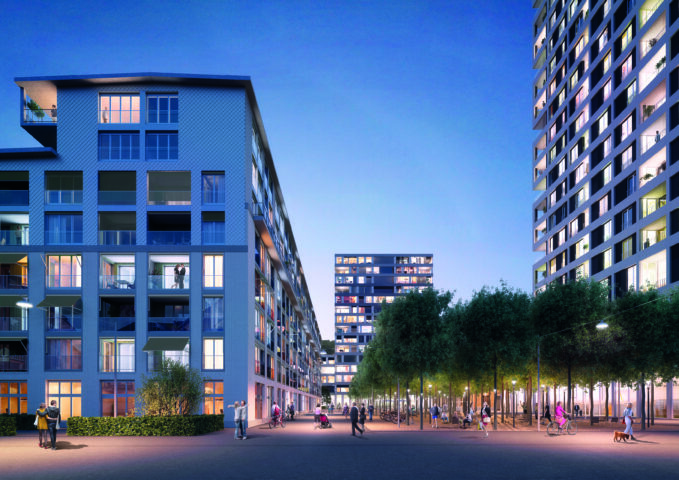
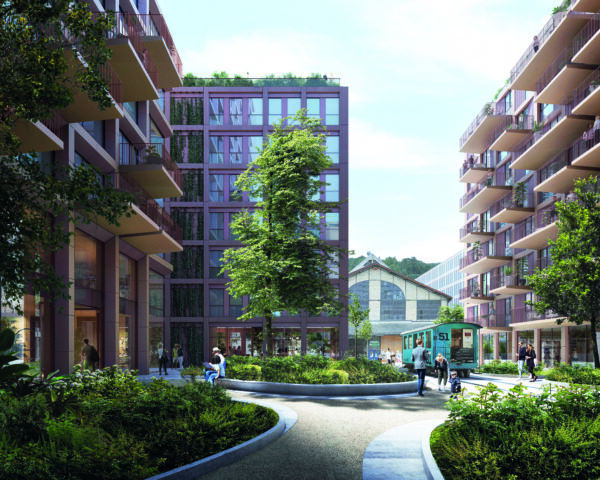
    With Lokstadt, Implenia is developing a new, urban and versatile quarter with 750 flats for around 1500 people. Lokstadt is located to the south-east of Winterthur railway station. The area used to be home to the workshops of the Swiss Locomotive and Machine Factory (SLM) – the most important locomotive forge in Switzerland. The neighbouring Sulzer factory took over SLM in the 1960s.

    Some of the locomotives produced by SLM serve as namesakes for the various construction fields. For example, the “Tender”: condominiums were built here, which are ready for occupancy since the beginning of 2023, as well as commercial space. The flats of the 17 “townhouses” were also for sale: these are four- to five-storey maisonettes that have already been completed. In a second construction phase, six four-storey “townhouses” were built: these comprise a total of 24 flats and will be ready for occupancy in spring 2023. The “Elefant” office building, which is located directly on Zürcherstrasse, will also be ready for occupancy soon.

    The central dialogue square will be framed by three buildings in the future. The first is the “Krokodil”, a wooden building. Here, 254 flats have been created to meet the diverse living needs of three cooperatives as well as individual homeowners. Vertical window bands are reminiscent of the former industrial halls and give the building a clear structure. BIGBOY” is located at the front of Dialogplatz:

    BIGBOY offers 125 flats and a roof terrace for the residents…

    The building, which is over 50 metres high and 16 storeys high, is home to 125 rental flats as well as five office and commercial spaces between 55 and 370 square metres. The roof terrace offers a unique view over Lokstadt and the whole of Winterthur. The industrial past of the site is reflected in the brick façade. Bigboy will be ready for occupancy in summer 2023. The third building is still under development and is currently the tallest planned wooden high-rise in the world: “Rocket”, developed and realised on behalf of Ina Invest, will be 100 metres high and with 32 storeys will be the landmark of the new district and the Winterthur skyline. The plan is for 255 flats. In addition, non-profit flats are planned in the “Tigerli” base building. A hotel is also planned. The occupancy date is planned for 2027.

    Lokstadt offers a unique residential atmosphere.

    Lokstadt stands for the sustainable use of resources, a prudently planned variety of uses and the innovative revitalisation of listed buildings. These include the former factory buildings. Under Implenia’s leadership, these are being transformed into spaces for experience that reflect local history and modern city life. The quarter is being developed step by step in accordance with the requirements of the 2000-watt society. Despite the dense construction, importance is attached to sufficient open spaces and a high quality of stay. The area will be made accessible to motorised traffic by means of an underground car park spanning all the buildings. Above ground, pedestrians and cyclists have priority thanks to a generously designed pedestrian zone.

    Despite the dense construction, Lokstadt attaches importance to sufficient open spaces and a high quality of stay.

    With Lokstadt, Winterthur links the 19th century with the 21st century: Here, the city’s industrial history is brought together with Winterthur’s future as a residential, educational and service city. The quarter is being built for people who love city life and who care about sustainability. A Lokstadt app will serve as a communication and interaction channel for all tenants, owners and employees in the future.

  • Sustainability & profitability – achieving returns with climate-friendly, intelligent energy solutions.

    Sustainability & profitability – achieving returns with climate-friendly, intelligent energy solutions.

    Integrated and intelligent
    Integrated energy solutions combine different energy sources and technologies to achieve high energy efficiency and flexibility. Intelligent energy management systems are used to optimise energy consumption and reduce CO2 emissions. They help to reduce operating costs and increase property value. IWB offers companies in the construction and real estate sector carefree packages for a high return on investment. Customers can choose between centralised, decentralised or combined solutions depending on their location and portfolio strategy. To achieve an optimal sustainable energy supply and use, the early involvement of the energy partner is crucial.

    Sustainable and economical
    Implementing renewable energies and intelligent energy management systems not only saves costs and increases the value of properties, but also achieves environmental sustainability. A good ESG score is becoming increasingly important and can also influence financing options.
    Property owners can reduce CO2 emissions and optimise the energy consumption of buildings by using photovoltaic systems and climate-friendly heating solutions such as heat pumps or district heating from renewable sources. Intelligent energy management systems monitor energy consumption in real time and regulate it by automatically controlling heating, ventilation and cutting off energy peaks.

    Sensible and profitable
    Investing in good energy solutions and intelligent energy management is sensible and profitable for a sustainable real estate portfolio. With IWB as a partner in the field of energy and sustainability, companies in the real estate sector can benefit from customised, efficient and smart solutions. The focus is on developing individual solutions tailored to the specific needs and goals of the customers. Together, they can invest in a sustainable future that offers not only ecological but also economic benefits.

  • FAHRWERK: Passable, sustainable and innovative new commercial building

    FAHRWERK: Passable, sustainable and innovative new commercial building

    To the north-east of Neuhegi town centre, a Minergie-ECO certified commercial building called FAHRWERK will be completed in the “Hegmatten” commercial and industrial district by winter 2024. As the name suggests, the new building will have floors that can be driven on as far as possible. Flexible rental space of around 10,500 square metres is planned. The spaces will be rented from 1,500 square metres. A modern and spacious lobby is planned for the reception of guests. Shared spaces are also planned on the attic floor with bookable meeting rooms.

    Thanks to a floor load capacity of up to 2 tonnes per square metre and ceiling heights of 4 to 5 metres, and even up to 9 metres on the ground floor, FAHRWERK is suitable for a wide range of industries. Conceivable, for example, are furniture factories, workshops and handicraft businesses, showrooms or tech labs. Although the focus is on the manufacturing industry, workshops or companies from the handling logistics and automotive sectors, great importance is attached to a high degree of representativeness. Trucks will find spacious delivery zones on the ground floor. In addition, 100 car parking spaces and 66 bicycle parking spaces are planned.

    The property is optimally connected to the A1 via the “Oberwinterthur” motorway junction. The accessible new commercial building can be easily reached by bus via the “Technopark” bus stop. It is also in the immediate vicinity of Oberwinterthur railway station. By S-Bahn, the journey time from Oberwinterthur station to Winterthur station is just three minutes. The nearby Eulachpark – Winterthur’s largest and youngest park – is ideal for a relaxing lunch break in nature.

    The Neuhegi urban development area has already been transforming itself for several years and is to become a second urban centre of Winterthur. Already today, internationally active high-tech companies are located here.

    HIAG Immobilien Schweiz AG is responsible for the development and letting of FAHRWERK.

  • New training centre to be built of wood

    New training centre to be built of wood

    The general planner and architect team consisting of Chur-based atelier tsu GmbH and Zurich-based studiospazio/bersa inc. has won the open project competition of the Canton of Graubünden for the replacement of the Civil Defence Training Centre(ZAC) in Meiersboda on the municipal territory of Churwalden, the cantonal registry office informs in a statement. The winning project, ZicZAC, envisages a sustainable three-storey wooden building. ZicZAC was unanimously selected by the jury from a total of six proposals submitted.

    “This project fulfils all the desired requirements to a very high degree and convinces with its holistic and future-oriented approach to sustainable building,” Cantonal Councillor Carmelia Maissen, jury chairwoman and head of the Cantonal Department of Infrastructure, Energy and Mobility, is quoted as saying in the statement. The jury was particularly impressed by the clear basic structure of the building, the natural building materials and simple construction principles, the low-tech building services concept and the high flexibility in the use of the premises. Already in the project tender, emphasis was placed on recyclability, optimised microclimate, solar power production and energy storage.

    Once the project has been selected, the corresponding building bill is to be discussed by the Grand Council in April 2024. If approved, it will be up to the Graubünden electorate in September next year. Construction could begin in spring 2025.

  • Jacqueline Schweizer joins Wüest Partner’s Board of Directors

    Jacqueline Schweizer joins Wüest Partner’s Board of Directors

    At this year’s Annual General Meeting of Wüest Partner AG, the partnership elected Jacqueline Schweizer to the real estate services provider’s Board of Directors. The 38-year-old has been with Wüest Partner since 2012 and has been a member of the partnership since 1 January 2022.

    With her appointment, the Board of Directors will be expanded from four to five members. This expansion is taking place against the backdrop of the company’s dynamic development and with the aim of anchoring the strong growth areas of sustainability and digitalisation more firmly in the Board of Directors. It is also intended to advance the generational change in the Board.

    “With the election of Jacqueline Schweizer, we were able to fully meet the desired profile of an additional Board member. As a partner with profound knowledge in data science, econometrics, geographic information systems (GIS) and sustainability, she will be an ideal addition to the Board,” explains Andreas Bleisch, Chairman of the Board of Directors.

    Jacqueline Schweizer adds: “I look forward to contributing my knowledge in the areas of sustainability and digitalisation to the Board of Directors and thus making an even greater contribution to Wüest Partner’s success.” From May 2023, the Board of Directors of Wüest Partner AG will consist of Dr Andreas Bleisch, Andreas Ammann, Patrick Schnorf, Martin à Porta and Jacqueline Schweizer.

    In the manufacturing sector, indicators for the machinery and vehicle manufacturing sector and for the wood and paper products sector are sending the strongest negative signal. A weak negative signal is sent by indicators covering the textile industry and the paper and printing sector.

  • Dormakaba supplies Hörmann with CO2-neutral products

    Dormakaba supplies Hörmann with CO2-neutral products

    The companies dormakaba in Rümlang and Hörmann in Steinhagen, Germany, have agreed to cooperate in the area of sustainability. According to a media release, Hörmann will purchase CO2-neutral products from dormakaba Germany from 1 June 2023. This measure is an important step in the climate protection commitment of the door and gate manufacturer Hörmann, it continues.

    The company Hörmann wants to strengthen its climate protection commitment, it says in the press release. The company is aware that emissions in the upstream or downstream supply chain are the most difficult to influence. However, this area, known as Scope 3, accounts for the largest share of all emissions. For this reason, Hörmann also wants to include suppliers and partners in its climate protection commitment. In dormakaba, Hörmann has found a partner who is considered a pioneer in sustainability in the industry.

    “With this step, we at dormakaba are sending a clear signal of how important the topic of sustainability is to us and are taking responsibility as a company,” Michael Hensel, Managing Director of dormakaba Deutschland GmbH in Ennepetal, is quoted as saying.

    “Our long-standing partner dormakaba is already known as a pioneer in the industry in the field of sustainability and climate protection,” Martin J. Hörmann, personally liable partner of the Hörmann Group, is quoted as saying. “Its achievements there have been recognised by leading bodies. We are therefore pleased that dormakaba will be supplying all products with an environmental product declaration in a CO2-neutral manner from 01.06.2023.”

  • Holcim receives award for biodiversity

    Holcim receives award for biodiversity

    Several former quarrying sites of the building materials group Holcim have received an award from the Nature & Economy Foundation for their ecological value. As the company informs in a media release, the gravel pits Sézegnin GE, Bernex GE and Böttstein AG as well as the quarry Gabenchopf AG were awarded on the World Day of Bioversity. The new valuable habitats for flora and fauna created there show that mining activities and species protection complement each other well, they say.

    Many of Holcim’s former quarrying sites now have the status of nature reserves. “Contrary to the clichés about quarrying sites, gravel pits and quarries are oases of biodiversity,” Joaquim Golay of the Nature & Economy Foundation is quoted as saying.

    At the quarrying sites, it is precisely the human intervention over many years that has had a positive effect on increasing and promoting biodiversity. For example, many rare and endangered animal and plant species have become native to the quarries and gravel pits awarded by the foundation after the quarrying activities. In the Gabenchopf quarry, the living conditions are particularly favourable for the biodiversity typical of the Aargau Jura. “This is evidenced by the large population of midwife toads and the numerous yellow-bellied toads, which are among the most threatened amphibians in our country, as well as one of the largest herds of chamois in Switzerland at this altitude, which finds refuge in the quarry to give birth to its young,” the foundation emphasises one of the special features.

    Holcim has been working for years to implement nature conservation projects at its quarrying sites, the statement says. “We are pleased that our contribution to biodiversity has been rewarded,” Robert Nothnagel, Head of Quarrying Areas at Holcim Switzerland, is quoted as saying about the renewed certification.

  • SENS eRecycling and partners track disposal of heat pumps on

    SENS eRecycling and partners track disposal of heat pumps on

    SENS eRecyling has developed a sustainable solution for the disposal of heat pumps in cooperation with the Swiss Association of Manufacturers and Suppliers of Heating, Ventilation and Air Conditioning Technology ( GebäudeKlima Schweiz ) and the Swiss Heat Pump Association. Heat pumps that have reached the end of their service life and have been returned to the installer, manufacturer or importer are collected by SENS eRecyling and taken to recycling companies that have the necessary permits and a SENS licence to process such appliances. There, the climate-damaging refrigerant is removed from the heat pumps and professionally destroyed. Raw materials such as metals and plastics are recycled and returned to the raw material cycle.

    SENS eRecycling announced in a press release that the new industry solution will be launched on 1 July. The model will be financed from the advance recycling fee that accrues when a heat pump is purchased. “Many manufacturers and importers see the new industry solution as a way to fulfil their obligation to take back discarded heat pumps in an efficient and uncomplicated way,” SENS eRecycling managing director Pasqual Zopp is quoted as saying in the press release.

    According to Konrad Imbach, managing director of GebäudeKlima Schweiz, the manufacturers and importers of heat pumps who have already joined the industry solution have a market share of 70 to 80 per cent. Stephan Peterhans, managing director of the Swiss Heat Pump Association, is convinced that almost all of the other companies in the sector will also decide to join by the end of the year.

  • Alliances to supply 45 per cent of the heat in Winterthur

    Alliances to supply 45 per cent of the heat in Winterthur

    The city of Winterthur can cover 45 per cent of the city’s heating needs with public heating networks. Energy from the municipal utility’s waste incineration plant could cover 33 per cent of the city’s heating needs, the city writes in a statement. Wood, biogas and waste heat utilisation could provide another 10 per cent. The new Schützenwiese energy centre could cover another 2 per cent by using groundwater heat.

    About two-thirds of the necessary municipal heating networks have already been realised. Further investments are needed for the remaining third. For example, the electorate must approve the building loan for the replacement of incineration line 2 of the waste incineration plant. From 2028, this line will generate waste heat energy from the flue gas purification plant. In addition, around 300 million Swiss francs must be invested in the expansion of the city’s heating networks. For this purpose, a credit bill is to be prepared by the end of 2024, which will also be voted on by the electorate. These heating networks are to supply areas with high energy density with heat.

    The city council estimates that around 55 per cent of the city’s heating needs will have to be covered by private solutions. Another study will examine how areas with lower energy density can be developed economically and ecologically.

  • Regio Energie Solothurn awards two prizes in 2023

    Regio Energie Solothurn awards two prizes in 2023

    Regio Energie Solothurn did not just award a prize for energy efficiency, climate protection and sustainability at its annual energy forum, as is usually the case. This year, according to a statement, two organisations were awarded instead: the Restessbar Sol othurn association and the Discherheim Solothurn foundation.

    The Restessbar association saves food. Since 2017, its members have been collecting fruit, vegetables, pastries and drinks from partner companies on a voluntary basis, which would otherwise end up in the waste. They are then sorted and distributed to around 300 people on twelve tours per week. In this way, around 26 tonnes of food that can still be consumed are saved from disposal every year. In addition, the association conducts educational work against food waste and supports pupils in the preparation of a cookbook.

    At the Discherheim, “care is taken to ensure that everything you do has as long an effect as possible”, says Regio Energie Solothurn. At the three locations of the foundation, which offers housing and jobs to people with disabilities, this also applies to energy efficiency and resource conservation, both in the conversion of the heating source and the fleet of six vehicles to electric drives. The electricity for this comes from the building’s own photovoltaic system. In addition, the biotope, hedges, natural meadow, insect hotels and birdhouses contribute to biodiversity.

  • Core statements of the research paper “Sustainability in the mortgage business

    Core statements of the research paper “Sustainability in the mortgage business

    The importance of mortgages to achieve the 2050 climate targets

    1. The building sector is a major contributor to energy consumption and CO2 emissions, so sustainable retrofits and energy-efficient design are necessary to achieve the 2050 climate targets.
    1. Mortgages are crucial for energy retrofits and efficiency improvements of buildings. By aligning mortgage terms with sustainability goals, banks and lenders can incentivise owners to green their properties and thus contribute to achieving climate goals.
    1. Within the framework of self-regulation, banks undertake to create better incentives for more sustainability in the areas of loan-to-value, affordability, amortisation and interest rates, especially for private owners. A large proportion of mortgages are granted to private owners.

    The role of private owners

    1. Private owners are fundamentally worse off in terms of sustainability compared to institutional owners, although for a long time the problem was at the level of “will”. Increased energy prices and interest costs, as well as increased regulation and public interest, have likely increased willingness.
    1. Cognitive barriers need to be broken down through comprehensive advice in order to increase the renovation rate among private owners. Many owners do not realise that sustainability can be financially rewarding as it can lead to higher occupancy rates, rental income, lower operating costs, higher liquidity and lower risk premiums, which in turn increases the value of the property.
    1. Financial barriers need to be removed to increase the rate of renovation among private owners. Attractive mortgage conditions can ultimately persuade them to act after readiness and education.

    Offering green mortgages

    1. Mortgage financing that financially rewards and encourages sustainable behaviour already exists and is integrated into the product offerings of many lenders. There is currently no standard taxonomy and various certificates are used to classify sustainability.
    1. Green mortgages include advantageous terms but can be criticised for inefficiencies and potential greenwashing. In addition, positions and environmental impacts are rarely communicated externally.
    1. Lenders that are actually engaged can finance their lending of green mortgages by issuing green bonds and thus be more efficient and transparent. In doing so, they also increase their competitiveness and enhance their credibility.

    What should be expected as a private owner?

    1. Owners should be aware that green practices can increase property values in different ways, while less sustainable buildings risk becoming stranded assets due to future regulatory measures and market changes.
    1. In the future, an improved database and more accurate tools may allow for a more precise recording of CO2 emissions and grey energy of real estate, which would lead to more efficient and symmetrical pricing in lending. This would allow green properties to be financed at more favourable conditions, while non-green properties might receive less favourable conditions.

    More detailed info at www.avobis.ch/wp-content/uploads/esg-im-hypothekargeschaeft_final.pdf

  • Implenia strengthens its position as industry leader for sustainability

    Implenia strengthens its position as industry leader for sustainability

    Implenia significantly reduced its carbon footprint in 2022, from 62,981 tonnes of CO2 equivalent in absolute terms in the base year 2020 to 50,672 tonnes of CO2 equivalent. Even adjusted for turnover, this represents a reduction of 10.5 percent. Implenia has further sharpened the reporting of its carbon footprint. It now includes all markets and all Scope 1 and Scope 2 emissions, as well as initial key figures for Scope 3 emissions.

    Implenia 2022 has also analysed the entire portfolio of its more than 40 development projects in Switzerland and calculated the carbon footprint. The analysis was based on the SIA energy efficiency path. Significant optimisations were initiated in order to further reduce greenhouse gas emissions. The results of this portfolio analysis make it possible to identify the most important levers for decarbonisation and to pursue an ambitious decarbonisation strategy. Implenia generates its own solar power with photovoltaic systems on the roofs of plant yards and production facilities. in 2022, this amounted to more than 1.3 gigawatt hours of green electricity, an increase of over 20 per cent compared to the previous year.

    To the full report: https://implenia.com/nachhaltigkeit/nachhaltigkeitsbericht/?utm_source=mm_newsletter_de/link&utm_campaign=sustainabilitycp&utm_medium=row_773

  • Lumvin increases its capital and expands its board of directors

    Lumvin increases its capital and expands its board of directors

    Lumvin AG has carried out a capital increase of CHF 400,000, according to a media release. According to the lighting technology specialist based in Baden, the fresh capital will be used to finance the expansion of team resources, to strengthen its position as a market leader in the upcycling of lighting by recycling parts, and to set up its own testing laboratory. At the same time, Lumvin has expanded its board of directors.

    “We are extremely grateful for the trust and support of our investors and look forward to working with our new board members,” Kristjan Jozipovic, CEO of Lumvin, is quoted as saying.

    Martin Laubacher, Orlando Sidler and Përparim Avdili are new members of the Lumvin AG Board of Directors. Laubacher brings years of industry experience as an entrepreneur and co-owner of DIY wholesaler Puag AG from Bremgarten AG, according to the company’s statement. He is to support the development of the sustainable company. Sidler studied Banking & Finance at the University of St.Gallen (HSG) and has more than 20 years of financial expertise. He will advise Lumvin AG on financial matters. Avdili is entrepreneurial and politically committed. As a municipal councillor of the city of Zurich, he is committed to sustainable business development.

    “With their great expertise and industry experience, we are confident that we can realise Lumvin’s full potential and successfully implement our vision of a sustainable and ecologically sound product,” CEO Jozipovic is quoted as saying about the expansion of the board of directors.

    Lumvin describes itself on its website as a cleantech company for LED lighting. The company’s goal is to produce LED luminaires sustainably in Switzerland and to use them efficiently.

  • Sustainable building follows cantonal regulations

    Sustainable building follows cantonal regulations

    Due to the constitutional responsibility of the cantons, there are different regulations in this area throughout Switzerland. For this reason, the Conference of Cantonal Energy Directors (EnDK) has adopted the Model Cantonal Energy Regulations (MuKEn) of 2014, which aim at the greatest possible harmonisation and thus simplification of construction planning and the corresponding approval procedures.

    We have analysed how close the implementation of selected cantonal sustainability regulations are according to MuKEn. The complete analysis can be downloaded here. The evaluation shows: Basel-City, Lucerne, Jura and Fribourg orient their energy legislation relatively closely to the model regulations and in some cases even go beyond them. At the other end are Aargau, Uri and Zug, where corresponding implementation is in the planning stage, and Solothurn, which will have the fewest regulations in the foreseeable future.

    The setting: cantonal responsibility, intercantonal coordination
    According to the Federal Constitution, energy policy in the building sector is the responsibility of the cantons. They are thus empowered to define and implement their own energy and climate policy goals within the framework of federal law.

    This allocation of tasks makes perfect sense: cantonal authorities are very familiar with the infrastructure, the population and the sensitivities of their region. They can thus plan and implement building law measures in an appropriate, efficient and broadly supported manner.

    However, the result is also a structure of different regimes with different characteristics and emphases. This sometimes causes confusion among real estate players operating on a supra-regional level. Since economies of scale are made more difficult, the federalist division of roles leads to efficiency losses.

    Politicians have also understood this. In the competent cantonal conferences, the responsible cantonal councillors and experts therefore develop and coordinate common energy and climate policy goals and strategies, which they laid down, for example, in the already mentioned MuKEn 2014.

    Detailed information at https://www.wuestpartner.com/ch-de/2023/03/24/nachhaltiges-bauen-folgt-kantonalen-regelungen/

  • Winterthur promotes five new Smart City projects

    Winterthur promotes five new Smart City projects

    In 2023, the city of Winterthur will support a total of five innovative projects that can contribute to sustainable development and to increasing the quality of life in the city. For this purpose, the city is providing a total of 200,000 Swiss francs from the Smart City Winterthur innovation credit, informs the city administration in a corresponding statement. Since the launch of this credit, Winterthur has supported a total of 18 Smart City pilot projects.

    This year, WinEnerGIS is one of the projects that can look forward to receiving funding. In this project, a prototype for a public information platform in the energy sector is being developed. Here, building-specific information on available energy sources will be made available. The project Together on the Trail of the City Climate integrates the population into Winterthur’s temperature measurement network.

    In the Digital Mobility Lab API project, Stadtbus Winterthur and the Digital Mobility Lab of the Zurich University of Applied Sciences are working together. The aim is to develop an interface with which questions from practice can be solved with real data in the future. The first step is to optimise connections when changing trains.

    The Winterthur@Metaverse project is looking into the question of beneficial applications for Winterthur in the Metaverse. If necessary, a first prototype will be developed in the metaverse. Finally, the RPA@DigiWin project is about digitising repetitive tasks of the city administration.

  • Holcim sets itself more ambitious climate targets

    Holcim sets itself more ambitious climate targets

    Holcim documents the progress it has made on its climate strategy in its second climate report, which has just been published. With this report, the company, one of the world’s largest producers of building materials, also announces its accelerated climate targets, according to a media release.

    These have been updated in line with the 1.5 degree framework of the Scienced Based Targets Initiative, according to sustainability and innovation chief Magali Anderson. Holcim wants to be “a pioneer in low-carbon and circular construction”.

    According to the report, Holcim has increased its investment in green technologies by 15 per cent to 403 million Swiss francs in 2022. As a result, the group reportedly reduced its CO2 emissions per unit of net sales by 21 per cent. this is expected to increase by a further 10 percent in 2023.

    Furthermore, Holcim commits to invest a cumulative CHF 2 billion in mature technologies for capturing CO2 from the air by 2030. This should remove more than 5 million tonnes of CO2 from the atmosphere per year.

    6.8 million tonnes of construction and demolition waste recycled into new buildings. With this interim result, the company is expected to exceed its target of achieving around 10 million tonnes by 2025. “We are committed,” says CEO Jan Jenisch, “to driving low-carbon and circular construction and using buildings more sustainably to build cities that work for people and the planet.”

    This second climate report will be submitted to the General Assembly for a vote on 4 May. According to the statement, this reflects Holcim’s commitment to giving its shareholders a say in its climate strategy.

  • Sustainability Days 2023 show it’s time to act

    Sustainability Days 2023 show it’s time to act

    Under the motto “Get things done”, the Sustainability Days presented trends, concrete solutions in the form of innovative products and services as well as strategies and outlooks in the four congress and exhibition formats SmartSuisse, Re’ Summit, Future-Proof Infrastructure and MUT – Environmental Technology Exhibition during 28 and 29 March 2023. “We are delighted that the Sustainability Days, with their 15 thematic focal points around sustainability, have been so well received. In the future, our goal is to establish ourselves as the central platform for a sustainable future in the areas of smart city, corporate sustainability,
    environmental technology and infrastructure,” says Julien Rousseau, Brand Director of the Sustainability Days, with satisfaction.


    Food for thought from national and international voices
    On 28 March, Marco Lambertini, Special Representative and former Director General of WWF International, was among those who kicked off the congress series with a total of over 170 speakers. He pleads for the initiation of a profound change of our economic model in order to become a nature-friendly society and to decouple development from environmental destruction. Keynote speaker and architect Thomas Rau also emphasises the need for change as quickly as possible. For him, one important way to do this is the circular economy. In his opinion, we have to rethink the value chain, towards a value preservation chain. In a finite world, material must be seen as something that is only used temporarily and then returned to the cycle of things.


    The political perspective on the topic of sustainability also played a major role. For example, the Swiss city presidents Stefanie Ingold (Solothurn), Beat Jans (Basel), Michael Künzle (Winterthur), Barbara Thalmann (Uster) and Beat Züsli (Lucerne) discussed the goal of climate-neutral cities. There was agreement that climate protection in this context was not an alibi exercise. This shows, among other things, what measures and considerations are already underway or being considered. Cities certainly have a role model function, as they often have more resources at their disposal. Regula Rytz, former member of the National Council
    and President of the Green Party of Switzerland, took a look at the topic “Sustainable Technology: between real transformation and progress myths” as a historian. According to her, new challenges in environmental policy need new forms of sustainable
    technology – and it needs pioneering spirit for real transformation. In his keynote speech, Pekka Timonen, Mayor of Lahti, presented the success story of the traditional industrial city. This is how Lahti has become Finland’s leading green city and a pioneer among Europe’s sustainable cities.


    Other keynotes and sessions focused on climate change as such. The Secretary General of the UN organisation WMO, Petteri Taalas, gave an impressive presentation on climate change and the associated climate catastrophes and future scenarios with a global impact. He said that action must be taken now if the worst effects of climate change are to be prevented in this century. And Prof. Dr. Reto Knutti, Professor of Climate Physics at the ETH Zurich and speaker at the Re’ Summit, organised jointly with sun21, shares this view. According to him, only a complete shift away from fossil fuels and net zero emissions before 2050 can limit climate change. The obstacles are not primarily of a technical and economic nature, but a collision of identities and the question of how to respond to the challenges. A new feature of SmartSuisse was the expansion of the main topics to include health, which met with lively interest. At the Health Podium, for example, experts from the field discussed whether health data is the new gold under the aspect of data security vs. data use.


    Cross-sectoral meetings
    Another highlight was the networking dinner party on Tuesday evening. Over a three-course meal in a relaxed atmosphere, participants of all formats came together to talk to each other across sectors, to exchange ideas and to discuss. They were guided through the evening in an entertaining way by stand-up comedian and magician Michel Gammenthaler and by “The Blackouts”, who showed with their LED show how art and technology can be used to convey a message and inspire people. Also a guest was the Swiss adventurer and visionary
    Bertrand Piccard, who told of his round-the-world flight in a solar plane without fuel during his appearance. A pioneer in viewing ecology through the lens of profitability, he is now an advocate for renewable energies and clean technologies.


    Concrete solutions to touch and try out
    The accompanying exhibition offered ample opportunity for professional exchange as well as networking. 72 suppliers presented their solutions and innovations and were able to make important contacts with visitors as well as other participants. “SmartSuisse is an important meeting place for SBB to exchange ideas with other experts, to further develop our projects and to generate new ideas. This is entirely in keeping with the Smart City Lab Basel motto ‘network, develop, test, experience’”,
    says Smart City Lab Basel, SBB AG.


    There were also exciting things to experience at the exhibition: The exhibitor SAAM (Swiss Association for Autonomous Mobility) presented the teleoperated driving project initiated by SwissMoves as part of SmartSuisse and offered visitors the opportunity to ride in a vehicle controlled from Fribourg on a test track. Also part of the exhibition was the MUT – Environmental Technology Exhibition, which catered to the professional audience of the Swiss environmental technology sector. “The meeting of the cleantech industry at the MUT shows the need to promote ecological and pragmatic solutions,” says Andreas Knecht of Mokesa AG, which was an exhibitor at the Environmental Technology Fair.

    Virtual discussion: sustainable infrastructure projects
    On 28 March, the Future-Proof Infrastructure virtually discussed the challenges that infrastructure projects have to face in order to achieve sustainability, such as financial and political resilience. For this, the virtual congress brought together key international stakeholders, investors and infrastructure experts. The discussions made clear that there is a huge inancing deficit in infrastructure investments in all sectors and that there is an urgent need to tackle climate change by improving sustainable infrastructure outcomes. Solutions for financing infrastructure were addressed by the FAST-Infra panel, among others, which aims to unlock private investment in valuable infrastructure. Also discussed was how project preparation institutions can bring to light important infrastructure projects in countries with limited access to financial and technical resources. The partner of the format is the Global Infrastructure Basel Foundation (GIB). The second edition of the Sustainability Days is scheduled to take place in Basel from 9 to 11 April 2024.

  • “With the revision of the tax law, we remain an attractive business location.”

    “With the revision of the tax law, we remain an attractive business location.”

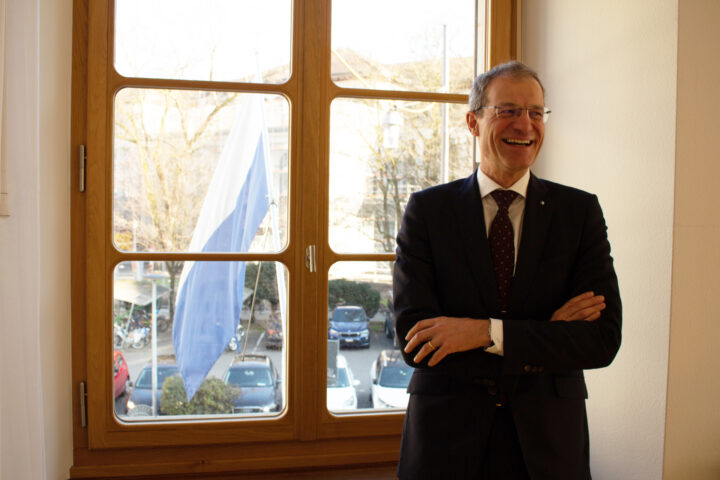
    You have been a member of the government since 2011 and are running for a fourth term in April. What do you like about your current position as Finance Director of the Canton of Lucerne?

    Even after 12 years, I consider it a privilege to be a government councillor in the Canton of Lucerne. For me, it is an exciting, varied and challenging task. As Finance Director, I take care of IT, real estate and personnel in addition to finances. I enjoy these cross-sectional functions and the resulting responsibilities. Our department is allowed to provide the resources that the other departments need in order to provide the corresponding services to the population.

    Where do you see the greatest challenges at the moment?

    From an overarching perspective, mobility and sustainability are among them, along with health care. Within the Finance Department, we have several interesting real estate projects that we are allowed to push ahead with – for example, the expansion of the Horw campus. With a budget of 365 million francs, this is the largest project in the Canton of Lucerne to date. We have also just submitted the building application for the cantonal administration at Seetalplatz in Emmen. We want to bundle the administration in this new building for about 175 million francs. One of the challenging tasks is the ongoing search for a location in the city of Lucerne for the Lucerne Museum and the Cantonal Court. Since we need several thousand square metres of space for both, the project is not entirely simple.


    You are currently working on the revision of the Tax Act 2025. Are global uncertainties such as the climate problem or the war in Ukraine being taken into account?

    In the Canton of Lucerne we are registering a very positive development. The tax law reform is intended to create the conditions for the Canton of Lucerne to remain an attractive location for natural persons and legal entities and to develop optimally. In 2000, we still had debts of 2.5 billion francs – today we have net assets of more than 300 million francs. We have achieved this thanks to an ambitious and demanding tax and financial policy. In parliament, we discussed a climate and energy report and are implementing the corresponding measures. The situation in Ukraine naturally affects many areas. Taking the current situation into account, we have created a stable foundation for the tax law reform and are looking forward to it positively.

    You see yourself as a bridge builder between city and country. Where do the discrepancies lie?

    In addition to the city and the agglomeration as an urban centre, there are many agricultural regions, especially in Lucerne’s hinterland. It is precisely this diversity that makes the canton interesting. We are centrally located, easily accessible and can offer attractive local recreation areas. In this respect, I don’t want to talk about discrepancies, but about different starting points. It is our task to keep these differences in mind in all decisions. An agglomeration city has different needs than a rural community in the Entlebuch. Thanks to the cantonal financial equalisation system, we can offer comparable services to the population in all municipalities.

    You completed an apprenticeship as a draughtsman and then studied to become a civil engineer. To what extent does the knowledge you acquired then flow into your current job?

    I am a great friend of the dual education system: vocational training is not better or worse than the academic path. It is simply different. During my apprenticeship, I learned to take responsibility for the work I do and to do it very accurately. This benefits me in my current job as finance director. Especially in the real estate sector, I know how construction projects are set up and I know the processes. Basically, an education like the one I enjoyed is a good basis for a broad range of tasks.

    What strategy are you pursuing in your department in terms of digitalisation?

    I am convinced that the digital transformation is an important basis for the further development of our society and economy. In this respect, we have developed a digital strategy that is geared towards the entire canton and is intended to ensure its future-oriented development. Within the administration, we want to provide our services in a contemporary – i.e. digital – manner. We have launched the service portal together with the Lucerne municipalities. It is intended to offer communal and cantonal services online. The plan is to create a digital gateway for all public services in the Canton of Lucerne. Our aim is not only to find an optimal solution for the administration, but also one that makes life easier for the residents.

    What makes the Canton of Lucerne attractive for companies?

    We offer good framework conditions, for example in profit taxation, which we halved in 2012. As a result, we were the canton with the lowest profit taxation of legal entities for several years – this has had a positive effect. With the planned revision of the tax law, we are ensuring that we will continue to be an attractive business location in the future. But our educational institutions are also an important factor. We have consciously invested in education and belong to the rather younger education cantons. We also benefit from our central location and the sufficient space available for businesses. We are aware that we are in a competitive environment with the neighbouring cantons. We have to move constantly in order to remain attractive.

    The Canton of Lucerne relies on a special model for economic development.

    Correct. We are the only canton in Switzerland that does not regulate business promotion at the cantonal level, but has outsourced it to a foundation. The companies are represented there as partners of the cantons and municipalities. We are convinced that it is important that the business community has a say in decision-making and feels valued. That is why we attach great importance to the maintenance of the existing business community and want to ensure good framework conditions for the private sector. We strive for qualitative growth and receive good feedback for our model.

    What is the situation regarding urban sprawl in the Canton of Lucerne and what is being done about it?

    We support the economical use of land and try to promote this with legal foundations. Densified building is the order of the day in our structure plan and in the communal zoning plans. Due to the Federal Spatial Planning Act, we now have 21 municipalities that have to reduce their building zones by up to 70 hectares – so-called rezoning municipalities. This is not an easy process, but we are keeping at it. With our structure plan, we want to enable development and at the same time take care of our cultural landscape.

    There is a housing shortage, especially in the centres. What measures must be taken to alleviate the situation?

    The public sector alone cannot solve this problem. What is needed here is interaction between the private sector, investors and the public sector. We create incentives for dense building by allowing higher utilisation. In addition, we make suitable areas available for residential buildings, such as at Seetalplatz or in Ebikon. In this way, around 200 flats can be realised.

  • Lucerne – the business location with a tailwind

    Lucerne – the business location with a tailwind

    Courageous decisions and the resulting dynamism have shaped the development of Lucerne as a business location over the past two decades, with the KKL, which opened in 1998, serving as a symbol of change. In the course of this renewal, Lucerne expanded its university location and increased its fiscal attractiveness for residents and businesses.

    After years of strong growth and economic prosperity, sustainability is now high in the zeitgeist. In addition to economic and social aspects, ecological issues in particular are given greater weight than in the past. In particular, the consideration of climate protection has become a real yardstick for the sustainability of business models. Companies must rise to this challenge and find the right balance between the business of today and that of tomorrow.

    The canton supports global efforts in climate protection and aims to achieve net zero emissions of greenhouse gases by 2050. The Canton of Lucerne’s climate strategy invites the economy and businesses to work together towards this goal. A central lighthouse project is presented in more detail in this issue: the unique energy ecosystem in Dagmersellen.

    In the areas of taxes, accessibility and education, the canton remains competitive through the planned revision of the tax law and the construction of two generation projects in the transport infrastructure (through station and bypass). Meanwhile, the expansion of the university locations in Horw and Lucerne will ensure that companies have access to the skilled workers they will need in the future.

    Testimonials

    Adrian Steiner
    CEO, Thermoplan AG
    “Thermoplan relies on Lucerne as a business location because you can find well-trained and loyal skilled workers in all areas here.”

    Makoto Nakao
    President, GC International AG
    “Dental medicine in Switzerland is among the best in the world in terms of quality. Lucerne convinced us in terms of infrastructure, education and safety.”

    Dr Ralf P. Halbach
    CEO, Geistlich Pharma AG
    “The attractive business location convinces people from all over Switzerland and abroad to move to Lucerne and work here. Experience shows: The advantages of living in Lucerne are a strong argument.”

    Peter Ruppeiner
    CEO and Co-Founder, AVANTYARD LTD.
    “Lucerne is increasingly becoming a hotspot for personalities with innovative ideas and start-ups. An attractive location with a manageable size is perfect for quickly building a network.”

    Lucerne Economic Development

    Alpenquai 30, CH-6005 Lucerne
    +41 41 367 44 00
    info@luzern-business.ch, www.luzern-business.ch