Tag: Neubau

  • Business award recognises industrial expertise and regional roots in Thurgau

    Business award recognises industrial expertise and regional roots in Thurgau

    GLATZ AG from Frauenfeld has secured the Thurgau Business Award 2026, which is presented annually by the Thurgau Chamber of Commerce and Industry, the Thurgau Trade Association, the Thurgau Cantonal Bank and the Department of Home Affairs and Economic Affairs.

    According to a press release, the family business impressed the jury with its combination of cross-generational business activities, international competitiveness and regional loyalty. With its patented sunshade frames, a high level of vertical integration, an in-house sewing workshop and uncompromising quality standards, GLATZ AG is a trendsetter in shade solutions – at a time when the international low-cost market is squeezing out many competitors. The large sunshades from Frauenfeld, which can withstand wind speeds of up to 115 kilometres per hour, are exported from Thurgau to over 50 countries.

    “The company has been firmly rooted in Thurgau for over 130 years – and at the same time carries the quality and innovative spirit of Thurgau as a centre of industry out into the world,” says Thomas Koller, jury president of the Thurgau Business Award.

    The move to the new headquarters on Langfeldstrasse in Frauenfeld in 2024 shows that GLATZ AG will remain rooted in Thurgau in the future. The new building, which combines research and development, production, administration and a modern training centre under one roof, was also built with a focus on sustainability. Photovoltaic systems, energy-efficient heating and cooling systems and shorter transport routes reduce the CO2 footprint.

    The award ceremony will take place on 15 April 2026 at GLATZ AG in Frauenfeld.

  • Tenero Swimming Centre

    Tenero Swimming Centre

    The days of the old swimming facilities at the CST youth and competitive sports centre are over. The needs of young and elite aquatics athletes are constantly increasing. With the CHF 91.8 million investment approved by the Federal Assembly in 2021, Switzerland is setting an example for top-level promotion and sustainable development. The new replacement building will raise the CST to a new level as a central centre of excellence for swimming, artistic swimming, water polo, water jumping and ski freestyle.

    Modern concept
    Simply renovating the outdated facilities proved to be uneconomical and not future-proof. The planning therefore favours a complete new build in two construction phases. Firstly, a multifunctional indoor swimming pool will be built, which will define new training standards with an Olympic pool including a lifting floor, whirlpools, ice bath and comprehensive diagnostics area. This will be followed by the renovation of the outdoor facilities, including a modern training pool and landing area for freestyle skiing. Completion is scheduled for 2029, until then operations for athletes will be secured.

    Focus on sustainable and versatile infrastructure
    The Federal Office for Buildings and Logistics attaches great importance to sustainability in construction. The swimming centre is being built in accordance with SNBS and MINERGIE-ECO guidelines, optimised for life cycle costs and energy efficiency. The architecture by Studio Burkhardt and Stücheli Pestalozzi Schiratzki is characterised by its transparency, spaciousness and integration into the park landscape. Art and material aesthetics are also part of the new building, as a sensitive art-in-building concept creates identity for the location.

    A milestone for Swiss sport and the region
    With the laying of the foundation stone and prominent guests such as Olympic medallist Noè Ponti, the project promises not only international training standards, but also innovative event and training opportunities in water sports. The CST remains a pioneer in the promotion of young talent and will become a hub for cross-generational sports development in Switzerland.

  • Geneva’s housing policy under pressure

    Geneva’s housing policy under pressure

    Since 1983, the law on the demolition, conversion and renovation of residential buildings in Geneva has rigorously controlled the housing market. The aim is to protect tenants, safeguard quality of life and curb speculation. Rents after conversions and renovations are capped by decree, and projects requiring approval are strictly regulated

    The study by Ters (FHNW) and Kholodilin (DIW Berlin) is the first to dynamically analyze the effects of these interventions. The results show that housing rationing and rent controls significantly slow down new construction. Private and institutional investors are increasingly shifting capital into renovations. In the short term, expenditure on modernization is rising, while there is no real increase in living space. At the same time, vacancy rates are continuing to fall, occupancy rates are rising and the market is becoming even tighter. Entry costs are rising, especially for new tenants, while existing tenants benefit from stable, often low rents and long rental periods

    New dynamics in the portfolio
    Institutional investors are particularly hard hit. Project delays, falling residual values and complex approval procedures make new construction unattractive. The study shows that a regulatory shock reduces the volume of new investments by up to CHF 600 million. This corresponds to around 1% of Geneva’s total GDP. For the city’s housing stock, this primarily means that investments will primarily be made in short-term, compliance-driven upgrades instead of in-depth renovations or new units

    Rent control works primarily through the price channel. It protects existing tenants from increases, but depresses returns for owners and puts a damper on new projects. Renovations become more attractive than new builds, which promotes modernization but hardly creates any new apartments

    Lock-in effect and inequality of opportunity
    An unexpected side effect of regulation is the so-called lock-in effect. Tenants stay in their homes for much longer for cost reasons, which restricts mobility and increases the maldistribution of housing. At the same time, rent differentials in the market are increasing. Newcomers pay high market rents, while long-term tenants benefit. The quality and condition of apartments often remain at a low level, as extensive renovations are difficult to carry out economically

    Balance sought between protection and supply
    The study shows that Geneva’s regulations protect tenants from price rises, but place a burden on new construction and thus exacerbate the housing shortage in the medium term. Investors are turning to the preservation of existing properties and selective modernization, while growth stimuli from new construction are failing to materialize. For politicians, this means that a sustainable balance between protection and market renewal is essential. New densification permits and differentiated rent regulation could provide a remedy.

  • New building project with sustainable energy concept in Olten

    New building project with sustainable energy concept in Olten

    Alpiq Holding Ltd. is to relocate its Olten site within the city. To this end, the Lausanne-based energy supplier has acquired a new building project from the Pallas Kliniken hospital north of Olten railway station, Alpiq announced in a press release. A new building with an attractive working environment and a sustainable energy concept is to be constructed here. The amount of the investment is not disclosed in the press release.

    Pallas Kliniken had already received a building permit for the construction project. Alpiq now wants to optimise the project for its own needs on this basis. The company plans to utilise the water from the River Aare for the energy supply. The interior design will be characterised by flexible room concepts and open communication zones.

    Once the new site is completed, the approximately 470 Alpiq employees in Olten will move into the new building. Alpiq intends to sell the old site, which is also located close to Olten railway station. Alpiq’s head office will remain in Lausanne, the Group clarifies in the press release.

  • New travel terminal strengthens Frauenfeld site

    New travel terminal strengthens Frauenfeld site

    The Twerenbold Reisen Group is having a new travel terminal built in Frauenfeld. In addition to the coach travel terminal with travel lounge and café, the new location will also house the employees of the Mittelthurgau travel agency of Excellence Cruises, the family-run company from Baden announced in a press release. “This will make our range of coach, music and bike tours with Twerenbold Reisen, boat trips with Excellence Cruises and hiking holidays with Imbach Reisen even more accessible,” Karim Twerenbold, Chairman of the Board of Directors of the Twerenbold Reisen Group and fourth-generation owner, is quoted as saying. “The terminal and office building in Frauenfeld will create an additional hub alongside the company headquarters in Baden-Rütihof.”

    Twerenbold Reisen has entrusted Strut Architekten AG with the planning of the new building. The Winterthur-based architecture firm specialises in sustainable construction. “Out of conviction”, Strut Architektur has therefore minimised the use of underground structures associated with high concrete consumption in the new travel terminal, according to the press release.

    The new building in Frauenfeld will also be air-conditioned using air-to-heat pumps. A photovoltaic system that can generate up to 120 megawatt hours of electricity per year is also planned. The water consumption of the bus wash will be largely covered by rainwater, which will be collected in a cistern.

    The city of Frauenfeld has already granted planning permission for the new travel terminal. Construction work is scheduled to begin in the first half of 2026 and be completed in 2028. No details of the investment volume are provided in the press release.

  • How the Wolf site in Basel is becoming a residential neighbourhood

    How the Wolf site in Basel is becoming a residential neighbourhood

    The relocation of freight handling to the harbour area freed up a 16-hectare site near Basel SBB station. SBB has been pursuing the vision of a mixed neighbourhood here for years, combining living, working and leisure. The urban development plan is based on a design by Christ & Gantenbein and EM2N. The central element is a large courtyard that stretches from east to west, shields against noise and links public and private uses as a green boulevard.

    Two faces “Janusproject
    The Paris-based firm Experience, together with M-AP Architects from Lausanne, won the competition for the MF02 construction site. Their “Janus” project responds to the contrasts between the railway side and the inner courtyard with two architectural languages.

    A horizontal ribbon façade with striking concrete frames stretches towards the track side, conveying a powerful image to passing trains. Towards the courtyard, a finely structured façade with staggered balconies and greenish decorated surfaces appears.
    The construction method follows a hybrid approach of concrete skeleton and timber construction. The floor plans are compactly organised, with a clear separation between bedrooms, wet rooms and spacious living areas. Only the lack of privacy in the ground-floor flats was criticised.

    Noise protection as a design element “Binariaproject
    The “Binaria” project by Basel-based ARGE Parabase and Confirm won the competition for the MF03 construction site. It counters the street noise with a robust north façade made of reused trapezoidal sheet metal and protruding acoustic elements. In contrast, a transparent, green glass façade with balconies and plant troughs opens up to the courtyard side.
    The multi-storey passageway connecting the courtyard and the street is particularly striking. The circular ventilation grille made of sound-absorbing panels makes a strong architectural statement here. Inside, linear floor plans allow for flexible living concepts from 2.5 to 5.5-room flats. Sustainability is characterised by reused beams, recycled concrete and re-used wood.

    Pilot character with high standards
    Both winning projects pursue innovative approaches to noise protection, the flexibility of the flat layouts and the use of recycled materials. The roofs are used for photovoltaics and rainwater management, the façades are partially planted or fitted with integrated solar technology. Energy is generated from renewable sources, while shading and evaporation provide thermal insulation in summer. Special attention is paid to reversible construction. Constructions are to be screwed together instead of glued in order to facilitate subsequent reutilisation or material cycles.

    Milestones and prospects
    The new buildings in the west of the site will be realised in the first stage, with construction scheduled to begin in 2028. A second stage with a city logistics hub and additional uses will follow from 2031. Even before completion, SBB will open the site for interim use. The listed 2,000 m² railway hall will be used for sports activities, for example. The Wolf site will thus become a pilot project for urban housing construction that answers questions about noise protection, sustainability and socially mixed housing on a large scale. For Basel, this is not just an urban planning experiment, but a decisive step towards more affordable living space and a higher quality of urban life.

  • Strategic milestone for Zofingen

    Strategic milestone for Zofingen

    The 27,636 square metre site near Zofingen railway station was home to the traditional Swissprinters print shop until 2024. Following its closure, Ringier Areal AG sold the western section to Turidomus, while the eastern section remains in Ringier’s ownership. In recent years, Ringier, together with the town of Zofingen and the Basel architectural firm Christ & Gantenbein, had already developed the strategic basis for the conversion. The development is now building on this.

    Diversity and sustainability in the centre
    The “Areal West” is a site of strategic importance. The location opposite the old town and directly behind the railway station offers ideal conditions for a new, urban residential district. Over 300 flats for different lifestyles and household sizes are to be built on five building plots. From compact flats to family flats.

    The project development is based on the Swiss Sustainable Building Standard. A climate-friendly neighbourhood square, green open spaces that reduce heat islands and photovoltaic systems are planned. District heating is also planned in order to keep the neighbourhood’s carbon footprint low from the outset.

    Study commission to specify
    A study commission is planned for 2026 to specify the urban integration and the specific design of the housing on offer. The aim is to create a lively neighbourhood that not only provides housing, but also creates a sense of community and identity. Depending on the process, construction could start from 2028, with first occupancy from 2030.

    Experience with transformations
    Reference projects such as the Ziegeleipark in Horw/Kriens, the Reitmen neighbourhood in Schlieren and Zwhatt in Regensdorf show that the Group understands complex transformation processes. With the “Areal West” in Zofingen, the group is continuing in this vein. The aim is to transform the industrial past into a future-proof, sustainable neighbourhood.

  • Investment strengthens business location with 60 new jobs

    Investment strengthens business location with 60 new jobs

    Emmen-based SME Technik AG has broken ground on the construction of a new company building. With the construction of the new production facilities, the CNC manufacturing specialist aims to strengthen its location in the canton of Lucerne, according to a press release. With an investment of 7 million Swiss francs, a three-storey work and production building is being constructed. It will also create 60 new jobs.

    The building, with 1,200 square metres of production space and 1,100 square metres of office space, is primarily intended to optimise the CNC production of small parts or series for the aviation and railway industries. In a first step, two new CNC machines will be installed. The move is scheduled for spring 2026.

    The building, planned and realised by Cerutti Partner Architekten AG from Rothenburg, is designed for sustainability and energy efficiency. A solar system on the roof and air-to-water heat pumps were installed to ensure resource-conserving operation.

    “With the new building, SME Technik is creating modern workplaces that are attractive for both existing and future employees,” said Jan Kottucz, investor, owner and Chairman of the Board of Directors of SME Technik AG, in the press release. “At the same time, we can manufacture CNC parts for our customers with the highest precision and to Swiss quality standards in the modern production halls with new systems.” Ramona Gut-Rogger, Mayor of Emmen, sees the new investment by SME Technik as a “strong signal for the future of our business location.”

  • Sport, sustainability and community under one roof

    Sport, sustainability and community under one roof

    The cycling team Tudor Pro Cycling is planning to relocate its headquarters from Schenkon to Sursee. According to a press release, construction of the new facility has now begun. The 10,000 square metre building is to be sustainably designed and will open in 2027. It is intended to support the team’s growth and redefine the standards of professional cycling. The project is supported by the municipal council and the authorities of the canton of Lucerne.

    The CHF 17 million facility was designed in collaboration with Goldbeck Rhomberg. It is to be built on Zeughausstrasse in Sursee and will provide a five-storey space where drivers, mechanics, trainers and employees can come together to prepare for upcoming races. A public area will also offer fans and supporters exclusive behind-the-scenes insights and interactive experiences.

    “Together with Goldbeck Rhomberg, we have developed a ground-breaking concept that not only fulfils the needs of a professional sports team, but also takes into account the expectations of fans and the local community,” explains Raphael Meyer, CEO of Tudor Pro Cycling, in the press release. “It also sets new standards in terms of environmental sustainability and has been awarded DGNB Gold certification– one of the highest standards that buildings can achieve.”

    Sursee and the canton of Lucerne have reportedly supported the team from the outset and made the project possible. “We are delighted that this new building, which is dedicated to sport and a healthy lifestyle, is taking shape here in our municipality,” said Sabine Beck-Pflugshaupt, Mayor of Sursee. “It is a place that will help Sursee to shine in Switzerland and beyond our borders.”

  • New building strengthens Solothurn cantonal police force

    New building strengthens Solothurn cantonal police force

    The tasks of the police have become more diverse. Technology and society are changing rapidly. Legal requirements are becoming increasingly complex. KAPO Solothurn needs new structures to be able to react to this. Well-trained employees and ongoing training are more important than ever. Sufficient equipment is also a basic requirement for efficient work today.

    Lack of space, outdated infrastructure
    The existing infrastructure no longer meets current requirements. Many services work in cramped and unsuitable rented premises. There is a lack of special rooms for training and modern investigations. Forensics and the education and training service are particularly affected. Employees therefore have to move to external premises. This complicates processes and costs time.

    The new building as a solution
    A central unit for the police is being built at the Oensingen site. More than 150 employees from eleven different services will work under one roof in future. This will create better communication and shorter distances. Cooperation with the nearby heavy traffic control center will also be simplified. The new building offers enough space for current and future teams. Modern working and training conditions ensure greater efficiency and motivation.

    The focus is on training and quality
    A new on-site training center simplifies the training of police officers. Forensic technology will have modern laboratories and examination rooms. This increases the quality of work and improves conditions for everyone.

    More efficiency, lower costs

    The new structures will simplify processes and reduce costs. The internal synergies and proximity to the SVKZ lead to shorter deployment times. This makes the jobs for the police more attractive and increases their effectiveness.

    Facts, figures and outlook
    The building is planned to cost around 85 million francs. The floor space amounts to a good 10,400 m². The building offers rooms for all important police services. It has special training areas, laboratories and 204 parking spaces. Completion and occupation are scheduled for 2031. Luna Productions from Deitingen delivered the winning project in the competition. The costs are constantly being reviewed and optimized.

    The new building will position the Solothurn cantonal police for the future. Better working conditions, more efficient processes and modern technology will ensure that police work can continue to develop flexibly.

  • Timber trading company opens modern site in Obernau

    Timber trading company opens modern site in Obernau

    Herzog-Elmiger AG has officially opened its new site in Obernau near Kriens. Previously, the wood-based materials trading company had been based on Langsägestrasse in Kriens for 65 years. The search for a new company site had become necessary because the family had been expropriated by the Federal Roads Office for the Lucerne bypass motorway project, according to a press release.

    The family business also celebrated its 120th anniversary on 23 and 24 August 2025 at the same time as the reopening. Siblings Melanie and Michael Herzog took over the business from their father André Herzog in 2022 and are now the fifth generation to run it.

    Customers, partners, neighbours and members of the public were given guided tours of the company’s new 10,190 square metre timber building and its business – from the fully automated storage area to the veneer warehouse with special woods and the new exhibition to the photovoltaic system on the roof, which saves around 336 tonnes of CO2 per year.

    The twelve-metre-high hall, its supporting structure made of Swiss wood and the view of the logistics department, where up to 200 tonnes of goods are moved every day, were particularly impressive. The rooms created for the employees also aroused great interest: an activity room, a room furnished with local Swiss stone pine wood for relaxation, a terrace with a large barbecue and a coffee bar.

    “With this new building, we have taken the opportunity to further develop our company in a future-oriented and sustainable way,” Michael Herzog is quoted as saying. “Here we have room for innovation and at the same time a strong connection to our tradition.”

  • New major orders for building construction projects in Berne and Zurich

    New major orders for building construction projects in Berne and Zurich

    “Implenia has won further large and challenging building construction contracts,” the construction and property company from Opfikon announced in a press release. The order volume is estimated at over CHF 400 million in total. The two largest projects are a new building for the University of Bern and a residential development in the Zurich Oberland.

    The Canton of Bern has commissioned Implenia with the master builder work for a new medical research and training centre for the University of Bern. The university plans to unite five institutes of its medical faculty here. Construction work is due to start in May 2026 and be completed in July 2028.

    In Oetwil am See in the Zurich Oberland, Implenia will act as total contractor for the Seraina Investment Foundation to realise the new Schachenweid development. Eight flat blocks with 90 condominiums are planned here. Construction work is scheduled to start in September 2025 and the apartments should be ready for occupancy in October 2027.

    In the press release, Implenia also lists the modernisation and conversion of an inner-city building, the conversion of an old factory site in western Switzerland into an urban quarter and two new construction projects for school buildings in Switzerland and Germany as further new orders. The new projects “are in line with Implenia’s strategy of focusing on specialised real estate, which requires extensive expertise and many years of experience,” writes Implenia.

  • New building in Sursee for cycling team

    New building in Sursee for cycling team

    According to an article in the “Luzerner Zeitung”, the Tudor Pro Cycling Team, currently based in Schenkon, is about to move to Sursee. The team would like to invest 18 million Swiss francs in a new six-storey headquarters there. The initiator is Sette Immo AG, which runs not only the professional team but also a junior team through its Sette Sports Group. Fabian Cancellara, a former racing cyclist, is not only team manager of the Tudor Pro Cycling Team, but is also active at Sette Immo AG.

    The team’s new headquarters is due to be completed in September 2026 and will provide space for storage, workshops, training and meeting rooms. Offices for the administration and recreation rooms for the drivers will also be built, as well as a showroom for the team. A photovoltaic system will also be installed on the roof.

    The team, which is sponsored by watch manufacturer Tudor from Geneva, is currently taking part in the Tour de France until the end of the month.

  • From industrial site to garden neighbourhood

    From industrial site to garden neighbourhood

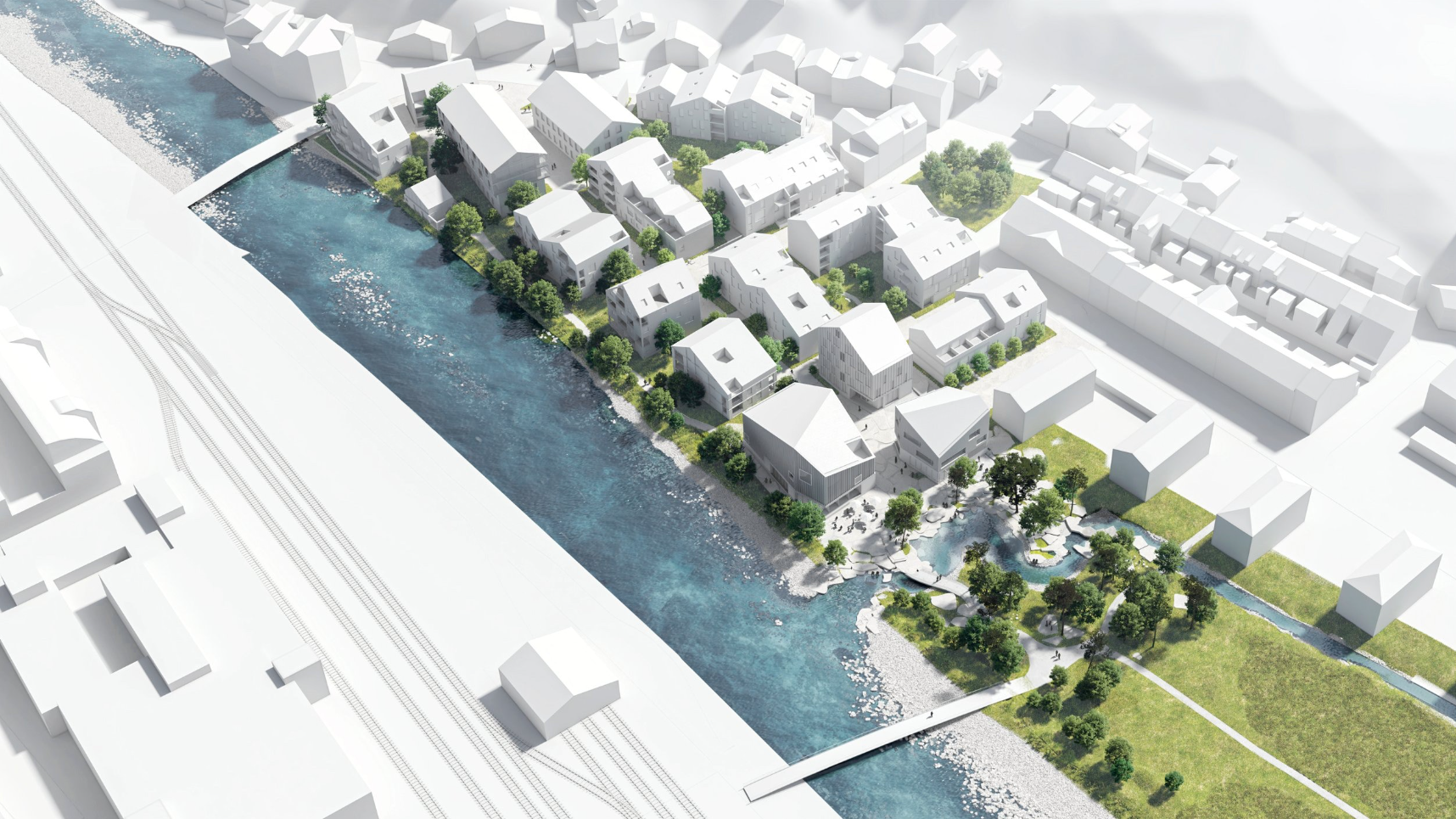
    The Kartoni neighbourhood shows how visionary urban development can succeed. On a former industrial site, a green residential neighbourhood with around 150 flats is being created, complemented by service and cultural facilities. What still exists as a planning sketch today will develop in several stages into a diverse living space that is open to all generations and lifestyles. The historical backdrop of Glarus will not only form the framework, but will also be further developed through modern architecture and sustainable construction methods.

    Town and country reconnected
    Glarus is more than just the canton’s capital, it is a way of life. Only an hour away from Zurich or St. Gallen, Glarus offers urban density and natural recreation at the same time. The Kartoni neighbourhood reinforces this quality. It builds a bridge between the district of Ennenda and the town centre, creating new paths and meeting places both spatially and socially. The municipal merger that took place in 2011 thus takes on a tangible architectural dimension.

    Water as a connecting element
    In future, the Linth will become the lifeline of the neighbourhood. Where previously sealed surfaces dominated, a public riverside space with direct access to the water is being created. The renaturalised canal interweaves with the river landscape and creates a playful counterpart to the structured design of the nearby Volksgarten. The area becomes a meeting place for walks, relaxation and shared experiences.

    Car-free garden neighbourhood
    The Kartoni neighbourhood relies on an underground solution for mobility. Directly after the Linth Bridge, an access road leads to a spacious underground car park, which means that the entire neighbourhood remains car-free above ground. The result is a garden neighbourhood that is open, green and criss-crossed by paths. The car-free design not only promotes peace and safety, but also sends out a strong signal in favour of a new way of living together in densely populated areas.

    The courage to take stages and a plan with a vision
    The development of the neighbourhood does not follow a rigid timetable, but reacts flexibly to political, economic and social conditions. Several planning strands are currently running in parallel: from the Hängg Tower to residential areas and the integration of a music school. The already approved development plan is being adapted to new requirements, particularly in relation to the neighbouring Dorfbach project in Ennenda.

  • Parliament approves new IOM headquarters in Geneva

    Parliament approves new IOM headquarters in Geneva

    On 14 June 2025, the National Council approved an interest-free federal loan for the renovation of the headquarters of the International Organization for Migration by 166 votes to 2. The decision followed a yes vote by the Council of States in March. The IOM, as part of the UN system, plays a leading role in global migration policy. The current site in Geneva’s Morillons district dates back to the early 1980s and does not meet energy, functional or security standards.

    Investment of strategic importance
    Parliament’s approval came despite the fact that the IOM recently announced that it would be cutting around 20 percent of the approximately 1,000 jobs in Geneva. The background to this is a freeze on aid from the USA, one of the organization’s main donors. However, Foreign Minister Ignazio Cassis emphasized in the Council that the construction project was sensibly dimensioned, even with a reduced workforce of around 600 employees in future. With this commitment, Switzerland is pursuing a clear host state policy strategy to strengthen International Geneva in the long term.

    Financing structure and timetable
    The loan of CHF 44.7 million granted by the federal government is interest-free and is to be repaid within 50 years. The funds will flow to the FIPOI (Real Estate Foundation for International Organizations), which is responsible for the project. The Canton of Geneva is contributing an additional CHF 21.6 million. This means that the federal government and the canton are covering around two thirds of the total costs. Parliament had already supported a preliminary project in 2022 with CHF 5.7 million for planning work. Construction is scheduled to start in January 2026 and the building is expected to be occupied in 2029.

    Geneva as a strategic location for international organizations
    The Confederation’s support is to be seen as part of the overarching host state policy. Geneva is currently home to more than 40 international organizations and is considered one of the most important multilateral locations worldwide. Switzerland aims to further consolidate this role. Not least in an increasingly competitive environment for international headquarters. Modernizing the infrastructure is a key means of retaining organizations such as the IOM in Geneva in the long term.

    Signal of continuity despite uncertainties
    By clearly approving the construction of the new IOM headquarters, Switzerland is once again acknowledging its role as a host state for international organizations. Despite geopolitical uncertainties and internal cutbacks at the IOM, the project sends a strong signal of Switzerland’s attractiveness as a location and its reliability. An aspect that is equally important for specialists and managers in diplomacy, international organizations and the construction industry.

  • Innovation campus in the heart of the Engadin

    Innovation campus in the heart of the Engadin

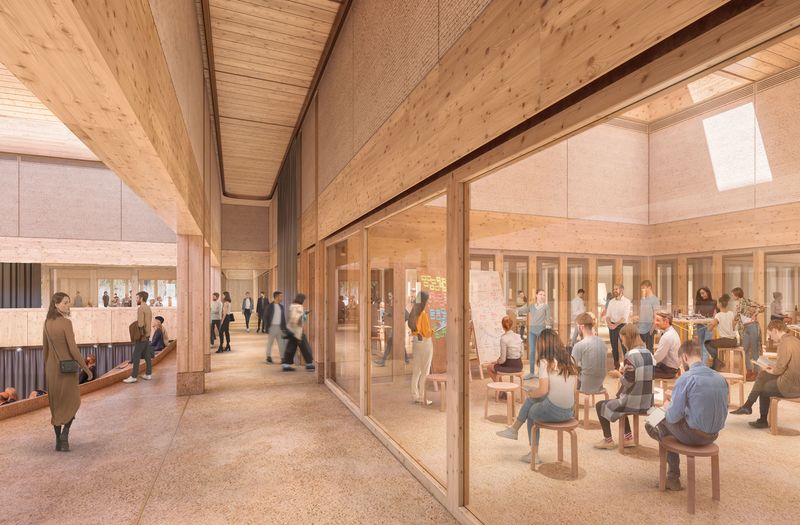
    The Engadin is known for its cultural diversity and breathtaking nature. At the same time, the region is increasingly focussing on innovation and sustainable development. The InnHub La Punt is a place where research, entrepreneurship and education come together.

    The centre offers a wide range of uses over an area of 7,700 square metres. These include workshop and classrooms, coworking workspaces, an auditorium with 250 seats, a sports training infrastructure, a spa, a restaurant with bar and lounge, a sports shop, a tourist information centre, 44 hotel rooms and 8 tourist flats. The multifunctional premises create a dynamic environment for innovation and interdisciplinary dialogue.

    Construction begins in spring 2025
    Following a comprehensive planning phase in which the concept was further refined, construction of the InnHub La Punt will begin in spring 2025. The municipality issued the building permit in autumn 2023. The existing buildings will be demolished first, followed by the excavation and construction of the underground car park by summer 2026. The shell will be completed by mid-2027 before the interior work begins. The opening is scheduled for the end of 2028.

    In parallel with the municipality of La Punt Chamues-ch’s future projects, including the road bypass and the renaturation of the Chamuerabach stream, the InnHub will create a new centre that will revitalise the town and provide new impetus.

    Sustainability as a central building block
    A key component of the project is its sustainable approach. The building is being constructed from local wood, granite and lime mortar and is an example of the circular economy and ecologically responsible construction. “The InnHub is a matter close to my heart, as I have lived in the Engadin for years. It is an example of sustainability and innovative construction methods,” emphasised architect Norman Foster in a video message.

    The operation of the campus is also designed to be sustainable. The initiators, including Caspar Copetti, are not focussing on short-term profits, but on long-term positive effects for the region. The InnHub is intended to create new jobs, promote year-round tourism and establish an innovation ecosystem in the Engadin.

    New impetus for the economy and the community
    The InnHub La Punt will not only attract companies, start-ups and skilled workers, but also facilitate strong networking with the local population. The municipality of La Punt Chamues-ch sees the project as an important step for the further development of the region. “The campus will create a cultural and social meeting point in our village. The projects that are being created here will inspire future generations to come to La Punt,” says mayor Peter Tomaschett.

    In addition to the long-term effects for the region, the InnHub offers an InnHub PopUp even before its completion, which can be used as a co-working and event venue for locals, holiday guests and professionals until it opens.

    A milestone for the Engadin
    The InnHub La Punt combines innovation, sustainability and community in a unique way. With a clear focus on responsible development, it will radiate far beyond the Engadin and serve as a model for sustainable innovation centres in the Alpine region. The combination of state-of-the-art architecture, innovative working environments and regional roots makes the InnHub a forward-looking project that will provide new impetus for the Grisons as a business location.

  • Gold-coloured façade modules in Schlieren set new solar standards

    Gold-coloured façade modules in Schlieren set new solar standards

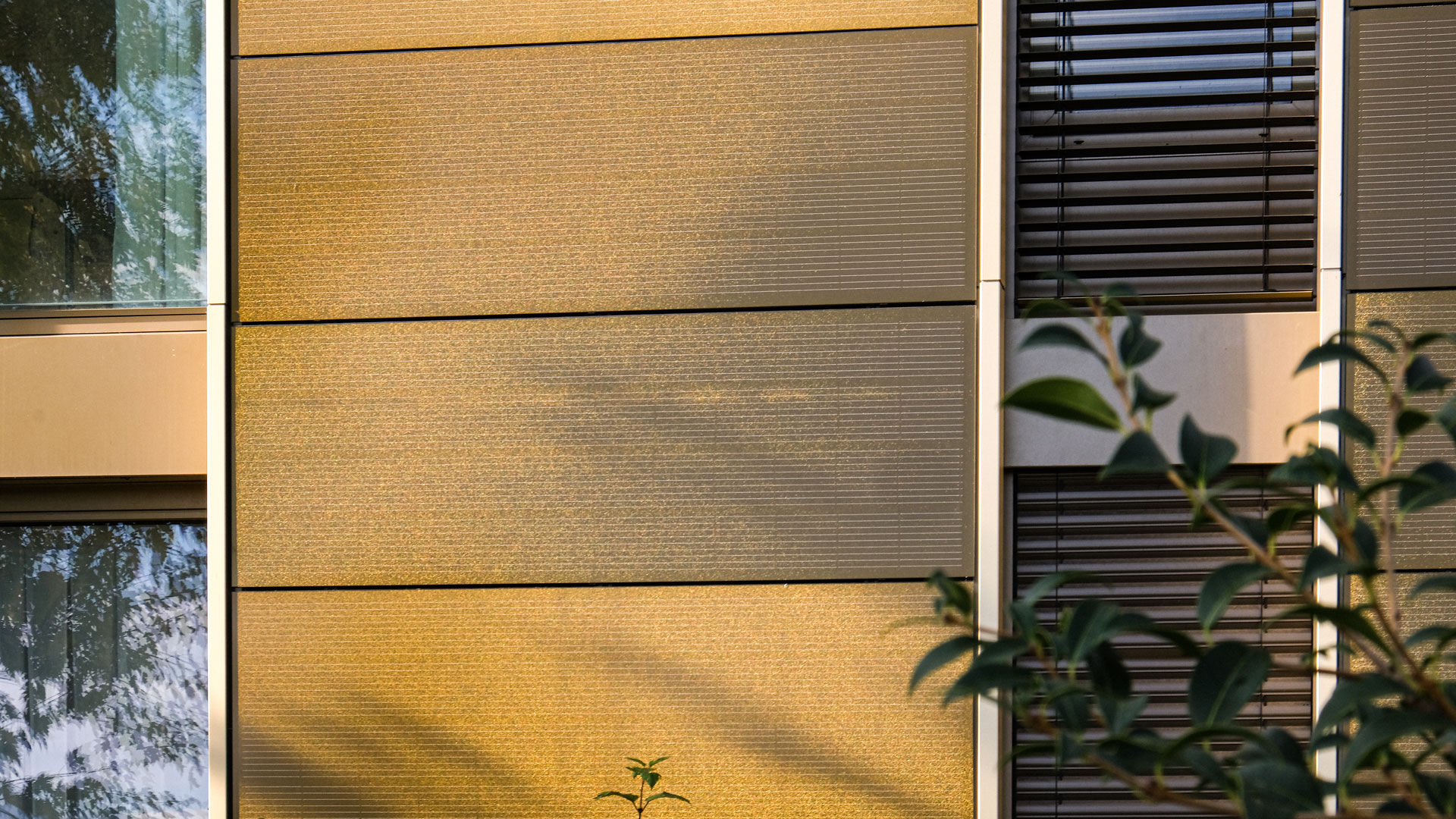
    Megasol Energie AG, based in Deitingen, has launched a new coloured solar module on the market. According to a press release, the modules with their new colour design achieve around 94 percent of the efficiency of conventional black photovoltaic modules.

    The panels under the name SOLARCOLOR Morpho are manufactured for installation as façade elements. For example, they have been installed on two new buildings in the Lacheren area of Schlieren. Depending on the incidence of light, the gold-coloured modules create a lively play of colours, according to the press release.

    The two buildings in Lacheren comprise 36 flats. The roof is also covered with photovoltaic modules and generates peak values of 68 kilowatts with an annual yield of 59,900 kilowatt hours. The façade elements generate peaks of 17 kilowatts and an annual yield of around 16,200 kilowatt hours.

    Megasol Energie AG is one of the five nominated finalists for the Prix SVC Espace Mittelland 2025 sponsored by the Swiss Venture Club (SVC), which will be awarded in Bern on 12 March 2025.

  • Foundation stone laid for new company building in Grabs

    Foundation stone laid for new company building in Grabs

    Frauenfeld-based HRS will be the total contractor for the construction of the new Körber Business Area Pharma building in Grabs. According to a press release, the foundation stone was laid on 13 February.

    In addition to the existing building at the site, a basement, two production floors and two office floors will be built on a vacant site. A total of 7500 square metres of production space and 5000 square metres of office space will then be created in the new building. The building itself will fulfil current sustainability and energy efficiency requirements. In addition to its own photovoltaic system on the roof, extensive charging facilities for electric cars will also be provided, according to the press release.

    The new building, which is scheduled for completion in 2027, will bring together all the resources of Körber’s Business Area Pharma.

    “The new building plays a central role in our planned growth, which is centred around our customers and, of course, our employees,” said Christoph Hammer, CEO Packaging of the Körber Business Area Pharma in Grabs, in the press release. “In addition to our spatial capacities, we are also growing our team. More than 360 colleagues are already working on the development and production of our technologies at the site. By the end of this year, this figure is set to rise to more than 390. We are creating a state-of-the-art working environment for them.”

  • New indoor swimming pool for theKSS approved

    New indoor swimming pool for theKSS approved

    The decision of the Schaffhausen electorate paves the way for the construction of a new, modern indoor swimming pool on the KSS site. With an investment volume of CHF 80 million, this project represents an important milestone in the further development of the city’s infrastructure. The new building is not only a response to the ageing existing facility, but also a commitment to sustainable and future-oriented urban development.

    The new building will replace the existing indoor swimming pool from 1972, which is no longer up to modern-day standards due to its poor condition and outdated technology. The last refurbishment measures were carried out more than 30 years ago and the facility suffers from serious deficiencies such as water and heat losses, a lack of accessibility and outdated safety equipment. In addition, the current indoor pool can no longer cope with the increasing number of visitors, which leads to considerable conflicts of use.

    An indoor pool for all generations
    The planned new building will not only exceed the previous standard, but will also set new benchmarks. With a swimming pool comprising eight lanes of 25 metres each, as well as a teaching pool, a course pool with a lifting floor, a separate diving pool and a children’s paddling area, the range of facilities will be significantly expanded. There will also be an outdoor warm water pool and a state-of-the-art wellness centre with various saunas, a steam bath and a sauna garden. This facility will not only meet the sporting needs, but also the increasing demands of the population for wellness and relaxation.

    A central element of the new concept is the separation of the pools according to their main uses in order to avoid the current conflicts of use. The new structure makes it possible to use the various facilities simultaneously and without restrictions. The central entrance to the new building will ensure efficient access to all facilities and optimise operations.

    Sustainability as a guiding principle
    The new indoor swimming pool will be built to the “Minergie-P-ECO Standard”, one of the highest standards for energy-efficient and sustainable construction in Switzerland. The project’s energy concept provides for the extensive use of waste heat, in particular from the neighbouring ice rink, as well as a connection to a local heating network. These measures will help to significantly reduce the ecological footprint of the new building and position Schaffhausen as a pioneer in sustainable construction.

    New synergies and sources of income
    The new indoor pool will not only offer sports and health facilities, but will also be of economic importance. A publicly accessible restaurant with 130 indoor and 150 outdoor seats will generate additional income and establish the KSS facility as a meeting place for the entire population. In addition, an underground car park with 150 parking spaces will improve accessibility.
    Additional rental space for health and fitness facilities will round off the concept and contribute to the attractiveness and profitability of the overall project. These synergies between the various uses will strengthen the KSS site as a central focal point for sport, leisure and recreation in Schaffhausen.

    Competition and project management
    Following the approval of the population, the project competition will now begin with the aim of finding an innovative design for the new building that fulfils the high standards of architecture, functionality and sustainability. Twelve qualified teams will develop their proposals by summer 2025 and the winning project will be presented to the public. Construction is scheduled to start in 2027, with the new indoor pool opening in 2029/2030.

    The construction of the new indoor pool in Schaffhausen is more than just a building project – it is a strong signal of the city’s future viability and innovative strength. With state-of-the-art infrastructure, sustainable construction and an expanded range of facilities, the new indoor pool will make the KSS complex an even more attractive and contemporary leisure centre.

  • The Steig school complex is extended and modernised

    The Steig school complex is extended and modernised

    The Steig school complex, the oldest primary school in Schaffhausen, is located in the north-western part of the city, not far from the old town, and comprises several buildings of different ages. The need for renovation is considerable, as the existing infrastructure no longer meets modern requirements. The gymnasium from 1892 and the room capacities for the growing number of pupils no longer meet today’s requirements.

    In order to meet future needs, the city is planning a new building on the existing site. This will include a new single sports hall, additional classrooms and facilities for after-school care. The extension is part of a comprehensive development concept for Schaffhausen’s primary schools.

    The winning project and its elements
    A project competition crowned the “cinque pi” project by Soppelsa Architekten GmbH and Rosenmayr Landschaftsarchitektur GmbH as the winner. This cleverly divides the required programme into five building blocks, which create a harmonious overall impression as an ensemble. A new three-storey building with a gymnasium and classrooms forms the core of the project. The old observatory will be retained as a free-standing building.

    The existing gymnasium will be restored to its historical structure to create space for a new pavilion for the day centre and library. This will become the central hub of the entire complex. Conversions are also planned. The Trotte will now house storage rooms and a public toilet on the ground floor and therapy rooms on the upper floor.

    Redesign of the outdoor facilities
    Not only the buildings, but also the outdoor facilities will be redesigned. Existing qualities are to be further developed with moderate interventions. The observatory and the group of trees by the playground will be retained. The play and sports areas will be rearranged to create space for an all-weather playing field and a hard court.

    Financing and political approval
    The total cost of the project is estimated at CHF 21.7 million. This sum already includes the planning costs approved by the city council. Following the deliberations in the city council, the electorate will make the final decision on the extension of the Steig school complex.

    The “cinque pi” project is a forward-looking response to the growing demands and challenges of the education sector in Schaffhausen. It combines modernity and tradition in a progressive and resource-conserving construction method and the creation of lively learning and living spaces.

  • Foundation stone laid for new Tösstal campus in Winterthur

    Foundation stone laid for new Tösstal campus in Winterthur

    The ground-breaking ceremony for the new building of the Winterthur Vocational College marks the beginning of a new era in educational infrastructure. The modern campus will provide space for a growing number of students and enable modern training in the specialist areas of retail and care. Thanks to well thought-out planning, construction work has been progressing rapidly since the start in February 2024.

    The new school infrastructure, right next to the Wiesental and Mühletal sites, allows previously separate school locations to be brought together. The “Campus Tösstal” will provide space for up to 1000 students in the future. In addition to traditional classrooms, open learning niches will provide space for individual and collaborative work. The flexible building structure makes it possible to easily integrate future spatial requirements.

    Sustainable architecture sets standards
    The building meets the Minergie-P-Eco standard and the Gold Standard for Sustainable Building Switzerland. A green roof and photovoltaic system contribute to an ecological balance and a better urban climate. The building will also be connected to the city’s district heating network, combining energy efficiency and sustainability. Completion is scheduled for spring 2027.

  • Regulations make economic property investments more difficult

    Regulations make economic property investments more difficult

    According to the study, complex regulations, long processing times and tenant protection are increasingly burdensome for institutional investors. 92 per cent of the investors surveyed criticised the lengthy processes with authorities and objections. The increasing requirements mean that investments are increasingly being relocated to urban centres and rural areas, where the bureaucratic burden is lower.

    Refurbishment backlog and declining living comfort
    The stricter regulations are not only leading to a decline in new builds in cities, but also to delays in urgently needed refurbishments. This exacerbates the already existing housing shortage in urban regions and impairs the quality of life of residents by postponing renovation measures.

    Focus on sustainability, but social aspects take a back seat
    Despite the regulatory hurdles, around half of investors are prepared to forego returns in the short term in favour of sustainability. In the long term, however, they expect these investments to be amortised through higher returns and increases in value. However, the study shows that social sustainability lags behind ecological and economic aspects in the list of priorities.

    Outsourcing on the rise
    Another interesting development is the increase in the outsourcing of administrative tasks. The outsourcing of data sovereignty is particularly surprising, as this creates a high level of dependency on service providers. Portfolio and asset management functions are also increasingly being outsourced to external partners.

  • Cantonal hospital: New brand identity under the banner of healing architecture

    Cantonal hospital: New brand identity under the banner of healing architecture

    Baden Cantonal Hospital(KSB) will move into its new building at the beginning of 2025. According to a press release, the hospital’s horizontal design concept is based on the principle of so-called healing architecture. In line with this concept, the hospital management has commissioned advertising and branding expert Frank Bodin to design a new brand identity for the KSB.

    In the new logo, the blue KSB is supplemented by an orange underline between S and B: KS_B. Together with the additional subline “Ort der Gesundheit” (place of health), also in orange, the new logo is intended to symbolize positive thinking aimed at healing. The underline can be used in both digital and analog form, for example it can be animated and transformed into a heart rate. An oversized logo at the hospital entrance is suitable as a place for selfies, according to the press release.

    “The new logo impressed us with its simplicity. It also stands out very well in the digital sphere,” Adrian Schmitter, CEO of KSB, is quoted as saying in the press release. “With the color orange to complement the blue, our brand identity now has a splash of color that makes us unmistakable.”

  • Construction work on the extension of the ZHAW has begun

    Construction work on the extension of the ZHAW has begun

    Building Director Martin Neukom, Education Director Silvia Steiner and ZHAW Rector Jean-Marc Piveteau gave the go-ahead for the construction work to expand and modernise the School of Engineering at the ZHAW on 13 September. The ZHAW is one of the leading universities in Switzerland with over 14,000 students, according to a press release. However, some of the existing buildings on the site of the former technical centre in Winterthur no longer meet today’s requirements. In addition, the number of students continues to grow. Campus T will therefore be modernised and expanded in several stages over the next few years.

    In the first construction phase, two new five-storey laboratory buildings will be built behind the historic technical centre. They will provide urgently needed space for teaching, research and development. Various test rooms as well as a publicly accessible canteen and cafeteria will be created there. The new buildings will be connected to the district heating network of the city of Winterthur and equipped with photovoltaic systems.

    As part of the first construction phase, the Eulach will also be ecologically upgraded with a public, near-natural park and flood protection will be expanded, according to the press release. Two new bridges will connect the old town and Campus T with the Büelrain cantonal school and the surrounding residential neighbourhood.

    The existing TB building will be dismantled by November. At the same time, the excavation pit for the smaller TT laboratory building will be dug. Work will then begin on the shell of the first new building, which is scheduled for completion in 2027. The second new building should be ready for occupancy in 2029.

  • Alpnach military airfield to be expanded

    Alpnach military airfield to be expanded

    The Federal Department of Defence, Civil Protection and Sport(DDPS) is having a new vehicle parking hangar and a multifunctional workshop extension built at the Alpnach military airfield. The DDPS is investing a total of CHF 18 million in this project. The ground-breaking ceremony on 21 August marked the start of the construction work, which is scheduled to last until the beginning of 2026, the DDPS reported in a press release. According to the press release, around two thirds of the contracts were awarded to companies from central Switzerland.

    The single-storey vehicle hall will cover almost 2,000 square metres and will be built in the eastern part of the airfield. Specialised vehicles and emergency equipment will be housed here in future. The new building will obtain its heat energy from energy piles.

    The new workshop hall will be built as an extension to an existing hall in the western part of the airfield. In future, large specialised vehicles will be maintained there. The new building, measuring around 1,400 square metres, will provide space for a workshop, a work yard and a car wash. Office workstations, cloakrooms and ancillary rooms for operating materials will also be set up there. The extension will be supplied with thermal energy via district heating from the Alpnach Corporation.

    Both buildings will be constructed to “high ecological standards”, writes the DDPS. Plans include façades made of wooden louvres. Photovoltaic systems installed on both roofs will produce a total of around 324 megawatt hours of electricity per year.

  • Striking building for Bern

    Striking building for Bern

    Schmidlin Architekten impressed the jury, chaired by Thomas Hasler, with its self-confident, modern architectural language. The free-standing new building sets clear accents and brings added value to the city of Bern by enriching the public space. The replacement for the 1984 extension, which was in need of renovation, will enable the Kunstmuseum Bern to strengthen its role as a cultural hub. By combining architectural quality and public accessibility, the museum will become a central place of exchange.

    Extensive architectural competition and transparent selection
    The international competition started in July 2022 with 148 applications and was held in two stages. 39 teams were selected to take part, 11 of which further developed their proposals. In the end, the jury decided in favour of the project by Schmidlin Architekten, which stood out thanks to its innovative approach and strong integration into the urban environment.

    Exhibition of the competition projects
    From 23 August to 24 November 2024, the Kunstmuseum Bern will be showing the designs from the architectural competition. The exhibition provides an overview of the winning project and all other entries submitted. Admission is free.

  • Winning project for high-rise building near Regensbergbrücke in Zurich

    Winning project for high-rise building near Regensbergbrücke in Zurich

    At the Regensberg Bridge in Zurich Oerlikon, SBB is planning an office building around 40 metres high with public uses on the ground floor. The winning project, developed by “Team Esch Sintzel”, makes skilful use of the challenging site shape and topography. It also achieves a high degree of energy self-sufficiency, which makes it particularly forward-looking.

    Focus on efficient use and sustainability
    The planned high-rise building will be 80 per cent energy self-sufficient. Thanks to advanced building technology, passive cooling and solar cells on the roof and façade, the building will be able to cover most of its own energy requirements. This fits in perfectly with SBB’s ambitious climate targets.

    Eight office floors and public uses on the ground floor
    The new building is being realised as a nine-storey commercial building, with flexible floor plans that are ideal for services, health and education. The ground floor will be enlivened by catering and retail spaces, while the outdoor space concept with a near-natural track level and barrier-free urban level will ensure a high quality of stay.

    Public exhibition of the competition entries
    The competition entries will be exhibited from 12 to 15 July 2024 on the 8th floor of the Franklinturm at Hofwiesenstrasse 349 in Zurich-Oerlikon. Interested parties can visit the exhibition from Friday to Sunday from 2 pm to 6 pm and on Monday from 11 am to 3 pm.

    Framework plan for Zurich Oerlikon railway station south-west development site
    The basis for the project is the “Zurich Oerlikon railway station south-west development site” framework plan drawn up in 2012 together with the City of Zurich. This defined an eight-storey building to the west of the Franklin Tower in terms of urban planning. The building permit requirements have been met and construction is scheduled to begin in 2027.

  • Baden Cantonal Hospital focusses on local companies and sustainability

    Baden Cantonal Hospital focusses on local companies and sustainability

    Baden Cantonal Hospital (KSB) has carried out around 250 publicly tendered procurements over the course of the six-year construction phase of the new building. According to a press release, these tenders resulted in a total of 1066 contracts for work and services. The most recent tender was for the furniture. According to the KSB, the new hospital building lives up to the Swiss made label. 97 per cent of the 177 companies involved in the new building come from Switzerland. Only 3 per cent of the contracts were awarded to companies in Germany and Italy.

    A total of 25 per cent of the companies involved in the construction are based in the canton of Aargau and 40 per cent in the canton of Zurich. “We are proud that KSB has thus made a significant contribution to local and regional value creation,” KSB CEO Adrian Schmitter is quoted as saying.

    Thanks to the high presence of local companies, KSB has also set an example in terms of sustainability, Schmitter continues. “During the construction phase, it was above all a project of short distances for the trade companies involved. This resulted in various synergy effects,” says the CEO. This also applies to the time after commissioning, when reworking, maintenance or similar may be required.

    With a usable area of 76,215 square metres, the new building will offer around 30 percent more space than the building in which KSB has been housed since 1978. Commissioning is scheduled for the end of February 2025.

    The move should then be completed within five days. A total of 4571 cubic metres of medical technology and other goods will be moved, according to a KSB press release. This corresponds to the load of 76 lorries of 40 tonnes each.

  • New building at headquarters in Weggis officially opened

    New building at headquarters in Weggis officially opened

    Thermoplan inaugurated its new building at its headquarters in Weggis on 22 June after almost 960 days of construction, the globally active Lucerne-based manufacturer of fully automatic coffee machines announced in a press release. The red ribbon in front of the spacious entrance area of the modern production and office building was cut by Thermoplan CEO Adrian Steiner together with the founding couple Esther and Domenic Steiner. Over the course of the entire open day, almost 5,000 visitors gathered on the festive mile along Weiherstrasse.

    Thermoplan develops and produces fully automatic coffee machines for professional use in catering and other businesses. Among other things, Thermoplan equips the global Starbucks chain with fully automatic coffee machines. The globally active company is committed to Switzerland as a production location: the fully automatic coffee machines are all manufactured at the headquarters in Weggis, Thermoplan states in its self-promotion. Around 80 per cent of the components used also come from Swiss production.

  • Federal Council imposes limits on buildings outside building zones

    Federal Council imposes limits on buildings outside building zones

    The Federal Council is proposing that the number of new buildings outside of building zones be increased by a maximum of 1 per cent compared to 2023. At its meeting on 19 June, it submitted a corresponding draft for consultation, the Federal Council announced in a press release. The consultation draft is a proposal for the ordinance on the revised Spatial Planning Act. It was passed by both chambers on 29 September last year and aims to stabilise construction outside of building zones at a certain level.

    There are currently around 620,000 buildings outside of building zones in Switzerland. If the bill comes into force, this figure could increase by a maximum of 6,200 buildings. With an average of 500 new buildings outside the building zone each year, the maximum permitted number would be reached in just over ten years, writes the Federal Council.

    The Federal Council is also proposing changes to the handling of special zones. Here, the volume and area of new buildings outside of building zones will have to be compensated for by the demolition of existing structures. In agricultural zones, the priority of agriculture over other uses is reaffirmed.