Tag: Neubau

  • New building for health and biomedical research inaugurated

    New building for health and biomedical research inaugurated

    ETH Zurich has inaugurated its latest new building. The university’s health sciences and biomedical engineering departments have moved into the Gloria Cube, the ETH announced in a press release. Specifically, the new laboratory and research building houses 16 research groups from the fields of exercise science and sport, rehabilitation and biomedical engineering as well as application-orientated, translational research.

    The new building on Gloriarank connects the ETH campus with the neighbouring residential buildings in the Fluntern district via continuous paths and a green area. The eight-storey building is also close to the University of Zurich and the University Hospital Zurich, making it “a natural address for interdisciplinary collaboration and translational research”, writes ETH. The transfer of research results into medical applications will be supported by a technology platform for medical human research set up in the Gloria Cube.

    The press release cites the development of new micro-active substances and new training methods to improve athletic performance and health as examples of future research to be conducted at the Gloria Cube. Another project is investigating the connection between pupil size and stress or mental well-being in general. The Gloria Cube has six seminar rooms and a learning centre for training. At the Skills Lab @ETH, medical students can teach each other basic medical skills.

  • Opening date announced for new building of Baden Cantonal Hospital

    Opening date announced for new building of Baden Cantonal Hospital

    Baden Cantonal Hospital(KSB) has announced the opening date for its new building. According to a press release, the new KSB will officially open on Tuesday, 25 February 2025, with the main move taking place the following weekend. The new building took six and a half years to complete. With a usable area of 76,215 square metres, it will offer around 30 percent more space than the building in which the KSB has been housed since 1978.

    The move will be completed in five days. A total of 4571 cubic metres of medical technology and other goods will be moved, according to the KSB press release. This corresponds to the load of 76 lorries of 40 tonnes each. The project is divided into three phases, according to the press release. In the preliminary move, material will be moved so that the doctors and nurses in the new building can start work immediately. During the main move, the intensive care unit, the monitoring ward, neonatology and the emergency department will take priority. Hospital operations will continue as normal.

    The new building will actually be ready sooner. But the KSB management deliberately chose February as the date for the move. “Theoretically, the new building would be ready for occupation as early as next autumn,” KSB CEO Adrian Schmitter is quoted as saying. However, moving before the autumn holidays would have been tight. This is because the building still has to undergo numerous complex tests beforehand. In addition, all operating licences must be obtained.

    As the KSB is always very busy between October and January and many patients with infectious diseases are treated during the flu epidemics, it was decided to use the time window with fewer patients from the end of February for the move. Details on the new KSB building can be found in KSB magazine 02-2024.

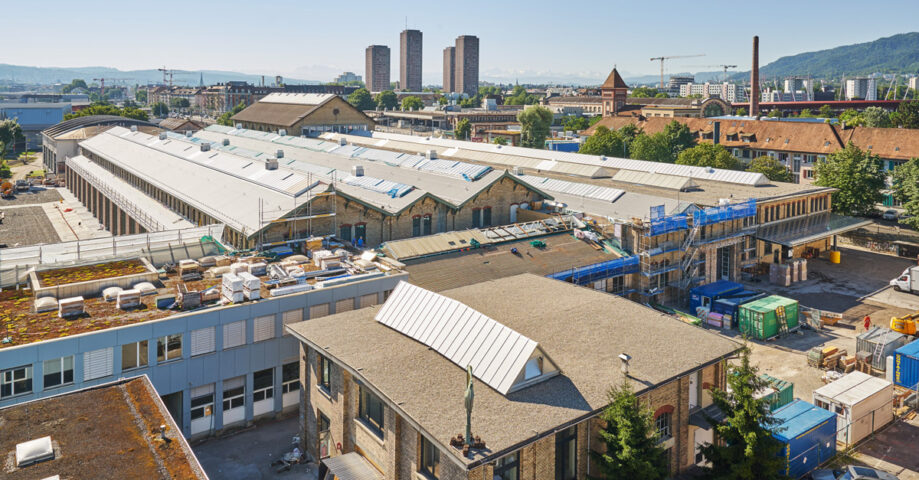
  • Winning project for the first new building on the Werkstadt site in Zurich

    Winning project for the first new building on the Werkstadt site in Zurich

    Used rails as supporting structure
    The winning project “GLEIS X”, which was developed by Leuthard AG Baumanagement and Gigon/Guyer Architekten AG, impresses with its consistent reuse strategy. The concept uses 12 kilometres of used rails from the SBB ReSale as supports and ceiling beams for the main floors. The building envelope also consists of reused windows and corrugated fibre cement panels. This innovative use of used components was particularly recognised by the jury, as it picks up on the history of the site and continues it architecturally. For SBB, which attaches great importance to the preservation and further development of its architectural and railway heritage, this approach was decisive.

    Six commercial floors and one city floor
    The planned new building comprises seven floors, six of which are to be used as commercial space. These areas are intended for small to medium-sized businesses and offer a mix of traditional and innovative commercial space. The first floor, the so-called “city floor”, will house services or cultural offerings and thus promote interaction with the neighbourhood. The ground floor will initially be used for car parking and goods handling, but will also be converted into a commercial floor at a later stage.

    Public project exhibition
    Interested parties can view the competition entries on the mezzanine floor of Building U, Hohlstrasse 400, 8084 Zurich. The exhibition is open until 19 June 2024 from Monday to Friday from 5pm to 7pm and at weekends from 12pm to 4pm.

    Werkstadt Zürich – a place for urban production
    An innovative centre for urban production and commerce is being built on the approximately 43,000 square metre “Werkstadt Zürich” site. SBB is refurbishing the existing buildings and creating jobs close to the neighbourhood for trades, services and highly specialised professionals. The transformation of the site is being carried out in close cooperation with the City of Zurich and the cantonal monument preservation authorities. Around 35 companies currently provide jobs on the site and contribute to the lively development of the neighbourhood.

  • Price increase for holiday flats in the Alps

    Price increase for holiday flats in the Alps

    Prices for holiday flats in the Alpine tourist region were 4 per cent higher in the first quarter of 2024 than in the same quarter of the previous year, UBS reports in a press release on its “Alpine Property Focus 2024″ study. With prices of at least CHF 21,500 per square metre for a second home in the high-end segment, Verbier has replaced the previous leader Engadin/St. Moritz GR. There, holiday flats in the high-end segment are available from CHF 21,200 per square metre. Zermatt VS completes the trio of the most expensive destinations with prices per square metre starting at CHF 19,900.

    The experts at the Zurich-based major bank attribute the price increase to a generally high demand for holidays in mountain destinations. Fully booked hotels at peak times increase the willingness to pay for a holiday home. The price level is also being supported by the strong demand for property and weak new construction activity.

    However, property experts expect prices for second homes to stagnate this year. “At present, there is much to suggest that the current price boom will not continue,” says Maciej Skoczek, property economist at UBS CIO GWM and lead author of the study, in the press release. “The economic downturn will dampen demand for second homes. Prospective buyers are likely to scrutinise the asking prices more critically.” In the medium term, UBS believes that demand will be supported by the affluent members of the baby boomer generation and from abroad.

  • Building licence granted: Ground-breaking ceremony draws closer

    Building licence granted: Ground-breaking ceremony draws closer

    Under the title “Full speed ahead thanks to building permit”, the latest issue of the “Impulse” magazine published by the Aargau Chamber of Industry and Commerce(AIHK) reports on the progress of planning for the new Haus der Wirtschaft in Aarau. On 25 March, the city of Aarau issued the building permit, according to the magazine. The path to the new Haus der Wirtschaft is therefore clear and the ground-breaking ceremony is approaching. The new Haus der Wirtschaft is expected to be completed in spring 2026.

    As the building permit has been granted earlier than expected, the parties involved have been able to press ahead with the planning work and bring forward the implementation planning, the report continues. Tenders are currently being invited for the various works. The award negotiations for the most important contracts are due to take place at the beginning of July.

    According to the plans, the demolition of the existing building will then begin in mid-August. This will be followed by excavation and drilling for the planned seven geothermal probes. The shell construction work will start at the beginning of October 2024. The new Haus der Wirtschaft should be ready for occupation in spring 2026.

    During the construction work, the employees of the AIHK and the AIHK compensation fund will move to other premises in July. It is still unclear where. Talks about possible rental properties in Aarau are ongoing, according to the AIHK.

    According to an earlier report in “Impulse”, the new Haus der Wirtschaft will enable more professional courses and events to be organised. The new building also stands for the ongoing digitalisation and modernisation that has been taking place at the association for several years.

  • Ein nachhaltiger Holz-Hybrid Bau mit einem «Herz aus Holz»

    Ein nachhaltiger Holz-Hybrid Bau mit einem «Herz aus Holz»

    «Ein Herz aus Holz»
    Das Projekt wird als fünfgeschossiger Sockelbau und einem Hochhaus mit einem Atrium – dem «Herz aus Holz» – realisiert. Auf den Dachflächen wie auch auf Teilbereichen der Fassade sind Photovoltaik-Module für die Stromproduktion vorgesehen. Die gesamte Wärme- und Kälteversorgung erfolgt mittels eines Anschlusses an die Fernwärme «Wärmeverbund Seetalplatz». Das Projekt strebt die Zertifizierung mit den Nachhaltigkeitslabeln SNBS Gold und Minergie-P-ECO an. Für den Holz-Hybridbau und die vorgefertigten Fassadenelemente werden ca. 1420 m3 Holz verarbeitet – v.a. Fichte und Tanne. Der Holzbau trägt dabei nicht nur zum angenehmen Innenklima bei, sondern reduziert auch die CO2-Bilanz der Erstellung des Gebäudes. Die fixfertige Vorfabrikation der Fassadenelemente aus Holz in geschützten Werkhallen stellt zudem die Qualität sicher und ermöglicht eine schnellere Fertigstellung der Gebäudehülle.

    Der Kanton Luzern verfolgt eine Vorreiterrolle bei der Umsetzung der Klimaziele, wie auch Losinger Marazzi. Die Immobilienentwicklerin und Totalunternehmung hat sich zum Ziel gesetzt, ihre CO2-Emmissionen bis ins Jahr 2030 um 30 % im Vergleich zu 2021 zu reduzieren. Dieses Ziel erreicht Losinger Marazzi indem neben einem verstärkten Fokus auf Holzbau- sowie Stadterneuerungsprojekte die Nachhaltigkeit in allen Projekten als zentrales Thema behandelt wird.

    Heute ist die kantonale Verwaltung auf über 30 verschiedenen Standorten verteilt. Durch den Neubau werden im Jahr 2026 rund 1500 Angestellte unter einem Dach zusammengeführt und somit eine zentrale Anlauf-, Auskunfts- und Beratungsstelle im neuen Stadtteil Luzern Nord erschaffen, die mit allen Verkehrsmitteln bestens erschlossen ist. Zudem werden sich in den unteren Geschossen des Gebäudekomplexes die öffentlichkeitswirksamen Dienststellen, ein Polizeiposten, Gastronomie und Läden verteilen. Eine Kita im 6. OG sowie Wohnungen in den obersten Geschossen werden zum belebenden Nutzungsmix beitragen.

  • Competition for Zurich district prison decided

    Competition for Zurich district prison decided

    The plan to modernise Zurich District Prison to make it fit for purpose has reached an important milestone. A project led by RW+ Gesellschaft von Architekten mbH from Berlin won the competition to redesign the prison and thus improve the conditions of detention.

    Zurich District Prison, located in District 4 and right next to the largest court in the Canton of Zurich, the District Court, is about to undergo a transformation. After comprehensive studies and the realisation that the current structures no longer met modern standards, the decision was made to build a new building.

    The need for a new building became apparent when guidelines regarding cell size, lighting and the number of ancillary rooms were met. The winning project makes reference to the T-shape of the building and creates a harmonious link between the various buildings in the district complex. Particularly noteworthy is the clever unbundling of routes for inmates, staff and visitors, as well as the secure accessibility to neighbouring judicial buildings. One significant change is the reduction in cell places from 153 to a maximum of 90, which underlines the focus on resocialisation and improved prison conditions.

    The selected concept is to be developed into an approvable construction project by 2026 and then submitted to the cantonal government and cantonal council for approval. If approved and in the absence of any appeals, construction work could begin in 2028.

  • New start on the site of the “Müllerbräu-Areal”

    New start on the site of the “Müllerbräu-Areal”

    Today’s ground-breaking ceremony marks the start of the redevelopment of the “Müllerbräu-Areal” in the heart of Baden. By 2027, a modern district will be created there under the motto “brew – live – enjoy”. In addition to retail and office space, 136 flats will also be built. The traditional brewery H. Müller AG will continue to brew beer at this historic site, where Baden’s brewing activities began in 1897.

    When the building permit is granted in October 2023, the ground-breaking ceremony today will mark the visible start of the transformation of the 8,000 square metre site. The new district next to Baden railway station will enhance the entire neighbourhood and have a positive impact on urban development.

    The art of brewing remains an important part of Baden’s identity. The site design plan still envisages the popular Müllerbräu beer garden. From 2027, the classic Müllerbräu beers as well as specialities from the “Müller Bräu Handcrafted” line, which are already produced by master brewer Simon Neuhold, can be enjoyed there.

    The fourth generation of the family business is investing a considerable sum in the double-digit millions in the new building project. It is possible that part of the development will be handed over to a partner. The construction phase will take around three years, during which the neighbours will be kept regularly informed of progress. The rental flats are expected to be advertised for rent from summer/autumn 2026 and ready for occupancy from summer 2027.

  • Construction of seven new buildings to begin this year

    Construction of seven new buildings to begin this year

    The Zurich Innovation Park is taking shape, as the operator announced in a recent press release. The first phase of the development, which includes the construction of seven new buildings on the apron of the site, will be launched this year. These projects were carefully selected from a total of 28 proposals submitted as part of a global architectural competition.

    The selected projects come from renowned architectural firms such as E2A, Roger Boltshauser, Mulder Zonderland, TEN from Zurich as well as Muoto from Paris and 3XN from Copenhagen. The planned use of the total floor area is divided into around 24 per cent office space, 8 per cent laboratory space and 12 per cent production space, including areas for the production of prototypes. The focus is on flexibility, with a further 36 per cent for a variety of uses and areas for utilities, services and research-related living. Catering, leisure and shopping facilities are also planned.

    The Innovation Park Zurich is pursuing an ambitious sustainability concept that is intended to lead the way for urban developments. Planned measures include the establishment of an energy grid and the installation of large solar panels on roofs and façades to ensure a reduced ecological footprint. By creating flexible and modular building typologies, the Zurich Innovation Park is aiming for long-term usability and sustainability while incorporating the latest technologies.

  • Graubünden Building Authority submits planning application for university of applied sciences

    Graubünden Building Authority submits planning application for university of applied sciences

    The Graubünden University of Applied Sciences is to receive a new university of applied sciences centre at the Pulvermühle site in Chur. The cantonal building construction office submitted the digital building application to the city of Chur on 12 March, exactly one year after the project was approved by the Grisons electorate. “By submitting the building application for the university of applied sciences centre, we have taken another important step,” said cantonal architect Andreas Kohne in a government statement.

    The building construction office expects a decision from the city in the course of the summer. Demolition work on the site will begin in spring. The official ground-breaking ceremony is scheduled for late autumn 2024. If everything goes as planned, the University of Applied Sciences Centre will start operations in 2028.

    The UAS centre will provide space for 2,000 students and 300 employees. Today, the University of Applied Sciences Graubünden teaches in nine buildings at five locations. A total of 178 million Swiss francs will be invested in the project.

    The new building will be constructed by the Partenaris general planning team under the direction of Zurich-based Giuliani Hönger Architekten, who won the project competition in 2021. Local timber will also be used for the construction. The timber has already been felled in a total of 34 Grisons municipalities and is now being processed in eight sawmills in the canton.

  • Hilti Switzerland develops support system for new KSB building

    Hilti Switzerland develops support system for new KSB building

    According to a press release,Hilti Switzerland has “developed a coordinated, cross-trade fastening technology specifically for the new hospital in collaboration with the Baden Cantonal Hospital(KSB) and the planners, engineers and contractors involved, which all companies were able to work with right from the start”.

    It represents progress in the construction industry and could be used in other highly complex construction projects in the future, which also have to fulfil high technical requirements in terms of earthquake safety and fire protection. “We are not only achieving a technically and economically sophisticated solution, but also the safest and therefore most sustainable one,” says Marco Lüthi, project engineer for hospital construction at the Swiss representative of Hilti AG in Schaan, based in Adliswil.

    The new concept is intended for multi-storey buildings. The pioneering achievement consists of a holistic approach, they say. The joint solution puts an end to a common practice whereby each company designed and installed its own fixings and substructures. The isolated approach had made the processes inefficient.

    Thanks to the multiple bracket developed by Hilti, the heating, plumbing, ventilation, air conditioning and electrical trades were able to work together from the outset. This resulted in 60 per cent fewer fixing points (drill holes) and 50 per cent fewer cuts and items. Prefabrication and the elimination of separate brackets meant that the building services companies needed almost 50 per cent less time for installation. The use of lifting platforms, ladders and scaffolding was also reduced, thus minimising the risk of injury for construction workers. Sustainability has also benefited: In comparison with conventional fastening systems, 50 per cent of CO2 was saved.

    The new KSB building is expected to cost 580 million and is scheduled to go into operation in autumn 2024.

  • New construction of the Witzwil regional prison

    New construction of the Witzwil regional prison

    The plans to modernise the prison infrastructure in the canton of Bern are taking shape. The new building is to be financed with a total budget of CHF 13.5 million, which the cantonal government has now submitted to the cantonal parliament. This step is part of a comprehensive strategy to modernise the prison system, which is set out in the Canton of Berne’s master plan.

    CHF 12 million has been earmarked for the competition to ensure the best possible realisation of the new building project. The need for this new building arises from the condition of the existing Biel/Bienne regional prison and the requirement to provide adequate support for the closed prison system. The clarifications on prison space requirements and operating costs requested by the Grand Council in advance have now been provided, which means that the project is based on solid data.

    In addition, the realisation of the new building requires the relocation of a number of agricultural buildings that are essential for prison operations in Witzwil. In order to avoid expensive interim solutions, it is proposed to construct these buildings from scratch, for which an additional CHF 1.5 million has been budgeted.

    The vote on these financing proposals is scheduled for the 2024 summer session of the Grand Council. The approval of these loans will not only advance the urgently needed modernisation of correctional facilities in the Canton of Bern, but also ensure an efficient and sustainable solution for the accommodation of offenders.

  • New construction and renovation of the Sempach training centre

    New construction and renovation of the Sempach training centre

    In view of the increasing requirements in civil defence, Lucerne feels it has a responsibility to fundamentally modernise the infrastructure of the Sempach training centre. In addition to renovating the existing buildings, the project also includes the construction of new functional facilities to meet the challenges of modern training and operational conditions. This reflects the efforts to develop the centre into a leading competence centre for civil protection in the region.

    The planned special credit is intended to finance both the structural improvements and the implementation of sustainable energy solutions. The canton is thus sending out a strong signal in favour of the future viability and sustainability of its civil protection services. The vote in March will show whether the people of Lucerne are prepared to invest in this pioneering measure, which will not only increase safety, but can also serve as a model for sustainable construction.

  • Innovative training centre for civil protection in Chur

    Innovative training centre for civil protection in Chur

    The new training centre in Meiersboda, located in the municipality of Churwalden near Chur, marks a decisive step in the development of civil protection in the region. In view of the poor condition of the previous building, which was around 50 years old, the government decided to construct a completely new building. This decision followed in-depth analyses and sustainability calculations, which showed a new building to be significantly more efficient and cost-effective than a renovation.

    The “ZicZAC” project proposal, which was the winner of a competition, envisages a three-storey timber building that blends seamlessly into the natural surroundings. The design impresses with its clear structure, natural building materials and a central atrium that provides light and clarity. The building complies with the Minergie-P-Eco® standard and integrates a photovoltaic system with an output of 100 kilowatts peak on the roof.

    The new centre will not only serve as a training facility, but will also function as a deployment and command centre for the cantonal command staff in the event of an emergency. It offers optimal conditions for the training and deployment of civil defence and partner organisations and helps to ensure operational readiness and resilience in crisis situations.

    The financing of the project will be submitted to the Grand Council for discussion and then presented to the Grisons electorate for approval. If approved, implementation planning will begin in autumn 2024, with construction starting in spring 2025 and commissioning planned for summer 2027. The project underlines the commitment to efficient, sustainable civil protection and sets new standards for training infrastructure in the region.

  • Redesign in the heart of Thun

    Redesign in the heart of Thun

    Bälliz, located on the south-western edge of Thun’s old town, is home to four properties owned by the Frutiger Pensionskasse. Despite their poor condition, these historic buildings are worth preserving and some are still rented out. The special significance of the Bälliz area is reflected in its inclusion in the ISOS Federal Inventory, which characterises it as a site of national importance. As a result, its characteristic structure must be preserved as far as possible.

    Previous challenges
    A feasibility study carried out in 2015 was rejected by various federal commissions. A new five-storey building was particularly controversial. In response, a workshop was organised to define new guidelines for the development of the area and prepare a project competition.

    A winning concept emerges
    Several designs were submitted as part of a 2022 study commission. The team from Baumann Lukas Architektur impressed the judging panel with a design that ideally combined urban and atmospheric aspects. This design honours the historical structure of the region and shows respect for the typical belt-shaped parcelling. It integrates the main houses and outbuildings in a way that reflects the significance of the site. The ground floor will continue to offer areas accessible to the public, while the upper floors will mainly contain flats.

    Diversity versus monotony
    The design by Baumann Lukas Architektur stands out for its diversity. The design makes reference to the characteristic structures of the Middle Ages and provides for innovative developments, such as the public “Gässlihof”, which retains its authenticity by preserving a historic building. In contrast, other submitted designs were not as differentiated in their proposals and were not able to convince the judging panel to the same extent.

  • Cantonal properties in Riehen win sustainability award

    Cantonal properties in Riehen win sustainability award

    The properties of the Canton of Basel-Stadt at Hirtenweg 16 to 28 in Riehen have won this year’s international prize for sustainable architecture, the cantonal finance department informs in a statement. Every year, the Faculty of Architecture of the University of Ferrara and the building materials company Fassa Bortolo award the prize to projects “that are geared to the needs of people and serve as role models in the careful use of natural resources”, it continues. In this year’s competition, the cantonal properties prevailed over numerous other projects from all over the world.

    The international jury was particularly impressed by two aspects of the properties in Riehen. One was the socially acceptable densification of living space. Of the five buildings already on the plot, the canton renovated three. The remaining two were demolished and replaced by three new buildings. This almost doubled the number of flats from 32 to 63.

    On the other hand, the resource-saving solid wood construction method was the decisive factor in the project realised by the project team Harry Gugger Studio AG, Erne AG Holzbau and Fontana Landschaftsarchitektur. The wooden modules were prefabricated in a production hall and then assembled on site within a very short time. During the entire construction work, the residents of the properties were able to stay on site. Residents of the deconstructed buildings moved into an already completed new building before their old house was demolished.

  • Canton Zurich identifies untapped potential for solar power

    Canton Zurich identifies untapped potential for solar power

    Falling prices for solar installations have fuelled the construction of new photovoltaic systems in the canton of Zurich, as an analysis by the cantonal statistics office shows. According to this, there were at least 12,600 active photovoltaic systems in the canton at the end of 2021. Almost all of them were installed after 2010, according to the data. They produced about 0.3 terawatt hours of solar electricity per year, which is roughly equivalent to the annual electricity consumption of the canton of Appenzell Ausserrhoden.

    Despite the increase in installations, the analysis finds that there is still a great deal of untapped potential for solar power. About half of all Zurich systems are installed on single-family homes. There is still a need to catch up with multi-family houses and buildings that are not used for residential purposes. The latter also offer space for larger systems with a higher installed capacity.

    The analysis identifies further potential in new buildings. When the new cantonal energy law comes into force in September 2022, all new buildings will have to contribute to covering their electricity demand. It can therefore be assumed that new systems will be installed in the coming years.

    The Canton of Zurich wants to achieve zero greenhouse gas emissions by 2040 – or by 2050 at the latest. Accordingly, according to its own information, it attaches great importance to the use of the existing potential for renewable electricity production. ce/ssp

  • New professions through the circular economy?

    New professions through the circular economy?

    Prof. Dr. Stephen Wittkopf, how do you find a flat that is built according to the principles of the circular economy? That would be very difficult at the moment. In Switzerland, there are only a few residential buildings that have been built according to the principles of the circular economy, in Winterthur for example. In industry and office buildings, people are already a bit further ahead.

    The idea of reuse is very plausible. Why is it only being implemented hesitantly? Because not everything that is built today is suitable for reuse. In many buildings there are so-called composite materials. This means that different materials such as concrete, wood or steel have been glued together. You can’t just separate them. This creates an enormous amount of construction waste. Of all the material that is imported into Switzerland, i.e. clothes, computers, food and other commodities, by far the largest part is destined for the construction sector. That is, for roads, bridges and buildings. All of this is enormously weight-intensive. The construction sector therefore clearly has the greatest potential for saving material and energy through reuse.

    Is the circular economy only about reusing, or also about rebuilding or continuing to build? The concept of the circular economy can indeed be defined so broadly that it includes all reuse. The question of how to preserve and repurpose existing buildings is the first level of the circular economy. The second level is the reuse of building components and the third level is about recycling and reprocessing materials.

    How would new buildings have to be designed so that the components can be reused decades later? The materials must be separable and the components repairable. This means that the purest possible materials are central, which are not glued together but provide stability with plugs and screws. Repairability is important for the longevity of the individual components. It must not be the case that you have to throw away an entire window just because the window handle no longer works. And last but not least, meticulous documentation is important so that it can be traced later which materials are where. At the moment, this is not yet sufficiently recorded.

    Components are continuously being developed; my grandmother had front windows that could be removed, today there is triple glazing. Is it realistic to reuse them in 50 years? Many products are so good today that a noticeable improvement can only be achieved with much greater effort. And you don’t have to reuse components one to one. In the case of windows, there is a good example from the canton of Zurich: older, double-glazed windows were supplemented with a third glazing; as a result, the improved windows could be reused in a new building.

    That sounds as if the reuse of materials completely changes the work for architects. Yes, it requires a radical change. Architects’ work no longer starts on a greenfield site. They have to incorporate existing materials and the availability of products into their concept. But this paradigm shift does not have to become a design or economic obstacle; it can lead to a new language of form.

    So the client must also be on board. Exactly, they play at least as important a role. The client can shape the brief differently, and specify, for example, that only second-hand materials are to be sought and that planning is to be based on this. It will certainly be a complex puzzle – but other industries also work with complex and flexible supply chains. The construction industry is lagging behind.

    What is the situation in terms of profitability? Can the circular economy in construction be profitable? It can, but not without effort and not overnight. It needs new business models, but also financial support, because it is currently a niche market. However, I am firmly convinced that this will change.

    And what might the new business models look like? Maybe one day we will rent recyclable materials – windows, doors, wood or concrete – instead of buying them. Or we design a new building from the outset as a material store for later buildings. This results in a completely new basis for calculation, because the material costs do not have to be amortised in their entirety. The materials could be traded on material exchanges – by the way, this is already done in other countries like Denmark. Maybe even new professions will emerge, such as component hunters.

    That sounds exciting. So it changes the whole concept of new buildings? Definitely. If the future of a building is taken into account, it will be built in such a way that it can be converted with as little effort as possible. Society is changing, and with it the needs for living space. A neighbourhood that was once designed for families may no longer fit the needs of the now older generation decades later. If the family flats can be converted into smaller ones with relatively little effort, money, materials and energy can be saved.

    In which areas of the construction industry would you describe Switzerland as progressive? Switzerland is already quite advanced in the reuse of concrete. Today, natural stone or gravel is replaced by processed construction waste that would otherwise end up in landfill. In addition to reuse, this has the advantage of saving landfill fees. In large new construction projects, building concepts are also becoming more and more flexible. In general, I observe a growing interest in circular economy among building owners. In Switzerland, the canton of Zurich has a pioneering role. And we, as a university, are of course researching the topic and have the task of sensitising a young generation to the issue by giving high priority to used materials in our training and further education courses.

  • Implenia wins building construction contracts worth more than CHF 170 million in Germany and Switzerland

    Implenia wins building construction contracts worth more than CHF 170 million in Germany and Switzerland

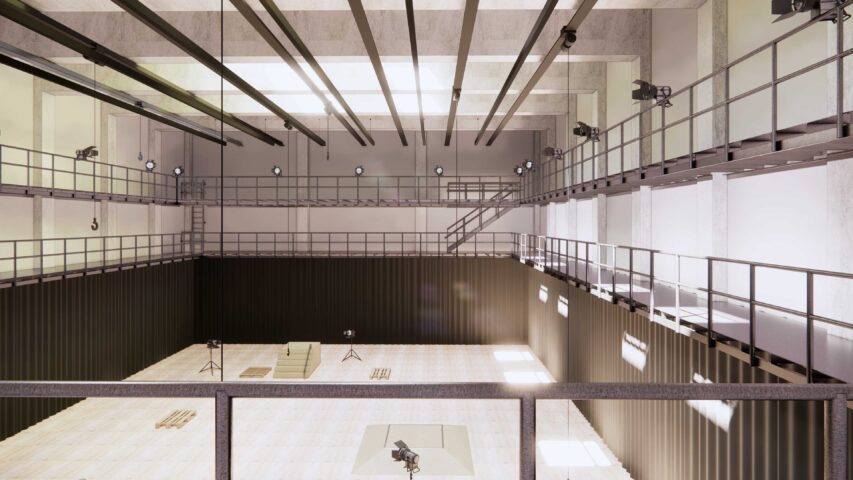
    Implenia has been commissioned by the Bavarian State Ministry of Science and the Arts to act as total contractor for the planning and construction of a new rehearsal and workshop centre (PWZ) for the Bavarian State Theatre in Munich, ready for operation. After the Regensburg Initial Reception Centre and the Regensburg State Housing Estate, this is already the third project Implenia has realised as a total contractor for the Free State of Bavaria as client, represented by the Regensburg State Building Authority. Planning began in March and construction is due to start in June. Handover to the client is scheduled for December 2026. The order volume for Implenia is more than EUR 140 million.

    The agreed services include the planning and construction of the PWZ, from the excavation pit for the 93-metre-long and 86-metre-wide L-shaped building to the interior design, including building services, materials handling technology and stage technology for three rehearsal stages, as well as workshop equipment and canteen facilities. The contract also includes the design of the outdoor facilities, including a depot with access zones, delivery and parking areas for lorries and containers, an underground car park and the landscaped outdoor area.

    The technically demanding project includes the creation of large, freely spanned spaces for the rehearsal stages, which, as a steel composite construction, are reminiscent of bridge construction. An acoustically highly effective building partition will protect the rehearsal wing from noise and vibrations from the workshop wing. Other special soundproofing devices will allow the rehearsal stages to be used in parallel. Implenia was able to win the best planners for the special trades of stage technology and workshop technology.

    Partnership and integrated approach impressed even at the bidding stage
    Implenia impressed even at the bidding stage with its partnership approach and a team of highly qualified internal and external specialists who offered solutions to the complex technical requirements of the project. In the implementation phase, Implenia will manage the team and, together with its own specialist planners, realise the input and implementation planning as well as the new building ready for operation.

    As an integrated construction and real estate service provider, Implenia will provide a large proportion of the services itself across all divisions: The foundation engineering division is responsible for the excavation pit. For the shell construction, specialist knowledge from the civil engineering division will be called upon. BCL Building Construction Logistics, a member of the Implenia Group, is responsible for the smooth, safe and sustainable organisation of the construction site. The Façade Technology division is contributing its expertise to the construction of the building envelope made of dark grey corrugated fibre panels, prefabricated concrete elements and aluminium window elements with external venetian blinds.

    Digitalisation and tools to increase efficiency
    A BIM model was set up for the new building, on which all planners are working. This means that the planning status is transparent at all times and can be flexibly adapted. The BIM model is also used in the execution, for example to coordinate the various trades. In addition, it is planned to use the model for construction process simulations, for quantity takeoff and for tendering the finishing trades. Lean construction methods and tools are used to optimise construction processes, to control material flows and to precisely coordinate the trades. This enables a continuous and even construction process.

    High sustainability requirements
    Sustainable new construction and operation are important to both the client and Implenia. Accordingly, the building is being constructed in accordance with the Building Energy Act (GEG § 10), all materials comply with the “low-pollutant construction” requirements catalogue (QN 3) of the Bavarian State Construction Directorate, and the technical systems are designed for sustainable and environmentally friendly operation.

    Besenrainstrasse and Katzenbachstrasse Zurich – sustainable replacement housing
    In Switzerland, Implenia was commissioned by client Swiss Life Asset Management AG as general contractor for the replacement housing “Besenrainstrasse/Morgentalstrasse” in Zurich Wollishofen. This is a project with 36 rental flats and 22 underground parking spaces, which will be built using the solid construction method. Construction work started in March with a pollutant clean-up, and handover is scheduled for the end of November 2024. SNBS Platinum certification is being sought for the new building.

    Implenia was also awarded a contract by the SBB pension fund for a replacement building on Katzenbachstrasse in Zurich-Seebach. Implenia will also be the general contractor for this project. The new building will have 30 high-quality rental flats with a ventilated wooden façade on three floors and 18 underground parking spaces. Construction work has already started in February with a pollutant clean-up carried out by the master builder’s division. Completion is scheduled for February 2025. The flats will be built to the Minergie ECO standard.

    Through these two contracts, Implenia is further contributing to the sustainable renewal of Switzerland’s real estate stock with its comprehensive expertise. The total value of both contracts is over CHF 30 million.

    The three rehearsal stages for the houses of the Bavarian State Theatre and the workshops will go into operation at the end of 2026 (Image: © Dömges Architekten AG, Regensburg).
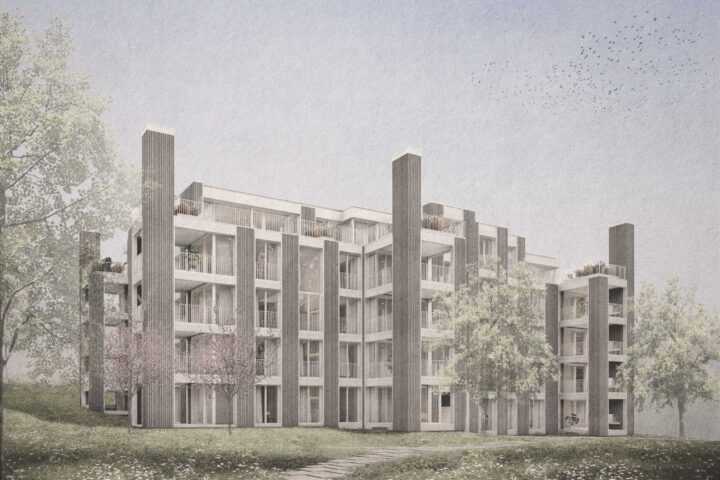
    New replacement residential quarter Katzenbach with 30 flats in Zurich-Seebach (Image: © Think Architecture AG).

    Media contact:
    Corporate Communications, T +41 58 474 74 77, communication@implenia.com

    Investor and analyst contact:
    Investor Relations, T +41 58 474 35 04, ir@implenia.com

    Investor agenda:
    16 August 2023: Half-year results 2023, analyst and media conference

  • Storz Medical expands company headquarters with two new buildings

    Storz Medical expands company headquarters with two new buildings

    Storz Medical broke ground for two new buildings at its headquarters in Tägerwilen on 21 April. The manufacturer of devices for shock wave therapy is on a growth course. Therefore, it needs a new warehouse and a new administration building, according to a media release.

    Accordingly, a storage capacity of 30,000 cubic metres will be built on a gross floor area of 3848 square metres. The office building will be 2390 square metres in size and three storeys high, just like the existing building. Both new buildings will have an “extremely high standard with aesthetically high-quality architecture in a timeless design”. The façade of the office building, for example, will be made entirely of glass.

    The designs come from the architectural firm Günter Hermann Architekten from Stuttgart. The construction is being carried out by the total contractor Methabau from Amriswil TG.

    A heat pump is also planned, which can also cool the offices in summer. A new photovoltaic system will add another 1600 solar modules to the existing 648. The plant will generate 1000 megawatt hours of electricity per year. Of this, 700,000 kilowatt hours are expected to be fed into the local grid.

    As a result, according to Storz Medical, it will provide electricity for at least 155 households and “is expected to be one of the largest private producers of sustainable energy in the canton of Thurgau”, the media release states.

    Storz Medical produces and distributes medical devices for shock wave therapy in more than 130 countries. The devices are used in the fields of orthopaedics, urology, dermatology, neurology, cardiology and veterinary medicine, for example to break up kidney stones. The company employs 259 people worldwide, including 176 at the Tägerwilen site.

  • New hub for the energy industry at the Museum of Transport Lucerne

    New hub for the energy industry at the Museum of Transport Lucerne

    The “House of Energy” at the Museum of Transport Lucerne is a new, long-term platform on the subject of energy. Not only transport and mobility are connected with energy – energy is needed for every form of locomotion. But it also plays a key role in the burning issue of climate change: transport alone accounts for more than a third of CO2 emissions in Switzerland.

    Many people still do not understand the complex interrelationships. The Swiss Museum of Transport wants to change this with its new exhibition. On an area of 600 square metres, the interrelationships and their effects on society are to be shown: How do housing and mobility interact? What might innovative solutions and Switzerland’s energy future look like in 2050? Visitors will be able to view exhibits and interactive attractions that illustrate and bring to life the past, present and future of energy. In addition, various conferences and events on the topic of energy are planned from 2023.

    The purpose-built building by Gigon Guyer Architekten from Zurich, which replaces the former “Schienenverkehr 1” hall, was designed with the latest generation of energy technology equipment: Minergie P is the standard, the energy centre runs on water, and photovoltaic systems have been installed on the roof and the façade. Thanks to this energy centre, the entire Swiss Museum of Transport will be able to run largely on renewable energy in the future. In realising the project, the Swiss Museum of Transport worked together with partners from politics, administration, science and business. The “House of Energy” is intended to serve as an educational venue for schools and universities as well as an experimental laboratory and innovation location for initiating and accompanying activities and projects in the context of sustainable mobility.

    The Swiss Museum of Transport in Lucerne, with its strong visitor numbers of 500,000 to 600,000 people per year at the museum, sees itself as a partner in the transformation process towards the targeted net-zero climate neutrality in 2050. The new energy platform is intended to promote interest in and discussion of the topics of energy and mobility with a focus on Switzerland. The goals include imparting knowledge, creating a strong connection to the everyday lives of visitors, and transparently presenting the challenges along with possible solutions and communication in relation to schools and the professional world. The interactive exhibition will open in April 2023. The new building, which does not include the energy centre and tenant improvements, cost around 37.8 million Swiss francs.

  • New housing construction lags behind population growth

    New housing construction lags behind population growth

    Across Switzerland, around a quarter less new residential space is being built than a few years ago. In view of the rising population, there is a threat of an undersupply of urgently needed new residential construction, according to a media release from Zürcher Kantonalbank(ZKB) on the new study of its real estate research.

    The study cites a declining number of building applications as reasons for the slowdown in construction activity. On average, it takes 140 days from planning application to approval in the country, which corresponds to an increase of 67 percent compared to 2010. Those who want to build wait the longest in densely populated regions. The time span for the canton of Zurich, for example, is given as almost 200 days, which corresponds to an increase of 136 percent compared to the year of comparison and a waiting time of almost one year. The negative front-runner is the canton of Geneva, where 500 days pass before a housing project is approved.

    Furthermore, high construction requirements make it difficult to create new housing quickly. Appeals also contribute to the slowdown in the new construction sector. The real estate research is based on a study of actually realised new housing projects, according to which every tenth approved housing project was not realised in 2010 and the rental housing market is lacking 4000 flats per year.

    In the latest issue of Immobilien aktuell, the Zürcher Kantonalbank provides data-based facts and analyses on the topic of housing shortage. In a further article, new housing construction is compared to a hurdle race.

  • Arbon gets two b-smart hotels

    Arbon gets two b-smart hotels

    B_smart selection, with locations in Liechtenstein, Austria and Switzerland, will become the new operator of the Müllers self check-in hotel in Arbon and will also open another self check-in hotel. The Müllers brand is to remain, according to Heinrich Toldo, CEO of b_smart selection, who was quoted in an announcement about the change of operator.

    By continuing to operate the Müllers at the same time as the additional new hotel building, the demand for overnight stays in the canton of Thurgau can be served with two different accommodation options in the future.

    Hotel operations at the new b_smart hotel Arbon are scheduled to start in August 2023. The new hotel building was built within walking distance of the Müllers and offers 63 rooms and suites as well as a restaurant and bar. On the top floor, guests can use a fitness and wellness area with a view over Lake Constance.

    The hotel takeover does not involve any changes for guests. For existing and new bookings, coffee to go is included as before, breakfast and other catering must be organised elsewhere. The Schifflände Bar on the ground floor, operated by Schifflände GmbH, will remain open, it says.

    The change of operator of the Hotel Müllers in Arbon has been announced for 1 May. The cooperation between Hotel Müllers and b_smart services AG has already existed since the reopening in autumn 2022, it says. Since then, the service provider for accommodation businesses based in Liechtenstein has been handling the booking management and is responsible for 24-hour availability.

  • Total renovation and new construction in record time

    Total renovation and new construction in record time

    The Hagenmatt housing estate in Root, with around 160 flats, is a good example of successful total renovation and redensification: the estate, built in the 1970s, offered ideal conditions for this project. For the implementation, Die Liegenschaftsverwalter AG, representing the owner Schürch Immobilien AG, engaged PP Baumanagement AG from Kriens for the overall project management, cost planning and construction management. In addition, six new buildings with a total of fourteen terraced detached houses and fourteen 2.5-room flats in timber construction were realised by Strüby Konzept AG from Seewen SZ on behalf of the owner.

    In addition to a more attractive design of the flats, the renovation also aimed at optimising the building’s appearance, redesigning the outdoor spaces and optimising energy efficiency. The latter was achieved thanks to technical measures such as triple-glazed windows and a connection to the EWL district heating system, as well as switching off the oil-fired heating system. For more living comfort, underfloor heating was installed in the existing property, the balconies were extended, the kitchens were equipped with new appliances and the wet rooms were renovated.

    The newly built single-family and multi-family houses are all two-storey and blend in harmoniously with the previously underutilised areas. They feature Minergie-compliant building envelopes, green flat roofs, generously designed roof terraces, and large windows that ensure that the houses are flooded with light. The total renovation of the Hagenmatt development and the construction of the six new buildings was completed in stages within eight months.

    The fast construction time – especially for the new buildings – is due to the chosen timber construction: The components are delivered to the construction site prefabricated, so that assembly can begin directly on site. The Strüby companies purchase around 20,000 cubic metres of wood per year directly from Swiss forest owners. The wood is sawn and glued in the respective region before it is processed further. Thanks to these short distances, grey energy is significantly reduced.

    In addition to the short construction time, the owner of Die Liegenschaftsverwalter AG, Andreas Gasser, is proud that the project’s total cost budget of 42 million Swiss francs could even be undercut. Moreover, the quality of living for the tenants, who were not yet affected by the conversion in the first stage, was not restricted at any time. Gasser emphasises that by cleverly increasing the density by adding storeys, extensions or supplementary buildings, it was possible to create more living space on existing areas and at the same time curb land wastage.

  • Schlössli Schönegg becomes an innovation campus

    Schlössli Schönegg becomes an innovation campus

    The historic Schlössli Schönegg and its chalet on the Wilhelmshöhe in Lucerne have belonged to Stefan Muff, the main shareholder of the Axon Active Group, since 1998. Together with his brother Bruno, Muff renovated the building, which at the time was in great need of renovation, in close consultation with the monument preservation authorities. It then served as the headquarters of Endoxon AG, which developed technologies for digital maps and was sold to Google in 2006. Since 2008, the “Schlössli” has been the headquarters of the Axon Active Group, which is strategically positioned in the field of digital transformation. Axon deals with complex big data solutions for globally operating companies as well as digital ecosystems for diverse industries. Today, the group has over 750 employees at 18 locations around the globe. Currently, 50 people work at the headquarters – and the number is growing rapidly.

    Muff had great visions for the Schönegg castle from the very beginning. He already planned for extensions when he bought the building. Today, the building can no longer meet the future requirements as a centre for providing digital services and for the planned research activities and the newly developed “DeepWorking” operating concept. For this reason, the newly initiated project envisages a supplementary new building as the “Axon Campus”, which is to serve as an innovation laboratory. This is intended to promote the interdisciplinary cooperation of various interest groups and ideas. The campus brings together stakeholders from education, politics, public authorities and business and lets them participate in forward-looking forms of society and business. At the same time, innovations can be experienced and tested in digital ecosystems. The environment is also intended to offer ideal conditions for start-ups, which is why the project has also been reported as the “Silicon Valley of Central Switzerland”.

    Sketch of the planned extension.

    To meet the demands of a modern campus, the future space must be open, flexible and multifunctional. A gross floor area of 1500 square metres is planned with about 150 workplaces. The project also includes a high-quality canteen with a production kitchen and a fully digital and multifunctional auditorium for 120 people with an adjoining bar area. The new building will be adapted to the special local conditions and the resulting hazard situation due to possible landslides and rock falls. Comprehensive slope protection is guaranteed by the new building. The changing mobility requirements are also taken into account: by means of rented parking spaces on the Gibraltarstrasse level and the installation of e-mobility compliant parking and bicycle spaces in the new building, which is estimated at 15 million Swiss francs. The approval process is still underway. Occupation is expected in 2025 at the earliest.

    Thanks to the project by the renowned architectural firm of Daniele Marques from Lucerne, the Wilhelmshöhe place of power will increasingly become a house of encounter and digital transformation. Muff envisions the place developing into a holistic innovation location. A possible opening of the rooms at weekends for educational institutions or other curated events is conceivable.

  • Juch site to become a beacon of circular construction

    Juch site to become a beacon of circular construction

    Graber Pulver Architekten AG from Zurich has won the architectural competition of the City of Zurich for the planned new building of the recycling centre Juch-Areal of Entsorgung + Recycling Zürich(ERZ) in Zurich-Altstetten. With the new building, the Zurich Office for Structural Engineering and the ERZ want to create a pioneering project in the recycling of building components, according to a media release.

    According to the statement, they want to “explore to the maximum the possibilities of reusing building components and the potential of the circular construction industry in public buildings”. For this reason, the submitted competition projects should feature as high a proportion of reused components as possible.

    For example, most of the building material for the winning project came from the immediate vicinity of Zurich. Used reinforced concrete slabs are used in the operations building and the hall floor. The walls consist of wooden frame constructions insulated with old books, magazines and clothes. Discarded scaffolding will be repurposed as storage shelves. The existing hall structure is to be rebuilt only slightly adapted.

    The façades will be protected from the weather by panels of recycled glass and aluminium as well as old kitchen covers, doors and table tops. The greening of the façades will provide a habitat for plants and animals and ensure local heat reduction.

    By using old building components, the city of Zurich saves almost 600 tonnes of carbon dioxide compared to a conventional new building. This corresponds to a 40 per cent reduction in greenhouse gases.

    Second place went to Studio Hammer from Basel. Third place went to the Zurich-based consortium Studio Burkhardt and Lucas Michael Architektur.

  • Werkstadt Zurich: Transformation into a climate-friendly neighbourhood

    Werkstadt Zurich: Transformation into a climate-friendly neighbourhood

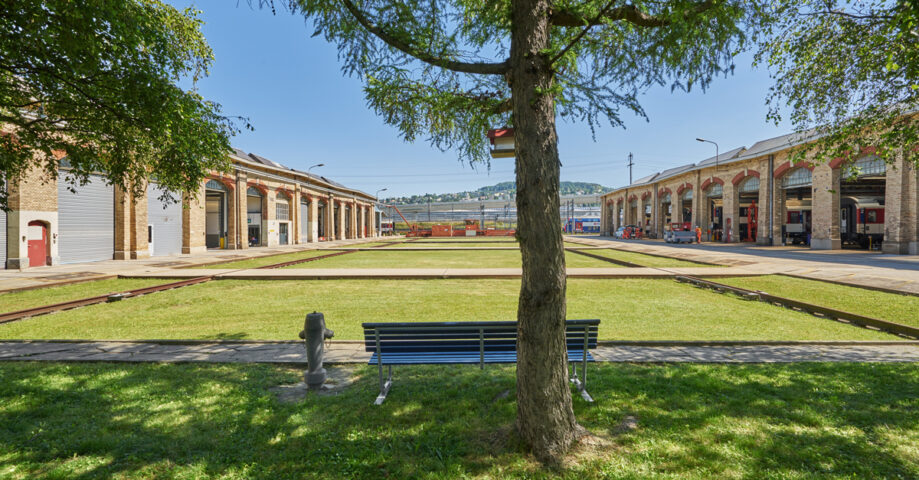
    SBB is transforming the 42,000-square-metre Werkstadt site in Zurich into a vibrant urban space, to be completed by 2035. This will preserve the fabric of its historic buildings, which will one day be joined by both new buildings and extensions to create an exciting cluster. The transformation of the former SBB workshops will be exceptionally sustainable, featuring climate-conscious building measures, circular economy elements and an innovative energy concept.

    Developing existing buildings
    In close coordination with the monument preservation authorities, the existing buildings will be gradually renovated and joined by new buildings and extensions in the coming years. At the heart of the site, the former carriage workshop ‘Building Q’ will allow for a diverse usage mix under one roof from 2023. The development will offer an exciting interplay between the fabric of historic buildings, structural densification and public use of outdoor space.

    © SBB AG, Martin Zeller

    Environmentally friendly construction
    ‘SBB wants to be climate-neutral by 2030, and climate-compatible construction is an important factor in achieving this objective,’ said Gabriele Bühler, Project Manager at SBB. Various climate-conscious building measures have been incorporated into the planning of the site. That includes configuring the new buildings to promote the circulation of cool air currents. Where possible, the roof water will be allowed to seep into an above-ground system for further cooling. Surfaces will remain unsealed where possible. The transformation follows a systemic approach that considers the building along its entire life cycle. The aim is to keep CO2 emissions as low as possible. To ensure circularity, all construction components are recorded on the Madaster platform. There is also a particular focus on reusing components. 

    Energy concept: 100% renewable
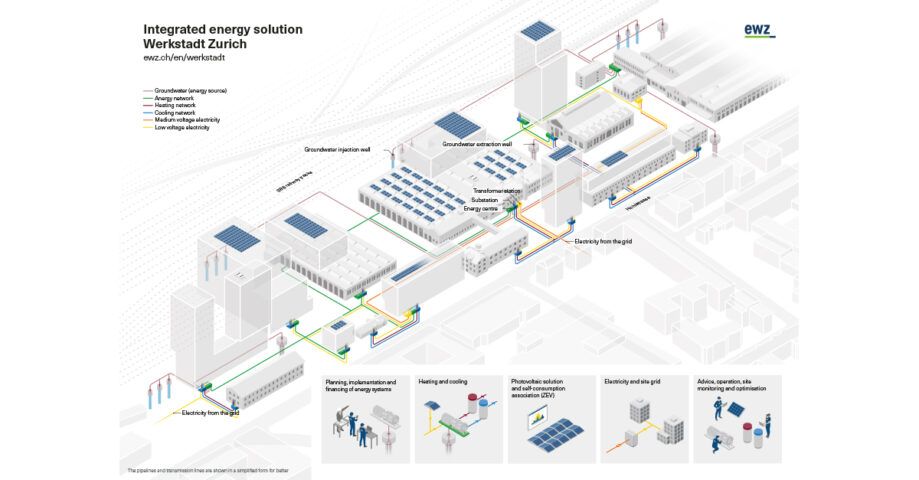
    ewz was able to win SBB’s public tender with an energy solution based on 100 per cent renewable energies. Groundwater, which is collected in four wells on the site, serves as a source of heating and cooling. From these wells, the water flows to the energy centres in the larger buildings, which house heat pumps and cooling machines that bring the water to the required temperature. An anergy network connects all the buildings and ensures that excess energy is exchanged between the building groups. For example, excess heat or cold in one building can be used in another. This system also has the advantage of not requiring groundwater boreholes in every building: the smaller buildings are connected to the energy centres via a local heating network. Heating and cooling is generated without any CO₂ emissions, as the rest of the electricity also comes from renewable sources. The use of a monovalent energy system will ultimately lead to a CO2 reduction of over 2,100 tonnes per year.

    High self-consumption of solar power
    ewz also plans, finances, creates and operates the transformer systems and medium-voltage lines to supply the site with electrical energy. ‘Some of the electricity that the people in the Werkstadt use on the site is produced there using photovoltaics,’ explains Markus Fischer, Head of Sales at ewz Energy Solutions. To this end, SBB and ewz want to make the best possible use of the roof areas for solar power production. Both the roof of Building Q, at the centre of the site, and the roofs of other buildings with a suitable structure and orientation for generating solar power are to be kitted out with photovoltaic systems. SBB requires its tenants on the site to form a self-consumption association (ZEV). ‘When completed, the ZEV will consist of around 300 parties that will use locally produced electricity on the site. This allows us to achieve a high self-consumption rate, which, in turn, makes a significant contribution to the cost-effectiveness of the photovoltaic systems,’ says Markus Fischer. He expects self-consumption on the Werkstadt site to be almost 100 per cent when completed.

    © SBB AG, Martin Zeller

    The benefits of contracting
    For the owner, this form of collaboration has various benefits, including keeping financial risks and management costs very low. If a system fails, ewz makes sure it gets back into operation as quickly as possible. To ensure that the system can be operated efficiently, ewz will start undertaking energy-related operational optimisations shortly after commissioning. As part of an ongoing process, the systems will be optimised and adapted to the actual needs relating to their use. By extension, this ensures that they consume as little energy as possible, generate minimal costs and offer maximum convenience for users.

    Werkstadt Zürich is a successful example of a forward-looking approach to repurposing a historic industrial site. With the targeted renovation and expansion of existing buildings and a ground-breaking energy concept, the developers – together with the planners and ewz – are creating added value for future users and the environment alike. Find out more about the Werkstadt site’s innovative energy concept here.


    https://www.ewz.ch/en/business-customers/real-estate.html

  • Stadler Blechtechnik celebrates groundbreaking for new company headquarters in Au

    Stadler Blechtechnik celebrates groundbreaking for new company headquarters in Au

    Stadler Blechtechnik AG, founded in 2007, is having a new company headquarters built in Au, not far from its old location. “We are building anew to enable further growth and to optimise production,” company boss Urs Stadler is quoted as saying in a corresponding announcement by i+R Industrie- & Gewerbebau AG. It was engaged by Stadler Blechtechnik as general contractor for the new building.

    Stadler Blechtechnik currently employs ten people in production and another five in administration. The new building will provide space for up to ten additional employees. A three-storey production hall is planned, the upper floors of which will largely be rented out. In addition, there will be a five-storey office wing and an underground car park with a total of 47 parking spaces.

    Sustainability will be incorporated in the form of air-source heat pumps for heating, cooling and hot water. In addition, green flat roofs and a photovoltaic system with an output of around 200 kilowatts peak are planned. Construction is scheduled for completion in April 2024. “We have a sporty schedule, we have to carry out a closed dewatering for the basement and build a 40-metre-long wall for the underground car park entrance,” explains i+R project manager Daniel Herzog in the press release.

  • Halter starts construction of the Toffematt housing estate

    Halter starts construction of the Toffematt housing estate

    With the ground-breaking ceremony, the construction of the Toffematt housing estate with 30 condominiums has begun in the Bernese municipality of Toffen. Halter AG is responsible for the development of the project with three new buildings, according to a media release. Thanks to a new form of cooperative ownership, condominium ownership is affordable for people with different purchasing power and remains cost-effective in the long term, according to the detailed Halter release.

    The ground-breaking ceremony on Thursday, 16 March, was attended by community president Carl Bütler, pastor Nadja Heimlicher and parish councillor Reto Casty. In October 2019, Halter AG acquired the right to purchase the plots from the Toffen community and the Belp-Belpberg-Toffen parish. The sustainable price of the land was linked to the condition that the resulting living space would be offered in a moderate price environment. in 2021, the newly founded Toffematt housing cooperative acquired the plots and Halter AG developed the development as a residential property project with building rights.

    According to the press release, the housing cooperative’s (WBG) sponsorship model not only enables condominium ownership in Toffematt with purchase prices 10 to 20 per cent below market prices. It is also intended to prevent speculation.

    With the purchase of a flat, the owners join the WBG Toffematt. According to the building lease contract, future profits from the sale of the flat benefit the cooperative. That is why a short-term resale is not worthwhile, according to the statement. And the flats remain affordable in the long term.

  • Schlieren votes for construction of retirement centre

    Schlieren votes for construction of retirement centre

    After the vote on Sunday, 12 March, the retirement centre Wohnen am Stadtpark can be built in Schlieren. The new building in the middle of the city will replace the Sandbühl Centre for the Elderly. According to a media release, Schlieren’s voters approved the loan of CHF 44,317,000 for the project with a vote of 76.59 per cent.

    “The electorate already clearly approved the sale of the Sandbühl retirement centre in 2019,” Manuela Stiefel, head of the finance and real estate department, was quoted as saying. “With this second yes, we can now tackle the implementation-“

    The new building is described in the city’s statement as “an attractive facility in the centre of Schlieren”. It is to offer contemporary and affordable flats for older people. Occupation of the new premises is planned for 2027.

    Residents at the Zentrum Wohnen am Stadtpark will be able to live in their own flats in a mobile and self-determined manner and, depending on their needs, take advantage of services such as nursing and care, meals, cleaning or laundry services, according to the statement. They also do not have to move to another care facility if more intensive care is needed. An important goal of the city of Schlieren’s age strategy has thus been achieved.

    The turnout in the referendum on 12 March was only 22.12 per cent, according to the minutes of the electoral office. Of 9033 voters, 1998 cast a vote. Of the 1991 valid votes, 1525 were in favour and 466 against.