Tag: Projekt

  • Green light for cargo sous terrain

    Green light for cargo sous terrain

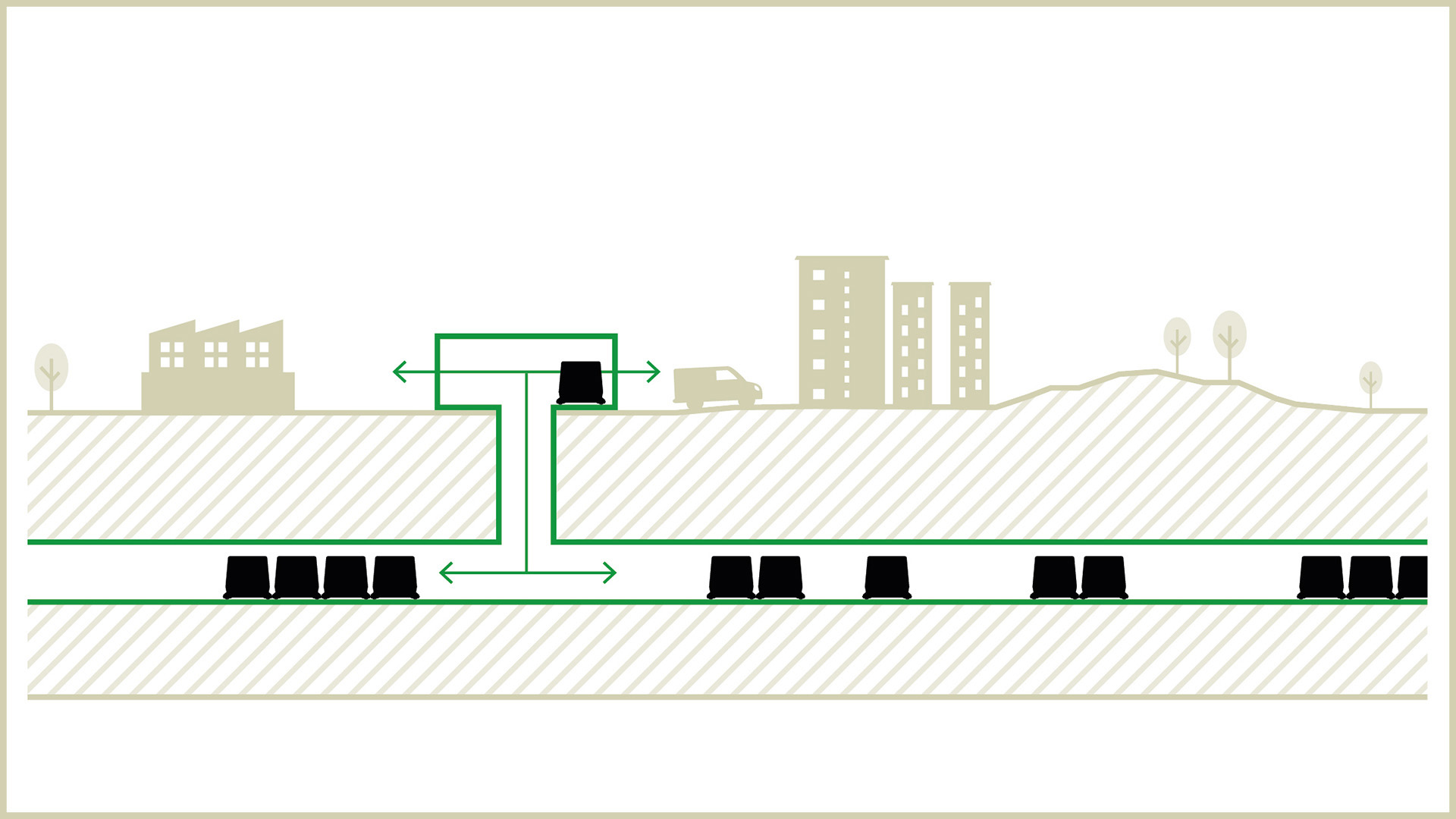
    With the Federal Council’s sectoral plan decision, the innovative Cargo sous terrain freight transport system is officially anchored in spatial planning for the first time. The privately initiated project will transport goods through an underground tunnel system from the Swiss Plateau to the cities. This will be done around the clock, with low emissions and independently of road traffic.

    The basis for this is the Federal Act on the Underground Transport of Goods (UGüTG), which came into force in 2022. It enables companies like CST to plan and implement such systems under clear legal conditions.

    First stage between Härkingen and Zurich defined
    The federal government has now defined the spatial planning corridor for the first section from Härkingen to Zurich in the newly inserted part of the sectoral transport plan. The planned locations for the logistics hubs are also spatially localised in the plan. The plan thus creates planning and legal certainty for all levels involved, from the federal government to the cantons and municipalities.

    Critical points will be incorporated into further development
    The cantons and municipalities affected were able to express their opinions during a consultation in the first half of 2024. Issues discussed included the impact on groundwater, the volume of traffic at the hubs and the handling of excavated material from tunnelling. The feedback will be integrated into the further development of the sectoral plan. According to the federal government, there are no contradictions with existing structure plans.

    Important step on the way to the construction permit
    The entry in the sectoral plan fulfils a key requirement for the subsequent construction permit. Further authorisation and approval procedures are still to come, but the current decision significantly strengthens the feasibility of the overall project.

    Paving the way for a new logistics era
    With the sectoral plan decision, the Federal Council is sending a clear signal in favour of sustainable and innovative infrastructure development. Cargo sous terrain could revolutionise freight transport in Switzerland in the long term – underground, quiet and space-saving. The spatial planning framework is in place, now the next stage of implementation begins.
  • Lighthouse Papieri Cham

    Lighthouse Papieri Cham

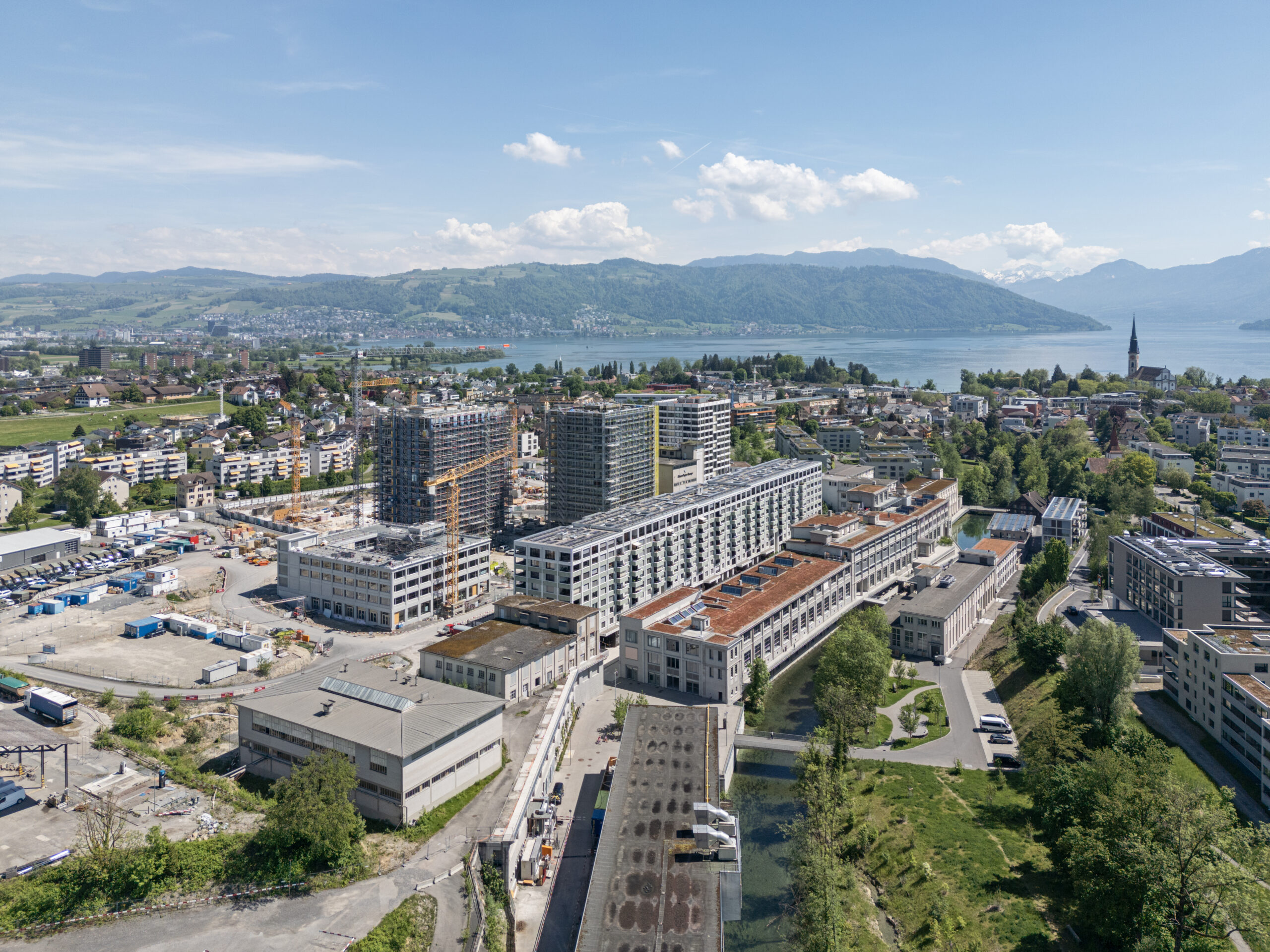
    People today are looking for the “as well as” – in the case of Papieri, it is the interplay of an urban lifestyle in close proximity to nature. On the one hand, the new district offers all the extras of a lively neighbourhood with practical services for everyday life, such as a wide range of shopping and dining options, childcare and cultural and sporting activities
    And catering facilities, childcare and cultural and sporting activities. On the other hand, you can find peace and quiet by the River Lorze or in one of the neighbouring recreational areas.

    Next Level Spaces
    In the third construction phase, a total of 10,000 m² of office, commercial and retail space will be created with the “Next Level Spaces”. Where and how people work has changed dramatically in recent years. Attractive and adaptable work concepts are needed to inspire employees. This leads to new requirements for buildings, such as a high degree of flexibility in order to fulfil a wide range of needs, from office layout to building services.

    The spaces in the “Next Level Spaces” can be flexibly designed and are over 6 metres high with a payload of up to one tonne per m², and intermediate floors can be installed as required. The user decides where intermediate floors are needed and can also create additional space at a later date. The “Next Level Spaces” offer future-orientated companies a wow location for offices, trade and Industry 4.0.

    Landmark boiler house
    The landmark at the heart of the site – the listed boiler house – will also be converted in the third construction phase. Where steam boilers used to be fired up, guests can expect a culinary treat in future. In spring 2026, the Segmüller Collection will expand its portfolio of unique gastronomy concepts such as Carlton, Loft Five, Roof Garden and Sablier in Zurich to Papieri-Platz in Cham and open a new grill restaurant with bar and lounge on the ground floor of the Kesselhaus. Industrial charm meets modern lifestyle, archaic fire cuisine meets refined elegance – a place that promises enjoyment for every taste. In the western section above, unique office space awaits new users in the former monument, while a fitness centre in the eastern section offers space for physical exercise.

    Sustainability
    Awarded the “Watt d’Or” by the Swiss Federal Office of Energy, the energy system of the Papieri site enables completely CO2-free operation and ultimately generates around 75% of the energy on site. In addition, the “Next Level Spaces” commercial building is certified with the internationally renowned “Leed Platinum” sustainability label. Resource-conserving construction is also already common practice at Papieri. For example, with the conversion of listed buildings such as the boiler house or an innovative timber-hybrid residential tower block. However, the most important contribution to sustainability is a long service life. Great attention is paid to this factor during development. Buildings must be flexible in order to meet the as yet unknown needs of a changing society in the future. An office building that can be converted into flats, for example, prevents premature demolition and thus contributes to sustainability. This is why Papieri constructs high-quality, adaptable buildings that will still be in favour for various uses decades from now.

  • Hybrid small power plant promotes green energy in Graubünden

    Hybrid small power plant promotes green energy in Graubünden

    NewGreenTec AG has installed one of its hybrid wind-solar small power plants on the roof of the Plantahof. In future, it will contribute to the sustainable power supply of the agricultural training centre in the canton of Graubünden and eastern Switzerland. According to the start-up company, it will also enable pupils and teachers to experience the technology first-hand and expand their knowledge of renewable energies.

    “We are delighted to be promoting the sustainable development of agriculture in Graubünden with this project,” said Frido Stutz, Managing Director of NewGreenTec AG, in a company press release. “The combination of wind and solar energy is a pioneering step towards an environmentally friendly and stable power supply throughout the day and year.”

    NewGreenTec also recognises this as a symbol of the potential for a sustainable future: “With the power of wind and sun, the Rhine Valley is set to become another example of successful innovation in green energy supply.” The company’s first small power plant on an industrial building was put into operation in January 2023.

    The hybrid device combines solar panels, a small wind turbine and storage technology in a single unit and was developed in collaboration with Swiss universities of applied sciences. The wind turbines, which rotate around a vertical axis, are independent of the wind direction and virtually noiseless.

  • Successful design for Eichmatt residential development in Villmergen

    Successful design for Eichmatt residential development in Villmergen

    Spreitenbach-based fsp Architekten AG has won first place in the competition for the study contract for the MW Eichmatt Villmergen project, according to a press release. The assessment committee unanimously decided to recommend the Janus project by fsp Architekten AG and landscape architects Appert Zwahlen Partner AG in Cham ZG to the client for further development and realisation. It was the “most convincing project proposal overall”, according to the press release from fsp.

    The new Eichmatt-Villmergen residential development is located on the outskirts of the village. Adjacent to the agricultural zone, this development offers 112 modern 2.5 to 4.5-room flats in three-storey buildings. Balconies and garden seating areas are consistently south-west facing. The arrangement of the twelve buildings provides generous open spaces. The existing Eichmatt Süd development was realised to the Minergie standard.

  • Strüby Unternehmungen receives first certificate for realised Minergie site

    Strüby Unternehmungen receives first certificate for realised Minergie site

    Energy efficiency, energy self-sufficiency and heat protection are currently major issues and will become even more important in the future. Since 2023, not just a single house, but an entire site can be certified by Minergie, meaning that the surrounding area can also be increasingly included in the planning of residential construction projects. On 2 September 2024, the “Fischermätteli” in Burgdorf BE received the first definitive site certificate from Minergie in Switzerland and thus reached a new level in sustainable construction.

    Label with high requirements
    The new, comprehensive Minergie site standard is supported by the Minergie Association, the cantons, the business community and the Swiss Federal Office of Energy. The Minergie site is characterised by very low energy consumption, minimised greenhouse gas emissions during construction and operation and maximum self-sufficiency with renewable energies. The buildings have above-average heat insulation and controlled air exchange. The design of the outdoor space increases climate resilience and the quality of stay, for example through suitable planting and shading. The Minergie site also incentivises climate-friendly mobility.

    Over 6600m3 of Swiss wood
    The Fischermätteli residential construction project was successfully completed by Strüby Unternehmungen in autumn 2023 after a construction period of around three and a half years. The ten apartment blocks with a total of 168 condominiums were built on a former commercial site in Burgdorf BE. They were built using over 6600m3 of Swiss timber, making “Fischermätteli” the largest project in Switzerland to combine the Minergie-A-ECO standard and Swiss timber.

    Climate-friendly environmental design

    One hundred per cent of the energy for the entire site comes from renewable sources: the electricity from the photovoltaic systems on the building roofs, the heat for heating and hot water from a heating centre supplied with Swiss pellets. The finely meshed mobility concept focuses on electromobility, car sharing, bicycles and public transport. A co-working space promotes working from home and thus indirectly relieves traffic congestion. In addition, the climate-friendly environmental design based on the sponge city principle ensures natural and efficient cooling in summer and makes the “Fischermätteli” a hotspot of biodiversity thanks to the countless native plants.

    Success thanks to a climate-friendly overall concept
    Pius Kneubühler, Managing Director Real Estate Development & Construction at Strüby Unternehmungen, can confirm that the climate-friendly overall concept in line with the Minergie site standard pays off not only for the residents, but also for the investor. “The success has already manifested itself in the marketing of the condominiums. Demand was so pleasing that all flats were sold by the time construction was completed.”

  • Mobimo expands Aeschbach neighbourhood in Aarau

    Mobimo expands Aeschbach neighbourhood in Aarau

    Mobimo has laid the foundation stone for the Hofhaus and Hallenhaus buildings in Aarau’s Aeschbach neighbourhood with representatives from the authorities and its project partners, according to a press release. As part of the overall Torfeld Süd development area, the next stage in the expansion of the neighbourhood, which was revitalised in 2019, is thus being realised.

    Based on plans by Baumberger Stegmeier Architekten from Zurich, 126 rental flats with 1.5 to 5.5 rooms will be built there. The courtyard house is being realised as a timber construction with a garden courtyard in a future-oriented, ecological design. According to Mobimo, the hall building stands out positively in terms of sustainability and grey energy because as much of the existing façade of the former Hall 5 has been retained as possible. It will serve as the ground floor for the extension of the historic building.

    Completion is planned for autumn 2026, with occupancy scheduled for the second quarter of 2026. Marketing will begin in the third quarter of 2025. The Aeschbachquartier will then have a total of around 260 rental and owner-occupied flats. It will also offer around 4600 square metres of commercial space for 1400 people working there.

  • Successful completion of the preliminary project for the Horw campus

    Successful completion of the preliminary project for the Horw campus

    The successful completion of the preliminary project for the expansion and renovation of the Horw campus brings the vision of a modern educational centre a significant step closer. The purpose of the preliminary project phase was to gain detailed insights into the development and cost structure of the construction project. Despite the expected additional costs due to external factors such as construction costs and sustainability-orientated measures, the original project costs of CHF 365 million have been largely confirmed.

    Cost development and influencing factors
    The analysis has shown that in addition to construction inflation, which accounts for around 18 per cent of the increase in costs, adjustments to VAT also have a significant impact. Further additional costs in the area of sustainability and project development as well as statutory sustainability certifications increase the financial framework. Total expenditure is now expected to amount to CHF 600 million, including reserves of around CHF 78 million. This sum is still in line with comparable projects of a similar scale in Switzerland.

    Relevance for education and the economy
    Government Councillor and Finance Director Reto Wyss emphasise the continuous monitoring and review of cost developments by the responsible real estate department. The project remains continuously within the planned budget and the additional financial requirements are clearly explained by the review results. Project-related decisions and the dissemination of information are kept transparent in order to ensure public confidence.

    The Canton of Lucerne has outsourced the realisation of this major construction project to a non-profit public limited company, “Immobilien Campus Luzern-Horw AG”. This enables efficient and targeted construction in compliance with the referendum and without affecting the special loans that have already been approved.

    Outlook and significance for the region
    Director of Education Armin Hartmann emphasises the supra-regional significance of the project: “The Horw campus will have a lasting impact on the educational landscape and the business location. Its impact will reach far beyond the borders of Lucerne into the whole of Central Switzerland.” The realisation of this visionary project is therefore expressly welcomed and supported.

    The successful completion of the preliminary project has paved the way for the next phase of the construction project. The project management team will promptly initiate the next steps, with the start of construction scheduled for 2026.

  • Winning project for the first new building on the Werkstadt site in Zurich

    Winning project for the first new building on the Werkstadt site in Zurich

    Used rails as supporting structure
    The winning project “GLEIS X”, which was developed by Leuthard AG Baumanagement and Gigon/Guyer Architekten AG, impresses with its consistent reuse strategy. The concept uses 12 kilometres of used rails from the SBB ReSale as supports and ceiling beams for the main floors. The building envelope also consists of reused windows and corrugated fibre cement panels. This innovative use of used components was particularly recognised by the jury, as it picks up on the history of the site and continues it architecturally. For SBB, which attaches great importance to the preservation and further development of its architectural and railway heritage, this approach was decisive.

    Six commercial floors and one city floor
    The planned new building comprises seven floors, six of which are to be used as commercial space. These areas are intended for small to medium-sized businesses and offer a mix of traditional and innovative commercial space. The first floor, the so-called “city floor”, will house services or cultural offerings and thus promote interaction with the neighbourhood. The ground floor will initially be used for car parking and goods handling, but will also be converted into a commercial floor at a later stage.

    Public project exhibition
    Interested parties can view the competition entries on the mezzanine floor of Building U, Hohlstrasse 400, 8084 Zurich. The exhibition is open until 19 June 2024 from Monday to Friday from 5pm to 7pm and at weekends from 12pm to 4pm.

    Werkstadt Zürich – a place for urban production
    An innovative centre for urban production and commerce is being built on the approximately 43,000 square metre “Werkstadt Zürich” site. SBB is refurbishing the existing buildings and creating jobs close to the neighbourhood for trades, services and highly specialised professionals. The transformation of the site is being carried out in close cooperation with the City of Zurich and the cantonal monument preservation authorities. Around 35 companies currently provide jobs on the site and contribute to the lively development of the neighbourhood.

  • Green open space on the Papierwerd site in Zurich

    Green open space on the Papierwerd site in Zurich

    A versatile open space has been created on the small square between the Globus Provisorium and the Mühlesteg. This green space invites you to linger with various seating elements and a view of the Limmat. New trees provide shade and pleasant places to sit on sunny days. For this new open space, existing car parks on the forecourt of the Globus Provisorium were removed, the ground unsealed and an innovative green concept established. Temporarily placed trees in so-called “airpots” already provide shade and cooling today and can also be replanted later, which makes the new greenery doubly useful.

    Development direction and further measures
    This milestone is part of the development direction adopted by the city council for the Papierwerd site (STRB No. 2722/2023). The development direction is based on the “Forum Papierwerd” strategy process and dialogue procedure. The desire for open space was set out in the eleven key statements for the Papierwerd site.

    Further immediate measures are planned for 2025. At the same time, as part of the ongoing in-depth phase, the structural clarifications regarding the Globus provisional building will be further advanced, the handling of the conservation value and water protection will be discussed and a rough utilisation and operating concept will be developed.

    Integration into the HB/Central masterplan
    The development of the Papierwerd site is being closely coordinated with the overarching “HB/Central masterplan” and will be incorporated into it. Consistent findings from both plans, such as the expansion of the open space, the improvement of the quality of stay, access to the Limmat and heat reduction, will be pursued further. With the masterplan, the City of Zurich is developing a vision for the future of the HB/Central area with a time horizon up to 2050 for transport and urban planning in this area. Interested parties are invited to visit the Papierwerd site in person and discover the qualities of the newly created place to stay in the heart of the city. Further information on the history and development of the site can be found on site or on the city’s project website.

  • Competition for Zurich district prison decided

    Competition for Zurich district prison decided

    The plan to modernise Zurich District Prison to make it fit for purpose has reached an important milestone. A project led by RW+ Gesellschaft von Architekten mbH from Berlin won the competition to redesign the prison and thus improve the conditions of detention.

    Zurich District Prison, located in District 4 and right next to the largest court in the Canton of Zurich, the District Court, is about to undergo a transformation. After comprehensive studies and the realisation that the current structures no longer met modern standards, the decision was made to build a new building.

    The need for a new building became apparent when guidelines regarding cell size, lighting and the number of ancillary rooms were met. The winning project makes reference to the T-shape of the building and creates a harmonious link between the various buildings in the district complex. Particularly noteworthy is the clever unbundling of routes for inmates, staff and visitors, as well as the secure accessibility to neighbouring judicial buildings. One significant change is the reduction in cell places from 153 to a maximum of 90, which underlines the focus on resocialisation and improved prison conditions.

    The selected concept is to be developed into an approvable construction project by 2026 and then submitted to the cantonal government and cantonal council for approval. If approved and in the absence of any appeals, construction work could begin in 2028.

  • The Rolf-Liebermann-Weg on the outskirts of Zurich

    The Rolf-Liebermann-Weg on the outskirts of Zurich

    Das Projekt «Rolf-Liebermann-Weg» entwickelt von Mettler Entwickler AG mit der Bauherrschaft Asga Pensionskasse, profitiert von seiner einmaligen Lage am Stadtrand von Zürich, zwischen dem Schulhaus Staudenbühl und den idyllischen Grünflächen des Hürst-Gebiets. Die Hanglage eröffnet spektakuläre Ausblicke auf den Zürichberg und die Alpen, während die gute Anbindung an das Verkehrsnetz und die Nähe zu Einkaufs- und Dienstleistungszentren urbanen Komfort bieten.

    Die geplante Wohnsiedlung zeichnet sich durch ihre L-förmige Anordnung aus, die grosszügige Freiräume für Gemeinschaftsaktivitäten und individuelle Entfaltung lässt. Der vielfältige Wohnungsmix reicht von kompakten 1½-Zimmer-Wohnungen bis zu geräumigen 5½-Zimmer-Wohnungen, um ein breites Spektrum an Bewohnerinnen und Bewohnern anzusprechen – von Singles über Senioren bis hin zu Familien.

    Architektonisch setzt das Projekt auf einen innovativen Hybridbau. Eine Kombination aus tragendem Mauerwerk im Inneren und einer ästhetisch ansprechenden, hinterlüfteten Holzfassade. Betonelemente in den Untergeschossen und den Erschliessungskernen sowie die Wohnungstrennwände garantieren Stabilität und Privatsphäre. Die begrünten Dächer fördern die Biodiversität und das Mikroklima der Siedlung und werden durch die Integration von Photovoltaikanlagen ergänzt, die nachhaltige Energiegewinnung unterstützen.

    Mit der geplanten Fertigstellung Ende 2027 setzt der «Rolf-Liebermann-Weg» neue Massstäbe für modernes, nachhaltiges Wohnen in Zürich, indem er die Balance zwischen Natur und städtischem Leben meisterhaft gestaltet.

  • Modernisation and expansion of the south station

    Modernisation and expansion of the south station

    In a densely built-up district such as District 2, the emergency services currently only reach the scene within the critical ten-minute mark in around 60% of cases. The planned expansion and redesign of the southern fire and ambulance station addresses this problem with a comprehensive approach aimed at shortening response times and increasing the efficiency of the services. At the same time, the project aims to enhance the urban development of the area, which is in line with the redesign of the urban space through the demolition of Weststrasse and the new construction of the “Hohe Haus West”.

    The winning project from the architectural competition, “FUCHS”, creates a seamless integration into the existing structure of the fire station. The extension blends in harmoniously with the existing building in terms of both height and alignment and harmoniously completes the perimeter of the block. Particularly noteworthy are the courtyard-side extensions with shed roofs and photovoltaics as well as a setback from the first floor, which give the new building a striking independence. These architectural features make it possible to master the balancing act between preserving the historical heritage and fulfilling state-of-the-art operational requirements.

    The “FUCHS” project not only impresses with its aesthetic and functional integration into the existing building fabric, but also sets new ecological standards. Thanks to the environmentally friendly energy supply, which is based 100 per cent on renewable energies, and the generously dimensioned photovoltaic system on the shed roofs, a contribution is being made to climate protection. In addition, the design optimises the operational processes of Schutz & Rettung Zürich and creates a coherent unit of high spatial quality.

    The project impressively illustrates how the challenges of modern emergency care can be mastered in a historical context through creative and innovative solutions. The careful balancing of the needs of the emergency services and the requirements of heritage conservation has resulted in a project that breaks new ground both functionally and aesthetically. The result is a sustainable infrastructure that meets the requirements of modern emergency services and at the same time makes a valuable contribution to the urban quality of the location.

  • Developing alternative forms of housing with building groups: Lessons learnt from the Winkelhalden

    Developing alternative forms of housing with building groups: Lessons learnt from the Winkelhalden

    Alternative living concepts for the 55-plus age group are in demand: the “zusammenhalt” co-operative easily filled 75 flats in Winterthur. Winkelhalden AG in Oberrieden attracted almost a third of its residents from the “hip” city of Zurich. What these housing concepts have in common is that they are based on a committed community. However, it often takes a lot of initiative and luck for the communities to obtain plots of land.

    Developers and investors who have plots of land and want to supplement them with stimulating offers can attract such building groups as partners. The decisive factor here is the question of the right time to connect the building groups and the form of involvement in the development process. An evaluation of the Winkelhalden AG project provides answers to these questions.

    The Winkelhalden AG project comprises 44 flats and a wide range of communal spaces such as a bistro, star bar, fitness centre, sauna and studios. The project was initiated by two private individuals who acquired the land, developed the business model for the public limited company, secured the financing, carried out a study commission, looked for fellow campaigners and realised the project. All of this was only possible because the initiators had a high level of entrepreneurship and a lot of experience with community-orientated business models.

    One of the biggest challenges was generating the equity capital to finance the project. This required enlarging the group early on in the process and finding people willing to invest who were prepared to commit to the initially uncertain development process and the as yet unspecific housing concept. The consequences are visible in the evaluation. A tenant survey one year after moving in shows that the time of entry into the project characterises the relationship to the community: those who joined in the two years when the construction project was developed, the building permit was submitted and the flats were selected were the most successful in integrating into the community. They feel the least pressure to participate in community life. Of those who joined earlier, a third feel more under pressure to participate. They also have the highest proportion of those who have found it difficult to integrate into the community.

    In this context, developers and investors can make a valuable contribution to community concepts: they can relieve building groups of the burden of financing and thus the early integration of less convinced residents by providing temporary equity and pre-financing the project development. In return, they can benefit from a small and committed building group, which ideally develops the alternative living concept from the time the spatial programme is defined and initiates and implements the participation process from the time of the preliminary project, with which future co-inhabitants are connected and integrated into the community. The building group can be a mixture of people who will live in the project in the future or who have relevant experience in developing alternative housing projects.

    Alternative housing concepts do not appeal to the mainstream, but demand is far from being met: the fully let Winkelhalden AG currently manages a pool of interested parties with over 60 applications. Cooperations between professional developers and investors with experienced and proactive building groups help to distribute strengths and competences among the most suitable players.

  • Lucerne and ewl install e-charging stations in two neighbourhoods

    Lucerne and ewl install e-charging stations in two neighbourhoods

    The city of Lucerne and ewl are launching the joint pilot project Green Zones. As part of this project, two car parks on Eichmattstrasse and Bergstrasse within the blue zones will each be marked green and equipped with a charging station including a ground sensor. According to a press release, the construction work will begin on Monday, 8 April 2024 and last around two weeks.

    By 2040, all vehicles that are registered in the city of Lucerne should be powered by electricity or renewable energy. E-charging points in residential neighbourhoods are intended to support this goal. To make charging electric and hybrid vehicles as easy as possible, users can check online whether these parking spaces are free or occupied. The data interface is provided by eCarUp from Rotkreuz ZG. Access is set up and processed by the Lucerne-based ICT service provider arcade solutions.

    The five-year pilot project is being financially supported by the LadenPunkt funding programme and the City of Lucerne’s energy fund. The two partners want to gather experience in Lucerne’s residential neighbourhoods, for example with regard to charging habits and duration of use. The knowledge gained will make it possible to assess whether further car parks should be equipped with charging infrastructure in neighbourhoods in the future.

  • Ground-breaking ceremony heralds Theilerhaus transformation

    Ground-breaking ceremony heralds Theilerhaus transformation

    The Theilerhaus, originally built in 1896 by Richard Theiler, an accomplished watchmaker, and the entrepreneur Adelrich Gyr as the site of their “Electrotechnisches Institut Theiler und Cie”, played a central role in Zug’s industrial development. Over the years, the building underwent several changes of ownership and served as the nucleus for Landis & Gyr’s rise to become a globally recognised technology group. The takeover of the site by the Canton of Zug in 1989 paved the way for today’s reorganisation.

    A modern justice and catering facility
    The ground floor of the Theilerhaus will house a restaurant, which will not only serve as a neighbourhood meeting place, but also provide catering facilities for cantonal employees. The upper floors will be given a new purpose as the seat of the administrative court, with a courtroom on the third floor and the former panelled director’s room on the second floor, which will regain its significance through the use of the presiding judge.

    Integration and appreciation of the historical heritage
    The redesign of the Theilerhaus is the result of an intensive dialogue with the conservation authorities and aims to preserve the historical substance and architectural identity of the building. The project was carefully planned by the consortium CST Architekten AG and Eggenspieler Architekten AG, both based in Zug, to ensure that the Theilerhaus remains a living testimony to local industrial history and a valuable cultural asset for the people of Zug.

  • “Little Marcel” leads Boudry’s road maintenance department into a new era

    “Little Marcel” leads Boudry’s road maintenance department into a new era

    In June last year, the canton of Neuchâtel launched an architectural competition to find innovative solutions for the urgently needed expansion and renovation of the road construction centre in Boudry. The aim of the challenging search was to create a future-proof infrastructure that fulfils the requirements of sustainability and efficiency. The “Little Marcel” project by Julien Dubois Architectes SA from La Chaux-de-Fonds won over the jury out of fourteen entries and took first place.

    The winning project is characterised by its holistic approach, which focuses on both architectural quality and functional excellence. In addition to the refurbishment of the existing building, the planned extension also includes the construction of new buildings that will enable the site to be utilised to the full. The sustainable concept, which emphasises the project’s commitment to the environment through the integration of solar modules and the use of timber constructions, is particularly noteworthy.

    The realisation of “Little Marcel” promises to improve work processes while at the same time enhancing the landscape and architectural quality of the site. The targeted expansion of the workshop buildings and the creation of a spacious inner courtyard will serve to optimise logistics and promote cooperation between employees.

    With a planned budget of CHF 12 million for the overall competition and a further CHF 1.5 million for the relocation of service buildings, the Government Council is laying the foundations for a modern and future-orientated infrastructure. The public exhibition of the competition entries gives the public an insight into the visionary plans for the Boudry depot.

    This project marks an important step in the development of road maintenance in the region and sets new standards in terms of sustainability and efficiency in road maintenance in the Canton of Bern. The further development and refinement of the winning project is eagerly awaited with a view to a future application for a building loan.

  • Tourist milestone in Graubünden

    Tourist milestone in Graubünden

    Andermatt Swiss Alps AG is setting new standards in the tourism development of Andermatt-Sedrun with the planned Resort Dieni. The resort will consist of 13 buildings with a total of 1,800 beds, divided into hotel rooms and residential units. The concept comprises 410 hotel rooms, including 204 hostel rooms and 206 double and triple rooms, as well as 119 residential units for sale, which will be managed as tourist accommodation.

    Raphael Krucker, CEO of Andermatt Swiss Alps AG, emphasises the importance of the project for the region and the canton of Graubünden. The Dieni resort will not only increase the number of hotel beds in the Surselva by over 20 per cent, but also expand the tourist offer with affordable flats and hotel rooms for families and groups. The location of the resort allows direct access to the ski slopes (ski-in/ski-out) and thus contributes to strengthening tourism in the region.

    Sustainability plays a central role in the development of the resort. The aim is for construction and operation to be CO2-neutral, supported by wood pellet heating and an extensive photovoltaic system. Resort Dieni Development AG, a subsidiary of Andermatt Swiss Alps AG, is responsible for the project.

    Andermatt Swiss Alps AG is planning to invest a total of around CHF 350 million in real estate and tourism infrastructure in order to realise its vision as a leading Alpine destination. This includes a partnership with Vail Resorts, Inc. and additional investments totalling CHF 149 million to further enhance the mountain experience.

  • Luzerner Theaterprojekt wird aktualisiert und extern überprüft

    Luzerner Theaterprojekt wird aktualisiert und extern überprüft

    Nach signifikanten Änderungen am Entwurf für das neue Luzerner Theater, wird parallel das Betriebskonzept, das ursprünglich im Jahr 2020 erstellt wurde, überarbeitet. Vor der Entscheidung über den Projektierungskredit ist eine Aktualisierung des Konzepts notwendig, um die Wirtschaftlichkeit des Projekts adäquat zu reflektieren. Der Luzerner Regierungsrat hat daraufhin beschlossen, ein entsprechendes Postulat aus dem Kantonsrat als erheblich zu erklären.

    Die Stadt Luzern und der Kanton Luzern haben eine Aufgabenteilung für den Bau des neuen Theaters vereinbart. Während die Stadt für die Realisierung und Finanzierung des Neubaus verantwortlich ist, wird der Kanton einen Teil der höheren Betriebskosten übernehmen. Der Regierungsrat legt Wert darauf, dass die künftigen Betriebskosten nicht mehr als zehn Prozent über dem aktuellen Niveau liegen und dass das Luzerner Theater seinen Eigenfinanzierungsgrad substanziell verbessert.

    Angesichts der fortgeschrittenen Entwicklung des Siegerprojekts ist es nun erforderlich, das Betriebskonzept zu aktualisieren. Der Regierungsrat unterstützt dieses Vorgehen in der Beantwortung des Postulats P 35 von Adrian Nussbaum. Ebenso hat der Stadtrat von Luzern einem zweistufigen Überprüfungsprozess zugestimmt. In der ersten Phase wird das Konzept extern evaluiert, um vor der Entscheidung über den Projektierungskredit zu fundierten Aussagen über den veränderten Betrieb zu gelangen. Die zweite Phase umfasst eine umfassende externe Überprüfung nach Vorliegen des endgültigen Projekts und der städtischen Abstimmung.

    Die externe Überprüfung wird aufzeigen, ob das geplante Theater die vorgegebenen Grenzen der Betriebskostenerhöhung einhalten kann und klärt zudem, wer zukünftig als Eigentümer des Gebäudes fungiert und damit für die Unterhaltskosten verantwortlich ist. Der Auftrag für beide Phasen der Überprüfung wird vom Zweckverband Grosse Kulturbetriebe erteilt.

  • Claudio F. Walde übernimmt die Geschicke des Familienunternehmens

    Claudio F. Walde übernimmt die Geschicke des Familienunternehmens

    Am 1. Januar 2024 übernahm Claudio F. Walde offiziell die Leitung der Walde Immobilien AG, einem Familienunternehmen mit über 70 Mitarbeitenden und neun Geschäftsstellen in Aargau, Zentralschweiz, Zürich und Graubünden. Claudio F. Walde, 31 Jahre alt, arbeitete seit 2020 als Immobilienberater im Unternehmen und leitete seit 2021 den Bereich Anlageimmobilien. Mit einem Abschluss als Master of Science in Management, Technology & Economics (MTEC) der ETH Zürich sowie Erfahrungen als Consultant bei EY Schweiz bringt er eine starke Kombination aus technischem Know-how und Managementkompetenz mit.

    Claudio F. Walde betont seine Freude und Ehre, das von seinen Eltern 1985 gegründete Unternehmen weiterführen zu dürfen. Er plant, das Unternehmen im Sinne der Gründer weiterzuentwickeln, wobei er sowohl geografische als auch technologische Innovationen anstrebt. Dabei legt er besonderen Wert auf ein emotionales und professionelles Gesamterlebnis im Immobilienkauf und -verkauf.

    Die Gründer Marianne und Gerhard E. Walde bleiben dem Unternehmen als Eigentümer und Mitglieder des Verwaltungsrats erhalten. Sie äussern ihre Freude über die Fortführung des Familienunternehmens in der zweiten Generation und betonen ihre anhaltende Leidenschaft für das Zusammenbringen von Menschen und Immobilien.

    Das Managementteam von Walde Immobilien AG wird durch erfahrene Führungskräfte ergänzt. Jann Felber fungiert weiterhin als COO und Mattia Bonasso tritt als neuer CSO auf. Zudem wurden interne Beförderungen vorgenommen, um Schlüsselpositionen neu zu besetzen, wodurch das bewährte Team in seiner Führungsrolle bestärkt wird. Das erweiterte Managementteam wird gemeinsam an strategischen Projekten arbeiten, um das Unternehmen erfolgreich in die Zukunft zu führen.

  • Crowdlending für mehr Wohnraum in Zürich

    Crowdlending für mehr Wohnraum in Zürich

    Mit dem Ziel, die Wohnungsknappheit in Zürich zu bekämpfen, hat Foxstone kürzlich ein neues Crowdlending-Angebot vorgestellt. Das Projekt, mit einer Laufzeit von 24 Monaten, wird die Entwicklung von über 90 neuen Studios im Zentrum von Zürich unterstützen. Diese Initiative soll bis zu hundert Mietern hochwertigen Wohnraum bieten und stellt eine direkte Reaktion auf die niedrige Leerstandsquote in der Region dar.

    Das Unternehmen, das bereits eine Community von über 21.000 Mitgliedern versammelt, bietet Investitionsmöglichkeiten ab CHF 10.000 an. Die Plattform, ursprünglich in der Westschweiz etabliert, hat ihre Aktivitäten in der Deutschschweiz ausgebaut und im Jahr 2023 60% ihrer Crowdlending-Projekte in diesem Teil des Landes abgeschlossen.

    Das aktuelle Crowdlending-Angebot umfasst ein Gesamtvolumen von CHF 7,9 Millionen und verspricht eine jährliche Rendite von 6%. Die Mittel aus diesem Angebot werden für den Umbau eines Bürogebäudes in Seefeld in 29 Studios und den Neubau eines Gebäudes mit 62 Studios in Oerlikon verwendet. Beide Projekte, für die Baugenehmigungen vorliegen, sollen Anfang 2024 starten.

    Die Projekte, geführt von einem erfahrenen Immobilienentwickler mit über 30 Jahren Erfahrung, werden nicht nur dringend benötigten Wohnraum schaffen, sondern auch attraktive Mietobjekte an erstklassigen Standorten bieten.

    Dan Amar, CEO, hebt die Doppelrolle des Projekts hervor, indem es sowohl wertvollen Wohnraum schafft als auch stabile, attraktive Renditen für die Investorengemeinschaft generiert. Der Beginn der Bauarbeiten markiert einen entscheidenden Schritt zur Verbesserung der Wohnsituation in einer der am stärksten von Wohnungsmangel betroffenen Regionen der Schweiz.

  • Call for applications for the “Binding Prize for Biodiversity”

    Call for applications for the “Binding Prize for Biodiversity”

    For further information on this call for applications, we recommend that you visit the official website of the Sophie and Karl Binding Foundation. There you will find up-to-date information and details on how to apply.

  • Birstal heating network installs wood-fired boiler

    Birstal heating network installs wood-fired boiler

    The sustainable Birstal heating network has taken another step forward with the installation of the first wood-fired boilers. According to a press release, the project initiated by Primeo Energie from Münchenstein and uptownBasel has expanded the heating system on the uptownBasel site with the installation of the boilers. A heat pump is to be installed at a later stage. The wood-fired boilers are two biomass boilers with outputs of 8 and 11 megawatts. According to the press release, modern filter systems and technologies should lead to the lowest possible exhaust gas values. At a later date, the heating centre is expected to deliver an output of 40 megawatts, making it the largest plant operated by Primeo Energie in Switzerland.

    The Birstal heating network consists of 25 heating plants and networks in Reinach, Arlesheim and Münchenstein. It is increasingly being converted to renewable energies. Part of the energy source will be waste heat from the uptownBasel area in Arlesheim, while biomass and wood from regional cultivation will also be burnt in cold seasons or during peak loads.

    With the new energy centre and the Birstal heating network, Primeo Energie aims to make a contribution to the energy transition and to a sustainable heating and cooling supply in the region, the press release explains further.

  • Future-oriented residential development Hoffmatte in Thun

    Future-oriented residential development Hoffmatte in Thun

    The Hoffmatte site in Thun is an outstanding example of sustainable urban development that is geared towards the needs of people of all generations. The project comprises around 150 rental and owner-occupied flats, a nursing home with over 100 care places for the elderly, a daycare centre, a small shop and a neighbourhood café.

    The project has a long history. In February 2022, the Thun electorate voted 62 per cent in favour of the new “Hoffmatte” zone with planning obligation. After several years of legal proceedings, the Federal Supreme Court finally dismissed all appeals, meaning that the ZPP and the associated development regulations became legally binding in spring 2023.

    In May 2023, the Solina Foundation, as the operator of the care home, and Frutiger AG signed a cooperation agreement, thereby taking an important step towards the realisation of their joint project. With the decision of the Federal Supreme Court and the approval of the canton, the project has reached milestones that form a solid basis for the next development steps.

    With the development of the new residential project in Hoffmatte, the initiators are striving for a high quality of life. Thanks to the commitment of the various stakeholders, the project has now been given the necessary legal and planning framework to create new living space for the people of Thun.

  • Plus de Jardins – The pulse of Thun’s new garden quarter Siegenthalergut

    Plus de Jardins – The pulse of Thun’s new garden quarter Siegenthalergut

    A major urban development project is taking shape in the south-west of Thun. The Siegenthalergut, which covers an area of five hectares, is to be transformed into a future-oriented residential neighbourhood for 1500 people over the next few years. Frutiger AG is working closely with the city to develop urgently needed living space for the people of Thun. The aim is for the entire development of the Siegenthalergut to be significantly characterised by the open space. For the design of the outdoor space, the city and Frutiger AG carried out a study contract in accordance with SIA 143. The task was to develop an open space concept for the park, the boulevard along Hohmadstrasse and the other outdoor spaces.

    Winning project “Plus de Jardins
    The centrepiece of the open space design is the “Plus de Jardins” project by the Zurich landscape architecture firm “Skala Landschaft Stadt Raum”, which emerged as the winner of the study contract. It is impressive in terms of both design and ecology and creates the ideal conditions for a versatile public park as a meeting place.

    Public park as a meeting place
    The park, which will cover around 7,100 m², is intended to be a meeting place for the entire neighbourhood. With a large open meadow for sports and play activities, surrounded by groups of trees and a natural stone band that rises up in places to form a seating wall, the park creates an inviting atmosphere.

    Ecological quality and multifunctionality
    The residential alleys between the building plots and the boulevard along Hohmadstrasse not only serve to provide access, but also contribute to a biodiverse quality with their varied design and biodiversity. Multifunctionality and different atmospheres in the various outdoor spaces characterise the concept and support the idea of a neighbourhood that facilitates encounters and creates new open spaces.

    Involvement of the local population
    There is a particular focus on involving the local population. Their needs and concerns are continuously incorporated into the further development of the project. Workshops and surveys were held to ensure that the concerns of the neighbourhood were taken into account in the study contract. The survey of the population was not limited to the topic of outdoor spaces, but also included various topics relevant to the development of this dimension.

    Future steps towards realisation

    The creation of a new zone with planning obligation (ZPP) is necessary for the realisation of the project, which is expected to go to public consultation in the first quarter of 2024. Once the ZPP has been approved by Thun City Council, it will be authorised by the canton. Following approval, a master plan will be drawn up for the entire perimeter, which will form the basis for the development regulations and the architectural competitions.

    Outlook for the construction phase
    The start of the first construction phase is planned for 2027. The Siegenthalergut is a prime example of sustainable urban development. It is characterised by a well thought-out combination of living space, open spaces and communal facilities.

  • Hydrogen project a location with potential

    Hydrogen project a location with potential

    The location in Domat/Ems, directly next to a main traffic axis in the Swiss Alps and in the immediate vicinity of electricity producers and an electricity plant operator, is creating a pioneering hydrogen project. Especially for HGVs that need to refuel with hydrogen at strategic junctions, the location in the Graubünden Rhine Valley is of great value.

    The technical performance spectrum of the newly planned facility is impressive: At full capacity, the 2 MW plant can generate over 300,000 kg of hydrogen per year. This corresponds to the energy content of 1,000,000 litres of diesel. Such a production rate not only affects the diversity of energy sources, but can also have a significant positive impact on the environment by reducing annual CO2 emissions by more than 3,600 tonnes.

    Energy storage as the biggest challenge
    Renewable energies have been the talk of the town for some time. However, storing them brings some challenges, especially because nature dictates when and how much energy is produced. This is where hydrogen comes on the scene as an optimal storage element. Especially in times of high energy production in summer, it can be advantageous to convert surplus electricity into hydrogen. However, constant production is essential for profitable operation. Current legal requirements suggest that such plants should be built near energy production sites.

    The first considerations in this direction were initiated in 2017. Soon after, Fanzun AG’s team of experts set out to find a suitable location. Urs Simeon, partner and project manager, expressed: “We were aware that the topic of hydrogen requires a lot of education. That’s why we started looking into it intensively at an early stage and were able to quickly build up comprehensive expertise.” According to Simeon, the biggest hurdle in the planning phase was the economic calculation – because the project only makes sense if it is economically viable.

    In the beginning there was a Norwegian investor

    When searching for the roots of this project, one comes across the name of Per Sandven, a visionary investor from Norway known for his pioneering and sustainable approaches. Sandven, as co-founder and former main shareholder, played a central role in the foundation and development of Calanda Solar. He also had a significant influence on the implementation of the adjacent Calinis photovoltaic project. This project, located in the former quarry of Felsberg and operated by Rhiienergie, was the largest photovoltaic facility in the canton of Graubünden in 2020. With a remarkable annual yield of 1,500,000 kWh, it supplies electricity to about 400 households.

    Further projects are in the pipeline

    In the past, Sandven and Fanzun have already worked hand in hand, for example on the 105%-PlusEnergie Hotel Muottas Muragl in Samedan, which also won a solar prize. Their cooperation illustrates the shared aspiration and vision to drive the change towards a more environmentally friendly and climate-neutral energy future. Fanzun AG is currently planning additional initiatives in the high-mountain solar segment, also known as the “Solarexpress”.

  • Mobiliar invests in heat reduction in Bern neighbourhood

    Mobiliar invests in heat reduction in Bern neighbourhood

    Mobiliar is contributing CHF 450,000 to a climate adaptation and upgrading project in the Breitenrain district of Bern. According to climate measurements by the University of Bern, this neighbourhood is hotter than average. According to a statement by the insurance company, the municipal council has approved a loan of 1.3 million francs for a corresponding redesign of Optingenstrasse. “With Mobiliar’s financial contribution, we can do more on Optingenstrasse than if the city had to finance the project alone,” municipal councillor Marieke Kruit is quoted as saying.

    The plan is to plant 20 trees to combat heat accumulation and to unseal street and parking areas so that rainwater can seep away and cool the air through evaporation. To further enhance the neighbourhood, green or marl areas are to be created with bicycle stands or seating. The city is carrying out these climate adaptations as part of the renovation work of the energy supplier Energie Wasser Bern, which is planned for 2024 anyway.

    “Our approach to natural hazards is not limited to paying for damage – we are also increasingly involved in prevention,” Thomas Trachsler of Mobiliar is quoted as saying. Belinda Walther Weger, Head of Public Affairs & Sustainability at the insurance company, emphasises that sponge city projects go beyond mere hazard prevention: “They help to ensure that the quality of life in densely populated areas remains high.” For this reason, Mobiliar from the cooperative will participate in further sponge city projects in Swiss cities as part of its support for climate protection projects. “With our commitment, we want to make an important contribution to a sustainable and positive future.”

  • WWZ expands district heating business

    WWZ expands district heating business

    The WWZ Group is observing rising demand for district heating and cooling. The corresponding business area increased its sales by 15 per cent year-on-year in the first half of 2023, the Zug-based energy, telecoms and water supplier informs in a statement. In the half year under review, the group was able to connect further properties to its Circulago and Ennetsee energy networks.

    In the future, WWZ plans to further expand this promising business area. A feasibility study for a heating network has already been carried out in Steinhausen, and the group is currently working on a feasibility study with the municipality of Baar. Investments in district heating and district cooling did “temporarily lead to higher operating costs, but the investments will pay off in the medium term with stable cash flows”, writes WWZ.

    In the first half of 2023, the expansion of the district heating and district cooling business also increased the company’s operating costs by almost 4 per cent. The operating result nevertheless increased by 27 per cent to CHF 13.6 million. The background to this is a year-on-year increase of 24 percent to 166.5 million Swiss francs in net revenues from deliveries and services. At 15.7 million Swiss francs, net profit was 8.4 million Swiss francs higher than in the first half of 2022.

  • Modular wooden fixtures for interim uses

    Modular wooden fixtures for interim uses

    The whir of a cordless screwdriver rings through the DISPO in Nidau. In the old factory hall, which offers space for creative, cultural and business people, four prototypes of space modules are being built that day, thanks to which it should be possible in future to implement interim uses of vacant buildings and wastelands simply and sustainably. The aim is to add ecological, economic and social value to unused spaces. This is the goal of researchers from the Institute of Timber Construction, Structures and Architecture IHTA at the Bern University of Applied Sciences BFH, together with partners from industry, in the Innosuisse research project “àDisposition”.

    Various modular solutions tested
    In the project, the researchers are developing a modular construction kit for room modules and interior fittings. A central component is a configurator, thanks to which project ideas can be easily tested, presented and implemented in a time- and resource-saving manner. Based on digital designs, the BFH researchers are now creating prototypes at Dispo in Nidau in collaboration with the project partners. Using these, they are investigating and improving various module solutions. The project team is testing different systems, connecting elements and segment shapes and, after a short time, is already able to identify the most promising strategies for a lightweight, reusable and easily reconfigurable modular system.

    Time for assembly varies depending on the degree of fabrication
    The requirements for modular fixtures are high: assembly and disassembly should be possible for non-professionals and the components should be light enough that only two people are needed for assembly. The fixtures should also be adaptable, easy to rearrange and easy to transport and store. During the assembly of the prototypes, it already becomes apparent how important it is to select the ideal degree of prefabrication. If the frames of the modules are delivered already screwed together, the fixtures can be set up in a very short time. Transport and storage, however, turned out to be more difficult. Conversely, assembly took significantly longer if the components were delivered individually and thus compact.

    Importance of digital continuity
    Another aspect that the researchers are testing with the production and assembly of the prototypes is the digital chain “design to production”. The modules are designed in the configurator, and the data for production is then automatically exported to CadWork. These files formed the basis for material orders and the production process. Here, the importance of digital continuity for a fast and simple production process became apparent.

    In a next step, the researchers are looking at the equipment of the modules. For example, the walls are another design element and additional (insulating) layers must meet the requirements for sound and heat insulation. These requirements differ greatly depending on the use.

    “àDisposition – Spaceship Planet Earth. Sustainable and temporary use of buildings and vacant sites through simple and modular structural measures” is a research project funded by Innosuoisse that runs until June 2025. Project partners are C2 Beat Cattaruzza GmbH, Beer Holzbau AG, Pius Schuler AG, Prona AG and Bauart Architekten und Planer AG.

  • Until the chemistry is right

    Until the chemistry is right

    The fact that she has mastered her field from A to Z is, as she points out, also thanks to know-how built up by colleagues at Empa – such as engineer Gabor Kovac. He pushed the production of stack actuators with expandable silicone discs for many years and developed them to operational maturity with his partner Lukas Düring until their spin-off “CTsystems” was recently taken over by the Daetwyler Group.

    “The devices for measuring how actuators stretch in different electric fields were developed by them,” Opris says, “we were early on this topic, and that helped me enormously.” Unlike her colleagues, however, the chemist is working less on the technology for printing such components, but one “floor below” – on the synthesis of novel polymers that are suitable as non-conductive layers for stacked transistors, elastic films for power generation and other elements.

    The desired profile: as thin as possible, with the long-term goal of many layers only ten micrometres thick; easily stretchable, sensitive to low current voltage and robust at the same time. And above all: printable, i.e. without solvents for the conductive layers between which the polymers lie. “Solvents can damage the polymer layers. Besides, the material would have to dry for a long time in order not to give off harmful vapours,” explains Opris, “so we try to do without them – with the right chemistry.”

    There are many different requirements that researchers all over the world are dealing with. Suitable compounds that raise hopes are polysiloxanes, which the Empa specialist is also working on. An important advantage of these polymers: they are relatively easy to synthesise; the “backbone” of their strands is very mobile – and they can be specifically manipulated with polar groups, i.e. plus-minus charged molecules.

    Snake-like molecules
    What is difficult for laypeople to understand, Dorina Opris explains with a vivid image: “You can imagine these polysiloxanes like a pot full of snakes that want to move all the time.” The polar groups have a twofold effect on them. On the one hand, they make the molecular snakes more sensitive to electric fields so that they respond to low voltages. On the other hand, they act like a kind of glue between the molecules; this “stiffens” them and thus reduces the important elasticity. It is necessary to fine-tune both effects to achieve maximum success. For a practical application, the transition from the solid to the elastic state at low temperatures is important so that the technology can later be used at room temperature. In addition, such polymer structures still have to be chemically “cross-linked” so that they can become elastic layers – for example by UV light and with the help of so-called end groups: quasi molecular “hats” that the snakes wear at their ends. But in laboratory practice, it has so far proved tricky to reliably provide these polymers with defined end groups. “That annoys me already!” admits Opris with a smile.

    Healthy ambition is needed for the TRANS project, which the chemist herself calls “very, very ambitious”. The team is optimistic because earlier work has already produced encouraging results; for example, a polysiloxane compound that reacted to a voltage of only 300 volts and deformed strongly – an extremely low value. Printing capacitor layers without solvents has also already been achieved. And a doctoral student recently developed a piezo-electric elastomer that, when stretched, shows a significantly higher electrical response than other compounds currently in use.

    Creativity and team spirit for success
    Of course, many more steps are needed to achieve usable successes – and those qualities that have brought Dorina Opris to Empa and ETH Zurich. Not only stamina and the ability to turn failed attempts into progress, but also to create an inspiring environment for employees that allows open debate and also mistakes so that good ideas emerge.

    And above all: optimism. The boss believes that young researchers should be given exciting and challenging projects and then be allowed to work independently so that they remain motivated. Her advice to talented women based on her own biography: “Don’t wait until someone pushes you to do research. You have to be self-motivated and strong, and go for it! And also take a risk sometimes.”

  • Ligerz-Twann double track extension a complex rail infrastructure project

    Ligerz-Twann double track extension a complex rail infrastructure project

    The contract includes the 2.1 km long double-track tunnel – about 1,850 m of which will be excavated and about 250 m of which will be built using cut-and-cover methods – including concrete lining and railway technology. In addition, four escape tunnels, a 114 m long viaduct for the N5 motorway exit and various additional structures are being built. The excavated material will be transported by ship and the existing railway line will be dismantled and redesigned.

    The aim of the project is to eliminate the last railway bottleneck on the Jura river line between Lausanne and Biel. Due to the prevailing narrow space conditions between the lake and the slope, where the N5 national road and the cantonal road also run, a new double-track tunnel will be built.

    A particular challenge is the project’s location in protected areas: The region is listed in the Federal Inventory of Landscapes and Natural Monuments (BLN). The villages of La Neuveville, Chavannes, Ligerz and Twann are part of the Federal Inventory of Swiss Sites of National Importance (ISOS).

    Christian Späth, Head Division Civil Engineering at Implenia: “We are looking forward to executing this large and complex railway infrastructure project together with our ARGE partners and to once again demonstrating our many years of experience and expertise in this field. We wish the entire project team an accident-free construction period.”