Category: Energy

  • Domestic property remains attractive for institutional investors

    Domestic property remains attractive for institutional investors

    According to a press release, the IFZ study Mortgage and Real Estate Investments 2025 by Lucerne University of Applied Sciences and Arts examined the investment behaviour of 228 institutional Swiss investors, including pension funds, insurance companies, investment foundations and funds. The Institute of Financial Services Zug (IFZ) at Lucerne University of Applied Sciences and Arts is based in Rotkreuz ZG. According to the study, domestic property in particular remains an attractive investment.

    Pension funds (PFs) are maintaining their average real estate ratio of 24.3 per cent and largely intend to expand it further: 47 per cent want to strengthen their Swiss real estate portfolio, 49 per cent want to keep it stable and only 3 per cent want to reduce it. According to the study, a “home bias” is noticeable in all pension funds: the Swiss allocation of real estate assets is between 85 per cent (large pension funds) and 92 per cent (medium-sized pension funds).

    “On the one hand, the fact that prices have been rising for over 25 years seems to confirm the stability of the market. On the other hand, investments abroad appear less attractive due to currency hedging costs and higher volatility,” said co-head of the study John Davidson on the preference for Swiss portfolios in the press release.

    However, only 9 per cent of the investors surveyed believe that the upward trend will continue. The biggest concern for investors in the Swiss property market is increasing regulation. According to 82 per cent of institutional investors, this will soon lead to an end to the property upturn. Particularly complex building regulations (92 per cent), objections (90 per cent) and stricter tenant protection (88 per cent) are hindering further growth.

    Risks such as a slump in economic growth (45 per cent), higher interest rates over a longer period of time (37 per cent) or weaker population growth (35 per cent) take a back seat to political and regulatory pressure.

    The study is based on surveys of Swiss property funds, investment foundations and insurance companies as well as 135 pension funds. With an investment volume of CHF 568 billion, the pension funds surveyed cover around 50 per cent of the funds’ total assets.

  • Progress in CO2 reduction through modern cement production

    Progress in CO2 reduction through modern cement production

    Holcim AG, based in Zug, has initiated a carbon capture plant for cement production in Câmpulung, Romania. According to a press release, the internationally active building materials manufacturer was able to secure EU funding for the project. The plant in Câmpulung is Holcim’s eighth EU-funded carbon capture project.

    The Carbon Hub CPT 01 plant in Romania is the first onshore carbon capture and storage (CCS) project in Eastern Europe. Carbon dioxide is eliminated from the flue gases on site and permanently stored underground in compressed form. The geographical and geological conditions in Câmpulung offer good conditions for this, according to the press release. Holcim and its partners, including Carmeuse from Louvain-la-Neuve in Belgium, aim to produce around 2 million tonnes of low-emission cement in Romania every year by 2032.

    “The CCS project in Romania thus supports Holcim’s efforts to turn sustainable growth into profitable growth – a key strategic driver of our NextGen Growth 2030 strategy,” said Simon Kronenberg, Regional Head of Central and Eastern Europe at Holcim, in the press release. “The support from the EU Innovation Fund underlines the capabilities of our engineering teams, the maturity of our technologies and our advanced partnerships along the entire value chain.”

  • Power-to-X tracker shows momentum in Switzerland

    Power-to-X tracker shows momentum in Switzerland

    With the new Power-to-X Tracker, the Swiss Power-to-X Collaborative Innovation Network (SPIN) and the Coalition for Green Energy & Storage (CGES) are presenting a nationwide overview of Power-to-X activities. The interactive platform maps all known projects, from pilot plants to commercial applications. This shows the rapid growth of a technology that could become the centerpiece of the energy transition.

    The aim is clear: to pool knowledge, promote synergies and facilitate investment. “The tracker creates a common data basis that accelerates collaboration and decision-making processes,” emphasize CGES Co-Directors Christoph Sutter and Antonello Nesci.

    The key to defossilization
    Power-to-X processes make it possible to convert renewable electricity into chemical energy carriers. This makes renewable energy storable and versatile, for example in industry, mobility or heat supply. For SPIN Co-President Martin Bäumle, these technologies are crucial for the transition to a climate-friendly economy. “Transparent data and networked players are the basis for turning ideas into scalable solutions,” explains Bäumle.

    Networking research, business and politics
    The tracker will be presented at the CGES annual event at Swissgrid in Aarau. The initiative is backed by a broad alliance of business, science and the public sector – supported by the ETH Domain. The systematic survey and visualization of the projects will provide an overview of the Swiss power-to-X landscape for the first time, offering guidance to researchers, politicians and investors alike.

  • Digital twins are shaping the industry of tomorrow

    Digital twins are shaping the industry of tomorrow

    At the NVIDIA GTC in Washington, Siemens and NVIDIA presented a new type of AI-based system architecture that links the Siemens Xcelerator portfolio with the NVIDIA Omniverse platform. This “industrial tech stack” enables digital twins that visualize, simulate and optimize factories in real time. This creates a foundation for the industrial metaverse. A networked ecosystem that seamlessly brings together design, operation and energy supply.

    The new solution dramatically accelerates planning and engineering processes. Factory layouts can be simulated and adapted in just a few hours instead of weeks. AI-driven workflows make data-based decisions and increase precision, efficiency and sustainability.

    Chip-to-grid end-to-end industrial value creation
    At the heart of the approach is the “chip-to-grid” value chain, which integrates semiconductor design, factory operation, energy supply and building technology. It ensures that power, cooling and computing power function as a unified system, whether for new buildings or existing modernizations. With the help of AI-based simulation, operators can optimize production facilities in months rather than years.

    This integrated approach corresponds with the blueprint for “AI Factories” with gigawatt capacity. Together, the two companies are setting new standards for efficiency, scalability and energy intelligence in AI data centers and production facilities.

    Industrial AI as a driver of innovation
    With this cooperation, the two companies are underlining the global upheaval in manufacturing. Digital twins, AI automation and real-time simulation are becoming the basis for new industrial intelligence.

    By merging planning, engineering, energy and building management into one platform, companies have a tool that streamlines complex processes, conserves resources and accelerates innovation. A clear step towards self-optimizing industrial environments.

  • Energy supplier plans move to former bank premises

    Energy supplier plans move to former bank premises

    AEW will not be relocating its new headquarters to the Obere Vorstadt site as previously planned. According to the energy supplier, the test planning launched in May 2024 showed that the possible site development was not sufficiently in line with AEW’s development goals.

    The search for a new location had become necessary because the current headquarters at Industriestrasse 20 in the Aeschbachquartier in Aarau does not fulfil AEW’s short to medium-term capacity and space requirements. For this reason, the rental contract, which expires in mid-2027, will not be extended.

    AEW has now found a suitable neighbourhood at Bahnhofstrasse 49: the premises of the former Credit Suisse. According to the information provided, they offer the space that AEW needs in the long term.

    As the Canton of Aargau is currently renting “significant space” in the Obere Vorstadt area for the High Court and judicial management, AEW intends to “initially” enter into negotiations with the canton regarding the sale of the entire Obere Vorstadt area. The move to Bahnhofstrasse is planned for 2027.

  • Swiss solar technology sets new standards for aesthetics and performance

    Swiss solar technology sets new standards for aesthetics and performance

    Megasol Energie AG, Switzerland’s leading manufacturer of solar panels for roofs and façades, aims to set new standards for glare-reduced, high-performance and aesthetic solar technology with its new M450 solar module, according to a press release.

    The 450-watt peak M450 is the first solar module from Megasol to be equipped with ZRM surface technology, which significantly reduces mirror-like reflections thanks to micro-structured glass, special surface treatment and matt optics. The low luminance of the M450, which varies between 3000 and 9000 candela per square metre (cd/m2 – luminance) depending on the angle of incidence of the sun, remains well below international limits of around 20,000 cd/m2, which are prescribed in the vicinity of airports.

    With no disturbing glare for pilots, drivers or residents, the module is therefore suitable for use in sensitive areas such as airports or residential neighbourhoods. According to the manufacturer, the solar module also has an above-average product and performance guarantee of 30 years and is certified with hail resistance 5 (HW 5), currently the highest value available in the industry. The M450 module is now available for delivery.

    Megasol is a manufacturer of solar modules and system solutions for building-integrated photovoltaics. With its own production facilities in Switzerland and an international presence, Megasol develops solar roof and façade systems.

  • DACH region creates platform for energy innovation in Europe

    DACH region creates platform for energy innovation in Europe

    Universities, start-up ecosystems and energy companies from Germany, Austria and Switzerland have set up a European platform for energy innovation. One top university and one energy company from each country will be represented at the Energy Launchpad, the UnternehmerTUM start-up centre from Garching near Munich, which is part of the platform, announced in a press release.

    Switzerland is represented by the Swiss Federal Institute of Technology in Zurich and Energie 360° from Zurich. The Vienna University of Technology and VERBUND AG are from Austria, while the Technical University of Munich and EnBW Energie Baden-Württemberg AG are from Germany.

    The platform, which is designed as an open network, aims to promote European technologies and start-ups. Next year, the focus will be on artificial intelligence and quantum computing. “With the Energy Launchpad, we are creating space for implementation strength in Europe,” Helmut Schönenberger, founder and CEO of UnternehmerTUM, is quoted as saying in the press release. “Research, industry and start-ups are bringing technologies into application more quickly here – openly, across borders and with a clear focus on impact.” This creates “resilience in the energy system and technological sovereignty for Europe”, says Schönenberger.

    The project was launched on 24 October at a kick-off event in Vienna. From here, the Energy Launchpad will now be travelling through the DACH region. The next stop will be at the Energy Week @ ETH in Zurich on 11 November.

  • Ticino shows the way to a modern power supply

    Ticino shows the way to a modern power supply

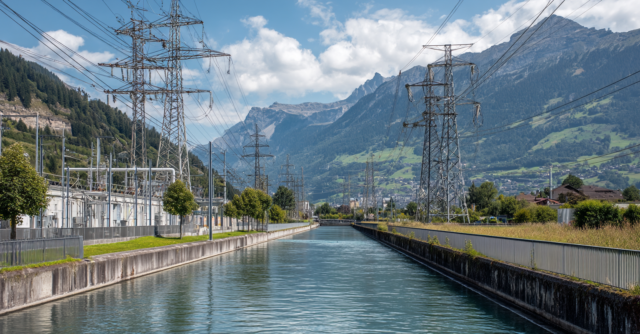
    The European energy system is facing the biggest transformation in its history. Transport, industry and buildings are being electrified, electricity demand is increasing massively and production is becoming more decentralised and volatile. For Switzerland, this means fundamentally adapting its grids. In Ticino, the course was set early on. As early as 2013, the canton brought together the major players, Swissgrid, Azienda Elettrica Ticinese (AET) and SBB, to think about electricity grids and spatial planning together.

    The analysis clearly showed that the infrastructure created in the 1950s was inefficient. Each institution had built its own lines without taking into account the overall view or the landscape. The result is a patchwork of routes through sensitive areas. Today, joint planning makes it possible to bundle several lines on one route, resulting in 140 kilometres becoming superfluous.

    Projects with national appeal
    At the heart of the realisation are three major projects, Airolo – Lavorgo in the Leventina, All’Acqua – Vallemaggia – Magadino and Lavorgo – Magadino in the Riviera and Piano di Magadino. They form the backbone for a secure supply for future generations. At the same time, they create the conditions for the dismantling of old lines, which significantly relieves the landscape.

    Lengthy procedures act as a brake
    The construction of new high-voltage lines in Switzerland often takes more than 15 years. However, close consultation in Ticino has made it possible to develop trust, coordination and joint proposals to speed up federal procedures. Municipalities and the population are actively involved in order to achieve broad-based solutions.

    Balancing landscape protection and security of supply
    Ticino combines sensitive habitats, historic villages and landscapes with lakes and mountains that are important for tourism. The balancing act between security of supply and landscape protection has been mastered here in an exemplary manner. Instead of unilaterally planning power lines, the territory is viewed as an overall system. An approach that increases acceptance and reduces conflicts.

    Federal Council wants to expand the model
    The innovative process has not gone unnoticed. The Federal Council has recognised the advantages and proposed extending the Ticino model to other cantons in a bill. This could turn a regional pioneering achievement into a national model of success, with a signalling effect for the entire energy transition.

    Ticino shows how the modernisation of critical infrastructures can succeed in a way that is technically efficient, compatible with the landscape and politically acceptable to the majority. The dismantling of 140 kilometres of power lines is only the most visible success. The decisive factor is a new way of thinking that strengthens security of supply and quality of life in equal measure.

  • Launch of sustainable energy network in Urdorf

    Launch of sustainable energy network in Urdorf

    The official ground-breaking ceremony in the municipality of Urdorf marked the start of construction of the Urdorf energy network. In collaboration with Energie360°, it will supply up to 150 properties belonging to private individuals and municipal facilities with regional thermal energy for heating and hot water from autumn 2026, according to the energy supplier.

    To this end, an energy solution will be implemented that utilises heating energy from wood chips and waste heat from the Dietikon waste incineration plant. According to Energie360°, the climate-friendly heating strategy reduces dependence on fossil fuels and price fluctuations. Around 4000 tonnes of CO2 can be saved in Urdorf every year.

    More than 1500 households could benefit from the connection, it says. By taking the step towards a sustainable energy supply, the municipality is fulfilling a “role model function in the area of energy and the environment”, according to municipal president Sandra Rottensteiner.

    The network is a relevant component of regional energy planning on the way to becoming a climate-neutral municipality. Urdorf wants to achieve the goal of climate neutrality by 2050. Heat from wood chips and waste incineration plants is seen as a climate-friendly, regional alternative to heat from fossil fuels.

    Energie360° is organising an information event for citizens. On Monday, 10 November 2025 from 6 pm, interested parties can learn about the current status of the Urdorf energy network and find out how they can connect to the property. This information evening will take place in the Embrisaal (Im Embi 8) in Urdorf.

  • Compact energy storage for sustainable building technology

    Compact energy storage for sustainable building technology

    Cowa Thermal Solutions AG, based in the Technopark Lucerne in Root, has entered into a wholesale partnership with the distribution company Meier Tobler from Schwerzenbach ZH. According to a press release, Cowa intends to use this partnership to significantly expand its market segment in Switzerland. Meier Tobler, a provider of building technology products in the areas of heating, ventilation, air conditioning and sanitation, will distribute Cowa heat storage units for use in single-family homes, apartment blocks and for integration into heat pump and photovoltaic systems. This will make access easier for tradesmen in particular.

    “With Meier Tobler, we have gained Switzerland’s strongest sales partner, who also shares our vision of compact and sustainable heat storage,” said André Waller, CRO of Cowa Thermal Solutions AG, in the press release. “This partnership is a milestone for us. It makes access to future-oriented heat storage easier than ever before, directly where installers order anyway.”

    Cowa plans to launch a new latent heat storage system on the market by the end of 2025. The product for domestic hot water will have a phase change material (PCM) melting point of 48 degrees Celsius and therefore have a high energy efficiency. According to Cowa, the melting point of this “technological world first” would be 10 degrees lower than that of previous systems. Thanks to the low melting point, almost all standard heat pumps can be used for the storage tank.

  • Strategic partnership strengthens building technology and energy planning

    Strategic partnership strengthens building technology and energy planning

    AEW Energie AG is acquiring a stake in Herzog Kull Group Holding AG(HKG). The energy supplier from Aarau will acquire a 35 per cent stake in the Zug-based building technology and electrical engineering group, AEW announced in a press release. The two companies intend to develop new business areas together. Examples cited in the press release include general planning for site concepts and standardised overall solutions for residential construction.

    The two companies have agreed not to disclose the purchase price for the shares. AEW and HKG have already worked together in the past. AEW acquired a 50 per cent stake in the HKG subsidiary GA-Werkstatt.ch AG(GAW) at the end of 2023. GAW is to be merged with HKG subsidiary Energy-Group.ch AG this year to form Energy Group AG.

    “The megatrends of decarbonisation, decentralisation and digitalisation will continue to shape the energy system in the future, and every building will be an active element in this,” AEW CEO Marc Ritter is quoted as saying in the press release. His company intends to expand its own expertise in planning, engineering and building management, while continuing to forgo activities in execution. As part of the acquisition of HKG, Ritter and AEW Chairman of the Board of Directors Raffael Schubiger will join the Board of Directors of Herzog Kull Group Holding AG.

  • Satellites create new transparency

    Satellites create new transparency

    The CO2M satellite mission represents a turning point in the detection of greenhouse gases. The originally planned two satellites were extended by a third satellite following Empa simulations. This shortens the global measurement period from five to around 3.5 days. Instead of narrow measurement strips, the instruments will in future provide comprehensive maps with a resolution of two kilometers. This will make emissions from individual countries, cities and industrial sources visible. The mission is anchored in the EU’s Copernicus Earth observation program and is being developed by ESA and later operated by EUMETSAT.

    Nitrogen dioxide data reveals inaccuracies
    At the same time, the CORSO project is creating a global data set of large emitters such as power plants, cement works and steel factories. Comparisons of databases with TROPOMI satellite measurements show significant deviations. Plants that do not even exist, missing entries and incorrect assumptions about fuels. In the case of dual-fuel power plants in particular, it was shown that in many places gas is primarily used instead of oil, which results in lower nitrogen oxide levels. These findings form the basis for mapping CO2 with comparable precision in the future.

    Perspective on global climate progress
    The new measuring instruments expand the possibility of monitoring man-made emissions precisely and continuously. Air pollutants such as nitrogen oxides can already be reliably quantified today. With the CO2M satellites, this capability will be transferred to greenhouse gases. This creates a data-based view from space that shows in detail whether international climate targets are actually being achieved.

  • Basel-Landschaft awards licences for hydropower

    Basel-Landschaft awards licences for hydropower

    The canton of Basel-Landschaft has included six locations for new small hydropower plants on the Birs and Ergolz rivers in the cantonal structure plan, the Basel-Landschaft Department of Construction and Environmental Protection announced in a press release. The designation was made in accordance with a corresponding requirement of the Federal Department of the Environment, Transport, Energy and Communications. In Switzerland, small hydropower plants are defined as plants with an output of up to 10 megawatts that use the energy of small rivers for decentralised electricity generation.

    The Cantonal Office for Environmental Protection and Energy(AUE) is responsible for awarding licences. The exact locations of the planned hydropower plants can be found in the press release. Interested companies are invited to submit a request for information online. The AUE will then determine the award procedures for the individual sites.

    The canton of Basel-Landschaft has set itself the goal of covering 70 per cent of its energy consumption, excluding mobility, from renewable sources by 2030. The planned six small hydropower plants should contribute to the realisation of this goal.

  • Energy self-sufficiency for buildings and 6G

    Energy self-sufficiency for buildings and 6G

    Traditional sensor solutions are cumbersome. They contain environmentally harmful substances such as lead or rare earths, require costly maintenance and often cause hazardous waste due to batteries. The new sensors are based on lead-free aluminium nitride and use special metamaterials produced using 3D printing. These focus metamaterials bundle vibration energy, such as vibrations from rail or road traffic, exactly where it is needed on the sensor (“rainbow trapping”). This maximises the efficiency with which vibration energy is converted into electricity for the sensor

    The result is a prototype just 300 micrometres long, i.e. smaller than a five-wheeler, which obtains its energy directly from the environment, works completely without a battery and transmits data wirelessly in real time.

    From bridges to 6G stations
    The potential applications are diverse. In structural monitoring, the sensors enable continuous, maintenance-free monitoring of bridges, tunnels and high-rise buildings, especially in places that were previously difficult to reach. They provide continuous data on material fatigue, vibrations or any damage and offer the possibility of equipping critical infrastructures with early warning systems. For example, to detect earthquake movements or damage to the terrain.

    Another field is opening up with 6G technology. High-frequency, energy-autonomous microsensors will enable a very dense sensor network, which is essential for the next generation of digital communication. The new technology will become a key element for real smart cities.

    Sustainability, ethics and regulatory added value
    The elimination of lead and rare earths not only protects the environment. The innovation is also beneficial from a regulatory perspective, as no special disposal is required and global supply chains become more independent. The use of freely available materials also increases the economic feasibility and scalability of such solutions.

    Interdisciplinary partnership and funding landscape
    The technology is the result of a major collective research effort. From mathematical modelling at Imperial College, materials research in Zurich and Milan, through to industrial implementation by the project partners Multiwave and STMicroelectronics. The project was funded by the EU’s Horizon 2020 programme and the EIC Pathfinder, which specifically bridge the gap between basic research and concrete applications, bringing sustainable, microscale sensor technology to where it is most urgently needed – on buildings, in remote areas and in the network technology of the future. The combination of energy self-sufficiency, robust material selection and integrated digitalisation is exemplary for a construction and infrastructure sector that combines ecological transformation and technical innovation. The project thus provides a construction kit for an Internet of Things that works with the environment instead of against it. Pioneering and immediately applicable in practice

  • New building project with sustainable energy concept in Olten

    New building project with sustainable energy concept in Olten

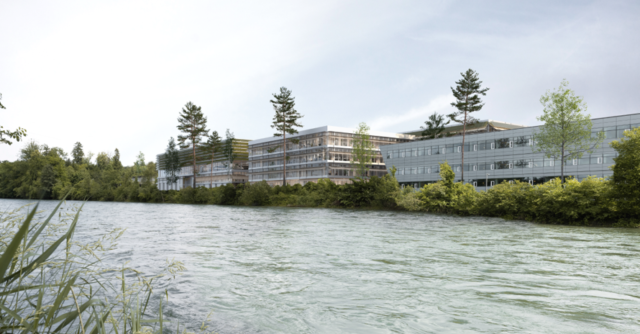
    Alpiq Holding Ltd. is to relocate its Olten site within the city. To this end, the Lausanne-based energy supplier has acquired a new building project from the Pallas Kliniken hospital north of Olten railway station, Alpiq announced in a press release. A new building with an attractive working environment and a sustainable energy concept is to be constructed here. The amount of the investment is not disclosed in the press release.

    Pallas Kliniken had already received a building permit for the construction project. Alpiq now wants to optimise the project for its own needs on this basis. The company plans to utilise the water from the River Aare for the energy supply. The interior design will be characterised by flexible room concepts and open communication zones.

    Once the new site is completed, the approximately 470 Alpiq employees in Olten will move into the new building. Alpiq intends to sell the old site, which is also located close to Olten railway station. Alpiq’s head office will remain in Lausanne, the Group clarifies in the press release.

  • Seuzach secondary school generates generational power

    Seuzach secondary school generates generational power

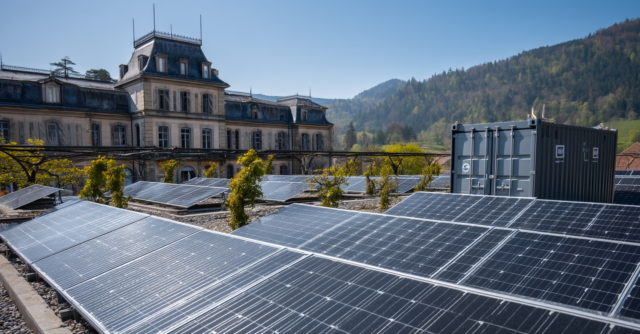
    EKZ promotes the installation of large solar systems via the company’s own EKZ fund. Most recently, the installation of a solar system on the roof of the Seuzach secondary school was supported with CHF 30,000, EKZ reports in a post on LinkedIn. The system’s panels were installed towards the end of September. The secondary school pupils were able to lend a hand themselves as part of myblueplanet ‘s Impact Day.

    The involvement of students is part of the way the EKZ fund works: “In the projects with schools, the young generation is sensitised to climate-friendly electricity production,” says the EKZ fund description. The electricity not consumed by the schools themselves is sold by EKZ to its own customers as generational electricity. Part of the proceeds flow back into the EKZ fund to finance the construction of further solar plants.

  • Haute-Sorne pilot project demonstrates usable geothermal reservoir

    Haute-Sorne pilot project demonstrates usable geothermal reservoir

    According to a press release, Geo-Energie Jura SA has completed theexploration phase of the Haute-Sorne pilot project. A deep borehole has confirmed that the rock can be utilised as a geothermal reservoir. The seismic limit values are complied with when the permeability of the rock is increased.

    Independent experts commissioned by the canton of Jura will now examine the documents from a safety point of view. The canton will then decide whether to continue with the project.

    Geo-Energie Suisse will now evaluate further projects in Switzerland with an electrical output of between 10 and 30 megawatts. Based on experience abroad, the company assumes that production costs for the generation of electricity of 15 centimes per kilowatt hour are possible. If the production of electricity is combined with that of heat, the economic efficiency could be further improved.

    Geo-Energie Jura SA, based in Bassecourt, is a joint venture founded in 2015 by Geo-Energie Suisse SA and the energy suppliers of Baselland(ebl), Bern(ewb) and Zurich(ewz). The Haute-Sorne project aims to explore the use of heat at a depth of 5 kilometres for a geothermal power plant.

    The energy suppliers in Ticino(aet), western Switzerland(EOS) and Basel(iwb) as well as Gasverbund Mittelland are also involved in Geo-Energie Suisse SA, which is based in Zurich.

  • Solar modules put to the test

    Solar modules put to the test

    Increasing weather extremes such as heavy rain, thunderstorms and hail pose major challenges for photovoltaic systems. Hailstorms on rooftop and ground-mounted systems cause high levels of damage and operational downtime every year. The current certification standards for solar modules often do not meet the requirements of severe hailstorms, as they are limited to a few, uniform impacts.

    Practical tests with HRC protocol
    The HRC test goes beyond existing test procedures. It bombards solar modules with hailstones of different sizes and speeds until they break. This creates a load curve that corresponds to the real impact energies of a storm. Manufacturers and operators can identify the point at which the glass fails and which models are particularly resistant.

    Cherif Kedir from RETC emphasizes: “Our test closes the knowledge gap and provides usable data on the entire energy and size spectrum of real hail loads. The strict sample size ensures thorough characterization.” This means that hail resistance can be quantitatively assessed and compared for the first time.

    Consequences for development, operation and insurance
    The HRC protocol offers manufacturers the opportunity to optimize solar modules specifically against hail. Project developers are provided with a new basis for decision-making for the cost-benefit analysis of module types, mounting angles and tracking systems. The test also supports the “hail stow” strategy, in which modules are moved hydraulically into a low-risk position during storms.

    Insurance providers can now dimension cover and premiums based on empirical test results instead of relying on estimates. This reduces uncertainty and promotes the acceptance of PV systems in particularly exposed areas.

    More security through innovation
    The HRC test marks a step forward for the solar industry. Practical testing and transparent data increase the safety and value of solar installations. Manufacturers and operators gain planning security, insurers a solid basis for calculation. This paves the way for more resilient photovoltaic systems that can cope with the changing climate.

  • New wind measuring mast provides data for planned wind farm

    New wind measuring mast provides data for planned wind farm

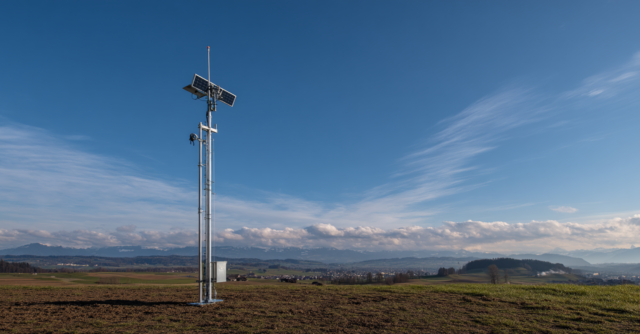
    Axpo is embarking on the next phase of its wind power project on the Dreibündenstein. A 125-metre-high wind measuring mast will be erected on the Grisons hill south of Chur on 9 October, the Baden-based energy company announced in a press release. It will collect data on wind speed, wind direction, weather conditions and bat activity over the course of a year.

    The system, which was specially developed by Axpo subsidiary CKW for the project in Graubünden, does not require an external power supply. This is made possible by a battery that is charged by a photovoltaic system and two wind generators attached to the mast. The data collection system can be monitored remotely by Axpo and is housed in a special container that can even be heated if necessary. “This technological innovation enables us to carry out wind measurements at locations that were previously difficult to access,” said Cédric Aubert, Head of Wind Switzerland at Axpo, in the press release.

    The company plans to install up to eight wind turbines with a total output of around 40 megawatts at the Dreibündenstein. They are expected to supply over 65 gigawatt hours of electricity per year, around 60 per cent of which will be generated in winter. In parallel to the wind measurements that are now starting, Axpo wants to sound out the logistical requirements of the wind farm project in transport and grid studies.

  • New storage concept for stable power grids presented

    New storage concept for stable power grids presented

    The Zug-based greentech company PLAN-B NET ZERO and its subsidiary PLAN-B NET ZERO BESS GmbH presented their new concept for an energy storage system at this year’s D-A-CH Hydrogen Symposium at the Höhere Technische Bundeslehr- und Versuchsanstalt Wiener Neustadt. According to a company press release, it combines battery storage (Battery Energy Storage System, BESS), green hydrogen and artificial intelligence (AI) to create an integrated, flexible energy system that stabilises power grids and increases security of supply.

    Tjark Connor Hennings-Huep, battery systems expert at PLAN-B NET ZERO, argued at the symposium that class A grid planning is no longer sufficient in Germany, Austria and Switzerland because volatile feed-in of energy from wind and photovoltaics, slow grid expansion and increasing weather extremes are putting a strain on grid stability: “We need intelligent decentralised systems that can react independently to fluctuations.”

    As the company emphasises, it does not see combined battery-hydrogen solutions as competition to other systems, but rather as a complementary building block in a more resilient energy system for regional energy centres. “Together, both technologies form the bridge to a robust, fully renewable energy system and, when combined, offer additional parameters in terms of control and flexibility,” says Hennings-Huep.

    Battery storage and hydrogen are complemented by AI-supported forecasting and control algorithms that dynamically balance generation, storage and consumption. “Our goal,” says the expert, “is an energy system that stabilises itself – digital, decentralised and decarbonised.”

  • Capital secured for industrial scaling

    Capital secured for industrial scaling

    FenX has successfully completed a Series A financing round, raising 8.2 million Swiss francs. The round was led by the venture capital companies Supernova Invest from Paris and Move Energy from Amsterdam. Other investors included Çimsa, the Turkish cement producer and strategic partner of FenX, Zürcher Kantonalbank, the two Swiss venture capital firms 4see Ventures from Chêne-Bougeries GE and buildify.earth from Risch ZG and several family offices from Switzerland and France.

    “This investment is an important milestone on our path to decarbonising the construction industry,” said FenX co-founder and CEO Etienne Jeoffroy in a press release issued by his company. “With this funding, we are ready to fully validate our technology.”

    The spin-off from the Swiss Federal Institute of Technology in Zurich, which was founded in 2019, will reportedly use the fresh capital to industrialise its mineral foam technology, accelerate strategic partnerships and launch new product lines on the market. To this end, FenX is pursuing a low-capital model: customers from the building insulation industry acquire a licence for FenX technology and in return receive FenX foam additives tailored to their mineral raw materials. For production, it uses production equipment developed in collaboration with MASA WhiteHub, FenX’s German mechanical engineering partner. The licence holder is responsible for marketing the product.

    Çimsa, FenX’s first customer, is currently building its first industrial production line for mineral insulation boards based on FenX technology in Spain. The plant is scheduled to start operations at the end of 2025. “The low-capital business model gives the company a unique advantage for rapid scaling,” said Investment Director Marine Glon from Supernova Invest.

  • Financing secured for market entry in Germany

    Financing secured for market entry in Germany

    Viboo AG has successfully completed its second financing round, the Dübendorf-based company, which was founded in 2022, announced in a press release. A total of 3.3 million euros was raised from existing and new investors. The spin-off from the Swiss Federal Laboratories for Materials Science and Technology has developed a tool for optimising the use of energy in buildings.

    Viboo intends to use the new funds for its upcoming entry into the German market. To this end, the start-up wants to expand its energy management tool into a comprehensive tool for building management. “We have laid the foundations in Switzerland – with over 40 satisfied customers, some of whom are already in the portfolio roll-out phase, and significant energy savings in existing buildings,” said viboo co-founder Felix Bünning in the press release. “We are now taking the next big step by entering our first EU market, where the combination of energy prices and regulation is providing a strong pull.”

    The financing round that has now been concluded was led by Realyze Ventures from Cologne. “With viboo, we are investing in an innovative software solution that drives the decarbonisation of the existing building segment and thus addresses a very large market,” said Marnix Roes, Investment Manager at Realyze Ventures, in the press release. Viboo has also gained Zürcher Kantonalbank(ZKB) as a new investor. The bank is looking forward to “supporting viboo in the upcoming scaling process”, explains Nicola Leuenberger, Investment Manager at ZKB.

  • Merger planned in the Zurich energy sector

    Merger planned in the Zurich energy sector

    According to a joint statement, the City of Zurich and EKZ have decided to endeavour to have Energie 360 Grad AG taken over by EKZ. The main shareholder of Energie 360 Grad is the City of Zurich with a 96 per cent stake. The remaining 4 per cent is held by 22 political municipalities.

    In a resolution dated 31 May 2023, the Zurich City Council decided that Elektrizitätswerk der Stadt Zürich(ewz) should be the sole municipal provider for large energy networks in the city. Energie 360 Grad’s large energy networks in the city were to be transferred to ewz.

    As a result, Energie 360 Grad increasingly focussed on activities outside the city area. As a result, municipal ownership was examined, as were possible partnerships for Energie 360 Grad. EKZ and the City of Zurich have now agreed to enter into exclusive talks regarding a takeover of Energie 360 Grad by EKZ.

    According to the press release, the energy infrastructure in the canton of Zurich could largely be operated from a single source if EKZ and Energie 360 Grad were to join forces. EKZ already supplies 100 per cent renewable electricity. EKZ would consistently pursue Energie 360 Grad’s strategy towards renewable gases and the installation of charging infrastructure for electric cars. “This would be a decisive step towards decarbonisation and achieving the climate targets,” said the two negotiating partners.

    The municipal council and the EKZ Board of Directors must now decide on the realisation of the sale of Energie 360 Grad to EKZ. According to the information provided, the aim is to finalise a possible transaction by the end of 2026.

  • Production relies on virtually CO2-free aluminium

    Production relies on virtually CO2-free aluminium

    The sun shading manufacturer Griesser Holding AG used 95 percent sustainable green aluminium in the production of its window shutter ranges in Nenzing in September, according to a press release. By using green aluminium at the Austrian site, Griesser Holding AG saves up to 30 percent CO2 per kilogram of aluminium and achieves a new low of 3.3 kilograms of CO2 emissions per kilogram of aluminium produced. The sustainable aluminium consists of 65 percent pre-consumer and post-consumer scrap and 35 percent primary aluminium, explains the company. The primary aluminium is produced using renewable energy in Europe, which results in up to five times lower CO2 emissions than conventional production.

    The switch to green aluminium started in Nenzing in November 2024. “The largest quantities of aluminium are used in our range of window shutters. With the material changeover in Nenzing, we were therefore able to achieve a major impact quickly,” says Urs Neuhauser, CEO of the Griesser Group.

    Quality and sustainability are guaranteed to remain compatible at Griesser Holding AG, according to the company. The previous guarantee periods apply to all Green Aluminium products. As with the rest of the Griesser range, the greener model variants are also EPD-certified (Environmental Product Declaration).

    Griesser Holding AG specialises in the manufacture of sun shading solutions for windows and patios and, according to its own statements, is the European leader in high-quality and aesthetic sun shading.

  • Change planned at the top of the energy company

    Change planned at the top of the energy company

    Roland Leuenberger has been proposed by the Board of Directors of energy producer Axpo as the new Chairman of the Board of Directors. He is to replace the current Chairman Thomas Sieber, who has announced his resignation in December 2024. Leuenberger is currently CEO of Repower AG. According to a press release, he will relinquish his current position before taking on the new mandate at Axpo on 1 June 2026.

    Roland Leuenberger has been CEO of Repower AG since 2019. Prior to this, he held management positions and worked as an entrepreneur for large international organisations at the interface between the energy and financial sectors. According to Axpo, he has “proven leadership skills, expertise, strategic foresight and a keen political sense” and is therefore ideally suited to lead the Board of Directors.

    Thomas Sieber has been Chairman of the Board of Directors of Axpo Holding AG since 2016 and has led the company through challenging times, according to the press release. After ten years of leadership, he will now hand over the position to Leuenberger in June 2026.

  • Parliament wants to speed up construction of large power plants for renewables

    Parliament wants to speed up construction of large power plants for renewables

    The federal parliament has clearly approved the so-called acceleration decree in the final vote. According to a statement, 185 members of the National Council voted in favour, two against and nine abstained. In the Council of States, 44 members voted in favour of the decree, with no votes against or abstentions.

    The decree was proposed by the Federal Council in 2023. It is intended to speed up the construction of large power plants for renewable energies. The appeal process is to be shortened, thus limiting the possibilities for objections and appeals. The cantons are to concentrate the planning approval process for the construction of solar and wind power plants of national interest at cantonal level. The planning process for the expansion of electricity grids is to be shortened.

    The Association of Swiss Electricity Companies(VSE) welcomes the adoption of the acceleration decree. “The focussed cantonal procedure and the reduced number of instances are important levers on the path to a renewable energy supply,” said VSE Director Michael Frank in a press release. “For electricity producers, the compromise means more planning security and speed – exactly what we need now.”

    swisscleantech regrets that the debate had focussed for too long on the attempt to abolish the right of appeal for associations. According to the energy transition association, the abolition of the right of appeal for 16 hydropower projects has led to a great deal of uncertainty. The bottom line, however, is that more speed in the expansion of renewables is what counts, it wrote in a press release.

  • New findings on the stability of steel under the influence of hydrogen

    New findings on the stability of steel under the influence of hydrogen

    Researchers from the Joining Technology and Corrosion Laboratory at the Swiss Federal Laboratories for Materials Science and Technology(Empa) are investigating the mechanisms that lead to the hydrogen embrittlement of steel. The team led by Chiara Menegus and Claudia Cancellieri is focussing in particular on the effect of hydrogen at the boundary layer between a passivation layer and the metal, according to a press release.

    The passivation layer is an oxide layer around 5 nanometres thick that is formed during the oxidation of chromium contained in the steel. The passivation layer protects the steel from further corrosion. However, tests have shown that individual hydrogen atoms can react at the interface between the passivation layer and the metal and break down the protective oxide layer. This ultimately leads to embrittlement of the steel and can cause material fractures, as observed in buildings such as the Carola Bridge in Dresden, the London skyscraper 122 Leadenhall Street or parts of the Bay Bridge in San Francisco.

    However, detecting the hydrogen atoms in the interface is complicated. “It is difficult to investigate a hidden interface inside the material without destroying the sample,” research leader Claudia Cancellieri is quoted as saying in the press release.

    The researchers used hard X-ray photoelectron spectroscopy (HAXPES) for their investigations. This method showed that the hydrogen degraded the passivation layer.

    In a further step, in collaboration with the Ion Beam Physics Lab at the Swiss Federal Institute of Technology in Zurich(ETH), various iron-chromium alloys are to be analysed and resistant oxide layers found. According to the press release, findings from this research could lead to the construction of more durable bridges and better infrastructure for the storage and transport of hydrogen.

  • Wooden computer mouse

    Wooden computer mouse

    Printed circuit boards are the invisible backbone of electronics. Until now, they have mostly been based on fossil plastics. Their conventional production uses glass fiber-reinforced epoxy resin. A petroleum-based material that is almost impossible to recycle at the end of its life cycle and requires costly disposal. This recycling problem is becoming increasingly urgent in view of the growing quantities of electronic waste.

    Empa’s “Cellulose and Wood Materials” laboratory has therefore developed a carrier material based on wood that can be completely biodegraded. Under the leadership of Thomas Geiger, the team in the EU project HyPELignum developed a technology in which lignocellulose – a previously underutilized by-product of wood processing – is transformed into a robust, functional board.

    Closing the loop between function and cycle
    At its core, the new material consists of a mixture of cellulose fibrils and lignin. Finely tuned mechanical processes create a stable mesh that hardens in a “hornified” board. The printed circuit boards made from this material can be printed with conductor tracks and fitted with electronic components.

    Moisture resistance remains the key challenge. This is because it is precisely the material’s openness to water that makes it biodegradable at the end of its life. A conflict of objectives that the Empa team wants to resolve even better in future. In their first experiment, they have already succeeded in building a fully functional computer mouse and other devices. After use, these could be composted under suitable conditions and valuable metals and components simply recovered.

    From research to practice
    The developers at the Empa laboratory are working closely with companies such as Profactor to transform the new circuit boards into products ready for series production. The potential for industry is huge. Especially in the case of short-lived electronic items, this creates a solution that conserves resources, reduces disposal costs and minimizes the ecological footprint.

    The HyPELignum project also emphasizes sustainable overall strategies. The focus is not only on raw materials and production, but also on life cycle analyses and industrial partnerships. With demonstration devices and planned industrial scaling, the aim is to make the leap from laboratory solution to market-ready product by 2026.

  • Examination of geothermal potential in the Burgdorf area started

    Examination of geothermal potential in the Burgdorf area started

    According to a press release, Localnet AG and CKW want to examine the potential for utilising geothermal energy in the Burgdorf area. The local energy supplier will contribute its knowledge of Burgdorf, while the Lucerne-based Axpo subsidiary will contribute its experience from ongoing geothermal projects.

    If the review is positive, the two companies want to inform the population about the next steps before the end of the year. “It is very important to me that the population is informed transparently about this project right from the start,” said Mayor Stefan Berger in the press release. “In any case, it makes sense to carefully examine the geothermal potential in our region. This is also in line with the objectives of our ownership strategy of a sustainable energy supply and long-term security of supply.”

    Localnet supplies 11,500 customers in the region with electricity, 2,500 with gas and a further 350 with heat.

  • New innovation boost for sustainable heating systems

    New innovation boost for sustainable heating systems

    EBP Schweiz AG has acquired a stake in Nullpunkt AG via its venture capital investor EBP Ventures. The start-up from Oberengstringen has developed an innovative ice storage heat pump system and launched it on the market this August following a trial run with a prototype last year. “With this investment, EBP Switzerland is not only strengthening its own innovation network, but also making a concrete contribution to the energy transition in the building sector,” Simon Hess, Partner and Head of Energy Technology at EBP Switzerland, is quoted as saying in a corresponding post by the Zurich-based consulting and engineering company on LinkedIn.

    The system from Nullpunkt AG consists of an external heat exchanger, an ice storage tank and a heat pump. The outdoor heat exchanger extracts energy from the ambient air during the day. This is used to melt the ice in the ice storage tank. When this water freezes again, thermal energy is released. This is extracted from the storage tank by the heat pump and used to heat the house. Compared to other ice storage systems, the system from Nullpunkt has a more compact design, “high energy efficiency and an attractive price-performance ratio”, writes EBP.

    Nullpunkt’s current programme includes further development to include more powerful systems and additional regeneration sources. “A competent partner such as EBP will also provide us with the right technical impetus to establish Nullpunkt on the market in the long term,” Nullpunkt CEO Thomas Degelo is quoted as saying in the article.