Category: New construction

  • Strabag builds roads in the Weitblick district of Solothurn

    Strabag builds roads in the Weitblick district of Solothurn

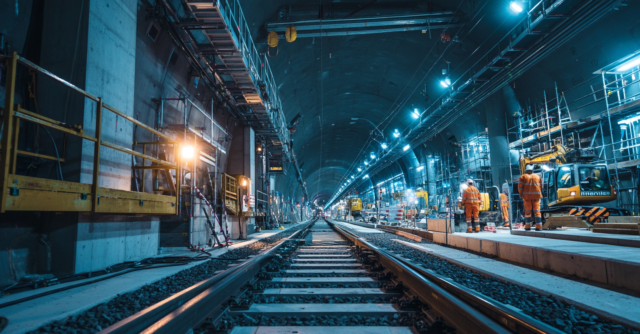
    The Schlieren-based construction company Strabag is carrying out work in the future Weitblick district of Solothurn to create a network of roads and paths as well as all utility lines. According to a press release, the new Weitblick district in Solothurn will be completed by 2036. The district will provide living space for around 1,700 people and accommodate the same number of jobs. There will be a new park and recreational space. Thanks to Weitblick, the city of Solothurn will be able to create new living space and space for new life in a central location, in the existing district structures and at the gates of the old town, the press release continues.

    According to the press release, Strabag has been involved in the project since the start of construction. In April 2023, Strabag teams began road construction work in the northern part of the site. Last September, Strabag laid the surface for the first road in Weitblick. After a construction break, the final work is now in full swing and the job will be completed in this part of Weitblick in the next few weeks. Construction work in the southern part of the Weitblick site is currently in full swing, according to Strabag.

    The subsoil in this area is also difficult to build on due to the high groundwater level. Sheet piling, bored piles and a lowering of the groundwater level were therefore necessary. All special civil engineering work was carried out by Strabag. The trenches for the utility lines are currently being excavated and the access roads for the Weitblick site are being constructed.

  • Halter realises BirsTower high-rise project in Muttenz

    Halter realises BirsTower high-rise project in Muttenz

    Schlieren-based property developer Halter AG is to build a high-rise building on the former Hagnau West commercial site in Muttenz, according to a press release. The BirsTower will offer a combination of residential and commercial space and will also include condominiums.

    The conclusion of the building lease agreement marks a further step in the development of the new Hagnau West neighbourhood, according to the press release. Rietpark Immobilien AG in Kriens LU, as investor and developer, will realise the 73-metre-high BirsTower with a gross floor area of 16,150 square metres on the 4446 square metre site with Halter AG as realisation partner.

    The Kunsthaus Baselland Foundation, as the owner of the site, looked for a suitable buyer through an investor tender and decided in favour of Rietpark Immobilien AG. According to the press release, the Kunsthaus Baselland has found a new location after 25 years at its site in Muttenz.

    The property in Muttenz is located directly on the cantonal border with Basel-Stadt. The neighbourhood is very well connected thanks to its proximity to the motorway and public transport links. The proximity to the Birs and the connection to the nearby Schänzli green and exercise area offer additional added value, according to the press release.

    The Swiss Sustainable Building Standard (SNBS) with the Gold label or an equivalent standard for sustainable construction with the approval of the municipal council will be used for all buildings in the neighbourhood. The project will be realised according to the design-build model of partnership-based construction in order to achieve the sustainability goal.

  • Start of construction for the extension and renovation of Hofwil High School

    Start of construction for the extension and renovation of Hofwil High School

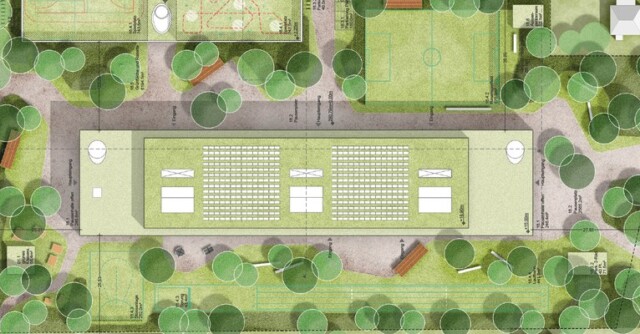
    Hofwil High School is being expanded with the construction of a new school building and a triple sports hall to accommodate the increasing number of pupils. Originally designed for ten classes and 200 pupils, the school currently accommodates 21 classes with around 460 pupils. Temporary buildings that were erected in 2013 and 2017 are to be replaced by the new buildings. The new school building will include classrooms and practical rooms, including two chemistry laboratories. An outdoor cafeteria extension is also planned. The new triple sports hall will be equipped with cloakrooms, sanitary facilities, a workroom for teachers and a theory room.

    Move into the new buildings expected in summer 2026
    Completion of the new school building and the triple sports hall is planned for summer 2026. After completion, the focus will be on the structural refurbishment of the existing listed buildings, which should be completed by autumn 2027. These renovations include necessary room changes and maintenance measures in order to meet current educational standards. At the same time, the existing temporary school rooms are to be demolished and used for other purposes.

    Sustainable construction and energy concept
    Both new buildings will be constructed in accordance with the Minergie-P-ECO standard and equipped with photovoltaic systems to ensure sustainable and energy-efficient operation. This commitment to sustainability emphasises the future-oriented focus of Hofwil High School and sends out a strong signal of ecological responsibility in the education sector.

    Financing and total costs
    The total costs for the extension and refurbishment of Hofwil High School amount to CHF 65.63 million. This investment will not only cover current space requirements, but will also provide future generations with a modern and well-equipped learning environment. The financing of these extensive building measures is a sign of the canton’s commitment to education and infrastructural development in Münchenbuchsee.

    Historical significance and future prospects
    Hofwil High School, last renovated in the early 1980s, is an important part of the educational landscape in the region. The planned extensions and refurbishments are not only a response to current space requirements, but also an investment in the future. With the new infrastructure, the school will be able to cope with increasing pupil numbers and at the same time fulfil modern educational requirements.

    The remodelling and extension plans for Hofwil High School are an important step towards ensuring high-quality education in the region. With modern teaching and sports facilities, the school will be optimally prepared to meet the needs of the pupils and offer them a comprehensive, contemporary education.

  • Winning project for high-rise building near Regensbergbrücke in Zurich

    Winning project for high-rise building near Regensbergbrücke in Zurich

    At the Regensberg Bridge in Zurich Oerlikon, SBB is planning an office building around 40 metres high with public uses on the ground floor. The winning project, developed by “Team Esch Sintzel”, makes skilful use of the challenging site shape and topography. It also achieves a high degree of energy self-sufficiency, which makes it particularly forward-looking.

    Focus on efficient use and sustainability
    The planned high-rise building will be 80 per cent energy self-sufficient. Thanks to advanced building technology, passive cooling and solar cells on the roof and façade, the building will be able to cover most of its own energy requirements. This fits in perfectly with SBB’s ambitious climate targets.

    Eight office floors and public uses on the ground floor
    The new building is being realised as a nine-storey commercial building, with flexible floor plans that are ideal for services, health and education. The ground floor will be enlivened by catering and retail spaces, while the outdoor space concept with a near-natural track level and barrier-free urban level will ensure a high quality of stay.

    Public exhibition of the competition entries
    The competition entries will be exhibited from 12 to 15 July 2024 on the 8th floor of the Franklinturm at Hofwiesenstrasse 349 in Zurich-Oerlikon. Interested parties can visit the exhibition from Friday to Sunday from 2 pm to 6 pm and on Monday from 11 am to 3 pm.

    Framework plan for Zurich Oerlikon railway station south-west development site
    The basis for the project is the “Zurich Oerlikon railway station south-west development site” framework plan drawn up in 2012 together with the City of Zurich. This defined an eight-storey building to the west of the Franklin Tower in terms of urban planning. The building permit requirements have been met and construction is scheduled to begin in 2027.

  • New home for senior citizens Greencity 2026

    New home for senior citizens Greencity 2026

    A visionary residential project is being built in the south of Zurich that offers older people a lively and safe environment. The development on construction site B6 in Greencity combines private and municipal involvement. Losinger Marazzi AG is developing the project for the investment foundations of Pensimo Management AG, which are providing a total of 179 flats for older people. Of these, the City of Zurich Retirement Homes Foundation (SAW) will take over 60 flats, while the remaining 119 flats will be let by Pensimo to tenants aged 55 and over. This collaboration represents a new partnership and gives all tenants access to SAW’s services.

    A green centrepiece for Greencity
    Construction site B6 is the latest chapter in the sustainable development of the Greencity district. Since 2014, Losinger Marazzi has been transforming the site of the former Sihl paper factory into Switzerland’s first 2000-watt site. The inner courtyard of the new building will feature green areas, trees and seating, inviting people to linger. Arcades on the ground floor create sheltered access areas to commercial spaces, which could offer facilities such as a medical centre, a fitness studio, a bakery or a café on 3,500 square metres, says René Büchi, the portfolio manager responsible at Pensimo.

    Comprehensive services from SAW
    The City of Zurich Retirement Homes Foundation provides all tenants with a comprehensive service package. This includes a 24-hour emergency call service, extended caretaking, laundry service, social services and various events on the estate. If required, tenants can also take advantage of home help and outpatient care services. Andrea Martin-Fischer, Director of SAW, emphasises: “Our aim is to enable tenants to live independently and safely well into old age.”

    Focus on sustainability
    Greencity’s sustainability goals are consistently applied to the new retirement housing project. Herbert Heinen, Project Manager at Losinger Marazzi, explains: “An optimised load-bearing structure, lightweight walls, a wooden façade and an energy concept with 100 percent renewable energy significantly reduce CO2 emissions and bring the building close to the net-zero target in operation.” Pensimo and Losinger Marazzi are also aiming for certification with the SNBS Gold label. Construction started in March 2024 and the building, designed by JSWD Architekten from Cologne, is scheduled for completion at the end of 2026.

    With this pioneering project, Greencity is setting new standards for sustainable, age-appropriate living and demonstrating how private and public partnerships can create forward-looking solutions.

  • Baden Cantonal Hospital focusses on local companies and sustainability

    Baden Cantonal Hospital focusses on local companies and sustainability

    Baden Cantonal Hospital (KSB) has carried out around 250 publicly tendered procurements over the course of the six-year construction phase of the new building. According to a press release, these tenders resulted in a total of 1066 contracts for work and services. The most recent tender was for the furniture. According to the KSB, the new hospital building lives up to the Swiss made label. 97 per cent of the 177 companies involved in the new building come from Switzerland. Only 3 per cent of the contracts were awarded to companies in Germany and Italy.

    A total of 25 per cent of the companies involved in the construction are based in the canton of Aargau and 40 per cent in the canton of Zurich. “We are proud that KSB has thus made a significant contribution to local and regional value creation,” KSB CEO Adrian Schmitter is quoted as saying.

    Thanks to the high presence of local companies, KSB has also set an example in terms of sustainability, Schmitter continues. “During the construction phase, it was above all a project of short distances for the trade companies involved. This resulted in various synergy effects,” says the CEO. This also applies to the time after commissioning, when reworking, maintenance or similar may be required.

    With a usable area of 76,215 square metres, the new building will offer around 30 percent more space than the building in which KSB has been housed since 1978. Commissioning is scheduled for the end of February 2025.

    The move should then be completed within five days. A total of 4571 cubic metres of medical technology and other goods will be moved, according to a KSB press release. This corresponds to the load of 76 lorries of 40 tonnes each.

  • New paediatric hospital in Geneva

    New paediatric hospital in Geneva

    Integrating the families of young patients is a central concern of the new paediatric hospital. There will be special areas adapted to the needs of families, such as individual rooms with integrated bathrooms for patients and separate day and night areas for parents. There will also be an area for parents or carers with living rooms, kitchens and bathrooms. There are also rooms for parents whose children come to the hospital from far away and who are therefore unable to visit every day.

    Promoting research and training
    The new hospital will also meet the needs of medical staff and training. It will improve working conditions for medical staff and encourage medical students to specialise in paediatrics. The hospital will also provide space for research activities.

    Demographic and economic considerations
    This construction project is part of the cantonal hospital planning process and is based on demographic forecasts and economic considerations. The aim is to enable Geneva University Hospitals to offer children and their families comprehensive, high-quality care in a modern, functional environment.

    Architecture and construction phases
    The architecture of the new paediatric hospital combines comfort and functionality to create an environment conducive to healing. The architects’ competition was organised in accordance with SIA 142 regulations as part of a selective procedure for a multidisciplinary team. Architecturestudio, an international practice with offices in Paris, Shanghai and Zug, won the competition.

    Sustainable and modern construction
    The new building will meet the highest energy and functional standards. In addition to patient-friendly facilities, sustainability will also be a key consideration. Construction will take place in several phases. The inpatient part of the building is due to come into service at the end of 2030, while the outpatient building is scheduled for completion in mid-2035.

  • Pictet de Rochemont Campus

    Pictet de Rochemont Campus

    The PAV project extends over three central districts of the city and covers 230 hectares – an area roughly equivalent to the distance between Bürkliplatz and Letten in Zurich. By 2050, 12,400 homes and 6,200 jobs are expected to be created. Construction of Pictet’s new headquarters will begin in autumn 2021, with opening planned for 2025. The new building will house 2,500 workstations and 100 residential units.

    Innovative and sustainable design
    Pictet’s new headquarters will be built to the most modern standards. The project’s “Feng Shui” design emphasises the link with nature, with elements such as water, air, light and greenery. The building will have 23 floors, including a panoramic restaurant terrace and vast green spaces. A public park and the release of the Drize river are also part of the project.

    Environmentally-friendlyconstruction
    A key aspect of the project is respect for the environment. The building will be designed to minimise energy consumption and maximise the use of renewable energy. An innovative approach is also being taken to soil disposal. 80.a total of 1,000 m³ of soil will be transported by train to significantly reduce the carbon footprint.

    Integration and development of the neighbourhood
    The PAV project aims to transform the area’s industrial past into a vibrant mixed-use neighbourhood. In addition to new housing and jobs, the project will create numerous green spaces and meeting areas.
    Commitment to the city of Geneva
    Renaud de Planta, senior partner at the private bank, emphasises that the new campus is a clear declaration of commitment to the city of Geneva. Despite competition from financial centres such as London and New York, Geneva remains Pictet’s central location. The people of Geneva also contributed to the decision to locate here through their political decisions.

    Looking to the future
    With the completion of the Pictet Campus in Rochemont, Geneva will not only have a new architectural landmark, but also an important working and living centre in the heart of the city. The project is a symbol of forward-looking urban development that emphasises sustainability and modernity, and will improve the quality of life of Geneva’s residents and workers.

  • Green Village Geneva: a model of sustainable urban development

    Green Village Geneva: a model of sustainable urban development

    The Green Village is an impressive project that embodies the vision of sustainable urban development. Located in the centre of Europe, in the international city of Geneva, the Green Village combines different types of buildings such as flats, offices, a hotel and a conference centre. This multi-purpose use encourages strong interaction between residents, workers and visitors. Technological innovations and integrated spaces offer a high quality of life and encourage soft mobility thanks to easy access to public transport.

    Historical integration and modern use
    The Green Village surrounds the existing World Ecumenical Centre of the World Council of Churches, built in the 1960s by the Honegger brothers, renowned Geneva architects, and classified as a historical monument by the canton. The WCC, which has been promoting peace and justice throughout the world for over 70 years, encourages dialogue and exchange between different cultures. This heritage is reflected in the architectural concept of the Green Village, which actively supports diversity and meaningful exchange.

    Symbolic buildings and innovative concepts
    The Green Village buildings are named after cities that have hosted major climate conferences, such as Montreal, Kyoto and Stockholm. This choice of name reinforces the sense of community and underlines the ecological orientation of the project. In total, the Green Village consists of seven buildings that are articulated around the central ecumenical centre and create a well thought-out network of working and living spaces.

    Sustainability and environmental protection
    A central element of the Green Village is the implementation of the “One Planet Living” philosophy, which is based on the sustainable management of resources and the promotion of biodiversity. The project incorporates global environmental measures such as energy network management, rainwater recovery and the development of natural gardens. These measures not only contribute to the project’s environmental performance, but also create a healthy and pleasant environment for all users.

    Mobility solutions for the future
    The Green Village’s location is ideal for environmentally-friendly mobility. It is in the immediate vicinity of Geneva airport, the motorway, the railway station and public transport stops. Two urban boulevards, the “Boulevard de Chancy” and the “Boulevard des Abarois”, will structure the new neighbourhoods and facilitate access to them. They will be complemented by green lanes for soft mobility and park-and-ride facilities to encourage transfers to public transport.

    Renovation and preservation of historic buildings
    The listed Ecumenical Centre will be renovated and extended as part of the project to create state-of-the-art conference facilities and workspaces. The renovation is scheduled to take place over the period 2023-2027 and will preserve the building’s historical significance while adapting it to future requirements.

  • New building at headquarters in Weggis officially opened

    New building at headquarters in Weggis officially opened

    Thermoplan inaugurated its new building at its headquarters in Weggis on 22 June after almost 960 days of construction, the globally active Lucerne-based manufacturer of fully automatic coffee machines announced in a press release. The red ribbon in front of the spacious entrance area of the modern production and office building was cut by Thermoplan CEO Adrian Steiner together with the founding couple Esther and Domenic Steiner. Over the course of the entire open day, almost 5,000 visitors gathered on the festive mile along Weiherstrasse.

    Thermoplan develops and produces fully automatic coffee machines for professional use in catering and other businesses. Among other things, Thermoplan equips the global Starbucks chain with fully automatic coffee machines. The globally active company is committed to Switzerland as a production location: the fully automatic coffee machines are all manufactured at the headquarters in Weggis, Thermoplan states in its self-promotion. Around 80 per cent of the components used also come from Swiss production.

  • Federal Council imposes limits on buildings outside building zones

    Federal Council imposes limits on buildings outside building zones

    The Federal Council is proposing that the number of new buildings outside of building zones be increased by a maximum of 1 per cent compared to 2023. At its meeting on 19 June, it submitted a corresponding draft for consultation, the Federal Council announced in a press release. The consultation draft is a proposal for the ordinance on the revised Spatial Planning Act. It was passed by both chambers on 29 September last year and aims to stabilise construction outside of building zones at a certain level.

    There are currently around 620,000 buildings outside of building zones in Switzerland. If the bill comes into force, this figure could increase by a maximum of 6,200 buildings. With an average of 500 new buildings outside the building zone each year, the maximum permitted number would be reached in just over ten years, writes the Federal Council.

    The Federal Council is also proposing changes to the handling of special zones. Here, the volume and area of new buildings outside of building zones will have to be compensated for by the demolition of existing structures. In agricultural zones, the priority of agriculture over other uses is reaffirmed.

  • P.A.W. Hub presents innovation centre for Lucerne North

    P.A.W. Hub presents innovation centre for Lucerne North

    P.A.W. Hub AG has unveiled a new project for a national and international business centre in Lucerne North. A centre that combines creative business solutions with educational facilities and residential and commercial buildings is to be built at the site, according to a press release. The project, which is supported by the Lucerne Economic Development Agency, is about to enter a new phase of realisation following the successful concretisation of the construction plans and the granting of planning permission. In the first phase, work will focus on the areas of education and health. Technology centres are also to be established. According to the press release, regional, national and international players are to be attracted to the project. P.A.W. Hub is looking for investors who want to participate in the success of the project for its further realisation.

    “Lucerne Economic Development strongly supports the P.A.W. Hub project, as it offers a significant opportunity for economic development in our region,” Andreas Zettel, Head of Business Development at Lucerne Economic Development, is quoted as saying in the press release. “We see great potential in the fact that the hub supports local companies, attracts skilled labour and increases the region’s attractiveness for further investment.”

    “We are convinced that the hub will boost the economy in Lucerne and position the region as an attractive location for investment and skilled labour,” adds Sacha Willemsen, initiator and co-founder of P.A.W. Hub AG.

  • Canton can build Graubünden University of Applied Sciences Centre

    Canton can build Graubünden University of Applied Sciences Centre

    Construction of the new Chur University of Applied Sciences Centre can begin in spring 2025. According to a recent press release, the cantonal building construction office received the building permit from the city of Chur at the beginning of June.

    The fact that the city was able to give the green light just three months after submitting the planning application was due to its quality, according to the responsible city councillor Sandra Maissen: “The canton’s largest construction project was well and comprehensively prepared. Thanks to the excellent cooperation between the canton and the city of Chur, the planning application was processed very quickly.”

    According to cantonal master builder Andreas Kohne, the realisation can now be tackled according to schedule. This schedule envisages the ground-breaking ceremony and thus the official start of construction in late autumn 2024. The actual start of construction should then be in spring. If everything goes according to plan, the new Graubünden University of Applied Sciences Centre should open in 2028. Initial demolition work on the Pulvermühle site in Chur and the rerouting of the Mühlbach stream began a few weeks ago.

  • Halter takes over residential project near Schaffhausen

    Halter takes over residential project near Schaffhausen

    Schlieren-based property developer Halter AG has acquired the Waldstadt residential development site in Pantli between Schaffhausen and Stetten SH, according to a press release. The seller is DOST Architektur GmbH in Schaffhausen. The two companies will jointly realise the planned construction of 200 owner-occupied flats.

    According to the plans, over 200 condominiums are to be built on 47,600 square metres of land. In a first step, 100 condominiums will be realised. This will be followed seamlessly by the other stages, according to the company press release. Over 40 different types of flat are available for different living requirements. The sizes range from 2.5-room to 5.5-room flats. The flats are orientated on several sides and offer rooms with plenty of natural light and a direct view of nature and the forest. The new living space is suitable for families, couples and commuters from the region.

    A new bus stop and direct access to the motorway in the direction of Schaffhausen, Winterthur and Zurich ensure optimal transport connections. An integrated kindergarten and a day care centre round off the offer and make Waldstadt im Pantli attractive for families too.

    The construction time for the first stage is estimated at around two and a half years. If everything goes according to plan, the first flats can be occupied in 2026, according to Halter AG.

  • New building for health and biomedical research inaugurated

    New building for health and biomedical research inaugurated

    ETH Zurich has inaugurated its latest new building. The university’s health sciences and biomedical engineering departments have moved into the Gloria Cube, the ETH announced in a press release. Specifically, the new laboratory and research building houses 16 research groups from the fields of exercise science and sport, rehabilitation and biomedical engineering as well as application-orientated, translational research.

    The new building on Gloriarank connects the ETH campus with the neighbouring residential buildings in the Fluntern district via continuous paths and a green area. The eight-storey building is also close to the University of Zurich and the University Hospital Zurich, making it “a natural address for interdisciplinary collaboration and translational research”, writes ETH. The transfer of research results into medical applications will be supported by a technology platform for medical human research set up in the Gloria Cube.

    The press release cites the development of new micro-active substances and new training methods to improve athletic performance and health as examples of future research to be conducted at the Gloria Cube. Another project is investigating the connection between pupil size and stress or mental well-being in general. The Gloria Cube has six seminar rooms and a learning centre for training. At the Skills Lab @ETH, medical students can teach each other basic medical skills.

  • Opening date announced for new building of Baden Cantonal Hospital

    Opening date announced for new building of Baden Cantonal Hospital

    Baden Cantonal Hospital(KSB) has announced the opening date for its new building. According to a press release, the new KSB will officially open on Tuesday, 25 February 2025, with the main move taking place the following weekend. The new building took six and a half years to complete. With a usable area of 76,215 square metres, it will offer around 30 percent more space than the building in which the KSB has been housed since 1978.

    The move will be completed in five days. A total of 4571 cubic metres of medical technology and other goods will be moved, according to the KSB press release. This corresponds to the load of 76 lorries of 40 tonnes each. The project is divided into three phases, according to the press release. In the preliminary move, material will be moved so that the doctors and nurses in the new building can start work immediately. During the main move, the intensive care unit, the monitoring ward, neonatology and the emergency department will take priority. Hospital operations will continue as normal.

    The new building will actually be ready sooner. But the KSB management deliberately chose February as the date for the move. “Theoretically, the new building would be ready for occupation as early as next autumn,” KSB CEO Adrian Schmitter is quoted as saying. However, moving before the autumn holidays would have been tight. This is because the building still has to undergo numerous complex tests beforehand. In addition, all operating licences must be obtained.

    As the KSB is always very busy between October and January and many patients with infectious diseases are treated during the flu epidemics, it was decided to use the time window with fewer patients from the end of February for the move. Details on the new KSB building can be found in KSB magazine 02-2024.

  • Winning project for the first new building on the Werkstadt site in Zurich

    Winning project for the first new building on the Werkstadt site in Zurich

    Used rails as supporting structure
    The winning project “GLEIS X”, which was developed by Leuthard AG Baumanagement and Gigon/Guyer Architekten AG, impresses with its consistent reuse strategy. The concept uses 12 kilometres of used rails from the SBB ReSale as supports and ceiling beams for the main floors. The building envelope also consists of reused windows and corrugated fibre cement panels. This innovative use of used components was particularly recognised by the jury, as it picks up on the history of the site and continues it architecturally. For SBB, which attaches great importance to the preservation and further development of its architectural and railway heritage, this approach was decisive.

    Six commercial floors and one city floor
    The planned new building comprises seven floors, six of which are to be used as commercial space. These areas are intended for small to medium-sized businesses and offer a mix of traditional and innovative commercial space. The first floor, the so-called “city floor”, will house services or cultural offerings and thus promote interaction with the neighbourhood. The ground floor will initially be used for car parking and goods handling, but will also be converted into a commercial floor at a later stage.

    Public project exhibition
    Interested parties can view the competition entries on the mezzanine floor of Building U, Hohlstrasse 400, 8084 Zurich. The exhibition is open until 19 June 2024 from Monday to Friday from 5pm to 7pm and at weekends from 12pm to 4pm.

    Werkstadt Zürich – a place for urban production
    An innovative centre for urban production and commerce is being built on the approximately 43,000 square metre “Werkstadt Zürich” site. SBB is refurbishing the existing buildings and creating jobs close to the neighbourhood for trades, services and highly specialised professionals. The transformation of the site is being carried out in close cooperation with the City of Zurich and the cantonal monument preservation authorities. Around 35 companies currently provide jobs on the site and contribute to the lively development of the neighbourhood.

  • Opening of a new vocational training centre

    Opening of a new vocational training centre

    Polybau ‘s new training centre in Grenchen will be the third vocational training centre after the two main sites in Uzwil and Les Paccots. Polybau was founded in 1949 as a technical college of the Swiss Association of Master Roofers. Today, it is regarded as the leading training centre for building envelope specialists in Switzerland. The expansion is intended to strengthen Solothurn’s educational landscape and cooperation with local businesses and industry.

    “With its central location and good connections to the public transport network, Grenchen is easily accessible for students from the entire region,” said André Schreyer, Managing Director of the Polybau training centre, in a press release. “The new vocational school location also offers the necessary infrastructure to meet the high demands of modern and future-oriented vocational training.”

    Every year, around 750 Swiss Federal Certificate of Competence (EFZ) and Swiss Federal Vocational Certificate (EBA) apprentices are trained in the fields of roof, wall, sealing, sun protection and blind technology as well as scaffolding. From August, some of the new solar professions and existing German-speaking roofing classes, which are currently based in Les Paccots, will be taught at the new site in Grenchen. Polybau’s strategy is to train young people in Switzerland and promote their professional development. The school management responsible for the school concept will remain at the Uzwil site. According to the press release, the centralised administration guarantees efficiency and quality in training.

  • Authorisation granted for sustainable office building complex

    Authorisation granted for sustainable office building complex

    Green Spin receives authorisation to build a sustainable office building complex. According to a press release, companies specialising in sustainability will move in here in three years’ time. The future units will have modular rental areas of between 35 and 1,400 square metres with a total area of 31,000 square metres. In addition to commercial, office and production premises, catering businesses and individual retail outlets will also move into the future quarter. Green Spin was initiated and developed by Felix Partner Architektur Design from Zurich.

    The architecture firm promises functional architecture with a photovoltaic façade and wind turbines for green electricity as well as a heating system that works with geothermal energy. The location is close to the city centre and has good connections to public transport and the city’s cycle network. A ramp up to six metres wide, which rises gently around the inner courtyard and is accessible by bike, is a particular highlight. This provides access to the rental space on all levels so that you can cycle directly to the office or shop.

    The building is certified in accordance with the international sustainability standard for buildings, BREEAM, and fulfils the ESG standards for sustainability reporting as well as the standards for Scope 1 and Scope 2 emissions of the Greenhouse Gas Protocol.

  • Building licence granted: Ground-breaking ceremony draws closer

    Building licence granted: Ground-breaking ceremony draws closer

    Under the title “Full speed ahead thanks to building permit”, the latest issue of the “Impulse” magazine published by the Aargau Chamber of Industry and Commerce(AIHK) reports on the progress of planning for the new Haus der Wirtschaft in Aarau. On 25 March, the city of Aarau issued the building permit, according to the magazine. The path to the new Haus der Wirtschaft is therefore clear and the ground-breaking ceremony is approaching. The new Haus der Wirtschaft is expected to be completed in spring 2026.

    As the building permit has been granted earlier than expected, the parties involved have been able to press ahead with the planning work and bring forward the implementation planning, the report continues. Tenders are currently being invited for the various works. The award negotiations for the most important contracts are due to take place at the beginning of July.

    According to the plans, the demolition of the existing building will then begin in mid-August. This will be followed by excavation and drilling for the planned seven geothermal probes. The shell construction work will start at the beginning of October 2024. The new Haus der Wirtschaft should be ready for occupation in spring 2026.

    During the construction work, the employees of the AIHK and the AIHK compensation fund will move to other premises in July. It is still unclear where. Talks about possible rental properties in Aarau are ongoing, according to the AIHK.

    According to an earlier report in “Impulse”, the new Haus der Wirtschaft will enable more professional courses and events to be organised. The new building also stands for the ongoing digitalisation and modernisation that has been taking place at the association for several years.

  • Ein nachhaltiger Holz-Hybrid Bau mit einem «Herz aus Holz»

    Ein nachhaltiger Holz-Hybrid Bau mit einem «Herz aus Holz»

    «Ein Herz aus Holz»
    Das Projekt wird als fünfgeschossiger Sockelbau und einem Hochhaus mit einem Atrium – dem «Herz aus Holz» – realisiert. Auf den Dachflächen wie auch auf Teilbereichen der Fassade sind Photovoltaik-Module für die Stromproduktion vorgesehen. Die gesamte Wärme- und Kälteversorgung erfolgt mittels eines Anschlusses an die Fernwärme «Wärmeverbund Seetalplatz». Das Projekt strebt die Zertifizierung mit den Nachhaltigkeitslabeln SNBS Gold und Minergie-P-ECO an. Für den Holz-Hybridbau und die vorgefertigten Fassadenelemente werden ca. 1420 m3 Holz verarbeitet – v.a. Fichte und Tanne. Der Holzbau trägt dabei nicht nur zum angenehmen Innenklima bei, sondern reduziert auch die CO2-Bilanz der Erstellung des Gebäudes. Die fixfertige Vorfabrikation der Fassadenelemente aus Holz in geschützten Werkhallen stellt zudem die Qualität sicher und ermöglicht eine schnellere Fertigstellung der Gebäudehülle.

    Der Kanton Luzern verfolgt eine Vorreiterrolle bei der Umsetzung der Klimaziele, wie auch Losinger Marazzi. Die Immobilienentwicklerin und Totalunternehmung hat sich zum Ziel gesetzt, ihre CO2-Emmissionen bis ins Jahr 2030 um 30 % im Vergleich zu 2021 zu reduzieren. Dieses Ziel erreicht Losinger Marazzi indem neben einem verstärkten Fokus auf Holzbau- sowie Stadterneuerungsprojekte die Nachhaltigkeit in allen Projekten als zentrales Thema behandelt wird.

    Heute ist die kantonale Verwaltung auf über 30 verschiedenen Standorten verteilt. Durch den Neubau werden im Jahr 2026 rund 1500 Angestellte unter einem Dach zusammengeführt und somit eine zentrale Anlauf-, Auskunfts- und Beratungsstelle im neuen Stadtteil Luzern Nord erschaffen, die mit allen Verkehrsmitteln bestens erschlossen ist. Zudem werden sich in den unteren Geschossen des Gebäudekomplexes die öffentlichkeitswirksamen Dienststellen, ein Polizeiposten, Gastronomie und Läden verteilen. Eine Kita im 6. OG sowie Wohnungen in den obersten Geschossen werden zum belebenden Nutzungsmix beitragen.

  • Forward-looking integration of the Luchswiese housing estate and school extension

    Forward-looking integration of the Luchswiese housing estate and school extension

    In the midst of the dynamic development of the north of Zurich, a showcase project is being created that meets the demands of a growing city. The existing Luchswiese housing estate, characterised by its green garden city atmosphere and three four-storey apartment blocks, will be replaced by a variety of living space and educational facilities. The winning project “Pergola” by Blättler Heinzer Architektur and KOLLEKTIV NORDOST Landschaftsarchitekten is characterised by a careful densification that preserves the garden city character while creating modern living and learning space.

    The use of prefabricated timber construction systems will create 76 flats that will appeal to families in particular thanks to their diversity. The integration of four kindergartens with childcare infrastructure and a multi-purpose hall for the day school in the western building block directly adjacent to the school grounds emphasises the innovative concept of the development. This organic combination of housing and education creates a harmonious ensemble that is complemented by flowing green spaces and green roof terraces.

    The winning project “LYNX” by Parameter Architekten and Rosenmayr Landschaftsarchitektur for the neighbouring Luchswiesen school complex is faced with a growing need for school space. The city is planning a significant extension here by 2028, which will provide new space for 750 children. Inspired by Max Kollbrunner’s original architecture, the extension combines old and new elements and integrates a triple sports hall as well as modern classrooms and childcare facilities. The resource-conserving construction method, including the use of photovoltaic elements and timber in skeleton construction, underlines the city’s commitment to sustainable development.

    This project is an impressive illustration of how creative urban planning and close collaboration between different stakeholders can find solutions to the challenges of urbanisation. The Luchswiese housing estate and the Luchswiesen school complex are a forward-looking model for living and learning together in Zurich.

  • Building rights create affordable living space in Zurich

    Building rights create affordable living space in Zurich

    The Im Gut building cooperative has set itself the goal of comprehensively renovating and expanding its housing estates on Gutstrasse in Zurich-Wiedikon, which are characterised by a building fabric that is around 70 years old. As part of a master plan, the possibilities for the construction of non-profit flats as well as the establishment of a double kindergarten and the creation of communal and public-orientated usable areas are being explored. Two building plots, which were renovated in 2012 and 2014, are just the beginning. The next steps include the redesign of two further plots, which will be made possible by urban building rights.

    New residential concepts and the role ofmunicipal building rights
    The construction of 28 new flats is planned on the plot at Gutstrasse 146 to 152, while two listed buildings, including a residential tower block with 46 flats, will be renovated. The annual ground rent for this field amounts to around CHF 69,000. At the same time, the neighbouring plot at Gutstrasse 145 to 153 will be completely redeveloped and will provide space for 72 flats. The two building plots will thus provide a total of 146 affordable flats – an increase of 44 flats compared to the current stock.

    Setting the financial and planning course
    The city council is endeavouring to renew the building rights for these projects for a further 62 years ahead of schedule, thereby underlining the city’s long-term commitment to promoting affordable housing. The decision to grant the building rights lies with the municipal council. In preparation for the start of construction in September 2023 and the planned occupation of the housing estate in winter 2025/2026, one-off expenditure of CHF 1.355 million has already been approved for the renovation of the building site. This financial commitment is a significant contribution to strengthening the urban infrastructure and ensuring the quality of living for broad sections of the population.

  • Large-scale project for performing arts and student accommodation in Vernier

    Large-scale project for performing arts and student accommodation in Vernier

    The Fondation pour le Développement des Arts et de la Cultur from Vernier has commissioned HRS with the construction of two buildings in Vernier. The corresponding total contractor agreement has already been signed, the real estate service provider based in Frauenfeld announced in a press release. The financial scope of the large-scale project dedicated to the performing arts has not been disclosed.

    The first building will serve as a cultural centre. It will have an event hall with 492 seats and 920 standing places, explains HRS. The second building will house 220 flats for students. The two buildings will be connected by a pedestrian bridge.

    The complex will be complemented by a hotel, a co-working area, a brasserie and a catering service. They are intended to “enrich the site’s offering and make it a dynamic place to live”, writes HRS. A timetable for the realisation of the project is not communicated in the press release.

  • Test planning for the development of the AEW site in Aarau

    Test planning for the development of the AEW site in Aarau

    Together with the Aarau municipal building authority, AEW intends to carry out test planning for the development on the AEW site in the autumn. Immobilien AEW AG is the owner of the almost 60yearold development, which consists of a tower block, the High Court and a restaurant. The owner is a wholly owned subsidiary of AEW Energie AG, which, together with the Aargau courts as the largest tenants of the buildings, has analysed the future requirements for the location and workplace, according to a press release.

    The analysis has shown that structural development and densification of the site is necessary to maintain its current use in the long term. According to the press release, the upcoming test planning should analyse and clarify the framework conditions and requirements for a high-quality further development of the site in greater depth. The existing buildings will be included in the test in order to show how they could be dealt with.

    Based on the findings from the test planning, a well-founded directional decision is to be made that will be decisive for the further development in 2025. Three planning teams will develop the planning concepts in dialogue with the monitoring committees. The test planning is expected to be completed in spring 2025.

  • New concept for the Zurich barracks area

    New concept for the Zurich barracks area

    Built in the 19th century as a military complex with barracks, armouries and stables, the site is now one of the largest and best-preserved historicist ensembles in Switzerland. With the planned departure of the cantonal police, a large part of the site will become available for future use, while existing facilities and interim uses will continue to revitalise the site.

    The canton and city of Zurich developed a vision for the site in a collaborative process with the city’s population. It is to become an urban magnet that combines recreation, encounters and work, with a strong connection to the neighbourhood. Cultural institutions, small businesses, educational and leisure facilities are planned, which will characterise the site and ensure a versatile, community-oriented use.
    Changes to the historic ensemble will be made carefully in order to preserve the existing qualities and at the same time enable a variety of uses. The design of the open spaces should support the diversity of use without changing the character of the site.

    Transparent operational organisation and clear usage management ensure a balanced mix of different offerings. The focus is not on maximising profits, but on the flexible and gradual development of the site. The barracks area is currently enriched by a variety of offers and uses.

    A competition is currently being held to find project proposals for the further development of the public open spaces.

    The competition programme was drawn up together with an echo group from the neighbourhood. The aim is to ensure that the project proposals meet the needs of the neighbourhood. The competition results for the further development of the public barracks open spaces are expected to be available by the end of 2024.

    The redevelopment of the barracks site is exemplary of a sustainable and community-oriented approach to urban development. The combination of historical appreciation and modern diversity of use will transform the site into a vibrant part of Zurich’s city centre. The development is a significant step towards an integrative, sustainable urban landscape that offers the citizens of Zurich new spaces for recreation, culture and encounters.

  • Competition for Zurich district prison decided

    Competition for Zurich district prison decided

    The plan to modernise Zurich District Prison to make it fit for purpose has reached an important milestone. A project led by RW+ Gesellschaft von Architekten mbH from Berlin won the competition to redesign the prison and thus improve the conditions of detention.

    Zurich District Prison, located in District 4 and right next to the largest court in the Canton of Zurich, the District Court, is about to undergo a transformation. After comprehensive studies and the realisation that the current structures no longer met modern standards, the decision was made to build a new building.

    The need for a new building became apparent when guidelines regarding cell size, lighting and the number of ancillary rooms were met. The winning project makes reference to the T-shape of the building and creates a harmonious link between the various buildings in the district complex. Particularly noteworthy is the clever unbundling of routes for inmates, staff and visitors, as well as the secure accessibility to neighbouring judicial buildings. One significant change is the reduction in cell places from 153 to a maximum of 90, which underlines the focus on resocialisation and improved prison conditions.

    The selected concept is to be developed into an approvable construction project by 2026 and then submitted to the cantonal government and cantonal council for approval. If approved and in the absence of any appeals, construction work could begin in 2028.

  • Losinger Marazzi implements climate strategy in its projects

    Losinger Marazzi implements climate strategy in its projects

    What climate strategy is Losinger Marazzi pursuing?
    Lennart Rogenhofer: With our climate strategy, we are pursuing the goal of reducing our CO² emissions by 30 per cent by 2030 compared to 2021. We will achieve this by focussing more on timber construction and renovation projects and by treating sustainability as a key issue in all projects. We are pursuing a scientific approach in accordance with the Science Based Targets Initiative, which also audits our target achievement, among other things.

    How is the strategy being implemented in practice?
    We have been fully integrating sustainability into our corporate strategy for years. Examples of this include the major projects Greencity in Zurich (Switzerland’s first 2000-watt site under development in 2012), Erlenmatt West in Basel (Switzerland’s first 2000-watt site in operation in 2013) and the sustainable Églantine neighbourhood in Morges in 2019.

    Following further in-depth steps in recent years, we are systematically implementing our climate strategy. Since 2019, we have been consistently preparing a carbon footprint for the construction and operation of buildings for each project – i.e. over the entire life cycle of a project and regardless of the environmental labels we are aiming for. This has enabled us to build up a database of experience that makes it possible to estimate and reduce the emissions of future projects.

    What goals is Losinger Marazzi pursuing with regard to timber construction?
    Timber construction is a focal point of Losinger Marazzi’s climate strategy. This involves focussing more on building materials with low CO2 emissions, such as wood. Our climate strategy aims to minimise the life cycle emissions of a building during its construction and operation from the design stage onwards. The increased use of wood is naturally an important element here, always according to the principle of “the right material in the right place”. This means focussing on local, lightweight, bio-based materials where they are best suited in terms of their technical properties and have the greatest impact on sustainability. In addition to a reduction in CO2 emissions, this can also mean better deconstructability or a contribution to a pleasant indoor climate, for example. We are already implementing this strategy in projects such as the Greencity construction site B6 (Vergé), the administrative building of the Canton of Lucerne and the BERN 131 service building.

    Current projects:
    Greencity Baufeld B6 (Vergé)
    In Zurich with an optimised energy concept (100 % renewable) and a materialisation fully geared towards sustainability (timber façade, lightweight interior walls, slim supporting structure, etc.)

    Administrative building of the Canton of Lucerne
    For around 1500 employees at Seetalplatz in Emmenbrücke (LU), including a timber atrium, SNBS Gold and Minergie-P-ECO certification

    Service building BERN 131
    In Wankdorf Bern with photovoltaic modules on the roof and façades, timber construction and SNBS Gold certification

    Côté Parc
    urban regeneration projects in Geneva and Spenglerpark in Münchenstein (BL), in which the focus was actively on utilising and upgrading the existing buildings instead of demolishing new ones

  • A new home for families and creativity in Leutschenbach

    A new home for families and creativity in Leutschenbach

    The centrepiece of the housing estate consists of two U-shaped building complexes that are open to the green space and are complemented by pavilion buildings in the inner courtyard. This arrangement creates a lively, communal courtyard that houses kindergartens and communal spaces, making it a social meeting point.

    The housing estate offers a variety of 2- to 6½-room flats as well as special studio and communal flats to fulfil a wide range of living requirements. Particular attention is paid to spacious family flats and creative spaces that enable flexible and innovative living.

    Sustainability and energy efficiency are the focus of the housing estate. By building to Minergie-P-ECO and Minergie-ECO standards and utilising renewable energy sources for heat and electricity, it makes an important contribution to climate protection. The large-scale installation of photovoltaic modules ensures an environmentally friendly power supply.

    The design of the outdoor facilities promotes biodiversity and improves the microclimate in the neighbourhood. The upgrading of the green spaces along the Riedgraben and the “Inner Garden Leutschenbach” connecting the neighbourhood create natural recreational areas that offer residents a high quality of life.

    The Leutschenbach housing estate is an example of the successful combination of urban living, social mixing and ecological responsibility. It plays a key role in the development of Leutschenbach into an attractive and lively neighbourhood that meets the requirements of a modern, sustainable lifestyle.

  • Award for sustainable new build in Central Switzerland

    Award for sustainable new build in Central Switzerland

    Lignum, the timber industry association, has awarded the Swiss Timber Label to the new Campus Sursee event hall. According to the umbrella organisation of the forestry and timber industry in Central Switzerland, wood is a good choice for the construction of buildings due to its low material weight, high load-bearing capacity and its positive effects on the indoor climate.

    Few educational institutions have opted to build with wood. “It is not often that a leading training centre for construction professionals builds with wood and thus relies on the countless advantages of this renewable raw material,” Melanie Brunner, Managing Director of Lignum Holzwirtschaft Zentralschweiz, is quoted as saying. It is a special honour to be able to award such a prestigious building, she said. The advantages of wood as a building material are synonymous with securing jobs in the region, reducing grey energy and managing forests in an environmentally friendly way. The event hall contains 217 cubic metres of wood. The timber framework and box girder elements consist of 92.3 per cent Swiss wood. This means that 159 tonnes of the greenhouse gas CO2 can be bound in the building.

    Lignum awards the Swiss Wood label to identify wood that has grown in Swiss or Liechtenstein forests and is processed in Switzerland or the Principality. It can be found on the product and on accompanying documents.