Category: Projects

  • Gartenstadt Bergacker living with a future

    Gartenstadt Bergacker living with a future

    The approximately 70-year-old buildings on the Bergacker estate are no longer up to date and are in need of renovation. It is not feasible to renovate them while they are occupied, which is why the owners, Swiss Life for the western part of the site and Habitat 8000 for the eastern area, have decided in favour of a comprehensive replacement building.

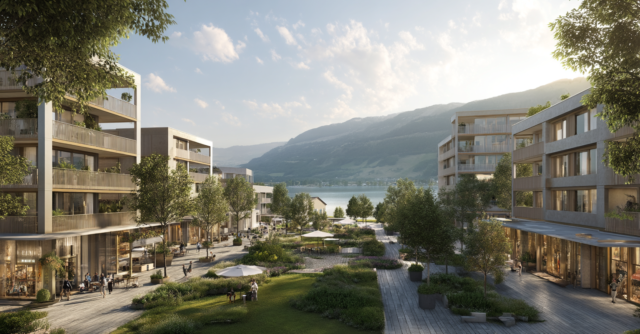
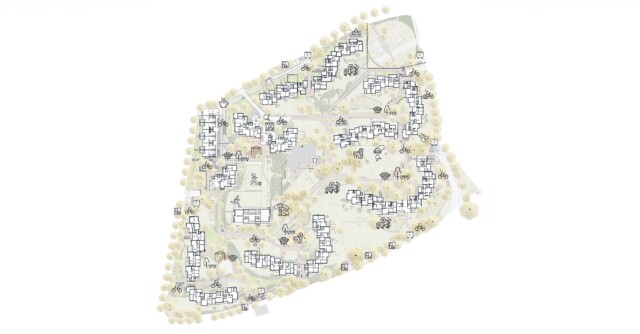
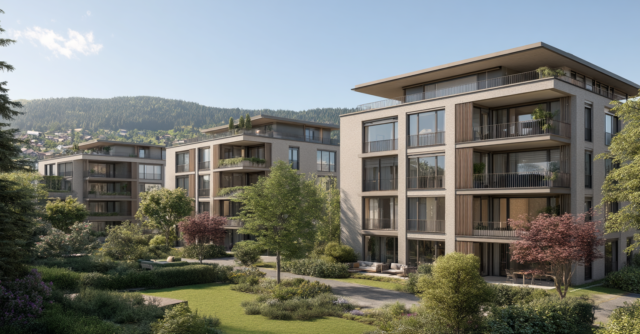
    Test planning was carried out back in 2019 to develop a sustainable urban planning solution. The result is a concept based on four-storey terraced buildings that are arranged along the slope and create generous, green open spaces. These “garden courtyards”, developed by EMI Architekten and Maurus Schifferli Landschaftsarchitekt, tie in with the original garden city idea and promote the quality of life.

    Sustainability as a guiding principle
    The entire construction project is designed in accordance with the highest sustainability standards and aims to achieve the “Gold” certificate of the Swiss Sustainable Building Standard. Energy is supplied by geothermal probe heat pumps and photovoltaic systems, making the neighbourhood largely self-sufficient in renewable energy. Green roofs and climate-resistant outdoor spaces with wildflower meadows and shady trees promote biodiversity. At the same time, a large proportion of the garden courtyards remain unsealed in order to improve natural water management.
    In addition to ecological sustainability, the social component also plays a central role. The new building will create a total of 270 flats with 1.5 to 5.5 rooms, which are aimed at a broad public, from singles and families to older people. The focus is on affordable living space that is suitable for all stages of life.

    Living quality through intelligent architecture
    The new buildings make optimum use of the hillside location to offer maximum living comfort. A noise-reduced mezzanine floor has been created on the street side, while the rooms on the garden side have generous ceiling heights and offer direct access to the green open spaces. The floor plans are designed in such a way that morning sun in the kitchens and evening sun in the living rooms ensure a pleasant indoor climate. Each flat has two outdoor areas in the form of a loggia, a balcony or a terrace with a private garden.

    Particular emphasis is placed on communal areas. In a participatory process, tenants expressed a desire for seating, playgrounds, barbecue areas and urban gardens, which are now being integrated into the planning.

    Staggered implementation for a smooth transition
    To ensure an orderly transition for residents, the new building will be realised in several stages. The construction project planning should be completed by the end of 2025 before the first construction phase starts in 2026. The first new buildings are expected to be occupied in 2028, while the other construction phases should be completed by 2030.

    Swiss Life tenants will be actively supported throughout the entire process. They will receive help in finding accommodation, have priority when re-letting within the neighbourhood and benefit from flexible notice periods.

    A showcase project for sustainable living
    Gartenstadt Bergacker is becoming a forward-looking neighbourhood that combines sustainable construction with a high quality of living and a social mix. Conscious planning and the involvement of the tenants will create an environment worth living in that fulfils ecological, economic and social requirements in equal measure. The project sends out a strong signal for the future of sustainable living in the city of Zurich.

  • Expansion of the headquarters to start this year

    Expansion of the headquarters to start this year

    CSS is planning to start construction work on the extension of its headquarters on Tribschenstrasse in Lucerne in the fourth quarter of this year. The building application will be submitted at the beginning of April, the Lucerne-based health, accident and property insurer is quoted as saying in a report in the Luzerner Zeitung newspaper. The new building and renovation of the commercial building acquired by CSS in 2015 should be completed by the end of 2027.

    CSS intends to use almost all of the space in the new building and the commercial building for its own needs. A bistro is only planned on the ground floor of the commercial building. The amount of the construction costs is not being communicated by CSS, at least not at the moment.

    The concept for the extension of the CSS headquarters is based on a design by Diener und Diener Architekten. The Basel-based architectural firm won a competition organised by CSS against nine competitors. The winning Lambris design envisages that the commercial building, which is classified as worthy of protection, will be enclosed by the extension.

  • New building combines warehouse, office space and solar system

    New building combines warehouse, office space and solar system

    Schenker Schweiz AG broke ground for the expansion of the national transport terminal in Eiken on 1 April 2025. According to a press release, the terminal is to be expanded by 9800 square metres to 15,400 square metres. The new transshipment warehouse is planned with an underground car park on two levels of 4900 square metres each. An office wing with social facilities is also to be created on the upper floor.

    A photovoltaic system will be installed on the roof of the new building, which is to be constructed in accordance with modern guidelines and will also supply charging stations for electric lorries. The main contractor for the building is Tierstein AG, which is responsible for the entire planning and execution.

    “With the modern extension, Schenker has additional capacity to further expand its land transport network,” said Basaran Yildirim, Head of Land Transport at Schenker Schweiz AG, in the press release. “We would like to thank the municipality of Eiken for its trust and the cooperation with all those involved in the project.”

    The Eiken site plays a central role for Schenker logistics for imports and exports by land due to its good transport connections on the north-west border of Switzerland.

  • Potential for residential construction and internal development

    Potential for residential construction and internal development

    Residential construction is a key factor in sustainable urban and spatial development. Switzerland is faced with the task of creating new living space without unnecessarily taking up valuable land outside existing settlement areas. The findings of the Federal Office for Spatial Development show that the construction of existing housing in particular will play a key role in future development. However, this is associated with more complex challenges than new construction on previously undeveloped land.

    Where are new apartments being built?
    An analysis of residential construction activity between 2018 and 2022 shows clear patterns. Rural and peri-urban municipalities show a higher level of new construction activity in relation to their primary housing stock than urban areas. Nevertheless, the proportion of new builds on previously undeveloped building plots has decreased overall, while the proportion of construction in existing buildings now accounts for 59% of building permits. In urban areas, residential construction is increasingly concentrated in existing residential areas, while growth continues to be recorded on the outskirts of settlements.

    The challenge of building on existing properties
    Building housing on existing sites is more complex than developing new building areas. One key finding is that municipalities with large undeveloped building land reserves have less building activity in existing areas. The pressure for redensification is lower where there is still sufficient space for new buildings. At the same time, targeted measures by the municipalities and high-quality construction projects can make a positive contribution to inner development and create incentives for the use of existing structures.

    Drivers of and obstacles to building activity
    Building activity on undeveloped land is easier to analyze as it is strongly influenced by measurable factors such as property price trends and rent levels. Case studies show that municipalities with an active housing policy have a higher rate of inner-city development. Municipal measures such as targeted advice, land policy or attractive public spaces can provide decisive incentives for redensification.

    Quality as the key to acceptance
    Another success factor is the quality of the construction projects. Social acceptance is higher when construction projects not only create additional living space, but also contribute to the quality of the settlement. This includes publicly accessible open spaces, the promotion of biodiversity and socially acceptable housing. Such quality criteria are particularly important in inner-city development, as structural changes often take place in the direct residential environment of the residents.

    Settlement development a long-term change
    Ten years after the Spatial Planning Act came into force, initial data shows that the transformation towards inner-city development has begun. Particularly in urban areas such as Zurich, Basel and Lausanne, more and more apartments are being built by converting or adding storeys to existing buildings. However, there is also an increasing trend in peri-urban and rural communities towards the use of already built-up areas.

    Strategies for residential construction
    The analysis of residential construction activity shows that targeted control through spatial planning is possible. Municipalities that actively promote inner-city development are better able to meet the challenges of residential construction. Successful strategies include a forward-looking land policy, high-quality construction projects and close cooperation between the public and private sectors. Inner development remains one of the central tasks for future-oriented spatial development in order to meet the growing demand for housing in a resource-efficient manner.

  • Mobile office brings coworking to the countryside and the water

    Mobile office brings coworking to the countryside and the water

    Coworking provider Westhive from Zurich and AMAG are jointly realising an idea for mobile working in modern vintage double-decker buses, according to a press release. These have been converted into express buses and transformed into mobile workstations with a coffee bar, WLAN and power connections.

    Interested parties can book the mobile office via the Airbnb platform. The innovative offer will initially be available in Switzerland and will later be expanded internationally as part of Airbnb’s “global Live & Work Anywhere programme”.

    “Westhive Express brings the office on wheels – mobile, flexible and everywhere where there was previously no coworking offer,” it says. According to Andreas Widmer, co-founder of Westhive, the form of work stands for “freedom and movement”.

    The Westhive Express bridges the gap between classic mobility and modern working culture with a concept that is reminiscent of outdoor cafés. “In front of the bus, small tables with parasols invite you to take a creative break in the countryside – be it on the lakeshore, at a festival or in a rural community,” it says.

    For Philipp Wetzel, Managing Director AMAG Corporate Development, Innovation & Venture LAB, quoted in the press release, mobility, hospitality and productive work are combined as a “logical development of the digital lifestyle”.

    According to the press release, the first Westhive express bus will soon set off on its maiden voyage. Further mobile units are being planned.

  • New life on the Landolt site

    New life on the Landolt site

    Nestled between Mühlebach and Kleinlinthli, the Landolt site impresses with its central location. Accessible by rail and the A3 highway, the site offers an ideal starting point for future-oriented neighborhood development. Its proximity to historic ensembles and open spaces lends the project a special charm. The initial planning study shows a target image that provides for structural densification and develops open space sequences out of the landscape. An interior space is created from the west and east, characterized by waterscapes, green streetscapes and areas that can be used in a variety of ways.

    Participation and planning as a prelude to transformation

    The participatory planning study process was completed at the end of 2024 and a final report is to be produced by mid-2025. An indicative project is already planned for the end of 2025, which will be converted into a design plan from 2026. This process will be accompanied in collaboration with the spatial planning office and the design commission of the Canton of Glarus. The planning will take place in parallel with the renovation of the existing buildings, which will avoid vacancies and preserve existing “treasures”.

    Staged development with a clear strategy

    The project will be implemented in coordinated stages. Initially, the focus will be on the space that will become available in the medium term following the departure of the Landolt company. Existing buildings will be put to valuable interim use during this phase, for example as a mobility hub or as alternative space for the existing tenants. The phasing will take place with the involvement of the existing commercial tenants.

    In a further phase, the first new uses and solid, permanent open spaces will be created within the so-called talent zones. Materials that have been dismantled and defined for further use will be temporarily stored on site and reused in the subsequent construction phases.

    The final stage involves targeted densification along the cantonal road. This not only increases the quality of stay, but also creates a better network within the site thanks to the newly planned Fabrikgasse. The final stage is the innovation campus and the multi-talent at Chli Linthli, which will be developed independently of each other in line with demand.

    Space for innovation, identity and the future

    The Landolt site is not only being densified, but rethought. Historical substance meets flexible spatial structures. Squares and compact retreats create a lively, diverse quarter. The vision is a mixed-use, sustainably developed and identity-creating area for regional businesses and now also a small proportion of mixed-use housing.

  • New school buildings create space for growing pupil numbers

    New school buildings create space for growing pupil numbers

    The Limmattal cantonal school in Urdorf now has more space for teaching. On Tuesday, 1 April, two extension buildings were officially inaugurated, according to a press release from the Canton of Zurich Building Department. They offer modern rooms for science lessons, two double sports halls, an assembly hall and an outdoor area, according to the press release. According to population forecasts, the number of pupils at the cantonal school is set to increase significantly in the coming years. The new buildings will create the necessary space for the increasing number of pupils.

    The new premises were inaugurated in the presence of the Director of Construction, Martin Neukom, the Director of Education, Silvia Steiner, and the Principal of the Limmattal Cantonal School, Andreas Messmer. The inauguration was accompanied by musical performances by around 90 pupils from the cantonal school, according to the press release.

    One of the new buildings contains two double sports halls, classrooms for music and an auditorium with 500 seats. The second building houses four floors of rooms for physics, chemistry, computer science and biology as well as several classrooms. The new buildings were designed by PenzisBettini Architekten from Zurich.

    Thermal energy for the new buildings is generated by geothermal probes. Photovoltaic systems have been installed on the roofs of the two extension wings to supply the cantonal school buildings with electricity.

    On Saturday, 5 April, there will be an open day for school tours.

  • SBB continues to develop Basel

    SBB continues to develop Basel

    With the “Wolf Basel” project, SBB is transforming a 160,000 square metre site in the east of the city into a lively, sustainable urban quarter. The transformation is exemplary for the intelligent densification of urban spaces. Living, working, leisure and logistics are to coexist here in a new form that conserves resources, is sustainable and integrated into the existing urban structure.

    Construction work on the western part of the site will start in 2027. SBB has sought and found top architectural and functional solutions in two competitions. The jury, consisting of independent experts and representatives of the client and the Canton of Basel-Stadt, has now recommended the projects “Janus” by ARGE Experience from Paris with M-AP Architects from Lausanne and “Binaria” by ARGE Parabase GmbH and Confirm AG from Basel for realisation. The two new ten-storey buildings will offer around 300 flats and set standards in terms of sustainability, quality of living and architectural integration.

    Sustainability meets urban innovation
    The planned residential buildings reflect the changes in urban development. The flats are designed for different lifestyles, and communal areas in the ground floor zones promote social interaction. The roofs not only serve as a source of energy through photovoltaics, but also as water reservoirs and in some cases as accessible recreational areas. Photovoltaic elements on the façades, greenery, renewable heating systems and sophisticated systems for cooling in summer are all part of a comprehensive energy concept.

    The project also sets new standards in terms of construction. Screw connections replace adhesive joints, modular structures allow for later conversion or dismantling, making design for disassembly a reality. Wolf Basel thus presents itself not only as an urban development model, but also as a technical model for the future.

    Identity is created through dialogue
    Even before construction begins, the site will be opened up for interim uses, experiments and participation. A historic railway hall has recently been used as a temporary pickleball court, bringing movement to the centre of the development area. In addition, various spaces are available for longer-term uses in the areas of culture, leisure and catering. SBB is calling on people to submit creative ideas and play an active role in shaping the future neighbourhood.

    The opening is more than just a gesture, it is part of a strategy in which urban development is understood as a participatory process. This creates an emotional bond with the neighbourhood and its future identity at an early stage.

    Staged construction with vision
    Construction of Wolf Basel is scheduled to start in 2027. In the first phase, the residential buildings will be built in the western part of the site, including a third in the affordable segment by non-profit property developers. At the same time, the Urban Hub, a public space offering catering, sport, culture and services, will be developed in the middle section. In a second phase, expected from 2031, commercial and service buildings with around 1,000 workplaces will follow in the eastern section.

    The entire project is based on the legally binding development plan dated 2 May 2023 and is an example of the high-quality development of inner-city potential areas in Switzerland.

  • Canton of Zurich calls on Federal Council to act

    Canton of Zurich calls on Federal Council to act

    The pressure on the housing market is enormous. Demand is constantly rising, while supply is lagging behind. The canton of Zurich is particularly affected, where construction projects are increasingly being delayed or prevented by appeals. The consequences are rising rents, social tensions and growing political pressure to act. Five cantonal popular initiatives show how much the issue of housing concerns the population.

    Improvements are unnecessarily delayed
    Although new noise protection regulations have already been adopted, their implementation is still a long time coming. The Zurich cantonal government is calling on the Federal Council to bring the changes to the law into force quickly. This is because protection interests must not be allowed to block the expansion of urgently needed living space. A clear legal basis is essential for planning security and accelerated procedures.

    Protection instrument or strategic objection tool?
    The Government Council is particularly critical of the increasing direct application of the federal inventory ISOS, which actually serves to protect important sites. However, the inventory is increasingly being used to object to new construction projects. With serious consequences for inner densification. This problem is already very noticeable in Zurich, but it is increasingly spreading to other cantons.

    Although the cantonal government supports the announced round table on the ISOS issue, it is calling for concrete and timely solutions that must be developed together with the federal government, cantons and municipalities.

    Call for political prioritisation
    According to the cantonal government, the provision of housing is a key concern for the population and the economy. The federal government must strike a new balance between protection interests and structural development so that urgently needed housing construction is not blocked any further. The responsibility for this now lies with the relevant federal authorities.

  • Airport plans expansion to improve service quality

    Airport plans expansion to improve service quality

    EuroAirport Basel Mulhouse Freiburg has selected the winning project and construction management for the extension and expansion of its terminal. According to a press release, it has commissioned a French-Swiss team for the project, consisting of the Basel-based companies Vischer Architekten AG and Gruner AG as well as the French companies DRLW Architectes, Egis BâtimentNordEstand LAP’S.

    The Evolution Modulaire du Terminal project involves the renovation and expansion of EuroAirport’s publicly accessible infrastructure. The main aim of the project is to improve the quality of service for passengers. The work will focus on security checks and passenger routing. The first Landside module, with construction scheduled to start in 2027, will comprise an extension to the east façade of the terminal with an area of around 14,000 square metres and the renovation of the existing terminal with an area of 15,000 square metres.

    Completion of the building is scheduled for 2030/31. Until then, the airport intends to implement further measures to improve service quality by 2026. These include, for example, the already completed renovation of the arrivals area and the planned renovation of the sanitary facilities.

  • Modular school pavilions as a temporary solution to secure school operations in Dietikon

    Modular school pavilions as a temporary solution to secure school operations in Dietikon

    The town of Dietikon is renovating the Wolfsmatt school complex. Three new school pavilions have been built on the city-owned site on Vogelauweg in order to be able to continue teaching. This provides an additional 27 classrooms. Aare Limmat Elektro AG was commissioned with the planning and execution of the complete electrical installations. The entire electrical installation was newly installed and corresponds to the current state of the art, according to a press release from the company based in Baden and Olten SO.

    The three school buildings were built entirely in modular construction and prefabricated. The temporary buildings will serve as a fully usable transitional solution during the renovation of the Wolfsmatt school complex, the statement continues.

    Around 500 children attend kindergarten and elementary school in the Wolfsmatt school unit, according to the Dietikon school. The school unit comprises 21 regular classes. Eight kindergartens are located in the residential areas around the school building. Daycare facilities with lunch are offered on the school grounds.

    Around 3,000 pupils attend public school in Dietikon, from kindergarten to secondary level. There are a total of six school units in the town.

  • House of the Future secures further tenants in Winterthur

    House of the Future secures further tenants in Winterthur

    The Green Spin project aims to change the world of work in a sustainable way. To this end, the House of the Future is being built in Winterthur with 100 per cent sustainability and 100 per cent work quality, according to the Green Spin website. The project has now found its second anchor tenant in the form of the Foundation for Speech Therapy Schools in the Canton of Zurich, Green Spin explains in a press release.

    “Green Spin offers the perfect setting for innovative educational approaches,” Peter Felix from Felix Partner Architektur Design, which initiated and developed the project, is quoted as saying. “With the Stiftung Sprachheilschulen im Kanton Zürich, we have gained another tenant that ideally complements our concept of openness, networking and forward-looking development.” The foundation currently operates at four locations in Zurich, Winterthur, Fahrweid in the Limmat Valley and Stäfa.

    Green Spin received its building permit last year and construction is due to start this year. The centre is expected to be ready for occupation in 2027. In addition to the foundation, the leisure sports provider Padelta has already reserved premises in Green Spin.

    Green Spin is intended to offer young and established companies an ideal environment. The building is designed as a modular timber construction and will have a photovoltaic façade and wind power for its own energy supply. In addition to bright working environments, the project envisages meeting places such as a roof garden, a courtyard forest and market alleyways.

  • Complete renovation of the Zug cantonal school

    Complete renovation of the Zug cantonal school

    The Zug Cantonal School, a masterpiece of post-war modernism, was designed between 1971 and 1975 by the renowned architects Leo Hafner and Alfons Wiederkehr. The exterior design by Fred Eicher is also an integral part of this architectural heritage. In view of the advancing structural ageing, there is an urgent need for comprehensive renovation measures. These include upgrading the load-bearing structure, replacing the building envelope and replacing the building services and interior fittings. In particular, the focus on adapting the room structure is crucial in order to guarantee learning conditions.

    Refurbishment concept and targeted extension
    The refurbishment concept, which was developed in close cooperation with the school management, offers a balanced solution between the needs of flexible teaching methods and the existing spatial conditions. The available space will be expanded in a targeted manner through clever room renovations and adaptations. Planned measures include a new connecting wing and an extension to Wing 7 in order to meet the challenges of modern educational requirements.

    Principles of sustainability
    The decision in favor of a complete renovation is based on the financial, ecological and scheduling advantages. The Construction Department of the Canton of Zug is thus pursuing its clear real estate strategy. New construction projects should only be considered if it is no longer possible to optimize the existing buildings.

    Project competition and next steps
    The next milestone in the renovation process is the project competition in a selective procedure, which was announced in mid-2024 and is aimed at general planning teams. The aim is to find the best solutions for a renovation that respects the preservation of the original architecture while meeting the requirements of a modern educational establishment. The Construction Department of the Canton of Zug emphasizes that the competition represents a decisive phase in the implementation of the project and should ensure a high-quality renovation.

  • Gold-coloured façade modules in Schlieren set new solar standards

    Gold-coloured façade modules in Schlieren set new solar standards

    Megasol Energie AG, based in Deitingen, has launched a new coloured solar module on the market. According to a press release, the modules with their new colour design achieve around 94 percent of the efficiency of conventional black photovoltaic modules.

    The panels under the name SOLARCOLOR Morpho are manufactured for installation as façade elements. For example, they have been installed on two new buildings in the Lacheren area of Schlieren. Depending on the incidence of light, the gold-coloured modules create a lively play of colours, according to the press release.

    The two buildings in Lacheren comprise 36 flats. The roof is also covered with photovoltaic modules and generates peak values of 68 kilowatts with an annual yield of 59,900 kilowatt hours. The façade elements generate peaks of 17 kilowatts and an annual yield of around 16,200 kilowatt hours.

    Megasol Energie AG is one of the five nominated finalists for the Prix SVC Espace Mittelland 2025 sponsored by the Swiss Venture Club (SVC), which will be awarded in Bern on 12 March 2025.

  • Listed building celebrates its opening on 8 March

    Listed building celebrates its opening on 8 March

    The town of Dietikon invites you to the inauguration of the Haus der Bevölkerung on Saturday, 8 March. The Haus der Bevölkerung has been set up in the historic tithe barn. The listed building, which dates back to around 1600, will shine in new splendour following extensive renovation and will be available as a versatile event venue in future, according to a press release from the town of Dietikon. With a new digital booking system, reservations for cultural events, exhibitions and private functions will be possible from 1 June.

    On the open day, visitors will be able to view the new premises from 11 a.m. and see for themselves the wide range of possible uses for the building, according to the press release. Sibylle Baumann will be reciting various stories in dialect. At 3 p.m. she will talk about “The golden bird – funny animal stories” and at 4 p.m. she will present “About eating and being eaten – adventurous stories”.

    The Zehntenscheune is one of Dietikon’s oldest buildings. With a capacity of around 120 seats, a new grandstand and modern facilities, the large hall is suitable for events. A passenger lift also provides accessibility.

    The foyer on the ground floor has been redesigned. The massive plank wall, a relic from its original use as a stable or storage room, has been retained. A long bar is intended to turn the foyer into an attractive meeting place. An old archway leading into the garden area of the house was also uncovered.

  • Westspitz neighbourhood in Dietikon enters the planning phase

    Westspitz neighbourhood in Dietikon enters the planning phase

    The Basel-based insurer Baloise has completed the study contract for the urban development of the Dreispitz site in Dietikon, according to a statement from the city of Dietikon. The Westspitz neighbourhood is to be built there. The design plan process will begin in summer 2025 and run until the end of 2027, with the building permit procedure and project planning scheduled for 2028/2029. The construction phase is set to last from 2030 to 2032, with completion and occupation scheduled for 2032/2033.

    According to the press release, the consortium Penzel Valier in Zurich and ROBERTNEUN, based in Berlin, was unanimously recommended by an independent jury as the winning project for further development. The jury was appointed by Baloise as the owner and leaseholder of the site. The project, known as Westspitz Dietikon, meets the urban planning requirements of the city of Dietikon, supports its development strategy and provides new impetus for an urban, sustainable neighbourhood, it added.

    Westspitz Dietikon is located at the intersection of Badenerstrasse and Überlandstrasse. In the coming years, Westspitz is set to grow into a lively, mixed and well-connected neighbourhood. The neighbourhood consists of 80 to 90 percent residential space. Compact residential units for smaller households and larger flats for families are planned, as well as communal areas and noise-protected outdoor spaces. The ground floor zones along Badenerstrasse are to be enlivened by small-scale commercial spaces that meet the needs of residents and the surrounding neighbourhoods, the report continues.

  • Solar shading for historical architecture in Spain

    Solar shading for historical architecture in Spain

    Aadorf-based sun shading manufacturer Griesser is involved in the reconstruction and remodelling of the listed former San Agustín monastery in Badajoz, south-west Spain. This is being remodelled into a school of arts and crafts. According to a press release, the straight-lined building offers good conditions for an educational institution. In the past, the former monastery has been used as barracks, a courthouse and a school.

    The cloisters are also to be incorporated into the school during the current remodelling. Their arcades will be extensively glazed and require solar shading. Griesser is supplying its Solomatic 80 system for this purpose: the customised louvre blinds provide good shading on the one hand and a good supply of natural light on the other. Both the classic design of the slats and their colour scheme in RAL 7022, an almost anthracite grey shade, fit in with the historic appearance of the building.

    In addition, the incidence of daylight is controlled automatically. The resulting “harmonious atmosphere” is intended to increase “the students’ ability to concentrate and their sense of well-being”.

  • Canton Aargau approves Vinea project in Spreitenbach

    Canton Aargau approves Vinea project in Spreitenbach

    The municipality of Spreitenbach can realise the Vinea design plan for the construction of flats at the entrance to the village. The Department of Construction, Transport and Environment(BVU) of the Canton of Aargau has approved the design plan, according to a press release. It forms the planning basis for the realisation of a development with around 37 flats on the previously commercially used site south of the Landstrasse and Wigartestrasse junction.

    According to the municipality, the planned development comprises three buildings. A four-storey building is to be constructed along Landstrasse, a three-storey building on Wigartestrasse and a two-storey building directly facing the village stream.

    A traffic-free inner courtyard is to be created between the buildings, which will be available to residents. The underground car park is intended to increase the quality of living and contribute to sustainable development.

    Vinea is based on the indicative project by Hunziker Architekten AG in Baden-Dättwil and SKK Landschaftsarchitekten AG in Wettingen AG. Metron AG in Brugg AG drew up the design plan together with the client and the municipality of Spreitenbach. The Vinea site is currently built on with a commercial development. A development study was prepared by Hunziker Architekten back in 2018. After weighing up various options, the municipality decided in favour of a longitudinally oriented development along the road in order to “create optimal urban planning conditions”.

  • Foundation stone laid for new company building in Grabs

    Foundation stone laid for new company building in Grabs

    Frauenfeld-based HRS will be the total contractor for the construction of the new Körber Business Area Pharma building in Grabs. According to a press release, the foundation stone was laid on 13 February.

    In addition to the existing building at the site, a basement, two production floors and two office floors will be built on a vacant site. A total of 7500 square metres of production space and 5000 square metres of office space will then be created in the new building. The building itself will fulfil current sustainability and energy efficiency requirements. In addition to its own photovoltaic system on the roof, extensive charging facilities for electric cars will also be provided, according to the press release.

    The new building, which is scheduled for completion in 2027, will bring together all the resources of Körber’s Business Area Pharma.

    “The new building plays a central role in our planned growth, which is centred around our customers and, of course, our employees,” said Christoph Hammer, CEO Packaging of the Körber Business Area Pharma in Grabs, in the press release. “In addition to our spatial capacities, we are also growing our team. More than 360 colleagues are already working on the development and production of our technologies at the site. By the end of this year, this figure is set to rise to more than 390. We are creating a state-of-the-art working environment for them.”

  • Work begins on extension to Baden cantonal school

    Work begins on extension to Baden cantonal school

    Preparations for the extension of the Baden cantonal school have begun with clearing work on the construction site. According to a press release from the Canton of Aargau, this preparatory work will be carried out during the sports holidays from 3 to 14 February. This involves removing shrubbery and felling trees in the Schönaustrasse area in Baden. This work must be carried out before construction work on the extension begins in July 2025.

    The early start is necessary because the tree felling must be carried out outside the bird breeding season from the beginning of March to the end of September. New trees will be planted across the entire site once the extension has been completed. According to the press release, this will once again take greater account of biodiversity on the grounds of Baden Cantonal School.

    The building permit for the extension to the cantonal school has been valid since the end of October 2024. The extension will include an additional wing for maths, IT, natural sciences and technology (STEM subjects) and a sports wing including a double sports hall.

    In addition, the outdoor facilities and sports pitches will be redesigned. The planned extension represents the final expansion of the site based on the current school planning, according to the canton’s press release.

  • Potential and challenges of new living concepts

    Potential and challenges of new living concepts

    The focus is on self-built residential units, which are often built in large halls and are shared by groups or individuals. Residents attach importance to sustainable and individualised living, foregoing excessive private space and sharing communal areas instead.

    The projects analysed in Zurich and Bern show that these types of housing use significantly less living space per person than the Swiss average. The high degree of flexibility in the interior design allows for individual customisation, but also entails high time and financial costs.

    Legal framework and challenges
    Clear but flexible framework conditions and supportive guidance from property developers and authorities are crucial for the successful implementation of these concepts. Building law hurdles and financing issues in particular require customised solutions to make such projects economically viable.

    Innovative niche solutions with potential
    Although these forms of communal living currently represent a niche, they offer exciting approaches for a more sustainable and diversified use of living space. However, their long-term potential for the affordable housing market remains to be seen.

    The study was conducted by the OST and FHNW universities of applied sciences in collaboration with the BWO, the Solidarity Fund Foundation, the Migros Culture Percentage and other partners. It is part of the research focus areas “Affordable housing” and “Adapting the housing stock to changing needs”.

  • Historic spa centres in the canton of Vaud sustainably renovated

    Historic spa centres in the canton of Vaud sustainably renovated

    The renovated buildings in Bière, Dommartin, Romainmôtier, Rougemont and Vufflens-le-Château date from the 17th to 19th centuries. The restoration was carried out with the utmost care in order to preserve the historical substance. At the same time, facades, roofs, windows, insulation and technical installations were modernised to increase energy efficiency without changing the original character of the buildings.

    “Every restored stone, every renovated roof conveys a message to future generations, that of a canton that takes care to preserve its heritage. By modernising these five cures, we are combining heritage conservation with sustainable development,” emphasised Isabelle Moret, Head of the Cultural Heritage Department, during her visit to the site.

    Strengthening the local economy through traditional crafts
    The renovations were carried out in close collaboration with regional craftsmen. This not only strengthens the local economy, but also provides the canton with valuable craftsmanship expertise. The project shows that monument protection and sustainability are not opposites, but together form a forward-looking strategy for building culture.

  • Campus Platztor architectural competition launched

    Campus Platztor architectural competition launched

    In the first round of the competition, 73 applications were received, a surprisingly high number with high-quality reference projects. Decisive factors in the selection of the 16 offices were sustainability aspects, experience with similarly complex projects as well as urban planning and architectural quality. The selected teams come from St. Gallen, Zurich, Thurgau, Basel-Stadt and Geneva.

    Next steps and timetable
    Following the selection of the winning project in summer 2025, the canton and the university will further develop the project. Construction is scheduled to start in 2028 and the new campus is expected to open in 2031. The new campus will serve as a place of reflection and a meeting place and will blend harmoniously into the cityscape. The aim is to strengthen the university’s links with the city and its population.

    Realignment after project restart
    The current competition became necessary because the project selected in 2021 could not be satisfactorily developed further. The new process is now intended to create a viable concept that fulfils the high standards of architecture, sustainability and urban integration.

  • Baden Cantonal Hospital celebrates handover of keys for new hospital building

    Baden Cantonal Hospital celebrates handover of keys for new hospital building

    With the handover of the keys on 22 January, the KSB is now officially responsible for the new hospital building. The keys were handed over by actress Salomé Jantz in the role of Queen Agnes of Hungary, the KSB announced in a press release. The Habsburg queen donated a hospital to the town of Baden in 1349 and is the namesake of the current construction project.

    The new building was realised by a team from Ghisleni Partner AG under the leadership of owners Stefano and Maurizio Ghisleni. “By using a general planner, we were able to continuously optimise the project and incorporate the latest findings,” KSB CEO Adrian Schmitter is quoted as saying in the press release. “This means that our hospital will not be ten years old when it opens, but will be at the cutting edge of medical and technical development.”

    KSB has invested a total of 600 million Swiss francs in the eight-storey building. The new building, equipped with state-of-the-art medical and building technology, is due to open on 25 February. KSB will then move from the old to the new building.

  • First construction phase in Unterfeld Süd in Baar starts in 2025

    First construction phase in Unterfeld Süd in Baar starts in 2025

    The owners Ina Invest and Estella Invest and the developer Implenia decided in favour of a digital project competition in which a digital 3D model was submitted instead of physical models. This made the jury process much easier, as different levels and elements could be flexibly combined and analysed. The winning design for the first construction phase, a combination of the proposals from Enzmann Fischer Partner AG and ORT AG, impressed with its innovative floor plans and a well thought-out design of the open space that harmoniously combines living and working.

    Open space design as the key to the attractiveness of the neighbourhood
    The Unterfeld Süd neighbourhood will be enhanced by generous open spaces, which
    extend along the Stampfibach stream. An ecologically valuable green space is being created here that offers a wide range of uses. The central arrival square at the S-Bahn station will be transformed into an inviting place to meet and linger thanks to tall trees and green islands.

    High-rise building with a view to the future
    The 60-metre residential tower block in the first phase is impressive not only for its height, but above all for its well-thought-out floor plans and flexible room layouts. The generous windows offer impressive views from every flat, while the bay windows on the façade allow residents to enjoy both the outside and the inside of their own flat.

    Commercial building as a centre for dynamic companies
    The adjoining commercial building also focuses on flexibility. Two glazed inner courtyards create islands of light that can be used as break areas. With its flexible room structure, the building offers space for a wide range of uses – from small offices to larger rental spaces for anchor tenants.

    The second phase will provide affordable housing and flexible commercial space
    The second construction phase, the planning of which is already at an advanced stage, will focus on affordable rental flats and owner-occupied flats. The inner courtyard of the planned perimeter block development in the second phase will create opportunities for retreat and public meeting spaces in equal measure. The buildings along Nordstrasse are deliberately designed to minimise noise pollution. A referendum on the second stage will also be held in Baar in 2025.

    Sustainable architecture and flexible usage concepts
    The architecture of the buildings reflects the vision of a future-oriented neighbourhood. The combination of flexible living, versatile commercial space and well thought-out open spaces creates a lively and attractive cityscape. Particularly noteworthy is the combination of living and working, which is supported by well thought-out spatial concepts and attractive outdoor areas.

  • Lighthouse Papieri Cham

    Lighthouse Papieri Cham

    People today are looking for the “as well as” – in the case of Papieri, it is the interplay of an urban lifestyle in close proximity to nature. On the one hand, the new district offers all the extras of a lively neighbourhood with practical services for everyday life, such as a wide range of shopping and dining options, childcare and cultural and sporting activities
    And catering facilities, childcare and cultural and sporting activities. On the other hand, you can find peace and quiet by the River Lorze or in one of the neighbouring recreational areas.

    Next Level Spaces
    In the third construction phase, a total of 10,000 m² of office, commercial and retail space will be created with the “Next Level Spaces”. Where and how people work has changed dramatically in recent years. Attractive and adaptable work concepts are needed to inspire employees. This leads to new requirements for buildings, such as a high degree of flexibility in order to fulfil a wide range of needs, from office layout to building services.

    The spaces in the “Next Level Spaces” can be flexibly designed and are over 6 metres high with a payload of up to one tonne per m², and intermediate floors can be installed as required. The user decides where intermediate floors are needed and can also create additional space at a later date. The “Next Level Spaces” offer future-orientated companies a wow location for offices, trade and Industry 4.0.

    Landmark boiler house
    The landmark at the heart of the site – the listed boiler house – will also be converted in the third construction phase. Where steam boilers used to be fired up, guests can expect a culinary treat in future. In spring 2026, the Segmüller Collection will expand its portfolio of unique gastronomy concepts such as Carlton, Loft Five, Roof Garden and Sablier in Zurich to Papieri-Platz in Cham and open a new grill restaurant with bar and lounge on the ground floor of the Kesselhaus. Industrial charm meets modern lifestyle, archaic fire cuisine meets refined elegance – a place that promises enjoyment for every taste. In the western section above, unique office space awaits new users in the former monument, while a fitness centre in the eastern section offers space for physical exercise.

    Sustainability
    Awarded the “Watt d’Or” by the Swiss Federal Office of Energy, the energy system of the Papieri site enables completely CO2-free operation and ultimately generates around 75% of the energy on site. In addition, the “Next Level Spaces” commercial building is certified with the internationally renowned “Leed Platinum” sustainability label. Resource-conserving construction is also already common practice at Papieri. For example, with the conversion of listed buildings such as the boiler house or an innovative timber-hybrid residential tower block. However, the most important contribution to sustainability is a long service life. Great attention is paid to this factor during development. Buildings must be flexible in order to meet the as yet unknown needs of a changing society in the future. An office building that can be converted into flats, for example, prevents premature demolition and thus contributes to sustainability. This is why Papieri constructs high-quality, adaptable buildings that will still be in favour for various uses decades from now.

  • New school infrastructure in Zofingen takes shape

    New school infrastructure in Zofingen takes shape

    The building construction for the new secondary school centre in Zofingen has been underway since June 2024. As the construction company responsible, STRABAG, has now announced, the basement and the first floor with classrooms are already in place. In the excavation pit next to the gymnasium, the specialised civil engineering team has completed the groundwork by installing the bored piles and constructing the retaining walls.

    At the same time, employees from Verkehrswegebau Obergösgen are laying the service lines. The structural engineering work should be completed by the end of June 2025. The finishing work will then begin, according to the information provided. The building will be put into operation at the start of the 2027/2028 school year.

    STRABAG describes the ten concrete beams for the gymnasium ceiling, which were lifted into place in mid-November, as a “spectacular highlight”. Each of them was 29 metres long and weighed 60 tonnes. Other prefabricated elements were also installed. They were reportedly planned immediately after the contract was awarded in order to be ready for use on time.

    Now that the beams for the new triple gymnasium have been moved into place, the structural engineering staff, led by site manager Daniela Huonder and foreman Vincenzo Tafaro, are currently busy shuttering, reinforcing and masonry work on the other floors.

  • New measurement technology detects corrosion in reinforced concrete without intervention

    New measurement technology detects corrosion in reinforced concrete without intervention

    Retaining walls, tunnels and bridges made of reinforced concrete characterise the Swiss cityscape and infrastructure. However, many of these structures are already several decades old – and chemical changes in the concrete affect the steel used. If the reinforcing steel begins to rust, the structure loses stability. The damage is particularly problematic in inaccessible places where conventional testing methods fail.

    Electrochemical measurements as a new solution
    Until now, engineers have had to break open parts of the concrete to check for corrosion damage. A time-consuming and often inadequate procedure. Talpa has developed a new method that works via drainage pipes. A special probe is inserted into the pipe and uses electrochemical signals to measure the likelihood of corrosion in the surrounding reinforced concrete.

    “This has never been done before,” explains Lukas Bircher, one of the developers. “Previously, you had to remove entire concrete surfaces to find damage and could still easily miss a critical area.” With the new technology, entire sections of wall can now be systematically tested without destruction or costly construction work.

    Measurements during operation – without a construction site
    The method has already been successfully tested, including on a 200 metre-long retaining wall in Zurich-Höngg. The principle is a probe that is inserted into the drainage pipe and fixed in place with inflatable seals. The system then directs water into the measuring area, creating a conductive connection between the electrodes of the probe and the steel in the concrete. Based on the recorded electrical signals, the team can recognise whether and to what extent corrosion is present.

    A new measurement is taken every 25 centimetres to record the condition of the entire section of wall. “This allows us to specifically identify those areas that actually pose a risk,” says Bircher. “This not only saves time, but also high costs for unnecessary interventions.”

    50 years after the construction boom – the need for renovation is growing
    Many of the reinforced concrete structures affected today date from the boom period between 1960 and 1980. Retaining walls from the 1970s in particular often contain cavities that favour corrosion. Previously, damage had to be identified by means of time-consuming spot checks, with a high risk of overlooking critical areas. The new method offers a comprehensive and reliable analysis for the first time.

    From research to start-up Talpa-Inspection
    The technology has such great potential that Bircher founds the start-up Talpa-Inspection together with two colleagues. The name “Talpa”, Latin for “mole”, symbolises the innovative way of making deeply hidden damage visible. Supported by an ETH Pioneer Fellowship, the team is further developing the technology and preparing to enter the market.

    Future prospects, automation and scaling
    The measurement is currently still partly manual, but the team is already working on an automated version. The aim is to make the probe more robust and further accelerate the measurement process. Demand is high. In Switzerland alone, there are over 1,000 kilometres of potentially affected reinforced concrete structures.

    “Our method offers a real opportunity to extend the service life of existing structures,” says Bircher. “We hope that it will soon establish itself as a standard procedure for structural diagnostics.”

  • Start of construction of the forest town Im Pantli

    Start of construction of the forest town Im Pantli

    Halter AG has begun construction of the Waldstadt in Pantli. The ground-breaking ceremony for the residential project in the Pantli forest clearing in Schaffhausen took place on 10 January, the Schlieren-based property developer announced in a press release. The 214 condominiums planned in Waldstadt are being realised by Halter in collaboration with DOST Architektur GmbH from Schaffhausen.

    “The Waldstadt project in Pantli is making a valuable contribution to urban development,” says Mayor Peter Neukomm in the press release, quoting from his speech at the ground-breaking ceremony. “The development should serve as a model for future construction projects and strengthen Schaffhausen as a location for sustainable and innovative living.” Waldstadt is designed as living space for different living models.

    Specifically, the residential project aims to appeal to families and couples as well as singles and commuters. A kindergarten and daycare centre are also planned. Open spaces and communal facilities are intended to create “ideal conditions for harmonious coexistence”, according to the press release.

    Planning and realisation are based on the requirements of the Swiss sustainability standard. Around two and a half years have been estimated as the construction period for the first stage. The first of the 2.5- to 5.5-room flats should be ready for occupancy as early as next year.

  • Life cycle assessment calculator supports sustainable building

    Life cycle assessment calculator supports sustainable building

    The environmental product declarations (EPD) in accordance with SN EN 15804 make it possible to transparently present the ecological impact of a building material over its entire life cycle. This provides building owners with a sound basis for making decisions on sustainable construction that goes beyond individual environmental parameters and allows a comprehensive assessment.

    Baustoff Kreislauf Schweiz provides its members with independently verified average EPDs for various types of concrete and aggregates. This data forms a reliable basis for sustainable construction projects.

    Life cycle assessment calculator as a digital tool
    An industry-specific life cycle assessment calculator has been developed to calculate CO₂ emissions, energy consumption and other environmental indicators. This verified calculation tool offers the construction industry a practical way to determine and optimise environmental product declarations.

    The online tool at oekobilanz-rechner.ch enables an orientating analysis, but does not replace a complete EPD preparation. On request, the data entered can be further processed to create an officially verified environmental product declaration.

    Transparency and optimisation for the construction industry
    The life cycle assessment calculator provides the construction industry with a valuable tool for making sustainable material decisions based on data. By optimising the recording and evaluation of environmental impacts, the tool contributes to reducing the ecological footprint in the construction industry and supports a resource-conserving circular economy.