Category: Projects

  • New district building in Lenzburg receives striking concrete artwork

    New district building in Lenzburg receives striking concrete artwork

    The artwork “Gedankenspeicher” by Paul Takács in front of the new district building in Lenzburg has been realised by the construction company Hächler. According to a press release, the approximately seven-metre-high concrete stele was clad step by step with stones in different colours, shapes and sizes. A total of 35 tonnes of stones were used for the construction. Each of the stones, weighing between 30 and 150 kilograms, was carefully selected and placed on the stele by hand, according to the Hächler press release.

    The Wettingen-based construction company Hächler Group seconded its employees Reto Schwitter and Dear Sadiku for the work, who worked closely with the artist Paul Takács. Construction work began at the beginning of September with the foundations. The concrete stele was then erected as the scaffolding for the “Thought Memory”.

    Before the stones were installed, Paul Takács and the Hächler employees spent two days in a gravel pit to select the individual stones. Despite being delivered by crane, each stone was moved by hand several times before being installed in its final position. The aim was to create a work of art that was both aesthetically and structurally impressive. The “Gedankenspeicher” was completed at the end of September.

    Paul Takács was born in the USA and lives and works in Nussbaumen TG. His work includes oil painting, wall drawing, sculpture, adhesive works and video.

  • Schallhausen brings sound diversity into the digital age

    Schallhausen brings sound diversity into the digital age

    Peter Neukomm emphasises that the continuous adaptation and implementation of the Smart City strategy enables Schaffhausen to respond to technological progress and thus create a more liveable city. With innovative projects, the city is ensuring future-oriented development with a focus on digitalisation and sustainability.

    One example of this constant striving for innovation is the new “Schallhausen” platform, which combines the city’s rich musical heritage with modern digital solutions. The platform is part of the Smart City urban development concept and aims to make the diversity of Schaffhausen’s music scene visible and audible.

    Musical history meets digital innovation
    Schaffhausen has always been a city of music with an impressive diversity in a very small area. With “Schallhausen”, this diversity can now also be experienced digitally. The platform offers both an online platform for musicians and an audio walk through the city’s musical history. From Bach to jazz, from punk to dialect – the musical diversity can be experienced through an innovative digital map that combines the geography of the city with its musical identity.

    Music venues and music trail
    Schallhausen is divided into two sub-projects: “Musikorte” and “Musiktrail”. The “music venues” enable musicians to present their works at various locations in the city. The endlessly expandable map is freely available to all artists with the associated anecdotes and memories. In this way, the city merges into a musical whole.

    The “Musiktrail” will be presented as part of the Schaffhausen Culture Days 2025 and offers a musical tour of the city that connects important places and personalities of Schaffhausen’s music scene. Original recordings, interviews and sound design create a unique musical experience that shows Schaffhausen as a city of music in a new light.

    Projects such as “Schallhausen” position Schaffhausen not only as an innovative city, but also as a culturally rich city worth living in.

  • Foundation stone laid for new research institute in Allschwil

    Foundation stone laid for new research institute in Allschwil

    The foundation stone has been laid for the construction of the ALL laboratory building on the Main Campus of the Switzerland Innovation Park Basel Area in Allschwil, which is operated by Basel Area Business & Innovation. According to a press release, the building should be ready for occupancy in 2027. The anchor tenant is the independent and non-profit international Botnar Institute for Immune Engineering(BIIE), which opened in June 2024. It is dedicated to research into the immune system of young people and will be endowed with 1 billion dollars over 15 years by the Basel-based Botnar Foundation. This is one of the highest amounts ever donated by a Swiss charitable foundation.

    “We were looking for a location for our institute that fully meets the high standards of the world’s best researchers in immune engineering,” says BIIE CEO Stephen Wilson. “The Main Campus of the Switzerland Innovation Park Basel Area is located in one of the best life sciences ecosystems in Europe and has proven to be the best global location for us.”

    Following the Main Campus HQ and Hortus buildings, the new ALL building is the third collaboration between investor and real estate developer Senn and Basel architects Herzog & de Meuron on the Main Campus. It will offer 20,500 square meters of space and comply with the Platinum Standard for Sustainable Building Switzerland(SNBS).

    The BIIE on the Main Campus will further strengthen Basel as a research location, emphasizes the President of the Switzerland Innovation Park Basel Area, Domenico Scala. “The exchange of knowledge on the Main Campus is the focus of our work, and having the BIIE on board is a great benefit.”

  • Foundation stone laid for new Tösstal campus in Winterthur

    Foundation stone laid for new Tösstal campus in Winterthur

    The ground-breaking ceremony for the new building of the Winterthur Vocational College marks the beginning of a new era in educational infrastructure. The modern campus will provide space for a growing number of students and enable modern training in the specialist areas of retail and care. Thanks to well thought-out planning, construction work has been progressing rapidly since the start in February 2024.

    The new school infrastructure, right next to the Wiesental and Mühletal sites, allows previously separate school locations to be brought together. The “Campus Tösstal” will provide space for up to 1000 students in the future. In addition to traditional classrooms, open learning niches will provide space for individual and collaborative work. The flexible building structure makes it possible to easily integrate future spatial requirements.

    Sustainable architecture sets standards
    The building meets the Minergie-P-Eco standard and the Gold Standard for Sustainable Building Switzerland. A green roof and photovoltaic system contribute to an ecological balance and a better urban climate. The building will also be connected to the city’s district heating network, combining energy efficiency and sustainability. Completion is scheduled for spring 2027.

  • Empa succeeds in implementing a quantum model

    Empa succeeds in implementing a quantum model

    Quantum technologies are revolutionizing science and offer enormous potential for communication, computing power and measurement technology. In a major collaboration, Empa researchers and their partners have precisely recreated a theoretical quantum model in a synthetic material. This step brings us a significant step closer to the practical application of quantum technologies.

    A new era from bits to qubits
    In conventional computers, the bit, a binary state of 0 or 1, is at the center of information processing. Quantum computers, on the other hand, use qubits, which can be 0 and 1 at the same time thanks to quantum effects. This superposition, also known as “superposition”, enables a potentially infinite number of states and therefore revolutionary computing power. However, the interaction of qubits is extremely complex. By precisely aligning and connecting electron spins, the Empa researchers have now overcome an important hurdle in putting theory into practice.

    The synthesis of the Heisenberg model
    In the “nanotech@surfaces Laboratory”, the researchers succeeded in building a chain of spins that replicates the one-dimensional alternating Heisenberg model of Nobel Prize winner Werner Heisenberg. They used the nanographene molecule Clar’s Goblet, a special carbon nanomaterial with an hourglass shape that has the necessary spin configuration. Connected on a gold surface, a perfect realization of the Heisenberg chain was achieved, allowing the researchers to conduct detailed studies on this quantum system.

    Quantum technologies of the future
    The experimental implementation of this model confirms the predictions of quantum physics and opens up new horizons in research. Roman Fasel, head of the nanotech@surfaces Laboratory, sees the potential in this work for a wide range of quantum materials and systems that can be further developed for new applications. The collaboration with international teams of experts in Portugal and Germany shows that quantum technologies require a transdisciplinary effort to reconcile theory and practice.

  • New building for diagnostics solutions in Rotkreuz

    New building for diagnostics solutions in Rotkreuz

    Roche laid the foundation stone for a new diagnostics production building in Rotkreuz on October 29. According to a press release, the pharmaceutical company will invest 215 million Swiss francs in one of the most important sites of its Diagnostics Division. Sustainability and energy efficiency have top priority.

    The new building will replace an old production building, cover around 29,000 square meters and is scheduled for completion by 2027. The development and introduction of new tests and systems for the rapid and reliable diagnosis of diseases reportedly requires additional space that can no longer be provided by the existing infrastructure. “Roche is thus sending a clear signal of the importance of the Rotkreuz production site and underlining its clear commitment to Switzerland,” the company said.

    Roche Diagnostics International AG develops, produces and markets diagnostic systems for clinics, laboratories and doctors’ surgeries in Rotkreuz with around 2,700 employees. It is the largest private employer in the canton of Zug.

    “We are proud that here in Rotkreuz we will be making another important contribution to the healthcare sector in Switzerland and worldwide by providing answers to patients’ health issues with our diagnostic solutions,” said site manager Andreas Klopp. “This innovative and sustainable production facility will play a key role in this.”

  • Suissetec opens new building on the education campus in Lostorf

    Suissetec opens new building on the education campus in Lostorf

    The Swiss-Liechtenstein Building Technology Association suissetec is expanding and modernising its training and further education centre in Lostorf, according to a press release. By the beginning of 2025, a building with workshops, laboratories, training rooms and meeting areas is to be built on around 1,800 square metres. The new building will be presented to the public at an open day on 16 November 2024.

    The infrastructure offers new opportunities for the quality of training and further education in construction professions, according to the statement. Students can learn in a concrete shell at an outdoor workstation just like on a real construction site. Interdisciplinary workshops for plumbers and heating engineers as well as the integration of construction data modelling into the didactic concept would serve as a role model. Müller Wüst AG, which belongs to Debrunner Acifer, has created a digital fabrication model for construction, which is also intended for use in teaching.

    Digital tools allow for flexible, hybrid forms of learning. “Learners will work with real materials, but also practise digitally with virtual reality glasses,” says suissetec Director Christoph Schaer.

    The new two-storey building is the first part of an expansion comprising several buildings. From 2026, the other existing buildings will be renovated in three stages. Suissetec operates the campus as one of three training centres as a “meeting place as well as a place for training and further education” for the construction industry.

    The campus was certified as the country’s first Minergie site in 2023. This means that it fulfils strict energy criteria. The aim is to maximise self-sufficiency with renewable energy, which is generated on the site itself all year round.

  • Renovation of the historic pedestrian subway on Mythenquai almost complete

    Renovation of the historic pedestrian subway on Mythenquai almost complete

    The Schlieren-based construction company Strabag AG has almost completed work on the renovation of the historic pedestrian subway on Mythenquai. According to a press release, work was carried out at night from 18 to 20 October. The pedestrian subway on Strandbadweg was given a new layer of surfacing during the night from Friday to Saturday and from Saturday to Sunday so that traffic could flow smoothly again during the day, according to the Strabag press release. The construction work began in February.

    A prolonged, single-lane closure of the busy road during the day would have led to considerable traffic jams and cancellations on public transport. Work was carried out from 8 pm to 5 am. This ensured that both the buses of the Zurich transport company and the rest of the traffic could pass the construction site the next morning without any problems. Although the night work has largely been completed, some minor surfacing work is still being carried out by hand.

    The Strandbadweg pedestrian subway, which was built in 1934, runs under Mythenquai and connects the Mythenquai lido with Belvoirpark. It was designed as a closed reinforced concrete frame construction and rests on sheet pile walls, which served as excavation support during the construction work. According to Strabag AG, the bridge was in dire need of renovation due to its age.

  • Implenia builds large hotel complex in Andermatt

    Implenia builds large hotel complex in Andermatt

    Construction company Implenia has been awarded the contract by Andermatt Swiss Alps to build a large new hotel complex in Andermatt. According to a press release, the project is part of the overall development of the Andermatt Reuss district. A hotel & residences with 66 rooms, 164 apartments, a restaurant and a spa area are to be built in the vacation destination by the end of November 2027. Construction is due to start in spring 2025.

    According to the press release, the hotel complex consists of three individual buildings. These are connected by a spacious lobby area on the first floor. The building will be a solid construction and connected to a district heating network. Groundwater will be used for cooling and a photovoltaic system will be installed on the façade. The construction contract also includes part of the access road and a snow protection roof.

    The Buildings division in the Baumeister business unit was also awarded contracts for other major construction projects: Implenia is building two large, mixed-use residential developments in Köniz near Bern and in Zug, new school buildings in Binningen BL and Zug and a new community center in Pratteln BL. Handover for these projects is scheduled for fall 2025. This results in a total order volume of CHF 200 million.

  • Strüby Unternehmungen receives first certificate for realised Minergie site

    Strüby Unternehmungen receives first certificate for realised Minergie site

    Energy efficiency, energy self-sufficiency and heat protection are currently major issues and will become even more important in the future. Since 2023, not just a single house, but an entire site can be certified by Minergie, meaning that the surrounding area can also be increasingly included in the planning of residential construction projects. On 2 September 2024, the “Fischermätteli” in Burgdorf BE received the first definitive site certificate from Minergie in Switzerland and thus reached a new level in sustainable construction.

    Label with high requirements
    The new, comprehensive Minergie site standard is supported by the Minergie Association, the cantons, the business community and the Swiss Federal Office of Energy. The Minergie site is characterised by very low energy consumption, minimised greenhouse gas emissions during construction and operation and maximum self-sufficiency with renewable energies. The buildings have above-average heat insulation and controlled air exchange. The design of the outdoor space increases climate resilience and the quality of stay, for example through suitable planting and shading. The Minergie site also incentivises climate-friendly mobility.

    Over 6600m3 of Swiss wood
    The Fischermätteli residential construction project was successfully completed by Strüby Unternehmungen in autumn 2023 after a construction period of around three and a half years. The ten apartment blocks with a total of 168 condominiums were built on a former commercial site in Burgdorf BE. Over 6600m3 of Swiss timber was used in the construction, making “Fischermätteli” the largest project in Switzerland to combine the Minergie-A-ECO standard and Swiss timber.

    Climate-friendly environmental design
    One hundred per cent of the energy for the entire site comes from renewable sources: the electricity from the photovoltaic systems on the building roofs, the heat for heating and hot water from a heating centre supplied with Swiss pellets. The finely meshed mobility concept focuses on electromobility, car sharing, bicycles and public transport. A co-working space promotes working from home and thus indirectly relieves traffic congestion. In addition, the climate-friendly environmental design based on the sponge city principle ensures natural and efficient cooling in summer and makes the “Fischermätteli” a hotspot of biodiversity thanks to the countless native plants.

    Success thanks to a climate-friendly overall concept
    Pius Kneubühler, Managing Director Real Estate Development & Construction at Strüby Unternehmungen, can confirm that the climate-friendly overall concept in line with the Minergie site standard pays off not only for the residents, but also for the investor. “The success has already manifested itself in the marketing of the condominiums. Demand was so pleasing that all flats were sold by the time construction was completed.”

  • New ultra-thin film for interference-free 5G and 6G

    New ultra-thin film for interference-free 5G and 6G

    With the new film made from a special composite material, KIMS is demonstrating how electromagnetic interference in communication systems can be effectively minimised. The film, which is only 0.5 mm thick, absorbs more than 99% of electromagnetic waves in frequency ranges such as 5G, 6G and WiFi. This shielding technology avoids disruptive reflections and offers unrivalled freedom from interference. An advantage that could further optimise the use of modern communication devices and radar systems.

    Absorption instead of reflection
    Conventional shielding materials often rely on reflection, but this is only partially effective. The new type of film, on the other hand, absorbs electromagnetic waves in a targeted manner and thus ensures a high level of interference immunity. This approach prevents waves from bouncing back and interfering with neighbouring systems. The technology is based on a unique crystal structure and a magnetic composite layer that precisely filters frequencies and ensures maximum absorption.

    Flexible and dimensionally stable for a wide range of applications
    The developed film shows high flexibility and dimensional stability, even after thousands of folds. These properties make it ideal for flexible and portable devices such as smartphones and electronics. It also offers reliable shielding and high durability for roll-up screens and other flexible technologies. The film remains dimensionally stable and functional even in demanding applications. Ideal for use in modern, portable devices.

    Optimisation through carbon nanotubes
    A thin carbon nanotube film on the back of the film further increases the shielding performance. With an absorption coefficient of 99.9%, the film ensures that electromagnetic waves do not penetrate to the outside and that interference in various mobile and autonomous applications is minimised. This innovative combination of materials creates reliable shielding, which is particularly in demand in areas with high sensitivity to electromagnetic interference.

    With its high absorption and flexibility, the new KIMS film offers an ideal solution for minimising interference in modern communication technology. It enables better freedom from interference in 5G and 6G networks and could bring ground-breaking improvements in autonomous systems and portable devices – a promising development for future digital infrastructure.

  • The fireproof future of energy storage

    The fireproof future of energy storage

    The salt battery, an integral part of early electromobility, is a safe and durable storage medium that is convincing in various applications. In contrast to lithium-ion batteries, the salt battery uses a solid, ceramic electrolyte that is neither flammable nor explosive. In Switzerland, Empa researchers are working with industrial partners to further improve the performance and efficiency of this technology.

    Advantages over conventional batteries
    The solid-state architecture and high operating temperature of around 300°C make the salt battery particularly suitable for extreme applications such as tunnelling or offshore installations, where safety is a top priority. Due to its temperature resistance and low-maintenance design, it is also used for the emergency power supply of mobile phone antennas, which have to work reliably for decades even under harsh conditions.

    Economic efficiency and challenges
    One disadvantage of the salt battery is its high operating temperature, which requires a basic consumption of energy. Empa researchers such as Meike Heinz and Enea Svaluto-Ferro are therefore working on cell structures that enable the battery to heat itself during use and thus work more efficiently. Despite the additional energy requirement, the salt battery is considered more economical and stable than many alternatives in certain applications.

    Resource-saving raw materials and recycling systems
    Another advantage is the availability of the required raw materials: Sodium and aluminium are inexpensive and plentiful, making battery production cost-effective and sustainable. Empa’s current research focus is on reducing the nickel content in the cells in order to further reduce the ecological footprint. In future projects, zinc could even replace nickel – an option that could further improve access to sustainable energy storage systems.

    Future prospects
    As research progresses, the salt battery could find its way from specialised fields of application to broad, stationary applications. Its use as a long-lasting and safe storage system for residential areas or neighbourhoods is being seriously considered. It thus offers an innovative alternative to lithium-ion batteries and shows how research at Empa can set the course for the future of energy storage.

  • Museum Langmatt in Baden to be completely renovated by 2026

    Museum Langmatt in Baden to be completely renovated by 2026

    ERNE is involved in the complete renovation of the Langmatt Museum in Baden. Specifically, the construction company from Laufenburg is to take on part of the renovation of the villa. “The work includes the demolition of entire rooms inside the building and the subsequent reconstruction of floor slabs, walls and ceilings, the renewal of the sewerage system and the partial demolition of the exterior façade, including façade renovation,” explains ERNE in a post on LinkedIn. ERNE also moved benches and steel supports for the construction of a new glass pavilion.

    The overall refurbishment of the villa and the surrounding public park will take place this year and next. Meanwhile, the museum’s private collection of French Impressionism in Europe will be sent on a European tour. The Langmatt Museum is due to reopen in spring 2026.

  • Former monastery in Davos reopens as a hotel

    Former monastery in Davos reopens as a hotel

    Davos Klosters Mountains completes the refurbishment of Joseph’s House. The former nunnery and sanatorium has been converted into a three-star superior hotel over the past 18 months. On 26 December, Joseph’s House will reopen in its new use as a hotel. The renovated rooms and suites as well as the rooms for events can already be booked, the owner, which belongs to Davos Klosters Bergbahnen AG, announced in a press release.

    Davos Klosters Mountains took over Joseph’s House, which had previously been used by nuns of the Dominican order, in 2007. During the remodelling into a hotel, the bathrooms on each floor were replaced by wet rooms in the individual rooms. The external appearance of the early 20th century building, on the other hand, was “only subtly refreshed”, writes Davos Klosters Mountain. In addition to 71 rooms, four suites and a flat, the hotel also has a wellness area, a fitness room and rooms for seminars and events. A total of CHF 20 million was invested in the renovations.

  • Residential and commercial complex with 272 flats and hotel being built in Opfikon

    Residential and commercial complex with 272 flats and hotel being built in Opfikon

    Implenia has cleared another hurdle in the realisation of the Rocket & Tigerli project. The planning application for the Rocket high-rise and the three separate Tigerli buildings was submitted on 26 September, the construction and real estate company based in the Glattpark district of Opfikon announced in a press release. A total of 272 flats, a hotel and commercial and event spaces are to be built here. Construction work is scheduled to begin in the third quarter of 2025.

    The Rocket high-rise is one of the tallest timber residential buildings currently planned, explains Implenia. Implenia developed the construction method in collaboration with the Swiss Federal Institute of Technology in Zurich(ETH) and the civil engineering firm WaltGamarini. For the Tigerli buildings, on the other hand, Implenia is using the traditional solid construction method of reinforced concrete and brick. All four buildings are due to be completed by the end of 2028.

    On 21 October, the client of Rocket & Tigerli, Ina Invest, will present the project at the Lokhaus in Winterthur. The exhibition on the project can then be visited until 25 October.

  • New coating material dampens vibrations and noise

    New coating material dampens vibrations and noise

    Materials researchers at the Swiss Federal Institute of Technology in Zurich(ETH) have developed a layered material that is both rigid and load-bearing, as well as having a high level of vibration and noise damping. Ioanna Tsimouri achieved a feat in her doctoral thesis with Andrei Gusev and Walter Caseri, writes the ETH in a press release. The two properties are actually incompatible.

    The composite materials developed by Tsimouri are made up of several layers of glass and silicon plates that are connected by rubber-like polymer layers. Tsimouri initially worked with Gusev to calculate how thick the polymer layers needed to be in order for the layered material to be both rigid and damping. Computer models showed that the glass and silicon layers, which are only tenths of a millimeter thick, must make up at least 99 percent of the volume of the entire layered material. “If the polymer layer is too thin, there are hardly any damping effects,” explains Tsimouri in the press release. “If it is too thick, the material is not stiff enough.”

    The layered materials have already proven their mechanical properties in frequency- and temperature-dependent experiments. Production on an industrial scale should also be possible: “If a manufacturer has the appropriate machines, they can also produce the laminate in panels measuring several square meters,” says Caseri. The researchers have therefore applied for a patent for their technology. In their opinion, the material could find a variety of applications in sectors ranging from construction to mechanical engineering, aerospace and sensor technology.

  • New padel center to be built at Green Spin Winterthur

    New padel center to be built at Green Spin Winterthur

    The start-up Padelta from Rothenburg LU will be the anchor tenant for the Green Spin service building in Winterthur, according to a press release. Padelta will build five courts, a fitness facility and a café on 3,200 square meters. The courts are due to open in 2027. Padelta operates 33 playgrounds at eight locations in Switzerland.

    “Padelta is a perfect fit for our targeted tenant mix,” Rahel and Peter Felix are quoted as saying. Both initiated and developed the Green Spin project with their office Felix Partner. With its range of sports, leisure activities and restaurants, the Padel Center appeals to exactly one of the building’s intended user groups.

    Green Spin is located in the Grüze district in the east of the city of Winterthur and offers 31,000 square meters of space for businesses, offices and services. The project is geared towards the ecological, economic and social aspects of sustainability and will be certified in accordance with the international sustainability standard for buildings, BREEAM. Construction of the building will start in 2025 – it will be occupied in 2027.

    “Being the first mover in a pioneering project in Europe has excited us,” says Yannick Moser from Padelta. According to the press release, the concept has also won over other sectors. Concrete negotiations are already underway with other anchor tenants for Green Spin.

  • A new standard in the canton of Zurich

    A new standard in the canton of Zurich

    Protect birds, prevent collisions
    Environmental protection is the focus of this new law, which is intended to protect avian fauna. According to estimates, over three million birds lose their lives in Switzerland every year as a result of collisions with mirrored façades and window panes. In future, new buildings are to play a pioneering role here and take measures to prevent such tragedies. The Cantonal Council today decided at first reading that planning must take bird safety into account in future. Following the successful vote of 147 votes to 30, the bill will now be passed to the drafting committee and is expected to be formally enshrined in law in around four weeks.

    Room for manoeuvre for sustainable solutions
    However, the discussion about the exact wording led to controversial debates. While the SP called for a more comprehensive regulation that would also include existing buildings, parliament agreed on the current compromise. “It is crucial that we implement bird protection now, even if we would have liked more,” emphasised Theres Agosti from the SP. Thomas Forrer from the Greens also expressed the wish that larger conversions should also be included in the new bird protection article.

    Challenges for developers and authorities
    While some parliamentary groups supported the initiative, the FDP expressed reservations and saw no urgent need for action. They argued that the existing legal framework was already sufficient and that plans that endanger birds should not be authorised. Nevertheless, Agosti emphasised that there was often insufficient awareness of the problem of bird protection and referred to examples such as the Winterthur Cantonal Hospital, which caused hazards due to transparent glass railings.

    Green Building Director Martin Neukom also recognised the dangers posed by glass and emphasised that a comprehensive law would be important to ensure a sustainable future. Nevertheless, the cantonal government expressed concerns about the additional workload for building owners and authorities and ultimately rejected the bill.

  • Living close to nature – A vision becomes reality

    Living close to nature – A vision becomes reality

    On a forest clearing near Schaffhausen, on the border with Stetten, a unique residential project is being realised that combines modern living with a quality of life close to nature. The innovative “Waldstadt im Pantli” project, acquired by Halter AG and developed by DOST Architektur GmbH, covers an area of 47,600 m² and offers space for more than 200 owner-occupied flats.

    Focus on sustainability and living comfort
    The architecture of the project is based on buildings with warm wooden façades that fit perfectly into the forest surroundings. The development ensures peace and security while offering a well thought-out infrastructure that meets the needs of future residents.
    The focus on sustainability and environmental protection is particularly emphasised. The decision to make the entire site car-free above ground helps to preserve the natural environment and create a peaceful, safe open space. The residential buildings open up on several sides and, with their large window fronts, offer plenty of daylight and impressive views of the surrounding nature. Private outdoor spaces extend the living areas in an attractive way and create flowing transitions into the countryside.

    Family-friendly infrastructure
    Waldstadt im Pantli offers ideal conditions for families. An integrated kindergarten and daycare centre make the project particularly attractive for young families. A new bus stop and the proximity to the motorway with direct links to the cities of Schaffhausen, Winterthur and Zurich ensure optimal transport connections.

    Diverse housing options for different needs
    In the first construction phase, 104 owner-occupied flats will be realised, offering a wide range of flat types. These are designed to cater for different living requirements and allow for a broad mix of residents. The light-flooded rooms and proximity to nature make these flats attractive for families as well as couples and commuters.
    The first construction phase is scheduled to take around two and a half years, meaning that the first flats are expected to be ready for occupation by the end of 2026. Further construction phases will follow seamlessly.

    A housing estate that combines life and nature
    The “Waldstadt im Pantli” is not just a residential project, but a new way of living together in harmony with nature. The combination of sustainable architecture, a strong community and optimal infrastructure makes this project a unique residential opportunity on the green outskirts of Schaffhausen.

  • A double kindergarten that sets standards

    A double kindergarten that sets standards

    The concept of the new kindergarten is impressive. In addition to a kitchen and a therapy room, the basement houses all the necessary areas for building services, storage, cleaning and outdoor equipment. Thanks to the recessed design, the plinth level is discreet and creates outdoor areas that can be used in a variety of ways and are protected from the weather. Barrier-free access is ensured by a new route from the main entrance on Charlottenweg.

    The kindergarten floor rises from this solid base and is divided into three “houses” with tent roofs. Each of these “houses” serves specific purposes and offers the children individual main and group rooms. The architectural design with the tent roofs, which are also visible in the interior, creates a special atmosphere that allows for a multi-layered spatial experience thanks to the combination of floor and “ceiling sky” as an additional room boundary. A gallery in the main rooms complements the space and offers the children places to retreat and observe.

    The new building will cost almost CHF 3 million, with the building itself costing around CHF 2.2 million. Additional costs will be incurred for furniture, landscaping, the connection to district heating and unforeseen expenses.

    A project with vision
    The architectural firms Berger Hammann Architekten AG and BRH-Architekten AG impressed the jury with their design. The timber construction and well thought-out room layout were decisive factors in the decision. The project, which is reminiscent of a “forest hut ensemble”, blends in perfectly with the natural surroundings of Charlottenfels.

    Completion of the new double kindergarten is planned for late summer 2025.

    Neuhausen invests in the future
    The population of Neuhausen is constantly growing due to the construction of new residential complexes. In addition to the Charlottenfels double kindergarten, which will open in autumn 2025, further school space expansions are planned.

    These investments in education and infrastructure are clear signals for the future of Neuhausen. The municipality is focussing on qualitative growth and sustainability in order to meet the requirements of dynamic population development.

  • New school building creates space for 500 pupils

    New school building creates space for 500 pupils

    The Lycée Français de Zurich has celebrated the laying of the foundation stone for a new building. The planned extension will create space for around 500 new pupils, the public school from Dübendorf announced in a press release. The Lycée Français currently has around 1130 pupils.

    The expansion is being managed by the Zurich branch of HRS from Frauenfeld and financed by Zürcher Kantonalbank. The construction work should be completed by the start of the 2026 school year. In the same year, the Lycée Français de Zurich looks back on 70 years of history.

    The Lycée Français de Zurich is run by parents and is recognised by the Canton of Zurich’s Department of Education. At the public school, children aged 3 to 10 receive bilingual tuition in German and French. They can then go on to specialise in German and English in an international branch and take the trilingual international French baccalaureate at the end of their schooling.

    Marion Paradas, Ambassador of France to Switzerland and Liechtenstein, Marc Ferracci, Member of the French Parliament in Switzerland and Minister of the French Government, and Susanne Hänni, President of the primary school and Councillor of the municipality of Dübendorf, were among those present at the laying of the foundation stone.

    The ceremony to mark the opening of the construction work included the preparation of a time capsule to be placed in the foundations of the building. The time capsule was filled with documents about the construction of the building, daily newspapers and the school’s yearbook.

  • Precision and efficiency: new software for interior fittings

    Precision and efficiency: new software for interior fittings

    Leica Geosystems, the precision equipment manufacturer based in the St.GallenBodenseeArea, has introduced new software for measuring and constructing objects. The Leica iCON trades software, which is supported by artificial intelligence, can be used to accurately measure rooms and objects, as well as create 2D or 3D models as digital templates, according to a statement from the Swedish Hexagon company. The programs cover the entire measuring and marking out process in interior design. Leica iCON trades is suitable for carpenters, kitchen and stair builders, metalworkers, stonemasons and glaziers. The developed solutions allow high-precision measurements even on polished surfaces and glass. Thanks to the flexible laser distance measurement and efficient line and surface scans and the use of six degrees of freedom (6DoF) technology, which was previously only used in industrial metrology, users can carry out precise measurements and constructions.

    Precise measurements can be taken in interior construction and construction diagrams can then be processed using CAD software. In template manufacturing, accurate templates can be created from 2D or 3D measurements and then sent to CNC machines for production. “Both workflows eliminate manual and error-prone measurements, reduce waste and rework and improve efficiency on site,” Agata Fischer, Head of Building Field Solutions at Hexagon Geosystems, is quoted as saying in the press release. “Leica iCON trades speeds up interior construction and digital template production while providing a highly accurate fit that meets professional requirements. With this groundbreaking solution, we are bringing innovation and added value to our customers and replacing traditional and analog measurement methods.”

  • Future-oriented urban development in Bern

    Future-oriented urban development in Bern

    Wankdorfcity 3 is located on a 34,000 square metre site in the north of Bern. An urban living space is being created here that goes beyond mere residential use. With this project, property developer IMMOFONDS is creating a dense neighbourhood that offers both living space and contact points for commercial and leisure activities. The direct connection to public transport creates a lively ecosystem characterised by interaction and exchange.

    Efficient planning and rapid approval
    The complexity of the planning for this project required innovative approaches and close collaboration between the responsible architects, urban planners and authorities. Gabriela Theus, Managing Director of Immofonds Asset Management AG, explains: “The efficient processing by the City of Bern and the collaborative partnership between all parties involved led to approval in accordance with building law without any objections – a record-breaking success throughout Switzerland.”

    Social and ecological sustainability
    Social sustainability is a key component. The creation of meeting places, communal spaces and outdoor areas will encourage interaction between residents. The planned urban garden and the varied open spaces characterise a place of togetherness.

    Diversity in living space
    In order to accommodate different lifestyles, the project offers a variety of living arrangements. From small flats and tiny houses to family-friendly townhouses and multifunctional communal areas – there is something for every target group. This diversity ensures a lively neighbourhood that meets the needs of its users.

    Innovative strength in urban development
    Wankdorfcity 3 is based on the innovative concept of the sponge city, which promotes sustainable water management in urban areas. Landscape architect Maurus Schifferli explains that rainwater is stored in special systems so that it can be released again in a targeted manner. This principle helps to regulate the local climate and shows how modern urban planning can combine resource conservation with aesthetics.

    Outlook for the next steps
    The final building permit marks the start of the realisation phase. The flats and the associated services and commercial space will be ready for occupation in stages from 2027. In the coming years, Wankdorfcity 3 will not only contribute to the quality of life in Bern, but will also serve as an innovative example of modern urban development throughout Switzerland. This pioneering project signals a new era of urban living that combines intergenerational living, inclusivity and sustainability.

  • Apartments in Locle presented for older people

    Apartments in Locle presented for older people

    The renovated apartments in the heart of Locle were developed for older people and people with reduced mobility. The thirteen residential units, which are under the AE label, offer affordable rents that meet the requirements of AVS and AI supplementary benefits. In addition, residents have access to supervision services that enable assisted living.

    Central location and comprehensive range of services
    The building is ideally located in the center of Locle, in close proximity to pharmacies, stores, restaurants and public transport. In addition to the apartments, residents also have access to a communal room that offers the opportunity to socialize.

    Ceremonial award and great interest
    During the official part of the event, the building was ceremoniously awarded the AE label. Representatives of the canton of Neuchâtel, the town of Locle and the architect of the project, Sareg SA, were present to present the project and its significance for the region. Numerous visitors took the opportunity to view the apartments and find out more about what is on offer.

    Successful presentation of an important residential project
    The project in Locle is an important step in the implementation of the cantonal strategy to create a total of 1,800 assisted living apartments for older people and people with reduced mobility by 2030. The open day offered a successful insight into the future of assisted living in the canton of Neuchâtel.

  • Building authorities conference Appenzell Ausserrhoden

    Building authorities conference Appenzell Ausserrhoden

    This year’s conference for building authorities, organized by the Cantonal Office for Spatial Planning and Forests, focused on settlement ecology. Cantonal Councillor Dölf Biasotto opened the conference and made the connection to the vision of the 2024-2027 government program, which envisages a significant promotion of biodiversity in residential areas. The municipal building authorities play a central role in achieving these goals.

    Inspiring presentations and practical examples
    Six expert speakers highlighted various aspects of settlement ecology. The presentations showed how the sustainable design of settlement areas can succeed and provided valuable suggestions for municipalities and companies. The practical examples from Teufen and Gais in particular illustrated how municipalities can successfully integrate biodiversity into their settlements. The combination of green roofs with photovoltaic systems was also discussed and examined from a scientific perspective by Stefan Brenneisen.

    Excursion to the wild bee paradise and lively exchange
    At the end of the conference, the participants were able to visit the wild bee paradise of JUST Schweiz AG, which serves as a showcase example for the promotion of ecological company environments. At the subsequent drinks reception, the opportunity was taken to further discuss the insights gained and to strengthen networks.

    Settlement ecology as a common goal
    The 2024 Building Authorities Conference underlined the importance of diverse habitats in settlements for the promotion of biodiversity. The practical examples and specialist presentations provided important impetus for the future design of ecological habitats in municipalities. The event contributed to a valuable exchange of experiences and set clear priorities for the implementation of the government program.

  • Expansion of the Webermühle housing estate in Neuenhof planned

    Expansion of the Webermühle housing estate in Neuenhof planned

    Altura RE AG is the owner of six plots with a total area of 15,234 square metres on the Webermühle/Damsau site in Neuenhof, the Nidwalden-based real estate company announced in a press release. The general conditions for the expansion and future development of the large Webermühle housing estate are to be worked out for its plots and the plots of other owners in the Webermühle residential zone. To this end, Altura RE and the municipality of Neuenhof are embarking on a cooperative planning process.

    “Among other things, it is important for us to be able to create a well thought-out bridge to the Klosterrüti neighbourhood,” Rudolf Peschel, Chairman of the Board of Directors of Altura RE AG, is quoted as saying in the press release. “The appraisals and expert reports we have received so far clearly show us that the Webermühle-Ermitage site is predestined for the creation of attractive and modern living space thanks to its good accessibility and location in green surroundings directly on the Limmat.”

    The cooperative planning process is to be designed and supported by the Lucerne planning office plan:team in a workshop process. It is expected to be completed by the beginning of 2026. This will be followed by the development of the design plan, for which the municipality will then act as the approval authority.

    The timing of the actual start of construction depends heavily on the planning efficiency in the previous phases, explains Altura RE. “At the moment, we are hugely dependent on the timing of the collaboration with the municipality of Neuenhof and its personnel capacities,” says Peschel.

  • New solar plant drives energy transition in France

    New solar plant drives energy transition in France

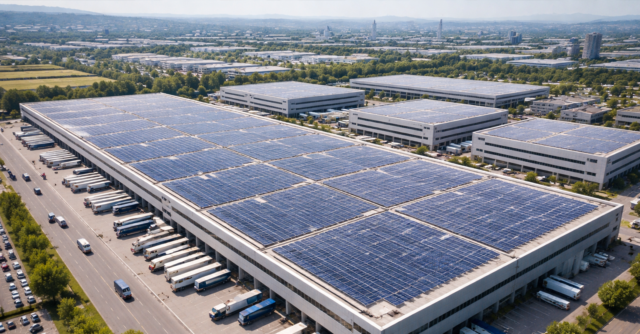
    Axpo subsidiary Urbasolar has commissioned a rooftop solar plant with an output of 12.8 megawatts peak on the industrial roof of French real estate developer PRD in Beauvais. The system, which covers an area of 62,000 square meters, is the largest rooftop solar system in France, the Baden-based energy company writes in a press release. In addition to PRD, the investment management company HMC was also involved in the realization of the project.

    The expansion of solar energy in Switzerland and Europe is one of Axpo’s strategic thrusts. The successful project in Beauvais illustrates the expertise that Axpo has built up in France through its subsidiary Urbasolar, explained Antoine Millioud in the press release. “Our extensive experience in various solar technologies enables us to expand our activities in other markets such as Switzerland, Germany, Italy, Spain and Poland,” said the Head of Axpo’s Solar division. “We are convinced that our capabilities in the construction of large-scale solar plants will further advance the energy transition and security of supply in Europe.”

    Urbosolar has already realized around 700 large-scale solar plants with various technologies in France. Over 190 megawatts of capacity have been installed with solar roof systems alone. The Axpo subsidiary has also realized other large solar plants as ground-mounted systems, parking lot roofs, greenhouses, agrivoltaics and floating solar systems.

  • Merger in the real estate sector: Two companies examine the merger

    Merger in the real estate sector: Two companies examine the merger

    The Opfikon-based real estate company Ina Invest, which is listed on the SIX Swiss Exchange, is examining a merger with the over-the-counter real estate company Cham Group. According to a press release, the talks are still at an early stage. The merger is to take the form of a merger of equals. The boards of directors of both companies have signed a letter of intent to this effect.

    The shares of the merged company are to be or remain listed on the stock exchange in the real estate companies segment. If the negotiations lead to a positive outcome, the shareholders of both companies will be able to vote on the merger at the respective Annual General Meetings in spring 2025.

    The potential merger would create “one of Switzerland’s leading real estate companies with a high-quality and sustainable portfolio in prime locations. Ina Invest develops sustainable residential, working and living space with a focus on hybrid real estate that is flexible and profitable to use in the long term. The Cham Group is currently developing a new quarter with around 1,000 apartments and 1,000 jobs on the former factory site in the center of Cham, the Papieri site and the adjacent Pavatex site.

    Implenia, as the 40 percent owner of Ina Invest, has taken note of the examination of a possible merger. In its own press release, the real estate and construction services company expressly welcomes the possible merger.

  • Winterthur approves the renewal of the waste incineration plant

    Winterthur approves the renewal of the waste incineration plant

    The voters of Winterthur have clearly approved the renewal of the municipal waste incineration plant with 87.0% and a yes majority in all city districts. This means that incineration line 2 of the waste incineration plant can be renewed. Investments of CHF 293 million are planned for a new incinerator, an electrostatic precipitator, a new flue gas cleaning system and a new waste water treatment system.

    The new plant will be able to incinerate 190,000 tons of waste per year while maintaining the same capacity. In future, however, it will be possible to use the waste heat from flue gas cleaning for district heating. This will increase its heat output by 30 percent. In addition, the flue gas cleaning system will in future be 40 percent below the limit value for nitrogen oxide emissions and save 12.6 cubic meters of water by condensing the flue gases. In future, the new wastewater treatment system will recover up to 7.5 tons of gypsum per day. An additional hot water storage tank and a photovoltaic system are also planned.

    The project will be financed via the fees budget.

  • Energy City Association focuses on net zero

    Energy City Association focuses on net zero

    The Energiestadt association wants to support its 644 member municipalities and cities in the future, particularly on the path to climate neutrality. In 30 years of commitment, much of what was initially considered progressive has been established as the standard, writes Energiestadt in a corresponding press release. In order to continue to act as a pacesetter, certification and support for members should be consistently geared towards the net-zero target.

    The Energiestadt label recognizes cities and municipalities for their sustainable energy and climate policy. In future, the certification process will place particular emphasis on net-zero relevant strategies and measures. The press release cites the phasing out of natural gas for heating and the promotion of electromobility as examples. In future, in order to receive the highest accolade of Gold City, it must be proven that strategies and measures are being consistently pursued and are compatible with the net-zero target. At the same time, Energiestadt wants to simplify the certification process for smaller municipalities.

    “With the new instruments, Energiestadt is strengthening its role as a leading competence center for local energy and climate policy in Switzerland,” said Maren Kornmann, Co-Managing Director of Energiestadt, in the press release. “Energiestadt is the only organization to offer a comprehensive package for the planning, implementation and monitoring of net-zero measures at local level.”