Category: Projects

  • Start of construction for the Bern West performance upgrade

    Start of construction for the Bern West performance upgrade

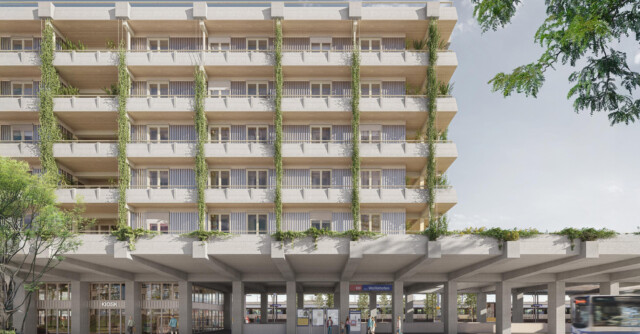
    SBB, in cooperation with the City of Bern and BLS, is launching one of the region’s most important infrastructure projects, the “Bern West performance upgrade”. The aim is to make the Bern railway junction more flexible, more stable and more efficient. The major project comprises five sub-projects, including the new Holligentunnel, the Europaplatz Nord railway station and the Steigerhubel overpass.

    A milestone for the Bern railway junction
    A particular focus is on improving regional transport. The new Holligen tunnel will allow regional trains to run without crossings, enabling stable and more frequent connections, such as the quarter-hourly service between Münsingen and Flamatt. The urban Europaplatz neighbourhood will also have a direct connection to public transport thanks to the new station and a larger subway.

    Challenges for travellers and residents
    Rail operations will be maintained during the construction period, which will last until at least 2036. Nevertheless, travellers will have to be prepared for timetable changes and replacement buses. Stöckacker station will close in December 2025 and will be replaced by tram line 8 until Europaplatz Nord opens in 2027.

    For local residents, the work will result in restrictions due to construction noise, dust and logistics traffic. However, the builders promise to minimise emissions as far as possible and to carry out replacement planting for felled trees.

    Sustainable future and financing
    The total cost of the project is around 900 million Swiss francs and will be financed by the federal government’s 2025 expansion programme. The new pedestrian subway at Europaplatz Nord, a contribution from the City of Bern, will be covered by a framework credit of CHF 60 million.

    With the completion of the “Bern West performance upgrade”, Bern’s railway infrastructure will meet the requirements of modern, sustainable mobility – a benefit for the entire region.

  • Smart City Winterthur 2030

    Smart City Winterthur 2030

    Since the first smart city strategy in 2018, Winterthur has established itself as one of the most progressive cities in Switzerland. At that time, the focus was on quality of life and resource efficiency, supplemented by topics such as energy, mobility, education and health. With the revision of the strategy towards Smart City Winterthur 2030, the City Council is now focussing on new cross-cutting topics such as innovation, needs orientation and co-creation. These topics are crucial to meeting the requirements of a changing society.

    Two programmes are driving implementation
    The new strategy is being implemented through two programmes, the Innovation Programme and WinLab. The innovation programme supports employees of the city administration in the development and implementation of innovative projects. The aim is to strengthen the culture of innovation within the administration.

    The WinLab, on the other hand, acts as an urban real-world laboratory in which representatives from business, science, civil society and municipal institutions work together. In this creative space, forward-looking solutions for the city are developed and tested. Both programmes create scope for experimentation and promote sustainable innovations that meet the needs of citizens.

    A strategy for the future
    The Smart City Winterthur 2030 strategy comes into force on 1 January 2025 and is part of the long-term goal of shaping Winterthur as a sustainable and adaptable city. The strategy will be reviewed after five years at the latest to ensure that it continues to meet the needs of the city and its population.

  • 61 million for climate-friendly buildings

    61 million for climate-friendly buildings

    Buildings are responsible for over 40 per cent of energy consumption and 30 per cent of greenhouse gas emissions in the canton of Zurich. Since September 2022, oil and gas heating systems in existing buildings must therefore be replaced with climate-friendly alternatives at the end of their service life if this is technically and financially feasible. in 2025, CHF 61 million in funding will be available for this change. These funds will be channelled specifically into measures to improve energy efficiency and promote sustainable heating systems.

    Stronger subsidies for larger heating replacements
    The 2025 subsidy programme places a particular focus on replacing larger fossil fuel heating systems. While the basic contributions for smaller systems have been reduced slightly, larger heating systems with an output of around 30 kilowatts or more will benefit from increased, performance-based subsidies. This takes account of the greater technical and economic challenges involved in such projects.

    Reward for comprehensive building modernisation
    A well-insulated building envelope saves heating energy, reduces heating costs and improves the indoor climate. An additional incentive is therefore provided for complete modernisations. Anyone who modernises at least 90 percent of the insulation area of the roof, facades and floors receives an additional contribution. From 2025, subsidies for modernisations in accordance with the MINERGIE standard will be linked to the additional “ECO” certification in order to take aspects such as recyclability and grey energy into account.

    Support for decentralised heating systems
    Decentrally installed electric or fossil-fuelled heating systems pose a particular challenge. From 2030, electricity-intensive electric heating systems will be banned in the canton of Zurich. Homeowners who replace such systems with climate-friendly alternatives will now benefit from a subsidy of at least CHF 15,000 for the installation of a heat distribution system. This is intended to facilitate and speed up the costly conversion process.

  • Sites in the canton of Zug

    Sites in the canton of Zug

    The cantonal structure plan regulates the main features of the desired spatial developments. It sets out in text and on maps how the cantons and municipalities should develop.

    The need for more affordable living space is recognised by politicians and the canton: In addition to “conventional” flats, flats for families, affordable flats and flats for the elderly are also being built in the various areas.

    A wide variety of site developments are taking place across almost the entire perimeter of the “valley communities”. In addition to the sites, the traffic situation is also being further developed and adapted to the increased utilisation: Examples range from the conversion of bus stops to bypasses to relieve the burden on Cham town centre. This also includes car-sharing concepts, such as at the Papieri site in cooperation with AMAG.

    A lot is also happening in public transport. In future, the Papieri site in Cham is to receive an express bus via the bypass motorway and the Unterfeld Süd site will have a bus stop in the neighbourhood.

    Sustainability plays a decisive role in new projects in particular. The Zug area plays a pioneering role in this respect. The Papieri site in Cham was honoured with the prestigious Watt d’Or award from the Swiss Federal Office of Energy. This emphasises the site’s initiative in the field of renewable energies. A climate-neutral district is being created here that relies entirely on renewable energy sources and covers 75% of its energy requirements on site. The innovative technologies contributing to the high level of energy self-sufficiency include hydroelectric power plants and photovoltaic systems. Geothermal energy is used for heating and cooling.

    The sustainability certificate, awarded by the Swiss Sustainable Building Council to Suurstoffi in Rotkreuz, recognises the sustainable construction methods and holistic planning of the project. The award proves that the highest standards in terms of energy efficiency, mobility and biodiversity have been met. The projects show that Zug not only assumes ecological responsibility, but also serves as a model for forward-looking urban development in Switzerland. By utilising innovative concepts and technologies, the canton of Zug is positioning itself as a pioneer in the sustainable design of urban living spaces.

    The other sites are also impressive. The construction of a high-rise building in timber construction is planned on the Tech Cluster site. The “lighthouse project” called “Project Pi” envisages the construction of an innovative residential tower block. With a height of 80 metres, the plan is to build one of the tallest timber high-rises in Switzerland with affordable flats.

    Baar – Unterfeld Süd
    A mixed-use neighbourhood with around 400 residential units and around 1,000 workplaces is planned for the Unterfeld Süd area. The basic structures were defined by representatives of the population of Baar together with experts under the leadership of the municipality. The development plan for the first of three construction phases was put to the people of Baar for a vote on 22 September 2024. The plan was approved with 74 per cent of votes in favour.

    The realisation of the first stage includes the high-rise building at the Baar Lindenpark light rail station and the neighbouring commercial building. These will be transferred to a joint development plan. The earliest possible start of construction of the first stage is planned for 2025. The remaining building plots will be developed in parallel and realised in subsequent construction phases. According to current planning, Implenia’s project will be completed in 2029, provided the subsequent plans are approved by the relevant authorities and construction proceeds according to plan.

    Hinterberg South (Städtler Allmend)
    The Hinterberg Süd site in the Städtler Allmend employment area in Cham will become a new, lively and easily accessible working and shopping centre for the local population. It offers attractive space for new companies to set up shop and ground-floor uses for the neighbourhood. The upper floors of the office buildings offer flexible spaces that can be customised to the individual needs of future companies.

    Publicly accessible uses such as a restaurant, café or bakery are located on the ground floors. They offer workers, shoppers, visitors and passers-by various consumption options and contribute to the revitalisation of the area and the entire neighbourhood. The four buildings surround a public square – the actual centrepiece of the site, which is open to the general public as a place to meet and spend time.

    Bösch Hünenberg
    In order to meet the requirements of a growing service and commercial area, the infrastructure needs to be adapted. The Bösch area should become more attractive for workers and companies and offer space for 6,000 jobs in future. This densification is provided for in the cantonal structure plan. It is binding for the municipality of Hünenberg. The vision is for the Bösch area to develop into a modern and urban place of work that is attractive to investors. To this end, space is to be created through structural densification, which can also lead to an increase in jobs. A holistic landscape design and well-organised mobility will ensure a better quality of life in Bösch. New leisure, supply and catering facilities ideally complement everyday working life in Bösch. On 9 December 2024, the municipal assembly will decide on the road credit of CHF 2.9 million to finance the first stage of the implementation of the operating and design concept in Bösch.

    LG Zug
    Due to its size and prominent location, the LG site is of central importance for the urban perception and urban character of Zug. A lively urban district with a convincing architectural design is to be created on the site of the former industrial area. With the necessary development plan, the planning and building law of the Canton of Zug ensures high-quality development and realisation.

    Papieri Cham
    The Cham Group is developing a new residential and working neighbourhood with industrial charm on the Papieri site. Directly on the River Lorze, the distinctive existing buildings of the former paper factory are being supplemented with striking new buildings and realised in a sustainable way. A new meeting place with supra-regional appeal is being created here, where past and present go hand in hand. A new urban district with around 1,000 flats and 1,000 jobs is being built in several stages over eleven hectares on the site of the former paper factory. It is not being built on a greenfield site, but in the midst of buildings steeped in history: The conversion of characteristic existing buildings preserves the connection to the past – the industrial roots of the neighbourhood remain tangible.

    They are complemented by striking new buildings, including five tower blocks with impressive views. The new neighbourhood directly on the Lorze offers an attractive mix of commercial space, flats, lofts, workplaces, studios, open spaces and public-oriented uses. All of this on a sustainable and well-balanced site that maintains – and continues to write – its own history.

    The Papieri site creates new foundations for an energy-efficient, climate-neutral and sustainable society. It is a pioneering project throughout Switzerland.

    Spinning mill on the Lorze
    Many threads once ran together in the largest spinning mill in Switzerland. The construction of the spinning mill on the River Lorze shaped the development of Baar in the middle of the 19th century. A new, lively neighbourhood with shops, cafés and other local businesses is being created around the historic spinning mill building, which characterises the public pedestrian zone. In addition to family flats and affordable flats, there will also be flats for the elderly. These will be complemented by vegetable gardens, green façades and shady trees.

    Suurstoffi
    The Suurstoffi site was the first site in Switzerland to be awarded the DGNB platinum certificate for sustainable neighbourhoods in planning and construction by the Swiss Sustainable Building Council (SGNI). The DGNB certification confirms that Zug Estates has realised a prime example of sustainable site development with the Suurstoffi site in Rotkreuz. It meets the comprehensive quality requirements of the DGNB certification system, which includes criteria such as energy efficiency, CO2 emissions, life cycle assessment, grey energy, flexibility of use and recyclability of the materials used. The Suurstoffi site is one of the first lighthouse projects of the last 10 years. This also includes the “XUND” health education centre, for which one of the last buildings is currently being completed.

    Tech Cluster
    From June 2018 to May 2019, five renowned Swiss and one Austrian team took part in an overall performance study to explore how affordable living in a high-rise building can be made possible using state-of-the-art construction methods and sustainable materials. At the same time, a study contract was drawn up for an overall urban development concept for the surrounding area of the city of Zug between Baarerstrasse, Göblistrasse, Industriestrasse and Mattenstrasse.

    The Tech Cluster Zug builds on the preliminary investments made by V-Zug and other companies in the Metall Zug Group. Its potential lies in the diverse relationships and synergies between the future users. These will transform the current factory site into an innovative and exciting part of the city of Zug.

  • District heating project in Bern utilises the River Aare as an energy source

    District heating project in Bern utilises the River Aare as an energy source

    Energie Wasser Bern wants to supply the north-east of Bern with climate-friendly heat. To this end, the Bernese energy supplier is planning to build a corresponding heat production infrastructure, ewb announced in a press release. One of the sources of heat will be the water from the River Aare.

    Specifically, ewb wants to draw water from the Aare on the western bank at Engehalde and channel it into an existing cavern. Heat is to be extracted from the water here, which will then be transported to a new Aare Wyler energy centre to be built on the eastern side of the river. Properties in neighbourhoods adjacent to the energy centre could then be heated with district heating from the energy centre’s heat pumps. Ewb is also considering setting up a second, smaller Aare Engehalde energy centre on the west side of the river. It could supply the Tiefenau area with district heating.

    The company has already submitted a licence application to the Office for Water and Waste of the Canton of Bern for the construction of a catchment structure and the extraction and return of water from the Aare, explains ewb. The company expects a decision in spring 2026. In the meantime, a precise location for the planned Aare Wyler energy centre is to be found.

  • Lucerne promotes circular construction projects

    Lucerne promotes circular construction projects

    The canton of Lucerne is joining forces with the Lucerne University of Applied Sciences and Arts to promote circular construction. The two partners have launched the Eco-Design in Building Construction tender, the cantonal state chancellery announced in a press release. Circular building projects are to be subsidised with a total of 200,000 Swiss francs in the coming year. Particularly innovative projects will also receive a material passport and consultancy services.

    Building owners from the private and public sectors as well as planners can apply for funding digitally from 13 January until 16 May. It does not matter whether the projects have already been realised or are still in the planning or implementation phase. However, the prerequisite for funding is that it is a construction project in the canton of Lucerne.

    We are looking for projects that follow the eco-design approach. According to this approach, buildings are designed to be durable and circular. In order to receive funding, the project should also have the character of a lighthouse, according to the press release. The canton and university want to use this to raise the profile of opportunities for sustainable construction and the circular economy and provide planners with the relevant knowledge.

  • New technology for sustainable building insulation under development

    New technology for sustainable building insulation under development

    Aeroskin Tech is looking for investors. The spin-off from the Swiss Federal Institute of Technology in Zurich(ETH) has developed a technology for insulating buildings based on aerogels. So far, Aeroskin Tech has developed prototypes of spray insulation materials and insulation panels, the ETH announced in a press release. Now the technology is to be introduced to industrial production in a pilot plant.

    “We want to offer sustainable and high-performance insulation for buildings,” says Daniel Sanz Pont, founder of Aeroskin Tech and research associate of Robert Flatt, Professor of Building Materials in Civil Engineering at ETH Zurich, in the press release. The insulation materials based on aerogels are characterised by a two to two-and-a-half times better effect than conventional insulation materials. This is due to the nanoporous structures of aerogels, explains Sanz Pont. In the tiny pores, the air molecules collide more frequently with the pore walls than with each other. “This effect makes aerogels the best thermal insulation materials of all,” says Sanz Pont.

    The young entrepreneur did not found the ETH spin-off with partners, but on his own. “Thanks to my diverse education, I combine many competences in my person,” explains Sanz Pont. “I have also received coaching and expanded my training and experience in the field of business management, and I have been supported by outstanding experts from ETH throughout these years.” For upcoming challenges and the next step, the young entrepreneur also has experienced mentors at his side “from whom I can learn more quickly”.

  • Hybrid small power plant promotes green energy in Graubünden

    Hybrid small power plant promotes green energy in Graubünden

    NewGreenTec AG has installed one of its hybrid wind-solar small power plants on the roof of the Plantahof. In future, it will contribute to the sustainable power supply of the agricultural training centre in the canton of Graubünden and eastern Switzerland. According to the start-up company, it will also enable pupils and teachers to experience the technology first-hand and expand their knowledge of renewable energies.

    “We are delighted to be promoting the sustainable development of agriculture in Graubünden with this project,” said Frido Stutz, Managing Director of NewGreenTec AG, in a company press release. “The combination of wind and solar energy is a pioneering step towards an environmentally friendly and stable power supply throughout the day and year.”

    NewGreenTec also recognises this as a symbol of the potential for a sustainable future: “With the power of wind and sun, the Rhine Valley is set to become another example of successful innovation in green energy supply.” The company’s first small power plant on an industrial building was put into operation in January 2023.

    The hybrid device combines solar panels, a small wind turbine and storage technology in a single unit and was developed in collaboration with Swiss universities of applied sciences. The wind turbines, which rotate around a vertical axis, are independent of the wind direction and virtually noiseless.

  • Final construction phase for sustainable development in Rotkreuz

    Final construction phase for sustainable development in Rotkreuz

    Zug Estates is tackling the final construction project in the development of the Suurstoffi site in Rotkreuz, which began in 2010. The Zug real estate company announced in a press release that the ground-breaking ceremony for the two new buildings Suurstoffi 43 and 45 was held at the beginning of December together with representatives from the authorities and project partners. Together with a central park, they are due to be completed by mid-2027.

    Zug Estates is creating around 14,400 square metres of office and training space in the two new properties. A further 1,100 square metres have been designed as living space for student accommodation. Once completed, the Suurstoffi 45 property will be home to the Central Switzerland Health Education Centre(XUND). The training centre is relocating from Alpnach OW to Rotkreuz in order to meet the growing demand for practical healthcare training and changing training models. XUND and Zug Estates signed a long-term rental agreement for Suurstoffi 45 in September.

    The final development project for the site “fits seamlessly into the Suurstoffi site, both architecturally and in terms of sustainability”, writes Zug Estates. “The existing, almost emission-free energy system” will have another geothermal probe field. The proportion of grey energy will be lower than in comparable properties thanks to a reduced basement level and the optimisation of façades, building services and statics.

  • Solar power project launched in Frauenfeld

    Solar power project launched in Frauenfeld

    In future,Thurplus will produce solar power on the roof of Signer Elektromotoren in Frauenfeld. According to a press release, the Frauenfeld-based energy supplier commissioned a photovoltaic system with 140 modules on an area of 280 square metres at the end of November. With an output of 62 kilowatt hours, it will generate around 62,000 kilowatt hours of electricity per year.

    Thurplus financed the system, built it with regional craftsmen and will also operate it.
    Signer Elektromotoren is providing the roof and will receive the solar power at a heavily discounted rate. “We have been thinking about realising a photovoltaic system for a long time,” junior boss Dominik Signer is quoted as saying in the press release. “The collaboration with Thurplus was very good and we are pleased to be able to contribute to the promotion of solar energy.”

    Founded in 1967, the family business repairs electric motors and builds customised motors.

    Thurplus is looking for further roof areas for photovoltaics. “Such joint projects contribute to the energy transition and to achieving our urban sustainability goals,” said Fabrizio Hugentobler, city councillor and head of the Thurplus, Leisure and Sport department, in the press release. Frauenfeld aims to install an output of 8,000 kilowatt peak by 2027.

  • New solar plant approved on former landfill site

    New solar plant approved on former landfill site

    The Basel-based energy supplier IWB has received planning permission for the construction of a solar plant on the former Hinterm Chestel landfill site in Liesberg. The investment decision is expected to be made at the beginning of 2025, according to a press release. Following a swift start to construction, the first solar power, which can supply around 1,000 households, is expected to flow as early as spring 2026.

    7,600 solar modules are to be installed on an area of 25,000 square metres. This corresponds to an installed capacity of 3.4 megawatts. The system will be installed at a certain height so that green areas can continue to be cultivated below. This should also benefit local biodiversity.

    “It is important to us that the plant is realised in an environmentally friendly way. For this reason, we deliberately integrated existing natural objects during the planning phase in coordination with KELSAG,” Daniel Neuenschwander, Project Manager for large-scale photovoltaic systems at IWB, is quoted as saying in the press release. KELSAG (Kehrichtbeseitigung Laufental-Schwarzbubenland AG) is the owner of the landfill site and will make the area available for up to 50 years.

    The habitat of various animal species is also taken care of. “We closely involved nature and environmental organisations in this project right from the start. That was the recipe for success for a balanced project: the concerns of electricity production and biodiversity are given equal consideration,” says Neuenschwander.

  • Sustainable stadium construction with reusable system components

    Sustainable stadium construction with reusable system components

    Hüttwilen-based event and construction services provider Nüssli has been awarded the contract to build an interim stadium by Spanish second-division football club Real Zaragoza. According to a press release, the sports facility will be able to accommodate 20,000 spectators. Its operation is planned for the next two seasons and should therefore maintain the club’s uninterrupted match operations. The actual home ground, Romareda, will be renovated.

    The stadium will consist of three uncovered spectator areas and a covered stand and will enclose a pitch measuring 120 by 80 meters. The planned construction period is six months, with completion scheduled for Real Zaragoza’s first home game in August 2025. As with other buildings by the specialist company, the construction method involves the use of reusable system components that can be dismantled after use.

    The facilities will also include ticket sales points, a merchandising store, a catering area and booths for radio and television commentators. There will also be an adjoining building with changing rooms, a first-aid room, doping control room, VIP lounges and rest areas.

    “The temporary stadium shows that the highest standards and fan experiences are possible even in transitional times,” said Lluis Herrero, Managing Director of Nüssli Iberia, in the press release. “The project also sets standards for other clubs facing similar challenges.”

  • Merger of Ina Invest and Cham Group nearing completion

    Merger of Ina Invest and Cham Group nearing completion

    The merger talks between Ina Invest and Cham Group announced on September 23, 2024 have made important progress. If the negotiations are successfully concluded, the merger will be submitted to the shareholders of both companies for approval at the Annual General Meeting on March 31, 2025.

    Implenia, which holds a stake of around 40% in Ina Invest, supports the planned merger. The merger would create a leading real estate company that would benefit from a sustainable, high-quality portfolio in prime locations in Switzerland’s strongest economic metropolitan regions. The merger promises economies of scale, synergies and great financial flexibility in project planning and realization.

    Strategic partnership for development and realization
    The previous agreements between Ina Invest and Implenia for portfolio and asset management as well as realization services will be terminated. Instead, strategic partnership agreements for development and realization services will be concluded. As part of this adjustment, Ina Invest will make a one-off payment of CHF 31 million to Implenia in 2025. This amount will have a positive impact on the 2024 financial year, but will be partially neutralized by the investment result.

    Implenia expects to acquire a stake of around 14% in the newly created company as a result of the merger. Implenia will continue to be represented on the Board of Directors, thereby securing its influence on strategic decisions.

    Long-term benefits for Implenia and the merged company
    Implenia sees clear advantages in the planned merger. The higher market capitalization and improved financing capacity of the merged company will enable recurring income and dividend payments. In addition, Implenia will continue to provide services in the development and realization of projects as part of the strategic partnership.

    The exact details of the merger are to be published on February 28, 2025, at the same time as the announcement of the 2024 annual results. Implenia also confirms its financial targets for the current financial year.

  • Scaling solutions for innovative cell products

    Scaling solutions for innovative cell products

    (CONNECT) Migros, Givaudan and Bühler Group opened The Cultured Hub in Kemptthal, part of Lindau, on December 3. The scaling and growth service for the development of sustainable food and other cell products provides interested companies with modern product development laboratories, cell culture capacities and equipment as well as a partner network, the founders of the hub said in a press release. “The opening of The Cultured Hub is a pivotal moment for global efforts towards sustainable food production,” said Yannick Gächter, CEO of The Cultured Hub.

    The Hub allows up to three companies to work simultaneously on completely separate facilities. The state-of-the-art organic plant enables pilot projects with production volumes of up to 1000 liters. “The Cultured Hub is designed to help companies close the scaling gap so they can retain equity, protect intellectual property and accelerate their time to market without a large capital investment,” explains Ian Roberts, Chief Technology Officer of Bühler Group. For Matthew Robin, CEO of the Elsa Group at Migros-Genossenschafts-Bund, the hub “represents a paradigm shift in the way we approach food production”.

  • The former cantonal hospital becomes an urban oasis

    The former cantonal hospital becomes an urban oasis

    The winning project by Credit Suisse Investment Foundation and HRS Real Estate AG was selected as part of a two-stage competition process. It combines public space, commerce, gastronomy and various forms of housing to create a neighbourhood that will be lively around the clock.

    Living, working and recreation combined
    The development plan allows for a balanced mix of uses, making the neighbourhood attractive for different target groups. There are plans for 272 flats, 50% of which will be affordable, as well as a boutique hotel in the listed south wing of the old hospital. Additional areas for catering, commerce and public services will create a diverse offering. The “Süd-See Hub” construction area in particular is geared towards public uses and is set to become a popular meeting place.

    Open space design takes centre stage
    The “Süd-See Zug – für üs alli” concept focuses on open spaces to make the neighbourhood more attractive. The “Stadthof” as a central square opens up to the lake and connects the old town with the water. A public roof garden, green courtyards and squares offer additional space for recreation and quality of stay. The lakeside terrace and the park promote biodiversity and create a connection to nature.

    A well thought-out process
    The detailed development phase begins once the building lease has been signed. The Credit Suisse Investment Foundation, together with HRS Real Estate AG, will assume responsibility for the realisation of the architectural competition. This exciting project illustrates how a historic site can be transformed into a lively and inviting environment through innovative solutions and planning. The transformation of the former Zug Cantonal Hospital will not only enrich the architectural landscape of the city, but will also make an essential contribution to the quality of life of the population and further strengthen Zug’s position as a sought-after place to live and work.

  • A historical heritage in new splendour

    A historical heritage in new splendour

    in 1896, Richard Theiler laid the foundation stone for the Electrotechnical Institute, which later became world-famous as Landis Gyr, with the construction of the Theilerhaus. The importance of the Theilerhaus for the people of Zug cannot be denied and its preservation became a priority in 1989 when the Canton of Zug acquired the site in order to preserve it for future generations.

    Preservation of historical substance
    The Canton of Zug has developed a comprehensive concept entitled “The Theilerhaus and its spirit”. This outline of ideas aims to preserve the “spirit” of the buildings and to bring together aspects of economy, technology, architecture and culture in a holistic framework.

    Refurbishment in keeping with the heritage
    The maintenance measures extend to all existing old buildings, focussing on earthquake safety, fire protection and accessibility. The renewal of windows, sun protection and roof cladding as well as the insulation of the Shedhalle are important steps towards meeting the requirements. The new building in the eastern area respects the historical substance and creates an appealing overall urban structure.

    A new urban accent
    The planned new building complements the urban ensemble and consists of a five-storey head building and a four-storey intermediate building. This design, which is connected to the high-rise building by a modern stair tower, blends harmoniously into the existing surroundings and strengthens the identity of the site.

    The Shedhalle as a cultural, creative space
    Once the renovation work has been completed, the Shedhalle will not only function as a place of remembrance of the past, but also as a lively space for cultural and artistic events. This use offers added value for the people of Zug and emphasises the versatility of the site and its relevance in today’s world.

    Forward-looking project
    Overall, this project represents a significant step in the urban development of the Canton of Zug and should benefit future generations. The planned measures emphasise how important it is to view historical heritage as part of a living, constantly evolving society and to shape it accordingly.

  • Sustainable construction projects launched in Germany and abroad

    Sustainable construction projects launched in Germany and abroad

    Implenia, the construction and property company based in the Glattpark district of Opfikon, has won several tenders for building construction contracts. According to a press release, the contracts have a total volume of 160 million Swiss francs.

    The company will construct the new office building of the Swiss National Science Foundation(SNSF) in Bern. The sustainable building will be constructed using local timber and recycled concrete in accordance with the Swiss Sustainable Building Standard (SNBS). Implenia has also been awarded several contracts in Germany.

    In Mainz, Implenia, together with its partners Gemünden and Apleona, was awarded the contract to construct a new 10,000 square metre research building for TRON. The research institute develops new diagnostics and active ingredients for immunotherapeutic treatments.

    In Leipzig, Implenia and its partner GP Günter Papenburg AG are building a seven- to eight-storey residential development on nine connected properties. In addition to 202 residential units, many commercial and ancillary premises are to be built. The buildings will be constructed as low-energy buildings in accordance with the Efficiency House 55 standard and the entire complex will be handed over on a turnkey basis.

    Three residential buildings with 101 units are being built in Munich, which should be ready for handover by 2026. Implenia will also realise a further stage of an ongoing project in Heilbronn and has been commissioned with a pre-construction phase in Siegburg.

  • Thermochemical storage optimises solar energy use

    Thermochemical storage optimises solar energy use

    Lucerne University of Applied Sciences and Arts and its industrial partner Matica have developed a technology that allows surplus solar power to be stored without loss in a thermochemical process in summer and used for heating in winter. A first pilot plant has now gone into operation at the animal carcass collection centre (TKS) in Frauenfeld, Matica announced in a press release. The Wagenhausen-based company specialises in the construction of special containers such as water heaters and heat and cold storage tanks.

    The SeasON demonstration plant in Frauenfeld uses caustic soda as a storage medium. In summer, the caustic solution is concentrated using surplus electricity from the TKS solar system and the separated water is stored in separate tanks at room temperature. In winter, the concentrated lye is diluted again with the separated water. This is vaporised using low-temperature heat from a heat pump. Both this vaporisation energy and the heat generated from the exothermic reaction when the lye is diluted can be used for heating. The storage efficiency of the system is put at up to 95 per cent in the press release.

    “SeasON solves several challenges of the energy transition at the same time and promotes sustainable, efficient energy management,” Benjamin Fumey from Lucerne University of Applied Sciences and Arts is quoted as saying in the press release. “In the development of SeasON, we have mutually conditioned each other and at the same time created a win-win situation between research and practice,” says Matica CEO Marc Lüthi. A second demonstration system is currently being installed in the new Swiss Post delivery centre in Kaltenbach TG.

  • New neighbourhood planned at Pratteln railway station

    New neighbourhood planned at Pratteln railway station

    Ina Invest can convert the Bredella West site in Pratteln, which is currently used for commercial and industrial purposes, into a mixed neighbourhood for living and working: The population of the municipality has approved the corresponding neighbourhood plan with 1903 yes votes against 1481 no votes, the real estate company based in the Glattpark district of Opfikon announced in a press release. “We are delighted that the people of Pratteln have decided to open up the currently underutilised Bredella West site and transform it into an attractive, green and vibrant neighbourhood,” Ina Invest CEO Marc Pointet is quoted as saying.

    The property company intends to tackle the transformation of the site in several stages. The plans include “high-quality outdoor spaces and inspiring combinations of flexible, compact and sustainable living, working and residential space”, according to the press release. At the same time, the neighbourhood located directly next to Pratteln railway station will play a key role in connecting the neighbourhoods north of the railway tracks.

  • Planning started for new high-rise building in St.Gallen

    Planning started for new high-rise building in St.Gallen

    Schlieren-based property developer Halter AG has announced that it can begin concrete planning for a construction project with a high-rise building on Bogenstrasse in St. Gallen. The transformed site is set to offer a broad mix of residential, commercial and catering uses in the immediate vicinity of the railway station.

    The Expert Council for Urban Development and Architecture of the City of St. Gallen has approved the project draft drawn up by Halter AG in collaboration with architects Herzog & de Meuron and landscape architects Westpol for implementation in a special utilisation plan under planning law.

    According to Halter AG, there is now an indicative project ready for realisation that will serve as the basis for the upcoming parallel procedures such as the special land use plan procedure and the zoning plan amendment procedure. These are expected to take around 18 months.

    As the project progresses, the detailed design of the facades of the new high-rise building with around 80 flats will also be determined. Once the two procedures have been finalised, a planning application will be drawn up and the building permit process will begin. Construction is expected to start in 2027 if the project runs smoothly.

  • Renewable energy on contaminated soil

    Renewable energy on contaminated soil

    Energy supplier AEW has built a ground-mounted photovoltaic system in Spreitenbach. According to a press release, the newly built solar plant went into operation in September 2024 and was officially opened on November 26. Its installed capacity is 622 kilowatt peak. According to the press release, this could supply 140 households with solar power per year.

    The project is AEW’s first ground-mounted system. The energy supplier is thus temporarily using a previously contaminated plot of land at the Spreitenbach site, which became an open space when the old open-air switchgear was dismantled. It was previously contaminated by foundations, shafts and cable systems, according to the statement. “Brownfield and previously contaminated areas can be used sensibly on a temporary basis to make a significant contribution to the Energy Strategy 2050,” René Wüst, Project Manager at AEW Energie AG, is quoted as saying.

    The decision was also supported by the fact that the system, which comprises 1414 solar modules, requires less maintenance during operation and is less susceptible to faults. If the grid needs to be expanded in the future, for example to include a storage system, it can also “simply be reused, as the photovoltaic system is very easy to dismantle”.

  • New indoor swimming pool for theKSS approved

    New indoor swimming pool for theKSS approved

    The decision of the Schaffhausen electorate paves the way for the construction of a new, modern indoor swimming pool on the KSS site. With an investment volume of CHF 80 million, this project represents an important milestone in the further development of the city’s infrastructure. The new building is not only a response to the ageing existing facility, but also a commitment to sustainable and future-oriented urban development.

    The new building will replace the existing indoor swimming pool from 1972, which is no longer up to modern-day standards due to its poor condition and outdated technology. The last refurbishment measures were carried out more than 30 years ago and the facility suffers from serious deficiencies such as water and heat losses, a lack of accessibility and outdated safety equipment. In addition, the current indoor pool can no longer cope with the increasing number of visitors, which leads to considerable conflicts of use.

    An indoor pool for all generations
    The planned new building will not only exceed the previous standard, but will also set new benchmarks. With a swimming pool comprising eight lanes of 25 metres each, as well as a teaching pool, a course pool with a lifting floor, a separate diving pool and a children’s paddling area, the range of facilities will be significantly expanded. There will also be an outdoor warm water pool and a state-of-the-art wellness centre with various saunas, a steam bath and a sauna garden. This facility will not only meet the sporting needs, but also the increasing demands of the population for wellness and relaxation.

    A central element of the new concept is the separation of the pools according to their main uses in order to avoid the current conflicts of use. The new structure makes it possible to use the various facilities simultaneously and without restrictions. The central entrance to the new building will ensure efficient access to all facilities and optimise operations.

    Sustainability as a guiding principle
    The new indoor swimming pool will be built to the “Minergie-P-ECO Standard”, one of the highest standards for energy-efficient and sustainable construction in Switzerland. The project’s energy concept provides for the extensive use of waste heat, in particular from the neighbouring ice rink, as well as a connection to a local heating network. These measures will help to significantly reduce the ecological footprint of the new building and position Schaffhausen as a pioneer in sustainable construction.

    New synergies and sources of income
    The new indoor pool will not only offer sports and health facilities, but will also be of economic importance. A publicly accessible restaurant with 130 indoor and 150 outdoor seats will generate additional income and establish the KSS facility as a meeting place for the entire population. In addition, an underground car park with 150 parking spaces will improve accessibility.
    Additional rental space for health and fitness facilities will round off the concept and contribute to the attractiveness and profitability of the overall project. These synergies between the various uses will strengthen the KSS site as a central focal point for sport, leisure and recreation in Schaffhausen.

    Competition and project management
    Following the approval of the population, the project competition will now begin with the aim of finding an innovative design for the new building that fulfils the high standards of architecture, functionality and sustainability. Twelve qualified teams will develop their proposals by summer 2025 and the winning project will be presented to the public. Construction is scheduled to start in 2027, with the new indoor pool opening in 2029/2030.

    The construction of the new indoor pool in Schaffhausen is more than just a building project – it is a strong signal of the city’s future viability and innovative strength. With state-of-the-art infrastructure, sustainable construction and an expanded range of facilities, the new indoor pool will make the KSS complex an even more attractive and contemporary leisure centre.

  • The Steig school complex is extended and modernised

    The Steig school complex is extended and modernised

    The Steig school complex, the oldest primary school in Schaffhausen, is located in the north-western part of the city, not far from the old town, and comprises several buildings of different ages. The need for renovation is considerable, as the existing infrastructure no longer meets modern requirements. The gymnasium from 1892 and the room capacities for the growing number of pupils no longer meet today’s requirements.

    In order to meet future needs, the city is planning a new building on the existing site. This will include a new single sports hall, additional classrooms and facilities for after-school care. The extension is part of a comprehensive development concept for Schaffhausen’s primary schools.

    The winning project and its elements
    A project competition crowned the “cinque pi” project by Soppelsa Architekten GmbH and Rosenmayr Landschaftsarchitektur GmbH as the winner. This cleverly divides the required programme into five building blocks, which create a harmonious overall impression as an ensemble. A new three-storey building with a gymnasium and classrooms forms the core of the project. The old observatory will be retained as a free-standing building.

    The existing gymnasium will be restored to its historical structure to create space for a new pavilion for the day centre and library. This will become the central hub of the entire complex. Conversions are also planned. The Trotte will now house storage rooms and a public toilet on the ground floor and therapy rooms on the upper floor.

    Redesign of the outdoor facilities
    Not only the buildings, but also the outdoor facilities will be redesigned. Existing qualities are to be further developed with moderate interventions. The observatory and the group of trees by the playground will be retained. The play and sports areas will be rearranged to create space for an all-weather playing field and a hard court.

    Financing and political approval
    The total cost of the project is estimated at CHF 21.7 million. This sum already includes the planning costs approved by the city council. Following the deliberations in the city council, the electorate will make the final decision on the extension of the Steig school complex.

    The “cinque pi” project is a forward-looking response to the growing demands and challenges of the education sector in Schaffhausen. It combines modernity and tradition in a progressive and resource-conserving construction method and the creation of lively learning and living spaces.

  • “Smetterling”: a co-operative project by HGW for the Alpenblick site

    “Smetterling”: a co-operative project by HGW for the Alpenblick site

    The Alpenblick site in Schaffhausen, adjacent to the historic Niklausen neighbourhood, will be redesigned by the end of 2027 with the winning project “Smetterling”. The jury, consisting of representatives from the city of Schaffhausen, HGW, the neighbourhood and neighbourhood meeting place nik. as well as independent experts, praised the project in particular for its precise urban design and the clear zoning of the open spaces. The compact design of the building and its harmonious appearance fit in perfectly with the surroundings and create a link between the listed Niklausen single-family house estate and the neighbouring high-rise building.

    A concept that promotes community
    The “Smetterling” project envisages a tall point building that takes up very little of the surrounding area and marks the transition to the taller houses on the opposite side of the street. The positioning creates two different open spaces. A garden space to the west and an urban space to the east. This arrangement encourages social interaction while at the same time preserving the residents’ privacy.

    The project reflects HGW’s co-operative values by creating communal spaces in addition to living space, thus promoting a lively community life.

    The ground floor of the building will house communal areas such as a laundry room, a co-working space and a commercial space. The upper floors offer 20 flats of different sizes, while the top floor comprises five one-bedroom flats with direct access to the roof garden. The spacious communal areas and the roof garden offer many places of retreat, but also opportunities for neighbourly interaction and the creation of social interaction.

    Wood and recycled concrete
    The winning project favours an ecologically sustainable construction method. The clear, simple geometry of the building also contributes to energy efficiency and makes the project a role model for ecological construction.

    HGW Heimstätten-Genossenschaft Winterthur has been creating affordable living space since 1923 and promotes lively community life and innovative solutions. With over 2,250 flats and more than 5,000 residents, it is the largest independent housing co-operative in the region.

  • Expansion of district heating in Münchenbuchsee

    Expansion of district heating in Münchenbuchsee

    The Schlieren-based construction company STRABAG is creating a modern energy supply for the municipality of Münchenbuchsee with district heating pipes. According to a press release, STRABAG is laying around three kilometres of new district heating pipes to expand the district heating network in the municipality in Bern-Mittelland. Work began on 9 September and the first of around 15 stages has already been completed, according to STRABAG. Two further stages will follow by the end of the year, according to the company press release.

    Regarding the progress of the work, the company says that as residents still need access to their homes and garages, the road cannot be completely closed for the construction work. To install the district heating pipes, just under a quarter of the road will be opened up and the pipes laid. After each construction phase, the trenches will be temporarily backfilled with earth and a temporary surface will be laid. Over the next few months, the earth will settle. Therefore, once all 15 stages have been completed, the temporary surface will be milled off again and a new asphalt layer will be applied.

    According to STRABAG, the construction work is expected to be completed by December 2025 by the STRABAG Traffic Route Construction (VWB) team in Bern. “We are well on schedule so far and should complete the project on time,” says Lena Wagner, construction manager at VWB Bern.

  • Successful design for Eichmatt residential development in Villmergen

    Successful design for Eichmatt residential development in Villmergen

    Spreitenbach-based fsp Architekten AG has won first place in the competition for the study contract for the MW Eichmatt Villmergen project, according to a press release. The assessment committee unanimously decided to recommend the Janus project by fsp Architekten AG and landscape architects Appert Zwahlen Partner AG in Cham ZG to the client for further development and realisation. It was the “most convincing project proposal overall”, according to the press release from fsp.

    The new Eichmatt-Villmergen residential development is located on the outskirts of the village. Adjacent to the agricultural zone, this development offers 112 modern 2.5 to 4.5-room flats in three-storey buildings. Balconies and garden seating areas are consistently south-west facing. The arrangement of the twelve buildings provides generous open spaces. The existing Eichmatt Süd development was realised to the Minergie standard.

  • Partial covering of the A2 in Lucerne South

    Partial covering of the A2 in Lucerne South

    On 16 November 2024, the Federal Roads Office, the Canton of Lucerne, LuzernPlus and the City of Kriens offered a platform at the Schappe Kulturquadrat in Kriens to present the interim status of the partial overlays of the A2. Visitors were able to talk directly to the planning teams, make suggestions and ask questions.

    The planning, which entered its second phase in 2024, aims to sharpen the objectives, prepare the legal basis and clarify financing and technical requirements. The results of the ongoing studies are expected at the end of 2025.

    Areas with potential
    The test planning from 2023 identified three possible locations for partial covers. The designs aim to connect urban areas, improve the quality of life by reducing noise and create new urban spaces.

    • Grosshof/Luzernerstrasse: Focus on a close-knit network of paths and the upgrading of public spaces.
    • Arsenal/Schlund: Potential for LuzernSüd through the overlaps and the development of new utilisation options.
    • Schlund/Horwerstrasse: Opportunities for neighbourhood development and a gentle transformation of the Wyssmatt commercial district through the extension of the Schlund tunnel.

    Technical challenges
    In addition to the in-depth studies, a feasibility study is analysing the technical framework conditions of the planned partial overpasses. These are independent of the overall Lucerne bypass system, but will be closely coordinated with other projects in the region.

    Prospects and next steps
    The partial overpasses of the A2 offer the opportunity to redesign urban spaces and create synergies between transport and neighbourhood development. The results of the studies will provide a sound basis for further planning and implementation that takes into account the interests of the population and the institutions involved.

    The partial covering of the A2 motorway in Lucerne South shows how infrastructure projects can contribute to urban development and quality of life. The dialogue with the population and the intensive planning set the framework for a sustainable and future-oriented design of the Lucerne South region.

  • Life Sciences Campus Allschwil continues to grow

    Life Sciences Campus Allschwil continues to grow

    With the official laying of the foundation stone for the ALL laboratory building in Allschwil, the Switzerland Innovation Park Basel Area marks a new stage in the development of a world-leading life sciences location. Domenico Scala, President of the Innovation Park, Stephen Wilson, CEO of BIIE, and Johannes Eisenhut, Managing Director of Senn Development AG, celebrated the start of construction with a time capsule in which representatives of the regional economy, politics and schoolchildren from the Swiss International School recorded their wishes for the future.

    Research building with a focus on sustainability
    The new ALL building is scheduled for completion in 2027 and will offer around 21,500 square metres of state-of-the-art laboratory and office space in accordance with the SNBS Platinum sustainability standard. This third collaboration between Senn and the architecture firm Herzog & de Meuron on the Innovation Park’s Main Campus strengthens the long-term orientation of the site. The investor Senn is aiming to intensively promote collaboration across the entire campus in order to maximise the innovative strength of researchers and companies.

    Research for tomorrow’s health
    With the BIIE, the ALL building will be home to one of the most significant investments in the life sciences sector. The BIIE, supported by 15 years of funding totalling USD 1 billion from the Basel Botnar Foundation, is dedicated to researching the immune system in order to develop new solutions for the diagnosis, treatment and prevention of diseases in children and adolescents worldwide. “The choice of location was crucial for our institute. The Main Campus offers exactly the right environment to meet our high standards,” explains Stephen Wilson.

    A strong life sciences cluster in Europe
    As part of the national innovation park Switzerland Innovation, the Switzerland Innovation Park Basel Area is an important hub for research and development in Switzerland. With sites in Allschwil, Jura and the Novartis Campus in Basel, the park focuses on the key areas of biotechnology, medical technology, digital health and industrial transformation. Around 1,200 specialists from 92 companies and 12 research groups work at the Basel site, making it the largest area for life sciences in a Swiss innovation park.

    Future prospects for Allschwil and Switzerland
    The construction of the laboratory building symbolises the sustainable development of Basel as a life sciences location and the innovative strength of the region. “We are using the knowledge gained from previous projects such as the HQ main building and HORTUS and are continuing to focus on sustainable infrastructure and the promotion of synergies,” emphasises Johannes Eisenhut. The development of the Switzerland Innovation Park Basel Area shows how Basel is becoming an international centre for life science research and technology – a win-win situation for science, business and society.

  • “Vision 2040 “AROVA HALLEN in Flurlingen

    “Vision 2040 “AROVA HALLEN in Flurlingen

    One step on a long journey has been taken: all those involved in the consultation process have signed the utilisation and development concept (NEK) for the AROVA HALLEN site. The Cantonal Office for Spatial Development ARE accompanied the upstream informal process in an advisory capacity without a signature. This means that the planning realisation can be addressed and discussed.

    Culturally unique and economically viable
    The AROVA HALLEN site is currently registered in the regional structure plan as a workplace area and is clearly differentiated from others by its historic building fabric. This represents both an obligation and an opportunity. The aim of the NEK is to put the site on a sustainable and economically viable footing and thus provide a forward-looking response to the challenges of spatial development in the Weinland region.

    Goals and visions for a mixed neighbourhood
    The main objective of the NEK is to maintain and strengthen the location as a place to work and to value the architectural heritage. The plan is for high-quality internal development that brings living and working closer together. “Vision 2040” envisages the creation of around 250 new flats by 2040 without reducing the existing 400 jobs. The focus is on modern forms of living and working as well as a lively neighbourhood with moderate traffic, complementary specialist shops and restaurants.

    Working and living in harmony
    The NEK thus follows the idea of mixed utilisation – living and working are moving closer together. Due to the historic building fabric, the site is particularly suitable for moderately disruptive businesses and services. The “Vision 2040” target image shows how the site can be developed into a modern business park that reduces mutual emissions and creates a lively neighbourhood.

    Current developments and plans
    In addition to the long-term goals, there are numerous current measures to strengthen the image and identity of the site. By focussing on the preferences of potential tenants, additional space has already been let. Interim uses and temporary events are also planned for the future. Following the fire in the beautiful WERKHALLE, the damage was repaired and a meeting point for tenants and their customers is to be created on the ground floor.

    Coordination and information
    The AROVA HALLEN utilisation and development concept is closely coordinated with the settlement development strategy of the municipality of Flurlingen. Further information and the final report can be downloaded at www.arovahallen.ch.

  • A new landmark at the Rhine Falls with great potential

    A new landmark at the Rhine Falls with great potential

    The goal was clearly defined. A third of the 900,000 annual Rhine Falls tourists were to be lured to the other side of the river and attracted to the “Rhyfall Village” area. “Rhyfall Village”, or “RIVI” for short, is the name of the new neighbourhood. With a mix of gastronomy, art and shopping, the area will become a centre of attraction – not only for tourists, but also for the local population.

    The site and its future
    The “RIVI”, once the site of industrial production, is undergoing a reorganisation. The neighbourhood is characterised by two striking high-rise buildings, one of which was acquired by Helvetia. These offer living space with impressive views and space for catering, office and retail areas.

    Potential and challenges
    The visionary project met with broad approval in the region. Beat Hedinger, Managing Director of Schaffhauserland Tourismus, saw the village at the time as a “colourful mosaic piece” in the overall tourism picture. The rooftop restaurant with a view of the Alps in particular promised to be a special highlight. Hedinger also recognised the challenge of skilfully bridging the distance between the Rhine Falls basin and the site.

    Felix Tenger, Mayor of Neuhausen, is optimistic that the “RIVI” will revitalise the centre of Neuhausen and also strengthen the retail trade. Building director Martin Kessler also saw great potential to turn the site into a meeting place that creates synergies with existing facilities and increases the attractiveness of the entire region.

    Good connections and creative solutions
    The site’s location scored highly thanks to its proximity to the Rhine Falls and good public transport connections. The Badische Bahnhof Neuhausen railway station is located directly next to the site and numerous bus connections and over 200 parking spaces are available to visitors. Visitors can travel in comfort between the Rhine Falls basin and the Rhyfall Village on the Rhyfall Express tourist train.

    A project with vision
    Rhyfall Village is more than just another residential neighbourhood in Neuhausen. Whether rooftop restaurant, promenade or art gallery – the RhyTech site stands for a modern, versatile and vibrant future in the immediate vicinity of one of Switzerland’s most impressive natural wonders.