Category: Projects

  • Green open space on the Papierwerd site in Zurich

    Green open space on the Papierwerd site in Zurich

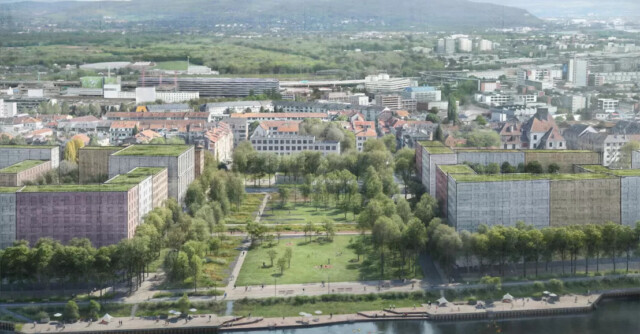
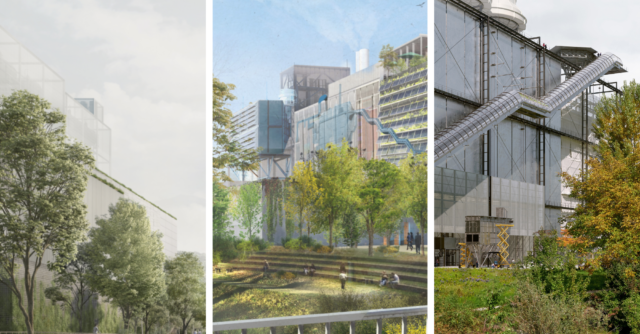
    A versatile open space has been created on the small square between the Globus Provisorium and the Mühlesteg. This green space invites you to linger with various seating elements and a view of the Limmat. New trees provide shade and pleasant places to sit on sunny days. For this new open space, existing car parks on the forecourt of the Globus Provisorium were removed, the ground unsealed and an innovative green concept established. Temporarily placed trees in so-called “airpots” already provide shade and cooling today and can also be replanted later, which makes the new greenery doubly useful.

    Development direction and further measures
    This milestone is part of the development direction adopted by the city council for the Papierwerd site (STRB No. 2722/2023). The development direction is based on the “Forum Papierwerd” strategy process and dialogue procedure. The desire for open space was set out in the eleven key statements for the Papierwerd site.

    Further immediate measures are planned for 2025. At the same time, as part of the ongoing in-depth phase, the structural clarifications regarding the Globus provisional building will be further advanced, the handling of the conservation value and water protection will be discussed and a rough utilisation and operating concept will be developed.

    Integration into the HB/Central masterplan
    The development of the Papierwerd site is being closely coordinated with the overarching “HB/Central masterplan” and will be incorporated into it. Consistent findings from both plans, such as the expansion of the open space, the improvement of the quality of stay, access to the Limmat and heat reduction, will be pursued further. With the masterplan, the City of Zurich is developing a vision for the future of the HB/Central area with a time horizon up to 2050 for transport and urban planning in this area. Interested parties are invited to visit the Papierwerd site in person and discover the qualities of the newly created place to stay in the heart of the city. Further information on the history and development of the site can be found on site or on the city’s project website.

  • Ein nachhaltiger Holz-Hybrid Bau mit einem «Herz aus Holz»

    Ein nachhaltiger Holz-Hybrid Bau mit einem «Herz aus Holz»

    «Ein Herz aus Holz»
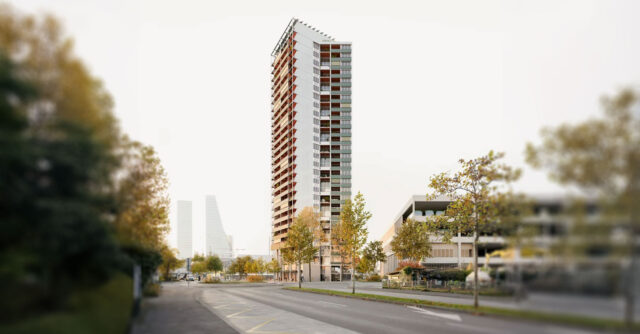
    Das Projekt wird als fünfgeschossiger Sockelbau und einem Hochhaus mit einem Atrium – dem «Herz aus Holz» – realisiert. Auf den Dachflächen wie auch auf Teilbereichen der Fassade sind Photovoltaik-Module für die Stromproduktion vorgesehen. Die gesamte Wärme- und Kälteversorgung erfolgt mittels eines Anschlusses an die Fernwärme «Wärmeverbund Seetalplatz». Das Projekt strebt die Zertifizierung mit den Nachhaltigkeitslabeln SNBS Gold und Minergie-P-ECO an. Für den Holz-Hybridbau und die vorgefertigten Fassadenelemente werden ca. 1420 m3 Holz verarbeitet – v.a. Fichte und Tanne. Der Holzbau trägt dabei nicht nur zum angenehmen Innenklima bei, sondern reduziert auch die CO2-Bilanz der Erstellung des Gebäudes. Die fixfertige Vorfabrikation der Fassadenelemente aus Holz in geschützten Werkhallen stellt zudem die Qualität sicher und ermöglicht eine schnellere Fertigstellung der Gebäudehülle.

    Der Kanton Luzern verfolgt eine Vorreiterrolle bei der Umsetzung der Klimaziele, wie auch Losinger Marazzi. Die Immobilienentwicklerin und Totalunternehmung hat sich zum Ziel gesetzt, ihre CO2-Emmissionen bis ins Jahr 2030 um 30 % im Vergleich zu 2021 zu reduzieren. Dieses Ziel erreicht Losinger Marazzi indem neben einem verstärkten Fokus auf Holzbau- sowie Stadterneuerungsprojekte die Nachhaltigkeit in allen Projekten als zentrales Thema behandelt wird.

    Heute ist die kantonale Verwaltung auf über 30 verschiedenen Standorten verteilt. Durch den Neubau werden im Jahr 2026 rund 1500 Angestellte unter einem Dach zusammengeführt und somit eine zentrale Anlauf-, Auskunfts- und Beratungsstelle im neuen Stadtteil Luzern Nord erschaffen, die mit allen Verkehrsmitteln bestens erschlossen ist. Zudem werden sich in den unteren Geschossen des Gebäudekomplexes die öffentlichkeitswirksamen Dienststellen, ein Polizeiposten, Gastronomie und Läden verteilen. Eine Kita im 6. OG sowie Wohnungen in den obersten Geschossen werden zum belebenden Nutzungsmix beitragen.

  • Further development of the YOND Campus on the Albis site

    Further development of the YOND Campus on the Albis site

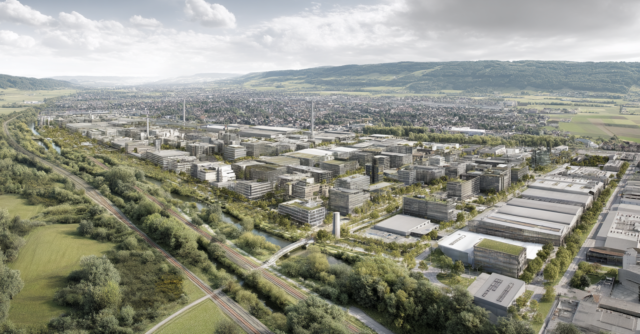
    The planned expansion of the YOND Campus to include the YOND.02/03 buildings with a total usable area of around 31,000 m2 takes up the concept of YOND.01 and adapts it more specifically to the requirements of manufacturing companies. The focus is on providing robust and efficient buildings, flexibility through large, divisible areas and optimised logistics. These adaptations include efficient delivery, loading ramps, a logistics-friendly basement and advanced vertical access to the building. In addition, mezzanine floors made of wood enable flexible use of space that can be adapted to the individual needs of the companies.

    At the same time, the historic laboratory and workshop building at 203 Albisriederstrasse is being converted into a centre for small and creative businesses. The planned renovation and extension of one floor are aimed at preserving the history of the site and creating a workspace for the creative industries. The transformation of the boiler house into a vertical garden and the establishment of a bistro on the ground floor emphasise the ambition to create a campus that harmoniously combines quality of life and the world of work.

    The publicly accessible catering facilities along Albisriederstrasse and in the adjacent park will establish the site as an attractive location for businesses and visitors. The use of the ground floor will position the YOND Campus as a place for socialising and contribute to the activation of the space. This extension will create a forward-looking space that supports both the dynamic requirements of modern companies and the need for social interaction and creativity.

  • What will be built in the university area over the next few years

    What will be built in the university area over the next few years

    The ambitious project envisages the construction of new buildings for medical care, education and research as well as an overall upgrading of the university area. The redevelopment includes the former underground drinking water reservoir on Rämistrasse at the heart of the area, which will be converted into a café with indoor and outdoor seating. This project, overseen by SQUADRAT Architekten, integrates parts of the historic water halls and creates an inviting public space.

    Another highlight is the redesign of Rämi and Gloriastrasse, which will offer more space for pedestrians in future and reduce noise levels through traffic calming measures. The aim of redesigning these axes is to improve mobility and at the same time increase the quality of life.

    The FORUM UZH, a new university building opposite the main UZH building, will house teaching and research on nine floors and will also include a canteen and shops. The building is due to be completed by the end of 2029 and will provide a modern workplace for around 6,000 students and staff.

    Preliminary work has already begun on the construction of the University Hospital’s new MITTE campus. This renewal of the medical infrastructure will revolutionise patient care and set the course for the medicine of the future.

    These and other projects in the HGZZ underline Zurich’s commitment to education, research and healthcare. They not only contribute to urban development, but also promote scientific excellence and strengthen Zurich’s position as a leading centre for innovation and knowledge.

  • Another stage victory for Quatre Bornes wind farm

    Another stage victory for Quatre Bornes wind farm

    The initiators of the Quatre Bornes bicantonal wind farm have achieved another stage victory. According to a statement, the Federal Supreme Court has rejected the appeal by opponents to repeat the vote on the wind farm in Sonvilier.

    The municipality of Sonvilier can now vote again on the neighbourhood plan on 22 September. This is equivalent to a building permit for the wind farm. The voters of Sonvilier rejected the wind farm on 27 September 2020 with a narrow majority of 289 no votes to 285 yes votes. A municipal initiative launched in December 2021 called for the vote to be repeated.

    In August 2023, the Neuchâtel cantonal court rejected an objection to the planned wind turbines in the Neuchâtel part of the wind farm in the municipality of Val de Ruz.

    The Quatre Bornes wind farm is being planned by the two municipalities as well as 23 farmers and others. Groupe E is investing in the project through its subsidiary greenwatt. The first wind measurements were taken in 2006. The wind farm is to generate 63 million kilowatt hours per year with three wind turbines in Val de Ruz and six in Sonvilier.

  • Forward-looking integration of the Luchswiese housing estate and school extension

    Forward-looking integration of the Luchswiese housing estate and school extension

    In the midst of the dynamic development of the north of Zurich, a showcase project is being created that meets the demands of a growing city. The existing Luchswiese housing estate, characterised by its green garden city atmosphere and three four-storey apartment blocks, will be replaced by a variety of living space and educational facilities. The winning project “Pergola” by Blättler Heinzer Architektur and KOLLEKTIV NORDOST Landschaftsarchitekten is characterised by a careful densification that preserves the garden city character while creating modern living and learning space.

    The use of prefabricated timber construction systems will create 76 flats that will appeal to families in particular thanks to their diversity. The integration of four kindergartens with childcare infrastructure and a multi-purpose hall for the day school in the western building block directly adjacent to the school grounds emphasises the innovative concept of the development. This organic combination of housing and education creates a harmonious ensemble that is complemented by flowing green spaces and green roof terraces.

    The winning project “LYNX” by Parameter Architekten and Rosenmayr Landschaftsarchitektur for the neighbouring Luchswiesen school complex is faced with a growing need for school space. The city is planning a significant extension here by 2028, which will provide new space for 750 children. Inspired by Max Kollbrunner’s original architecture, the extension combines old and new elements and integrates a triple sports hall as well as modern classrooms and childcare facilities. The resource-conserving construction method, including the use of photovoltaic elements and timber in skeleton construction, underlines the city’s commitment to sustainable development.

    This project is an impressive illustration of how creative urban planning and close collaboration between different stakeholders can find solutions to the challenges of urbanisation. The Luchswiese housing estate and the Luchswiesen school complex are a forward-looking model for living and learning together in Zurich.

  • Vaud plans electricity autonomy by 2035

    Vaud plans electricity autonomy by 2035

    The study presented by Isabelle Moret, Head of the Department of Economy, Innovation, Employment and Heritage (DEIEP), shows encouraging results on the photovoltaic potential of the roofs and façades of Vaud cantonal buildings. In the presence of Pierre de Almeida, Director General of Real Estate and Heritage, and Camille Orthlieb, Head of Sustainable Construction at the DGIP, it became clear that the cantonal administration can achieve electrical autonomy by 2035 by producing the equivalent of 23 GWh of electricity annually.

    Comprehensive photovoltaic installation
    Since the early 2000s, almost 19,800 m² of solar panels have been installed on the roofs of the cantonal administration’s buildings. This area is to be increased to around 100,000 m² by 2035. All new buildings will be equipped with photovoltaic systems so that they produce as much or even more energy than they consume. At the same time, a building refurbishment programme aims to reduce electricity consumption by around 30 % through energy optimisation.

    Responsibility and leading by example
    Isabelle Moret emphasises the importance of these measures: “Thanks to the efforts of our teams for the massive expansion of photovoltaic systems, we should achieve electrical autonomy by 2035. The Vaudois state is thus demonstrating its responsibility towards the challenges of sustainability and serving as a role model for energy consumption in the property sector.”

    Financing and project coordination
    Over CHF 18 million will be made available for the implementation of this project in order to finance both the expansion of the solar installations and the reduction in electricity consumption. Implementation requires close collaboration between the Directorate-General for Property and Cultural Heritage (DGIP), the Department for the Preservation of Historical Monuments, the Directorate for Energy (DGE-DIREN) and the Directorate for Resources and Natural Heritage (DGE-DIRNA).

    Future prospects
    In addition to the cantonal administration, the University of Lausanne (UNIL) and the Lausanne University Hospital (CHUV) are also evaluating their photovoltaic potential in order to increase their energy independence. These measures emphasise the canton of Vaud’s commitment to driving forward the energy transition and achieving long-term sustainability goals.

  • Expertise and strategic partnerships in hotel development

    Expertise and strategic partnerships in hotel development

    The hotel property sector is currently undergoing a profound structural change. The demands of guests are changing rapidly and the structures of owners and operators are becoming increasingly complex. Patrick Vogler, former CEO of the Grand Resort Bad Ragaz, and Professor Norbert Hörburger, researcher and lecturer in hospitality at the University of Applied Sciences Graubünden, have founded Hotelinvest GmbH. Their goal: the sustainable utilisation and further development of high-quality accommodation properties through targeted consulting and brokerage.

    Targeted strategies for sustainable success
    Hotelinvest GmbH attaches great importance to the careful selection of investment properties and investors. Comprehensive analyses, feasibility studies and plausibility checks are carried out before each transaction. The team consists of highly qualified senior consultants, including Eva White, an internationally experienced specialist in hospitality property transactions, and Annette Fink, an expert in wellness and spa management as well as marketing and positioning. “Our focus is on the sustainable success of our clients,” emphasises Norbert Hörburger. “We offer optimal market access for buyers and sellers thanks to our excellent network.”

    Diverse hotel concepts and flexible solutions
    Thanks to its extensive experience and large network of international investors, Hotelinvest GmbH is an ideal partner for various types of hotels, from city hotels and serviced flats to holiday resorts. Patrick Vogler emphasises that the trend in the city hotel industry is towards young, digitalised hotel concepts that manage with fewer staff. Innovative forms of service living are also emerging in other areas of commercial accommodation that can react flexibly to different property situations.

    Strategic cooperation and comprehensive support
    Hotelinvest GmbH focuses on developing trusting partnerships and offers comprehensive support throughout the entire investment and development process. Thanks to their network, they can accompany project developers, property owners and architects before, during and after the transaction and support them in the conceptual orientation of their investments and construction projects. “Our outside perspective and wealth of experience often result in completely new, promising concepts,” explains Norbert Hörburger.

    This strategic and comprehensive approach to the development of hotel properties makes it possible to create innovative and sustainable solutions that meet the current and future requirements of the industry.

  • Construction of a met mast for wind measurement and environmental monitoring started

    Construction of a met mast for wind measurement and environmental monitoring started

    According to a press release,CKW began construction of a measuring mast on the Ruswilerberg on 13 May. The mast carries anemometers at 60, 80 and 100 metres that measure the wind. At heights of 60 and 100 metres, ultrasonic sensors measure the sounds of bats flying by. At the top, sensors measure temperatures and humidity.

    The measurements are collected for at least one year. They are intended to help check the existing wind and weather data and thus ensure the economic viability of the planned wind farm. At the same time, they should help to minimise the impact on humans, animals and the environment.

    CKW is planning a wind farm with five turbines on the Ruswilerberg.

  • Mast measures wind data for Grotwind wind farm

    Mast measures wind data for Grotwind wind farm

    Planning for the Grotwind wind farm is entering the next phase. A measuring mast is currently being erected on the Grot in the municipality of Pfäfers. According to a press release, this is equipped with anemometers and weather sensors at heights of 57, 69 and 80 metres. These will continuously record wind and weather data such as wind strength and direction, turbulence, humidity and air pressure for twelve months. Ultrasonic sensors will also be installed at 69 metres to record the sounds of passing bats.

    The data will help to define the appropriate wind turbines, their number and their optimal placement. They will also help to determine site-specific shutdown algorithms. The aim is to minimise the impact of the planned wind farm on humans, animals and the environment.

    The wind farm is being planned by St.Gallisch-Appenzellische Kraftwerke, SN Energie and the specially founded Grotwind GmbH based in Quarten SG. It will produce electricity for 5000 households.

  • Building rights create affordable living space in Zurich

    Building rights create affordable living space in Zurich

    The Im Gut building cooperative has set itself the goal of comprehensively renovating and expanding its housing estates on Gutstrasse in Zurich-Wiedikon, which are characterised by a building fabric that is around 70 years old. As part of a master plan, the possibilities for the construction of non-profit flats as well as the establishment of a double kindergarten and the creation of communal and public-orientated usable areas are being explored. Two building plots, which were renovated in 2012 and 2014, are just the beginning. The next steps include the redesign of two further plots, which will be made possible by urban building rights.

    New residential concepts and the role ofmunicipal building rights
    The construction of 28 new flats is planned on the plot at Gutstrasse 146 to 152, while two listed buildings, including a residential tower block with 46 flats, will be renovated. The annual ground rent for this field amounts to around CHF 69,000. At the same time, the neighbouring plot at Gutstrasse 145 to 153 will be completely redeveloped and will provide space for 72 flats. The two building plots will thus provide a total of 146 affordable flats – an increase of 44 flats compared to the current stock.

    Setting the financial and planning course
    The city council is endeavouring to renew the building rights for these projects for a further 62 years ahead of schedule, thereby underlining the city’s long-term commitment to promoting affordable housing. The decision to grant the building rights lies with the municipal council. In preparation for the start of construction in September 2023 and the planned occupation of the housing estate in winter 2025/2026, one-off expenditure of CHF 1.355 million has already been approved for the renovation of the building site. This financial commitment is a significant contribution to strengthening the urban infrastructure and ensuring the quality of living for broad sections of the population.

  • Progress with slope stabilisation in Bergdietikon

    Progress with slope stabilisation in Bergdietikon

    Following the completion of slope stabilisation measures in Land Rai, the municipality of Bergdietikon has arranged for measurements to be taken. These are intended to ensure that the site can be built on. Due to heavy and persistent rainfall during the observation phase, two independent geologists decided to collect further measurement data. In May 2022, Implenia Schweiz AG began dewatering work on the slope and stabilisation measures in close cooperation with the municipality. The monitoring phase then began.

    According to a press release, the heavy rainfall led to meaningful measurement data. Although no critical values were measured at the measuring points of the neighbouring buildings, the geologists were not yet able to make a conclusive assessment of the buildability of the slope based on the measurement data collected. Further data would therefore be collected in consultation with the cantonal specialist centre. Six core drillings will be carried out from 21 May. In the northern part of the site, six piezometric boreholes will also be drilled to measure the pressure. These will be carried out by the company Geocontrol from Rumlikon ZH.

    A design plan was adopted by Bergdietikon municipal council on 23 November 2020 and approved by the canton on 26 February 2021. If buildability can be guaranteed, the Rai land will be developed. The developer will then be Implenia Schweiz AG, which would like to realise several residential buildings there based on the guideline project from 2019.

  • Innovative climbing protection systems for urban cable cars

    Innovative climbing protection systems for urban cable cars

    More and more cities are relying on ropeways to transport visitors and the city’s population. HighStep Systems AG in Dietikon, a company specialising in safe climbing protection systems, makes it possible to work safely at heights and depths. For example, it is involved in the Cable 1 ropeway line currently under construction in the greater Paris area, which is being realised by Doppelmayr/Garaventa in Wolfurt, Austria.

    “The integration of the HighStep rail as a climbing system at Doppelmayr/Graventa in the Cable 1 Paris project sets new standards in the safe and efficient maintenance of ropeways. Thanks to the maintenance-free HighStep rail instead of a fixed ladder and the fact that our system cannot be used by unauthorised persons, we offer a robust and reliable solution – especially in urban areas, where the need for safety and protection is particularly high,” Gregor Wylenzek, Sales Director of HighStep, is quoted as saying.

    HighStep Systems AG was founded in 2007. It develops and markets innovative arrester systems as an alternative to conventional methods such as fixed ladders. This allows workstations at great heights to be reached safely and comfortably, which increases safety and productivity for employees. The HighStep arrester system consists of two components: an aluminium rail as a system carrier and a selectable climbing device, the HighStep Easy and the portable HighStep Lift. The focus is on electricity pylons and now also on cable cars.

    Several thousand installations are in operation worldwide. Customers include the Swiss transmission system operator Swissgrid, the high-voltage grid operators TenneT and 50 Hertz and the Chinese energy company State Grid Corporation of China.

  • Zug sets standards in global blockchain research

    Zug sets standards in global blockchain research

    With the support of the Canton of Zug, an interdisciplinary research centre is being established that will focus on the diverse applications and effects of blockchain technology. The initiative, which is being realised in cooperation with the University of Lucerne and Lucerne University of Applied Sciences and Arts, will not only research the technological aspects of blockchain, but also the social, economic and political aspects. Finance Director Heinz Tännler emphasises that the project not only promotes scientific research, but also strengthens Zug as a business location, particularly in light of the new OECD minimum taxation that was introduced at the beginning of 2024.

    Globally unique research initiative
    The newly founded Zug Institute for Blockchain Research at the University of Lucerne will focus on the challenges and opportunities of this disruptive technology. Nine new chairs will be created to address the various facets of blockchain technology. The research will pursue a holistic approach that encompasses technological innovations as well as the associated social, economic and political issues. The aim is to develop an in-depth understanding of blockchain technology and its potential impact on society.

    Strengthening research capacities at the Lucerne University of Applied Sciencesand Arts
    The Lucerne University of Applied Sciences and Arts will significantly expand its existing activities in blockchain research through the new initiative. The university is contributing its expertise in the fields of computer science, finance and technology to the project and is working closely with the University of Lucerne to create a comprehensive research environment. This cooperation forms the basis for the hub, a platform for collaboration and communication that promotes exchange between the participating researchers and the global blockchain community.


    Sustainable funding and long-term goals
    Following the initial start-up funding from the canton, it is planned that the project will switch to sustainable sources of funding. An external evaluation after three years will assess the effectiveness and progress of the research initiative. These measures will ensure that the “Blockchain Zug – Joint Research Initiative” becomes a permanent fixture in the global research landscape in the long term and establishes Zug as a leading centre for blockchain technology.

  • GF tackles expansion of Klostergut Paradies

    GF tackles expansion of Klostergut Paradies

    The Paradies Foundation, which belongs to GF, wants to upgrade its Klostergut Paradies estate in Schlatt. To this end, a hotel is to be built on the site of the GF conference and seminar centre and the existing restaurant is to be renovated and converted in an environmentally friendly manner, GF announced in a press release. The Schaffhausen-based industrial group is investing around CHF 10 million in the project.

    The hotel will serve the company’s seminar and meeting guests. However, the planned 34 rooms will also be available to other guests, particularly at weekends and during holiday periods. The Paradies restaurant, which was previously only open in summer, will be open all year round following the renovation work. The new construction and remodelling will create around 15 new jobs in Schlatt.

    In connection with the project, GF is examining the wish expressed by nature conservation and environmental organisations to renaturalise the banks of the Rhine near the restaurant and hotel together with the energy company SH Power, writes GF. The Müli stream has already been renaturalised during the preliminary work and a cold-water bay has been added.

    Following the granting of the necessary building permits in recent weeks, construction work is set to begin in June. Completion is scheduled for the end of December 2025. The restaurant will remain closed during the construction work and will be replaced by a sunset bar at weekends during the summer months.

  • Large-scale project for performing arts and student accommodation in Vernier

    Large-scale project for performing arts and student accommodation in Vernier

    The Fondation pour le Développement des Arts et de la Cultur from Vernier has commissioned HRS with the construction of two buildings in Vernier. The corresponding total contractor agreement has already been signed, the real estate service provider based in Frauenfeld announced in a press release. The financial scope of the large-scale project dedicated to the performing arts has not been disclosed.

    The first building will serve as a cultural centre. It will have an event hall with 492 seats and 920 standing places, explains HRS. The second building will house 220 flats for students. The two buildings will be connected by a pedestrian bridge.

    The complex will be complemented by a hotel, a co-working area, a brasserie and a catering service. They are intended to “enrich the site’s offering and make it a dynamic place to live”, writes HRS. A timetable for the realisation of the project is not communicated in the press release.

  • Biogas production attracts interest in Laufental-Thierstein

    Biogas production attracts interest in Laufental-Thierstein

    Erdgas AG Laufenstein-Thierstein(GASAG), based in Münchenstein, is clarifying where a biogas plant can be built in the region and how it can be financed. The plant would have to be located near a gas pipeline, for example at the Müsch gas station in Laufen, it writes in a letter to farmers in the region. For building law reasons, farmers would have to own the biogas and processing plant. GASAG would guarantee the purchase of the biogas.

    The regional gas supplier based in Münchenstein has had a potential survey carried out in recent months. According to a press release, BOHA AG, which it commissioned, asked 38 farmers in the region whether they would be prepared to supply slurry and manure and accept the residual materials. 23 farmers with a maximum total of 2000 livestock units declared their willingness to participate. This corresponds to a potential of 7 to 8 gigawatt hours. This could cover 20 per cent of GASAG’s consumption.

    Founded in 1993, GASAG is owned by Primeo Wärmeholding AG, the municipalities of Breitenbach, Büsserach, Dittingen, Meltingen and Zwingen and the town of Laufen. The business is managed by Primeo Energie.

  • Test planning for the development of the AEW site in Aarau

    Test planning for the development of the AEW site in Aarau

    Together with the Aarau municipal building authority, AEW intends to carry out test planning for the development on the AEW site in the autumn. Immobilien AEW AG is the owner of the almost 60yearold development, which consists of a tower block, the High Court and a restaurant. The owner is a wholly owned subsidiary of AEW Energie AG, which, together with the Aargau courts as the largest tenants of the buildings, has analysed the future requirements for the location and workplace, according to a press release.

    The analysis has shown that structural development and densification of the site is necessary to maintain its current use in the long term. According to the press release, the upcoming test planning should analyse and clarify the framework conditions and requirements for a high-quality further development of the site in greater depth. The existing buildings will be included in the test in order to show how they could be dealt with.

    Based on the findings from the test planning, a well-founded directional decision is to be made that will be decisive for the further development in 2025. Three planning teams will develop the planning concepts in dialogue with the monitoring committees. The test planning is expected to be completed in spring 2025.

  • New concept for the Zurich barracks area

    New concept for the Zurich barracks area

    Built in the 19th century as a military complex with barracks, armouries and stables, the site is now one of the largest and best-preserved historicist ensembles in Switzerland. With the planned departure of the cantonal police, a large part of the site will become available for future use, while existing facilities and interim uses will continue to revitalise the site.

    The canton and city of Zurich developed a vision for the site in a collaborative process with the city’s population. It is to become an urban magnet that combines recreation, encounters and work, with a strong connection to the neighbourhood. Cultural institutions, small businesses, educational and leisure facilities are planned, which will characterise the site and ensure a versatile, community-oriented use.
    Changes to the historic ensemble will be made carefully in order to preserve the existing qualities and at the same time enable a variety of uses. The design of the open spaces should support the diversity of use without changing the character of the site.

    Transparent operational organisation and clear usage management ensure a balanced mix of different offerings. The focus is not on maximising profits, but on the flexible and gradual development of the site. The barracks area is currently enriched by a variety of offers and uses.

    A competition is currently being held to find project proposals for the further development of the public open spaces.

    The competition programme was drawn up together with an echo group from the neighbourhood. The aim is to ensure that the project proposals meet the needs of the neighbourhood. The competition results for the further development of the public barracks open spaces are expected to be available by the end of 2024.

    The redevelopment of the barracks site is exemplary of a sustainable and community-oriented approach to urban development. The combination of historical appreciation and modern diversity of use will transform the site into a vibrant part of Zurich’s city centre. The development is a significant step towards an integrative, sustainable urban landscape that offers the citizens of Zurich new spaces for recreation, culture and encounters.

  • Competition for Zurich district prison decided

    Competition for Zurich district prison decided

    The plan to modernise Zurich District Prison to make it fit for purpose has reached an important milestone. A project led by RW+ Gesellschaft von Architekten mbH from Berlin won the competition to redesign the prison and thus improve the conditions of detention.

    Zurich District Prison, located in District 4 and right next to the largest court in the Canton of Zurich, the District Court, is about to undergo a transformation. After comprehensive studies and the realisation that the current structures no longer met modern standards, the decision was made to build a new building.

    The need for a new building became apparent when guidelines regarding cell size, lighting and the number of ancillary rooms were met. The winning project makes reference to the T-shape of the building and creates a harmonious link between the various buildings in the district complex. Particularly noteworthy is the clever unbundling of routes for inmates, staff and visitors, as well as the secure accessibility to neighbouring judicial buildings. One significant change is the reduction in cell places from 153 to a maximum of 90, which underlines the focus on resocialisation and improved prison conditions.

    The selected concept is to be developed into an approvable construction project by 2026 and then submitted to the cantonal government and cantonal council for approval. If approved and in the absence of any appeals, construction work could begin in 2028.

  • Losinger Marazzi implements climate strategy in its projects

    Losinger Marazzi implements climate strategy in its projects

    What climate strategy is Losinger Marazzi pursuing?
    Lennart Rogenhofer: With our climate strategy, we are pursuing the goal of reducing our CO² emissions by 30 per cent by 2030 compared to 2021. We will achieve this by focussing more on timber construction and renovation projects and by treating sustainability as a key issue in all projects. We are pursuing a scientific approach in accordance with the Science Based Targets Initiative, which also audits our target achievement, among other things.

    How is the strategy being implemented in practice?
    We have been fully integrating sustainability into our corporate strategy for years. Examples of this include the major projects Greencity in Zurich (Switzerland’s first 2000-watt site under development in 2012), Erlenmatt West in Basel (Switzerland’s first 2000-watt site in operation in 2013) and the sustainable Églantine neighbourhood in Morges in 2019.

    Following further in-depth steps in recent years, we are systematically implementing our climate strategy. Since 2019, we have been consistently preparing a carbon footprint for the construction and operation of buildings for each project – i.e. over the entire life cycle of a project and regardless of the environmental labels we are aiming for. This has enabled us to build up a database of experience that makes it possible to estimate and reduce the emissions of future projects.

    What goals is Losinger Marazzi pursuing with regard to timber construction?
    Timber construction is a focal point of Losinger Marazzi’s climate strategy. This involves focussing more on building materials with low CO2 emissions, such as wood. Our climate strategy aims to minimise the life cycle emissions of a building during its construction and operation from the design stage onwards. The increased use of wood is naturally an important element here, always according to the principle of “the right material in the right place”. This means focussing on local, lightweight, bio-based materials where they are best suited in terms of their technical properties and have the greatest impact on sustainability. In addition to a reduction in CO2 emissions, this can also mean better deconstructability or a contribution to a pleasant indoor climate, for example. We are already implementing this strategy in projects such as the Greencity construction site B6 (Vergé), the administrative building of the Canton of Lucerne and the BERN 131 service building.

    Current projects:
    Greencity Baufeld B6 (Vergé)
    In Zurich with an optimised energy concept (100 % renewable) and a materialisation fully geared towards sustainability (timber façade, lightweight interior walls, slim supporting structure, etc.)

    Administrative building of the Canton of Lucerne
    For around 1500 employees at Seetalplatz in Emmenbrücke (LU), including a timber atrium, SNBS Gold and Minergie-P-ECO certification

    Service building BERN 131
    In Wankdorf Bern with photovoltaic modules on the roof and façades, timber construction and SNBS Gold certification

    Côté Parc
    urban regeneration projects in Geneva and Spenglerpark in Münchenstein (BL), in which the focus was actively on utilising and upgrading the existing buildings instead of demolishing new ones

  • Foundation stone laid for the modern swimming centre in Tenero

    Foundation stone laid for the modern swimming centre in Tenero

    The new swimming centre at CST, a renowned institution for youth sports, will revolutionise the centre of swimming in Switzerland. The existing outdoor facilities, including the 50-metre pool and diving towers, which have reached the end of their useful life, will be complemented by a state-of-the-art indoor swimming pool. This new centre will not only meet current needs, but will also set new standards in sports training and competition preparation.

    Laying of the foundation stone as a symbolic moment
    The ceremonial laying of the foundation stone on 15 May 2024 marks the start of construction work on the new indoor swimming pool. This event will be attended by important personalities such as Ticino Cantonal Councillor Marina Carobbio Guscetti, FOSPO Director Matthias Remund and BBL Deputy Director Martin Frösch. Also present will be Noè Ponti, an Olympic medallist, who will emphasise the importance of this new facility for the Swiss swimming community.

    The indoor swimming pool, which is scheduled for completion in mid-2027, will include an Olympic pool with a moving floor, a diving pool and a swimming channel. Additional facilities such as whirlpools, an ice bath and specialised areas for regeneration and strength training will complete the offer. Once the indoor swimming pool has been opened, the existing outdoor pool will also be renovated and extended to include a landing area for freestyle skiing.

    Visionary planning and long-term goals
    With an investment volume of CHF 91.8 million, approved by the Federal Assembly at the end of 2021, the swimming centre in Tenero will become a central hub for the development of swimming in Switzerland. The planned facilities are designed to optimally prepare athletes for national and international competitions while also supporting scientific research and performance diagnostics.

    The opening of the indoor swimming pool and the subsequent realisation of the outdoor facilities will transform the CST into a top destination for athletes and teams from all over the world, thus strengthening Switzerland’s position in the international sporting arena.

  • New Lucerne Theatre: Forward-looking operating concept confirmed

    New Lucerne Theatre: Forward-looking operating concept confirmed

    The evaluation of the operating concept for the new Lucerne theatre, which was drawn up in 2020 and later adapted to the winning project “überall” by Zurich architects Ilg Santer, was led by the renowned management consultancy METRUM. This review included discussions with experts and a review of documents and studies on various operational aspects such as personnel, space costs and catering.

    Confirmation and strategic direction
    The evaluation was divided into the areas of “cultural policy issues”, “output issues” such as visitor numbers and performance figures and “input issues”, which include personnel planning and building maintenance. The results confirmed the operating concept and emphasised the need for detailed planning for the future. Cultural Director Dr Armin Hartmann and Lucerne City President Beat Züsli presented the encouraging results, which confirm the theatre as a multi-genre theatre with its own ensemble and emphasise its importance for cultural provision and economic value creation.

    Confidence-building and political acceptance
    The pre-evaluation serves as an important confidence-building measure for the project, which is facing political and financial challenges. The results provide a solid basis for the upcoming decisions and further project development, including a possible referendum in winter 2025. This step is crucial to convince the city council of the necessity and feasibility of the project.

    With the upcoming media conference and the detailed presentation of the “everywhere” project, the City of Lucerne will present a comprehensive report and proposal that sets out the financial and operational framework for the new theatre. This progress promises to have a lasting impact on Lucerne’s cultural landscape and further strengthen the city as a cultural hub in Switzerland.

  • The “ALTO” construction project

    The “ALTO” construction project

    The “ALTO” project, initiated by the
    property company HIAG, fits seamlessly into the urban transformation of Zurich Altstetten, a district that is changing from an industrial to a lively residential and working area. The plan is for an 80-metre-high residential building that is characterised by its integration into existing structures and its sustainable construction.

    The ground floor of the new building will be used for commercial purposes and open to the public, while the first floor will serve as a social centre for residents with communal spaces, a roof garden and studios. In addition, modern flats will be built on the 25 floors above, reflecting the new urban lifestyle in Altstetten.

    In addition to the residential use, the neighbourhood will be further enhanced by the project. The Shedhalle, formerly part of the Fiat garage, will be converted into a food market with an attractive range of fresh produce and will take on the function of a local supplier. There are also plans to construct an urban loggia, which will serve as a public meeting place that incorporates the community concept and emphasises the urban quality of the area.

    Sustainability plays a central role in the development of the “ALTO” construction project. The use of resource-conserving materials and the design of permeable open spaces emphasise the commitment to environmentally friendly urban development. As the first residential tower block in the canton of Zurich, the façade will be fitted with photovoltaic panels throughout, allowing tenants to benefit from the electricity they generate themselves. An innovative mobility concept, which provides for a significant reduction in parking spaces, rounds off the future-oriented overall concept.

    With completion scheduled for spring 2026, the “ALTO” construction project will not only offer new living space in Zurich Altstetten, but will also serve as a showcase project for sustainable urban development and social coexistence.

  • A new home for families and creativity in Leutschenbach

    A new home for families and creativity in Leutschenbach

    The centrepiece of the housing estate consists of two U-shaped building complexes that are open to the green space and are complemented by pavilion buildings in the inner courtyard. This arrangement creates a lively, communal courtyard that houses kindergartens and communal spaces, making it a social meeting point.

    The housing estate offers a variety of 2- to 6½-room flats as well as special studio and communal flats to fulfil a wide range of living requirements. Particular attention is paid to spacious family flats and creative spaces that enable flexible and innovative living.

    Sustainability and energy efficiency are the focus of the housing estate. By building to Minergie-P-ECO and Minergie-ECO standards and utilising renewable energy sources for heat and electricity, it makes an important contribution to climate protection. The large-scale installation of photovoltaic modules ensures an environmentally friendly power supply.

    The design of the outdoor facilities promotes biodiversity and improves the microclimate in the neighbourhood. The upgrading of the green spaces along the Riedgraben and the “Inner Garden Leutschenbach” connecting the neighbourhood create natural recreational areas that offer residents a high quality of life.

    The Leutschenbach housing estate is an example of the successful combination of urban living, social mixing and ecological responsibility. It plays a key role in the development of Leutschenbach into an attractive and lively neighbourhood that meets the requirements of a modern, sustainable lifestyle.

  • Award for sustainable new build in Central Switzerland

    Award for sustainable new build in Central Switzerland

    Lignum, the timber industry association, has awarded the Swiss Timber Label to the new Campus Sursee event hall. According to the umbrella organisation of the forestry and timber industry in Central Switzerland, wood is a good choice for the construction of buildings due to its low material weight, high load-bearing capacity and its positive effects on the indoor climate.

    Few educational institutions have opted to build with wood. “It is not often that a leading training centre for construction professionals builds with wood and thus relies on the countless advantages of this renewable raw material,” Melanie Brunner, Managing Director of Lignum Holzwirtschaft Zentralschweiz, is quoted as saying. It is a special honour to be able to award such a prestigious building, she said. The advantages of wood as a building material are synonymous with securing jobs in the region, reducing grey energy and managing forests in an environmentally friendly way. The event hall contains 217 cubic metres of wood. The timber framework and box girder elements consist of 92.3 per cent Swiss wood. This means that 159 tonnes of the greenhouse gas CO2 can be bound in the building.

    Lignum awards the Swiss Wood label to identify wood that has grown in Swiss or Liechtenstein forests and is processed in Switzerland or the Principality. It can be found on the product and on accompanying documents.

  • New partnership in the pipe system market: Brugg Pipes and Rovanco in the USA

    New partnership in the pipe system market: Brugg Pipes and Rovanco in the USA

    Brugg Rohrsystem AG in Kleindöttingen AG, trading as Brugg Pipes and part of the Brugg Group, has concluded a joint venture agreement with its long-standing sales partner Rovanco Piping Systems in the USA. According to a press release, production at Rovanco’s headquarters in the Chicago metropolitan region in the US state of Illinois will eliminate the long lead times for pipes from Europe.

    Both companies are combining their strengths and expertise to launch the first continuous production of flexible, polyurethane-insulated piping systems for the district heating and cooling sector in North America, the press release adds. The investment includes the construction of production facilities at the Rovanco site.

    “As the leading supplier of pre-insulated piping systems in North America and our exclusive partner in this market for many years, Rovanco plays a key role in this partnership,” said Geri Wirz, Head of International Business at Brugg Pipes. The collaboration will make it possible to supply customers in North America with high-quality, flexible piping systems more quickly.

    “With Brugg Pipes’ market expertise and in-depth knowledge of PUR insulation foams for flexible pipes, we will be able to further expand our market share in North America,” said Chad Godeaux, President of Rovanco Piping Systems. PUR stands for polyurethane plastics.

    According to the Brugg Group, it employs around 1700 people at 24 production sites and more than 30 sales organisations in key industrial countries.

  • Greencity Vergé sets new standards in sustainability

    Greencity Vergé sets new standards in sustainability

    Vergé is more than just a residential project, it is a response to the pressing issues of urban coexistence and ecological responsibility. Located in the south of Zurich on a former industrial site, Vergé stands for the transition to a new understanding of housing that both takes into account the needs of its older residents and actively contributes to the quality of urban life.

    Vergé’s design combines modern architecture with ecological sustainability. By using renewable and lightweight materials, the project not only sets design accents, but also makes an important contribution to reducing the ecological footprint. The design of the inner courtyard as a social meeting place and the careful selection of planting promote biodiversity and offer residents a place of retreat in harmony with nature.

    An often underestimated lever lies in the choice of materials for the interior walls. According to Lennart Rogenhofer, Chief Climate Officer at Losinger Marazzi AG, using non-load-bearing interior walls made of lightweight construction instead of concrete can lead to a reduction in CO2 emissions of around 50%. Similar savings can be achieved if a wooden façade is used instead of a concrete and plaster façade. This is in line with the aim of using sustainable and minimally processed raw materials. Losinger Marazzi has also decided to use CO2-reduced concrete in its projects as far as possible. The reduction in grey emissions with a slimmer supporting structure, which minimises the amount of concrete by optimising the slab thicknesses and column grids, is difficult to quantify. Rogenhofer explains: “This is because no ‘non-optimised’ project exists as a comparison.”. Greencity, with the last building site Vergé, impressively demonstrates that the property sector plays a key role in achieving the climate targets. Through the use of heat recovery technologies and integration into the local heating network, the aim is to achieve a largely autonomous energy supply, with certification in accordance with the SNBS Gold Standard.

    By focussing on sustainable and energy-efficient construction, not only can the quality of life of the residents be improved, but a decisive step towards a more sustainable future can also be taken.

    The project is being built by Losinger Marazzi, which has positioned itself as a pioneer in sustainability in the property and construction industry for almost 20 years and is consistently implementing its climate strategy, which follows the strategy of its parent company Bouygues Construction. The company has been SBTi certified since the end of 2023 and remains a leader in sustainability. This certification confirms that the company’s own CO2 reduction targets for direct and indirect corporate emissions (incl. Scope 3) have been calculated in accordance with international standards (GHG Protocol) and are in line with the Paris climate targets. An external, independent auditing company also verifies that the certified companies achieve their targets not through CO2 offsetting, but through actual CO2 reduction. For this reason, a CO2 reduction pathway was already drawn up in 2021 to guide strategic decisions.

  • Opening of the new innovation park near the Paul Scherrer Institute

    Opening of the new innovation park near the Paul Scherrer Institute

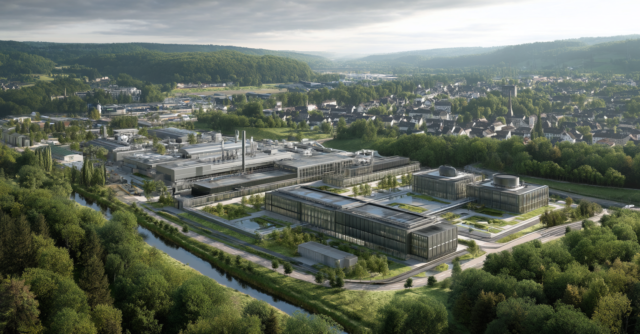
    The Innovaare park was opened on 25 April in the presence of Federal Councillor Guy Parmelin and State Governor Dieter Egli. According to a press release, the innovation park comprises 23,000 square metres of clean rooms, laboratories, precision workshops, offices and meeting rooms. “To date, we have attracted 21 companies, including a total of 15 spin-offs from the PSI, ETH or FHNW, two technology transfer centres and large international companies”, CEO Robert Rudolph is quoted as saying in the press release. “The overall occupancy rate is around 80 per cent and we are very confident that we will be able to increase this even further in the coming months.”

    The new innovation park is located in the immediate neighbourhood of the Paul Scherrer Institute (PSI). This is a strategic partner and the largest tenant in Park Innovaare. The Innovaare Park focuses on photonics, quantum technologies, life sciences, advanced manufacturing and semiconductor technologies as well as energy and sustainability.

    “New findings, methods and specialists from research are to be made accessible to the economy. This will further strengthen Switzerland’s high level of competitiveness”, Christian Rüegg, Director of the PSI, is quoted as saying in the press release.

    Park Innovare is Switzerland Innovation‘s sixth location. “Switzerland has been one of the most innovative countries in the world for years. In order for marketable products and services to emerge from our excellent education and research, our universities must be linked to the economy in the best possible way”, Andreas Rickenbacher, President of Switzerland Innovation, is quoted as saying. Park Innovaare is the best example of how cutting-edge research can be optimally linked with the economy.

  • Leading by example: circular building in the city of Zurich

    Leading by example: circular building in the city of Zurich

    The circular economy is an important lever for achieving the political net-zero targets. Like many other cities around the world, Zurich is also committed to the circular economy: in 2022, a strategy for the circular economy was adopted with “Circular Zurich”. in 2023, Zurich became the first Swiss city to sign the “Circular Cities Declaration”.

    The intelligent use of resources is particularly important in construction. With the “Charter for Circular Construction”, politicians and businesses set an example in 2023 and made a joint commitment to conserving primary resources and landfill space and reducing CO2 emissions from their own construction activities.

    Initial findings from two pilot projects
    But how do the political commitments affect specific construction projects? What challenges does circular construction pose? And how are the planning and construction processes changing? The City of Zurich’s Office for Buildings is gaining answers to these questions through two pilot projects.

    The city gained initial experience with the procurement, storage and processing of reused building components during the renovation of the Mööslistrasse 2023 kindergarten (Bischof Föhn Architekten, Zurich). Washbasins and toilets were dismantled, cleaned and refurbished on site. Plant troughs from the balconies were reused as outdoor space boundaries. Where possible, the built-in furniture was sourced from the city’s own stock. Thanks to component screening, steel beams, wooden pergolas, fire doors and kitchen elements from other buildings were identified, dismantled and reinstalled. So-called “component hunters” were deployed for everything that was not found in the city’s used parts warehouse.

    The second pilot project, the new “Juch-Areal” recycling centre, is much more comprehensive. The Office for Buildings launched an architectural competition with re-use requirements for the project in 2022. The competition participants were able to use a digital catalogue of components or use other available components from non-urban sources for their designs. The buildings also had to be designed in such a way that they could later be used as a component mine themselves (design for disassembly).

    The projects submitted show that it is possible: Yes, it is possible. The jury was particularly impressed by the high quality of the competition entries, which were created despite – or perhaps thanks to – the new specifications. The building material of the winning project by Graber Pulver Architekten AG (Zurich) dismantles the hall of the previous recycling centre and rebuilds it at the new location with only minor adjustments. Disposed books, magazines and clothes are used as insulation material. Sheets of recycled glass and aluminium, old kitchen covers, doors and table tops protect the façade from the weather. Discarded scaffolding is turned into storage shelves.

    It is in the nature of things that pilot projects precede a standardised introduction on a broad scale. This is also the case with circular construction. The realisation of the two projects in Zurich shows that many questions still need to be clarified: How can components be catalogued? How can availability be checked? Where will they be stored? Who assumes legal liability?

    The planning and construction processes will change as a result of cycle-orientated construction, because the component mines must be known as early as possible, preferably at the beginning of the planning phase. Building Information Modelling (BIM) facilitates the reuse of components, the planning of their dismantlability and the development of future component mines.

    Significant savings in indirect greenhouse gas emissions in the pilot projects
    The pilot projects show that this approach is worthwhile. According to a subsequent calculation, the consistent reuse of building components saved a good 30% of greenhouse gas emissions during the renovation of the Mööslistrasse kindergarten. Current calculations even predict a 40% saving in greenhouse gas emissions for the Juch-Areal recycling centre compared to a conventional new building.