Category: Projects

  • Modernisation and expansion of the south station

    Modernisation and expansion of the south station

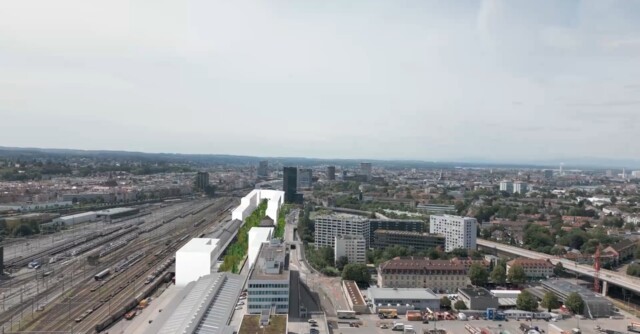
    In a densely built-up district such as District 2, the emergency services currently only reach the scene within the critical ten-minute mark in around 60% of cases. The planned expansion and redesign of the southern fire and ambulance station addresses this problem with a comprehensive approach aimed at shortening response times and increasing the efficiency of the services. At the same time, the project aims to enhance the urban development of the area, which is in line with the redesign of the urban space through the demolition of Weststrasse and the new construction of the “Hohe Haus West”.

    The winning project from the architectural competition, “FUCHS”, creates a seamless integration into the existing structure of the fire station. The extension blends in harmoniously with the existing building in terms of both height and alignment and harmoniously completes the perimeter of the block. Particularly noteworthy are the courtyard-side extensions with shed roofs and photovoltaics as well as a setback from the first floor, which give the new building a striking independence. These architectural features make it possible to master the balancing act between preserving the historical heritage and fulfilling state-of-the-art operational requirements.

    The “FUCHS” project not only impresses with its aesthetic and functional integration into the existing building fabric, but also sets new ecological standards. Thanks to the environmentally friendly energy supply, which is based 100 per cent on renewable energies, and the generously dimensioned photovoltaic system on the shed roofs, a contribution is being made to climate protection. In addition, the design optimises the operational processes of Schutz & Rettung Zürich and creates a coherent unit of high spatial quality.

    The project impressively illustrates how the challenges of modern emergency care can be mastered in a historical context through creative and innovative solutions. The careful balancing of the needs of the emergency services and the requirements of heritage conservation has resulted in a project that breaks new ground both functionally and aesthetically. The result is a sustainable infrastructure that meets the requirements of modern emergency services and at the same time makes a valuable contribution to the urban quality of the location.

  • Green cities as trailblazers for global climate impact

    Green cities as trailblazers for global climate impact

    The MCC study, published in the journal Nature Cities, highlights four key methods of CO2 removal in urban environments that could sequester one gigatonne of CO2 annually by the middle of the century. The methods analysed include adding biochar to cement, increasing the use of wood in construction, enriching urban soils with biochar and installing CO2 filters in commercial buildings. Together, these approaches could make a significant contribution to achieving net-zero urban emissions.

    Urban strategies for the climate and more
    Quirina Rodriguez Mendez, PhD student at the MCC and lead author of the study, emphasises that these techniques are of great benefit not only in terms of climate protection, but also for environmental quality and well-being in cities. For example, the use of special colour pigments and surface materials to improve the reflectivity of urban surfaces could significantly lower the temperature in cities and reduce the energy required for air conditioning systems.

    Local actions with a global impact
    The study emphasises the role of cities as “test laboratories” for climate protection, where local measures can be implemented quickly and potentially scaled up globally. Felix Creutzig, head of the MCC working group and co-author of the study, emphasises that local climate solutions, although often underestimated, can have an impressive impact and improve quality of life. The research findings offer important insights and recommendations for policymakers shaping urban infrastructure and policies.

  • New investor for sustainable construction start-ups

    New investor for sustainable construction start-ups

    Buildify.earth was founded with the vision of supporting sustainable innovation in the construction industry. The investment company is particularly involved in the early development phases of start-ups and offers not only capital but also access to an extensive network. This network has been established over the years as part of the development of Switzerland Innovation Park Central, NEST and other organisations and is a valuable asset for the supported companies.

    Strategic partnerships and long-term goals
    Eight years ago, planning began for the location of the Innovation Park in Central Switzerland, which opened its doors in Rotkreuz in 2019 and has officially been part of Switzerland Innovation since 2021. The park now has over 100 members, including well-known players in the Swiss construction industry and research institutions. This network provides direct access to decision-makers and a platform for start-ups to forge important collaborations in a traditionally risk-averse industry.

    Provision of funding and resources
    The funds provided by private investors, the Zuger Kantonalbank and the park itself, which amount to a single-digit million sum, will enable buildify.earth to make significant initial investments, which are to be announced soon. The investment pipeline is richly filled, including 40 startups that are already members of the park. Buildify.earth AG takes a flexible role as a co-investor that can act quickly and act as a catalyst for further investments.

    Long-term planning and open doors for further investors
    Reto Largo and Sem Mattli, the heads of buildify.earth, are not only looking for promising start-ups, but also for further investors to strengthen the capital of the company’s evergreen structure. This structure fits well with the long innovation cycles in the construction sector and allows a portion of the proceeds to be reinvested while seeking attractive returns for investors. This is just the beginning of a long-term strategy aimed at making substantial investments in promising start-ups and actively shaping the future of the sustainable construction industry.

  • Continuation of the Basel region’s energy package planned until 2025

    Continuation of the Basel region’s energy package planned until 2025

    In order to ensure the continuity of the Basel-Landschaft energy package, the cantonal government has proposed an increase in the expenditure authorisation and a supplementary credit for 2024 to the cantonal parliament. This procedure is intended to ensure that the programme to promote energy-efficient building renovations and the use of renewable energies in the building sector can continue seamlessly. A supplementary credit of CHF 2.28 million has been requested for 2024, and the total expenditure authorisation until the end of 2025 is to be increased to CHF 42.16 million.

    The energy package has proven to be particularly effective thanks to the high willingness of building owners to invest. Despite demand stabilising at a high level after a record year in 2022, the subsidy programme remains very effective in an intercantonal comparison. These results were presented in detail in the latest interim report from the cantonal government to the cantonal council.

    Due to the current financial bottlenecks, the cantonal government is planning a moderate reduction in contribution rates from 1 January 2025. This adjustment reflects the above-average rates compared to other Swiss cantons and will be cushioned by the recently introduced energy premium, which offers income- and asset-based support. At the same time, the new national impulse programme, which will be launched at the beginning of 2025, will offer further financial support for the conversion of heating systems and comprehensive renovation of building envelopes.

    For the next planning periods from 2026 to 2030, the Government Council is preparing a separate bill based on the findings of the 2022 energy planning report and other parliamentary mandates. This initiative is intended to further strengthen the focus and effectiveness of the funding programme and adapt it to the dynamic needs of the energy market.

    Finally, based on the Cantonal Energy Act, the interim report emphasises the importance of regularly reviewing and adapting the support measures in order to effectively support CO2 reduction and meet legislative requirements. The cantonal government remains committed to a sustainable and energy-efficient future for Basel-Landschaft.

  • “Fischermätteli” first site with Minergie certificate

    “Fischermätteli” first site with Minergie certificate

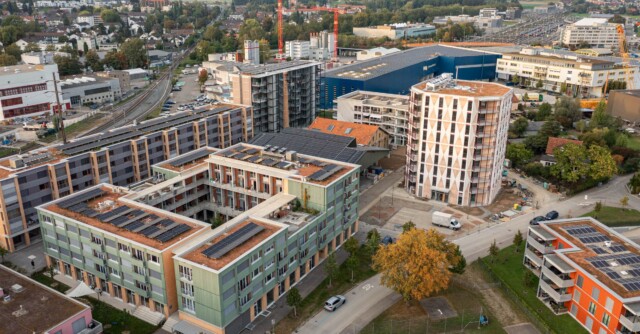
    The innovative and long-term residential construction project Fischermätteli was successfully completed by Strüby Unternehmungen in autumn 2023 after a staggered construction period of around three and a half years. The ten apartment blocks with a total of 168 condominiums were built on a former commercial site in Burgdorf BE. Over 6600 m3 of Swiss wood was used in the construction, which serves as a natural CO2 reservoir and has an excellent ecological footprint thanks to the short transport routes.

    One hundred per cent of the energy requirements for the entire site are covered by renewable sources. The electricity comes from the PV systems on the roofs of the buildings, while the heat for heating and hot water comes from a heating centre that runs on Swiss pellets. The well thought-out mobility concept is based on electric mobility, car sharing, bicycles and public transport. A co-working space supports working from home and thus indirectly relieves traffic congestion. In addition, the environmental design based on the sponge city principle ensures natural and efficient cooling in summer and turns the project into a true biodiversity hotspot thanks to the wide variety of native plants.

    Label with high requirements
    In April 2024, the largest real estate project to date was awarded the coveted certificate by the Minergie association: the Minergie-Areal label, having already been awarded the Minergie-A-ECO label. The new standard, which has been in place since September 2023, is supported by various organisations such as the Minergie Association, the cantons, the business community and the Swiss Federal Office of Energy. The Minergie site is characterised by minimal energy consumption, minimised greenhouse gas emissions during construction and operation and maximum self-sufficiency with renewable energies. The buildings have particularly efficient heat insulation and controlled air exchange. In addition, the outdoor space of the Minergie site is designed in such a way that climate resilience and quality of stay are increased, for example through green planting and shading options. Another advantage of the Minergie site is the promotion of climate-friendly mobility.

    The development in Burgdorf BE sets new standards in timber construction for flats. With 168 owner-occupied flats in ten apartment blocks, it is the largest construction project of its kind to combine Swiss timber and the Minergie-A-ECO standard. Sustainability aspects were at the centre of the project right from the start, which earned it the first Minergie-Areal certificate for a completed project.

    Thanks to the elegant timber façades, the ensemble blends in perfectly with its natural surroundings. The clearly defined meeting and play zones with village charm promote relationships between the residents. At the same time, the architecture ensures privacy and creates living spaces with ideal air, light and sound characteristics. Community-enhancing elements such as a spacious communal pavilion and the professional home office zone “fm produktiv” round off the offer.

    The flats offer 2.5 to 5.5 rooms and are designed for singles, couples and families of all ages. The floor plans are flexibly designed so that they can be adapted to future needs. From the ground floor upwards, the building was constructed using timber elements.

    The energy supply is consistently based on renewable sources. The electricity for the approximately 400 residents comes from the PV systems on the roofs of the apartment blocks (700 MWh/year). Heat is generated in a heating centre using Swiss wood pellets.

    The mobility concept focuses on cycling, public transport, electric vehicles and car sharing. Bicycle stands, charging stations, repair and cleaning areas are available. Residents can also use one of the two electric cars from the neighbourhood’s own car-sharing scheme via an app or conveniently use the bus, which runs every half hour from the neighbourhood to Burgdorf. Demand for the condominiums and rental flats was very high right from the start. All 168 flats were sold or rented months before completion. The fair sales and rental prices certainly contributed to the great success, e.g. a flat with 4.5 rooms was already available from CHF 610,000 (minus Minergie subsidies from the Canton of Berne).

  • Climate-neutral showcase neighbourhood

    Climate-neutral showcase neighbourhood

    The city of Zurich is setting new standards in terms of climate protection. With the decision to establish a “net-zero pilot neighbourhood” in the Binz/Alt-Wiedikon area, the City Council is underlining its commitment to sustainable urban development. This area, which includes industrial and residential zones, was specifically selected to test a wide range of climate protection measures under real-life conditions. The neighbourhood is to become a model for environmentally conscious coexistence, with the promotion of a sense of community playing a central role. The approach that climate protection is a shared responsibility is to be reinforced by involving all residents, regardless of their origin or professional background, in the project development.

    One focus of the project is on the direct participation of neighbourhood residents. They are encouraged to contribute their own suggestions for climate protection measures and actively participate in their implementation. In addition, 15 initiatives will be proposed at the start, which will be tackled immediately. These include measures to reduce waste and promote sustainable nutrition in catering establishments.

    The “net zero pilot district” not only serves as a testing ground for sustainable urban development, but also as a learning environment in which the failure of projects is also seen as a valuable experience. The successful approaches have the potential to be transferred to other neighbourhoods and thus contribute to achieving the city’s climate targets.

    The City Council is providing a credit of CHF 7.7 million for the realisation of this ambitious project, of which CHF 3 million is earmarked for projects from local initiatives and a further CHF 2.5 million for participatory projects. Although the proposal is widely supported, there are also critical voices calling for a more detailed concept for implementation. However, the City of Zurich’s parliament, the municipal council, voted in favour of the city council’s plans by a large majority. With this project, Zurich is emphasising its leading role in the area of climate-friendly urban development and sending out a signal about the importance of local climate protection initiatives.

  • Emergency power for automatic doors: New battery backup solution

    Emergency power for automatic doors: New battery backup solution

    According to a press release,Dormakaba is launching a fire-tested battery backup for uninterruptible power supply in door automation. The installation kit for rechargeable lithium iron phosphate batteries (LiFEPO4) has been specially developed for the ED 100/250 proprietary product. In the event of a power failure, the battery backup switches on and ensures continuous functionality of the automatic swing door system.

    Extensive scientific tests carried out by the Swedish state research institute Research Institutes of Sweden have ruled out any safety concerns, according to the statement, adding that the solution has demonstrated its added value in terms of safety and reliability “under very demanding test conditions”. This involved integrating an automatic door system on a fully equipped fire door and creating a worst-case scenario.

    “With the launch, we have developed a competitive product that offers customers significant added value in terms of security and sustainability,” Magin Guardiola, Chief Innovation Officer at dormakaba, is quoted as saying. Other advantages cited include lower installation costs and less need for expensive cable connections to external units.

    The locking technology company from Glattal intends to grow in Scandinavia with the building management solution. The product will be launched in Denmark, Finland, Norway and Sweden in April and May.

  • Dietikon’s facades to be greened for the Phänomena

    Dietikon’s facades to be greened for the Phänomena

    Several organisations, companies and the city of Dietikon are calling for participation in the Phänomena Open Innovation Challenge “Vertical greening of facades”, according to a press release. The Innovation Booster Applied Circular Sustainability(IB ACS) and the Cleantech Hub Dietikon Limmattal(CTHD) are inviting people to take part in the Open Innovation Challenge. In addition to the IB ACS, a broad-based consortium focusing on the realisation of circular solutions, and the CTHD, an innovation network of companies, educational and research institutes, companies such as Gabs AG, a member of the Pestalozzi Group, and construction company Josef Wiederkehr AG are involved in the implementation of the challenge, according to the press release.

    According to the press release, interdisciplinary teams are developing new ideas and concepts to ensure that more projects for the vertical greening of facades are realised. The teams will be supported by coaches and experts from the fields of circular economy, cleantech and digitalisation. The best proposals will be followed up and presented to the general public at Phänomena, which will take place in Dietikon in 2025/2026. A jury will award a grant of CHF 24,000 to the idea with the greatest potential so that a pilot project can be implemented.

    The challenge begins with two workshops. The first will take place on Monday, 3 June, from 10 a.m. to 5.30 p.m. in Dietikon town hall. The problem will be discussed, a common understanding of the problem will be developed, initial solutions will be worked out and teams will be formed. On Monday, 17 June, the teams will work on generating concrete ideas, developing solutions and designing possible projects,

    The application and registration period runs until Friday, 3 May 2024 and details are available in a flyer.

  • Circle at Zurich Airport has four new tenants

    Circle at Zurich Airport has four new tenants

    Four new tenants have joined the ground floor of the Circle business and service centre at Zurich Airport. From mid-2025, the newly founded Novu Campus AG will offer coworking space for up-and-coming national and international companies on an area of almost 4,000 square metres. According to a press release from Flughafen Zürich AG, it also includes state-of-the-art infrastructure for meeting and workshop formats.

    The airport itself recently moved into the Circle with its new ZRH Innovation Hub department, which was set up last autumn. It will also collaborate with universities and industry partners for the purpose of innovation for passengers and airport partners. It is headed by Coralie Klaus Boecker, who was previously Head of Marketing & Digital at the company.

    SAP has been based in the Circle since 2021. Europe’s largest provider of business software intends to establish Switzerland’s first SAP Experience Centre there. The company wants to bring its innovative strength to life for customers and partners.

    From summer 2025, Lucerne-based confectioner Bachmann will open a specialist shop with an integrated bakery and chocolaterie on the main Circle square. In the summer months, there will also be a gelateria and seating on the terrace.

    “We are very pleased about the four new tenants on the alley level, who are an excellent fit for the Circle,” Circle boss Stefan Feldmann is quoted as saying. A total of 50 companies with more than 5,000 employees are now based in the Circle. 90 per cent of the space has been let.

  • Redesign of the Schlössli Collab Lucerne

    Redesign of the Schlössli Collab Lucerne

    On 17 April, Axon Active Holding AG began the expansion and renovation of its headquarters in Schlössli Schönegg, high above Lucerne. Following the renovation, the Schlössli will operate under the name Schlössli Collab Luzern, according to an article in the “Luzerner Zeitung” on the ground-breaking ceremony. Axon co-founder and owner Stefan Muff is quoted as saying that the Axon Group wants to drive forward the digital transformation from here. To this end, Schlössli Collab Lucerne wants to offer innovators a home.

    At the ground-breaking ceremony, Lucerne’s Director of Construction and Economic Affairs Fabian Peter (FDP) praised the commitment of the internationally active group of software companies to Lucerne as a location. According to the report, Axon Active will invest around CHF 15 million in the expansion and conversion of its headquarters. The work should be completed by autumn 2026. The group’s approximately 40 employees in the Schlössli are currently housed in a building belonging to the energy supplier EWL on Sternmattstrasse in Lucerne.

  • Switzerland Innovation Park Biel introduces advanced CO₂ emissions management

    Switzerland Innovation Park Biel introduces advanced CO₂ emissions management

    At a time when reducing CO₂ emissions is a top priority, Switzerland Innovation Park Biel/Bienne (SIPBB) is launching a pioneering solution on the market. With the introduction of this technology, SIPBB is setting new standards in emissions management. This software uses real data instead of industrial averages to calculate the carbon footprint of products, enabling companies to reduce their emissions in a targeted manner.

    The implementation in the SIPBB offers industrial companies the opportunity to precisely quantify and verify the CO₂ values of each product. This is a crucial step in meeting the challenges of digital transformation and strict climate targets. Two specific use cases have been realised that show how the tool effectively links companies’ emissions with those from their supply chain to enable an accurate determination of their true carbon footprint.

    The SIPBB’s Swiss Smart Factory in Biel offers interested parties the opportunity to test the application and effectiveness of the Siemens solution under real-life conditions. Dr Dominic Gorecky, Director, explains: “Customers can directly experience how the technology not only generates verifiable CO₂ certificates, but also creates the basis for sustainable production processes.” A practical example of this is drone production, which demonstrates how the tool enables sustainable production from conception to the supply chain.

    In addition, interested industrial companies can book Marketplace services for various use cases and follow the certification process and data management. Stefan Schnider, Country Head of Siemens Digital Industries in Switzerland, emphasises: “The ‘Sustainability Journey’ is an integral part of our offering in the Swiss Smart Factory and is offered as a half-day workshop.”

    Connecting the operating technology in production and the IT systems to SiGREEN is essential to ensure an efficient flow of data and automated collection of CO₂ emissions at product level. The necessary expertise in data integration is provided by NTT Com and NTT DATA, who are long-standing partners in the field of IT/OT convergence.

    This SIPBB initiative, developed in close cooperation with Siemens Switzerland and other partners, marks an important step forward in the endeavour to reduce industrial emissions and helps Switzerland to make further progress towards its ambitious climate targets. A detailed presentation of the project is planned for the second half of 2024.

  • Growth 2050″ project of the Canton of Zurich

    Growth 2050″ project of the Canton of Zurich

    In view of the forecasts predicting growth of 450,000 people in the canton of Zurich by 2050, the canton’s high level of attractiveness and quality of location are obvious. The coming years will be characterised by the challenge of shaping and sensibly managing growth, which is why this is a focus of government policy for 2023-2027. The “Growth 2050” project is being coordinated by the Department of Construction and aims to identify the strategic challenges and develop a consolidated cantonal objective. All policy areas are affected, which is why interdisciplinary cooperation is planned at cross-directorate level as well as with municipalities, regions and other stakeholders. The project report and implementation agenda should be available by spring 2027 to ensure sustainable planning and implementation.

  • Opening of the Innovaare innovation park

    Opening of the Innovaare innovation park

    The Innovaare Park, the largest innovation hub of its kind, was officially opened on 25 April 2024. Federal Councillor Guy Parmelin and other prominent figures from politics, business and research, including Dieter Egli, Vice President of the Aargau cantonal government, and PSI Director Prof Dr Christian Rüegg, attended the ceremony. The park, which is already 80 per cent let, serves as a strategic hub and is the largest tenant of the neighbouring Paul Scherrer Institute.

    Dr Christian Brönnimann, CEO of Park Innovaare, emphasised the importance of this facility: “The official opening of Park Innovaare is the result of a collaborative effort by many stakeholders, including shareholders, the canton, the federal government, investors and PSI. This collaboration has created a pioneering meeting place for industry and cutting-edge research.”

    Thanks to its direct neighbourhood to the PSI and the use of its research infrastructure, the Innovaare Park offers ideal conditions for technology transfer from science to industry. It focuses on key technologies in the fields of photonics and quantum technologies, life sciences, advanced manufacturing technologies, energy and sustainability.

    Andreas Rickenbacher, President of Switzerland Innovation, explains the overarching vision: “Switzerland is recognised worldwide for its innovative strength. Park Innovaare plays a central role in optimally networking our academic institutions with the economy and thus translating research results into marketable products and services.”

    Park Innovaare has already met with a high level of acceptance: “We have attracted 21 companies so far, including 15 spin-offs from PSI, ETH or FHNW, two technology transfer centres and several large international companies”, says Robert Rudolph, CEO of Park Innovaare. With a current occupancy rate of around 80 per cent, the park is already showing its best side shortly after opening and is optimistic about the future.

  • New catering project in Baden’s city centre on 1000 square metres

    New catering project in Baden’s city centre on 1000 square metres

    The catering and hotel company SV Group is setting up a restaurant with 300 seats and a terrace covering 1000 square metres at Konnex Baden. According to a press release, SV, headquartered in Dübendorf, will also be responsible for catering for guests in the conferencing area. The SV Group employs around 4800 people in Switzerland and will offer a catering service for the conference and meeting areas as well as event catering.

    According to the landlord’s press release, this means that the so-called city-within-a-city concept of Konnex Baden is increasingly taking shape. SPGI Zurich AG is responsible for the marketing and letting of Konnex Baden. Around 35,000 square metres of commercial space will be available following the total refurbishment.

    The city-within-a-city concept includes a range of services and amenities, including restaurants, shops for everyday needs, fitness, childcare and co-working. The Konnex building is located in the city centre, just a five-minute walk from Baden railway station and 20 minutes from Zurich.

    SPGI Zurich AG, based in Zollikon, is a subsidiary of the Intercity Group, an independent property services provider with group companies in Zurich, Lucerne, Bern, Basel, St. Gallen, Olten SO and Zug. Since 1993, the company has been an alliance partner of Cushman & Wakefield, a leading global provider of property services with headquarters in Chicago and 53,000 employees in 60 countries.

  • Viennese and German cities use new construction software

    Viennese and German cities use new construction software

    Two companies belonging to Wien Holding are working on the smino platform, according to a press release. According to the Rapperswil-Jona-based developer of construction software, Wiener Infrastruktur Projekt GmbH and Wiener Standort Entwicklung GmbH have used the app for two residential construction projects and the construction of a social centre. The reason for this is increasing cost pressure and the high demand for living space.

    Several German cities also want to use the app to save resources, time and money in urban development. According to the press release, Essen and Darmstadt are among the users. Essen is using it for the construction of a new comprehensive school, while in Darmstadt the app is being used for several projects, including the construction of the North Fire Station.

    The digital tool represents a solution in view of rising costs and the growing demand for living space, according to the press release. With smino, cities and municipalities can “successfully meet the challenges of modern urban development” and thus also make a sustainable contribution to the well-being of their residents.

    According to the company, the smino app connects developers, authorities, planners and contractors to form an efficient unit. Thanks to its central availability, workflows can be optimised and projects can be realised in a time and cost-efficient manner. It also makes communication between project participants more transparent.

    The Managing Partner of smino, Sandor Balogh, quoted in the press release, is delighted with the internationalisation. “The collaboration with local authorities underlines our endeavours to increase the efficiency and transparency of construction projects and promote sustainable, liveable cities.”

  • Maaglive a green heart for Zurich West

    Maaglive a green heart for Zurich West

    In the heart of Maaglive, on the former Maag site, a multifaceted centre is expected to be created by the end of 2028. Consisting of the historic K building, a modern residential tower, a cultural pavilion and lively open green outdoor spaces, a new neighbourhood life will be created here.

    Maaglive focuses on neighbourhood revitalisation and new standards in urban development. The existing K building is and will remain a meeting point with catering and cultural facilities and co-working areas, while the cultural pavilion offers space for art and encounters. The residential tower complements the offer with living, working and catering space.

    The infrastructure on the neighbourhood square is tailored to the needs of residents, visitors and children and ensures a lively atmosphere. Events that attract residents and visitors alike will also take place here. The neighbourhood square is therefore a lively meeting place for the community. This green and traffic-free public area invites people to sit down, meet and play, surrounded by native trees. It connects the neighbourhood with the surrounding network of footpaths and cycle paths and serves as a natural extension of the urban living space, helping to reduce heat in the surrounding area.

    Maaglive combines sustainability with urban living. Thanks to flexible construction methods and the use of renewable energy sources, the new buildings fulfil the highest energy standards. The use of hybrid timber construction methods in the residential building emphasises the commitment to environmentally friendly design and positions Maaglive as a pioneer in sustainable urban development.

  • Strategische Entwicklung des Papierwerd-Areals

    Strategische Entwicklung des Papierwerd-Areals

    Das direkt an der Limmat gelegene Papierwerd-Areal ist ein architektonisches Erbe von Karl Egender und steht an einem Wendepunkt seiner Nutzungsdauer. Der Sanierungsbedarf des Areals und seiner Infrastrukturelemente erfordert eine strategische Neupositionierung. Diese beinhaltet eine Aufwertung des zentralen Raumes und eine Erweiterung der Freiflächen. Im Dialogverfahren «Forum Papierwerd» entwickelten Fachleute, Bewohnerinnen und Bewohner sowie Vertreterinnen und Vertreter der Stadtverwaltung Szenarien für die zukünftige Gestaltung des Papierwerds.
    Ziel der Umgestaltung ist es, das Papierwerd-Areal zu einem öffentlich zugänglichen Ort zu machen, der zum Verweilen und zur Interaktion einlädt. Dazu sind bauliche und nutzungsbezogene Anpassungen notwendig, um den Ort für die Allgemeinheit attraktiv zu gestalten. Die Wandelbarkeit und flexible Nutzbarkeit des Raumes ist dabei von zentraler Bedeutung.

    In einer Vertiefungsphase werden bis 2025 die bautechnischen Aspekte und die Schutzwürdigkeit des Bestandes weiter untersucht. Ebenso wird ein Nutzungskonzept erarbeitet, das im Rahmen eines Wettbewerbsverfahrens verschiedene Transformationsaspekte berücksichtigt. In einer anschliessenden Projektphase (bis 2026) sollen konkrete Vorschläge für das Areal erarbeitet werden.
    Der Dialogprozess, der eine breite Beteiligung ermöglichte und in elf Kernaussagen mündete, bildet die Grundlage für den künftigen Entwicklungsprozess. Bereits Ende Frühling 2024 sind erste Sofortmassnahmen zur Verbesserung der Aufenthaltsqualität des Stadtraums geplant.

  • Ein neues Kapitel des Jelmoli-Warenhauses beginnt

    Ein neues Kapitel des Jelmoli-Warenhauses beginnt

    Das bekannte Warenhaus Jelmoli steht vor einem umfassenden Wandel. Bis Ende 2024 wird der Betrieb weitergeführt. Der Umbau startet Anfang 2025 und wird 2027 voraussichtlich beendet sein. Das Gebäude wird in eine moderne, multifunktionale Immobilie verwandelt. Swiss Prime Site investiert über 100 Millionen CHF, um das Jelmoli-Haus zu einer lebendigen, urbanen Begegnungsstätte zu machen.
    Dabei reduziert sich die Verkaufsfläche auf das Erd- und Untergeschoss sowie allenfalls Teile des ersten Obergeschosses. Die Umgestaltung bringt Vielfalt in Form von Verkaufsflächen, Gastronomie, Büros und Freizeiteinrichtungen. Diese Transformation macht das Gebäude belebter für die Stadt, bewahrt die historische Bedeutung und setzt dabei auf Nachhaltigkeit.
    Durch die Umgestaltung des bisher brachliegenden Dachs zu einem öffentlich zugänglichen Raum mit Grünflächen, wird das Jelmoli-Haus zu einer urbanen Oase mitten in der Zürcher Innenstadt. Die neu geschaffene Vielfalt an Verkaufsflächen, Gastronomie, Büros und Freizeiteinrichtungen zieht nicht nur Kunden an, sondern macht das Gebäude auch zu einem beliebten Treffpunkt. Die Investition in die Umwandlung des Jelmoli-Hauses zeigt das Engagement von Swiss Prime Site für eine nachhaltige und lebendige Stadtentwicklung.

  • Successes, prospects and highlights of the 100th immoTable in Zurich

    Successes, prospects and highlights of the 100th immoTable in Zurich

    As part of the 100th immoTable at Ambassador House, one of the top events for the real estate industry, not only was progress celebrated, but topics such as sustainable urban development and the shortage of skilled workers were also addressed. Sabine Billeter briefly summarized the developments of the last five years. Arun Banovi then presented the new industry-specific job platform, which is an important resource for skilled workers. ImmoMedia is responsible for several media vehicles, such as the immoNewsletter, www.immo-invest.ch, immobilienJobs.ch, immoTermine.ch, the magazine immo!nvest a platform for locations and real estate.

    The focus of the event was the discussion on Zurich’s development strategies, which were presented by Fabian Streiff, Head of the Canton of Zurich’s Department of Economic Affairs. He emphasized Zurich’s strong position compared to other European cities and outlined innovative projects such as the research being carried out by universities, colleges and ETH on topics such as drone infrastructure, regulating the last mile and connecting with co-working and meeting zones for pedestrians and cyclists as well as the public transport network. The increasing shortage of skilled workers and demographic challenges were also the focus of the discussion.

    Martin Schneider, Deputy Director of the City of Zurich’s Office for Urban Development, highlighted the need to create living space for the city’s predicted growth. He referred to the importance of flexible housing concepts and the need to adapt land use to noise protection and climate targets. He also spoke about urban expansion and densification in the context of ISOS, which illustrates the complexity of urban development.

    Sustainable construction was also discussed, represented by Jura Cement-Fabriken AG, which has set itself the goal of building sustainably with concrete by 2030. Reducing CO2 emissions by changing material compositions was highlighted as an important factor in future construction practice. EWZ has also set itself the goal of 100% climate-neutral heating and cooling. The approach was illustrated to the participants using the Guggach and Greencity projects.

    Finally, Stefan Fahrländer, owner of Fahrländer Partner Raumentwicklung, emphasized the need for political measures to speed up the construction process and thus improve responsiveness to market needs. His comments underlined the need for faster and more efficient implementation of construction projects in Switzerland.

    The event was rounded off with a performance by rapper and beatboxer Knackeboul, who summarized the content of the event in a dynamic rap. In this way, the combination of specialist knowledge and cultural integration was illustrated in an entertaining way.

  • St.Jakob-Park stadium co-operative takes stock of its finances

    St.Jakob-Park stadium co-operative takes stock of its finances

    The St. Jakob Stadium Cooperative(GSS) has provided information on its financial situation at a general meeting. According to a press release, CHF 3 million must be raised annually for maintenance and urgent renovation costs. The current infrastructure of the stadium, which has been in operation since 2001 and is the headquarters of FC Basel, is no longer up to date. A necessary renovation should therefore reduce costs in the long term and contribute to the economical and sustainable operation of the stadium for the benefit of FC Basel, according to the press release. In order to acquire the necessary capital, equity and borrowed funds are to be raised. The GSS is currently examining how external funds can be raised through sponsorship, donations, crowdfunding and marketing the name. It is also appealing for support from the relevant cantonal authorities.

    “The Joggeli is a landmark of the region. It is an institution of public interest that needs to be maintained and cared for,” Mathieu Jaus, Managing Director of GSS, is quoted as saying in the press release. “A modern infrastructure is an important piece of the puzzle for sporting success, the enjoyment of the fans, but also for the appeal of the stadium. We believe in this and want to ensure this together with all our partners and the region.”

  • WSL takes social factors into account when choosing a location for renewables

    WSL takes social factors into account when choosing a location for renewables

    Researchers from the Swiss Federal Institute for Forest, Snow and Landscape Research(WSL), the Swiss Federal Institute of Technology in Zurich(ETH) and the Vienna University of Technology have developed an innovative approach to selecting sites for renewable energy plants. According to a WSL press release, they are moving away from traditional methods that primarily take technical and economic factors into account. The new approach was developed by lead author Boris Salak (WSL/Vienna University of Technology) and his colleagues Felix Kienast and Marcel Hunziker (WSL) as well as Adrienne Grêt-Regamey, Ulrike Wissen Hayek and Reto Spielhofer (ETH).

    The study shows that different planning priorities entail different spatial, environmental and social costs, lead author Boris Salak is quoted as saying. “We have found that there is no one ‘right’ planning priority, but that this is a process of weighing up priorities. We see that optimisation according to social aspects is a good compromise between the other two priorities.” This optimisation brings the highest acceptance and is spatially as effective as optimisation according to energy efficiency.

    In a representative survey throughout Switzerland, participants were shown two scenarios. The pictures showed wind turbines, photovoltaic systems on roofs or in open spaces and high-voltage power lines. Respondents were asked to decide which image was most appealing to them or whether none of the energy scenarios shown appealed to them.

    According to the WSL, the population clearly favours the agricultural Central Plateau over near-natural landscapes for the development of energy landscapes.

  • Ground-breaking ceremony for Bern’s first PlusEnergy neighbourhood

    Ground-breaking ceremony for Bern’s first PlusEnergy neighbourhood

    Today’s ground-breaking ceremony symbolically marked the start of the PlusEnergy Aarerain neighbourhood in Worblaufen. Following an extensive development phase, preparations for the construction site began in September 2023.

    The new development will offer 189 flats for up to 400 residents. In addition to the flats, a daycare centre and studio spaces are also planned on the ground floors, which will enliven the neighbourhood square. The project’s slope path will provide barrier-free access to the Aare area and the municipality of Ittigen’s new leisure and water sports centre. “Good things come to those who wait,” is a well-known saying,” says a delighted Marco Rupp, President of the municipality. “The Aarerain project completes the reorganisation of the Aare area in Worblaufen and fits in perfectly with our sustainable basic ideas of urban development.”

    PlusEnergy neighbourhood produces energy surplus
    Over the course of the year, the new housing estate will produce more energy than it consumes in accordance with the PlusEnergy neighbourhood energy standard based on weighted criteria. This will be achieved through the consistent use of photovoltaics on the roofs and façades of the six to eight-storey buildings. The PV panels on the façades will be realised in a green-blue colour and reflect the play of colours of the Aare and the surrounding area. Heat is generated by means of geothermal probes; the geothermal probes are regenerated in summer by cooling the flats via the underfloor heating.

    The “PlusEnergy neighbourhood” energy standard launched by the Swiss capital region promotes sustainable development in the building sector with a simple and clear definition, thereby contributing to the implementation of the Swiss government’s Energy Strategy 2050. The cantons and municipalities are working together with renowned infrastructure companies and investors. Cantonal Councillor Christoph Ammann adds: “PlusEnergy neighbourhoods enable sustainable development – without compromising on living comfort. I am delighted when such flagship projects shine beyond the capital region.”

    Close to nature and sustainable
    However, the development will not only score points in terms of its positive energy balance. The sustainable project is characterised by attractive flat layouts, a natural living environment with a view of the Aare and the greatest possible preservation of the green spaces on the banks of the Aare. Keeping the green spaces free is made possible by the compact construction of the site in the eastern part of the plot. Thanks to this skilful urban planning in the sense of economical use of the land, a good half of the plot remains undeveloped and natural. The car-free neighbourhood square between the buildings offers a high quality of stay and counteracts overheating in summer with its differentiated paving and greenery.

    The symbolic ground-breaking ceremony on 9 April 2024 marked the official start of the development of the Aarerain PlusEnergy district in Worblaufen, a project by Losinger Marazzi in collaboration with the CPV/CAP Coop pension fund and the municipality of Ittigen. The architecture was designed by Fischer Architekten AG. This ultra-modern residential development is scheduled for completion at the end of 2026 and will not only offer 189 flats, but also communal facilities such as a daycare centre and studios to enliven the neighbourhood.

  • Modernisation of the Herzogenmühle health centre

    Modernisation of the Herzogenmühle health centre

    After more than three decades of operation, the Herzogenmühle health centre is undergoing a fundamental modernisation. This measure takes into account the change in operational requirements and the changing needs of the residents. The project focuses on various structural optimisations that are to be implemented between July 2024 and July 2025. In particular, the aim is to create larger communal areas by merging various rooms. The aim is to improve mobility within the centre and increase the quality of stay for residents. Special niches for rollators and wheelchairs will make it easier to get around.

    A major part of the conversion involves converting unused bathing facilities in the basement into a modern health and fitness room, including a physiotherapy facility. In addition, a previously unused nursing bath will be reactivated and the podiatry department will be relocated to a new area within the hairdressing salon. The outdoor areas of the health centre will be enriched by numerous newly planted trees, which will improve the local climate and contribute to increasing biodiversity.

    In addition to these optimisations, necessary repairs are also planned. For example, the windows need to be refurbished due to leaks and the flat roof needs to be completely replaced. Photovoltaic systems are to be installed on the redesigned roof in order to increase the building’s energy efficiency. Furthermore, adjustments will be made to the exterior to increase accessibility and improve accident prevention. The energy and building technology will also be comprehensively modernised, including the installation of automated shading for the cafeteria, dining hall and multi-purpose hall to ensure better heat protection in summer. For these comprehensive measures, the city council approved new expenditure totalling CHF 1.664 million for the renovation and CHF 4.218 million for the partial refurbishment, including the usual reserves.

  • New start on the site of the “Müllerbräu-Areal”

    New start on the site of the “Müllerbräu-Areal”

    Today’s ground-breaking ceremony marks the start of the redevelopment of the “Müllerbräu-Areal” in the heart of Baden. By 2027, a modern district will be created there under the motto “brew – live – enjoy”. In addition to retail and office space, 136 flats will also be built. The traditional brewery H. Müller AG will continue to brew beer at this historic site, where Baden’s brewing activities began in 1897.

    When the building permit is granted in October 2023, the ground-breaking ceremony today will mark the visible start of the transformation of the 8,000 square metre site. The new district next to Baden railway station will enhance the entire neighbourhood and have a positive impact on urban development.

    The art of brewing remains an important part of Baden’s identity. The site design plan still envisages the popular Müllerbräu beer garden. From 2027, the classic Müllerbräu beers as well as specialities from the “Müller Bräu Handcrafted” line, which are already produced by master brewer Simon Neuhold, can be enjoyed there.

    The fourth generation of the family business is investing a considerable sum in the double-digit millions in the new building project. It is possible that part of the development will be handed over to a partner. The construction phase will take around three years, during which the neighbours will be kept regularly informed of progress. The rental flats are expected to be advertised for rent from summer/autumn 2026 and ready for occupancy from summer 2027.

  • Nüssli presents Kuwait’s Expo pavilion

    Nüssli presents Kuwait’s Expo pavilion

    The architecture and exhibition of the Kuwaiti pavilion at the upcoming Expo 2025 world exhibition has been presented to the public in Tokyo. International temporary contractor Nüssli from Hüttwilen has overall responsibility for the project. According to its press release, high-ranking guests from politics, business, the media and society were given an insight into the “ambitious project” during a festive ceremony.

    According to the statement, the architecture and exhibition will present Kuwait as a visionary beacon of culture and a beacon of tolerance. The country is known for its contributions to Arab culture, art and humanitarian work.

    This is Nüssli’s ninth participation in the Expo. The Thurgau-based company can look back on a total of 22 years of experience with country presentations and in particular with country pavilions. This country pavilion is the second that Nüssli has built for Kuwait since 2015.

    For this project, Nüssli is working with LAVA Architekten from Sirnach TG, who designed “the bold architecture”. Other partners include insglück Gesellschaft für Markeninszenierung from Berlin, schlaich bergermann partner from Stuttgart and Japanese construction experts.

    “We are proud to support our client’s ambitious project,” says Harald Dosch, Director Business Development at Nüssli, “and together with our project partners, we will make Kuwait’s appearance at Expo 2025 Osaka an outstanding success.”

  • ETH researches natural thermal insulators

    ETH researches natural thermal insulators

    Researchers at the Swiss Federal Institute of Technology in Zurich(ETH) have tested natural insulating materials in a project. According to an article, the group led by Guillaume Habert, Professor of Sustainable Construction, and Bruno Sudret, Professor of Risk, Safety and Quantification of Uncertainties, have found new approaches to this. They analysed six buildings in need of renovation that were built between 1911 and 1988. In addition to the core issue of replacing fossil-fuelled heating systems with sustainable ones such as heat pumps or solar-powered ones, the main focus of the investigations was on thermal insulation. Various traditional insulation materials such as EPS, glass wool, rock wool and cellulose fibres were compared with natural materials such as straw and hemp.

    “The CO2 emissions from the production of conventional insulation materials are sometimes very high, and their use in building renovations partially cancels out the positive effect achieved by reducing energy consumption,” Guillaume Habert is quoted as saying in the article. “Building materials made from renewable raw materials cause significantly fewer greenhouse gases. They also have the advantage that they bind CO2 from the atmosphere as they grow and this is then stored in the building in the long term.”

    Both heating conversions and appropriate thermal insulation with natural materials can reduce greenhouse gas emissions by 87 per cent, according to the study.

    The study was conducted in collaboration with the University of Applied Sciences Western Switzerland(HES-SO) in Yverdon-les-Bains VD and the Chalmers University of Technology in Gothenburg.

  • Dismantling for the Lymhof is complete

    Dismantling for the Lymhof is complete

    According to an article in the Lymhof newsletter, the demolition of the Vitis Sport Centre with tennis hall in the Rietpark district of Schlieren has been completed. The construction of the Lymhof can now begin after planning permission and preliminary work have been granted. The vertical farm planned by start-up Yasai in the hall building will not be realised. Yasai recently withdrew from the project because it is realigning itself as a company. The landowner Geistlich Immobilia is now planning to divide the hall into six sections. The rooms, which are up to 9 metres high, could provide space for creative uses such as an artists’ collective, a mixed studio community, cultural uses or neighbourhood offers.

    In February 2024, Schlieren City Council granted planning permission for the Lymhof. The appeal period has now also expired, meaning that the realisation of the new neighbourhood near Schlieren station can begin, according to the press release. The next step is to finalise all official and cantonal requirements. Construction approval for the excavation is expected in summer 2024. The actual construction of the buildings will begin around autumn 2024 and will take around three years.

    The Lymhof should then be ready for occupancy in 2027. In addition to a colourful mix of flats for a colourful mix of residents with different generations and lifestyles, ground floor uses along Wiesenstrasse and a restaurant with catering facilities and hotel rooms will also be built there. Although the 350 or so rental flats will not be ready for occupation until 2027, interested tenants can already register their interest online.

  • Bühler’s Grain Technology Centre nears completion

    Bühler’s Grain Technology Centre nears completion

    The Bühler Group ‘s new Grain Innovation Centre(GIC) at its headquarters in Uzwil is almost complete. The technology company based in the St.GallenBodenseeArea has announced that the building project has reached the final construction phase. Just over 18 months after the start of construction work, the installation of all machines and systems has begun. For Bühler AG, the modernisation represents a “milestone on the road to innovation in grain processing”, according to the statement.

    According to the press release, the new GIC will replace the previous facility after almost 75 years, as it no longer met the changing market dynamics in the grain processing industry and in the development of future food products. A five-storey multi-purpose centre will now be built on an area of 2000 square metres, which can be used for tests and research on new products. Important questions can be clarified here, “such as how local raw materials can be used, how productivity can be increased, how safety can be improved and how the requirements for healthier and new products can be met,” it says.

    The new Grain Technology Centre combines Bühler’s past and experience in milling with state-of-the-art technology. “By integrating the GIC into Bühler’s network of application and training centres, customers in Uzwil benefit from an ideal facility that enables them to turn challenges into opportunities,” says Christian Geser, Project Manager Grains & Food at Bühler. The structural concept also includes Bühler’s Milling Academy and the school for animal feed technology right next to the GIC.

  • Innovative school project on the former barracks site in Les Vernets

    Innovative school project on the former barracks site in Les Vernets

    Construction work has begun on the school complex, which will play a central role in the social fabric of the emerging residential neighbourhood. The “Emile” project by the renowned architecture firm Liechti Graf Zumsteg (Aargau) was selected as the winner of the 2019 architecture competition. The innovative design of the school building, which presents itself as an open and inviting space, will aim to create an atmosphere of sharing and community.

    The building will not only function as a school, but also as a public facility open to the entire community. It will provide spaces for various activities such as canteen, play and sports facilities, which will be accessible via galleries and passages on the transparently designed ground floor.

    The centrepiece of the school building will be on the first floor, where classrooms will be arranged around a spacious central room that will provide space for additional learning activities. The architecture of the building will be characterised by gabled roofs equipped with photovoltaic panels to meet the school’s energy needs and improve climate comfort.

    The importance of this project for the development of the neighbourhood is emphasised by Frédérique Perler, Head of the Department of Spatial Planning, Construction and Mobility, and Christina Kitsos, Vice-President of the Board of Directors, who stress the importance of social cohesion and community development.

    The outdoor areas of the school will be carefully designed to provide pleasant and functional spaces for students and the community. The schoolyard will be organised by existing trees and complemented by new planting, while wide avenues and green spaces will create a welcoming environment.

  • Graubünden Building Authority submits planning application for university of applied sciences

    Graubünden Building Authority submits planning application for university of applied sciences

    The Graubünden University of Applied Sciences is to receive a new university of applied sciences centre at the Pulvermühle site in Chur. The cantonal building construction office submitted the digital building application to the city of Chur on 12 March, exactly one year after the project was approved by the Grisons electorate. “By submitting the building application for the university of applied sciences centre, we have taken another important step,” said cantonal architect Andreas Kohne in a government statement.

    The building construction office expects a decision from the city in the course of the summer. Demolition work on the site will begin in spring. The official ground-breaking ceremony is scheduled for late autumn 2024. If everything goes as planned, the University of Applied Sciences Centre will start operations in 2028.

    The UAS centre will provide space for 2,000 students and 300 employees. Today, the University of Applied Sciences Graubünden teaches in nine buildings at five locations. A total of 178 million Swiss francs will be invested in the project.

    The new building will be constructed by the Partenaris general planning team under the direction of Zurich-based Giuliani Hönger Architekten, who won the project competition in 2021. Local timber will also be used for the construction. The timber has already been felled in a total of 34 Grisons municipalities and is now being processed in eight sawmills in the canton.