Category: Projects

  • Modular living for four generations

    Modular living for four generations

    Geneva society is facing a major challenge. The existing housing stock is not sufficient to meet the growing needs of an ageing population. The current housing stock is designed for a three-generation society and does not take sufficient account of the specific requirements of a four-generation society. This change means new housing requirements, such as flexible room layouts, barrier-free access and temporary spaces for guests or carers.

    A flexible housing prototype
    To meet these requirements, a consortium comprising public services, architects, property consultants, construction and energy engineers, building cooperatives and experts in social housing and socio-medical services is working on an innovative housing prototype. The prototype is designed to be flexible in use and to take account of the housing needs of all age groups. The adaptive elements of the model can be applied to different types of building and should highlight cross-sectoral synergies in the areas of health, housing and costs.

    Land resources and innovation laboratory
    Finding suitable land is a particular challenge in Geneva, where land resources are scarce. Identifying and using suitable land is therefore a central element of the project. In addition to developing the flexible housing prototype, a temporary laboratory hall will be created. This hall will serve as a platform for experimentation, discussion and the display of architectural models. It will be available to project participants and the general public, and will encourage discussion and consensus-building within the project.

    A look into the future
    The Geneva project shows how cities can adapt to demographic change and develop innovative housing solutions. The flexible housing prototype and accompanying innovation laboratory are pioneering approaches to adapting housing to the needs of an ageing society while making efficient use of limited land resources. This initiative represents an important step towards improving the quality of life for all generations and creating sustainable and viable housing models.

  • Geneva sets new standards in energy-efficient building renovation

    Geneva sets new standards in energy-efficient building renovation

    In March 2024, Geneva’s Grand Council approved investment credits of CHF 500 million, financed jointly by the canton and the federal building programme. This historic agreement confirms Geneva’s commitment to renovating its built heritage in order to accelerate the energy transition. It includes measures such as maintaining the thermal cost index and specific rates for owners of single-family homes.

    Higher grants for energy renovations
    Property owners can now benefit from additional financial support for the renovation of their buildings. Subsidies totalling CHF 500 million will be awarded mainly to private property owners, while 30% will go to local authorities and autonomous public bodies. The new grants, applicable from 1 June 2024, cover measures such as thermal insulation, improving the energy efficiency class and installing solar panels.

    New offers for energy optimisation and work planning
    Property owners now have the opportunity to obtain the same subsidies as for recognised energy standards by combining individual measures. In collaboration with the cantonal energy office, time-phased plans are drawn up for energy optimisation projects. Individual homeowners enjoy the benefits, including a bonus for the energy standard achieved and additional tax exemptions.

    A tailor-made approach for single-family home owners
    Single-family home owners have an extra three years to meet the renovation requirements, taking into account their individual circumstances. Factors such as the owner’s age and financial situation, the neighbourhood’s development potential and the building’s status as a cultural asset are all taken into account. In addition, CHF 50 million in bridging loans have been made available to facilitate access to finance for energy renovation projects.

    Grant application procedure
    Interested property owners can submit their applications online and, depending on the type and objectives of the project, corresponding grants may be awarded. It is important to submit applications before the work begins and to provide a complete dossier in accordance with the requirements of the cantonal energy department. This breakthrough in energy-efficient building renovation demonstrates Geneva’s commitment to promoting energy-efficient construction and moving the city forward on the road to sustainability and energy transition.

  • CERN opens a new “Science Gateway” visitor centre

    CERN opens a new “Science Gateway” visitor centre

    The CERN nuclear research institute in Geneva has inaugurated its new “Science Gateway” visitor centre. The building, designed by architect Renzo Piano and financed by donations, offers five areas for exhibition rooms, laboratories, a flexible conference room, a shop and a restaurant. With the Science Gateway, CERN can now welcome up to half a million visitors a year, compared with 125,000 previously. The visitor centre is open six days a week and admission is free.

    The main aim of the Science Gateway is to arouse curiosity and encourage critical thinking. Visitors are given the opportunity to see for themselves the sheer size of the particle accelerator, and to carry out their own experiments at different locations to study the properties of the magnets. At the i-
    nauguration, Swiss President Alain Berset emphasised the importance of science for a sustainable future.

    As Europe’s nuclear research centre, CERN is home to the world’s largest particle accelerator. The particle accelerator simulates the period shortly after the big bang and studies the fundamental laws of the universe. CERN has also developed practical applications, including solar panels, touch-screen technology and magnetic resonance imaging (MRI). In addition, the World Wide Web was invented at CERN.

    The Science Gateway was funded by donations, which raised a total of around 100 million Swiss francs. The largest single donation, amounting to 45 million Swiss francs, was made by the Stellantis Foundation. Construction of the Science Gateway campus took just over two years.

    The Science Gateway is aimed at visitors of all ages and functions as an emblematic science education and public awareness centre. The aim is to help society understand the importance of basic research and its applications, and to encourage young people to pursue careers in STEM fields. This impressive building is also entirely neutral in terms of CO² emissions and is powered by solar energy, while being surrounded by a newly-created forest.

  • Implenia and Frutiger win construction contract for Sisikon tunnel

    Implenia and Frutiger win construction contract for Sisikon tunnel

    The consortium (ARGE) of Implenia and Frutiger has been awarded the contract to build the Sisikon tunnel. According to a press release, the joint venture of the cantons of Schwyz and Uri has awarded the contract for lot 200 to the consortium led by Implenia. The contract is worth 430 million Swiss francs, resulting in a volume of 250 million Swiss francs for Implenia. The tunnelling is part of the New Axenstrasse transport infrastructure project.

    The core of the construction work is the single-tube, 4.4 kilometre long road tunnel with two-way traffic, which will be built by drill and blast. The consortium is also building underground structures such as access tunnels, diversion points, ventilation centres and exhaust shafts. This work will be followed by civil engineering works such as the construction of a large gallery to protect against natural hazards. The up to seven simultaneous tunnelling points and very tight space conditions are considered to be particular challenges. “We will be able to contribute our extensive expertise and experience in tunnelling and civil engineering,” says Christian Späth, Head Division Civil Engineering at Implenia. Due to its size and complexity, Lot 200 forms the centrepiece of the new road section on the eastern shore of Lake Uri and Lake Lucerne.

    According to the press release, construction work will start in mid-2025 and is scheduled to end in 2034.

  • New building at headquarters in Weggis officially opened

    New building at headquarters in Weggis officially opened

    Thermoplan inaugurated its new building at its headquarters in Weggis on 22 June after almost 960 days of construction, the globally active Lucerne-based manufacturer of fully automatic coffee machines announced in a press release. The red ribbon in front of the spacious entrance area of the modern production and office building was cut by Thermoplan CEO Adrian Steiner together with the founding couple Esther and Domenic Steiner. Over the course of the entire open day, almost 5,000 visitors gathered on the festive mile along Weiherstrasse.

    Thermoplan develops and produces fully automatic coffee machines for professional use in catering and other businesses. Among other things, Thermoplan equips the global Starbucks chain with fully automatic coffee machines. The globally active company is committed to Switzerland as a production location: the fully automatic coffee machines are all manufactured at the headquarters in Weggis, Thermoplan states in its self-promotion. Around 80 per cent of the components used also come from Swiss production.

  • Federal Council imposes limits on buildings outside building zones

    Federal Council imposes limits on buildings outside building zones

    The Federal Council is proposing that the number of new buildings outside of building zones be increased by a maximum of 1 per cent compared to 2023. At its meeting on 19 June, it submitted a corresponding draft for consultation, the Federal Council announced in a press release. The consultation draft is a proposal for the ordinance on the revised Spatial Planning Act. It was passed by both chambers on 29 September last year and aims to stabilise construction outside of building zones at a certain level.

    There are currently around 620,000 buildings outside of building zones in Switzerland. If the bill comes into force, this figure could increase by a maximum of 6,200 buildings. With an average of 500 new buildings outside the building zone each year, the maximum permitted number would be reached in just over ten years, writes the Federal Council.

    The Federal Council is also proposing changes to the handling of special zones. Here, the volume and area of new buildings outside of building zones will have to be compensated for by the demolition of existing structures. In agricultural zones, the priority of agriculture over other uses is reaffirmed.

  • P.A.W. Hub presents innovation centre for Lucerne North

    P.A.W. Hub presents innovation centre for Lucerne North

    P.A.W. Hub AG has unveiled a new project for a national and international business centre in Lucerne North. A centre that combines creative business solutions with educational facilities and residential and commercial buildings is to be built at the site, according to a press release. The project, which is supported by the Lucerne Economic Development Agency, is about to enter a new phase of realisation following the successful concretisation of the construction plans and the granting of planning permission. In the first phase, work will focus on the areas of education and health. Technology centres are also to be established. According to the press release, regional, national and international players are to be attracted to the project. P.A.W. Hub is looking for investors who want to participate in the success of the project for its further realisation.

    “Lucerne Economic Development strongly supports the P.A.W. Hub project, as it offers a significant opportunity for economic development in our region,” Andreas Zettel, Head of Business Development at Lucerne Economic Development, is quoted as saying in the press release. “We see great potential in the fact that the hub supports local companies, attracts skilled labour and increases the region’s attractiveness for further investment.”

    “We are convinced that the hub will boost the economy in Lucerne and position the region as an attractive location for investment and skilled labour,” adds Sacha Willemsen, initiator and co-founder of P.A.W. Hub AG.

  • Canton can build Graubünden University of Applied Sciences Centre

    Canton can build Graubünden University of Applied Sciences Centre

    Construction of the new Chur University of Applied Sciences Centre can begin in spring 2025. According to a recent press release, the cantonal building construction office received the building permit from the city of Chur at the beginning of June.

    The fact that the city was able to give the green light just three months after submitting the planning application was due to its quality, according to the responsible city councillor Sandra Maissen: “The canton’s largest construction project was well and comprehensively prepared. Thanks to the excellent cooperation between the canton and the city of Chur, the planning application was processed very quickly.”

    According to cantonal master builder Andreas Kohne, the realisation can now be tackled according to schedule. This schedule envisages the ground-breaking ceremony and thus the official start of construction in late autumn 2024. The actual start of construction should then be in spring. If everything goes according to plan, the new Graubünden University of Applied Sciences Centre should open in 2028. Initial demolition work on the Pulvermühle site in Chur and the rerouting of the Mühlbach stream began a few weeks ago.

  • Halter takes over residential project near Schaffhausen

    Halter takes over residential project near Schaffhausen

    Schlieren-based property developer Halter AG has acquired the Waldstadt residential development site in Pantli between Schaffhausen and Stetten SH, according to a press release. The seller is DOST Architektur GmbH in Schaffhausen. The two companies will jointly realise the planned construction of 200 owner-occupied flats.

    According to the plans, over 200 condominiums are to be built on 47,600 square metres of land. In a first step, 100 condominiums will be realised. This will be followed seamlessly by the other stages, according to the company press release. Over 40 different types of flat are available for different living requirements. The sizes range from 2.5-room to 5.5-room flats. The flats are orientated on several sides and offer rooms with plenty of natural light and a direct view of nature and the forest. The new living space is suitable for families, couples and commuters from the region.

    A new bus stop and direct access to the motorway in the direction of Schaffhausen, Winterthur and Zurich ensure optimal transport connections. An integrated kindergarten and a day care centre round off the offer and make Waldstadt im Pantli attractive for families too.

    The construction time for the first stage is estimated at around two and a half years. If everything goes according to plan, the first flats can be occupied in 2026, according to Halter AG.

  • Paradigm shift in energy planning

    Paradigm shift in energy planning

    Numerous countries have committed to being climate-neutral by 2050. For building and energy systems, this requires a rapid transition from fossil fuels to renewable energies and greater networking of different sectors. Buildings, mobility, industry, electricity, heat and synthetic fuels must interact and be planned in an integrated manner. Matthias Sulzer from Empa and Michael Wetter from the Lawrence Berkeley National Laboratory argue that the current planning processes do not do justice to this complexity and that a paradigm shift is therefore necessary.

    Current planning process – a silo mentality
    Today’s planning processes are organised by discipline, which leads to inefficient and suboptimal results. Engineers and architects work one after the other instead of collaborating across disciplines. This linear, “waterfall” approach leaves little room for iteration and optimisation in the overall system. Sulzer emphasises that this approach is no longer sufficient to meet the requirements of future, flexible energy systems.

    Inspiration from the chip industry
    Sulzer and Wetter propose a planning approach inspired by the chip industry. The electronics and computer scientist Alberto Sangiovanni-Vincentelli has revolutionised chip manufacturing with his “platform-based design”. This concept uses different levels of abstraction for the holistic analysis and optimisation of systems and creates universally valid, modularly combinable models. This model could also be applied to building and energy systems in order to automate and modularise planning.

    Advantages of a model-based planning process
    A model-based planning process would mean that models are used not only to analyse, but also to specify and build systems. These blueprints could be combined in a modular way to clearly define the design and functionality of a system. This would revolutionise planning, construction and operating processes and promote the necessary digitalisation and automation to achieve the ambitious decarbonisation targets.

    Pilot project at Empa
    The EU project GOES, led by Empa, is a first step towards the application of platform-based design in the energy sector. A pilot plant with 144 geothermal probes is being developed on the Empa campus in Dübendorf as the first application of this concept. The aim is to define the various abstraction levels of decision-making and to standardise the interfaces.

    The implementation of an automated and modular planning process is crucial for achieving climate neutrality by 2050, and Sulzer and Wetter are convinced that this paradigm shift will significantly increase the flexibility and efficiency of energy systems. The approach offers a promising solution to meet the challenges of decarbonisation and ensure security of supply.

  • Successful completion of the preliminary project for the Horw campus

    Successful completion of the preliminary project for the Horw campus

    The successful completion of the preliminary project for the expansion and renovation of the Horw campus brings the vision of a modern educational centre a significant step closer. The purpose of the preliminary project phase was to gain detailed insights into the development and cost structure of the construction project. Despite the expected additional costs due to external factors such as construction costs and sustainability-orientated measures, the original project costs of CHF 365 million have been largely confirmed.

    Cost development and influencing factors
    The analysis has shown that in addition to construction inflation, which accounts for around 18 per cent of the increase in costs, adjustments to VAT also have a significant impact. Further additional costs in the area of sustainability and project development as well as statutory sustainability certifications increase the financial framework. Total expenditure is now expected to amount to CHF 600 million, including reserves of around CHF 78 million. This sum is still in line with comparable projects of a similar scale in Switzerland.

    Relevance for education and the economy
    Government Councillor and Finance Director Reto Wyss emphasise the continuous monitoring and review of cost developments by the responsible real estate department. The project remains continuously within the planned budget and the additional financial requirements are clearly explained by the review results. Project-related decisions and the dissemination of information are kept transparent in order to ensure public confidence.

    The Canton of Lucerne has outsourced the realisation of this major construction project to a non-profit public limited company, “Immobilien Campus Luzern-Horw AG”. This enables efficient and targeted construction in compliance with the referendum and without affecting the special loans that have already been approved.

    Outlook and significance for the region
    Director of Education Armin Hartmann emphasises the supra-regional significance of the project: “The Horw campus will have a lasting impact on the educational landscape and the business location. Its impact will reach far beyond the borders of Lucerne into the whole of Central Switzerland.” The realisation of this visionary project is therefore expressly welcomed and supported.

    The successful completion of the preliminary project has paved the way for the next phase of the construction project. The project management team will promptly initiate the next steps, with the start of construction scheduled for 2026.

  • New building for health and biomedical research inaugurated

    New building for health and biomedical research inaugurated

    ETH Zurich has inaugurated its latest new building. The university’s health sciences and biomedical engineering departments have moved into the Gloria Cube, the ETH announced in a press release. Specifically, the new laboratory and research building houses 16 research groups from the fields of exercise science and sport, rehabilitation and biomedical engineering as well as application-orientated, translational research.

    The new building on Gloriarank connects the ETH campus with the neighbouring residential buildings in the Fluntern district via continuous paths and a green area. The eight-storey building is also close to the University of Zurich and the University Hospital Zurich, making it “a natural address for interdisciplinary collaboration and translational research”, writes ETH. The transfer of research results into medical applications will be supported by a technology platform for medical human research set up in the Gloria Cube.

    The press release cites the development of new micro-active substances and new training methods to improve athletic performance and health as examples of future research to be conducted at the Gloria Cube. Another project is investigating the connection between pupil size and stress or mental well-being in general. The Gloria Cube has six seminar rooms and a learning centre for training. At the Skills Lab @ETH, medical students can teach each other basic medical skills.

  • Opening date announced for new building of Baden Cantonal Hospital

    Opening date announced for new building of Baden Cantonal Hospital

    Baden Cantonal Hospital(KSB) has announced the opening date for its new building. According to a press release, the new KSB will officially open on Tuesday, 25 February 2025, with the main move taking place the following weekend. The new building took six and a half years to complete. With a usable area of 76,215 square metres, it will offer around 30 percent more space than the building in which the KSB has been housed since 1978.

    The move will be completed in five days. A total of 4571 cubic metres of medical technology and other goods will be moved, according to the KSB press release. This corresponds to the load of 76 lorries of 40 tonnes each. The project is divided into three phases, according to the press release. In the preliminary move, material will be moved so that the doctors and nurses in the new building can start work immediately. During the main move, the intensive care unit, the monitoring ward, neonatology and the emergency department will take priority. Hospital operations will continue as normal.

    The new building will actually be ready sooner. But the KSB management deliberately chose February as the date for the move. “Theoretically, the new building would be ready for occupation as early as next autumn,” KSB CEO Adrian Schmitter is quoted as saying. However, moving before the autumn holidays would have been tight. This is because the building still has to undergo numerous complex tests beforehand. In addition, all operating licences must be obtained.

    As the KSB is always very busy between October and January and many patients with infectious diseases are treated during the flu epidemics, it was decided to use the time window with fewer patients from the end of February for the move. Details on the new KSB building can be found in KSB magazine 02-2024.

  • Albula Tunnel celebrates opening

    Albula Tunnel celebrates opening

    The Rhaetian Railway(RhB) celebrated the official opening of the new Albula Tunnel on 8 June. The event was attended by over 300 invited guests from the railway industry, politics, business and tourism, the RhB reported in a press release. The guest of honour was Albert Rösti, Head of the Federal Department of the Environment, Transport, Energy and Communications. The opening ceremony was complemented by a public event on 9 June at the north and south portals in Preda and Spinas.

    The 5860 metre long new Albula Tunnel will replace the old connection between Preda and Spinas, which was opened in 1903. The old tunnel is now a UNESCO World Heritage Site and is to be converted into a safety tunnel in the future. Twelve cross-connections have been created between the two tunnels for this purpose.

    In 2010, RhB decided in favour of building a new tunnel instead of repairing the old one after a thorough examination. “The decisive arguments in favour were the relatively low cost difference, hardly any timetable-relevant restrictions during the construction phase and the significantly higher safety level of a new facility,” according to a RhB brochure on the tunnel project. High quality and sustainability are cited as further advantages in favour of the new construction. A total of CHF 407 million was invested in the tunnel, which took ten years to complete. The first scheduled train through the new tunnel is due to run on 12 June.

  • Andreas Bühler manages Zürioberland

    Andreas Bühler manages Zürioberland

    The Zürioberland location promotion organisation has a new president: At the 2nd General Assembly on 6 June, Andreas Bühler, Mayor of Hinwil, was elected to succeed Ruedi Rüfenacht, Zürioberland announced in a press release. Rüfenacht is relinquishing his office in accordance with the articles of association following his resignation as mayor of Wetzikon. The Zürioberland Board is convinced “that Andreas Bühler, as a successful bridge builder and thoroughbred Zürioberlander, is the ideal candidate for this office”, the press release states.

    The Zürioberland Forum took place after the Annual General Meeting. Here, Mikula Gehrig, the responsible site developer and Managing Director of The Valley in Kemptthal, presented the transformation of the former Maggi site into a research and service campus. According to the press release, Gehrig emphasised the importance of a long-term vision for a project of this kind.

    In an inspirational speech, neuroscientist and psychologist Lutz Jäcke called on the 150 or so participants at the forum to dare to change their perspective in order to gain new insights. Dominic Käslin, member of the advisory board of the Innovation Network Eastern Switzerland INOS and professor at the University of Applied Sciences Graubünden, led a workshop on the topic of negotiation. Here, negotiation styles were analysed, practical solutions discussed and strategies for successful negotiations tested.

  • New fountain enriches recreation area at Lancy-Bachet railway station

    New fountain enriches recreation area at Lancy-Bachet railway station

    The Dietiker construction company Walo Bertschinger has upgraded the recreational zone at one of the two railway stations in the canton of Geneva with a special fountain. According to a Facebook post, green spaces as well as meeting and leisure facilities were created at Lancy-Bachet station as part of the SBB ‘s CEVA infrastructure project.

    To create an atmosphere of relaxation, Walo has installed a unique fountain between the station and the neighbouring green spaces. The material combination of chrome steel, flowing water and the calm BituTerrazzo has a harmonious effect and offers a perfect oasis of relaxation for a lunch break or a sunny afternoon, according to the information from Walo. BituTerrazzo is an innovative surface covering whose appearance can be customised. It is a polished mastic asphalt screed, according to the manufacturer’s product page.

    The municipality of Lancy, with a population of around 35,000, has two railway stations: Lancy-Bachet and Lancy-Pont-Rouge. They are located on the railway line from Geneva to Annemasse in France, which is also known as CEVA (Cornavin-Eaux-Vives-Annemasse). It was put into operation in December 2019. The cross-border railway network between Switzerland and France is also known as the Léman Express.

  • Winning project for the first new building on the Werkstadt site in Zurich

    Winning project for the first new building on the Werkstadt site in Zurich

    Used rails as supporting structure
    The winning project “GLEIS X”, which was developed by Leuthard AG Baumanagement and Gigon/Guyer Architekten AG, impresses with its consistent reuse strategy. The concept uses 12 kilometres of used rails from the SBB ReSale as supports and ceiling beams for the main floors. The building envelope also consists of reused windows and corrugated fibre cement panels. This innovative use of used components was particularly recognised by the jury, as it picks up on the history of the site and continues it architecturally. For SBB, which attaches great importance to the preservation and further development of its architectural and railway heritage, this approach was decisive.

    Six commercial floors and one city floor
    The planned new building comprises seven floors, six of which are to be used as commercial space. These areas are intended for small to medium-sized businesses and offer a mix of traditional and innovative commercial space. The first floor, the so-called “city floor”, will house services or cultural offerings and thus promote interaction with the neighbourhood. The ground floor will initially be used for car parking and goods handling, but will also be converted into a commercial floor at a later stage.

    Public project exhibition
    Interested parties can view the competition entries on the mezzanine floor of Building U, Hohlstrasse 400, 8084 Zurich. The exhibition is open until 19 June 2024 from Monday to Friday from 5pm to 7pm and at weekends from 12pm to 4pm.

    Werkstadt Zürich – a place for urban production
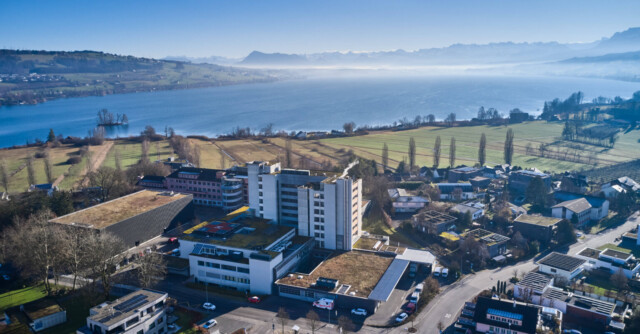
    An innovative centre for urban production and commerce is being built on the approximately 43,000 square metre “Werkstadt Zürich” site. SBB is refurbishing the existing buildings and creating jobs close to the neighbourhood for trades, services and highly specialised professionals. The transformation of the site is being carried out in close cooperation with the City of Zurich and the cantonal monument preservation authorities. Around 35 companies currently provide jobs on the site and contribute to the lively development of the neighbourhood.

  • Swiss Climate Foundation supports ten projects

    Swiss Climate Foundation supports ten projects

    In its first funding round in 2024, the Swiss Climate Foundation has selected ten innovative climate-relevant projects for funding from a large number of submissions. They will be supported with a total of over 1.3 million Swiss francs, the foundation announced in a press release. “We are registering an increased number of high-quality enquiries with real potential for climate protection,” said Managing Director Vincent Eckert.

    In the press release, the Climate Foundation provides a brief profile of five of the projects. For example, the Grabowski project from Borobotics GmbH in Winterthur is being supported. It has developed a drilling robot for geothermal drilling in confined spaces.

    VentoStream AG from Liestal is being supported in the development of its mini wind turbine. “Our technology is three times more effective and economical than conventional wind turbines,” says VentoStream CEO Manuel Bernsau. The innovative design also prevents shadow, bird and ice impact.

    HILLBOT GmbH from Risch ZG has developed a lightweight mower. The project initiator Amadeo Knüsel is quoted in the press release as saying that “an average farm could save 4 tonnes of CO2 per year”.

    SolidWatts from Pully VD is being supported in the development of microwave generators that produce microwaves on an industrial scale. They can efficiently produce heat in materials used in industrial processes.

    Terrabloc SA develops innovative clay blocks for ceiling production. The Geneva-based company has already received support from the Climate Foundation in 2019 and 2020.

  • Insolight launches first agrivoltaic plant in France

    Insolight launches first agrivoltaic plant in France

    Insolight, a Lausanne-based company specialising in agrivoltaic solutions, has put its first agrivoltaic system into operation in France. According to a press release, the photovoltaic greenhouse for strawberry production is located on the agricultural estate La ferme Etchélécu in Sames in the French department of Pyrénées-Atlantiques.

    The facility with 15,000 strawberry plants covers 3,000 square metres with semi-transparent photovoltaic panels and dynamic shading screens. This regulates the light transmission: if the light is channelled past the solar cells, it benefits the growth of the plants. When the light rays are optically focussed on the solar cells, on the other hand, electricity is generated.

    With an installed capacity of 190 kilowatts, around 260 megawatt hours of clean energy can be generated, which is enough to supply around 50 households, according to the press release. “By combining solar technology and agriculture, we enable producers to contribute to the energy transition and sustainable agriculture while meeting their energy needs,” Mathieu Ackermann, Technical Director of Insolight, is quoted as saying.

    According to the owners of the farm, Jacques and Nathalie Etchélécu, the Insolight solution makes it possible to have shading screens that allow two additional months per year for strawberry production.

    In addition to the construction of renewable energy production facilities and a catalogue of crop protection options, Insolight offers complete solutions, from project development and administrative support to water recovery systems, ad hoc business models and fruit recovery, according to the company press release.

  • Company wins second contract for Rogfast tunnel project

    Company wins second contract for Rogfast tunnel project

    Construction company Implenia has won a second sub-project in the Rogfast tunnel project with its Norwegian partner Stangeland Mask in. E02 Kvitsøy is even more complex than the E03 Boknafjord Tunnel, which Implenia is already building together with Stangeland Maskin as a joint venture, and is worth CHF 420 million to Implenia. The order value for the entire project is CHF 540 million

    “We are proud to have been selected for this important project together with our joint venture partner Stangeland Maskin,” said Erwin Scherer, Head of Tunnelling at Implenia, in a press release. “E02 Kvitsøy is another complex tunnel project and therefore fits perfectly with our strategy, and we will contribute our extensive expertise in tunnelling, concrete and water and frost protection.” The contract with the Norwegian Public Roads Administration is scheduled to be signed on 7 June.

    E02 Kvitsøy is an 8.8 kilometre long two-way tunnel with a cross-section of 10.5 metres. It is to be built south and north of Kvitsøy in Fylke Rogaland in southern Norway at a depth of around 230 metres below the sea surface. The tunnel includes two ventilation shafts, a junction with ramps and a roundabout as well as 1.6 kilometres of road in the daytime area, two bridges and a large sea embankment. An industrial estate is to be built on this. Work is scheduled to start in late summer 2024 and be completed in 2030, with Implenia holding a 77 per cent stake and Stangeland Maskin 23 per cent in the joint venture. Implenia is responsible for tunnelling and lining the tunnel in the upcoming construction project, while Stangeland Maskin is responsible for material transport, including backfilling, earthworks and road construction in the tunnel and surface areas.

  • Opening of a new vocational training centre

    Opening of a new vocational training centre

    Polybau ‘s new training centre in Grenchen will be the third vocational training centre after the two main sites in Uzwil and Les Paccots. Polybau was founded in 1949 as a technical college of the Swiss Association of Master Roofers. Today, it is regarded as the leading training centre for building envelope specialists in Switzerland. The expansion is intended to strengthen Solothurn’s educational landscape and cooperation with local businesses and industry.

    “With its central location and good connections to the public transport network, Grenchen is easily accessible for students from the entire region,” said André Schreyer, Managing Director of the Polybau training centre, in a press release. “The new vocational school location also offers the necessary infrastructure to meet the high demands of modern and future-oriented vocational training.”

    Every year, around 750 Swiss Federal Certificate of Competence (EFZ) and Swiss Federal Vocational Certificate (EBA) apprentices are trained in the fields of roof, wall, sealing, sun protection and blind technology as well as scaffolding. From August, some of the new solar professions and existing German-speaking roofing classes, which are currently based in Les Paccots, will be taught at the new site in Grenchen. Polybau’s strategy is to train young people in Switzerland and promote their professional development. The school management responsible for the school concept will remain at the Uzwil site. According to the press release, the centralised administration guarantees efficiency and quality in training.

  • Application deadline extended until the end of June

    Application deadline extended until the end of June

    Mara Schlumpf, Managing Director of Real Estate Award AG: “There have been many innovations at the Real Estate Award this year – a new category, the French version of the homepage – so we want to give potential applicants a little more time to submit their projects.” To apply, simply fill out the form on the homepage and attach a PDF with a maximum of 4 pages. “We are happy to accept applications in all national languages and also in English,” says Mara Schlumpf

    Companies from all over Switzerland have until 30 June to submit their projects for this year’s Real Estate Award. The award ceremony will take place on 24 October at the Trafo in Baden.

  • New standards in property management

    New standards in property management

    With the new target operating model, Wincasa is taking a significant step towards optimising its services. The organisational and spatial separation of the management of residential and commercial properties enables specialised and professional support for both areas. Philipp Schoch, emphasises that the TOM project is geared towards the current requirements of property management. This reorganisation benefits tenants and owners as well as employees.

    Personal contact points for residential tenants
    In the residential sector, the company is planning to open a total of 18 walk-in locations that will enable residential tenants and other stakeholders to clarify their concerns in person and without prior appointment. These physical points of contact complement the existing digital channels, such as the tenant app and telephone customer service. Following the successful pilot project in Basel, all 18 locations will be gradually put into operation by the end of 2025.

    Expert support for commercial tenants
    Eight specialised locations will be set up for the management of commercial properties. Commercial tenants benefit from highly professional support from proven specialists who cover all phases of the management process. As commercial properties have more complex requirements and require long-term tenancy agreements and vacancy management, the job profiles have been adapted accordingly and employees have received comprehensive training.

    Career opportunities for employees
    The innovative management model offers Wincasa employees exciting career opportunities and new roles such as technical managers, letting specialists and site managers. The teams are given more responsibility, which strengthens loyalty to the company and employee satisfaction. In this way, the TOM also helps to position Wincasa as a modern and attractive employer and counteract the shortage of skilled labour.

    Measurable success for owners
    Performance is measured in real time at all locations and displayed on dashboards to make key figures such as vacancy rates transparent. This enables the teams to react quickly and efficiently to changes and continuously optimise management. The new model should also deliver measurable success for the property owners.

  • Federal Council amends four key ordinances in the renovation and recycling process

    Federal Council amends four key ordinances in the renovation and recycling process

    There are around 38,000 sites in Switzerland containing environmentally hazardous substances, of which around 4,000 need to be remediated. The new Contaminated Sites Ordinance, which comes into force on 1 June 2024, allows treated excavated material to be reinstalled at the remediation site. This is ecologically more favourable than the previous practice, which required large-scale material transport and treatment. The reinstallation must ensure that no further remediation is necessary and the site is monitored in the long term.

    Chemical Risk Reduction Ordinance: adjustments for refrigerants and batteries
    A revised Chemical Risk Reduction Ordinance, which is based on EU standards and the latest technical developments, will come into force on 1 January 2025. This will restrict particularly climate-damaging refrigerants in new systems and appliances in order to achieve the goals of the Montreal Protocol and protect the ozone layer. From 1 July 2024, the ordinance will also regulate the return and disposal of significantly damaged batteries and the reimbursement of the advance disposal fee for exports. These amendments offer companies more legal certainty and contribute to sustainable disposal.

    Extension of the transitional provisions in the programme agreements
    Since 2008, the Confederation and cantons have jointly defined environmental targets and corresponding subsidies in programme agreements. For the period 2025-2028, the transitional provisions of the Water Protection and Forestry Ordinance will be extended by four years in order to continue and finalise projects that have already been started. These changes will come into force on 1 January 2025 and ensure the continuity of important environmental measures.

    The amendments adopted by the Federal Council strengthen environmental protection and optimise the regulatory framework. These measures emphasise Switzerland’s commitment to sustainable development and efficient resource management, while providing greater clarity and certainty for the industries concerned.

  • Future-oriented heat supply in Zurich’s inner-city neighbourhoods

    Future-oriented heat supply in Zurich’s inner-city neighbourhoods

    In a strategic initiative to decarbonise the energy supply, the city of Zurich is identifying key districts in which the conventional heat supply is to be replaced by sustainable alternatives. Despite the challenge that locally available, renewable energy sources such as heat pumps are not sufficient to meet demand, a comprehensive study has identified possible solutions.

    Concept for densely built-up urban areas
    The Hard, Wiedikon and Sihlfeld-Werd neighbourhoods in particular are the focus of energy planning. These areas, which cover around seven per cent of the city’s settlement area, require an innovative approach due to their dense perimeter block development. The supply concept developed envisages the construction of thermal networks, which will account for around a quarter of the city’s new installations by 2040.

    New combined heat and power plants required
    To cover the calculated heat demand of 282 GWh/year, high-performance heating plants are required, comparable to the capacity of the existing Hagenholz waste incineration plant. Additional boilers are used to cover the peak load, which is particularly necessary on extremely cold days.

    Modular expansion and innovative heat sources
    The concept includes the use of diversified energy sources such as wastewater heat, river water, wood biomass and waste heat from computer centres, which is generated outside the supply area and fed into the neighbourhoods via a new main network. Implementation will be carried out in modular steps, with independent distribution centres being built in a timely manner to ensure that end consumers are connected quickly.

    The planning and implementation of this forward-looking project is now required in order to connect the first properties to the grid early in the 2030s. The replacement of the current 1,500 fossil-fuelled heating systems in these areas will make a decisive contribution to achieving Zurich’s climate targets.

  • Authorisation granted for sustainable office building complex

    Authorisation granted for sustainable office building complex

    Green Spin receives authorisation to build a sustainable office building complex. According to a press release, companies specialising in sustainability will move in here in three years’ time. The future units will have modular rental areas of between 35 and 1,400 square metres with a total area of 31,000 square metres. In addition to commercial, office and production premises, catering businesses and individual retail outlets will also move into the future quarter. Green Spin was initiated and developed by Felix Partner Architektur Design from Zurich.

    The architecture firm promises functional architecture with a photovoltaic façade and wind turbines for green electricity as well as a heating system that works with geothermal energy. The location is close to the city centre and has good connections to public transport and the city’s cycle network. A ramp up to six metres wide, which rises gently around the inner courtyard and is accessible by bike, is a particular highlight. This provides access to the rental space on all levels so that you can cycle directly to the office or shop.

    The building is certified in accordance with the international sustainability standard for buildings, BREEAM, and fulfils the ESG standards for sustainability reporting as well as the standards for Scope 1 and Scope 2 emissions of the Greenhouse Gas Protocol.

  • University of Bern makes Postgasse even greener

    University of Bern makes Postgasse even greener

    The University of Bern launched the project “The greenest alley in the world” in 2023 with a greening campaign in Postgasse. A second planting day took place on 25 May. “Our aim was and is to increase biodiversity, improve the urban climate locally and enhance the quality of life of residents with the minimum possible structural measures,” said Matthias Erb, initiator of the project and professor at the Institute of Plant Sciences at the University of Bern, in a press release.

    The project is supported by the City of Bern and partners from Bern’s business community, which means that the residents of Postgasse can design their neighbourhood largely free of charge. in 2023, eight trees, 23 small shrubs and over 300 seedlings were planted. This year, plants, soil and pots were delivered to Postgasse to continue the greening process. All residents were invited to take part in the gardening work. Boum, a spin-off company from the University of Bern, provided plant pots with an irrigation function.

    After planting in 2023, the Institute of Geography at the University of Bern carried out measurements that showed a localised drop in surface temperature. In order to have a noticeable impact on the air temperature, the greening would have to be significantly advanced, according to the press release. “I am confident that with further greening we can counteract the loss of biodiversity and, at least locally, the effects of extreme heat,” Adrian Métry, head of the project, is quoted as saying. A survey showed that 78 per cent of residents perceive the alley to be significantly greener after the first greening campaign, which improves the quality of life. According to the survey, a third of respondents had noticed a positive climate effect. 53 per cent said the project had prompted them to think about issues such as climate change and community. 94 per cent agreed to further greening with communal gardening.

  • Opening of the liug.innovation centre in Chur

    Opening of the liug.innovation centre in Chur

    The liug.innovation centre in Chur has been handed over for use. The centre is planned, owned and operated by Liechtenstein-based ITW Ingenieurunternehmung AG. According to the company, Mayor Urs Marti and Victor Zindel, Head of Regional Management/Economy Contact Centre of the City of Chur, took part in the opening ceremony.

    ITW describes the semi-circular building with integrated piazza by Chur architects Bearth & Deplazes as Chur’s new landmark. It is modelled on a Roman amphitheatre. Its Rhaeto-Romanic name Liug means place or square: “A place for innovation, a place for encounters,” said liug project manager and member of the management team, Oliver Bossi, in a press release.

    According to its own advertising, the liug.innovation centre offers 11,200 square metres of space for work, research, workshops, education, congresses, laboratory activities, fitness, events, catering and services. Equipment and layouts can be changed and utilised on a modular basis. A total of up to 300 workstations could be created there.

    In a video, Bossi explains that the difference between the liug.innovation centre and conventional buildings is “certainly the mix of renowned and young companies that will have space here”. In addition, the liug.innovation centre will be partially open to the public. According to him, the project represents another milestone for ITW in the canton of Graubünden.

  • Empa tests hydrogen use for peak loads

    Empa tests hydrogen use for peak loads

    On behalf of the Swiss Federal Office of Energy(SFOE), the Swiss Federal Laboratories for Materials Science and Technology(Empa) are investigating the use of hydrogen and fuel cells to reduce the load on the electricity grid on the coldest days. According to a press release, the joint project H2 districts was initiated for this purpose, in which the Hälg Group, the Osterwalder Group and H2 Energy AG are involved in addition to Empa. For the pilot project, a simulation model for operation under peak loads is being set up on the Empa site in Dübendorf.

    The Osterwalder Group is contributing its expertise and supplying renewable hydrogen. H2 Energy AG is contributing its many years of experience in the field of fuel cells. The Hälg Group is responsible for building technology.

    “We will set up a real system on the Empa campus in Dübendorf as part of the two research platforms ‘NEST’ and ‘move’ and validate the parameters for grid-friendly operation and the potential CO2 savings,” Philipp Heer, Head of the Energy Hub and Deputy Head of Empa’s Urban Energy Systems research department, is quoted as saying in the press release. The project is funded by the SFOE and is expected to run until September 2025.

  • Building licence granted: Ground-breaking ceremony draws closer

    Building licence granted: Ground-breaking ceremony draws closer

    Under the title “Full speed ahead thanks to building permit”, the latest issue of the “Impulse” magazine published by the Aargau Chamber of Industry and Commerce(AIHK) reports on the progress of planning for the new Haus der Wirtschaft in Aarau. On 25 March, the city of Aarau issued the building permit, according to the magazine. The path to the new Haus der Wirtschaft is therefore clear and the ground-breaking ceremony is approaching. The new Haus der Wirtschaft is expected to be completed in spring 2026.

    As the building permit has been granted earlier than expected, the parties involved have been able to press ahead with the planning work and bring forward the implementation planning, the report continues. Tenders are currently being invited for the various works. The award negotiations for the most important contracts are due to take place at the beginning of July.

    According to the plans, the demolition of the existing building will then begin in mid-August. This will be followed by excavation and drilling for the planned seven geothermal probes. The shell construction work will start at the beginning of October 2024. The new Haus der Wirtschaft should be ready for occupation in spring 2026.

    During the construction work, the employees of the AIHK and the AIHK compensation fund will move to other premises in July. It is still unclear where. Talks about possible rental properties in Aarau are ongoing, according to the AIHK.

    According to an earlier report in “Impulse”, the new Haus der Wirtschaft will enable more professional courses and events to be organised. The new building also stands for the ongoing digitalisation and modernisation that has been taking place at the association for several years.