Category: Projects

  • From the depot to a climate-resilient urban district

    From the depot to a climate-resilient urban district

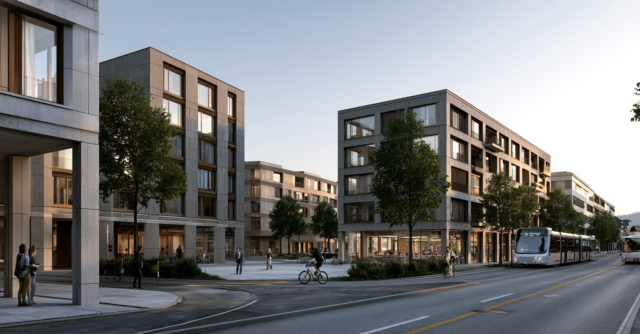
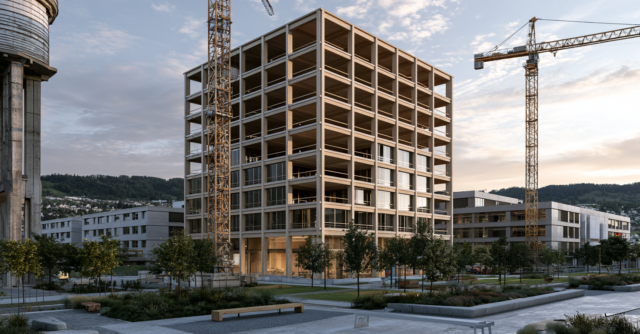
    The starting point for the development is the withdrawal of the CKW depot in the context of the large-scale transformation around Seetalplatz. Based on a two-stage study commissioned by CKW and the city of Lucerne, the “Habitat – Quartier im Hain” project was selected in 2022. The careful handling of existing buildings was decisive. In particular, the Shedhalle and the consistent integration of open spaces and rainwater management.

    The ideas of the winning project were then applied to the entire perimeter of the development plan and enshrined in planning law. The result is a coordinated overall figure that combines private properties and the former factory yard area into an urban development whole.

    Urban development, mixed use and sponge city
    For reasons of noise and urban space, the north-eastern part of the area is characterized by larger, mixed-use buildings in closed construction. Living, working, services and first floor uses are concentrated here along streets and squares. The western part focuses on open residential buildings, connected green spaces and paths that link the adjacent neighborhoods.

    The central element is a topographical depression in the west, a former floodplain. It serves as a retention area for rainwater and forms the basis of the “urban grove”, which characterizes the district with trees, infiltration areas and a cooling microclimate. Rainwater management, climate-adapted open space design and the sponge city principle thus become key components of the district’s identity.

    Social mix and diversity
    When completed, around 700 to 800 additional apartments are planned for Reussbühl West, at least 20 percent of which will be non-profit. They will be supplemented by multi-purpose rooms and around 15,000 to 18,000 square meters of work space for businesses and services. Short-term rentals will be limited to the areas already available today and are only permitted in construction site C9. This is a deliberate signal in favor of long-term residential and neighborhood structures.

    The existing shed hall will be opened up for public-oriented uses and will function as an address for culture, leisure or small-scale businesses. Together with the first floor uses of the new buildings, a mixed-use, all-day lively environment will be created that closely interlinks living, working and public facilities.

    Legal planning basis and timeline
    The “Reussbühl West” development plan sets out the main elements of the urban design and the distribution of uses in a way that is binding on the landowner and allows for staggered implementation. It is open to the public from November 24 to December 23, 2025. Objections and negotiations will be incorporated into further processing before the plan is submitted to the City Council.

    Together with the “Reussbühl Ost” development plan, which is already legally binding, this will create a legal planning framework for an upgraded, mixed-use district with a total of around 1,000 additional apartments and 15 to 20 percent commercial space. The densification will take place gradually. The first non-profit apartments and new commercial space are already under construction in Reussbühl Ost, marking the transition from an industrial area to the urban city building block of the next generation.

  • Earth architecture as a model for the building of tomorrow

    Earth architecture as a model for the building of tomorrow

    The pit and cave dwellings in the Chinese Loess Plateau date back to Neolithic settlements and are considered a living fossil of the history of residential construction. Despite the limited lifespan of individual buildings, the principle of the dug-in courtyard house has been preserved for thousands of years and shaped the lives of millions of people.

    Historically, the underground courtyard complexes were mainly used by the rural population, but later political figures such as Mao Zedong and Xi Jinping also lived in such cave houses for a time. The settlement structures range from individual courtyards to almost invisible, interconnected underground village networks.

    Loess as a building material and building physics carrier
    Load-bearing, yet easily workable loess soil forms the basis of this architecture. Living and ancillary rooms are cut directly into the natural soil, usually without elaborate supporting structures or industrially produced building materials. The construction costs are significantly lower than those of conventional houses.

    The central pit courtyard, up to ten meters deep and eight to twelve meters on a side, provides access, light and ventilation at the same time. The courtyard level is reached via ramps or stairs, while drainage pits collect rainwater and prevent flooding.

    Thermal inertia as a climate machine
    The strength of the Dikengyuan lies in the consistent use of the thermal inertia of the earth mass. In summer, the earth cover keeps the heat out and stabilizes the interior temperature at around 14 degrees Celsius, while in winter the stored geothermal energy acts as a buffer against low outside temperatures.

    In this way, the houses function as largely passive climate systems that do not require heating or air conditioning. The construction method is therefore not a folkloristic relic, but an early, highly effective model for energy-efficient construction adapted to the local climate.

    Inspiration for energy-efficient architecture today
    The Dikengyuan opens up important approaches for managers and experts in planning and the real estate industry. Local materials, reduced technology, robust building physics and the integration of buildings into the ground as a climate envelope. In the face of net-zero targets and resource scarcity, they show what resilient, cost-effective forms of housing can look like beyond highly complex building technology.

    The challenge is to translate these principles into contemporary typologies, standards and construction processes, from partially buried buildings to hybrid solutions in dense urban contexts. In this way, millennia-old earth architecture becomes a laboratory for future-oriented, climate-resilient construction.

  • Digital twin makes the invisible visible

    Digital twin makes the invisible visible

    At the heart of the project is a digital co-pilot that acts as an intelligent assistant and supports restoration decisions. Laser scans and photogrammetric images are used to create a precise 3D twin of the cathedral, supplemented by detailed data on each stone. Age, material composition and condition are scientifically documented

    At the same time, the mechanical loads in the building are simulated using methods such as Thrust Network Analysis. Damage is not only visible, but also localized in space and its development can be traced. The XR technologies show restorers, engineers and architects interactive holograms directly on the original building

    Climate as a challenge
    The ETH Zurich team correlates local weather extremes such as wind-driven rain with the real damage patterns on the sandstones. Sensors measure humidity and microclimate; the data obtained flows into models that predict future developments in the event of increasing climate change. This results in strategies for the long-term preservation of the building fabric, adapted to the individual climatic stresses at the location

    New standards for buildings worldwide
    The “Heritage ” project is a role model for digitalization in heritage conservation. The combination of digital twin, XR and AI is transferable to bridges, castles and other historic buildings. The public app for the anniversary of the cathedral communicates restoration work to visitors in a transparent and participatory way. Monument conservation not only becomes more efficient, but can be experienced by everyone.

  • New urban quarter at Winterthur railroad station

    New urban quarter at Winterthur railroad station

    The Stellwerk 2 project is being built on a site of just 2,000 square meters right next to the train station, combining living, working and mobility in a small space. The new building comprises 66 city apartments and around 2,000 square meters of space for offices, education and healthcare. On the first floor, a spacious retail zone of 700 square meters will provide for public-oriented uses. The aim is to make optimum use of existing railroad land without additional sealing.

    Compact units with one to three and a half rooms will be created on the upper floors. Guest rooms and communal areas promote flexible forms of living and social interaction. An approach that responds to changing urban lifestyles. The project was developed by Zurich-based Esch Sintzel Architekten, which won the 2021 SBB competition in close cooperation with the city.

    Hub for two-wheelers and everyday life
    Stellwerk 2 is being built not only to live and work in, but also to facilitate movement. In the basement, 360 new bicycle parking spaces are being created with charging facilities for e-bikes, cargo bike zones and lockers. Together with 150 recently created spaces in the existing building, the capacity of the neighboring bike station will increase to around 510 units. The new building will be connected to the existing facility under Signal Box 1 via a new passageway.

    For city councillor Christa Meier, the project is emblematic of the transformation to a mobility city: the signal box will become Winterthur’s actual bicycle hub and strengthen the station’s role as a multimodal center.

    Realization in stages
    With Stellwerk 2, SBB Immobilien and the city of Winterthur are demonstrating how urban densification and the traffic turnaround can go hand in hand. A place where living, working and sustainable mobility merge into a new urban entity.

  • New ground-breaking ceremony in Bergdietikon

    New ground-breaking ceremony in Bergdietikon

    The ground-breaking ceremony for the Hintermatt retirement and care centre, the Oase, took place on 5 November, as reported by the municipality of Bergdietikon in a press release. On completion in summer 2028, the retirement centre in Bergdietikon will be able to provide 66 flats for senior citizens and 44 care places.

    The project was approved by the municipal assembly back in 2012 and the sale of the land was also authorised. However, this was followed by 13 years of planning and legal disputes. The ground-breaking ceremony is a “decisive moment” in the realisation of the project, which is now “finally being implemented after a long phase of objections and legal disputes”, according to the municipality of Bergdietikon.

    The project is particularly important for the municipality in that it not only meets the needs of the elderly population. The local infrastructure is also to be enriched by publicly accessible facilities.

  • Bellinzona transformiert

    Bellinzona transformiert

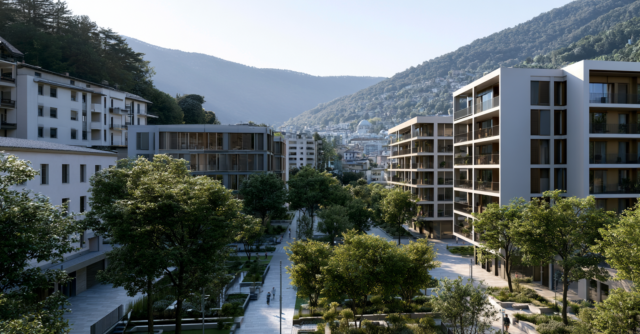
    The historic SBB workshops, the centrepiece of Ticino’s industrial history, are making way for a district that serves as a model for sustainable urban development, an innovative mix of uses and high-quality living spaces. The political, economic and urban development significance of the project extends far beyond the borders of Bellinzona.

    Historical continuity
    The SBB offices have shaped the city centre for more than a century, providing thousands of jobs and an independent industrial identity. The relocation and replacement construction of the SBB industrial facilities in Arbedo-Castione by 2028 will create a rare development opportunity in the centre of Bellinzona. Over 100,000 square metres will be freed up for a comprehensive urban redevelopment, with a balance between tradition, innovation and strategic urban development.

    Participatory guiding process
    The redesign of the site is based entirely on participatory processes. The development process began with an international urban planning competition. Five European planning teams competed against each other, with the “Porta del Ticino – Urban Living Lab” project ultimately coming out on top thanks to its bold use of green space, multifunctionality and attractive density. Public consultations and a broad-based residents’ dialogue ensured broad acceptance and political backing. A representative survey showed that 65 per cent of the population supported the winning concept. Younger generations in particular have high expectations of innovation and quality of life.

    Urban structure, mix and development phases
    The masterplan concept envisages a clear linear tripartite structure for the site. Two peripheral zones combine flats, cooperatives, administrative and research uses, universities, commercial and hotel facilities. In the centre, the spacious Almenda will be a public green and meeting space that will serve as a social, cultural and ecological focus. The implementation period for the realisation of the district extends over several years in order to gradually create lively, resilient living, working and research landscapes. This guarantees flexible management of market dynamics and avoids vacancies or excessive property yield orientation.

    The striking “cathedral”, a listed building dating from 1919, will remain as a cultural magnet and will be transformed into a meeting and event venue. A worthy perspective for a landmark of industrial labour culture.

    A real laboratory of urban change
    The development plan commits to the highest sustainability standards, with the aim of achieving the Swiss Sustainable Building Standard (SNBS). Fossil fuels are excluded, and comprehensive photovoltaics and greenery, rainwater utilisation in the spirit of the “sponge city”, energy-efficient district heating and active promotion of electromobility are integral components. An energy plan supports the objective of covering a large part of the neighbourhood’s electricity requirements locally. Wide green spaces, biodiversity, urban gardening, resource-saving construction methods and low-emission mobility round off the ecological profile.

    Special attention is paid to intergenerational housing models, educational and research facilities, start-up promotion and the new innovation park, which will give Bellinzona a model character and regional appeal

    Model character and regional appeal
    The project combines socio-cultural values, sustainable infrastructure, entrepreneurial innovation and ambitious living and quality of life to create a new urban “engine” for the region. With its combination of participatory governance, versatile utilisation options and resilient open spaces, Bellinzona is setting exemplary standards for Swiss and European urban development in the coming decades.

  • Tenero Swimming Centre

    Tenero Swimming Centre

    The days of the old swimming facilities at the CST youth and competitive sports centre are over. The needs of young and elite aquatics athletes are constantly increasing. With the CHF 91.8 million investment approved by the Federal Assembly in 2021, Switzerland is setting an example for top-level promotion and sustainable development. The new replacement building will raise the CST to a new level as a central centre of excellence for swimming, artistic swimming, water polo, water jumping and ski freestyle.

    Modern concept
    Simply renovating the outdated facilities proved to be uneconomical and not future-proof. The planning therefore favours a complete new build in two construction phases. Firstly, a multifunctional indoor swimming pool will be built, which will define new training standards with an Olympic pool including a lifting floor, whirlpools, ice bath and comprehensive diagnostics area. This will be followed by the renovation of the outdoor facilities, including a modern training pool and landing area for freestyle skiing. Completion is scheduled for 2029, until then operations for athletes will be secured.

    Focus on sustainable and versatile infrastructure
    The Federal Office for Buildings and Logistics attaches great importance to sustainability in construction. The swimming centre is being built in accordance with SNBS and MINERGIE-ECO guidelines, optimised for life cycle costs and energy efficiency. The architecture by Studio Burkhardt and Stücheli Pestalozzi Schiratzki is characterised by its transparency, spaciousness and integration into the park landscape. Art and material aesthetics are also part of the new building, as a sensitive art-in-building concept creates identity for the location.

    A milestone for Swiss sport and the region
    With the laying of the foundation stone and prominent guests such as Olympic medallist Noè Ponti, the project promises not only international training standards, but also innovative event and training opportunities in water sports. The CST remains a pioneer in the promotion of young talent and will become a hub for cross-generational sports development in Switzerland.

  • New headquarters strengthens the future of the hydropower company in Kriens

    New headquarters strengthens the future of the hydropower company in Kriens

    ANDRITZ Hydro is moving to a new headquarters, but will remain based in Kriens. According to a press release, research and development, sales, project management and administration with around 130 employees will move to the Schappe Centre near the reconstructed premises of the former Bell Maschinenfabrik. A new neighbourhood will be built on the site of the predecessor company.

    By moving to the modern company centre, ANDRITZ Hydro wants to secure its options for further growth, according to the press release. The relocation of the company management to the Schappe Centre should be completed by the end of 2026. The company already announced in spring that it plans to relocate its service workshop from the centre in Kriens to the industrial area of Buchrain in the north of Lucerne, around 10 kilometres away, by 2028. The company offers services such as electromechanical equipment and services for hydropower plants worldwide for new and existing hydropower plants, from small hydropower plants to large-scale plants.

    “This is a good solution for us,” says site manager Claudio Nold. “We can continue to work and grow under optimal conditions.” Logis Suisse, the landowner of the Bell site, also sees the relocation of the ANDRITZ Hydro headquarters as a benefit in terms of developing the former industrial site into a new urban neighbourhood, according to the press release.

  • Modernisation of the drinking water supply in Kopfholz

    Modernisation of the drinking water supply in Kopfholz

    The Schlieren-based construction company STRABAG has begun dismantling and rebuilding the Kopfholz reservoir on behalf of the municipalities of Horgen, Thalwil, Rüschlikon and Kilchberg. According to a statement from STRABAG, the modernisation project is intended to secure the local drinking water supply until 2050. In order to ensure a continuous supply of water, three construction phases are planned for the planned replacement construction. The first construction phase is to be completed by February 2026, with the project scheduled for completion in March 2027.

    According to the press release, the municipalities have been operating a joint water supply since 1905. The connection will be continued with the project, which the municipalities believe sends a “strong signal for a sustainable, safe and future-oriented water supply”. Rüschlikon’s storage capacity is expected to increase from 1000 to 1600 cubic metres, and Kilchberg’s from 1500 to 2800 cubic metres.

    The press release emphasises the particular challenge faced by the construction teams from the four clients in building the reservoir during ongoing operations. “The reservoir supplies more than 6,000 households with drinking water and the supply must be guaranteed at all times,” Beat Spörndli, Construction Manager, Civil Engineering and Road Construction North-East, is quoted as saying. He also emphasised the “high demands on coordination and hygiene on the construction site”. In addition to compliance with SIA standards (Swiss Society of Engineers and Architects), the use of a special drinking water concrete is a prerequisite. As the construction is subject to the Foodstuffs Act, germ-free water storage must be ensured. The close cooperation between the municipalities enables coordinated planning, minimises interference with the forest area and triggers synergies in tenders and construction processes.

  • Electrical installations in the historic railway station combined with modern technology

    Electrical installations in the historic railway station combined with modern technology

    Ernst Selmoni AG is responsible for the entire electrical system in the new Migros shop in the historic Badischer Bahnhof railway station. The rooms in the former theatre of the Förnbacher Compagnie in the southern part of the station building are, like the entire building, a listed building. Badischer Bahnhof, one of six railway stations in Basel and today the second largest, was opened in its current form in 1913.

    The contract included the complete electrical installation, from the power supply and modern lighting to the technical systems that enable smooth operation. “The work in the listed building was particularly exciting,” said Selmoni in a company press release. The historical substance demanded creative solutions, careful planning and close coordination with the authorities to ensure that tradition and modern technology were in harmony”.

    Christophe Hassler, Business Unit Manager at Selmoni Installation AG, describes this project as “an exciting challenge: realising modern electrical installations in a listed building without compromising its historical substance. With great care and innovative solutions, my team proved that technology and history can harmonise perfectly.”

    Selmoni was founded in 1934. The approximately 600 employees serve global corporations as well as private individuals. The company focuses on innovative solutions and digitalisation in construction. New technologies such as prefabrication, drilling robots, building information modelling and Hololens are already part of Selmoni’s everyday work to make construction projects faster, safer and more sustainable.

    Selmoni is one of five finalists for the Prix SVC Nordschweiz. This prize from the SME network Swiss Venture Club(SVC) will be awarded on 13 November in front of around 1,000 guests at the Congress Center Basel.

  • Domestic property remains attractive for institutional investors

    Domestic property remains attractive for institutional investors

    According to a press release, the IFZ study Mortgage and Real Estate Investments 2025 by Lucerne University of Applied Sciences and Arts examined the investment behaviour of 228 institutional Swiss investors, including pension funds, insurance companies, investment foundations and funds. The Institute of Financial Services Zug (IFZ) at Lucerne University of Applied Sciences and Arts is based in Rotkreuz ZG. According to the study, domestic property in particular remains an attractive investment.

    Pension funds (PFs) are maintaining their average real estate ratio of 24.3 per cent and largely intend to expand it further: 47 per cent want to strengthen their Swiss real estate portfolio, 49 per cent want to keep it stable and only 3 per cent want to reduce it. According to the study, a “home bias” is noticeable in all pension funds: the Swiss allocation of real estate assets is between 85 per cent (large pension funds) and 92 per cent (medium-sized pension funds).

    “On the one hand, the fact that prices have been rising for over 25 years seems to confirm the stability of the market. On the other hand, investments abroad appear less attractive due to currency hedging costs and higher volatility,” said co-head of the study John Davidson on the preference for Swiss portfolios in the press release.

    However, only 9 per cent of the investors surveyed believe that the upward trend will continue. The biggest concern for investors in the Swiss property market is increasing regulation. According to 82 per cent of institutional investors, this will soon lead to an end to the property upturn. Particularly complex building regulations (92 per cent), objections (90 per cent) and stricter tenant protection (88 per cent) are hindering further growth.

    Risks such as a slump in economic growth (45 per cent), higher interest rates over a longer period of time (37 per cent) or weaker population growth (35 per cent) take a back seat to political and regulatory pressure.

    The study is based on surveys of Swiss property funds, investment foundations and insurance companies as well as 135 pension funds. With an investment volume of CHF 568 billion, the pension funds surveyed cover around 50 per cent of the funds’ total assets.

  • Progress in CO2 reduction through modern cement production

    Progress in CO2 reduction through modern cement production

    Holcim AG, based in Zug, has initiated a carbon capture plant for cement production in Câmpulung, Romania. According to a press release, the internationally active building materials manufacturer was able to secure EU funding for the project. The plant in Câmpulung is Holcim’s eighth EU-funded carbon capture project.

    The Carbon Hub CPT 01 plant in Romania is the first onshore carbon capture and storage (CCS) project in Eastern Europe. Carbon dioxide is eliminated from the flue gases on site and permanently stored underground in compressed form. The geographical and geological conditions in Câmpulung offer good conditions for this, according to the press release. Holcim and its partners, including Carmeuse from Louvain-la-Neuve in Belgium, aim to produce around 2 million tonnes of low-emission cement in Romania every year by 2032.

    “The CCS project in Romania thus supports Holcim’s efforts to turn sustainable growth into profitable growth – a key strategic driver of our NextGen Growth 2030 strategy,” said Simon Kronenberg, Regional Head of Central and Eastern Europe at Holcim, in the press release. “The support from the EU Innovation Fund underlines the capabilities of our engineering teams, the maturity of our technologies and our advanced partnerships along the entire value chain.”

  • Circular construction as the new standard in the canton of Zurich

    Circular construction as the new standard in the canton of Zurich

    The Canton of Zurich ‘s Real Estate Office and Building Construction Office is systematically integrating the principles of circular construction into its processes with the help of the Circular Hub as a platform for the circular economy. This initiative goes back to the circular economy strategy published in 2024. According to a Circular Hub press release, the Community of Practice format entitled “KreislaufLAB – Planning and Building for Zurich’s Future” was established for this purpose. The aim is to sustainably anchor the necessary knowledge in the existing roles of cantonal property management. According to the project description, Circular Hub has taken on the conception, moderation and impact measurement of the format in close collaboration with cantonal managers. Internal anchoring is also supported by a communication strategy.

    Expertise and practical examples should make it easier to plan and implement circular construction. Specifically, topics such as deconstruction, material selection and life cycle thinking play a central role. “This creates a lively network in which knowledge is shared and anchored in concrete application aids. This is how impact can become visible,” is how Circular Hub describes its approach.

    Specifically, there will be five interactive workshops combining expert input, panel discussions and practical group work. As a result, practical tools and application aids will be developed. Internally, the process will be flanked by bulletins and a closing event, among other things. Ultimately, an impact assessment will provide information on how competences have been developed and the principles of the cycle have been anchored.

  • Transformation of a military airfield into a civilian innovation centre

    Transformation of a military airfield into a civilian innovation centre

    The civilian conversion of the St. Stephan military airfield in the upper Simmental is making progress. According to a press release, the Federal Office of Civil Aviation(FOCA) has authorised the conversion into a civilian airfield. This means that buildings and facilities that are no longer required can be demolished and the infrastructure for civil flight operations can be built. The FOCA has also granted Prospective Concepts Aeronautics AG(PCA) an unlimited operating licence and approved the operating regulations.

    The Cantonal Office for Municipalities and Spatial Planning is expected to approve the development plan for the site at the beginning of 2026, which was adopted by the municipal assembly in 2024. Armasuisse Immobilien will then transfer the site from federal ownership to the municipality of St. Stephan. PCA will use the airfield under building rights.

    In future, the airfield will be used for both civil aviation and commercial purposes. Flights are likely to be triggered primarily by development, manufacturing and maintenance companies.

    Occasional tourist and business flights are also planned. Flight operations are regulated in the Sectoral Transport Plan, Infrastructure Section (SIL), which was adopted by the Federal Council on 30 August 2023.

    The airfield was established during the Second World War in 1941. It is located close to the Gstaad-Zweisimmen-St. Stephan and Adelboden-Lenk ski resorts.

  • Opening ceremony: Innovations in the finishing trade – Globus Basel flagship project

    Opening ceremony: Innovations in the finishing trade – Globus Basel flagship project

    Switzerland is being transformed in order to achieve the goals of energy, climate, circular economy and densification. The finishing and building envelope industry and its professions are crucial to this and are making the building stock fit. With a turnover of 36 billion, it is the strongest sector in the construction industry. Bauenschweiz’s core group for the finishing trade and building envelope would like to focus on this at the opening. This is exemplified by the completely renovated Globus Basel property, which will open at the end of 2025. In addition to a look at the project, guests will discuss the importance of the finishing trade, the further development of skilled workers and the needs of entrepreneurs and young professionals in the market.

    Program (as of 23.10.2025)

    10.15 a.m.Introduction with short clip on GAG at Globus Basel
    10.17 a.m.Welcome by moderator Sonja Hasler
    10.20 a.m.Discussion with Bauenschweiz President Hans Wicki, Member of the Council of States, and Home Group President Peter Meier
    10.30 a.m.Message of welcome from Cantonal Councillor Esther Keller, Head of the Building and Transport Department of the Canton of Basel-Stadt
    10.40 a.m.Moderated discussion with project managers “Globus Basel – from urban planning challenges to lighthouse project”
    Andrin Sennhauser, Confirm
    Jean-Luc von Aarburg, Miller & Maranta
    10.55 a.m.Panel discussion with Beat Hanselmann, President of Gebäudehüllenplaner, National Councillor Sandra Sollberger, entrepreneur and SMGV board member and sister duo Ladina and Alisa Oppliger, Gold and Silver Swisskills 2025 in façade construction
    11:30 a.m.Apéro riche

    Further information can be found here:
    LINK

  • Geneva’s housing policy under pressure

    Geneva’s housing policy under pressure

    Since 1983, the law on the demolition, conversion and renovation of residential buildings in Geneva has rigorously controlled the housing market. The aim is to protect tenants, safeguard quality of life and curb speculation. Rents after conversions and renovations are capped by decree, and projects requiring approval are strictly regulated

    The study by Ters (FHNW) and Kholodilin (DIW Berlin) is the first to dynamically analyze the effects of these interventions. The results show that housing rationing and rent controls significantly slow down new construction. Private and institutional investors are increasingly shifting capital into renovations. In the short term, expenditure on modernization is rising, while there is no real increase in living space. At the same time, vacancy rates are continuing to fall, occupancy rates are rising and the market is becoming even tighter. Entry costs are rising, especially for new tenants, while existing tenants benefit from stable, often low rents and long rental periods

    New dynamics in the portfolio
    Institutional investors are particularly hard hit. Project delays, falling residual values and complex approval procedures make new construction unattractive. The study shows that a regulatory shock reduces the volume of new investments by up to CHF 600 million. This corresponds to around 1% of Geneva’s total GDP. For the city’s housing stock, this primarily means that investments will primarily be made in short-term, compliance-driven upgrades instead of in-depth renovations or new units

    Rent control works primarily through the price channel. It protects existing tenants from increases, but depresses returns for owners and puts a damper on new projects. Renovations become more attractive than new builds, which promotes modernization but hardly creates any new apartments

    Lock-in effect and inequality of opportunity
    An unexpected side effect of regulation is the so-called lock-in effect. Tenants stay in their homes for much longer for cost reasons, which restricts mobility and increases the maldistribution of housing. At the same time, rent differentials in the market are increasing. Newcomers pay high market rents, while long-term tenants benefit. The quality and condition of apartments often remain at a low level, as extensive renovations are difficult to carry out economically

    Balance sought between protection and supply
    The study shows that Geneva’s regulations protect tenants from price rises, but place a burden on new construction and thus exacerbate the housing shortage in the medium term. Investors are turning to the preservation of existing properties and selective modernization, while growth stimuli from new construction are failing to materialize. For politicians, this means that a sustainable balance between protection and market renewal is essential. New densification permits and differentiated rent regulation could provide a remedy.

  • Strong wood presence at the ‘Swiss Arc Award’ 2025

    Strong wood presence at the ‘Swiss Arc Award’ 2025

    On October 30, the jury honored the best buildings of the year from over 400 submissions. The award, presented at Trafo Baden in front of over 500 guests from architecture and the construction industry, underlines the creative diversity and technical maturity of Swiss planning culture. The Lifetime Achievement Award was presented to Kaschka Knapkiewicz and Axel Fickert, whose work has had a decisive influence on local architecture for decades.

    Sustainability and functionality
    The Hortus office building in Allschwil by Herzog & de Meuron won in the “Work, Production & Infrastructure” category thanks to its systematic climate protection and material intelligence. The new University Children’s Hospital Zurich, the winning project in the “Education & Health” category, was also designed by Herzog & de Meuron. Its horizontal structure creates bright, open pathways and a new typology of hospital building that combines functionality with humanity.

    Wood as a design leitmotif
    The Guggach residential and commercial development in Zurich by Donet Schäfer Reimer Architekten won in the “Residential” category. Climate-optimized concrete and timber construction elements demonstrate how sustainable building materials can interact constructively and aesthetically. Andreas Fuhrimann and Gabrielle Hächler were awarded the first prize for interior design for their sensitive conversion of a terraced house in Gockhausen. Wood permeates surfaces, furniture and construction as a connecting element and emotional carrier of spatial quality.

    Audience award for multi-purpose building in Lavaux
    The multi-purpose building in Forel by Samir Alaoui Architectes won the audience award. The stacking of industrial and residential use creates an architectural unit with a high degree of spatial intelligence. Here too, the timber construction underlines the fact that sustainable construction and architectural expressiveness are not mutually exclusive.

    The Swiss Arc Award 2025 confirms that wood is not just a building material, but an expression of a new culture of responsibility in the Swiss construction industry.

  • New service facility strengthens the Weinfelden railway location

    New service facility strengthens the Weinfelden railway location

    SBB and its Thurgau subsidiary Thurbo AG, based in Kreuzlingen, are to open the new service facility in Weinfelden on 1 November, according to a press release. The existing Thurbo fleet will be serviced here and the new fleet of 329 Flirt Evo trains will be put into operation and serviced. The first new trains are due to be introduced in 2026 and will also be used by SBB and its subsidiary RegionAlps, based in Martigny VS. The proximity to the Bussnang and Erlen sites of the train manufacturer Stadler enables efficient maintenance, training and introduction.

    Thurbo has invested CHF 18.4 million in the facility. It was built in timber construction and extended by 30 to 100 metres. It also houses a photovoltaic system whose 866 modules will generate almost 400 megawatt hours of electricity per year. Up to 30 employees will work here in future.

    The facility will be opened on 1 November with an open day. The first train of the new Flirt Evo fleet will also be christened at the event.

  • New shares to finance construction projects and acquisitions

    New shares to finance construction projects and acquisitions

    Zurich Invest Ltd is increasing the resources for the ZIF Real Estate Direct Switzerland fund. The fund management company, which belongs to Zurich Insurance Company Ltd, announced in a press release that around 100 million Swiss francs will be raised between 10 and 21 November. It intends to use the funds to finance ongoing construction projects and for selective acquisitions.

    Shareholders have the right to acquire one new share for every ten existing shares. A maximum of 960,411 new shares are to be issued at an issue price of 112.16 Swiss francs. The new units are scheduled to be paid out on 28 November 2025.

    The ZIF Real Estate Direct Switzerland fund currently comprises 60 properties with a total market value of CHF 1.5 billion. Residential properties, mainly in the Zurich and Lake Geneva regions, account for 86 per cent. Launched at the end of 2018, the fund was listed on the SIX Swiss Exchange in 2023.

  • A new research centre strengthens the Basel site.

    A new research centre strengthens the Basel site.

    Roche is embarking on the construction of a new 15-storey research and development centre at its headquarters in Basel. The foundation stone for the centre, which is specifically designed for the early phases of drug development, was laid on 29 October, the global pharmaceutical company announced in a press release. In Building 12, which will cost around 500 million Swiss francs, Roche intends to consolidate functions of the research and development department that are currently spread across the site. Work on the 72-metre-high building is due to be completed in the fourth quarter of 2029.

    “Building 12 is an essential part of our long-term vision for the Basel site,” said Jürg Erismann, Site Head Roche Basel/Kaiseraugst, in the press release. “The investment of 500 million Swiss francs is a clear commitment to Basel and underlines Roche’s long-term commitment to the research location and to Switzerland.” According to the press release, Roche has invested around 8 billion francs in its Swiss sites since 2015. A further 33 billion francs have been invested in research and development in Switzerland.

  • St. Gallen modern urban development with double railway station

    St. Gallen modern urban development with double railway station

    The development model was developed jointly by urban planning, landowners and the neighbourhood association in a broad, cooperative process. Four workshops between June 2024 and May 2025 ensured broad participation and made it possible to identify specific opportunities for the nine sub-areas.

    Potential and spatial focus
    The structure plan identifies nine sub-areas, from Straubenzellstrasse to Debrunner Ost, which are to be developed individually and with a mix of uses. The area offers additional floor space potential of around 80,000 m², which can be used specifically for housing and workplaces. Better links between the neighbourhoods, more green and open spaces and new public squares are planned.

    Railway station as a driver of urban development
    The future relocation of Bruggen railway station to the east and its merger with Haggen railway station are one of the reasons for the project. They eliminate existing barriers and make large-scale accessibility possible. The planned passerelle creates new path connections and improves the integration of neighbouring districts such as Lerchenfeld. The railway station project influences the ongoing local planning revision and serves as a lever for sustainable, urban densification.

    Future prospects and planning security
    The development model provides the city and landowners with binding guidance for upcoming implementation projects in individual areas for the first time. The next steps concern the project planning for the railway station, including the Passerelle, and the transfer of the findings to the overall revision of local planning.

    Thanks to forward-looking planning and an integrative project structure, the Bruggen-Haggen area is on the verge of becoming an urban, mixed-use district with a high quality of life, better accessibility and targeted growth in area.

  • Roche continues to invest in the future of research in Basel

    Roche continues to invest in the future of research in Basel

    Building 12 will be completed by 2029 and will provide space for around 450 researchers. It will act as a link between early research and clinical development, enabling new active ingredients to be applied more efficiently. The flexible space concept and state-of-the-art laboratory infrastructure promote interdisciplinary collaboration and technological innovation.

    A commitment to Switzerland
    Roche has already invested around eight billion Swiss francs in the expansion of its Swiss sites since 2015. Building 12 will extend the Basel innovation axis and further consolidate Switzerland’s position as a leading research location within the Group. According to site manager Jürg Erismann, the building is a “clear commitment to Basel and to Swiss research expertise”.

    Architecture and dimensions
    The 72-metre-high Building 12, designed by Herzog & de Meuron, will unite previously dispersed research areas under one roof. Laboratories and open work zones for a new generation of drug development will be created on 32,200 square meters. Completion is planned for the end of 2029.

    Strategic importance
    With the combination of science, technology and architecture, Roche is focusing on accelerating development processes and sustainably strengthening the site. Of the more than 40 billion Swiss francs invested across the Group in the last ten years, around a quarter has been invested in Switzerland. A clear signal of the continued innovative strength of the Basel campus.

  • New experience space in Bern combines culture, business and everyday life

    New experience space in Bern combines culture, business and everyday life

    After six years of renovation, the Kaiserhaus in Bern’s Marktgasse is now ready for the public. According to a press release, the building is set to become a place of encounter and learning as well as a meeting place for fashion and local trade. The opening is planned for 10 April 2026.

    The Kaiserhaus combines catering, retail and a place of learning in one. The gastronomic highlights include the Brasserie Kaiser, the Kaiser Deli and the Hof Bar. The retail spaces also serve to try out new economic, ecological and social models. In the Atelier & Manufaktur area, products are repaired or manufactured for spectators, for example. The Kiosk & Shop area is intended to provide space for pioneering brands as well as start-ups. Circular economy products will also be found here. And the Events & Pop-ups area will constantly have new offers for customers with exhibitions, workshops or a market.

    In the Moneyverse, you can learn all about the history of money and the work of the Swiss National Bank(SNB). Lectures on science, culture and business complete the educational programme. Moneyverse is an initiative of the SNB in collaboration with the Bernisches Historisches Museum. It is intended to enrich the Kaiserhaus experience.

  • Switzerland Innovation Park Ticino

    Switzerland Innovation Park Ticino

    Ticino has been part of the national Switzerland Innovation initiative since 2021. In November 2024, the park was officially recognised as the Zurich Park location. With the newly founded Switzerland Innovation Park Ticino SA, the canton, business and universities are joining forces to sustainably strengthen the region’s innovative power.

    Synergies with Europe and the Greater Zurich Area
    The strategic location makes the park a bridge between two European economic centres, Zurich and Milan. As a member of the Greater Zurich Area, Ticino is gaining international visibility and attracting investment and companies from innovative sectors. At the same time, there are close links with the MIND Milano innovation district, which was created on the Expo site in Milan.

    Competence centres for future technologies
    Three competence centres are currently being created in Park Ticino in areas with high potential: drone technologies, life sciences and applications in the leisure and healthcare sector. These centres promote research, development and knowledge exchange, creating an ecosystem that supports innovation from the idea to market maturity.

    Future location New Officine District Bellinzona
    The final headquarters of the park will open after 2032 in the New Officine District in Bellinzona. On 25,000 square metres, a platform for research and entrepreneurship will be created, embedded in a new urban quarter of 120,000 square metres with living space, companies, administration, culture and leisure. The site benefits from its location right next to Bellinzona railway station, as the northern gateway to Ticino after the Gotthard Base Tunnel.

  • Ticino shows the way to a modern power supply

    Ticino shows the way to a modern power supply

    The European energy system is facing the biggest transformation in its history. Transport, industry and buildings are being electrified, electricity demand is increasing massively and production is becoming more decentralised and volatile. For Switzerland, this means fundamentally adapting its grids. In Ticino, the course was set early on. As early as 2013, the canton brought together the major players, Swissgrid, Azienda Elettrica Ticinese (AET) and SBB, to think about electricity grids and spatial planning together.

    The analysis clearly showed that the infrastructure created in the 1950s was inefficient. Each institution had built its own lines without taking into account the overall view or the landscape. The result is a patchwork of routes through sensitive areas. Today, joint planning makes it possible to bundle several lines on one route, resulting in 140 kilometres becoming superfluous.

    Projects with national appeal
    At the heart of the realisation are three major projects, Airolo – Lavorgo in the Leventina, All’Acqua – Vallemaggia – Magadino and Lavorgo – Magadino in the Riviera and Piano di Magadino. They form the backbone for a secure supply for future generations. At the same time, they create the conditions for the dismantling of old lines, which significantly relieves the landscape.

    Lengthy procedures act as a brake
    The construction of new high-voltage lines in Switzerland often takes more than 15 years. However, close consultation in Ticino has made it possible to develop trust, coordination and joint proposals to speed up federal procedures. Municipalities and the population are actively involved in order to achieve broad-based solutions.

    Balancing landscape protection and security of supply
    Ticino combines sensitive habitats, historic villages and landscapes with lakes and mountains that are important for tourism. The balancing act between security of supply and landscape protection has been mastered here in an exemplary manner. Instead of unilaterally planning power lines, the territory is viewed as an overall system. An approach that increases acceptance and reduces conflicts.

    Federal Council wants to expand the model
    The innovative process has not gone unnoticed. The Federal Council has recognised the advantages and proposed extending the Ticino model to other cantons in a bill. This could turn a regional pioneering achievement into a national model of success, with a signalling effect for the entire energy transition.

    Ticino shows how the modernisation of critical infrastructures can succeed in a way that is technically efficient, compatible with the landscape and politically acceptable to the majority. The dismantling of 140 kilometres of power lines is only the most visible success. The decisive factor is a new way of thinking that strengthens security of supply and quality of life in equal measure.

  • New residential neighbourhood brings dynamism to Spreitenbach

    New residential neighbourhood brings dynamism to Spreitenbach

    The Tivoli Garten neighbourhood is revitalising the municipality of Spreitenbach, according to a press release. People have been able to move in there since mid-July and by mid-September more than 500 residents had already taken advantage of this, according to the municipality, citing figures from the residents’ services.

    The largest group are the 226 people (45 per cent) who have moved to Tivoli Garten from the canton of Zurich. This is followed by 121 people (24 per cent) from the canton of Aargau, 89 people (18 per cent) who have moved within Spreitenbach, 49 people (10 per cent) from other cantons and 22 people (4 per cent) who have moved to Tivoli Garten from abroad.

    Tivoli Garten offers a total of 445 rental flats (1.5 to 5.5 rooms) and small commercial spaces on an area of 15,000 square metres. A communal garden with a playground serves as a meeting place for the residents.

  • Expansion of the range for modern building envelopes

    Expansion of the range for modern building envelopes

    The Pestalozzi Group has launched Pestalozzi Alutechnik AG. As Pestalozzi reports in a LinkedIn post, the subsidiary will offer “a wide range of high-quality aluminium products and innovative system solutions” as the exclusive Swiss distribution partner of Aluprof, a manufacturer of aluminium systems belonging to Grupa Kęty SA from Kenty (Kęty) in Poland and operating in Europe. While the company is available immediately for industrial profiles and consultations, aluminium systems are to be delivered from 9 March 2026.

    Pestalozzi Alutechnik AG is your contact for windows and doors, façades and fire protection. The company offers innovative products as well as intelligent and modular system solutions for residential and commercial construction. After detailed consultation with experts, solutions are developed individually and customised to the customer’s needs. Pestalozzi offers support from planning and system selection through to delivery.

  • Traditional property in Horgen changes hands

    Traditional property in Horgen changes hands

    UBS is ceding the Bocken seminar hotel and country estate in Horgen to the Swiss Life Group. A corresponding contract has already been signed, UBS announced in a press release. The purchase price for the property has not been disclosed.

    The former Credit Suisse training centre in Horgen was transferred to UBS as part of the merger of the two major banks. However, UBS operates its own training centre, the UBS Center for Education and Dialogue Wolfsberg in Ermatingen TG. Since its reopening in 2020, this centre has also had greater capacity for seminars and events than the Bocken training centre in Horgen. This means that UBS no longer needs the Bocken seminar hotel.

    Swiss Life intends to use the “historic country estate” primarily “for internal events and further training”, explains Group CEO Matthias Aellig in the press release. “We also want to open up the Bocken to external guests.” According to Sergio P. Ermotti, CEO of UBS Group AG, the takeover of the Bocken seminar hotel by the Swiss Life Group “creates the best conditions for all parties involved and for the region to ensure that this wonderful property can continue to be run sustainably in the future”.

  • Expansion in the area of wall solutions

    Expansion in the area of wall solutions

    Holcim AG acquires Xella International GmbH. The Duisburg-based group, which operates throughout Europe, specialises in building materials, insulating materials and services for the building envelope. With this acquisition, Holcim intends to expand its own portfolio with Xella’s complementary offering, the Zug-based building materials group explained in a press release.

    “This strategic acquisition is a milestone in our vision to be the leading partner for sustainable construction and accelerates the expansion of our high value-added Building Solutions business in line with our NextGen Growth 2030 strategy,” Holcim CEO Miljan Gutovic is quoted as saying. “By complementing our offering in the highly attractive market for wall solutions with a volume of more than 12 billion euros, Xella will open up cross-selling and system sales opportunities for us.” The transaction value is estimated at 1.85 billion euros in the press release. The acquisition is expected to be completed in the second half of 2026.

  • Young talents shape the future with responsibility and context

    Young talents shape the future with responsibility and context

    The award-winning projects focus on transformation instead of tabula rasa. Existing places, materials and social structures are not replaced, but rather built upon and re-contextualized. This approach reflects a change in the profession. Analysis, research, field studies and the examination of local realities are an integral part of the design process. Architecture is understood as a precise reaction to complex framework conditions, with a clear awareness of social responsibility and resource conservation.

    New choice of location, new perspectives
    By holding the competition in southern Switzerland for the first time, the focus has shifted to regional identities and academic diversity. At the same time, the award for a project from the Università della Svizzera italiana marks a milestone for architectural education in Ticino. The jury recognized 31 Master’s theses, evaluated by renowned experts. The decision criteria reflected technical depth, spatial sensitivity and the ability to develop design clarity from complex contexts.

    Projects that open up spaces and strengthen communities
    Whether harbor area in Basel, contaminated industrial zones in Portugal or barns in alpine communities, the award-winning projects address real challenges and offer socially anchored solutions that are close to their intended use. They create meeting places, strengthen local production cultures, rethink rural spaces and experiment with temporary uses as an urban strategy. Images, models and drawings serve not only as representations, but also as research tools to make design processes transparent and comprehensible.

    A generation with attitude and vision
    All the works are united by a common ethos: repair instead of replacement, context instead of icon, cooperation instead of solitaire. This attitude stands for a concept of architecture that focuses on collective sustainability. The award ceremony made it clear that young architects are prepared to take responsibility and actively participate in the spatial transformation of our built environment. The self-image of the profession is thus developing further towards moderation, mediation and social commitment, without sacrificing aesthetic ambition.