Category: Projects

  • New industrial building relies on modern energy and electrical engineering

    New industrial building relies on modern energy and electrical engineering

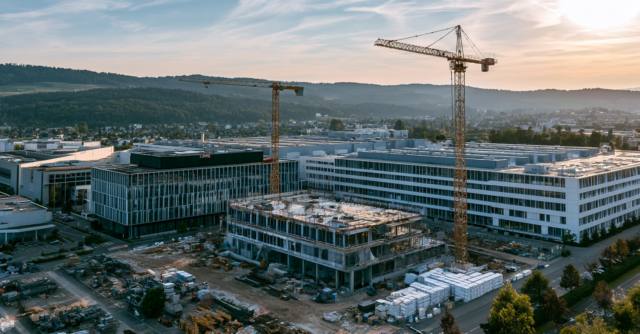
    Schlieremer Maneth Stiefel AG, with its branch in Pratteln, has taken on the project planning and construction of the electrical systems for a new high-bay warehouse at the Feldschlösschen brewery, according to a press release. The 30-metre-high building is to be constructed in the immediate vicinity of the motorway in Rheinfelden. Feldschlösschen AG, part of the Carlsberg Group, wants to use the new building to increase internal consolidation and create new storage space, the company reports.

    In addition to the lighting, low-voltage and low-current systems, Maneth Stiefel will also install the network infrastructure, including transformer stations and main distribution systems in the medium-voltage range, emergency and safety systems, and a photovoltaic system.

    Both companies emphasise that the new building represents a milestone in the development of the Rheinfelden site. Feldschlösschen is the largest employer in the town. The construction measures were planned in close consultation with the local population and will also be implemented with monument protection in mind. Feldschlösschen will celebrate its 150th anniversary in 2026.

  • New residential neighbourhood with a focus on families and community building

    New residential neighbourhood with a focus on families and community building

    According to a statement, the jury of the Canton of Basel-Stadt has decided that the design by the two Basel-based architectural firms Clauss Kahl Merz Atelier für Architektur Städtebau and Truwant Rodet will be implemented. The planned residential development at Riehenring 120 on the former site of Exhibition Hall 3 will comprise 170 affordable flats.

    Exhibition Hall 3 is currently used by Basler Verkehrs-Betriebe (BVB) as a garage for electric buses. This temporary use will end in 2028. After that, the canton plans to develop this centrally located area into a vibrant residential and living space by 2031. The plans primarily include large, family-friendly flats and a small number of small flats. In addition, a double kindergarten, a daycare centre and commercial premises are planned, as well as 200 parking spaces for tenants and other people from the neighbourhood.

    The winning project impressed the jury “with its high quality of living and its contribution to the surrounding neighbourhoods”. Part of the car park will be built above ground. This will create two additional outdoor areas on the roof for tenants, which can also be used as planting gardens.

    At the same time, according to the canton, this will make construction more resource-efficient: as less ground needs to be excavated, there will be “no energy-intensive excavation and less building material will be used. In addition, the project as a whole focuses on environmentally friendly construction by reusing various components from the existing Exhibition Hall 3 and the former BVB garage in Rank.”

  • Infrastructure investment gains momentum in Europe

    Infrastructure investment gains momentum in Europe

    Construction company Impleniahas secured major infrastructure projects in Germany and Norway, according to a press release. The contract package includes the new Peene Bridge in Wolgast, the replacement of the Main Bridge in Marktbreit, the first construction phase of the Riederwald Tunnel in Frankfurt am Main and the new Lågen Bridge in Norway.

    For the new Peene Bridge in Wolgast, Implenia is leading a consortium with DSD Brückenbau, Victor Buyck Steel Construction and Stahl Technologie Niesky. The approximately 1.4-kilometre-long cable-stayed bridge will connect the A20 motorway with the island of Usedom and, with a clearance height of 42 metres and 70-metre-high pylons, will be one of the largest bridges of its kind in Europe. Construction work has been underway since December 2025 and is expected to continue until 2030.

    Implenia is the technical leader in a consortium with Plauen Stahl Technologie for the replacement of the Marktbreit Main Bridge on the A7 motorway. The new bridge will be built as a steel composite box girder using the incremental launching method. It will be around 925 metres long and 31 metres wide. Construction is taking place while traffic continues to flow and will be completed by around 2033. The new contracts in Germany are rounded off by the construction of the new Riederwald Tunnel in Frankfurt am Main. In a consortium with Wayss & Freytag Ingenieurbau and Bickhardt Bau, Implenia is realising the centrepiece of the gap closure between two important motorway sections. The approximately 1.1-kilometre-long tunnel is being built using the open construction method. Work began in 2025 and will take around three years.

    In Norway, Implenia is building the Lågen Bridge on the new E6 Roterud–Storhove motorway on behalf of AF Gruppen. The 552-metre-long, four-lane concrete box girder bridge spans the Lågen River north of Lillehammer. Strict environmental regulations to protect breeding birds, spawning grounds and biodiversity minimise the impact on the sensitive delta area.

  • New balance of power in modular room solutions

    New balance of power in modular room solutions

    According to a statement, the Condecta Group is acquiring from the German ALHO Group based in Friesenhagen the entire Swiss FAGSI rental fleet as well as all associated Swiss activities. This also includes the location in Wikon in the canton of Lucerne. The Winterthur-based company is thus taking over the entire Swiss fleet of FAGSI rental containers. FAGSI is a brand of the ALHO Group that specialises in the sale and rental of temporary and modular container buildings for cities, municipalities and industry, particularly high-quality offices, schools, kindergartens and temporary accommodation.

    The Wikon site has around 12,000 square metres of production and storage space and a rental fleet of 1,150 FAGSI containers. It is to be expanded into a centre of excellence for high-quality mobile space solutions. According to Condecta, this “creates the basis for efficiently implementing even larger and more complex projects from a single source – a clear added value for customers in industry, administration, education and healthcare”. Existing customer relationships, ongoing projects and rental agreements will continue seamlessly, according to the information provided. Contact persons and processes will also remain the same.

    “The takeover of FAGSI’s Swiss activities is an important milestone in the further development of Condecta,” said Condecta CEO Olivier W. Annaheim. “We are strengthening our core business, expanding our premium offering and investing specifically in additional expertise. The Wikon site will play a central role in further expanding quality, performance and delivery reliability in Switzerland.”

  • Joint development for the Silbern working area

    Joint development for the Silbern working area

    According to a statement issued on 14 January 2026, representatives from politics, business, Regiowerk and nature conservation launched the Zukunft Silbern alliance. Together, the alliance aims to develop the Silbern area into a sustainable, easily accessible and ecologically responsible business location.

    The conceptual basis for this innovative cooperation was developed over two years by the interest groups Regiowerk fürs Limmattal (Limeco),Natur- und Vogelschutzverein Dietikon, IG Silbern, the city of Dietikon and the canton of Zurich in a mediation process led by private lecturer Dr Joris Van Wezemael. He is an architectural sociologist and teaches at the Institute for Spatial and Landscape Development at the Swiss Federal Institute of Technology Zurich. His scientific contributions have helped shape new concepts for collective decision-making in spatial planning and urban development.

    Before the alliance was founded, the various interest groups agreed in their analysis: the Silbern area is an important location for production, trade and shopping. However, in terms of urban development and urban space, it has hardly developed for many years and has fallen short of its potential. Now the alliance wants to develop the area in such a way that companies find attractive conditions, accessibility is improved and, at the same time, nature and living spaces are strengthened.

    According to the information provided, the partners developed a better understanding of each other and built mutual respect in the process of establishing the Zukunft Silbern alliance. “This,” the statement says, “has created an important foundation for successfully implementing projects and advancing Silbern as a whole.”

  • Nidwalden pools its blue light forces

    Nidwalden pools its blue light forces

    The 33,000 square meter site on Kreuzstrasse is now completely built over. Many of the buildings are in need of considerable renovation, including the cantonal police and prison buildings. In addition, there are operational deficiencies such as a lack of escape routes or inadequate separation between public and staff entrances.

    On the basis of a broad-based investigation, the cantonal government has decided to completely reorganize the site and build new replacement buildings. The aim is to create a modern security competence center that improves functional processes, increases security and is more economical in the long term than selective renovations.

    Bundled blue-light organizations
    The site is currently home to the police, prison, road safety center, road inspectorate, justice department and public prosecutor’s office. Due to the central location, the possibility of relocating additional emergency services, in particular the fire department and ambulance service, to Kreuzstrasse is being examined. The aim is to create a location with short distances, coordinated processes and clear responsibilities.

    Test planning has shown that this bundling on the existing site is realistic. It confirms that the spatial requirements of the current uses and additional organizations can be implemented on the site without obstructing the site’s development potential.

    Prison with a view to future needs
    The future direction of the cantonal prison was also analyzed in depth as part of the test planning. The demand for prison places in Switzerland is high, particularly for inmates in need of care in the penal system. Against this background, Nidwalden is examining how the new prison facilities should be dimensioned and functionally aligned in order to meet demand in the long term.

    Design plan and indicative project
    The District Council has approved a planning credit of CHF 1.63 million for the design plan and indicative project. The planning will be continued with a clearly defined group of users – the cantonal police, rescue service, fire department, justice department, public prosecutor’s office, prison, road inspectorate, road safety center and selected administrative units.

    The design plan is intended to create the legally binding framework for the next planning steps. It specifies which uses are permitted where, how development, open spaces and urban planning are to be designed and which stages are possible.

    Adjustments to the process and open sub-projects
    Several planning teams were initially involved in the study commission for the design plan and indicative project. In the course of 2025, however, it became apparent that the development with a moderate expansion of the existing traffic circle would not be sufficient in view of new traffic forecasts. At the same time, a new option for the road safety center came into play. Obwalden is planning a new building in Sarnen and synergies of a shared location with test halls and test tracks are being examined.

    In order to be able to react more flexibly to these changes, it was decided to terminate the study contract in its previous form and to continue working on the indicative project with just one planning team. In October 2025, the District Council also requested more planning certainty, particularly for the two sub-projects “Road Safety Center” and “Prison”, before the design plan and indicative project are definitively completed.

    Next steps and timetable
    The design plan will cover the three local municipalities of Stans, Buochs and Oberdorf. The corresponding municipal assemblies or ballots for decision-making are currently scheduled for 2027.

    The first loan applications for architectural competitions for individual buildings of the security competence center are expected from 2028 at the earliest. Until then, it will be a matter of clarifying the unresolved issues relating to development, the prison layout and the traffic safety center.

  • New Center for Social Sciences

    New Center for Social Sciences

    The Alte Gewerbeschule, once built in the German Neo-Renaissance style, will remain architecturally and culturally significant following its extensive renovation. The Canton of Basel-Stadt is investing around 63 million francs in the renovation, which is based on strict monument protection regulations and current standards for accessibility and energy efficiency. Specialist departments and general planners are working closely with the cantonal monument preservation authorities to preserve the façade, interior and historical details.

    With the renovation, eight university departments, the dean’s office and central services will be concentrated at Petersplatz, which will strengthen academic dialog and the use of shared resources. The UVB Social Sciences will have a new, modern library in the inner courtyard and attractive learning and working areas on the mezzanine floor. This will create a university center for the humanities and cultural sciences with a high quality of stay and optimal infrastructure.

    Refurbishment under the banner of sustainability
    Construction work began in November 2025 and will last until summer 2029. The building will be modernized in terms of energy efficiency, made earthquake-proof and contaminated sites will be removed. The new interior design combines functionality and monument protection. Characteristic building elements will be restored and the technical infrastructure and flexibility of use will be brought up to the level of a modern campus. It is being carried out under the leadership of the cantonal monument preservation authorities and specialized architects, accompanied by federal expert committees, in order to ensure maximum protection of the historical substance.

    The Alte Gewerbeschule Basel will be an innovative bridge between academic excellence and historical identity. A strong signal for the future of urban learning.

  • Klybeckquai and Westquai as a hinge between the city and the future

    Klybeckquai and Westquai as a hinge between the city and the future

    Klybeckquai and Westquai have been among the most vibrant places in Switzerland for over a hundred years. This is where the city meets the port, the Rhine, the river Wiese and three countries. The ongoing modernization of the port infrastructure, in particular the relocation of the port railroad to the Südquai, opens the door to the urban transformation of this striking urban area. This will create unique opportunities for the Klybeck and Kleinhüningen districts. They are gradually moving closer to the Rhine and the River Wiese and gaining in quality of life and amenity. Urban growth, social diversity and sustainable integration.

    At the heart of the new development concept is the consistent expansion of the Klybeck district towards the Rhine. The plans include a variety of affordable apartments, neighborhood-friendly uses and spacious perimeter block developments that strengthen the urban climate with green courtyards. The striking neighborhood park, which will develop from the Ackermätteli, and an extended, widened Rhine promenade will connect the neighborhood even more closely with the river and offer space for encounters, leisure, recreation and nature. The barrier of the former railroad tracks will disappear, but the traces of industrial history will be preserved as an identity. The focus on pedestrian and bicycle traffic as well as a new streetcar line promote sustainable, future-proof neighborhood mobility.

    Westquai space for the future
    Westquai will initially remain an industrial and commercial zone, but will gradually develop into a new urban hotspot from 2030. The innovation area between the port, the Rhine and the border triangle offers space for work, urban production, leisure, gastronomy, culture and a variety of green and open spaces. The future use should remain open in order to be able to react flexibly to social developments. Existing buildings will be preserved as far as possible in line with the net zero target for 2037.

    More greenery, more opportunities, more quality of life on the waterfront
    With the expansion of the natural and open spaces by 20,000 m², half of the site now comprises high-quality green areas. A substantial contribution to the biotope network and urban climate. The new district park and the two-kilometre-long Rhine promenade make the river a tangible experience for the city’s population. The strengthened open space fulfills central requirements of urban development and will become the social heart of Basel’s urban network.

    Klybeckquai and Westquai will create urban life on the waterfront. Basel is using the interface between past and future, industry and innovation to give the city a new face on the Rhine.

  • Cooperative housing for new Basel city district

    Cooperative housing for new Basel city district

    According to a press release, Basler Wohngenossenschaft (BWG)and Vivanta AG, a subsidiary of UTILITA Anlagestiftung für gemeinnützige Immobilien, will begin construction of two residential buildings on the Wolf site in Basel in 2028. They emerged as the winners of the competition in spring 2025 with a unanimous jury vote. Now, as the owner of the site at the former freight station, SBB has granted building rights for two construction plots. BWG plans to build around 150 cooperative apartments. Vivanta’s proposal envisages around 120 affordable residential units.

    SBB is developing a new urban quarter on around 160,000 square metres of the Wolf site. The first stage of development will begin in 2028 with the two aforementioned buildings in the western part of the site. The winning project, Janus, by the architectural firms M-AP from Lausanne and Experience from Paris, will be implemented for the new MF02 building. The new MF03 building, with the project name Binaria, is the work of Parabase GmbH from Basel and Confirm AG from Zurich.

    The jury reports for the two buildings on the MF02 and MF03 construction sites make it clear that, in addition to architectural, social and economic project requirements, recyclability and resource conservation were also key evaluation criteria. They state: “Repairability, maintenance and future dismantling (design for disassembly) must be ensured through the selection of suitable materials and their assembly.”

    According to the project description, a perimeter block development is intended to create urban living quality. Green spaces and open spaces will be designed according to the sponge city principle. They are intended to enable a pleasant microclimate and natural rainwater management. According to the tender, the renewable energy sources available on the construction site, such as heat recovery from wastewater, geothermal probes and photovoltaic systems, are to be “used to their full extent”.

  • Canton of Zurich presents design plan for Limmattal Energy Centre

    Canton of Zurich presents design plan for Limmattal Energy Centre

    According to a statement, the canton of Zurich will make the design plan documents for Limeco’s planned Limmattaler Energiezentrum (LEZ) available to the public from 20 January. Interested parties can view the documents for 60 days at the municipal office, the cantonal office for spatial development and online, and comment on the plan. Those responsible for the regional utility company and the canton will also be available to answer questions during a public information event on 21 January at Heimstrasse 46 in Dietikon.

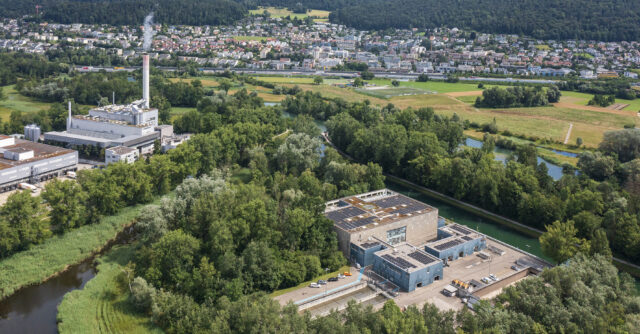
    Limeco will have to rebuild its waste incineration plant (KVA) and wastewater treatment plant (ARA) in the coming years. The regional utility company wants to combine both facilities in the new energy centre on the site of the current KVA. The LEZ will also produce energy in the form of electricity, district heating and gas. The current WWTP in Antoniloch must be decommissioned by 2050 because it is located in a nature and bird sanctuary of national importance.

    The Zurich-based architectural firmPenzel Valier was awarded the contract for the overall concept of the energy centre in January 2025.

  • Pension funds focus on sustainable living

    Pension funds focus on sustainable living

    Vertina Investment Foundation, based in Baden, has received subscriptions totalling CHF 74.3 million for its Vertina Wohnen investment group. The target volume was CHF 50 million. This investment group focuses on the development and realisation of sustainable residential properties in Switzerland. Its residential share currently stands at 99 per cent.

    According to a press release, the proceeds from the issue will be an important component in financing and realising two residential projects in Zurich and Kloten (ZH) and in acquiring further properties. “This combination strengthens the portfolio base, expands investment opportunities and supports the long-term growth of the investment foundation,” the press release states.

    In the wake of this successful capital raising, the investor base has grown to 47 pension funds. “The high demand confirms our long-term value creation strategy and our active, holistic management approach,” said Marco Uehlinger, Chairman of the Foundation Board. “We are convinced that this will create sustainable added value for our investors.”

  • Modernization and building mobility: Why we need to build on the existing infrastructure

    Modernization and building mobility: Why we need to build on the existing infrastructure

    This is particularly evident in ageing elevators and escalators. Around 10 million of these systems are in operation worldwide, most of them in densely populated city centers. They are more susceptible to faults and safety risks. Ageing elevators also often restrict the freedom of movement of people with disabilities, for example by making it difficult to open revolving doors.

    Modernization is not just a question of safety or comfort. It is also one of the most effective instruments for reducing emissions. The construction industry is already responsible for around 40% of global CO₂ emissions – a figure that could double within 25 years if nothing is done. The European Commission estimates that 85 to 95% of the buildings that will exist in 2050 are already standing today. Replacing these buildings is not an option. The key to reducing CO₂ is therefore not to build new buildings, but to retrofit the older but still functioning systems.

    For all those who want to keep their buildings and cities alive, modernization is a necessary investment in resilience, sustainability and general well-being. Today, networked, data-driven systems can detect wear and tear, predict maintenance requirements and extend the service life of systems – making cities not only safer, but also smarter and more environmentally friendly.

    For many building owners, modernization is still a challenge. High investment costs, long downtimes and uncertainty about where to start are common concerns. Partial modernization is often a sensible middle way. It combines the advantages of new technologies with the continued use of intact components and thus significantly reduces costs and operational interruptions – without having to accept the expense and downtime of a complete replacement. In the elevator sector, this can save up to 90 percent CO₂ compared to a complete replacement.

    Our cities cannot be redrawn, but they can be developed further. When we modernize the mobility systems that move millions of people every day, we create urban environments that are safer, more inclusive and more climate-friendly – and ready for the challenges of the coming decades.

  • Interior design combines design and technology

    Interior design combines design and technology

    Christinger AG from Brugg supported SV Group AG from Dübendorf with the interior design of its new hotel in Zurich. Moxy Zurich is a 162-room hotel located next to the Letzigrund Stadium. According to apress release, Christinger was responsible for part of the interior design, including large-scale images, lettering and various signage elements. The Christinger team used AI (artificial intelligence) tools for many elements of the image design.

    The Moxy is located at Badenerstrasse 537 and opened at the end of 2025. According to a statement from the SV Group, the hotel combines trend-conscious design with energetic hospitality and urban lifestyle.

    “Moxy stands for uncomplicated hospitality, modern design and a good dose of joie de vivre,” Marco Meier, Managing Director of SV Hotel, is quoted as saying in the press release. “With the new Moxy Zurich, we are creating a place that brings people together, whether they are travelling for business or pleasure.”

  • New double-track line relieves congestion on the route between Zurich and Winterthur

    New double-track line relieves congestion on the route between Zurich and Winterthur

    SBB has commissioned a consortium consisting of the construction companies Implenia from Opfikon and Marti from Zurich to build a new double-track line. As part of the Zurich-Winterthur multi-track project, the Swiss Confederation and SBB are planning to build a new line and expand the stations in Dietlikon, Bassersdorf, Wallisellen and Winterthur Töss. According to a statement, Implenia and Marti will each take on 50 per cent of the construction of five of the six lots in the project. The total contract is worth around CHF 1.7 billion, with Implenia’s share amounting to around CHF 830 million. The project is expected to take around ten years to complete.

    As part of the project, Implenia and Marti will take on the construction of the Brüttener Tunnel (lot 240), the Winterthur section (lots 140 and 141), the Dietlikon section (lot 340) and the Wallisellen section (lot 540). The new double-track line through the Brüttener Tunnel is intended to eliminate the 8.3-kilometre capacity bottleneck in the rail network between Zurich and Winterthur. Part of the bottleneck is a branch line towards Zurich Airport. The underground double-track expansion will involve the construction of a single-track tunnel with a diameter of around ten metres for each direction of travel.

    According to the announcement, the infrastructure project is geared towards the mobility needs of future generations and is therefore in line with Implenia’s strategy. “We are delighted that Implenia, together with our consortium partner Marti, will be able to contribute our many years of experience and comprehensive expertise in infrastructure construction to make this important section fit for increasing frequencies and future requirements,” said Implenia CEO Jens Vollmar in the press release.

  • Zimmerberg region consolidates wastewater treatment in new plant

    Zimmerberg region consolidates wastewater treatment in new plant

    STRABAG AG is involved in the Zimmerberg wastewater treatment plant (WWTP) project. The Schlieren-based construction company is erecting the shell of the new Scheller pumping station in Horgen on the former Gasi site. According to a statement, the aim of this work is to replace the existing WWTPs in Horgen and Thalwil with a new plant.

    Both existing wastewater treatment plants are “getting on in years”. Instead of operating both pumping stations individually, which would involve high investment costs for comprehensive modernisation, both municipalities have decided to join forces and create a “joint, modern wastewater treatment plant” for the Zimmerberg region. Once the joint treatment plant is operational, the existing Horgen wastewater treatment plant will be dismantled. The resulting unused land on the lake shore will be made available for public use and urban development.

    The participating municipalities of Horgen, Oberrieden, Rüschlikon and Thalwil already joined forces in September 2020 to form the ARA Zimmerberg special-purpose association. ARA Zimmerberg expects that from 2029 onwards, it will be able to treat the wastewater of up to 78,000 residents and industry in the Zimmerberg region.

  • Energy future in the Limmat Valley

    Energy future in the Limmat Valley

    The Limeco regional plant in the Limmat valley is facing a project of the century. A new waste recycling plant is to be built by 2034, followed by the reorganization of wastewater treatment by 2050. This will ensure that waste and wastewater from the Limmat Valley will continue to be processed in an environmentally friendly manner and used as a source of energy.

    The existing waste incineration plant will be replaced by a new building further to the west. A larger WWTP is to be built at the existing site to meet the needs of the growing Limmat Valley in the long term. The current WWTP will be decommissioned by 2050. It is located in a nationally protected nature and bird sanctuary.

    A project with vision
    The Limmattal Energy Center is a prime example of the transformation in the waste disposal and energy sector. From pure waste recycling, a multifunctional energy hub is being created that provides heat, electricity and gas – resource-conserving, locally anchored and climate-neutral.

    Design plan sets out framework
    A cantonal design plan forms the basis for planning law. It defines in a binding manner how the plants are to be phased, developed and embedded. Specifications on building plots, environmental and water protection, natural areas and public green spaces create planning security.

    An environmental impact assessment is being carried out in parallel. It examines the impact of the construction and operating phases on the environment, local residents and ecosystems. The aim is to create an energy center that combines climate and resource conservation. This includes electricity, district heating and gas production from renewable sources as well as concepts for the direct capture of CO₂ emissions.

    Participation and information
    The design plan will be open to the public for 60 days from January 20, 2026. Citizens, associations and authorities can comment on the draft during this time. The submissions will be examined by the cantonal authorities and documented in an objection report.

    On Wednesday, January 21, Limeco is hosting a public information event at which representatives of the canton and the company will present details of the project and answer questions. Information about the event can be found at www.lez.ch/gestaltungsplan.

    The complete documents are available at www.zh.ch/raumplanung and can also be viewed at the municipality of Dietikon and the Cantonal Office for Spatial Development.

  • Future model for life sciences, research and cluster power

    Future model for life sciences, research and cluster power

    The centrepiece of the campus is a kilometre-long, continuous park that physically and socially connects all the buildings. The striking buildings Main Campus HQ, HORTUS, ALL, HOPE, SCALE as well as Swiss TPH, ALBA Haus and many more are grouped around the green ribbon and create a space for dialogue, recreation and networking with more than five football pitches of park space. With over 5,000 workplaces on completion and more than 115,000 m² of usable space, the site will set new standards for infrastructure and collaboration in Switzerland and Europe.

    Architecture and sustainability as drivers
    The architecture by Herzog & de Meuron and Felippi Wyssen visibly conveys the idea of innovation to the outside world. The Main Campus HQ is practically fully let and, as a multifunctional research and communication centre, is a magnet for companies such as JNJ, SKAN, Basilea, the University of Basel and other players. Flexible multi-storey car parks and mobility services support the sustainable use of the site. SENN is acting as investor, developer and total contractor – from planning and realisation through to long-term marketing. The project is being developed in close collaboration with Basel Area Business & Innovation, the Canton of Basel-Landschaft and other partners from the worlds of science and business.

    HORTUS, an office building that amortises its production energy in 30 years, is outstanding. It was built from wood, clay and waste paper, generates energy via photovoltaics and fulfils the highest ESG criteria. Every component is part of the circular economy and prepared for future utilisation cycles. The inner courtyard garden by Piet Oudolf contributes to biodiversity and the indoor climate. HOPE and SCALE will offer further flexible spaces suitable for the public and production from 2028. Neighbours Swiss TPH and ALBA Haus strengthen the health science focus of the site, while the Holiday Inn Express complements the international business and network offering.

    Image: Switzerland Innovation Park Basel Area Main Campus

    Cluster, community and innovation
    More than 100 companies – from global players and spin-offs to young scale-ups – characterise the area and use programmes such as BaseLaunch and DayOne for start-ups, networking and knowledge transfer. Cluster events, community platforms and modern co-working infrastructures promote dialogue and the creation of joint projects. Educational facilities, childcare, catering, sports and conference facilities create a fully-fledged urban working ecosystem.

    The Botnar Institute of Immune Engineering as a beacon
    The Botnar Institute of Immune Engineering (BIIE), which will move into the ALL, a new, sustainable building on the campus in 2027, will provide a special boost. The decision in favour of this location underlines Basel’s importance as a research location. The institute, funded by the Fondation Botnar with around 1 billion dollars, brings together up to 300 top researchers from all over the world to develop innovative immune-based diagnostics and therapies. The aim is to close gaps in health technologies and improve quality of life worldwide. The BIIE community will have a significant impact on the cluster and the Basel region and will strengthen global networks with partners such as Oxford and ETH Zurich.

    Impact and perspective
    The Switzerland Innovation Park Basel Area Main Campus brings together knowledge, infrastructure and community in an internationally visible innovation centre. By integrating sustainability, empathy and excellence, a global hub for cutting-edge research, vibrant entrepreneurship and future-oriented urban development is being created in Allschwil. The model shows how site development, architecture and science clusters can pave the way for economic and social transformation today and tomorrow.

  • Wolf-Areal Basel affordable apartments

    Wolf-Areal Basel affordable apartments

    SBB is pressing ahead with the transformation of the former Wolf freight station into an urban living and working quarter. As with the Volta Nord project, former railroad areas are being opened up for living, working and leisure.

    from 2028, around 270 apartments will be built on two building plots in the heart of the site, specifically positioned in the affordable segment.

    low-cost rent and contemporary forms of housing
    The Basler Wohngenossenschaft is planning around 150 cooperative apartments, while Vivanta is planning around 120 additional affordable units. All apartments will be built according to the cost-rent principle, which allows for moderate rents in the long term.

    the concepts are based on contemporary forms of living for different phases of life, from families to singles to older people. Communal areas and meeting zones are intended to strengthen neighborhood life and promote social networking.

    Non-profit partners with a clear mission
    BWG and Vivanta pursue an explicitly non-profit mission. To secure affordable living space while maintaining high quality and sustainability standards. The projects should demonstrate that ecological construction methods are compatible with affordable rents.

    building rights as a development instrument
    Building plots are allocated on the basis of a partnership-based building rights agreement developed jointly by SBB, the Federal Office for Housing and the Swiss Housing Association. This model creates reliable conditions for non-profit developers and accelerates the realization of affordable housing in city centers.

    with the development of the Wolf site, SBB is continuing to pursue its strategy of opening up areas that are no longer required for operational purposes for modern urban use and making a substantial contribution to affordable housing.

  • IWB apprentices recycle street lights in their own start-up

    IWB apprentices recycle street lights in their own start-up

    A group of IWB trainees is turning disused Metro 45 street lamps into high-quality floor lamps. Sketches were turned into a prototype, and the first ten lamps have now been built. The team received support from experienced employees. According to a statement from IWB, a total of around 2,400 old lamps are suitable for reuse. The trainees have founded their own start-up to implement their project. The team includes a businessman, a business IT specialist, a road transport specialist, a network electrician and a metalworker.

    In a video published alongside the press release, one of them says that it is “exciting to work together with other apprentices; it brings us closer together”. One colleague thinks it’s “cool that we’re allowed to take on so much responsibility and that they trust us to make the right decisions”. Another colleague points out that it’s “difficult to have to make all the decisions yourself”. “But somehow it’s also fun, especially when you see the final product of the prototype and know what the sketch once looked like.”

    Project manager Saskia Damann explains the aim of IWB: “We want our students to learn as much as possible, for example things like entrepreneurial thinking, circular thinking and personal responsibility. These are skills they will need for their future.”

    What began as an idea, according to the IWB in a further statement, “is slowly taking shape and shows what is possible when learners take responsibility and work together across disciplines.” As a partner, the Basel-based lamp manufacturer and retailer Regent Lighting made the decisive step possible. It carried out the safety and quality tests. Planning for the second production round is currently underway.

  • Canton of Jura updates list of industrial sites suitable for redevelopment

    Canton of Jura updates list of industrial sites suitable for redevelopment

    The canton of Jura is committed to revitalising its industrial wastelands. As part of theSwissRenovproject, it has now updated the cantonal register of industrial wastelands suitable for redevelopment, according to a press release. This first step is intended to provide up-to-date and reliable information to companies and investors who are looking for commercial space or are interested in the redevelopment and modernisation of industrial facilities.

    In the first phase of the project in 2019, around 90 industrial brownfield sites were identified, of which around half have been redeveloped to date. Now, 30 more brownfield sites are being added. The updated map, which can be viewed online, currently lists 70 industrial sites. 60 per cent of these are located in the district of Porrentruy, 36 per cent in the district of Delèmont and the rest in the districts of Franches-Montagnes and Moutier. In the current phase, the SwissRenov project in Jura is scheduled for completion by 2028.

    The SwissRenov project is being led by Haute École Arc in collaboration with the cantonal spatial planning departmentand is being driven forward byCreapole SAin Delèmont. It is supported by the Swiss Confederation through theInnosuisse flagship programme and byCleantechAlps, the cleantech promoter for French-speaking Switzerland.

    According to the press release, this project, which is unique in Switzerland, aims to promote the renovation and refurbishment of industrial buildings in line with the principles of the circular economy.

  • New management accompanies establishment of multifunctional arena

    New management accompanies establishment of multifunctional arena

    According to a press release, since its opening in October 2025, the Pilatus Arena in the Mattenhof district of Kriens has already established itself as an efficient, multifunctional platform for indoor sports and events. At the end of the financial year, the two project initiators, Toni Bucher and Nick Christen, stepped down from their positions on the Board of Directors. Markus Mettler, Chairman of the Board of Directors of Schlieremer Halter AG and Pilatus Arena Sports & Events AG, replaced Bucher as the new Chairman of the Board of Directors of Pilatus Arena AG. Construction of the Pilatus Tower, located next to the arena, is also scheduled for completion in autumn 2026.

    “We would like to thank Toni Bucher and Nick Christen for their tremendous commitment to sport and Pilatus Arena AG,” Markus Mettler is quoted as saying in the announcement. “Both have been instrumental in driving the project forward since 2007.” The arena was developed and built by Halter and has been operated by Pilatus Arena Sports & Events AG since its opening. Halter AG is also the majority shareholder in Pilatus Arena AG, with a 70 per cent stake.

    Several sporting events have already taken place in the new arena in 2025. Highlights included the Swiss national handball team’s first international match, Swiss Central Basketball games in the National League B and the Final4 Mobiliar Handball Cup for men.

    “The anticipation for the first Final4 Cup in the new PILATUS ARENA was huge – and it was fulfilled in every respect,” said Andreas Campi, President of the Final4 Organising Committee. “The atmosphere was exhilarating, and the format was convincing.”

  • New investor focuses on continuity and long-term prospects

    New investor focuses on continuity and long-term prospects

    The Hotel Bernerhof Gstaad has new owners. According to a statement, Brigitte and Thomas Frei have sold their majority stake in Hotel Berner AG to asset manager RMG THE RISK MANAGEMENT GROUP (SUISSE) SA in Geneva and investment and holding company Holdingstone SA in Zug. The sale price has not been disclosed.

    Over three decades, the Frei couple developed the Bernerhof into a renowned luxury and gourmet hotel. It has 46 rooms and suites in various categories and four award-winning restaurants. “After all these years as owners and managers of the Bernerhof, we are happy to hand over this living legacy to a group that is driven by a positive and ambitious vision for the Bernerhof and for Gstaad,” the couple are quoted as saying. They are particularly pleased that François Grohens took over the operational management at the beginning of December.

    Grohens, 55, previously worked at the Bernerhof from 2002 to 2011 before moving to Park Gstaad. He has served as director there for the past six years. Stints in the USA and on cruise ships brought the Frenchman to Switzerland in 1997 and to Gstaad in 2000. According to reports, his focus is on “preserving the Bernerhof as a warm, familiar place for regular guests, while inspiring new guests with the quality of the service, the restaurants and the lively atmosphere”.

    Jean-Guillaume Pieyre, founder and CEO of RMG, thanks Brigitte and Thomas Frei “for the trust they have placed in us”. Together with Emmanuel Kilchenmann, Vice President of Holdingstone, he wants to promote a project “that treats Gstaad and the region with respect and shares the vision of a lively village centre all year round”.

  • Investment contribution paves the way for national association centre

    Investment contribution paves the way for national association centre

    The city of Thun is planning to participate in the realisation of the Swiss Football Home, which is to be built as an SFV football campus in Thun South. According to a statementfrom the city, the investment contribution of CHF 4 million is part of a comprehensive financing concept that includes SFV’sown financing as well as funds from the federal government, the canton of Bern and third-party financing. The CHF 4 million non-repayable grant is to be used for building costs, outdoor facilities and project planning. The city council will decide on the loan at its meeting on 16 January. This financial contribution by the city is linked to various conditions, including ensuring the overall financing of the Swiss Football Home and determining the cantonal contributions.

    The Swiss Football Home will serve as the new headquarters of the Swiss Football Association and will comprise buildings and several football pitches. Around 150 employees will work on the campus, which is planned as part of the Thun South sports and leisure cluster. According to the press release, the Swiss Football Home will have a long-term positive impact on the city of Thun’s tax revenue and on economic development in the region. In particular, the creation of 150 jobs and the gathering of the national teams will be a unique opportunity for the location.

    Other private sports projects have already been initiated in the Thun South cluster, such as an indoor and outdoor racket sports centre, a climbing and bouldering facility and a ball sports hall. The wide range of sports facilities on the site, which is in the immediate vicinity of FC Thun’s Stockhorn Arena, will bring many synergies, explains the city. “The long-term economic benefits for the city of Thun from the establishment of the Swiss Football Home will exceed the one-off investment contribution many times over,” said Mayor Raphael Lanz.

  • Modern hall solution supports specialised recycling processes

    Modern hall solution supports specialised recycling processes

    Bieri Tenta AG, a manufacturer of fabric solutions based in Grosswangen, has announced the successful completion of a warehouse project at its Susten site. The client was BOWA Recycling AG, a subsidiary of Theler AG from Raron VS that specialises in recycling contaminated soil. According to the press release, the warehouse is optimally designed to meet the requirements of modern recycling operations and is already the second project in which the companies have collaborated. In 2019, Bieri had already built a 2,700 square metre hall for BOWA Recycling AG.

    The warehouse in Susten is a gabled hall with a floor space of just under 3,000 square metres. The warehouse is equipped with six Bieri roller doors (5 x 5 metres) and six escape doors, which guarantee smooth operations and a high level of safety in everyday use. During the six-week installation process, Bieri used a mobile crane to lift the steel parts, which weighed up to 13 tonnes, to their destination. A 59 x 61 metre film weighing around 3.6 tonnes serves as the roof and covering for the membrane hall. The membrane is suitable for the installation of a photovoltaic system, allowing customers to generate sustainable energy directly on site.

    The client, BOWA Recycling AG, is a subsidiary of Theler AG and operates a soil washing plant in Leuk-Susten, but has also been operating a thermal treatment plant since 2024. According to its own information, the company achieves recycling rates of up to 99 per cent for contaminated soil material.

    The Bieri Group is a manufacturer of technical textile solutions for industries such as manufacturing, construction, transport, architecture and events. The company is divided into Bieri Tenta AG in Grosswangen and Bieri Zeltaplan GmbH, based in Leipzig, Germany.

  • Experimental field of cooperative city life

    Experimental field of cooperative city life

    As an innovation and learning platform, “mehr als wohnen” sees the Hobelwerk not only as a housing estate, but also as a real-life laboratory for new forms of housing, participation models and cooperative governance. For experts in planning, housing construction and urban development, the neighborhood offers illustrative material for central questions of future urban development. For example, the focus is on how much community everyday life can actually tolerate and how mixed uses can be organized in such a way that they function robustly in the long term. It also shows how a district can be designed to be socially open, ecologically ambitious and yet economically viable.

    The Hobelwerk is located on the former site of the Kälin & Co. carpentry factory right next to Oberwinterthur railroad station and thus in a well-developed, formerly commercial location. The client is the building cooperative mehr als wohnen, which has realized its second major project after the Hunziker Areal and developed the site in two stages between 2018 and 2023.

    five new buildings and several converted existing buildings have been built on an area of around 16,000 m², with a total of around 158 apartments plus commercial and communal areas. The development is considered a model for socially, ecologically and economically sustainable urban development and has won several architectural and energy awards.

    urban design, architecture and mix of uses
    The various structures, including long blocks along the tracks, a courtyard house, a rectangular building and a small residential tower, create a small-scale quarter with courtyards, alleyways, play areas and gardens. Several offices, including pool Architekten, Ramser Schmid, Pascal Flammer, Baubüro in situ and Studio Vulkan, ensure diversity in the details while maintaining a clear overall figure.

    the mix of uses ranges from classic 1.5- to 6.5-room apartments, cluster apartments and micro co-living to residential studios for cultural workers and commercial space of various sizes, some of which is affordable. The first floor includes a daycare center, bakery, co-working space, studios, laundromats, common rooms and communal areas that function as an extended “living room” for the development.

    living concepts and everyday organization
    The cooperative combines established and experimental forms of living such as micro-co-living for one to two people with shared kitchens and common areas, spacious cluster apartments for shared apartments, classic family apartments and inclusive housing projects, for example with partner organizations such as jawohn. The residential offering is complemented by guest rooms, guest apartments and rooms that can be flexibly rented.

    the commons play a central role with arcades, roof terraces, common rooms and the covered Hobelwerkplatz square, which facilitate informal encounters and shared use. Residents actively shape the neighborhood in neighborhood groups and participation formats, a core component of the “more than housing” DNA.

    existing buildings, open space and identity
    The old planing mill hall and the Z-Hall were preserved, gently converted and now form the center with a covered square for markets, festivals, cultural and neighborhood events. In this way, the industrial past remains present as a spatial and narrative layer and gives the area a clear identity.

    the open space design with vegetable gardens, gravel paths, play areas and the greening of courtyards and façades aims to ensure a high quality of stay, heat reduction and biodiversity. Low-car access and a mobility station with bikes and trailers make everyday life without a car easier.

    sustainability, governance and learning character
    The project focuses on energy-efficient construction, robust, durable materials and the targeted reuse of components, combined with low per capita consumption of resources and space. The Hobelwerk received several awards for this, including as one of the best new construction projects in Switzerland and for its energy-efficient, resource-conserving design.

  • Basel region calls for rapid implementation of cross-city rail link

    Basel region calls for rapid implementation of cross-city rail link

    The underground rail link between the SBB railway station and Badischer Bahnhof in Basel is essential for the expansion of the S-Bahn in the border triangle. This is stated in a declaration by the cantons of Basel-Stadt and Basel-Landschaft and the Basel Chamber of Commerce (HKBB). They are calling for the rapid implementation of this so-called cross-city line, which will make the current turning movements of trains in both stations superfluous. In return, they see potential for reductions in further rail expansion in Basel.

    The two cantons and the Chamber of Commerce refer specifically to Ulrich Weidmann, who described the new connection as undisputed and absolutely necessary for the S-Bahn system. The professor at the Swiss Federal Institute of Technology Zurich had prepared the Transport 2045 report. On the basis of this report, the Federal Council decided in October to deprioritise the Basel SBB underground station and the cross-city line.

    “The cross-city link represents a quantum leap in suburban rail services for the region,” said Esther Keller, member of the cantonal government, in the press release. “In our view, it can be realised within the next 20 to 30 years,” said the head of Basel’s Department of Construction and Transport.

    Martin Dätwyler points out the importance of eliminating bottlenecks on the roads. “With the rapid implementation of the diameter line, we will be able to make both modes of transport – road and rail – fit for the future,” the HKBB director is quoted as saying. “This will not only strengthen the Basel economic region, but also the Swiss economy as a whole, and is essential for the country’s supply.”

    Government Councillor Isaac Reber also emphasises the importance for the whole country. “The region is the gateway to Switzerland,” says the head of the Basel-Landschaft Department of Construction and Environmental Protection. “Without the construction of the cross-city link, the region will become a bottleneck. We cannot afford that – and neither can Switzerland.”

  • Renovation combines functionality, comfort and alpine location

    Renovation combines functionality, comfort and alpine location

    Heller Gastro AG will open its newly renovated and converted Eiger Lodge Grindelwald on 19 December 2025. The work centred on the renovation of the Eiger Lodge “Easy”, the older of the two buildings that form part of the Eiger Lodge. It was modernised between April and December. According to a press release, the investment volume totalled 4.5 million Swiss francs. The two hotel sections “Easy” and “Chic”, located directly beneath the north face of the Eiger, offer a total of 220 beds.

    according to the statement, 70 per cent of the order volume was carried out with local companies, while the remaining 30 per cent was carried out with companies from Bern and the Bernese Oberland. The new breakfast area now offers more space and large window fronts with mountain views. New kitchen facilities are intended to simplify processes behind the scenes. The reception and entrance area has also been completely refurbished. A sauna has been installed on the upper floor. An adjoining terrace is still under construction. The communal showers, which are part of the “Easy” multi-bed, double and family rooms, have also been completely renovated.

    The hotel has been the base for numerous mountain enthusiasts since the 1990s under the name Mountain Hostel. in 2015, it was taken over by Heller Gastro and renamed the Eiger Lodge. The company also operates the Eiger Mountain & Soul Resort Grindelwald on site.

  • New cable car technology strengthens sustainable mobility in metropolitan areas

    New cable car technology strengthens sustainable mobility in metropolitan areas

    The Câble C1 urban cable car system has been in operation in the south of Paris since 13 December, using ropes and a magnetic induction monitoring system from Fatzer AG in Romanshorn. Fatzer claims to be the global market leader in the field of transport ropes and is part of the Brugg Group based in Brugg. According to a press release, the new railway is the longest urban cable car in France. In the densely populated Val-de-Marne department, which is part of the Paris metropolitan area, it is intended to relieve the public bus and metro system and reduce individual traffic. The project was realised by Doppelmayr France, a subsidiary of the Doppelmayr ropeway technology group based in Wolfurt, Austria.

    According to Fatzer, the cable car serves a 4.5 kilometre route with five stations and a journey time of 18 minutes, connecting the suburb of Créteil with the municipalities of Limeil-Brévannes, Valenton and Villeneuve-Saint-Georges. A total of 105 cabins travel over 30 supports with the help of three rope loops. Fatzer supplied three ropes with a total weight of around 90 tonnes for this project. The Performa DT rope type was used, which Fatzer developed especially for use in densely populated areas and high loads. It is characterised in particular by its long service life and quiet, smooth running.

    The rope condition is monitored using the Fatzer TRUscan solution to ensure that the operating times of 18 to 19 hours a day can be reliably guaranteed without interruption. According to the company, magneto-inductive measurements provide those responsible with real-time data. Irregularities are detected immediately, making maintenance work easier to plan.

    It is stated that the Performa-DT rope is already being used in numerous highly frequented urban installations, including in La Paz in Bolivia, Medellín in Colombia, Guayaquil in Ecuador, La Réunion and Ajaccio in France, Mexico City and, soon, Uruapan in Mexico.

  • New sales concept focuses on experience and encounters

    New sales concept focuses on experience and encounters

    Rohner is redesigning its sales area in Balgach. According to a statement from CEO Hermann Lion, the site will be expanded to include a new sales area and is set to open in September 2026. The aim is “a space that connects brands and people. A space that inspires, surprises and shows that modern retail is far more than just sales.”

    The traditional company, founded in 1873, is thus responding to its perception that “people are once again shopping more consciously and looking for real contact – after years in which much has become digital,” says Lion on request. “Brick-and-mortar retail has a future if it offers more than just a transaction.” This is why the textile company is “investing specifically in a concept that combines experience, quality and encounters. It is a statement for the strength of physical retail – and for our region”.

    The new sales area is being designed by Zurich-based Susanne Fritz Architekten: “Clear lines. Natural materials. Light that tells stories,” says Lion. Susanne Fritz has already renovated and extended the entire building complex in Balgach and put it to a new use. The entire brand identity of Rohner AG was modernized and also architecturally redesigned, including the existing store space. “Despite a lower density of racks, it was possible to increase sales per square meter,” according to a presentation of the work.

    According to Lion, something is now being created in the new sales area “that we have never seen before in our region”. Various brands are to be visible together at this location. Shop-in-shop concepts for other textile brands are planned, as well as for accessories, lifestyle products, outdoor and design brands. “It is important to us that the partners can tell a story and fit into the overall experience, whether they are local manufacturers or international brands with a clear attitude.”

  • Realignment of a former weapons range takes shape

    Realignment of a former weapons range takes shape

    With the signing of a letter of intent to cede the Moudon military base, the canton of Vaud can start its planning process for the future use of the site. As the Confederation confirmed in a press release, the army will vacate the site from the end of 2027 to make way for the Vaud Police Academy. The canton, armasuisse Real Estate as the real estate competence center of the Federal Department of Defence, Civil Protection and Sport(DDPS) and the State Secretariat for Migration(SEM) are involved in the declaration of intent. The basis for this step is the decision taken by the Vaud State Council in May 2022 to relocate the police academy from its current location in Savatan to Moudon.

    According to the press release, the area and infrastructure of the Moudon weapons range offers great potential for establishing an interdisciplinary training center. The canton is already examining whether the site could be used not only by the police academy, but also by other partners from the security sector. In particular, so-called blue light services, services in the area of environmental protection or in the area of the penal system are under discussion. A project planning loan should enable all options to be explored.

    It is already clear today that the area will be gradually redesigned after the withdrawal of the army. The 41 Hospital School Command stationed in Moudon will move to the Chamblon military base in stages from the second half of 2027. The emergency capacities of the SEM in Moudon will remain in place. This means that accommodation can be provided in the multi-purpose hall there in the event of an increase in asylum seekers. “If the project progresses according to plan, the first training courses could begin between 2030 and 2032,” says the federal government.