Category: Switzerland

  • Basel is building the future with responsibility

    Basel is building the future with responsibility

    Mr. Hess, you have been involved in the Basel economic region for many years in various roles. What milestones or formative developments have you particularly remembered during this time?
    Today, politics and administration are much more interested in the needs of the economy than when I started working for the canton. Visible examples of mutual trust are the site developments by Novartis, Roche and Lonza and the multi-billion euro investments by these and other companies at the location. In addition to nurturing existing companies, Basel-Stadt has also massively increased its promotion of innovation. Since 2024, almost 68 million francs have been invested over eight years in nine programs in the areas of life sciences, digital innovation and the sustainable economy. The latest addition is the Basel location package. Depending on the budget situation, the canton is investing between 150 and 500 million francs per year in strengthening the attractiveness of the location. Almost all of the money goes to companies in Basel.

    Basel is considered one of the most dynamic business locations in Switzerland.
    How do you assess the current economic situation in the canton of Basel-Stadt?
    Thanks to our industry structure, Basel-Stadt is doing well economically. The erratic economic policy of the USA has hardly left any traces, even if it does pose challenges for our companies. The current position of the location can be seen, for example, in the cantonal competitiveness indicator of UBS, where Basel-Stadt is again in second place of all Swiss cantons this year. Or the triple A rating that the rating agency S&P has once again awarded the canton. Both encourage us to continue on our chosen path – as an innovative and reliable partner to the economy.

    What is the current focus of location promotion for urban areas and residential construction?
    The cantonal development plan envisages a population and employment target of 220,000 by 2035. People need living space, but also areas to work and ideally short distances between home and work. We strive to provide companies in the canton of Basel-Stadt with sufficient available high-quality space as a locational advantage. A particular focus here is on securing production space and an optimized supply of space for scale-ups.

    What are the challenges posed by a shortage of space and high demand? How is Basel-Stadt solving these?
    A major challenge in Basel-Stadt is the competition for space in the limited space available due to cantonal and national borders. We often hear from those involved in real estate project development that it is not a problem to build upwards in Basel. It is also important to make optimum use of the potential of the transformation sites in order to create more space for living and working areas.

    What are the most important findings from the Basel location package for site development?
    The Basel location package is attractive for site developers and investors, as taxable companies in Basel-Stadt that spend on research and development, parental leave, climate protection and energy efficiency can receive substantial subsidies. This facilitates the establishment and promotes the growth of companies on sites in the canton.

    How does the canton of Basel-Stadt accompany and support the transformation of industrial sites into modern residential and working quarters?
    Through an active and systematic exchange with companies and landowners. At the AWA, we not only know about a company’s confidential, potential development steps, but can also provide the company with the necessary development sites.

    What role do investors and developers play for Basel today?
    Both play an important role. They invest in underutilized, partially derelict land in order to develop it and generate substantial added value for Basel as a location. However, transformation sites are also in the public eye due to their size. All parties involved must take this responsibility into account.

    How does the promotion of start-ups and life sciences contribute to real estate development?
    A concrete example: the canton has been operating the Tech Park Basel for 14 years. We offer small-scale laboratory and office space there at attractive rental conditions. Start-ups that outgrow Tech Park Basel then look for larger spaces on commercial terms. We are therefore producing a pipeline of mature, well-financed startups (mostly biotechs) for the benefit of the private, unsubsidized real estate market.

    What future trends do you see for Basel up to 2030, particularly with regard to digitalization and new forms of work?
    Job quality is much more important today than it used to be. Digitalization could further drive the flexibilization of space rental. Our experience shows that some companies are looking for rental space where, for example, a meeting room can be booked flexibly via an app. Although Basel has a healthy supply of office space, it is still not so easy to find this type of space through real estate agencies.

    They will enter a well-deserved retirement in the next few years.
    What skills are particularly important for your succession?
    Skills are important. But personal qualities are even more important. These include entrepreneurial thinking, enthusiasm, a willingness to learn, perseverance and the joy of working together in a great team to develop the site every day. I have a bit of a problem with the term “retirement” anyway. I love my work as a “public entrepreneur” and would like to remain involved in areas that are important to me personally even after I leave my current position in May 2027.

  • Decentralized wastewater solutions are gaining in importance

    Decentralized wastewater solutions are gaining in importance

    In Switzerland, as in other European countries, wastewater from households is disposed of and treated centrally. Wastewater from toilets, kitchens, washing machines and dishwashers are mixed together. This makes recycling much more difficult. In order to reduce this problem, researchers at the Eawag water research institute in Dübendorf are working on possible decentralized solutions, according to a press release.

    The aim of these solutions is to separate the various wastewater streams at the point of origin. They could then be treated on site or nearby and resources such as clean water, nutrients and energy could be recovered. The Water Research Institute has now launched a toolbox to provide architects and construction planners with an overview of technologies and practical applications. Among other things, it presents various examples of implementation. These range from solutions for individual households to wastewater treatment for entire neighborhoods. The toolbox contains three groups of fact sheets ranging from the definition of objectives and the selection of a strategy to possible application technologies.

  • New pipe bridge strengthens regional district heating network

    New pipe bridge strengthens regional district heating network

    BRUGG Pipes from Kleindöttingen, part of the Brugg-based BRUGG Group AG, has supplied pre-insulated district heating pipes for a crossing of the A4 highway. The bridge element between Holzhäusern and Rotkreuz was lifted into place at the end of October, according to a press release. During assembly, two 48-metre-long pipes suitable for bridge structures were installed. They weigh 4.9 tons without water.

    The pipe bridge connects existing and new sections of the Ennetsee heating network. Further districts and commercial locations in Rotkreuz ZG, Cham ZG and neighboring areas are to be connected to the district heating network. The client for the project is WWZ. The company B S AG was responsible for the planning and construction management of the bridge, supported by Hodel SHLK AG as the pipe constructor. “I am delighted with how WWZ, B S, Hodel SHLK and the other partners implemented this project in a spirit of partnership and with the utmost precision. Laying our pipes like this with our own bridge is definitely not an everyday occurrence. I am all the more pleased that the installation was successful and that our pre-insulated pipe systems are now supporting the expansion of the Ennetsee heating network and decarbonization,” said Martin Rigaud, CEO of BRUGG Pipes, in the press release.

    WWZ uses the waste heat from the Renergia waste incineration plant in Perlen LU as a heat source. Cham is also to be supplied with district heating from the project by fall 2026. Overall, the expansion of the network is expected to save around 12,000 tons of carbon dioxide per year.

  • Real estate prices remain high

    Real estate prices remain high

    Real estate prices will remain on an upward trend in 2026. Forecasts by Zürcher Kantonalbank(ZKB) predict a price increase of 4.5 percent. The abolition of the imputed rental value will have no impact on this, nor will the baby boomers change the situation, according to a press release on the latest Immobilien aktuell study.

    On the housing market as a whole, the pressure on owners, tenants and tradespeople is growing as a result of the housing shortage and immigration. Switzerland is dependent on immigration, but the influx is “exacerbating the demand for housing in already tight markets”. One in four newcomers move to the five largest cities – one in ten to Zurich.

    The ZKB experts expect the situation to remain tight as a result of a drop in demand for rental apartments. Vacancy rates are at a record low and are having a particular impact on the relocation behavior of young adults. In 2023, 15 percent fewer people between the ages of 21 and 25 will have moved than in 2020. “Many will stay in Hotel Mama because there is no suitable living space available,” they say.

    Demographic change will not have a price-reducing effect. “Baby boomers are expected to increase the supply of single-family homes by around 14% and condominiums by 10% by 2035,” it says. “Demographic change will change the market, but will not trigger a price slump,” Ursina Kubli, Head of Real Estate Research at ZKB, is quoted as saying. Prices for second homes rose by 40 percent in 2019 and 2024, but will remain at a high level after a slight decline in 2025.

    ZKB’s forecasts are based on studies of the abolition of the imputed rental value, the supply restriction for rental apartments, a possible wave of sales by the baby boomer generation, market influences due to immigration and the changed vacation apartment market.

  • Renewable gas strengthens local supply

    Renewable gas strengthens local supply

    Since October, some of the sewage gas from the wastewater treatment plant (WWTP) of the Aargau and Surroundings Wastewater Association(AVAU) in Telli in Aarau has also been used to supply heat locally. According to a press release, Green Power Aarau AG processes the gas, which is then fed into the natural gas network of Eniwa AG.

    This replaces fossil natural gas with renewable gas. According to the press release, the quantities are currently still manageable. However, they should be significantly increased with the ARA expansion.

    “With this project, we are demonstrating how the by-product sewage gas can be turned into a valuable energy source,” said Hans-Kaspar Scherrer, CEO of Eniwa and Chairman of the Board of Directors of Green Power Aarau AG, in the press release. “The collaboration between AVAU, Green Power Aarau and Eniwa is a strong example of how the circular economy works in practice in the region.” According to Scherrer, the three companies are jointly contributing to a sustainable energy supply and the reduction of CO2 emissions, as well as strengthening local value creation.

  • Central Switzerland’s first alpine solar plant goes online

    Central Switzerland’s first alpine solar plant goes online

    energieUri has connected the first alpine solar plant in Central Switzerland to the grid on the Sidenplangg in the municipality of Spiringen, according to a press release. The plant at an altitude of 1,800 to 2,000 meters is set to generate 12.5 gigawatt hours of electricity per year with a total output of 8 megawatts when fully expanded. Almost half of this will be produced in winter.

    The plant currently supplies 13 percent of the planned electricity. This qualifies it for funding under the Solarexpress program. Work is due to resume in spring and be completed by the end of 2028.

    APV Sidenplangg AG is owned by the Uri-based energy supplier energieUri AG as the initiator and aventron AG, based in Münchenstein BL. “Such power plant projects create and secure highly qualified jobs in the region – be it in the planning, realization or future operation and energy management by energieUri,” says Werner Jauch. CEO of energieUri and Chairman of the Board of Directors of APV Sidenplangg AG, is quoted in the press release.

  • Award for sustainable hospital construction

    Award for sustainable hospital construction

    Baden Cantonal Hospital(KSB) has been honored at the World Architecture Festival in Miami, Florida. The architecture of the new KSB building won a prize in the Health category, according to a press release. The World Architecture Festival was held from November 12 to 14.

    At the event at the Miami Beach Convention Center, 160 international jurors voted on 460 projects. The hospital building realized by Nickl & Partner Architekten Schweiz and other planning partners was recognized for its clear design language, sustainable construction and consistent focus on a healing environment for patients, according to the press release. “This award is an impressive confirmation of our vision: to build a hospital that combines medical excellence and efficient operation with state-of-the-art architecture,” said Pascal Cotrotzo, CEO of KSB. “We are proud that our new building in Miami has received international recognition. Our thanks go to everyone who made this major project possible.”

    KSB already received the European Healthcare Design Award in London in June 2025. In order to show off the entire new building to its full advantage, a green space will be built on the site of the old hospital to connect it to the city. The KSB refers to a complaint by the Aargau Heritage Society against the demolition of the old building and a petition with 7,000 signatures against this complaint.

  • New tracker makes the Swiss power-to-X landscape visible

    New tracker makes the Swiss power-to-X landscape visible

    Renewable electricity can be stored in chemical energy carriers such as hydrogen, synthetic fuel and methane (Power-to-X). According to a press release from the Swiss Power-to-X Collaborative Innovation Network SPIN, more than 50 projects in this area are already underway in Switzerland.

    Together with the Coalition for Green Energy & Storage(CGES), SPIN is therefore launching a tracker that provides an overview of known projects in Switzerland. The resulting map makes visible those projects that have gone beyond laboratory tests and have already become demonstration projects or even commercial applications. SPIN collects the data, CGES visualizes it.

    “The tracker facilitates collaboration by providing a structured database that promotes synergies between stakeholders and supports decision-making,” Christoph Sutter and Antonello Nesci, co-directors of CGES, are quoted as saying in the press release.

    Martin Bäumle sees power-to-X technologies as the key to defossilizing the economy. “With the tracker, we are creating transparency, strengthening collaboration and helping to turn promising ideas into scalable solutions,” said the National Councillor (Green Liberal/ZH) and Co-President of SPIN. “Reliable data can help policy makers to adapt regulations and investors to identify new opportunities.”

    The map will be presented at the CGES annual event, which will take place on November 21 at Swissgrid in Aarau. CGES is a coalition of partners from business, academia and the public sector for green energy, founded by the ETH Domain.

  • Modern logistics construction focuses on efficiency and sustainability

    Modern logistics construction focuses on efficiency and sustainability

    Transstahl AG, which belongs to Pestalozzi, is to be able to transport long and bulky goods even more efficiently and flexibly throughout Switzerland in future. The Pestalozzi Group is therefore building a new logistics center in Pieterlen, for which the ground-breaking ceremony has now been held, according to a press release. In addition to representatives from Pestalozzi and Transstahl, Beat Rüfli, Mayor of Pieterlen, and Simon Enderli, Head of Location Promotion for the Canton of Bern, as well as other guests also took part in the ceremony.

    The logistics center will be 100 meters long, 30 meters wide and 12 meters high. An energy-efficient heating system is planned, as well as a photovoltaic system and charging stations for electric trucks and cars. A large proportion of the materials used come from the Pestalozzi Group, which specializes in steel technology and building services.

    “With this ground-breaking ceremony, we are investing in the development of our group of companies and making a clear commitment to Switzerland as a business location and to working in partnership with municipalities and regions,” Matthias Pestalozzi is quoted as saying in the press release. He is the owner and Delegate of the Board of Directors of the Pestalozzi Group.

  • Double use of space increases solar power production

    Double use of space increases solar power production

    According to a press release, ARA Thunersee has inaugurated HORIZON, the largest movable solar folding roof in the world. It was realized by the cleantech company dhp Technology from Zizers. With an installed capacity of 3.6 megawatts peak and around 3 gigawatt hours of electricity, the system will supply 700 households.

    According to ARA Thunersee, the more than 20,000 square meter plant is based on technology from dhp Technology. dhp CEO Gian Andri Diem sees great potential in generating energy on existing areas. “This is how we create progress without taking up additional space,” he is quoted as saying.

    According to dhp’s project description, efficient use of space is relevant in order to make progress with the energy transition through photovoltaics. Wastewater treatment plants, logistics areas, waterworks and parking areas are particularly suitable for solar power production due to their previously unused areas. According to Ingo Schoppe, Managing Director of ARA Thunersee, “intelligent land use makes an active contribution to security of supply, economic efficiency and climate protection”.

    The solar folding roof spans several clarifiers and makes double use of existing infrastructure areas – for wastewater treatment on the ground and for solar power generation above. The electricity generated there is intended for wastewater treatment and local supply.

    Based on Swiss cable car technology, the roof is able to react to extreme weather conditions. It folds up automatically in the event of storms, snow or hail. This allows operational safety and energy production to be achieved without having to intervene in ongoing processes.

  • New impetus for the Schwarzbubenland region

    New impetus for the Schwarzbubenland region

    The Forum Schwarzbubenland has appointed a new location promotion officer for the districts of Dorneck and Thierstein. According to the association, it has entrusted National Councillor Christian Imark with the mandate. The aim is to better meet the needs of a dynamic economic situation.

    On the one hand, the location promoter should help to attract new companies in order to strengthen the economic base. On the other hand, he is to support local companies in overcoming current challenges and achieving growth. Finally, Imark is to intensify cooperation between business, education and politics.

    “As an experienced personality from politics and business, Christian Imark brings with him the ideal tools to make our region better known, position it successfully and provide new impetus,” Dieter Künzli, President of Forum Schwarzbubenland, is quoted as saying in the press release.

    Christian Imark (born 1982) has been a member of the National Council for the Swiss People’s Party (SVP) since 2015. He is also the owner of Airboxx GmbH, a company based in Fehren SO that specializes in the rental of marquees. The location promotion mandate comprises a 30 percent workload.

    Imark replaces Karoline Sutter, who took over location promotion in 2022. At that time, the mandate still consisted of the location promotion of Schwarzbubenland and the neighboring Baselbieter Laufental. Sutter took over the mandate together with Rita Stoffel-Meury.

  • Education cluster Polyfeld Muttenz

    Education cluster Polyfeld Muttenz

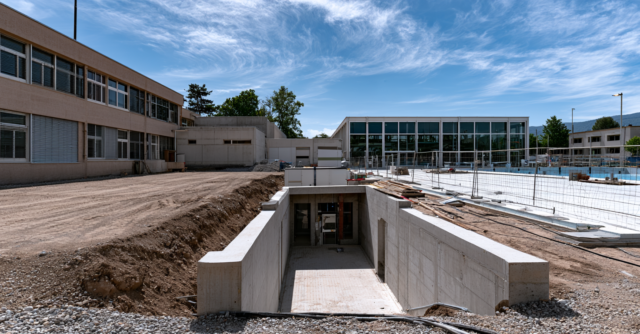
    The canton of Basel-Landschaft is combining the BBZ BL, the Muttenz grammar school and the Zentrum für Brückenangebote into a joint secondary II campus at Polyfeld. Stage 1 focuses on the dismantling and conversion of the existing tower, which has been gutted from top to bottom, decontaminated and completely dismantled in the core area. The core walls, staircases, floor slab and foundations were removed in a controlled manner over an area of around 20 by 20 meters.

    To ensure that the slender tower remained stable during the conversion and new construction, temporary bracing with heavy steel frames was installed on each floor. At the same time, the new construction of the building core and the construction of the new main staircase, which is to become a design center of the BBZ as a freely suspended prefabricated construction in exposed concrete, began.

    Exposed concrete, workshop building and triple sports hall
    All new buildings in stage 1 will be constructed in high-quality exposed concrete, with a project-specific formwork and concreting concept for uniform surfaces. The workshop building, which is around 55 meters long and 26 meters wide, is being built in three stages so that walls, columns, earthquake walls and ceilings can be constructed in parallel on each floor.

    The new triple sports hall will have a complex supporting structure made of pre-stressed prestressed concrete beams, which will be assembled in stages, provisionally supported and pre-stressed after the ceiling has been concreted. This allows the hall to be flexibly divided into three smaller units at a later date. An external spiral staircase with specially developed formwork provides an architectural accent. The adjoining assembly hall and canteen is a prefabricated construction, combining exposed concrete with a composite timber ceiling and functionally linking the different parts of the building.

    Life science training building in the Polyfeld
    Parallel to the cantonal campus project, the Polyfeld is being given an additional focus with a new life science training center. The Basel district council has approved a contribution of around two million francs for this. Around CHF 1.7 million for the construction of the new training location at Birsfelderstrasse 46 and around CHF 390,000 for special laboratory equipment. The new building will have a net floor area of around 19,500 square meters. Cantonal funding will be provided for an eligible floor space of around 1,400 square meters.

    The project is sponsored by the Aprentas training association, which intends to combine its existing locations on Lachmattstrasse and in Schweizerhalle in the new building. Aprentas, which originally emerged from the Novartis environment, offers inter-company courses for EFZ training in chemistry, biology and chemical and pharmaceutical technology. The cantonal funding strengthens Muttenz as a life science training location and complements the Polyfeld secondary school campus with a clearly profiled, practice-oriented training infrastructure for regional industry.

  • Basel Economic Area – Facts and Figures

    Basel Economic Area – Facts and Figures

    Living and working in the Basel region means being part of one of the most dynamic metropolitan areas in Europe. Between the pharmaceutical campus, architectural icons and growing start-up ecosystem, the region is a powerful driving force in Switzerland. The Basel metropolitan region is one of the most powerful business locations in the country. With an exceptionally high export rate and internationally leading companies in the life sciences, medtech, chemicals and ICT sectors. Over 30,000 people work here in the research, development and production of future technologies.

    A new era of value creation is emerging in the Basel region with sites such as uptownBasel and Klybeckplus, which are networked, climate-conscious and internationally oriented. Companies find short distances to research, talented people find new professional horizons and the location promotion programs of the cantons of Basel-Stadt and Basel-Landschaft, as well as Basel Area, accompany companies from the idea to expansion. Whether promoting innovation, developing skilled workers or ESG-compliant new construction projects, the region makes targeted investments in sustainable growth.

    Did you know that..

    • an urban quarter is being created on the bi-cantonal Dreispitz site that combines working, living and culture in a new way?
    • the Klybeckplus site is being developed according to the SNBS standard and will provide space for 15,000 people to live and work?
    • the BaseLink site in Allschwil is attracting worldwide attention as a center for biomedical research?
    • Basel is one of the world’s top regions for life sciences?
    • innovative energy solutions from the region are contributing to the decarbonization of Switzerland?
    • start-ups from all over the world settle here because of the proximity to cutting-edge research and capital?

    Where business and quality of life go hand in hand
    Basel is strong because of its cross-border thinking. The tri-national cooperation with Alsace and South Baden creates a cross-border economic area with a high level of innovation. The region benefits from international connections via EuroAirport, efficient rail logistics and links to the world’s oceans via the Swiss Rhine ports. Behind the scenes, there are dedicated location promotion agencies that assist companies with relocating, finding space, obtaining permits and networking. From start-ups to industrial groups – Basel offers everything from a single source. Basel is not an either-or. Basel is the whole. The future is being created here today.

    The Basel economic area in figures

    Basel-Stadt

    ECONOMY – KEY FIGURES
    Businesses16’000
    Leading sectorsChemicals/pharmaceuticals, life sciences, financial services, trade, logistics, healthcare
    Jobs / employees200’000
    Employees 1st sector (agriculture)100
    Employees 2nd sector (industry/construction)34’000
    Employees 3rd sector (services)166’000
    GDP per capita in CHF (2022)209’782
    Unemployment rate (2024)3,7%
    Start-ups founded1’304 (2024)

    REAL ESTATE – KEY FIGURES
    Vacancy rate apartments0,9%
    Vacancy rate office/commercial properties1%
    Residential units in planning/construction11’000
    Office and commercial properties in planning/construction10-15 projects per year
    New construction projects40-50
    Average construction costs for commercial properties in CHF3’000 – 4’800/m²

    LOCATION – KEY FIGURES
    Area in km²37
    Population (2024)207’515
    Population growth compared to previous year0,58%
    Districts Number3
    Municipalities Number3
    Housing units138’000
    Universities4
    Stops Regional and long-distance public transportationover 100

    Basel-Land

    ECONOMY – KEY FIGURES
    Company21’700
    Leading sectorsMechanical engineering, chemicals/pharmaceuticals, food industry, trade, healthcare
    Jobs / employees142’000
    Employees 1st sector (agriculture)1’000
    Employees 2nd sector (industry/construction)28’400
    Employees 3rd sector (services)112’100
    GDP per capita in CHF (2022)77’693
    Unemployment rate (2024)2,3%
    Start-up foundations1’000 -1’200
    REAL ESTATE – KEY FIGURES
    Vacancy rate apartments1,2%
    Vacancy rate office/commercial properties1%
    Residential units in planning/constructionapprox. 2,000 per year
    Office and commercial properties in planning/construction12-18 projects per year
    New construction projects30-45
    Average construction costs for commercial properties in CHF2’200 – 3’800/m²
    LOCATION – KEY FIGURES
    Area in km²518
    Population (2024)303’285
    Population growth compared to previous year0,70%
    Districts Number5
    Municipalities Number86
    Housing units140’000
    Universities1
    Stops Regional and long-distance public transportationapprox. 215
  • Basel plans consistently climate-friendly and future-oriented

    Basel plans consistently climate-friendly and future-oriented

    Ms. Keller, how do you rate the progress made so far in sustainable urban development and what are your priorities for the coming years?
    We have already done a lot – but there is still a lot to do! We have set an important course with our urban climate master plan and climate protection strategy as well as the associated action plan. In particular, we are taking a comprehensive approach to greening and unsealing as well as reducing CO2 emissions. In addition to reducing direct emissions from operations, my department is also concerned with indirect emissions from the construction of buildings. We are currently examining new approaches here, such as an incentive tax on indirect emissions from construction. We are densifying and converting existing buildings and want to simplify the construction of existing buildings in future by amending the law. These are the guidelines for how we want to promote sustainability in urban development over the next few years.

    What measures are you taking to strengthen building culture in Basel and promote high-quality, sustainable construction?
    Building culture is very important to us: the people of Basel should feel comfortable in their city. Of course, this is also a key basis for achieving the climate targets, which is why a forward-looking building culture is extremely important. A high level of building culture creates identification and quality of life. Both the preservation and further development of existing buildings, the maintenance of traditional building methods and the use of sustainable technologies and buildings make a significant contribution to this. Building culture is sustainable and sustainable planning must become an integral part of building culture. Incidentally, this is also very well illustrated in our “Basel Compass”, where building culture is mentioned and addressed as one of the first points.

    What contribution can the Department of Construction and Transport make to the circular economy in order to achieve the goal of net zero by 2037?
    Basel-Stadt has an ambitious strategy to promote the circular economy in the construction sector. This means that we want to design buildings and construction products in such a way that they can be used for as long as possible and are made from reused or recycled materials. An important focus is on continuing to build and use existing buildings instead of demolishing and rebuilding them. This not only reduces waste, but also cuts the greenhouse gas emissions that are normally generated during the production of new building materials. New buildings should also increasingly be constructed in such a way that they can be dismantled and made available as building material for the next structure at the end of their useful life (design for disassembly). Basel-Stadt also promotes the use of recycled materials in the construction process, such as recycled asphalt for road surfaces. We are working to create a legal framework to facilitate circular construction and we are investing in the infrastructure needed for the reuse and recycling of building materials. For example, the canton has set up its own building materials warehouse: Cantonal deconstruction material is recorded in an online construction parts catalog and made available for reuse in other projects. With these measures, we not only want to improve our carbon footprint, but also promote innovation in the construction sector.

    What are the next steps in the “green asphalt” project and how do you assess the climate protection potential of this innovation?
    The use of green asphalt on road construction sites in Basel is developing well. Within the city, green asphalt has been used on at least eight larger and smaller construction sites. Examples include Burgfelderstrasse, Freiburgerstrasse and the Eselweg. Further projects are currently underway in which the use of green asphalt is planned. However, green asphalt does not directly reduce CO2 emissions. However, thanks to biochar, green asphalt binds more CO2 from the atmosphere than it releases during production. In this way, we can reduce the climate impact of road construction. However, it is not yet a sure-fire success. There are still critical manufacturers and associations. We must continue to seek dialog and highlight the opportunities.

    What are currently the biggest challenges in maintaining and modernizing the public infrastructure in Basel?
    The challenges are many and varied. One key aspect is the need to regularly renovate existing infrastructure such as roads, bridges and streetcar tracks in order to ensure a reliable supply of water and energy. At the same time, IWB is expanding the district heating network by a total of 60 kilometers by 2037 on behalf of the canton of Basel-Stadt. This requires close coordination with the other renovation work in order to minimize the impact on residents and at the same time take the opportunity to redesign the urban climate and active transport. After all, climate change is also a challenge. On the one hand, we need to prepare the city for heat waves and extreme weather events. To avoid heat islands, we need to unseal asphalt surfaces and create green and water areas in public spaces. On the other hand, the canton has set itself an ambitious climate protection target of net zero by 2037. We are therefore increasingly focusing on renovating buildings and converting existing buildings, for example, and are focusing on sufficiency, reducing grey energy and minimizing operating energy consumption.

    To what extent is digitalization, for example with new apps for passengers, part of your strategy to increase the attractiveness of public transport in Basel?
    Digitalization is very important for public transport. Passengers want to use the app to find out about timetables or any service disruptions and also buy their tickets conveniently. Digitalization is also key when it comes to sharing and combining different vehicles. Many of us combine our streetcar or bus journey with a rental vehicle: depending on where we live, we take a rented bike, scooter or car to the stop or from there to our destination. The majority of us already book or pay for these rental vehicles digitally. The aim must be to have digital solutions that conveniently connect all these services. The big breakthrough has not yet been achieved; there are many players and challenges along the way. But we are working on solutions.

    What are currently the biggest challenges in cross-border coordination with the canton of Baselland and neighboring countries with regard to public transport?
    In our region, we are all used to crossing cantonal or national borders every day. Accordingly, we also plan a lot of things together across borders in the region – especially when it comes to mobility. Many streetcar and bus lines operate both in the Basel region and in Basel. We also have two cross-border streetcar lines – one from Basel to St. Louis (F) and one from Basel to Weil am Rhein (D). These are very successful and are well used, but financing the maintenance and operation of the sections in the neighboring countries is a challenge. However, the biggest challenge at the moment is probably not so much coordination within the region, but the fact that we as a region are sometimes not sufficiently recognized by the federal government. The current discussions surrounding the urgently needed rail expansion in Basel demonstrate this. I am grateful that we in the region are all pulling together and fighting for a tri-national S-Bahn that is worthy of the name. A continuous S-Bahn system has great potential for shifting journeys from road to rail.

    What is your concrete timetable for converting the entire bus fleet to electric drive by 2027 and what challenges still remain?
    This conversion is in full swing and on track. Around half of BVB buses are already electric. Basler Verkehrs-Betriebe will convert its entire bus fleet to e-buses by 2027. BVB is thus making a significant contribution to helping Basel achieve its ambitious climate targets.

    You are heavily networked in national bodies. What trends or best practices from other cities and regions inspire you for Basel in particular?
    The exchange with other cities is always enriching. They all struggle with the same challenges, such as conflicting objectives in tight spaces. I am watching the pilot tests with autonomous public transport services in other cities with interest. As President of the Urban Mobility Conference, it is important to me that we set the right course in this area at an early stage and are equipped for new challenges such as autonomous vehicles. Such new developments should be a win-win situation for all sides. However, this requires certain framework conditions.

    Is there anything you would like to see in Basel? Something from other cities around the world that has impressed or inspired you?
    When you look at Asian cities, you are sometimes impressed by the speed at which projects are realized, especially in building construction and civil engineering. On the other hand, I am very grateful that we have democratic processes in Switzerland, which are lengthy but ensure that people are involved and can have an influence. I am convinced that this participation – whether via parliament or directly via the population – is a key to greater acceptance and therefore also to social cohesion.

  • La Rasude Lausanne

    La Rasude Lausanne

    La Rasude is one of Lausanne’s six urban transformation poles and is located directly next to the train station and one of the most important public transport hubs in French-speaking Switzerland. From the city’s point of view, this is the ideal location for densification that combines short distances, high density of use and a better quality of life. The plan d’affectation defines the permitted uses, building volumes and requirements for the environment, mobility and monument protection

    Building on existing buildings instead of tabula rasa
    Around 70 percent of the existing buildings will be preserved, including the striking building on Avenue de la Gare designed by Alphonse Laverrière, whose protection was explicitly secured in a revised project following criticism from the federal government and experts. Individual buildings such as “Gare 45” and “Horizon” may be raised by two storeys, and two new structures will be added. One along the tracks and one in the district center, the heights of which are defined in such a way that the existing skyline and visual references are respected and the Edipresse tower is not towered over

    Living, working and social mix
    Around 30 percent of the floor space is earmarked for housing, at least 20 percent of which will be logements d’utilité publique, i.e. non-profit apartments. In total, almost 500 people will be able to live in a district that is currently uninhabited. At the same time, a diverse mix of uses will be created, including offices, a hotel, stores, early childhood care, cultural and leisure spaces and neighborhood services. Around 500 square meters will be reserved for cultural professionals and public uses at controlled, affordable rents

    Public space, greenery and mobility
    The currently closed, heavily sealed complex will be transformed into an open, pedestrian-oriented quarter. Around half of the site will be available as public space in future, much of it with trees and green areas, supplemented by green roofs, photovoltaic systems and a connection to renewable heat sources to significantly improve the carbon footprint. Access on the surface is primarily on foot and by bicycle, while an underground garage with around 275 car parking spaces and around 1,200 bicycle parking spaces bundles the necessary mobility options underground

    Political process and outlook
    The plan is available for public inspection until December 18. Objections and objections will be incorporated into the further revision before the decision is taken by the municipal council to the canton. In parallel, competitions for architecture and public spaces with participatory formats are planned to ensure the quality of implementation. Construction is currently scheduled to begin around 2029, with the new district coming into operation in stages between 2031 and 2033, provided that any political referendums do not change the timetable.

  • From the depot to a climate-resilient urban district

    From the depot to a climate-resilient urban district

    The starting point for the development is the withdrawal of the CKW depot in the context of the large-scale transformation around Seetalplatz. Based on a two-stage study commissioned by CKW and the city of Lucerne, the “Habitat – Quartier im Hain” project was selected in 2022. The careful handling of existing buildings was decisive. In particular, the Shedhalle and the consistent integration of open spaces and rainwater management.

    The ideas of the winning project were then applied to the entire perimeter of the development plan and enshrined in planning law. The result is a coordinated overall figure that combines private properties and the former factory yard area into an urban development whole.

    Urban development, mixed use and sponge city
    For reasons of noise and urban space, the north-eastern part of the area is characterized by larger, mixed-use buildings in closed construction. Living, working, services and first floor uses are concentrated here along streets and squares. The western part focuses on open residential buildings, connected green spaces and paths that link the adjacent neighborhoods.

    The central element is a topographical depression in the west, a former floodplain. It serves as a retention area for rainwater and forms the basis of the “urban grove”, which characterizes the district with trees, infiltration areas and a cooling microclimate. Rainwater management, climate-adapted open space design and the sponge city principle thus become key components of the district’s identity.

    Social mix and diversity
    When completed, around 700 to 800 additional apartments are planned for Reussbühl West, at least 20 percent of which will be non-profit. They will be supplemented by multi-purpose rooms and around 15,000 to 18,000 square meters of work space for businesses and services. Short-term rentals will be limited to the areas already available today and are only permitted in construction site C9. This is a deliberate signal in favor of long-term residential and neighborhood structures.

    The existing shed hall will be opened up for public-oriented uses and will function as an address for culture, leisure or small-scale businesses. Together with the first floor uses of the new buildings, a mixed-use, all-day lively environment will be created that closely interlinks living, working and public facilities.

    Legal planning basis and timeline
    The “Reussbühl West” development plan sets out the main elements of the urban design and the distribution of uses in a way that is binding on the landowner and allows for staggered implementation. It is open to the public from November 24 to December 23, 2025. Objections and negotiations will be incorporated into further processing before the plan is submitted to the City Council.

    Together with the “Reussbühl Ost” development plan, which is already legally binding, this will create a legal planning framework for an upgraded, mixed-use district with a total of around 1,000 additional apartments and 15 to 20 percent commercial space. The densification will take place gradually. The first non-profit apartments and new commercial space are already under construction in Reussbühl Ost, marking the transition from an industrial area to the urban city building block of the next generation.

  • Digital twin makes the invisible visible

    Digital twin makes the invisible visible

    At the heart of the project is a digital co-pilot that acts as an intelligent assistant and supports restoration decisions. Laser scans and photogrammetric images are used to create a precise 3D twin of the cathedral, supplemented by detailed data on each stone. Age, material composition and condition are scientifically documented

    At the same time, the mechanical loads in the building are simulated using methods such as Thrust Network Analysis. Damage is not only visible, but also localized in space and its development can be traced. The XR technologies show restorers, engineers and architects interactive holograms directly on the original building

    Climate as a challenge
    The ETH Zurich team correlates local weather extremes such as wind-driven rain with the real damage patterns on the sandstones. Sensors measure humidity and microclimate; the data obtained flows into models that predict future developments in the event of increasing climate change. This results in strategies for the long-term preservation of the building fabric, adapted to the individual climatic stresses at the location

    New standards for buildings worldwide
    The “Heritage ” project is a role model for digitalization in heritage conservation. The combination of digital twin, XR and AI is transferable to bridges, castles and other historic buildings. The public app for the anniversary of the cathedral communicates restoration work to visitors in a transparent and participatory way. Monument conservation not only becomes more efficient, but can be experienced by everyone.

  • New urban quarter at Winterthur railroad station

    New urban quarter at Winterthur railroad station

    The Stellwerk 2 project is being built on a site of just 2,000 square meters right next to the train station, combining living, working and mobility in a small space. The new building comprises 66 city apartments and around 2,000 square meters of space for offices, education and healthcare. On the first floor, a spacious retail zone of 700 square meters will provide for public-oriented uses. The aim is to make optimum use of existing railroad land without additional sealing.

    Compact units with one to three and a half rooms will be created on the upper floors. Guest rooms and communal areas promote flexible forms of living and social interaction. An approach that responds to changing urban lifestyles. The project was developed by Zurich-based Esch Sintzel Architekten, which won the 2021 SBB competition in close cooperation with the city.

    Hub for two-wheelers and everyday life
    Stellwerk 2 is being built not only to live and work in, but also to facilitate movement. In the basement, 360 new bicycle parking spaces are being created with charging facilities for e-bikes, cargo bike zones and lockers. Together with 150 recently created spaces in the existing building, the capacity of the neighboring bike station will increase to around 510 units. The new building will be connected to the existing facility under Signal Box 1 via a new passageway.

    For city councillor Christa Meier, the project is emblematic of the transformation to a mobility city: the signal box will become Winterthur’s actual bicycle hub and strengthen the station’s role as a multimodal center.

    Realization in stages
    With Stellwerk 2, SBB Immobilien and the city of Winterthur are demonstrating how urban densification and the traffic turnaround can go hand in hand. A place where living, working and sustainable mobility merge into a new urban entity.

  • Opening ceremony: Innovations in the finishing trade – Globus Basel flagship project

    Opening ceremony: Innovations in the finishing trade – Globus Basel flagship project

    Switzerland is being transformed in order to achieve the goals of energy, climate, circular economy and densification. The finishing and building envelope industry and its professions are crucial to this and are making the building stock fit. With a turnover of 36 billion, it is the strongest sector in the construction industry. Bauenschweiz’s core group for the finishing trade and building envelope would like to focus on this at the opening. This is exemplified by the completely renovated Globus Basel property, which will open at the end of 2025. In addition to a look at the project, guests will discuss the importance of the finishing trade, the further development of skilled workers and the needs of entrepreneurs and young professionals in the market.

    Program (as of 23.10.2025)

    10.15 a.m.Introduction with short clip on GAG at Globus Basel
    10.17 a.m.Welcome by moderator Sonja Hasler
    10.20 a.m.Discussion with Bauenschweiz President Hans Wicki, Member of the Council of States, and Home Group President Peter Meier
    10.30 a.m.Message of welcome from Cantonal Councillor Esther Keller, Head of the Building and Transport Department of the Canton of Basel-Stadt
    10.40 a.m.Moderated discussion with project managers “Globus Basel – from urban planning challenges to lighthouse project”
    Andrin Sennhauser, Confirm
    Jean-Luc von Aarburg, Miller & Maranta
    10.55 a.m.Panel discussion with Beat Hanselmann, President of Gebäudehüllenplaner, National Councillor Sandra Sollberger, entrepreneur and SMGV board member and sister duo Ladina and Alisa Oppliger, Gold and Silver Swisskills 2025 in façade construction
    11:30 a.m.Apéro riche

    Further information can be found here:
    LINK

  • Geneva’s housing policy under pressure

    Geneva’s housing policy under pressure

    Since 1983, the law on the demolition, conversion and renovation of residential buildings in Geneva has rigorously controlled the housing market. The aim is to protect tenants, safeguard quality of life and curb speculation. Rents after conversions and renovations are capped by decree, and projects requiring approval are strictly regulated

    The study by Ters (FHNW) and Kholodilin (DIW Berlin) is the first to dynamically analyze the effects of these interventions. The results show that housing rationing and rent controls significantly slow down new construction. Private and institutional investors are increasingly shifting capital into renovations. In the short term, expenditure on modernization is rising, while there is no real increase in living space. At the same time, vacancy rates are continuing to fall, occupancy rates are rising and the market is becoming even tighter. Entry costs are rising, especially for new tenants, while existing tenants benefit from stable, often low rents and long rental periods

    New dynamics in the portfolio
    Institutional investors are particularly hard hit. Project delays, falling residual values and complex approval procedures make new construction unattractive. The study shows that a regulatory shock reduces the volume of new investments by up to CHF 600 million. This corresponds to around 1% of Geneva’s total GDP. For the city’s housing stock, this primarily means that investments will primarily be made in short-term, compliance-driven upgrades instead of in-depth renovations or new units

    Rent control works primarily through the price channel. It protects existing tenants from increases, but depresses returns for owners and puts a damper on new projects. Renovations become more attractive than new builds, which promotes modernization but hardly creates any new apartments

    Lock-in effect and inequality of opportunity
    An unexpected side effect of regulation is the so-called lock-in effect. Tenants stay in their homes for much longer for cost reasons, which restricts mobility and increases the maldistribution of housing. At the same time, rent differentials in the market are increasing. Newcomers pay high market rents, while long-term tenants benefit. The quality and condition of apartments often remain at a low level, as extensive renovations are difficult to carry out economically

    Balance sought between protection and supply
    The study shows that Geneva’s regulations protect tenants from price rises, but place a burden on new construction and thus exacerbate the housing shortage in the medium term. Investors are turning to the preservation of existing properties and selective modernization, while growth stimuli from new construction are failing to materialize. For politicians, this means that a sustainable balance between protection and market renewal is essential. New densification permits and differentiated rent regulation could provide a remedy.

  • Easier to build?

    Easier to build?

    The motion by Councillor of States Benedikt Würth (center/SG) demands that the federal government should in future only be responsible for objects of national importance. While the protection of sites will be transferred entirely to the cantons. This would remove the national inventory of sites worthy of protection as a common basis for assessment. The result would be different cantonal regulations, lengthy conversions and more legal disputes.

    The National Council’s Committee for Science, Education and Culture considers the path taken by the Federal Council to be more expedient. The measures agreed at the ISOS Round Table strengthen efficiency and clarity without abandoning proven standards.

    Reform instead of rupture
    Specific simplifications have already been agreed. Such as a more precise application of ISOS to federal tasks, clearer discretionary powers for cantons and municipalities and simplifications for projects with photovoltaics. These steps shorten procedures without sacrificing quality and are supported by the cantons, cities and municipalities.

    The central problem is not the ISOS itself, but the lack of coordination and the fact that interests are weighed up too late. If this is done at an early stage, conflicts can be avoided and projects accelerated.

    Proven examples from practice
    Successful models already exist. In Geneva, the “Patrimoine-Paysage-Territoire” platform significantly reduces the number of objections through joint project development. Neuchâtel shows how densification can be reconciled with ISOS through clear zoning and high-quality planning. These approaches strengthen transparency, acceptance and building culture.

    Accelerate with substance
    Instead of creating legal uncertainty, the ongoing ISOS development should be implemented consistently. Quality and planning security are the key to faster, sustainable construction, not federal patchwork. Only those who combine the two will achieve the goal of building simply without endangering our established building culture.

  • Power-to-X tracker shows momentum in Switzerland

    Power-to-X tracker shows momentum in Switzerland

    With the new Power-to-X Tracker, the Swiss Power-to-X Collaborative Innovation Network (SPIN) and the Coalition for Green Energy & Storage (CGES) are presenting a nationwide overview of Power-to-X activities. The interactive platform maps all known projects, from pilot plants to commercial applications. This shows the rapid growth of a technology that could become the centerpiece of the energy transition.

    The aim is clear: to pool knowledge, promote synergies and facilitate investment. “The tracker creates a common data basis that accelerates collaboration and decision-making processes,” emphasize CGES Co-Directors Christoph Sutter and Antonello Nesci.

    The key to defossilization
    Power-to-X processes make it possible to convert renewable electricity into chemical energy carriers. This makes renewable energy storable and versatile, for example in industry, mobility or heat supply. For SPIN Co-President Martin Bäumle, these technologies are crucial for the transition to a climate-friendly economy. “Transparent data and networked players are the basis for turning ideas into scalable solutions,” explains Bäumle.

    Networking research, business and politics
    The tracker will be presented at the CGES annual event at Swissgrid in Aarau. The initiative is backed by a broad alliance of business, science and the public sector – supported by the ETH Domain. The systematic survey and visualization of the projects will provide an overview of the Swiss power-to-X landscape for the first time, offering guidance to researchers, politicians and investors alike.

  • Zurich reintroduces hardship clause for imputed rental value

    Zurich reintroduces hardship clause for imputed rental value

    The cantonal council approved the reintroduction of the hardship clause at second reading by 136 votes to 29. The aim is to prevent situations in which homeowners have to sell their home due to rising imputed rental values and tax burdens. This was triggered by a Federal Supreme Court ruling that overturned the previous legal basis.

    Finance Director Ernst Stocker subsequently deleted the old clause, but applied for a new transitional regulation until the imputed rental value is completely abolished. Following the referendum in September to abolish the imputed rental value, the regulation will only be in place for a few more years.

    Political controversy
    While there was broad support, the Greens, AL and EVP rejected the model. They criticized the fact that tax relief does not have to be repaid in the event of inheritance and saw this as unequal treatment compared to tenants. However, the corresponding repayment proposal was clearly defeated.

    The government council still has to decide on Stocker’s transitional regulation. Both measures, the hardship clause and the transitional regulation, only apply until the anticipated abolition of the imputed rental value in 2027 or 2028. Zurich is thus sending a clear signal for a socially responsible property policy during the transitional phase of the tax reform.

  • Strong wood presence at the ‘Swiss Arc Award’ 2025

    Strong wood presence at the ‘Swiss Arc Award’ 2025

    On October 30, the jury honored the best buildings of the year from over 400 submissions. The award, presented at Trafo Baden in front of over 500 guests from architecture and the construction industry, underlines the creative diversity and technical maturity of Swiss planning culture. The Lifetime Achievement Award was presented to Kaschka Knapkiewicz and Axel Fickert, whose work has had a decisive influence on local architecture for decades.

    Sustainability and functionality
    The Hortus office building in Allschwil by Herzog & de Meuron won in the “Work, Production & Infrastructure” category thanks to its systematic climate protection and material intelligence. The new University Children’s Hospital Zurich, the winning project in the “Education & Health” category, was also designed by Herzog & de Meuron. Its horizontal structure creates bright, open pathways and a new typology of hospital building that combines functionality with humanity.

    Wood as a design leitmotif
    The Guggach residential and commercial development in Zurich by Donet Schäfer Reimer Architekten won in the “Residential” category. Climate-optimized concrete and timber construction elements demonstrate how sustainable building materials can interact constructively and aesthetically. Andreas Fuhrimann and Gabrielle Hächler were awarded the first prize for interior design for their sensitive conversion of a terraced house in Gockhausen. Wood permeates surfaces, furniture and construction as a connecting element and emotional carrier of spatial quality.

    Audience award for multi-purpose building in Lavaux
    The multi-purpose building in Forel by Samir Alaoui Architectes won the audience award. The stacking of industrial and residential use creates an architectural unit with a high degree of spatial intelligence. Here too, the timber construction underlines the fact that sustainable construction and architectural expressiveness are not mutually exclusive.

    The Swiss Arc Award 2025 confirms that wood is not just a building material, but an expression of a new culture of responsibility in the Swiss construction industry.

  • Real estate management in transition

    Real estate management in transition

    We experience it every day: real estate management is changing rapidly, noticeably and sometimes surprisingly. What used to be primarily administration is now a complex interplay of strategy, technology and relationship management.

    The demands of all those involved have increased enormously in recent years. Owners expect transparent reports, comprehensive reporting and support with sustainability issues. Tenants want digital services that work at all times, fast responses and a high degree of flexibility.

    At the same time, everything should become more efficient, more sustainable and more data-based. Modern tools make many things easier. They help to optimize processes and make better decisions. But they do not replace what is at the heart of our work: human contact. Especially when it comes to communication, conflicts or complex issues, experience, empathy and intuition cannot simply be replaced by AI.

    What is also striking is that the shortage of skilled workers is hitting our industry harder than people often want to admit. People with expertise in digital transformation or sustainability are rare. And those who do find them are struggling to keep them. All too often, there is a lack of development opportunities or real incentives. Yet motivated and well-trained employees would be the key to really shaping change instead of just chasing after it.

    Although many people talk about digitalization, in practice there are still far too many manual processes, Excel spreadsheets and interfaces that do not communicate with each other. The will is there, but implementation takes time, money and sometimes courage. After all, not every digital solution immediately brings the desired benefits and not every process can be easily automated.

    Despite everything, change offers great opportunities. If we manage to use technology in a targeted manner, promote talent and understand the human factor as a strength, then real estate management can still gain a lot in terms of efficiency, quality and attractiveness as a professional field.

    One thing is certain: those who combine innovation and empathy will remain fit for the future. Because in the end, it is not systems or tools that create value, it is the people who bring them to life.

  • immoMedia achieves new record figures

    immoMedia achieves new record figures

    The immoNewsletter has been published every Tuesday for several years and has become firmly established. Now in its 200th issue, it has over 49,000 subscribers with a stable open rate of around 30 percent and remains a fixed source of information for specialists and managers from the real estate industry and location promotion.

    The immo!nvest.ch platform also recorded a significant increase. Over 65,000 page views, more than 56,000 sessions and over 283,000 events in the last 30 days demonstrate a sharp increase in usage and positioning as a central industry platform.

    Dynamism with new formats
    With the new immoMember program, companies, start-ups, institutions and location promotions are increasingly using membership as a strategic tool for visibility and networking. immoMedia is attempting to establish itself as a hub for a growing industry community.

    The job portal immobilienJobs.ch is continuously expanding its reach. In future, it will also be available in French and English. A step towards more diversity and a greater national presence. Published advertisements benefit from broad multiple distribution across all channels of the network.

    Continuous expansion of the ecosystem
    The immoMedia media family now includes:

    • Immo!nvest magazine with five issues per year, trilingual, over 6,000 subscribers
    • Immo!nvest.ch with up to 20 news items per week
    • ImmoTable specialist events with 100-150 participants
    • ImmoTermine event platform with up to 200 current events

    The 200 immoNewsletters stand for consistency, trust and growth. The development of all platforms shows that immoMedia is one of the influential information hubs of the Swiss real estate and location promotion network and is focusing on further growth in terms of reach, networking and multilingualism.

    Many thanks to all the readers who have been reading us for years and making this possible.

  • Cities warn against technocratic transport policy

    Cities warn against technocratic transport policy

    The Swiss Association of Cities recognizes the attempt to present coordinated planning following the political turbulence surrounding the freeway expansion and the financial bottlenecks for the railroads. At the same time, it criticizes the narrow circle of those involved. Although cities and municipalities were represented in the support group, they were not involved enough in the content of the planning, even though they directly bear the consequences of infrastructure decisions.

    The results are surprising. In the view of many cities, the postponement of important public transport projects in Basel and the deprioritization of the Bern East bypass contradict spatial planning priorities. In some cases, the logic of short-term capacity expansions overrides the long-term principles of sustainable development.

    Paradigm shift required
    A key point of the ETH analysis, namely that new infrastructure alone hardly brings any additional benefits, has so far been largely ignored in the public debate. The intelligent use of existing systems through digitalization, operational optimization and multimodal linking is crucial.

    For the association of cities, this results in a clear mandate for action. A transport policy of the future must place greater emphasis on steering and pricing instruments such as mobility pricing, incentive systems for efficient use and consistent cost transparency. “Traffic 45” provides little basis for this.

    Target vision instead of staged thinking
    The association warns that political decisions should not be based solely on the ETH report. Instead, the discussion about mobility and space 2050 should be conducted on a broad, interdisciplinary basis. This should involve the cantons, cities, municipalities and the scientific community. This is the only way to prevent existing hierarchies between road and rail projects from becoming entrenched.

    Financing with open flanks
    The report also outlines an area of tension in financial terms. The rail infrastructure fund is not sufficient for the planned expansions. The Association of Cities welcomes the variant with an additional CHF 24 billion, but warns against cost-cutting measures in the BIF and NAF. Without reliable funding, there is a risk of a strategic standstill in rail expansion.

    Broad debate instead of fast-track procedure
    The consultation draft by January 2026 envisaged by Federal Councillor Rösti is considered too ambitious by the cities. It is hardly realistic to seriously involve the affected agglomerations within a few weeks.

    The “Transport 45” report can be seen as a milestone for national infrastructure planning, but only if it is followed by an open, scientifically sound debate on mobility, space and climate targets that is anchored in the local community.

  • Sustainability firmly anchored, dialog stagnates

    Sustainability firmly anchored, dialog stagnates

    In 2025, the proportion of sustainability criteria in public procurement rose to 47.6%. An increase of 136 percent compared to the previous year. This means that the focus is clearly shifting away from purely price-oriented evaluations towards qualitative, life cycle-related approaches.

    At the same time, other qualitative criteria stagnated at 53.1 percent. The proportion of dialog procedures (1.1%) and approved variants (12.2%) has almost halved compared to 2024. This development points to a trend towards simplification in the process, but also to growing uncertainty among many procurement bodies when dealing with open, creative formats.

    New perspective on cultural change
    For the first time, the report sheds light on the “drivers of cultural change”. The new evaluation measures which indicators have increased the most since the revision of procurement law at federal and cantonal level, weighted according to model quality and number of observations. A focus on reliable data should show where sustainable change is actually measurable.

    The federal government and Basel-Stadt are leading the way
    The federal government is proving to be particularly dynamic. At the end of the second quarter of 2025, it achieved 46 model quality points, with top scores for quality, sustainability and service plausibility. The Confederation is followed by Basel-Stadt (34 points), which has made above-average progress despite implementing the reform later. The increase in variants contrary to the national downward trend is remarkable.

    Fewer indicators, more focus
    The current report has also been methodologically streamlined. Instead of ten, it now comprises seven indicators. Innovation and price reliability are no longer included due to a lack of reliable data, and project and ideas competitions are assessed together. The focus is therefore clearly on those factors that actually support cultural change. Sustainability, quality and transparency.

    Trend towards consolidation instead of opening up
    The latest results point to a phase of consolidation. Sustainability has become established, but the dialogic aspect of the new procurement law is only being used hesitantly. While individual regional authorities such as Basel-Stadt are experimenting in a targeted manner, a reversion to traditional patterns is evident at national level.

    This means that the sector is at a point where the reform is now being implemented in depth. A genuine change in culture will only fully unfold when dialog, diversity of variants and qualitative evaluation are understood as integral components of strategic procurement.

  • HEV real estate survey 2025

    HEV real estate survey 2025

    According to the survey of 432 real estate professionals, interest in property is increasing in almost all market segments. Single-family homes in particular are seeing an increase in demand, which is already above the 2024 level. Condominiums and apartment buildings also remain in demand, while the number of available properties is decreasing.

    The imbalance between supply and demand is leading to a relative shortage, the impact of which varies from region to region. This is most pronounced in densely populated central cantons and growth regions.

    Building land and new construction as bottlenecks
    The high demand for building land illustrates the growing pressure on future construction activity. Over half of those surveyed reported increasing interest in plots of land, but in most regions there is a lack of sufficient building land ready for planning.

    At the same time, construction activity remains too weak to even come close to meeting demand. High construction costs, lengthy approval procedures and a lack of land are dampening momentum. This is structurally exacerbating the supply shortage. A phenomenon that has been apparent for years.

    Price pressure continues
    Three quarters of those surveyed expect prices for residential property to continue to rise in the coming year. The combination of low new construction activity, persistently high demand and political and regulatory hurdles is creating an environment in which price adjustments are becoming the norm. For many buyer households, owning a home is increasingly becoming a math problem, especially as interest rate trends are placing an additional burden on financing.

    Structural stress test for the middle class
    Restricted access to home ownership has a long-term impact on the social structure. For decades, home ownership has been a central pillar of wealth accumulation and retirement provision in Switzerland. If this access is systematically made more difficult, the financial prospects of broad sections of the population will shift, with potential effects on consumer behavior, choice of location and family planning.

    Political and planning levers
    HEV Switzerland is therefore calling for clear political steps to break through the structural delay. Simpler approval procedures, shorter planning periods, less bureaucracy and effective measures against abusive objections. New housing supply can only be created if the regulatory framework is reliable and investment-friendly.

    A market at a turning point
    The survey makes it clear that the real estate market is at a crucial point in 2025. While demand remains robust and confidence in home ownership is unbroken, the structural shortage is jeopardizing the balance of the system. Without a correction, the price spiral threatens to become entrenched, with consequences for entire generations of prospective buyers.

    The coming years will show whether politicians, planners and market players can reverse the trend or whether the bottleneck will become the new normal in the Swiss real estate market.

  • Roche continues to invest in the future of research in Basel

    Roche continues to invest in the future of research in Basel

    Building 12 will be completed by 2029 and will provide space for around 450 researchers. It will act as a link between early research and clinical development, enabling new active ingredients to be applied more efficiently. The flexible space concept and state-of-the-art laboratory infrastructure promote interdisciplinary collaboration and technological innovation.

    A commitment to Switzerland
    Roche has already invested around eight billion Swiss francs in the expansion of its Swiss sites since 2015. Building 12 will extend the Basel innovation axis and further consolidate Switzerland’s position as a leading research location within the Group. According to site manager Jürg Erismann, the building is a “clear commitment to Basel and to Swiss research expertise”.

    Architecture and dimensions
    The 72-metre-high Building 12, designed by Herzog & de Meuron, will unite previously dispersed research areas under one roof. Laboratories and open work zones for a new generation of drug development will be created on 32,200 square meters. Completion is planned for the end of 2029.

    Strategic importance
    With the combination of science, technology and architecture, Roche is focusing on accelerating development processes and sustainably strengthening the site. Of the more than 40 billion Swiss francs invested across the Group in the last ten years, around a quarter has been invested in Switzerland. A clear signal of the continued innovative strength of the Basel campus.