Category: Zurich

  • Stephanie Kiener succeeds Jasmina Ritz at Limmatstadt AG

    Stephanie Kiener succeeds Jasmina Ritz at Limmatstadt AG

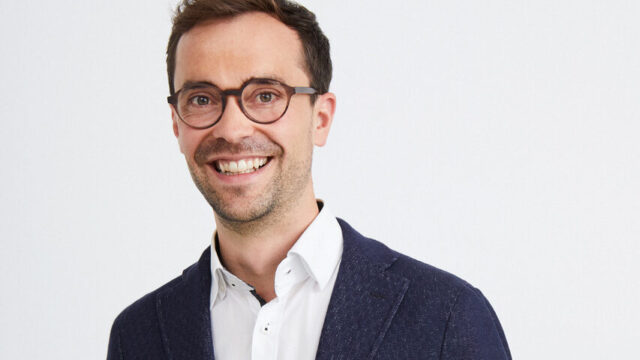
    The Limmatstadt AG location promotion organisation is getting a new managing director in Stephanie Kiener. According to a press release, Kiener will take over the operational management of the Limmatstadt regional location promotion office based at the JED in Schlieren ZH in August. The successor to Jasmina Ritz at Limmatstadt AG has thus been decided. Ritz will oversee the transition process until the end of the year and will then retire from operational activities. She will continue to fulfil her role as Vice President of the Board of Directors.

    Stephanie Kiener joined Limmatstadt AG in November 2023. She had previously worked for the city of Baden for eight years, where she held various positions in location marketing, including Head of Tourism. She actively supported the separation of the city’s tourism division into the new public-private partnership TourismusRegion Baden AG, of which she was most recently Deputy Managing Director. Kiener knows the Limmat Valley inside out. She was born in Schlieren.

    “The opportunity to work together with stakeholders from the entire region and the Board of Directors to shape regional location promotion in a future-oriented way is a great motivation for me,” Kiener is quoted as saying. She is counting on “taking this path together and further strengthening the Aargau and Zurich Limmat Valley region with innovative approaches, fresh ideas and combined forces”.

    “Stephanie Kiener is our preferred candidate. We are now ideally positioned for the transformation process that has already begun,” said Lara Albanesi, President of the Board of Directors.

    A public dialogue event will take place on Tuesday, 4 June, from 7.30 to 9 a.m. at the LAB coworking office in Spreitenbach.

  • Merger of two platforms for residential property and tradesman agencies

    Merger of two platforms for residential property and tradesman agencies

    Houzy, a Zurich-based platform for residential property, and Devis.ch, a platform for the placement of tradespeople from the canton of Vaud, have decided to merge their companies. According to a press release, both companies want to be able to offer their range of products and services to a wider audience. According to the press release, this also strengthens the intentions of the two investors Baloise and UBS to further strengthen their joint property ecosystem.

    The merger of the two companies will not change anything for customers. Employees will also retain their jobs in the usual quality. The two locations in Zurich and Nyon will work together effectively and create synergies. The aim of the merger between Houzy and Devis.ch is to become the market leader in the field of home ownership platforms.

  • Partnership for the development of sustainable earth building materials

    Partnership for the development of sustainable earth building materials

    ERNE AG, headquartered in Laufenburg, and Oxara AG from Dietikon are joining forces to develop sustainable building materials based on clay. The two companies have already signed a letter of intent to this effect, ERNE announced in a press release. Through the partnership with the spin-off of the Swiss Federal Institute of Technology in Zurich(ETH), the construction company aims to change the Swiss construction landscape and set a new standard for sustainability.

    “ERNE’s company history is characterised by innovation and creative solutions,” said Markus Meier, Managing Director of ERNE AG Bauunternehmung, in the press release. “Oxara is therefore the ideal partner for us to make a contribution to CO2 reduction in the industry with the joint development of sustainable building materials.” According to ERNE, it has been interested in clay construction for some time, but has not yet found a suitable binding agent.

    This shortcoming is to be remedied with Oxara. The company’s founders have developed a patented technology for additives and binders that can be used to produce recyclable, cement-free and unfired building materials from building rubble and excavated material. Compared to conventional bricks and concrete, they have up to 90 per cent lower CO2 emissions and are suitable for the construction of three to six-storey buildings.

  • Solar systems are more environmentally friendly than ever

    Solar systems are more environmentally friendly than ever

    The fact sheet Environmental Life Cycle Assessment of Electricity from PV Systems, updated for 2023 by the International Energy Agency in Paris, makes it clear that photovoltaic systems are becoming increasingly environmentally friendly. It provides an overview of the environmental life cycle assessment of four different photovoltaic systems.

    According to a statement from the Zurich University of Applied Sciences(ZHAW), the fact sheet for 2023 is based on the expertise of Matthias Stucki and Michael Götz as well as two other experts. The two ZHAW scientists are members of the Life Cycle Assessment research group at the Institute of Environment and Natural Resources.

    The 2023 factsheet emphasises, among other things, the significant reduction in greenhouse gas emissions compared to systems that generate electricity using fossil fuels. According to the fact sheet, photovoltaic technology has developed to such an extent that these emissions have halved over the entire life cycle of the systems analysed in the past ten years.

    For systems with monocrystalline silicon in Switzerland, this is still around 36 grams of CO2 equivalents per kilowatt hour of electricity and for CdTe (cadmium telluride) systems 25 grams of CO2 equivalents per kilowatt hour of electricity. The time required for a module to generate the energy needed to produce it is also one year or less for the first time in history for both monocrystalline silicon and CdTe systems.

  • Empa tests hydrogen use for peak loads

    Empa tests hydrogen use for peak loads

    On behalf of the Swiss Federal Office of Energy(SFOE), the Swiss Federal Laboratories for Materials Science and Technology(Empa) are investigating the use of hydrogen and fuel cells to reduce the load on the electricity grid on the coldest days. According to a press release, the joint project H2 districts was initiated for this purpose, in which the Hälg Group, the Osterwalder Group and H2 Energy AG are involved in addition to Empa. For the pilot project, a simulation model for operation under peak loads is being set up on the Empa site in Dübendorf.

    The Osterwalder Group is contributing its expertise and supplying renewable hydrogen. H2 Energy AG is contributing its many years of experience in the field of fuel cells. The Hälg Group is responsible for building technology.

    “We will set up a real system on the Empa campus in Dübendorf as part of the two research platforms ‘NEST’ and ‘move’ and validate the parameters for grid-friendly operation and the potential CO2 savings,” Philipp Heer, Head of the Energy Hub and Deputy Head of Empa’s Urban Energy Systems research department, is quoted as saying in the press release. The project is funded by the SFOE and is expected to run until September 2025.

  • Green open space on the Papierwerd site in Zurich

    Green open space on the Papierwerd site in Zurich

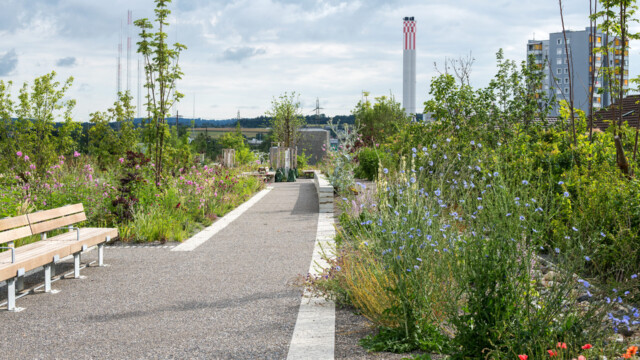
    A versatile open space has been created on the small square between the Globus Provisorium and the Mühlesteg. This green space invites you to linger with various seating elements and a view of the Limmat. New trees provide shade and pleasant places to sit on sunny days. For this new open space, existing car parks on the forecourt of the Globus Provisorium were removed, the ground unsealed and an innovative green concept established. Temporarily placed trees in so-called “airpots” already provide shade and cooling today and can also be replanted later, which makes the new greenery doubly useful.

    Development direction and further measures
    This milestone is part of the development direction adopted by the city council for the Papierwerd site (STRB No. 2722/2023). The development direction is based on the “Forum Papierwerd” strategy process and dialogue procedure. The desire for open space was set out in the eleven key statements for the Papierwerd site.

    Further immediate measures are planned for 2025. At the same time, as part of the ongoing in-depth phase, the structural clarifications regarding the Globus provisional building will be further advanced, the handling of the conservation value and water protection will be discussed and a rough utilisation and operating concept will be developed.

    Integration into the HB/Central masterplan
    The development of the Papierwerd site is being closely coordinated with the overarching “HB/Central masterplan” and will be incorporated into it. Consistent findings from both plans, such as the expansion of the open space, the improvement of the quality of stay, access to the Limmat and heat reduction, will be pursued further. With the masterplan, the City of Zurich is developing a vision for the future of the HB/Central area with a time horizon up to 2050 for transport and urban planning in this area. Interested parties are invited to visit the Papierwerd site in person and discover the qualities of the newly created place to stay in the heart of the city. Further information on the history and development of the site can be found on site or on the city’s project website.

  • Further development of the YOND Campus on the Albis site

    Further development of the YOND Campus on the Albis site

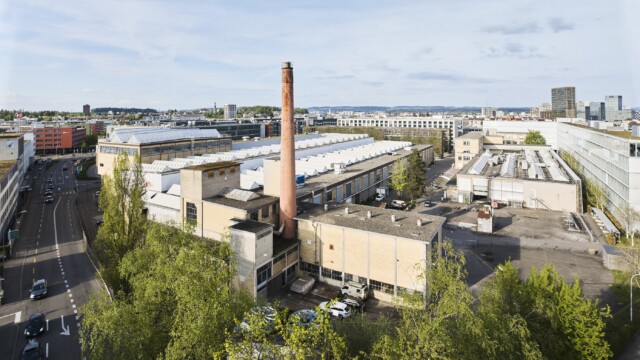
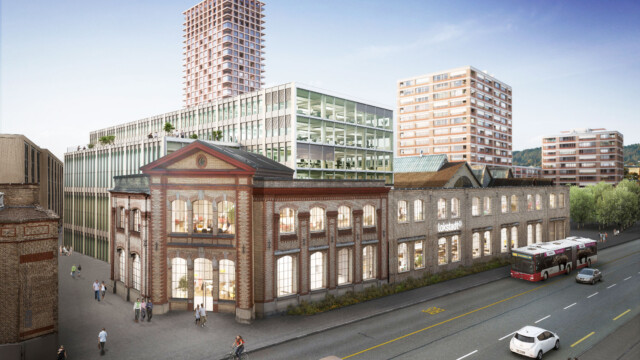
    The planned expansion of the YOND Campus to include the YOND.02/03 buildings with a total usable area of around 31,000 m2 takes up the concept of YOND.01 and adapts it more specifically to the requirements of manufacturing companies. The focus is on providing robust and efficient buildings, flexibility through large, divisible areas and optimised logistics. These adaptations include efficient delivery, loading ramps, a logistics-friendly basement and advanced vertical access to the building. In addition, mezzanine floors made of wood enable flexible use of space that can be adapted to the individual needs of the companies.

    At the same time, the historic laboratory and workshop building at 203 Albisriederstrasse is being converted into a centre for small and creative businesses. The planned renovation and extension of one floor are aimed at preserving the history of the site and creating a workspace for the creative industries. The transformation of the boiler house into a vertical garden and the establishment of a bistro on the ground floor emphasise the ambition to create a campus that harmoniously combines quality of life and the world of work.

    The publicly accessible catering facilities along Albisriederstrasse and in the adjacent park will establish the site as an attractive location for businesses and visitors. The use of the ground floor will position the YOND Campus as a place for socialising and contribute to the activation of the space. This extension will create a forward-looking space that supports both the dynamic requirements of modern companies and the need for social interaction and creativity.

  • Impulses for Zurich’s future: The first day of the location

    Impulses for Zurich’s future: The first day of the location

    The first “Location Day” in the canton of Zurich brought together leading figures from business, research and politics to shed light on the attractiveness and future viability of the location. The focus was on discussing current challenges and developing strategies to strengthen the business and innovation location. Panels and workshops on topics such as technology, skilled workers, entrepreneurship, mobility and sustainability provided important impetus to further improve Zurich’s position in international comparison.

    A prior study on the attractiveness of the location provided the basis for in-depth discussions and highlighted Zurich’s strengths in the areas of education, economic power and quality of life, as well as areas with potential for improvement such as the labour market, innovation and infrastructure. In particular, the relevance of artificial intelligence for the technology location and the need for a stronger digital focus in the healthcare sector were emphasised. In addition, the importance of promoting start-ups and integrating digital processes in the healthcare sector was emphasised in order to increase both the attractiveness for specialists and the efficiency of medical care.

    The “Location Day” underlined the urgency of utilising domestic potential and continuously improving the framework conditions for a digital and sustainable transformation. The results of the workshops and panels will now be followed up in order to develop and implement concrete measures. Due to the high level of interest and productive contributions, a repeat of the event is planned in order to evaluate progress and new approaches in the coming year.

  • What will be built in the university area over the next few years

    What will be built in the university area over the next few years

    The ambitious project envisages the construction of new buildings for medical care, education and research as well as an overall upgrading of the university area. The redevelopment includes the former underground drinking water reservoir on Rämistrasse at the heart of the area, which will be converted into a café with indoor and outdoor seating. This project, overseen by SQUADRAT Architekten, integrates parts of the historic water halls and creates an inviting public space.

    Another highlight is the redesign of Rämi and Gloriastrasse, which will offer more space for pedestrians in future and reduce noise levels through traffic calming measures. The aim of redesigning these axes is to improve mobility and at the same time increase the quality of life.

    The FORUM UZH, a new university building opposite the main UZH building, will house teaching and research on nine floors and will also include a canteen and shops. The building is due to be completed by the end of 2029 and will provide a modern workplace for around 6,000 students and staff.

    Preliminary work has already begun on the construction of the University Hospital’s new MITTE campus. This renewal of the medical infrastructure will revolutionise patient care and set the course for the medicine of the future.

    These and other projects in the HGZZ underline Zurich’s commitment to education, research and healthcare. They not only contribute to urban development, but also promote scientific excellence and strengthen Zurich’s position as a leading centre for innovation and knowledge.

  • Forward-looking integration of the Luchswiese housing estate and school extension

    Forward-looking integration of the Luchswiese housing estate and school extension

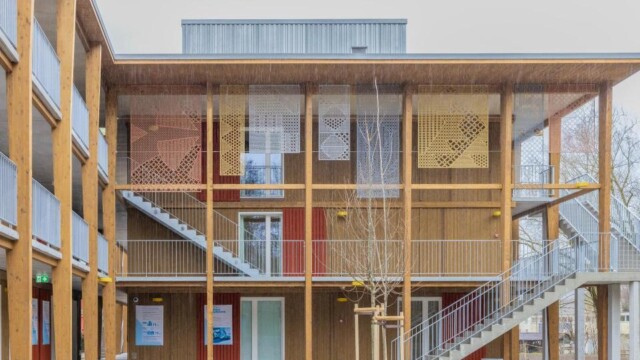
    In the midst of the dynamic development of the north of Zurich, a showcase project is being created that meets the demands of a growing city. The existing Luchswiese housing estate, characterised by its green garden city atmosphere and three four-storey apartment blocks, will be replaced by a variety of living space and educational facilities. The winning project “Pergola” by Blättler Heinzer Architektur and KOLLEKTIV NORDOST Landschaftsarchitekten is characterised by a careful densification that preserves the garden city character while creating modern living and learning space.

    The use of prefabricated timber construction systems will create 76 flats that will appeal to families in particular thanks to their diversity. The integration of four kindergartens with childcare infrastructure and a multi-purpose hall for the day school in the western building block directly adjacent to the school grounds emphasises the innovative concept of the development. This organic combination of housing and education creates a harmonious ensemble that is complemented by flowing green spaces and green roof terraces.

    The winning project “LYNX” by Parameter Architekten and Rosenmayr Landschaftsarchitektur for the neighbouring Luchswiesen school complex is faced with a growing need for school space. The city is planning a significant extension here by 2028, which will provide new space for 750 children. Inspired by Max Kollbrunner’s original architecture, the extension combines old and new elements and integrates a triple sports hall as well as modern classrooms and childcare facilities. The resource-conserving construction method, including the use of photovoltaic elements and timber in skeleton construction, underlines the city’s commitment to sustainable development.

    This project is an impressive illustration of how creative urban planning and close collaboration between different stakeholders can find solutions to the challenges of urbanisation. The Luchswiese housing estate and the Luchswiesen school complex are a forward-looking model for living and learning together in Zurich.

  • IFJ develops new offer for municipalities with start.swiss

    IFJ develops new offer for municipalities with start.swiss

    The IFJ Institute for Young Entrepreneurs is launching a new service with start.swiss. According to a press release, the service is aimed at municipalities, cities and economic regions and is designed to track the economic development of all Swiss regions and intensify location promotion. “start.swiss offers a unique welcome and promotion of new companies thanks to daily updated data, an automated hybrid process and local activities. For sustainable, profitable location development,” says the new start.swiss website.

    The Statistics+ service provides statistics on company start-ups, new arrivals, departures and cancellations as well as a breakdown of company start-ups by sector and access to detailed data records.

    The Welcome+ service includes everything from Statistics+, a mailing service of personal welcome letters to company start-ups and relocations as well as a personal welcome website for each company start-up and relocation and individualised lead management of regional offers.

    Activity+ is all about promoting local entrepreneurship. According to the start.swiss website, this involves events and offers, regional networking of people and organisations for sustainable, profitable location promotion.

  • ETH researchers generate very high temperatures with new technology

    ETH researchers generate very high temperatures with new technology

    Researchers at the Swiss Federal Institute of Technology in Zurich(ETH) have developed a technology known as a thermal trap that absorbs sunlight and can thus achieve very high temperatures. According to a press release, they have succeeded in reaching temperatures of over a thousand degrees Celsius using this method. These high temperatures are required for the production of cement, metals and various chemicals in energy-intensive industrial processes. The team led by Emiliano Casati, a scientist in the Energy and Process Systems Engineering Group, and Aldo Steinfeld, Professor of Renewable Energy Sources, developed this system, the main component of which is a quartz rod. When this is irradiated with intense light, it is converted into heat with only minimal heat loss. Previous experiments of this kind with thermal traps reached a temperature of 170 degrees Celsius. Solar power plants usually operate at temperatures of up to 600 degrees Celsius.

    The researchers’ aim is to one day be able to use the method for the decarbonisation of energy-intensive industries. “To combat climate change, we need to decarbonise energy in general,” Emiliano Casati is quoted as saying in the press release. “People often think of energy only in terms of electricity, but we actually consume around half of our energy in the form of heat.” The current experimental study was published in the specialist journal “Device”. Further analyses, including on the economic viability of this technology, are being planned.

  • Innovative technology for utilising sunlight for high temperatures

    Innovative technology for utilising sunlight for high temperatures

    Researchers at the Swiss Federal Institute of Technology in Zurich(ETH) have developed a technology known as a thermal trap that absorbs sunlight and can thus achieve very high temperatures. According to a press release, they have succeeded in reaching temperatures of over a thousand degrees Celsius using this method. These high temperatures are required for the production of cement, metals and various chemicals in energy-intensive industrial processes. The team led by Emiliano Casati, a scientist in the Energy and Process Systems Engineering Group, and Aldo Steinfeld, Professor of Renewable Energy Sources, developed this system, the main component of which is a quartz rod. When this is irradiated with intense light, it is converted into heat with only minimal heat loss. Previous experiments of this kind with thermal traps reached a temperature of 170 degrees Celsius. Solar power plants usually operate at temperatures of up to 600 degrees Celsius.

    The researchers’ aim is to one day be able to use the method for the decarbonisation of energy-intensive industries. “To combat climate change, we need to decarbonise energy in general,” Emiliano Casati is quoted as saying in the press release. “People often think of energy only in terms of electricity, but we actually consume around half of our energy in the form of heat.” The current experimental study was published in the specialist journal “Device”. Further analyses, including on the economic viability of this technology, are being planned.

  • New calculation tool for circularity in construction presented

    New calculation tool for circularity in construction presented

    Conspark, a Zurich-based consultancy for sustainable construction, has developed a new calculation tool for circularity in the construction industry. According to a press release, the tool can be downloaded free of charge from the company’s website. Users can use the tool to calculate the circularity of their construction products. To do this, the information from the environmental product declaration must be entered in the corresponding categories. The tool then calculates the circularity for the manufacturing phase and the end of the product’s life, according to the press release.

    Buildings account for 50 per cent of energy consumption and 40 per cent of greenhouse gas emissions. They also consume a large proportion of primary raw materials and water. The goal of a functioning circular economy can therefore make a significant contribution to decarbonisation and sustainability in the construction industry.

    “With our calculation tool, users have the opportunity to carry out an initial analysis of their products in terms of their recyclability in line with our motto: measurement, transparency, credibility. The results help to identify potential for improvement,” Florian Robineck, Managing Director and founder of conspark, is quoted as saying in the press release.

  • Building rights create affordable living space in Zurich

    Building rights create affordable living space in Zurich

    The Im Gut building cooperative has set itself the goal of comprehensively renovating and expanding its housing estates on Gutstrasse in Zurich-Wiedikon, which are characterised by a building fabric that is around 70 years old. As part of a master plan, the possibilities for the construction of non-profit flats as well as the establishment of a double kindergarten and the creation of communal and public-orientated usable areas are being explored. Two building plots, which were renovated in 2012 and 2014, are just the beginning. The next steps include the redesign of two further plots, which will be made possible by urban building rights.

    New residential concepts and the role ofmunicipal building rights
    The construction of 28 new flats is planned on the plot at Gutstrasse 146 to 152, while two listed buildings, including a residential tower block with 46 flats, will be renovated. The annual ground rent for this field amounts to around CHF 69,000. At the same time, the neighbouring plot at Gutstrasse 145 to 153 will be completely redeveloped and will provide space for 72 flats. The two building plots will thus provide a total of 146 affordable flats – an increase of 44 flats compared to the current stock.

    Setting the financial and planning course
    The city council is endeavouring to renew the building rights for these projects for a further 62 years ahead of schedule, thereby underlining the city’s long-term commitment to promoting affordable housing. The decision to grant the building rights lies with the municipal council. In preparation for the start of construction in September 2023 and the planned occupation of the housing estate in winter 2025/2026, one-off expenditure of CHF 1.355 million has already been approved for the renovation of the building site. This financial commitment is a significant contribution to strengthening the urban infrastructure and ensuring the quality of living for broad sections of the population.

  • Innovative climbing protection systems for urban cable cars

    Innovative climbing protection systems for urban cable cars

    More and more cities are relying on ropeways to transport visitors and the city’s population. HighStep Systems AG in Dietikon, a company specialising in safe climbing protection systems, makes it possible to work safely at heights and depths. For example, it is involved in the Cable 1 ropeway line currently under construction in the greater Paris area, which is being realised by Doppelmayr/Garaventa in Wolfurt, Austria.

    “The integration of the HighStep rail as a climbing system at Doppelmayr/Graventa in the Cable 1 Paris project sets new standards in the safe and efficient maintenance of ropeways. Thanks to the maintenance-free HighStep rail instead of a fixed ladder and the fact that our system cannot be used by unauthorised persons, we offer a robust and reliable solution – especially in urban areas, where the need for safety and protection is particularly high,” Gregor Wylenzek, Sales Director of HighStep, is quoted as saying.

    HighStep Systems AG was founded in 2007. It develops and markets innovative arrester systems as an alternative to conventional methods such as fixed ladders. This allows workstations at great heights to be reached safely and comfortably, which increases safety and productivity for employees. The HighStep arrester system consists of two components: an aluminium rail as a system carrier and a selectable climbing device, the HighStep Easy and the portable HighStep Lift. The focus is on electricity pylons and now also on cable cars.

    Several thousand installations are in operation worldwide. Customers include the Swiss transmission system operator Swissgrid, the high-voltage grid operators TenneT and 50 Hertz and the Chinese energy company State Grid Corporation of China.

  • A new vision for the Zurich metropolitan area

    A new vision for the Zurich metropolitan area

    The Metro-ROK 2050 initiative emphasises the need to use settlement areas sensibly and sustainably in order to improve the quality of life and maintain the ecological balance. By focussing on four central areas of action – urban landscape, transitional landscape, cultural landscape and natural landscape – the concept aims to promote balanced development. The protection of green spaces and high-quality internal development play a particularly important role. Environmentally friendly urban planning is to be realised by strictly limiting the expansion of settlements until 2040 and promoting transformation projects in existing buildings that take the circular economy principle into account.

    Innovative technologies and energy efficiency
    Another important aspect of the Metro-ROK 2050 is the integration of advanced technologies and ecological construction methods in order to improve the carbon footprint of the metropolitan area. The concept emphasises the importance of renewable energies and increasing energy efficiency in buildings in order to counteract the challenges of climate change. The avoidance of further soil sealing and the use of green spaces to combat heat in urban centres are also priority measures.

    Sustainable mobility as a key component
    The spatial planning concept also places a strong focus on promoting public transport and sustainable mobility solutions. The goal of increasing the share of public transport by 2050 and promoting environmentally friendly means of transport is crucial for reducing environmental pollution and increasing the quality of life in the region. Short journeys and low-emission means of transport should help to minimise the ecological footprint.

    Cooperation and future-oriented planning
    The Metro-ROK 2050 initiative reflects the commitment of the participating cantons and sets new standards in regional spatial planning. The updated concept, which was unanimously adopted by the Metropolitan Council on 3 November, serves as a trend-setting framework for the sustainable and future-proof development of the entire Zurich metropolitan area. By taking an integrated view of ecological, economic and social factors, the concept endeavours to shape the metropolitan area as a liveable and sustainable place.

  • New design guidelines for Zurich Lengg: a step into the future

    New design guidelines for Zurich Lengg: a step into the future

    In an endeavour to shape the structural development in the eastern outskirts of Zurich in a harmonious and future-oriented manner, the city council has decided on a partial revision of the building and zoning regulations (BZO) for the Lengg area. This step follows a careful examination and aims to implement the development principles laid down in the “Lengg Masterplan” and the cantonal structure plan in a binding manner. The design plan obligation aims to ensure that new construction projects and outdoor spaces are not only aesthetically pleasing, but also take into account environmental aspects and the local transport infrastructure.

    The Lengg area, embedded in the Hirslanden and Riesbach neighbourhoods and adjacent to Zollikon, is home to important institutions in the healthcare and research sector. The imminent opening of the new University Children’s Hospital Zurich (Kispi) will further strengthen the importance of Lengg as a medical and scientific cluster. This location is also characterised as a popular recreational area and as a showcase for pioneering medical innovations.

    The strategic development of Lengg, coordinated by the area management, aims to ensure a harmonious interplay of diverse uses and to strengthen the area as a whole. The Department of Health and Education, under the direction of the Office for Spatial Development of the Zurich Building Department, has drawn up a master plan that sets out a long-term perspective up to 2040 and serves as a basis for the future planning and realisation of construction projects.

    By implementing the Lengg design plan requirement, the City of Zurich is confirming its commitment to well thought-out and integrated urban development that meets the requirements of a growing metropolis and at the same time improves the quality of life of its residents.

  • New concept for the Zurich barracks area

    New concept for the Zurich barracks area

    Built in the 19th century as a military complex with barracks, armouries and stables, the site is now one of the largest and best-preserved historicist ensembles in Switzerland. With the planned departure of the cantonal police, a large part of the site will become available for future use, while existing facilities and interim uses will continue to revitalise the site.

    The canton and city of Zurich developed a vision for the site in a collaborative process with the city’s population. It is to become an urban magnet that combines recreation, encounters and work, with a strong connection to the neighbourhood. Cultural institutions, small businesses, educational and leisure facilities are planned, which will characterise the site and ensure a versatile, community-oriented use.
    Changes to the historic ensemble will be made carefully in order to preserve the existing qualities and at the same time enable a variety of uses. The design of the open spaces should support the diversity of use without changing the character of the site.

    Transparent operational organisation and clear usage management ensure a balanced mix of different offerings. The focus is not on maximising profits, but on the flexible and gradual development of the site. The barracks area is currently enriched by a variety of offers and uses.

    A competition is currently being held to find project proposals for the further development of the public open spaces.

    The competition programme was drawn up together with an echo group from the neighbourhood. The aim is to ensure that the project proposals meet the needs of the neighbourhood. The competition results for the further development of the public barracks open spaces are expected to be available by the end of 2024.

    The redevelopment of the barracks site is exemplary of a sustainable and community-oriented approach to urban development. The combination of historical appreciation and modern diversity of use will transform the site into a vibrant part of Zurich’s city centre. The development is a significant step towards an integrative, sustainable urban landscape that offers the citizens of Zurich new spaces for recreation, culture and encounters.

  • Prices for residential property move in opposite directions

    Prices for residential property move in opposite directions

    April brought strong price increases for single-family homes, SMG Swiss Marketplace Group(SMG) announces in a press release on the current Swiss Real Estate Offer Index. Specifically, SMG’s experts observed prices that were on average 1.2 per cent higher than in March. The SMG Swiss Marketplace Group brings together the digital marketplaces of TX Group, Ringier and Mobiliar.

    “Although the dream of owning a home is still widespread among the population, prospective buyers have become more selective”, Martin Waeber, Managing Director Real Estate at SMG Swiss Marketplace Group, is quoted as saying in the press release. It therefore remains to be seen “whether the increased asking prices can actually be realised”.

    By contrast, prices for condominiums in April were on average 1.2 per cent lower than in March. A year-on-year increase of 1.1 per cent was thus measured. According to SMG experts, this is the lowest annual growth rate since the beginning of 2020.

    A decline of 0.2 per cent was recorded for asking rents compared to the previous month. Compared to April 2023, however, asking rents were 2.7 per cent higher. SMG experts observed particularly sharp month-on-month declines in Eastern Switzerland and Central Switzerland. In north-west Switzerland and the Lake Geneva region, on the other hand, asking rents rose.

  • Competition for Zurich district prison decided

    Competition for Zurich district prison decided

    The plan to modernise Zurich District Prison to make it fit for purpose has reached an important milestone. A project led by RW+ Gesellschaft von Architekten mbH from Berlin won the competition to redesign the prison and thus improve the conditions of detention.

    Zurich District Prison, located in District 4 and right next to the largest court in the Canton of Zurich, the District Court, is about to undergo a transformation. After comprehensive studies and the realisation that the current structures no longer met modern standards, the decision was made to build a new building.

    The need for a new building became apparent when guidelines regarding cell size, lighting and the number of ancillary rooms were met. The winning project makes reference to the T-shape of the building and creates a harmonious link between the various buildings in the district complex. Particularly noteworthy is the clever unbundling of routes for inmates, staff and visitors, as well as the secure accessibility to neighbouring judicial buildings. One significant change is the reduction in cell places from 153 to a maximum of 90, which underlines the focus on resocialisation and improved prison conditions.

    The selected concept is to be developed into an approvable construction project by 2026 and then submitted to the cantonal government and cantonal council for approval. If approved and in the absence of any appeals, construction work could begin in 2028.

  • Wipkingen church becomes an educational space

    Wipkingen church becomes an educational space

    The Wipkingen church is a remarkable example of adaptive space utilisation. No longer used for church services since 2019, it is now intended to meet the space requirements of the neighbouring Waidhalde school complex. A concept developed by Vécsey Schmidt Architekten BSA SIA in collaboration with Anderegg Partner AG won the architectural competition and promises a cautious yet future-oriented transformation. A newly installed ceiling allows for the creation of a multi-purpose room, a library and catering facilities at ground floor level, while the upper floor offers flexible usage options under the historic church vault.

    André Odermatt, Head of Building Construction, emphasises the importance of this initiative: “The intelligent conversion of existing buildings is essential in order to meet current challenges in urban areas.” The project not only provides solutions to the urgent need for school space, but also strengthens cooperation between the city and the church.
    Thanks to this conversion, the necessary rooms for six to eight additional classes will be created by the 2031/32 school year. Filippo Leutenegger, Head of School, sees this as an example of the effective utilisation of creative solutions.

    The cooperation with the Reformed parish of Zurich has already borne fruit and plans to open up further church buildings for charitable purposes. The project in Wipkingen is just the beginning of a series of initiatives that prioritise community benefit.

    The estimated construction costs amount to CHF 7.5 million, with completion planned for 2026, in time for the start of school in 2026/27. This project marks an important step in Zurich’s evolutionary urban development by showing how historical substance can be meaningfully brought into the future.

  • Zurich’s dynamic step into the circular economy

    Zurich’s dynamic step into the circular economy

    The implementation of “Circular Zurich” began in early February with the presentation of a detailed agenda that is specifically tailored to the needs of the city administration. However, the strategy also offers small and medium-sized enterprises (SMEs) numerous starting points. By adapting individual measures, SMEs can not only act in a more environmentally friendly way, but also benefit financially in the long term.

    Steps for implementation in SMEs
    One fundamental aspect of the circular economy is the efficient recycling and separation of recyclable materials. Sara Graf, project manager at Entsorgung + Recycling Zürich (ERZ), emphasises the importance and simplicity of this measure for companies: recyclable materials such as paper, cardboard, PET bottles, glass and aluminium cans can often be recycled free of charge, which leads directly to savings in disposal costs. But recycling is just the beginning.

    Minimising material consumption and optimising processes
    Sonja Gehrig, who heads up the city-wide coordination of “Circular Zurich”, points out that it is important to think beyond the boundaries of the company. Analysing one’s own material consumption and optimising production processes are crucial steps. Ecologically sustainable product design that promotes the reparability and durability of products can not only save companies money, but also lead to new business models such as product hire.

    Extending consumption and use phases
    The final step involves maximising product lifetimes through strategies of sharing, reusing, repairing and remanufacturing. This not only allows products to be used for longer, but also helps to conserve resources. Second-hand platforms and company initiatives that internalise the circular economy are playing an increasingly important role in the circular economy.

    The city as an innovation laboratory
    Zurich sees itself as a testing ground for new, circular ideas and products. City experts are ready to support companies that are striving for innovative solutions. This proactive approach not only strengthens the city’s infrastructure, but also promotes the widespread adoption of circular economy principles.

    With “Circular Zurich”, the city of Zurich is positioning itself as a pioneer in the circular economy, demonstrating how a sustainable transformation can be realised in urban areas through concrete measures and cooperative approaches.

  • The Rolf-Liebermann-Weg on the outskirts of Zurich

    The Rolf-Liebermann-Weg on the outskirts of Zurich

    Das Projekt «Rolf-Liebermann-Weg» entwickelt von Mettler Entwickler AG mit der Bauherrschaft Asga Pensionskasse, profitiert von seiner einmaligen Lage am Stadtrand von Zürich, zwischen dem Schulhaus Staudenbühl und den idyllischen Grünflächen des Hürst-Gebiets. Die Hanglage eröffnet spektakuläre Ausblicke auf den Zürichberg und die Alpen, während die gute Anbindung an das Verkehrsnetz und die Nähe zu Einkaufs- und Dienstleistungszentren urbanen Komfort bieten.

    Die geplante Wohnsiedlung zeichnet sich durch ihre L-förmige Anordnung aus, die grosszügige Freiräume für Gemeinschaftsaktivitäten und individuelle Entfaltung lässt. Der vielfältige Wohnungsmix reicht von kompakten 1½-Zimmer-Wohnungen bis zu geräumigen 5½-Zimmer-Wohnungen, um ein breites Spektrum an Bewohnerinnen und Bewohnern anzusprechen – von Singles über Senioren bis hin zu Familien.

    Architektonisch setzt das Projekt auf einen innovativen Hybridbau. Eine Kombination aus tragendem Mauerwerk im Inneren und einer ästhetisch ansprechenden, hinterlüfteten Holzfassade. Betonelemente in den Untergeschossen und den Erschliessungskernen sowie die Wohnungstrennwände garantieren Stabilität und Privatsphäre. Die begrünten Dächer fördern die Biodiversität und das Mikroklima der Siedlung und werden durch die Integration von Photovoltaikanlagen ergänzt, die nachhaltige Energiegewinnung unterstützen.

    Mit der geplanten Fertigstellung Ende 2027 setzt der «Rolf-Liebermann-Weg» neue Massstäbe für modernes, nachhaltiges Wohnen in Zürich, indem er die Balance zwischen Natur und städtischem Leben meisterhaft gestaltet.

  • Partnership for a sustainable energy supply in Volketswil

    Partnership for a sustainable energy supply in Volketswil

    Energie 360° and Vantage Data Centres have entered into a partnership to set up an energy network. The data centre operator based in the US state of Colorado is planning to build a new data centre campus in Volketswil. According to a press release, the planned utilisation of waste heat at the new site will create the “ideal energy source for an energy network”. “We are delighted about this partnership and the fact that we can make a contribution to the decarbonisation of the energy system,” Wolfgang Zepf, Country Manager of Vantage Switzerland, is quoted as saying.

    Construction of the energy centre is scheduled to begin in summer 2025. From the end of 2028, 70 megawatts of neutral thermal energy are to be generated for 7,000 households in the municipalities of Volketswil, Greifensee, Schwerzenbach and Effretikon.

    Consumers will probably not have to wait that long. In order to be able to supply heat from the energy network as soon as possible, work has begun on creating a climate-friendly interim solution, according to the statement: “In order to utilise synergies with other construction work, Energie 360° is already building part of the transport pipeline between Volketswil and Effretikon. The first properties could be supplied with climate-friendly heat as early as the end of 2026.

  • The “ALTO” construction project

    The “ALTO” construction project

    The “ALTO” project, initiated by the
    property company HIAG, fits seamlessly into the urban transformation of Zurich Altstetten, a district that is changing from an industrial to a lively residential and working area. The plan is for an 80-metre-high residential building that is characterised by its integration into existing structures and its sustainable construction.

    The ground floor of the new building will be used for commercial purposes and open to the public, while the first floor will serve as a social centre for residents with communal spaces, a roof garden and studios. In addition, modern flats will be built on the 25 floors above, reflecting the new urban lifestyle in Altstetten.

    In addition to the residential use, the neighbourhood will be further enhanced by the project. The Shedhalle, formerly part of the Fiat garage, will be converted into a food market with an attractive range of fresh produce and will take on the function of a local supplier. There are also plans to construct an urban loggia, which will serve as a public meeting place that incorporates the community concept and emphasises the urban quality of the area.

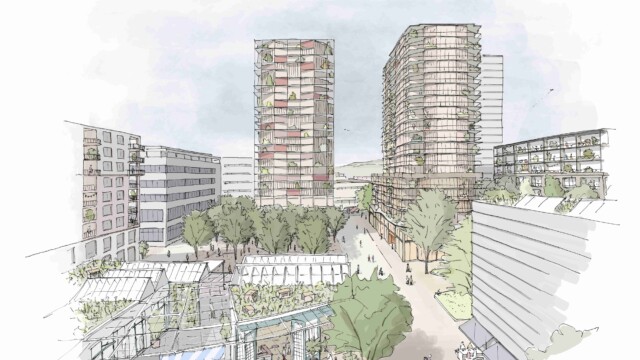
    Sustainability plays a central role in the development of the “ALTO” construction project. The use of resource-conserving materials and the design of permeable open spaces emphasise the commitment to environmentally friendly urban development. As the first residential tower block in the canton of Zurich, the façade will be fitted with photovoltaic panels throughout, allowing tenants to benefit from the electricity they generate themselves. An innovative mobility concept, which provides for a significant reduction in parking spaces, rounds off the future-oriented overall concept.

    With completion scheduled for spring 2026, the “ALTO” construction project will not only offer new living space in Zurich Altstetten, but will also serve as a showcase project for sustainable urban development and social coexistence.

  • A new home for families and creativity in Leutschenbach

    A new home for families and creativity in Leutschenbach

    The centrepiece of the housing estate consists of two U-shaped building complexes that are open to the green space and are complemented by pavilion buildings in the inner courtyard. This arrangement creates a lively, communal courtyard that houses kindergartens and communal spaces, making it a social meeting point.

    The housing estate offers a variety of 2- to 6½-room flats as well as special studio and communal flats to fulfil a wide range of living requirements. Particular attention is paid to spacious family flats and creative spaces that enable flexible and innovative living.

    Sustainability and energy efficiency are the focus of the housing estate. By building to Minergie-P-ECO and Minergie-ECO standards and utilising renewable energy sources for heat and electricity, it makes an important contribution to climate protection. The large-scale installation of photovoltaic modules ensures an environmentally friendly power supply.

    The design of the outdoor facilities promotes biodiversity and improves the microclimate in the neighbourhood. The upgrading of the green spaces along the Riedgraben and the “Inner Garden Leutschenbach” connecting the neighbourhood create natural recreational areas that offer residents a high quality of life.

    The Leutschenbach housing estate is an example of the successful combination of urban living, social mixing and ecological responsibility. It plays a key role in the development of Leutschenbach into an attractive and lively neighbourhood that meets the requirements of a modern, sustainable lifestyle.

  • Partnership for the digitalisation of the property market in Zurich

    Partnership for the digitalisation of the property market in Zurich

    Skribble, the Zurich-based specialist for digital signatures, and real estate service provider SMG Real Estate are joining forces to digitise the property market. According to a press release, SMG Real Estate customers will be able to sign purchase or rental agreements electronically. The signatures are legally valid and recognised worldwide. This step towards digitalisation speeds up the contract process and eliminates the tedious process of concluding analogue contracts with multiple paper printouts, according to the press release.

    “We are very excited about the collaboration with SMG Real Estate and the opportunity to make our e-signature solutions easily accessible to an even wider audience,” said Roni Oeschger, CEO of Skribble, in the press release. “By integrating Skribble into SMG’s real estate ecosystem, we can help make the property industry more efficient and future-proof.”

    The partnership with Skribble is a key step in the digitalisation of the real estate market, adds Daniel Bruckhoff, Head of Partnerships and Innovation at SMG Real Estate. The SMG Swiss Marketplace Group unites the digital marketplaces of TX Group, Ringier and Mobiliar.

  • Greencity Vergé sets new standards in sustainability

    Greencity Vergé sets new standards in sustainability

    Vergé is more than just a residential project, it is a response to the pressing issues of urban coexistence and ecological responsibility. Located in the south of Zurich on a former industrial site, Vergé stands for the transition to a new understanding of housing that both takes into account the needs of its older residents and actively contributes to the quality of urban life.

    Vergé’s design combines modern architecture with ecological sustainability. By using renewable and lightweight materials, the project not only sets design accents, but also makes an important contribution to reducing the ecological footprint. The design of the inner courtyard as a social meeting place and the careful selection of planting promote biodiversity and offer residents a place of retreat in harmony with nature.

    An often underestimated lever lies in the choice of materials for the interior walls. According to Lennart Rogenhofer, Chief Climate Officer at Losinger Marazzi AG, using non-load-bearing interior walls made of lightweight construction instead of concrete can lead to a reduction in CO2 emissions of around 50%. Similar savings can be achieved if a wooden façade is used instead of a concrete and plaster façade. This is in line with the aim of using sustainable and minimally processed raw materials. Losinger Marazzi has also decided to use CO2-reduced concrete in its projects as far as possible. The reduction in grey emissions with a slimmer supporting structure, which minimises the amount of concrete by optimising the slab thicknesses and column grids, is difficult to quantify. Rogenhofer explains: “This is because no ‘non-optimised’ project exists as a comparison.”. Greencity, with the last building site Vergé, impressively demonstrates that the property sector plays a key role in achieving the climate targets. Through the use of heat recovery technologies and integration into the local heating network, the aim is to achieve a largely autonomous energy supply, with certification in accordance with the SNBS Gold Standard.

    By focussing on sustainable and energy-efficient construction, not only can the quality of life of the residents be improved, but a decisive step towards a more sustainable future can also be taken.

    The project is being built by Losinger Marazzi, which has positioned itself as a pioneer in sustainability in the property and construction industry for almost 20 years and is consistently implementing its climate strategy, which follows the strategy of its parent company Bouygues Construction. The company has been SBTi certified since the end of 2023 and remains a leader in sustainability. This certification confirms that the company’s own CO2 reduction targets for direct and indirect corporate emissions (incl. Scope 3) have been calculated in accordance with international standards (GHG Protocol) and are in line with the Paris climate targets. An external, independent auditing company also verifies that the certified companies achieve their targets not through CO2 offsetting, but through actual CO2 reduction. For this reason, a CO2 reduction pathway was already drawn up in 2021 to guide strategic decisions.

  • Investment in cement-free construction

    Investment in cement-free construction

    Oxara announces a successful pre-series A financing by two high-calibre investors from the construction industry. According to a press release, the new partners are buildify.earth, an Evergreen Investment Holding specialising in circular and sustainable tech companies, and Samih Sawiris, who is developing the region in the canton of Uri into a premium destination with his company Andermatt Swissalps.

    The funds received will reportedly be used to strengthen operational activities and to construct the first cement-free building together with its industrial partners. Oxara’s products will be presented exclusively in this building.

    The spin-off from the Swiss Federal Institute of Technology in Zurich has reportedly successfully completed seven commercial pilot projects since it was founded in 2019. Oxara has gained an industrial partner for the production of its cement-free additive and binder for the manufacture of concrete. In addition, the patent portfolio has been expanded through active research and development of new products and the team has been significantly enlarged. Oxara is now preparing to broaden its business and offer its fully commercialised products with national and global partners and customers in the DACH region as well as in Europe, Africa and the Middle East.