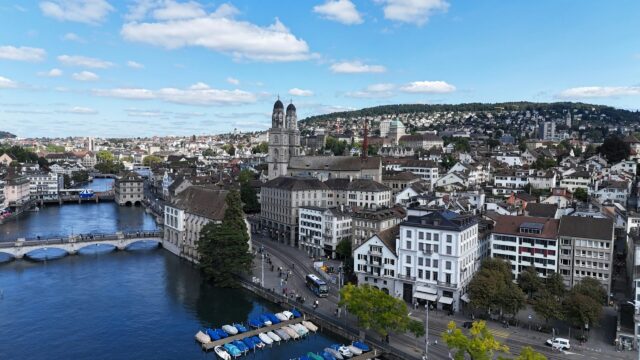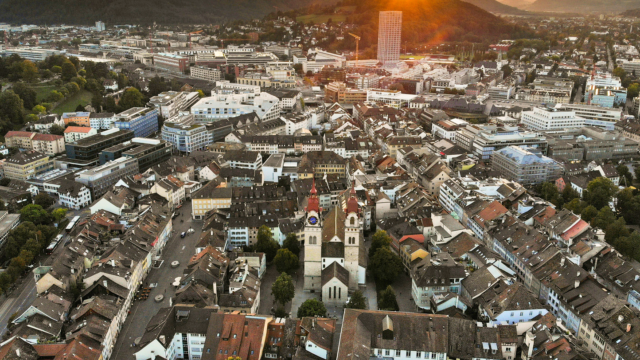
The circular economy is an important lever for achieving the political net-zero targets. Like many other cities around the world, Zurich is also committed to the circular economy: in 2022, a strategy for the circular economy was adopted with “Circular Zurich”. in 2023, Zurich became the first Swiss city to sign the “Circular Cities Declaration”.
The intelligent use of resources is particularly important in construction. With the “Charter for Circular Construction”, politicians and businesses set an example in 2023 and made a joint commitment to conserving primary resources and landfill space and reducing CO2 emissions from their own construction activities.
Initial findings from two pilot projects
But how do the political commitments affect specific construction projects? What challenges does circular construction pose? And how are the planning and construction processes changing? The City of Zurich’s Office for Buildings is gaining answers to these questions through two pilot projects.
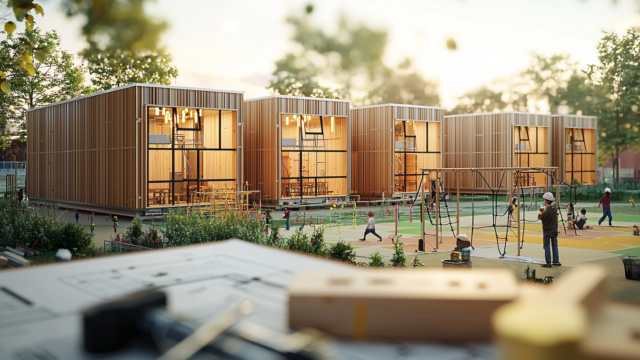
The city gained initial experience with the procurement, storage and processing of reused building components during the renovation of the Mööslistrasse 2023 kindergarten (Bischof Föhn Architekten, Zurich). Washbasins and toilets were dismantled, cleaned and refurbished on site. Plant troughs from the balconies were reused as outdoor space boundaries. Where possible, the built-in furniture was sourced from the city’s own stock. Thanks to component screening, steel beams, wooden pergolas, fire doors and kitchen elements from other buildings were identified, dismantled and reinstalled. So-called “component hunters” were deployed for everything that was not found in the city’s used parts warehouse.
The second pilot project, the new “Juch-Areal” recycling centre, is much more comprehensive. The Office for Buildings launched an architectural competition with re-use requirements for the project in 2022. The competition participants were able to use a digital catalogue of components or use other available components from non-urban sources for their designs. The buildings also had to be designed in such a way that they could later be used as a component mine themselves (design for disassembly).
The projects submitted show that it is possible: Yes, it is possible. The jury was particularly impressed by the high quality of the competition entries, which were created despite – or perhaps thanks to – the new specifications. The building material of the winning project by Graber Pulver Architekten AG (Zurich) dismantles the hall of the previous recycling centre and rebuilds it at the new location with only minor adjustments. Disposed books, magazines and clothes are used as insulation material. Sheets of recycled glass and aluminium, old kitchen covers, doors and table tops protect the façade from the weather. Discarded scaffolding is turned into storage shelves.
It is in the nature of things that pilot projects precede a standardised introduction on a broad scale. This is also the case with circular construction. The realisation of the two projects in Zurich shows that many questions still need to be clarified: How can components be catalogued? How can availability be checked? Where will they be stored? Who assumes legal liability?
The planning and construction processes will change as a result of cycle-orientated construction, because the component mines must be known as early as possible, preferably at the beginning of the planning phase. Building Information Modelling (BIM) facilitates the reuse of components, the planning of their dismantlability and the development of future component mines.
Significant savings in indirect greenhouse gas emissions in the pilot projects
The pilot projects show that this approach is worthwhile. According to a subsequent calculation, the consistent reuse of building components saved a good 30% of greenhouse gas emissions during the renovation of the Mööslistrasse kindergarten. Current calculations even predict a 40% saving in greenhouse gas emissions for the Juch-Areal recycling centre compared to a conventional new building.
Category: Zurich
-

Leading by example: circular building in the city of Zurich
-

Modernisation and expansion of the south station
In a densely built-up district such as District 2, the emergency services currently only reach the scene within the critical ten-minute mark in around 60% of cases. The planned expansion and redesign of the southern fire and ambulance station addresses this problem with a comprehensive approach aimed at shortening response times and increasing the efficiency of the services. At the same time, the project aims to enhance the urban development of the area, which is in line with the redesign of the urban space through the demolition of Weststrasse and the new construction of the “Hohe Haus West”.
The winning project from the architectural competition, “FUCHS”, creates a seamless integration into the existing structure of the fire station. The extension blends in harmoniously with the existing building in terms of both height and alignment and harmoniously completes the perimeter of the block. Particularly noteworthy are the courtyard-side extensions with shed roofs and photovoltaics as well as a setback from the first floor, which give the new building a striking independence. These architectural features make it possible to master the balancing act between preserving the historical heritage and fulfilling state-of-the-art operational requirements.
The “FUCHS” project not only impresses with its aesthetic and functional integration into the existing building fabric, but also sets new ecological standards. Thanks to the environmentally friendly energy supply, which is based 100 per cent on renewable energies, and the generously dimensioned photovoltaic system on the shed roofs, a contribution is being made to climate protection. In addition, the design optimises the operational processes of Schutz & Rettung Zürich and creates a coherent unit of high spatial quality.
The project impressively illustrates how the challenges of modern emergency care can be mastered in a historical context through creative and innovative solutions. The careful balancing of the needs of the emergency services and the requirements of heritage conservation has resulted in a project that breaks new ground both functionally and aesthetically. The result is a sustainable infrastructure that meets the requirements of modern emergency services and at the same time makes a valuable contribution to the urban quality of the location. -

Canton of Zurich promotes electromobility with over 52,500 parking spaces
Since the introduction of the charging infrastructure funding programme, the canton of Zurich has taken decisive steps towards the electrification of transport. The programme, which runs until the end of 2026 and has a funding pot of CHF 50 million, has already secured over CHF 18 million in funding to equip car parks with charging stations. So far, over 52,500 car parks have been equipped for electric vehicles, which is a significant boost for electromobility in the canton.
Construction Director Martin Neukom is delighted with the great response: “The strong demand for the funding programme confirms our commitment to a sustainable mobility future. The support makes it easier for many people to switch to electric vehicles and helps to reduce dependency on fossil fuels.”
The programme not only supports private individuals, but also companies and municipalities. Over 800 applications for funding for fleet parking spaces have already been submitted. In addition, more and more municipalities are utilising the funding opportunities to develop their electric mobility concepts. This includes feasibility studies and location analyses for public charging infrastructure. Some municipalities have already expressed an interest in installing public charging stations in blue zones.
Carmen Walker Späh, Director of Economic Affairs, emphasises the ecological benefits: “Our funding programme makes a significant contribution to reducing environmental pollution and increasing energy efficiency in the canton. As the transport sector is responsible for around 40 per cent of greenhouse gas emissions in Zurich, this is an important step towards climate-neutral mobility.”
In view of the high demand, the funding pot could potentially be exhausted before the planned end of 2026. The canton plans to continue to monitor developments closely and provide regular updates on the status of the programme. A detailed presentation of the programme’s results and progress is planned for the second half of 2024.
-

The 24th report of the Zurich Heritage Society
With its 24th report, the Zurich Cantonal Monument Preservation Office has published a detailed documentation of its work in recent years, providing important insights into the restoration of architectural monuments throughout the canton. This volume contains 34 detailed texts on individual buildings and ensembles spanning a period of more than 700 years of building culture. The selected projects illustrate the typological diversity and regional distribution of monuments in Zurich.
Particularly noteworthy in this report is the increase in projects from the 20th century, including striking buildings such as the Tibet Institute in Zell, the landscaping of the Wintower in Winterthur and the Pavillon Le Corbusier in Zurich. The report also presents a number of educational and catering buildings as well as agricultural structures that are characteristic of regional architecture.
Outstanding examples include the castle ruins of Alt-Wülflingen near Winterthur, the guild house “Zur Meisen” and the “Schildner zum Schneggen” society house in Zurich as well as the historicist Wart Castle in Neftenbach. Two villas with extensive parks in Horgen and Männedorf are also included in the report.
The documentation of each property in the report includes a timeline of the construction history, detailed descriptions of the measures carried out and extensive illustrations. The report is supplemented by two introductory articles dealing with liturgical buildings in Dielsdorf and innovations in timber construction in the early 20th century in the canton of Zurich. These articles shed light on the influence of civil engineering on architecture and the importance of building with wood during a period of major technical and cultural change.
Finally, the report contains around 90 short reports on renovations accompanied by monument conservationists, which illustrate the breadth and depth of monument conservation activities in the Canton of Zurich. The 24th Report on the Preservation of Historical Monuments in Zurich thus offers a valuable resource for specialists in monument preservation, architecture and urban planning as well as for anyone interested in the preservation of cultural heritage.
-

Climate-neutral showcase neighbourhood
The city of Zurich is setting new standards in terms of climate protection. With the decision to establish a “net-zero pilot neighbourhood” in the Binz/Alt-Wiedikon area, the City Council is underlining its commitment to sustainable urban development. This area, which includes industrial and residential zones, was specifically selected to test a wide range of climate protection measures under real-life conditions. The neighbourhood is to become a model for environmentally conscious coexistence, with the promotion of a sense of community playing a central role. The approach that climate protection is a shared responsibility is to be reinforced by involving all residents, regardless of their origin or professional background, in the project development.
One focus of the project is on the direct participation of neighbourhood residents. They are encouraged to contribute their own suggestions for climate protection measures and actively participate in their implementation. In addition, 15 initiatives will be proposed at the start, which will be tackled immediately. These include measures to reduce waste and promote sustainable nutrition in catering establishments.
The “net zero pilot district” not only serves as a testing ground for sustainable urban development, but also as a learning environment in which the failure of projects is also seen as a valuable experience. The successful approaches have the potential to be transferred to other neighbourhoods and thus contribute to achieving the city’s climate targets.
The City Council is providing a credit of CHF 7.7 million for the realisation of this ambitious project, of which CHF 3 million is earmarked for projects from local initiatives and a further CHF 2.5 million for participatory projects. Although the proposal is widely supported, there are also critical voices calling for a more detailed concept for implementation. However, the City of Zurich’s parliament, the municipal council, voted in favour of the city council’s plans by a large majority. With this project, Zurich is emphasising its leading role in the area of climate-friendly urban development and sending out a signal about the importance of local climate protection initiatives. -

Realisation of an extensive solar project at the production site of a pharmaceutical manufacturer
The pharmaceutical manufacturer Takeda is currently building a photovoltaic system at its production site in Pierre-à-Bot in Neuchâtel. The solar panels are being installed on an unused plot of land and on the roofs of the car parks. The system will have a capacity of 3.7 megawatts per year and generate 4 gigawatt hours of electricity. This corresponds to 25 per cent of the annual demand. Commissioning is planned for the beginning of October 2024. The investment amounts to CHF 5 million.
With this solar project, the Japanese pharmaceutical and vaccine manufacturer with its Swiss headquarters in Opfikon is making an important contribution to decarbonisation, according to its press release. “We are delighted to have been able to realise this ambitious project,” said Violaine Blétry-de Montmollin, city councillor for Neuchâtel. “It fits in perfectly with our energy concept.”
Takeda is aiming to achieve net zero emissions worldwide by 2035 for its own activities. As part of this, the company is currently pursuing around ten projects at its site in Neuchâtel. In addition to electrification, they are dedicated to heat recovery, the avoidance of fossil fuels and refrigerants and biodiversity.
Takeda acquired the production site in Neuchâtel five years ago as part of the takeover of its Irish competitor Shire. The site, which employs almost 700 people from 20 different countries, has specialised in the manufacture of medicines for the treatment of blood clotting disorders (haemophilia) for 25 years. They are supplied to over 80 countries.
-

Dietikon’s facades to be greened for the Phänomena
Several organisations, companies and the city of Dietikon are calling for participation in the Phänomena Open Innovation Challenge “Vertical greening of facades”, according to a press release. The Innovation Booster Applied Circular Sustainability(IB ACS) and the Cleantech Hub Dietikon Limmattal(CTHD) are inviting people to take part in the Open Innovation Challenge. In addition to the IB ACS, a broad-based consortium focusing on the realisation of circular solutions, and the CTHD, an innovation network of companies, educational and research institutes, companies such as Gabs AG, a member of the Pestalozzi Group, and construction company Josef Wiederkehr AG are involved in the implementation of the challenge, according to the press release.
According to the press release, interdisciplinary teams are developing new ideas and concepts to ensure that more projects for the vertical greening of facades are realised. The teams will be supported by coaches and experts from the fields of circular economy, cleantech and digitalisation. The best proposals will be followed up and presented to the general public at Phänomena, which will take place in Dietikon in 2025/2026. A jury will award a grant of CHF 24,000 to the idea with the greatest potential so that a pilot project can be implemented.
The challenge begins with two workshops. The first will take place on Monday, 3 June, from 10 a.m. to 5.30 p.m. in Dietikon town hall. The problem will be discussed, a common understanding of the problem will be developed, initial solutions will be worked out and teams will be formed. On Monday, 17 June, the teams will work on generating concrete ideas, developing solutions and designing possible projects,
The application and registration period runs until Friday, 3 May 2024 and details are available in a flyer.
-

CoolCity lake water network, an urban powerhouse
As temperatures rise, Zurich is seeing an increase in the use of air conditioning systems, which significantly increases the city’s energy requirements. CoolCity is responding to this trend with an ambitious concept designed to sustainably cover the energy requirements for heating and cooling.
A strategically positioned energy centre
A 4,000 m² energy centre is being built in the heart of Zurich, in the ewz Selnau substation. This serves as a central interface for the efficient distribution of heating and cooling and is a key element of the city’s energy supply network. The project guarantees an optimum temperature supply for its users: 67°C for heating and around 12°C for cooling, directly from the lake water. Temperatures adjusted on site by heat pumps and cooling systems ensure maximum efficiency and comfort.
A sustainable energy distribution system
At the heart of CoolCity is a sophisticated system of primary and secondary circuits. This structure enables the flexible provision of heating or cooling and is supplemented by energy-saving freecooling in summer. It is not only a project for the present, but also a forward-looking step towards Zurich’s goal of achieving net-zero emissions by 2040. The use of deep water from Lake Zurich to heat and cool buildings reduces CO² emissions by an average of 80 per cent compared to fossil fuels.
Overcoming challenges
Despite widespread approval, ecological, legal and technical challenges must be overcome during realisation. Close collaboration between the experts at ewz, Anex and other stakeholders is essential in order to develop innovative solutions for civil engineering and the continuous energy supply.
CoolCity is scheduled to go into operation in stages from 2031. This will allow the system to be adaptively optimised to meet Zurich’s changing needs. Through this development, Lake Zurich will take on a dual function: in addition to a local recreation area, it will become the basis for a sustainable energy supply for the city.
CoolCity symbolises Zurich’s pioneering spirit and its efforts to create innovative solutions for a sustainable future. Through the intelligent utilisation of lake water for the city’s energy supply, the project sets new standards in ecological urban development. -

Increased efficiency in construction through negative emission technologies
In order to ensure a clear distinction between the greenhouse gas emissions of the building and the negative emissions, these should be reported separately. Offsetting at the building material and component level is not recommended. Although buildings with net-zero greenhouse gas emissions are not yet achievable, they could be within reach in the future if greenhouse gas emissions from the production of building materials such as cement, steel, brick or glass are massively reduced.
In order to significantly reduce urban emissions by 2035/2040, the implementation and accounting of negative emissions technologies (NET) in the building sector is essential. A recently completed study has developed methods for integrating NETs into urban carbon reporting and formulated clear recommendations for the building sector in Switzerland.
A key finding of the study is that biogenic CO² and CO² extracted directly from the atmosphere must be stored for thousands of years in order to have a lasting impact on global temperatures. Temporary storage is not enough, as it cancels out the positive effects of subsequent re-emissions. A binding guarantee of permanence is therefore essential to ensure recognised NET accounting.
The study recommends accounting for NET in accordance with the SIA 2032 and 2040 standards. To ensure transparent accounting, it is essential to distinguish between negative emissions and greenhouse gas emissions from the building. Offsetting at material and component level should be avoided. The SN EN 15804 standard has shortcomings, as it shows an even balance of biogenic CO² even with permanent sequestration. It is important to use clear and precise language to emphasise the credibility of the statements.
Timber construction offers the greatest potential for negative emissions. Other renewable raw materials such as straw or hemp lime are promising but not yet widely used. Research should focus on ensuring durability and increasing the contribution of forced carbonation in mineral building materials. Although a net-zero greenhouse gas balance for buildings is not currently achievable, an important step in this direction can be made by drastically reducing emissions in the production of building materials.
The study emphasises the need for increased efforts to reduce greenhouse gas emissions, particularly in the production of building materials. It is recommended that local authorities provide financial support for the development of NET in order to achieve the desired climate targets. -

Zurich once again the smartest city in the global IMD Smart City Index
The IMD Smart City Index has once again placed Zurich in first place in a global comparison. Geneva improved from 9th to 4th place, while Lausanne slipped to 7th place. For this year’s survey, interviews were conducted in 142 cities worldwide to measure the intelligence and perception of the inhabitants of their city. The World Competitiveness Centre of the IMD Business School in Lausanne and Singapore is responsible for compiling the index each year.
Zurich received a AAA Smart City rating, both overall and in the areas of structures and technologies, with Geneva achieving similar scores. Citizens in Zurich prioritise affordable housing, traffic density and air pollution among the 15 important criteria, while Geneva and Lausanne have similar priorities.
Geneva and Lausanne also received high ratings for their smart city initiatives, with Lausanne placing particular emphasis on safety. The municipalities of Riga, Luxembourg and Vilnius saw significant progress in the index, while cities such as Bologna, Los Angeles and Rome saw significant declines. These findings could be of great interest to property and location development professionals.
-

Growth 2050″ project of the Canton of Zurich
In view of the forecasts predicting growth of 450,000 people in the canton of Zurich by 2050, the canton’s high level of attractiveness and quality of location are obvious. The coming years will be characterised by the challenge of shaping and sensibly managing growth, which is why this is a focus of government policy for 2023-2027. The “Growth 2050” project is being coordinated by the Department of Construction and aims to identify the strategic challenges and develop a consolidated cantonal objective. All policy areas are affected, which is why interdisciplinary cooperation is planned at cross-directorate level as well as with municipalities, regions and other stakeholders. The project report and implementation agenda should be available by spring 2027 to ensure sustainable planning and implementation.
-

Site development – strategies for a vibrant city
The city of Zurich is undergoing constant change, characterised by rising population growth and increasing demand for residential and commercial space. Balanced urban development that takes into account the needs of residents and incorporates ecological and social aspects is crucial.
The Office of Urban Development plays an important role in the planning and implementation of this development. By coordinating public and private interests and developing urban development projects, the Office helps to ensure that Zurich remains a vibrant and attractive city. In doing so, it preserves the architectural heritage and creates space for forward-looking construction projects.
The municipal structure plan is a key instrument for the long-term development of the city. It defines strategic goals and measures for sustainable site development and serves as a guideline for the coordination of various interests and stakeholders. In view of the projected population growth up to 2040, targeted planning and densification of existing areas is essential.
The municipal structure plan defines areas that are suitable for structural densification, as well as areas for public open spaces, municipal buildings and facilities. The focus here is on creating a liveable environment that meets the needs of residents and enables sustainable urban development.
Overall, site development and spatial planning in Zurich is a complex challenge that requires close cooperation between various stakeholders. The Office for Urban Development is committed to a balanced and future-orientated development of the city that preserves its identity and meets the need for living, working and recreational space. -

CHF 2 million for the development of energy-saving lighting
LEDCity, a Zurich-based start-up in the cleantech sector, has secured 2 million Swiss francs as part of a further financing round. According to a press release, the company was able to secure a total of 5 million Swiss francs in funding within a period of twelve months. The secured Series A financing will enable LEDCity to further consolidate its role as a leading innovator in the cleantech sector, according to the press release. “With the new funding from our investors, we are well positioned to respond to growing demand and advance our mission to reduce dependence on fossil fuels by redefining lighting,” said Patrik Deuss, CEO and founder of LEDCity, in the press release.
LEDCity has developed a lighting solution that aims to reduce electricity consumption by up to 80 per cent. The company wants to use it to replace traditional motion detectors in commercial buildings. The innovative system controls the lighting on site using sensors and algorithms directly in the light source. This means that each area of a building can be illuminated exactly as required. With the additional funding, the company aims to meet the demand for these intelligent and energy-efficient systems on the national and international market, according to the press release.
-

Maaglive a green heart for Zurich West
In the heart of Maaglive, on the former Maag site, a multifaceted centre is expected to be created by the end of 2028. Consisting of the historic K building, a modern residential tower, a cultural pavilion and lively open green outdoor spaces, a new neighbourhood life will be created here.
Maaglive focuses on neighbourhood revitalisation and new standards in urban development. The existing K building is and will remain a meeting point with catering and cultural facilities and co-working areas, while the cultural pavilion offers space for art and encounters. The residential tower complements the offer with living, working and catering space.
The infrastructure on the neighbourhood square is tailored to the needs of residents, visitors and children and ensures a lively atmosphere. Events that attract residents and visitors alike will also take place here. The neighbourhood square is therefore a lively meeting place for the community. This green and traffic-free public area invites people to sit down, meet and play, surrounded by native trees. It connects the neighbourhood with the surrounding network of footpaths and cycle paths and serves as a natural extension of the urban living space, helping to reduce heat in the surrounding area.
Maaglive combines sustainability with urban living. Thanks to flexible construction methods and the use of renewable energy sources, the new buildings fulfil the highest energy standards. The use of hybrid timber construction methods in the residential building emphasises the commitment to environmentally friendly design and positions Maaglive as a pioneer in sustainable urban development. -

Site development – strategies for a vibrant city
The city of Zurich is undergoing constant change, characterised by rising population growth and increasing demand for residential and commercial space. Balanced urban development that takes into account the needs of residents and incorporates ecological and social aspects is crucial. The Office for Urban Development plays an important role in the planning and realisation of this development. By coordinating public and private interests and developing urban development projects, the Office helps to ensure that Zurich remains a vibrant and attractive city. In doing so, the architectural heritage is preserved and space is created for forward-looking construction projects. The municipal structure plan is a key instrument for the long-term development of the city. This defines strategic goals and measures for sustainable area development and serves as a guideline for the coordination of various interests and stakeholders. In view of the projected population growth up to 2040, targeted planning and densification of existing areas is essential. The municipal structure plan defines areas that are suitable for building densification, as well as areas for public open spaces, municipal buildings and facilities. The focus here is on creating a liveable environment that meets the needs of residents and enables sustainable urban development. Overall, site development and spatial planning in Zurich is a complex challenge that requires close co-operation between various stakeholders. The Office for Urban Development is committed to a balanced and future-orientated development of the city that preserves its identity and meets the need for living, working and recreational space.
-

Automation of contract review in the construction industry through the use of AI technology
The legal technology AI will be integrated into a specialised AI module that is being developed in collaboration with a multinational construction company. According to an official announcement, this technology will enable automated contract review specifically tailored to the construction industry.
The construction company’s industry-specific expertise will be incorporated into the training of the AI. “This collaboration creates ideal conditions for developing an effective, industry-specific solution for AI-assisted contract review,” the CEO of the technology company is quoted as saying. The cooperation underlines the commitment of both companies to fully utilise the potential of innovative technologies and to position themselves as pioneers in the use of AI in the legal practice of the construction industry.
“This partnership sends a strong signal to the construction industry that AI and legal departments can work very well together,” says the construction company’s Head of Legal and Compliance. “The use of AI in legal matters is an important step in our strategy to improve services and increase efficiency,” adds the Head of Global Legal Strategy. He expects this to result in “improved management of contractual risks, greater standardisation and a significant reduction in the workload of our legal experts”.
-

Strategische Entwicklung des Papierwerd-Areals
Das direkt an der Limmat gelegene Papierwerd-Areal ist ein architektonisches Erbe von Karl Egender und steht an einem Wendepunkt seiner Nutzungsdauer. Der Sanierungsbedarf des Areals und seiner Infrastrukturelemente erfordert eine strategische Neupositionierung. Diese beinhaltet eine Aufwertung des zentralen Raumes und eine Erweiterung der Freiflächen. Im Dialogverfahren «Forum Papierwerd» entwickelten Fachleute, Bewohnerinnen und Bewohner sowie Vertreterinnen und Vertreter der Stadtverwaltung Szenarien für die zukünftige Gestaltung des Papierwerds.
Ziel der Umgestaltung ist es, das Papierwerd-Areal zu einem öffentlich zugänglichen Ort zu machen, der zum Verweilen und zur Interaktion einlädt. Dazu sind bauliche und nutzungsbezogene Anpassungen notwendig, um den Ort für die Allgemeinheit attraktiv zu gestalten. Die Wandelbarkeit und flexible Nutzbarkeit des Raumes ist dabei von zentraler Bedeutung.In einer Vertiefungsphase werden bis 2025 die bautechnischen Aspekte und die Schutzwürdigkeit des Bestandes weiter untersucht. Ebenso wird ein Nutzungskonzept erarbeitet, das im Rahmen eines Wettbewerbsverfahrens verschiedene Transformationsaspekte berücksichtigt. In einer anschliessenden Projektphase (bis 2026) sollen konkrete Vorschläge für das Areal erarbeitet werden.
Der Dialogprozess, der eine breite Beteiligung ermöglichte und in elf Kernaussagen mündete, bildet die Grundlage für den künftigen Entwicklungsprozess. Bereits Ende Frühling 2024 sind erste Sofortmassnahmen zur Verbesserung der Aufenthaltsqualität des Stadtraums geplant. -

Ein neues Kapitel des Jelmoli-Warenhauses beginnt
Das bekannte Warenhaus Jelmoli steht vor einem umfassenden Wandel. Bis Ende 2024 wird der Betrieb weitergeführt. Der Umbau startet Anfang 2025 und wird 2027 voraussichtlich beendet sein. Das Gebäude wird in eine moderne, multifunktionale Immobilie verwandelt. Swiss Prime Site investiert über 100 Millionen CHF, um das Jelmoli-Haus zu einer lebendigen, urbanen Begegnungsstätte zu machen.
Dabei reduziert sich die Verkaufsfläche auf das Erd- und Untergeschoss sowie allenfalls Teile des ersten Obergeschosses. Die Umgestaltung bringt Vielfalt in Form von Verkaufsflächen, Gastronomie, Büros und Freizeiteinrichtungen. Diese Transformation macht das Gebäude belebter für die Stadt, bewahrt die historische Bedeutung und setzt dabei auf Nachhaltigkeit.
Durch die Umgestaltung des bisher brachliegenden Dachs zu einem öffentlich zugänglichen Raum mit Grünflächen, wird das Jelmoli-Haus zu einer urbanen Oase mitten in der Zürcher Innenstadt. Die neu geschaffene Vielfalt an Verkaufsflächen, Gastronomie, Büros und Freizeiteinrichtungen zieht nicht nur Kunden an, sondern macht das Gebäude auch zu einem beliebten Treffpunkt. Die Investition in die Umwandlung des Jelmoli-Hauses zeigt das Engagement von Swiss Prime Site für eine nachhaltige und lebendige Stadtentwicklung. -

Value-added tax in the canton of Zurich – skilful solutions required
Pressure from the federal government
The federal parliament has set the course with the revision of the Federal Spatial Planning Act (SPA) and the electorate has approved this amendment. Since 1 May 2014, the new Art. 5 para. 1bis to para. 1sexies RPG regulate the minimum requirements for the levy on added value.
The amount of the added value levy in the canton of Zurich
The canton of Zurich has fulfilled its obligation with the entry into force of the legislation on added value. A distinction is made between zoning and upzoning/rezoning. For single-zone developments, the canton charges 20% of the added value. The municipalities can stipulate a maximum levy of 40% for upzoning or rezoning. The estimated levy rates vary between 20% and 40%.
When calculating the value-added levy, the municipalities can exercise a certain degree of discretion and allow certain deductions: Firstly, value-added levies of less than CHF 30,000 are not charged. In addition, the legislation provides for a flat-rate deduction of CHF 100,000. Furthermore, the municipalities determine an open area of between 1,200 m2 and 2,000 m2. Planning expenses can also be deducted from the added value.
Assessment and legal protection
In individual cases, the municipalities consult valuation companies to calculate the added value. In practice, it has been shown that these companies use their own databases, the data basis of which is hardly comprehensible for those affected. Nevertheless, certain corrections can sometimes be made at this stage. It is therefore worth examining such calculations in depth and analysing them.
After granting the right to be heard, the authority determines the added value by means of a ruling. This can be appealed to the Building Appeal Court of the Canton of Zurich.
Urban development contract – a useful instrument
An alternative is the urban development contract (Section 21 MAG). In such a contract, the parties are free to agree on benefits in kind from the landowner instead of a payment. In this case, the added value and value of the services do not necessarily have to be estimated. In many cases, this gives the parties economic and spatial room for manoeuvre. Possible agreements could relate to the upgrading of publicly accessible areas, the promotion of public transport, participation in public facilities (e.g. crèche) or the creation of affordable housing. The landowner receives a means of upgrading their own development or its surroundings by offsetting the value-added tax to be paid; often a win-win situation.
Solutions allow a lot of money to be used for your own development that would otherwise disappear into a state pot. It is advisable to consult a specialised law firm for the possibilities. -

Sika presents a strong start to the year
Sika generated record sales of almost 2.65 billion Swiss francs in the first quarter of 2024, the globally active speciality chemicals group for construction and industry announced in a press release. This corresponds to year-on-year growth of 13.8 per cent. In local currencies, growth of 20.1 per cent was recorded.
The MBCC acquisition, consolidated from May 2023, was the main contributor to the new sales record, Sika explains. Specifically, the former construction chemicals business of the BASF Group accounted for the lion’s share of sales growth with acquisition effects totalling 19.9 percent. In addition, Sika achieved double-digit sales growth in local currencies in all market regions.
“Sika has made a dynamic start to the new financial year and achieved strong growth in the first quarter”, Group CEO Thomas Hasler is quoted as saying in the press release. According to the company, Sika also continued to grow organically in a declining overall market. “The successful integration of MBCC with its complementary products and markets and its highly motivated employees is generating additional growth and will enable us to further increase our market share,” says Hasler.
For the current business year as a whole, Sika anticipates sales growth of between 6 and 9 per cent in local currencies. The operating result at EBITDA level should increase disproportionately to sales.
-

TX Group strengthens digital strategy with new digital hub
On 16 April 2024, Tamedia announced plans for a new digital hub to accelerate the digital transformation within the company. This centre of digital expertise will work directly with the various brands and editorial teams to support the transformation of business processes. The hub will bring together expertise in the areas of product management, experience, reach, artificial intelligence, data analysis and technology.
In the first phase, the Digital Hub is intended in particular to expand the reach of Tamedia’s digital offerings and increase user engagement while maintaining the company’s high journalistic quality standards. By integrating these key functions, Tamedia is emphasising the importance of strong digital presences for the future of the media company.
Patrick Rexroth, who will take up his new role as Chief Digital Officer on 1 May 2024, brings with him extensive experience in the digital economy. Before joining Tamedia, Rexroth held senior digital roles at Yahoo! Germany, the start-up PAKX and most recently at Condé Nast Germany, where he led teams in audience development and global innovation. Together with Regula Marti, Chief Product Officer, and Franz Bürgi, Chief Information Officer, he will set up and manage the Digital Hub.
Jessica Peppel-Schulz, CEO of Tamedia, emphasised the importance of the Digital Hub as a milestone for the company’s digitalisation and expressed optimism about Rexroth’s ability to accelerate Tamedia’s digital transformation. This strategic move positions Tamedia at the forefront of digital media innovation.
-

Successes, prospects and highlights of the 100th immoTable in Zurich
As part of the 100th immoTable at Ambassador House, one of the top events for the real estate industry, not only was progress celebrated, but topics such as sustainable urban development and the shortage of skilled workers were also addressed. Sabine Billeter briefly summarized the developments of the last five years. Arun Banovi then presented the new industry-specific job platform, which is an important resource for skilled workers. ImmoMedia is responsible for several media vehicles, such as the immoNewsletter, www.immo-invest.ch, immobilienJobs.ch, immoTermine.ch, the magazine immo!nvest a platform for locations and real estate.
The focus of the event was the discussion on Zurich’s development strategies, which were presented by Fabian Streiff, Head of the Canton of Zurich’s Department of Economic Affairs. He emphasized Zurich’s strong position compared to other European cities and outlined innovative projects such as the research being carried out by universities, colleges and ETH on topics such as drone infrastructure, regulating the last mile and connecting with co-working and meeting zones for pedestrians and cyclists as well as the public transport network. The increasing shortage of skilled workers and demographic challenges were also the focus of the discussion.
Martin Schneider, Deputy Director of the City of Zurich’s Office for Urban Development, highlighted the need to create living space for the city’s predicted growth. He referred to the importance of flexible housing concepts and the need to adapt land use to noise protection and climate targets. He also spoke about urban expansion and densification in the context of ISOS, which illustrates the complexity of urban development.
Sustainable construction was also discussed, represented by Jura Cement-Fabriken AG, which has set itself the goal of building sustainably with concrete by 2030. Reducing CO2 emissions by changing material compositions was highlighted as an important factor in future construction practice. EWZ has also set itself the goal of 100% climate-neutral heating and cooling. The approach was illustrated to the participants using the Guggach and Greencity projects.
Finally, Stefan Fahrländer, owner of Fahrländer Partner Raumentwicklung, emphasized the need for political measures to speed up the construction process and thus improve responsiveness to market needs. His comments underlined the need for faster and more efficient implementation of construction projects in Switzerland.
The event was rounded off with a performance by rapper and beatboxer Knackeboul, who summarized the content of the event in a dynamic rap. In this way, the combination of specialist knowledge and cultural integration was illustrated in an entertaining way.
-

App revolutionises asbestos control in buildings
Asbestos remains a major problem in the construction industry, even decades after it was banned. Improper renovation or demolition work on affected buildings can release dangerous asbestos fibres that pose a significant health risk. The latest VDI standard DIN 6202 Sheet 3 sets new standards for precise pollutant analyses, which can be efficiently implemented using the “IK Report App”.
The app presented by Robin Krepp, Managing Director and co-founder of IK-Report GmbH, enables direct data acquisition on mobile devices, which reduces the need for subsequent digitisation and considerably simplifies the process of pollutant testing. The intuitive user interface and instant processing of data allows professionals to act quickly and accurately, without time-consuming manual steps.
The app integrates advanced functions such as the linking of findings and the automatic calculation of the certainty of results in accordance with VDI 6202 Sheet 3. These functions allow precise planning of sampling and adaptation to new findings during the inspection. A further advantage is the avoidance of transmission errors through direct digital recording, which improves the accuracy of the data and the allocation of photos and site plans.
In addition to recording asbestos, the app can also be used for other pollutants and supports the documentation and evaluation of air measurements and fire dampers containing asbestos. The range of applications of the IK Report app makes it an essential tool for the modern construction industry, which not only increases efficiency but also significantly improves health safety in construction.
-

Chalberhau inert material landfill site in Rümlang to be expanded
The Chalberhau inert material landfill in Rümlang is facing a necessary expansion in order to extend its capacity limits and ensure the disposal of non-recyclable residues within the canton of Zurich. The landfill site has a strategically favourable location near Zurich, which enables short transport routes. The existing site will reach its capacity limit at the beginning of 2024, making it necessary to plan an expansion.
The draft of the cantonal design plan “Chalberhau landfill expansion” was developed in collaboration with owners, interest organisations, environmental associations, the municipal administration, the operator and cantonal authorities. In addition to the expansion of the landfill site, the plan also takes into account important environmental and landscape protection measures and defines the steps for reprocessing and final design.
The planning documents will be available for public inspection by all interested parties from 19 April to 21 June 2024. This period allows citizens to express their opinions and concerns, which are then analysed by the relevant specialist departments and recorded in an objection report. The design plan is officially approved by the building authorities once this process has been completed. The broad involvement of the public and the extensive consultations in advance aim to find a balanced solution that takes into account both operational needs and ecological and social requirements.
-

Dormakaba scores with sustainability
EcoVadis has recognised dormakaba ‘s progress in sustainable development. Dormakaba has improved its overall score in all four categories – environment, labour and human rights, ethics and sustainable procurement – in a year-on-year comparison, the internationally active locking technology company from Rümlang announced in a press release. Having been awarded the gold medal for the third time, dormakaba is among the top 5 percent of the more than 130,000 organisations assessed worldwide.
In addition, dormakaba was nominated by EcoVadis in the two categories Outstanding Programme Management and Best Mature Programme of the Sustain 2024 Achievement Awards of the sustainability ranking provider. “The fact that we were able to maintain our top 5 per cent position in the area of sustainability despite increasingly demanding criteria clearly shows our commitment,” said Stephanie Ossenbach, Group Sustainability Officer at dormakaba, in the press release. “Our nomination and leading position in industry ratings are further proof that our efforts in the area of sustainability have been recognised.”
The gold medal from EcoVadis is one of several awards that dormakaba has received this year for its commitment to sustainability. Back in January, Institutional Shareholder Services awarded the company Prime Status in its ESG ratings. In March, dormakaba was awarded an AA rating by Morgan Stanley Capital International. This indicates “that dormakaba is one of the industry leaders in dealing with financially relevant ESG risks and opportunities”, according to the press release.
-

UBS does not expect a seller’s market for property
The proportion of the population that can afford a mid-range home has fallen from around 60 per cent to around 15 per cent over the past 20 years, explains UBS in a press release on its Real Estate Focus 2024. Price increases for condominiums and single-family homes are therefore currently being driven mainly by the influx of affluent people from abroad and strong growth in upper incomes. For the current year, the real estate experts at the big bank expect prices for condominiums to rise by 1.5 per cent and for single-family homes by 1.0 per cent. However, UBS estimates that prices should pick up again from 2025 due to lower financing costs, housing shortages and an improved economy.
Prices on the market for office space are expected to stabilise at a low level. According to the press release, prices in prime locations fell by 10 to 15 per cent last year. According to the property experts at UBS, the high interest rates are the reason why the price correction has already been completed.
In the market for multi-family homes, sharp increases in asking rents have so far been able to compensate for the equally increased borrowing costs and the reduced attractiveness of achievable yields. “Accordingly, the purchase prices of apartment buildings have stabilised,” write the UBS experts. They assume that purchase prices will rise again from next year at the latest.
-

Halter establishes competence centre for urban development and architecture
Schlieren-based real estate developer Halter is creating a new centre of excellence for urban planning and architecture. According to a press release, it will be set up within the company under the responsibility of Christof Glaus, former Senior Partner at Stücheli Architekten in Zurich. The centre will support the areas of developments, overall services and renovations, particularly in the early strategic phases of project development. The establishment of the competence centre is scheduled to begin in April.
As a Halter Group company, Halter AG shares the vision of establishing a circular economy in order to achieve the net-zero sustainability target for all projects. This requires a structural change in the property and construction industry that promotes and demands integrated collaboration models, the company continues.
The new team for urban development and architecture is directly affiliated to the CEO of Halter AG and supports the areas of development, overall services and renovations in the early strategic phases of project development with urban development and architectural feasibility studies. The close and cooperative partnership with external, recognised urban planners, architects and open space planners remains of central importance.
“In Christof Glaus, we have gained a renowned urban planner and architect who has been responsible for many outstanding designs and their realisation during his successful career,” says Maik Neuhaus, CEO of Halter AG. Glaus’ skills as a jury member or chairman of numerous competitions are also undisputed.
-

NEST serves EU project as pilot plant
The Swiss Federal Laboratories for Materials Science and Technology(Empa) is part of the international consortium for the recently launched three-year HorizonEurope research project HEATWISE. The aim is to fully integrate the waste heat from these systems into the building technology in buildings with extensive IT infrastructure.
“The goal is a zero-waste principle,” explains Binod Koirala from Empa’s Urban Energy Systems Lab in a press release. “This means that we want to recover as much waste heat as possible and integrate it into the building’s heating system.” In this context, the Empa team’s first task is to identify the potential for heat gains in Empa’s NEST research building. In addition to the waste heat from the microcomputing centre in its basement and the computers in the offices, the influence of people present on the room temperature will also be taken into account.
The researchers want to use the data obtained in this way to derive predictive control algorithms that link the energy management of the IT infrastructure with the building technology. In addition to NEST, they will then be installed in three other pilot facilities: in buildings at Aalborg University in Denmark, in a car factory in Turkey and in an IT research and development centre in Poland.
At NEST, the data centre’s air cooling system will also be supplemented by the newly developed on-chip liquid cooling system from Israeli project partner ZutaCore. The heat of up to 70 degrees recovered in this way can be used to power the showers in the building, for example.