Category: Zurich

  • Design of the area surrounding the Kronenareal has been finalised

    Design of the area surrounding the Kronenareal has been finalised

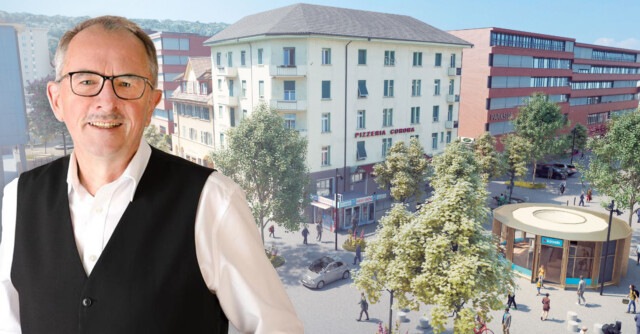
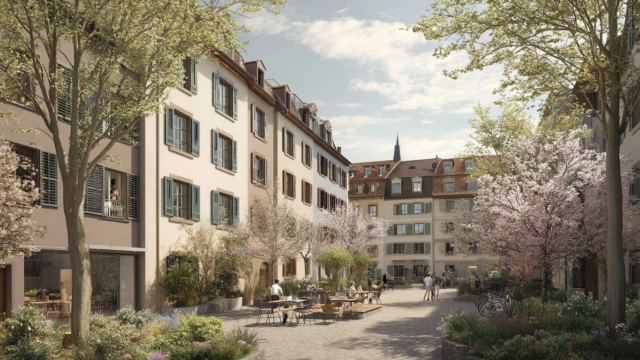
    Back to the roots has prevailed among eight submitted projects in the anonymous competition for the landscaping of the Kronenareal in Dietikon. The project by the two Zurich firms for agricultural architecture, Skala Landschaft Stadt Raum GmbH, and for architecture, S2 Architekten GmbH, received the vote of the competition’s interdisciplinary jury, the administration of the town of Dietikon announced in a press release. The immediate neighbours of the area directly affected by the redesign were also invited to take part in the assessment process as guests.

    According to the press release, Back to the roots impressed with its “sensitive and poetic overall vision of the historic site”. The Kronenareal is interpreted as part of a network of open spaces and connected to the pedestrian zones of the city centre in the east and, in places, to the Reppisch in the west. A fountain is planned as a special element on Zehntenplatz. Hedingerplatz will be designed for multifunctional uses. The pine trees on the site will be integrated into the future design.

    Landscape architect Lars Ruge will present back to the roots at the opening of the competition exhibition. The vernissage will take place on 23 August from 5 pm at the Forum for Urban Development, Innovation and Culture at Zentralstrasse 12 in Dietikon. The event is open to the public. All projects will be exhibited in the forum until 8 September.

  • Grocery stores record the most start-ups

    Grocery stores record the most start-ups

    After years of store closures, CRIF AG reports positive news from the bricks-and-mortar retail sector: according to a study, more stores have been opened in the past ten years than have disappeared. According to the study, 32,275 new stores opened, while 26,926 had to close. This results in an increase of 5,349 stores and growth of 16.6 percent overall. This is according to a press release from the business information agency.

    Online retail achieved the highest growth rate with net growth of 42.4%. A “real growth spurt” was recorded during the coronavirus pandemic in 2020 and 2021 in particular, according to the report. In 2022, the number of new start-ups fell by more than 30%, while new online retailers were added again in 2023.

    In terms of sectors, food suppliers (2547 new stores) are in the lead. They are followed by clothing stores (2,56), other food retailers (1846) and magazine stores (1752).

    The greatest loss of stores is in consumer electronics and computers, bakeries, butchers and clothing stores.

    The CRIF study took into account all retail businesses and online stores entered in the commercial register that were founded and deleted during the ten-year period.

  • Sustainable innovation in the construction industry

    Sustainable innovation in the construction industry

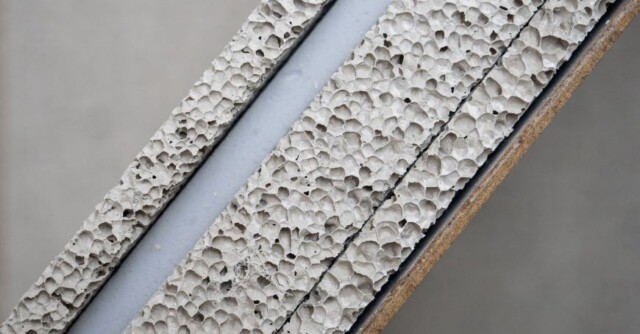
    According to a LinkedIn post, the start-up Oxara from Dietikon has completed the interior of a school building in Confignon with its Nossim clay concrete. The sustainable material not only significantly reduces CO2 emissions, but also gives the space a unique, warm aesthetic, it says. The work was carried out with the construction company Marti Construction from Lausanne.

    Founded in 2019, Oxara has developed an aggregate technology for the production of Cleancrete, a cement-free concrete. Oxara’s aggregates and binders are suitable for the production of cement-free concrete for walls, floors and cast elements as well as cement-free bricks and blocks for conventional masonry.

    At the Dietikon site, Oxara has a production capacity of 300 tons of aggregates per year.

  • New owner drives expansion and innovation in the area of room systems

    New owner drives expansion and innovation in the area of room systems

    Swiss Life Asset Managers has reached a binding agreement with Condecta AG on a full takeover of the Winterthur-based specialist for modular construction, Swiss Life Asset Managers announced in a press release. The asset manager of the Swiss Life Group, which specialises in real estate and infrastructure, intends to expand Condecta’s presence and offering. The Winterthur-based company is currently represented in Switzerland, Germany and Italy. The two partner companies have agreed not to disclose the purchase price.

    “The Swiss market for rental solutions in the modular space sector has potential, particularly in the public sector, industry, construction, architecture and the private sector, which require high-quality modular building solutions,” said Gianfranco Saladino, Head of Value-Add Infrastructure at Swiss Life Asset Managers, in the press release. “Condecta, known for its high Swiss quality, is well positioned to meet the growing demand.”

    According to Condecta CEO Olivier Annaheim, the company has found “the perfect new owner in Swiss Life Asset Managers to drive forward our growth and innovation plans and further expand our market leadership in the area of room systems in Switzerland”. For Matthew Dooley, Investment Director at Swiss Life Asset Managers, Condecta is “complementary to Swiss Life Asset Managers’ extensive property and infrastructure business in Switzerland”.

  • HighStep joins industry association Swiss Safety

    HighStep joins industry association Swiss Safety

    HighStep Systems AG has joined the Swiss industry association for manufacturers and importers of personal protective equipment (PPE), according to a press release. Swiss Safety is committed to improving safety standards in the industry and offers its members access to a wide range of resources, training courses and networks, it added.

    As a new partner in the association, HighStep Systems AG wants to play an active role in promoting occupational safety and efficiency, according to the press release. HighStep’s fall protection systems and ergonomic solutions for working at heights and depths are specially designed to make workplaces safer and more productive.

    HighStep Systems AG was founded in 2007 and is based in Dietikon. It develops and sells arrester systems as an alternative to conventional climbing methods such as fixed ladders. As a result, workstations at great heights can be reached safely and comfortably, which increases safety and productivity for employees. The HighStep climbing protection system consists of two components: an aluminum rail as a system carrier and a selectable climbing device, the HighStep Easy and the portable HighStep Lift.

    In terms of application, the focus is on electricity pylons, wind turbines, transmission towers and industrial plants. Several thousand installations are in operation worldwide – primarily in Europe and also in Asian countries such as China and India. Customers include the Swiss transmission system operator Swissgrid, the European high-voltage grid operator TenneT and the Chinese energy company State Grid Corporation of China.

  • Mobimo posts profit increase

    Mobimo posts profit increase

    Mobimo Holding AG achieved an operating result at EBIT level including revaluations of CHF 83.3 million in the first half of 2024, the Lucerne-based real estate company announced in a press release. This corresponds to a year-on-year increase of 63.9 percent. Excluding revaluations, EBIT rose from CHF 60.1 million to CHF 61.3 million. Mobimo attributes this positive development to consistently strong rental success and a strengthened development and promotion business.

    At CHF 65.6 million, net profit including revaluations was 91.5 percent higher than in the same period of the previous year. This was due to a gain from the sale of a non-consolidated stake in Parking Saint-Francois SA in Lausanne. Excluding revaluations, profit increased year-on-year from CHF 43.1 million to CHF 47.8 million.

    At 62.5 million, rental income was 3.0 percent below the previous year’s figure. Excluding special effects of CHF 3 million recognized in the first half of 2023, however, rental income increased by 2.5 percent, Mobimo explains. This leads to growth in net rental income of 2.0 percent on an adjusted basis.

    The value of the real estate portfolio amounted to CHF 3.7 billion at the end of June, compared with CHF 3.6 billion at the end of 2023. In July, Mobimo also acquired six buildings with a total of 41 apartments in Dielsdorf ZH from an institutional investor.

  • A key to combating the housing shortage in the city of Zurich

    A key to combating the housing shortage in the city of Zurich

    The housing shortage in the city of Zurich is alarming. With a vacancy rate of just 0.06%, there is a massive need for new living space. This is precisely where a non-partisan initiative comes in, calling for the building regulations to be amended so that existing buildings can be extended across the board. This measure could help to quickly create additional living space and counteract the enormous pressure on the Zurich housing market.

    Timber construction as an ideal solution for adding storeys
    Timber construction is particularly suitable for adding storeys due to its low dead weight. Compared to solid building materials, timber allows existing buildings to be extended without putting a significant strain on the structures below. This means that even multi-storey extensions can be realised without the need for extensive structural reinforcements. Wood also scores highly thanks to its outstanding energy properties, which leads to significant savings in heating costs.

    Synergy of space gain and energy efficiency
    Storey extensions not only offer additional living space, but also the opportunity to renovate the entire building envelope and optimise its energy efficiency. This improves the energy efficiency of the entire building, which leads to lower operating costs in the long term. The newly created space, which is generally of high quality and therefore easy to let, helps to amortise the investment in the extension and energy-efficient refurbishment.

    Initiative meets with broad support
    The initiative “More living space by adding storeys – neighbourhood-friendly and sustainable” has already met with broad support. More than 4,000 signatures were submitted before the collection deadline, which emphasises the great interest of the population in this solution. The implementation of this initiative could be an important step towards effectively counteracting the housing shortage in Zurich and at the same time promoting sustainable building practices.

  • Dormakaba launches new terminals for time and attendance recording

    Dormakaba launches new terminals for time and attendance recording

    Dormakaba is presenting two new time recording terminals. Terminal 96 00 is available immediately, with Terminal 98 00 to follow shortly, the internationally active locking technology company from Rümlang announced in a press release. Both terminals “support individual working time models, meet the specific needs of employers and are designed to adapt to different requirements and display designs”, it says.

    The 96 00 terminal has a 5-inch screen, the surface of which can be freely designed. In addition to time recording functions, the device also offers options for identification and access control. The storage volume comprises 50,000 master records and 200,000 transactions.

    During development, dormakaba also paid attention to sustainability. In terms of long-term use, emphasis was placed on reparability. To save energy, the 96 00 is equipped with a proximity sensor.

    The 98 00 terminal will also be launched on the market shortly. It is equipped with a 10.1-inch screen and extensive functions, explains dormakaba. The 98 00 terminal thus offers “even more scope for individuality”.

  • Artificial intelligence makes real estate marketing more efficient

    Artificial intelligence makes real estate marketing more efficient

    The use of artificial intelligence (AI) is changing the way real estate is bought and sold. According to a press release from the Swiss Marketplace Group(SMG), real estate professionals see great potential in terms of efficiency and time savings.

    Casasoft, which specializes in tailor-made digital products for real estate marketing, has developed the Casaone real estate software in collaboration with real estate service provider IAZI, both based in Zurich. The aim of the cooperation is to provide employees in the real estate sector with a better and faster process. Casaone was specially tailored to the industry’s customer relationship management and offers a “database on residential properties that is unique in the Swiss real estate landscape”, according to the statement.

    The AI-based applications implemented in it and an extensively AI-trained chatbot make life easier for real estate managers and brokers, as analogue work steps such as the creation of the offer description based on the recorded property data will be AI-supported and process-optimized in the future. The elimination of previously analog “Sisyphean tasks”, such as manually filling out data masks before placing a listing, means that more time is available for direct communication with property sellers and buyers. “Real estate professionals will be able to create and list their properties more efficiently than ever,” it says.

    There are also advantages for property seekers. “Available properties will come onto the market faster and with higher data quality,” says Martin Waeber, Managing Director Real Estate at SMG. The SMG Swiss Marketplace Group unites the digital marketplaces of TX Group, Ringier and Mobiliar.

  • Manor moves into the Jelmoli building

    Manor moves into the Jelmoli building

    In February 2023, Swiss Prime Site decided to remodel and sustainably develop the Jelmoli building. The aim is to adapt the retail space to current market requirements and make the building fit for the future. In Manor, Swiss Prime Site has now found a long-term tenant that will ensure the long-term attractiveness of the building and the lower Bahnhofstrasse.

    An inspiring shopping experience in the heart of Zurich
    Manor will rent around 13,000 square metres of space and is expected to take over the ground floor, basement and first floor in 2027. Manor will open a flagship store here, which will be directly accessible from Sihlstrasse and Seidengasse. Roland Armbruster, CEO of Manor, promises an inspiring shopping experience with a varied and curated product range in the areas of fashion, beauty, home and living. A diverse range of restaurants will round off the shopping experience.

    New office space and restaurants
    Following the renovation, the upper floors of the Jelmoli building will offer around 20,000 m² of office space, providing a new top address in Zurich city centre. This office space will be complemented by a wide range of catering and leisure facilities. The newly designed roof terrace will provide additional space for catering outlets.

    Partnership between Swiss Prime Site and Manor
    The long-term rental agreement between Swiss Prime Site and Manor is a significant step for both companies. Manor will also contribute to the investments for the remodelling in order to create attractive retail space. Existing tenancy agreements, in particular with the Holmes Place fitness club, will remain in place during and after the renovation. Holmes Place will continue to offer its services to customers during the renovation phase. With Manor and Holmes Place, around half of the space has therefore already been let before the start of construction.

    A unique meeting place for Zurich
    René Zahnd, CEO of Swiss Prime Site, emphasises: “Our primary goal was to preserve the Jelmoli building as a unique destination and open meeting place. With the arrival of the Manor department stores’ group and its long-standing tradition, the Jelmoli building will be filled with new life for Zurich and the Zurich population and will shine beyond the city limits.”

    The largest department stores’ group in Switzerland
    Manor, the largest department stores’ group in Switzerland, is represented in all parts of the country and employs around 7,500 people. The Manor Group comprises 59 Manor department stores, 27 Manor Food supermarkets and 23 Manora restaurants. The company pursues an omnichannel strategy that combines online shops and services. Manor is sustainably profitable and is part of Maus Frères Holding, which also owns leading lifestyle brands such as Lacoste.

    The repositioning of the Jelmoli building with the arrival of Manor marks an important step for the future of Zurich’s Bahnhofstrasse and emphasises the importance of Swiss Prime Site in sustainable urban development.

  • Aargau and Thurgau gain in importance for Zurich companies

    Aargau and Thurgau gain in importance for Zurich companies

    Every year, more companies move out of the canton of Zurich to other cantons than move in from there. On average over the decade from 2012 to 2021, the negative balance was 116 companies. This corresponds to around one per mille of the Zurich population. Although the balance is also negative in terms of the number of full-time positions, it is marginal in relation to the 1.1 million jobs offered by the Zurich economy in 2021. This is the result of an analysis by political scientist Peter Moser published by the Zurich Chamber of Commerce.

    If a company relocates, it is often to or from a neighbouring canton. Aargau is clearly in the lead with 18 per cent of the total number of company relocations between 2012 and 2021. According to Moser, this could also be due to the fact that “its economic area, for example in the Limmat Valley, has grown together with that of the canton of Zurich”. This is followed by the low-tax cantons of Zug (16 per cent) and Schwyz (13 per cent), followed by St.Gallen (10 per cent) and Thurgau (9 per cent), which is also low-tax. Financial service providers, on the other hand, prefer the cantons of Zug (40 per cent) and Schwyz (25 per cent).

    Aargau is a popular destination for industrial, construction and logistics companies relocating from Zurich. “They benefit from network effects and the land there is also likely to be somewhat cheaper for these industries, which tend to be land-intensive, than in the expensive centre of the Zurich metropolitan area,” says Moser. He believes that the fact that the production factors of land and labour are comparatively inexpensive there, as in Thurgau, is the main reason why these two cantons in particular have gained in importance as target cantons for migrating companies.

  • Winning project for high-rise building near Regensbergbrücke in Zurich

    Winning project for high-rise building near Regensbergbrücke in Zurich

    At the Regensberg Bridge in Zurich Oerlikon, SBB is planning an office building around 40 metres high with public uses on the ground floor. The winning project, developed by “Team Esch Sintzel”, makes skilful use of the challenging site shape and topography. It also achieves a high degree of energy self-sufficiency, which makes it particularly forward-looking.

    Focus on efficient use and sustainability
    The planned high-rise building will be 80 per cent energy self-sufficient. Thanks to advanced building technology, passive cooling and solar cells on the roof and façade, the building will be able to cover most of its own energy requirements. This fits in perfectly with SBB’s ambitious climate targets.

    Eight office floors and public uses on the ground floor
    The new building is being realised as a nine-storey commercial building, with flexible floor plans that are ideal for services, health and education. The ground floor will be enlivened by catering and retail spaces, while the outdoor space concept with a near-natural track level and barrier-free urban level will ensure a high quality of stay.

    Public exhibition of the competition entries
    The competition entries will be exhibited from 12 to 15 July 2024 on the 8th floor of the Franklinturm at Hofwiesenstrasse 349 in Zurich-Oerlikon. Interested parties can visit the exhibition from Friday to Sunday from 2 pm to 6 pm and on Monday from 11 am to 3 pm.

    Framework plan for Zurich Oerlikon railway station south-west development site
    The basis for the project is the “Zurich Oerlikon railway station south-west development site” framework plan drawn up in 2012 together with the City of Zurich. This defined an eight-storey building to the west of the Franklin Tower in terms of urban planning. The building permit requirements have been met and construction is scheduled to begin in 2027.

  • Canton of Zurich proposes areas for the utilisation of wind power

    Canton of Zurich proposes areas for the utilisation of wind power

    The Zurich cantonal government wants to create the planning basis for increased utilisation of wind power in the canton. According to a press release, it has now submitted 20 highly suitable and 15 well-suited areas for consultation. The highly suitable areas are mainly located in the north-east of the canton between Cholfirst, Stammerberg, Zünikon and Bergbuck. Other areas in the south of the Knonauer Amts, on the Pfannenstiel and in the Oberland are considered to be well suited. The canton looked at a total of 52 potential areas.

    The consultation will last until 31 October. The cantonal government will then prepare the corresponding proposal for the cantonal council. Wind turbines can only be erected in areas that are listed as suitable in the structure plan.

    The cantonal government is also proposing measures to involve the municipalities and the population in the construction of the turbines. For example, municipalities and private individuals should be able to participate voluntarily in the investments. Conversely, plant operators should voluntarily allow municipalities to share in the profits.

    In contrast, the cantonal government sees little potential for the expansion of hydropower in the canton. Only at the Rhine Falls could 20 per cent of the water be used for an underground power plant. It proposes a corresponding entry in the structure plan.

  • Optimal exam preparation for prospective property professionals

    Optimal exam preparation for prospective property professionals

    The member organisations SVIT Bern, SVIT Eastern Switzerland, SVIT Central Switzerland and SVIT Zurich are intensively involved in the training of their apprentices. One outstanding example of these endeavours is the three-day “QV-Campus” launched by the SVIT Young Zurich youth commission in 2017. This campus offers apprentices optimal preparation for the company qualification process (final apprenticeship examination).

    The graduates of this year’s campus have just received their exam results. As every year, most of the participants scored above average, which makes the association proud and emphasises the high quality of their training.

    During the QV-Campus, participants were tested in industry-specific lessons without grades in order to specifically identify and close any gaps in their knowledge. The most important exam topics were taught by experienced QV exam experts. The programme also included overcoming exam anxiety and various learning techniques. On request, learners received further support on site or via Zoom until the exam.

    With around 40 third-year learners taking part, the “QV-Campus” can be considered a success. The high level of motivation of all those involved contributed significantly to the positive outcome. “It gave me a wake-up call!” commented one participant, who was now also able to gain new and exciting insights into the subject of “Taxation”. Another participant commented: “I had planned to study intensively for four weeks before the QV, but after the QV-Campus I realise that this is not enough.”

    For many young people, activities such as going out, friends and sport take centre stage, and they often lack the motivation and ambition to prepare for their exams in a timely and structured manner. This is precisely where the QV-Campus comes in, by guiding apprentices to plan properly and showing them that relaxation and proper preparation are crucial for a successful apprenticeship qualification.

    After the Campus is before the Campus.

    Are you in your 3rd year of apprenticeship and want to be optimally prepared for the company qualification process?

    Then register for the QV-Campus 2025 at www.svit-young.ch.

  • digitalStrom wins German Brand Award

    digitalStrom wins German Brand Award

    Schlieren-based networking specialist digitalStrom has received multiple awards from the German Design Council at the German Brand Award 2024. According to a press release, digitalStrom received the gold award in the category Excellence in Brand Strategy and Creation – Brand Design – Corporate Brand. The company was also among the winners in the categories Excellent Brands Building and Elements and Excellence in Brand Strategy and Creation – Brand Strategy of the Year. It received a special mention in the Excellent Brands – Brand Innovation of the Year category.

    More than 1,300 companies entered this competition, which honours unique brands and brand creators for successful brand management. In its entry, digitalStrom also refers to its collaboration with the Munich-based marketing agency Wachter Parts & WPWA as the basis for these awards.

    The repositioning of digitalStrom puts the newly created claim Power the Line at the centre of the brand image, according to the jury. It describes digitalStrom as “a Swiss company that offers modern smart home solutions and building automation for existing and new buildings. With its so-called powerline technology, the company uses existing power lines for signal transmission, thus avoiding the need for additional cabling and the often associated opening of the wall.” The brand image is described as “original, creative and humorous”, its choice of words as “likeable and cheeky” and the design as “bold, modern and fresh”.

  • Real estate summit dedicated to digitalisation

    Real estate summit dedicated to digitalisation

    The Zurich Airport Region Economic and Location Promotion FRZ hosted its tenth Real Estate Summit in Dübendorf on 12 June. according to a press release, 650 guests from the construction and property industry gained insights into current trends and future industry developments. Under the motto “Human Power: People. Network. Success”, there were presentations on market trends, digital technologies and the future of construction.

    André Ingold, Mayor of Dübendorf, addressed the region’s development into a “dynamic economic centre” and highlighted the Innovation Park Zurich. This will create more than ‘000 jobs in the short term, with 12,000 to 15,000 planned in the medium and long term. He went on to talk about the motto: Despite technological advances and the use of artificial intelligence (AI) in the real estate industry, people remain the focus.

    FRZ Managing Director Rahel Kindermann Leuthard emphasised the importance of the FRZ business network as a “driving force for location development” and presented construction projects. Referring to the motto of the summit, she addressed the growing complexity. This has “reached a level where success is only possible together with others”.

    Lydia Naef, Chief Real Estate Officer at Flughafen Zürich AG, used examples from Zurich Airport’s real estate management to illustrate how construction projects can be optimised with human performance and digital technology. She paid particular attention to the digital technologies used to manage the entire life cycle of property projects. Building information modelling, the Internet of Things, AI and virtual reality could help to reduce costs and increase efficiency.

  • Planon software receives GEFMA certification

    Planon software receives GEFMA certification

    The GFMA has once again awarded Planon ‘s software for Integrated Workplace Management and Computer Aided Facility Management certification in accordance with Guideline 444, the company for intelligent and sustainable building management announced in a press release. The recertification also applied the new catalogue of criteria for IoT data management introduced in the guideline. The Internet of Things (IoT) now plays an important role in intelligent building management due to the automated networking of building technology, writes Planon.

    The two software functionalities Energy Management and Workplace Management have also been certified in accordance with the new GEFMA 445 guideline. It was developed by GEFMA’s digitalisation working group in response to technical developments in the proptech sector in order to be able to certify individual processes for building management, explains Planon. Compared to Guideline 444, more in-depth functionalities are required.

    “The renewed GEFMA 444 recertification and the new certification according to GEFMA 445 underlines our high quality standards and our innovative strength as market leader for intelligent and sustainable building management software,” Stephan Mau, COO Real Estate Management & General Manager EMEA Central at Planon, is quoted as saying in the press release. The globally active proptech with headquarters in the Netherlands is represented in Switzerland with a branch in Technopark Zurich.

  • The new GIS browser as a public service for professionals and private individuals

    The new GIS browser as a public service for professionals and private individuals

    The canton of Zurich offers a huge pool of data with a spatial reference (geodata). Most of it is accessible free of charge via the GIS browser. Around 200 digital maps, grouped according to 21 main themes such as buildings, flora and fauna, leisure and geology, can be accessed online. Most of the data can be used without restrictions and the map content can be downloaded and printed directly.

    Broad benefits for professionals and private individuals
    The GIS browser is a useful planning and decision-making tool not only for professionals, but also for private individuals. Location factors such as the age of a house, proximity to public transport stops, shops, schools or sports facilities, planned building sites and journey times on the road network can be easily checked. Up-to-date and precise facts on numerous issues are available.

    History and development of the GIS browser
    Since its launch in 1999, the GIS browser has undergone continuous development. The new version is the third generation. Most of the publicly relevant maps are already available and the migration of the remaining maps is continuing.

    Advantages of the new GIS browser
    The portal has a new design and the user interface is intuitive and self-explanatory, even on smartphones and tablets. An intelligent search function makes it easier to find the desired map. The map views can be customised and used even better thanks to new functions such as filters and favourites lists.

    Integration into the new cantonal geoportal
    The geodata of the Canton of Zurich is also available in the geodata catalogue and geodata shop. These systems are now centrally accessible via the new geoportal geo.zh.ch. The geoportal also offers news on new maps and a help and support area.

  • New building for health and biomedical research inaugurated

    New building for health and biomedical research inaugurated

    ETH Zurich has inaugurated its latest new building. The university’s health sciences and biomedical engineering departments have moved into the Gloria Cube, the ETH announced in a press release. Specifically, the new laboratory and research building houses 16 research groups from the fields of exercise science and sport, rehabilitation and biomedical engineering as well as application-orientated, translational research.

    The new building on Gloriarank connects the ETH campus with the neighbouring residential buildings in the Fluntern district via continuous paths and a green area. The eight-storey building is also close to the University of Zurich and the University Hospital Zurich, making it “a natural address for interdisciplinary collaboration and translational research”, writes ETH. The transfer of research results into medical applications will be supported by a technology platform for medical human research set up in the Gloria Cube.

    The press release cites the development of new micro-active substances and new training methods to improve athletic performance and health as examples of future research to be conducted at the Gloria Cube. Another project is investigating the connection between pupil size and stress or mental well-being in general. The Gloria Cube has six seminar rooms and a learning centre for training. At the Skills Lab @ETH, medical students can teach each other basic medical skills.

  • Andreas Bühler manages Zürioberland

    Andreas Bühler manages Zürioberland

    The Zürioberland location promotion organisation has a new president: At the 2nd General Assembly on 6 June, Andreas Bühler, Mayor of Hinwil, was elected to succeed Ruedi Rüfenacht, Zürioberland announced in a press release. Rüfenacht is relinquishing his office in accordance with the articles of association following his resignation as mayor of Wetzikon. The Zürioberland Board is convinced “that Andreas Bühler, as a successful bridge builder and thoroughbred Zürioberlander, is the ideal candidate for this office”, the press release states.

    The Zürioberland Forum took place after the Annual General Meeting. Here, Mikula Gehrig, the responsible site developer and Managing Director of The Valley in Kemptthal, presented the transformation of the former Maggi site into a research and service campus. According to the press release, Gehrig emphasised the importance of a long-term vision for a project of this kind.

    In an inspirational speech, neuroscientist and psychologist Lutz Jäcke called on the 150 or so participants at the forum to dare to change their perspective in order to gain new insights. Dominic Käslin, member of the advisory board of the Innovation Network Eastern Switzerland INOS and professor at the University of Applied Sciences Graubünden, led a workshop on the topic of negotiation. Here, negotiation styles were analysed, practical solutions discussed and strategies for successful negotiations tested.

  • New pipeline cadastre portal creates transparency and added value in the construction industry

    New pipeline cadastre portal creates transparency and added value in the construction industry

    Since 1 May 2024, the canton of Zurich’s new pipeline register has mapped all supply and disposal lines, both above and below ground. The previously time-consuming procurement of plans for existing pipelines has been considerably simplified by the new central portal. This comprehensive source of information is now available to the public free of charge and offers significant added value for planning, construction and maintenance work.

    Easy access to pipeline information
    Until recently, it was time-consuming and complicated to obtain information on pipelines in a specific area or on a plot of land, as this had to be requested individually from the owners or the respective utilities. The canton of Zurich’s new centralised pipeline register now integrates the pipeline information of over five hundred utilities operating in the canton into a single system. These pipelines include water, wastewater, electricity, district heating, gas and communications. The data is regularly updated by the utilities themselves.

    Wide range of benefits for various user groups
    The pipeline cadastre portal offers numerous benefits for various interest groups, including utilities, administrations, construction companies, rescue and security services and private users. Reliable information on the type and location of pipelines is essential for the planning and coordination of construction projects as well as for the maintenance and expansion of pipelines. Transparent documentation considerably reduces the risk of damage. However, it should be noted that the pipeline register may not be used as a basis for excavation work. Detailed information must still be obtained directly from the responsible utility.

    User-friendliness and comprehensive data provision
    The portal is designed to be user-friendly. Users can search for municipalities, plots or roads and select the desired medium. The corresponding pipes are then displayed in the map section. The data can be easily downloaded in the most common formats. In addition, information such as owner details and contact information for the works is provided.

    The pipeline cadastre portal can be accessed at https://leitungskataster.zh.ch. Prior registration is required to use the portal. Further information on the cantonal pipeline cadastre can be found on the website zh.ch/leitungskataster.

    With this new portal, the canton of Zurich is taking a significant step towards more efficient and safer construction and planning processes.

  • New wooden apartment blocks with innovative TS3 technology

    New wooden apartment blocks with innovative TS3 technology

    It only takes a few minutes’ drive to separate Zurich city centre from Zollikerberg, a part of the village of Zollikon. Having just stood on Sechseläutenplatz in front of the opera house, wide meadows and self-picking fields open up shortly afterwards. Just a stone’s throw away from Forchstrasse, which directly links the town and the countryside, two wooden apartment blocks were completed last year – on the site of a farm that is still inhabited and farmed.

    Harmony between tradition and modernity
    Sheep used to graze regularly on the estate’s large meadow. Today, two four-storey buildings with a total of 22 rental flats tower above the grass. The two apartment blocks form a harmonious ensemble, which could possibly be supplemented by a third building at a later date, should densification be required. At the start of planning, it was not yet clear whether the buildings would be timber or solid construction. The clients had not made any specific specifications when they announced a private competition in 2018. However, chance favoured timber construction: the Zurich-based firm Merkli Degen Architekten, which was invited to take part in the competition and won, was working with Timbatec AG at the time. Together with the University of Applied Sciences Biel and ETH Zurich, the well-known Swiss engineering firm was developing a new connection technology to bridge larger spans with cross-laminated timber panels – without beams or additional intermediate supports.

    The future of construction
    In future, it should therefore be possible to achieve with wood what was previously only possible with reinforced concrete. TS3 connection technology was still in its infancy in 2018, but is now well established. Solid timber panels that can form entire floor slabs open up completely new possibilities for timber construction.
    “It was purely by chance that we became aware of TS3,” explains Ueli Degen, one of the founders of Merkli Degen Architekten. “We were originally talking to the engineers at Timbatec about another timber construction project.”

    They told us about the development of their latest connection system and presented us with an example. This ground-breaking technology has stayed with us ever since. At some point, we came up with the idea of using TS3 for the construction project in Zollikerberg. Before deciding whether to use timber or solid construction, thorough investigations and comparisons were carried out. In the end, the timber design prevailed, which was later realised by the company Holzbau Oberholzer GmbH. By using a timber building, it was possible to create a harmonious connection to the existing farmhouse, which is also made of wood.

    The combination of a timber construction with TS3 technology also promised to be an economically attractive solution that would also significantly shorten the construction time. Nevertheless, it took a while before the clients decided in favour of timber construction. Five years ago, when the buildings were planned, a lot of persuasion was still needed to push through a timber construction of this size.

  • Innovation centre expands its services

    Innovation centre expands its services

    Startup & Innovation Space AG is expanding the offering of its start-up centre Home of Innovation. The plans include “more office space and co-working spaces, more training for founders and new access to investor funds”, Home of Innovation announced in a press release. The centre, which currently operates at three locations, is currently used by around 100 start-ups, innovative SMEs and co-workers as well as five Winterthur business associations. Home of Innovation has developed a strategy with five strategic themes for the expansion of Winterthur’s innovation ecosystem.

    The aim is to acquire additional office space of at least 2,000 square metres in Winterthur. In addition to attracting existing companies, a second focus will be placed on start-ups. They are to be supported by the establishment of a project manager position to promote start-ups. In addition, Home of Innovation intends to strengthen its already successful Launch Control training and support programme. Last but not least, investors and start-ups are to be brought together as part of the Winti-Ventures initiative.

    In preparation for the next phase of growth, Home of Innovation is also making changes to its management. Thomas Giger has been appointed Chairman of the Board of Directors, while Thomas Breitenmoser will head up operations as Head of Operations. Founder and initiator of Home of Innovation, Raphael Tobler, is stepping down as Chairman of the Board of Directors, but will remain with the start-up centre as Vice Chairman with a focus on Launch Control.

  • BID Equity takes over Zurich-based company

    BID Equity takes over Zurich-based company

    The Hamburg-based software company BID Equity is acquiring Zurich-based Realview AG, a provider of modern software solutions for construction project management. With its experience in software development, strategy consulting and entrepreneurship, BID Equity plans to build a leading software group for the building sector together with Realview. The combination of Realview’s established solutions and extensive expertise with BIS Equity’s financial strength and experience in the international acquisition of companies lays the ideal foundation for this endeavour, according to a press release.

    Realview offers software solutions for the coordination, monitoring and management of construction projects. The aim is to enable seamless communication and resource utilisation. Realview’s more than 600 customers in German-speaking Switzerland will continue to be supported by the usual team.

    “We are very much looking forward to working with BID Equity,” Realview founder Pascal Christen is quoted as saying. “Together, we have a wide range of opportunities to further develop our technology and offer our customers an even more comprehensive portfolio of solutions in the future.”

  • Company wins second contract for Rogfast tunnel project

    Company wins second contract for Rogfast tunnel project

    Construction company Implenia has won a second sub-project in the Rogfast tunnel project with its Norwegian partner Stangeland Mask in. E02 Kvitsøy is even more complex than the E03 Boknafjord Tunnel, which Implenia is already building together with Stangeland Maskin as a joint venture, and is worth CHF 420 million to Implenia. The order value for the entire project is CHF 540 million

    “We are proud to have been selected for this important project together with our joint venture partner Stangeland Maskin,” said Erwin Scherer, Head of Tunnelling at Implenia, in a press release. “E02 Kvitsøy is another complex tunnel project and therefore fits perfectly with our strategy, and we will contribute our extensive expertise in tunnelling, concrete and water and frost protection.” The contract with the Norwegian Public Roads Administration is scheduled to be signed on 7 June.

    E02 Kvitsøy is an 8.8 kilometre long two-way tunnel with a cross-section of 10.5 metres. It is to be built south and north of Kvitsøy in Fylke Rogaland in southern Norway at a depth of around 230 metres below the sea surface. The tunnel includes two ventilation shafts, a junction with ramps and a roundabout as well as 1.6 kilometres of road in the daytime area, two bridges and a large sea embankment. An industrial estate is to be built on this. Work is scheduled to start in late summer 2024 and be completed in 2030, with Implenia holding a 77 per cent stake and Stangeland Maskin 23 per cent in the joint venture. Implenia is responsible for tunnelling and lining the tunnel in the upcoming construction project, while Stangeland Maskin is responsible for material transport, including backfilling, earthworks and road construction in the tunnel and surface areas.

  • Inauguration of a photovoltaic system at Limeco

    Inauguration of a photovoltaic system at Limeco

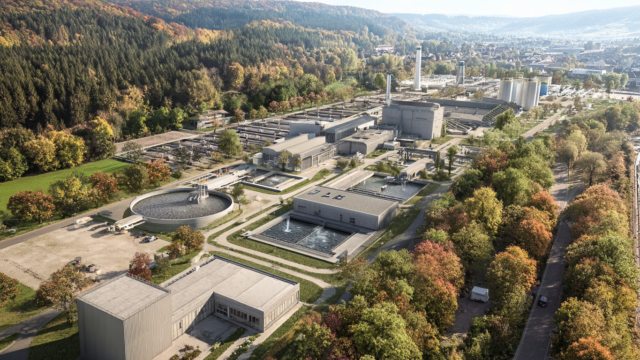
    According to a press release, the Limmattaler Regiowerk Limeco, based in Dietikon, has inaugurated a photovoltaic system on the roof of the wastewater treatment plant(ARA). According to the company, 624 solar panels with a capacity of 265.2 kilowatts peak generate as much solar power as 70 households with an annual consumption of 3,600 kilowatt hours.

    On an area of 1220 square metres, 252,000 kilowatt hours of green electricity are to be produced, primarily for the ARA’s own requirements and the waste recycling plant. Any surplus energy will be fed into the public grid and made available to the general public.

    The aim is to promote the expansion of renewable energy supply. Limeco plans to convert the supply of the entire Limmat Valley to CO2-neutral energy sources by 2050.

  • First use of CPC concrete slabs in building construction

    First use of CPC concrete slabs in building construction

    The Zurich University of Applied Sciences(ZHAW) is using the CPC concrete slabs (Carbon Prestressed Concrete) it has developed for the first time in building construction. This refers to concrete slabs that are reinforced with prestressed carbon. According to a press release, an innovation laboratory has been created in Winterthur from these innovative components, which functions as an information and event centre for sustainable construction. The carbon concrete panels are not only recyclable, they also have a significantly lower impact on the environment than conventional reinforced concrete during production. “Thanks to the new lightweight construction method in concrete, we reduce the CO2 footprint by a factor of two to four and save up to 75 per cent material compared to conventional construction methods,” Josef Kurath, co-founder of CPC AG, a spin-off of the ZHAW, and developer of the carbon concrete panels, is quoted as saying in the press release.

    The carbon concrete panels used for this purpose are currently being manufactured, processed, cut to the millimetre and assembled into building elements at Holcim ‘s first CPC plant in Germany. This preliminary work saves time during assembly on site, as there is no need for time-consuming on-site reinforcement work. “This results in much shorter construction times, which is a particular advantage for urban construction sites,” continues Kurath. Extensions or changes to buildings are also possible at any time. “Our carbon concrete construction system works in a similar way to Lego, but like a modern version of it, with customised components.” And CPC even has advantages over conventional building materials in the event of dismantling: 90 per cent of the processed material can be reused.

  • Expansion of solar installations in Zurich

    Expansion of solar installations in Zurich

    ewz, the energy supplier to the city of Zurich, is pressing ahead with its expansion of solar installations. As detailed in a press release, the company has published 14 new locations on its website in which citizens can participate. For CHF 250 per square metre, you can acquire a stake in the additional 11,000 square metres. Participants receive 80 kilowatt hours of Zurich solar power per year on their ewz bill. With the areas now connected, ewz now has 55 solar installations in the city of Zurich. The newly added areas are expected to produce 1,246,000 kilowatt hours of electricity per year. This corresponds to the electricity consumption of 500 average households.

    “With the solar strategy, we in the city of Zurich have the ambitious goal of producing more solar power,” said City Councillor Michael Baumer, Head of Industrial Operations, in the press release. “I have therefore taken the opportunity to acquire a solar stake myself. Only together can we make Zurich a solar city – every square metre counts!”

    Ewz also offers homeowners solar solutions for their own roofs. For example, 950 solar modules will be installed on four residential buildings in Guggach by July. The system is expected to produce 423,000 kilowatt hours and supply the 197 households with solar power.

  • Future-oriented heat supply in Zurich’s inner-city neighbourhoods

    Future-oriented heat supply in Zurich’s inner-city neighbourhoods

    In a strategic initiative to decarbonise the energy supply, the city of Zurich is identifying key districts in which the conventional heat supply is to be replaced by sustainable alternatives. Despite the challenge that locally available, renewable energy sources such as heat pumps are not sufficient to meet demand, a comprehensive study has identified possible solutions.

    Concept for densely built-up urban areas
    The Hard, Wiedikon and Sihlfeld-Werd neighbourhoods in particular are the focus of energy planning. These areas, which cover around seven per cent of the city’s settlement area, require an innovative approach due to their dense perimeter block development. The supply concept developed envisages the construction of thermal networks, which will account for around a quarter of the city’s new installations by 2040.

    New combined heat and power plants required
    To cover the calculated heat demand of 282 GWh/year, high-performance heating plants are required, comparable to the capacity of the existing Hagenholz waste incineration plant. Additional boilers are used to cover the peak load, which is particularly necessary on extremely cold days.

    Modular expansion and innovative heat sources
    The concept includes the use of diversified energy sources such as wastewater heat, river water, wood biomass and waste heat from computer centres, which is generated outside the supply area and fed into the neighbourhoods via a new main network. Implementation will be carried out in modular steps, with independent distribution centres being built in a timely manner to ensure that end consumers are connected quickly.

    The planning and implementation of this forward-looking project is now required in order to connect the first properties to the grid early in the 2030s. The replacement of the current 1,500 fossil-fuelled heating systems in these areas will make a decisive contribution to achieving Zurich’s climate targets.

  • New chapter for mortgage brokers with new offices in Zurich

    New chapter for mortgage brokers with new offices in Zurich

    The mortgage broker my hypotheca ag, managed by Rolf Zäch and Karim Schmid, is now working from the Atmos Tower in Zurich, according to a press release. After founding my hypotheca in 2021, the founders spent two years in the co-working space at JED in Schlieren to further develop their idea. Rolf Zäch comes from the property sector and Karim Schmid from the financing sector. Thanks to their independence and access to over 30 financial institutions, they were able to negotiate better conditions for property buyers and thus enable more people to realise their dream of owning their own home, according to the press release. The young company, now registered as my hypotheca ag, now employs nine full-time staff.

    Zäch und Schmid’s business model as a mortgage broker is customer-orientated in several respects, the press release continues. With the motto “Power of choice”, they offer customers access to over 30 financing partners. This broad selection makes it possible to find the best conditions on the market. Their large mortgage volume and direct access to financial institutions also ensure negotiating power and expertise to negotiate the best conditions for customers, the press release explains.

    Due to its growth, the company relocated its headquarters to the Atmos Tower in Zurich in January 2024. There, they have found flexible workspaces in Flexoffice ‘s new co-working centre. Flexoffice will open another co-working space in the new building next to the JED in Schlieren in autumn.