Living space design through the ages
The amount of space required per resident has increased from 25 m² in 1950 to around 46 m² today. As a result, room layouts have changed: What used to be a family flat is now a flat for singles and childless couples. Instead of two small WCs, a spacious bathroom is now preferred, and instead of a separate kitchen and dining room, an open-plan kitchen with a cooking island. In addition, personal demands and legal requirements in terms of building physics and ecology have increased. The question of basic services has evolved into the question of the appropriate quality of living space.
Cost savings through denser construction
In today’s housing estates of the economic upswing, there is an opportunity to achieve a more efficient use of building space through denser construction and taller buildings. Particularly in areas close to city centres with high building land values, refurbishment is often preferred to new builds. It is also important to consider the ecological significance of building decisions in view of Switzerland’s dwindling reserves of building land. The country’s settlement area has grown considerably in recent decades. Simple volumes, well thought-out spatial sequences and compact construction with high utilisation rates can save costs and counteract urban sprawl.
Thermal insulation of buildings in need of renovation
Energy-efficient modernisation of a building from the 1970s can reduce energy consumption by up to 90%. In order to optimise thermal insulation, external components such as exterior walls, roofs or the attic must be renovated. Sometimes heat is also lost undetected through an insufficiently insulated basement ceiling. The windows in particular represent weak points in the exterior walls in terms of heat and sound insulation. Building thermography with a thermal imaging camera can be carried out to assess the thermal insulation. In addition, the differential pressure measurement method (blower door test) can be used to test the airtightness of the building envelope.
Efficientexterior wall renovation with wood
Exterior walls are complex components that fulfil important building physics functions such as moisture protection, sound insulation and thermal insulation. When renovating façades, wood can be used as a substructure, formwork and thermal insulation. Insulation materials such as rock wool, glass wool, sheep’s wool or flax can also be used. The renovation of external walls is nowadays also carried out using prefabricated lightweight façades in frame construction. This concept of completely re-cladding a building and giving it a new appearance at the same time has proven to be extremely successful. As a result, new extensions and additions can also be architecturally combined with the existing building to form a new unit.
Optimisation of rooms
During interior renovations, rooms are redesigned to meet the new requirements. New partition walls, panelling and suspended ceilings are created. New sanitary and electrical installations are inserted into the wooden slats. The cavities are filled with insulating materials and then planked with gypsum, cement or wood-based panels to meet the requirements for fire protection, sound insulation and moisture resistance. Finally, the joints are filled by the plasterer and the surfaces are re-plastered. Perforated or slotted wooden materials are used as acoustic panels to improve room acoustics.
Tips for old floors
Unevenness in old floors can be levelled out using various measures. Fine filler or levelling screed are suitable for slight unevenness, while dry fills are usually used for larger unevenness. Flowing screeds made of anhydrite or cement are used for larger areas. Impact sound insulation is essential to reduce sound transmission to rooms below. In bathrooms and damp rooms, surfaces are provided with suitable sealing compounds and tapes to protect against water penetration. Designed outdoor areas such as wooden terraces and conservatories help to improve the quality of living. Balconies, terraces, loggias or conservatories can be added or extended as part of façade and interior renovations. Thanks to hard-wearing types of wood and treated timber, it is also possible to construct wooden structures that are subject to heavy use.
Wooden structures for living space extensions
The potential of a building can be fully utilised by taking local building regulations into account and selecting the appropriate building services. Additions or loft conversions offer the best opportunity to create more living space on the same floor area. Due to its low dead weight, construction engineers often opt for timber when adding storeys, as this usually means that the load-bearing structure and foundations do not have to be additionally reinforced. Prefabricated timber elements can be lifted to the top floor using a mobile crane. Choosing a construction method with a high degree of prefabrication reduces the workload on the construction site and the rooms can be occupied quickly. This means that residents and neighbours are hardly affected by noise and dust.
Category: Construction
-

Evolution of living space design
-

New design guidelines for Zurich Lengg: a step into the future
In an endeavour to shape the structural development in the eastern outskirts of Zurich in a harmonious and future-oriented manner, the city council has decided on a partial revision of the building and zoning regulations (BZO) for the Lengg area. This step follows a careful examination and aims to implement the development principles laid down in the “Lengg Masterplan” and the cantonal structure plan in a binding manner. The design plan obligation aims to ensure that new construction projects and outdoor spaces are not only aesthetically pleasing, but also take into account environmental aspects and the local transport infrastructure.
The Lengg area, embedded in the Hirslanden and Riesbach neighbourhoods and adjacent to Zollikon, is home to important institutions in the healthcare and research sector. The imminent opening of the new University Children’s Hospital Zurich (Kispi) will further strengthen the importance of Lengg as a medical and scientific cluster. This location is also characterised as a popular recreational area and as a showcase for pioneering medical innovations.
The strategic development of Lengg, coordinated by the area management, aims to ensure a harmonious interplay of diverse uses and to strengthen the area as a whole. The Department of Health and Education, under the direction of the Office for Spatial Development of the Zurich Building Department, has drawn up a master plan that sets out a long-term perspective up to 2040 and serves as a basis for the future planning and realisation of construction projects.
By implementing the Lengg design plan requirement, the City of Zurich is confirming its commitment to well thought-out and integrated urban development that meets the requirements of a growing metropolis and at the same time improves the quality of life of its residents. -

New concept for the Zurich barracks area
Built in the 19th century as a military complex with barracks, armouries and stables, the site is now one of the largest and best-preserved historicist ensembles in Switzerland. With the planned departure of the cantonal police, a large part of the site will become available for future use, while existing facilities and interim uses will continue to revitalise the site.
The canton and city of Zurich developed a vision for the site in a collaborative process with the city’s population. It is to become an urban magnet that combines recreation, encounters and work, with a strong connection to the neighbourhood. Cultural institutions, small businesses, educational and leisure facilities are planned, which will characterise the site and ensure a versatile, community-oriented use.
Changes to the historic ensemble will be made carefully in order to preserve the existing qualities and at the same time enable a variety of uses. The design of the open spaces should support the diversity of use without changing the character of the site.
Transparent operational organisation and clear usage management ensure a balanced mix of different offerings. The focus is not on maximising profits, but on the flexible and gradual development of the site. The barracks area is currently enriched by a variety of offers and uses.
A competition is currently being held to find project proposals for the further development of the public open spaces.
The competition programme was drawn up together with an echo group from the neighbourhood. The aim is to ensure that the project proposals meet the needs of the neighbourhood. The competition results for the further development of the public barracks open spaces are expected to be available by the end of 2024.
The redevelopment of the barracks site is exemplary of a sustainable and community-oriented approach to urban development. The combination of historical appreciation and modern diversity of use will transform the site into a vibrant part of Zurich’s city centre. The development is a significant step towards an integrative, sustainable urban landscape that offers the citizens of Zurich new spaces for recreation, culture and encounters. -

New smart antenna optimises construction processes
Leica Geosystems, the precision equipment manufacturer based in the St.GallenBodenseeArea, has launched the Leica iCON gps 120 smart antenna onto the market. According to a press release, the antenna, which is integrated into the Leica MC 1 machine control programme, is used to optimally control construction processes and machine movements. The use of the complex system enables precise task completion and fleet efficiency to be coordinated between individual heavy construction machines.
Construction machines with a single satellite-controlled GNSS solution can already carry out operations precisely. They can be synchronised with other machines via the Leica CR 50 communication unit. Customers who equip their park with an additional smart antenna receive a comprehensive and highly accurate GNSS solution that can be used to control machine operations on a construction site. The newly launched Leica iCON gps120 is compatible with the existing hardware and software from the Leica iCON programme, according to the press release.
“Leica Geosystems’ innovative and flexible solutions enable robust digital construction workflows,” said Tommi Kauppinen, Vice President of Heavy Construction, Machine Control Field Solutions at Leica Geosystems, in the press release. “The iCON gps 120 machine smart antenna expands the possibilities of machine control technology on the construction site by providing scalable solutions for even more machines and applications.”
-

Competition for Zurich district prison decided
The plan to modernise Zurich District Prison to make it fit for purpose has reached an important milestone. A project led by RW+ Gesellschaft von Architekten mbH from Berlin won the competition to redesign the prison and thus improve the conditions of detention.
Zurich District Prison, located in District 4 and right next to the largest court in the Canton of Zurich, the District Court, is about to undergo a transformation. After comprehensive studies and the realisation that the current structures no longer met modern standards, the decision was made to build a new building.
The need for a new building became apparent when guidelines regarding cell size, lighting and the number of ancillary rooms were met. The winning project makes reference to the T-shape of the building and creates a harmonious link between the various buildings in the district complex. Particularly noteworthy is the clever unbundling of routes for inmates, staff and visitors, as well as the secure accessibility to neighbouring judicial buildings. One significant change is the reduction in cell places from 153 to a maximum of 90, which underlines the focus on resocialisation and improved prison conditions.
The selected concept is to be developed into an approvable construction project by 2026 and then submitted to the cantonal government and cantonal council for approval. If approved and in the absence of any appeals, construction work could begin in 2028. -

Losinger Marazzi implements climate strategy in its projects
What climate strategy is Losinger Marazzi pursuing?
Lennart Rogenhofer: With our climate strategy, we are pursuing the goal of reducing our CO² emissions by 30 per cent by 2030 compared to 2021. We will achieve this by focussing more on timber construction and renovation projects and by treating sustainability as a key issue in all projects. We are pursuing a scientific approach in accordance with the Science Based Targets Initiative, which also audits our target achievement, among other things.
How is the strategy being implemented in practice?
We have been fully integrating sustainability into our corporate strategy for years. Examples of this include the major projects Greencity in Zurich (Switzerland’s first 2000-watt site under development in 2012), Erlenmatt West in Basel (Switzerland’s first 2000-watt site in operation in 2013) and the sustainable Églantine neighbourhood in Morges in 2019.
Following further in-depth steps in recent years, we are systematically implementing our climate strategy. Since 2019, we have been consistently preparing a carbon footprint for the construction and operation of buildings for each project – i.e. over the entire life cycle of a project and regardless of the environmental labels we are aiming for. This has enabled us to build up a database of experience that makes it possible to estimate and reduce the emissions of future projects.
What goals is Losinger Marazzi pursuing with regard to timber construction?
Timber construction is a focal point of Losinger Marazzi’s climate strategy. This involves focussing more on building materials with low CO2 emissions, such as wood. Our climate strategy aims to minimise the life cycle emissions of a building during its construction and operation from the design stage onwards. The increased use of wood is naturally an important element here, always according to the principle of “the right material in the right place”. This means focussing on local, lightweight, bio-based materials where they are best suited in terms of their technical properties and have the greatest impact on sustainability. In addition to a reduction in CO2 emissions, this can also mean better deconstructability or a contribution to a pleasant indoor climate, for example. We are already implementing this strategy in projects such as the Greencity construction site B6 (Vergé), the administrative building of the Canton of Lucerne and the BERN 131 service building.Current projects:
Greencity Baufeld B6 (Vergé)
In Zurich with an optimised energy concept (100 % renewable) and a materialisation fully geared towards sustainability (timber façade, lightweight interior walls, slim supporting structure, etc.)
Administrative building of the Canton of Lucerne
For around 1500 employees at Seetalplatz in Emmenbrücke (LU), including a timber atrium, SNBS Gold and Minergie-P-ECO certificationService building BERN 131
In Wankdorf Bern with photovoltaic modules on the roof and façades, timber construction and SNBS Gold certificationCôté Parc
urban regeneration projects in Geneva and Spenglerpark in Münchenstein (BL), in which the focus was actively on utilising and upgrading the existing buildings instead of demolishing new ones -

Potential for transformation despite development delay in Basel
The study conducted by Sotomo shows that Basel has experienced subdued growth momentum over the last ten years, particularly in comparison with cities such as Zurich, Geneva and Bern. With only six per cent growth in the housing stock since 2012, Basel brings up the rear among the eight largest Swiss cities. Only a small proportion of flats were built after 1990, which suggests a delayed development dynamic.
Demographic challenges and opportunities
The study also emphasises that Basel is the only city in the study that does not have a birth surplus, which indicates a weak population dynamic. The comparatively low proportion of young adults and families and the high proportion of older households reflect a demographic challenge that also influences the development of the labour market.Despite these challenges, the study emphasises that new-build flats do not necessarily lead to higher rents in existing flats. On the contrary, they could even revitalise the market for affordable flats in older buildings. This points to untapped opportunities in urban planning and development.
The potential of “Klybeck Plus“
One particularly striking example of untapped potential is the planned “Klybeck Plus” urban quarter. This area is to be built on a former industrial site and offers space for flats for 8,500 people and 7,500 jobs. similar to Basel’s Gundeli or Geneva’s Le Pâquis neighbourhood, “Klybeck Plus” could offer a lively mix of living and working and at the same time be as green as Basel’s Gellert district.The study emphasises that, despite current challenges, Basel has considerable potential that can be exploited through strategic planning and innovative development concepts. The results are a wake-up call for urban planners, developers and political decision-makers to mobilise the available resources and reposition Basel as a dynamic and future-oriented city.
-

Foundation stone laid for the modern swimming centre in Tenero
The new swimming centre at CST, a renowned institution for youth sports, will revolutionise the centre of swimming in Switzerland. The existing outdoor facilities, including the 50-metre pool and diving towers, which have reached the end of their useful life, will be complemented by a state-of-the-art indoor swimming pool. This new centre will not only meet current needs, but will also set new standards in sports training and competition preparation.
Laying of the foundation stone as a symbolic moment
The ceremonial laying of the foundation stone on 15 May 2024 marks the start of construction work on the new indoor swimming pool. This event will be attended by important personalities such as Ticino Cantonal Councillor Marina Carobbio Guscetti, FOSPO Director Matthias Remund and BBL Deputy Director Martin Frösch. Also present will be Noè Ponti, an Olympic medallist, who will emphasise the importance of this new facility for the Swiss swimming community.The indoor swimming pool, which is scheduled for completion in mid-2027, will include an Olympic pool with a moving floor, a diving pool and a swimming channel. Additional facilities such as whirlpools, an ice bath and specialised areas for regeneration and strength training will complete the offer. Once the indoor swimming pool has been opened, the existing outdoor pool will also be renovated and extended to include a landing area for freestyle skiing.
Visionary planning and long-term goals
With an investment volume of CHF 91.8 million, approved by the Federal Assembly at the end of 2021, the swimming centre in Tenero will become a central hub for the development of swimming in Switzerland. The planned facilities are designed to optimally prepare athletes for national and international competitions while also supporting scientific research and performance diagnostics.The opening of the indoor swimming pool and the subsequent realisation of the outdoor facilities will transform the CST into a top destination for athletes and teams from all over the world, thus strengthening Switzerland’s position in the international sporting arena.
-

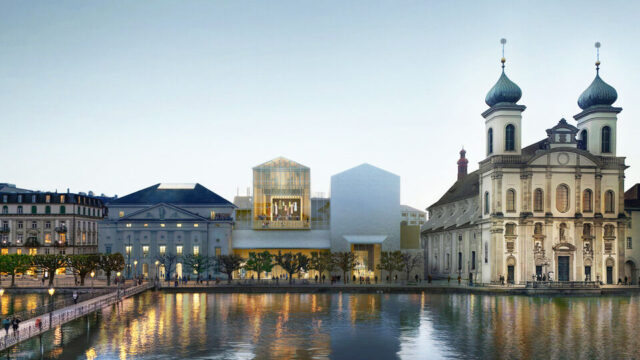
New Lucerne Theatre: Forward-looking operating concept confirmed
The evaluation of the operating concept for the new Lucerne theatre, which was drawn up in 2020 and later adapted to the winning project “überall” by Zurich architects Ilg Santer, was led by the renowned management consultancy METRUM. This review included discussions with experts and a review of documents and studies on various operational aspects such as personnel, space costs and catering.
Confirmation and strategic direction
The evaluation was divided into the areas of “cultural policy issues”, “output issues” such as visitor numbers and performance figures and “input issues”, which include personnel planning and building maintenance. The results confirmed the operating concept and emphasised the need for detailed planning for the future. Cultural Director Dr Armin Hartmann and Lucerne City President Beat Züsli presented the encouraging results, which confirm the theatre as a multi-genre theatre with its own ensemble and emphasise its importance for cultural provision and economic value creation.Confidence-building and political acceptance
The pre-evaluation serves as an important confidence-building measure for the project, which is facing political and financial challenges. The results provide a solid basis for the upcoming decisions and further project development, including a possible referendum in winter 2025. This step is crucial to convince the city council of the necessity and feasibility of the project.With the upcoming media conference and the detailed presentation of the “everywhere” project, the City of Lucerne will present a comprehensive report and proposal that sets out the financial and operational framework for the new theatre. This progress promises to have a lasting impact on Lucerne’s cultural landscape and further strengthen the city as a cultural hub in Switzerland.
-

Wipkingen church becomes an educational space
The Wipkingen church is a remarkable example of adaptive space utilisation. No longer used for church services since 2019, it is now intended to meet the space requirements of the neighbouring Waidhalde school complex. A concept developed by Vécsey Schmidt Architekten BSA SIA in collaboration with Anderegg Partner AG won the architectural competition and promises a cautious yet future-oriented transformation. A newly installed ceiling allows for the creation of a multi-purpose room, a library and catering facilities at ground floor level, while the upper floor offers flexible usage options under the historic church vault.
André Odermatt, Head of Building Construction, emphasises the importance of this initiative: “The intelligent conversion of existing buildings is essential in order to meet current challenges in urban areas.” The project not only provides solutions to the urgent need for school space, but also strengthens cooperation between the city and the church.
Thanks to this conversion, the necessary rooms for six to eight additional classes will be created by the 2031/32 school year. Filippo Leutenegger, Head of School, sees this as an example of the effective utilisation of creative solutions.
The cooperation with the Reformed parish of Zurich has already borne fruit and plans to open up further church buildings for charitable purposes. The project in Wipkingen is just the beginning of a series of initiatives that prioritise community benefit.
The estimated construction costs amount to CHF 7.5 million, with completion planned for 2026, in time for the start of school in 2026/27. This project marks an important step in Zurich’s evolutionary urban development by showing how historical substance can be meaningfully brought into the future. -

Zurich’s dynamic step into the circular economy
The implementation of “Circular Zurich” began in early February with the presentation of a detailed agenda that is specifically tailored to the needs of the city administration. However, the strategy also offers small and medium-sized enterprises (SMEs) numerous starting points. By adapting individual measures, SMEs can not only act in a more environmentally friendly way, but also benefit financially in the long term.
Steps for implementation in SMEs
One fundamental aspect of the circular economy is the efficient recycling and separation of recyclable materials. Sara Graf, project manager at Entsorgung + Recycling Zürich (ERZ), emphasises the importance and simplicity of this measure for companies: recyclable materials such as paper, cardboard, PET bottles, glass and aluminium cans can often be recycled free of charge, which leads directly to savings in disposal costs. But recycling is just the beginning.Minimising material consumption and optimising processes
Sonja Gehrig, who heads up the city-wide coordination of “Circular Zurich”, points out that it is important to think beyond the boundaries of the company. Analysing one’s own material consumption and optimising production processes are crucial steps. Ecologically sustainable product design that promotes the reparability and durability of products can not only save companies money, but also lead to new business models such as product hire.Extending consumption and use phases
The final step involves maximising product lifetimes through strategies of sharing, reusing, repairing and remanufacturing. This not only allows products to be used for longer, but also helps to conserve resources. Second-hand platforms and company initiatives that internalise the circular economy are playing an increasingly important role in the circular economy.The city as an innovation laboratory
Zurich sees itself as a testing ground for new, circular ideas and products. City experts are ready to support companies that are striving for innovative solutions. This proactive approach not only strengthens the city’s infrastructure, but also promotes the widespread adoption of circular economy principles.With “Circular Zurich”, the city of Zurich is positioning itself as a pioneer in the circular economy, demonstrating how a sustainable transformation can be realised in urban areas through concrete measures and cooperative approaches.
-

The “ALTO” construction project
The “ALTO” project, initiated by the
property company HIAG, fits seamlessly into the urban transformation of Zurich Altstetten, a district that is changing from an industrial to a lively residential and working area. The plan is for an 80-metre-high residential building that is characterised by its integration into existing structures and its sustainable construction.
The ground floor of the new building will be used for commercial purposes and open to the public, while the first floor will serve as a social centre for residents with communal spaces, a roof garden and studios. In addition, modern flats will be built on the 25 floors above, reflecting the new urban lifestyle in Altstetten.
In addition to the residential use, the neighbourhood will be further enhanced by the project. The Shedhalle, formerly part of the Fiat garage, will be converted into a food market with an attractive range of fresh produce and will take on the function of a local supplier. There are also plans to construct an urban loggia, which will serve as a public meeting place that incorporates the community concept and emphasises the urban quality of the area.
Sustainability plays a central role in the development of the “ALTO” construction project. The use of resource-conserving materials and the design of permeable open spaces emphasise the commitment to environmentally friendly urban development. As the first residential tower block in the canton of Zurich, the façade will be fitted with photovoltaic panels throughout, allowing tenants to benefit from the electricity they generate themselves. An innovative mobility concept, which provides for a significant reduction in parking spaces, rounds off the future-oriented overall concept.
With completion scheduled for spring 2026, the “ALTO” construction project will not only offer new living space in Zurich Altstetten, but will also serve as a showcase project for sustainable urban development and social coexistence. -

A new home for families and creativity in Leutschenbach
The centrepiece of the housing estate consists of two U-shaped building complexes that are open to the green space and are complemented by pavilion buildings in the inner courtyard. This arrangement creates a lively, communal courtyard that houses kindergartens and communal spaces, making it a social meeting point.
The housing estate offers a variety of 2- to 6½-room flats as well as special studio and communal flats to fulfil a wide range of living requirements. Particular attention is paid to spacious family flats and creative spaces that enable flexible and innovative living.
Sustainability and energy efficiency are the focus of the housing estate. By building to Minergie-P-ECO and Minergie-ECO standards and utilising renewable energy sources for heat and electricity, it makes an important contribution to climate protection. The large-scale installation of photovoltaic modules ensures an environmentally friendly power supply.
The design of the outdoor facilities promotes biodiversity and improves the microclimate in the neighbourhood. The upgrading of the green spaces along the Riedgraben and the “Inner Garden Leutschenbach” connecting the neighbourhood create natural recreational areas that offer residents a high quality of life.
The Leutschenbach housing estate is an example of the successful combination of urban living, social mixing and ecological responsibility. It plays a key role in the development of Leutschenbach into an attractive and lively neighbourhood that meets the requirements of a modern, sustainable lifestyle. -

Greencity Vergé sets new standards in sustainability
Vergé is more than just a residential project, it is a response to the pressing issues of urban coexistence and ecological responsibility. Located in the south of Zurich on a former industrial site, Vergé stands for the transition to a new understanding of housing that both takes into account the needs of its older residents and actively contributes to the quality of urban life.
Vergé’s design combines modern architecture with ecological sustainability. By using renewable and lightweight materials, the project not only sets design accents, but also makes an important contribution to reducing the ecological footprint. The design of the inner courtyard as a social meeting place and the careful selection of planting promote biodiversity and offer residents a place of retreat in harmony with nature.
An often underestimated lever lies in the choice of materials for the interior walls. According to Lennart Rogenhofer, Chief Climate Officer at Losinger Marazzi AG, using non-load-bearing interior walls made of lightweight construction instead of concrete can lead to a reduction in CO2 emissions of around 50%. Similar savings can be achieved if a wooden façade is used instead of a concrete and plaster façade. This is in line with the aim of using sustainable and minimally processed raw materials. Losinger Marazzi has also decided to use CO2-reduced concrete in its projects as far as possible. The reduction in grey emissions with a slimmer supporting structure, which minimises the amount of concrete by optimising the slab thicknesses and column grids, is difficult to quantify. Rogenhofer explains: “This is because no ‘non-optimised’ project exists as a comparison.”. Greencity, with the last building site Vergé, impressively demonstrates that the property sector plays a key role in achieving the climate targets. Through the use of heat recovery technologies and integration into the local heating network, the aim is to achieve a largely autonomous energy supply, with certification in accordance with the SNBS Gold Standard.
By focussing on sustainable and energy-efficient construction, not only can the quality of life of the residents be improved, but a decisive step towards a more sustainable future can also be taken.
The project is being built by Losinger Marazzi, which has positioned itself as a pioneer in sustainability in the property and construction industry for almost 20 years and is consistently implementing its climate strategy, which follows the strategy of its parent company Bouygues Construction. The company has been SBTi certified since the end of 2023 and remains a leader in sustainability. This certification confirms that the company’s own CO2 reduction targets for direct and indirect corporate emissions (incl. Scope 3) have been calculated in accordance with international standards (GHG Protocol) and are in line with the Paris climate targets. An external, independent auditing company also verifies that the certified companies achieve their targets not through CO2 offsetting, but through actual CO2 reduction. For this reason, a CO2 reduction pathway was already drawn up in 2021 to guide strategic decisions. -

New procurement hub for floor coverings opened in Lucerne
Mohawk, which claims to be the world’s largest manufacturer of floor coverings and is based in the US state of Georgia, has established a centre of excellence for its procurement activities in Lucerne. According to a press release, the company intends to increase its presence in the DACH countries. With its central location, Lucerne offers favourable opportunities to optimally organise and exploit all supply chains in terms of the movement of goods and services, according to the press release.
Mohawk has already begun recruiting local employees to build up the team for the new competence centre. This process will continue, according to the press release.
Mohawk sells its products in 170 countries worldwide, with around 30 per cent of its trade being handled in Europe. Its products include floor ceramics, wood and parquet flooring as well as vinyl products and carpets. The best-known names under the Mohawk umbrella include Marazzi, Ragno, EmilGroup, Kai, Quick-Step, Pergo, Moduleo, Unilin Panels and Unilin Insulation.
-

Future development of residential construction activity in Switzerland
A study by property consultants Wüest Partner, headquartered in Zurich, concludes that residential construction activity in Switzerland will pick up in the medium term. The rise in interest rates in the years 2021 to 2023 has slowed down construction activity and thus the growth of the property stock. This has led to falling building land prices, according to a press release from the Federal Office for Housing(BWO) on the study. Building will therefore become more economical again in the medium term. In addition, the higher reference rate for rents has increased income. This is also stimulating construction activity.
The housing market is currently in a transitional phase, after which equilibrium will be restored. However, the expected increase in construction activity is likely to be lower than before the interest rate hike. In March, the Swiss National Bank lowered the key interest rate again from 1.75 per cent to 1.5 per cent.
Wüest Partner conducted the study “Rise in interest rates: effects on residential construction and prices” on behalf of the BWO. It analysed the development of interest rates and construction activity between 2021 and 2023.
-

Company opens macrofibre plant in Peru
Sika has opened a new hub for synthetic macro-plastic fibres in Lima. This will enable the Zug-based company to expand its product range with a product series that has enormous growth potential, according to a press release. Sika says that a quarter of the growing global demand for macrofibre reinforcement is generated in Latin America and expects annual growth of 25 percent over the next five years. Sika expects the largest volume growth in the region to be in Peru, the country with the largest mining industry in Latin America.
Macro-plastic fibres are based on a new technology for the structural and static reinforcement of concrete components. They replace steel reinforcements and improve the properties of hardened concrete. According to the information provided, this significantly extends the service life of concrete components. All of this also has a positive effect on the classification of sustainable buildings within the framework of international certification systems such as LEED (Leadership in Energy and Environmental Design).
Increasing mobility in urban centres calls for new, efficient transport infrastructure such as road tunnels and underground railway systems, explains Sika’s Regional Manager Americas, Mike Campion. At the same time, the demand for macrofibre reinforcement systems for mining projects is increasing: “With the new, state-of-the-art plant in Peru, we are able to offer our customers throughout Latin America all of Sika’s concrete technologies while meeting the highest sustainable construction requirements.”
-

Leading by example: circular building in the city of Zurich
The circular economy is an important lever for achieving the political net-zero targets. Like many other cities around the world, Zurich is also committed to the circular economy: in 2022, a strategy for the circular economy was adopted with “Circular Zurich”. in 2023, Zurich became the first Swiss city to sign the “Circular Cities Declaration”.
The intelligent use of resources is particularly important in construction. With the “Charter for Circular Construction”, politicians and businesses set an example in 2023 and made a joint commitment to conserving primary resources and landfill space and reducing CO2 emissions from their own construction activities.
Initial findings from two pilot projects
But how do the political commitments affect specific construction projects? What challenges does circular construction pose? And how are the planning and construction processes changing? The City of Zurich’s Office for Buildings is gaining answers to these questions through two pilot projects.
The city gained initial experience with the procurement, storage and processing of reused building components during the renovation of the Mööslistrasse 2023 kindergarten (Bischof Föhn Architekten, Zurich). Washbasins and toilets were dismantled, cleaned and refurbished on site. Plant troughs from the balconies were reused as outdoor space boundaries. Where possible, the built-in furniture was sourced from the city’s own stock. Thanks to component screening, steel beams, wooden pergolas, fire doors and kitchen elements from other buildings were identified, dismantled and reinstalled. So-called “component hunters” were deployed for everything that was not found in the city’s used parts warehouse.
The second pilot project, the new “Juch-Areal” recycling centre, is much more comprehensive. The Office for Buildings launched an architectural competition with re-use requirements for the project in 2022. The competition participants were able to use a digital catalogue of components or use other available components from non-urban sources for their designs. The buildings also had to be designed in such a way that they could later be used as a component mine themselves (design for disassembly).
The projects submitted show that it is possible: Yes, it is possible. The jury was particularly impressed by the high quality of the competition entries, which were created despite – or perhaps thanks to – the new specifications. The building material of the winning project by Graber Pulver Architekten AG (Zurich) dismantles the hall of the previous recycling centre and rebuilds it at the new location with only minor adjustments. Disposed books, magazines and clothes are used as insulation material. Sheets of recycled glass and aluminium, old kitchen covers, doors and table tops protect the façade from the weather. Discarded scaffolding is turned into storage shelves.
It is in the nature of things that pilot projects precede a standardised introduction on a broad scale. This is also the case with circular construction. The realisation of the two projects in Zurich shows that many questions still need to be clarified: How can components be catalogued? How can availability be checked? Where will they be stored? Who assumes legal liability?
The planning and construction processes will change as a result of cycle-orientated construction, because the component mines must be known as early as possible, preferably at the beginning of the planning phase. Building Information Modelling (BIM) facilitates the reuse of components, the planning of their dismantlability and the development of future component mines.
Significant savings in indirect greenhouse gas emissions in the pilot projects
The pilot projects show that this approach is worthwhile. According to a subsequent calculation, the consistent reuse of building components saved a good 30% of greenhouse gas emissions during the renovation of the Mööslistrasse kindergarten. Current calculations even predict a 40% saving in greenhouse gas emissions for the Juch-Areal recycling centre compared to a conventional new building. -

Modernisation and expansion of the south station
In a densely built-up district such as District 2, the emergency services currently only reach the scene within the critical ten-minute mark in around 60% of cases. The planned expansion and redesign of the southern fire and ambulance station addresses this problem with a comprehensive approach aimed at shortening response times and increasing the efficiency of the services. At the same time, the project aims to enhance the urban development of the area, which is in line with the redesign of the urban space through the demolition of Weststrasse and the new construction of the “Hohe Haus West”.
The winning project from the architectural competition, “FUCHS”, creates a seamless integration into the existing structure of the fire station. The extension blends in harmoniously with the existing building in terms of both height and alignment and harmoniously completes the perimeter of the block. Particularly noteworthy are the courtyard-side extensions with shed roofs and photovoltaics as well as a setback from the first floor, which give the new building a striking independence. These architectural features make it possible to master the balancing act between preserving the historical heritage and fulfilling state-of-the-art operational requirements.
The “FUCHS” project not only impresses with its aesthetic and functional integration into the existing building fabric, but also sets new ecological standards. Thanks to the environmentally friendly energy supply, which is based 100 per cent on renewable energies, and the generously dimensioned photovoltaic system on the shed roofs, a contribution is being made to climate protection. In addition, the design optimises the operational processes of Schutz & Rettung Zürich and creates a coherent unit of high spatial quality.
The project impressively illustrates how the challenges of modern emergency care can be mastered in a historical context through creative and innovative solutions. The careful balancing of the needs of the emergency services and the requirements of heritage conservation has resulted in a project that breaks new ground both functionally and aesthetically. The result is a sustainable infrastructure that meets the requirements of modern emergency services and at the same time makes a valuable contribution to the urban quality of the location. -

Green cities as trailblazers for global climate impact
The MCC study, published in the journal Nature Cities, highlights four key methods of CO2 removal in urban environments that could sequester one gigatonne of CO2 annually by the middle of the century. The methods analysed include adding biochar to cement, increasing the use of wood in construction, enriching urban soils with biochar and installing CO2 filters in commercial buildings. Together, these approaches could make a significant contribution to achieving net-zero urban emissions.
Urban strategies for the climate and more
Quirina Rodriguez Mendez, PhD student at the MCC and lead author of the study, emphasises that these techniques are of great benefit not only in terms of climate protection, but also for environmental quality and well-being in cities. For example, the use of special colour pigments and surface materials to improve the reflectivity of urban surfaces could significantly lower the temperature in cities and reduce the energy required for air conditioning systems.Local actions with a global impact
The study emphasises the role of cities as “test laboratories” for climate protection, where local measures can be implemented quickly and potentially scaled up globally. Felix Creutzig, head of the MCC working group and co-author of the study, emphasises that local climate solutions, although often underestimated, can have an impressive impact and improve quality of life. The research findings offer important insights and recommendations for policymakers shaping urban infrastructure and policies. -

New investor for sustainable construction start-ups
Buildify.earth was founded with the vision of supporting sustainable innovation in the construction industry. The investment company is particularly involved in the early development phases of start-ups and offers not only capital but also access to an extensive network. This network has been established over the years as part of the development of Switzerland Innovation Park Central, NEST and other organisations and is a valuable asset for the supported companies.
Strategic partnerships and long-term goals
Eight years ago, planning began for the location of the Innovation Park in Central Switzerland, which opened its doors in Rotkreuz in 2019 and has officially been part of Switzerland Innovation since 2021. The park now has over 100 members, including well-known players in the Swiss construction industry and research institutions. This network provides direct access to decision-makers and a platform for start-ups to forge important collaborations in a traditionally risk-averse industry.Provision of funding and resources
The funds provided by private investors, the Zuger Kantonalbank and the park itself, which amount to a single-digit million sum, will enable buildify.earth to make significant initial investments, which are to be announced soon. The investment pipeline is richly filled, including 40 startups that are already members of the park. Buildify.earth AG takes a flexible role as a co-investor that can act quickly and act as a catalyst for further investments.Long-term planning and open doors for further investors
Reto Largo and Sem Mattli, the heads of buildify.earth, are not only looking for promising start-ups, but also for further investors to strengthen the capital of the company’s evergreen structure. This structure fits well with the long innovation cycles in the construction sector and allows a portion of the proceeds to be reinvested while seeking attractive returns for investors. This is just the beginning of a long-term strategy aimed at making substantial investments in promising start-ups and actively shaping the future of the sustainable construction industry. -

New pipeline cadastre portal creates transparency and added value in the construction industry
Zurich has introduced a new, advanced system for visualising infrastructure networks. The canton of Zurich’s pipeline register provides a complete visualisation of all above-ground and underground pipelines responsible for water, wastewater, electricity, district heating, gas and communications. Centralising this data in a single information system makes it much easier to access relevant information for planning, construction and maintenance work.
Simplified access to information
Previously, interested parties had to obtain information on pipelines individually from the respective owners or operators – a time-consuming process. With the new pipeline cadastre portal, the canton of Zurich now offers a central point of contact that enables users to access this important data quickly and easily. Over 500 works operating in the canton regularly update their data in this system, ensuring the accuracy and reliability of the information.Wide range of applications
The portal serves a wide range of users, including public administrations, construction companies, rescue and security services and private individuals. The precise information on the type and location of pipelines improves planning reliability for construction projects and facilitates the maintenance and expansion of existing infrastructure. Although the portal is not intended to be used for the direct planning of excavation work, it helps to significantly reduce the risk of damage by providing clear documentation of pipe routes.Simple operation and access to data
The pipe cadastre portal is designed to be user-friendly. Users can search by municipality, parcel or street and select the medium of interest. The corresponding pipes are then displayed on the digital map. The data is easily accessible and available in standard formats. Additional information such as ownership and contact details of the relevant works are also provided.The portal can be accessed at: https://leitungskataster.zh.ch. Prior registration is required to use the portal.
-

Continuation of the Basel region’s energy package planned until 2025
In order to ensure the continuity of the Basel-Landschaft energy package, the cantonal government has proposed an increase in the expenditure authorisation and a supplementary credit for 2024 to the cantonal parliament. This procedure is intended to ensure that the programme to promote energy-efficient building renovations and the use of renewable energies in the building sector can continue seamlessly. A supplementary credit of CHF 2.28 million has been requested for 2024, and the total expenditure authorisation until the end of 2025 is to be increased to CHF 42.16 million.
The energy package has proven to be particularly effective thanks to the high willingness of building owners to invest. Despite demand stabilising at a high level after a record year in 2022, the subsidy programme remains very effective in an intercantonal comparison. These results were presented in detail in the latest interim report from the cantonal government to the cantonal council.
Due to the current financial bottlenecks, the cantonal government is planning a moderate reduction in contribution rates from 1 January 2025. This adjustment reflects the above-average rates compared to other Swiss cantons and will be cushioned by the recently introduced energy premium, which offers income- and asset-based support. At the same time, the new national impulse programme, which will be launched at the beginning of 2025, will offer further financial support for the conversion of heating systems and comprehensive renovation of building envelopes.
For the next planning periods from 2026 to 2030, the Government Council is preparing a separate bill based on the findings of the 2022 energy planning report and other parliamentary mandates. This initiative is intended to further strengthen the focus and effectiveness of the funding programme and adapt it to the dynamic needs of the energy market.
Finally, based on the Cantonal Energy Act, the interim report emphasises the importance of regularly reviewing and adapting the support measures in order to effectively support CO2 reduction and meet legislative requirements. The cantonal government remains committed to a sustainable and energy-efficient future for Basel-Landschaft.
-

“Baustoff Kreislauf Schweiz” – A new trade association for the construction and recycling industry
With the founding of “Baustoff Kreislauf Schweiz”, the merger of arv Baustoffrecycling Schweiz and FSKB Fachverband der Schweizerischen Kies- und Betonindustrie has created an important new trade association. The aim of this merger is to make a significant contribution to the future of the construction and recycling industry in Switzerland. The focus is on securing the supply of mineral raw materials and promoting a value-preserving recycling economy.
Unity and strength through member merger
Over 400 members have formally approved the merger after the decision was taken at the respective general meetings. The new trade association aims to expand its expertise, recognise upcoming challenges and play an active role in shaping the Swiss construction industry. The high level of organisation and broad representation at the time of foundation demonstrate the strong foundation of “Baustoff Kreislauf Schweiz”.Focus on a sustainable circular economy
The trade association is particularly committed to the sustainable use of mineral raw materials in order to respond to the increasing scarcity of resources. The focus is on maintaining building materials in the economic cycle, developing environmentally friendly technologies and methods and working closely with universities, research institutions and companies. A new competence centre will help to reduce the ecological impact of the industry and restore the quality of habitats after gravel extraction.Strategically securing the supply of raw materials
Another focus is the security of supply and disposal of mineral building materials, which is becoming increasingly challenging due to growing scarcity and strict protective regulations. The association strives to ensure the supply of construction sites and optimise the reuse of building materials.Innovative leadership and extensive networking
Under the leadership of Lionel Lathion, supplemented by a versatile vice-presidency and a broad-based board, the association not only aims to pool expertise, but also to intensify cooperation at cantonal and regional level. In this way, “Baustoff Kreislauf Schweiz” is positioning itself as a central point of contact for politicians and authorities with a high level of expertise and problem-solving skills. -

The 24th report of the Zurich Heritage Society
With its 24th report, the Zurich Cantonal Monument Preservation Office has published a detailed documentation of its work in recent years, providing important insights into the restoration of architectural monuments throughout the canton. This volume contains 34 detailed texts on individual buildings and ensembles spanning a period of more than 700 years of building culture. The selected projects illustrate the typological diversity and regional distribution of monuments in Zurich.
Particularly noteworthy in this report is the increase in projects from the 20th century, including striking buildings such as the Tibet Institute in Zell, the landscaping of the Wintower in Winterthur and the Pavillon Le Corbusier in Zurich. The report also presents a number of educational and catering buildings as well as agricultural structures that are characteristic of regional architecture.
Outstanding examples include the castle ruins of Alt-Wülflingen near Winterthur, the guild house “Zur Meisen” and the “Schildner zum Schneggen” society house in Zurich as well as the historicist Wart Castle in Neftenbach. Two villas with extensive parks in Horgen and Männedorf are also included in the report.
The documentation of each property in the report includes a timeline of the construction history, detailed descriptions of the measures carried out and extensive illustrations. The report is supplemented by two introductory articles dealing with liturgical buildings in Dielsdorf and innovations in timber construction in the early 20th century in the canton of Zurich. These articles shed light on the influence of civil engineering on architecture and the importance of building with wood during a period of major technical and cultural change.
Finally, the report contains around 90 short reports on renovations accompanied by monument conservationists, which illustrate the breadth and depth of monument conservation activities in the Canton of Zurich. The 24th Report on the Preservation of Historical Monuments in Zurich thus offers a valuable resource for specialists in monument preservation, architecture and urban planning as well as for anyone interested in the preservation of cultural heritage.
-

Climate-neutral showcase neighbourhood
The city of Zurich is setting new standards in terms of climate protection. With the decision to establish a “net-zero pilot neighbourhood” in the Binz/Alt-Wiedikon area, the City Council is underlining its commitment to sustainable urban development. This area, which includes industrial and residential zones, was specifically selected to test a wide range of climate protection measures under real-life conditions. The neighbourhood is to become a model for environmentally conscious coexistence, with the promotion of a sense of community playing a central role. The approach that climate protection is a shared responsibility is to be reinforced by involving all residents, regardless of their origin or professional background, in the project development.
One focus of the project is on the direct participation of neighbourhood residents. They are encouraged to contribute their own suggestions for climate protection measures and actively participate in their implementation. In addition, 15 initiatives will be proposed at the start, which will be tackled immediately. These include measures to reduce waste and promote sustainable nutrition in catering establishments.
The “net zero pilot district” not only serves as a testing ground for sustainable urban development, but also as a learning environment in which the failure of projects is also seen as a valuable experience. The successful approaches have the potential to be transferred to other neighbourhoods and thus contribute to achieving the city’s climate targets.
The City Council is providing a credit of CHF 7.7 million for the realisation of this ambitious project, of which CHF 3 million is earmarked for projects from local initiatives and a further CHF 2.5 million for participatory projects. Although the proposal is widely supported, there are also critical voices calling for a more detailed concept for implementation. However, the City of Zurich’s parliament, the municipal council, voted in favour of the city council’s plans by a large majority. With this project, Zurich is emphasising its leading role in the area of climate-friendly urban development and sending out a signal about the importance of local climate protection initiatives. -

JURA ECO3 – the visibly sustainable cement
Clinker is the most important component of cement and consists of ground limestone and marl, which is fired at 1450° Celsius. The carbon from the limestone is released into the atmosphere during the burning process. This accounts for around two thirds of CO2 emissions per tonne of clinker. Some cement manufacturers replace clinker with granulated blast furnace slag or fly ash in order to reduce CO2 emissions. However, these materials are available in reduced quantities or have to be imported.
“In our latest cement JURA ECO3, we are replacing a significant proportion of the clinker with clay,” explains Emanuel Meyer, Head of the Technical Competence Centre TCC of the JURA Materials Group. “Clay is fired at half the temperature of clinker and generates two thirds less CO2 emissions. We extract the clay from our own clay pit. JURA ECO3 cement also contains the least grey energy compared to all other Swiss cements. If a concrete is produced with JURA ECO3 cement, the total CO2 emissions per m3 of concrete are approx. 20 % lower compared to building construction concretes with Portland limestone cement.“
Certified and tested
JURA ECO3 is the only CEM II/C-M (Q-LL) cement approved in Switzerland with strength class 42.5 N, externally tested and certified in accordance with
SN EN 197-5. It is approved for building construction (concrete types A-C). “The product meets the growing demand for sustainable solutions,” explains Ralf Schumann, Commercial Director Cement of the JURA Materials Group, “whether from architects or investors such as cities and municipalities, pension funds and insurance companies, for whom the carbon footprint of a construction project is playing an increasingly important role. Thanks to JURA ECO3, they can significantly improve this.”
JURA ECO3 cement is certified by ecobau as an eco1 product. It is suitable for Minergie (A-/P-)-ECO projects and fulfils the 1st priority ecoBKP/ecoDevis. With its warm earthy colour, it also sets a visual example for sustainable construction. The JURA ECO3 cement will soon be available in the KBOB* calculator. This can be used to calculate the environmental impact of one m³ of concrete of your choice.
*KBOB = Coordination Conference of the Construction and Property Bodies of Public Building Owners
In addition to a small CO2 footprint, concrete made from JURA ECO3 cement with calcined clay has a warmer colour and also sets a visual example for sustainable construction. ECAP construction site, Couvet (zVG) -

Building materials and recycling industry join forces
The trade association arv Baustoffrecycling Schweiz and the FSKB Fachverband der Schweizerischen Kies- und Betonindustrie are joining forces for a sustainable future for the construction and recycling industry. They have joined forces to form the Swiss Building Materials Recycling Association, the new association announced in a press release. Baustoff Kreislauf Schweiz represents more than 1000 Swiss gravel quarries, concrete plants and recycling centres and thus covers over 80 percent of companies active in the extraction and recycling of mineral building materials.
Baustoff Kreislauf Schweiz is convinced that the future belongs to the circular economy. The association wants to use innovative technologies and methods in its own sector to extract mineral building materials in an environmentally friendly way and keep them in circulation. Gravel pits are to be renaturalised as habitats for flora and fauna once gravel extraction has ended. In this way, nature is “naturally integrated into the circular economy”, according to the press release.
At the same time, Baustoff Kreislauf Schweiz is focussing on supplying Switzerland with gravel and concrete. The large and localised areas required for the processing of mineral building materials are becoming increasingly scarce due to protection regulations and other uses, explains the association. It therefore wants to work to “ensure that the supply of high-quality building materials to construction sites remains guaranteed in the future and that these are professionally processed for reuse”.
-

SAK and NORM work together for greater energy efficiency
The energy supply company St.Gallisch-Appenzellische Kraftwerke AG(SAK) is entering into a partnership with Norm Technologies(NORM) from Zurich. NORM determines the energy efficiency of buildings as well as their CO2 emissions and refurbishment options. NORM has set itself the goal of reducing greenhouse gas emissions in the building sector.
“This partnership with NORM is in line with our commitment to promoting innovative solutions that help our customers to increase their energy efficiency and make an active contribution to environmental protection,” said Philipp Inderbitzin, Head of Energy Solutions at SAK, in a press release. The collaboration will enable SAK to offer its customers a holistic energy analysis for their properties.
The first step of the analysis is carried out digitally and free of charge via the SAK website. In a second step, energy experts prepare a more in-depth analysis and show options for a customised renovation roadmap. With NORM’s expertise, SAK can advance its goal of achieving net-zero greenhouse gas emissions by 2040, which in turn supports the goals of the Swiss Climate and Innovation Act, the press release explains. In return, “working with an established partner like SAK enables us to come one step closer to our vision of decarbonising the real estate sector”, according to NORM founder Gian Reto à Porta.