Category: Mobility

  • Plans for Bern’s West railway expansion project are on the table

    Plans for Bern’s West railway expansion project are on the table

    Bottlenecks occur time and again at the Bern railway junction, which have an impact on all long-distance traffic in Switzerland. With the Federal Expansion Plan 2025 (AS25), such bottlenecks will be eliminated and rail operations in Switzerland will be further optimised: There will be more stable and more connections between Bern and Zurich, a half-hourly service to Lucerne and Neuchâtel, and more trains on the Bern-Thun line. In future, there will be an S-Bahn train every quarter of an hour between Bern and Münsingen, and there will also be more connections between Bern and Burgdorf.

    Various projects planned
    Five sub-projects are planned for the overall AS25 project “Performance improvement Bern West”:
    – the Holligen disentanglement with the 1.7 km long new Holligentunnel
    – the Aebimatt stabling facility
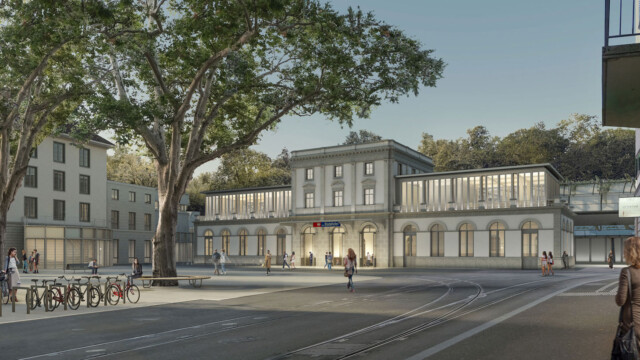
    – the west end of Bern railway station
    – the Europaplatz Nord stop
    – the Steigerhubel passerelle for pedestrian and bicycle traffic

    The new Europaplatz Nord stop also includes a new pedestrian subway for the city of Bern. A separate planning approval procedure will be submitted later to the Federal Office of Transport (FOT) for the west end of Bern station.

    Construction work will take twelve years
    Construction is scheduled to start in spring 2025. The new station with the project name Europaplatz Nord will go into operation in 2028 and will thus replace the existing Stöckacker stop located a few hundred metres to the west. Passengers are expected to travel through the Holligentunnel for the first time in 2034. As things stand today, it will take until 2036 for the entire project to be completed.

    In February 2023, SBB submitted the dossier for the planning approval procedure to the Federal Office of Transport. The public consultation will take place in Bern from 15 May 2023 to 13 June 2023.

    As things stand today, the estimated costs for the “Bern West service enhancement” amount to around CHF 750 million (+/- 10%). The project will be financed through the federal government’s extension step 2025 (AS25).

    Information room opens its doors
    An information room will be open during the planning period so that residents and interested parties can obtain comprehensive information about the project. It is located in the BLS building at Stöckackerstrasse 25 in 3018 Bern.

    Further information on the project can be found at sbb.ch/bernwest

  • Plans for “Unbundling Gümligen South” are on the table

    Plans for “Unbundling Gümligen South” are on the table

    In order to be able to implement the service improvements ordered in the Federal Expansion Plan 2025 (AS25), a new railway tunnel is to be built near Gümligen. Together with other projects from the AS25, the “Unbundling Gümligen South” will make it easier for trains to cross. In the long term, this will make it possible to run a quarter-hourly service on the Berne-Muensingen S-Bahn, coupled with a half-hourly service on the Berne-Langnau S-Bahn, as well as additional capacities for long-distance traffic and freight traffic in the Aare Valley. The “unbundling of Gümligen South” provides passengers with more stability in the timetable and, together with other projects, more connections.

    450 metres of tunnel for easier crossing of trains
    Specifically, SBB is planning a new, 450-metre-long railway tunnel underneath the existing railway line between Muri and Rüfenacht/Allmendingen, in the Hüenli forest. In order to be able to operate the new tunnel, SBB must also replace the existing Gümligen signal box and relocate the transmission line in the affected area.

    Around 5 years construction time
    As things stand today, construction is scheduled to begin in May 2024. The new transmission line is scheduled to go into operation one year later and the new signal box another year later. Passengers are expected to travel through the new tunnel for the first time in mid-2028; according to current planning, it will take until the end of 2029 to complete the entire project.

    In December 2022, SBB submitted the dossier for the planning approval procedure to the Federal Office of Transport. The planning documents will be open to the public from 1 May 2023 to 30 May 2023 at the municipal administrations of Muri bei Bern, Allmendingen, Worb, Ostermundigen, Vechigen, Stettlen and Krauchthal.

    The estimated costs for the “Unbundling Gümligen South” are around CHF 200 million (+/- 10%). The project is being financed through the federal government’s 2025 expansion stage.

    Further information on the project can be found at sbb.ch/guemligen.

  • The future of Berne railway station: traffic measures are launched

    The future of Berne railway station: traffic measures are launched

    To ensure that Bern station can continue to fulfil its function as a transport hub, it is being expanded as part of the “Zukunft Bahnhof Bern” (ZBB) project: Regional Transport Bern-Solothurn (RBS) is building a new station underneath the existing SBB tracks. SBB is building a second passenger subway with new station accesses at Bubenbergzentrum and Länggasse. Construction work has been underway since 2017; commissioning is planned from 2028.

    Municipal construction and traffic measures
    The city’s task is to ensure that travellers can get to the new station quickly and safely. In order to provide more space for pedestrian traffic at Bubenbergplatz, lanes are to be removed, circulation and recreation areas are to be enlarged and green times for pedestrians are to be extended. To ensure that public transport can continue to circulate smoothly, motorised individual traffic on the Inselplatz-Bubenbergplatz-Bahnhofplatz-Bollwerk axis must be reduced by around 60 percent – this will be achieved by adjusting the traffic regime on Bubenbergplatz and at Bollwerk/Henkerbrünnli. In order to be able to cope with the sharp increase in passenger flows following the opening of the new station access, an underground passenger passage is also required at the already congested Bubenbergplatz, leading from the new SBB public facility directly into Hirschengraben.

    “A well-connected and efficient railway station is the main artery of sustainable urban mobility,” says municipal councillor Marieke Kruit, Director of Civil Engineering, Transport and Urban Greening. “The city of Bern must also do its part.” In addition to financing, a prerequisite for the urban construction and transport measures is a zoning ordinance. These will be open to the public for almost five weeks from 26 April 2023.

    Hirschengraben sub-project has been revised
    The voters of the city of Berne approved the implementation loan for the urban construction and transport measures in March 2021. In the wake of the referendum, the plans for Hirschengraben were adjusted based on the recommendations of several expert opinions requested by the Federal Commission for the Preservation of Historical Monuments (EKD). The project adjustments were commissioned by the municipal council in November 2022 (see the media release of 22 November 2022). The project, which has been revised in the meantime, features various changes compared to the original plans (see box) – the most important: the chestnut trees in Hirschengraben are to be preserved in their current locations as far as possible; the five trees that have to be removed as a result of the construction work in the area of the passage and the tram loop will be replaced after the work is completed. “The initial situation at Hirschengraben is complex, but we have now been able to find a coherent and resilient solution. From the point of view of the municipal council, the adapted project meets the various concerns in the best possible way,” says Marieke Kruit.

    Steps towards realisation
    The development regulations, which are now open to the public, will have to be adopted by the city council and then approved by the Cantonal Office for Municipalities and Spatial Planning. According to current planning, the main elements of the urban transport measures can be implemented in April 2028, at the same time as the opening of the new railway station access. However, delays cannot be ruled out if appeals are lodged during the approval process and these are taken to higher legal authorities.

  • Lucerne bypass relieves road network

    Lucerne bypass relieves road network

    In the past ten years, traffic to and from Lucerne has increased by around 20 percent. Further growth is forecast – but the A2 and A14 are already reaching their capacity limits. At the Rotsee junction outside Lucerne, the traffic flows of the A2 north-south axis and the A14 from Zurich-Zug meet. On the city thoroughfare, regional and local destination and source traffic are added. In order to ease the situation, the federal government wants to significantly improve the traffic situation on both motorways with the Lucerne bypass. Without the bypass, alternative traffic on the subordinate road network would increase, and as a result, public transport would also be impeded.

    The core element of the bypass consists of two two-lane tunnels with a length of 3760 metres in the northbound direction and 3850 metres in the southbound direction, which pass under the city of Lucerne and the Reuss river. In the north, the connection points are in the Ibach area and in the south in the Grosshof area (Lucerne-Kriens). The planned tunnel bypass is primarily intended to accommodate transit traffic.

    In addition, it is planned to expand the A14 in the north from four lanes today to six lanes in the future from the Rotsee junction to the Buchrain junction. To achieve this, the Rathausen tunnel will be extended with a third tube. The structures will be adapted at the Rotsee junction. At the Rotsee junction, the A2/A14 Basel lane will be widened to two lanes in the direction of Zug in order to eliminate the existing bottleneck.

    Between the Rotsee junction and the Lucerne-Kriens junction, the A2 will become an urban motorway serving exclusively the destinations, sources and domestic traffic of the Lucerne conurbation. Emmen Süd, Luzern-Zentrum and Luzern-Kriens are connected to it. If necessary, for example in the event of an incident or during maintenance and repair work, the urban motorway serves as an alternative route to the bypass and vice versa.

    The Grosshof bridges as the new gateway to the city of Kriens.

    In the south, the Spier tunnel between the Lucerne-Horw and Hergiswil junctions is to be re-marked with three lanes in each direction. The third lane will extend the entry and exit lanes. The new Grosshof bridges will provide the town of Kriens with a new gateway: a park with paths from Sonnenberg to Kriens, Horw and Lucerne is planned on the roof. Below the bridge, a diverse mix of uses is to be created, including cafés, shops and commercial space.

    The Lucerne bypass envisages the construction of three new road wastewater treatment plants (SABA) in Rathausen, at the Rotsee junction and at Grosshof-Kriens. Thanks to these, the wastewater from the motorway will be cleaned in an ecological way before it flows into the surrounding water bodies.

    The Bypass relief project is intended to improve the flow of traffic on the motorways and ensure the functionality of the north-south axis. It will also create alternative routes in case of accidents or maintenance work. Central Switzerland and the Lucerne agglomeration will benefit from better accessibility, and the urban motorway will be relieved of through traffic. Last but not least, safety for all road users will be increased.

    The Rathausen tunnel will be extended with a third tube.

    The total costs amount to CHF 1.8 billion and are financed by the federal government. If everything goes according to plan, the bypass should be open to traffic in about 2035 after about 12 years of construction – subject to the still pending planning permission.

  • The expansion of Basel SBB station is in full swing

    The expansion of Basel SBB station is in full swing

    The construction work for the extension of Basel SBB station is on track. On 14 December 2022, the federal government granted SBB the construction permit for the two projects. Construction work started on 2 January 2023. The CHF 210 million project package includes, on the one hand, the Basel SBB performance enhancement project with the additional 460-metre-long platform track 19/20 and capacity-increasing measures on the approach tracks towards Basel St. Johann and Münchenstein. On the other hand, the package includes a provisional 147-metre-long and approximately 10-metre-wide passerelle in the area between the existing passerelle and the Margarethen Bridge.

    One of the prerequisites for future service extensions
    At a media conference in Basel, Wolfgang Stolle, SBB overall project manager, and Thomas Staffelbach, SBB overall coordinator Basel, provided information on the status of the work and the other extension projects in the region. Marco Galli, coordinator of the Basel rail hub at the canton of Basel Stadt, emphasised the importance of the project package for the canton. Because from the end of 2025, northwestern Switzerland is to receive significantly more trains. This was decided by the federal government, parliament and cantons. From then on, the S-Bahn trains between Basel and Liestal are to run every quarter of an hour and the long-distance trains on the Basel-Delémont-Biel/Bienne line every half an hour. Increased performance and a temporary passerelle will create the necessary capacity at Basel SBB station for more train stops and more passengers, especially during rush hour.

    Drilling machine creates piles for 570-metre-long retaining wall
    The construction team is currently working on the future retaining wall along Meret Oppenheim-Strasse. The approximately 570-metre-long, four to seven-metre-high structure will close off the track field from the Gundeldinger district. The track field must be widened towards the south in order to create enough space for the extended platform and track system. Since the end of January, a drilling machine has been drilling the piles for the retaining wall. The machine will be in use between the Margarethen Bridge and the Peter Merian Bridge until probably June 2023. 119 of the total of 308 bored piles had been constructed by the end of March. The bored piles go to different depths in the ground; the longest are up to 14 metres long.

    Demolition of the houses near the tracks between Passerelle and Hochstrasse
    In order to be able to build the retaining wall, the construction crews have been demolishing the nearby houses between Postpasserelle and Hauptpasserelle since January 2023. From April, the buildings on the track side of the upper Hochstrasse will follow. SBB had to close the southern access to the Postpasserelle for the same reason on 13 February 2023. The construction team will demolish the relevant section of the Postpasserelle from mid-May 2023. After that, the access will be rebuilt about 4.3 metres further south. In this way, it will extend over the wider track field in the future. The new access will go back into operation at the end of 2023.

    The first yoke for the new passerelle is in place
    The first work for the temporary passerelle is also underway. From mid-January to the beginning of April 2023, the construction team built the foundations and supports for the new passerelle at the western end of the platform 11/12. In the meantime, the yoke and the stairway to the passerelle have been built. At the beginning of April, the builders will then move to the western end of the platform 9/10 and do the same there. At the end of June, they will move to platform 7/8. During the work, the length of the platform in question will be restricted.

    Extensive night work in the track area
    Since January, the construction teams have been working at night on the catenary, the tracks and the cable systems. These adjustments are necessary for the foundations of the passerelle and the new platforms. The construction teams are also erecting protective scaffolding. These are to ensure that no construction debris gets onto the operational track systems during the demolition work. For safety reasons, the construction teams can only carry out all this work with the track closed and the overhead line switched off. They must therefore be carried out at night, when there is less traffic. SBB is constantly examining how night-time noise can be reduced depending on the construction phase. However, it is aware that the work will still require a great deal of patience and understanding from residents.

    Restrictions for bicycles and motorised traffic
    There have been and will be restrictions for bicycles and motorised traffic. For example, the number of bicycle parking spaces on the Gundeldinger side has been reduced from 700 to 530. SBB is therefore currently reviewing again with the canton how and where additional parking spaces are possible. The aim is to be able to put these additional spaces into operation in the spring. In the meantime, SBB is asking cyclists to use all the temporary parking spaces, including those at the Meret Oppenheim high-rise. In many cases, there are still spaces available there, especially on the upper floor of the double-storey parking facilities. in 2025, SBB will dismantle the temporary bicycle stands and re-install them on the redesigned south side of the station, along the tracks. The total number of bicycle stands will be increased to around 1100. For safety reasons, road traffic restrictions have been necessary on Meret-Oppenheim-Strasse since the beginning of January and on the upper Hochstrasse from 3 April to 30 June. SBB submits the restrictions to the cantonal police in advance in accordance with the applicable cantonal processes and guidelines and coordinates them with them.

  • New through station Lucerne

    New through station Lucerne

    Lucerne station is the sixth-largest railway station in Switzerland: around 100,000 passengers board and disembark here every day. The problem: the double-track access has reached its capacity limit and is prone to disruptions. The forecast growth in public transport mobility in the canton of Lucerne is around 40 percent by 2030. Rail mobility has already increased by 50 to 100 percent in the last ten years – especially on the canton’s main development axes.

    The Federal Office of Transport, the Swiss Federal Railways (SBB), the cantons of Lucerne, Nidwalden and Obwalden, the city of Lucerne, the regional development agency LuzernPlus, the Lucerne Transport Association and the Zentralbahn (Central Railway) therefore want to expand rail services with the Lucerne through station (DBL) and implement various infrastructure projects. The planned through station is considered a generation project in Central Switzerland.

    The visualisation shows the side view of the through station.

    An underground through line with four lowered tracks is planned under the existing terminus station. This will be supplemented by a 3.5-kilometre-long underground double-track access and exit from Ebikon (three-lane tunnel) and a likewise underground double-track access and exit to the Heimbach area (Neustadt tunnel). The existing above-ground parking facilities at Lucerne station will be partly relocated, as they will then no longer be directly connected to the underground through station.

    The DBL creates the conditions for faster connections in the region’s S-Bahn system as well as a faster north-south connection via Lucerne. This not only sets the course for more mobility, but also for achieving the climate goals in terms of sustainable mobility development. After all, the greatest potential for switching to public transport lies in the agglomerations and in connections between regional centres.

    The planned route.

    But the DBL will also optimise economic and urban development opportunities: The population will become more mobile, and in the centre of the city of Lucerne new space for urban development will be created thanks to the release of above-ground track infrastructure. The popular tourist cantons of Obwalden and Nidwalden will also benefit from better access.

    The Zurich-Zug-Lucerne-Sursee-Olten axis in particular will benefit from the improved services. The Lucerne-Zug-Zurich line is the busiest railway line in the Lucerne region. With the addition of six long-distance trains from Lucerne to Zurich, the DBL will increase the timetable, enable a basic 30-minute interval for long-distance services and a quarter-hourly interval for regional services.

    The DBL offers the possibility of managing the travel time between Lucerne and Milan envisaged in the NRLA concept and brings Ticino closer to German-speaking Switzerland: 20 minutes of travel time can be saved thanks to the DBL. The north-south connection via Lucerne will thus be faster than the one via Zurich, which passes through the busy Zurich main station.

    The federal parliament approved the 2035 expansion step for the railway infrastructure in 2019. SBB is currently working on the preliminary project, which is expected to be completed in the first months of 2023. This will be followed by the examination of the results of a study on the implementation sequence, which should take about another six months. in 2027, the federal parliament will decide whether the DBL can be realised after 2030. If everything goes smoothly, the through station could be opened in 2040 at the earliest after a construction period of about ten years.

    The costs will be available when the preliminary project is completed. The project will be financed through the Railway Infrastructure Fund (BIF). The client for the DBL project is the Federal Office of Transport (FOT). SBB is responsible for planning and implementation. The railway infrastructure will be expanded step by step – the expansion steps are determined every four years by the National Council and the Council of States.

  • The future of the construction and real estate industry is called the circular economy

    The future of the construction and real estate industry is called the circular economy

    The construction industry produces the most waste in Switzerland with a share of 84 percent. This makes it all the more important to establish the so-called circular economy: the materials and products used in construction should be returned to the cycle after the life cycle of a building. The three “R’s” are decisive: reduce, reuse and recycle. In a functioning circular economy, as little waste as possible is produced. However, according to a study by the economic researchers at the Swiss Federal Institute of Technology (KOF) and the Bern University of Applied Sciences (BFH), only 8 to 12 per cent of Swiss companies are involved in the circular economy.

    One company that has dedicated itself to precisely this endeavour is Madaster. in 2017, the company was founded in the Netherlands and expanded to Switzerland a year later as its first international location. Madaster sees itself as a cloud platform that enables users to transparently present the data of their construction projects. Users can create a material passport based on a BIM (IFC) or Excel document. This is possible for new buildings as well as for existing properties. Components and materials used are recorded – the system automatically supplements the data with information on recyclability, separability, sustainability as well as financial value, thus creating a valuable data source. Madaster thus enables the planning and use of buildings as raw material storage facilities. In the long term, this should drastically reduce the amount of waste and CO2 emissions during construction.

    The industry recognised the added value of this service early on: “More and more builders and their service providers are using the material passport, creating best-practice examples from which the industry can learn. Because those who build circularly build for the future,” explains Marloes Fischer, CEO Madaster Services Switzerland. The company distinguishes between strategic partners, so-called Kennedys, who have supported the development, launch and implementation of the online platform financially and conceptually, and partners that include developers, architects, contractors, consultants, engineers or banks. “11 Kennedys have supported the launch of Madaster in Switzerland. Currently, Madaster has over 30 partners,” Fischer elaborates. In addition to the Federal Office for Energy and the Environment (Bafu), other well-known names such as Eberhard, Mobimo, Pirmin Jung, Integral Baumanagement AG and Swiss Prime Site are listed among Madaster’s partners and Kennedys.

    Enormous potential of the circular economy
    Holcim Switzerland is also one of Madaster’s well-known partners. By 2050, the company wants to produce exclusively climate-neutral and fully recyclable building materials. To achieve this transformation, Holcim is working with various levers and clearly defined interim targets for 2030. The company sees enormous potential in the circular economy to effectively address challenges such as climate change or resource scarcity. With innovative solutions, Holcim returns waste to the material cycle and reuses concrete again and again.

    For example, Holcim produces the world’s first resource-efficient cement called Susteno 4. Industrially processed mixed granulate is used as a grinding material. In addition, a large part of the fossil fuels is replaced by alternative materials, such as waste or sewage sludge. Since its launch in 2018, cement has become the second-largest product in the Holcim portfolio with a share of 10 percent. The sustainable concrete Evopact is also based on Susteno cement and saves 10 percent CO2 compared to standard concrete. Holcim aims to generate a quarter of ready-mixed concrete sales with this by 2025. Bettina Kallenbach, Marketing Manager Holcim Central Europe West, is convinced: “Concrete will be difficult to replace in the near future. But concrete is a building material that makes sustainable construction possible on a wide variety of levels – as long as you face up to the challenges.”

    Holcim has been dealing with topics such as the circular economy, decarbonisation and renewable energy for a long time. Kallenbach is convinced: “For net zero, Carbon Capture and Use and Storage (CCUS) will be an important lever. Holcim is working on scalable measures and solutions in this regard.” In addition, Holcim already operates several recycling processing plants throughout Switzerland. Together with partners, the company is thus pursuing the goal of processing high-quality new building materials for the respective local market from regional excavated material, concrete and mixed demolition waste. At the same time, this increases the use of alternative raw materials and fuels in cement production and saves primary resources and landfill space throughout Switzerland.

    Holcim cites the renovation of the Aroser tunnel as an example: the large quantity of contaminated excavated material is processed at the Untervaz cement plant and made into cement, which is then used in the 300-metre-long tunnel. This closes the building material cycle. With its subsidiary “Geocycle”, the company also significantly reduces CO2. With “co-processing” in the plants, the company ensures the thermal utilisation of combustible waste and recycles mineral waste into new clinker and cement. This enabled the group to save around 150,000 tonnes of CO2 in 2021 by recycling 160,000 tonnes of combustible industrial waste in cement production.

    Thanks to Madaster, building materials in existing buildings are given an identity and a value
    The fact that the circular economy has great potential is also shown by the study mentioned above. According to this study, innovative Switzerland has advantages in creating the transformation and generating sustainable competitive advantages. At present, however, the possibilities and knowledge to adapt existing products and services to a circular economy are often still lacking. The parliamentary initiative “Strengthening the Swiss circular economy” aims to create new framework conditions for a modern and environmentally friendly circular economy. The consultation in October 2022 showed that a large majority welcomes the anchoring of resource conservation and the circular economy in the Environmental Protection Act.

    In the construction industry, the focus is currently on recycling, one of several possible entries into circular construction. Fischer says: “The business activities of companies are likely to move increasingly in the direction of manufacturing recyclable products, circular tenders and competitions, and documenting materials and components used in buildings.” Madaster offers a sophisticated tool for the latter in particular. Bettina Kallenbach agrees: “A cadastre of installed materials is an important building block with regard to closing cycles. Future generations must have access to data that shows which building materials are used where and in what quality. This gives building materials in the inventory an identity and a value. Madaster provides the central digital platform for this.”

    Considering that Switzerland aims to halve greenhouse gas emissions by 2030 and that emissions from transport, buildings and industry must be reduced by up to 90 per cent to achieve climate neutrality in 2050, sustainable and circular working becomes all the more important. The first companies like Holcim are setting a good example. But here the entire real estate and construction industry has the chance to take a pioneering role.

    CO2-enriched recycled concrete EvopactRECARB, which Holcim supplied to V-Zug for the new “Zephyr Ost” building.
  • The sustainable supply of goods for tomorrow

    The sustainable supply of goods for tomorrow

    Online trade has been booming since Corona at the latest. More and more huge goods transshipment halls are springing up all over the country. Until now, the ordered goods and merchandise have been transported to their end users via roads and railways. The Federal Roads Office (FEDRO) and the Federal Office for Spatial Development (ARE) estimate that the volume of goods traffic in Switzerland will increase by around 31 percent by 2050. However, the above-mentioned common freight transport routes cannot be expanded without limits.

    New transport solutions were sought – and found with Cargo Sous Terrain (CST): By 2045, a 500-kilometre network of three-lane tunnels, each 6 metres in diameter and 20 to 100 metres deep, will be built between Lake Constance and Lake Geneva, with spurs to Basel, Lucerne and Thun. These will be connected to above-ground loading and unloading stations called hubs. In the hubs, the autonomously driving, unmanned vehicles are loaded and unloaded fully automatically via vertical lifts.

    The futuristic-looking cars travel at a constant 30 kilometres per hour on induction tracks around the clock. They hold goods the size of pallets. Fresh and refrigerated goods can also be transported. The system sorts and bundles the goods already in the tunnel so that the subsequent delivery to sales outlets and end customers takes place in a coordinated manner.

    At the hubs, the delivered goods are continuously picked up and delivered by manned vehicles powered exclusively by renewable energy. “It is possible that we provide our own fleet of energy-powered vehicles or also work with appropriate logistics partners,” says Patrik Aellig, Communications Officer CST. The disposal of waste and recyclables is also an integral part of the concept. Aellig explains: “Goods movements primarily take place from the logistics centres to the cities. But the system naturally runs in both directions and is predestined to pick up waste and recycling materials or even construction waste and transport it out of the cities.” One vehicle can pick up to two pallets or boxes and containers of this dimension.

    CST reduces noise emissions by 50 per cent and enables the transport of small quantities
    The advantages of such an underground network are obvious: national roads are relieved of heavy traffic by up to 40 per cent, cities by about 30 per cent. At the same time, noise emissions will be reduced – by about 50 percent in the cities. CO2 emissions can also be significantly reduced: The eco-balance is up to 80 percent better compared to today’s transport systems, as CST is powered 100 percent by electricity from renewable sources.

    The first stage is scheduled to be operational in 2031 and includes the 70-kilometre route from Härkingen-Niederbipp to Zurich Airport with 10 hubs. The hubs will be located in existing logistics centres and ensure connections to all transport systems (rail, road, water, air freight). The overall transport network is scheduled for completion in 2045. The sophisticated system includes innovative software that enables intelligent control. The IT behind CST and the automatic loading and transport of goods form the core of this system. As of today, the software has not yet been developed. But: “The IT team is in place – the first step involves developing the very extensive IT platform,” explains Aellig. With its customised technology, CST is aimed at the smart cities of the future and also takes care of the fine distribution of goods. In addition, CST enables the economy to transport small quantities in individual pallets or containers for the first time. This eliminates the intermediate storage of small-volume goods.

    The total costs amount to more than 30 billion Swiss francs. CST is privately owned and has its headquarters in Olten. Its 83 shareholders, investors and project partners include well-known Swiss names such as the insurance company Vaudoise, SAP, Siemens, Swiss Post, Coop, Migros, Mobiliar or the Zurich Cantonal Bank, Credit Suisse and Swisscom. These include numerous logistics, energy and construction companies, engineering firms and bicycle courier services or even the high-tech start-up Hyperloop One from California (USA). The infrastructure that is being created is available to all market participants. CST is being developed in close cooperation with the authorities, the federal government and the cantons. The federal government is not contributing to the costs.

    The planned, largely underground freight transport facility across cantonal borders is possible thanks to the Federal Underground Freight Transport Act (UGüTG) passed by the National Council and Council of States in December 2021. CST is being advanced in several parallel sub-projects. The cantons will include the exact locations and routes of the hubs and tunnels in their structure plans as planning progresses. The structure plan procedures will begin in the course of 2023 in the cantons of Aargau, Solothurn and Zurich. The preliminary project should be ready in the course of the coming year. “After that, the tenders for the construction contract for the underground network will be prepared,” says Aellig. Construction is scheduled to start in 2026.

    The 3D simulator shows the logistics connection of a hub.

  • Swarms of drones measure traffic

    Swarms of drones measure traffic

    A team led by Professor Nikolas Geroliminis, head of the Laboratory for Urban Transport Systems ( LUTS ) at the Swiss Federal Institute of Technology in Lausanne , is measuring traffic with unprecedented accuracy. It uses swarms of drones to do this. It converts the video images into algorithms and analyzes the data. “Our goal is not to monitor traffic, but to find the causes of traffic jams and offer fact-based solutions,” postdoc Manos Barmpounakis is quoted as saying in a statement .

    The LUTS tested its multidisciplinary approach in 2018 and 2019. Last summer it was tested in the monitoring and evaluation of parking areas in the port of Pully VD. In mid-May 2022, a new experiment was conducted in Nairobi, the city ranked 4th in the world in terms of congestion. It turned out that cultural peculiarities such as the minibuses called Matatus, “which drop off and pick up passengers as required in an indescribable traffic chaos” also have to be taken into account. Traditional modeling approaches are not directly applicable to this.

    For further experiments, the laboratory received a grant from the innovation agency Innosuisse . This technology, called CityDronics, is to be further developed into a marketable solution by a start-up based in Switzerland. It will be the first to integrate drones into urban mobility. With multi-sensors, the drones could also measure exposure to CO2 and noise. Several cities are already interested in CityDronics.

  • Zurich gets loading houses

    Zurich gets loading houses

    The Zug -based AMAG Group has set up Switzerland’s first charging station in the Utoquai car park at Färberstrasse 6 in Zurich, the automobile company said in a press release . 50 of the 150 parking spaces in the multi-storey car park were equipped with a charging station. Interested parties can rent such a parking space and charge their electric vehicle. The available price models for parking and charging including electricity are explained on parking.amag.ch .

    A good charging infrastructure is becoming increasingly important in view of the increasing number of newly registered electric vehicles, explains Hendrik Lütjens in the press release. “With the Utoquai loading house, AMAG Parking offers residents in Zurich’s Seefeld a sustainable and convenient solution and contributes to the more efficient use of inner-city areas,” says the Managing Director of AMAG Parking AG. “Further multi-storey car parks from AMAG Parking AG will follow, further facilitating the switch to electromobility.”

    AMAG intends to open its next loading house in the Kongress parking garage in Zurich this month. A total of 28 charging stations are planned here. In the fall, the AMAG Group plans to install a further 61 charging stations in the Messe Zürich multi-storey car park in Oerlikon.
  • The Glattalbahn is getting longer

    The Glattalbahn is getting longer

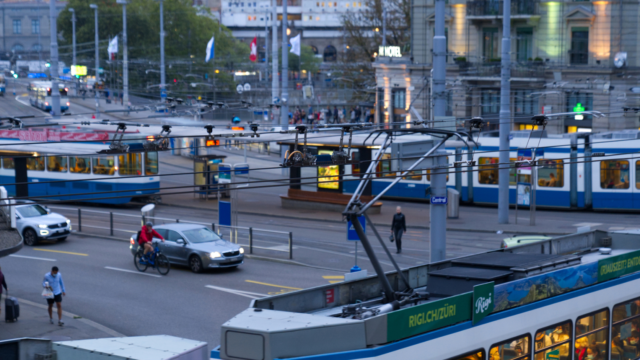
    The transport system in the Kloten region is reaching its limits. The consequences are increasing hours of traffic jams and severe noise and air pollution. The Glattalbahn extension to Kloten promises a chance for improvement, which, in addition to the extension of the tram line between the airport and the Steinacker development area in Kloten, includes two other sub-projects: A main bicycle connection with a separate footpath and flood protection for Kloten and for the airport. The spatial proximity and the dependencies of these sub-projects require joint project planning and construction. This means that the canton of Zurich can effectively and sustainably master three challenges in one project and make optimal use of synergies.

    On July 16, 2020, VBG Verkehrsbetriebe Glattal AG (VBG) submitted the application for the infrastructure concession to the Federal Office of Transport (BAV). The procedure examined whether there was a public interest in the construction and operation of the new tram connection and whether there were no significant public interests – for example environmental protection or nature and heritage protection – opposed to the granting of the concession. The Federal Council examined the application and decided to grant the license to the VBG. This decision cannot be contested. There will be opportunities for objections at a later point in time during the public approval of the plan.

    The VBG is currently working on the construction project that forms the basis for the cantonal loan approval. The decision of the cantonal council is expected in 2024. This is subject to an optional referendum. The project was submitted to the federal government in June 2021 as part of the 4th generation agglomeration programme. This will probably decide on co-financing by the end of 2023. The approval process (plan approval process under the Railway Act) is expected to run in parallel from 2023. Construction is currently expected to start in 2026, subject to legally binding planning approval and secured funding from the canton and the federal government. The construction work will take around four years.

    The Glattalbahn has big plans.
  • Zurich is the second best city in Europe for real estate investments

    Zurich is the second best city in Europe for real estate investments

    Zurich gained two places in the European Thematic Cities Index (TCI) compared to the previous year and is now in second place. London is in first place and Stockholm is in third place. According to a press release , this index from Swiss Life Asset Managers measures 135 European cities in 28 countries. He evaluates them on five core themes that shape a city’s real estate market: Change and Disruption, Climate and Environment, Communities and Clusters, Consumers and Lifestyle, and Connectivity. He wants to offer a comparability for real estate investments.

    The six Swiss cities in the ranking are all in the top 50 of the TCI. Among them, Zurich remains “the most dynamic and healthy city with the best networks”. Despite the lack of an international airport, Bern’s 9th place is now “the third most accessible city in the entire ranking”. Basel gains one place compared to the previous year and is in 7th place, Lausanne in 15th place. Geneva has gained the most with 16 places and is listed in 31st place. Due to its “less environmentally friendly mix of sectors and above-average car use”, Lucerne lost nine places and ended up in 41st place.

    According to the TCI, all six Swiss cities promise little growth potential despite their stability and attractiveness. According to this analysis, they are all among the eleven worst European cities in terms of this criterion. And as in the TCI 2021, this year’s analysis rates health as the weakest issue in Swiss cities.

  • Zurich's center should become idyllic

    Zurich's center should become idyllic

    The visualizations presented by the planning teams Van de Wetering Atelier für Stadtbau and Studio Vulkan Landschaftsarchitektur show “an idyll in the middle of the big city”, says a report in the “Tages-Anzeiger” on the planned redesign of the area between the main station and Central. Both concepts rely on green promenades, spacious squares and little traffic.

    Pedestrian traffic has top priority in the Van de Wetering Atelier urban planning concept. “Pedestrians the size of the Street Parade stream through the Hauptbahnhof and Central area every day,” Han van de Wetering is quoted in the article. He therefore wanted to “clean up and create spacious, green spaces”.

    In the concept of Studio Vulkan Landschaftsarchitektur, great importance is attached to close public transport connections and access to services. To this end, a new public transport stop is to be set up at Europaplatz and car traffic is to be concentrated on two main axes.

    According to the report, both teams expected a “reduction in motorized private transport in the city center” in the long term. Above all, the civil engineering office recognized that both visions would avoid shifting traffic to the districts or to other urban axes and that the detailed development of the properties and the logistics for goods and trade would be retained. In a next step, the concepts are to be appraised by internal and external experts.

  • A canton creates accessibility

    A canton creates accessibility

    The train and bus connections in southern central Switzerland are bundled in the new cantonal train station in Altdorf. New train stops and additional connections significantly increase the potential for skilled workers. Knowledge-based service providers on the north-south axis benefit from direct access to the labor markets of the Greater Zurich Area and the greater Milan area and encounter technologies in the sectors of precision technology, alpine technology, traffic and safety technology and environmental technologies. With foresight, the canton of Uri has secured development areas on the Werkmatt Uri, which it is handing over exclusively for high-quality jobs at attractive conditions. With the new building of the Urner Kantonalbank directly on the edge of the platform of the new cantonal railway station, a working environment with offices ready for occupancy is offered. The German IT company Essendi IT recently opened its new Swiss headquarters at Bahnhofplatz.

    The canton of Uri is also a fantastic living and leisure area with its lake landscape (water sports and sailing), the mountains and rivers (outdoor, climbing, hiking, Resort Andermatt), an authentic, unaffected area of experience with the primeval history and tradition of Switzerland . This creates inspiration for new business ideas.

  • Location Uri – take the bull by the horns

    Location Uri – take the bull by the horns

    Best location directly on the European north-south axis
    The most direct connection between Europe’s south and north has always been through Uri, but no later than the construction of the legendary Devil’s Bridge in 1230. Since the opening of the Gotthard railway tunnel in 1882, fast transport of people and goods has also been guaranteed by rail. And in 2016, a new work of the century went into operation with the Gotthard base tunnel: since then, Uri has been connected to the south by the longest railway tunnel in the world (57 km).

    With the commissioning of the cantonal train station in Altdorf in 2021, the south and north moved even closer to Uri: Lugano can now be easily reached in 50 minutes, Milan in two hours and Zurich in one hour with direct connections.

    The central location of the Uri site with advantageous connections at a glance.

    Optimal cost environment
    Uri not only impresses with its advantageous location, but also with an attractive cost environment. On the one hand, the Gotthard canton combines several financial advantages for the benefit of the resident population: the tax burden, health insurance premiums and housing costs are relatively low. The proportion of properties with at least four rooms that can be afforded with a household income of CHF 134,000 is 31 percent on average in Switzerland in 2021. In Uri, this value is 40 to 50 percent. This underlines the attractive real estate prices in Uri. At the same time, the tax deduction options for families are well above the Swiss average. In this way, the people of Uri can freely dispose of around 50 percent of every franc they earn in Uri. In terms of disposable income and the financial attractiveness of living, the canton of Uri is among the clear leaders in Switzerland.

    In the same way, companies also benefit from relatively inexpensive land and real estate prices. But Uri also outperforms many cantons in corporate tax competition. Because the Gotthard canton has had a flat rate tax for years – for both natural and legal persons. The low corporate taxes are particularly beneficial for small and medium-sized companies. The profit tax is around 12.6 percent and the capital tax is 0.001 percent (cantonal and municipal taxes in the municipality of Altdorf). Both in the Swiss and in the international comparison, Uri thus occupies an absolute top position!

    Fast and reliable realization of business ideas
    Decision-makers and reliable partners in authorities, business and society can be reached quickly in Uri. After all, a small canton also means short distances. The small size also means tailor-made solutions, so that business ideas can be implemented pragmatically. In addition, Uri can boast of committed and effective employees who are characterized by loyalty and a high degree of identification with the employer.

    Uniquely simple combination of work and leisure
    Kayaking before starting work? Cross-country skiing during the lunch break? Short hike in the evening with the family? Embedded in an attractive mountain and lake landscape, the canton of Uri with its local recreation areas makes this unique combination of work and leisure possible. In Uri there is energy and quality of life – discover this added value at work, after work and on days off.

    Good things are so close: a unique combination of free time and work in the canton of Uri. (Image: Angel Sanchez)

    Numerous investments in a small space
    A lot is currently being built in the canton of Uri. Hardly any other place invests so much in such a small space. This results in significant impulses that contribute to the noticeable spirit of optimism in the canton of Uri. The development of the Uri housing market is exemplary for this. In the last 10 years it has grown by almost 3,000 new apartments – that means a remarkable increase of 16 percent.

    The resident population of Uri, which has stagnated in recent decades, has also been growing significantly again for several years. All of this underscores the attractive framework conditions, but is also thanks to the well-known investments in the Uri location.

    Promotion to the tourist champions league
    Tourism development in Andermatt in particular has contributed to this growth. Due to the partial withdrawal of the military, the mountain community was faced with major challenges. Egyptian investor Samih Sawiris brought the turning point. Since 2009 he has invested more than CHF 1.3 billion together with fellow investors, thereby catapulting Andermatt into the tourism champions league. CHF 130 million went into the modernization and expansion of the winter and summer sports facilities. Further investments were made in an ecologically operated 18-hole golf course and in a multifunctional concert hall for brilliant music experiences as well as conferences and exhibitions. With Andermatt Reuss, a completely new part of the village was created with hotels, apartment buildings, restaurants and businesses and its own village square, the Piazza Gottardo.

    With more than 1000 employees, Andermatt Swiss Alps AG, which operates the tourist resort, is now the largest employer in Uri. Andermatt is an up-and-coming and attractive tourist destination. Further investments are already planned: on the one hand, the new village part of Andermatt Reuss will be expanded in stages by another 18,000 m2. On the other hand, Vail Ski Resorts will take over the majority of the mountain railway infrastructure in Andermatt and plans further investments of over CHF 100 million.

    Newly created part of the Andermatt Reuss village with a view of the «Piazza Gottardo». (Image: Andermatt Swiss Alps)

    More mobility and attractiveness in the Uri valley floor
    Despite the impressive development in the mountain village of Andermatt and its importance for Uri as a business location: around 80 percent of the population of Uri live in the valley floor, where most of the service, industrial and commercial companies are concentrated. This area has undergone substantial changes in recent years. With the development focus of the Urner valley floor around the cantonal train station in Altdorf, Uri is tackling a project for generations: Here, sustainable uses are created in the overall regional interest and the corresponding economic, settlement and transport infrastructures are carefully coordinated.

    An important milestone was reached in December 2021 with the commissioning of the new cantonal railway station in Altdorf. Intercity trains now stop in Altdorf, which connects the station to the Gotthard base line. The regional and national bus concept is also geared towards the new hub. Impetus for economic and settlement projects should arise from better accessibility. The first effects are already visible: in the immediate vicinity of the train station, modern residential developments have already been realized with “Vena” and “Cubo”. Others, such as the “Strickermatt” development in the immediate vicinity of the cantonal railway station, are in the works. The Cantonal Bank of Uri is also actively involved in the development of the new Uri transport hub. With its newly erected service building at Bahnhofplatz 1, it is committed to the overall economic development of the canton and the bank itself. State-of-the-art office space has been created there in a prime location. The UKB itself claims a third as its new headquarters, and a further 3100 m2 are rented out. Exciting new companies from Germany and abroad have already settled here.

    Werkmatt Uri – space for business ideas
    The Werkmatt Uri in Altdorf is the central piece of the puzzle for the focus of development. It is the largest contiguous land reserve in Uri. The canton of Uri, as the owner, invested millions in the area between the new canton train station and the future half-junction to the motorway. On around 120,000 m2, the area offers business opportunities for future-oriented industrial, commercial and service companies. More than 1,000 jobs are to be created on the site in the future. The aim is to develop the area in a coordinated manner so that sustainable economic uses can arise. The public sector as the provider is striving for a win-win situation with investors and the future owners and users of the area.

    What the Werkmatt could look like in the future, including the Autobahn half connection.

    Further promising developments are pending
    The canton of Uri has already implemented various generation projects, as described above. Other important development projects are pending. A new traffic hub in Göschenen is being planned. In addition to the station for trains and buses and a multi-storey car park, a cable car connection from Göschenen station to the Andermatt ski area is being planned.

    In addition, there is the west-east bypass in the Urner valley floor, which will relieve the settlement areas of road traffic and thus upgrade them. In Altdorf, a new half-junction to the motorway is being built, which will open up the Urner valley floor even better. The federal government is already working on the construction of the second Gotthard road tunnel. Finally, new bike paths are being created, which should make Uri even more attractive for non-motorised traffic. In addition, investments in education and research are becoming even more important. The first approaches are already there: on the one hand with the Institute for Alpine Cultures, which is dedicated to the special features of the Alpine region – from prehistoric evidence to specific traditions to the challenges of the present. On the other hand with the Logistikum Schweiz in Altdorf, a research and innovation center for logistics and supply chain management.

    Promotion of the Uri location – your effective partner
    Many exciting developments are underway in the canton of Uri. Location promotion is working on using this momentum in an economically sustainable manner and converting it into jobs and added value for the entire canton. How does the Uri location promotion work?

    On the one hand, we make the advantages of the Gotthard canton and the exciting developments visible. Location communication and marketing takes place via the web, print, trade fair appearances and via the personal network. In particular, membership in the Greater Zurich Area is intended to ensure that the Uri location and its advantages are even better perceived. Those interested in settling, as well as existing companies and start-ups, are supported by the location promotion in consultations or during site visits or the search for building land.
    It is also the information and contact point of the administration for the economy of Uri. In addition, she establishes contact with the key people in business, education, innovation promotion and authorities.

    Wide range of tools
    The Uri location promotion can fall back on a wide range of instruments to support companies. They are custom-defined for each individual case. Innovative start-ups, for example, benefit from this in the form of start-up aid. Another option is to support cross-company initiatives with the New Regional Policy (NRP), a funding instrument for rural and mountain areas. As a start-up aid or pioneer, she can help entrepreneurial initiatives to achieve a breakthrough.

    With the Uri location promotion, you can count on quick, competent and binding reactions to your concerns.

    Welcome to the living and business location Uri. Grab the bull by the horns with us!

    Image: The Uri location promotion team.
  • "The spirit of optimism is palpable"

    "The spirit of optimism is palpable"

    Herr Camenzind, wie hat sich die Urner Standortentwicklung und Wirtschaftsförderung in den vergangenen Jahren verändert?
    Als ich 2012 ins Amt gekommen bin, haben wir die Ansiedlungsstrategie angepasst und sind eine Zusammenarbeit mit der Greater Zurich Area eingegangen. Das war ein wichtiger Schritt. Dann kam die Tourismusentwicklung in Andermatt dazu. Solche Entwicklungen sind wichtige Standortfaktoren und Verkaufsargumente. Man redet heute im Kanton Uri weniger über die Stausituation vor dem Gotthardtunnel sondern mehr über Andermatt. Die Entwicklung im Urner Talboden ist indes anders gelagert. Hier haben wir es in den letzten sechs, sieben Jahre vor allem mit Quartierentwicklungen zu tun gehabt. Wir als Kanton Uri besitzen im Urner Talboden auch Land, welches wir entwickeln möchten und das für Gewerbe und Industrie zum Verkauf steht. Ein weiterer wichtiger Standortfaktor ist der neue Kantonsbahnhof, an dem seit dem letzten Dezember internationale Züge halten. Bei uns ist in letzter Zeit sehr viel passiert. Diese Entwicklungen nehmen wir dankbar im Standortmarketing auf, damit wir spannende Geschichten erzählen können.

    Was sind die Vor- und Nachteile der neuen Destination Andermatt und des Kantons generell?
    Der Vorteil von Andermatt ist ganz klar: Wir sind als Kanton Uri positiv im Gespräch. Wir können unser Image verbessern und etwas für die Ausstrahlung des ganzen Kantons tun. Alleine in Andermatt sind 1000 Arbeitsplätze neu geschaffen worden. Und das nicht etwa durch Umlagerungen oder Umstrukturierungen. Es sind Arbeitsplätze, die wir in der Art und Vielzahl bislang nicht hatten. Das ist sicher sehr positiv. Und es hilft uns wiederum auch auf anderen Gebieten, wo wir vielleicht noch schwächer aufgestellt sind. Dieser Effekt strahlt mittlerweile in die umliegenden Gemeinden aus. All das wirkt sich positiv aus – bis hinunter in den Urner Talboden um Altdorf.
    Die Nachteile sind gestiegene Immobilienpreise – vor allem in Andermatt. Das ist teils schwierig für die lokale Bevölkerung. Ich bin aber überzeugt, dass Andermatt und seine Bevölkerung unter dem Strich von der Tourismusentwicklung profitieren.

    Wie sieht die Situation im Kantonshauptort Altdorf aus?
    Hier in Altdorf sind wir gut unterwegs – insbesondere dank dem neuen Verkehrsknotenpunkt in Altdorf. Dadurch ist der Kanton noch besser erschlossen. Wir haben hier gute Entwicklungen, etwa mit der Dätwyler in Schattdorf, welche unter anderem Kaffee-Kapseln für Nespresso herstellt. Die Perspektiven des Kantons Uri sind wesentlich besser als noch vor 20 Jahren. Vorher haben wir nur von Arbeitsplatzabbau der RUAG, SBB und beim Militär geredet. Das ist nicht mehr das Thema. Heute suchen
    die Firmen hier händeringend nach Arbeitskräften.

    Wie sehen Angebot und Nachfrage auf dem Urner Immobilienmarkt aus?
    In Altdorf und im Urner Talboden ist in den letzten zehn Jahren so viel gebaut worden wie noch nie. Die Befürchtungen, es gebe aufgrund der Neubauten irgendwann hohe Leerstände, haben sich glücklicherweise nicht bewahrheitet. Wir haben keine hohe Leerwohnungsziffer. Es sind in den vergangenen zehn Jahren etwa 3000 Wohnungen im Kanton neu gebaut worden. Das ist für Urner Verhältnisse viel. Die Preise sind hingegen stabil geblieben und nicht unter Druck geraten. Das hat vielleicht auch damit zu tun, dass wir im Verhältnis wenig Wohnfläche pro Einwohner hatten. Bis vor zehn Jahren waren wir noch bei etwa knapp 40 Quadratmeter pro Person. Im Schweizer Schnitt sind wir mittlerweile bei 50 Quadratmeter pro Person. Da haben wir jetzt ein wenig aufgeholt. In den letzten fünf, sechs Jahren ist darüber hinaus auch ein Bevölkerungswachstum im Kanton Uri festzustellen. Dies absorbiert die Wohnungen, die gebaut werden. Der Markt funktioniert.

    Wie geht es dem Gewerbestandort Uri?
    Eine der stärksten Branchen im Kanton Uri war schon immer die Baubranche. Das hat mit den grossen Infrastrukturprojekten zu tun: Kraftwerke, Bahngeleise, Autobahn, Tunnelbau. Das sind alles Baumeisteraufgaben. Da wird etwas gebaut, später stehen dann Sanierungen in regelmässigen Abständen an. Nehmen wir beispielsweise die Autobahn: Die Gotthardautobahn wird – mit der notwendigen Sanierung – jetzt quasi zum dritten Mal gebaut. In diesem Bereich tut sich also immer etwas. Dann ist Dätwyler mit seinen etwa 900 Angestellten in Uri ein sehr wichtiger Akteur. Die Metallverarbeitung war bei uns schon immer stark. Wir haben sehr viele mechanische Metallverarbeitungsbetriebe mit grossem Knowhow.

    Wir kommen auf den Neubau der Urner Kantonalbank zu sprechen: Welche Impulse gehen davon aus?
    Auf den entstandenen Büroflächen konnten bereits spannende Firmen eingemietet oder angesiedelt werden, unter anderem das norwegische Software-Unternehmen Crayon. Das ist eine internationale Firma, die auch weiterwächst und erst vor wenigen Jahren in den Kanton Uri gekommen ist. Das hilft uns und dem Standort. Auch ziehen solche Erfolgsgeschichten immer weitere Ansiedlungen an. Das hat Ausstrahlung über den Standort Altdorf hinaus. Zusätzlich entstehen noch weitere Bauwerke rund um den Kantonsbahnhof wie Wohnungen und Geschäfts- und Gewerbeflächen. Es ist wichtig, dass wir am verkehrsreichsten Punkt von Uri eine weitsichtige und ausgewogene Entwicklung haben, und der Neubau der Urner Kantonalbank ist hierfür ein guter Start.

    Alles in allem finden auf kleinstem Raum im Kanton Uri gerade sehr viele Investitionen statt. Die positive Aufbruchstimmung und Dynamik gilt es jetzt, gewinnbringend zugunsten des Kantons Uri zu verwenden.

  • Innovation Hub in Horgen opens its doors

    Innovation Hub in Horgen opens its doors

    Beijing, Singapore, Paris, Horgen – with immediate effect, an Innovation Hub is also open to customers, partners and interested trade visitors in Switzerland. A visit is worthwhile for anyone who would like to get a first-hand impression of the future-oriented products and solutions from the tech group Schneider Electric and Feller AG. The exhibits and audiovisual media convey everything worth knowing about modern living and working environments, which are right on the pulse of the times. Visitors have the opportunity to discover innovations at their own pace and to be inspired by the pioneering technologies.

    One company, two brands: the best of both worlds

    The Innovation Hub maps the entire spectrum of the energy and automation specialist Schneider Electric and its subsidiary, Feller AG. The innovations and technological developments at all levels, in the full breadth and depth of the portfolio, are presented on 500 square meters. In addition to intelligent products and solutions for industrial automation, the energy networks of the future, building automation and the connected home as a networked, digitized home also play a large role. Other topics such as energy efficiency in residential construction and e-mobility round off the diverse world of experience.

    Innovation and technology impulses: A place of experience and knowledge transfer

    Theoretical knowledge of modern digital technology is only one side of the coin. Nothing beats experiencing the advantages of future living and working environments under real conditions. “With our new Innovation Hub, a comprehensive world of experience has emerged. Here not only networked automation solutions are presented in an attractive environment, but also the networking of knowledge is promoted,” explains Tanja Vainio, Country President Schneider Electric Switzerland. The interdisciplinary competence center offers the ideal environment to hold training sessions or expert forums in the future.

  • Walo completes work at Kesswil train station

    Walo completes work at Kesswil train station

    Walo Bertschinger completed the renovation of a track section at Kesswil station in the short time available. According to a statement on Facebook and on the company’s dedicatedwebsite for this project, it has rehabilitated 595 meters of track for SBB in just seven days.

    In order to meet the time challenge, the work steps had to be precisely interlinked. The close coordination between the various performance centers for transport and logistics, civil engineering, track construction and road construction was carried out by Raphael Reber, construction manager for track civil engineering, according to Walo.

    In order not to endanger the increased volume of traffic with the replacement buses, a concept was worked out with the municipality and the SBB. A temporary bridge was used to calm the volume of traffic in the town of 1,000 inhabitants and to bring around 1,000 trucks to the construction site by a shorter route. In addition, a 600 meter long construction slope was built along the construction site.

    First the rails were removed and then the old ballast was excavated. This was washed and processed. Due to the washed material and the resulting shorter transport routes, Walo was able to guarantee savings of around 65 tons of CO2. A new drainage system was installed for the substructure renovation.

    After the provisional approval of the SBB for the use of the washed ballast, the laying of the tracks could begin. Around 1,000 new sleepers were used for the 595 meter stretch. A report of the construction work with comments from the construction management can be seen on YouTube.

  • Amberg Engineering receives an order from Deutsche Bahn

    Amberg Engineering receives an order from Deutsche Bahn

    Amberg Engineering won the drawing of lots for planning the new railway line between Innleiten and Kirnstein near Rosenheim in Bavaria. In a joint venture with Obermeyer Infrastructure , the consulting company based in Regensdorf is to process the order from Deutsche Bahn (DB) in the Brenner Nordzulauf project , according to a press release . Both companies are already working together on an ongoing project on the Brenner Base Tunnel.

    The Innleiten-Kirnstein planning section in the Brenner-Nordzulauf rail network expansion project includes, among other things, the planning of the two Ringelfeld and Steinkirchen tunnels, including the technical tunnel equipment, the planning of the rails and roads as well as the planning for the new construction of flyover structures, troughs, noise protection walls and supporting structures.

    The digital process Building Information Modeling (BIM) is contractually mandatory. “We are very pleased to be able to show our planning expertise in such an exposed overall DB planning project. In addition, together with those involved in the project, we can further develop the BIM methodology in infrastructure planning,” Christoph Heiter, an engineer at Obermeyer Infrastructure, is quoted as saying.

  • Aargau Verkehr receives the first train of the new Limmattalbahn

    Aargau Verkehr receives the first train of the new Limmattalbahn

    Aargau Verkehr AG (AVA) has received the first of eight light rail vehicles for the new Limmattalbahn. The Tramlink, a low-floor tram that was broken down into three parts, was built by Stadler Rail , based in Bussnang TG, at its plant in Valencia, Spain, and brought to Bremgarten by heavy-duty truck. According to the press release , the parts were then reassembled there by technicians from Aargau Verkehr and Stadler Valencia to form the 44.3 meter long light rail system. By November, the Tramlink fleet will be successively completed with a further seven light rail vehicles.

    From the timetable change on December 11, 2022, the eight Stadtbahn trains will transport passengers on the Limmattalbahn between Killwangen-Spreitbach and Zurich Altstetten. Line 20 then serves a total of 27 stops over a distance of 13.4 kilometers.

    The first railway that has now been delivered is to be used in the Limmattal from summer when the infrastructure for the Limmattalbahn is ready. Test drives are made from the new depot in Dietikon.

    According to AVA, the light rail vehicles procured jointly with BLT Baselland Transport AG belong to a modern and comfortable generation of vehicles. According to the AVA website , the Tramlink models are multi-articulated low-floor trams. With stepless entry and exit, you meet the requirements of the Disability Equality Act. In addition to full air conditioning, a passenger information system and comfortable seats, there are functional compartments with space for prams, wheelchairs and heavy luggage. All tram links are equipped with emergency call stations.

  • Planned SBB workshop in Ticino clears hurdle

    Planned SBB workshop in Ticino clears hurdle

    The SBB wants to build a new plant in Bellinzona’s Arbedo-Castione suburb. The Federal Office of Transport has defined a planning zone of around 150,000 square meters for this purpose. In March 2019, complaints were filed with the Federal Administrative Court. The complainants argued that crop rotation areas had been sacrificed too much and also wanted another location in the Bodio/Giornico TI area to be better examined.

    The Federal Administrative Court has now declared the complaints inadmissible due to “lack of legitimation on the part of the complainants”, according to a statement . The judgment can still be appealed to the federal court.

    According to SBB plans , the Ticino plant should be completed by 2027. The total investments amount to 580 million Swiss francs. A total of 360 employees and 80 trainees are to be employed at the plant.

  • New development to reduce railway noise

    New development to reduce railway noise

    Researchers from the Swiss Federal Laboratories for Materials Testing and Research ( Empa ), the University of Economics and Engineering of the Canton of Vaud and the Swiss Federal Institute of Technology in Lausanne ( EPFL ) have jointly developed new rail pads. These components are mostly made of elastic plastic and are stuck between rails and concrete sleepers, as Empa explains in a press release . They are used to protect rails.

    However, existing rail pads have limitations. Especially if the protection of the rails is greatly increased, this leads to more noise pollution at the same time. The researchers now want to solve this challenge. After several tests in the laboratory, a part with more than 50 percent polyisobutylene (PIB) content, embedded in a shell made of a harder ethylene vinyl acetate (EVA) plastic, proved to be the most effective option. At the same time, it can reduce railway noise and protect the rails.

    In a next step, the new rail pads are to be tested on a railway line in Nottwil in March. “These rail pads are easy to make. We will need almost 400 units for the 100-metre stretch,” explains Bart van Damme from Empa’s Acoustics and Noise Reduction department. That is why a company is already on board that will take over the manufacture of the components that have already been patented.

  • Jaisli-Xamax completes work on tram depot

    Jaisli-Xamax completes work on tram depot

    Jaisli-Xamax has completed the electrical installation in the Limmattalbahn tram depot, according to a press release from the Dietiker electrical company. All electrical installations, switchgear construction and building system technology were carried out on behalf of Limmattalbahn AG. Work started in July 2020.

    The tram depot on the border of Dietikon and Spreitenbach is 24 meters wide, 145 meters long and eleven meters high, according to the Jaisli-Xamax statement. Project manager Edin Brkic is quoted as saying that working at such heights was very challenging and demanding for the installation team.

    The work on the depot is part of the second construction phase of the Limmat Valley Railway, which has 27 stops over a length of 13.4 kilometers from Zurich-Altstetten via Schlieren, Urdorf, Dietikon, Spreitbach to Killwangen. The second stage from Schlieren Geissweid to Killwangen-Spreitbach station and in the city of Zurich between Altstetten station and Farbhof should be completed by the middle of this year. The railway is scheduled to start regular operations in December.

  • Swiss train stations perform moderately

    Swiss train stations perform moderately

    Of 50 train stations in Europe that were examined, the train stations in Bern and Zurich performed moderately to poorly in terms of passenger-friendliness. According to a press release, Bern train station landed in 40th place in the European Railway Index 2021, while Zurich train station was in 21st place.

    The consumer protection group Consumer Choice Center , based in Washington, has examined in its index, among other things, the shopping experience, the accessibility, the WLAN network, the number of national and international destinations as well as the choice of travel providers.

    The main train station in Bern, for example, has toilets for wheelchair users, but with six shops and eight restaurants only a very limited range of options for eating and shopping. The Zurich main station offers more than 53 shops and 39 restaurants, but does not provide barrier-free toilets for wheelchair users.

    Leipzig Central Station performed best in front of Vienna Central Station and St. Pancras in London. According to a media release, the train station in the German state of Saxony offers most domestic destinations, many shops and restaurants, and several railway companies.

  • Bike tower starts pilot operation

    Bike tower starts pilot operation

    The V-Locker bicycle parking tower is starting pilot operations together with SBB at Münchenbuchsee station. According to a media release from V-Locker AG, the parking tower will initially offer test users "the desired level of security for parking high-quality bicycles". There is also space for a helmet, rain protection and luggage.

    The pilot operation will provide first insights into user expectations and experiences. The operators want to promote the development of a comprehensive network of V-Locker bicycle parking towers. The establishment of bicycle parking towers at strategic points is intended to encourage commuters to switch to local public transport. The aim is to motivate motorists in particular to use the bike for the daily commute to the train station.

    The Swiss Climate Foundation is an important partner in this project, emphasizes V-Locker in the press release. Thanks to your support, the first milestones could have been realized on time. The fruitful discussions on the social benefit of the system were helpful in formulating a modern, future-oriented solution for current problems in micromobility.

  • Terra Raetica is to receive the Alpine Railway Cross

    Terra Raetica is to receive the Alpine Railway Cross

    Representatives from Graubünden, South Tyrol, Tyrol and Lombardy have agreed to improve cross-border mobility in the triangle between Switzerland, Austria and Italy, especially by rail. At a meeting in Graun im Vinschgau, they signed a letter of intent to this effect, according to a press release from the Canton of Graubünden .

    Accordingly, the four regions want to coordinate their measures to create an integrated mobility system in what is known as the Terra Raetica. With an attractive alpine railway hub and the connection to the international rail network, the transalpine road traffic is to be reduced. This also reduces the environmental impact, "which in turn brings a touristic upgrade with it", it says in the message.

    "Today we are laying the foundation for intensive cooperation and a vision for the future, a rail-alpine cross between Austria, Italy and Switzerland", the Tyrolean governor Günther Platter is quoted as saying. "The mobility of the future needs a courageous approach and this must not stop at national borders." For years, the motto has been "Boundless mobility – and that is car-free", says his deputy and Tyrolean regional traffic councilor Ingrid Felipe.

    According to the Vice President of the Graubünden government, Mario Cavigelli, this agreement will create a valuable platform for exchanging information on needs and measures in public transport across borders. In the interests of the population and the economy, transport chains and transfer options between the various public transport systems in the four neighboring regions could be coordinated “as best as possible”.

    In November, a group of experts will start planning a rail link in the Terra Raetica. It is accompanied by a steering committee made up of government representatives from the four neighboring regions.