Category: Sustainability

  • Construction industry at the center of future flood protection

    Construction industry at the center of future flood protection

    The intensity of heavy precipitation increases as temperatures rise. Warmer air stores more moisture, which can be discharged in a short time. Local thunderstorms in particular trigger massive surface runoff that cannot seep away or be absorbed by the sewage system. Cellars, underground garages and streets are thus regularly flooded, even far away from rivers or lakes.

    According to analyses by the Mobiliar Lab, 62% of all buildings in Switzerland are already potentially affected. Two thirds of all flood damage in the last ten years is due to surface runoff and the trend is continuing upwards, especially in urban areas.

    Structural measures with major benefits
    The key lies in prevention. Property protection measures such as raised light wells, sloping ramps at underground garage entrances, water-resistant building materials or targeted terrain adjustments prevent damage and offer an exceptionally good cost-benefit ratio. Many cantons provide financial support for such investments.

    Building technology also holds considerable potential. In future, intelligent systems could use environmental data and precise weather forecasts to automatically activate mobile protective elements. A flexible addition where permanent structural solutions cannot be implemented.

    Construction industry as a key player
    The construction industry is involved in every construction project in Switzerland and is therefore indispensable for the widespread implementation of such protective measures. Only through close cooperation between planners, architects, construction companies and building technicians can decentralized solutions be implemented on a large scale.

    The Mobiliar Lab for Natural Risks therefore calls on the construction industry to play an active role. Not just as an implementer of contracts, but as a strategic partner in the fight against the consequences of climate change. With innovative strength, practical experience and responsibility for the built environment, the industry can make a significant contribution to ensuring that flood damage remains insurable in the future.

  • Disbursements of subsidies for energy-efficient refurbishments stagnate in 2024

    Disbursements of subsidies for energy-efficient refurbishments stagnate in 2024

    The Swiss federal and cantonal building programme, which promotes measures to reduce the energy consumption or CO2 emissions of properties, distributed around CHF 528 million in subsidies in 2024. According to a press release, the amount paid out remains at the level of the record year 2023 and has stagnated for the first time since 2016.

    The subsidies for technical building systems increased by 5 per cent in 2024 to around 228 million francs (2023: 216 million francs) and enabled the replacement of 25,633 oil, gas or electric heating systems, 84 per cent of which with climate-friendly heat pumps. CHF 131 million was spent on thermal insulation projects, CHF 89 million on system renovations and CHF 23 million on district heating projects.

    Energy-efficient new buildings in accordance with Minergie-P or GEAK-A/A standards received CHF 43 million last year, a significant increase of 76 per cent compared to the previous year. cHF 17 million went towards information and training projects as well as quality assurance, two thirds of which went towards the creation of cantonal energy certificates with an advisory report.

    Subsidy commitments from the buildings programme amounted to around CHF 542.5 million in 2024, the majority of which (CHF 190 million) went to building technology projects and around a quarter (CHF 123 million) to system renovations.

    Thanks to the federal and cantonal subsidies, measures were implemented in 2024 that will save around 12 billion kilowatt hours and 3.5 million tonnes of CO2 over their lifetime, according to the press release. The impact per franc of funding also improved from 152 francs per tonne of CO2 (2023) to 147 francs in 2024.

  • Feasibility study for regional wind farm launched

    Feasibility study for regional wind farm launched

    Energy producer Axpo is examining the feasibility of a wind farm together with the two local communities of Rüthi and Sennwald and the political municipality of Rüthi. According to a press release, three wind turbines are planned in Rüthi, one in Altstätten SG and three in Sennwald. Together, they could generate around 54 gigawatt hours of electricity per year, even in winter. This corresponds to the average annual consumption of 11,500 households.

    Axpo informed the population in Rüthi on 25 August and in Sennwald on 26 August. Experts from the canton and Axpo answered citizens’ questions. The Axpo wind mobile was also on site to explain the technology and show a 3D visualisation of the potential wind farm.

    The press release quotes the mayor of Rüthi, Irene Schocher, who welcomes the transparent clarification of the wind potential and the early involvement of the local population: “A sound basis for decision-making is essential in order to realistically assess the potential of a wind farm in our region.” The local community of Sennwald is in favour of the project, according to its president Daniel Berger. It sees “the planned wind farm as an opportunity to strengthen the regional energy supply and make an active contribution to the energy transition.”

    A wind measuring mast will be erected in October 2025 to collect data on wind and bat activity for over a year. The economic viability of the project will then be assessed and a decision made on further planning. If it is realised, the local communities and the local population can participate in a project company.

  • New partnership promotes permanent carbon removal

    New partnership promotes permanent carbon removal

    The Bern-based ClimateTech company Neustark has been awarded a multi-year contract for CO2 removal (CDR) by Swiss International Air Lines (Swiss), according to a press release. For the first time, a representative of the aviation and construction industries are joining forces to work together to permanently reduce carbon emissions, the press release continues. Both sectors are considered high-emission industries that are difficult to decarbonise, according to Valentin Gutknecht, co-founder and co-CEO of Neustark.

    For the start-up, which was founded as a spin-off from the Swiss Federal Institute of Technology in Zurich (ETH) in 2019, the partnership paves the way for a Europe-wide expansion of carbon capture, storage and removal technology. “Pioneers like Swiss play a crucial role in the further expansion of our CO2 removal technology, enabling us to permanently remove exponentially more tonnes of hard-to-avoid CO2 emissions from the atmosphere every day,” Gutknecht is quoted as saying.

    Neustark’s solution is based on the reutilisation of concrete from demolished buildings and mineral waste materials. The technology triggers an accelerated mineralisation process in which CO2 is bound to the pores and surface of the granulate and thus permanently removed from the air. The demolition granulate can then be reused in carbonised form in the construction of roads or for the production of recycled concrete.

    The partnership was concluded with the option of extending the volume and duration and is part of a long-term initiative to remove CO2 from Swiss. The airline, which is part of the Lufthansa Group, already has partnerships with Swiss climate technology companies such as Climeworks and Synhelion, according to the statement: “The permanent removal of CO2 is an important building block on the way to net zero in aviation. Together, we are taking an important step towards scaling this technology,” CEO Jens Fehlinger is quoted as saying.

  • Timber trading company opens modern site in Obernau

    Timber trading company opens modern site in Obernau

    Herzog-Elmiger AG has officially opened its new site in Obernau near Kriens. Previously, the wood-based materials trading company had been based on Langsägestrasse in Kriens for 65 years. The search for a new company site had become necessary because the family had been expropriated by the Federal Roads Office for the Lucerne bypass motorway project, according to a press release.

    The family business also celebrated its 120th anniversary on 23 and 24 August 2025 at the same time as the reopening. Siblings Melanie and Michael Herzog took over the business from their father André Herzog in 2022 and are now the fifth generation to run it.

    Customers, partners, neighbours and members of the public were given guided tours of the company’s new 10,190 square metre timber building and its business – from the fully automated storage area to the veneer warehouse with special woods and the new exhibition to the photovoltaic system on the roof, which saves around 336 tonnes of CO2 per year.

    The twelve-metre-high hall, its supporting structure made of Swiss wood and the view of the logistics department, where up to 200 tonnes of goods are moved every day, were particularly impressive. The rooms created for the employees also aroused great interest: an activity room, a room furnished with local Swiss stone pine wood for relaxation, a terrace with a large barbecue and a coffee bar.

    “With this new building, we have taken the opportunity to further develop our company in a future-oriented and sustainable way,” Michael Herzog is quoted as saying. “Here we have room for innovation and at the same time a strong connection to our tradition.”

  • Basel tests CO2-free operation of construction sites

    Basel tests CO2-free operation of construction sites

    The Department of Construction and Transport of the Canton of Basel-Stadt is analysing possibilities for the electrification of construction sites on the basis of a pilot test. In cooperation with Lucerne University of Applied Sciences and Arts, the planning office EcoForce GmbH from Schötz LU and partners, the department is working on the basis for the future use of electric construction machinery, according to a joint press release.

    As a first step, an above-ground waste collection point for glass, tinplate, aluminium and batteries in Spalenring will be replaced by an underground one in Hegenheimerstrasse from the end of August until the end of October 2025. If collection containers are located below ground level, they are “more user- and disabled-friendly, cause less noise, blend in better with the cityscape and need to be emptied less frequently thanks to their larger capacity”.

    According to the information provided, the construction of a recycling collection centre with electric construction machinery serves as a test environment. “From the excavator to the wheel loader to the dumper”, the machines run purely electrically. The aim is for the Department of Construction and Transport to gain insights into the technical and organisational requirements for the electrification of future civil engineering projects.

    In order to draw a comparison with conventional construction sites, a second underground recycling collection point at St. Johann-Platz is being built with diesel machines. The CO2 emissions, electricity requirements and noise emissions as well as infrastructure requirements are of interest. Step two involves working with regional construction companies to draw up a concept for the necessary adjustments when converting to electric operation. According to the cantonal climate protection strategy, the operation of construction sites in the canton of Basel-Stadt should be CO2-neutral from 2037.

  • New paving blocks reduce CO2 emissions in construction

    New paving blocks reduce CO2 emissions in construction

    CREABETON, a building materials company based in the canton of Lucerne and a subsidiary of Müller-Steinag Baustoff AG, has developed a new series of cement-free paving blocks in collaboration with the start-up Oxara. According to a press release, the new concrete blocks produce 30 percent less CO2 emissions than conventional paving blocks.

    The new product is available in three variants. In addition to the standard paving block version, water-permeable or grass paving blocks can also be laid. Instead of conventional cement, the material uses the Oulesse binder developed by Oxara, a spin-off of the Swiss Federal Institute of Technology in Zurich(ETH).

    “With these products, we are responding to the growing demand for climate-friendly construction solutions,” said Hendrix Müller, CEO of the Müller-Steinag Group, in the press release. “Our collaboration with Oxara enables us to offer our customers more sustainable alternatives – today, not in a few years’ time.” Martin Bodmer, Head of Operations at Oxara, is convinced that the collaboration with CREABETON can scale up his company’s sustainable developments.

  • New energy park brings the energy transition to life

    New energy park brings the energy transition to life

    The Grisons University of Applied Sciences (FHGR) has set up the new Grischa Energy Park on the Kuhrerhof and in the Rheinmühle in Chur. The park is intended as an experience and research center in the field of energy and environmental research, according to a press release.

    Embedded in an agricultural environment, work on photovoltaics, small-scale hydropower, wood gasification, wind power and biogas will come together at one location. The aim is to show the general public how renewable energies can be generated, stored and used. “At the Grischa Energy Park, the energy transition goes from an abstract concept to a tangible reality”, explains Steffi Giaracuni, project manager at the Institute for Multimedia Production at the Grisons University of Applied Sciences, in the press release. “Here, people can see, hear and feel how renewable energies are created – and how we can integrate them into our everyday lives together.”

    In the first implementation phase, work on the topics of wood, water and sun will be presented, followed by biogas, wind power and innovative digital communication tools by 2026.

    The project is supported by the UAS Graubünden, the Swiss Federal Office of Energy, the Klima Grischa Foundation and other regional partners. On August 28, experts from the fields of energy policy, innovation promotion, urban development, local energy solutions and agriculture will be answering questions from the public about Switzerland’s energy future at a science café.

  • Swiss electricity supply 2050 on the brink of major expansion

    Swiss electricity supply 2050 on the brink of major expansion

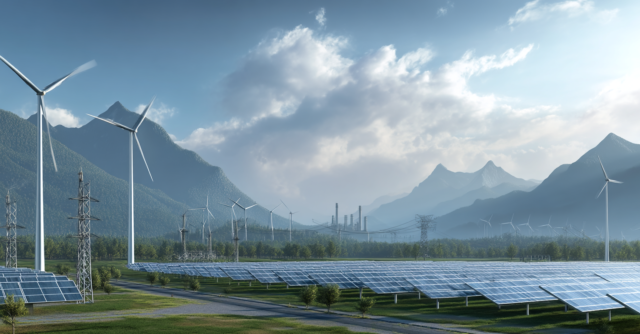
    The electrification of transportation, heating and industry will drive electricity consumption from 56 terawatt hours today to around 75 terawatt hours per year. At the same time, 23 terawatt hours will be lost from nuclear power plants. The EDGE research network has calculated that Switzerland can achieve its target of 45 terawatt hours from new renewable energies, but only with a strong expansion of photovoltaics and wind power.

    Expansion of photovoltaics and wind energy
    Photovoltaics would have to quadruple its capacity from the current 6.4 gigawatts to almost 27 gigawatts. Wind power would need to be expanded more than 80-fold, from 0.1 to 8.4 gigawatts by 2050. Wind energy plays a key role, particularly in winter. The researchers emphasize that this expansion would hardly be possible without subsidies.

    Dependence on the European electricity market
    The Electricity Act limits winter imports to a maximum of 5 terawatt hours. Strict implementation would significantly increase investments and costs. More wind and solar power plants would be needed and the price of electricity could double. Restricting EU electricity trading by 70 percent would require additional wind capacity and further increase costs. EDGE researchers therefore see access to the European electricity market as crucial.

    Investments flow abroad
    More than half of Swiss investments in renewable energy projects currently flow abroad, primarily to Germany, France and Italy. Only around one percent remains in Switzerland. The reason for this is the limited opportunities for realization in Switzerland. Wind energy projects in particular are financed by Swiss investors abroad.

    Costs of the energy transition
    The transformation to net zero will result in rising prices for fossil fuels, goods and services. For Swiss households, this means annual consumption losses of 0.6 to 1 percent, depending on the scenario. If emissions are not offset abroad, the burden will increase further. At the same time, the researchers emphasize that the costs of unchecked climate change would be significantly higher.

    Switzerland can achieve its energy targets by 2050, but only with a massive expansion of photovoltaics and wind energy, close European market integration and targeted investments. The challenge remains to reconcile security of supply, climate targets and costs.

  • Molecular light chain opens up paths for quantum technologies

    Molecular light chain opens up paths for quantum technologies

    Porphyrins are central building blocks of nature. They form the basis for haemoglobin in the blood or chlorophyll in plants. In combination with metal centers, they acquire versatile chemical and physical properties. Empa researchers have now used this principle to specifically dock porphyrins to a graphene nanoribbon with zigzag edges. The binding was carried out with the utmost precision and forms a kind of molecular chain with precisely defined distances.

    Magnetism meets quantum logic
    The graphene ribbon has its own edge magnetism, while the metal centers of the porphyrins contribute conventional magnetism. Both systems have been successfully coupled, a decisive step for quantum technological applications. The hybrid material could function as a series of networked qubits in which spins are used as information carriers.

    Electronics and optics in one system
    The porphyrins are not only magnetically active, but also optically effective. They can emit light, the wavelength of which is influenced by the magnetic state. A kind of molecular light chain that transmits information through color changes. Conversely, the system can be excited by light, which changes the conductivity and magnetism of the graphene ribbon. This opens up a wide range of applications from chemical sensors to innovative electronic components.

    Building blocks for the future
    The synthesis of these structures requires complex processes. Under ultra-high vacuum and at high temperatures, the precisely designed starting molecules are “baked” on a gold surface to form the chains. Supported by the Werner Siemens Foundation, the Empa team is now working on developing even more versatile systems by varying the metal centers and graphene widths. The aim is to create designer materials that form the basis for future quantum technologies.

    The combination of porphyrins and graphene opens up a new class of molecular systems. It combines chemistry, magnetism and optics in nanoscale structures and lays the foundation for the electronics and quantum technology of tomorrow.

  • New silicon acids could destroy “eternal chemicals”

    New silicon acids could destroy “eternal chemicals”

    Per- and polyfluorinated alkyl substances, PFAS for short, are considered “eternal chemicals” as they do not degrade in the environment. Their highly stable carbon-fluorine bond resists light, water and microorganisms. This is precisely where the newly developed super Lewis acids come in. They exhibit extreme “electron greed” and directly attack the resistant structures of PFAS.

    Complex production with a big impact
    For a long time, these compounds were only considered a theoretical concept. Only innovative methods such as protolysis made it possible to produce them synthetically. Proven processes from carbon chemistry were transferred to silicon. The experiments were highly sensitive. They had to be carried out in an inert gas atmosphere, as even the slightest traces of oxygen or water would prevent the reactions.

    Quantum mechanics provides the key
    For the first time, the strength of these molecules was fully predicted using quantum mechanics. These calculations not only confirmed the extreme reactivity, but also enabled a precise understanding of the mechanisms. Spectroscopic methods such as NMR validated the predictions. The combination of theory and experiment is therefore a milestone in catalysis research.

    Catalysts for environmental protection
    The new super Lewis acids behave like catalysts. They change during the reaction, but regenerate again and are not permanently consumed. This means that the smallest quantities are sufficient to render highly toxic PFAS compounds harmless… A decisive advantage over previous approaches.

    With silicon-based super Lewis acids, a realistic solution to the global PFAS problem is within reach for the first time. They could become a key instrument for recycling, green chemistry and the protection of the environment and health.

  • Photovoltaic system combines culture with sustainability

    Photovoltaic system combines culture with sustainability

    In future, the Museum Langmatt will produce renewable solar power with a 40/45 kilowatt photovoltaic system, enough for the annual consumption of 15 to 20 flats. The grey in-roof modules were installed by Regionalwerke Baden. According to a statement from Regionalwerke, the modules were in keeping with the spirit of the museum, which was built by Sidney Brown, co-founder of the technology group ABB: “Contemporary technology is perfectly compatible with the historical spirit of the Langmatt,” says Markus Stegmann, Director of the Langmatt Museum.

    The PV system is installed on the roof of the newly installed glass pavilion in the park, which was built as part of the complete renovation and expansion of the complex. “The pavilion is intended for readings, concerts and aperitifs for group visits,” says Stegmann.

    While the PV modules have already been in operation for a month, the renovation work is not expected to be completed until next year. The art nouveau villa Langmatt, which now houses the museum, was built around 125 years ago on behalf of the art-loving industrialist couple Brown. The museum therefore houses an important collection of French Impressionists such as Claude Monet and Pierre-Auguste Renoir.

  • Sustainable holiday concepts receive growth capital

    Sustainable holiday concepts receive growth capital

    The Zug-based private equity firm Limestone Capital has acquired 30 per cent of the shares in Nokken, a provider of ecological holiday flats from the UK.

    Nokken intends to use the investment to expand its market position in Europe and the USA and to enter the Asian and Austro-Asian markets. The funds will primarily be used to enter into strategic partnerships with landowners and operators, acquire key parts of Nokken’s supply chain and expand sales and marketing capabilities. “The investment is a milestone for Nokken and a validation of our vision for the future of the hospitality industry,” said Nathan Aylott, co-founder of Nokken, in a press release,

    Nokken focuses on nature-based experiences that are lower cost, quick to implement and more appealing to guests. The company’s “retreat” model with the modular design of its holiday cabins enables scalable nature experiences while minimising land impact, using ecological materials and avoiding the high infrastructure requirements of conventional construction methods, according to the company.

    Limestone Capital is committed to investing in experience-focused platforms with over €1bn AUM (assets under management) in the lifestyle and hospitality sectors. The partial acquisition of Nokken signals the capital firm’s commitment to sustainable businesses in the hospitality industry: “This investment is not just pure capital – it is a partnership based on shared values,” said Grazi Panelli, CEO of Limestone Capital. “Nokken offers meaningful, nature-based experiences without compromising on design or environmental responsibility.”

  • Students consider Food Factory in Basel

    Students consider Food Factory in Basel

    Under the theme Feed the city, students from the Institute of Architecture at the University of Applied Sciences and Arts Northwestern Switzerland(FHNW) have spent a year examining the issue of sustainable food supplies. They developed concepts for setting up a food factory on the Rosental Mitte site in Basel, Immobilien Basel-Stadt reported in a press release. The cantonal contact for property management wants to transform the former company site into a district for living, working, research, leisure and sport.

    According to the FHNW students, the eight-storey former dye packaging warehouse in Rosental Mitte is the ideal location for a food factory. The “robust structure with its large spans, high ceilings and high load-bearing capacity” is “very suitable for new utilisation ideas”, they write in the press release. Building 1055, which is worth preserving, could also “serve as a meeting point in the neighbourhood and at the same time impart knowledge about food production”.

    The planned Food Factory in the centre of Basel is intended to visualise the entire food cycle, from production to processing and consumption through to waste recycling. To this end, the students have developed concepts for production and distribution and investigated interfaces with catering and research. The potential of new foods such as algae has also been taken into consideration.

  • Gebäudeversicherung Bern joins forces with Designform for sustainable remodelling

    Gebäudeversicherung Bern joins forces with Designform for sustainable remodelling

    Björn Ischi’s Designform GmbH has worked on the remodelling of the first floor at GVB – Gebäudeversicherung Bern in Ittigen. Together with the GVB team, “upcycling by design in its most beautiful form” was realised, writes Ischi in a post on LinkedIn. Specifically, material that was removed during the renovation was not disposed of, but reused directly on site.

    For example, “cool seating areas” were created from former wall sections of the old design for the new furnishings. Because not only can mobile phones and laptops be charged there, but users can also recharge their own batteries, the GVB team gave these seating areas the name “Powerbanks”, explains Ischi. For the owner and product designer of Designform GmbH, however, the project in Ittigen was “more than just upcycling with style”.

    This is because the GVB employees were involved in the planning and realisation of the conversion via two workshops. In the first workshop, needs were identified and ideas developed. In the second workshop, the employees then lent a hand in building the furniture themselves. “Screwdrivers instead of keyboards and suddenly the teams were literally behind the furniture,” says Ischi. Furniture specialist Girsberger from Thunstetten BE provided professional support for the project.

  • Renovation incentives secure energy targets and the construction industry

    Renovation incentives secure energy targets and the construction industry

    The building stock plays a key role in reducing emissions and closing the winter electricity gap. Energy modernization measures such as better insulation or the replacement of fossil fuel heating systems with heat pumps are key levers for achieving energy and climate targets. However, without targeted incentives, the necessary momentum to trigger investments on a large scale is lacking.

    Criticism of the imputed rental value bill
    The bill to be voted on on September 28 not only provides for the abolition of the imputed rental value, but also the elimination of deductions for building maintenance and energy-related investments. Bauenschweiz warns that this threatens to put a stop to renovations, with serious consequences for local SMEs in the construction and crafts sector and for climate protection. Instead of creating incentives, such a system change would prevent renovations, weaken the trade and place a burden on SMEs.

    Study shows enormous efficiency potential
    A recent study by Lucerne University of Applied Sciences and Arts and FLUMROC illustrates just how great the opportunities are. A combination of heat pumps and an optimized building envelope could reduce electricity consumption in Switzerland by 5.3 terawatt hours per year. This could cover almost ten percent of total consumption and practically close the winter electricity gap.

    Switzerland is at a turning point in its energy policy. Instead of creating barriers to investment, we need framework conditions that promote energy-efficient renovations, strengthen the construction industry and fully exploit the contribution of the building stock to the climate transition.

  • Green spaces as ecological capital for cities

    Green spaces as ecological capital for cities

    Studies show that in cities such as Bern, there are dozens of hectares of what is known as “distance green”. Lawns with no function that are merely mowed. These areas are a previously unused asset. They could store rainwater, cool the urban climate and create habitats for diverse species. Instead of being viewed in isolation, they need to be understood as an interconnected ecosystem.

    Planning beyond plot boundaries
    Climate change and biodiversity do not stop at plot boundaries. Nevertheless, the competence of property owners is limited to their plots. To realize the potential of urban green spaces for climate resilience and biodiversity, we need political guidelines, cooperative action and new professions that professionally maintain and develop urban green spaces. A systemic approach to urban development is essential.

    Landscape architecture with a claim to leadership
    Architecture shapes urban development with grand gestures, but the robustness and sustainability of urban systems lies in open spaces. This is where landscape architecture has its strength. It can create resilient, ecological structures with minimal resources. This requires more self-confidence in the discipline and a willingness to take a leading role in urban development.

    Education for the future
    In order to meet the growing demand for landscape architects, new training paths are needed. A Bachelor’s degree course at Bern University of Applied Sciences could close this gap and test innovative teaching models. Central content would be systemic approaches that combine ecological, social and spatial factors and translate them into sustainable concepts.

    The green space between buildings is not superfluous. It is the ecological capital of the future. Those who see it as an integral part of urban planning will create resilient, liveable cities that can withstand the challenges of climate and biodiversity.

  • Nuclear waste as a resource for the energy transition

    Nuclear waste as a resource for the energy transition

    Nuclear power polarizes! While some countries are phasing it out, elsewhere it remains a central pillar of the energy supply. However, they all have one problem in common – radioactive waste. Thousands of tons of highly radioactive materials are already stored around the world and their safe storage costs billions. Now, however, an idea is coming to the fore that could turn this waste into a valuable raw material.

    Tritium is the key to nuclear fusion
    Nuclear fusion is seen as the beacon of hope for the future of energy. In contrast to nuclear fission, it does not rely on decay, but on the fusion of atomic nuclei. Similar to the sun. Using deuterium and tritium as fuel, huge amounts of energy can be generated with virtually no climate-damaging emissions and significantly less waste. While deuterium is readily available, tritium remains extremely scarce. Only around 25 kilograms currently exist worldwide, too little for widespread use in energy production.

    Nuclear waste as a source for the fuel of the future
    This is where Terence Tarnowsky’s research at Los Alamos National Laboratory comes in. Radioactive waste from existing nuclear power plants could be used to produce relevant quantities of tritium. This would address two challenges at the same time. The safe and expensive storage of nuclear waste and the availability of the missing fuel for future fusion power plants. The market price for tritium is currently around 15 million dollars per pound, a clear indication of its scarcity and value.

    Opportunities for the energy transition
    The vision is clear. If waste becomes a fuel of the future, the cards in global energy policy could be reshuffled. Fusion power plants fueled by tritium from recycled nuclear waste could provide enormous amounts of energy in a climate-neutral and safe way. This would be a milestone for the energy transition, which could secure the growing demand for electricity from electromobility, the heating transition and digitalization in the long term.

    Research at the turning point
    The path to large-scale use is still open. Technical, economic and security policy issues need to be clarified. However, the direction shows how science and technology can transform seemingly contaminated sites into opportunities for the future. Nuclear waste, of all things, a symbol of unresolved energy problems, could thus become a mainstay of the energy transition.

  • Heat protection on construction sites becomes a joint task

    Heat protection on construction sites becomes a joint task

    Switzerland is topographically diverse, from inner-city construction sites to alpine locations and large-scale infrastructure projects. Standardized measures therefore fall short. While earlier working hours are made possible in certain municipalities, other projects rely on mobile shading systems or adapted break regulations. The decisive factor is the adaptation to the respective region, the environment and the project type.

    Shared responsibility of the building owner
    Walz emphasizes that it is not only the task of construction companies to provide heat protection. Building owners and project authors can also implement effective measures through forward-looking planning and tendering. In doing so, they take responsibility for occupational safety and prevent discussions about additional costs. “If you address the issue at an early stage, you create clarity and commitment for everyone involved,” says Walz.

    Cooperation at all levels
    Close coordination between site management, foremen and employees is a key factor. Although employers have a legal duty to ensure health and safety, employees also have a role to play. They must actively use protective measures, seek out shady areas and use the aids provided. The Ordinance on Accident Prevention (VUV, Art. 11) obliges all parties to implement these measures.

    Legal framework and challenges
    Employers are already legally obliged to implement protective measures. Support is provided by Suva and SBV guidelines. Nevertheless, there are structural problems. If the work rhythm is adjusted due to a heatwave, delays occur that are not always covered by work contracts. The provisions of SIA standard 118, which provide for deadline extensions in the event of weather-related interruptions, are often waived. As a result, the risks end up with the construction companies and their employees. A practice that the SBC clearly criticizes.

    Round table sends out signals
    In order to develop viable solutions, the SBC joined forces with trade unions, client representatives such as KBOB, SBB, Astra and IPB as well as authorities and Suva at the “Heat Round Table”. In mid-May 2025, a consultative decision was taken to enshrine heat protection in the Construction Site Ordinance (BauAV), in KBOB and IPB recommendations and in the SIA 118 contract standard. This means that building owners and social partners are committed to taking health protection into account on a binding basis. It is now up to politicians to send a clear signal in the same direction.

    Heat protection on construction sites is not just a matter for the boss; it requires the shared responsibility of all those involved, from the client, companies, site managers and employees. Only if everyone pulls together can the growing risks posed by rising temperatures be managed effectively. In times of climate change, heat protection is thus becoming an integral part of modern building culture and a decisive factor for occupational safety and fair framework conditions.

  • Upcycling project transforms leftover material into office furniture

    Upcycling project transforms leftover material into office furniture

    Restemöbel has completed a major interior fit-out project for the photovoltaic company Planeco, headquartered in Münchenstein BL, in the Alte Papieri Arlesheim. In collaboration with the Basel-based construction office in situ, restemöbel has, according to its press release, turned leftover material into high-quality furniture on a large scale for the first time.

    Among other things, restemöbel has planned and manufactured lockers that consist of 100 per cent residual material, apart from the fittings. The company utilises waste that is generated during production in joineries and various ancillary trades in the Lörrach area and is usually thrown away or incinerated.

    “To change this, we invented restemöbel in the summer of 2019: small, fine furniture that is made almost exclusively from leftover materials,” says the company in its self-presentation. “In this way, we are trying to do something about wasting resources and energy and at the same time make the world a little more beautiful.”

    Restemöbel is currently still a project by Florian Oeschger from Basel and Markus Schier, who is based on the German side of the Rhine in Rheinweiler. It is supported by Oe Moebel GmbH, based in Basel, as well as the Florian Oeschger furniture workshop and Markus Schier wood workshop in Rheinfelden, Germany. The two, who have been partners since 2022, have announced that they plan to rebrand restemöbel in Basel in the near future.

  • Property consultancy with vision: Expertise for the entire life cycle

    Property consultancy with vision: Expertise for the entire life cycle

    Anyone who owns or plans to own property is familiar with many of the challenges of the market, such as preventing vacancies and setting rents in line with the market without ignoring supply and demand. This is precisely where Migros Bank comes in with its unique advisory approach, which combines economic foresight, market data and individual solutions – for owners who want more than just mortgages, but customised advice tailored to their property. The advisory approach consists of various modules that can be worked on independently of each other with the customer, depending on the situation.

    Together with CSL Immobilien AG, a partner of Migros Bank, a comprehensive range of services is offered that covers the entire property life cycle. Customers benefit from property development services and professional property management. This offering is rounded off by in-depth research and market analyses of the Swiss property market, enabling owners to make informed decisions together with Migros Bank.

    Comprehensive analysis tools for customised and well-founded decisions
    The property dialogue allows market values, purchase prices, net rental income, yields and vacancy rates to be compared with CSL Immobilien AG’s market data. This makes it possible to assess the positioning of the customer portfolio. It is suitable for office, commercial and residential property. Analysing residential properties at the residential unit level helps to check and manage the performance of the property. The residential units are compared with the market data and analysed for size, price and opportunities. This means that the positioning of projects can be determined with customers at an early stage, existing properties can be checked for market requirements and standards and reasons for vacancies can be identified.

    Analysing interest rate trends: outlook for future mortgage costs
    Anyone buying a house or a condominium must also take a look into the future. Mortgage interest rates are comparatively favourable today – but what will they be in ten years’ time? Will the property still be affordable with the expected income? With the interest rate development analysis, the mortgage portfolio can be simulated 10 years into the future with various defined interest rate scenarios. These estimated interest costs can be used to directly compare possible hedging strategies, such as redeeming a mortgage or taking out a follow-up product. This enables owners to restructure their portfolio and adapt it to market expectations.

    Sustainability as the key to increasing property value
    For owners of older properties in particular, sustainability is an important issue that has a direct impact on the value of the property. The sustainability analysis shows the advantages of renovating properties on a sustainable basis. The CO2 emissions, energy costs and energy requirements of a property are determined and a modernisation plan is drawn up to show which refurbishment measures have a positive impact on these values. Correctly timed refurbishments are crucial to maintaining or even increasing the value of a property over its entire life cycle. It is advisable to seek expert advice before starting a refurbishment project in order to find the best and most cost-effective solutions. Refurbishment issues are challenging – especially when it comes to alternative energies. In the case of particularly old properties, it is also necessary to decide whether refurbishment is worthwhile or whether it would be better to build a new building. This decision depends on various factors, including the condition of the building, financial resources and personal preferences. In any case, it is important to have a long-term refurbishment strategy that helps to reduce costs and extend the life of the building.

    A strong partnership with synergies
    Migros Bank works closely with CSL-Immobilien. Both companies are operationally independent. Through this strategic partnership, CSL Real Estate benefits from nationwide expansion and access to new markets, while Migros Bank can expand its property offering in a targeted manner. Together, they cover the entire property life cycle with an extended range of services – from financing to client advice and marketing. The collaboration also creates significant synergies, particularly in the areas of consulting and financing. One concrete result is the joint development of the digital estate agent service Nextkey, which makes property sales efficient and customer-friendly. This creates a holistic offering that supports customers in all phases of the home ownership process.

    Comprehensive support for property owners
    Anyone who owns or is planning a property today needs more than just a financing solution. What is needed is a partner who has the entire life cycle of a property in mind. With its advisory approach, Migros Bank is positioning itself precisely in this field – as a holistic partner, not just a mortgage lender. In collaboration with CSL-Immobilien, it offers customised solutions for owners who want to develop their properties sustainably, profitably and with a view to the future. Whether market value analyses, sustainability, returns or interest rate trends: individual issues are addressed competently and with foresight using modular tools and sound market data from practice. This not only improves the quality of customers’ decisions, but also the value and future viability of their property. Migros Bank thus stands for a new kind of property advice – networked, collaborative and far-sighted.

    “Anyone who owns or is planning a property today needs more than just a financing solution. What you need is a partner who has the entire life cycle of a property in mind.”

    “Anyone buying a house or a condominium must also look to the future. Mortgage interest rates are comparatively favourable today – but what will they be in ten years’ time?”

    Further information at: migrosbank.ch/potential

  • Europe’s largest construction project takes shape

    Europe’s largest construction project takes shape

    The ambitious Ellinikon project is being built on the disused Hellinikon airport site south of Athens. Here, Greece is building a new city from the ground up that will serve as a model for sustainable and digitally networked urban development. In just a few years, this area is set to become a living space for over 10,000 people, a place of work for up to 80,000 employees and a destination for millions of tourists. The aim is to create a city that meets the ecological, technological and social requirements of the 21st century.

    From ghost airport to beacon of hope
    The site of the former Hellenikon International Airport, once the gateway to the world, was unused and dilapidated for decades. The debt crisis got the project moving. in 2014, Lamda Development was awarded the contract to lease and develop the site for 915 million euros over 99 years. The planning was in the hands of renowned architectural firms, including Foster Partners from London. The excavators have been rolling since 2020 and everything should be ready by 2036.

    A city of short distances
    Ellinikon is designed as a so-called “15-minute city”. Everything you need to live – school, doctor’s surgery, grocery store, sports field or café – should be within 15 minutes on foot or by bike. The planners want to significantly reduce motorized private transport. Local public transport, micromobility with e-scooters, bike sharing and a modern network of footpaths and cycle paths will replace the traditional car.

    Europe’s largest coastal park
    In the middle of the new urban area, a park is being created that will set new standards. 2.6 million square meters of green space, more than London’s Hyde Park. Ellinikon Park offers space for walks, sport, cultural events and nature observation. Around 80 % of the water used comes from natural sources already present on the site.

    Reusing instead of wasting
    Before the high-rise buildings could rise into the sky, the first step was to dig deep. More than 300 reinforced concrete pillars with a depth of up to 55 meters support the foundations of the new Riviera Tower landmark. The concrete from the former runways will be recycled on site and reused for roads and slope stabilization. A central goal of the project is net-zero emissions. Buildings are certified according to the LEED standard.

    The tallest residential building in Greece
    207 meters high, 53 floors, 169 apartments, the Riviera Tower will be the tallest building in the country. In addition to the Riviera Tower, another high-rise is being built, the Vouliagmenis Mixed Use Tower with a height of 150 meters. It offers office space, a hotel for business travelers and direct access to two subway stations.

    Smart City Ellinikon
    Ellinikon sees itself as a smart city. Data, sensors, networking and digital services play a central role. Intelligent street lighting, sensors for air quality and noise, apps for navigation, booking and payment as well as 5G and fiber optic networks for high connectivity are just a few examples. Intelligent power grids, energy-efficient architecture and microclimate analyses are intended to optimize energy consumption.

    Social commitment and tourism
    Ellinikon should not only be chic, but also social. The first completed building, a center for people with disabilities, was handed over in 2023. Further public facilities are being planned, such as kindergartens, schools, a clinic, cultural centers and sports facilities. Two large shopping centers, the Vouliagmenis Mall and the Riviera Galleria, are expected to attract an international audience. Even more spectacular, however, is the casino complex, which is being realized together with Hard Rock International.

    Economic boost for Greece
    The project is expected to contribute 2.4% to Greece’s gross domestic product in the long term. 70,000 to 80,000 direct and indirect new jobs are planned and tourism is expected to grow by over one million additional guests per year. The expected tax revenue amounts to 14 billion euros over the duration of the project.

    What happens next
    The first major construction phase should be completed by 2026/2027. Central infrastructure facilities such as transport routes, the first residential buildings, green spaces and educational facilities should then be in place. Full completion will follow by 2036. Ellinikon will not only be a new district of Athens, but a showcase for what urban development can look like in the future.

  • Alpine solar project launched over 2000 metres

    Alpine solar project launched over 2000 metres

    Axpo, based in Baden, has commissioned STRABAG to realise an alpine solar project next to the Lai da Nalps reservoir above the village of Serdun in Graubünden. Around 1,500 solar panels and a technology centre will be installed in the NalpSolar project at over 2,000 metres above sea level, the Schlieren-based construction company announced in a press release. The first 10 per cent of the plant is due to go into operation this December.

    “The construction work is technically demanding, logistically challenging and ecologically sensitive, but above all a milestone for the energy transition in Switzerland,” writes STRABAG. The individual solar tables and other components have to be transported along a narrow, single-lane mountain road. The road, which is normally closed, was built by Axpo in the 1960s as an access road for the reservoir.

    As there are no storage facilities on the construction site, only the material that is immediately needed is transported. “The logistics now run like clockwork,” explains construction foreman François Borner in the press release. “Instead of being stressful, it is now easy to plan.” In the press release, STRABAG cites the uneven ground and respect for the nature conservation zones in the construction area as further challenges in the project.

    Due to the altitude, NalpSolar will produce a lot of electricity, especially in the winter months, explains STRABAG. The construction company is aiming to complete the work in 2028. The electricity from NalpSolar is reserved for the SBB power grid for the next 20 years.

  • 90 years of innovation with Swiss parquet tradition

    90 years of innovation with Swiss parquet tradition

    The parquet manufacturer Bauwerk is looking back on its 90th anniversary this year. According to the company, it began with the introduction of the first dispersion adhesive to protect against harmful vapours from the bitumen adhesive used at the time. This was later followed by specialisation in parquet flooring. The impetus came from Ernst Göhner from Zurich, who in 1935 brought a “floor or wall covering composed of pieces of wood” to series production. This became the “industrially manufactured mosaic parquet or Klötzli parquet”, which is still available in the Bauwerk range today.

    Since the market launch of the first 2-layer prefinished parquet in 1976, the manufacturer has developed into a globally active company in the wood flooring industry with 1600 employees. In Switzerland alone, 2 million square metres of parquet from the Bauwerk Parkett, BOEN and Somerset Hardwood Flooring brands are laid every year.

    More than 60 per cent of the floor coverings are produced at the company headquarters in St. Margrethen. The research and development department has also been based there since the early 1950s. The manufacturer has been awarded cradle-to-cradle certification for its production processes, composition, use and recycling of all components, as well as for its handling of resources in line with the circular economy. Using parquet is environmentally friendly per se and stands for a positive ecological balance. “What’s more, every plank that leaves our factories is unique – the perfect combination of Swiss engineering and the power of nature,” says Patrick Hardy, CEO of the Bauwerk Group since 2022, in the press release.

    In addition to observing sustainable business practices, the company is also socially committed. The Parkettzauber campaign supported several charitable organisations with parquet flooring – including a children’s daycare centre and a socio-educational residential group.

  • Timber harvest in Switzerland to fall by 2 percent in 2024

    Timber harvest in Switzerland to fall by 2 percent in 2024

    In 2024, 4.8 million cubic meters of wood were harvested in Switzerland. This corresponds to a decrease of around 2 percent. This is according to a statement from the Federal Statistical Office and the Federal Office for the Environment. This means that the total harvest fell for the second year in a row.

    The reduction was particularly pronounced for lump wood (-11 percent), followed by logs and sawn timber (-2 percent). The sharp decline in logs is mainly attributable to private forests, which was lower in all forest zones with the exception of the Jura Arc and the southern side of the Alps. The forest zones with the greatest changes were the Central Plateau (-94,000 cubic meters) and the Pre-Alps (-42,300 cubic meters).

    The canton with the largest volume of timber harvested is Bern with 0.89 million cubic meters. It is followed by the cantons of Vaud, Zurich, Graubünden and Aargau. Their harvest volumes are between 0.44 and 0.34 million cubic meters. Together, they supplied 51 percent of the total wood harvest last year.

    The proportion of energy wood in the form of wood chips has continued to increase and now accounts for 44 percent of the total annual harvest. This corresponds to 2.1 million cubic meters. The proportion of energy wood in the total timber harvest has almost doubled over the past 20 years.

    In 2024, the 638 forestry operations recorded income of CHF 622 million and expenditure of CHF 651 million. The deficit for Switzerland as a whole therefore amounted to CHF 29 million. Compared to the previous year, it has increased by CHF 9 million. Only the forestry operations in the foothills of the Alps recorded a positive balance.

  • Efficient cooling with underfloor heating

    Efficient cooling with underfloor heating

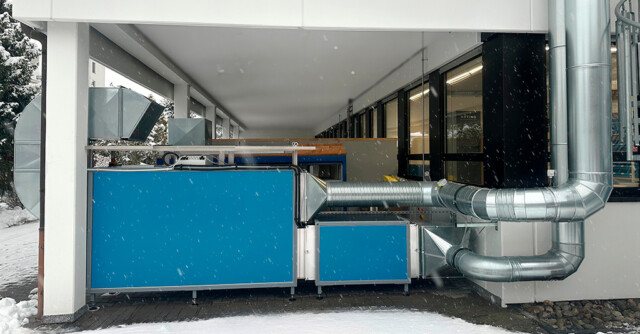
    In well-insulated new buildings and energy-efficiently renovated old buildings, interest in alternative cooling methods is increasing. Underfloor heating can not only provide cozy warmth in winter, but can also contribute to a pleasant indoor climate in summer, provided it is connected to a suitable heat pump. This opens up an efficient, noiseless and climate-friendly dual use of existing technology.

    Technology that can do both
    Only water-based systems are suitable for cooling. Cool water flows through the pipe system laid in the floor in summer, controlled by a pump and a smart control system. The decisive factor is the combination with a reversible heat pump, which provides technical support for the cooling mode. The difference between heating and cooling mode lies primarily in the water temperature. Instead of 35 to 40 °C, 16 to 20 °C is pumped through the system.

    Active or passive – two ways to cool down
    Passive cooling uses the temperature difference to the ground or groundwater without the compressor being active. This saves energy, but is often only sufficient for a slight temperature reduction in very hot weather.

    Active cooling, on the other hand, works at full pump capacity. Rooms can be cooled significantly more, but with higher power consumption.
    Brine/water and water/water heat pumps are suitable for both variants. Air/water systems are designed exclusively for active cooling.

    Technology and planning must go together
    The achievable temperature reduction is between 2 and 5 °C. With active solutions, values around 20 to 22 °C are also realistic. A flow temperature that is too low can cause condensation. This is why systems with dew point monitoring are needed that automatically counteract critical values.

    Know the limits, exploit the potential
    Underfloor heating systems react slowly, so cooling needs proactive control. However, with good planning and suitable technology, anyone building or renovating today can rely on a single system that provides year-round comfort without additional air conditioning.

    The achievable temperature reduction depends on the construction method, insulation and design of the system. In well-insulated new buildings or renovated properties, it is possible to cool rooms to 22 °C or below even when it is hot outside. Bedrooms, offices or heavily heated living areas in particular benefit from uniform, silent cooling.

  • Software for monitoring CO2 reservoirs

    Software for monitoring CO2 reservoirs

    Post-doctoral researcher and Pioneer Fellow Edoardo Pezzulli from the Swiss Federal Institute of Technology in Zurich(ETH) has developed software that makes it possible to continuously monitor carbon dioxide storage in reservoirs and reduce the risks involved. According to a press release, the mathematician is now endeavouring to bring his technology to market maturity. To this end, he founded the start-up Storra Dynamics GmbH with mechanical engineer Michael Liem.

    “Anyone who stores CO2 has a social responsibility,” Pezzulli is quoted as saying in the press release. “The plants must be safe for generations to come. With our monitoring system, we want to prove that the risks are limited and that operation at the highest level of safety is possible.” This is because there are geological uncertainties with this type of storage. First of all, it is necessary to analyse how much carbon dioxide can be injected into the site, and then the stored gas can be monitored to ensure that it remains bound. The newly developed software will then work like a digital twin by simulating pressure, temperature and load conditions in the storage site.

    Pezzuli is currently involved in the CITru pilot and demonstration project in the municipality of Trüllikon. Under the direction of ETH Zurich, the feasibility of injecting carbon dioxide through a disused borehole created by Nagra (National Co-operative for the Disposal of Radioactive Waste) is being tested. The scientist is responsible for the risk assessment and the development of the monitoring plan.

  • Energy location with future potential

    Energy location with future potential

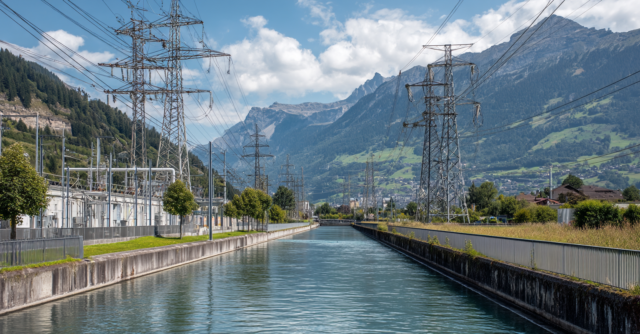
    With the purchase of the former Legler site by Hochdruckkraftwerk Diesbach AG and the simultaneous participation of the municipality of Glarus Süd, a new chapter has begun for the traditional factory site in Glarnerland. The operator of the local hydroelectric power plant has secured the site, including the power plant centre. At the same time, the municipality is acquiring agricultural land from the previous owner and will become the largest shareholder with a 40% stake.

    Energy meets site development
    The acquisition not only serves to preserve the historic power plant, but also opens up new opportunities for long-term site development. “We can offer areas ranging from 50 to several 1,000 square metres,” says Chairman of the Board of Directors Weber-Thedy.

    The municipality of Glarus Süd has secured two seats on the Board of Directors and an important land reserve of almost 30,000 square metres of agricultural land, which is earmarked for replacement measures or ecological compensation areas. The municipality is thus creating space for future developments.

    Long-term perspective with interim utilisation
    The potential of the Legler site is undisputed, but a new use takes time and requires careful planning. The aim is a mixed-use development with residential and office space that fits in with the landscape and the municipality. The first steps towards realisation are not expected before the next ten years.
    Until then, the site will be put to sensible interim use. The large halls will be rented out as storage space. They can be divided up flexibly, even if they are only suitable for certain purposes due to structural restrictions.

    Sustainability as a guiding principle
    The high-pressure power plant is focussing on environmentally friendly energy production and will renovate the plant to the latest standards in 2025. Earlier discussions about the expansion were postponed in favour of a sensitive approach to the landscape, but the roar of the Diesbach Falls is to be preserved.

    A boost for the Glarus region
    The acquisition of the Legler site is more than just a change of ownership. It is an example of forward-looking site development, supported by local energy production, public participation and a long-term perspective. The municipality of Glarus Süd is actively committed to the development of the site and at the same time minimises the risk of a prominent property falling into disrepair.

    The combination of energy infrastructure, property development and public involvement makes the project a beacon for the region and a role model for comparable sites in Switzerland.

  • CO2-neutral commercial building with ramp and roof garden

    CO2-neutral commercial building with ramp and roof garden

    Felix Partner Architektur und Design from Zurich have symbolically handed over the first dismantled components of the former Stewi headquarters in Winterthur-Grüze to their customers for recycling at the start of construction of their Green Spin project in Winterthur. According to a press release, most of the demolished parts will not end up in landfill, but will be reused in other buildings. The demolition concrete will also be shredded and used to produce recycled concrete.

    A service building for commercial tenants will be built on the same site. Companies that also focus on sustainability themselves are set to move in from late summer 2027.

    The building shell is planned as a CO2-neutral timber construction. A green inner courtyard and a roof garden will also be realised. Photovoltaic modules on the façades and wind turbines will supply green electricity, while geothermal energy will be used for heating. The building is to be certified in accordance with the international BREEAM sustainability standard.

    The centrepiece is a ramp that is up to six metres wide and rises gently around the inner courtyard. It provides access to the rental areas on all levels, including by bicycle. The commercial, office, production and sports space will be complemented by catering outlets and individual retail outlets.

    “I hope this project will inspire others to think big and act boldly,” said FDP National Councillor Andri Silberschmidt in his speech at the start of construction. Jens Andersen, Winterthur’s master builder, emphasised that the project “fits in perfectly with our strategy of sustainable urban development”.

  • Recyclable linoleum flooring with a high cork content

    Recyclable linoleum flooring with a high cork content

    Dietlikon-based flooring supplier Tarkett Schweiz AG has launched its own recyclable Lino Materiale collection. It consists of cork granulate, linseed oil, pine resin and wood flour and is available in ten earthy colours, the company writes in a press release.

    Thanks to its high cork content, Lino Materiale is more flexible and can reduce sound better than other linoleum floors. The material’s good abrasion and chemical resistance throughout its service life makes the flooring solutions resistant to dirt and daily wear and tear. This makes them a good choice for high-traffic areas such as schools, offices, clinics and administrative buildings.

    The floors, which were developed on the basis of the original recipe from 1898, have an exclusive surface finish, according to the supplier. This reduces cleaning and maintenance costs and therefore energy requirements. The floors require neither initial maintenance nor additional care or coating measures, which also contributes to the manufacturer’s sustainability concept.

    However, part of this concept is also that the flooring can be recycled. “Because at Tarkett, real sustainability doesn’t end with installation,” says Daniel Mai, Product Manager D/A/CH for Homogeneous Vinyl, Heterogeneous Vinyl, Linoleum, Sports Indoor, in the press release. The ReStart take-back programme returns the linoleum and installation residues to the cycle. The flooring is fully processed and reused as recyclate.