Category: Sustainability

  • New concrete reduces CO2 emissions in the construction industry

    New concrete reduces CO2 emissions in the construction industry

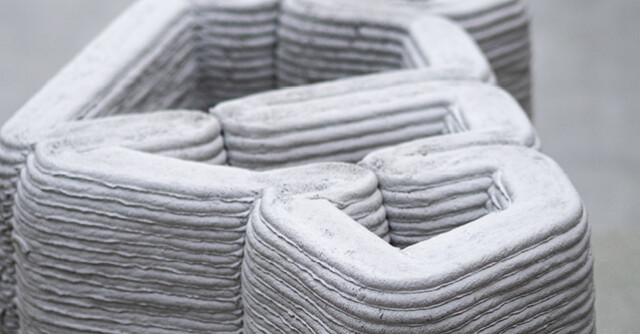
    Omya is a new partner in NEST, the modular research and innovation building of Empa and Eawag in Dübendorf. In the Beyond.Zero unit, which has been based there since the beginning of 2024, they want to test a cement-reduced concrete that they developed in a joint research project, according to a statement from Empa.

    Omya contributed its expertise as a globally active specialist in industrial materials. “The fact that we can now jointly develop sustainable building materials and test them directly in NEST under real conditions accelerates the transfer of innovations into climate-friendly construction methods,” said Empa Director Tanja Zimmermann.

    This innovative building material replaces up to 70 per cent of its clinker content with natural minerals. As Empa explains, this significantly reduces its CO2 footprint. “For a new type of concrete to be widely accepted, it needs to be tested in practice,” Empa researcher Mateusz Wyrzyklowski from Empa’s Concrete and Asphalt department is quoted as saying. “By using it in the NEST Beyond.Zero unit, we can comprehensively validate our cement-reduced concrete: from processing to durability.”

    The aim is a building material “that not only fulfils the ecological requirements, but also impresses in terms of workability, mechanical properties, volume stability and durability,” says Empa. The Beyond.Zero unit goes beyond the net zero target in construction. It pursues the vision that buildings can serve as carbon sinks in the future – in other words, they will have a negative CO2 balance on balance. The construction sector currently accounts for around 28 per cent of CO2 emissions in Switzerland.

  • Circular economy strategic upturn

    Circular economy strategic upturn

    The circular economy is becoming an integral part of corporate strategies in Switzerland. The proportion of companies that have anchored it in their corporate strategy has risen from 11 to 27 per cent within four years. Large companies in particular are showing great dynamism. More than half of companies with over 250 employees have already anchored it in their corporate strategy. Medium-sized companies follow with 39 per cent, while smaller companies lag far behind with 23 per cent.

    Implementation remains fragmented
    Despite clear progress in strategic awareness, operational implementation remains subdued. Only 15 per cent of companies generate more than ten per cent of their turnover with circular products, after only a marginal increase since 2020. Companies are similarly reluctant to invest. Only seven per cent invest more than ten per cent of their funds in circular economy measures. The breadth of activities is also limited, with only a few measures on average.

    Focus on energy instead of value chains
    Companies implement measures relating to energy consumption or the switch to renewable energies particularly frequently. Activities along the supply chains or in the use of raw materials are much rarer, even though these would be key levers for resource efficiency. According to study author Tobias Stucki, this means that a lot of potential is being wasted, especially as current geopolitical risks are once again putting dependence on raw materials centre stage.

    Sector and regional comparison
    There are striking differences between the sectors. Companies from the telecommunications, electronics and medical technology sectors are particularly active. Construction, real estate and personal services remain in the early stages of transformation. The regional picture is also mixed. Central and Eastern Switzerland lead the way in terms of strategic anchoring, while Ticino remains at the bottom. It is worth noting, however, that Ticino companies perform well above average in terms of their share of turnover with circular products.

    Political and legal framework
    Politicians have significantly expanded the framework conditions for the circular economy in recent years. It has been explicitly enshrined in the Environmental Protection Act since 1 January 2025. This has shifted the focus of resource conservation beyond waste management. Cantons such as Zurich and Bern have set the course with referendums and strategies. Zurich adopted a comprehensive circular economy strategy, while Bern anchored the objective in government guidelines and a new sectoral waste plan. Other cantons such as Basel-Stadt, Geneva and Vaud are also pushing ahead with their own initiatives.

    Circular economy as an issue for the future
    The study clearly shows that the strategic relevance of the circular economy is increasing in Switzerland. Nevertheless, consistent implementation remains largely limited to initial steps. The transition to a circular economy requires massive investment, far-reaching changes in supply chains and new forms of cooperation. This is the only way to ensure that the circular economy does not remain just lip service, but becomes a central pillar for the climate, resources and competitiveness.

  • Solar power stored seasonally for the first time in Kaltenbach

    Solar power stored seasonally for the first time in Kaltenbach

    At the post office in the village of Kaltenbach, which belongs to the municipality of Wagenhausen, surplus solar power from the summer months can in future be utilised in winter. This will be made possible by a SeasON demonstration system in the new post office delivery centre in Kaltenbach, Matica AG announced in a press release. The thermochemical process developed by the company in collaboration with Lucerne University of Applied Sciences and Arts utilises caustic soda for the loss-free storage of electricity and waste heat.

    When the electricity is stored, water is removed from the caustic soda solution and transferred to a separate tank. Concentrated caustic solution and separate water can then be stored at room temperature. If the stored energy is to be utilised, the concentrated caustic solution is diluted again with the separated water. The resulting mixing heat is supplemented by condensation heat. It is generated by vaporising the water in the closed system with the help of low-temperature heat from a heat exchanger.

    “For us and the team at Lucerne University of Applied Sciences and Arts, the realisation of the project in Kaltenbach is another important milestone on the way to the market launch of our innovative over-seasonal energy storage system SeasON,” said Matica CEO Marc Lüthi in the press release. “The experience gained from building the system, installing it and analysing the operating phase is essential for the efficient further development of our pioneering solution.”

    The Wagenhausen-based company installed its first demonstration plant in Frauenfeld in 2024. A third system is planned for spring 2026 in a housing estate in North Rhine-Westphalia.

  • Tradition meets innovation in façade renovation in Davos

    Tradition meets innovation in façade renovation in Davos

    The Hotel Schatzalp in Davos, which opened in 1900 as a luxury sanatorium, has been given a new façade with the support of architecture researchers from ETH Zurich. The building was constructed using digital aids. According to a statement from ETH, the contract for implementation was awarded to local timber construction company Künzli Davos AG and Instructive Construction AG(Incon.ai), which specialises in augmented reality technology. Incon.ai is a spin-off of the ETH and is based at Technopark Zurich.

    The designs for the reinterpretation were developed by a team led by Silke Langenberg, Professor of Construction Heritage and Monument Preservation at ETH Zurich, and architecture professors Fabio Gramazio and Matthias Kohler at the ETH Department of Architecture. The task for the architectural researchers was to preserve the appearance and integrate digital technologies into traditional craftsmanship and operational processes. “Based on the design logic of the old building, we reinterpreted the balustrades,” Fabio Gramazio is quoted as saying.

    Matthias Kohler sees this as a “fundamental change in the way we build”. The digital model replaces the double metre in traditional construction methods. The digital model created using augmented reality simplifies planning for tradespeople and allows people to use their dexterity and intuition. As Kohler emphasises, people retain control over the process.

    The wooden balustrades on the building had become outdated and no longer met today’s safety standards, he explains. In addition, the typical appearance of the Schatzalp with the loggias attached to the south façade had been impaired by numerous changes.

  • Photovoltaic system on company roofs in Aarau

    Photovoltaic system on company roofs in Aarau

    Over the next six weeks, HKG Engineering AG will be installing a photovoltaic system on the roofs of its own company buildings at the Aarau site. According to a press release, 184 high-efficiency modules are planned there, which will generate 93,000 kilowatt hours of electricity per year.

    The energy generated will be sufficient to cover the company’s own requirements in the offices and for charging electric vehicles. The system will also reduce the load on the neighboring Aarhof property, which is currently under construction.

    With this investment, HKG is sending out a clear signal for sustainable action. The aim is to reduce CO2 emissions in the building sector and reduce dependence on external energy.

  • Review: Swissbau Community Event at uptownBasel

    Review: Swissbau Community Event at uptownBasel

    “Enkelfähig” is the order of the day. Hans-Jörg Fankhauser, host of the Swissbau Community Event at uptownBasel, emphasized: “It’s not about what we do today, but what we can achieve tomorrow.” The term “enkelfähig” stands for his responsible site development, in which digital technologies and sustainable strategies are used to enable long-term change and create an environment worth living in for future generations. When it comes to collaboration, he relies on “new work” with strong partners.

    Quantum technology & AI: a new chapter in innovation
    AI has already changed reality. Hans-Jörg Fankhauser (uptownBasel) emphasized the disruptive opportunities offered by artificial intelligence and quantum computing. The technologies open up almost limitless possibilities for innovations in architecture, energy planning and building technology.

    Re-use of building materials: trust as a success factor
    Kevin Rahner (Schnetzer Puskas Ingenieure AG) shed light on the challenges of reusing building materials. The central question: “On-site” or recycling? Without clear standardization, reuse will not prevail. Genuine innovation requires trust and structured processes.

    Intelligent energy supply for sustainable buildings
    Sascha Wyss (Primeo Netz AG) explained that a stable transmission grid only works if production and consumption are in balance. Modern buildings require intelligent networking, redundancy and flexibility in order to ensure a sustainable energy supply.

    Experience practice & networking
    After the presentations, participants were able to experience the uptownBasel building Pioneer and the uptownBasel substation live. A subsequent networking aperitif provided the perfect opportunity to exchange ideas with experts from the sector.

    [smartslider3 slider=”49″]

    Further information
    swissbau.ch

  • ZHAW pools expertise in new competence group

    ZHAW pools expertise in new competence group

    A new unit is being created at the ZHAW Institute of Facility Management to actively shape the digital transformation of the real estate and construction industry. The Smart Building Management competence group is dedicated to the question of how buildings and sites can be intelligently planned, used and managed. The aim is to develop digital technologies, data-based services and integral strategies along the entire real estate life cycle in a user-oriented manner. A particular focus is on smart buildings, smart workplaces and resilient infrastructures that are geared towards the needs of society, the economy and the environment.

    International experience and in-depth industry knowledge
    The new head Andrea González has over 15 years of international experience in urban planning, real estate development, architecture, sustainability and digitalization. She has overseen large and complex projects in Europe and Asia, from site analysis, planning and construction through to operation, refurbishment and conversion. Her expertise in the application of innovative smart building strategies, the use of digital tools such as BIM and artificial intelligence as well as sustainable construction methods is particularly noteworthy.

    Her management experience ranges from leading interdisciplinary project teams to overall responsibility as Head of Real Estate and Architecture at a Swiss company. As a specialist, she combines economic thinking with a spirit of technological innovation and sustainable solutions.

    Building bridges between science and practice
    In addition to her work in real estate and construction practice, Andrea González has been active in research and teaching for many years. She has taught and conducted research at ETH Zurich, the University of Liechtenstein, the Universidad Politécnica de Madrid and the Tokyo Institute of Technology, among others. Her scientific work focuses on the integration of digital technologies such as artificial intelligence, digital twins and predictive analytics in planning and development processes.

    In publications and conference contributions, she has intensively examined the transformation of urban spaces and the future of smart buildings and smart cities. She is also involved in teaching at all levels, from Bachelor’s and Master’s degree courses to continuing education programs, and contributes to the development of new academic formats.

    Forward-looking perspectives for Smart Building Management
    With the appointment of Andrea González, the ZHAW is sending a strong signal for the further development of the real estate and construction industry in the direction of digitalization, sustainability and resilience. In future, the new Smart Building Management competence group will provide impetus for practical research and innovative solutions that support both companies and institutions in the transformation of their infrastructures.

  • Northwestern Switzerland strengthens future topics with two new universities

    Northwestern Switzerland strengthens future topics with two new universities

    The opening of the two universities marks a strategic reorientation of the FHNW and its sponsoring cantons of Aargau, Basel-Landschaft, Basel-Stadt and Solothurn. The institution is thus responding to the growing challenges posed by digitalisation, sustainability and social change. At the same time, it is creating additional study places in future-relevant disciplines and strengthening the attractiveness of Northwestern Switzerland as a university and research region.

    By creating its own universities for computer science and for technology and the environment, the FHNW is focusing on specialised profiles. The focus is on topics such as artificial intelligence, digitalisation, cybersecurity, energy, environmental technology, robotics and the sustainable use of resources.

    FHNW School of Computer Science
    The digital transformation is profoundly changing the economy and society. The FHNW School of Computer Science sees itself as a driving force behind this change. Its aim is to interlink education, research and practice more closely and to enable new forms of lifelong learning.

    At the start of the autumn semester 2025, the university will offer innovative courses, including Artificial Intelligence & High Performance Computing, where AI algorithms and high-performance computing infrastructure are combined to efficiently train complex models and develop new applications for research and industry.

    With Data Science & Artificial Intelligence for Sustainability, the university is focussing another degree programme on the sustainable use of data analysis and AI. For example, for optimising energy systems, modelling climate scenarios or developing resource-saving technologies. There are also new programmes in Security, Platforms & DevOps, which train urgently needed specialists in cybersecurity and agile software development.

    A special future project of the university is the new location in Basel, which will open in 2026. There, research, teaching and business will be closely networked and further developed with a practical focus.

    FHNW School of Engineering and Environment
    The second new university is dedicated to the pressing issues of energy, the environment and sustainability. Its profile combines technical innovation with a clear focus on ecological responsibility. Students and researchers here work on topics such as renewable energies, the circular economy and the sustainable use of resources, always linked to the question of how technology can work in harmony with the environment and society.

    “We provide training where the economy urgently needs skilled workers and research creates new perspectives,” emphasises Prof. Dr Crispino Bergamaschi, President of the FHNW Executive Board.

  • NEST tests CO₂-reduced building materials

    NEST tests CO₂-reduced building materials

    The “Beyond.Zero” project brings together leading industry and research partners to test innovations in the construction industry under real-life conditions. The focus is on the development of new material technologies with significantly lower emissions and high innovation potential for the construction industry.

    A central element is the cement-reduced concrete developed by Empa and Omya. By replacing up to 70 percent of the clinker content with natural minerals, CO₂ emissions can be significantly reduced without compromising mechanical properties or durability.

    Practical test for new concrete technology
    The building material is being comprehensively validated in a real construction context for the first time in the NEST unit. From processing and volume stability to durability in operation. “Only by testing it in real buildings can we show that the new type of concrete is not only ecologically convincing, but can also withstand the demands of practical use,” explains Empa researcher Mateusz Wyrzykowski. This creates a basis for translating sustainable concretes into marketable solutions more quickly.

    Industry meets research
    As the world’s leading producer of industrial minerals, Omya is contributing its expertise and production capacities to the project. “The fact that we can test sustainable building materials directly in NEST under real conditions accelerates the transfer of innovations into climate-friendly construction methods,” emphasizes Empa Director Tanja Zimmermann.

    In addition to the cement-reduced concrete, further CO₂-reduced and CO₂-negative material solutions are to be developed and tested in the “Beyond.Zero” project. The aim is a construction system that significantly reduces the ecological footprint over the entire life cycle, from production to operation and dismantling.

    Signal for the construction industry
    With this project, Empa and its partners are creating a practical platform that will provide groundbreaking impetus for the transformation of the construction sector. In view of the high proportion of emissions from cement and concrete production worldwide, the project could become a milestone towards climate-neutral construction.

  • Fair, ecological procurement with Toolbox Sustainability

    Fair, ecological procurement with Toolbox Sustainability

    The development of the toolbox was triggered by the revision of the Federal Act on Public Procurement. The focus is no longer solely on costs, but increasingly on issues of sustainability, fair working conditions and resource and climate protection. As a result, the procurement procedure is shifting from a pure price competition to a quality competition. A paradigm shift with opportunities, but also challenges.

    The key question here is how sustainability criteria can be integrated into procurement processes in an objective, transparent and practicable manner

    Contents and functions of the toolbox
    The sustainability toolbox provides answers to precisely this question. It is web-based, trilingual and structured in such a way that it provides awarding authorities with concrete tools.

    • Catalogue of eleven award criteria covering topics such as materials management, climate targets and fair working conditions
    • Text modules, forms and evaluation tables for direct use in tenders
    • Legal and practical explanations for the safe application of the criteria
    • Practical examples that provide guidance in the tendering process

    More clarity and commitment
    The tool creates a common understanding between contracting authorities and subcontractors by formulating criteria in a measurable and verifiable way. This also makes participation in tenders more attractive for SMEs, as the framework conditions are clearer and fairer.

    The overarching goal is to further develop tendering practice in Switzerland in such a way that quality, sustainability and innovation are honoured. Instead of simply competing for the lowest price, as is the case today.

    Significance for the sector
    The sustainability toolbox makes it possible to standardise how sustainable criteria can be incorporated into construction projects. This not only strengthens the awarding authorities, but also creates trust among clients and companies. The project shows that sustainability is not an add-on, but an integral part of a sustainable construction industry.

  • Statics gap in timber construction is closed

    Statics gap in timber construction is closed

    Researchers from the Swiss Federal Laboratories for Materials Science and Technology(Empa), the Bern University of Applied Sciences and the Swiss Federal Institute of Technology in Zurich(ETH) have carried out a comprehensive series of tests in collaboration with the Federal Office for the Environment(FOEN). According to a press release, the aim of these investigations was to close a structural analysis gap in timber construction. Multiple tests and mathematical models were used to gain insights into the horizontal load of timber frame constructions.

    “We are investigating the horizontal bracing of buildings with timber frame walls that contain window openings,” said Nadja Manser, project manager at Empa, in the press release. “Neither in Switzerland nor in other European countries is there currently a regulation on how much horizontal load a timber frame wall can bear if it contains a window opening.”

    In order to obtain this data, the researchers carried out numerous experiments in Empa’s construction hall with two-storey and single-storey walls, each containing two window openings. The horizontal beams were subjected to a load of over 100 kilonewtons.

    The next step is to use the large amount of data obtained to create a computer model that is easy for structural engineers to calculate and that can be used to realise structural calculations for timber frame buildings. Throughout the project, the researchers are working with industry partners such as Swiss Timber Engineers, Holzbau Schweiz and Ancotech AG. One of the aims is to eliminate the need for expensive and labour-intensive steel anchors and the concrete cores that were previously required.

  • Switzerland signs agreement with Denmark on CO2 storage

    Switzerland signs agreement with Denmark on CO2 storage

    Switzerland signed two agreements with Denmark on 3 September that will enable the export and permanent storage of Swiss CO2 in Denmark. Future cooperation in the area of negative emissions technology (NET) and carbon capture and storage (CCS) is also planned, according to a press release. The Federal Council had already approved the two agreements on 27 August 2025.

    The partnership with Denmark joins the existing partnership with Norway, which was signed on 17 June 2025 and also enables CO2 storage and bilateral emissions trading. “CO2 storage will also be important for Switzerland on the way to the net-zero target,” said Federal Councillor Albert Rösti in the press release on the agreement with Norway. “This technology complements our existing instruments for decarbonisation.”

    The agreements with Denmark and Norway were signed against the backdrop of the Climate and Innovation Act (CIE), which commits Switzerland to reducing its greenhouse gas emissions to net zero by 2050. Net zero is to be achieved primarily by reducing emissions, while emissions that are difficult to avoid, such as those from the cement industry or agriculture, must be offset by CCS or NET technologies. The federal government has been promoting the use of such technologies since 1 January 2025 as part of the CIG.

  • Rebranding focuses on sustainable transformation

    Rebranding focuses on sustainable transformation

    After twelve years, INNOArchitects AG is opening a new chapter: since the beginning of September, the consulting firm from Wabern has been operating under the name Fuil, Pierre-Yves Caboussat, founding partner and strategy consultant, announced in a press release from Fuil AG. The name INNOArchitects was too closely associated with new products and ideas. The new name, on the other hand, is intended to symbolise the current focus of the consultancy offering on the sustainable transformation of companies.

    Fiul is based on the English term fuel. It means “energy, drive, speed, but also food, in other words something that nourishes and enables growth”, explains Cabussat. The new name thus stands for the company’s aspiration to shape change with impact.

    For Nora Blaesy, Lead Rebranding and Business Development Consultant, the new brand identity emphasises “who we really are”. According to her, Fuil wants to differentiate itself from other consultancies by the way it tackles things. “We don’t just want to advise organisations, we want to empower them to shape change with confidence and move into the future with energy,” Blaesy is quoted as saying.

    Fiul offers companies consulting services in the areas of strategy, business development, organisational development and collaboration, the development of people and teams and the use of artificial intelligence. Fiul also provides rooms for seminars and collaboration in the converted Gurtenbrauerei brewery in Wabern. According to a statement, the company has already completed over 3,000 contracts under the old INNOArchitects brand.

  • Dielsdorf data centres to supply district heating for the region

    Dielsdorf data centres to supply district heating for the region

    Green Datacenter AG(Green) from Lupfig AG and BRUGG Pipes from Kleindöttingen have agreed to work together to supply several municipalities in the canton of Zurich with district heating. According to a press release, the waste heat from the new Green Metro-Campus Zurich will supply 11,500 households in Dielsdorf and five neighbouring municipalities as well as industrial and commercial companies with district heating.

    In collaboration with the energy supplier Energie 360°, CO2-free heating is to be generated from the waste heat of the new data centre. An energy centre is being built right next to the Green Metro campus. The companies involved are relying on pipes from BRUGG Pipes to build the district heating network. The Aargau-based company has already supplied 126 pipes, each 12 metres long and with an external diameter of 70 centimetres. The pipe system is laid underground and is no longer visible after construction. The system is equipped with a smart monitoring system for maintenance purposes.

    “The data centres in Dielsdorf are a good example of how waste heat can be used sensibly and CO2 can be saved,” said Martin Rigaud, CEO of BRUGG Pipes, in the press release.

    Energie 360° aims to supply the first district heating in 2026. Green is already using the waste heat from the data centre to heat its own office buildings and a nearby industrial complex.

  • Furniture made from shuttering boards as an educational project

    Furniture made from shuttering boards as an educational project

    Industrial designer Björn Ischi has fully equipped the remodelled Building 1 at the Sursee campus with recycled furniture. Together with Designform GmbH, Ischi has equipped the seminar and training centre, which is specifically dedicated to the training of construction site cadres, with sustainable seating landscapes and study tables. The furniture was made from shuttering boards and other old materials to meet the needs of the students.

    Ischi points out in a press release that the circular furniture is economically competitive with products at standard market prices. Sustainability is therefore not a compromise, but a win-win situation.

    The project at the Sursee campus was initiated back in 2022. Ischi began cataloguing existing material on campus in 2024. On this basis, the industrial designer created the circular furniture. The project was technically coordinated by furniture manufacturer Girsberger from Thunstetten BE.

    Ischi emphasises the good cooperation with the management of the seminar and education centre. “Where others throw away the old, Campus Sursee has shown the courage to rethink,” says Ischi. Short distances and clever ideas have beaten long journeys and the production of new furniture. “The future is created when we value the old and reinterpret it.”

  • Biochar concrete opens up prospects for a climate-neutral construction industry

    Biochar concrete opens up prospects for a climate-neutral construction industry

    Four construction companies from Switzerland have joined forces to found KLARK AG, based in Landquart GR, on 25 August 2025: Ulrich Imboden AG from Visp VS, Logbau AG from Maienfeld GR, Novakies AG from Rapperswil BE and Toggenburger AG from Winterthur. Their common goal is to make KLARK concrete, which is CO2-neutral thanks to the addition of biochar, available throughout the country.

    In a press release, they describe the founding of KLARK AG as a milestone for the Swiss construction industry: “It shows that ecological responsibility, economic thinking and cooperative structures can go hand in hand – even and especially in an industry that has long been considered sluggish.” KLARK stands for a move towards a building materials market “that not only measures climate effects, but actively changes them”. This is “industry innovation instead of individual battles”.

    The KLARK climate clay is mixed with as much biochar from untreated waste wood from regional forestry until a CO2-neutral product is created. According to the information provided, it has the same properties as traditional concrete, which causes CO2 emissions of up to 250 kilograms per cubic metre.

    The CO2 reduction performance has been verified with a verified life cycle assessment in accordance with the accounting rules of the Coordination Conference of Building and Property Bodies of Public Building Owners(KBOB). The life cycle assessment results are published on the KBOB list. KLARK concrete can be produced with 50, 75 or 100 per cent sink rate and is fully recyclable.

    Eberhard Bau AG from Kloten ZH, Aarebeton Aarau AG and Arnold & Co. AG Sand- und Kieswerke from Flüelen UR are already on board as licence holders for the production of KLARK concrete. “This creates a central competence centre for CO2-saving construction with concrete, supported by regional pioneers with a national reach,” the press release states.

  • Between innovation and reality

    Between innovation and reality

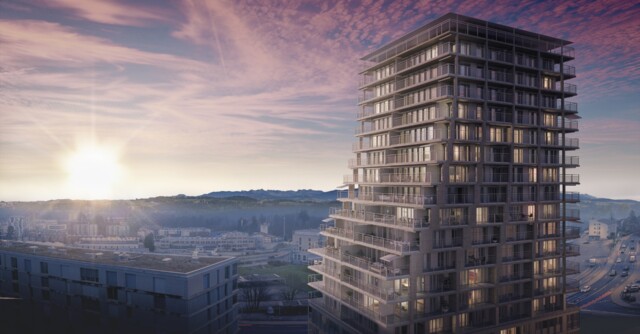
    In the middle of the Zurich conurbation, the new H1 residential tower towers above the Zwhatt site. With a height of 75 meters and 24 storeys, the building is a visible marker for the Regensdorf skyline and for hybrid construction methods between concrete and wood. Despite its striking red hue and eye-catching façade, the interior is dominated by natural and neutral materials. The architecture remains restrained, the structure classic. Three solid base storeys and a central concrete core support the building, while timber columns, timber-concrete composite ribbed ceilings, lightweight façades and solar panels ensure resource efficiency.

    The HBV structure allows for a high degree of prefabrication and a significant reduction in gray energy. Compared to conventional solid buildings, 20% of emissions are saved, a total of around 670 tons of CO₂ over a life cycle of 60 years. The horizontally positioned photovoltaic modules serve as a brisesoleil and generate around 155,000 kWh of electricity per year, which covers around 36% of the apartments’ energy requirements.

    Quality of living, community and urban density
    At the base of the H1, three-sided arcades connect the building to the neighborhood and ensure an urban quality of living. Inside, a clear, modular structure ensures compact, flexible apartments. 156 units are organized around the central core and are reached via short, bundled access routes. There is space for community halfway up the building with a two-storey meeting room, a launderette and spectacular views. The wooden elements create a pleasant indoor climate, while exposed beams and clay surfaces ensure a cozy atmosphere.

    Sustainability and the ambivalence of the high-rise principle
    H1 is a project of transition. The high proportion of wood reduces the CO₂ profile, but does not make the use of concrete superfluous. The climate-friendly construction method, local raw materials such as beech wood from the Jura or clay and the focus on renewable energy make sustainable construction a reality. Nevertheless, the high-rise building remains an ambivalent concept. The densification saves space, but the statics and fire protection still force hybrid constructions.

    In terms of urban planning, the Zwhatt site represents a new development perspective for Regensdorf. The silhouette of H1 and other towers characterizes the skyline. The quarter combines living, working and open spaces and stands for an urban development that remains flexible and adaptable.

    The H1 residential tower exemplifies change in the construction industry. It combines advanced timber hybrid technology, a high degree of prefabrication and urban integration. H1 is thus a “building of transition”, a step towards net zero, but also a reflection of the challenges and potentials facing sustainable residential construction in urban centers today.

  • Efficiency in timber construction thanks to statics

    Efficiency in timber construction thanks to statics

    Timber frame construction scores highly as a sustainable alternative to concrete. However, there is a problem with structural planning. Walls with windows were previously considered “statistically invisible” due to a lack of reliable data on load-bearing behavior. Planning, use of materials and costs suffered as a result.

    Large-scale tests for greater material and cost efficiency
    In order to close this knowledge gap, Empa, the Bern University of Applied Sciences and ETH Zurich launched a joint research project, supported by the FOEN and industrial partners. In Empa’s construction hall, wooden walls are deliberately subjected to extreme horizontal loads, generating valuable data on the load-bearing capacity of walls with window openings. The aim is to use the horizontal bracing values of such elements reliably in everyday engineering in the future.

    Less concrete, more wood
    The findings are being incorporated into a new, simple computer model. The initial results show that walls with windows also make a significant contribution to bracing. This reduces the need for steel anchors and concrete cores and cuts the amount of material, time and costs involved in timber construction. In the long term, this results in more economical and ecological buildings.

    Cooperation between research and industry
    The focus is on the practical suitability of the new model. In close dialog with industry partners, the complex research model is translated into an applicable solution for planning practice. This benefits planners, investors and residents alike.

    With new test procedures and calculation models for window walls, the research project is taking timber construction a step further towards greater efficiency, resource conservation and innovation.

  • Oil heating out, house value up?

    Oil heating out, house value up?

    Simon Lüthi from Wüest Partner recommends renovating the house as soon as possible. Any time is the right time for the environment. Economically, it is particularly attractive if subsidies, tax savings and lower ancillary costs additionally support the increased market value.

    Energy efficiency as a value factor
    The demand for energy-efficient properties is increasing. Investors, funds and pension funds are paying attention to sustainability, often for regulatory reasons. Investments in energy efficiency increase the value of real estate in the long term. This is particularly the case when renovation and modernization coincide.

    Tenancy law and urban regions
    Energy-efficient refurbishment is also worthwhile in cities. The market there is particularly responsive to sustainable improvements. Refurbishment also protects against future legal requirements. However, local tenancy law regulations can restrict the possibilities for apportionment.

    Replacing the heating system is a sensible step
    If you need to replace your heating system anyway, you should switch from an oil system to a heat pump or district heating. A heating system replacement is usually due every 25 years anyway and covers the repairs at the same time. For many homeowners, simply replacing the heating system is the most economically attractive option.

    Homeowners should start with a heating system replacement if the building envelope is intact. If the envelope is in need of renovation, it is worth combining the renovation of the roof, façade and windows with the replacement of the heating system.

    Regulations, subsidies and expert opinions
    Regulation is becoming stricter. The aim is to achieve a climate-neutral building stock by 2050. Subsidies and tax benefits make refurbishment profitable. If you are unsure, consult an expert for planning.

    Financing and grey energy
    Banks often offer more favorable mortgages for sustainable properties. In future, the focus will also shift to efficient cooling and the reuse of building components. Grey energy, i.e. the production energy contained in the building, is becoming increasingly important.

    Replacing oil heating is a real added value. It offers lower heating costs and a higher house value, for today and tomorrow.

  • Swiss start-up supports the development of digital energy communities

    Swiss start-up supports the development of digital energy communities

    The Zurich-based start-up Exnaton is teaming up with the German software manufacturer SAP, based in Walldorf, to operate the SAP Energy Community in the SAP Energy Park. The SAP Energy Community allows buildings and employees to produce, store and trade renewable energy with each other. The initiative focuses on the S.MART Shop, a space equipped with solar panels, EV chargers and a battery system that enables renewable energy trading on the SAP campus.

    Exnaton supports the programme with its energy sharing software solutions, which simplify registration with a user-friendly interface and enable users to manage, consume and trade energy together. Real-time data from SAP dashboards, combined with Exnaton software, enables energy to be sold when market conditions are favourable and stored for future use. The energy community dashboard, which provides real-time insights into consumption, production and energy trading and serves as a communication channel for sustainability programmes, is also operated by Exnaton. The SAP Energy Community leads to cost savings through optimised energy use, reduced CO2 emissions and increased resilience thanks to decentralised energy production and storage.

    In view of stricter German energy legislation from 2026, the project in Walldorf can serve as a model for other energy sharing projects. “The SAP Energy Community is central to establishing a standard model for energy sharing in Germany,” said Anselma Wörner, co-founder and COO of exnaton, in the press release. “With our experience from international energy communities, we are proud to support SAP in turning this vision into a scalable, practical solution.”

    Founded in 2020, exnaton AG is a spin-off of the Swiss Federal Institute of Technology in Zurich.

  • After the FL tube ban: Why acting now is crucial for preserving the value of your property

    After the FL tube ban: Why acting now is crucial for preserving the value of your property

    Imagine you are investing in a promising property, be it a residential complex, an office building or a mixed-use site. Everything seems perfect: location, yield prospects, substance. But on first inspection, it is striking: The lighting is still based on classic fluorescent tubes. What at first glance seems unimportant turns out on closer inspection to be a factor with a major impact on safety and efficiency.

    Well thought-out lighting design not only enhances the atmosphere, but also energy efficiency.

    Since September 2023, classic fluorescent tubes may no longer be sold in Switzerland and the EU. Stocks are largely empty and replacements are virtually unavailable. For owners, this means that failures can no longer be rectified simply by replacing a tube, and improvised solutions harbour safety and liability risks. Those who wait risk unplanned costs and the loss of legal certainty.

    For property managers and investors, the focus is not on technical details, but on the economic impact. Outdated lighting causes higher electricity costs, which are directly reflected in the ancillary costs and reduce the attractiveness of the property. Tenants are also sensitive to rising operating costs, which has a long-term impact on rentability.

    LED lighting increases safety, reduces risks and fulfils legal requirements.

    There is also the sustainability aspect: energy efficiency is now a key criterion for ESG ratings. These ratings are playing an increasingly important role in financing, portfolio management and for institutional investors. Lighting that is no longer state of the art has a negative impact on a property’s sustainability rating and therefore its market position.

    Typical stumbling blocks and why they can be expensive

    • Unplanned outages: Without suitable replacement tubes, expensive temporary solutions have to be organised at short notice.
    • Improper conversions: Improvised installations are not only unsafe, they can also jeopardise insurance claims.
    • Lack of planning: If you ignore the issue, you risk higher maintenance costs and unnecessary tenant losses.
    Outdated lighting systems harbour risks – modernisation ensures operation and value retention.

    What does this mean for your investment?
    When buying or managing property, lighting is often only considered superficially. But it influences several parameters at once: Operating costs, safety, sustainability and legal compliance. If you check the condition at an early stage, you can avoid follow-up costs and integrate measures properly into your budget planning. This means that modernisations can be carried out without rushing, without affecting tenants or ongoing operations.

    What does this mean for your investment?
    When buying or managing property, lighting is often only considered superficially. But it influences several parameters at once: Operating costs, safety, sustainability and legal compliance. If you check the condition at an early stage, you can avoid follow-up costs and integrate measures properly into your budget planning. This means that modernisations can be implemented without rushing and without affecting tenants or ongoing operations.

    Conclusion: Those who act in good time secure the value
    The FL tube ban has changed the rules of the game. If you act now, you minimise risks, prevent unplanned downtime and protect the value of your property in the long term.

    If you would like to know more about how to plan the right steps for your property, there is a compact guide available. It summarises the most important points for property professionals in an easy-to-understand way and gives you the confidence to make the right decisions.

    Get informed before it gets expensive.
    The guide shows you the key facts and helps you to avoid risks and secure the value of your property – available to download free of charge.

  • Researchers are working on clean water for cities of the future

    Researchers are working on clean water for cities of the future

    Researchers from the Dübendorf-based aquatic research institute Eawag and the School of Life Sciences at the University of Applied Sciences and Arts Northwestern Switzerland(FHNW) are involved in the EU project UrbanM20. According to a press release, the project, which is led by the Danish Technical University of Copenhagen(DTU), is dedicated to improving the monitoring and management of urban water management.

    The aim of the international project is to improve the quality of urban water in the cities of the future. Water utilisation, consumption and wastewater are to be monitored and stored in data exchange systems. Digital twins will be used to develop flexible programmes that improve water quality management.

    Twenty partners from ten countries are participating in the project. From Switzerland, for example, the City of Zurich Department of Waste Management and Recycling(ERZ) and the Association of Swiss Wastewater and Water Protection Experts(VSA) are on board. The participants want to develop intelligent sensors that use artificial intelligence to improve the monitoring of water quality. The digital twins are intended to help identify pollution problems and plan solutions. “We also want to support the authorities with practical guidelines to better monitor and maintain their existing systems,” said project coordinator Luca Vezzaro from the DTU in the press release.

    The UrbanM20 project is being funded by the EU with 5 million euros through the Horizon Europe programme. The Swiss State Secretariat for Education, Research and Innovation (SERI) is also supporting the project with 1 million euros.

  • Conference highlights the opportunities and challenges of circularity

    Conference highlights the opportunities and challenges of circularity

    The Kästli companies have organised their Kästli symposium for the fourth time. According to a press release, around 100 experts and interested parties discussed the circular economy in construction at the Rubigen gravel pit.

    The construction industry already recycles 70 percent of its approximately 75 million tonnes of construction waste every year. But: “Circularity is more than just recycling,” said Susanne Kytzia from the OST – Eastern Switzerland University of Applied Sciences, according to the press release. The circular economy must strike a balance between many different interests. Many small decisions together could make a big difference.

    Patric van der Haegen from Eberhard Unternehmungen pointed out the high ecological and social costs of a purely profit-driven approach. “This makes it all the more important that we as an industry take responsibility now and set a new course.” Pascal Remund from host Kästli called for cross-generational thinking. “We need to think and act with foresight – in the interests of those who come after us,” said the Chairman of the Management Board of the family business, which will soon be 140 years old.

    Michael Widmer, Managing Director of the Swiss Building Materials Recycling Association (BKS ), also believes that politicians and the administration have a duty in this regard, especially when it comes to public procurement. However, all those involved in the construction industry also need courage, according to the participants. This ranges from building owners, planning companies and construction companies and also includes the scientific community. “The circular economy is not a goal, but a path on which we are constantly learning,” said Pascal Remund. “It is crucial that we act now – together and courageously.”

  • New solar plant boosts renewable energy production in the Alpine region

    New solar plant boosts renewable energy production in the Alpine region

    Swisspower AG has received approval from the canton of Graubünden for the construction of the Alpin Parsenn large-scale photovoltaic plant. According to a government press release, the decision is subject to conditions, although these are not specified.

    Swisspower AG is acting as the overall project manager. It represents Energie Wasser Bern(ewb), Industrielle Werke Basel(IWB) and Elektrizitätswerk Davos AG(EWD).

    The project, which until recently ran under the name Parsenn Solar, was approved by the Davos electorate on December 17, 2023. According to its press release from November 2024, Swisspower expected to receive the cantonal building permit before the end of last year; the ongoing work was fully geared towards the start of construction in summer 2025.

    According to the cantonal government, the solar plant will be built at an altitude of 2,500 meters in the Parsenn ski area, which already has an infrastructure and covers an area of almost 14 hectares. With 1493 module tables, it will produce around 12.1 gigawatt hours of electricity per year. In the earlier announcement, there was still talk of more than 10 gigawatt hours, which will supply around 2,200 four-person households in future. Logistical access will be provided via existing access roads. The use of helicopters and walking excavators for minimally invasive installation is also planned.

    Swisspower, based in Zurich, was founded in 2000 as a joint venture between Swiss municipal and public utilities that supply their areas with electricity, natural gas, heat and drinking water. The alliance is supported by 22 shareholder partners from all over Switzerland.

  • Small cities are increasingly interested in the smart city

    Small cities are increasingly interested in the smart city

    The Zurich University of Applied Sciences (ZHAW), based in Winterthur, has published the Swiss Smart City Survey 2024. The report shows that small cities in particular are investing in smart solutions, according to a press release. The ZHAW survey also recorded an increase in the number of respondents.

    A total of 403 smart city projects were reported by the participating cities and municipalities in the survey. Specifically, these include categories such as Smart Governance, Smart Environment, Smart Mobility, Smart People, Smart Living and Smart Economy. 97 projects fall into the Smart Environment category, most of them in the field of photovoltaics. This is twice as many as in 2022.

    However, the report still shows great potential for development. The topic of smart cities is being actively addressed in 29% of the cities surveyed, while 18% are still in the initial phase. “Many cities are not yet in a defined smart city development phase – a clear sign that there is enormous development potential here,” said Vicente Carabias, Head of Sustainable Energy Systems and Smart Cities at the ZHAW, in the press release. “At the same time, the survey shows that more and more cities are embracing the topic of smart cities. The data from the Swiss Smart City Survey highlights the high market potential for science and companies, which can play an active role in the development of smart infrastructures.”

  • Construction project becomes a learning laboratory for students and researchers

    Construction project becomes a learning laboratory for students and researchers

    The two ETH departments of Architecture and Civil, Environmental and Geomatic Engineering are turning the complete renovation and extension of the HIL building on the ETH Hönggerberg campus into a research project. Instead of handing over the construction planning to an external planning office, an internal planning team involving professors, mid-level staff and students will be responsible for it, according to an ETH report. They will use their diverse construction expertise to research interventions and constructions in the HIL Living Lab in order to advance sustainable, circular and resource-saving construction in existing buildings.

    The HIL building was constructed between 1972 and 1976 and serves as the main building for the two architecture and construction departments. It has 800 workstations, 1600 seats in lecture theatres and seminar rooms as well as large drawing rooms and has reached the end of its first life cycle. In particular, there is reportedly a considerable need for refurbishment in terms of fire protection and building services. In addition, the striking building envelope is insufficiently insulated.

    In addition, the building is to be significantly expanded and extended by around 2035, as the ONA architecture centre is to be abandoned and integrated. The project also addresses the central question of how work, teaching and research should be organised at the HIL in the future. The aim is to create a modern space that is more conducive to interaction and collaboration with so-called hybrid teaching and learning landscapes. Those involved still want to define what this means in concrete terms.

    “The Living Lab enables us to incorporate teaching and research directly into a building project,” says Professor of Architecture Matthias Kohler on the project website. He initiated the project together with the Director of the ETH Real Estate Department, Hannes Pichler. “The fact that we are researching our own ‘home’ makes it all the more exciting for us because we can help shape our future.”

  • Small cities drive smart transformation

    Small cities drive smart transformation

    In the current survey, 403 projects from 124 cities were recorded, with digitalization and sustainability being the most important topics. Most initiatives relate to the smart environment, in particular renewable energies such as photovoltaics and resource-saving technologies. This dynamic underscores the transformation that Swiss cities are striving to achieve in order to reduce their carbon footprint and create innovative living spaces.

    Commitment and growth opportunities for small cities
    The number of participating cities has increased significantly. More and more municipalities are formulating their own smart city strategies, appointing responsible parties and working on pilot projects for digital transformation. Nevertheless, the survey shows that almost 80 percent of cities have not yet implemented fully developed processes and are only in the early stages of development. This is a strong signal of existing development potential and market opportunities for players from business and science.

    Governance, participation and infrastructure
    The key dimensions include smart governance, citizen engagement and co-creation. The increase in projects in digital citizen services and smart infrastructure, such as resource conservation or smart mobility, points to the need to expand and strengthen internal organizational competencies within city administrations.

    Market potential and next steps
    The authors of the study emphasize that the dynamics of smart city initiatives are high, but that there is still room for improvement in terms of design and organization. The market potential for companies and research is correspondingly high. Smart infrastructure and innovative projects offer numerous opportunities for cooperation and investment.

    Small cities as drivers of the smart future
    Small Swiss cities are proving to be the driving force behind the smart city transformation. With growing commitment, a clear focus on sustainability and digitalization and an increasing number of concrete projects, they are gaining in importance and creating new opportunities for a sustainable and networked urban landscape.

  • Whitepaper “Sustainable building concepts”

    Whitepaper “Sustainable building concepts”

    The authors of the white paper are calling for a paradigm shift. Planning, building and operating should be understood as a coherent, holistic process. Buildings are seen as dynamic systems that serve people, the environment and the economy in equal measure. Even in the early planning phase, a forward-looking automation strategy creates the basis for energy-efficient, comfortable and long-lasting operation.

    Building automation delivers tangible added value
    Digital control of lighting, air conditioning, heating and ventilation as well as the targeted use of sensor technology measurably reduces resource consumption and improves the indoor climate. This has a positive impact on operating costs, user comfort and compliance with ESG criteria – a significant advantage for investors, operators and users.

    Focus on people
    The white paper attaches great importance to the human factor: modern buildings should contribute to health and productivity and meet individual needs. Aspects such as air quality, thermal comfort and acoustics are becoming more important. Thanks to digital technologies – from sensors to personalized room profiles – adaptive and user-friendly working and living environments are becoming feasible.

    Circular economy and digital infrastructures as the future standard
    Building automation supports the economical use of energy and water and facilitates the implementation of circular building concepts. Cloud-based platforms, IoT sensors and IP-based networks create space for smart functions such as desk sharing or asset tracking and increase the value of real estate in the age of digital transformation.

    Comfort, sustainability and value enhancement
    The white paper impressively demonstrates that holistic building automation not only ensures greater comfort and cost efficiency, but is also indispensable for sustainable, health-promoting and value-stable properties.

    The whitepaper is available for download at: www.siemens.ch/raumautomation

  • ETH spin-off teaches the construction industry how to save money

    ETH spin-off teaches the construction industry how to save money

    The ETH spin-off is making its mark on the grounds of Innovation Park Zurich. A three-and-a-half-ton dumper truck is presented at customer demos with the specially developed hybrid drive. The construction industry is facing enormous challenges in view of the three gigatons of CO₂ emissions produced by its machines worldwide. The hybrid drive enables a reduction of 30 to 50 percent in fuel consumption and emissions. A revolution for construction companies facing increasingly strict environmental regulations.

    Efficiency and development as an ongoing task
    The pressure to innovate is high. In order to remain competitive and meet future requirements, the team is constantly working on further developments and optimizing the technology for various applications. Cooperation with construction and machinery companies ensures practical solutions, while the location in the IPZ pavilion offers ideal conditions for research and development.

    From prototype to series production
    Following intensive collaboration with partners, series production is imminent. This means that the innovative hybrid drive will soon be widely used and make a significant contribution to decarbonization and cost reduction in the construction industry. The technology combines power and flexibility with ecological responsibility. A model that will give the Swiss construction industry a new boost.

    The company impressively demonstrates how technological innovations master the balancing act between efficiency, economy and sustainability. The path to the future of construction leads via intelligent drives.

  • HSLU optimizes metal recycling with AI

    HSLU optimizes metal recycling with AI

    Almost two million tons of scrap metal are generated in Switzerland every year, of which up to 95% is recycled. However, the high return rate conceals a central problem. Impurities, such as copper in scrap steel or tin from coatings, make a large proportion of recycled steel unsuitable for high-quality applications. Instead of being used in vehicle construction or mechanical engineering, this steel is mostly used in civil engineering, where lower purity requirements apply.

    Downcycling is economically and strategically risky
    The so-called downcycling effect means that valuable raw materials are not used optimally. As a country with few raw materials, Switzerland is dependent on imports for high-quality metals. Every tonne that is recycled to a high standard strengthens the autonomy and resilience of the Swiss economy, especially in politically uncertain times.

    AI sensor technology for efficiency and quality
    In the ReRe research project and the Innosuisse project Reinvent, HSLU and partners are demonstrating how intelligent sensors, combined with self-learning AI, enable precise analysis of scrap metal at collection points. Critical components such as batteries or pressure vessels are detected at an early stage, which significantly improves the sorting processes. If only 15% of the returned scrap is recycled to a high quality, up to 36,000 tons of CO₂ and around 30 million Swiss francs can be saved annually.

    Systemic approaches for a modern circular economy
    The Reinvent study, funded by Innosuisse, analyzed the entire metal recycling system, from material flows and players to business models. In addition to technological innovations, standards, transparency and reliable traceability data are essential, as are economic incentives for all stakeholders along the value chain.

    Ensuring future viability
    Among other things, the HSLU scientists recommend integrating sensor technologies across the board, creating standardized data systems for traceability and strengthening cooperation across all stakeholder groups. The targeted promotion of reuse practices should also be anchored in technology and regulation so that high-quality recycling becomes the industry standard.

    Metal recycling as the key to Swiss raw material sovereignty
    With AI and systemic innovations, scrap metal becomes a valuable material. Switzerland can close the raw materials cycle and build a sustainable, resilient industry.