Category: Sustainability

  • New residential ensemble characterises Winterthur’s urban space

    New residential ensemble characterises Winterthur’s urban space

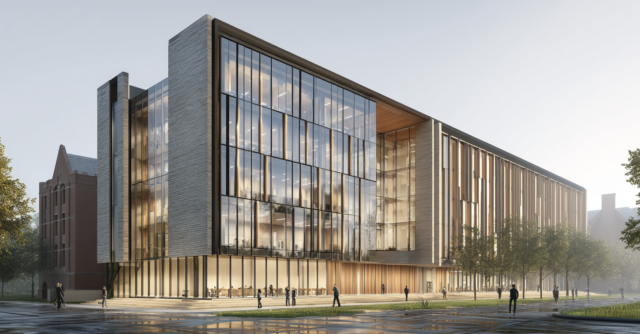
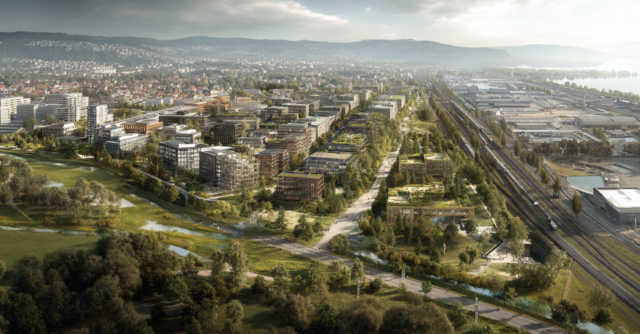
    Cham Swiss Properties is planning an urban ensemble with the construction of the Rocket high-rise and the three Tigerli residential buildings in Winterthur’s Lokstadt. Rocket & Tigerli, as the property company is calling the construction project, will offer space for 300 rental flats in future, 30 per cent of which will be in the affordable segment, according to a press release. The ensemble with the 100-metre high-rise building will therefore not only shape the Winterthur skyline, but also alleviate the city’s housing shortage.

    A building permit was already granted by the city of Winterthur in April 2025, albeit with several conditions. For example, the city demanded that the planned hotel use in the “Rocket” be abandoned in favour of the construction of rental flats. As a result of the revision, the construction company is now planning 5,000 square metres of extra living space and is dedicating the ground floor to publicly accessible retail and restaurant space instead of a hotel check-in. The top floor will also be converted with a viewing room and an area for events and catering.

    despite the challenges posed by the conversion, the architect is confident:

    “A public zone in a residential building brings challenges in terms of privacy and security. But we are confident that we will be able to implement a good solution so that the entire population can enjoy the view from a height of 100 metres,” Thomas Aebischer, CEO of Cham Swiss Properties, is quoted as saying in the press release.

    The sustainability concept of the high-rise building has also been improved: instead of a timber hybrid construction, Rocket will now be realised with CO2-equivalent alternatives that offer advantages in terms of cost-effectiveness, plannability and material availability. Certification according to the SNBS Gold standard remains planned.

    The building permit is expected to become legally binding in 2026, with construction scheduled to begin in mid-2027. Completion is expected in 2030.

  • Clay celebrates its comeback

    Clay celebrates its comeback

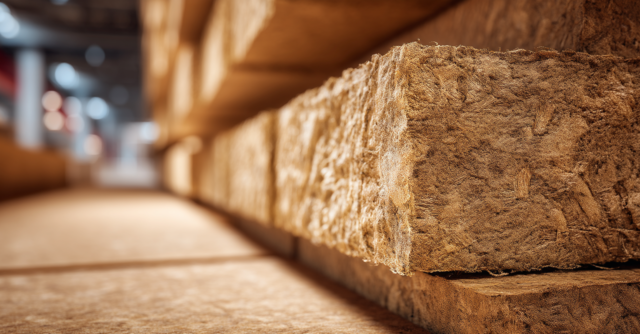
    Clay has been tried and tested for thousands of years, consists of local clay, silt and sand, can be used without energy-intensive firing processes and is available in almost unlimited quantities. In contrast to concrete, the production of which causes considerable CO₂ emissions by burning limestone, loam scores points with its minimal energy consumption during extraction and processing. According to estimates from various sources, the production of concrete generates an average of 800-900 kg of CO₂ per tonne, whereas clay often only produces a tenth of this and usually none at all, provided it is dried naturally

    The clay pavilion in Horw
    As part of the “Think Earth” programme, ETH Zurich, HSLU and industrial companies are working together to bring clay and wood into innovative applications as a material base. One milestone is the clay pavilion in Horw, where clay and wood elements are combined in hybrid form with recycled Oulesse, a mixed demolition material developed by Oxara. The prototypes are created in close collaboration with the construction industry and students. The aim is to create modular, prefabricated clay building components with reliable strength, versatile and deconstructable, for multi-storey residential construction and flexible architecture

    Advantages, challenges and recycling potential
    Earth is not only energy-saving, but can also store CO₂, especially when organic additives are added – it can even have a climate-positive effect. Earth building materials can be easily separated and reused when buildings are dismantled. The recycling process is not costly and enables a genuine circular economy.

    Clay is already available in abundance regionally as excavated clay or as a by-product (“filter cake”) from gravel and excavation washing. So far, widespread use has failed mainly due to a lack of standardisation and market maturity. The “Think Earth” project partners are now working intensively on this

    Clay construction hybrid solutions are still more cost-intensive than conventional concrete construction, but advances in industrial production, material mixing and quality assurance are increasingly bringing them within reach for the masses

    From niche to standard?
    Researchers at HSLU and ETH Zurich are working on the standardisation of the new hybrid earth building elements, so that market entry in the next ten years is realistic. The industry is showing great interest. Especially because “waste” from excavations is becoming a key raw material. With clay, wood and intelligent hybrid technologies, a building principle is available that conserves natural resources, offers climate benefits and still enables architectural diversity. Clay is experiencing an innovation and image revival. “Think Earth” and the earth pavilion show how research and the construction industry are working together to deliver solutions for the building revolution. A small ecological footprint, circular potential and healthy living are more than just a trend – they mark the path to urban building culture in the 21st century.

  • Impetus for sustainable site development

    Impetus for sustainable site development

    Switzerland is one step ahead with the harmonisation of labels. Minergie-Areal focuses on energy efficiency, comfort and climate-friendly mobility and, with its streamlined certification process, is ideal for smaller, manageable sites. It sets clear specifications, for example for building quality and monitoring. SNBS-Areal is convincing for large, complex sites of 10,000 m² or more and covers social, economic and ecological aspects in equal measure. With 30 tested criteria and a broad sustainability assessment, it also serves as a basis for ESG reporting and special utilisation planning

    The example of Kraftwerk1 in Zurich
    Kraftwerk1 demonstrates the value of self-organisation, diversity and solidarity in urban areas. Democracy, low-car living, social rental models and flexible spaces ensure sustainability in practice. The cooperative structure combines individual appropriation with neighbourhood cohesion and strong environmental responsibility

    Life cycle, costs and sufficiency as levers
    Costs are reduced in the long term where product life cycles are extended, recycling is promoted and resources are optimally utilised. Beat Salzmann explains how life cycle management and the circular economy influence financial planning. Sustainable buildings are investments in the future. Sufficiency, as Boris Szélpal explains, means targeted reduction and conscious use of materials and energy. It expands the understanding of sustainability to include the aspect of voluntary renunciation, the development of resilient living spaces and social structures

    Sustainable site development is a coordinated process. Standards create clarity, cooperatives live values and sufficiency opens the way to resilient neighbourhoods with a high quality of life and low environmental impact. The future lies in the balance between comfort and indulgence and in the openness to consistently develop new models

  • World’s first non-combustible vapour barrier presented

    World’s first non-combustible vapour barrier presented

    Ampack AG, which claims to be the leading provider of sealing solutions for building envelopes in Central Europe, is presenting its new range of non-combustible roof and façade membranes, adhesive tapes and vapour barriers. According to a company statement, the vapour barrier is the first of its kind in the world. The products do not contribute to the fire load and are therefore a fire-safe alternative to conventional class B or E building membranes, which release toxic smoke in the event of a fire.

    The range includes the high-performance Ampatex A primo plus membrane, “the first non-combustible, genuine vapour barrier with an sd value of 50 m” worldwide. According to Ampack AG, the membrane reflects heat, holds insulation securely in the cavity and offers physical moisture protection for the first time.

    With Ampatop A silver plus and Ampatop A black, Ampack is also presenting two roof and façade membranes. According to the company, the silver plus is ideal for rear-ventilated façades and use under photovoltaic systems, while the Ampatop A black is a particularly “stylish” solution for rear-ventilated structures and buildings with energy generation systems. The system-compatible adhesive tapes Ampacoll A Tape silver and Ampacoll A Tape black round off the fire protection products as permanently sealed connections and surface bonding.

    In future, the product range will set new fire protection standards in high-rise buildings, special buildings and ventilated façades, offer planning security for construction stakeholders and send a clear signal for safety in the construction industry.

  • High sustainability standards confirmed for property portfolios

    High sustainability standards confirmed for property portfolios

    Three Helvetia real estate investment vehicles have received excellent ratings in this year’s Global Real Estate Sustainability Benchmark(GRESB), the Helvetia Group announced in a press release. The listed real estate fund Helvetia (CH) Swiss Property Fund of Helvetia Asset Management AG and the real estate investment group Real Estate Romandie of the Helvetia Investment Foundation were each awarded a 5-star rating with 90 out of a possible 100 points. The Swiss Real Estate investment group of the Helvetia Investment Foundation qualified for the second-best 4-star rating with 89 points.

    All three investment vehicles were also once again awarded a Green Star at this year’s GRESB, Helvetia explains. “The outstanding GRESB 2025 results of the three real estate investment vehicles are confirmation of our sustainable investment strategy, in which real estate plays a central role,” André Keller, Group Chief Investment Officer at Helvetia, is quoted as saying in the press release. “Responsible investment in sustainable and value-orientated capital investments is a major strategic concern for us.”

    The Group has set itself the goal of achieving net-zero emissions in its investment portfolios by 2050. A total of CHF 3.4 billion is invested in the three property investment vehicles recognised by the GRESB.

  • Seuzach secondary school generates generational power

    Seuzach secondary school generates generational power

    EKZ promotes the installation of large solar systems via the company’s own EKZ fund. Most recently, the installation of a solar system on the roof of the Seuzach secondary school was supported with CHF 30,000, EKZ reports in a post on LinkedIn. The system’s panels were installed towards the end of September. The secondary school pupils were able to lend a hand themselves as part of myblueplanet ‘s Impact Day.

    The involvement of students is part of the way the EKZ fund works: “In the projects with schools, the young generation is sensitised to climate-friendly electricity production,” says the EKZ fund description. The electricity not consumed by the schools themselves is sold by EKZ to its own customers as generational electricity. Part of the proceeds flow back into the EKZ fund to finance the construction of further solar plants.

  • Solar modules put to the test

    Solar modules put to the test

    Increasing weather extremes such as heavy rain, thunderstorms and hail pose major challenges for photovoltaic systems. Hailstorms on rooftop and ground-mounted systems cause high levels of damage and operational downtime every year. The current certification standards for solar modules often do not meet the requirements of severe hailstorms, as they are limited to a few, uniform impacts.

    Practical tests with HRC protocol
    The HRC test goes beyond existing test procedures. It bombards solar modules with hailstones of different sizes and speeds until they break. This creates a load curve that corresponds to the real impact energies of a storm. Manufacturers and operators can identify the point at which the glass fails and which models are particularly resistant.

    Cherif Kedir from RETC emphasizes: “Our test closes the knowledge gap and provides usable data on the entire energy and size spectrum of real hail loads. The strict sample size ensures thorough characterization.” This means that hail resistance can be quantitatively assessed and compared for the first time.

    Consequences for development, operation and insurance
    The HRC protocol offers manufacturers the opportunity to optimize solar modules specifically against hail. Project developers are provided with a new basis for decision-making for the cost-benefit analysis of module types, mounting angles and tracking systems. The test also supports the “hail stow” strategy, in which modules are moved hydraulically into a low-risk position during storms.

    Insurance providers can now dimension cover and premiums based on empirical test results instead of relying on estimates. This reduces uncertainty and promotes the acceptance of PV systems in particularly exposed areas.

    More security through innovation
    The HRC test marks a step forward for the solar industry. Practical testing and transparent data increase the safety and value of solar installations. Manufacturers and operators gain planning security, insurers a solid basis for calculation. This paves the way for more resilient photovoltaic systems that can cope with the changing climate.

  • Stronger than steel, lighter than wood

    Stronger than steel, lighter than wood

    The idea is based on a targeted modification of the microstructure of wood. The natural main components remain the starting point. Cellulose, which provides tensile strength as a fibrous support structure, and lignin, which holds the fibers together as a natural adhesive. During the manufacturing process, some of the lignin is chemically removed, allowing the cellulose to be pressed tightly together. The result is an extremely compact, fiber-oriented material with a high density and comparatively low weight.

    Tests show that Superwood is around twelve times stronger than untreated wood and can even achieve a higher tensile strength than steel in certain combinations. At the same time, the material remains biodegradable and is based on a renewable raw material. A rare balancing act between performance and sustainability.

    Applications in the construction industry
    Superwood could become a game changer for the construction sector. Its combination of lightness, load-bearing capacity and environmentally friendly origin makes it interesting for load-bearing structures, façade systems or modular lightweight construction elements. The material can be processed like wood, but is more resistant to moisture and deformation.

    Inventwood is working with construction and architecture partners on pilot projects, for example for prefabricated wall systems or hybrid wood-concrete constructions. Researchers also see great potential in the infrastructure sector, for example for bridges, roofs or transportable buildings.

    On the road to industrial use
    The path from laboratory to mass production was a long one. The subsequent spin-off Inventwood turned it into a marketable product. The decisive factor was the scalability of the process, which can now be applied to large wooden elements.

    The company sees Superwood as a sustainable alternative to emission-intensive materials such as steel, aluminum or concrete. Production requires less energy and the bound CO₂ remains stored in the material. Superwood could therefore contribute to the decarbonization of the construction industry.

    Wood as a high-tech material
    The industrialization of Superwood closes the circle between traditional building materials and modern material science. Ordinary wood becomes a high-performance material that redefines itself in terms of stability and sustainability.

    If the material becomes available on a larger scale, it could fundamentally change international timber construction – from urban high-rise buildings to modular infrastructures. The future of construction, it seems, will remain made of wood – only smarter.

  • Lucerne presents structure plan to the public

    Lucerne presents structure plan to the public

    According to forecasts, the population of Lucerne will increase by around 120,000 people by the middle of the century and reach the 560,000 mark. In order to manage this growth in an orderly manner, the spatial development strategy sets out clear objectives in the structure plan. Priority should be given to compact, efficient settlement structures based on public transport.

    The plan ensures the economical use of land and coordinates the canton’s development plans with those of the federal government and the municipalities. It is intended to create the basis for spatially harmonizing living, working and mobility.

    Focus on inner development and affordable living space
    The central element of the revision is the creation of living space without endangering valuable cultivated land. The structure plan focuses on inward densification, for example through minimum densities and higher building densities in locations with good transport links, and allows selective extensions to building zones where they make sense for affordable housing construction.

    The so-called center areas create planning instruments for the targeted development of central locations with high densities. In future, municipalities will be able to make their housing supply binding. In addition, measures are needed in other policy areas, such as land policy or support programs for non-profit housing construction.

    Work zones and economic development
    The structure plan strengthens the local scope for action for economic areas. Municipalities are given the opportunity to expand their own work zones in order to promote new settlements with a regional connection and to link living and working more closely.

    The canton assumes a coordinating role with the program for development priorities. In addition, the structure plan creates the basis for an active land policy in order to develop areas in the canton’s interest. Such as strategic employment areas or infrastructure projects.

    Integration of overarching sustainability goals
    The structure plan revision links spatially relevant topics with overarching strategies. Aspects relating to climate protection, energy production and mobility development from cantonal projects such as “Future Mobility Canton of Lucerne” or the Climate and Energy Planning Report are anchored spatially. In this way, planning integrates ecological, economic and social developments.

    Procedure and political responsibility
    Since the revision of the Planning and Building Act in 2018, the Cantonal Council has been more closely involved in structure planning. It defines the strategic objectives in the spatial development strategy, while the cantonal government is responsible for operational coordination and the concrete spatial definition in the structure plan maps.

    The current revision is based on feedback from the 2023 consultation and the preliminary federal review in 2024. After the public consultation, all submissions will be evaluated before the revised version is forwarded to the Cantonal Council, probably in summer 2026, and then submitted to the Federal Council for approval.

  • Production relies on virtually CO2-free aluminium

    Production relies on virtually CO2-free aluminium

    The sun shading manufacturer Griesser Holding AG used 95 percent sustainable green aluminium in the production of its window shutter ranges in Nenzing in September, according to a press release. By using green aluminium at the Austrian site, Griesser Holding AG saves up to 30 percent CO2 per kilogram of aluminium and achieves a new low of 3.3 kilograms of CO2 emissions per kilogram of aluminium produced. The sustainable aluminium consists of 65 percent pre-consumer and post-consumer scrap and 35 percent primary aluminium, explains the company. The primary aluminium is produced using renewable energy in Europe, which results in up to five times lower CO2 emissions than conventional production.

    The switch to green aluminium started in Nenzing in November 2024. “The largest quantities of aluminium are used in our range of window shutters. With the material changeover in Nenzing, we were therefore able to achieve a major impact quickly,” says Urs Neuhauser, CEO of the Griesser Group.

    Quality and sustainability are guaranteed to remain compatible at Griesser Holding AG, according to the company. The previous guarantee periods apply to all Green Aluminium products. As with the rest of the Griesser range, the greener model variants are also EPD-certified (Environmental Product Declaration).

    Griesser Holding AG specialises in the manufacture of sun shading solutions for windows and patios and, according to its own statements, is the European leader in high-quality and aesthetic sun shading.

  • Conserving resources and extending building life cycles

    Conserving resources and extending building life cycles

    ETH professors Catherine De Wolf and Maria Conen are advocating a radical change in the construction industry. Instead of sacrificing old, energy-inefficient buildings, they advocate their preservation, renovation and expansion. In addition to ecological aspects, the focus is on social and cultural factors. Buildings harbor identities and histories, the preservation of which is essential for city life. Sustainability thus becomes a link between the environment, society and architecture.

    Reuse of building materials
    A good example is the reuse of glass elements from the external escalators of the Centre Pompidou in Paris as office partitions. The time-consuming dismantling, sorting and reintegration is cost-intensive, but offers enormous ecological benefits through significant CO₂ savings and the avoidance of waste.

    Building materials such as wood and concrete have great, previously untapped potential for reuse. While wood is often simply burned, concrete slabs could be cut out and used as wall elements. Although steel beams are recycled, they are usually melted down in an energy-intensive process instead of being reused in a stable form. The challenges lie in technical feasibility, costs and complex planning.

    Digitalization and material passports for optimization
    Digital tools such as material passports should make it easier to gain an overview of the origin, composition and useful life of components in the future. This will make reuse and dismantling more efficient and transparent. The harmonization of such standards is the subject of research in order to create binding solutions in the industry.

    Legal and standardization barriers
    Another stumbling block is today’s prevailing standards, which are primarily designed for new buildings and take insufficient account of conversions and the context of existing buildings. This makes renovations and work on existing buildings more difficult from an energy perspective. Laws and regulations must be made more flexible in future in order to promote circular construction methods.

    Circular economy as a pioneer for CO₂ reduction
    The construction industry is responsible for around 50 percent of resource depletion and considerable amounts of CO₂ emissions. The circular economy significantly reduces these by cutting material costs, waste and energy consumption through reuse and modular construction. Deconstructability through bolted or plugged rather than glued connections is key here.

    Challenges and future prospects
    The biggest challenge lies in the effort involved in dismantling and reusing materials and finding buyers for reused materials. The lack of comprehensive market structures makes widespread implementation difficult. This is where initiatives such as digital marketplaces and the involvement of specialized engineering expertise come in.

    Modular construction and flexible usage concepts, such as the use of less well-insulated buildings as museums, show viable prospects for the future. The young generation of students and researchers at ETH and other institutes in particular are driving innovation, which gives hope for a more sustainable construction industry.

  • Property consultancy with vision: Expertise for the entire life cycle

    Property consultancy with vision: Expertise for the entire life cycle

    Anyone who owns or plans to own property is familiar with many of the challenges of the market, such as preventing vacancies and setting rents in line with the market without ignoring supply and demand. This is precisely where Migros Bank comes in with its unique advisory approach, which combines economic foresight, market data and individual solutions – for owners who want more than just mortgages, but customised advice tailored to their property. The advisory approach consists of various modules that can be worked on independently of each other with the customer, depending on the situation.

    Together with CSL Immobilien AG, a partner of Migros Bank, a comprehensive range of services is offered that covers the entire property life cycle. Customers benefit from property development services and professional property management. This offering is rounded off by in-depth research and market analyses of the Swiss property market, enabling owners to make informed decisions together with Migros Bank.

    Comprehensive analysis tools for customised and well-founded decisions
    The property dialogue allows market values, purchase prices, net rental income, yields and vacancy rates to be compared with CSL Immobilien AG’s market data. This makes it possible to assess the positioning of the customer portfolio. It is suitable for office, commercial and residential property. Analysing residential properties at the residential unit level helps to check and manage the performance of the property. The residential units are compared with the market data and analysed for size, price and opportunities. This means that the positioning of projects can be determined with customers at an early stage, existing properties can be checked for market requirements and standards and reasons for vacancies can be identified.

    Analysing interest rate trends: outlook for future mortgage costs
    Anyone buying a house or a condominium must also take a look into the future. Mortgage interest rates are comparatively favourable today – but what will they be in ten years’ time? Will the property still be affordable with the expected income? With the interest rate development analysis, the mortgage portfolio can be simulated 10 years into the future with various defined interest rate scenarios. These estimated interest costs can be used to directly compare possible hedging strategies, such as redeeming a mortgage or taking out a follow-up product. This enables owners to restructure their portfolio and adapt it to market expectations.

    Sustainability as the key to increasing property value
    For owners of older properties in particular, sustainability is an important issue that has a direct impact on the value of the property. The sustainability analysis shows the advantages of renovating properties on a sustainable basis. The CO2 emissions, energy costs and energy requirements of a property are determined and a modernisation plan is drawn up to show which refurbishment measures have a positive impact on these values. Correctly timed refurbishments are crucial to maintaining or even increasing the value of a property over its entire life cycle. It is advisable to seek expert advice before starting a refurbishment project in order to find the best and most cost-effective solutions. Refurbishment issues are challenging – especially when it comes to alternative energies. In the case of particularly old properties, it is also necessary to decide whether refurbishment is worthwhile or whether it would be better to build a new building. This decision depends on various factors, including the condition of the building, financial resources and personal preferences. In any case, it is important to have a long-term refurbishment strategy that helps to reduce costs and extend the life of the building.

    A strong partnership with synergies
    Migros Bank works closely with CSL-Immobilien. Both companies are operationally independent. Through this strategic partnership, CSL Real Estate benefits from nationwide expansion and access to new markets, while Migros Bank can expand its property offering in a targeted manner. Together, they cover the entire property life cycle with an extended range of services – from financing to client advice and marketing. The collaboration also creates significant synergies, particularly in the areas of consulting and financing. One concrete result is the joint development of the digital estate agent service Nextkey, which makes property sales efficient and customer-friendly. This creates a holistic offering that supports customers in all phases of the home ownership process.

    Comprehensive support for property owners
    Anyone who owns or is planning a property today needs more than just a financing solution. What is needed is a partner who has the entire life cycle of a property in mind. With its advisory approach, Migros Bank is positioning itself precisely in this field – as a holistic partner, not just a mortgage lender. In collaboration with CSL-Immobilien, it offers customised solutions for owners who want to develop their properties sustainably, profitably and with a view to the future. Whether market value analyses, sustainability, returns or interest rate trends: individual issues are addressed competently and with foresight using modular tools and sound market data from practice. This not only improves the quality of customers’ decisions, but also the value and future viability of their property. Migros Bank thus stands for a new kind of property advice – networked, collaborative and far-sighted.

    “Anyone who owns or is planning a property today needs more than just a financing solution. What you need is a partner who has the entire life cycle of a property in mind.”

    “Anyone buying a house or a condominium must also look to the future. Mortgage interest rates are comparatively favourable today – but what will they be in ten years’ time?”

    Further information at: migrosbank.ch/potential

  • Parliament wants to speed up construction of large power plants for renewables

    Parliament wants to speed up construction of large power plants for renewables

    The federal parliament has clearly approved the so-called acceleration decree in the final vote. According to a statement, 185 members of the National Council voted in favour, two against and nine abstained. In the Council of States, 44 members voted in favour of the decree, with no votes against or abstentions.

    The decree was proposed by the Federal Council in 2023. It is intended to speed up the construction of large power plants for renewable energies. The appeal process is to be shortened, thus limiting the possibilities for objections and appeals. The cantons are to concentrate the planning approval process for the construction of solar and wind power plants of national interest at cantonal level. The planning process for the expansion of electricity grids is to be shortened.

    The Association of Swiss Electricity Companies(VSE) welcomes the adoption of the acceleration decree. “The focussed cantonal procedure and the reduced number of instances are important levers on the path to a renewable energy supply,” said VSE Director Michael Frank in a press release. “For electricity producers, the compromise means more planning security and speed – exactly what we need now.”

    swisscleantech regrets that the debate had focussed for too long on the attempt to abolish the right of appeal for associations. According to the energy transition association, the abolition of the right of appeal for 16 hydropower projects has led to a great deal of uncertainty. The bottom line, however, is that more speed in the expansion of renewables is what counts, it wrote in a press release.

  • Examination of geothermal potential in the Burgdorf area started

    Examination of geothermal potential in the Burgdorf area started

    According to a press release, Localnet AG and CKW want to examine the potential for utilising geothermal energy in the Burgdorf area. The local energy supplier will contribute its knowledge of Burgdorf, while the Lucerne-based Axpo subsidiary will contribute its experience from ongoing geothermal projects.

    If the review is positive, the two companies want to inform the population about the next steps before the end of the year. “It is very important to me that the population is informed transparently about this project right from the start,” said Mayor Stefan Berger in the press release. “In any case, it makes sense to carefully examine the geothermal potential in our region. This is also in line with the objectives of our ownership strategy of a sustainable energy supply and long-term security of supply.”

    Localnet supplies 11,500 customers in the region with electricity, 2,500 with gas and a further 350 with heat.

  • New innovation boost for sustainable heating systems

    New innovation boost for sustainable heating systems

    EBP Schweiz AG has acquired a stake in Nullpunkt AG via its venture capital investor EBP Ventures. The start-up from Oberengstringen has developed an innovative ice storage heat pump system and launched it on the market this August following a trial run with a prototype last year. “With this investment, EBP Switzerland is not only strengthening its own innovation network, but also making a concrete contribution to the energy transition in the building sector,” Simon Hess, Partner and Head of Energy Technology at EBP Switzerland, is quoted as saying in a corresponding post by the Zurich-based consulting and engineering company on LinkedIn.

    The system from Nullpunkt AG consists of an external heat exchanger, an ice storage tank and a heat pump. The outdoor heat exchanger extracts energy from the ambient air during the day. This is used to melt the ice in the ice storage tank. When this water freezes again, thermal energy is released. This is extracted from the storage tank by the heat pump and used to heat the house. Compared to other ice storage systems, the system from Nullpunkt has a more compact design, “high energy efficiency and an attractive price-performance ratio”, writes EBP.

    Nullpunkt’s current programme includes further development to include more powerful systems and additional regeneration sources. “A competent partner such as EBP will also provide us with the right technical impetus to establish Nullpunkt on the market in the long term,” Nullpunkt CEO Thomas Degelo is quoted as saying in the article.

  • Political roadmap to climate neutrality in Switzerland

    Political roadmap to climate neutrality in Switzerland

    POLIZERO’s final report takes an unusually clear look at Swiss climate policy. The next ten years are crucial for the economy, energy supply and society. The research team modeled numerous paths. The phase-out of fossil fuel technologies, a massive expansion of district heating and solar capacity and the rapid introduction of electromobility form the foundation for the net-zero target.

    A look at Europe shows that, especially in uncertain times, targeted harmonization with EU standards will become a success factor. In particular, integration into a common energy market and harmonized regulations strengthen security of supply and accelerate innovation.

    From strategy to scaling
    The window for far-reaching decisions is closing. From 2035, the focus will shift to scaling up climate-friendly technologies. Model calculations show that wind and bioenergy, synthetic fuels and CO₂ capture from industry and waste will take center stage. Switzerland can reduce its dependence on energy imports in winter and at the same time facilitate industrial change through investments and mandatory requirements, for example for the replacement of old heating systems.

    Support measures and innovation incentives act as start-up aid, but will be supplemented in a targeted manner by stricter regulatory instruments and the expansion of emissions trading. Steady but adaptable policies remain necessary to absorb geopolitical uncertainties and technological surprises.

    Flexible implementation, clear perspective
    The study recommends a balanced approach instead of radical individual steps. If Switzerland succeeds in combining its own credible initiatives with consistent EU coordination, the chances of achieving the net zero target are intact. It remains crucial that any strategy remains flexible. The faster world markets and research change, the more important adaptability becomes.

    Achieving climate neutrality does not require a perfect recipe, but rather a clearly defined direction and political perseverance. The decisive steps must be taken now. For a Switzerland that will help shape Europe in terms of climate protection and innovation.

  • Old technology rethought

    Old technology rethought

    When you think of modern construction today, you see glass, concrete and steel. But a building material that has existed for thousands of years is making a powerful comeback: rammed earth. Entire cities, castles and temples were built from it in the past and many of these structures are still standing today.

    Rammed earth combines regional raw materials, circular use and a healthy indoor climate. It stores heat, balances out moisture and requires hardly any energy to produce. The building material thus responds to key requirements of the building revolution, resource conservation, climate protection and healthy living.

    Joschua Gosslar from the Institute for Structural Design at TU Braunschweig speaks of a “renaissance of clay” that combines traditional craftsmanship with technical precision.

    How rammed earth works
    Rammed earth is made from clay, sand, gravel and water. This mixture is placed in layers in a formwork and compacted. This used to be done by hand, but is now often done by machine. The result is solid, layered walls with a high heat storage capacity.

    Thanks to its diffusion-open behavior, the building material contributes to a balanced indoor climate. Without structural weather protection, however, clay loses its strength. Large roof overhangs, water-repellent plaster or structural separations are therefore essential.

    Research projects such as HyRaEarth are working on permanent solutions to combat susceptibility to moisture, for example through environmentally friendly hydrophobic coatings.

    Robotics on the construction site
    The processing of rammed earth is complex with many work steps, high manual labor intensity and long construction times. Researchers at TU Braunschweig are therefore developing a robotic production unit that applies rammed earth walls additively. Layer by layer, precisely and without conventional formwork.

    The system combines a moving formwork with a compaction unit that automatically moves upwards. The aim is a mobile production unit that works on site with excavated material. “Clay is completely reversible,” explains Gosslar. “It can be reused after a hundred years as a building material for a new house.”

    The research thus transfers the principles of 3D printing to clay and earth construction, creating the basis for industrial yet handcrafted construction methods.

    International pioneering projects
    Architectural firms around the world are demonstrating what can be created from earth. Casa Franca in Paris was compacted with 550 tons of excavated earth to create load-bearing walls that make air conditioning systems superfluous. The Bayalpata Hospital in Nepal used local clay, reducing construction costs by 40 percent and strengthening the regional building culture. The Ricola Herbal Center in Laufen by Herzog & de Meuron used prefabricated rammed earth panels, combined with photovoltaics and modern building technology. A residential building in Desert Wash Home, USA, is topographically integrated into the natural watercourse.
    These projects prove that earth is no longer a niche material, but has arrived in contemporary building construction worldwide.

    Technical values and standards
    The material performance of rammed earth is now well documented. Its bulk density is between 1,700 and 2,400 kg/m³ and its compressive strength is between 1.5 and 2.5 N/mm² – individual tests reach up to 10 N/mm². These values make it structurally stable, but require new calculation methods, as the modulus of elasticity is significantly lower than that of concrete.

    Earthen buildings are legally regulated by the DIN 18940 to 18948 series of standards and the earth building rules of the Dachverband Lehm. They ensure product quality, but also restrict application.

  • City of Zurich honors best construction projects 2025

    City of Zurich honors best construction projects 2025

    The award-winning projects, which were realized between 2021 and 2024, contribute to the identity and quality of life of the city of Zurich with their architectural quality, responsible use of resources and strong social connection. From Friday, October 3, to November 9, 2025, the award-winning buildings will be on display in the themed exhibition at the Zentrum Architektur Zürich.

    One hundred projects, ten awards
    “The quality and diversity of the hundred or so projects submitted was impressive,” explained Mayor Corine Mauch. The works submitted create lively urban spaces with a high quality of stay, promote social interaction and shape the identity of the neighborhoods. An interdisciplinary jury of experts chaired by City Councillor André Odermatt selected the ten outstanding buildings from this broad spectrum.

    Socio-spatial and ecological responsibility
    The assessment went beyond pure architecture. Socio-spatial aspects such as inclusion, meeting opportunities and the responsible use of natural resources were also included in the decision-making process. “What all these projects have in common is that they take responsibility for people, nature and the identity of the city. They shape how we perceive Zurich and create lasting memories,” says André Odermatt.

    Open space as the key to urban quality of life
    City Councillor Simone Brander particularly emphasized the importance of even small and inconspicuous open spaces: “These in-between spaces significantly determine how a city and its districts function and how we experience them.”

    Audience award goes to the new building of the University Children’s Hospital
    The audience award was determined by an online vote and went to the new building project of the University Children’s Hospital Zurich with around 300 votes. With its modern wood and concrete architecture, the building creates a warm atmosphere and sets new architectural and functional standards in healthcare construction.

    Award-winning projects
    Office and commercial building Binzstrasse
    Client: Swiss Life Asset Management AG
    Architecture: EM2N Architekten AG
    Landscape architecture: Balliana Schubert Landschaftsarchitekten AG

    Complete refurbishment of the “Im Birkenhof” housing estate
    Client: City of Zurich
    Architecture: Romero Schaefle Partner Architekten AG
    Landscape architecture: Westpol Landschaftsarchitektur GmbH

    Complete refurbishment of Zurich main station south wing
    Client: SBB AG, Immobilien Development
    Architecture: Aebi & Vincent Architekten SIA AG

    Complete renovation of Building Q, Werkstadt Areal
    Client: SBB Immobilien AG
    Architecture: Baubüro in situ ag
    Transformation of use: denkstatt sàrl

    House in the garden
    Client: Irma Peter
    Architecture: Loeliger Strub Architecture
    Landscape architecture: Permatur

    High-rise ensemble WolkenWerk and Messeturm
    Client: Leutschenbach AG, Nyffenegger Immobilien AG
    Architecture: Staufer & Hasler Architekten AG, von Ballmoos Partner Architekten AG
    Landscape architecture: Mavo GmbH

    Kongresshaus and Tonhalle Zurich – renovation
    Client: Kongresshaus-Stiftung Zürich
    Architecture: ARGE Boesch Diener
    Landscape architecture: Vogt Landschaftsarchitekten AG

    New University Children’s Hospital Zurich (Audience Award)
    Client: Children’s Hospital Zurich – Eleonorenstiftung
    Architecture: Herzog & de Meuron
    Landscape architecture: August Margrith Künzel Landschaftsarchitekten AG

    Provisional sports buildings
    Client: Canton of Zurich, Department of Structural Engineering
    Architecture: pool architects
    Landscape architecture: Balliana Schubert Landschaftsarchitekten AG

    Allmend school complex
    Client: City of Zurich
    Architecture: Studio Burkhardt – Studio for Architecture ETH SIA
    Landscape architecture: Ganz Landscape Architects

    Temporary sports buildings and school buildings were also recognized for their use of wood and sustainable design.

    Exhibition and podium
    The exhibition at ZAZ Bellerive offers the opportunity to get to know all the award-winning building projects in detail. On November 5, 2025, there will also be a panel discussion on the topic of “Weiterbauen: Strategies for the existing building stock”. Leading experts from the fields of architecture, planning and real estate development will discuss perspectives for urban redensification and the sustainable use of existing buildings.

    A prize with tradition and a sense of the future
    The City of Zurich’s award for good buildings is only presented every five years and is the city’s most prestigious architecture prize. By consciously taking sustainable and social criteria into account, it promotes a building culture that not only shapes Zurich today, but also makes it worth living in for future generations.

  • Paradigm shift in property planning

    Paradigm shift in property planning

    AFC AG, which is active in the fields of fire protection, sustainable construction and building simulation, is presenting its specially developed LessTech concept, which analyses buildings in terms of their functional requirements. According to a press release, the spin-off from the Swiss Federal Institute of Technology in Zurich(ETH), based in Technopark Zurich, aims to achieve a paradigm shift in property development: away from oversized technical solutions and towards robust, economical and sustainable buildings. The aim is to increase controllability in construction, improve planning and investment security and reduce operating costs.

    The LessTech method works with digital tools such as thermal building simulation and CFD air flow analyses to check the impact of construction measures at an early stage. LessTech also brings innovation to the core area of fire protection: with early simulations and interdisciplinary collaboration, AFC creates solutions that are designed for maximum safety, according to the company. “With LessTech, we are creating a paradigm shift in building planning: less technology, less complexity – but more impact, stability and return on investment. Simplicity is the key to the properties of the future,” Daniel Gubler, CO-CEO of AFC AG, is quoted as saying about the benefits of the concept.

    The LessTech precision tool also improves the ESG (environmental, social and governance) compliance of buildings: “The most sustainable building component is the one that doesn’t have to be built in the first place,” explains AFC AG. With the label pre-check, AFC also supports building owners and investors in choosing the right sustainability label (e.g. SNBS, Minergie, LEED or BREEAM).

    Founded in 1995, AFC AG develops future-oriented and holistic solutions for sustainability, energy efficiency and safety concepts for safe, energy-efficient and climate-friendly buildings. Clients include Flughafen Zürich AG and SBB.

  • Highlights and winners of the Real Estate Award 2025

    Highlights and winners of the Real Estate Award 2025

    Federal Councillor Guy Parmelin opened the event with a concise and motivating welcome message. He praised the innovative strength and courage of the players to take on challenges and emphasized how important the real estate industry is for the future of Switzerland, its prosperity and the quality of its location – especially in times of global change.

    Visions and insights from Samih Sawiris
    Another highlight was the fireside chat with Samih Sawiris, the internationally renowned entrepreneur and urban developer. Sawiris provided exclusive insights into the complex tasks and visions of his projects, particularly in the Alpine tourism center of Andermatt. His sustainable and collaborative approach to the development of hotels, residential properties and infrastructure impressed the audience and highlighted the value of long-term investment for regional transformation.

    Networking, entertainment and an inspiring atmosphere
    The event offered plenty of space for networking and knowledge sharing. Visitors enjoyed a varied supporting program with culinary highlights, musical accompaniment by the band “Three of a kind” and humorous performances by comedian Benjamin Delahaye. The mixture of professional exchange, social get-togethers and entertainment created a successful atmosphere for knowledge transfer and industry cohesion.

    Discerning jury ensures objectivity and quality
    The winners were selected by a renowned jury of experienced industry professionals comprising André Robert Spathelf, Karin Aeberhard, Daniel Löhr, Anita Horner and Gaétan Kameni. The jury supplemented the public vote with a well-founded professional assessment to ensure a transparent and balanced result.

    The 2025 award winners – innovation, sustainability and leadership
    The winners awarded with trophies reflect the diversity and future orientation of the industry.

    Marketing: Avendo AG impressed with an innovative platform that digitally connects property owners, agents and tenants and optimizes the rental process.

    Digital: Evorest AG earned the prize for a digital rental deposit solution with attractive investment options, which was also highly rated by the public.

    Sustainability: Mobimo AG was recognized for its resource-saving renovation projects, exemplarily implemented in Zurich’s Friesenberg district.

    Project development and innovation: Stiftung Umwelt Arena Spreitenbach was recognized for the development of a methanol hybrid box for summer electricity storage.

    Real Estate Personality of the Year: Beatrice Bichsel, a leading strategic manager, received the crystal glass trophy for pioneering development at SBB and her commitment to modern urban development around railroad stations.

    The Real Estate Award 2025 was much more than just an award ceremony. It consolidates its role as a beacon for innovation, sustainability and excellence in the Swiss real estate and construction industry. A spirit of innovation, social responsibility and professional expertise determine the successes of today and pave the way for a prosperous, sustainable construction industry of the future.

  • New rental models for dynamic working environments

    New rental models for dynamic working environments

    The Lista Office LO brand from Lista Office Group AG aims to bring flexibility to dynamic companies. To this end, the office outfitter from Degersheim has expanded its range to include a rental model for office furniture. Furniture as a Service offers customers “a resource-saving and recyclable solution for short-term or rapidly changing furnishing requirements”, Lista Office LO explains in a press release.

    In the press release, the company describes its new range as “consistently demand-orientated”, “consistently budget-orientated” and “consistently recyclable”. Strengthening the circular economy is at the centre of these considerations. At Lista Office LO, every item of rental furniture is checked after it is returned, refurbished “and offered for rent again in as-new condition”. Items that are no longer usable are recycled.

    The company lists the advantages of rental furniture for temporary use under the keyword “needs-orientated”. The desired room furnishings can be set up quickly for a monthly rental fee and can also be changed quickly if necessary. Lista Office LO writes that the rental model offers greater economic leeway for the company budget compared to the purchase of office equipment.

  • Köniz tests power supply with 100 per cent renewable energy

    Köniz tests power supply with 100 per cent renewable energy

    The Bernese energy supplier BKW is testing new solutions for supplying electricity from renewable energies. According to a press release, a three-year pilot project will provide real-time data on electricity demand and consumption in the Mittelhäusern district of the municipality of Köniz.

    The choice of test area was the result of a feasibility study commissioned by the municipality of Köniz. The test focussed on supplying electricity to the 950 residents of the municipality. In the contiguous supply area, the electricity supply is to be realised using renewable energies. After the test phase, all energy customers will have the opportunity to obtain 100 per cent renewable energy, which is more environmentally friendly and cheaper than before, according to the press release.

    Mittelhäusern could become the first Swiss village to cover its entire energy requirements, i.e. electricity, heat, mobility and processes, from renewable sources, according to BKW. However, a separate follow-up project is planned for the areas of heat and mobility.

    The central aim of the study is to provide BKW Power Grid with data and experience with real-time sensor and actuator technology in a practical experiment. The aim is to ensure a stable and efficient power supply at all times. As a result, the understanding of an intelligent overall electrical system (smart grid) should be improved.

  • Helicopter deployment for climate-friendly energy supply

    Helicopter deployment for climate-friendly energy supply

    The Clinique Valmont in Montreux has been equipped with a climate-friendly heat supply system by BRUGG Pipes. It consists of a Siemens air heat pump, which is connected to the clinic via a district heating pipe, BRUGG Pipes explains in a press release. The heating capacity of the system is estimated at 321 kilowatts. With the new sustainable heat supply, the clinic, which is part of the Swiss Medical Network, will be able to avoid around 263 tonnes of CO2 emissions every year.

    BRUGG Pipes took an unusual approach to the delivery of the district heating pipe. “As space was limited and an incline had to be negotiated between the unloading and installation sites, we used a helicopter to transport the four sections, each weighing around 700 kilograms,” said René Hilty, Project Manager Specialist Construction Planning at the company, which is part of BRUUG GROUP AG in Brugg, in the press release. The Siemens heat pump even weighs 2.8 tonnes. It will be transported by a Super Puma helicopter on 30 September.

  • Circularity as the key to a climate-friendly building future

    Circularity as the key to a climate-friendly building future

    CircularHub, knowledge and exchange platform for circular construction, invites you to the MasterClass Circularity in the construction and real estate sector on 2 October 2025, as detailed in an announcement. The aim is to support specialists and managers in actively transforming the resource-intensive construction sector and contribute to achieving Switzerland’s net-zero targets.

    During the event, the role of circularity in sustainability and the strengths of circular design strategies and business models, best practice examples and existing Swiss approaches will be discussed. Participants will receive individual preparation by means of a briefing document and an optional follow-up telephone call with CircularHub specialists. “Solutions for a circular turnaround have long been on the table. Now it’s a matter of putting the knowledge, skills and will into practice – and that’s exactly what the MasterClass is for,” says Marloes Fischer, CEO of CircularHub and keynote speaker at the event. In addition to the technical content, the MasterClass enables active networking between specialists and managers, who can exchange ideas with experts and decision-makers and gain inspiration.

    According to CircularHub, the Swiss construction and property industry, which has high CO2 emissions and high resource consumption, is facing profound changes. The platform is therefore endeavouring to support industry players with innovative solutions and transform the construction industry towards a circular economy.

  • Tried and tested building materials reinterpreted

    Tried and tested building materials reinterpreted

    Sustainable building materials such as clay, wood and straw have a positive climate footprint. As they grow, they absorb CO₂ and store it in the long term. Around fifty million tons of excavated material containing clay are produced in Switzerland every year, a potential that is only used to a limited extent as most of it is landfilled. If this soil could be used as a building material, the material cycle could be closed directly. Saving resources, less transportation and lower disposal costs are the result. Wood is equally sustainable. Swiss forests provide a fast-growing, robust building material that now accounts for up to seventeen percent of load-bearing structures in new buildings, particularly in urban housing construction and additions.

    Prefabrication and hybrid construction
    The modern rediscovery of traditional materials is based on high-tech production methods. Prefabricated modules, the targeted use of robots and the addition of natural additives allow faster and more efficient processes. Nowadays, clay can be poured into formwork as liquid clay like concrete or used as rammed earth with reinforcements for multi-storey buildings. Combining clay and wood in hybrid wall or façade elements creates sustainable and climate-friendly structures. Researchers are working on optimizing materials to make clay and straw even more efficient. For example, through natural additives such as trass lime or innovative reinforcements.

    Challenges and development prospects
    The market penetration of clay and straw throughout Switzerland is still low, mainly due to a lack of industrial development, insufficient standardization and high start-up costs. Wood, on the other hand, is already widely accepted, although the forestry industry is struggling with climate change. Softwoods are coming under pressure, hardwoods are gaining in importance, but need new processing technologies. At the same time, environmental standards must be ensured and biodiversity preserved in the forests so that CO₂ storage is maintained. Research projects are investigating how wood can be made more resistant to environmental influences using biological substances such as shellac or plant-based tanning agents.

    Circular economy, health and acceptance
    Innovative building materials offer not only ecological but also health benefits. Natural materials improve the indoor climate, reduce allergy risks and avoid pollutants. Production is often low-energy and the components can be recycled at the end of their life. Web platforms such as the “Atlas of Regenerative Materials” network companies and projects in order to increase acceptance of and confidence in bio-based buildings.

    Innovation as a driver
    The combination of traditional expertise, modern research and digital prefabrication creates new opportunities for sustainable construction. Only by combining natural materials, recyclable structures and ecological responsibility can the construction industry make a positive contribution to climate protection. The opportunities for this have never been better and the building material of the future lies in the soil, in the forest and in the fields of Switzerland.

  • How the SIA is setting new standards in procurement

    How the SIA is setting new standards in procurement

    Project alliances are gaining in importance and are not only being piloted by major clients such as SBB and FEDRO, but are also on the agenda throughout the industry. The new Federal Act on Public Procurement (BöB) provides more scope for quality assessment in tenders. The purely price-driven competition is slowly fading into the background. Nevertheless, the administrative burden remains high and dumping offers are still an issue that is not yet optimally controlled.

    Market observation and contract award monitoring
    Another milestone is the expansion of market observation and contract award monitoring through cooperation with Bauenschweiz. The SIA observatories for competitions and tenders collect both quantitative and qualitative data. At municipal level in particular, the specially developed online tool “Planning procurement” facilitates the implementation of the new requirements and provides planning security.

    Potential for the entire sector
    Pilot projects and the pro-allianz.ch association highlight the industry’s desire for partnership-based and project-centred forms of organization. The SIA actively promotes the exchange of knowledge and supports new alliances with the aim of placing collaborative work and project success above traditional competitive models.

    Competition regulations updated
    The SIA 142 and SIA 143 regulations for competitions and study commissions have been extensively revised and introduced in August. Aspects such as copyright, remuneration procedures, fairness and transparency are now given greater weight. The revision was developed together with public clients and increases acceptance on both sides.

    Focus on sustainability criteria and remuneration
    In addition to ecological aspects, items such as economic, macroeconomic, social and cultural sustainability are given greater weight in the procurement processes. The content, definition and implementation of sustainability is being continuously developed in working groups and with event formats such as “post-fossil competitions”. Another priority topic is the appropriate remuneration of planning services. Digital platforms and new fee regulations are intended to strengthen fairness and transparency so that planning offices are remunerated in line with the market and in a transparent manner in future.

  • Adding storeys and extensions made easy

    Adding storeys and extensions made easy

    The further development of existing buildings offers clear advantages. It saves resources, reduces CO2 emissions and reduces the volume of construction waste. In contrast to demolition, the appearance of the neighborhood is preserved and new rentals are often lower, which ensures affordable living space. The local building culture also benefits, as established structures and identity-forming elements are preserved, which strengthens the sense of community.

    High hurdles hamper conversions
    Outdated regulations, complex procedures and a lack of legal certainty are currently hampering numerous extension projects. Older buildings in particular do not comply with the latest regulations, so many owners shy away from the effort involved and prefer to build new ones.

    Revision of the law brings simplifications
    The new proposal from the Building Department provides for targeted simplifications. At its heart is the simplification provision, Section 220a E-PBG: it allows owners to deviate from certain regulations, for example with regard to boundary distances, façade height and the number of full storeys. The aim is to better integrate the further developed building into the existing building regulations, create more scope for conversion and at the same time offer legal certainty.

    Densification and better utilization
    It will be easier to create additional residential units, particularly in residential buildings. The regulation encourages properties to exploit their full potential in accordance with the municipal zoning regulations without losing the existing building stock. This is an important step towards more densification and smart land use in urban and rural areas.

    Further simplifications and updates
    The revision also addresses the demands of the Cantonal Council. For example, procedures for solar installations and stair lifts have been simplified. Outdated regulations on fire protection and minimum heights are to be removed. This will make it easier to convert office buildings into apartments and provide impetus for innovative construction projects.

    Opportunity for Zurich
    The planned simplifications for the conversion and extension of existing buildings will enable sustainable urban development, ecologically, socially and culturally. The revision of the law creates clarity and motivates owners to use the potential of existing buildings instead of building new ones.

  • PFAS in construction waste

    PFAS in construction waste

    Around 7.4 million tons of mineral construction waste are produced in Switzerland every year, with demolition, refurbishment and new construction continuing to increase the quantities. It is not only asbestos and PCBs that are problematic, but also PFAS (per- and polyfluorinated alkyl substances). These chemicals are considered carcinogenic and accumulate in the human body.

    A study by the University of Bern found up to seven PFAS substances in 20 samples of demolition material, some in concentrations of up to 5 micrograms per kilogram. Although the quantities are considered low, the research team recommends further investigations. Landfills are usually not sealed, PFAS can be washed out and thus enter the groundwater, where they pollute the food chain and drinking water.

    Measurements and new standards
    The Swiss Building Materials Association Circular Switzerland and the Federal Office for the Environment are working together with cantons and independent laboratories to determine PFAS contamination in gravel works, concrete plants and existing buildings. The investigation is nearing completion. The findings are to be incorporated into a practical guide for dealing with PFAS. The federal government is planning limit values for PFAS in contaminated sites and waste by 2026, which construction companies will have to comply with in future.

    In civil engineering, the Federal Roads Office has recommended avoiding PFAS-containing substances for the time being. Due to the lack of legislation, Astra is not yet able to enforce any bans, but is working on checklists for PFAS-free construction products.

    Health risk and circular economy
    The Federal Office of Public Health is monitoring the PFAS problem in indoor spaces and warns of its persistence. PFAS bind to materials for a long time and become problematic when abraded and inhaled, but have so far been less relevant in the living environment, as the main source remains food. According to the authorities, the risk of exposure from building rubble and landfill sites is greater. This is because rainwater washes PFAS into the groundwater and thus into the food chain. Although leachate is technically purified, the risk of uncontrolled contamination remains.

    The Building Materials Association emphasizes that the recyclability of demolition material is endangered by the new limit values. At the same time, the industry wants to keep the chemicals out of the cycle. Professional removal and disposal are possible, but it is calling for clear and practicable guidelines from the federal government.

    PFAS in Swiss soil
    A recent Swiss study shows that PFAS can now be detected in all topsoils, even in remote forest and mountain areas. Point sources such as fire extinguishing training grounds and electroplating plants increase local pollution. Agricultural soils in particular contain high PFAS levels, often caused by sewage sludge used as fertilizer. The large number of applications makes it difficult to trace the origin.

    Political debate on PFAS
    Following the detection of PFAS in meat from the canton of St. Gallen and the first bans, parliament has also taken up the issue. The authorities and the industry are working together on a mix of measures to protect the population and the environment. Environment Minister Albert Rösti confirms the seriousness of the situation. The government wants to respond with limit values, guidelines and tighter controls.

  • Wood takes centre stage: 1500 guests at event in Worb

    Wood takes centre stage: 1500 guests at event in Worb

    OLWO, which claims to be the central production and trading service provider in the Swiss timber industry, welcomed around 1,500 guests to its sawmill in Worb on 12 and 13 September 2025. The company transformed the area with marquee and wrestling ground into a meeting place for families, experts and people interested in wood, according to a press release. Young wrestlers among those interested in wood were also delighted to receive a surprise visit from former wrestling king Christian Stucki.

    The Days of Swiss Wood 2025, during which the event took place, were organised by the umbrella organisation Lignum Holzwirtschaft Schweiz and its affiliated companies from the forestry and wood industry. The aim of the events was to promote Swiss wood and a sustainable construction industry that focusses on regional resources and sustainable value creation.

    OLWO, a fourth-generation family business, has a proprietary sawmill and planing mill and a comprehensive range of wood-based materials for craftsmen, architects and builders. At the company headquarters in Worb, customers are offered solution-orientated sales advice from around 30 wood specialists in addition to regional woods and materials.

  • Architecture prize honours outstanding building projects in the canton of Zurich

    Architecture prize honours outstanding building projects in the canton of Zurich

    The Foundation for the Honouring of Good Buildings in the Canton of Zurich has awarded the Canton of Zurich Architecture Prize, which is presented every three years, for the eighth time. The jury honoured four projects in each of the categories of distinction and recognition for their design quality and innovative approach to current challenges, as detailed in a press release. The foundation is supported by the Canton of Zurich’s Building Department, the Zurich section of the Association of Swiss Architects, the Swiss Werkbund and Zürcher Kantonalbank.

    The Leutschenbach high-rise ensemble in Zurich and the complete refurbishment of the Im Birkenhof housing estate were recognised in the award category, as were the temporary sports buildings in the canton of Zurich and the Wallrüti school building in Winterthur.

    The ensemble of three residential buildings in Kleinandelfingen, the new extension to the Limmattal cantonal school in Urdorf, the communal living project in Roter Kamm in Zurich and the Hobelwerk, House D in Winterthur were recognised. The Swiss Life Arena in Zurich received the Audience Award. This was awarded in an online vote that ran from mid-April to the end of May.

    The foundation also honoured the Hobelwerk, Haus D in Winterthur with the sustainability award Der Grüne Leu. This honours architects who have dedicated themselves to ecological sustainability and developed their own aesthetic and architectural language.

    “Good architecture ensures well-being, efficiency and value retention. It takes sustainability into account in many dimensions. For example, in achieving the social objective of inward densification of our residential areas while at the same time creating valuable recreational spaces,” Heinz Stecher, Key Account Manager Construction/Real Estate at Zürcher Kantonalbank and member of the Foundation Board, is quoted as saying in the press release.