Category: Sustainability

  • Decarbonisation of buildings possible through timber construction

    Decarbonisation of buildings possible through timber construction

    The building sector is responsible for 37% of CO₂ emissions worldwide. The use of structural timber not only replaces CO₂-intensive building materials such as steel or concrete, but can also permanently store carbon. Timber construction projects therefore have a double climate impact. Since 2022, timber construction has been recognised as a carbon sink by international organisations such as the UNFCCC and the EU. Timber Finance developed a methodology for the first time that makes it possible to certify the CO₂ storage value of such projects and make it tradable.

    Switzerland as a pioneer in timber engineering
    In a pilot phase, Timber Finance is adapting this international methodology to Swiss conditions. Around 20 innovative timber construction projects and several forest districts are taking part in order to monetise their CO₂ storage services. The aim is to incentivise building owners and forest managers to focus more on sustainable timber construction and climate-friendly forest management.

    CO₂ storage certificates: tradable and value-enhancing
    The CO₂ storage certificates offer builders and investors new opportunities to monetise their climate performance. They can either be traded on the CO₂ market (offsetting) or used directly to reduce their own CO₂ footprint (insetting). Timber Finance, supported by the Migros Pioneer Fund, has thus created a valuable instrument for decarbonising the building sector.

    Showcase project for sustainable construction
    One outstanding example is the Pünt new-build project in the municipality of Egg in the canton of Zurich. By using certified wood, 1,462 tonnes of CO₂ are saved in the supporting structure, and a further 508 tonnes of CO₂ emissions are avoided. This project shows how timber construction combines economic and climate-friendly benefits as a sustainable construction method.

    Sustainable forest management for climate protection
    Swiss forest districts are also part of the pilot phase and manage around 15,000 hectares of forest in a climate-friendly way. The aim is to maximise CO₂ absorption and use the wood in such a way that the carbon remains sequestered in the long term. This makes a decisive contribution to climate protection and opens up new financial prospects for the forestry industry.

    Timber construction as the key to CO₂ reduction in the building sector
    The introduction of CO₂ storage certificates makes timber construction an important instrument for decarbonisation. Switzerland is leading the way here with innovative projects and demonstrating how climate-friendly construction can be combined with economic benefits.

  • Binding Prize for Biodiversity 2025

    Binding Prize for Biodiversity 2025

    This year’s prize focuses on projects that emphasise the positive interaction between humans and nature. The quality of our environment has a decisive influence on our health. Studies show that biodiverse green spaces not only contribute to recreation, but can also promote people’s well-being.

    The jury is particularly looking forward to projects that have considered the synergy between biodiversity and human health in their planning from the outset. This is where the Binding Prize comes in: We are looking for ideas that are not only visionary, but also offer concrete, realisable solutions.

    Honouring outstanding achievements
    Applications are accepted in two categories. One is the main prize, worth CHF 100,000 for large project perimeters, and the recognition prize, worth CHF 25,000 for medium-sized projects. With a total prize money of 125,000 Swiss francs, the Sophie and Karl Binding Foundation supports projects that are able to sustainably strengthen and revitalise biodiversity in urban areas.

    Submission and deadlines
    Submit your projects today at www.preis-biodiversitaet.ch. The foundation and the seven-member jury of experts are eagerly awaiting high-quality proposals that inspire imitation and serve as examples for the active protection of biodiversity in urban areas.
    The closing date for applications is 31 January 2025. Detailed information on participation, the criteria and the application form can be found on the above-mentioned website.

    A milestone in nature conservation
    The Sophie and Karl Binding Foundation has been awarding the Binding Prize for Biodiversity, the highest honour for nature conservation projects in Switzerland, endowed with CHF 125,000, since 2021. Each year, the prize focuses on a specific topic and recognises outstanding efforts to promote natural diversity in urban areas.

    Use this opportunity to make a contribution to improving our urban areas. Be part of the change!

  • Innovation Award 2024 goes to company from Schachen with ultra-high-strength building material

    Innovation Award 2024 goes to company from Schachen with ultra-high-strength building material

    Mauderli AG has won the IHZ Innovation Award 2024, the Chamber of Commerce and Industry of Central Switzerland announced in a press release. The prize is awarded annually to recognise the exceptional performance of a company from the cantons of Lucerne, Uri, Schwyz, Obwalden and Nidwalden. Mauderli AG, based in Schachen, is being honoured for its ultra-high-strength fibre composite building material zeroUltraone.

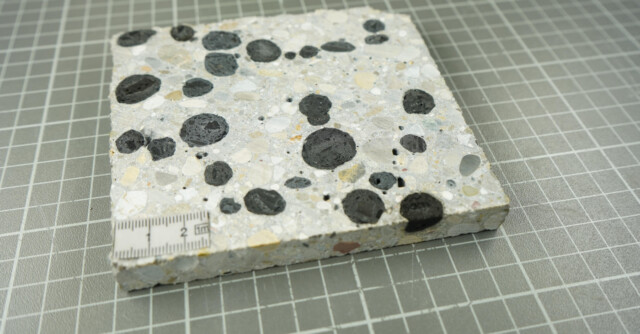
    Mauderli developed the ultra-high-strength fibre composite building material (UHFB) in collaboration with the Swiss Federal Institute of Technology Lausanne(EPFL) and Holcim Schweiz AG. Building elements can be prefabricated with zeroUltraone. Compared to in-situ concrete, the prefabricated components made of zeroUltraone are characterised by thinner wall thicknesses. At the end of its useful life, zeroUltraone can be recycled in the normal concrete cycle.

    Mauderli is being honoured for its determination and entrepreneurial foresight, according to the press release. Within just four weeks, the company had set up a new concrete mixing plant and production facility for the UHPFRC components in Schachen and built up a team. “For me, Mauderli AG is a modern Daniel Gyro Gearloose factory,” Hans Wicki, jury president and member of the Council of States for Nidwalden (FDP), is quoted as saying. “Christoph Mauderli led this innovation to success with determination and consistency.”

    Bächli AG from Kriens LU was honoured with the recognition prize in this year’s competition. It is being honoured for its highly efficient and low-noise transformers from the Smart-E-Power series. The award ceremony will take place on 27 November.

  • Solar panels for a sustainable energy supply

    Solar panels for a sustainable energy supply

    Lustenberger & Dürst SA has implemented two measures for a sustainable energy supply. According to a press release, 903 solar panels with an output of over 370 kilowatts peak were put into operation on various parts of the Langrüti 4 building at the headquarters in Hünenberg. Further solar modules were installed on the roof and facades at the Langrüti 6 site, with an output of just under 187 kilowatts peak.

    The total capacity of both installations will be 557 kilowatts peak, creating the basis for “maximum energy yield” and helping to cover the company’s own electricity requirements. Lustenberger & Dürst currently generates 60 percent of its annual consumption with self-produced solar power.

    The traditional cheese manufacturer sees potential in terms of sustainability. According to CEO Simon Grander, it will be “a central key to a sustainable world”. “For this reason, we have specifically renewed our infrastructure so that we no longer need fossil fuels in our company buildings,” he is quoted as saying.

  • Cantonal hospital: New brand identity under the banner of healing architecture

    Cantonal hospital: New brand identity under the banner of healing architecture

    Baden Cantonal Hospital(KSB) will move into its new building at the beginning of 2025. According to a press release, the hospital’s horizontal design concept is based on the principle of so-called healing architecture. In line with this concept, the hospital management has commissioned advertising and branding expert Frank Bodin to design a new brand identity for the KSB.

    In the new logo, the blue KSB is supplemented by an orange underline between S and B: KS_B. Together with the additional subline “Ort der Gesundheit” (place of health), also in orange, the new logo is intended to symbolize positive thinking aimed at healing. The underline can be used in both digital and analog form, for example it can be animated and transformed into a heart rate. An oversized logo at the hospital entrance is suitable as a place for selfies, according to the press release.

    “The new logo impressed us with its simplicity. It also stands out very well in the digital sphere,” Adrian Schmitter, CEO of KSB, is quoted as saying in the press release. “With the color orange to complement the blue, our brand identity now has a splash of color that makes us unmistakable.”

  • Sustainable processes through pinch analysis and heat storage

    Sustainable processes through pinch analysis and heat storage

    Lucerne University of Applied Sciences andArts (HSLU) has developed the PinCH software, which can be used to make industrial processes more energy-efficient and economical. According to a press release from the university, the latest version of PinCH 4.0 can also integrate open-loop heat storage systems. A pinch analysis can be used to systematically show how thermal energy flows need to be coupled in order to achieve high energy efficiency with minimal overall costs (consisting of investment and operating costs).

    PinCH 4.0 has already been used to analyze the production processes of the food manufacturer HACO in Gümligen BE. The analysis showed that the use of hot water steam required for process preparation can be reduced by half with an open-loop heat storage system.

    “If process streams, such as the brewing water in a brewery or the process water at HACO AG, are used directly as a storage medium, heat exchangers and intermediate circuits can be saved”, explains Donald Olsen, Project Manager PinCH Software Development at HSLU, in the press release. “Such an open-loop storage system increases the energy-saving potential, simplifies the system and thus reduces energy and investment costs.”

  • Konnex Baden invites you to visit

    Konnex Baden invites you to visit

    Following extensive renovations, the modernized Konnex commercial building will be unveiled to the business world and the public at a pre-opening on Thursday, 26 September 2024. According to a press release, the complex includes offices, furnished apartments, conference rooms and a wide range of restaurants. The event is intended to herald a new era for modern working. Dr. Stephan Sigrist, founder of the think tank W.I.R.E., has been announced as a speaker. He will talk about the future of the world of work in an era characterized by artificial intelligence.

    In addition to office and work space, 42,000 square meters of space will be available for services and offerings such as restaurants, stores for everyday needs, fitness, childcare and coworking. The energy concept meets high environmental standards. Photovoltaic systems and the CO2-neutral energy supply from Regionalwerk Baden support the climate targets.

    The first tenants have moved into the premises: online retailer Apfelkiste, IT service provider Aveniq, mechanical engineering group Liebherr, energy management expert Schneider Electric, coworking provider Office Lab and co-living serviced apartment provider Citi Pop. An industry mix that underlines “the attractiveness of the flexible space and modern facilities”. Other companies will further enrich the Konnex environment, it is said.

  • Expansion of the photovoltaic system in Schönenwerd

    Expansion of the photovoltaic system in Schönenwerd

    Fashion Fish is investing in the expansion of solar energy, taking the next step towards greater sustainability. As the Schönenwerd-based outlet for designer items informs in a press release, the expansion of the photovoltaic (PV) system on the roofs of the six-storey former Bally production building includes a further 335 solar modules with an output of 140 kilowatt peak. In total, the area equipped with PV modules has increased by 664 square meters.

    According to the press release, the company has been taking steps towards more sustainable energy use for years. According to Managing Director Robert Meier, heating energy is generated via district heating. Electricity requirements have been covered by PV systems since 2020.

    The installation of the first system on the shed roofs has already achieved high peak outputs. An expansion to the east and west at the beginning of 2024 led to a balance in output throughout the day. By the end of August, energy production had amounted to more than 47 megawatt hours of electricity.

    The aim of the investment is to ensure that the majority of stores cover their energy requirements with solar power. This is also to the benefit of customers, for example through cooling ventilation in the summer months. “Thanks to the measures we have taken, we have been able to drastically reduce Fashion Fish’s CO2 emissions in recent years and offset the energy consumption of our air conditioning and ventilation systems with our own solar power,” Robert Meier is quoted as saying. The decision to expand the plant coincides with the company’s 20th anniversary year.

  • Future-oriented urban development in Bern

    Future-oriented urban development in Bern

    Wankdorfcity 3 is located on a 34,000 square metre site in the north of Bern. An urban living space is being created here that goes beyond mere residential use. With this project, property developer IMMOFONDS is creating a dense neighbourhood that offers both living space and contact points for commercial and leisure activities. The direct connection to public transport creates a lively ecosystem characterised by interaction and exchange.

    Efficient planning and rapid approval
    The complexity of the planning for this project required innovative approaches and close collaboration between the responsible architects, urban planners and authorities. Gabriela Theus, Managing Director of Immofonds Asset Management AG, explains: “The efficient processing by the City of Bern and the collaborative partnership between all parties involved led to approval in accordance with building law without any objections – a record-breaking success throughout Switzerland.”

    Social and ecological sustainability
    Social sustainability is a key component. The creation of meeting places, communal spaces and outdoor areas will encourage interaction between residents. The planned urban garden and the varied open spaces characterise a place of togetherness.

    Diversity in living space
    In order to accommodate different lifestyles, the project offers a variety of living arrangements. From small flats and tiny houses to family-friendly townhouses and multifunctional communal areas – there is something for every target group. This diversity ensures a lively neighbourhood that meets the needs of its users.

    Innovative strength in urban development
    Wankdorfcity 3 is based on the innovative concept of the sponge city, which promotes sustainable water management in urban areas. Landscape architect Maurus Schifferli explains that rainwater is stored in special systems so that it can be released again in a targeted manner. This principle helps to regulate the local climate and shows how modern urban planning can combine resource conservation with aesthetics.

    Outlook for the next steps
    The final building permit marks the start of the realisation phase. The flats and the associated services and commercial space will be ready for occupation in stages from 2027. In the coming years, Wankdorfcity 3 will not only contribute to the quality of life in Bern, but will also serve as an innovative example of modern urban development throughout Switzerland. This pioneering project signals a new era of urban living that combines intergenerational living, inclusivity and sustainability.

  • Swiss cleantech start-ups conquer the South African market

    Swiss cleantech start-ups conquer the South African market

    As part of the Academia-Industry Training Cleantech program (AIT), four Swiss cleantech start-ups were able to present their innovative solutions in South Africa. Subasol, Neology Hydrogen, Gaia Turbine and Soft Power presented their pioneering technologies and were given the opportunity to make valuable contacts and secure access to an emerging market.

    Subasol impresses with photovoltaic storage solutions
    Subasol, which develops innovative PV storage systems for the African market, won the pitch competition and prevailed against strong competition. The locally installed storage systems are intended to secure the energy supply in rural and off-grid areas of Africa and thus make a significant contribution to the continent’s sustainable development.

    Low-cost hydrogen for the future
    Neology Hydrogen scored highly with a technology that converts ammonia into hydrogen, providing low-cost and easily accessible hydrogen solutions for the global market. This innovation will accelerate the transition to a hydrogen-based economy.

    Practical solutions for clean energy
    Gaia Turbine and Soft Power completed the field of participants with compact water turbines and sustainable cooking solutions for developing countries. Both start-ups offer practical solutions to promote the use of renewable energy worldwide and reduce dependence on fossil fuels.

    Forward-looking exchange
    The next step is an exchange program in which five South African entrepreneurs will visit Switzerland to further develop their business models and explore opportunities for cooperation. This program is an important step towards promoting international cleantech partnerships and opening up new markets.

    Cleantech made in Switzerland conquers South Africa
    The success of the Swiss start-ups shows the potential of innovative cleantech solutions on the African market. Participation in the SA Innovation Summit has laid the foundation for future collaborations and offers promising prospects for international expansion.

  • New era and exciting finalists for the Real Estate Award 2024

    New era and exciting finalists for the Real Estate Award 2024

    This year’s event will be characterized by numerous innovations. In addition to the established gala dinner and the awards ceremony for the winners in the various categories, guests can look forward to exciting speeches and entertainment. Guest speaker Patrizia Laeri, an expert in finance and diversity, will provide insights into current trends. In addition, Council of States member Thierry Burkart will talk about the challenges facing the real estate industry in a discussion with moderator Annina Campell.

    The Real Estate Award 2024 not only offers a stage for innovative projects, but also enables participants to expand their network and exchange ideas with decision-makers in the industry. The networking aperitif provides the perfect setting for this before the gala dinner ceremony begins. The Real Estate Personality of the Year, who plays a special role in the industry, will also be awarded.

    In the Sustainability, Digital, Project Development & Innovation and Marketing categories, well-known companies and projects that impress with their innovative strength and contribution to the industry are in the final. Mara Schlumpf, Managing Director of Real Estate Award AG, explains the new direction of the award.

    Ms Schlumpf, what makes the Real Estate Award 2024 so special?
    Mara
    Schlumpf: “The award has been fundamentally revised. Not only have we revamped the design, we have also introduced new categories to reflect the current topics in the industry. There is a particular focus on the sustainability category, as it reflects the industry’s shift towards more environmentally friendly and socially sustainable projects.”

    What can guests expect from the event?
    Mara Schlumpf: “We are offering our guests a comprehensive program that combines both professional exchange and entertaining elements. In addition to honoring the finalists, we have created a varied experience with our speakers and musical accompaniment. Our aim is to provide an unforgettable evening that reflects the importance and transformation of the real estate industry.”

    The event sets new standards in the history of the Real Estate Awards and reflects the developments and trends in the industry. The Real Estate Award 2024 is not only a highlight for the participants, but an event that sets the course for the future of the real estate industry.

    Further information and tickets for the event can be found at www.realestateaward.ch.

  • Innovation in CO2 removal

    Innovation in CO2 removal

    The new offer makes CO2 removal tangible for companies and individuals. CO2 is removed from the atmosphere using innovative technologies and stored permanently in Switzerland. These so-called negative emissions play a decisive role in achieving Switzerland’s ambitious climate targets, as set out in the Climate and Innovation Act. This solution offers effective compensation, particularly for companies on the path to net zero whose emissions cannot be completely avoided.

    Sustainable storage of CO2 through biochar
    The company relies on an environmentally friendly process for CO2 removal that uses waste wood in the pyrolysis plant of its subsidiary Bioenergie Frauenfeld. The conversion of the wood produces biochar, which serves as a natural reservoir for CO2. A single tonne of biochar stores around three tons of CO2, which leads to a significant reduction in atmospheric CO2 concentrations. Companies such as Zürcher Kantonalbank are already using this technology to permanently bind part of their CO2 emissions.

    Partners for innovation and scalability
    In addition to biochar, Energie 360° is relying on promising partnerships and start-ups to drive forward the scalability of CO2 removal. With Ucaneo Biotech and Planeteers, they are working on pioneering technologies such as direct CO2 removal and carbon capture. These innovations are expected to deliver cost-effective and large-scale CO2 reduction by 2026, which is essential for achieving climate targets.

    Negative emissions technologies are an essential part of climate policy
    Negative emissions technologies are recognized by scientific and political actors as the key to limiting global warming. The permanent removal of CO2 from the atmosphere is essential in order to limit the global temperature rise to a controllable level. In Switzerland, these technologies play a central role in the Energy Perspectives 2050 and in the Climate and Innovation Act. They are seen as essential instruments for achieving a climate-neutral future by 2050.

  • Building authorities conference Appenzell Ausserrhoden

    Building authorities conference Appenzell Ausserrhoden

    This year’s conference for building authorities, organized by the Cantonal Office for Spatial Planning and Forests, focused on settlement ecology. Cantonal Councillor Dölf Biasotto opened the conference and made the connection to the vision of the 2024-2027 government program, which envisages a significant promotion of biodiversity in residential areas. The municipal building authorities play a central role in achieving these goals.

    Inspiring presentations and practical examples
    Six expert speakers highlighted various aspects of settlement ecology. The presentations showed how the sustainable design of settlement areas can succeed and provided valuable suggestions for municipalities and companies. The practical examples from Teufen and Gais in particular illustrated how municipalities can successfully integrate biodiversity into their settlements. The combination of green roofs with photovoltaic systems was also discussed and examined from a scientific perspective by Stefan Brenneisen.

    Excursion to the wild bee paradise and lively exchange
    At the end of the conference, the participants were able to visit the wild bee paradise of JUST Schweiz AG, which serves as a showcase example for the promotion of ecological company environments. At the subsequent drinks reception, the opportunity was taken to further discuss the insights gained and to strengthen networks.

    Settlement ecology as a common goal
    The 2024 Building Authorities Conference underlined the importance of diverse habitats in settlements for the promotion of biodiversity. The practical examples and specialist presentations provided important impetus for the future design of ecological habitats in municipalities. The event contributed to a valuable exchange of experiences and set clear priorities for the implementation of the government program.

  • FEDRO promotes electric mobility in Switzerland

    FEDRO promotes electric mobility in Switzerland

    As part of the electromobility roadmap, FEDRO is accelerating the expansion of fast-charging stations along the motorways. A dense network is already being established at rest areas, but additional areas are now to be made available. On February 12, 2024, a call for projects was launched to provide new locations for fast-charging hubs. Five lots with a total of eleven plots spread across the country were recently awarded to companies.

    Efficiency and progress in record time
    Seven companies applied for the tendered lots within just three months. After an intensive review of the bids submitted, the five best applications were selected:
    Lot 1: Fastned Switzerland AG
    Lot 2: Mercedes-Benz High Power Charging Europe GmbH
    Lot 3: Atlante Italia S.r.l.
    Lot 4: Electra Charging Switzerland AG
    Lot 5: GOFAST AG

    These companies now have three years to plan the hubs, submit building applications and build the infrastructure. They bear full responsibility for the planning, financing, construction, operation and maintenance of the stations.

    A common goal – Roadmap Electromobility 2025
    The Roadmap Electromobility 2025 brings together over 70 players from business, the public sector, associations and science to promote electromobility in Switzerland. Together, they are pursuing these three central goals

    – 50% plug-in vehicles in new registrations by 2025
    – Expansion of the charging infrastructure to 20,000 charging stations
    – Promotion of user-friendly and grid-friendly charging

    The platform enables these players to work together, with each contributing to the spread of electromobility through individual measures or in joint “lighthouse” projects.

    Future-oriented and sustainable
    With the ambitious expansion of fast-charging hubs along the national roads, Switzerland is positioning itself as a pioneer in electromobility. These projects are not only a step forward in the charging infrastructure, but also a significant step towards a more sustainable future.

  • Focus on solar technology for agriculture

    Focus on solar technology for agriculture

    The international energy company Eaton and the agrivoltaics specialist Insolight, also based in Lausanne, have agreed on a strategic collaboration to optimise the use of solar power in agriculture. According to a press release, Eaton’s experience in intelligent energy management will be combined with Insolight’s solar technologies. In particular, it will be investigated whether Insolight’s photovoltaic systems can be coupled with Eaton’s battery storage systems (BESS) and charging infrastructure for electric vehicles. Insolight plans to install more than 100 projects with a capacity of 300 megawatt peak by 2026. For its part, Eaton intends to support the projects with technical expertise and product training.

    Both companies will also support the farmers involved in the integration, commissioning and ongoing maintenance of new sustainable energy systems. Insolight’s agrivoltaic systems not only generate electricity that can be used on the farms, but also protect plantations against wind, hail and heavy rain.

    “This collaboration with Eaton represents an important milestone in our endeavour to bring innovative agrivoltaic solutions to the market,” said Luiggino Torrigiani, Head of Marketing and Partnerships at Insolight, in the press release. “By partnering with Insolight, we can extend our capabilities to the agrivoltaic sector, where energy efficiency can have a real impact alongside agricultural productivity,” added Anne Lillywhite, Senior Vice President and General Manager for Energy Transition, Digital and Services at Eaton.

  • Investment in low-CO2 cement promotes market launch

    Investment in low-CO2 cement promotes market launch

    Holcim is making a financial contribution to the scaling and rapid market launch of Sublime Systems‘ low-CO2 cement. The investment by the Zug-based company, one of the world’s largest producers of building materials, is driving forward the construction of Sublime’s first commercial production plant. The start-up had already received 87 million dollars from the US Department of Energy in March.

    According to a statement from Holcim, the Sublime Systems team has developed a “unique technology” for the decarbonisation of cement, which covers the entire production process from the use of clean electricity to carbon-free raw materials. “We are excited about the potential of this technology and look forward to jointly bringing it to market on a large scale,” Holcim’s Head of Sustainability Nollaig Forrest is quoted as saying.

    Holcim has secured a large proportion of the Sublime Cement produced there through a binding purchase agreement. Both partners have set up their own project team to jointly develop further plants.

    “In the cement industry, size is everything,” says Leah Ellis, CEO and co-founder of Sublime Systems. “By combining Sublime’s technology with Holcim’s advanced global operations, from manufacturing and logistics to commercial distribution, together we can increase our impact.”

    The company currently operates a pilot plant with a production capacity of up to 250 tonnes per year at its headquarters in Somerville, Massachusetts, and is developing its first commercial plant with an annual capacity of 30,000 tonnes, which is scheduled to open in Holyoke, also in Massachusetts, as early as 2026.

  • New solar plant drives energy transition in France

    New solar plant drives energy transition in France

    Axpo subsidiary Urbasolar has commissioned a rooftop solar plant with an output of 12.8 megawatts peak on the industrial roof of French real estate developer PRD in Beauvais. The system, which covers an area of 62,000 square meters, is the largest rooftop solar system in France, the Baden-based energy company writes in a press release. In addition to PRD, the investment management company HMC was also involved in the realization of the project.

    The expansion of solar energy in Switzerland and Europe is one of Axpo’s strategic thrusts. The successful project in Beauvais illustrates the expertise that Axpo has built up in France through its subsidiary Urbasolar, explained Antoine Millioud in the press release. “Our extensive experience in various solar technologies enables us to expand our activities in other markets such as Switzerland, Germany, Italy, Spain and Poland,” said the Head of Axpo’s Solar division. “We are convinced that our capabilities in the construction of large-scale solar plants will further advance the energy transition and security of supply in Europe.”

    Urbosolar has already realized around 700 large-scale solar plants with various technologies in France. Over 190 megawatts of capacity have been installed with solar roof systems alone. The Axpo subsidiary has also realized other large solar plants as ground-mounted systems, parking lot roofs, greenhouses, agrivoltaics and floating solar systems.

  • Perovskia Solar receives investment of 2.4 million dollars

    Perovskia Solar receives investment of 2.4 million dollars

    Perovskia Solar AG has received fresh capital in the amount of 2.4 million dollars. The spin-off of the Swiss Federal Laboratories for Materials Science and Technology(Empa), which was founded in 2021, announced that it is now welcoming Basel-based Kickfund, London-based venture capitalist D&FG Elements and a global coalition of business angels led by Nils Hagander and Beda Rohner as investors in addition to existing investors Empa, Venture Kick and Johannes Suter from Zurich. Hagander joins Perovskia’s Board of Directors.

    Perovskia offers digitally printed and flexibly customizable solar cells to OEMs. “Our energy harvesting technology has been developed at Empa for over six years and enables us to bring Perovskia Solar to the market with a finished product that powers next-generation devices for industrial and consumer use,” founder and CTO Tobias Meyer is quoted as saying. The cleantech start-up, founded in 2021, has already acquired “more than ten leading companies from the Internet of Things (IoT) industry” as customers.

    Perovskia’s vision is that the ultra-thin solar cells can be integrated into any device, for example in networked intelligent systems known as Smart City, Smart Grid, Smart Building and Industrial IoT. “We make it possible for solar cells to be designed around products and not products around solar cells,” reads a self-promotion by the award-winning start-up.

    This funding will allow Perovskia to “expand, innovate and grow”, according to another press release. “With a new website, modernized machines and talented new team members, we are more committed than ever to our mission: a solar cell on every device.”

  • KohlenKraft sponsors Zurich Climathon

    KohlenKraft sponsors Zurich Climathon

    KohlenKraft is one of the sponsors of the Climathon inZurich. This is according to an announcement from Runway, the sponsor of early-stage start-ups based at Technopark Winterthur. The Runway Incubator is a program of the Center for Entrepreneurship at the Institute for Innovation and Entrepreneurship at Zurich University of Applied Sciences (ZHAW).

    The Climathon is a 32-hour format organized once a year by the Impact Hub Zurich. The event serves to find and develop ideas for climate protection in Zurich. This year, it will take place on November 1 and 2 at the Zurich Kraftwerk.

    The start-up company KohlenKraft, founded in 2023, is also based at Technopark Winterthur. Last year, the park headlined a short portrait of the start-up’s move into its premises with the sentence: “Runway start-up KohlenKraft is getting ready for revolution”. KohlenKraft has set itself the task of supplying the construction industry with climate-positive materials. Its products such as plaster, wall plaster for industrial use, bricks and thermal insulation made from biochar absorb more CO2 during their service life than they emit.

    KohlenKraft also closes the cycle: The biochar is made from biomass waste, reduces the need for raw materials such as sand and thus contributes to a circular built environment. This is why KohlenKraft was also supported by the Circular Building Industry Innovation Booster. The Innosuisse program supports the transition to a circular economy in the Swiss construction industry through systematic innovation.

    CEO Charles Gerike-Roberts and CTO Moritz Keller have already received several awards. in 2022, the two KohlenKraft founders won the FrontRunner Award at the ZHAW Sustainability Challenge. They took first place in the ZHAW Startup Challenge 2023 and were class winners in the Startup Campus and Innosuisse Business Concept course.

  • Renewable energies on the rise: Zurich city plans

    Renewable energies on the rise: Zurich city plans

    The voters of the city of Zurich have clearly approved the ewz framework credit with a clear majority of 82.0% and a yes majority in all city districts. This means that the city of Zurich’s energy supplier can continue to expand renewable energies as proposed by the city council. The framework credit of CHF 300 million is intended to finance the expansion of existing hydropower plants and the relicensing of hydropower plants, alpine photovoltaic plants and wind farms, among other things. It should also enable the city to invest in companies that plan, build or operate renewable energy plants.

    The funds are also to be used explicitly for investments by the city of Zurich’s energy supplier ewz in the expansion of renewable energies abroad. France, Germany, Norway and Sweden are currently the focus countries of ewz’s involvement abroad.

    This is the fourth framework credit for the expansion of renewable energies since 2008 and is intended to enable ewz to remain competitive. The framework credit was approved by the municipal council with a majority of 97 votes to 14. Only the SVP spoke out against it.

  • Winterthur approves the renewal of the waste incineration plant

    Winterthur approves the renewal of the waste incineration plant

    The voters of Winterthur have clearly approved the renewal of the municipal waste incineration plant with 87.0% and a yes majority in all city districts. This means that incineration line 2 of the waste incineration plant can be renewed. Investments of CHF 293 million are planned for a new incinerator, an electrostatic precipitator, a new flue gas cleaning system and a new waste water treatment system.

    The new plant will be able to incinerate 190,000 tons of waste per year while maintaining the same capacity. In future, however, it will be possible to use the waste heat from flue gas cleaning for district heating. This will increase its heat output by 30 percent. In addition, the flue gas cleaning system will in future be 40 percent below the limit value for nitrogen oxide emissions and save 12.6 cubic meters of water by condensing the flue gases. In future, the new wastewater treatment system will recover up to 7.5 tons of gypsum per day. An additional hot water storage tank and a photovoltaic system are also planned.

    The project will be financed via the fees budget.

  • Energy City Association focuses on net zero

    Energy City Association focuses on net zero

    The Energiestadt association wants to support its 644 member municipalities and cities in the future, particularly on the path to climate neutrality. In 30 years of commitment, much of what was initially considered progressive has been established as the standard, writes Energiestadt in a corresponding press release. In order to continue to act as a pacesetter, certification and support for members should be consistently geared towards the net-zero target.

    The Energiestadt label recognizes cities and municipalities for their sustainable energy and climate policy. In future, the certification process will place particular emphasis on net-zero relevant strategies and measures. The press release cites the phasing out of natural gas for heating and the promotion of electromobility as examples. In future, in order to receive the highest accolade of Gold City, it must be proven that strategies and measures are being consistently pursued and are compatible with the net-zero target. At the same time, Energiestadt wants to simplify the certification process for smaller municipalities.

    “With the new instruments, Energiestadt is strengthening its role as a leading competence center for local energy and climate policy in Switzerland,” said Maren Kornmann, Co-Managing Director of Energiestadt, in the press release. “Energiestadt is the only organization to offer a comprehensive package for the planning, implementation and monitoring of net-zero measures at local level.”

  • Virtual reality for urban planning

    Virtual reality for urban planning

    Researchers at ZHdK and ZHAW have developed an innovative tool for participatory urban design. Using virtual reality (VR), residents and those responsible are given the opportunity to experience planned redesigns virtually. For example, the effects of traffic-calming measures on street noise, space conditions or bicycle and pedestrian traffic can be experienced through the senses of sight and hearing.

    In the Gestalte Zürich project, the researchers support the Zurich city administration in planning sustainable spaces in the city, explains the ZHdK in the project description. Gestalte Zürich is supported by the City of Zurich‘s Department of Urban Planning, the city’s Civil Engineering Department and the Zurich Transport Authority. Other practice partners are the organisations myclimate, umverkehR and Fussverkehr Schweiz. Prototypes of the VR tool could be tried out on 20 September at Zurich Park(ing) Day. The project, which will run until next year, is funded by the digitalisation initiative. Its aim is to strengthen cooperation between Zurich’s universities on the topic of digitalisation.

  • India’s top trade fair for environmental technologies

    India’s top trade fair for environmental technologies

    Over the last ten years, IFAT India has evolved into the country’s most important trade fair for environmental technologies and sustainable solutions. The show brings together professionals from various sectors such as water, wastewater, waste and recycling to showcase their innovative products and services. The event promotes knowledge sharing, business networking and co-operation between industry representatives, policy makers and environmental experts. Exhibitors from around the world will showcase their latest technologies and solutions to address the region’s specific environmental challenges.

    A comprehensive conference programme complements the show, with industry experts sharing insights and experiences on current environmental issues and trends. This provides a unique opportunity to network with key players, innovators and business partners worldwide. The focus will be on topics such as wastewater systems, wastewater treatment, sustainable water supply and integrated waste management and recycling. IFAT India offers practical solutions for the most pressing environmental problems of our time.

    The show reflects the commitment of India’s environmental pioneers to translate their passion into comprehensive and sustainable solutions. IFAT India is working towards creating a cleaner, greener and more sustainable country.

  • Glass blocks from the 3D printer

    Glass blocks from the 3D printer

    US engineers have developed stable glass building blocks made from recycled glass bottles using a 3D printing process. These building blocks are not only aesthetically pleasing, but also offer an environmentally friendly alternative to concrete. They can be assembled and disassembled like Lego bricks, enabling sustainable, circular construction.

    Glass as a versatile building material
    Glass is already an integral part of modern architecture, but its potential as a building material goes far beyond decorative applications. Researchers at MIT have shown that glass can be a stable material for load-bearing structures. The process uses recycled glass that is printed into complex shapes, creating building blocks that are suitable for a variety of construction projects.

    3D printing opens up new possibilities
    With the help of a 3D printer that processes molten glass layer by layer, building blocks are created that can be used flexibly. This technology not only enables stability and flexibility, but also reusability of the building blocks, which significantly reduces the carbon footprint of construction projects.

    Circular architecture
    The glass blocks are at the heart of the concept of circular construction, in which materials are reused and their lifespan maximised. Once dismantled, the building blocks can be used in new construction projects without the need to produce new materials. This creates a sustainable cycle in the construction industry.

    The 3D-printed glass building blocks offer a promising alternative to concrete. With their stable properties and reusability, they could shape the construction methods of the future and contribute to a more sustainable construction industry.

  • Electrified company fleet also for employees

    Electrified company fleet also for employees

    The world’s first industrial plant for the production of solar fuels is up and running. In collaboration with Empa, the ETH spin-off developed an innovative material for high-temperature heat storage that enables the plant to operate around the clock – even without sunlight.

    The plant uses the power of the sun to convert CO₂ and water into synthetic fuels such as paraffin, petrol and diesel. This closed CO₂ cycle is a pioneering model that could pave the way for a sustainable energy economy. Particularly impressive is the solar energy source and the fact that operation is also maintained at night thanks to innovative heat storage technology.

    Heat storage at 1200 degrees
    The key to this innovation lies in the plant’s heat storage system. A large array of mirrors concentrates sunlight onto a single point, reaching temperatures of up to 1200 degrees Celsius. This heat drives the chemical process that produces fuels from CO₂ and water. Excess heat is stored in specially developed bricks, which keep the system running even at night.

    The challenge in developing the material was to find bricks that could withstand the extreme temperatures and corrosive water vapour atmosphere. In a two-year project, Empa researchers worked closely with Synhelion to develop a ceramic material that meets the high requirements and can also be produced cost-effectively.

    From research to practice
    For the Empa researchers, it was a unique experience to see their research realised on such a large scale. The material, which was tested in a specially developed high-temperature tube furnace, withstood the extreme conditions and is now installed in the “DAWN” plant. This technological achievement not only offers a sustainable solution for fuel production, but could also play a decisive role in the construction and property industry in the future.

    Looking to the future
    While the “DAWN” plant is already in operation, Synhelion and Empa are planning further steps. From 2025, an even larger plant is to be built in Spain, which will utilise higher temperatures and greater storage capacities to further increase the efficiency of fuel production. This development underlines the potential of renewable energies and shows how innovations can lead the energy and property industry into a sustainable future.

  • Bio-inspired building material revolution for the construction industry

    Bio-inspired building material revolution for the construction industry

    The construction industry is on the brink of a ground-breaking innovation. Researchers have developed a cement material that is almost six times more resistant than conventional cement and significantly better at resisting cracks. This revolutionary development is based on the structure of human bone, which serves as a model for a completely new material architecture.

    The team led by Professor Reza Moini and doctoral student Shashank Gupta from Princeton University published the impressive results in the scientific journal Advanced Materials. By specifically designing a tubular structure in the cement, they were able to significantly reduce the propagation of cracks and at the same time increase the deformability of the material – without causing sudden failure. This discovery promises to fundamentally change the way buildings are constructed.

    Strength and toughness
    “One of the biggest challenges with building materials such as cement is their brittle behaviour. They often fail abruptly and catastrophically,” explains Gupta. The researchers therefore focused on optimising the balance between strength and toughness. While strength ensures the material’s resilience, toughness prevents the formation and propagation of cracks.

    The solution lies in the internal architecture of the material. By reproducing the human cortical bone, the outer layer of bone, the scientists were able to create a cement material that is both more resistant and more flexible. The tubular structure, similar to the osteons in human bone, intercepts cracks and delays their propagation – a milestone in the field of building material development.

    Robotics and 3D printing
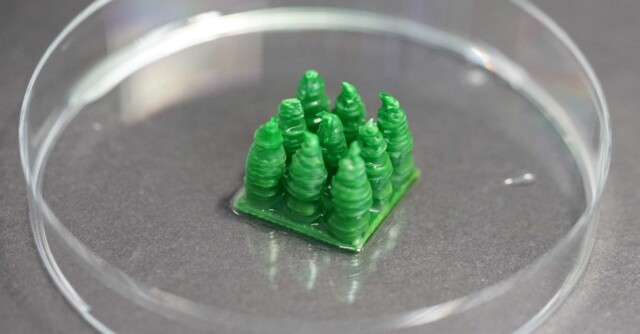
    In addition to the extraordinary mechanical properties, the researchers also rely on state-of-the-art technologies. With the help of robotics and additive manufacturing (3D printing), they have developed a method to precisely control the tubular architecture in the cement. This technology enables the material to be customised for a wide range of applications. A pioneering development for the construction industry.

    The researchers assume that these principles can also be applied to other brittle materials in order to create even more resistant construction products. “We have only just begun to explore the possibilities,” says Gupta. Future developments could produce even more efficient and resilient building materials that will revolutionise construction in the long term.

    Rethinking cement architecture
    With their groundbreaking research, Moini and his team have laid the foundation for a new generation of building materials. The application of bio-inspired design principles could lead to the development of more robust and resilient materials in the future, not only in cement construction but also in other industries.

    This discovery could fundamentally change the way we build cities and infrastructure – an exciting prospect for the future of the building materials industry.

  • Vision for sustainable technology centre takes shape

    Vision for sustainable technology centre takes shape

    FlexBase intends to realise its new technology centre in line with the plans already presented. According to a press release, the technology company has secured the ERNE Group, also based in Laufenburg, as general contractor. Construction is scheduled to begin in 2025. An updated planning application has been submitted to the relevant authorities.

    The technology centre is to be built on the former Swissgrid site. The centrepiece will be a new building opposite the existing building. In addition to many research facilities, a data centre with capacities for the use of artificial intelligence is to be built there. FlexBase also plans to build a 20,000 square metre battery storage facility with a capacity of more than 500 megawatts on the site. According to the press release, the non-flammable and non-explosive storage facility is the “world’s largest and most modern battery storage facility of its kind”. The construction of the new technology centre will create several hundred jobs for skilled workers and apprenticeships.

    According to the press release, Marcel Aumer, CEO of the FlexBase Group, does not anticipate a delay in construction despite the relaunch of the project. He justifies this view with the close collaboration with ERNE: “In this project, I have not only experienced ERNE’s expertise right from the start, but also the full attention of the top management.” The CEO of ERNE, Giuseppe Santagada, is also optimistic: “My personal commitment goes far beyond the realisation of this project; it also includes the promotion of new technological skills and increasing the attractiveness of Laufenburg as a location for the vision of a prosperous region”.

  • World first: Intelligent plant care for indoors and outdoors

    World first: Intelligent plant care for indoors and outdoors

    “This year, Boum has ensured blooming balconies and terraces for over 1000 customers,” says Boum in a post on LinkedIn. The company, which was founded in 2021 as a spin-off from the University of Bern, has developed an intelligent system consisting of a solar panel, water tank, sensors and an app that autonomously maintains green balconies and terraces. Due to the positive feedback on its product, Boum has decided to “further develop the system for indoor use”, according to the article.

    After more than a year of development, Boum has now launched the plant care system for greening living rooms and offices. The substrate for the plants was adapted to provide the optimum soil moisture for indoor plants. The accuracy of the water supply has been improved with an additional safety valve. The tank and pots are connected “simply and inconspicuously” using additional tubing and discreet cable ducts.

    The app can detect whether the system is outdoors or indoors and provide appropriate care instructions. It also lets you know when the water tank needs to be refilled. “As of today, Boum is the smart plant care system for indoors and outdoors,” writes Boum on LinkedIn. “Everywhere where people want their lives to flourish.” According to company founder Matthias Erb, the intelligent plant care system is “a world first that makes greening indoor spaces simple and elegant from today”.

  • Drone aviary at NEST: new test environment for sustainable robotics

    Drone aviary at NEST: new test environment for sustainable robotics

    Empa and EPFL are to work together in the future on the development of robotics for sustainability purposes, according to a press release. Empa will contribute its expertise in the areas of materials and development as well as its drone aviary, which will be opened in the modular research building NEST in Dübendorf in November. EPFL is contributing its expertise in environmental monitoring. In future, researchers and students from both institutions will also be able to work at the other institution, depending on the topic.

    Empa researcher Mirko Kovacs has also been teaching as Professor of Sustainability Robotics since the beginning of September. Kovacs has headed the Laboratory of Sustainability Robotics, which Empa runs jointly with Imperial College London, since 2018. His two teams in Dübendorf and London are now being joined by a third in Lausanne.

    The drone aviary at NEST allows test runs with robots and drones in the open air, but shielded from the outside world by a cage. One wall of the aviary will allow surface materials to be changed and different scenarios to be tested.