Category: Sustainability

  • Advanced wood processing technology presented in Switzerland

    Advanced wood processing technology presented in Switzerland

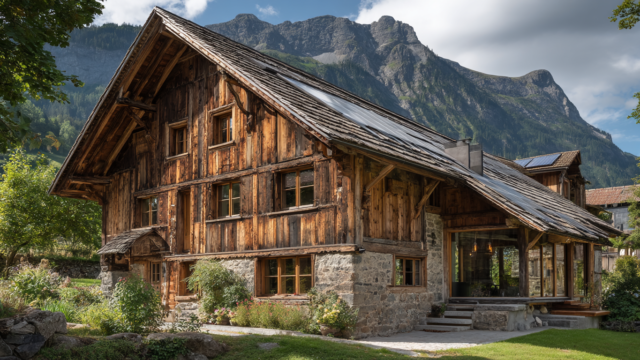
    Federal Councillor Guy Parmelin visited Strüby ‘s expanded production center in Root on 15 August 2024. He and his delegation from the Federal Department of Economic Affairs, Education and Research and the Federal Office for Housing experienced a world premiere, according to a press release from the Seewen-based timber construction company.

    In the presence of visitors, the first solid wood elements were produced on the fully automated board stacking machine, which according to Strüby is the only one of its kind in the world. It was manufactured for Strüby by Weinig, a Baden-Württemberg company specializing in woodworking machines. Strüby intends to significantly increase the production of natural wood ceilings.

    The delegation was impressed by the four-hectare plant and Strüby’s product range, the press release continues. This ranges from project development, architecture, engineering, production and realization to customer service and building maintenance.

  • Oxara, KIBAG and Holcim Switzerland join forces

    Oxara, KIBAG and Holcim Switzerland join forces

    Oxara, KIBAG and Holcim Switzerland are joining forces to establish the cement substitute Oxacrete Oulesse across the Swiss construction market, according to a press release. According to the press release, cement production accounts for around 5 percent of annual greenhouse gas emissions in Switzerland. The collaboration between Oxara, based in Dietikon, KIBAG in Zurich and Holcim in Zug addresses the urgent need for scalable, circular and decarbonizing technologies. After validating the Oulesse technology and evaluating the market potential of this solution, Oxara, KIBAG and Holcim are now planning to officially enter the market together.

    With Oxacrete Oulesse, the construction industry can be made more sustainable by promoting the reuse of demolition materials and closing loops. This can significantly reduce the environmental impact of building materials and serve up to 10 percent of the Swiss concrete market. The production of Oxacrete Oulesse uses recycled materials and the binder offers a low-carbon alternative to conventional cement.

    “This partnership is a further step towards achieving our sustainability goals,” says Clemens Wögerbauer, Head Commercial and Sustainability at Holcim Switzerland. Holcim has already developed a framework for decarbonizing the cement industry in 2022 with experts from science, civil society and industry. This emerged from a partnership with the British Science Based Targets Initiative(SBTi). “We have visionary and innovative partners at our side who fit perfectly with our mission: To combine a circular economy with decarbonization,” Wögerbauer continues.

  • Environmentally friendly innovation in the construction industry

    Environmentally friendly innovation in the construction industry

    Griesser is switching to even more sustainable aluminum. Previously, the internationally active developer of sun protection systems for buildings from Aadorf used aluminum that consisted of 64 percent primary raw material and 36 percent recycled aluminum, Griesser explains in a press release. Griesser now uses aluminum that consists of only 35 percent primary raw material. The remaining 65 percent is obtained from scrap or consumer scrap generated during the aluminum production process.

    “Our climate vision envisages complete decarbonization by 2050,” Griesser CEO Urs Neuhauser is quoted as saying in the press release. “In the material area of aluminum, we have the greatest leverage to significantly reduce our CO2 footprint.” The aluminum previously used by Griesser had a footprint of around 4.7 kilograms of CO2 emissions per kilogram of aluminum produced. Switching to the even more sustainable aluminum will reduce this figure by 30 percent to 3.3 kilograms of CO2 per kilogram of aluminum. The press release cites a European average of 6.7 kilograms and a global average of 16.7 kilograms as comparative values.

    Griesser is working with two European suppliers to reduce its footprint. They offer certified low-carbon aluminum. In addition to the use of recycled aluminum, the aluminum is produced in Europe using energy from renewable sources and modern technologies, explains Griesser. Compared to conventional production, the production process therefore has “up to five times” lower CO2 emissions.

  • Erster echter Null-Emissions-Ersatz für Portlandzement

    Erster echter Null-Emissions-Ersatz für Portlandzement

    Die Herstellung von Zement ist für rund sieben Prozent der globalen CO2-Emissionen verantwortlich, vor allem aufgrund der energieintensiven Hochtemperaturprozesse und der Verwendung von Kalkstein. Ein neues Verfahren könnte diesen Prozess revolutionieren. Das Startup Sublime Systems hat einen CO2-neutralen Zement entwickelt, der auf elektrochemische Prozesse setzt. Inspiriert von den Techniken der Römer, die ohne extreme Hitze stabile Bauwerke schufen, kombiniert Sublime Systems altes Wissen mit modernster Technologie.

    Bauprojekte mit nachhaltigem Zement
    Sublime Systems hat bereits einen wichtigen Meilenstein erreicht. In Bostons grösstem klimaneutralen Bürogebäude wurden drei Tonnen des neuartigen Zements verbaut. Die erste kommerzielle Produktionsanlage des Unternehmens in Holyoke, Massachusetts, soll 2026 in Betrieb genommen werden und eine Kapazität von 30.000 Tonnen pro Jahr haben. Diese Anlage dient als Modell für die Skalierung der Technologie, mit dem Ziel, zukünftig Fabriken mit einer Jahreskapazität von Millionen Tonnen weltweit zu errichten.

    Elektrochemie statt Hochtemperaturverfahren
    Die Idee für Sublime Systems entstand im Labor von Professor Chiang am MIT. Leah Ellis und Andres Blades untersuchten die chemischen Prozesse der Zementherstellung und entwickelten daraufhin ein Verfahren, das auf Elektrizität statt auf Hitze setzt. Die innovative Technologie umgeht die CO2-intensiven Schritte der herkömmlichen Zementproduktion und bietet eine echte Null-Emissions-Lösung.

    Zukunft der Zementproduktion
    Sublime Systems sieht sich als Vorreiter einer klimafreundlichen Zementproduktion. Mit der neuen Methode zeigt das Unternehmen, dass nachhaltige Alternativen möglich sind, ohne die Leistungsfähigkeit des Materials zu beeinträchtigen. Durch die Partnerschaften mit Immobilienunternehmen wie WS Development wird der Zement bereits in realen Bauprojekten eingesetzt, was das Potenzial der Technologie unter Beweis stellt.

  • Modular timber system revitalises vacant buildings

    Modular timber system revitalises vacant buildings

    There are many vacant buildings and brownfield sites in Switzerland that offer great potential for temporary use. Such temporary uses help to make unused areas attractive again and at the same time conserve building land and resources. However, these vacant buildings are often not immediately usable as they only consist of steel or concrete shells and offer neither climatic nor acoustic conditions for utilisation.

    To overcome this challenge, researchers at Bern University of Applied Sciences and partners have developed a modular construction system made of wood. The aim is to quickly and easily utilise these brownfield sites for various uses such as studios, shops, co-working spaces or flats.

    Modular system for flexible use
    The modular system is based on prefabricated modules that can be assembled into rooms as required. A digital generator visualises the composition of the modules in 3D. All components are manufactured in a digital production chain and then assembled into various modular solutions.

    The first result of this project is a prototype of a room module with a surface area of 3.6 by 3.6 metres. It consists of a load-bearing structure and prefabricated elements for the floor, walls and roof. This prototype is already in use in the former “Dispo” factory building in Nidau, where a physiotherapist has set up his practice.

    Challenges and solutions
    The biggest challenge in developing the modular system was to create a module that is quick and easy to assemble. Two people with no previous technical knowledge should be able to assemble the module within a day and dismantle it just as quickly. The connection of the wall elements in particular presented the team with technical challenges, which they were able to solve by using short screw threads. This enabled them to develop a stable yet easy-to-remove fastening.

    Future prospects for the modular system
    The project is now entering the next phase. Based on the experience gained with the prototype, the modules will be further optimised. Tests and measurements are planned to make the system ready for series production. In collaboration with partners from industry, the modular construction kit should soon be available on a larger scale and offer scope for new uses throughout Switzerland.

  • Zug Estates places third green bond

    Zug Estates places third green bond

    Zug Estates Holding AG has taken another significant step in its sustainable finance strategy. Following the successful launch of green bonds in 2019 and the complete conversion of the bond portfolio to green bonds in 2022, the company has now placed another green bond for CHF 100 million. The issue, which will be paid out on 30 September 2024, has a coupon of 1.65% and a term of seven years. This increases the proportion of unsecured bonds in relation to all interest-bearing financing to around 45%.

    More flexibility for sustainable investments
    In the run-up to the issue, Zug Estates expanded its existing Green Bond Framework into a Green Finance Framework. This innovation enables the company to access other green financial instruments in addition to green bonds. Zug Estates is thus expanding its flexibility in financing sustainable projects and sending a strong signal in favour of the future of green investment.

    Under the new, strict selection criteria, buildings and sites are classified as green if they either emit less than 1 kg of CO2 equivalents per square metre of energy reference area or have prestigious sustainability certificates such as BREEAM, DGNB/SGNI, SNBS or Minergie. Despite these demanding requirements, 95% of Zug Estates’ entire portfolio can be categorised as green properties – proof of the company’s consistent strategy in the area of ecological sustainability.

    The Suurstoffi showcase for sustainable real estate
    A large proportion of Zug Estates’ green properties are located on the Suurstoffi site. This ultra-modern, almost CO2-free development site has also been allocated to the existing and newly launched green bond. As at 30 June 2024, the market value of the Suurstoffi properties earmarked for the green bonds is CHF 418.4 million. This site is an outstanding example of the implementation of Zug Estates’ sustainable development strategies and sets new standards in the field of sustainable construction and operation of real estate.

    Confirmation from international rating agencies
    Zug Estates has received high recognition for its green finance framework from ISS Corporate Solutions, one of the world’s leading ESG research and rating agencies. This Second Party Opinion (SPO) strengthens investor confidence in the company’s sustainability strategy. In addition, Zug Estates was awarded a “C” rating and “Prime” status by ISS (International Shareholder Services) on 23 August 2024. This underlines the high value Zug Estates places on environmental, social and governance-based sustainability.

    Successful placement of the green bond
    The placement of Zug Estates’ new green bond met with great interest from institutional investors. They particularly appreciate the fact that the funds are invested directly in properties that meet the highest sustainability requirements and are already operated almost entirely CO2-free. UBS AG and Basler Kantonalbank acted as joint lead managers for the issue. Admission to trading on the SIX Swiss Exchange has been applied for, which further increases the attractiveness of the green bond.

    Sustainability as a strategy for the future
    With the placement of its third green bond and the expansion of its green finance framework, Zug Estates is once again demonstrating its leading role in the field of sustainable property financing. The company shows how a consistent ecological focus can not only increase the value of the portfolio, but also make an important contribution to reducing CO2 emissions and promoting sustainable development. Zug Estates is thus setting a new standard for the entire property sector.

  • Landsgemeinde decides on Braunwald’s development

    Landsgemeinde decides on Braunwald’s development

    The future development of Braunwald will be determined by the Landsgemeinde 2025. Following intensive political and public discussions, a revision of the law on public transport will allow citizens to decide on the development option. The cantonal government favours the modernisation of the funicular railway as the most economical solution with low procedural risk and shorter construction time.

    The favoured solution
    After a long evaluation phase, the cantonal government opted for a new funicular railway, which is considered the most cost-effective and practicable option. It involves investment costs of CHF 24 million and operating costs of CHF 3 million per year. Compared to a gondola lift, which would be almost twice as expensive to build and would take up to ten years to complete, the funicular railway offers clear advantages. An automated funicular railway would also enable use independent of the timetable.

    Legal amendments to involve the Landsgemeinde
    The cantonal government has decided to include the development of Braunwald in a new article of the Public Transport Act, which will enable a discussion and vote at the Landsgemeinde 2025. This will give the population the final say on this important infrastructural decision. Should the Landsgemeinde vote in favour of an alternative gondola lift, the cantonal government would initiate the corresponding planning adjustments.

    Investments and future prospects
    The planned investments of CHF 24 million for the construction of the funicular railway and CHF 3 million for its operation will create sustainable and future-oriented access for Braunwald. The cantonal government expects that the decision of the Landsgemeinde will be an important step towards economic and environmentally friendly mobility, which will strengthen the region in the long term and promote tourism.

  • Green hydrogen: Study identifies Canada as a top location

    Green hydrogen: Study identifies Canada as a top location

    Researchers at the Paul Scherrer Institute(PSI) have focussed on the question of where hydrogen can be produced efficiently and cost-effectively with the aim of stopping climate change and emitting no more greenhouse gases in the future. According to a press release, the researchers have compiled geographical and economic data and forecasts to describe the development of a hydrogen economy. To do so, they analysed four scenarios with a hydrogen demand of between 111 and 614 megatonnes per year. The study can currently be read in the scientific journal “Nature Communications“.

    There are various technologies for producing hydrogen. In polymer electrolyte membrane electrolysis (PEM), hydrogen is extracted from water in an electrolyser. The great advantage of this process is that the energy for the conversion can be obtained from green electricity. The question to be resolved is where the high demand for green electricity can best be met.

    “We primarily applied economic criteria,” says Tom Terlouw, PhD student at PSI and lead author of the study, quoted in the press release. “In other words, where is production most favourable?” Two focal points crystallised: Where is there enough wind or sun to cover the enormous demand for green electricity? And where is there enough free space to set up the plants required for production? Canada proved to be ideal here. “There are many open areas there that are very windy and therefore ideal for setting up wind turbines,” adds Terlouw. The central USA, parts of Australia, the Sahara, northern China and north-west Europe are also ideal locations. Central European countries such as Switzerland, on the other hand, are less suitable as there is neither open space nor sufficient sunlight. The researchers also point out that the production of green hydrogen still generates residual greenhouse gas emissions from the production and transport of the required materials. In order to compensate for these residual emissions, corresponding quantities of carbon dioxide would have to be filtered out of the atmosphere, according to the study.

  • Green light for alpine solar plant

    Green light for alpine solar plant

    The Graubünden-based energy supplier Repower, the municipality of Klosters and Klosters-Madrisa Bergbahnen AG want to jointly construct an alpine solar power plant at the mountain railway. Voters in the municipality of Klosters approved the project on 22 October 2023.

    According to a press release, the Graubünden government has now also approved the construction of the system by Madrisa Solar AG. The site is already well developed thanks to the existing tourist infrastructure and is connected to the power grid.

    The plant in the Züg area is to comprise 25,000 solar modules at an altitude of around 2,000 metres and an area of 156,821 square metres, with a total output of 10.8 megawatt peak. Electricity production is expected to exceed 15,000 megawatt hours.

    The mountain railways already operate five solar installations with an annual output of 294 megawatt hours. These cover up to 20 per cent of their own electricity requirements.

  • Purchasing organisation generates its own electricity in St.Gallen

    Purchasing organisation generates its own electricity in St.Gallen

    The purchasing organisation of the Swiss automotive and motor vehicle industry(ESA) has completed its own power supply network with a third system, according to a press release. On Thursday, 15 August, a photovoltaic system was put into operation at the ESA site in St.Gallen. ESA launched the first two systems at its headquarters in Burgdorf four months ago and in Giubiasco a month ago.

    With around 1,800 modules and around 3,500 square metres, the photovoltaic system in St.Gallen is currently ESA’s second-largest system. The amount of electricity generated in future will roughly cover the annual consumption of 150 households. The plant in Burgdorf covers 200 households, the one in Giubiasco around 25 households.

    The ESA purchasing organisation was founded in 1930. As a co-operative, it is owned by around 7000 co-owners from the automotive and motor vehicle industry. Around 670 employees, including around 60 apprentices, work at eleven locations throughout Switzerland.

  • Disused borehole in Trüllikon: potential for CO2 storage is being examined

    Disused borehole in Trüllikon: potential for CO2 storage is being examined

    The disused Trüllikon-1 deep borehole is being transferred from Nagra to swisstopo, according to a statement from the Swiss Federal Office of Energy(SFOE). The Federal Office of Topography intends to investigate the potential and challenges of injecting CO2 underground.

    The borehole was drilled by Nagra as part of the search for a suitable repository for radioactive waste. According to a study carried out by swisstopo in 2023 together with the Swiss Federal Institute of Technology in Zurich and the University of Bern, it is in very good condition and suitable for safely carrying out a CO2 injection test.

    The feed-in test could last from 2025 to 2030 at the latest as part of a pilot project. According to the SFOE, however, it is still unclear whether the test will be carried out. However, swisstopo is already in contact with the municipal council of Trüllikon and the landowner, according to the press release. Furthermore, the potential pilot project does not represent a preliminary decision as to whether CO2 should be stored underground in Switzerland at all.

  • Secure your ticket to the 17th Swiss Finance and Real Estate Congress in Zurich now

    Secure your ticket to the 17th Swiss Finance and Real Estate Congress in Zurich now

    To mark its 30th anniversary on 20 November 2024, IAZI AG is presenting a varied and inspiring congress programme and is once again proving to be a central platform for expertise on the relevant topics in the finance and real estate industry. Guests will have the unique opportunity for exclusive networking with leading experts and decision-makers from closely interlinked sectors and the chance to gain a valuable knowledge advantage.

    Global challenges such as climate change and economic inequality require innovative approaches and collaborative action in an increasingly interconnected world. Linking global strategies and local initiatives makes sustainable and effective solutions possible – this will be the focus of the 17th Swiss Finance and Real Estate Congress.

    Under the motto “Global Perspectives, Local Solutions”, high-calibre speakers will highlight trends and forecasts on topics such as the global security situation, ESG strategies and urban architecture.

    Keynote speakers include Christof Franzen, journalist and SRF special correspondent, who will take a look at the global security situation with a focus on Russia and Switzerland, and Jens Korte, renowned business journalist and stock market expert, who will analyse the impact of the US elections.
    Dr Anna Braune, Head of Research and Development at the German Sustainable Building Council, DGNB e.V., will address the topic of sustainability in the construction industry and present future-proof concepts for new buildings.
    Renowned futurologist Oona Horx-Strathern will present visions for a new urban architecture and extreme sportswoman and entrepreneur Anja Blacha will provide inspiration for an ascent that combines extreme sports and entrepreneurship.

    This dialogue on the future will be rounded off with high-quality information and precise data from the Swiss real estate market to support the daily business of real estate professionals. Prof. Dr Donato Scognamiglio, Co-Founder and Chairman of the Board of Directors of IAZI AG, will explain the latest figures, trends and forecasts with regard to Swiss real estate.

    You can find all the details of the programme here: immokongress.ch

  • Thurgau agrivoltaics and energy storage projects receive funding

    Thurgau agrivoltaics and energy storage projects receive funding

    Four projects will receive support from the EKT Energy Foundation. According to a press release, 20 applications were submitted to the foundation board for consideration in the second round of awards. All of the projects are working towards a secure, sustainable energy supply and the realisation of climate targets. They were convincing due to their high practical orientation and their connection to the canton of Thurgau. They are also “good examples of how both the Thurgau economy and Thurgau agriculture can benefit from the EKT”, according to Foundation Board President Fabian Etter.

    One of the research projects is in the field of agrivoltaics. Ways of dual utilisation of agricultural land are being investigated, both for the production of crops and solar power. A test plant with semi-transparent photovoltaic modules from the Arenenberg Agricultural Competence Centre is intended to provide insights into the suitability of varieties, weather protection, irrigation and light management.

    Two other projects relating to energy storage are also being funded, as these are central to the restructuring of the energy supply. One is being carried out at the animal carcass collection centre in the city of Frauenfeld, which is involved in the pilot project. The prototype of a sorption heat pump is being investigated. This will allow the waste heat generated during cooling to be stored thermochemically together with the electrical energy from the photovoltaic system during the summer months. The second energy storage project is a preliminary study investigating the opportunities and framework conditions for using modular sand batteries as heat storage systems.

    The EKT Energy Foundation sees further innovative approaches for the energy transition in the Thurgau Energy Utilisation from Underground 2023 project. The funding will be awarded in combination with a loan and is intended to support the basic research and planning work required to apply for funding from the canton and the federal government. The aim of the research is to gain insights into the utilisation of geothermal energy sources.

  • Containment of HFC-23 emissions

    Containment of HFC-23 emissions

    Hydrofluorocarbons (HFCs) are among the most potent greenhouse gases, and HFC-23 is the most potent of them all. One kilogram of HFC-23 causes the same warming in the atmosphere as 12,000 kilograms of CO₂ and remains in the atmosphere for around 200 years. As part of the Kigali Amendment to the Montreal Protocol, over 150 countries have committed to drastically reducing emissions of HFC-23. The main sources of this gas are the industrial production of coolants and polytetrafluoroethene (PTFE), better known as Teflon.

    Since 2020, Teflon manufacturers have been required to destroy HFC-23 before it can be released into the atmosphere. The reported emissions show progress. according to official figures, only 2,000 tons of HFC-23 were released worldwide in 2020. However, actual measurements indicate around 16,000 tons, which shows a significant discrepancy.

    New findings from tracer gas measurements
    In order to explain this difference, researchers from Empa, the University of Bristol and TNO investigated HFC-23 emissions from a Teflon factory in the Netherlands. Their results, which were published in the scientific journal Nature, are based on an innovative method. The researchers released a tracer gas that does not occur in the atmosphere and is rapidly degraded. They recorded the concentrations of HFC-23 at a distance of 25 kilometers and compared them with the tracer values. In this way, they were able to precisely calculate the actual emissions from the factory.

    The results show that the factory’s emissions are higher than the reported figures, but still low. “The containment measures are working well, but there is potential for optimization,” explains Martin Vollmer from Empa. Co-author Kieran Stanley from the University of Bristol summarizes: “The results are encouraging and show that emissions of HFC-23 can be significantly reduced with the right measures.”

    Global challenges in the reduction of HFC-23
    The study makes it clear that the containment of HFC-23 is technically possible, but is not consistently implemented everywhere. “The high emissions measured in the atmosphere indicate that the measures reported do not always correspond to reality,” warns Vollmer. The researchers are calling for independent reviews of emissions from the production of fluoropolymers and refrigerants in order to close the gaps in our understanding of the sources of emissions and ensure that international climate agreements are adhered to.

    Next steps in research
    In October 2024, a further study will be carried out in Seoul to measure emissions of halogenated substances in the South Korean capital. This method could also be useful for monitoring other greenhouse gases. “Through continuous monitoring and precise measurements, we can better identify the sources of emissions and make emission reduction measures more effective,” says Arnoud Frumau from TNO.

  • Basel-Stadt wants to expand district heating and greening

    Basel-Stadt wants to expand district heating and greening

    The government council of the canton of Basel-Stadt has developed a comprehensive concept for the expansion of the district heating network and submitted it as a proposal. According to a press release, roads, pipelines and streetcar tracks are to be extensively renovated as part of this plan. At the same time, many inner-city public areas are to be unsealed.

    This extensive redesign also offers a unique opportunity to green large areas, according to the press release. In order to implement the plans, the canton is examining the possibility of planting new trees for each upcoming redevelopment in accordance with the urban climate concept. In addition to the planting to be carried out now, the project provides for district heating and other pipes to be laid during the renovations in such a way that greenery can still be planted later. Planning and implementation must also ensure that the flow of traffic in the city is optimized and that any access by security forces such as the fire department or emergency medical services is guaranteed.

    For the implementation of the overall project, the Government Council has requested a budget of CHF 4.1 million per year over 13 years, i.e. a total of CHF 51 million, from the Grand Council.

  • Innovations for the Swiss energy system

    Innovations for the Swiss energy system

    The RECIPE consortium has been awarded the contract for the 2023 round of the SWiss Energy Research for the Energy Transition(SWEET) funding program, the Swiss Federal Office of Energy(SFOE) announced in a press release. The call for proposals was entitled Critical Infrastructures, Climate Change and Resilience of the Swiss Energy System and was launched by the SFOE in collaboration with the National Center for Climate Services(NCCS). RECIPE is made up of the Swiss Federal Institutes of Technologyin Zurich(ETH) and Lausanne(EPFL), the University of Applied Sciences and Arts Northwestern Switzerland(FHNW) and the Lucerne University of Applied Sciencesand Arts (HSLU) as well as the business partners Swisscom, Infras and Zoï. The ETH is in charge of the project.

    As part of SWEET, RECIPE will analyze the dangers that threaten the Swiss energy infrastructure as a result of the restructuring of the energy system and climate change. At the same time, the associated risks for the economy, society, resources and the ecosystem will be examined. Based on this, RECIPE intends to develop measures to increase resilience and draw up specific recommendations for stakeholders.

    SWEET was set up to promote innovations that can make a significant contribution to implementing the Energy Strategy 2050 and achieving Switzerland’s climate targets. The program, which runs until 2032, is managed by the SFOE and carries out rolling calls for proposals on key topics of the energy strategy and long-term climate strategy. Only projects from consortia are funded. In the case of RECIPE, the funding program covers CHF 8 million of the total budget of CHF 10.5 million.

  • Sustainable innovation in the construction industry

    Sustainable innovation in the construction industry

    According to a LinkedIn post, the start-up Oxara from Dietikon has completed the interior of a school building in Confignon with its Nossim clay concrete. The sustainable material not only significantly reduces CO2 emissions, but also gives the space a unique, warm aesthetic, it says. The work was carried out with the construction company Marti Construction from Lausanne.

    Founded in 2019, Oxara has developed an aggregate technology for the production of Cleancrete, a cement-free concrete. Oxara’s aggregates and binders are suitable for the production of cement-free concrete for walls, floors and cast elements as well as cement-free bricks and blocks for conventional masonry.

    At the Dietikon site, Oxara has a production capacity of 300 tons of aggregates per year.

  • Starting signal for the “FORUM UZH”

    Starting signal for the “FORUM UZH”

    Construction work has begun on the “FORUM UZH”, a pioneering project of the University of Zurich. The new building will create pioneering teaching and research facilities to meet the increasing demands of modern higher education. The project is a central component of the urban expansion of the Zurich university area. In addition to learning and working areas, publicly accessible cafeterias, libraries and commercial areas will also be created.

    The concept of the new building is characterised by sustainability. The timber-concrete hybrid construction method significantly reduces CO2 emissions and ensures a high quality of stay. The greening of the roof surface in combination with a photovoltaic system makes a positive contribution to the urban climate. The creation of a town square with planting further enhances the urban space.

    Focus on sustainability
    The “FORUM UZH” is orientated towards the highest sustainability standards. With the Minergie-P certificate and SGNI gold certification, the building is a pioneer in ecological construction. The combination of environmentally friendly building materials and energy-efficient technology makes it a model project that will play an important role in Zurich’s urban landscape. Construction is progressing according to plan, with the building due to be occupied from mid-2030.

  • Biofilms in the sink as breeding grounds for pathogens

    Biofilms in the sink as breeding grounds for pathogens

    Sinks are not only an everyday part of our households, they are also potential breeding grounds for dangerous microbes. According to Flinders University, so-called biofilms, slimy coatings of microorganisms that can cause serious infections, form in the drains and around the taps. These microbes not only originate from the water, but are often introduced by patients or staff washing their hands.

    Surprising findings from the study
    The study, published in the journal Science of the Total Environment, reveals that washbasins in private households have a greater diversity of bacteria than those in hospitals. Of particular concern is the higher presence of Legionella bacteria in household samples, which can cause the dangerous Legionnaires’ disease. These bacteria thrive in hot water systems and pose a significant health risk.

    Hygiene measures: Key to infection prevention
    The study underlines the importance of thorough cleaning and disinfection measures in washrooms in order to minimise the risk of infection. This is particularly crucial in hospitals, where patients with weakened immune systems are cared for. However, washroom hygiene should also not be neglected in private households, especially in home care.

    Harriet Whiley, Associate Professor at Flinders University, emphasises that regular and thorough cleaning is necessary to prevent the formation of biofilms and thus protect people’s health.

  • Sensor technology revolutionises indoor climate optimisation

    Sensor technology revolutionises indoor climate optimisation

    While heatwaves are a nuisance, many companies are looking for solutions to make the room temperature in offices and workspaces comfortable and energy-efficient. Empa researcher Agnes Psikuta is focussing on advanced sensor technology. Her “smart dummies” called ANDI and HVAC, equipped with a large number of sensors, analyse the indoor climate in real time and help to bring workplaces to a comfortable temperature in the long term.

    The intelligent HVAC dummy measures the air temperature, humidity and air movement in offices in detail and analyses heat sources in order to better understand the interaction between heating, cooling and air circulation. ANDI, on the other hand, records the entire heat balance of a typical person under these conditions. These measurements make it possible to air-condition buildings more efficiently without sacrificing comfort.

    Optimisation potential for offices and operating theatres
    The data collected should not only help to reduce energy requirements in offices, but also contribute to improving climatic conditions in operating theatres. The precise measurements by HVAC and ANDI support the ideal positioning of heat lamps to protect patients from hypothermia without overheating the operating theatre team.

  • Bank aims for net zero by 2030 in its own operations

    Bank aims for net zero by 2030 in its own operations

    ZKB wants to reduce its operational emissions to net zero by 2030. Since 2010, the Cantonal Bank has already reduced its greenhouse gas emissions by around 70 per cent, explains Marit Kruthoff from ZKB’s Performance Mandate department in an interview on the Cantonal Bank’s blog. The overall goal is to continuously reduceCO2-equivalentemissions(CO2e) and increase operational ecological performance. ZKB aims to limit its operational emissions to a maximum of 1,800 tonnes ofCO2eper year by 2030.

    ZKB aims to eliminate these unavoidable residual emissions through its removal portfolio. This involves removing CO2 from the atmosphere and storing it permanently in plants, soil, oceans or cement, for example. ZKB is relying “on the combination of the three providers neustark, climeworks and Bioenergie Frauenfeld”, explains Kruthoff.

    Climeworks, a Zurich-based spin-off of the Swiss Federal Institute of Technology in Zurich, operates plants that remove CO2 directly from the atmosphere and permanently store the CO2 captured from the air. Bioenergie Frauenfeld, based in the capital of Thurgau, uses pyrolysis to produce biochar and gas from wood. The resulting waste heat is utilised as district heating. Neustark from Bern has developed a technology for storing CO2 in demolition concrete. All three companies achieve negative emissions with their technologies. The resulting waste heat is utilised as district heating. Neustark from Bern has developed a technology for storing CO2 in demolition concrete. All three companies achieve negative emissions with their technologies.

  • Canton Glarus defines settlement and extraction areas in the structure plan

    Canton Glarus defines settlement and extraction areas in the structure plan

    As part of the communal land use planning of Glarus North, the Department of Building and Environment of the Canton of Glarus has officially defined the settlement area of the municipality in the cantonal structure plan. This follows an in-depth review of the utilisation of the residential, mixed and core zones, which now comply with the strict federal and cantonal requirements for building zone dimensioning. This stipulation supports the aim of preventing urban sprawl and preserving the landscape, while at the same time offering landowners in Glarus North long-term planning and legal certainty, which is of considerable importance for the economic development of the canton.

    Expansion of the Haltengut mining area in Mollis
    In addition to the designation of the settlement area, the Haltengut mining area in the district of Mollis was expanded in the cantonal structure plan. This measure is the result of careful coordination of land-use planning by the municipality of Glarus Nord, which has demonstrated the environmental compatibility of the project. The expansion of the extraction area contributes to the needs-based supply and disposal and represents an important spatial planning co-operation between the canton and the municipality.

    Approval procedure at federal level
    The updates to the 2018 cantonal structure plan were submitted to the Federal Office for Spatial Development for approval following consultation with neighbouring cantons. With the determination of the settlement and extraction areas, the canton of Glarus has completed a significant step in the approval process for the communal utilisation planning of Glarus North. The decisions are binding with immediate effect and create a clear framework for the future development of the region.

  • The versatile world of wood

    The versatile world of wood

    Utilisation of the wood
    After a certain time, the tree reaches its growth limit. This is the perfect time to fell the tree – it is ready for harvesting. Depending on the tree species, the time until it is ready for harvesting varies between 60 and 150 years. Until then, the tree has had enough time to reproduce through seeds in the gaps in the forest. The plants in the young forest that are best adapted to the local climatic conditions prevail. In this way, the forest remains healthy thanks to natural selection. During thinning, desirable and well-grown trees are left standing as future trees. The abundance of light in the gaps created by felled trees allows a variety of shrubs and annual plants to colonise the ground – increasing biodiversity in a forest managed in this way.

    The majestic forest of Switzerland
    Around a third of Switzerland’s total land area is covered by protected forest. This forest provides protection against natural disasters, is a habitat for animals and plants, a place for recreation and leisure and a source of wood. Sustainability is a fundamental principle that requires the forest to fulfil all these functions in the long term without harvesting more wood than grows back. Enough wood grows in the Swiss forest every ten minutes to build a detached house. Around 60% of Swiss forests consist of conifers and 40% of deciduous trees. A large proportion of the wood felled is processed into sawn timber and planed products, while 10% is used for the production of paper and wood-based panels. A quarter is used directly as firewood. Around 10 million cubic metres of wood grow in Switzerland every year, only half of which is used. Wood is a durable material that regrows itself and plays an important role in the ecological balance. It is therefore sensible and advisable to use our own wood.

    Characteristics of wood
    Wood is a light yet strong material that can bear fourteen times more weight in relation to its weight than steel. Due to its natural cell structure, the static properties of wood are directional. Wood is most resistant along the grain, as it can withstand a hundred times higher tensile forces and four times higher compressive forces in this direction than across the grain. Understanding these static properties is of crucial importance when building with wood. In addition, the warm and pleasant feel of wood gives rooms a special atmosphere. The wood fibres in the installed wood constantly react to the air humidity and thus contribute to a balanced room climate.

    Variety of wood species – differences in the forest and in the home
    Not all woods are identical. The characteristics and appearance of wood vary depending on the tree species – there is a wide range from light to heavy, soft to hard and light to dark. Each type of wood therefore has specific properties that are suitable for different purposes. For example, the heartwood of sweet chestnut or oak, which is preserved with natural tanning agents, is particularly suitable for outdoor use, while long-fibre ash is used for parts subject to heavy wear. Fine-fibre woods such as beech or maple are used in furniture production. Promoting different tree species by using different types of wood helps to increase biodiversity. Each tree grows individually, so its wood may have more or fewer knots, wider or narrower annual rings, be slightly lighter or darker in colour and grow crooked or straight. Each tree trunk and section is utilised according to its qualities. Selected logs of high quality are processed in sawmills into a variety of sawn products such as beams, boards, laths, posts and glulam. Timber that is crooked and knotty or small diameter logs are converted into chipboard and fibreboard in panel mills. The best qualities are processed into veneer. From both an ecological and an economic point of view, it is crucial to determine the appropriate quality for the respective area of application in advance with the supplier.

    Wood-based materials
    The large formats of wood-based materials have made an important contribution to the development of modern timber construction. The production of wood-based materials follows a simple principle: the wood is chopped into boards, chips or fibres and then shaped into a new form with the help of glue. This results in products with standardised properties in a fixed thickness and size. Wood-based materials therefore offer added value and open up a wide range of design possibilities with wood. As a cost-effective building material for everyday use, wood-based materials are indispensable and are available in a wide range from timber merchants and DIY stores.

  • A key to combating the housing shortage in the city of Zurich

    A key to combating the housing shortage in the city of Zurich

    The housing shortage in the city of Zurich is alarming. With a vacancy rate of just 0.06%, there is a massive need for new living space. This is precisely where a non-partisan initiative comes in, calling for the building regulations to be amended so that existing buildings can be extended across the board. This measure could help to quickly create additional living space and counteract the enormous pressure on the Zurich housing market.

    Timber construction as an ideal solution for adding storeys
    Timber construction is particularly suitable for adding storeys due to its low dead weight. Compared to solid building materials, timber allows existing buildings to be extended without putting a significant strain on the structures below. This means that even multi-storey extensions can be realised without the need for extensive structural reinforcements. Wood also scores highly thanks to its outstanding energy properties, which leads to significant savings in heating costs.

    Synergy of space gain and energy efficiency
    Storey extensions not only offer additional living space, but also the opportunity to renovate the entire building envelope and optimise its energy efficiency. This improves the energy efficiency of the entire building, which leads to lower operating costs in the long term. The newly created space, which is generally of high quality and therefore easy to let, helps to amortise the investment in the extension and energy-efficient refurbishment.

    Initiative meets with broad support
    The initiative “More living space by adding storeys – neighbourhood-friendly and sustainable” has already met with broad support. More than 4,000 signatures were submitted before the collection deadline, which emphasises the great interest of the population in this solution. The implementation of this initiative could be an important step towards effectively counteracting the housing shortage in Zurich and at the same time promoting sustainable building practices.

  • Successful expansion of the “co-operate” research campus in Dübendorf

    Successful expansion of the “co-operate” research campus in Dübendorf

    The expansion of the research campus in Dübendorf, which took place from 2021 to 2024, includes a state-of-the-art laboratory building, a multifunctional building and a new multi-storey car park. These infrastructure measures are crucial in order to meet the increasing demands of research. The additional 30 laboratories and offices offer researchers an improved working environment that meets the latest technological and environmentally friendly standards.

    Sustainability and innovation go hand in hand
    A special feature of the new campus is its focus on sustainable energy generation and utilisation. A newly developed high-temperature geothermal probe system stores waste heat in summer and uses it to heat the buildings in winter. These and other technological innovations, which come directly from the Empa and Eawag laboratories, will not only be used on the campus, but will also be further researched to optimise their efficiency and environmental compatibility.

    A green and car-free campus
    In order to make the campus site more environmentally friendly and pedestrian-friendly, existing parking spaces were moved to the new multi-storey car park and the site was extensively landscaped. A “green belt” connects the two research institutes and creates an inviting atmosphere for employees and visitors. The new campus square at NEST also offers an attractive open space for socialising and recreation.

    Looking to the future
    With the completion of the “co-operate” project, Empa and Eawag have not only modernised their research infrastructure, but also laid the foundations for future innovations. The combination of state-of-the-art construction, sustainable energy utilisation and an improved working environment promotes cutting-edge research and strengthens Switzerland’s position as a leading location for scientific innovation.

  • A cost-effective alternative to conventional power plants

    A cost-effective alternative to conventional power plants

    According to the Fraunhofer ISE study, ground-mounted PV systems and onshore wind turbines are currently the most cost-effective technologies for generating electricity in Germany. The electricity generation costs for these systems are between 4.1 and 9.2 cents per kilowatt hour, undercutting not only other renewable energies but also all conventional power plant types.

    Battery storage as a valuable addition
    Photovoltaic battery systems have electricity production costs that vary between 6.0 and 22.5 cents per kilowatt hour, depending on the location and battery system. This shows the enormous potential of this technology, especially in combination with ground-mounted PV systems and wind farms. Dr Christoph Kost from Fraunhofer ISE emphasises the advantages of such combinations: “The combination allows grid capacities to be better utilised.”

    Cost reductions expected by 2045
    The study also provides a forecast for cost developments up to 2045. Small rooftop PV systems could then supply electricity for 4.9 to 10.4 cents per kilowatt hour, while ground-mounted PV systems could reach 3.1 to 5.0 cents per kilowatt hour. Significant cost reductions to between 7 and 19 cents per kilowatt hour are also expected for small PV battery systems, provided that storage prices fall as forecast.

    Flexible power plants remain necessary
    Despite the positive developments in renewable energies, flexibly controllable power plants remain indispensable as a back-up. Biogas and biomass power plants could take on this role to some extent, but at significantly higher costs. For example, the electricity generation costs for biogas are between 20.2 and 32.5 cents per kilowatt hour and for biomass plants between 11.5 and 23.5 cents per kilowatt hour.

    Hydrogen power plants as a supplement
    The study also shows the costs for hydrogen-fuelled gas and steam turbine power plants in 2030: they amount to between 23.6 and 43.3 cents per kilowatt hour. These costs result from the high expenses for CO2 and hydrogen procurement. Paul Müller from Fraunhofer ISE emphasises the necessity of these technologies as a supplement: “We need them as an important addition. However, their operation will be limited to the bare minimum.”

    The results of the Fraunhofer study make it clear that photovoltaic systems with battery storage are not only a cost-efficient alternative to conventional power plants, but also a future-proof one. The expected cost reductions by 2045 make renewable energies an increasingly attractive option for power generation.

  • Public consultation on the Lucerne agglomeration programme

    Public consultation on the Lucerne agglomeration programme

    The fifth generation of the Lucerne agglomeration programme (AP LU 5G) includes the towns of Sursee and Sempach for the first time, as well as several new municipalities such as Meierskappel and Neuenkirch. This expansion of the perimeter emphasises the increasing importance of regional cooperation in the sustainable development of settlement and transport structures. The focus of AP LU 5G is on coordinating transport development with settlement planning in order to optimally meet the challenges of growth and mobility in the region.

    Key projects through station and bypass
    The key projects of the LU 5G AP are the Lucerne through station and the A2 Lucerne motorway bypass. These major projects financed by the federal government form the backbone of long-term transport planning in the Lucerne region. In addition, accompanying measures and projects are planned by the canton and municipalities, such as the expansion of parking facilities and the creation of continuous bus lanes, in order to further improve the efficiency and flexibility of the transport system.

    Investments in overall transport and walking and cycling
    The LU 5G AP plans extensive investments in transport and settlement development. Overall transport, including important transport hubs such as the expansion of Ebikon railway station, will receive CHF 216 million in funding up to 2031. Pedestrian and bicycle traffic, with measures to optimise the cantonal bicycle network and improve local recreation, will also be given high priority. Projects in this area will be supported with a total of CHF 129 million.

    Public participation and future steps
    Public participation offers municipalities, experts and interested members of the public the opportunity to play an active role in shaping the AP LU 5G. The comments and suggestions, which can be submitted until 1 October 2024, will be incorporated into the revision and finalisation of the programme. An information event will be held in Rothenburg on 2 September 2024 to explain the draft and the planned measures in detail. Registrations are possible until 28 August 2024.

    The programme will be reviewed and adjusted once the public consultation has been completed. Adoption by the government is planned for 2025, before the AP LU 5G is submitted to the federal government for review.

  • Resource-conserving use of demolition materials in road construction

    Resource-conserving use of demolition materials in road construction

    Strabag has been using crushing technology from the manufacturer Gipo to process mineral demolition materials since July. The mobile stone crushing plant Gipo-P100 GIGA produces high-quality aggregates from mineral demolition materials for road construction and concrete production at the Bürglen gravel plant, the construction company writes in a press release.

    The Bürglen gravel plant has a mixed gravel deposit consisting of processed gravel as well as primary and secondary gravel material. Storage and landfill require space. Recycling, on the other hand, means that excavation materials can be reused for future construction projects while conserving resources.

    An excavator fills the hopper of the 74-tonne crushing plant with unsorted demolition material. The material passes through several crushing stages on a conveyor belt, is screened and separated from construction waste until the end product has the required grain size. This is then supplied to the concrete plants, which use the recovered concrete for road construction.

    The technical manager of the Bürglen gravel plant, Franco Martinelli, quoted in the press release, describes the performance of the new crusher using the example of a construction site in Flawil SG. There was an urgent and short-term need for 3000 cubic metres of crushed, unbound 0/45 mixture. “With the crusher, we processed the required material within three days and transported it directly to the construction site. Without our Gipo-P100 GIGA, we would have had no chance of supplying our operatives,” they say.

    Strabag is also planning to use the crusher directly on construction sites for major demolition and dismantling work in the long term.

  • Real Estate Award 2024: The property event of the year is coming up!

    Real Estate Award 2024: The property event of the year is coming up!

    The event menu for the Real Estate Award ceremony on 24 October 2024 is set: In addition to a meat-based 4-course feast, guests can also look forward to a delicious vegan option. Just one of many innovations, as the Managing Director of Real Estate Award AG, Mara Schlumpf, explains: “Our guests can look forward to an unforgettable evening. In addition to a delicious culinary experience, encounters with well-known personalities from Swiss business and politics also have a fixed place in the exciting evening programme.” Whether on the red carpet, at a cosy aperitif or at an upscale gala dinner: there is hardly a better opportunity for networking in the real estate industry this year.

    On 24 October 2024, this year’s winners will be chosen in the categories Digital, Project Development and Innovation, Marketing and, for the first time, in the newly created Sustainability category. You can currently vote for your favourites at www.realestateaward.ch. The contenders for the coveted crystal glass trophies are

    Digital: Backbone, Novalytica, QAECY

    Project Development & Innovation: Cham Group, Redvolution, Topik

    Marketing: Emonitor, Fairmarkter, Properti

    Sustainability: Zurich Airport, Vaudoise&HRS, Zindel United

    In addition, the Real Estate Personality of the Year will be chosen by the renowned Real Estate Award jury. A good atmosphere is also guaranteed at the event: comedy and music round off the varied programme. “I’m already looking forward to the Real Estate Award ceremony in October,” says Mara Schlumpf. “The evening will set a new benchmark in the history of the award.”
    Tickets for the award ceremony and gala dinner are available at www.realestateaward.ch.

  • Energy-efficient refurbishments pay off

    Energy-efficient refurbishments pay off

    In a study,Wüest Partner has analysed the economic viability of energy-efficient renovations to the Swiss residential building stock. Two scenarios were analysed for all 931,000 residential buildings that are not yet sustainably heated, the service provider for the real estate industry explains in a press release on the study. In the first scenario, a comprehensive energy refurbishment was analysed, in the second scenario only the replacement of the heating systems.

    In terms of ecological sustainability, both scenarios fulfil the requirements of the Climate Act, explains Wüest Partner. The property service provider’s experts put the investment requirement up to 2050 at between CHF 52 billion and CHF 228 billion. This is offset by increases in value of between 81 billion francs in the case of pure heating replacement and 168 billion francs in the case of comprehensive energy-efficient refurbishment.

    Replacing heating systems alone is therefore economically attractive across the board. In the case of comprehensive energy-efficient refurbishments, investments and increases in the value of the building stock balance each other out overall. In the case of apartment blocks with rental properties, a good half of the refurbishments can cover the costs. In the case of owner-occupied housing, the financial benefit increases due to the considerable savings in heating costs.

    The falling heating costs also benefit tenants of refurbished properties, as they generally more than compensate for a possible increase in net rents, writes Wüest Partner. “Purely energy-efficient refurbishment of rental flats can therefore be socially acceptable, so that ecological sustainability does not have to stand in the way of social sustainability.”