Category: Sustainability

  • Successful return of ineltec with a focus on innovation

    Successful return of ineltec with a focus on innovation

    A new start that convinces
    The return of ineltec was a complete success. The trade fair, which took place on 11 and 12 September 2024 at Messe Zürich, attracted a large number of visitors and impressed both exhibitors and trade visitors. With a clear focus on efficiency and innovation, the trade fair presented its innovations on compact, focussed stands that encouraged direct interaction between visitors and suppliers.

    Enormous visitor interest and exciting innovations
    ineltec attracted an impressive number of visitors: the halls were already packed on the opening day. Professionals from all over Switzerland crowded around the exhibitors’ latest developments and products. Exhibition Director Noëlle Marti was overwhelmed by the response: “The enormous interest and positive feedback from our visitors exceeded all expectations. It’s a wonderful feeling when our intensive preparatory work pays off in this way.”

    Breadth and depth of the range – the right thing for everyone
    With a clearly structured trade fair layout and a wide range of exhibitors, ineltec offered something for everyone: whether it was about smart building, the circular economy, electromobility or innovative technologies – trade visitors were able to search specifically for the topics relevant to them and find what they were looking for. The clear layout, which enabled visitors to move efficiently through the various exhibition stands, was particularly appreciated.

    Expert knowledge in the Speakers Corner
    A highlight of the trade fair was the extensive lecture programme in the Speakers Corner. Here, industry experts presented their latest developments and tools, including on the topics of artificial intelligence, electrical systems and electromobility. The moderated innovation pitches, organised by Electrosuisse, tested the presented technologies for their practical suitability – a valuable source of knowledge for all participants.

    Focus on young talent
    ineltec paid particular attention to promoting young talent. A total of 16 training classes visited the trade fair and were given guided tours to gain an insight into the latest developments in the industry and potential career opportunities. The promotion of young talent was supported by EIT.swiss, which presented the winners of a competition with high-quality measuring devices – a motivational boost for the next generation of the electrical industry.

    Networking and interaction at the highest level
    In addition to the professional highlights, the trade fair also offered space for entertainment and interaction. At the second marketplace, visitors were able to take part in virtual reality simulations, skill tests and interactive demonstrations – an ideal opportunity to exchange ideas with colleagues and experience new technologies up close.

    A strong network and supportive partners
    EIT.swiss, the professional organisation for the electrical industry, was a strong partner of the trade fair and made a significant contribution to its success. Director Simon Hämmerli was delighted: “ineltec has once again proven that it is the perfect place to promote dialogue and networking within the industry. The large number of visitors shows that interest in technological development is unbroken.”

    Ineltec 2024 was a complete success and impressively demonstrated that the industry is lively and forward-looking. With the successful restart, the electrical industry is already looking forward to the next edition, which will take place on 9 and 10 September 2026.

  • Research into earthquake safety for multi-storey buildings

    Research into earthquake safety for multi-storey buildings

    Empa researchers are conducting practical tests on the stability of multi-storey timber buildings against wind gusts and minor earthquakes. According to a press release, the results should help to optimise construction planning, especially for increasingly popular, mostly four- to five-storey timber buildings, and increase building safety. They should also help to increase the competitiveness of wood as a sustainable building material for multi-storey buildings.

    The construction industry is therefore reliant on data that is as practical as possible in terms of stiffness, basic vibration times and damping. Such data can be used to ensure that exactly the right amount of material is used in the right places.

    The group from the Engineering Structures research department is using a hydraulic horizontal oscillator, known as a shaker, for its investigations on a real object. It can set up to 1000 kilograms of vibrating mass in motion in a controlled manner. According to the information provided, the data obtained so far now delivers results on the dynamic properties of a multi-storey timber construction using the usual construction method in this country.

    An open day on 14 September 2024 will demonstrate how the shaker is used to set a structural model in motion, which can occur during earthquakes. The model will be used to visualise how the weight and stiffness distribution in the structure influences its vibration behaviour.

  • Progress for CO2-reduced building with clay

    Progress for CO2-reduced building with clay

    ERNE and Oxara can report initial successes in their proof of concept for CO2-reduced construction. Work on the MANAL pavilion on the campus of Lucerne University of Applied Sciences and Arts in Horw is progressing, the Aargau-based construction company announced in a post on LinkedIn. ERNE is responsible for the masonry in the construction of the pavilion. Oxabrick technology products from Oxara in Dietikon are being used. The two companies entered into a partnership in May to develop sustainable building materials based on clay.

    In the MANAL project, the earth mortar used by ERNE is being used outside the laboratory for the first time. “The material behaves completely differently to conventional mortar when building walls,” ERNE bricklayer Mattia is quoted as saying in the article. “We first had to acquire an adapted processing technique for this.” Mattia cites the permanent water solubility and long workability of the sustainable building material, which is based on Oxara technology, as advantages. Cement-free clay bricks are used for the arches and vaults of the pavilion.

  • Climate fund supports sustainable building and heating projects in Winterthur

    Climate fund supports sustainable building and heating projects in Winterthur

    According to a press release, the Stadtwerk Winterthur climate fund has awarded a total of CHF 55,000 in funding to two companies. This fund has been supporting regional and local projects for CO2 reduction, energy efficiency and renewable energies in line with the city of Winterthur’s energy and climate policy since 2007.

    Roto Re-Use from Winterthur will receive CHF 35,000. The company, which is currently being founded, sees itself as a Swiss-wide centre of excellence for a circular construction industry. It develops workshops that show how the circular economy can be implemented in the construction industry. Specialists learn directly on the construction site how components can be dismantled and reused and how reuse must be planned.

    According to the Climate Fund, the construction industry in particular has great potential for CO2 savings, citing the Environment Switzerland 2022 report, according to which construction is responsible for more than 80 per cent of waste. In addition, building materials are responsible for around 10 per cent of Swiss greenhouse gas emissions.

    The company Trinovent from Oberengstringen will receive CHF 20,000 from the climate fund. It is developing an ice storage heating system for single-family homes. Trinovent is developing an ice storage heating system for single-family homes. The company is combining the proven technologies of air or water heat pumps with ice storage. The funding project is intended to help find customers for the new heating system in Winterthur and develop the prototype into a series model.

  • New wind turbine planned for Flumserberg

    New wind turbine planned for Flumserberg

    Axpo, headquartered in Baden, is starting initial investigations into a possible wind farm on the Flumserberg in the canton of St. Gallen. It could comprise up to six wind turbines. According to a press release, the energy company will install a wind measuring mast this week. This will be used to collect wind and bat data over the course of a year.

    The data collected will serve as the basis for the next project steps and detailed planning. The local community of Flums-Dorf and the Alpkorporation Mols have given their consent for the erection of the wind measuring mast. The 120 metre high mast will be erected on the Grappenchöpf site, a location that Axpo believes offers promising wind potential.

    The electricity produced from the wind farm would be equivalent to the consumption of over 10,000 households. According to the information provided, it could fill the winter gap, as two thirds of electricity production takes place in winter. As Axpo goes on to explain, a wind farm on the Flumserberg would not only help to reduce CO2 emissions and utilise a sustainable, renewable energy source, but would also provide an economic boost for the region.

  • Five cantons take up the cudgels for wind energy

    Five cantons take up the cudgels for wind energy

    Government representatives from the cantons of Appenzell Ausserrhoden and Innerrhoden, St.Gallen, Thurgau and Zurich have taken up the cudgels for wind energy at a joint media conference in Winterthur. It should “become a mainstay of our future supply of domestic energy – especially to cover the winter electricity gap”, according to a corresponding press release from the canton of Zurich on the conference. To this end, the five neighboring cantons want to create a “new pioneering spirit”.

    At the media conference, the responsible members of the government presented the respective approaches of their cantons. Dölf Biasotto from the canton of Appenzell Ausserrhoden spoke about the impact of wind turbines on the landscape. In the canton of Appenzell Innerrhoden, the construction of wind turbines is to be accompanied by further development of the landscape. In the canton of Zurich, the planning requirements for the use of wind energy are currently being created.

    In their contributions, the representatives of the cantons of St.Gallen and Thurgau emphasized the importance of cooperation with the affected population. In the canton of St.Gallen, the special utilization plan stipulates that all affected municipalities and their inhabitants can have a say in the approval process. In the canton of Thurgau, a legal basis for local participation has been prepared. In an ongoing project in Thundorf TG, the electorate will decide on the construction of a wind farm on November 24.

  • Urdorf presents real estate strategy 2030 to the population

    Urdorf presents real estate strategy 2030 to the population

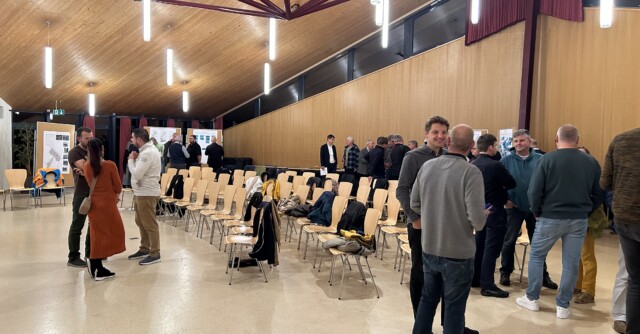
    The Urdorf municipal council outlined the key points of the Urdorf 2030 real estate strategy at a public event in the Zentrumhalle on August 29. As part of their real estate strategy, the municipal council and administration presented ten publicly owned sites spread across the municipal area, according to a detailed press release. The structural renovations, new buildings and extensions set out in the strategy could cost up to CHF 110 million over the coming years and decades.

    The strategy is about medium to long-term planning security for the municipality, according to property director Urs Rüegg. The real estate strategy does not yet contain any concrete projects. These will be presented to the population individually at a later date.

    In the communication, the planning areas are listed individually, from schools and kindergartens to the fire department or the municipal administration. Their consolidation in a single large municipal building in the center was rejected. The municipal council and planners set two time horizons for concrete planning and implementation: from 2025 to 2029 and from 2030 to 2033.

    Municipal president Sandra Rottensteiner said that the input from the population would continue to be taken on board and would be appropriately incorporated into the finalization of the real estate strategy. The municipality conducted an online consultation from December 15, 2023 to January 15, 2024 to record the needs relating to municipal properties. A total of 444 people took part.

  • District heating pipeline between Perlen and Cham to be extended

    District heating pipeline between Perlen and Cham to be extended

    The energy supplier WWZ from Zug is further expanding the Ennetsee heating network. According to its press release, the Ennetsee region is to be supplied with waste heat from the waste incineration plant in Perlen via a district heating pipeline. This requires an extension of the district heating pipeline from Rotkreuz to Cham.

    In a further construction phase, the pipeline will be laid in the municipality of Risch in the Holzhäuser Strasse area from October 7. Sewerage work will begin there on September 7. This became necessary, among other things, due to repeated flooding caused by heavy rainfall in the region.

    The district heating pipeline will be pre-stressed during construction. This means that the pipe is installed and welded in a preheated state. This prevents uncontrolled expansion of the pipeline under operating load.

    During the construction work, traffic obstructions such as road closures and detour are to be expected in the area. WWZ expects the district heating pipeline to Cham to be completed and put into operation by fall 2026.

  • Cities have many times more tree species than forests

    Cities have many times more tree species than forests

    A group of WSL researchers led by Benno Augustinus have studied the tree populations in 26 Swiss cities and their surrounding forests. According to a WSL press release, the study revealed an enormously high species richness in the cities with over 1,300 tree species. In contrast, only 76 tree species were identified in the surrounding forests. While cities are perceived as species-poor and forests as species-rich, the opposite is actually the case, according to Augustinus in the press release.

    According to the researchers, the high biodiversity in cities could be a gateway for invasive forest pests. Potentially dangerous introduced forest pests – so-called quarantine pests – find more potential hosts among the many tree species in the cities than in the forests. In order to protect the forest, it is therefore necessary to search for pests in the cities in particular, according to the press release.

    “It helps a lot if the population also keeps their eyes open for diseased trees,” Augustinus is quoted as saying. He recommends relying on the expertise of forestry companies when greening cities. In this sense, the WSL study “can also be interpreted as a call for more cooperation between foresters and urban green managers”.

  • Climate-friendly residential project in Burgdorf sets new standards

    Climate-friendly residential project in Burgdorf sets new standards

    The Fischermätteli residential construction project in Burgdorf has been awarded Minergiesite certification. This is the first time that an entire site has been certified in accordance with the requirements of the Swiss building standard, according to a statement from StrübyUnternehmungen, the company responsible for the project. The residential construction project with ten apartment buildings, which will be completed in fall 2023 after three and a half years, will reach “a new level” in sustainable residential construction, according to Strüby.

    According to the information provided, the site is characterized by the use of 6,600 cubic meters of renewable Swiss wood, as well as by its very low energy consumption and maximum self-sufficiency with renewable energies. Greenhouse gas emissions during construction and operation have been minimized. The buildings also have above-average heat insulation and controlled air exchange. The design of the outdoor space increases climate resilience and the quality of stay, for example through suitable planting and shading. The overall concept also includes an environmentally friendly mobility concept.

    The fact that the climate-friendly overall concept was well received was already evident during the completion of the quarter: “Demand was so pleasing that all apartments were sold by the time construction was completed,” Didier Pichonnaz, Head of Architecture at Strüby Unternehmungen, is quoted as saying.

    New rules for certification will apply from 2023. Unlike before, not only a single building but also an entire site can be certified.

  • New findings on the stiffness of timber structures

    New findings on the stiffness of timber structures

    Timber buildings are experiencing an upswing in Switzerland. With their sustainability and aesthetics, they are becoming increasingly popular, even for multi-storey buildings. But how can it be ensured that these structures can withstand the forces of wind and earthquakes? This is a question that occupies building researchers, especially when planning timber buildings up to 75 metres high. This is because the right bracing and supporting structures must be in place to ensure that timber buildings remain stable even under extreme conditions.

    Research in this field has made considerable progress in recent years. One particularly exciting tool is the shaker, a two-tonne device that is used in Empa’s largest laboratory in Dübendorf. The shaker simulates earthquakes and strong winds by causing building models to vibrate. In this way, the vibration behaviour of the buildings is examined under real conditions and the models for calculating stiffness are refined.

    The shaker in action
    For the open day on 14 September 2024, the shaker will be demonstrated in Empa’s construction hall in Dübendorf. This is not just about scientific research – visitors will get a direct insight into the work of the engineers. René Steiger, Pedro Palma and Robert Widmann, structural engineers at Empa, will give an impressive demonstration of how the shaker causes a structural model to vibrate, thereby analysing the behaviour of the weight and stiffness distribution.

    This research is of great importance, as ever taller timber buildings are being erected in Switzerland. While most buildings remain in the 4- to 5-storey range, projects with more than 20 storeys demonstrate the potential of timber as a building material. However, ensuring the stability of such buildings requires precise calculations and practical tests such as those carried out with the Shaker.

    Complex requirements for timber construction
    The challenge with multi-storey timber buildings lies not only in the load-bearing capacity of the walls, but also in the balance between rigidity and flexibility. Whilst thicker components and additional load-bearing walls are often seen as a solution, they can lead to increased costs. Sometimes it is even more favourable if a structure reacts flexibly to earthquake shocks to a certain degree. These nuances must be taken into account in the computer calculations, and this is precisely where the shaker provides valuable data from practice.

    The experiments in the construction hall and on real buildings, such as in Oberglatt in the canton of Zurich, show how the supporting structure gains rigidity during various construction phases. For example, the researchers were able to observe exactly how the load-bearing capacity of the buildings changed when load-bearing walls, non-load-bearing walls and windows were installed.

    Practical data for planners and architects
    For a long time, planners relied on mathematical approximations to determine the dynamic properties of timber structures. These values were often based on tests from Japan and North America, but due to different building regulations and requirements, they are not readily transferable to Switzerland. This is where the work of the Empa researchers comes in: The shaker and the measurements on real buildings provide precise data on stiffness and damping that is specifically tailored to local building requirements.

    This provides construction engineers and architects with reliable information to optimise their planning and use wood as a material efficiently and sustainably. The knowledge gained will help to further develop standards and guidelines and strengthen timber construction as a competitive solution for multi-storey buildings.

    Wood as a building material of the future
    Empa’s research results show that wood has enormous potential as a building material for multi-storey buildings. The use of the shaker provides construction engineers and architects with practical data that makes it possible to design timber buildings more safely and efficiently. By combining modern technology and scientific expertise, Empa is making a decisive contribution to advancing timber construction in Switzerland and establishing it as a sustainable alternative in the construction industry.

  • New battery storage system for Gossau ensures grid stability

    New battery storage system for Gossau ensures grid stability

    Axpo has installed and commissioned a battery storage facility with a capacity of 2.5 megawatts on the site of the Gossau municipal utility. The municipal utility now has the largest battery storage facility in the region, explained the Aargau-based energy company in a press release. According to the press release, the storage facility is tailored to the specific needs of the municipality of Gossau and the region’s grid topography. The press release does not provide any information on the financial scope of the project.

    Stadtwerke Gossau intends to use the battery storage system to compensate for fluctuations in demand and power peaks. It will also process reactive power and contribute to maintaining the grid voltage in the region. It will also help to stabilise the grid in the region by providing system services for the national grid company Swissgrid.

    The new battery storage system is capable of stand-alone operation and black start. This means that in the event of a power outage, it can autonomously restore the power supply for units connected to island operation. Relevant companies for maintaining the supply to Gossau can take advantage of this. “What was initiated in 2019 with a parliamentary initiative can be demonstrated five years later,” says Claudia Martin, City Councillor and Head of the Supply Security Department of the City of Gossau, in the press release. “An energy storage facility that guarantees Gossau’s security of supply.”

  • Fire services rely on climate-friendly hydrogenated vegetable oil

    Fire services rely on climate-friendly hydrogenated vegetable oil

    GVZ is testing the use of hydrotreated vegetable oil (HVO) as a fuel for fire engines in a pilot project. “From today, Schutz & Rettung Zürich, the Kloten and Wallisellen fire brigades, the Männedorf-Uetikon fire brigade and the St.Gallen professional fire brigade will be refuelling some of their vehicles with HVO,” GVZ announced in a press release. The five fire brigades are particularly suitable for participating in the project as they have their own refuelling facilities.

    “We would like to thank the five fire services for their participation in this promising project and look forward to the initial results,” said Renato Mathys, Head of Fire Services at GVZ, in the press release. “Our aim is to make a contribution to improving the environmental footprint of fire engines.” GVZ has procured a total of 28,000 litres of HVO for the pilot project. It is also paying the difference between the price of the fossil-free fuel and the current price of diesel.

    According to the press release, hydrogenated vegetable oil has a significantly better carbon footprint than diesel and also scores highly in terms of energy density and storage stability. As the biofuel is produced from used cooking oils and fats, its production is not at the expense of food production. The GVZ cites its uncomplicated use as a further advantage: “Diesel engines do not have to be expensively converted, but can be operated and maintained according to the same plan as when running on diesel fuel.”

  • Energy generation and cooling: façades at the centre of research

    Energy generation and cooling: façades at the centre of research

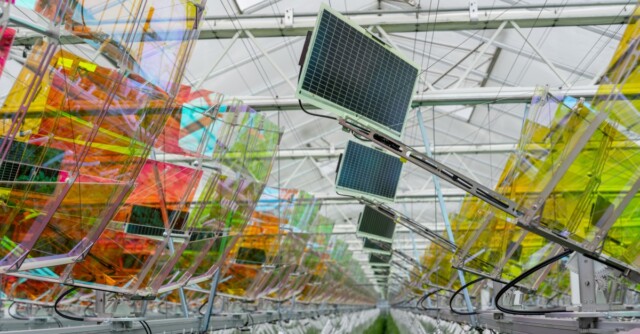
    HSLU researchers have explored the potential for greenery and solar panels on building façades in the GreenPV project. “While the benefits of PV systems and greenery are already being increasingly utilised on roofs, they have largely not been used on façades to date,” HSLU researcher Silvia Domingo is quoted as saying in a press release issued by the university about the project. However, they could contribute to closing the gap in winter electricity, among other things. This is because “the energy yield of a PV system is higher on a south-facing façade in the winter months than on a roof due to the low angle of inclination of the sun caused by the season”, explains Domingo.

    In addition to their cooling effect, green façades also contribute to biodiversity and the reduction of sound propagation. Air quality is also improved through the binding of pollutants and the production of oxygen. According to the HSLU researchers, greenery and photovoltaics (PV) can be combined well on façades. “PV comes into its own where a high level of energy generation is possible, i.e. on an unshaded façade on the upper floors,” says Domingo. Greenery, on the other hand, should be installed on the lower storeys and in inner courtyards.

    The authors have identified financing and a lack of guidelines and experience as obstacles for building owners. The appearance of a façade completely clad in black solar panels is also not to everyone’s taste. For this reason, the HSLU has already tested alternative colours and textures in another project.

  • Network meeting on the topic of sponge city and circular construction

    Network meeting on the topic of sponge city and circular construction

    The next TecLab network meeting on circular construction will focus on the concept of the sponge city. TecLab has invited a number of experts to speak at the event on October 28 from 6 p.m. at Jlcoweg 1 in Burgdorf. They will present the sponge city concept and answer questions about its implementation and the resolution of conflicting objectives.

    Michele Steiner from the Institute for Infrastructure and Environment and Moritz Gubler from the Institute of Geography at the University of Bern will kick things off. Pierre Papaux from Fribourg and Rudolf Holzer from Burgdorf will present examples of implementation in their municipalities. Anna-Gesa Meier from Holinger AG in Bern will explain how the concept works for companies and private landowners. Before the concluding discussion over an aperitif riche, a panel will discuss the path from concept to implementation.

    TecLab provides further details on the network meeting in the event announcement. There is also a link for registration.

    TecLab is the result of an initiative of the Bern University of Applied Sciences in collaboration with the Bern University of Applied Sciences, the Bern University of Teacher Education and other partners from the public and private sectors. It offers seminars and courses in mathematics, computer science, natural sciences and technology for school classes as well as events and further training for private individuals and companies on various topics. The focus is on the circular economy, energy and mobility.

  • Research into resource-efficient construction driven forward at NEST

    Research into resource-efficient construction driven forward at NEST

    The STEP2 module in the NEST research and innovation building at Empa celebrated its inauguration on August 29, Empa announced in a press release. New technologies for resource-saving construction are being tested in the new module. The approaches installed in STEP2 were developed by Empa in collaboration with research and industry partners. BASF and the architecture firm ROK were the main partners.

    STEP2 features, among other things, a noise-insulating ribbed filigree concrete ceiling and a 3D-printed concrete staircase. The façade with integrated shading and controlled natural ventilation is designed as a test platform. A window element with a 3D-printed structure will be the first to be tested here. All innovations serve to reduce material and energy consumption in construction and promote the circular economy.

    “At the same time, it is very important to us that we develop solutions that are marketable and actually have a future in the construction industry,” said Enrico Marchesi, Innovation Manager at NEST, in the press release. Main partner BASF wants to use STEP2 to “incorporate BASF’s broad chemical know-how into concrete, new and sustainable solutions for the construction sector in collaboration with the other partners”, explains Olivier Enger, Senior Innovation Manager at BASF. “In practice, a construction project of this kind requires close cooperation between all parties involved, from conception to implementation,” says architect Silvan Oesterle from ROK.

  • Pilot project launched to monetize climate performance in the construction sector

    Pilot project launched to monetize climate performance in the construction sector

    Timber Finance wants to provide building owners and investors in real estate with a tool that allows them to monetize their climate performance in timber buildings through CO2 storage certificates. To this end, the Zurich-based proptech has developed “the world’s first recognized methodology”, writes Timber Finance in a press release. The company was supported in its development by the Migros Pioneer Fund.

    A pilot phase to test the methodology in Switzerland will be launched shortly. Around 20 innovative timber construction projects are to take part. Interested parties can apply online to take part. In addition to the timber construction projects, a number of Swiss forest districts are also taking part in the pilot phase. They will be remunerated from the certificate proceeds for sustainable forest management. In the coming year, Timber Finance plans to expand the methodology to markets outside Switzerland.

    “We have succeeded in developing an instrument that contributes to the decarbonization of the building sector and creates new value in the construction sector by monetizing climate performance,” Frank Vasek, Head of Carbon Solutions at Timber Finance, is quoted as saying in the press release. “The proceeds benefit both the construction and forest sectors and thus create an incentive to build more in wood and manage the forest in a climate-relevant way.” The CO2 storage certificates can either be traded on the CO2 markets or offset in the company’s own CO2 balance.

  • Successful drilling of Haute-Sorne geothermal project completed

    Successful drilling of Haute-Sorne geothermal project completed

    A pilot project for deep geothermal energy is underway in Haute-Sorne. The initiators, Geo-Energie Suisse and Geo-Energie Jura, have announced that the first borehole has been drilled. According to a press release, it took less than three months to explore the subsurface at a depth of 4000 meters. The borehole ran completely through the sediments and penetrated deep into the crystalline bedrock.

    This provides geological data on the underground in the Swiss Jura arc between Geneva and Basel. “From a scientific point of view, this is a great opportunity to significantly improve our knowledge of the geology of the Jura. Until now, the deep underground has only been described in such detail at a very localized level at a national level.”

    Strict environmental safety precautions apply to the project. There has been no damage or water ingress during ongoing construction work, and noise pollution has been kept to a minimum.

    In the view of Geo-Energie Suisse and Geo-Energie Jura, this step paves the way for innovative future prospects for a sustainable energy supply. The data will provide geological insights into the use of geothermal energy to generate electricity and heat. The first success was celebrated on August 28, 2024. Employees, operational, technical and scientific partners and political representatives were invited to the event.

    The site is suspended while the data is evaluated and the project progress is planned. Tests in the borehole and a geophysical campaign are scheduled for early 2025. The exploration phase is scheduled until the end of 2025.

  • Sustainability standard introduced for Swiss real estate funds

    Sustainability standard introduced for Swiss real estate funds

    The Swiss real estate sector is responsible for around a quarter of all CO2 emissions. In order to make the situation and market behavior clearer, the Swiss Sustainable Finance Association has now developed a standard questionnaire on the sustainability of real estate funds. This is intended to make real estate trading more transparent and lead to reliable decisions with regard to sustainability, according to a press release. Investors can answer questions on sustainability in a standardized way and thus increase the comparability of offers. The resulting transparency is of interest to banks and asset managers as well as potential investors. The questionnaire also provides information on compliance with ESG criteria (environmental, social and governance) in the real estate sector.

    “A standard questionnaire increases comparabilityand reduces the workload for everyone involved,” Sabine Döbeli, CEO of Swiss Sustainable Finance, is quoted as saying in the press release. “At the same time, regular further development involving all players in the real estate investment value chain can ensure that the questionnaire is adapted to current developments and always contains the most relevant information.” (more…)

  • Building program for energy-efficient renovations records record demand

    Building program for energy-efficient renovations records record demand

    A record year has been reported for the federal and cantonal building program. According to a press release, subsidies amounting to CHF 528 million were paid out in 2023. This is the highest amount since the program was introduced in 2010 and represents an increase of 25 percent compared to the previous year.

    Over their lifespan, the funded measures led to an energy reduction in buildings of 11.2 billion kilowatt hours and 3.4 million tons less CO2 emissions, according to the report.

    The reasons for the increased demand are the topics of energy supply security and energy saving, which continue to be of great importance to the public. As a result of rising energy costs, the cantons have increased their funding budgets and, in some cases, subsidies, thereby creating incentives in the renovation sector.

    It also states that, in addition to disbursements, commitments for subsidies for energy-related measures that will be implemented and paid out over the next five years have almost reached their 2022 peak of CHF 592 million at CHF 587 million.

    Most of this was spent on renovation projects for building services. The subsidy francs will be used to replace 26,500 heating systems over the next few years. CHF 114 million has been earmarked for system renovations.

    In addition to the climate targets, the building program had a positive effect on employment and added value. 3,000 full-time equivalents and 150 million francs in additional domestic added value were generated as a result.

  • Portfolio expanded with third green bond

    Portfolio expanded with third green bond

    Zug Estates Holding AG placed its third green bond on August 26 with payment on September 30, the real estate company specializing in the development, marketing and operation of properties in the Zug region announced in a press release. The bond, which is aimed at institutional investors, has a volume of 100 million Swiss francs, a term of seven years and an interest rate of 1.65 percent.

    Zug Estates had already issued its first green bond in 2019. In 2022, the real estate company then switched its bond portfolio entirely to green bonds. Green buildings currently account for around 95% of Zug Estates’ total portfolio. Properties are classified as green buildings if they have less than 1 kilogram of greenhouse gas emissions per square meter of energy reference area.

    In future, Zug Estates wants to be able to offer other types of green financial instruments in addition to green bonds. To this end, the real estate company has expanded its green bond framework to include a green finance framework. As part of the expansion, Zug Estates has obtained a second opinion from International Shareholder Services (ISS) Corporate Solutions. The agency, which specializes in ESG research and ratings, awarded the real estate company a C rating and thus prime status on August 23.

  • Study shows opportunities for façade greening and solar panels

    Study shows opportunities for façade greening and solar panels

    As part of the GreenPV project, a research team from Lucerne University of Applied Sciences and Arts has developed innovative solutions for the design of building façades. The aim was to explore the potential of photovoltaic systems (PV) and greenery in order to meet the increasing challenges posed by global warming. A brochure specially developed for planners and building owners summarises the findings and recommendations of the project.

    The importance of this research becomes clear when you look at the forecasts of the National Centre for Climate Services: The average annual temperature in Switzerland could rise by up to 5.4 degrees by the end of the 21st century. This will not only significantly increase energy requirements, particularly for cooling, but will also affect comfort levels in buildings. Photovoltaic systems can supply energy precisely when it is needed most, namely when the sun is shining intensely. At the same time, green façades offer a sensible alternative in urban areas where new green spaces are scarce.

    Façades as untapped potential
    “While the benefits of PV systems and greenery are already increasingly being used on roofs, façades have so far remained largely unused,” explains Dr Silvia Domingo, researcher at HSLU. Yet façades offer an excellent opportunity for energy generation and greening without taking up additional space. PV systems on south-facing façades are particularly efficient in the cold season, as they can make optimum use of the low angle of inclination of the sun.

    However, the study also shows that there are obstacles that stand in the way of a wider application of these technologies. These include financial challenges, a lack of guidelines and concerns about fire safety. These factors often cause uncertainty among building owners. To counteract this, the research team has produced a brochure with practical recommendations for the use of PV systems and greenery on façades.

    Visual aspects and functional synergies
    Another obstacle identified by Dr Domingo is the aesthetic perception of solar panels on building façades. Black solar panels often do not meet the visual expectations of building owners. However, research shows that solar panels in different colours and textures could also be available in the future without any significant loss of efficiency.

    In addition to PV systems, green façades offer numerous advantages that go far beyond the cooling effect. They contribute to biodiversity, improve air quality, reduce sound propagation and promote rainwater retention. These benefits are particularly important in densely built-up urban areas, where they can significantly improve the quality of life.

    The combination of greenery and PV systems
    The HSLU study shows that greenery and PV systems on façades can often be combined well in order to utilise synergies. While PV systems on unshaded, higher façade areas ensure maximum energy generation, green areas near the ground have a cooling and noise-absorbing effect. This combination contributes to a more pleasant neighbourhood climate and climate-friendly electricity production.

    Completion of the GreenPV project
    The GreenPV project, which started in December 2021 and ran until mid-2024, was funded by a broad network of supporters, including the Swiss Federal Office of Energy (SFOE) and various foundations. The project team, led by Gianrico Settembrini, gained valuable insights, which are recorded in a brochure and are now available to planners, building owners and interested parties.

    With the results of the GreenPV project, the HSLU is making an important contribution to sustainable development in the construction industry and demonstrating how greenery and solar panels on façades can be combined to effectively meet the challenges of climate change.

  • Opening of the “STEP2” NEST unit

    Opening of the “STEP2” NEST unit

    On 29 August 2024, the latest building module “STEP2” was officially opened in Empa’s NEST research and innovation building. This two-storey module in the south-east of NEST brings together a large number of innovations, all of which are aimed at significantly reducing material and energy consumption in the construction industry and promoting resource-saving construction methods.

    In Switzerland, the construction sector is responsible for the majority of raw material consumption, waste generation and a third of CO2 emissions. With the NEST building, Empa, together with over 150 partners, is pursuing the goal of developing new technologies and materials to the point where they are ready for the market. The “STEP2” unit is the latest example of how this vision is being turned into reality.

    From the digital staircase to the adaptive façade
    When you enter the “STEP2” unit, the innovative ribbed filigree ceiling immediately catches the eye. This was developed by an interdisciplinary team and enables spans of up to 14 metres, ideal for office and high-rise construction. Thanks to digital planning methods and 3D-printed formwork, it was possible to reduce the amount of material used by 40% without compromising on stability. The ceiling also fulfils important functions in terms of room acoustics and as a thermal storage mass.

    Another technological masterpiece is the curved “Cadenza” concrete staircase, which forms the centrepiece of the building. It was realised using computer-aided design and 3D printing technologies, which enabled an extremely material-efficient construction method. This staircase is an impressive example of how digital manufacturing technologies can contribute to innovative and sustainable design solutions in the construction industry.

    Holistic energy concept and innovative materials
    The “STEP2” unit is based on an integrated energy and comfort concept that was developed in collaboration with leading engineers. The innovative double skin façade, which is equipped with modern shading technology and controlled natural ventilation, plays a central role in the building’s energy efficiency. This façade also serves as a test platform so that new technologies can be easily integrated in the future.

    STEP2″ also focusses on innovation and sustainability when it comes to the materials used. For example, wall and floor panels were made from recycled waste materials such as denim fibres, paper cups and coffee grounds. These materials not only reduce the need for new raw materials, but also help to reduce greenhouse gas emissions.

    Co-creation and market readiness
    The “STEP2” unit was developed using a co-creation approach in which all partners involved worked closely together from the outset. This approach made it possible to develop marketable solutions that have a real future in the construction industry. For BASF, the main partner in the project, “STEP2” provides the ideal environment to translate its chemical expertise into concrete, sustainable construction solutions.

    “STEP2” is more than just a building module – it is a real innovation environment that demonstrates how research and industry can successfully work together to bring sustainable technologies to market. In future, the unit will serve as a workplace and innovation workshop to achieve further progress in sustainable construction.

  • Decarbonising the real estate sector requires a new approach

    Decarbonising the real estate sector requires a new approach

    The Stoneweg property investment group is meeting these challenges proactively, in particular through its partnership with Romande Energie. Stoneweg has decided to have solar panels installed on several of its sites in French-speaking and German-speaking Switzerland as part of the contracting process.

    Stoneweg’s energy strategy includes a series of ambitious renovation projects focussing on improving insulation, replacing outdated heating systems and integrating renewable energies. Within the next five years, all of the company’s roofs are to be equipped with photovoltaic systems. This decision is motivated by rising electricity prices and the desire to give tenants access to renewable energy at a discounted price.

    Frédéric Noirot, Director of [glossary_exclude]Asset Management[/glossary_exclude] at Stoneweg, explains the benefits of the project: “Our property portfolio also includes older industrial buildings. The contracting model enables us to install photovoltaic systems on our roofs quickly and without major investment costs. This allows us to invest additional funds in other essential renovation measures. It’s a clear win-win situation.”

    As part of the solar energy contracting programme, Romande Energie takes on the complete installation, planning, [glossary_exclude]financing[/glossary_exclude] and [glossary_exclude]management[/glossary_exclude] of the photovoltaic systems on its customers’ buildings. In addition, the energy not consumed on site is utilised by Romande Energie.

    This [glossary_exclude]model[/glossary_exclude] offers several advantages: It generates additional rental income through the optimised use of available space, improves the ESG rating of the properties and increases their attractiveness by providing solar energy for the tenants.

    The cooperation between Stoneweg and Romande Energie is an impressive illustration of how property owners can increase the value of their properties and contribute to the energy transition at the same time. By using green technologies and establishing strategic partnerships, they can not only fulfil legal requirements and social expectations, but also improve their competitiveness on the market.

    Watch the full interview in the video.

    For more information on solar energy contracting, visit the Romande Energie website.

  • Kilchberg awards contract for lake water heat network

    Kilchberg awards contract for lake water heat network

    AEW Energie AG from Aarau has been awarded the contract by the municipality of Kilchberg for the project development of the Kilchberg lake water heating network, AEW announced in a press release. The contract was awarded as part of a tender process. The Aargau-based energy company will be responsible for the construction, operation and financing of the heat network.

    As a first step, AEW will now review the existing project scope and contact key customers. Based on this, the profitability calculation will be analysed again. At the same time, AEW wants to acquire customers. Only then will the company make the final implementation decision.

    “The final investment decision is expected in summer 2025,” writes AEW. If everything goes according to plan, the first heat deliveries could take place in spring 2027. Until then, the municipality and company want to keep the population informed about important project steps.

  • New white paper: ‘Energy storage systems for properties: Using renewable energy efficiently’

    New white paper: ‘Energy storage systems for properties: Using renewable energy efficiently’

    Link to the whitepaper

    Switzerland is aiming for a target of net zero by 2050. This means replacing fossil-based energies with renewables. However, the output from systems is dependent on weather conditions, the time of day, and the season. Getting supply and demand in sync calls for storage solutions. This also improves the property’s carbon footprint, because it requires less oil or gas to cover peak loads.

    Electricity storage systems: battery-powered flexibility
    Battery storage systems can temporarily store surplus solar power locally and supply household consumers, electric vehicles or the heat pump later on. This significantly increases the level of self-consumption and with it the cost-efficiency of solar power plants. Not only the operator benefits from a storage system – the electricity grid does as well. This means, for example, that when a solar power plant produces a surplus, it doesn’t have to be shut off for fear of overloading the grid. And in the reverse scenario – when demand outstrips supply – locally stored energy can help cover peak loads, which stabilises the grid and keeps costs low. Currently the standard means of electricity storage is the lithium-ion battery, while alternatives such as sodium-ion batteries and salt batteries have yet to become established. This also applies to bidirectional charging, in which the battery of an electric vehicle is used for local electricity storage.

    Heat storage units: geothermal probes and containers
    One alternative to storing surplus solar power is to transform it into thermal energy. Heat can be stored over weeks or months and used later for heating and hot water supply as required. This makes heat storage a great fit with renewable heating systems such as heat pumps and thermal networks. And some types of storage system can be used as heat sinks in summer to cool buildings with minimal use of energy. The most common storage types in Switzerland are geothermal heat storage units and container heat storage units. One interesting variant that requires less space is ice storage.

    Hydrogen and methane: seasonal storage
    Another way to store surplus solar power seasonally is to transform it into a carbon-neutral gas like hydrogen or methane (‘power-to-gas’). If required, the gas can be used either to produce heat and electricity or as a fuel for vehicles. Hydrogen is produced through the electrolysis of water, and the degree of efficiency in this transformation is up to 80 per cent. Transforming it further into methane has the advantage that it can be stored in the natural gas grid, so it doesn’t require separate infrastructure. The overall degree of efficiency depends on the method used, but with a current best-case result of 50 to 70 per cent, it is not yet cost-effective.

    You can find much more information and real-life examples in the new ewz white paper ‘Energy storage systems for properties: Using renewable energy efficiently’.

  • Population supports sustainable electricity production

    Population supports sustainable electricity production

    On 18 August, the voters of Spiringen clearly approved the Sidenplangg solar installation with 68.8 percent. The voter turnout was 55.3 per cent. With their approval, the voters have seized a great opportunity and shown that they are in favour of sustainable electricity production, writes the municipal council in a press release.

    EWA-energieUri is also delighted with the yes vote. He is “grateful that the people of Spiringen are so clearly in favour of our project”, Werner Jauch, CEO of the Uri-based energy producer, is quoted as saying in a separate press release. As the landowner, the Uri Corporation must now approve the project. The planning application can then be submitted.

    The plant is to be built in the Schächental valley on 12 hectares at an altitude of 1,800 to 2,000 metres above sea level in an area that is already used for avalanche barriers. With a capacity of 8 megawatts, around 12.5 gigawatt hours are to be generated annually, up to 45 per cent of which in winter. The investment amounts to around CHF 39 million. The first part of the plant is due to be connected to the grid at the end of 2025.

    In addition to EWA-energieUri and the municipality, aventron AG, a joint venture of Swiss regional utilities based in Münchenstein BL, is also involved in the project.

  • Fresh capital for the decarbonisation of real estate

    Fresh capital for the decarbonisation of real estate

    The software service provider Optiml has secured fresh capital totalling USD 4 million in a pre-seed financing round. According to a press release published on LinkedIn, the company intends to continue supporting the property market with software as it takes steps towards decarbonisation in the sector. As a service provider (Software-as-a-Service/SaaS), Optiml wants to develop programmes that facilitate data management and provide tools for asset and portfolio decisions. In doing so, the company takes into account constantly changing regulations and market conditions, according to the press release. With software supported by artificial intelligence, property companies and owners can plan their refurbishment and renovation work in line with the market and incorporate decarbonisation targets for their properties.

    The refurbishment and decarbonisation software from the spin-off of the Swiss Federal Institute of Technologyin Zurich(ETH), which was founded in 2022, is based on years of research in the ETH Sustainability and Technology Group (SusTec). It uses science-based optimisation algorithms.

  • Canton of Zurich wants to make solar systems mandatory on large roofs

    Canton of Zurich wants to make solar systems mandatory on large roofs

    “To ensure a secure electricity supply in Switzerland and to achieve the goal of net-zero greenhouse gas emissions, electricity production from local renewable energies must be rapidly and significantly expanded,” says the State Chancellery of the Canton of Zurich in a press release on a planned partial revision of the Energy Act. Specifically, the canton of Zurich wants to make the installation of solar systems on suitable roofs with an area of 300 square metres or more mandatory. The canton estimates that this would allow around 60 per cent of a total annual potential of 6 terawatt hours of solar power from roofs to be exploited.

    The installation of solar systems on large roofs should be mandatory for both new and existing buildings. Existing buildings may be retrofitted when the roof is renovated, but by 2040 at the latest. The requirement should also only apply “if the solar installation is economical over its entire service life”. The corresponding bill has been submitted for consultation until the end of November.

    In addition to the obligation for solar systems, the partial revision provides for the promotion of technologies for seasonal energy storage. This is to be funded by a subsidy fund managed by the electricity grid operators, which will be financed by a levy of a maximum of 0.5 centimes per kilowatt hour of electricity. Competitive tenders are planned, from which projects with the most winter electricity per subsidised franc will benefit, as well as support for seasonal storage technologies that are still under development.

  • Sustainable properties: fit for the future

    Sustainable properties: fit for the future

    Residential and commercial properties need energy – and a lot of it. The Swiss building stock is responsible for 25 per cent of Switzerland’s final energy requirements and a third of domestic CO2 emissions. This is why property also plays a key role in the energy transition. However, striving for greater sustainability in the building sector not only makes sense from an ecological perspective, but also from an economic one. Investments to increase energy efficiency and switch from fossil fuels to renewable energies have a value-enhancing effect. And sustainable buildings are marketable in the long term. Migros Bank offers corporate customers a free analysis to identify the optimisation potential in their property portfolio.

    Free analysis of property portfolios
    A sustainable property provides long-term ecological, social and economic benefits. What this means in concrete terms for an individual residential property must be assessed on a case-by-case basis. Ecological sustainability is generally about increasing the energy efficiency of the building and reducing emissions.

    Together with customers, Migros Bank analyses residential properties in terms of sustainability, yield, potential and marketability. Together with property experts, a tool has been developed for this purpose. This shows which investments have an impact on savings and costs resulting from these investments and what CO2 emissions can be expected from the property portfolio. Energy-efficient refurbishment or early replacement of heating systems often have a positive impact on profitability.

    The opportunities of sustainable buildings
    If the energy efficiency of buildings increases, energy costs fall. This is directly noticeable. Of course, the investments – for example in the renovation of the building – must be amortised. However, expensive energy costs mean that the amortisation period is short in many cases. Increased energy efficiency can also increase the market value of the property. The increase in attractiveness is also noticeable for rental properties. The demand for sustainable buildings with low ancillary costs is high. Tenants are prepared to pay more for sustainable living space.