Category: Sustainability

  • New home for senior citizens Greencity 2026

    New home for senior citizens Greencity 2026

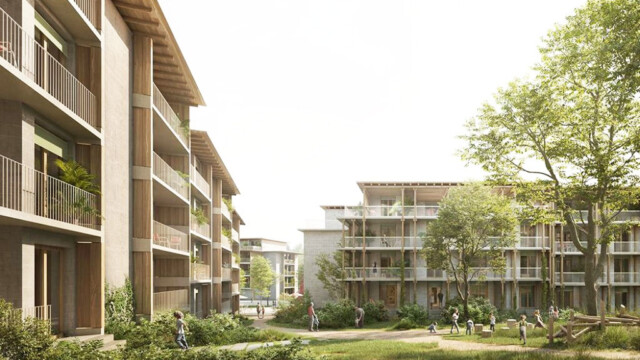
    A visionary residential project is being built in the south of Zurich that offers older people a lively and safe environment. The development on construction site B6 in Greencity combines private and municipal involvement. Losinger Marazzi AG is developing the project for the investment foundations of Pensimo Management AG, which are providing a total of 179 flats for older people. Of these, the City of Zurich Retirement Homes Foundation (SAW) will take over 60 flats, while the remaining 119 flats will be let by Pensimo to tenants aged 55 and over. This collaboration represents a new partnership and gives all tenants access to SAW’s services.

    A green centrepiece for Greencity
    Construction site B6 is the latest chapter in the sustainable development of the Greencity district. Since 2014, Losinger Marazzi has been transforming the site of the former Sihl paper factory into Switzerland’s first 2000-watt site. The inner courtyard of the new building will feature green areas, trees and seating, inviting people to linger. Arcades on the ground floor create sheltered access areas to commercial spaces, which could offer facilities such as a medical centre, a fitness studio, a bakery or a café on 3,500 square metres, says René Büchi, the portfolio manager responsible at Pensimo.

    Comprehensive services from SAW
    The City of Zurich Retirement Homes Foundation provides all tenants with a comprehensive service package. This includes a 24-hour emergency call service, extended caretaking, laundry service, social services and various events on the estate. If required, tenants can also take advantage of home help and outpatient care services. Andrea Martin-Fischer, Director of SAW, emphasises: “Our aim is to enable tenants to live independently and safely well into old age.”

    Focus on sustainability
    Greencity’s sustainability goals are consistently applied to the new retirement housing project. Herbert Heinen, Project Manager at Losinger Marazzi, explains: “An optimised load-bearing structure, lightweight walls, a wooden façade and an energy concept with 100 percent renewable energy significantly reduce CO2 emissions and bring the building close to the net-zero target in operation.” Pensimo and Losinger Marazzi are also aiming for certification with the SNBS Gold label. Construction started in March 2024 and the building, designed by JSWD Architekten from Cologne, is scheduled for completion at the end of 2026.

    With this pioneering project, Greencity is setting new standards for sustainable, age-appropriate living and demonstrating how private and public partnerships can create forward-looking solutions.

  • Commercial use and solar energy: development of the Papieri site is progressing

    Commercial use and solar energy: development of the Papieri site is progressing

    Property developer HIAG is expanding the transitional use of the Papieri site in Biberist. By the end of the year, around 6,000 square metres of space in the western section will be prepared for commercial use, as HIAG project developer Dominik Ulrich explained at an event organised by the Standort Schweiz network. Padelta AG is one of the users of the additional space. The company plans to operate eight modern courts there for the sport of padel, the Mexican version of tennis. The leisure facilities will be complemented by the Jump Factory trampoline park. Speed-E GmbH moved into the site in February with its workshop and showroom for electric bikes.

    In the industrial eastern part of the site, HIAG Solar AG, a joint venture between HIAG and aventron, installed a solar power system with a capacity of 620 kilowatt peak on the roof of a new building due for completion at the end of 2023 in mid-April. The electricity generated there will be used on site by the start-up Librec, which intends to recycle lithium-ion batteries here on an industrial scale. The second photovoltaic system on the site is already being planned.

    The approximately 270,000 square metre site on the River Aare was used as a paper mill from 1862 to 2011. HIAG took over the site in 2012 and the 2015 master plan envisages mixed use with a residential component in the western part of the site and commercial/industrial use in the eastern part. The property developer is currently working on the partial zoning plan, which covers the entire perimeter of the site. Temporary uses already occupy around 30 per cent of the site. The major users include Sieber Transport and Vigier.

  • Winner of the architectural competition for the Confignon school

    Winner of the architectural competition for the Confignon school

    The winning “Cé Qu’É Lainô” project stands out for its innovative strategy of fragmenting the vast school programme. This approach allows great flexibility in the future use of classrooms, gymnasiums and the youth area. The clever layout of the buildings makes it easier to access the various activities planned for the school and contributes to the liveliness of the future central square in the neighbourhood, which will serve as a social meeting place.

    Integration and site conditions
    The project takes full account of the various site constraints, including the need to create a striking architectural presence at the heart of the neighbourhood. The participating offices had to take into account aspects such as the internal organisation of the programme, construction choices, integration into the future Cherpines district and dialogue with the main public spaces. Mobility management and landscaping were also particularly important. In addition, the school had to accommodate a large number of pupils and teachers, and offer them a living environment conducive to the transmission of knowledge.

    Ambitious energy targets and sustainability
    The programme for the new school is part of an ambitious energy concept, based on connection to district heating, supplied by renewable energy sources. Natural ventilation and a large-scale photovoltaic solar installation on the roof, combined with vegetation, should make it possible to meet the very high energy performance standard (THPE). These measures support the sustainable development of the project as a whole.

    A full competition
    In accordance with the SIA 142 standard, the architectural competition was organised as part of a two-stage open procedure. In the first stage, the focus was on the development concept for the perimeter, in particular the definition of the external spaces, the principles of sustainability and the functional organisation of the programme components. The second stage defined the architectural project for the educational and sports programme, as well as for the outdoor facilities. A total of 46 projects were submitted.

    Future prospects for the Cherpines district
    Following the first phase of construction at Rolliet and the arrival of the first companies in the Cherpines eco-park, Confignon secondary school II will lay the foundation stone for the second phase of the Cherpines project. The school will give shape to the Place des Cherpines and bring the area to life as soon as it opens, welcoming 1,400 students and teachers. The construction of the school will form the first building face of this public space, while the other blocks of the residential district will be built gradually.

    Continuous development
    The competition was held at the same time as the draft Local Plan for the neighbourhood, located between the industrial ecopark and the sports fields, was being drawn up. The PLQ is due to be submitted to the Council of State by early 2025.

  • Urban development of the major Communaux d’Ambilly project

    Urban development of the major Communaux d’Ambilly project

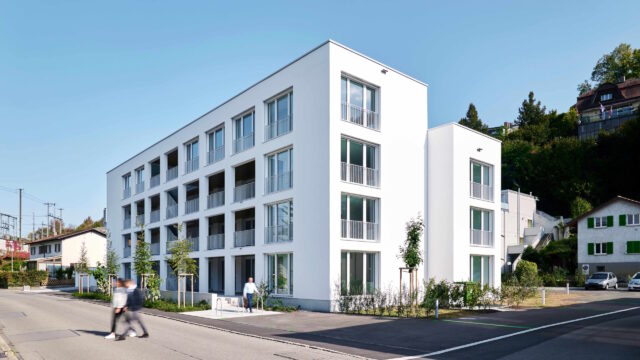
    The major Communaux d’Ambilly project, now known as the Belle-Terre district, involves the urban development of a 36-hectare area in the commune of Thônex. Around 2,400 new homes are expected to be built there by 2030.
    This urban development project offers one of the few major land opportunities in the first ring of the left bank of the Geneva conurbation. Thanks to its proximity to the Léman Express stations at Chêne-Bourg and Annemasse, the area will be perfectly connected to the whole of the conurbation and the region.

    The stages of development
    The first stage of the project, based on a Local Neighbourhood Plan (PLQ) adopted in 2011, saw the construction of around 670 homes, as well as shops, local services, a school and extensive public spaces. This phase also included the creation of a central alignment of 180 tall trees. Access to the site is provided by two new streets: Chaussée des Cornouillers and Allée Belle-Terre.
    The second phase is currently being prepared, with plans to develop a further 1,000 homes and new services by 2028. The third phase should see the construction of a further 1,000 homes by 2030. These developments will be supported by the development of public transport, in particular a BRT (Bus Rapid Transit) line, and by the extension of school infrastructure.

    Participatory planning
    A central aspect of the Belle-Terre project is the participatory planning process. This allows current and future residents and users of the area to contribute their experiences and ideas to the development of the project. This participatory approach fosters good living together and the sustainable development of the neighbourhood.

    An environmentally friendly approach
    The Belle-Terre district attaches great importance to sustainability and environmental protection. 50% of the area is dedicated to nature, over 450 new trees have been planted and a participatory forest has been set up. Geothermal energy and solar panels cover 90% of energy needs, while ditches, green roofs and permeable surfaces optimise the water cycle. An impressive 95% of the excavated material has been reused on site, considerably reducing the environmental impact.
    The development of the district includes a harmonious mix of rural courtyards and planted promenades that create landscape continuities and link the district to the Seymaz river and the edge of the Belle-Idée forest.

  • Transformative materials in the construction industry

    Transformative materials in the construction industry

    As one of the main sources of CO2 emissions in Switzerland and Liechtenstein, the construction sector is under increasing pressure to introduce sustainable practices. Mikaël Genty, advisor to the Swiss Climate Foundation, stresses the need for new technologies to achieve the climate objectives of the Paris Climate Agreement. One promising development is the Terrabloc company, which converts excavated material into environmentally-friendly building materials such as bricks and partitions. This initiative helps to reduce construction waste and transform it into valuable building materials.

    Improving efficiency through modern insulation technologies
    Another key element for a sustainable construction sector is efficient insulation. FenX, a start-up spin-off from ETH Zurich, has developed a technology that transforms industrial waste into a sustainable and recyclable insulating foam. This innovation not only improves the energy efficiency of buildings, but also promotes the circular economy in the construction industry.

    A revolution in the concrete industry
    ETH spin-off Oxara is presenting a forward-looking alternative to concrete that does not require cement with a high CO² content. This innovative concrete is made from excavated materials and could fundamentally change the concrete industry. Meanwhile, Bern-based SME neustark is working on a process that uses concrete as a CO2 reservoir by fixing carbon dioxide in the form of limestone in recycled concrete. This technology not only addresses the problem of CO2 emissions, but also contributes to the development of negative-emission technologies, which are playing an increasingly important role in the Confederation’s climate policy.

    By supporting these innovative projects and technologies, the Swiss Climate Foundation aims to accelerate the transition to a more sustainable construction sector and thus make a key contribution to reducing greenhouse gas emissions. Ongoing research and development in these areas promises not only to reduce pollution, but also to improve quality of life through more sustainable living and working environments.

  • Geneva on the road to Smart City 3.0

    Geneva on the road to Smart City 3.0

    With the “Smart Geneva” initiative, the canton of Geneva aims to become a Smart City 3.0, following the example of Scandinavian countries. Unlike top-down approaches, the aim here is to achieve sustainable, intelligent change through networking and the promotion of concrete projects. Patrick Montier, Smart City Manager for the canton of Geneva, stresses the importance of a participatory approach: “It’s about creating an ecosystem that stimulates innovation by encouraging innovative projects and facilitating access to resources and funding”.

    Coordination and networking of projects
    Until now, smart city projects in Geneva have been promising, but scattered and uncoordinated. This must now change. Private, state and scientific players will be networked via an online platform and various events to form a living community. A central database will collect and make accessible information on Smart City experiences and experiments.

    Promotion by the canton and integration of the community
    For the launch of the initiative, the canton of Geneva has selected nine projects that will receive particular support in terms of communication. These include an urban agriculture project, a crowdfunding platform and a route planner for cycling commuters. A telemedicine platform at HUG University Hospital and pilot projects with networked bus stops are also included.

    Using technology to protect the climate
    The Smart City 3.0 vision puts technology at the service of the region to meet the challenges of urbanisation and global warming. “Our vision uses digital technologies wisely, taking care to use sensors sparingly, for example, as they can be very energy-hungry,” explains Montier. It aims to maximise the benefits for the environment, mobility, health, the circular economy and the well-being of residents.

    Future prospects and regional integration
    One of the long-term objectives of the initiative is to integrate the French border area into the Smart City strategy. Those responsible promise that Geneva will be a fully-fledged Smart City by 2030. The implementation of the “Smart Geneva” initiative represents an important step towards sustainable and innovative urban development that meets the needs of residents while addressing the challenges of climate change.

  • Knowledge of artificial intelligence and cyber-risks

    Knowledge of artificial intelligence and cyber-risks

    In a rapidly changing digital world, it is essential for managers to continually expand their knowledge to meet the demands of the modern business world. This is exactly what the new online training courses offered by the Geneva Cantonal Office for the Economy and Innovation offer.

    These online courses, also known as MOOCs (Massive Open Online Courses), enable managers to learn more about the potential, applications and limits of artificial intelligence in business. Topics such as data analysis, targeted advertising and copywriting are covered in three learning modules to give participants a comprehensive overview of the possibilities offered by AI.

    Another course deals with the impact of cyber risks on businesses. Participants learn the basics of an effective security risk management strategy so that they can take preventive measures to counter potential attacks. The course highlights the definitions of cyber risks and explains how they can impact on a company’s activities.

    These new courses will enable them to broaden their skills, strengthen their teams and protect their company in the best possible way. Investing in lifelong learning and addressing the opportunities offered by AI and the challenges posed by cyber risks are key success factors for innovative and competitive business management.

    In addition, digital training can help them develop innovative solutions and future-proof their business. By continually updating their knowledge and acquiring new skills, managers are better equipped to react to changes in the sector and to position their company successfully.

  • Alpiq sells seven photovoltaic systems to Panneaux Solaires

    Alpiq sells seven photovoltaic systems to Panneaux Solaires

    Alpiq has announced the sale of seven rooftop photovoltaic plants to PS Panneaux Solaires SA. The Lausanne-based electricity provider wants to bring more solar energy into the energy grid, which is why the power plants are being sold as a unit, according to a press release. At their locations in the cantons of Fribourg, Solothurn and Vaud, the plants have a total capacity of 5.5 megawatts peak.

    Alpiq would like to concentrate more on its core business of highly flexible power plant solutions, according to the press release. The planning, construction and operation of photovoltaic plants “that are not closely related to the core business” will therefore be discontinued. “The challenge is to integrate weather-dependent electricity production from wind and solar energy into the energy system,” said Amédée Murisier, Head of the Switzerland business division and member of the Alpiq Executive Board. PS Panneaux Solaires SA, the operating company of the Gefiswiss Energy Transition Fund, is the ideal “buyer to continue operating the seven plants, which will continue to produce solar power for many years to come”, it says.

    The energy transition requires flexible solutions for greater security of supply. Alpiq wants to use its portfolio to promote the use of renewable energies as well as the expansion of storage solutions and the generation of winter electricity. With its portfolio of highly flexible power plants, the company says it sees itself as a “pioneer of the energy transition”.

    Alpiq is primarily involved in hydropower plants, such as the Nant de Drance and FMHL pumped storage power plants. Their efficient large-scale batteries with a capacity of 1,400 megawatts are an ideal means of feeding the growing proportion of photovoltaic electricity into the grids as short-term daily or weekly storage.

  • Holcim expands use of artificial intelligence in plants

    Holcim expands use of artificial intelligence in plants

    Holcim is expanding the use of AI-based machine intelligence to over 100 plants worldwide over the next four years, according to a statement. The AI is intended to anticipate incidents and avoid breakdowns in order to increase operational resilience, boost efficiency and increase capacity for customers.

    To this end, the international building materials supplier is working with C3 AI, the leading AI platform provider for outstanding forecasting technology, based in Redwood City, California. Holcim has also announced that it will be trialling whether its state-of-the-art predictive maintenance solution can be enhanced by generative AI.

    As part of the rollout, Holcim’s maintenance teams will be equipped with this predictive technology for real-time asset management and optimisation. It will also be used for product quality and process optimisation, autonomous vehicles and computer vision.

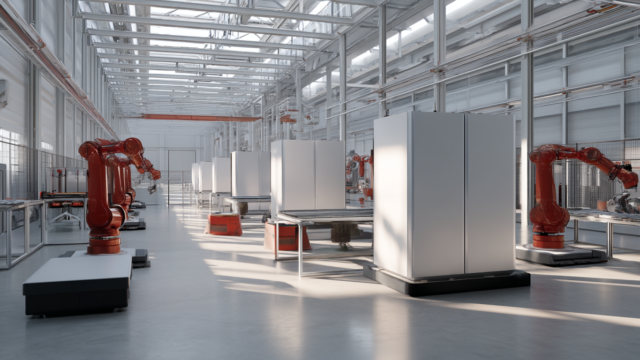
    This is all part of Holcim’s Plants of Tomorrow programme to modernise a global network of over 140 integrated plants and grinding stations in more than 40 countries. According to the information provided, this initiative also includes the use of unmanned drones for inspection and intelligent control systems for efficient energy consumption.

  • HIAG wins cleantech company Grensol as tenant

    HIAG wins cleantech company Grensol as tenant

    The property company HIAG has been able to secure another cleantech company as a tenant for its Papieri site in Biberist. According to a press release, Grensol AG recycles valuable low-emission resources such as hydrogen, carbon black, metals and glass from end-of-life vehicles. By recycling in the circular economy, the company also avoids waste incineration and landfill, which emit pollutants. On 19 June, Grensol was awarded the W.A. de Vigier Award, one of the most coveted sponsorship prizes in Switzerland, for its commitment. Grensol will build its first pilot plant in Switzerland on an area of 860 square metres on the Papieri site.

    “We are delighted that Grensol AG is the second clean-tech company to decide to build its innovative plant on our Papieri site,” said Raphael Schibli, the responsible asset manager at HIAG, in the press release. “This shows that the Papieri site offers ideal conditions for companies from various industries to develop.”

    The start-up Librec AG had already established itself on the site. The company specialises in the recycling of electric batteries.

  • Future Perfect launches project for circular construction

    Future Perfect launches project for circular construction

    The Future Perfect association, together with the Plavenir professional association, the Constructa Association of Teachers of Drawing Professions and the educational materials publisher LernMedien-Architektur GmbH, is realising a project to integrate circular construction into basic vocational training in spatial and construction planning. The Future Perfect Circular Building project aims to teach skills for the reuse and recycling of materials and components, Future Perfect explains in a press release. A test run is planned for the spring semester 2025. The courses will be available to schools on a regular basis from autumn semester 2025.

    The project is aimed at both students and teachers of spatial and construction planning. Teachers will be offered full-day training courses in which they will be introduced to circular construction and the use of Future Perfect’s digital teaching materials will be explained. Digital courses for basic education, advanced seminars, project work and project competitions will be made available to learners. The project is financially supported by the Minerva Foundation and the Federal Office for the Environment.

  • Deep geothermal energy has great potential in Baselland

    Deep geothermal energy has great potential in Baselland

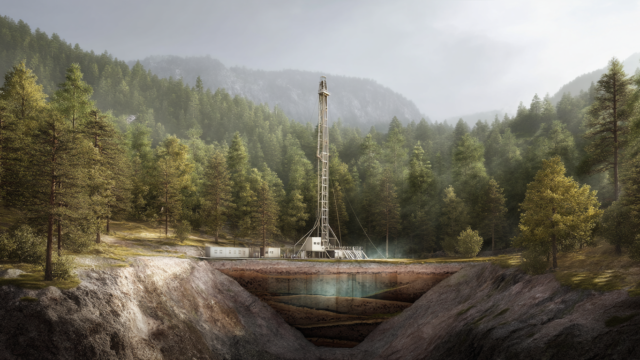
    Deep geothermal energy could potentially supply between 200 and 1800 gigawatt hours of usable heat potential per year in the canton of Basel-Landschaft. This corresponds to between 10 and 100 per cent of future energy requirements for space heating and hot water. This is the conclusion of the study Report on the potential of deep geothermal energy in the canton of Basel-Landschaft. It was commissioned by the Office for Environmental Protection and Energy and is based on Rolf Blatter’s postulate 2022/346.

    According to a press release from the canton, the actual potential depends on various technical and economic conditions and can therefore only be quantified more precisely with further exploration. Because Baselland is one of the most geologically diverse cantons, the number of situations that are suitable for geothermal utilisation is correspondingly large.

    No estimates of the potential of deep geothermal energy in the canton have been available to date. According to the information, the widespread use of near-surface geothermal energy with geothermal probes contributes around 100 gigawatt hours to the environmental heat utilised. With the new CO2 Act, the federal government will promote hydrothermal geothermal energy for heat supply from 1 January 2025.

  • Intergenerational living as a challenge and an opportunity

    Intergenerational living as a challenge and an opportunity

    Gemeinschaftliche Wohnformen gewinnen zunehmend an Bedeutung aufgrund veränderter Lebens- und Familienstrukturen sowie einer zunehmenden Mobilität und demografischen Alterung. Der intergenerationelle Austausch wird dabei als positiv für die physische und emotionale Befindlichkeit angesehen und kann dazu beitragen, den Umzug in Alters- und Pflegezentren zu verzögern oder zu verhindern.

    Studie zu Generationenwohnprojekten
    Forschende des ETH Wohnforum – ETH Case, der Berner Fachhochschule und age-research.net haben sechs Generationenwohnprojekte hinsichtlich ihrer Chancen und Grenzen untersucht. Diese Projekte unterscheiden sich in Grösse, Trägerschaften, Organisationsformen und architektonischen Gestaltungen. Vier der Projekte richten sich an Menschen aller Altersgruppen, zwei sind speziell für Menschen ab 50 Jahren konzipiert.

    Das Forschungsprojekt «Generationenwohnen in langfristiger Perspektive – von der Intention zur gelebten Umsetzung» untersucht die konzeptuelle, organisatorische und alltägliche Entwicklung des generationenübergreifenden Wohnens. Die Ergebnisse zeigen, dass solche Wohnprojekte für gemeinschaftsorientierte Menschen eine gute Alternative zu herkömmlichen Wohnformen darstellen. Diese Projekte schaffen bezahlbaren und bedürfnisgerechten Wohnraum für verschiedene Generationen und fördern Unterstützung und Gemeinschaftlichkeit im Wohnen. Sie senken das Risiko sozialer Isolation und unterstützen soziale Teilhabe. Diese Wohnprojekte können auch als Modelle für eine umfassende, integrierte Stadtplanung dienen und zur Entwicklung lebendiger Quartiere beitragen.

    Empfehlungen für Trägerschaften und Behörden
    Der Bericht enthält konkrete Handlungsempfehlungen für Trägerschaften und die öffentliche Hand. Wichtig ist eine angepasste Partizipation während der gesamten Projektphase, um intergenerationelle Begegnungen zu ermöglichen. Gemeinschaftlich genutzte Räume sollten niederschwellig zugänglich sein, und die Wohnumgebung muss über nahe und gut erreichbare Versorgungsstrukturen und Verkehrsanbindungen verfügen.

    Für den Bund, die Kantone und die Gemeinden stehen verschiedene Massnahmen zur Unterstützung des Generationenwohnens zur Verfügung. Gemeinden könnten bei der Vergabe von Bauland generationsübergreifende Wohnprojekte bevorzugen. Förderprogramme wie zinsgünstige Darlehen, Investitionszuschüsse oder Steuererleichterungen könnten ebenfalls helfen. Eine enge Zusammenarbeit von Behörden, gemeinnützigen Bauträgern, Architektur- und Planungsbüros sowie sozialen Fachpersonen ist wesentlich. Auch Architekturwettbewerbe mit interdisziplinären Planungsteams und Jurys können wertvolle Impulse geben.

    Zukunftsfähige, aber anspruchsvolle Wohnform
    Trotz ihrer vielen Stärken ist die Umsetzung von Generationenwohnprojekten anspruchsvoll. Sie erfordert eine bedürfnisgerechte und partizipative Planung und Realisierung, die von Trägerschaften und Gemeinden ein höheres Mass an Beteiligung verlangt als konventionelle Wohnprojekte. Generationenwohnprojekte reagieren flexibel auf sich ändernde Anforderungen und Bedürfnisse in einer vielfältigen Gesellschaft.

    Das umfangreiche Projekt wurde neben dem BWO auch durch die Age Stiftung, die Beisheim Stiftung, die Walder Stiftung sowie das Max Pfister Baubüro AG gefördert.

  • How a Switzerland of 10 million can succeed

    How a Switzerland of 10 million can succeed

    Lardi emphasised the need for better framework conditions to counteract the housing shortage. He presented four key demands. Energy-efficient refurbishments and adding storeys can create additional floor space without taking up new space. It is not about skyscrapers, but about moderate increases in the height of existing buildings. Conversion of office space into residential space, as the strict separation between residential and work zones is outdated. Mixed zones could reduce traffic congestion and create living space. Misregulations in rental housing law and tax privileges lead to an unfair distribution of living space. Liberalisation could free up older living space and stabilise prices. Objections and lengthy authorisation procedures are the biggest obstacles. These would have to be streamlined in order to create new living space more quickly.

    Important referendum
    The construction of new living space also requires the continuous renewal of the transport infrastructure. The strategic development programme for motorways is of central importance here. This proposal, which includes six major projects to eliminate bottlenecks, will be put to the vote in November 2024. The Swiss Association of Master Builders is in favour of voting yes to the proposal and is calling for an efficient mobility offering that combines all modes of transport. Lardi also emphasised the importance of the new environmental protection law, which adapts noise protection criteria and enables the construction of flats that were previously blocked for noise protection reasons.

    Illustrious guest appearances
    One of the highlights of the event was the presentation by Bertrand Piccard, who emphasised the role of the construction industry in the fight against climate change. Economist Martin Neff explained how a growing population influences a country’s prosperity and how more living space can be created by reducing regulations. Civil engineer Pirmin Muff presented practical implementation approaches for the construction industry. Cantonal Councillor Martin Neukom delivered the welcoming address from the host Canton of Zurich.

    HGC anniversary and construction party
    The major event, moderated by Mascha Santschi, concluded with a networking aperitif, dinner and the legendary construction party. Musical entertainment was provided by 21-year-old singer Joya Marleen from St. Gallen, one of the rising stars of the Swiss music scene.

  • Meier Tobler Group AG sells Lüftungshygiene AG to Hälg Group

    Meier Tobler Group AG sells Lüftungshygiene AG to Hälg Group

    Meier Tobler Lüftungshygiene AG, founded in 2009, has established itself as an independent company with 25 employees at two locations. Despite its success, it remained a niche business within Meier Tobler. Due to the increasing focus on core areas, Meier Tobler decided to sell the company to the Hälg Group in June 2024. Roger Basler, CEO of Meier Tobler, comments: “We are delighted to have found the ideal buyer in the Hälg Group. Its strategic direction is a perfect fit and we are convinced that our employees will be optimally integrated into the Hälg team.”

    Leading company in ventilation cleaning
    The Hälg Group is pursuing a targeted growth strategy and sees an increasing demand for hygiene solutions and clean air. It is already active in the field of ventilation cleaning at its sites in Bern, Zurich and St. Gallen. The acquisition of Meier Tobler Lüftungshygiene AG will enable the company to significantly expand its team of experts and utilise additional synergies. The aim is to become the market leader in ventilation cleaning. Sandro Keller, CEO Building Technology at the Hälg Group, explains: “The takeover will enable us to almost triple our capacity in ventilation cleaning and strengthen the organisation. This will significantly expand our expertise and put us in a position to take on large mandates in the future.”

    Hälg Group bundles its expertise
    In order to exploit its full potential and position itself optimally on the market, the Hälg Group is combining its activities in a new organisational unit. Under the umbrella of Service Schweiz, Hälg & Co. AG Lüftungsreinigung will offer its services throughout Switzerland under the management of Cyrill Rohner. All employees of Meier Tobler Lüftungshygiene AG are to be taken over.

    Cyrill Rohner, member of the Hälg Group’s Building Technology Management Board, is delighted about the new addition: “We want to grow in the service sector and also see opportunities in ventilation cleaning. By strengthening the team and pooling our strengths in the Hälg & Co. AG Ventilation Cleaning organisational unit, we will exploit this potential and play to our strengths in a targeted manner.”

  • Neuchâtel equips three historic buildings with 33,300 solar roof tiles

    Neuchâtel equips three historic buildings with 33,300 solar roof tiles

    According to a press release, roof surfaces on three listed buildings in the city of Neuchâtel will be used for sustainable energy generation in future. The city’s Collège des Parcs and the cantonal school and university buildings Beaux-Arts and A.-L. Breguet will be equipped with a total of 33,300 solar tiles from Freesuns. The renovation project is supported by the CSEM research and development centre. For the city and canton, it represents a further step towards the energy transition.

    According to the press release, the college can generate 150,000 kilowatt hours of electricity itself each year, which is equivalent to the consumption of 50 Swiss households. The installed capacity on the cantonal buildings is 130 kilowatts peak for A.-L. Breguet and 95 kilowatts peak for Beaux-Arts.

    Architectural conditions required special solutions: At the Collège des Parcs, the tiles had to be installed in such a way that they followed the curved lines of the roof without damaging it.

    The conversion of historic buildings to solar energy could provide an inspiring model for other cantons and municipalities. The tiles could “enable the balance between cultural preservation and sustainable development”, Deborah Learoyd, General Manager at Freesuns, is quoted as saying.

    The renovation projects are “an example of how we can combine roof tiles, photovoltaics, energy transition and preservation of architectural heritage”, Matthieu Despeisse, Group Leader Solar Modules at CSEM, is quoted as saying.

    The work should be completed between September and November 2024. CSEM and Freesuns are considering continuing their collaboration.

  • 69 million dollars secured for CO2 storage technology

    69 million dollars secured for CO2 storage technology

    Neustark has secured financing totalling 69 million dollars. According to a press release, the ClimateTech company from Bern was supported by the Decarbonisation Partners financing fund, a partnership between BlackRock and Temasek, with the backing of Blume Equity. UBS initiated debt financing. Existing financiers Siemens Financial Services, Verve Ventures, ACE Ventures and Holcim also participated in the new capital round.

    Neustark intends to use the acquired funds to strengthen its position in Europe and gain new markets in America and Asia.

    Neustark, a spin-off from the Swiss Federal Institute of Technology in Zurich(ETH), has developed a process in which CO2 is converted into limestone, which is bound to the pores and surface of the concrete granulate. The carbonated granulate can then be used in road construction or for the production of recycled concrete. According to the company, Neustark currently operates 19 plants with this technology in Germany, Liechtenstein, Austria and Switzerland. The company aims to store 1 million tonnes of carbon dioxide from the air by 2030.

  • Award for innovative circular economy in the construction industry

    Award for innovative circular economy in the construction industry

    Researchers from Lucerne University of Applied Sciences and Arts(HSLU) have won the Sustainability Challenge organised by the German Sustainable Building Council(DGNB) together with the Technical University of Munich(TUM). According to a press release, the circularWOOD project was awarded first place in the research category. Sonja Geier, Deputy Head of the Competence Center Typology & Planning in Architecture(CCTP) at HSLU, and Sandra Schuster from TUM accepted the award in Stuttgart on 18 June 2024 as part of the DGNB’s Sustainability Day.

    The CO2-neutral and ecologically high-quality raw material wood is becoming increasingly popular in the construction industry The circularWOOD research project aims to introduce this important raw material into a circular economy. “Today, wood does not remain part of the material cycle long enough,” Sonja Geier is quoted as saying in the press release. According to the press release, circular construction with the CO2-neutral building material wood will make an important contribution to achieving climate protection goals.

  • Acquisition expands offering in construction and recycling

    Acquisition expands offering in construction and recycling

    Holcim acquires Cand-Landi Holding in western Switzerland. The company, which has been family-owned for 128 years, has consolidated net sales of CHF 70 million and is active in various areas: from recycling and waste management to aggregates and ready-mix concrete.

    According to a Holcim press release, the acquisition will open up new sources of alternative raw materials and fuels for Holcim and thus accelerate decarbonisation at the Holcim plant in Eclépens VD. In addition, the acquisition will enable Holcim to increase the transformation of construction waste into new construction solutions by 100,000 tonnes per year.

    Following a long-standing partnership between the two companies, Holcim intends to offer its customers an even more comprehensive range of construction, logistics and recycling services through this acquisition. The “high value-added” services in rail logistics and the Cand-Landi Group’s network will contribute to the diversification of Holcim’s business.

    “The acquisition of the Cand-Landi Group will drive decarbonisation and the circular economy in Switzerland, a beacon market for innovation at Holcim,” summarises Holcim CEO Miljan Gutovic. “I look forward to welcoming all 250 employees of the Cand-Landi Group and investing together in our next chapter of growth.”

  • New Master’s programme for urban change

    New Master’s programme for urban change

    From the start of the 2025 autumn semester, the School of Architecture, Civil and Environmental Engineering(ENAC) at the Swiss Federal Institute of Technology Lausanne(EPFL) will be offering a Master’s degree in the challenges of urban change. A Master’s degree in Urban Systems will enable ENAC students to become specialists in adapting cities and surrounding areas to climate change, according to a press release from EPFL.

    In view of climate change, Switzerland needs to equip itself with experts in urban management in the broadest sense, according to the EPFL. The new Master’s degree programme has been developed in collaboration with practitioners. It offers graduates of the ENAC Bachelor’s degree programmes in Civil Engineering and Environmental Engineering the opportunity to specialise in the sustainable transformation of cities and surrounding areas. The Master’s programme is also open to other related disciplines, including architecture, provided they submit an application.

    The programme has three specialisations: Mobility and Transport in a Changing Climate, Sustainable Transitions in Urban Systems and Health and Wellbeing in the Urban Environment.

    At the end of the programme, students receive an EPFL Master of Science MSc in Urban Systems. This diploma entitles them to use the title EPF qualified engineer.

  • Switzerland, pioneer of the circular economy in the construction sector

    Switzerland, pioneer of the circular economy in the construction sector

    The Swiss construction sector is undergoing a transformation towards a circular economy. Currently, around 21% of companies have integrated
    circular business activities into their model. These measures aim
    primarily to reduce the consumption of materials and the environmental impact of the production process. An in-depth study shows that Switzerland is particularly well placed, thanks to its capacity for innovation, to successfully implement circular measures and thereby secure clear competitive advantages.

    Although progress in the circular economy varies from sector to sector, the electronics, pharmaceutical and automotive industries in particular are pioneers in Switzerland. However, the construction sector faces specific challenges: Implementation is complex from an organisational point of view and very
    different from one region to another in terms of the availability of financial resources and demand. Another obstacle is the often low level of awareness and concerns about
    the cost-effectiveness of such measures.

    Yet the ecological benefits of the circular economy in the construction industry are obvious. In Switzerland, this sector generates more than 80% of all
    waste and is responsible for around half the CO² emissions of an average building. These negative effects can be significantly minimised by early planning measures. This includes taking into account the life cycle of materials and their deconstruction, using recyclable and modular materials.

    The economic benefits are also beginning to be felt. Despite
    initially higher costs, the market value of these buildings exceeds that of comparable objects. Policy initiatives such as parliamentary initiatives are supporting the circular economy in building design and deconstruction. Strategic planning by building owners, the use of recyclable products and technological innovations such as CO²-absorbing concrete are essential to promote this sustainable practice. Innosuisse’s Circular Building Initiative (CBI) Booster is playing a key role in bringing together different stakeholders and encouraging circular projects.

    This global approach will be decisive in transforming the construction sector in a sustainable way and further strengthening Switzerland as a model region for the circular economy in construction.

  • Resource efficiency through medium voltage in photovoltaics

    Resource efficiency through medium voltage in photovoltaics

    The conversion of the energy system requires considerable quantities of raw materials such as copper and aluminium. One promising approach to saving these resources is the transition from low voltage to medium voltage in renewable energy production. The Fraunhofer Institute for Solar Energy Systems ISE has identified enormous savings potential through higher system voltages, particularly for large-scale photovoltaic power plants, and is planning initial pilot projects and a broad market launch.

    Advantages of higher system voltages
    Increasing the system voltage from 800 VAC to 1,500 VAC reduces the cable cross-section by around 75 per cent. This makes installation and connection easier, which reduces installation costs. Andreas Hensel, Group Manager “High Power Electronics and System Technology” at Fraunhofer ISE, emphasises the potential savings: “Now that PV module costs have fallen by 90 percent since 2010, installation and balance-of-system components now offer the greatest savings levers.”

    In addition, the output of the subsystems can be increased by switching to medium voltage. At a voltage of 1,500 V, 10 to 12 MVA are already possible in one transformer instead of the 3 to 5 MVA that are common today. This reduces the number of transformers and switchgear required, which further reduces construction and installation costs.

    Technological advances and initial successes
    Progress in medium-voltage technology has been made possible by the development of highly blocking silicon carbide components with high switching speeds. SiC components up to 3.3 kV are now ready for the market. In the “MS-LeiKra” project, Fraunhofer ISE developed and successfully commissioned the world’s first MS-PV string inverter in 2023. The inverter achieves an output voltage of 1,500 VAC with an output of 250 kVA. “Technologically, the course has been set and it is now a question of who will be the first players in this promising market,” says Christian Schöner, Project Manager “Medium Voltage” at Fraunhofer ISE. A first photovoltaic pilot system based on this inverter is already being planned.

    Cooperation for the breakthrough
    In April, a European consortium was formed that brings together representatives from all trades involved in a large-scale PV power plant. The aim is to jointly investigate and overcome the technological and standardisation requirements for the leap to medium voltage. “As a powerful consortium, we can tackle the existing hurdles together and achieve optimisation for the entire power plant,” explains Christian Schöner.

    Future prospects and areas of application
    Large-scale PV power plants are just the beginning. Medium-voltage technology also offers potential for charging infrastructures, industrial grids, large heat pumps, battery storage systems, electrolysers and wind turbines. In addition to considerable material, cost and space savings, higher system voltages also enable new system architectures for renewable hybrid power plants. These can be linked together via the medium voltage and thus ensure an efficient and sustainable energy supply.

  • Easier building in noisy areas

    Easier building in noisy areas

    As part of the revision of the Environmental Protection Act, the UREK-N would like to simplify building in noise-polluted areas. In principle, at least half of the noise-sensitive rooms in new homes should have a window that complies with the noise limits. Relaxations are possible if controlled ventilation systems are installed or a quiet, private outdoor space is available. These regulations are intended to create a balance between densification and noise protection.

    Positions of the National Council and the Council of States
    The Council of States proposes that the limit values no longer have to be complied with at any open window in flats with controlled ventilation. However, the UREK-N considers the National Council’s version to be more balanced, as it offers a pragmatic solution to the housing shortage. The committee emphasises that building permits will only be granted if the buildings meet stricter noise protection requirements and measures to limit noise emissions are still prescribed.

    No reduction in noise protection regulations in aircraft noise areas
    The UREK-N dispenses with specific aircraft noise limits and agrees with the Council of States. This means that no further legal amendments should be necessary to allow construction near airports. The Commission does not envisage any additional restrictions for municipalities with regard to lowering the speed limit.

    Remediation of contaminated sites and VOC steering levy
    In the area of remediation of contaminated sites, the UREK-N maintains that owners must pay for the costs of investigating and remediating private playgrounds and gardens. The committee also requests that alternatives to the VOC incentive tax be examined and calls for an in-depth analysis by the Federal Council.

    Geoinformation Act and energy research
    The UREK-N has decided to refer the draft amendment to the Geoinformation Act back to the Federal Council for a thorough review. In the area of energy research, the aim is to harmonise the credit period of the SWEETER programme with the four-year period of validity of the ERI Dispatch.

    Approval of the electricity reserve
    The Commission supports the amendment to the Electricity Supply Act without a dissenting vote and emphasises the importance of a secure electricity supply even in extreme situations. It will examine the concept of the electricity reserve in depth and analyse various options in order to guarantee security of supply while minimising the environmental impact and costs.

    The UREK-N also recommends that the Federal Council provide stronger incentives for the formation of local electricity communities and relieve them of grid utilisation fees. The meeting took place under the chairmanship of National Councillor Christian Imark and partly in the presence of Federal Councillor Albert Rösti.

  • A model project for Switzerland Ecological upgrading of the River Sihl

    A model project for Switzerland Ecological upgrading of the River Sihl

    Over a century ago, rivers and streams were straightened and dammed in many places in Switzerland in order to provide flood protection and gain additional land. Today’s knowledge shows that this has had detrimental consequences for nature. These formerly dynamic and diverse watercourses have become ecologically impoverished and monotonous ribbons of water. The situation is similar in the Sihlwald, whose near-natural habitats for animals and plants have largely disappeared. Fish migration is also significantly impaired by these construction measures. The current revitalization project aims to restore dynamism and diversity to the river area.

    Focusing on the project section in Sihlwald
    The core of the revitalization project is the river area at the Sihlwald terminus of the Sihltal-Zurich-Uetliberg railroad and the Zurich Wilderness Park Visitor Centre. With a length of around 1.8 kilometers, this section plays a key role in the Canton of Zurich’s revitalization planning and is a top priority. The aim is to enhance the ecological value of this section of the river and thus create new, high-quality habitats that are particularly important for animals and plants.

    Through the planned revitalization, those responsible hope to take on a pioneering role in the near-natural development of watercourses and at the same time increase the local recreational value for the population. This integrative approach should serve as a model for similar projects in other regions of Switzerland.

    More dynamics, more structure, more habitats
    Most of the Sihl’s current bank obstructions will be removed. New structural elements such as islands, large stones and more branches and rootstocks will make the river more diverse and dynamic than it is today. Thanks to a new fish ramp, the Sihl will be more passable for fish and other aquatic life. New ponds as well as wet meadows and rough pastures are also planned. All of these measures will create a variety of new habitats for animals and plants, thereby increasing biodiversity.

    On the right bank of the river, a zone will be created that will be reserved for nature. This quiet zone in the popular local recreation area will provide protected retreats for animals. This will benefit the kingfisher, for example, which is very sensitive to disturbance during the breeding season.

    Improving the quality of life
    The revitalization also makes the river area more attractive for people. Opportunities to spend time by the river and accessible ponds offer visitors insights into nature.

    To create a quiet zone for nature on the right bank, the current path below the visitor center will be moved to the left bank of the river. The footpath and cycle path will be separated there. This will give both road users more space. Along the new, varied footpath on the left bank of the river, the vegetation will be repeatedly thinned out. This provides interesting views of the wild riverbank opposite. Small footpaths lead to the river and to natural seating areas by the water. The bridge at the visitor center will be dismantled.

    Joint project between the canton ofZurichand SBB
    The revitalization of the Sihl is a joint project between the canton of Zurich and SBB. It is part of the environmental measures as part of the new concession for the SBB’s Etzelwerk hydropower plant. The ewz naturemade star fund and the federal government are also making financial contributions.

  • Davos Baukultur discusses sustainable transformation of the built environment

    Davos Baukultur discusses sustainable transformation of the built environment

    At its annual meeting in Geneva on 18 June, the Davos Baukultur Alliance set the course for a sustainable transformation of the built environment. At the conference, which was opened by Federal Councillor Elisabeth Baume-Schneider, relevant approaches and successful models from practice were discussed, the Federal Office of Culture reported in a press release. Founded in 2023 in partnership with the World Economic Forum(WEF), the alliance is convinced that sustainable, circular and affordable construction is worthwhile from a social, environmental and economic perspective.

    The Davos Baukultur Alliance currently comprises 27 countries, 21 international construction and real estate companies and a number of civil society and international organisations. “The Davos Baukultur Alliance stands for the need to tackle the diverse challenges of the present and future together,” says Alois Zwinggi, Managing Director of the WEF, in the press release from his speech at the conference. “With its cross-sectoral structure, the Alliance is a role model for the effective and efficient creation of better living spaces for all.”

    One of the Swiss founding partners is the globally active building materials group Holcim. “Our built environment must be designed with people at the centre and in successful collaboration between the private and public sectors and civil society,” said Cédric De Meeûs, Head of Public Affairs & Government Relations at Holcim, at the conference.

  • Researchers call for a paradigm shift in building and energy planning

    Researchers call for a paradigm shift in building and energy planning

    Matthias Sulzer from the Swiss Federal Laboratories for Materials Science and Technology(Empa) and his colleague Michael Wetter from the Lawrence Berkeley National Laboratory in California are advocating a paradigm shift in the planning of building and energy systems. “Due to the complexity and required flexibility of future energy systems and the urgency of change, today’s planning processes are not suitable,” explains Sulzer, who heads Empa’s Urban Energy Systems department and is also a researcher at the Lawrence Berkeley National Laboratory, in an Empa press release. “There is little to no interaction between the disciplines in order to design buildings or energy infrastructures as a holistic system.”

    Sulzer and Wetter are in favour of transferring the so-called platform-based design developed for the automation of chip production to the planning of building and energy systems. The methodology is based on various levels of abstraction on which mutually influencing systems are holistically analysed and optimised. Generally valid models are created at each level, which specify how a system is to be defined and built. The individual models can then be individually combined in practice. Such a paradigm shift could “revolutionise our planning, construction and operating processes and promote the digitalisation and automation that are essential for achieving our ambitious decarbonisation goals,” says Sulzer.

  • SAK and Tisca put photovoltaic system into operation

    SAK and Tisca put photovoltaic system into operation

    St.Gallisch-Appenzellische Kraftwerke AG(SAK) from St.Gallen and the textile manufacturer Tisca from Bühler AR have put a large photovoltaic system into operation. According to a press release, SAK has installed solar panels covering an area of 4,250 square metres on the reconstructed roofs of the Tisca production halls at the Urnäsch site. The construction and maintenance of the solar system was free of charge for Tisca, but the company is tied to the refinancing with a photovoltaic contracting agreement. Tisca receives solar power from the electrical energy produced on its own property at a fixed price. Both companies are contributing to the implementation of Energy Strategy 2050.

    “With photovoltaic contracting, a commercial or industrial building owner makes their roof available for photovoltaic expansion. SAK finances and is responsible for the planning, construction and maintenance,” Ralph Egeter, Head of Project Development at SAK, is quoted as saying in the press release. “Once the project is completed, the companies can use the solar power produced by the system for their own consumption at a fixed price. As compensation for the use of the roof, the companies receive a defined amount of solar energy at zero cost, depending on the size of the system. With this commitment, we are giving trade and industry a simple and cost-effective opportunity to invest in the energy future of Eastern Switzerland.”

    SAK has installed a total of three photovoltaic systems at Tisca. The one now in operation is currently the largest in the canton of Appenzell Ausserrhoden.

  • KVA Linth receives special prize for CO2 capture project

    KVA Linth receives special prize for CO2 capture project

    The Linth waste incineration plant(KVA Linth) has been honoured with a special award from InfraWatt. The association for the utilisation of energy from wastewater, waste, waste heat and drinking water, which is based in the canton of Vaud, recognised the Linth waste incineration plant’s project to build a large-scale plant for the capture and storage of carbon dioxide by 2029, according to a press release.

    Such CCS (carbon capture and storage) plants are suitable for filtering carbon dioxide from the combustion air and channeling it into specially constructed storage facilities. The CO2 captured in the Linth waste incineration plant is compressed and liquefied at low temperatures and transported away in tank wagons. An output of 90 percent is forecast for the capture plant at KVA Linth, which would correspond to around 15.5 tonnes of captured CO2 per hour. When the plant is completed in 2029, 120,000 tonnes of carbon dioxide can thus be captured and stored annually with 8,000 operating hours.

    The project is being developed together with KVA Linth and the Centre for Sustainable Waste and Resource Utilisation. All development steps will be made transparently available to all MSWI plants in Switzerland, which will then be able to implement the corresponding technologies.

  • Sustainable CO2 storage in the concrete plant

    Sustainable CO2 storage in the concrete plant

    The gravel and concrete plant of Ch. Gerster AG is the first company in Liechtenstein to offer the Neustark process for storing CO2. The CO2 is mineralised on site in Gerster’s concrete granulate called granulite, which in turn is obtained from demolition concrete. This granulate is also a component of Gerster’s Rainulit recycled concrete. “We are thus presenting a solution for reducing CO2 emissions in the construction industry,” says a statement from Gerster.

    In the plant developed by the Bern-based ClimateTech company Neustark, gaseous CO2 of biological origin reacts with lime produced during cement production. This mineralisation process produces limestone again. As the CO2 would only be released again at a temperature of over 700 degrees, it remains permanently bound in the limestone and is therefore permanently removed from the air. According to Neustark’s own press release, the Ch. Gerster AG plant can permanently store 100 tonnes of CO2 per year.

    Neustark now has 19 separation and storage plants, transforming the world’s largest waste stream – demolition concrete – and other mineral waste materials into carbon sinks. According to its own figures, the spin-off from the Swiss Federal Institute of Technology in Zurich(ETH) has so far permanently removed 1719 tonnes of CO2 from the air. Its goal is to reach 1 million tonnes by 2030.

  • Cement revolution thanks to mother-of-pearl structure

    Cement revolution thanks to mother-of-pearl structure

    Unlike glass, wood and steel, cement is naturally brittle and not very flexible without reinforcements. This considerably limits its possible uses in load-bearing structures. Although there are already methods for improving the fracture toughness and ductility of cement, for example through polymer, glass or metal reinforcements, these only slightly increase energy absorption and fracture resistance.

    A composite material modelled on mother-of-pearl
    The Princeton University team found that alternating layers of thin polymer and patterned cement paste increase ductility. The composite material developed mimics the structure of mother-of-pearl, a substance found in certain shells and known for its strength and flexibility. Mother-of-pearl consists of over 95% calcium carbonate and up to 5% organic material. This unique combination gives mother-of-pearl its remarkable mechanical resistance.

    Mechanisms of the mother-of-pearl structure
    Mother-of-pearl is a biomineral consisting of aragonite platelets connected by a soft biopolymer. This 3D brick mortar structure allows the platelets to slide and deform, absorbing energy and increasing toughness. This synergy between the hard and soft components is crucial for the remarkable mechanical properties of nacre.

    Applying the principles to cement composites
    The Princeton University researchers used conventional building materials such as Portland cement and polymers to develop a similar composite. They layered cement paste boards with polyvinyl siloxane, a flexible polymer, to create multi-layered beams. These were tested for crack resistance in a notched three-point bending test. The results showed that these composites achieved 17 times higher fracture toughness and 1791 per cent higher ductility compared to solid cement.

    Future prospects and optimisation
    The researchers plan to explore different soft materials for more resistant infrastructures and to optimise the groove shapes for better defect integration. In addition, production methods are to be further developed using integrated lamination laser processes or additive manufacturing. These advances could revolutionise the construction industry and significantly expand the use of cement in load-bearing structures.

    The newly developed cement composite, inspired by the structure of mother-of-pearl, offers a promising solution for improving the mechanical properties of cement. With its exceptional crack resistance and ductility, this composite represents a significant innovation that has the potential to transform the construction industry.