Tag: Digitalisierung

  • Zurich airport region – digitization and development

    Zurich airport region – digitization and development

    [smartslider3 slider=”9″]

    The event was moderated by Monika Schärer, who confidently guided the guests through the afternoon. After a brief welcome, Arun Banovi, owner of immo!nvest/immoTable, and Christoph Lang, managing director of FRZ Flughafenregion Zürich, were briefly asked about the economic region and the connection with immo!nvest.

    In addition, Fabian Streiff from the Zurich Business Development Agency gave the first presentation and presented the region in more detail. From this it emerged that the canton of Zurich is a globally significant hub for artificial intelligence (AI). He also introduced us to the innovation hubs in the Zurich airport region, including the Digital Health Center (Bülach), The Circle (Kloten) and the Zurich Innovation Park (Dübenorf).

    As the second speaker, Hans Egloff, President of HEV Switzerland, brought us closer to the topic of digitization in the real estate industry. Using various examples, he explained the opportunities and risks of digitization. For example, the AHV number serves as a personal identifier in the electronic land register and this entails a large group of authorized users and thus a large potential for misuse.

    Before the break, Tindaro Milone, Head of Large Plants, presented the EKZ and explained what is currently happening in the energy sector. For example, the scarcity of resources, climate change, politics and customer needs. He then presented the future of energy, it is mainly about decarbonization, digitization and decentralization. Of course, sustainability is also a topic that is very topical and will continue to occupy you in the future. He completed his presentation on the subject of electricity storage.

    After the first part of the program there was a break that was used for the first talks. There were also cool drinks, refreshing fruits and delicious cakes.

    This was followed by Dadvan Yousuf, who introduced us to his platform “Dohrnii”, where everyone can easily learn about cryptocurrencies in a playful way. The presentation also included the Dohrnii Markplace, the DHN Token and the Dohrnii DAO. Finally, he made the connection and opportunities between cryptocurrencies and the real estate industry.

    Then Christoph Axmann, Chartered Surveyor MRICS at Wüest Partner, came on stage. With overviews of the population and employment development, he showed the demand in the Glattal-Furttal region. Then he showed which offer can be used to cover inquiries. Below that are investments, quantities, supply in relation to inventory and prices. Finally, he showed the development potential in the airport region.

    The last speaker was René Götz from the business development department of the city of Bülach. He introduced the business location Bülach, showed the positioning, spoke about the goals and available development areas. The key sectors of the region, the space requirements of companies and the Digital Health Center Bülach were also included in the presentation.

    The crowning glory was the exciting panel discussion with Doris Meier (Mayor of Bassersdorf), Christoph Lang (Managing Director of the FRZ Zurich Airport Region), Fabian Streiff (Local Promotion Canton of Zurich) and Heinz Eberhard (Eberhard companies).

    During the aperitif with delicious appetizers and ice cream, there was a lot of networking. The atmosphere was very good and relaxed. Especially when the draw for the competition was due. You could win a trip to the Top of Europe – Jungfrau Joch with overnight stay and dinner for 2 people. This great prize was sponsored by eSMart, which celebrated its 10th anniversary last year. Monika Schärer made it exciting and presented the award to the delighted winner Markus Nussbaum.

    We would like to take this opportunity to thank all guests and speakers for the exciting afternoon. A big thank you also goes to the Eventalm for the great and flexible organization, the friendly service and the delicious treats. But we don’t want to forget our partners either, without you such an event would not have been possible! Thanks to EKZ, eternit, eSMART, Seitzmeir, Sunrise, SVIT Zurich, Rigips, PropTechMarket, Woonig and FRZ.

    We hope to see some of you in Lausanne on October 6th and in Basel on November 24th. Until then, we wish you a nice summer!

  • Walo drives digitization forward

    Walo drives digitization forward

    According to a message on Facebook, the Dietiker construction company Walo Bertschinger is introducing the digital ordering and delivery process with Q Site for all 13 business areas of asphalt road construction. From planning the paving process and coordinating the ordering of mix with the asphalt plant to controlling the paving process, Walo employees will use the Q Site software in the future.

    The software application Q Site has been developed by Q Point in Langenthal BE. There are several fields of application. Q Asphalt says on Q Point’s special website that the system offers support both in the office and on the construction site with the construction site app over the entire cycle of a construction project. From planning to execution to the final documentation, it provides helpful key figures to build easier, faster and more successfully.

    Project planning is given as an example. According to Q Point, the system automatically delivers a ready-to-use installation and logistics concept including a complete employee and equipment deployment plan as well as a calculation of the trucks required.

    According to the Facebook message, Walo Bertschinger assumes that even more efficient work processes can be achieved with this “upgrade”.

  • digitalSTROM launches new product

    digitalSTROM launches new product

    digitalSTROM AG from Schlieren is launching a new device for the convenient operation of shadow facilities. According to the press release , electric roller shutters, awnings, blinds and curtains can be opened and closed digitally with the GR-KL300 universal shade clamp. This is done using digitalSTROM commands. These can also be given by a smartphone app. In this way, desired shading positions can be called up from a distance.

    According to the product description , the various types of shading, such as the height of blinds, can be freely configured using software. Several installations can be intelligently networked in the digitalSTROM system via the power line in the house. This makes it possible to control several shading devices in one room or in the entire apartment or house.

    With the GR-KL300, opening and closing can be controlled via a digitalSTROM button and automated if desired. Depending on the time of day, weather conditions or as a simulation of presence, a specific setting can be selected.

    The drive of the blinds or other systems can also be operated directly via buttons without digitalSTROM. The installation automatically recognizes the position of the shading device. And there is a shutdown when overload is indicated. According to digitalSTROM, the new device will be on the market from April 15th.

  • Zühlke supports Zurlinden with digitization

    Zühlke supports Zurlinden with digitization

    The Schliere-based innovation service provider Zühlke is developing an efficient portfolio management system for the Zurich building cooperative Zurlinden . According to a press release , the building cooperative wants to completely integrate its real estate portfolio with a market value of around CHF 1.5 billion into the Nexport software of its long-standing partner Aktiva AG from Zurich.

    The existing platform is reaching its limits, according to the statement. The processes are error-prone. They were based solely on the exchange of document and Excel files. The future appearance should make the professional competence visible and show the added value that arises from services such as personal advice for customers.

    Zühlke has been commissioned with the further development. The new portfolio management tool is intended to enable central data storage and collaboration between the two partner companies. Important key figures are calculated and trends and master data are visualized, according to the Zühlke statement. Strategic decisions could be made based on current data. New tasks and strategies are constantly being integrated. The solution can be offered to customers as a software service and further developed together.

    Zühlke developed the solution based on the flexible development platform for enterprise applications, Mendix . According to the announcement, specialists from the areas of business analysis, user experience, low-code development and operation are working very closely with the Zurlinden building cooperative and Aktiva AG.

  • New apps offer 3D views of Zurich

    New apps offer 3D views of Zurich

    The city of Zurich is making a 3D city model accessible to the general public. According to a media release , two applications have been developed for this. According to the information provided, the Zurich virtual app allows freely selectable views of buildings, trees, forests and bridges. The Zurich 4D app focuses on structural development in space and time. Current building construction projects, design plans and completed architectural competitions should be visualized there. Both apps are freely available to the public, including schools, as open data.

    According to the city, they are primarily aimed at planners and specialists from architecture and engineering. Functions such as measuring the height of buildings or casting shadows will be of professional interest to them. The documentation of real estate is also possible with it.

    As the city of Zurich also reports, the underlying technologies are already being used within the administration for the visualization of noise simulations, in the context of architectural competitions and for the integral presentation of civil engineering and building construction projects.

    As the city of Zurich also reports, the two apps were created as part of the city council’s strategy focus on the digital city. They are part of the so-called digital twin, the digital representation of the city of Zurich.

  • «The conversion and renovation market will show the strongest growth»

    «The conversion and renovation market will show the strongest growth»

    To person
    dr Jens Vollmar is Head Division Buildings/Country President Switzerland and a member of the Executive Committee at Implenia AG. He is also Vice-President of Swiss Development and a member of the board of the umbrella organization «Bauen Schweiz». The 37-year-old studied at the University of St. Gallen (HSG) and the University of California in Berkeley and has a doctorate in Accounting and Finance. He is also a lecturer in the areas of construction & real estate management and mergers & acquisitions (mergers and takeovers) at the HSG.

    Which factors are important for the further successful development of the real estate market in our country from the point of view of Swiss Development?
    From our point of view, the market parameters, i.e. the so-called fundamental data, continue to support the positive development of the Swiss real estate market in the short and medium term. We see important drivers such as population growth, low interest rates or the unemployment rate at a stable and good level. However, the real estate itself is also important for healthy development. In addition to the location of a property, the focus is on the quality of the investments. In doing so, we understand quality not only as the materialization, but rather the optimal balancing of the needs of all stakeholder groups. A property today must have the desired flexibility and adaptability for users and owners. But the deadline within which a property can be put on the market is also important. As an association, we are committed to greater planning security, faster approval processes and streamlining and standardization of planning legislation. In this context, we strive to sensitize the actors involved to these issues.

    What influence does climate change and the associated overheating of cities have on construction projects?
    The frequency and intensity of heat waves are increasing and are already a reality. In addition, spatial planning calls for more dense building towards the inside, which contributes to the additional warming of the cities. As a direct result, temperatures in the unair-conditioned or uncooled interior spaces of properties will rise in the summer. We have to face this challenge. Our members work accordingly on technical and structural solutions. This includes, for example, thermal simulations in the early development phase or the option of activating floor heating for cooling. We are also seeing increased demand for greening buildings.

    Online trade is booming, which is likely to have an impact on commercial ground floor uses. How do you assess the future of these uses?
    The uses of the ground floor actually pose major social and urban planning challenges for the municipality, urban planners, investors and project developers. Different uses are increasingly converging: Today, working, living and leisure time can no longer be separated from each other. The separation of uses provided for in zoning plans and in the building and zoning regulations is difficult to reconcile with this trend. From our point of view, new, flexible zoning based on alternative criteria is worth examining – this could make ground floor uses more attractive again.

    Are there already changes?
    Yes, we are registering the advancement of innovative ground floor formats such as showrooms or parcel pick-up points. In the future, the restrictions on motorized private transport that are being asked for more and more, the creation of pedestrian zones and the discussion about wider sidewalks are likely to change the outdoor spaces of properties and quarters in the long term and thus also influence the use of ground floors. However, in our opinion, the latter should be defined in a needs-based manner, taking into account use and the environment, and not have to follow rigid legal requirements. In the long term, flexibility should also be a decisive point for ground floor uses.

    What factors influence the decision to convert/refurbish or build a new building?
    In the past, replacement buildings were a big topic. However, we believe that the conversion and renovation market will show the strongest growth in the future. Especially with regard to the increasing sustainability considerations. Energy and space efficiency as well as regulatory requirements play an important role here. Various factors are relevant for a decision about new construction or conversions or a change of use: recording the condition of the building and where a property is in the life cycle, analyzes of location and local market development, financial/economic parameters or also the consideration of the property utilization reserves.

    «
    inflexible
    complicate regulations
    the building at
    Duration
    »

    What efforts is Swiss Development making in digitization?
    The planning and realization of buildings and infrastructure still have a strong unique character today. Topics such as industrialization, productivity and digitization are essential for Switzerland's competitiveness in the field of development. Thanks to the use of BIM and 3D printers, digital construction progress control or the use of drone or robotic technology, planning security in terms of costs, quality and deadlines can be greatly optimized. In our opinion, unification and standardization as well as simplification in application are very important here. Development Switzerland, together with the member companies, examines possible contributions to the promotion and improvement of standards and their application. We anticipate a decade that will transform our industry in terms of digitization and productivity like never before.

    Today, new buildings must be energy-efficient and preferably completely recyclable. How are these aspects taken into account in Development Switzerland?
    Sustainability and ESG strategies are more relevant than ever in the real estate industry. Our members have long recognized these market needs and implemented them in their organization and range of services. For example, many companies already have sustainability departments. The greatest leverage is not in new buildings, but in spatial and energy-related renovations of existing properties. Development Switzerland always takes a holistic view of issues relating to energy sustainability, resource efficiency and the circular economy. This means that we try to take economic, social and ecological aspects into account in a balanced way. Our members work with start-ups, developers and research institutions to support and drive rapid market launch of innovative ideas.

    Agricultural land is still being built over in Switzerland. Do you think this is necessary?
    No, the focus is clearly on inward settlement development. Various legal advances, such as the revision of the Spatial Planning Act of 2013, restrict the development of cultivated land in favor of densification. In addition, the conversion of agricultural areas into building zones is usually only possible by means of area compensation or exchange. In general, it can be said that the utilization reserves in the cities and agglomerations are still very high. For the creation of living and working space, these usage reserves should be realized in advance.

    What's the problem with this?
    Less restrictive legal requirements would be desirable. The value-added tax, for example, makes it difficult or sometimes impossible to realize utilization reserves. But there are many other inflexible regulations that make building in existing buildings almost insurmountable challenges. Development Switzerland is working with the industry to sensitize decision-makers, authorities and politicians to this topic. We advocate more discretion so that good solutions can be developed taking into account the situation and user needs.

    Do you think the repeatedly forecast real estate bubble in Switzerland is a serious scenario?
    The ongoing low-interest policy of the central banks and the market development make investing in real estate attractive. There are few investment alternatives that have a similar risk/return profile. Switzerland has also learned from the mistakes of the past and is in a much better position today than it was at the beginning of the 2000s – for example against the background of more restrictive mortgage lending. However, the noticeably louder calls for a return to a normalized monetary policy show that this situation can also change in Switzerland. Rising interest rates too quickly and the associated refinancing hurdles could lead to a fall in market values, which in turn would have an impact on capital requirements. Accordingly, Switzerland would do well to continue its stable monetary and interest rate policy and to think in scenarios. The more robust the business models and financing, the less our economy is exposed to risks. As an association, we are very confident about the short and medium-term future.

  • «In our professions we have to manage the balancing act between tradition and modernity and turn this into a strength»

    «In our professions we have to manage the balancing act between tradition and modernity and turn this into a strength»

    At the beginning of February, Silvia Fleury, a new director, took over the management of the Swiss Association of Painters and Plasterers. In future, the Aargau native will be at the forefront of representing the professional interests of around 1,900 member companies with almost 10,000 employees throughout Switzerland. In her job, she wants to focus on continuity: “The association is on the right track. I will continue what has proven its worth,” explains Fleury. "But of course the industry is also confronted with challenges that we will tackle together with the regional associations, with our members and with everyone interested in the industry." As examples, she cites the shortage of skilled workers, wage dumping and digitization.

    Combine craftsmanship and digitization profitably
    Fleury intends to pay particular attention to digitization over the next few years: "Craft and digitization are not mutually exclusive, on the contrary," she is convinced. There are enough examples that show that the balancing act between tradition and modernity is possible and that digital tools used in a targeted manner can also strengthen and advance craft trades and businesses. "It is important that we do not stop at the companies, but that digitization is also promoted in training and further education as well as in the association itself." Digitization is a sign of modern work execution and thus an important argument for young people and parents alike when choosing a career. Especially in times of an ever-increasing shortage of skilled workers, this is becoming more and more important in order to be able to recruit the best junior staff. Combined with craftsmanship, which will remain central in the future, painting and plastering jobs can offer young people varied, modern and future-oriented work. Fleury sees her task in this process as "leading the way, initiating the discussion and pointing out opportunities, but also risks, so that we can all benefit as best as possible from the great possibilities of digitization."

    Well known and networked in the industry
    Silvia Fleury is well known and well connected within the association and the industry. As head of the central services, she was responsible for the entire association administration for 13 years and knows the SMGV from the ground up. "With Silvia Fleury, the Board of Directors has been able to win its preferred candidate for the demanding position of Director," says SMGV Central President Mario Freda. “She knows the strengths, challenges and processes of the association very well. At the same time, she has the professional and human qualities that are necessary to successfully lead the SMGV into the future. We look forward to walking this path with her and tackling the upcoming challenges together.”

  • Vebego drives the development of cleaning robots

    Vebego drives the development of cleaning robots

    Vebego wants to be the driving force in the development of cleaning robots. A media release from Vebego AG states that digitization is also a strong driver for innovations and further development in the cleaning industry. “As an innovative company”, Vebego wants to help determine, shape and drive digitalization. Cleaning robots and their development are therefore a big topic in the company.

    Vebego has been analyzing the market and customer needs for five years in order to be able to make cleaning even more innovative and flexible in the future and to be able to further expand it while maintaining the cleaning quality. The company works with partners such as Soobr , a technology company based in Stettlen BE.

    Vebego started with the needs-based planning and execution of cleaning tours by Soobr. By optimizing resources, the assignments of employees could be planned more efficiently. Robotics is still not a sure-fire success. Cleaning robots are currently not yet fully autonomous and continue to require regular support from people. Vebego tested the robots and used the mature models in a field test. Two models are currently in continuous use.

    Vebego is working with its partners on further developing the models in the direction of autonomous robots. It should be noted that workplace design has changed significantly in recent years. The pandemic with the resulting increased work from home brought changes not only in terms of land use. The associated cleaning planning had also been given a further boost.

  • BEKB, ewb and GVB launch myky platform

    BEKB, ewb and GVB launch myky platform

    The three Bern companies BEKB , ewb and GVB have launched the myky website. Its aim is to offer homeowners expert knowledge and services from a single source on the platform, according to a media release . Myky stand for my key, my key.

    First of all, the platform offers an interactive renovation planner. This should help to find and implement meaningful renovation measures. “Customers have an overview of the energetic state of their home at all times and can plan the renovation measures holistically and in a way that optimizes costs,” says the press release.

    The initiators hope that users will be actively involved in the further development of the platform. It is desirable that homeowners, investors and companies network with one another and “actively participate in the development of the home universe with their own inputs, questions and requests”.

    For companies, myky should offer the opportunity to maintain customer relationships. “The myky project helps us, for example, to support the owners on their way to sustainably refurbished homes in all financial matters and beyond,” said Armin Brun, CEO of BEKB, in the media release.

  • Swiss Proptech: Launch of Immowise, the very first digital solution to support co-owner meetings

    Swiss Proptech: Launch of Immowise, the very first digital solution to support co-owner meetings

    The solution was developed to meet market expectations and to facilitate the preparation, implementation and follow-up of general meetings of condominiums in Switzerland. It takes into account the specifics of each condominium and thus offers a digital tool that is suitable for both the administrators and the co-owners. All steps are optimized, regardless of whether the general assembly is being held in person or remotely, so that during the meeting you can concentrate on the exchange, advice and decision-making.

    A 100% Swiss platform, adapted to the specifics of Switzerland
    Immowise was developed by wise.swiss and is the first platform that was created for the digitization of general meetings of condominium owners on the Swiss real estate market. It is aimed at all institutions or persons entrusted with the administration and organization of owners’ meetings, regardless of whether they are real estate companies, independent administrators, self-governing owner associations or housing associations.

    The digital tool adapts to the specifics of each co-ownership. It enables the administrator to manage all phases of general meetings on the platform: management of invitations, creation and updating of the agenda, calculation and determination of the quorum, recording of notes and comments, recording of voting results and surveys. It is also possible to create digital protocols that are directly accessible on the platform.

    “Our solution aims to reduce the time required for the preparation, implementation and follow-up of general meetings by 20 to 30% while at the same time ensuring data security. The initial feedback from our customers has been very positive, both for remote use and for remote use on site
    confirms the usefulness of such a solution, “says Gilles von Burg, Director of Immowise.

    Digitization of the processes so that the managing directors can concentrate on the advice and the exchange with the floor owners at the GV
    Digitization not only saves time, it also makes it possible to provide the co-owners with all the information they need to take decisions in the owners’ meeting.

    Condominium owners can securely connect to the platform from their computer, tablet or smartphone and access all information about their building’s general meetings. This contributes to an optimal preparation of the general assembly for all participants.

    The administrator can thus fully fulfill his role as chairman of the meeting, focus on communication between those involved and optimize decision-making.

    “With the various solutions from wise.swiss, we are already supporting the digitization of companies and we have several real estate companies among our customers. The concept of a specific platform for managing general meetings was born in 2019 at your request, the pandemic drove the development forward, and so do we are pleased to be able to offer you a tailor-made, one hundred percent Swiss solution today, “adds Sebastian Chiappero, CEO of wise.swiss.

    The Immowise Terms of Use
    Immowise is available in two different offers: one-time use of the platform for the organization of a general meeting or an annual subscription for the complete digital management of the real estate portfolio.
    Photos of the Immowise solution are available: https://bit.ly/3bdIF1y

    About Immowise
    Immowise was founded in 2021 and is the first Swiss solution for the digitization of general meetings of joint owners. Developed and hosted in Switzerland, this application helps administrators and condominium owners prepare, manage and follow up on general meetings. It complements the wise.swiss software suite launched by EPwise AG in 2020, which offers public administrations and companies a range of digital communication and event organization tools (eventwise, partnerwise and fundwise).

    wise.swiss/immowise

    Media contact
    Voxia communication
    Hertha Baumann
    T. 043 344 98 49 I email: hertha.baumann@voxia.ch

  • Office space market is holding up better than expected

    Office space market is holding up better than expected

    The supply in the office space market rose from 5.5 to 5.8 percent year-on-year at the end of the second quarter of 2021. Thus, the coronavirus pandemic did not lead to the feared high values, writes Credit Suisse in a report on the study “ Office space market Switzerland 2022 ” by the Zurich-based bank. However, the authors of the study anticipate that the trend towards home office “will still bring some difficult quarters to the office market”.

    Credit Suisse analysts explain that many inquirers were reluctant to rent new office space during the pandemic. They also expect that more and more companies will at least partially enable their employees to work from home in the long term. On the other hand, the analysts expect an increasing share of office work in the course of the digitization of the economy. In the medium term, this will result in stagnating demand for office space, according to the announcement.

    The analysts currently see a connection between higher supply rates and construction activity across Switzerland. However, they have seen counterexamples in Lausanne and Geneva. While Lausanne “benefits from relatively robust demand despite higher construction activity”, weak demand in Geneva has led to an increase in the supply of space to 12.3 percent.

    In the short term, the analysts expect a further increase in the supply of space, also because companies could implement existing plans to give up larger spaces. In the long term, however, they expect the average office rate to rise sharply. Over time, this will probably "overlay the trend towards home office space reducing and generate significant additional demand for office space in the long term".

  • ETH robots build hanging gardens for Zug

    ETH robots build hanging gardens for Zug

    The Tech Cluster Zug will have hanging gardens based on ancient models. The planted architectural sculpture intended for this purpose bears the name Semiramis. It is 22.5 meters high and consists of five differently sized and geometrically complex wooden bowls that are placed one on top of the other. A video presented in a media release from ETH shows how these are supported by eight slender steel supports.

    Researchers from the group of ETH architecture professors Fabio Gramazio and Matthias Kohler design and create Semiramis together with Müller Illien landscape architects , the timber construction engineers from Timbatec and other partners from industry and research. The design options come from a machine learning algorithm that was developed in collaboration with the Swiss Data Science Center .

    “The computer model enables us to reverse the conventional design process and to explore the entire scope for designing a project,” Matthias Kohler, Professor of Architecture and Fabrication at ETH Zurich, is quoted as saying. In the Immersive Design Lab , an ETH laboratory for augmented reality, the researchers were able to explore the designs in three dimensions. A software developed jointly with the Computational Robotics Lab at ETH allowed the designs to be modified. According to Kohler, this lighthouse project in architectural research is driving “key research topics such as interactive architectural design and digital fabrication”.

    The Semiramis sculpture is currently being built by four cooperating robotic arms in the robotic production laboratory at ETH Zurich. An algorithm prevents collisions if you each lift one of the wooden panels and place them in the room at the same time. The robots relieve humans of the heavy lifting and precise positioning. They also make complex scaffolding unnecessary.

    The individual shell segments each consist of 51 to 88 wooden panels. When one of them is ready, it is transported to Zug by truck. Semiramis is to be erected and planted in spring 2022.

  • ConReal wants to digitize interior design

    ConReal wants to digitize interior design

    ConReal Swiss has set itself the goal of breaking up “the old structures of the construction and real estate industry”, explains the proptech start-up from Winterthur in a press release . “We want to make the construction industry fairer, more transparent and more efficient,” said co-founder and board member Christoph Meili. “We would also like to give small and medium-sized companies access to data and digital tools.”

    In order to achieve this, ConReal relies on the networking of actors in the construction and real estate industry. The young company itself offers digital and analog services in the real estate sector. ConReal wants to build a comprehensive marketplace in interior design. In a first step, the company’s current marketplace for the bathroom will be repositioned, the company writes. Habitects is to appear under the ConReal brand.

    The transfer will create a digital marketplace for bathroom remodeling, explains ConReal. Homeowners can choose their style there and have an individual concept drawn up with a target price. As a result, a 3D model of the project is created and a craftsman is entrusted with a feasibility study and a final offer. The desired articles can also be ordered via the marketplace.

    ConReal believes that everyone involved could benefit from the combination of traditional handicrafts and physical products with new digital tools. The start-up plans to expand the platform to other categories. The communication mentions the kitchen and flooring.

  • Construction company W. Schmid AG is now called WSG

    Construction company W. Schmid AG is now called WSG

    The construction company W. Schmid AG has carried out a rebranding. The company founded in Glattbrugg by Walter Schmid in 1966 now appears as WSG. According to a message on LinkedIn, this is seen as a milestone for the owner-managed SME. Due to the dynamic change caused by digitization, the business model, competencies and company culture have already been adjusted. Now follow the matching modern dress, it says in the message. In addition to the new WSG logo, the generously designed new logo in light green lettering bears the addition “See what will be.” This is intended to signal the “fresh wind” in the traditional company, according to LinkedIn.

    The development from the original construction company to today’s WSG is described on the company’s website. The company is active in German-speaking Switzerland, with three offices in Glattbrugg, Zug and Basel and employs around 70 people. WSG is active as an innovative real estate developer and is responsible for the construction of more than 10,000 apartments in the past 55 years.

    As a construction company directly at the airport, the airport region around Kloten shaped the orders and customers of W. Schmid AG. Swissair and the hotel chains with their airport hotels are named as regular customers. The company also paid attention to sustainability early on. The first solar facade was built in 1988 and the first apartment building with a Minergie certificate was completed in 1998. In 2016, the world’s first energy self-sufficient apartment building was built by W. Schmid AG.

  • Forster and ConReal Swiss join forces

    Forster and ConReal Swiss join forces

    Forster enters into a strategic partnership with the technology start-up ConReal Swiss AG . For this purpose, the kitchen builder is getting into the start-up company for the digitization of the construction and real estate industry from Winterthur through its investment company e-comm Beteiligungen AG, based in Baar, according to a media release. The companies do not disclose the investment amount.

    The collaboration will initially focus on household appliances. Existing partners from the trade are to be offered new services. In addition, the partnership supports the “ongoing development of the digital marketplace” for interior design.

    “With this partnership, we are able to combine Forster’s competencies and market knowledge with ConReal’s digitization capabilities in order to create a better offer and a unique shopping experience for both tradespeople and end consumers,” said Joachim Wallishauser, Managing Director of e-comm, quoted in the press release.

  • The digital, meaningful and forgery-proof alternative to the debt enforcement extract

    The digital, meaningful and forgery-proof alternative to the debt enforcement extract

    There is an enormous amount of dynamism in the real estate market. The apartment carousel also rotates correspondingly quickly. Supply and demand find each other easily and directly via digital platforms. Because the web clearly shows what the rental property has to offer. In the further process, however, the creditworthiness of the potential tenant remained opaque until a year ago. Despite the excerpt from the debt enforcement register that those interested in the rental property had to submit. Because even this document, which at that time still had no alternative and was therefore indispensable, with a cumbersome name and the same procurement method, did not provide the landlord with any clarity. On the one hand, the conventional extract only shows the debt enforcement situation at the current place of residence. Any debt enforcement proceedings at previous places of residence remain invisible – the more than 400 debt enforcement offices in Switzerland are not networked. On the other hand, the document, which is still issued on paper, can be ‘corrected’ fairly easily. Accordingly, trickery is often used here with unpleasant entries.

    More trust, less uncertainty with CreditTrust …
    It is therefore not surprising that the newly developed CreditTrust certificate, launched in 2020, has established itself as an innovative and extremely reliable creditworthiness certificate with property managers within a few months. The digital, blockchain-secured certificate cannot be falsified, uses the two largest creditworthiness databases in Switzerland to determine solvency and only brings advantages on all sides: the landlord minimizes his risk of rent defaults many times over and the prospective tenant can deal with it within show the certificate issued in three minutes as really solvent and trustworthy.

    … and gain a multiple of security and expressiveness
    Almost as quickly, the CreditTrust certificate made it into the group of nominees for this year’s Real Estate Award in the management category. The award recognizes key projects and innovations that change the market and give impetus to the Swiss real estate world. The joy of all three companies involved in the development of the CreditTrust certificate – Intrum AG, CRIF AG and Certifaction AG – about the nomination was correspondingly great: Manuel Zollikofer, CRIF AG, Benoit Henry, Certifaction AG and Martin Honegger, Intrum AG, are themselves unanimously: “The nomination is valuable recognition. It confirms to us that with CreditTrust we have created a radical innovation that the market has been waiting for. ” The founders and innovators are well aware of the real estate industry’s difficulties with the debt enforcement extract: “We are proud to have set a new digital standard together. CreditTrust has not simply replaced the debt enforcement register extract. The digital certificate is many times more secure, more meaningful and more digital than a conventional debt collection register extract. “

    A large market is open to the reliable, digital certificate
    The CreditTrust certificate entered the market with great success. It is to be expected that the digital certificate will soon completely replace the conventional debt enforcement register extract due to its qualities and advantages. In view of the 3.2 million debt enforcement register extracts ordered annually in Switzerland for a variety of purposes, the predicate ‘radical innovation’ for CreditTrust does not only apply to its effect in the real estate industry.

  • SVIT Digital Day 2021

    SVIT Digital Day 2021

    When it was first held in 2020, many interested members of the Swiss Real Estate Association (SVIT) and other visitors flocked to the popular event location on “Europaallee Zurich”. "Digitization has been a major topic in the real estate industry for many years," says Pascal Stutz, CEO of SVIT Zurich. “But a lot of smaller companies find it difficult to deal with the subject. We have been telling our members for a long time that digitization will simply come – regardless of whether they participate or not. " On the one hand there is the digital compass to check the digital fitness of a company. Trying out, watching, but also personal contact is in the foreground at the SVIT Digital Day.

    Meet & Greet
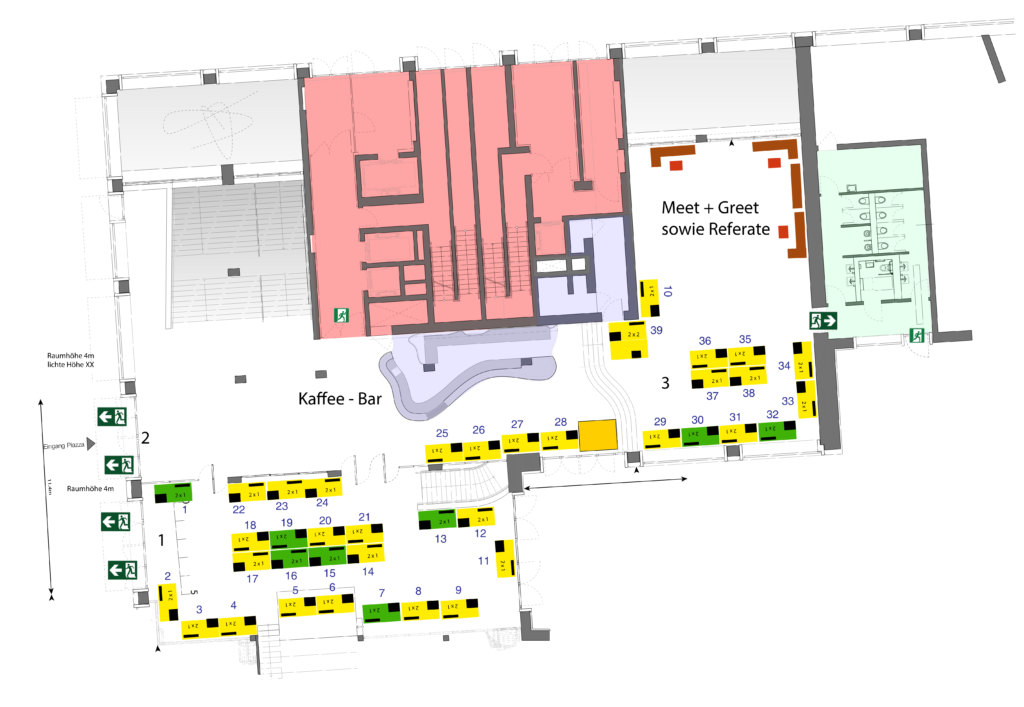
    Also this year, providers, users and interested parties can exchange ideas at the symposium and seek direct contact with various software developers for the digital offerings. The latest software applications for the real estate industry will be presented by around 40 exhibitors. In addition, the “SVIT Digital” commission is launching a “Meet and Greet” for all visitors on this day. Specific digital concerns and questions can be discussed intensively directly with proven professionals on site and other users in order to develop efficient solutions. The practice-oriented specialist presentations are an additional highlight on the “SVIT Digital Day”. And the best part: access to the symposium and the presentations is free for everyone.

    Date: Friday, September 17, 2021
    Time: 11 a.m. to 5 p.m.
    Announcement Flyer Location: KOSMOS, Lagerstrasse 104, 8004 Zurich Arrival plan KOSMOS

    Admission is free for visitors.

    Subject presentations 2021
    1 2.00 a.m.
    Global Real Estate Run
    Mario Facchinetti, initiator

    12.00 p.m.
    Global Real Estate Run
    Mario Facchinetti, initiator

    1 p.m.
    Electronic signature in real estate practice
    Dr. Boris Grell, LL.M., lawyer; LAW FIRM GRELL

    Hall plan

    List of exhibitors 2021

    Stand Exhibitors
    number 1
    No. 2 Conreal Swiss AG
    No. 3 Schwyter Digital AG
    No. 4 FLOWFACT Schweiz AG
    No. 5 casavi GmbH
    No. 6 casavi GmbH
    No. 7
    No. 8 onOffice Swiss AG
    No. 9 Flatfox AG
    No. 10 GARAIO REM AG
    No. 11 Huperty AG
    No. 12 SVIT Digital
    No. 13
    No. 14 QualiCasa AG
    No. 15
    No. 16
    No. 17 immo! nvest
    No. 18 CreditTrust
    No. 19
    No. 20 Ormera AG
    No. 21 W&W Immo Informatik AG
    No. 22 WOONIG
    No. 23 WOONIG
    No. 24 goCaution AG
    No. 25 READY DATA
    No. 26 CreditTrust
    No. 27 NeoVac ATA AG
    No. 28 NeoVac ATA AG
    No. 29 Processfux AG
    No. 30
    No. 31 DesignRaum GmbH
    No. 32
    No. 33 Aandarta AG
    No. 34 Aandarta AG
    No. 35 ImmoScout24
    No. 36 eMonitor AG
    No. 37 eMonitor AG
    No. 38 ImmoScout24
    No. 39 immotrailer.ch – immotraffic.ch
  • With a click of the mouse to the building application

    With a click of the mouse to the building application

    For around three years now, the canton of Aargau has enabled the digital submission of building applications with “eBau”. The Department of Construction, Transport and Environment is implementing this digitization step as part of the federal and cantonal eGov strategy. The advantages are obvious: "The entire building permit process from the applicant to the municipality to the canton can be processed electronically," explains Reto Käch, Head of Support and Training eBau, from the Department of Construction, Transport and Environment of the Canton of Aargau. The use of such online services enables efficient and less personnel-intensive processes, leaner work organization, more transparency and better networking of those involved.

    As of today, a total of 22 municipalities are connected to eBau Aargau. "With the step-by-step roll-out and the training courses, we are gradually familiarizing the communities with the digital building permit process," says Käch. The support manager explains the lack of the majority of the 213 municipalities in Aargau as follows: «50 percent work with their own construction management software. These communities have to wait until the second quarter of 2022. " From then on, the connection without media discontinuity will be possible via a specially initiated eCH interface. According to the figures, the switch to the electronic processing of building applications is still making municipalities that already meet the requirements hesitant. “Maybe some people have different priorities in the corona crisis. Some may also find it difficult to replace old processes. We do not apply any pressure. We are happy to support and train interested communities in this regard, ”says Käch.

    The feedback from those involved who work with eBau has been consistently positive. “The simple structure of the online form for submitting the application is particularly impressive. Mandatory fields prevent something from being forgotten when entering it. The time lost is significantly reduced, ”says Käch. And the municipalities also benefit: “In the eGov area, the standardized work processes are particularly valued. The successive work steps lead successively through the process. This means that administrative employees without specific industry knowledge can also process a building application. " Less administrative effort, better data quality and paperless work are the greatest trump cards for administrations.

    A topic that concerns all cantons
    Municipalities that are introducing eBau will only work electronically from this date. "Only a few applicants submit their applications in physical form," explains Käch. In such a case, the application would then be digitized by the administration. According to the eGov strategy, eBau Aargau should bring added value for everyone and save costs, as the administrative effort is reduced. The first cantons are already making it possible to publish a project that is subject to publication online. According to Käch, the current law does not take a position on digitization. "The Administrative Law Maintenance Act (VRPG) of the canton of Aargau only regulates when a public publication is required, how long and with what content the construction project has to be publicly published and who is to be informed in which publication medium," explains the trainer.

    The canton of Lucerne, for example, handles the digital edition as follows: The municipalities have to make the application form with all attachments available for inspection on the Internet during the public edition, if the building application was submitted electronically and the municipality has the necessary infrastructure. "We deduce from this that an online edition is possible and that there are no federal legal bases that speak against it," concludes Käch. In such a case, however, in the interests of equal treatment, citizens without internet access would have to be able to view the planning applications in the municipal office.
    The canton of Aargau did not consciously assume a pioneering role in the electronic submission of building applications. "Today all the cantons are concerned with implementing software, web applications or platforms that support the electronic submission of building applications," Käch is convinced. And adds: "It is a sign of the times that this issue is being dealt with across Switzerland." Architects, surveying and engineering offices as well as specialist planners have been working with 2D drawings, accessible 3D models, photo-realistic visualizations or digital building and terrain modeling for decades. "With the electronic building permit process, the basic understanding is changing from an administration-oriented service to a customer-oriented one," says Käch.

    Last but not least, the corona pandemic makes it clear once again how important advancing digitization is: “During the lockdown, part of the administrative workforce was also sent to the home office. One of the challenges was not the organization around the equipment, but the fact that many dossiers in the administrations are only available in physical form, ”explains Käch. Customers also increasingly switched to digital channels: "The challenges that Covid-19 brings with it could turn out to be an opportunity for increased acceptance of digital administration over the long term."

    The investment costs for the development of eBau were borne by the canton. There are no initial costs for municipalities that want to work with the digital solution. Operation, data archiving and support are paid for with an annual flat rate. The total costs for the application add up to a total of 50,000 francs per year. This amount is divided among the user communities. If all Aargau municipalities were to use eBau, this would result in a marginal contribution per year and municipality. The first three years of operation (2018-2020) were pre-financed by the canton.

  • Pestalozzi sees construction as a modern and digital industry

    Pestalozzi sees construction as a modern and digital industry

    A corporate mission statement has been developed for the Pestalozzi Group. In an interview with “ KMU Magazin ”, Matthias Pestalozzi names the main areas: corporate culture of continuity, development of digitization and networking, and cross-generational corporate management. The delegate of the board of directors to the company's management is quoted as saying that the most interesting and most important aspect of the formulation of the mission statement was the broad discussion with the employees who worked on it in workshop teams. Pestalozzi: "In the end there weren't many differences to the old model, but it is formulated in more detail, especially the topic: How do we work together?" One consequence is that the company has introduced the you culture.

    Pestalozzi, who runs the family business founded in 1763 in the ninth generation, emphasizes in the interview the importance of digitization for the company that specializes in trading in everything related to construction. Digitization and networking are a "huge topic, we are constantly working on it". Digitization is important in customer contact. The group has invested a lot in the e-shop in recent years to enable digital orders. Around 40 percent of orders for finished products already go through electronic trading. Digital marketing has also been expanded, with the use of platforms such as LinkedIn or the distribution of a newsletter. According to Pestalozzi, security problems in the digital sector are often underestimated, especially by SMEs. At Pestalozzi, employees are therefore trained on an ongoing basis.

    The Pestalozzi Group wanted to motivate young people to train in the building and construction industry with the 39th prize awarded this year for good apprenticeship qualifications. It is often difficult to find apprentices there. The pen prize is awarded in the building envelope, building services, metal construction and metal processing sectors.

  • Strabag operates completely digitally in Küsnacht

    Strabag operates completely digitally in Küsnacht

    The construction company Strabag Switzerland has been awarded the contract for the renovation of a road section in difficult terrain in the municipality of Küsnacht as well as the renewal of the gas, water and electrical lines of the local electricity supplier Werke am Zürichsee AG . According to the media release , the project will be digitally controlled from planning through construction to subsequent maintenance. For this purpose, so-called Building Information Modeling (BIM) is used. Strabag AG has been awarded the contract as general contractor. The start of construction is scheduled for the end of August and completion around October 2022, according to the announcement.

    The renovation project of the municipality of Küsnacht on the upper part of the Schiedhaldensteig is considered difficult. There, on the one hand, the renovation work has to be done in a very narrow and steep traffic area and, on the other hand, the sewerage pipes have to be replaced.

    BIM manager Stijepan Ljubicic from Strabag is quoted as saying that, on the one hand, “the construction site will be handled completely digitally” with regard to the use of BIM in the planning and implementation of the two construction projects. In addition to planning and execution, all work would be digitally documented and ultimately handed over to the client in a so-called as-built model. This data offers many advantages with regard to quality management, operation and maintenance as well as a planning basis for follow-up projects.

    The technical division manager for traffic route construction east at Strabag, Michael Graber, is quoted as saying that one of the main criteria for the award was the company's digital performance. The contract confirms Strabag's own competence and specialist knowledge in the field of BIM.

    The press release also gives facts about the construction. The excavation will make up 1,500 cubic meters, 240 meters of raw material will be laid. The road is being built over a distance of 750 meters, using 500 tons of rolled asphalt.

  • SoTech Network

    SoTech Network

    The canton of Solothurn supports the SoTech Network project, the network and training platform for MINT professions. The project was developed by the location promotion agency, the Solothurn Chamber of Commerce and sovision espace Solothurn and will enter the test phase at the beginning of 2022. (see standortsolothurn.so.ch )

  • Researchers want to print tower

    Researchers want to print tower

    The Graubünden village of Mulegns on the Julier Pass is to receive a new cultural site: Giovanni Netzer, theater director and founder of the Origen cultural festival, wants to have a new white tower built. This should be 23 meters high and comprise four floors. At the very top, a stage for performances is to be built under a dome. The appearance of the tower should be reminiscent of the Graubünden confectioner tradition.

    Netzer wants to rely on digital construction technologies for the construction of the tower. To do this, he works with researchers from the Swiss Federal Institute of Technology in Zurich ( ETH ). The tower is designed and planned by ETH professor Benjamin Dillenburger and Michael Hansmeyer from the Digital Building Technologies research group together with the Origen Foundation by Netzer. In addition, with Robert Flatt, Walter Kaufmann and Andreas Wieser, three other ETH professors from the national research focus on digital fabrication are involved.

    The components of the tower are to be produced on site with a 3D printer. Interested parties can watch this process. Robots should then build the tower from these parts. According to an announcement from ETH, the tower will be one of the tallest structures ever to be 3D printed and built by robots. The construction using 3D printing enables complex geometries to be produced and raw materials to be used sparingly.

    When the project was presented on Tuesday, Federal President Guy Parmelin was also present. Construction is scheduled to start in April 2022. In addition, the dismantling is already planned. In this way, the concrete elements can be separated from each other again at a later point in time. Theoretically, the tower could then be rebuilt in another location.

  • PropTech: The 3 most important Success Drivers

    PropTech: The 3 most important Success Drivers

    According to the Gartner Hype Cycle, every new technology is initially subject to high or exaggerated expectations. After a “cycle of disappointment” follows a “phase of enlightenment”, from which solutions then arise at a realistically increasing level of productivity. Data science, robots and drones, virtual and augmented reality or artificial intelligence are just a few of these basic technologies. The blockchain is one of the last technological hype triggers. We will see promising developments and use cases in these areas over the next few years.

    The challenge for a PropTech company is to develop a successful business model or product or service with the corresponding problem-solving potential and scalability from one of these basic technologies. In this context one often hears terms like SaaS or DSaaS. “Software as a Service” (SaaS) is a cloud service model in which applications and data are located in the cloud and thus on the PropTech provider's servers. With “Data Science as a Service” (DSaaS), the data supplied to the cloud is processed by the provider, analyzed using an algorithm and fed back to the customer as findings.

    But this is only one side of the coin. The established companies in the real estate industry must also recognize the added value of these products and services and be prepared to pay for them. The driver for real estate entrepreneurs will certainly be the cost and efficiency side, but also or above all the needs of their customers. Anyone who aligns their business model to a megatrend – such as sustainability, big data or future work – is fundamentally not wrong here.

    You can find out more about successful business models here:
    https://proptechmarket.net/loesungen

  • Artificial intelligence recognizes the type of land use

    Artificial intelligence recognizes the type of land use

    Thanks to a student at the Swiss Federal Institute of Technology in Lausanne ( EPFL ), the regularly necessary classification of land use is now much less time-consuming than before. According to a press release from the university, she has developed and trained her own machine learning algorithm that can not only distinguish forests from other types of land. Instead, Valérie Zermatten's algorithm also recognizes rivers, lakes, camping and sports fields, cemeteries, water treatment stations, public parks, airports and dams. This makes it clearly superior to the algorithm developed by the Federal Statistical Office (FSO) called Areal Statistics Deep Learning, or ADELE for short.

    The results produced by their program as part of a master’s thesis are similar to the official data published by the FSO. According to the announcement, this suggests that it could be used for land use classification in the future. The big advantage lies in the processing time for aerial photos, because their classification into around 40 different categories is still largely done by hand.

    All of Switzerland is photographed from the air every three years. Because manual categorization takes so long, the results are only published every six years. With this mapping, land consumption can be better tracked, soil permeability can be monitored and urban sprawl can be combated.

    “Our goal is not to replace humans with artificial intelligence,” says Devis Tuia, one of Zermatt's doctoral supervisors at EPFL. “Although Valérie's algorithm will reduce the amount of tedious work that has to be done manually.” But even then there is still enough for people to do – for example, to recognize whether it is a house or a school, a football field or a football field Wiese act.

  • Construction trader HGC takes a stake in Urdorf start-up

    Construction trader HGC takes a stake in Urdorf start-up

    The trading cooperative of the Swiss Builders' Association ( HGC ) participates in Cloudworks AG , based in Urdorf. The company operates the PropTech start-up umbaumanager.ch, which was founded in 2019. The digital platform carries out the entire conversion process in digital form, according to the media release on the partnership. She leads the homeowner through the entire process of the construction project, from the first cost estimate, through the obtaining of offers, the award of contracts and construction management to any defect management.

    Umbaumanager.ch has been working with a network of qualified craftsmen and suppliers since the start. The HGC was one of the first partners of umbaumanager.ch and is now participating in the operating company Cloudworks, according to the announcement. "With the network and know-how of HGC as a service provider for everything to do with construction, our platform can be expanded further," the founders of Cloudworks AG and developers of umbaumanager.ch, Faton Mati and Christian Vogt, are quoted as saying:

    The HG Commerciale cooperative, founded in 1899, supplies the Swiss construction industry with materials. "We at HGC are further expanding our digital competence with our participation and can thus offer our craft customers a clear added value", Martin Tobler, CEO of HGC, is quoted in the announcement. The HGC has around 800 employees.

  • Helvetia is investing in German real estate fintech

    Helvetia is investing in German real estate fintech

    The insurance group Helvetia continues to invest in the real estate sector. He has invested in the Hamburg company Baufi24 through the Helvetia Venture Fund. This started in 2006 as a search engine for mortgage lending. Since then it has positioned itself as a broker for real estate finance.

    Baufi24 raised a total of 6.7 million euros in its financing round. In addition to Helvetia, the St. Gallen risk capital company Btov has invested. With the fresh money, Baufi24 wants to further develop its technology and expand its branch network in Germany.

    “We believe in the experienced team at Baufi24 and see great potential for the digitization of real estate financing. Since the pandemic in particular, online offers in the area of finance have been in greater demand, ”said Michael Wieser, Managing Partner of the Helvetia Venture Fund, in a press release from Baufi24.

    In Switzerland, Helvetia acquired the real estate and mortgage broker Moneypark in 2017. Investing in Baufi24 would now result in "interesting exchange opportunities for both sides", said Patrick Scherrer, Head of Strategy & M&A at Helvetia, in a Helvetia press release.

  • Innosuisse aims to promote high-risk projects with a lot of potential

    Innosuisse aims to promote high-risk projects with a lot of potential

    The federal government has set the strategic goals for Innosuisse for the years 2021 to 2024. According to a media release , he expects the agency to focus on projects with a higher risk and "above-average economic potential". The selection should be made after “careful consideration” of the projects.

    Innosuisse should also focus on thematic tenders. The aim is to ensure that innovation topics of "great and cross-sectoral importance" are taken up. This includes the federal government, for example, key issues of digitization as well as challenges in connection with sustainability or coping with the corona pandemic.

    Innosuisse should also ensure that SMEs have easy access to the services of research institutions. The agency should attach great importance to young companies that come from the university environment.

    Innosuisse will also be commissioned to implement the Swiss Innovation Power Initiative in 2021 and 2022. The program is intended to help companies maintain their innovation activities despite the recession phase. This is not only in the interests of companies, but also important for the competitiveness of Switzerland as a business location.

    Innosuisse is a federal institution under public law with its own legal personality. Through the agency, the federal government promotes science-based innovation in Switzerland.

  • What does artificial intelligence have to do with facility management?

    What does artificial intelligence have to do with facility management?

    The topic of artificial intelligence has definitely left its “laboratory status ” behind. AI-based solutions are increasingly being integrated into everyday work. In essence, it is not about the “ learning ” technology itself, but about the data behind it. The technological solution takes over the collection, storage, processing and use of the data entered. The interplay between human and artificial intelligence will be decisive for future innovations. Those companies that use AI sensibly will be prepared for the challenges of the future and will gain decisive competitive advantages.

    AI-based solutions have also found their way into facility management. Building cleaning is a very expensive subject and cleaning agents, energy and time are often used more than necessary – this is not only unecological, but also uneconomical. With the help of artificial intelligence, the use of resources can be optimized and costs can be significantly reduced.

    The Swiss startup Soobr offers a usage-oriented AI solution here. The existing performance and building data are read into the software, whereupon the AI plans the daily tours based on factors such as room distances, room priority, number and duration of cleaning. The occupancy of the individual rooms can also be integrated into the operational planning via room sensors, so that cleaning can be carried out precisely where it is really necessary. The cleaning staff are guided through the respective tours by means of an app on mobile devices, whereby you can feed the AI with feedback and documentation. Dynamic route planning increases efficiency, saves time and money in route planning and increases transparency for data evaluation.

    You can find more about digital helpers in the real estate and construction industry at: https://proptechmarket.net/solutions

  • Swisstopo data can now be accessed free of charge

    Swisstopo data can now be accessed free of charge

    All digital standard products from swisstopo are now available free of charge. The Federal Office for Topography wants to enable digital maps, aerial photographs, landscape models and geological vector data to be "used, distributed and reused". This also includes commercial uses, as swisstopo announced in a press release .

    These data were made generally accessible following a Federal Council resolution. The Federal Council is thus pursuing the goal of an even wider use of geospatial information. In addition, this opening is part of the "Strategy for Open Administrative Data in Switzerland 2019-2023".

    This data should be of particular interest to engineers, architects, programmers and planners. Access to official geospatial data will also be easier for research and science, the press release said.

    In this way, swisstopo could make an active contribution to innovation and economic growth and at the same time support the digital transformation in Switzerland. The files are available in machine-readable form and can easily be integrated into digital processes.

  • The digitization of the co-owner assemblies

    The digitization of the co-owner assemblies

    Regardless of the Corona situation, the following difficulties must be addressed and overcome, especially at STWE meetings:

    • Fair communication with all stakeholders
    • Compliance with legal provisions and deadlines
    • High administrative effort
    • Compliance with deadlines
    • Creation and assignment of tasks
    • Logging of the entire meeting

    Digitization has also given a huge boost to solutions in this area. Accordingly, various providers are active in the market who are trying to move the analogue process into the digital world, but not all of them succeed in this with the same simplicity and slightly broad solution approach. The preselection and quality check are all the more important here. The solution from our product portfolio can be understood as plug & play due to its compatibility with various ERP formats and IT infrastructures. Due to the one-time setup and the relatively small effort, the efficiency advantages stand out even more. As soon as everything has been installed and put in place, entire processes can be digitized and comprehensively dealt with.
    Hybrid, partially digitized processes are also not a problem for the solution, which is very important in view of the different willingness / IT skills of the meeting participants. In this way, all of the above difficulties can be addressed and resolved using one and the same software.

    The bottom line is that, with the support of the simple solution, flexible STWE meetings can be carried out physically and / or digitally, thereby significantly increasing the efficiency of the implementation as well as of the preparation and follow-up work. This means that the focus can be put back on the work steps where specialist and social skills are needed. In addition to the digitization of management, other digital solutions have come into focus, which can be seen at PropTechMarket.net.

    You can find out more about this at: https://proptechmarket.net/solutions