Tag: Entwicklung

  • The Landolt site in transition

    The Landolt site in transition

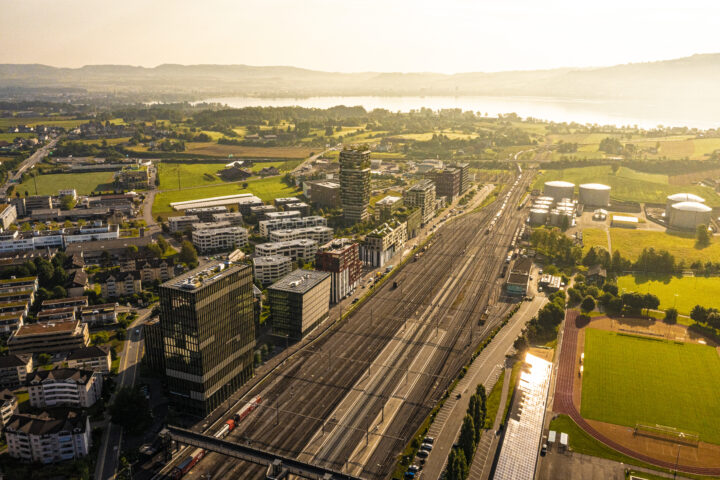
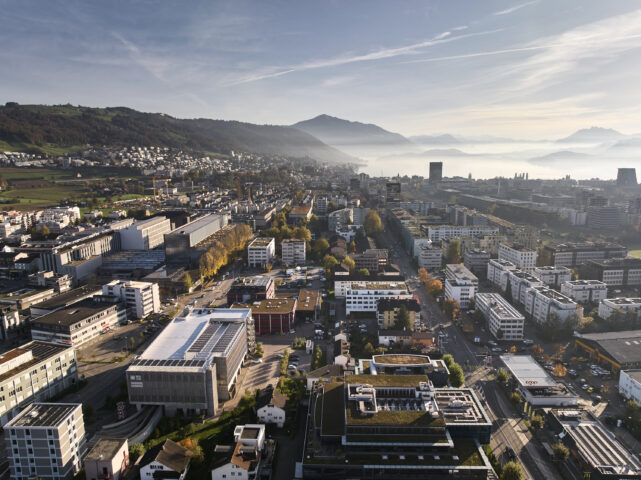
    What significance does the development of the Landolt site have for Glarus as a business location? What specific impetus do you expect for the local economy and the creation of new jobs?
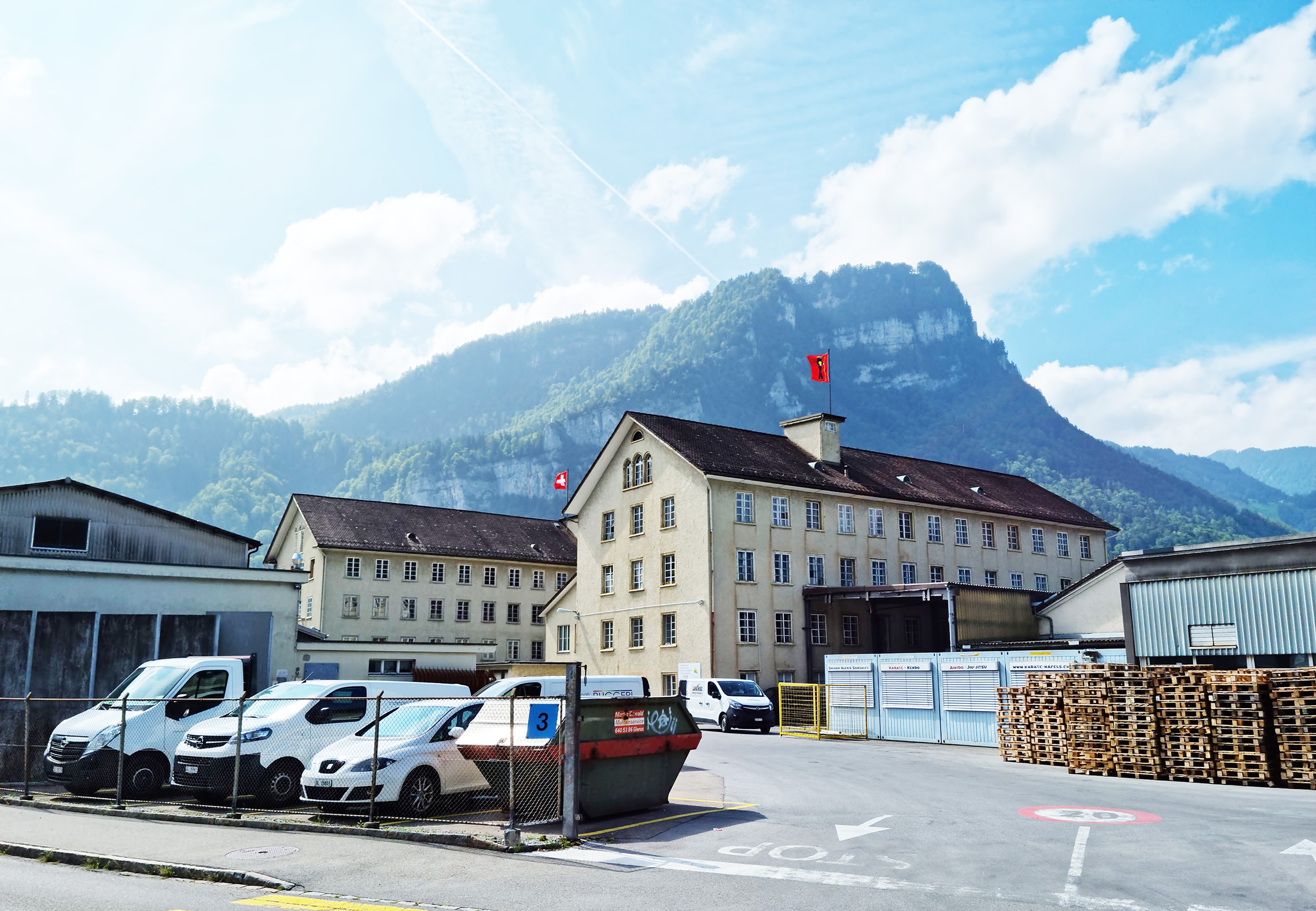
    The site is already well utilised with many different SMEs. When the Landolt company moves out in the medium term, the old stock will be freed up. The Shedhalle, which we have already renovated and equipped the roof with a large PV system, is particularly interesting. We are in the process of attracting new tenants and offer a very attractive location with optimal logistics connections. Attractive new jobs are being created here.

    Temporary uses such as the planned mobility hub are a central element of the concept. What opportunities do you see in these temporary uses to revitalise the site during the development phase?
    This is one of the most important parts of the transformation. We would like to keep all of the existing tenants if possible. We maintain direct contact with them so that they can continue to develop within the site. The buildings with interim uses are let cheaply but not for long, whether as storage, car parks or hubs, but without major investment on our part. There is also room for creativity here.

    How are the canton of Glarus and the location promotion organisation involved in the project? Is there strategic coordination with cantonal development goals?
    We are in regular dialogue with the location promotion agency and are confident that the good location and the size of the space on offer will also attract larger SMEs to the canton of Glarus. Several companies are already interested in setting up here.

    Participatory planning is emphasised. How were local residents and businesses able to get involved and what findings from this process will be incorporated into the next steps?
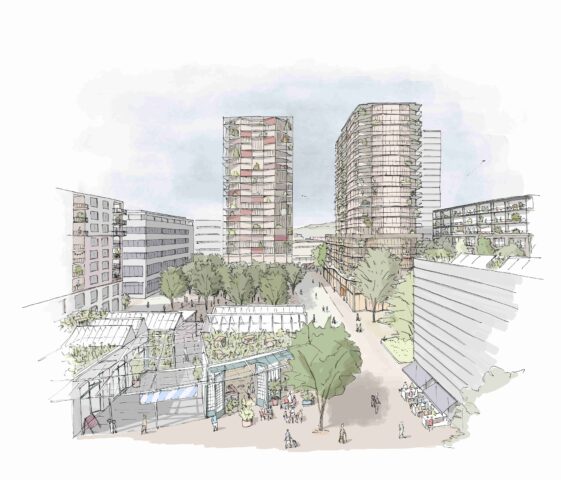
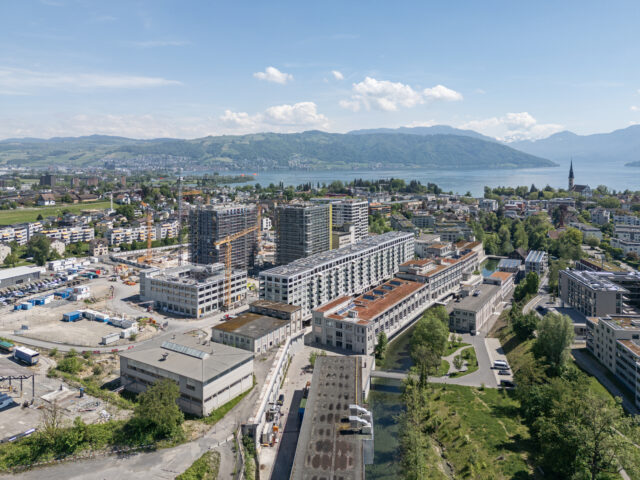
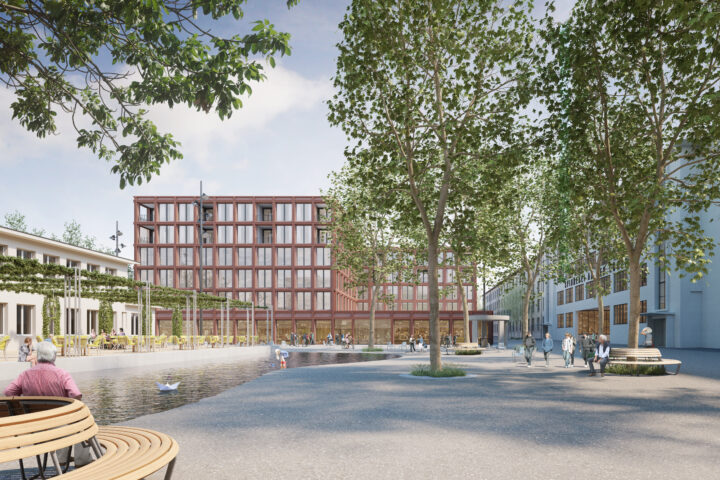
    With well-supported representation from the authorities and a specialist committee from the worlds of business and urban planning, as well as an international team of planners, the urban design, the relationships with the neighbours and the use and building distribution of the site were reworked. Many of the old spinning mill buildings are to be preserved and given a new lease of life.

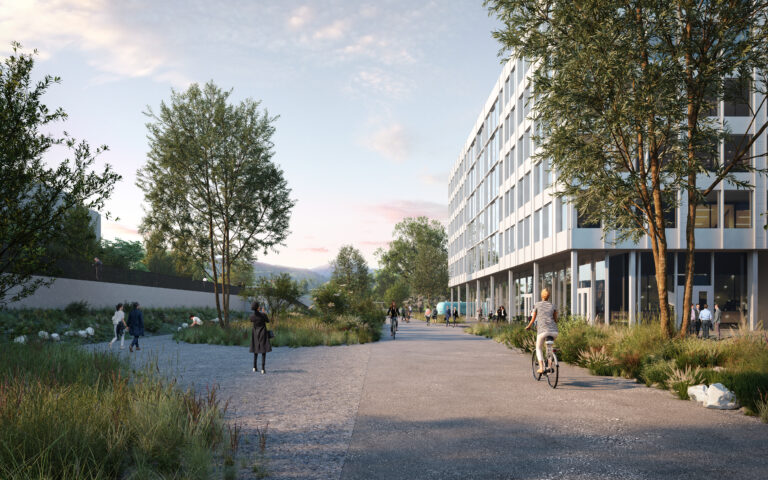
    The current purely commercial area will be supplemented with various commercial offerings, and a small proportion of housing will also be possible. The very attractive location between the Chli Linthli and Mühlibach streams also invites walkers and residents to experience this beautiful and idyllic place.

    The planners are currently working with the design commission and the heritage conservation organisation to draw up the basic project. By the summer of 2025, it will be possible to show the future shape of the site, the expanded commercial offer and the variety of flats. We are very pleased with the excellent cooperation and are convinced that the careful handling of the existing buildings and the new buildings will create great added value for the users of the site, as well as for local residents.

    The development will take place in four stages. How will you ensure that the site remains lively, usable and attractive in the intermediate phases and does not become a long-term construction site?
    As already mentioned, part of the existing industrial buildings will be used for new purposes. The very old existing buildings, which will be vacant in the medium term after the Landolt company moves out, are to be rented out again quickly after conversion or modernisation. The various talent zones were defined for this purpose, and these form the stages. The development will be successively finalised with the completion of the respective zones.

    The innovation campus at Chli Linthli is intended to develop independently and in line with demand. Which target groups would you like to address here and which sectors could settle here?
    This site is already fully occupied with a wide range of businesses. The needs of the future will be accommodated here. The idea is to create a diverse range of businesses that require good networking within this area and function like a campus. However, we are also open to other ideas. Only time will tell what these are.

    How do you create long-term identity and loyalty on the site? What role do social, cultural or ecological offerings play for future users?
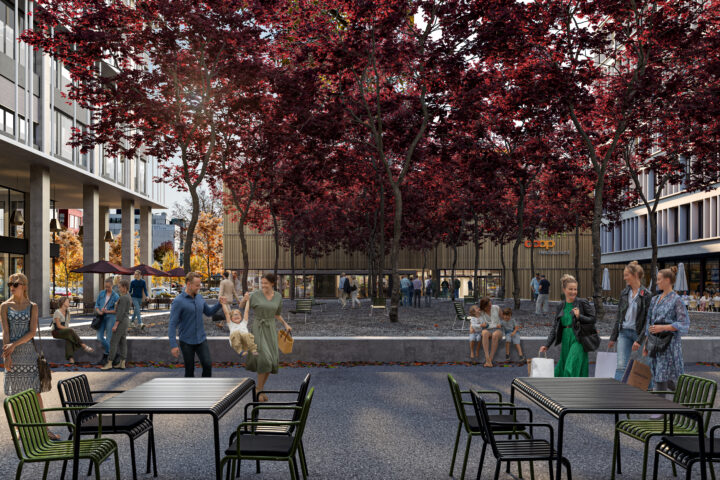
    The site already has a rich history. You can see this everywhere here. With a new use and the right approach, the culture will be preserved but also redefined. With our goal of sustainability, this process will also conserve resources. The use of natural building materials and simple architecture will create affordable working and living space that is healthy and worth living in. With its watercourses, green spaces, newly created neighbourhood squares, etc., the site offers a lot of spatial quality, but also a very attractive place to work, live and stay.
  • Aargau shapes the future with a development model

    Aargau shapes the future with a development model

    The canton of Aargau is a dynamic region with a high quality of life and economic attractiveness. In order to secure this strength in the long term, the cantonal government has adopted the 2025-2034 development model (ELB). This formulates clear goals and lines of action that respond to the key challenges of our time: population growth, climate change, digitalisation and a shortage of skilled workers.

    The focus is on actively shaping the further development of the canton in close cooperation with municipalities, companies, research institutions and the population. The guiding principle “Together for Aargau” summarises this collaborative approach. The ambitions in the areas of economy, society, environment and administration can only be successfully realised by working together.

    Three strategic priorities for a strong region
    Think holistically and intensify economic development
    Aargau wants to continue to position itself as an attractive location for companies, research and innovation. To this end, targeted framework conditions are being created to maintain and expand value creation and employment in the canton.

    Shaping space, securing foundations
    In the area of conflict between living, working, mobility and nature, intelligent spatial planning is essential. The aim is to proactively manage conflicts of use and protect natural resources.

    Strengthening efficient municipal structures
    The public sector should act in an efficient, cooperative and citizen-centred manner. Municipal mergers, inter-municipal cooperation and digitally supported services form the basis for this.

    These priorities are underpinned by 30 specific areas of focus that are integrated into the task and finance plan and are reviewed annually.

    Sustainability requires room for manoeuvre
    The financial framework for implementing the strategy is secure. Even if structural deficits are expected from 2026, the well-filled equalisation reserve will allow the continuation of all planned measures until 2034. Tax relief will be reviewed depending on the situation and with a view to the overall financial situation. This ensures that the canton’s room for manoeuvre is also maintained in the long term.

    From vision to implementation
    The EFA will be implemented in stages and is closely linked to medium-term planning. Numerous projects are already underway as part of the existing development agenda, from energy-efficient construction and innovation promotion to integrative housing models. New projects will be initiated, prioritised and provided with suitable resources in future.

    Progress will be reported transparently on an annual basis. This is an important step towards a fact-based and trustworthy location policy. The cantonal government is thus committed to agile, dialogue-oriented management of cantonal development in close coordination with all relevant stakeholders.

    The 2025-2034 development model is much more than a political planning instrument. It is a powerful promise to a population that prioritises quality of life. To companies that are looking for reliability and innovation and to municipalities that want to help shape their future with confidence. Aargau is thus positioning itself as a modern canton with a clear compass. Economically strong, ecologically responsible and socially anchored.

  • Humans at the centre of the future of AI

    Humans at the centre of the future of AI

    Artificial intelligence has arrived in everyday life, from language models such as ChatGPT to personalised recommendations. But AI is not intelligent in the human sense. Manuel Kaufmann from the ETH AI Centre demonstrated this vividly. Computers process images as numbers, while humans interpret content contextually. The difference? “Humans think, computers calculate,” says Fabian Unteregger.

    From the moon mission to a million users in 5 days
    AI systems have made a technological leap forward with enormous computing power. Stephan Sigrist from the think tank W.I.R.E sees AI as an evolutionary development with disruptive potential. His vision is a personal AI assistant that negotiates, plans and communicates with each other on our behalf. This will not only fundamentally change the internet, but also our everyday lives.

    Innovation needs social benefits
    An AI-related productivity gain of 20 per cent is expected for Switzerland. But technology alone is not enough. “Innovation is what creates benefits,” says Sigrist. This is precisely why clear framework conditions are needed. Stephanie Gygax from Algorithm Watch calls for broad social participation in the design, particularly in view of ecological and ethical issues.

    Switzerland as an AI nation with untapped potential
    Pascal Kaufmann, founder of AlpineAI, sees Switzerland as the origin and future location for AI. With SwissGPT, he wants to create a local response to global developments that is trustworthy, scientifically sound and technologically leading. For him, it is clear that AI can serve people if they actively shape it.

    Dialogue with society
    The series of events entitled “The robot, our new friend and helper?” shows how important social dialogue on AI is. Because only if the fears, questions and expectations of the population are taken seriously will a technology emerge that serves people – and not the other way round.

  • Occupational pension provision with high interest rates

    Occupational pension provision with high interest rates

    The year 2024 was a success for the pension funds. Thanks to positive developments on the capital markets, an average net asset performance of 7.4 % was achieved. Only 0.8 % of the institutions still had a shortfall at the end of the year. Active insured persons also benefited. Their retirement assets earned an average interest rate of 3.76 %, well above the statutory minimum interest rate of 1.25 %.

    Market risks remain
    Despite the positive outlook for 2024, OAK BV urges caution. Market distortions due to geopolitical tensions are already weighing on the current year. It therefore remains essential to build up and maintain fluctuation reserves in order to cushion potential losses and stabilise the system in the long term. A stress test carried out shows that the pension funds are currently well positioned.

    Focus on collective and joint schemes
    The Supervisory Board continues to focus on collective and joint schemes, which look after around 75% of active insured persons. In this heterogeneous structure, the OPSC sees risks due to conflicts of interest, competitive pressure and insufficient reserves in the event of rapid growth. New guidelines on the distinction between interest and benefit improvements and on transactions with related parties are intended to increase transparency and stability.

    The next development step
    In addition to ongoing supervision, the OPSC BV is providing impetus for the further development of the system. A more standardised supervisory practice, clearer rules for brokerage and auditing as well as a risk-oriented reporting obligation should make the system fit for the future. The evaluation of the LOB structural reform will show where there is a need for legislative action.

    Robust system, remain vigilant
    Occupational pension provision in Switzerland is solid and resilient at the end of 2024. But the challenges remain. Long-term security can only be guaranteed with consistent supervision, structural development and a clear focus on the interests of the insured.

  • FORUM UZH Centre for Education and Research

    FORUM UZH Centre for Education and Research

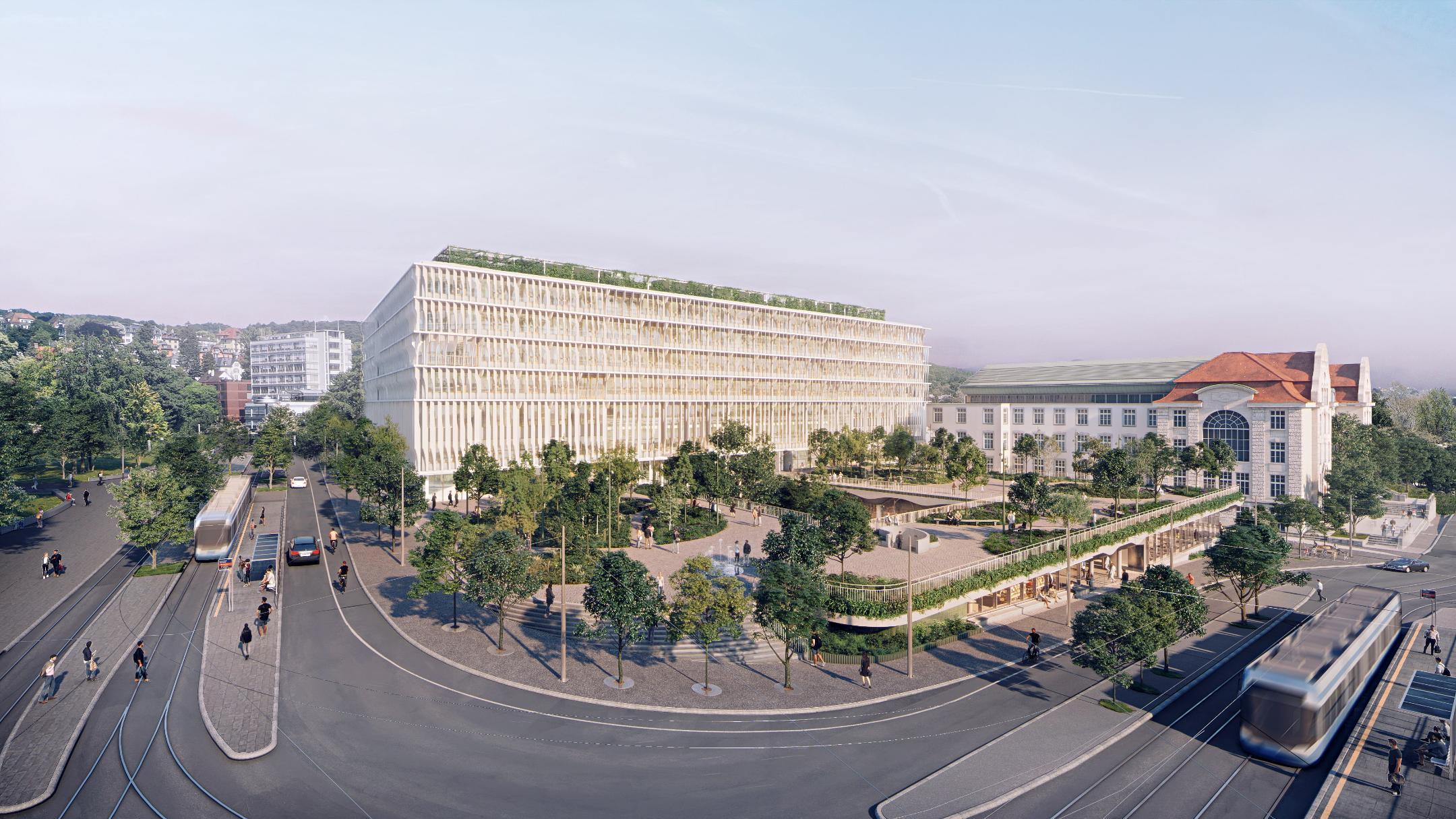
    The FORUM UZH is a milestone for the structural and academic development of the University of Zurich. The new building comprises a total of 37,000 m² of usable space and will not only accommodate the predicted growth in student numbers, but also set new standards in teaching, research and sustainability. The new centre will bring together the faculties of law, economics and modern philology. These will be complemented by modern libraries, sports facilities for secondary schools and the Academic Sports Association as well as publicly accessible cafeterias and commercial areas.

    Architecture and spatial concept
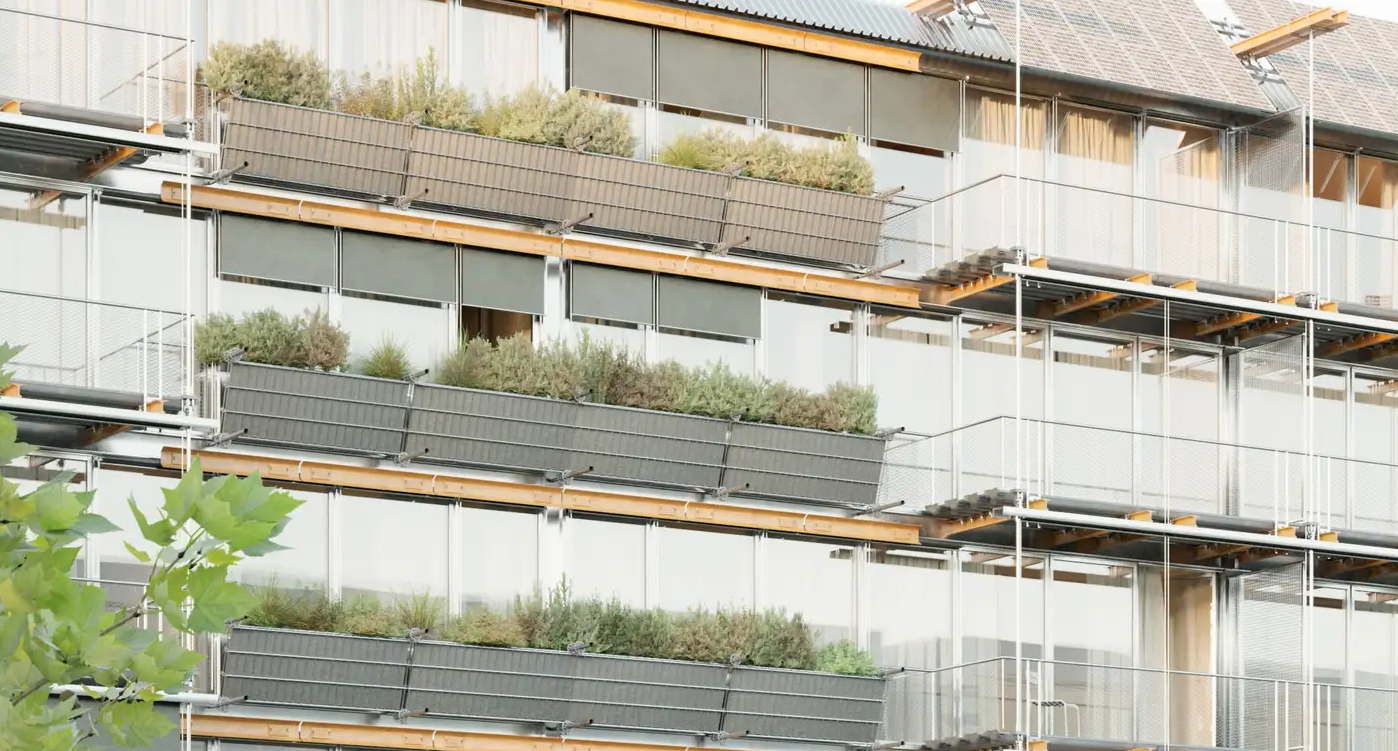
    The FORUM UZH consists of a terraced base for teaching and university life, a trapezoidal structure hovering above for research and a central courtyard. The structure is set back from Rämistrasse to create a spacious front zone with city balconies that blends in with the urban surroundings. The façade design with horizontal ceiling panels and vertical brise soleils gives the building a striking depth effect and allows for flexible light regulation inside.

    At the centre of the building is the eponymous Forum, a light-flooded hall that is a lounge, meeting and work space all in one. It connects all levels and can be used for university and public events for up to 2,000 people.

    Flexible learning environment and modern infrastructure
    The FORUM UZH offers a variety of innovative teaching and learning spaces. Five lecture theatres and several seminar rooms can be used flexibly and are equipped with state-of-the-art technology to enable hybrid teaching models. There will also be a spacious teaching and learning centre with over 700 student workstations. The university library will be united under one roof on the upper floors.

    Sustainability and innovative construction
    The FORUM UZH is based on a sustainable timber-concrete hybrid construction method that reduces CO² emissions while offering a high quality of stay. The intensively greened roof not only serves as a fifth façade, but also as an ecological compensation area with a habitat for flora and fauna. A photovoltaic system supplies its own electricity, while over 50 large trees on the redesigned town square have a positive impact on the microclimate.

    Thanks to the modular design, UZH saves as much CO² as would be released by the construction of 77 detached houses. The building will be certified in accordance with the SGNI Gold standard and Minergie P.

    Integration into the urban environment
    The FORUM UZH will not only be open to the university community, but also to the city’s population. The libraries, catering areas and neighbourhood shops will be open to the public and the Gloriaterrasse will be a green meeting place where people can linger. The urban design will create a direct link between the university quarter and the surrounding neighbourhoods.

    Construction schedule and next steps
    Following the completion of the preliminary project, construction work began in August 2024. Completion is scheduled for 2028 and the building will be occupied in 2029. Until then, students and researchers at the University of Zurich will be able to follow the development of this project of the century at close quarters.

  • SBB continues to develop Basel

    SBB continues to develop Basel

    With the “Wolf Basel” project, SBB is transforming a 160,000 square metre site in the east of the city into a lively, sustainable urban quarter. The transformation is exemplary for the intelligent densification of urban spaces. Living, working, leisure and logistics are to coexist here in a new form that conserves resources, is sustainable and integrated into the existing urban structure.

    Construction work on the western part of the site will start in 2027. SBB has sought and found top architectural and functional solutions in two competitions. The jury, consisting of independent experts and representatives of the client and the Canton of Basel-Stadt, has now recommended the projects “Janus” by ARGE Experience from Paris with M-AP Architects from Lausanne and “Binaria” by ARGE Parabase GmbH and Confirm AG from Basel for realisation. The two new ten-storey buildings will offer around 300 flats and set standards in terms of sustainability, quality of living and architectural integration.

    Sustainability meets urban innovation
    The planned residential buildings reflect the changes in urban development. The flats are designed for different lifestyles, and communal areas in the ground floor zones promote social interaction. The roofs not only serve as a source of energy through photovoltaics, but also as water reservoirs and in some cases as accessible recreational areas. Photovoltaic elements on the façades, greenery, renewable heating systems and sophisticated systems for cooling in summer are all part of a comprehensive energy concept.

    The project also sets new standards in terms of construction. Screw connections replace adhesive joints, modular structures allow for later conversion or dismantling, making design for disassembly a reality. Wolf Basel thus presents itself not only as an urban development model, but also as a technical model for the future.

    Identity is created through dialogue
    Even before construction begins, the site will be opened up for interim uses, experiments and participation. A historic railway hall has recently been used as a temporary pickleball court, bringing movement to the centre of the development area. In addition, various spaces are available for longer-term uses in the areas of culture, leisure and catering. SBB is calling on people to submit creative ideas and play an active role in shaping the future neighbourhood.

    The opening is more than just a gesture, it is part of a strategy in which urban development is understood as a participatory process. This creates an emotional bond with the neighbourhood and its future identity at an early stage.

    Staged construction with vision
    Construction of Wolf Basel is scheduled to start in 2027. In the first phase, the residential buildings will be built in the western part of the site, including a third in the affordable segment by non-profit property developers. At the same time, the Urban Hub, a public space offering catering, sport, culture and services, will be developed in the middle section. In a second phase, expected from 2031, commercial and service buildings with around 1,000 workplaces will follow in the eastern section.

    The entire project is based on the legally binding development plan dated 2 May 2023 and is an example of the high-quality development of inner-city potential areas in Switzerland.

  • 75 years of Swiss sustainability

    75 years of Swiss sustainability

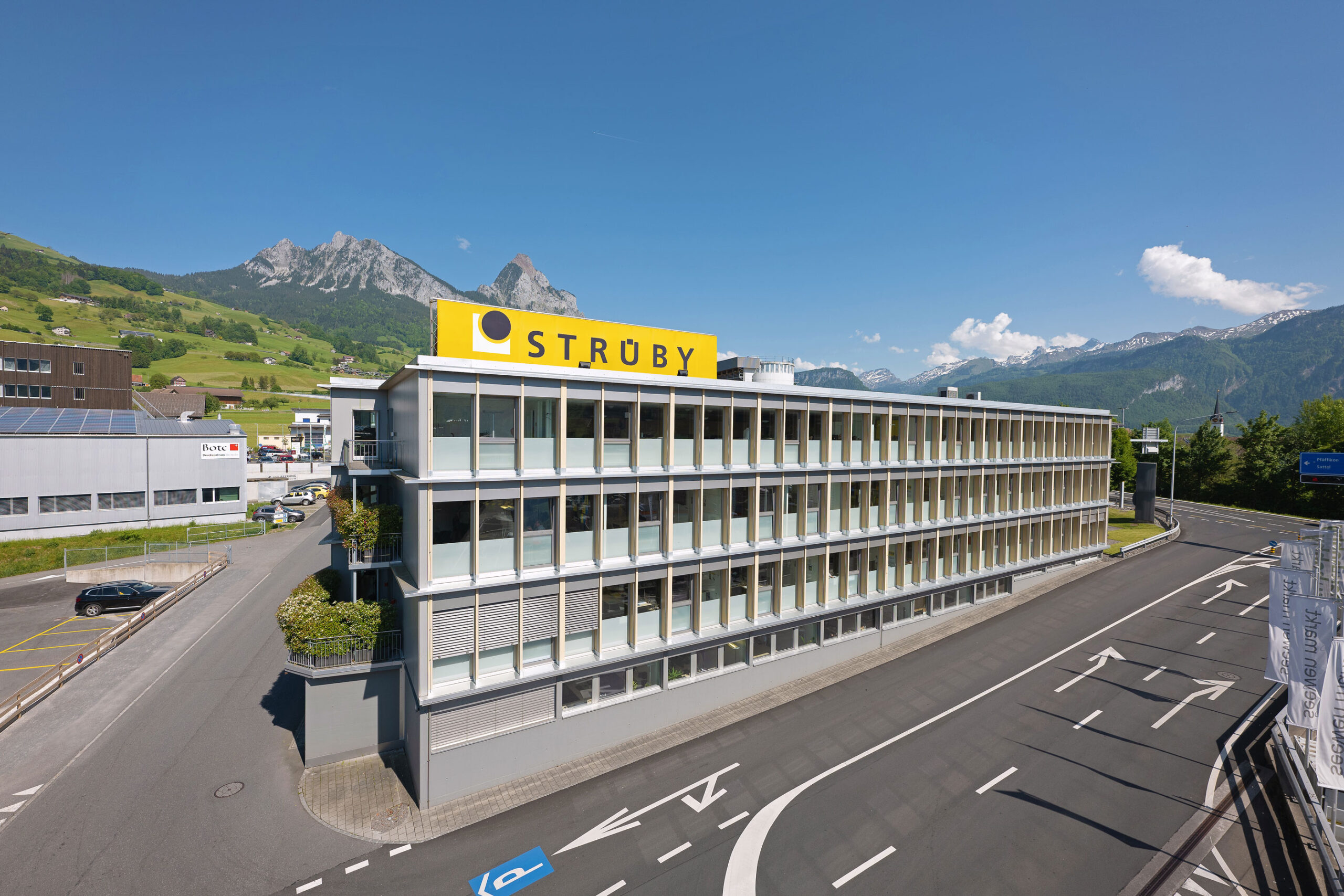
    The event is organised in close cooperation with Strüby Unternehmungen, which is the main sponsor of this event. The focus will be on sustainable development in Switzerland, an area in which Strüby Unternehmungen excels as they work with Swiss wood, one of the most sustainable building materials available. FIABCI-SUISSE and the Strüby companies are delighted to be celebrating their 75th anniversary together!

    The FIABCI-SUISSE association acts as a hub and information service provider for the Swiss property industry in predominantly international matters. FIABCI-SUISSE is an umbrella for all Swiss organisations with an international real estate focus. The international association is thematically unbound and economically independent

    As a full-service provider specialising in timber, Strüby Unternehmungen combines development, planning and timber construction under one roof. This is an important prerequisite for the efficient and precise realisation of multi-storey buildings and large-scale projects. Strüby is Switzerland’s leading full-service provider specialising in Swiss timber.

    PROGRAMME OF THE DAY

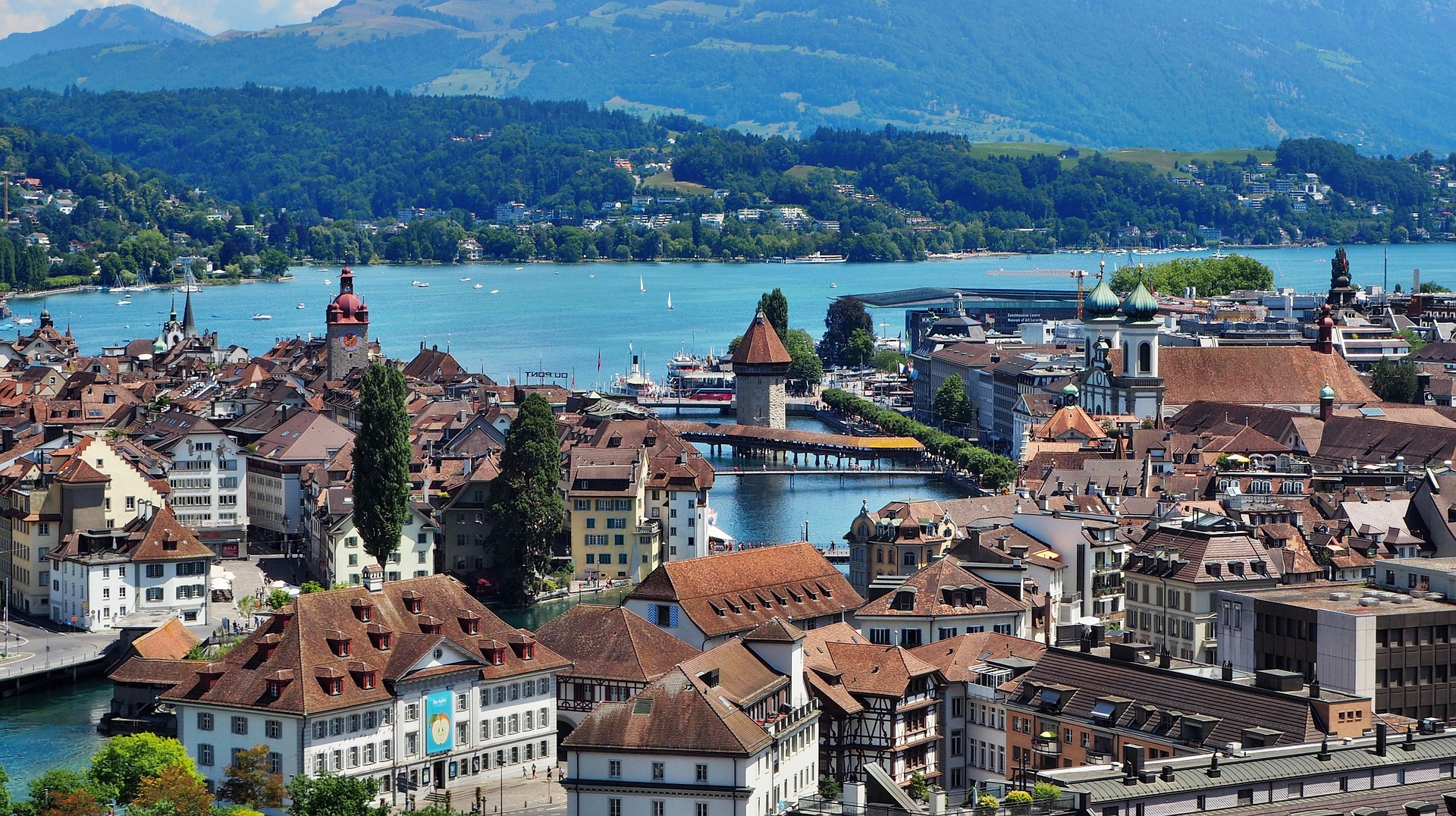
    10:15 a.m Meeting point in front of the KKL in Lucerne and welcome by FIABCI-SUISSE
    Bus transfer to Zug with delivery of “Strüby’s small snack”
    11:00 a.mArrival in Zug
    Tour of Zephyr V-Zug and Herti retirement centre
    11:30 a.m Bus transfer to Seewen SZ to the headquarters of Strüby Unternehmungen
    12:00 pm Lunch on the premises of the Urmiberg business centre (GZU)
    13:30 hrsGuided tour of the Urmiberg Business Centre (GZU), a Strüby construction
    14:00 hrs Specialist conference:
    The Strüby companies – Pius Kneubühler
    Modern timber construction architecture – Didier Pichonnaz
    Timber input with a view to NetZero – Andreas Binkert
    Panel, questions and answers – All
    15:00 hrsBus transfer to Root LU
    15:30 hrsGuided tour of the Strüby Holzbau AG production centre in Root LU
    16:00 hrsAperitif
    16:30 hrsReturn journey by bus to Lucerne

    For further information : www.fiabci.ch

  • Central Switzerland’s economy remains confident

    Central Switzerland’s economy remains confident

    The economic mood in Central Switzerland remains largely optimistic. According to the latest edition of “Finanzmonitor Zentralschweiz 2025”, an annual study conducted by the Institute of Financial Services Zug at Lucerne University of Applied Sciences and Arts and the Central Switzerland Chamber of Commerce and Industry, almost 65 per cent of the companies surveyed rate their economic situation as good. This shows an overall stable development despite slightly gloomier expectations compared to the previous year.

    Focus on expansion and skills shortage
    Around 60 per cent of companies are planning to expand, which indicates a continued willingness to grow. At the same time, the shortage of skilled labour remains a key challenge for the economy. Companies are finding it increasingly difficult to recruit qualified employees.

    International uncertainties affect export-oriented companies
    While small and medium-sized companies are reporting a stable business situation, larger export-oriented companies are more affected by global developments. Uncertainties in the USA, France and Germany in particular are having an impact on planning. In addition, protectionist measures by the new US government are increasingly becoming the focus of economic concerns.

    Exchange rate risks are becoming less significant
    Compared to the previous year, the strong Swiss franc is perceived as less of a problem. Despite an expected further appreciation against the euro, concerns about exchange rate fluctuations appear to be becoming less important.

    Less voluntary reporting, less effort
    Another topic covered by the Financial Monitor is sustainability reporting. The number of voluntarily active companies is declining, but it is clear that the actual effort required to prepare a sustainability report is less than many companies initially feared.

    Stability with growing challenges
    Central Switzerland’s economy remains optimistic, but faces structural and international challenges. There are prospects for growth, but issues such as a shortage of skilled labour, global uncertainties and regulatory requirements will have a significant impact on future development.

  • Record figures and creative impetus for the property sector

    Record figures and creative impetus for the property sector

    The 13th edition of the Swiss real estate trade fair for investors, which took place on 15 and 16 January 2025 in Hall 622 in Zurich Oerlikon, exceeded all expectations. With a record attendance of 5,167 trade visitors and 154 exhibitors, IMMO25 confirmed its leading role as the most important trade fair for the property and finance sector in Switzerland.

    Focus on forward-looking topics
    The trade fair offered a wide range of specialist topics along the entire value chain of the property industry. The focus was on current challenges and trends such as

    • The future of construction: innovative building concepts and sustainable architecture
    • The tenant of tomorrow: New demands and changing living concepts
    • Falling interest rates: effects on the property market and investment strategies
    • Sustainability: energy-efficient buildings and climate-friendly developments

    The motto “Growth through creativity” was reflected in the numerous innovative solutions that were presented and discussed at the trade fair.

    First-hand expert knowledge
    A highlight of the event was the IMMO Forum, which offered expertise and inspiration over two days with 35 panel discussions and 150 renowned experts. The debates were not only followed by trade fair visitors, but also by over 1,900 online viewers who followed the forum live.

    Review and outlook
    The organisers MV Invest and Swiss Circle were delighted with the great success of the trade fair and thanked all exhibitors, visitors, speakers and partners for their support. IMMO25 has once again proven that it is a leading platform for the property industry, providing impetus and promoting exchange between investors, developers and experts.

    The next edition of IMMO26 will take place for the first time on 14 and 15 January 2026 in Hall 550 in Zurich Oerlikon.

  • Swiss data ecosystem

    Swiss data ecosystem

    Data is a key resource for economic development, research and social progress. To prevent data from remaining in isolated silos, the federal government is focussing on a national data ecosystem. This comprises topic-specific data spaces in which companies, universities, authorities and organisations can exchange data in a secure and controlled manner.

    The Federal Council has instructed the Federal Chancellery to create a central contact point to coordinate these data rooms. The Swiss Data Ecosystem Focal Point, which began operations on 15 January 2025, is operated by the Federal Chancellery in collaboration with the Federal Office of Communications, the Federal Statistical Office and the Directorate of International Law.

    Coordination, advice and international networking
    The main task of the contact point is to create the basis for an interoperable data ecosystem. This includes regulations, technical standards and organisational structures. At the same time, it supports ongoing data room projects with conceptual, organisational and legal advice.

    A central element is the networking of the relevant players. Experts can exchange knowledge and experience in so-called communities of practice in order to accelerate the development of joint data solutions. In addition, the contact point works with international partners such as the Fraunhofer Institute to ensure the compatibility of Swiss data spaces with European and global initiatives.

    Making data usable for business, research and society
    Several data room projects are already under development, for example in the areas of health (“DigiSanté”), tourism (“National Data Infrastructure for Tourism”) and agriculture (“agridata.ch”). Another example is the planned mobility data space, in which players from public transport, logistics and the authorities exchange mobility data. This will enable more efficient traffic management, optimised route planning for freight forwarders and faster response times for emergency services.

    With the new contact point, Switzerland is taking an important step towards utilising the potential of data sustainably and promoting digital innovations across industry and administrative boundaries.

  • Smart City Winterthur 2030

    Smart City Winterthur 2030

    Since the first smart city strategy in 2018, Winterthur has established itself as one of the most progressive cities in Switzerland. At that time, the focus was on quality of life and resource efficiency, supplemented by topics such as energy, mobility, education and health. With the revision of the strategy towards Smart City Winterthur 2030, the City Council is now focussing on new cross-cutting topics such as innovation, needs orientation and co-creation. These topics are crucial to meeting the requirements of a changing society.

    Two programmes are driving implementation
    The new strategy is being implemented through two programmes, the Innovation Programme and WinLab. The innovation programme supports employees of the city administration in the development and implementation of innovative projects. The aim is to strengthen the culture of innovation within the administration.

    The WinLab, on the other hand, acts as an urban real-world laboratory in which representatives from business, science, civil society and municipal institutions work together. In this creative space, forward-looking solutions for the city are developed and tested. Both programmes create scope for experimentation and promote sustainable innovations that meet the needs of citizens.

    A strategy for the future
    The Smart City Winterthur 2030 strategy comes into force on 1 January 2025 and is part of the long-term goal of shaping Winterthur as a sustainable and adaptable city. The strategy will be reviewed after five years at the latest to ensure that it continues to meet the needs of the city and its population.

  • Sites in the canton of Zug

    Sites in the canton of Zug

    The cantonal structure plan regulates the main features of the desired spatial developments. It sets out in text and on maps how the cantons and municipalities should develop.

    The need for more affordable living space is recognised by politicians and the canton: In addition to “conventional” flats, flats for families, affordable flats and flats for the elderly are also being built in the various areas.

    A wide variety of site developments are taking place across almost the entire perimeter of the “valley communities”. In addition to the sites, the traffic situation is also being further developed and adapted to the increased utilisation: Examples range from the conversion of bus stops to bypasses to relieve the burden on Cham town centre. This also includes car-sharing concepts, such as at the Papieri site in cooperation with AMAG.

    A lot is also happening in public transport. In future, the Papieri site in Cham is to receive an express bus via the bypass motorway and the Unterfeld Süd site will have a bus stop in the neighbourhood.

    Sustainability plays a decisive role in new projects in particular. The Zug area plays a pioneering role in this respect. The Papieri site in Cham was honoured with the prestigious Watt d’Or award from the Swiss Federal Office of Energy. This emphasises the site’s initiative in the field of renewable energies. A climate-neutral district is being created here that relies entirely on renewable energy sources and covers 75% of its energy requirements on site. The innovative technologies contributing to the high level of energy self-sufficiency include hydroelectric power plants and photovoltaic systems. Geothermal energy is used for heating and cooling.

    The sustainability certificate, awarded by the Swiss Sustainable Building Council to Suurstoffi in Rotkreuz, recognises the sustainable construction methods and holistic planning of the project. The award proves that the highest standards in terms of energy efficiency, mobility and biodiversity have been met. The projects show that Zug not only assumes ecological responsibility, but also serves as a model for forward-looking urban development in Switzerland. By utilising innovative concepts and technologies, the canton of Zug is positioning itself as a pioneer in the sustainable design of urban living spaces.

    The other sites are also impressive. The construction of a high-rise building in timber construction is planned on the Tech Cluster site. The “lighthouse project” called “Project Pi” envisages the construction of an innovative residential tower block. With a height of 80 metres, the plan is to build one of the tallest timber high-rises in Switzerland with affordable flats.

    Baar – Unterfeld Süd
    A mixed-use neighbourhood with around 400 residential units and around 1,000 workplaces is planned for the Unterfeld Süd area. The basic structures were defined by representatives of the population of Baar together with experts under the leadership of the municipality. The development plan for the first of three construction phases was put to the people of Baar for a vote on 22 September 2024. The plan was approved with 74 per cent of votes in favour.

    The realisation of the first stage includes the high-rise building at the Baar Lindenpark light rail station and the neighbouring commercial building. These will be transferred to a joint development plan. The earliest possible start of construction of the first stage is planned for 2025. The remaining building plots will be developed in parallel and realised in subsequent construction phases. According to current planning, Implenia’s project will be completed in 2029, provided the subsequent plans are approved by the relevant authorities and construction proceeds according to plan.

    Hinterberg South (Städtler Allmend)
    The Hinterberg Süd site in the Städtler Allmend employment area in Cham will become a new, lively and easily accessible working and shopping centre for the local population. It offers attractive space for new companies to set up shop and ground-floor uses for the neighbourhood. The upper floors of the office buildings offer flexible spaces that can be customised to the individual needs of future companies.

    Publicly accessible uses such as a restaurant, café or bakery are located on the ground floors. They offer workers, shoppers, visitors and passers-by various consumption options and contribute to the revitalisation of the area and the entire neighbourhood. The four buildings surround a public square – the actual centrepiece of the site, which is open to the general public as a place to meet and spend time.

    Bösch Hünenberg
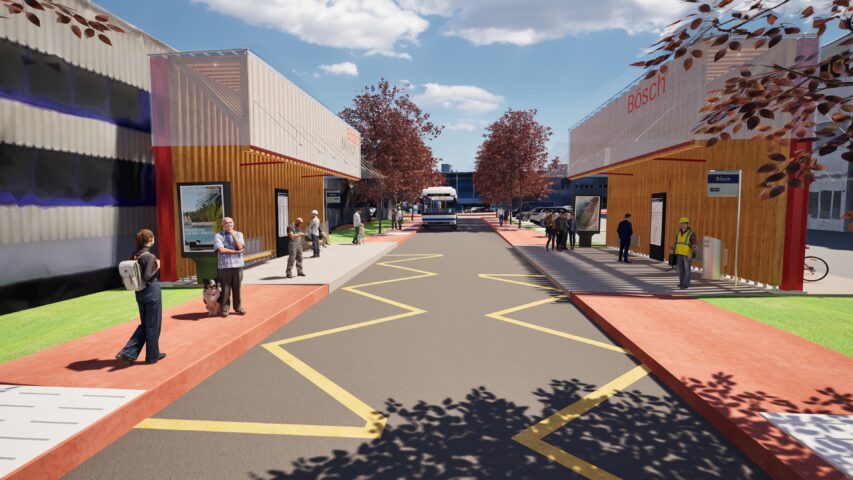
    In order to meet the requirements of a growing service and commercial area, the infrastructure needs to be adapted. The Bösch area should become more attractive for workers and companies and offer space for 6,000 jobs in future. This densification is provided for in the cantonal structure plan. It is binding for the municipality of Hünenberg. The vision is for the Bösch area to develop into a modern and urban place of work that is attractive to investors. To this end, space is to be created through structural densification, which can also lead to an increase in jobs. A holistic landscape design and well-organised mobility will ensure a better quality of life in Bösch. New leisure, supply and catering facilities ideally complement everyday working life in Bösch. On 9 December 2024, the municipal assembly will decide on the road credit of CHF 2.9 million to finance the first stage of the implementation of the operating and design concept in Bösch.

    LG Zug
    Due to its size and prominent location, the LG site is of central importance for the urban perception and urban character of Zug. A lively urban district with a convincing architectural design is to be created on the site of the former industrial area. With the necessary development plan, the planning and building law of the Canton of Zug ensures high-quality development and realisation.

    Papieri Cham
    The Cham Group is developing a new residential and working neighbourhood with industrial charm on the Papieri site. Directly on the River Lorze, the distinctive existing buildings of the former paper factory are being supplemented with striking new buildings and realised in a sustainable way. A new meeting place with supra-regional appeal is being created here, where past and present go hand in hand. A new urban district with around 1,000 flats and 1,000 jobs is being built in several stages over eleven hectares on the site of the former paper factory. It is not being built on a greenfield site, but in the midst of buildings steeped in history: The conversion of characteristic existing buildings preserves the connection to the past – the industrial roots of the neighbourhood remain tangible.

    They are complemented by striking new buildings, including five tower blocks with impressive views. The new neighbourhood directly on the Lorze offers an attractive mix of commercial space, flats, lofts, workplaces, studios, open spaces and public-oriented uses. All of this on a sustainable and well-balanced site that maintains – and continues to write – its own history.

    The Papieri site creates new foundations for an energy-efficient, climate-neutral and sustainable society. It is a pioneering project throughout Switzerland.

    Spinning mill on the Lorze
    Many threads once ran together in the largest spinning mill in Switzerland. The construction of the spinning mill on the River Lorze shaped the development of Baar in the middle of the 19th century. A new, lively neighbourhood with shops, cafés and other local businesses is being created around the historic spinning mill building, which characterises the public pedestrian zone. In addition to family flats and affordable flats, there will also be flats for the elderly. These will be complemented by vegetable gardens, green façades and shady trees.

    Suurstoffi
    The Suurstoffi site was the first site in Switzerland to be awarded the DGNB platinum certificate for sustainable neighbourhoods in planning and construction by the Swiss Sustainable Building Council (SGNI). The DGNB certification confirms that Zug Estates has realised a prime example of sustainable site development with the Suurstoffi site in Rotkreuz. It meets the comprehensive quality requirements of the DGNB certification system, which includes criteria such as energy efficiency, CO2 emissions, life cycle assessment, grey energy, flexibility of use and recyclability of the materials used. The Suurstoffi site is one of the first lighthouse projects of the last 10 years. This also includes the “XUND” health education centre, for which one of the last buildings is currently being completed.

    Tech Cluster
    From June 2018 to May 2019, five renowned Swiss and one Austrian team took part in an overall performance study to explore how affordable living in a high-rise building can be made possible using state-of-the-art construction methods and sustainable materials. At the same time, a study contract was drawn up for an overall urban development concept for the surrounding area of the city of Zug between Baarerstrasse, Göblistrasse, Industriestrasse and Mattenstrasse.

    The Tech Cluster Zug builds on the preliminary investments made by V-Zug and other companies in the Metall Zug Group. Its potential lies in the diverse relationships and synergies between the future users. These will transform the current factory site into an innovative and exciting part of the city of Zug.

  • Milestone for the second stage of the innovation park

    Milestone for the second stage of the innovation park

    The Zurich Innovation Park combines research, development and aviation utilisation in a unique way. An area for the innovation park and for a research, test and industrial airfield will be created in the south-western part of the Dübendorf airfield. This vision includes not only modern infrastructure, but also publicly accessible green and open spaces. The project is of central importance for the region, the canton of Zurich and Switzerland as a whole.

    Design plan as the basis for sustainable development
    The newly established design plan for sub-area B creates a binding framework. It regulates the utilisation, the location of the building areas as well as design, ecological and traffic requirements. At the same time, the impact on the regional transport network is analysed in depth and green spaces are optimally integrated.

    Progress through participation and planning security
    Following a public consultation phase and the consideration of objections received, the design plan was revised and approved. It will come into force on 22 November 2024 and form the basis for future construction projects. This marks another important step towards the realisation of the Zurich Innovation Park.

  • Property developer reduces profits to strengthen future investments

    Property developer reduces profits to strengthen future investments

    SitEX Properties Holding AG generated gross sales of CHF 10.86 million in the first half of the year, the Schwyz-based property development company announced in a press release. In the same period last year, gross sales totalled 32.70 million Swiss francs. Net profit after tax fell from CHF 7.34 million to CHF 1.51 million in the same period.

    “Over the past ten years, sitEX has been fortunate enough to achieve profitable half-year and annual results without exception,” CEO Beat Kähli is quoted as saying in the press release. However, the company, which specialises in real estate in Switzerland and the USA, is currently “in an investment phase, which is why only small profits could be achieved compared to previous years”. According to Kähli, sitEX currently has a development pipeline totalling more than CHF 5 billion. This “secures the basis for future sustainable profits”, according to the company boss.

    In recent years, sitEX has distributed around CHF 60 million of its profits to shareholders. This year and next, however, the company intends to concentrate on repaying liabilities and investments, explains Christoph Stutz, Chairman of the Board of Directors of sitEX.

  • Construction work on the extension of the ZHAW has begun

    Construction work on the extension of the ZHAW has begun

    Building Director Martin Neukom, Education Director Silvia Steiner and ZHAW Rector Jean-Marc Piveteau gave the go-ahead for the construction work to expand and modernise the School of Engineering at the ZHAW on 13 September. The ZHAW is one of the leading universities in Switzerland with over 14,000 students, according to a press release. However, some of the existing buildings on the site of the former technical centre in Winterthur no longer meet today’s requirements. In addition, the number of students continues to grow. Campus T will therefore be modernised and expanded in several stages over the next few years.

    In the first construction phase, two new five-storey laboratory buildings will be built behind the historic technical centre. They will provide urgently needed space for teaching, research and development. Various test rooms as well as a publicly accessible canteen and cafeteria will be created there. The new buildings will be connected to the district heating network of the city of Winterthur and equipped with photovoltaic systems.

    As part of the first construction phase, the Eulach will also be ecologically upgraded with a public, near-natural park and flood protection will be expanded, according to the press release. Two new bridges will connect the old town and Campus T with the Büelrain cantonal school and the surrounding residential neighbourhood.

    The existing TB building will be dismantled by November. At the same time, the excavation pit for the smaller TT laboratory building will be dug. Work will then begin on the shell of the first new building, which is scheduled for completion in 2027. The second new building should be ready for occupancy in 2029.

  • Two Swiss property giants about to merge

    Two Swiss property giants about to merge

    Cham Group and Ina Invest, a property company listed on the SIX Swiss Exchange, have signed a letter of intent for a merger. This is to be completed as a “merger of equals” by 2025. The merger would create a new, strong force in the property sector that would be one of the industry leaders.

    A first-class portfolio in key locations
    The combined portfolio of the two companies comprises high-quality properties and development projects in Switzerland’s strongest economic regions, including Basel, Cham, Geneva, Lausanne, Winterthur and Zurich. Particularly impressive: the residential share will be over 50% after completion, which emphasises the focus on sustainable and future-oriented living in urban conurbations.

    Sustainability and synergies as success factors
    Both companies attach great importance to sustainability and plan to consistently implement these standards in the development and management of the properties. The merger not only brings a larger portfolio, but also clear advantages: economies of scale, greater flexibility in project realisation and improved financing options.

    The talks are currently still at an early stage. If the negotiations are successful, a vote on the merger will be held at the general meetings of the two companies in spring 2025. A merger would realign the forces in the Swiss property market and create opportunities for a sustainable future.

  • Bio-inspired building material revolution for the construction industry

    Bio-inspired building material revolution for the construction industry

    The construction industry is on the brink of a ground-breaking innovation. Researchers have developed a cement material that is almost six times more resistant than conventional cement and significantly better at resisting cracks. This revolutionary development is based on the structure of human bone, which serves as a model for a completely new material architecture.

    The team led by Professor Reza Moini and doctoral student Shashank Gupta from Princeton University published the impressive results in the scientific journal Advanced Materials. By specifically designing a tubular structure in the cement, they were able to significantly reduce the propagation of cracks and at the same time increase the deformability of the material – without causing sudden failure. This discovery promises to fundamentally change the way buildings are constructed.

    Strength and toughness
    “One of the biggest challenges with building materials such as cement is their brittle behaviour. They often fail abruptly and catastrophically,” explains Gupta. The researchers therefore focused on optimising the balance between strength and toughness. While strength ensures the material’s resilience, toughness prevents the formation and propagation of cracks.

    The solution lies in the internal architecture of the material. By reproducing the human cortical bone, the outer layer of bone, the scientists were able to create a cement material that is both more resistant and more flexible. The tubular structure, similar to the osteons in human bone, intercepts cracks and delays their propagation – a milestone in the field of building material development.

    Robotics and 3D printing
    In addition to the extraordinary mechanical properties, the researchers also rely on state-of-the-art technologies. With the help of robotics and additive manufacturing (3D printing), they have developed a method to precisely control the tubular architecture in the cement. This technology enables the material to be customised for a wide range of applications. A pioneering development for the construction industry.

    The researchers assume that these principles can also be applied to other brittle materials in order to create even more resistant construction products. “We have only just begun to explore the possibilities,” says Gupta. Future developments could produce even more efficient and resilient building materials that will revolutionise construction in the long term.

    Rethinking cement architecture
    With their groundbreaking research, Moini and his team have laid the foundation for a new generation of building materials. The application of bio-inspired design principles could lead to the development of more robust and resilient materials in the future, not only in cement construction but also in other industries.

    This discovery could fundamentally change the way we build cities and infrastructure – an exciting prospect for the future of the building materials industry.

  • Innovative drone research

    Innovative drone research

    At the centre of this research is the “DroneHub”, a state-of-the-art laboratory that is being built on the Empa campus in Dübendorf. This unique research building makes it possible to test drones under real-life conditions – a significant development for both the construction industry and environmental sciences. In the future, drones could repair buildings before damage escalates or even save lives by monitoring dangerous areas before the fire brigade.

    The spirit of innovation driving this project is evident in the extraordinary combination of environmental monitoring and construction robotics. The new drone models can place sensors in trees or collect water samples from the depths of oceans and lakes – essential data to monitor the health of our ecosystems.

    However, Kovac and his international team are going even further. With aerial additive manufacturing (AAM) technology, drones could be able to print building materials from the air. This technology has the potential to fundamentally change the way buildings are maintained and constructed while utilising resources more efficiently.

    Redefining building maintenance
    The “DroneHub” provides a protected space for the development and testing of robots and drones that can autonomously perform tasks such as building maintenance and environmental monitoring. The DroneHub’s unique AAM wall simulates real building surfaces on which the drones demonstrate their repair and maintenance capabilities. These technologies are particularly relevant for the property sector, where safety and efficiency in maintenance are becoming increasingly important.

    This collaboration between Empa and EPFL not only opens up new perspectives for robotics, but also for the future of the property industry. Drones that carry out inspections and repairs autonomously could revolutionise the way buildings are maintained. For managers and professionals in the property and location development sector, this project offers an exciting look at the future of the industry – innovative, sustainable and with a clear focus on efficiency and safety.

  • Roche opens new centre for pharmaceutical research

    Roche opens new centre for pharmaceutical research

    A significant milestone has been reached at Roche’s headquarters in Basel. The inauguration of the new Pharma Research and Early Development Centre (pRED). The centre, which offers 1,800 state-of-the-art workstations for laboratory and office work, brings together experts from various fields of research. The aim is to increase the efficiency of research and development through close collaboration. Federal Councillor Guy Parmelin also attended the opening ceremony, which emphasises the national importance of this project.

    With the new pRED Centre, Roche is pursuing a clear vision of pooling expertise from areas such as chemistry, biology and data science in order to drive forward pioneering innovations. Thomas Schinecker, CEO of the Roche Group, emphasised the central role of the centre in the company’s global innovation network. “This centre will not only improve the efficiency of our research, but also help us to achieve the greatest possible benefit for patients worldwide.”

    Investing billions in the future
    The investment in the pRED Centre is part of Roche’s long-term commitment to the Basel site. Since 2009, the company has invested 4.6 billion Swiss francs in the expansion of the site. With the new four buildings – including two high-rise laboratory buildings, an office complex and a congress centre – Roche is sending another strong signal for the future.

    And this is just the beginning: a further 1.2 billion Swiss francs are being invested in modernising and expanding the site, which will strengthen Basel’s role as a global centre for pharmaceutical research and development in the long term.

    With the opening of the new pRED Centre, Roche is not only investing in its own innovative strength, but also in strengthening Basel as a business location. This billion-euro investment is a clear signal that the pharmaceutical company intends to further expand its leading role in global research and development – a significant step both for the industry and for the region.

  • Zurich cantonal government invites the public to participate in the fifth-generation agglomeration programmes

    Zurich cantonal government invites the public to participate in the fifth-generation agglomeration programmes

    In order to receive federal funding, the agglomeration programmes must meet certain requirements. These include analysing the current situation and identifying development trends in the areas of settlement, landscape and transport. On this basis, future scenarios are developed and necessary measures are derived. Between 30 and 50 per cent of these measures can then be co-financed by the federal government, provided they are ready for implementation.

    The programmes cover various regions and focus on specific priorities. In the Limmat Valley, the focus is on multimodal transfer points and the electrification of bus transport. In the city of Zurich and the Glattal, transport hubs and cycle networks are being expanded. Winterthur’s measures focus on public transport and pedestrian and cycle-friendly urban development.

    The new programme for the lowlands and the Furttal valley focuses on designing road spaces to be compatible with residential areas. In the Zurich Oberland, the focus is on the accessibility of regional centres and multimodal transfer points.

    Participation and consultation procedure
    The public consultation procedure was launched on 3 July 2024 by government decree no. 765/2024 and runs from 5 August to 20 September 2024. During this period, cities, municipalities, planning regions, transport companies, associations and the public are invited to comment. Neighbouring cantons and neighbouring agglomeration programmes such as Schaffhausen and Obersee are also invited to participate.

    Government Councillor Carmen Walker Späh emphasises the importance of the programmes: “Everyone benefits from a modern infrastructure. An efficient infrastructure is the lifeblood of the economy.”
    The drafts of the agglomeration programmes and other relevant documents will be available from 5 August at zh.ch/ap5.

  • New charging stations for property funds

    New charging stations for property funds

    The Akara Swiss Diversity Property PK(ADPK) property fund managed by Swiss Prime Site Solutions from Zug invests in existing properties and development and construction projects throughout Switzerland. According to a press release, the fund’s apartment buildings are to be equipped with a new charging concept for electromobility. AEW Energie AG, based in Aarau, has assumed responsibility for the planning and operation of the new charging infrastructure under the contracting model. The on-site installations will be carried out by regional specialist partners, according to the press release. The charging stations will be customised to the various properties and local requirements. The first projects have already been launched.

    “We are proud to have a strong partner at our side in the ADPK fund management, which, like us, recognises and promotes the importance of sustainable mobility solutions,” said Arian Rohs, Head of Mobility Solutions at AEW Energie AG, in the press release. “This cooperation enables us to further expand our commitment to electromobility and make an important contribution to reducing CO2 emissions.”

  • Industrial site in Serrières becomes Neuchâtel Innovation Park

    Industrial site in Serrières becomes Neuchâtel Innovation Park

    In collaboration with the Caisse cantonale d’assurance populaire and the Etablissement cantonal d’assurance et de prévention, the State and the City of Neuchâtel have acquired an industrial complex on Rue des Usines in Serrières. The aim is to develop and operate a new innovation centre there. To this end, the public limited company Usinnove SA was founded, in which the state holds a 40% stake and the City of Neuchâtel 20%. The remaining shares are held by CCAP and ECAP. The industrial complex covers an area of 7,000 m² and can create almost 400 new jobs.

    Central role of Microcity SA
    The new site will be managed and operated by Microcity SA. A centre of excellence for diagnostics and related technologies is to be set up, serving as a hub for companies in the fields of diagnostics and automation. Part of the complex will be converted into a business centre equipped with laboratory infrastructure and offering a collaborative project environment for large companies, SMEs and start-ups.

    Strengthening the Neuchâtel innovation cluster
    The acquired industrial complex is intended to further strengthen Neuchâtel’s position in the Swiss Innovation Park. The Serrières site offers potential for the expansion of Neuchâtel’s innovation cluster and will secure an industrial location in the long term. Neuchâtel will thus expand its offering and consolidate its position as an innovation centre.

    Strategic use of old buildings
    The purchase of the industrial complex is part of the state’s strategy to utilise old buildings for light industrial activities. This policy aims to bring start-ups, SMEs, large companies and research centres together on one site in order to meet the economic challenges facing the canton. Similar projects have already been realised at the sites Rue Jaquet-Droz 7 in Neuchâtel and Hôtel-de-Ville 7 in Le Locle, which are also home to cutting-edge applied research activities.

    An important step for Neuchâtel
    The acquisition of the industrial complex in Serrières and the planned transformation into an innovation centre are an important step for the economic development of Neuchâtel. The close cooperation between the state, the city and institutional partners will strengthen the region and create the basis for future innovations.

  • Affordability of housing in Switzerland

    Affordability of housing in Switzerland

    The affordability of housing is currently at the centre of political and public attention. According to the Federal Statistical Office, prices for the “Housing and energy” category of the national consumer price index rose by an annual average of 9.3 per cent between 2020 and 2023, well above the general inflation rate of 5.6 per cent. This development has intensified political calls for more affordable housing and greater support for tenant households.

    Stable trend in affordability
    The analysis of the affordability of housing costs – i.e. the ratio of housing costs to gross income – shows a stable trend over the last 20 years. Despite rising rents and property prices in real terms, the average burden ratio for Switzerland as a whole has remained constant at around 20 per cent of gross income, well below the limit of 30 per cent that is considered affordable. However, a breakdown of the burden ratio according to various household characteristics indicates a certain deterioration in affordability for mobile households – i.e. households that have recently moved into a flat. Single-person households and households in densely populated regions, which often have a high level of housing consumption, are subject to an above-average burden.

    Costs of subsidised housing already exceed those of subsidised housing
    Subsidised housing is used more frequently than subsidised housing at all levels of government. The estimated direct costs of object support currently amount to around CHF 88 million. In addition, there are indirect costs such as lost interest, rental and building lease income, which are estimated at CHF 560 to 830 million per year. Subject assistance, which mainly takes the form of social welfare and supplementary benefits, already costs CHF 1.7 billion a year. Despite higher overall costs, subject assistance does not prove to be significantly more expensive per supported household compared to object assistance.

    Advantages of subject assistance as a housing policy instrument
    Comprehensive subject assistance could improve the accuracy of Swiss housing policy. The study shows that the “supplementary benefits” model would require state support of around CHF 1.45 billion, with 12.6 per cent of Swiss households being eligible. A model like the one in Basel-Stadt, which only supports households with children, would cost just under CHF 700 million and cover 3.6 per cent of households. These costs would be only slightly higher than those of the current property subsidy.

    Cost-benefit ratio crucial
    The study suggests that the introduction of nationwide subject aid could substantially improve the targeting of housing policy. Although subject aid may be more expensive, it has a better cost-benefit ratio. The possibility of tailoring subsidies to target groups, situations and needs makes subject aid an efficient and effective housing policy instrument. The financial outlay depends heavily on the practical organisation of the system, and fears of possible price pressure on the housing market are only justified under certain conditions.

  • Flattening of construction price inflation continues

    Flattening of construction price inflation continues

    In 2022, construction prices in building construction experienced a sharp increase of over 8 per cent. In contrast, the construction price index for April 2024 shows a moderate increase of 0.8 per cent compared to the previous year. Since the last publication in December 2023, prices in building construction have risen by 0.4 per cent. Despite this slowdown, construction prices remain stable at a high level. Compared to three years ago, building construction prices increased by 13 per cent in April 2024.

    Material prices as the driving force
    A key factor in the levelling off of construction prices is the development of material costs. The KBOB material price index for building construction shows that material prices fell by 2.2 per cent between May 2023 and May 2024. Most of this decline took place between May and October 2023. Since November 2023, the material price index has stabilised and fell only slightly by 0.4 percent. Prices fell particularly sharply for reinforcing steel, which was over 10 per cent cheaper in May 2024 than in the previous year.

    Energy and fuel prices as a counterbalance
    While falling material prices are contributing to a slowdown in the development of construction prices, rising energy and fuel prices are counteracting this trend. According to the national consumer price index, energy and fuel prices in May 2024 were 6.6 per cent higher than in the previous year, which is putting upward pressure on construction prices.

    Outlook for future developments
    Despite the current stabilisation, there are factors that point to a possible renewed increase in construction prices. Wage trends and the continued rise in energy costs could lead to an increase in construction prices of around 1 per cent in 2024. It remains to be seen how these factors will affect the construction price index in the long term.

    Conclusion: diverse influences on construction prices
    The current development of construction prices is influenced by various factors. While falling material prices suggest a stagnating or declining trend, higher energy and fuel prices as well as wage trends are putting upward pressure. Construction prices are currently stabilising at a high level and a moderate increase is expected for 2024.

  • A world centre for internationality and innovation

    A world centre for internationality and innovation

    Geneva plays a central role on the international stage, not only as the home of the United Nations and nearly 400 NGOs, but also as the headquarters of numerous multinationals, particularly in the fields of research and development. This position underlines Geneva’s importance as a global centre for international cooperation, supported by an academic landscape that is among the best in the world.

    Excellence in infrastructure
    As one of the most business-friendly cities in Europe, Geneva has an excellent infrastructure that attracts international conferences and business travellers. Geneva International Airport, just a few minutes from the city centre, offers direct flights to some 150 destinations worldwide. The well-developed international rail network, including the TGV, which reaches Paris in just three hours, and the Léman Express, Europe’s largest regional rail network, considerably enhances Geneva’s accessibility.

    Promoting multilateral discussions
    Geneva hosts major international discussions, from the United Nations to world economic forums and the International Committee of the Red Cross. These discussions are part of Geneva’s heritage and reflect the city as a crossroads for international negotiations and arbitration. Here, the World Intellectual Property Organisation documents the many innovations that have emerged from local research and development centres.

    Sustainable urban development
    In addition to its role as an international centre, Geneva is setting new standards in sustainable urban development. A subsidy programme with a budget of CHF 500 million is aimed at accelerating the energy renovation of buildings and meeting climate targets. This commitment shows that Geneva is striving to achieve climate neutrality by 2050, and supports private and public property owners in modernising their real estate.
    Geneva is an impressive demonstration of how a city can be both a centre of international politics and economics and a centre for promoting sustainable development. Thanks to this dual role, Geneva is strengthening its position as a place where global challenges are tackled innovatively and effectively.

  • 101. immoTable – Geneva economic area

    101. immoTable – Geneva economic area

    [smartslider3 slider=”16″]

    The 101st immoTable, the renowned event for the property industry at Signatur Rhône in Geneva, focused on important topics that will have a significant impact on the future of the property world. From sustainable spatial development and geothermal energy as part of the energy transition to health risks in water and legal issues relating to renovations in Geneva, the event provided a comprehensive platform for dialogue on current challenges and innovations in the sector.

    The Director of the Department of Territory of the Canton of Geneva, Marta Alonso, presented pioneering urban development and spatial planning projects. By 2060, over 12,000 new residential units, 6,000 workplaces, schools, a large park and revitalised river areas are to be built on an area of 230 hectares. Modern visualisation techniques and 3D models enable a transparent presentation of the development scenarios.

    David Faehndrich, Head of the Western Switzerland division at EKZ Contracting SA, emphasised the role of sustainable and economical energy supply systems. Several important projects have already been realised, such as the geothermal energy supply for the new flats in the “Jardins du Bourg” in Châtel-St-Denis. These measures reduce CO₂ emissions and promote the energy transition.

    In his presentation, Pierre Descloux, CEO of Dipan SA, emphasised the importance of treating hydraulic systems, particularly with regard to rust, limescale and legionella. He emphasised the importance of ensuring the hygiene and efficiency of these systems.

    Cosima Trabichet-Castan, a specialist in property law at MLL Legal, spoke about the challenges of obtaining planning permission and complying with local building regulations. She also spoke about the complex regulatory requirements in Geneva, which according to a recent UBS study has the longest waiting times for building permits in Switzerland. Her presentation highlighted the importance of integrating sustainable practices in this context-rich regulatory environment.

    Fabio Nairi from IWG Switzerland spoke about measures to reduce commuting times and CO₂ emissions as well as the transition to hybrid working models.

    The 101st immoTable once again proved why the event is one of the top platforms for the property industry. The topics discussed are of key importance for the future development of the industry and offer valuable solutions for current challenges.

    Further information on the event and future dates can be found at www.immotable.ch

  • Silas Schneider takes over operational management

    Silas Schneider takes over operational management

    Silas Schneider will take up his new position on 1 January 2025, joining ABS on 1 October 2024. Mr Schneider brings extensive experience from his previous role as CEO of abonax, where he played a key role in the establishment and successful development of the company over a period of six years.

    “We are convinced that Silas Schneider, with his experience and expertise, will lead the company into a continued successful future and look forward to working with him in the future,” commented Daniel Senn, Chairman of the Board of Directors of Abacus.

    With the change in top management, Abacus Business Solutions AG is sending a strong signal in favour of continuity and growth. The transition will be carefully planned and executed to ensure the smooth continuation of the company’s business and to successfully master future challenges.

  • Career prospects in Swiss timber construction

    Career prospects in Swiss timber construction

    The importance of the timber construction industry
    The timber construction industry plays a key role in Switzerland, particularly in the area of sustainable construction and energy-efficient building refurbishment. Building with wood is an environmentally friendly and climate-neutral method that ensures minimal energy consumption both during the construction phase (grey energy) and during the subsequent operation of the building. The timber construction industry makes a significant contribution to shaping Switzerland’s future.

    Career prospects and further training options
    Once they have completed their basic training, trained carpenters have numerous options open to them: They can work as highly qualified specialists in the company, gain experience on the mill or abroad or continue their education to become a foreman, foreman, technician or engineer, all the way up to master craftsman. If the vocational baccalaureate has not already been completed during the basic training programme, it can be completed as a full-time course of study within a year of completing the basic training programme. This enables a seamless transition to a higher technical college or university of applied sciences without examinations. The career plan for timber construction in Switzerland offers the opportunity for lifelong learning, individual further training and specialisation as well as various advanced training courses. Training as an energy consultant, project manager for solar systems or craftsman in monument preservation are just a few examples. A career in timber construction thus offers the opportunity to develop and orientate yourself individually according to your own wishes and needs.

    Carpenter EFZ
    Carpenters at EFZ level mainly work with wood and are proficient in timber construction activities. They work as generalists in operations as well as in shell construction and finishing. They are familiar with the requirements of the building trade and work with other tradespeople involved in construction.

    WoodworkerEBA
    Your career start with good prospects. The profession of woodworker EBA (Federal Vocational Certificate) is an independent, two-year basic training programme in the wood industry. It covers a wide range of activities in the woodworking industry as well as in timber construction.

    Certified technician
    HF Holztechnik

    HF timber construction technicians plan timber constructions independently on the basis of project plans and manage their realisation. They take on management tasks within the company or manage a department. As a team leader on the construction site, they coordinate the work with the other tradespeople.

    Vocationalbaccalaureate and business administration/entrepreneurship degree programme
    The vocational baccalaureate and the business administration degree programme NDS are industry-independent training courses. While the vocational baccalaureate primarily deepens general knowledge, the business administration programme imparts knowledge for entrepreneurial activities in higher management positions.

    Master timber construction technician with a federal diploma
    Master timber construction technicians manage a timber construction company or a larger department. They have overall responsibility for the technical, economic and personnel management, organisation and further development of the company. They liaise closely with customers, suppliers and architects.

    Dipl. Techniker/in
    HF Baufführung Holzbau

    Graduates work as a designer or operations manager in a timber company. Thanks to their extensive skills, they are “generalists for modern timber construction”: from preparing quotations, planning and realisation to execution control and invoicing.

    Master of Science in Wood Technology
    This degree programme, which is unique in Europe, combines practical relevance with research and development. The programme enables students to work in timber construction and in all processing stages of the timber industry from a technical, business and ecological perspective.

    Bachelor of Science in Wood Technology
    The training concept covers a broad spectrum – from raw materials and semi-finished products to supporting structures, furniture and energy-efficient buildings. The focus is on intelligent and innovative solutions for modern timber construction as well as sustainable products and processes using wood.

  • Load-bearing capacity and usability of timber buildings

    Load-bearing capacity and usability of timber buildings

    Wooden buildings have already proven their load-bearing capacity in the past: The palace of Knossos on Crete, built around 1700 BC, was constructed with wooden pillars and cedar timbers built horizontally into the walls. It survived a severe earthquake around 1400 BC virtually undamaged. The columns and beams of Greek temples and the framework of the mud-brick walls were made of wood until 600 BC.

    Compliance with the SIA structural standards
    Modern timber constructions guarantee structural safety and serviceability by complying with the SIA structural standards. Specialist planners and timber construction companies vouch for this. Unusual events such as fire and earthquakes are also investigated through analyses in various design situations. The variety of construction timber, wood-based materials and fasteners in combination with modern planning and production tools enables the designer to design an optimised load-bearing structure for every new construction project.

    Research and predictability
    The flammability of wood is widespread, but its behaviour in the event of fire is well researched and predictable. The similar strength properties at high temperatures as well as the low thermal conductivity due to the insulating carbon layer and the escaping water vapour make this building material stand out. The efficient fire safety of timber constructions is confirmed by extensive fire tests. With appropriate dimensioning or in combination with other materials, fire resistances of up to 240 minutes can be easily achieved. In contrast to steel and reinforced concrete constructions, timber constructions remain stable even at extremely high temperatures.

    Fire protection standards for timber components in Switzerland
    Fire-resistant timber components that are protected with non-combustible panels are considered non-combustible according to Swiss fire protection regulations. This shows the recognition of the fire protection authorities for the results of extensive studies, which prove that the combustibility of a building material is not the decisive criterion, but rather that the correct fire protection design of a construction has a greater influence on the fire behaviour. Current regulations permit the use of wood in various construction applications without restrictions and even in high-rise buildings under certain conditions. Timber therefore has a wide range of applications in all building categories and uses.

    Safe timber surfaces in interior spaces
    The requirements for structures in safety-sensitive areas such as vertical escape routes are met by suitable timber components with non-combustible fire protection cladding. Visible wooden surfaces are permitted in interior rooms, with the exception of escape routes.

    Compliance with quality requirements
    Thanks to the “Fire safety and wood” research and development project, which has been running since 2001, comprehensive technical and methodological principles and safe designs for timber components have been developed. An industry-specific quality assurance system defines the fire safety-related quality standards for wood in construction. In Switzerland, high-quality timber buildings are erected in strict compliance with quality requirements. The Lignum documentation on fire protection serves as a guideline and shows the many different ways in which wood can be used to ensure the correct realisation of timber components in small, large or tall buildings. It corresponds to the current state of the art in fire protection in accordance with Swiss regulations.

  • Forward-looking integration of the Luchswiese housing estate and school extension

    Forward-looking integration of the Luchswiese housing estate and school extension

    In the midst of the dynamic development of the north of Zurich, a showcase project is being created that meets the demands of a growing city. The existing Luchswiese housing estate, characterised by its green garden city atmosphere and three four-storey apartment blocks, will be replaced by a variety of living space and educational facilities. The winning project “Pergola” by Blättler Heinzer Architektur and KOLLEKTIV NORDOST Landschaftsarchitekten is characterised by a careful densification that preserves the garden city character while creating modern living and learning space.

    The use of prefabricated timber construction systems will create 76 flats that will appeal to families in particular thanks to their diversity. The integration of four kindergartens with childcare infrastructure and a multi-purpose hall for the day school in the western building block directly adjacent to the school grounds emphasises the innovative concept of the development. This organic combination of housing and education creates a harmonious ensemble that is complemented by flowing green spaces and green roof terraces.

    The winning project “LYNX” by Parameter Architekten and Rosenmayr Landschaftsarchitektur for the neighbouring Luchswiesen school complex is faced with a growing need for school space. The city is planning a significant extension here by 2028, which will provide new space for 750 children. Inspired by Max Kollbrunner’s original architecture, the extension combines old and new elements and integrates a triple sports hall as well as modern classrooms and childcare facilities. The resource-conserving construction method, including the use of photovoltaic elements and timber in skeleton construction, underlines the city’s commitment to sustainable development.

    This project is an impressive illustration of how creative urban planning and close collaboration between different stakeholders can find solutions to the challenges of urbanisation. The Luchswiese housing estate and the Luchswiesen school complex are a forward-looking model for living and learning together in Zurich.