Around 220 people have come together to form the IBI solar community based in Matten. According to a media release from Industrielle Betriebe Interlaken AG (IBI), the large-scale plant on the roof of the equestrian centre will be equipped with 2390 square metres of solar panels. The photovoltaic system will produce 463,000 kilowatt hours of solar power per year. This corresponds to the annual electricity needs of up to 120 households.
According to the media release, the IBI has found that there is a great deal of interest among residents of the Bödeli, the area between Lakes Thun and Brienz in the Bernese Oberland, in solar installations. However, not all interested people have the roof space to install their own photovoltaic system. The solution is solar communities, in which several people participate in a communal system.
Such a community system is now being built on the roof of the large equestrian centre in Matten. The interest was so great that the investment was ready just 18 days after the booking began. According to IBI, about 220 customers have participated in the roof, 40 per cent of them with a maximum area of 20 square metres. The participation amounts to 250 francs per square metre of panel area. In return, the investors receive a credit of 100 kilowatt hours of solar electricity per year over 20 years. IBI bears 100 per cent of the risk for the operation of the system. In the event of operational failures, snow on the roof or hail damage, the customers bear no risk.
At the moment, the power grid in this area still needs to be strengthened and a transformer station may have to be built. According to the press release, IBI is already planning to invite tenders for a second solar community in 2023.
A sustainable production facility for wood processing is to be built on the former premises of the CPH Group in Full-Reuenthal, the Lucerne-based chemical and paper holding company informs in a statement. It has sold a plot of land on the site, which it used until 2002, to Full Property AG. The company is owned by the wood-processing Kuratle Group from Leibstadt AG and the Basel-based Raurica Wald AG, which specialises in investments in the forestry and timber industry.
The new plant will process local roundwood into construction timber using energy from renewable sources. Until now, such timber construction materials have been imported, the statement said. “We are pleased that innovative companies that contribute to climate protection with a sustainable business concept are operating on our former company site,” Peter Schildknecht, CEO of the CPH Group, is quoted there. Several companies, including two recycling firms, have already set up shop on the former CPH production site, which covers an area of around 30 football pitches.
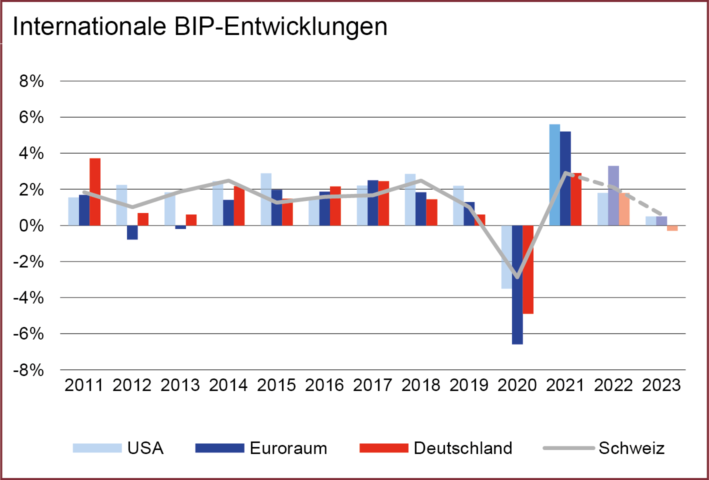
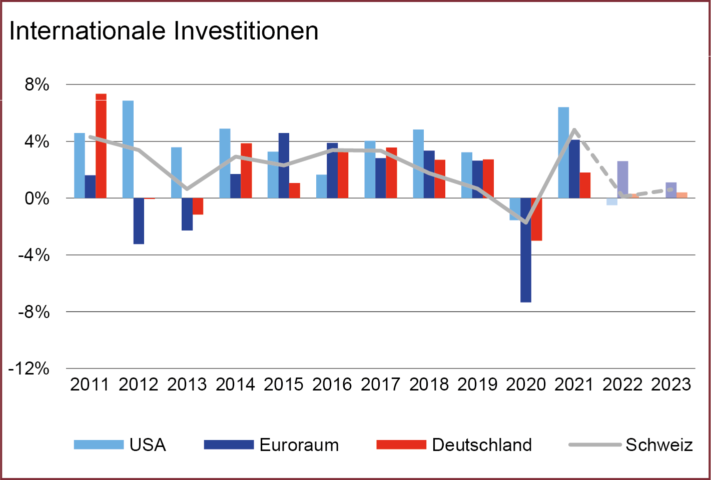
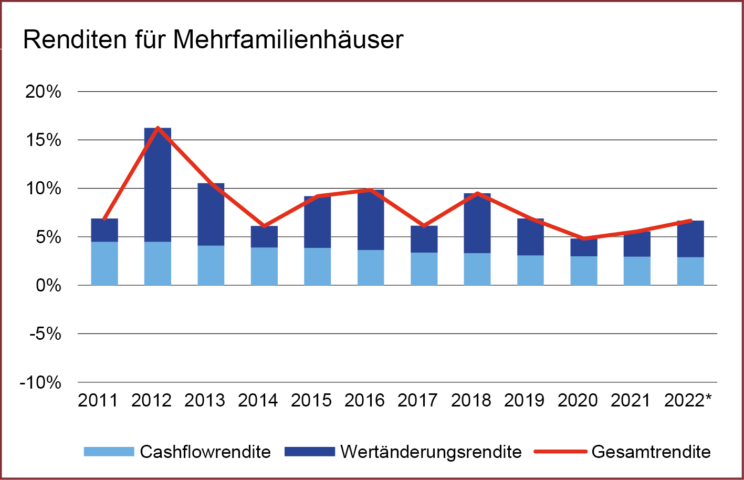
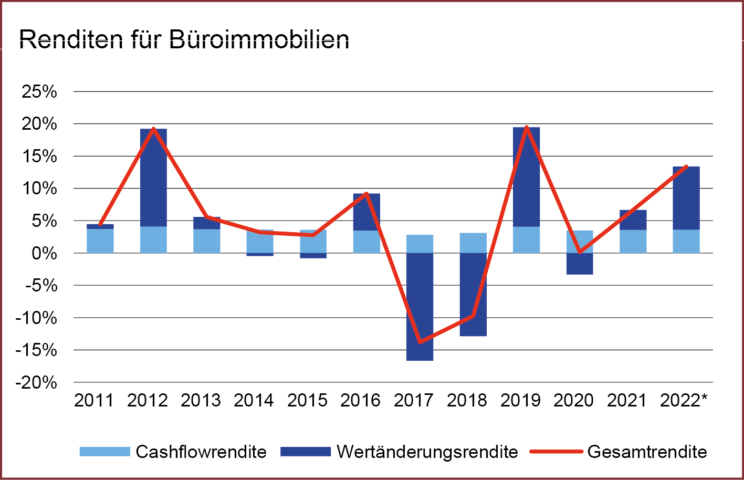
International GDP development as well as investments have recovered excellently in 2021. However, the latest developments show that investment volumes are currently subdued and GDP development is cooling down worldwide. Economic analysts’ forecasts predict a slowdown in 2024 and a possible downward trend.
The pandemic hardly plays a role in the media any more, but its consequences continue to be felt. In addition, rising energy and food prices as a result of the war in Ukraine, Corona measures by major economic players and supply chain problems have led to uncertainty, which is reflected in rising inflation rates. With the interest rate hike, the SNB was able to calm things down and is slightly above target. The forecasts of a slowdown in economic growth are reflected in a restrained development.
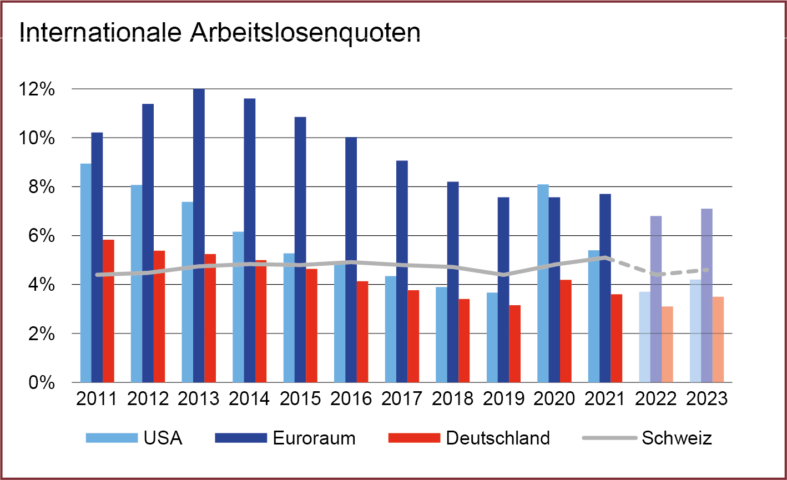
Real incomes in Switzerland have fallen slightly, which, together with the pandemic-related pent-up demand in the consumer sector, is having a positive effect on the economy. The outlook for the labour market is good and an upswing is possible by 2024.
The residential real estate market is robust and could not be affected by the financial crisis, the Corona pandemic or the war in Ukraine. The Swiss office market is unimpressed by the negative news from the global economy.
Further interest rate steps by the SNB are expected and yields could rise slightly. However, due to immigration, vacancies in the periphery are falling and demand for space in the centres remains high, leading to rising market rents.
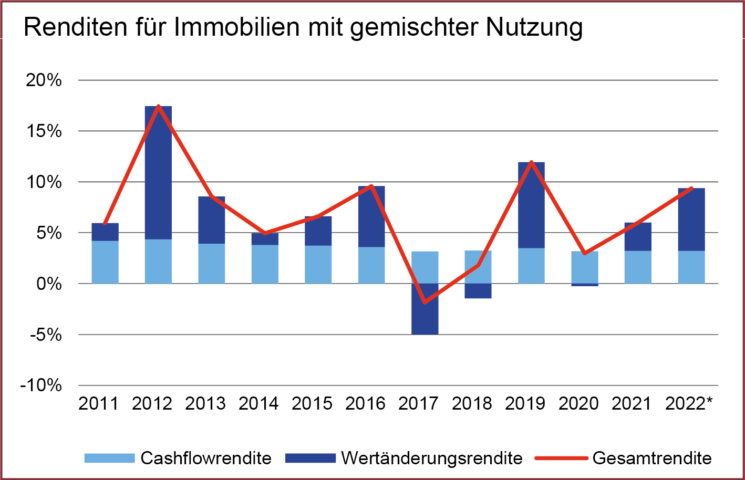
In the area of commercial real estate, yields are not expected to rise in the near future, as interest rates could rise. There is a tendency for market values to fall, which could be cushioned by investors’ investment pressure.
The Branch was founded in 2020. What exactly is the association and what does it do? W.S. Seidel: The Branch is a non-profit association that develops new processes and solutions for the further development and increased productivity of the construction and real estate industry and thus promotes the transformation of the industry. The association is broadly based: on the one hand, among its members – organisations from the entire sector, private and public building owners, entrepreneurs, planners, logistics experts and IT specialists. On the other hand, at the level of federal policy: The Branch aims to contribute to the implementation of the goals set by the Federal Council in its 2030 Agenda for Sustainable Development and in its 2050 Energy Strategy.
What are the goals of The Branch? Y.Körber: The Branch is committed to process-related and integrated cooperation within the construction industry. The industry today is very discipline-based, sometimes almost with blinkers. People think mainly in phases, and there is a conspicuous separation between planning and execution. However, cross-disciplinary cooperation would be enormously important. By this we mean, for example, that the different players work together much more closely from the beginning, and that the execution is already taken into account much earlier in the planning. We are working intensively to establish integrated models in the market and to develop basic principles, solutions and answers. Ultimately, this should also lead to more productivity and innovation as well as better results.
St. Zanetti: We want to use concrete projects to show that new models work. We want to build up a rich inventory of tried and tested instruments. In addition, we organise events where we discuss practice-related questions with the participants.
How does the cooperation within the association work? St. Zanetti: The association is currently organised in eight working groups, which are composed dynamically and deal with different assignments in different subject areas. One of the working groups, for example, deals with the question of how to improve the handling of data in construction projects. We are currently in the process of creating templates, for example for the legally compliant exchange of data. Such templates can save a lot of effort because not every company has to reinvent the wheel.
How will the success of The Branch be measured in the long term? Y. Körber: In the changes that take place in the construction industry.Körber: By the changes we can create in the industry: more innovation, more sustainability, a very concrete change in culture. We can also see that our idea is well received from the growth of the association – in the first three years we have gained over 500 members in German-speaking and French-speaking Switzerland and our board of directors comprises almost 20 people. This also shows that the industry is hungry for change.
The topic of grey energy and the circular economy is currently very present. What role does it play at The Branch? W.S. Seidel: This is one of our core topics. Finding a better way of dealing with grey energy and making building projects more sustainable is only possible through innovation. And innovation needs collective know-how – and thus the cooperation of different disciplines at an early stage.
St. Zanetti: In the end, you will only be able to achieve a sustainable real estate industry if you think in integrated cycles. Because only then will we know what has happened, what has been built and what emissions are produced. The sustainability goals of the Federal Council can also only be achieved with an integrated view.
What significance does digitalisation have for The Branch? St. Zanetti: Only when we are on the move in an integrated way can we as an industry optimally use and exploit technologies. Digitalisation then in turn supports integrated cooperation. When using technologies, the compatibility of different software and technologies is central. For example, we are dealing with the question of how the interfaces of the systems of different players and in different phases look and how companies must select their software so that data continuity is guaranteed. We also want to set standards for the industry in this area. The criticism of proptech companies is often that they do not know the needs of the industry and only provide individual pieces of the puzzle.
Y. Körber: One of the big challenges for young proptech companies is precisely this fragmented and non-integrated process view in the construction industry. This makes it difficult for start-ups to develop scalable solutions. They develop a solution for one project – and everything is supposed to look different again for the next one. The work of The Branch will also lead to standardisation in this area and make it easier for young companies to develop suitable solutions.
One question in conclusion: Why are you personally on the board? St.Zanetti: I find it exciting to advance topics in a pragmatic format with people from the most diverse companies using very concrete practical examples.
Y.Körber: I am fascinated by the fact that The Branch shapes innovation and makes it accessible to everyone. The real estate industry is an important pillar of the Swiss economy – our approach therefore serves not only at industry level, but also at national level. That’s what I like to be involved in.
W.S.Seidel: I am on the board in order to further develop the conflict-laden situation between the various players in the construction industry, as a result of which a lot of added value is lost, into a proactive production and cooperation-promoting culture in the long term, from which everyone benefits.
Wolf S. Seidel is a lawyer and a proven expert in construction, planning and real estate law. The practical, legal design of integrated project development models is a focus of his current studies and work. He is involved in various committees and organisations that make collaborative and process-optimised forms of realisation available in practice, particularly for Swiss building owners – both public and private.
Yvette Körber is co-founder of several companies, including Amberg Loglay AG. She has been working successfully in the construction industry for several years and helps the industry to become more efficient with smart and digital construction logistics. She is involved in “The Branch” with the Design Build and Ordering Competence groups.
Stefan Zanetti has spun off several spin-offs from ETH Zurich; most recently Allthings Technologies AG, an integration and orchestration platform for the real estate industry that seamlessly links numerous systems. He is involved in various committees for a permeable and seamlessly networkable software landscape in the real estate industry in Switzerland and Europe, and is also a regular lecturer on various CAS and MAS training courses.
A team from Axpo has been working on an environmentally friendly generator for four years in collaboration with regional construction companies. The result is a battery storage solution that can replace diesel generators at construction sites. The technology called emost (electric mobile storage) can also be used at events or in emergencies. It has already been awarded the IDEE SUISSE Innovation Prize in spring 2021.
Now Axpo has decided to sell the technology to a consortium of the project’s existing management and several Swiss entrepreneurs. This will ensure optimal management continuity and knowledge transfer, Axpo writes in a media release. All relevant rights and contracts have been transferred to the newly founded emost AG, headquartered in Dietikon, as of the end of October 2022.
The founding team reportedly consists of the entire management team that has developed the technology over the past several years. Benedikt Domke becomes CEO of emost AG. Christoph Sutter, who previously headed Axpo’s Renewables Division, will become Chairman of the Board of Directors. He intends to focus in particular on international expansion.
Zühlke, the innovation service provider from Schlierem, is working with experts from Gebäudeversicherung Bern(GVB Group) to further develop digital processes within the company. According to the media release, GVB already has a digital claims process co-developed by Zühlke, the processing of claims. Now, further customer interfaces and processes are to be digitized, such as damage inspection, it continues. In addition, the functions of the existing platform are to be expanded and increasingly integrated.
Digital damage inspection decisively reduces the manual effort, according to the press release. The majority of cases are now handled via the enhanced platform, he said. This leads to increased satisfaction on the part of the end customer. The app will be continuously improved step by step after the first launch. Customer suggestions serve as a central guideline in this process.
The joint team of specialists from the GVB Group and Zühlke first conducts a preliminary technology evaluation study and develops prototypes using Flutter, a development kit from Google. A Flutter program should be able to run on different target platforms without major adaptations.
An initial MVP, the first stage of a development for practical use, will be implemented as quickly as possible, step by step and close to the target group, Zühlke says. Regular interviews with GVB Group valuation experts then provide valuable feedback. Subsequently, the MVP is developed into a widely used app with a larger range of functions.
Office supplies retailer Schoch Vögtli AG is giving up its previous location in Oberohringen near Winterthur and is moving to the city centre. According to a press release from the company belonging to Competec , new and modern offices in the heart of Winterthur will be available from May 2023. The new office is in the Gertrud & Paul building near the main train station.
The former insurance building is currently being completely renovated and brought up to modern energy efficiency standards. The Competec Group will move into 450 square meters of office space from the residential and commercial space planned there.
“The new location allows us to get closer to our growing Winterthur customer base and to be able to look after them with the same people as before. For existing and future employees who live in north-eastern Switzerland, we are creating an even more attractive working environment than it is now,” says Markus Bossart, Managing Director of Schoch Vögtli.
In February, the Competec Group took over 100 percent of the shares in Schoch Vögtli AG. Their business was integrated into Competec's Brack.ch department. Since 2009, the group has organized its sales activities to commercial and institutional end customers in its own Brack.ch Business department.
Schoch Vögtli continues to deliver mainly with its own fleet of delivery vehicles. The logistics location will also be relocated from Oberohringen when moving to the new offices. The new location is Pfungen.
Gema Switzerland has broken ground on its new headquarters in Gossau. According to a press release , the manufacturer of industrial equipment wants to develop and assemble its equipment and systems for powder coating there from summer 2024 and ship them worldwide.
New office space and significantly larger production areas are being built on a 20,000 square meter site in the Sommerau area. Furthermore, a modern high-bay warehouse is to be built. The assembly groups previously distributed across several locations will be merged there after completion.
The new laboratory for test and customer applications will offer 60 percent more space than the old one and will be equipped with four modern coating lines. "This means that Gema can carry out the coating tests for its customers around the world even more efficiently and practically," says the media release.
Gema has been part of the Graco Group since 2012 and has subsidiaries in Germany, Great Britain, Italy, France, USA, Mexico, China and Japan as well as a worldwide sales network in more than 60 countries.
With the new building in Gossau, the company is reacting to its growth and wants to offer more attractive working conditions.
Carrier has invested in three start-ups through its newly created venture capital fund. According to a media release , one of these is a Swiss company, Archilogic .
The spin-off from the Swiss Federal Institute of Technology Zurich ( ETH ) convinced Carrier with their specially developed software. With this, the floor plans of buildings can be converted into 3D models. For example, users can see how a floor plan affects the visual reference, incidence of light or noise pollution. This makes it easy to compare different floor plans.
Carrier also wants to integrate the Zurich development into its own digital cloud platform. This should enable users to visualize buildings better, which should ultimately enable the planning of “healthier and more efficient rooms”.
Carrier has launched its venture capital fund, Carrier Venture 2022. The company, based in Palm Beach Gardens in the US state of Florida, wants to promote sustainable innovations in the building sector.
As part of the annual theme Constructive Futures – beyond Concrete, the University of Applied Sciencesfor Architecture, Civil Engineering and Geomatics held a competition among the students of the third year of their bachelor's degree in architecture. The task was to reuse the components of a storey-high wooden ramp that was temporarily attached to the Swiss Architecture Museum. A place to stay protected from wind and sun was to be created in the park of the FHNW campus in Muttenz.
The Silvestris project, which won the competition, was deepened and implemented in an interdisciplinary elective course last spring semester, explains the FHNW in a statement . "Various structural and static challenges" had to be mastered. The project also showed the limits of the recyclability of the components. Specifically, the waste wood of the ramp did not have the necessary strength for the structurally relevant components of the planned pavilion. Here, construction wood not originating from the ramp had to be used.
The now completed "Arena Circular" is intended to serve as a place for teaching, performances and as a place for use and participation by members of the university and residents of the quarter. On September 27th, the FHNW invites all interested parties to the inauguration in the park of the FHNW campus in Muttenz. Registration is not required.
Researchers from various departments of the HSLU have dealt with the question of how a high-rise building can be designed in a socially sustainable manner, the HSLU informs in a press release . Architectural, social and economic aspects were examined for this purpose. The researchers have derived planning and action recommendations from their findings. The interdisciplinary university project was funded by the Swiss Agency for Innovation Promotion, Innosuisse .
A sustainable high-rise offers “both a high individual and collective quality of life and has an eye on community life today and for future generations,” project initiator Alex Willener is quoted as saying in the statement. In order to meet these requirements, the building must be of use to both its occupants and those around it, promote social cohesion and also be economically viable, writes the HSLU.
In a skyscraper, people with different lifestyles and expectations live under one roof. The researchers recommend that these differences be taken into account as early as the planning stage and promoted in the completed building. In order for a high-rise to be accepted in the area, it should offer something for the entire district. Doctors’ surgeries, crèches or a neighborhood meeting point are given as examples in the communication. In order to be able to adapt the high-rise to changing needs, the researchers recommend making sure during construction that rooms can be combined or re-divided with little effort. hs
The Basel Industrial Works ( IWB ) and the German IT company Kiwigrid , which specializes in decentralized energy and e-mobility, are working together to set up energy communities. Both companies have jointly developed software for energy management and asset management, IWB and Kiwigrid inform in a joint statement . It is to be used for the first time on the Westfeld site in Basel. There, the housing cooperative is realizing a new quarter with around 500 cooperative apartments.
IWB will equip the district with an integrated heating, cooling and power supply. The Basel energy supplier obtains the necessary energy management from Kiwigrid. Using the Energy-IoT platform of the Dresden-based company, the district’s electricity meters, photovoltaic systems, charging stations and heat pumps can be integrated into a network for self-consumption, intelligently controlled and managed.
“Our goal is a completely renewable, climate-friendly energy supply,” says Markus Balmer, Head of Sales and member of the management board at IWB. The company wants to contribute to the development of sustainable living and working spaces. “As an expert in energy management systems and IoT for renewable energies, Kiwigrid has proven to be the ideal partner in the implementation of our ambitious goals,” explains Balmer.
The energy community in Westfeld should not remain the only joint project between IWB and Kiwigrid. According to the announcement, the partners have already found interested parties for further mergers. hs
The Feld school in Azmoos has won first place in this year's Constructive Alps architecture prize, the Federal Office for Spatial Development ( ARE ) reports in a statement . It represents Switzerland in the competition organized jointly with Liechtenstein. Constructive Alps recognizes sustainable building and renovation in the Alps. With the competition, the two countries want to promote the implementation of the Alpine Convention for the sustainable development of the mountain region.
The Feld schoolhouse was built on the site of the old schoolhouse in Azmoos. It offers space for more than twice as many children as the old school building on the same built-up area. The socially and ecologically sustainable timber construction also impressed with its own photovoltaic system, among other things.
The second prize was awarded jointly to the headquarters of the heating specialist ÖkoFEN France in Saint-Baldoph and the Ghiringhelli residential development in Bellinzona. Third place went to the renovated Falkenhütte in Hinterriss in the Austrian Karwendel Mountains.
Switzerland will hold the presidency of the Alpine Convention in 2021/22. The internationally binding agreement between the eight Alpine states and the European Union has set itself the goal of developing the Alps into a model region for climate protection and adaptation to climate change. Under the aegis of Switzerland, the focus was on climate, sustainable mobility, Alpine towns, sustainable construction and modal shift.
On behalf of the co-ownership, SPGI Zurich has rented additional space in the Baden connection . The Zurich company Office LAB will move into a total area of over 2800 square meters from January 2024, according to a press release . Then the provider of coworking offices will also take over the entire conference and event management for the Konnex building complex in the center of Baden.
Office LAB has been using 800 square meters in connection with sub-letting since August of this year. The Zurich company offers office solutions for individuals and companies. These receive access to the coworking spaces in the form of day passes or fixed team offices. So far, Office LAB operates six locations. With the new location, the company is strengthening its already established presence in Baden.
The Konnex building complex at Brown Boveri Strasse 7 is currently being completely renovated. A “city within a city” offer will be available there by mid-2023. A total of around 35,000 square meters of space will be rented for this purpose.
Headsquarter will be expanded to include a third location in the Handelshof residential and commercial building on Uraniastrasse in Zurich. The Zurich-based provider of flexible offices and areas for coworking is thus placing a new facility for shared offices on an area of 2000 square meters.
A modern working environment “with a modern design concept, flexible use of space and hotel-like services” is to be created on two floors in the Handelshof business centre. In addition to 200 office workplaces, space for workshops, meetings and social events will be available from January 2023, surrounded by leisure facilities and dining options.
Mutual exchange is central to the hybrid coworking model. In contrast to the home office, the worker can benefit from social networks. Accordingly, the concept also provides for meeting zones for the team and customers. Sports offerings, culinary events and hotel-like services ranging from barista-quality coffee to a cleaning service are intended to promote the workspace experience.
Headsquarter has already settled with its premium coworking spaces at Ernst-Nobs-Platz and Talacker 4 . The company explains the addition of Uraniastrasse with the high location quality of Zurich. Cities such as Zug, Basel and Geneva are also in focus for further growth.
Project developer gutundgut has realized a coworking space on the site of the former toy factory Wisa Gloria in Lenzburg according to the principles of the circular economy. All the materials used for the approximately 400 square meters of office, meeting and creative space have already been used somewhere before, explains gutundgut in a statement on the coworking space Gloria , which was inaugurated in mid-September.
"With Gloria we wanted to prove that it is possible to build sustainably and cost-effectively without having to compromise on quality and aesthetics," Christian Müller is quoted as saying in the statement. "The numerous, very positive responses from our guests on the opening weekend show that this was a success," says the partner and architect of the Zurich project developer.
According to the announcement, Gloria can also shine with a pioneering achievement in sanitary facilities: a dry toilet has been installed in an office building for the first time in Switzerland. In addition to the range of jobs, the Gloria should also serve as a "feel-good and meeting place for business and culture", explains Rafael Enzler, partner of gutundgut and co-initiator of the project. "The existing gastronomy, event and cultural offerings in the former Wisa Gloria factory area offered an ideal setting for this."
At the Zurich University of Applied Sciences ( ZHAW ), 4,500 new students are starting their academic training in the winter semester. In the previous year there were 4,700. As of September 19, a total of 14,100 people will be studying at the three ZHAW locations in Winterthur, Wädenswil and Zurich. That's 600 fewer than at the beginning of last year.
The ZHAW Department of Life Sciences and Facility Management recorded the largest increase with an increase of 13 percent. According to a press release , the two new bachelor’s courses in biomedical laboratory diagnostics and applied digital life sciences as well as the master of science in real estate and facility management are primarily responsible for this.
The two ZHAW departments of Health and Life Sciences and Facility Management work together on the Biomedical Laboratory Diagnostics course. According to the ZHAW, the course meets the growing social and technical requirements for diagnostics and health care.
The Applied Digital Life Sciences course forms the interface between data science and life sciences. The Applied Law course is also new. It provides a general basic legal education. Real Estate & Facility Management is the first master's degree in Switzerland to combine real estate and facility management with sustainability and digitization.
The Homegate rent index for asking rents is collected by the real estate marketplace Homegate in cooperation with the Zürcher Kantonalbank (ZKB). It measures the monthly, quality-adjusted change in rental prices for new and re-let apartments based on current market offers. The index shows a slight increase of 0.3 points compared to the previous month at 118.1 points (plus 0.3 percent compared to the previous month). Compared to the previous high of June 2022, the index has increased by almost 0.2 percent. In a year-on-year comparison, asking rents across Switzerland have risen by 2.3 percent.
Change in the cantons Looking at the cantons, it is again striking that in August compared to the previous month, only a few cantons showed major changes in asking rents, while the majority of cantons only saw changes of 0.5 percent or less. Only in the cantons of Geneva (1 percent), Bern (0.7 percent) and Obwalden (0.7 percent) have advertised rents increased by more than this mark. It is striking that asking rents have risen in all cantons without exception, especially in the mountain regions: Nidwalden (6.5 percent), Obwalden (4.6 percent) and Graubünden (4.1 percent). A total of eleven cantons recorded an increase compared to the previous year, which is higher than the national average of 2.3 percent.
change in the cities In the surveyed Swiss cities, meanwhile, there were clear changes in August. These are more than 0.5 percent in five out of eight cases. In August alone, asking rents in Lucerne (1.1 percent), Bern (1.1 percent) and Geneva (1 percent) increased by a good one percent. In all three cases, however, this increase also accounts for a considerable part of the increase compared to the previous year, which is around 1.5 percent for each of the three cities. The situation is different in Zurich or Basel: While the asking rents in August changed only minimally compared to July, both cities recorded significant growth compared to the previous year of 5.6 percent in Zurich and 2.9 percent in Basel.
Method of quality adjustment The development of asking rents in Switzerland is corrected for the different quality, location and size of the apartments. The advantage of this so-called hedonic method is that the real rental price development for new apartments and apartments to be rented again is shown on Homegate. The Homegate rental index is the oldest quality-adjusted rental price index in Switzerland and is considered a reference source for real estate professionals to determine the price of rental properties.
In her new position, Wyss, together with Alessia Breda, is responsible for the further development of the hotels & operational real estate business in Switzerland and supports investors, developers and operators in their hotel and other operational real estate investments. The team is supported by Mona Walder, who was announced as a new addition in March.
«Last year, CBRE supported our clients with sales and advisory mandates for hotel properties worth around CHF 1.5 billion. Our goal is to continue to grow in the Hotel & Operational Real Estate sector and with Julia Wyss and Alessia Breda we are excellently positioned to advise our customers accordingly and drive our growth forward, »says Florian Kuprecht, Managing Director at CBRE in the Switzerland.
«Hotels and other operational real estate are increasingly becoming the focus of our customers. I look forward to supporting you in making decisions in these areas and to further expanding our platform together with Alessia and Mona. This internal change with CBRE also means a return home for me – I’m happy, »says Wyss.
Roche has opened a new office building with 3,200 jobs at its headquarters in Basel. At 205 meters, Building 2 is currently the tallest building in Switzerland. The new building has 50 floors.
With the construction, the pharmaceutical company is once again committed to its headquarters in Basel. "Building 2 is another visible commitment by Roche to the Basel site, where Roche was founded over 125 years ago," CEO Severin Schwan is quoted as saying in the statement. "It is another milestone in our site development, which creates a highly attractive, modern location for our headquarters."
Roche has invested 550 million Swiss francs in Building 2. Employees who were previously housed in various buildings across Basel are to come together at the new location. The building allows modern forms of collaboration, from teamwork to concentrated forms of work to a combination of distance and office work.
According to the announcement, the building is "one of the world's most sustainable office towers". It is heated with waste heat from the area and cooled with groundwater. It also has an energy-efficient facade with 50 percent glass and provides a bicycle cellar with 400 parking spaces.
Another building is expected to open on the site in autumn 2024: Roche is currently building a new research and development center for 1.2 billion Swiss francs.
With a ceremonial "key handover" the "Shoppi Tivoli" stop of the Limmattalbahn (LTB) was handed over to the Shoppi Tivoli shopping center by the operator Aargau Verkehr (AVA) on Monday. According to the Shoppi Tivoli media release, the management of Aargau Verkehr AG and Shoppi Tivoli Management AG and other guests, including the mayor of Spreitbach, Markus Mötteli, attended.
For Severin Rangosch, CEO Aargau Verkehr, the realization of the Limmattalbahn is a commitment to the region. One believes in their potential, Rangosch is quoted as saying.
Patrick Stäuble, center manager and CEO of Shoppi Tivoli, is quoted as saying that the management is "proud to be able to present the Shoppi Tivoli train station today". This is extremely important for the shopping center, but also for the adjacent facilities, including the environmental arena and the entire Tivoli Garden district with its housing, a medical center, shopping facilities and a kindergarten.
The Shoppi Tivoli is preparing for the station by expanding its service to the special needs of travelers. There are already five new fast food restaurants at the entrance to the LTB train station. And they are still accessible after the official closing time. According to CEO Stäuble, this will also include a restaurant that is open seven days a week.
“The stop will be directly under the CenterMall. So you get off the train, take the escalator and you're already in the Shoppi Tivoli. This connection will be a major milestone for us, because development is taking place along the Limmattalbahn," Stäuble was quoted as saying in an interview with the regional location promoter Limmatstadt AG.
The Reformed Church Wettingen-Neuenhof wants to build a smaller community center in Wettingen. The reason for this is declining membership, which is forcing the church to make savings. According to the municipality on Facebook, the winner of the architectural competition for the project is the Architeke office from Brugg. The Facebook message refers to a report by the "Badener Tagblatt" with the details of the project and the reasons for the decision.
The conclusion of the project competition is considered an important milestone in the church on the way to implementing the real estate strategy 2030. This states that the church congregation is concentrating on one location. In doing so, they dispensed with the two existing parish houses in Wettingen (built in 1969) and Neuenhof (built in 1956) and built a smaller one instead. The repair of the existing church community buildings would be disproportionately expensive and the available space would be oversized.
The jury report quoted the following about the winning project by Architheke: "Overall, the project impresses with its independent, clear concept with the spacious and versatile outdoor spaces and an appropriateness and lightness." In addition, it can also be implemented economically and sustainably. The new parish hall should form a new, smaller ensemble with the existing church and rectory.
From now on, preparations are underway to be able to submit a loan application for the project planning to the parish assembly.
The ecological footprint of living in Switzerland by 2050 can only be reduced through a joint effort by homeowners and tenants. According to a press release from the university in Lausanne, this demand for smaller living space per capita is raised in Margarita Agriantoni's doctoral thesis. She is a civil engineering student at the Swiss Federal Institute of Technology in Lausanne ( EPFL ).
The work is based on computer simulations of various living scenarios for the next 30 years from 2020 to 2050. The result is therefore: If the energy consumption of apartments in Switzerland is to be significantly reduced, the entire industry must rethink its practices. This affects the way homes are planned and built, as well as the way they are used. Less living space is required per resident.
Around 58 percent of Swiss households rent their homes. The average living space of these apartments has risen steadily in recent years, as has the living space per capita – a key figure that directly correlates with a building's ecological footprint, according to the statement. Today, a 100 square meter apartment is built or heated in the same way, whether it is intended for two or four people. "The per capita area is the key figure that we have to reduce in the long term," the author Agriantoni is quoted as saying. "Reducing space by just a few square feet can have a real impact."
Agriantoni and her colleagues examined 11,000 apartments in buildings across Switzerland and interviewed 1,000 households.
In the future, the Engadin should be more than an exclusive tourist destination. The InnHub in La Punt wants to enable Swiss and foreign companies to work intensively and creatively with their employees here, on a daily or weekly basis. A mixture of sports, health and educational offers as well as ten second homes should be available for this purpose.
According to information on the project's website, the initiators expect construction costs of 52 million Swiss francs, half of which they will raise themselves. A quarter of the costs are to be covered by the sale of apartments and parking spaces, with the remainder being financed by banks. Thanks in part to this idea of combining tourism and modern forms of work, the Engadine was voted Digi-Tal 2021/2022 last year.
With Gioia Deucher, the innovative coworking space has now found an internationally experienced boss, as the innovation diplomat writes on her LinkedIn page . Deucher was previously Head Startup and Innovation Services at Swissnex in San Francisco and thus represented the Swiss innovation landscape in Silicon Valley. She then set up the new Swissnex office in Brazil . Deucher studied international relations at the University of Geneva and at Tufts University in the US state of Massachusetts.
viboo has developed an algorithm to save heating energy. According to a press release , the spin-off of the Federal Materials Testing and Research Institute ( Empa ) can also heat older buildings with around a quarter less energy. The user comfort remains the same or even improves.
Researchers Felix Bünning and Benjamin Huber developed the idea while working in Empa's Urban Energy Systems Lab. Based on weather and building data, the control algorithm can calculate the ideal energy consumption of a building several hours in advance. The first experiments in NEST , Empa and Eawag 's research and innovation building in Dübendorf, reduced energy consumption by 23 percent. The researchers worked together with the thermostat manufacturer Danfoss . In comparison, the Danfoss Ally thermostat saved only twelve percent.
In March 2022, the two researchers founded viboo together with Matthias Sulzer, Senior Researcher at Empa, to bring the solution to market. In the next heating season, the company will carry out further test projects, apart from with Danfoss also with other manufacturers such as ABB and Schneider Electric .
Again this year, around 11,200 private and 1,000 corporate customers rated their experiences with their telecommunications providers in the BILANZ Telekom Rating. After Salt was number one among the three major mobile and fixed network providers for private customers last year, the company was able to maintain its number one position this year and further improve in the SME category, making it the first there as well Achieve place among universal providers.
The pleasing survey results are further evidence of the high quality of the company's products and services, which can be traced back to continuous investments. They are a recognition of the efforts made over the last few months and years, particularly in the business customer area.
Salt will continue to support the needs of this customer segment with the launch of Pro Office , a market-leading 10 Gbit/s internet and landline telephony solution for small businesses in terms of value for money. Small Swiss companies can now benefit from excellent service and product quality for their mobile fleet as well as for their internet access and telephone services.
Swiss Post has opened a new regional parcel center in Buchs. According to a press release , the company has invested around 15 million francs in the necessary conversion of a warehouse.
After 15 months of planning and construction, the logistics center has been in operation since mid-July. Vertical, spiral conveyor belts are used here for the first time at Swiss Post. They save space and "heave the parcels to the sorting machine at a height of almost three meters in just a few seconds".
In this way, up to 5,000 parcels per hour are sorted, which are posted and delivered in the greater Aarau, Lenzburg, Seetal, Suhrental and Wynental areas. You no longer have to go via the large parcel centers such as Härkingen SO, Frauenfeld and Daillens VD. This shortens transport routes and makes parcel processing faster and more sustainable.
A total of 175 people are employed in Buchs, of which 60 positions were newly created. Another 100 are to move there from the Aarau letter delivery point in the coming year.
“Post is an attractive employer in Aargau, employing almost 2,500 people. With the new logistics center, she is committed to our business location, which makes me very happy," Dieter Egli, government councilor and economics director of the canton of Aargau, is quoted as saying in the media release.
According to Rümlang, Buchs is the second regional parcel center that Post has put into operation this year. The group has opened further regional parcel centers in Vétroz VS, Cadenazzo TI, Untervaz GR and Ostermundigen BE. In recent years, Swiss Post has invested a total of around 250 million francs in expanding its sorting and delivery infrastructure.
The Conference of Cantonal Energy Directors ( EnDK ) passed "a comprehensive paper on the principles of building policy 2050+" at its plenary meeting on August 26, the EnDK informs in a statement . Among other things, it stipulates that by 2030 at the latest, no more fossil fuel heating systems will be installed in Switzerland. This is the only way Switzerland can achieve its goal of emitting no net CO2 by 2050, writes the EnDK. The future cantonal energy laws must be based on this principle decided by the EnDK.
In the new policy paper, value is also placed on electricity production on the building itself. Above all, photovoltaic systems are to be used on roofs and facades. "The building will become an energy hub that not only consumes energy for the usual applications, but also increasingly uses it for the rapidly increasing electromobility and produces and stores electricity itself," Mario Cavigelli (CVP) is quoted as saying in the statement. The Head of the Department for Infrastructure, Energy and Mobility of the Canton of Graubünden, who is leaving the Government Council at the end of the year, handed over his office as President of the EnDK to the Head of the Department of Finance and Energy of the Canton of Valais, Roberto Schmidt (CVP). .
Canton-owned buildings should be operated exclusively with renewable energies as soon as possible. The cantons are also currently preparing for a possible supply crisis. Here, too, the cantons want to “set an example” and coordinate the development of their own energy-saving measures, writes the EnDK.
The real estate developer Steiner will be managed by Michael Schiltknecht as the new CEO. According to the company's press release , this will continue the transformation process that Steiner AG decided on in February 2011. At that time, Steiner decided to further develop the business model into a leading real estate company with the associated construction expertise. Schiltknecht succeeds Ajay Sirohi, who is leaving Steiner AG.
In the 2021/22 financial year, which ended on March 31, 2022, the Steiner Group generated sales totaling CHF 763.6 million. According to a press release , operating earnings before interest and taxes reached an exceptionally high figure of CHF 49.7 million. Steiner was also able to acquire new development projects with a forecast market value upon completion totaling around CHF 1.5 billion in the year under review. This has increased the group's development portfolio to a volume of CHF 6.4 billion.
Founded in 1915, the company is headquartered in Zurich and has branches in Basel, Bern, Lucerne, Tolochenaz VD and Geneva. According to the media release, the portfolio includes a wide range of projects in the areas of living, office, industry and logistics as well as own product innovations such as the brands Werkarena, Manufakt or Steiner Student Hotel. In French-speaking Switzerland, Steiner Construction is the market leader in the realization of real estate using the total/general contractor model. Steiner AG has created two new areas: Steiner Financial Initiatives for new investment solutions and Steiner Digital for digital collaboration platforms.
The Zurich companies Arcplace and Verit Immobilien have jointly developed a solution for changing property management. According to a press release , it covers the entire process of handing over documents when there is a change of mandate, from scanning to automatic classification and indexing of the documents to archiving.
The new solution automates these processes by up to 90 percent and thus reduces the effort by up to 60 percent. According to the information, the end-to-end solution is new in the industry.
The transfer of extensive dossiers when there is a change of mandate in real estate management has so far represented a major challenge. Because a newly commissioned real estate management company has to transfer the paper or PDF documents from the old administration to the company's own filing structure.
This involves a lot of manual effort, since the documents are often first printed out and then scanned in again. They then have to be sorted, reorganized and re-cataloged.
With the new solution from Arcplace and Verit Immobilien, digital access to mandates based on artificial intelligence takes over a large part of these tasks. This is "trained in advance for the property-specific documents and the administration's own filing structure," says the media release. "The manager only has to intervene if the artificial intelligence in a document shows too much uncertainty," says Martin Frei, Chief Digital Officer at Verit Immobilien.
Wir verwenden Cookies zur Unterstützung und Verbesserung unserer Dienste. Mit der Nutzung dieser Website erklären Sie sich mit der Verwendung von Cookies einverstanden. Weitere Informationen finden Sie in unserer Datenschutzerklärung.