Category: Projects

  • Rhine bank development as a project for the future

    Rhine bank development as a project for the future

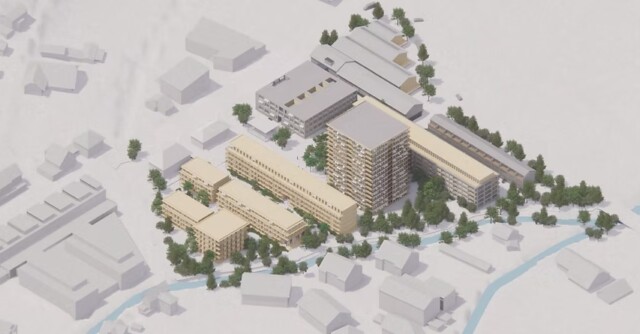
    The city council is pursuing the goal of freeing the banks of the Rhine from motorised traffic and transforming it into a lively centre for leisure, living and business. This redevelopment offers Schaffhausen a unique opportunity to sustainably improve the quality of life in the city and promote tourism at the same time. The focus is on the expansion of green and open spaces as well as new housing and jobs.

    The development strategy includes concrete steps to realise this vision, building on the results of an urban planning study and public consultations.

    Step-by-step implementation in sub-projects
    The implementation will be realised in several sub-projects over a period of twelve years until 2036. The sub-projects include the new connecting road, the development of the Gaswerk site and the upgrading of the Rhine embankment promenade. This division allows for gradual realisation and creates planning security for all parties involved. Interim utilisation is planned for the Gaswerk site until construction begins.

    High added value with manageable investment
    The project requires public sector investment totalling around CHF 35 million, of which the city will bear around CHF 22 million. The remaining costs will be co-financed by the federal government and the canton. Private investment in residential and commercial space significantly increases the economic benefits of the project and promotes urban development.

    Fundamental decision and framework conditions
    In order to implement the project efficiently, a fundamental vote is proposed. At the same time, all operational decisions will be delegated to the City Council in order to minimise the implementation risk and increase planning certainty.

    The City Council has defined clear framework conditions, including an amicable solution for the water sports clubs, the promotion of biodiversity and the urban climate and the creation of a balanced mix of charitable and non-charitable housing on the Gaswerk site. In addition, potential studies are being carried out to clarify the economic feasibility of catering and commercial uses.

    With the redesign of the banks of the Rhine, Schaffhausen is opening a new chapter in its urban development – towards a more sustainable, liveable and economically stronger future.

  • National Council approves 280 million for construction projects

    National Council approves 280 million for construction projects

    On Wednesday, the National Council unanimously approved a bill that earmarks CHF 277.8 million for various renovation and conversion projects on civilian federal buildings. Particular priority will be given to projects that fulfil contractual obligations, prevent structural damage or provide long-term economic relief.

    Collection Centre and Jubilee Hall
    The largest share of the funds – CHF 92.4 million – is earmarked for the expansion of the Collection Centre in Affoltern am Albis. In addition, CHF 15.4 million is to be invested in the renovation of the Jubilee Hall at the Magglingen Sports Centre, which specialises in artistic gymnastics.

    Focus on other construction projects
    170 million francs have been reserved for smaller construction projects under 10 million francs. These funds can be used flexibly for urgent property projects or unforeseen property purchases.

    The Real Estate Dispatch 2024 specifically prioritises civil construction projects that should bring both economic benefits and long-term structural stability. The next step is for the Council of States to decide whether to approve the loans.

  • Construction work on the extension of the ZHAW has begun

    Construction work on the extension of the ZHAW has begun

    Building Director Martin Neukom, Education Director Silvia Steiner and ZHAW Rector Jean-Marc Piveteau gave the go-ahead for the construction work to expand and modernise the School of Engineering at the ZHAW on 13 September. The ZHAW is one of the leading universities in Switzerland with over 14,000 students, according to a press release. However, some of the existing buildings on the site of the former technical centre in Winterthur no longer meet today’s requirements. In addition, the number of students continues to grow. Campus T will therefore be modernised and expanded in several stages over the next few years.

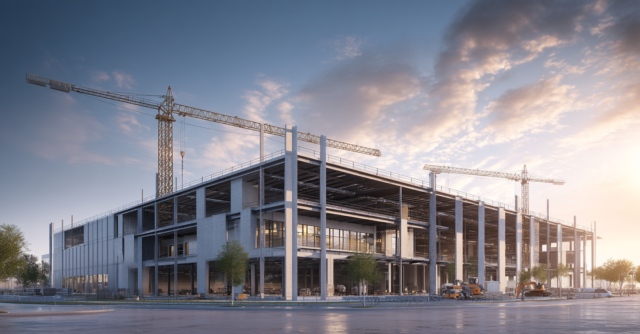
    In the first construction phase, two new five-storey laboratory buildings will be built behind the historic technical centre. They will provide urgently needed space for teaching, research and development. Various test rooms as well as a publicly accessible canteen and cafeteria will be created there. The new buildings will be connected to the district heating network of the city of Winterthur and equipped with photovoltaic systems.

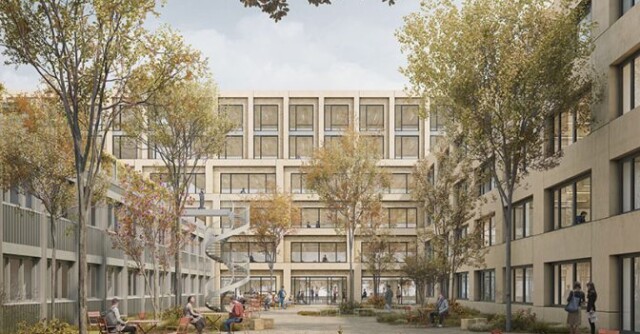
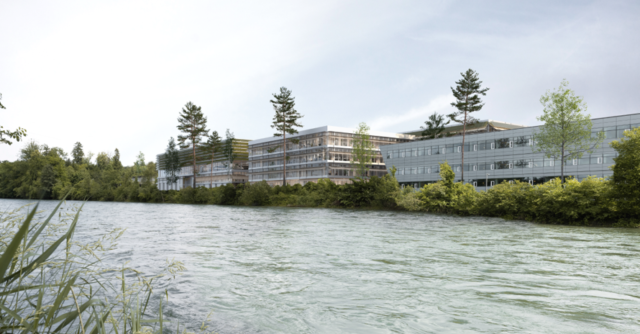
    As part of the first construction phase, the Eulach will also be ecologically upgraded with a public, near-natural park and flood protection will be expanded, according to the press release. Two new bridges will connect the old town and Campus T with the Büelrain cantonal school and the surrounding residential neighbourhood.

    The existing TB building will be dismantled by November. At the same time, the excavation pit for the smaller TT laboratory building will be dug. Work will then begin on the shell of the first new building, which is scheduled for completion in 2027. The second new building should be ready for occupancy in 2029.

  • Zurich University of the Arts honours ten years of the Toni-Areal

    Zurich University of the Arts honours ten years of the Toni-Areal

    Zurich University of the Arts has two reasons to celebrate at the start of the winter semester, writes the ZHdK in a press release. Firstly, 711 people are starting a Bachelor’s or Master’s degree programme in music, design, fine arts, cultural analysis and mediation or the performing arts and film. The university is also celebrating the tenth anniversary of its Toni-Areal campus.

    The ZHdK has set up its own website for this retrospective. Interested parties can gain an insight into everyday life at the university or be guided through the conversion of the Toni-Areal from a dairy to a campus in pictures. The two architects from back then present their thoughts on the Toni site on the website. The opening of the campus to the public and the involvement of students in its redesign are also discussed. Since the completion of the Toni site, the number of ZHdK locations has been reduced from 37 to two. In addition to the Toni site, only the Gessnerallee site is still in operation.

  • Outstanding projects at the Real Estate Award 2024

    Outstanding projects at the Real Estate Award 2024

    The event begins with a networking aperitif at 5 pm, which offers the opportunity to exchange ideas with leading figures from the industry. The winners in the categories of sustainability, project development/innovation, digital and marketing will then be announced at a gala dinner. The Real Estate Personality of the Year will also be honoured.

    Guest speaker Patrizia Laeri will provide insights into the topics of finance and diversity. Councillor of States and FDP President Thierry Burkart will discuss the current challenges and opportunities in the property sector with Annina Campell.

    Performances by comedian Joël von Mutzenbecher and the rockabilly band ‘the B-Shakers’ round off the evening. The Real Estate Award 2024 offers a varied programme that combines professional exchange with entertainment.

  • Vision for sustainable technology centre takes shape

    Vision for sustainable technology centre takes shape

    FlexBase intends to realise its new technology centre in line with the plans already presented. According to a press release, the technology company has secured the ERNE Group, also based in Laufenburg, as general contractor. Construction is scheduled to begin in 2025. An updated planning application has been submitted to the relevant authorities.

    The technology centre is to be built on the former Swissgrid site. The centrepiece will be a new building opposite the existing building. In addition to many research facilities, a data centre with capacities for the use of artificial intelligence is to be built there. FlexBase also plans to build a 20,000 square metre battery storage facility with a capacity of more than 500 megawatts on the site. According to the press release, the non-flammable and non-explosive storage facility is the “world’s largest and most modern battery storage facility of its kind”. The construction of the new technology centre will create several hundred jobs for skilled workers and apprenticeships.

    According to the press release, Marcel Aumer, CEO of the FlexBase Group, does not anticipate a delay in construction despite the relaunch of the project. He justifies this view with the close collaboration with ERNE: “In this project, I have not only experienced ERNE’s expertise right from the start, but also the full attention of the top management.” The CEO of ERNE, Giuseppe Santagada, is also optimistic: “My personal commitment goes far beyond the realisation of this project; it also includes the promotion of new technological skills and increasing the attractiveness of Laufenburg as a location for the vision of a prosperous region”.

  • Mobimo expands Aeschbach neighbourhood in Aarau

    Mobimo expands Aeschbach neighbourhood in Aarau

    Mobimo has laid the foundation stone for the Hofhaus and Hallenhaus buildings in Aarau’s Aeschbach neighbourhood with representatives from the authorities and its project partners, according to a press release. As part of the overall Torfeld Süd development area, the next stage in the expansion of the neighbourhood, which was revitalised in 2019, is thus being realised.

    Based on plans by Baumberger Stegmeier Architekten from Zurich, 126 rental flats with 1.5 to 5.5 rooms will be built there. The courtyard house is being realised as a timber construction with a garden courtyard in a future-oriented, ecological design. According to Mobimo, the hall building stands out positively in terms of sustainability and grey energy because as much of the existing façade of the former Hall 5 has been retained as possible. It will serve as the ground floor for the extension of the historic building.

    Completion is planned for autumn 2026, with occupancy scheduled for the second quarter of 2026. Marketing will begin in the third quarter of 2025. The Aeschbachquartier will then have a total of around 260 rental and owner-occupied flats. It will also offer around 4600 square metres of commercial space for 1400 people working there.

  • Schlieren launches complete revision of building and zoning regulations

    Schlieren launches complete revision of building and zoning regulations

    The Schlieren City Council will apply to the municipal parliament for approval of a credit of CHF 1,063,000 for the upcoming overall revision of the building and zoning regulations (BZO), according to the city council news.

    The aim of the overall revision is to ensure a high quality of life and work in Schlieren through tailor-made legal foundations, according to the press release. It is also intended to further promote the attractiveness of the location for companies in order to attract new investment. The last comprehensive revision of the BZO of the city of Schlieren was carried out in 1996.

    Schlieren has undergone a rapid urban transformation over the past two decades, which has not only shaped the cityscape, but has also significantly influenced the dynamics and priorities of urban development, according to the city council resolution. As the population continues to grow, the demands on the use of limited space will also increase. Further expansion of the settlement area is virtually impossible. The increasing scarcity of space therefore requires denser development throughout the city.

    The City Council emphasizes that Schlieren is not only an attractive place to live, but also an important business location. In particular, an innovative biotechnology and healthtech cluster has established itself in recent years. The overall revision of the building and zoning regulations offers the opportunity to further strengthen this potential.

  • World first: Intelligent plant care for indoors and outdoors

    World first: Intelligent plant care for indoors and outdoors

    “This year, Boum has ensured blooming balconies and terraces for over 1000 customers,” says Boum in a post on LinkedIn. The company, which was founded in 2021 as a spin-off from the University of Bern, has developed an intelligent system consisting of a solar panel, water tank, sensors and an app that autonomously maintains green balconies and terraces. Due to the positive feedback on its product, Boum has decided to “further develop the system for indoor use”, according to the article.

    After more than a year of development, Boum has now launched the plant care system for greening living rooms and offices. The substrate for the plants was adapted to provide the optimum soil moisture for indoor plants. The accuracy of the water supply has been improved with an additional safety valve. The tank and pots are connected “simply and inconspicuously” using additional tubing and discreet cable ducts.

    The app can detect whether the system is outdoors or indoors and provide appropriate care instructions. It also lets you know when the water tank needs to be refilled. “As of today, Boum is the smart plant care system for indoors and outdoors,” writes Boum on LinkedIn. “Everywhere where people want their lives to flourish.” According to company founder Matthias Erb, the intelligent plant care system is “a world first that makes greening indoor spaces simple and elegant from today”.

  • Start of construction for the ZHAW School of Engineering extension

    Start of construction for the ZHAW School of Engineering extension

    The first construction phase comprises the construction of two five-storey laboratory buildings, which provide urgently needed space for teaching, research and development. These modern buildings complement the historic buildings of the former technical centre and are flexibly designed to meet the changing requirements of the university in the long term. The buildings will also be connected to Winterthur’s district heating network and equipped with photovoltaic systems, making an important contribution to a sustainable energy supply.

    More than just university buildings – a public space for all
    Parallel to the construction of the laboratory buildings, the Eulach will be integrated into a natural park. This park offers not only students but also the public a green oasis of relaxation in the centre of the city. The river will be ecologically enhanced and two new bridges will connect the old town with “Campus T” and the surrounding neighbourhoods. The park serves as a lively meeting place that harmoniously combines education and nature.

    Timetable and outlook
    The existing TB building will be demolished this year and excavation for the new TT laboratory building will begin. The shell of the first new building should be completed by 2027, while the second building is expected to be ready for occupancy in 2029. This expansion of the ZHAW is an important step for Winterthur as a centre of education and research, which will further enhance its attractiveness and innovative strength.

    With the start of construction work, the modernisation of “Campus T” in Winterthur will become a reality. The new laboratory buildings and the natural park not only strengthen the ZHAW, but also the entire region. For students, teaching staff and the general public, a modern space is being created that combines research, education and recreation.

  • Roche opens new centre for pharmaceutical research

    Roche opens new centre for pharmaceutical research

    A significant milestone has been reached at Roche’s headquarters in Basel. The inauguration of the new Pharma Research and Early Development Centre (pRED). The centre, which offers 1,800 state-of-the-art workstations for laboratory and office work, brings together experts from various fields of research. The aim is to increase the efficiency of research and development through close collaboration. Federal Councillor Guy Parmelin also attended the opening ceremony, which emphasises the national importance of this project.

    With the new pRED Centre, Roche is pursuing a clear vision of pooling expertise from areas such as chemistry, biology and data science in order to drive forward pioneering innovations. Thomas Schinecker, CEO of the Roche Group, emphasised the central role of the centre in the company’s global innovation network. “This centre will not only improve the efficiency of our research, but also help us to achieve the greatest possible benefit for patients worldwide.”

    Investing billions in the future
    The investment in the pRED Centre is part of Roche’s long-term commitment to the Basel site. Since 2009, the company has invested 4.6 billion Swiss francs in the expansion of the site. With the new four buildings – including two high-rise laboratory buildings, an office complex and a congress centre – Roche is sending another strong signal for the future.

    And this is just the beginning: a further 1.2 billion Swiss francs are being invested in modernising and expanding the site, which will strengthen Basel’s role as a global centre for pharmaceutical research and development in the long term.

    With the opening of the new pRED Centre, Roche is not only investing in its own innovative strength, but also in strengthening Basel as a business location. This billion-euro investment is a clear signal that the pharmaceutical company intends to further expand its leading role in global research and development – a significant step both for the industry and for the region.

  • Progress for CO2-reduced building with clay

    Progress for CO2-reduced building with clay

    ERNE and Oxara can report initial successes in their proof of concept for CO2-reduced construction. Work on the MANAL pavilion on the campus of Lucerne University of Applied Sciences and Arts in Horw is progressing, the Aargau-based construction company announced in a post on LinkedIn. ERNE is responsible for the masonry in the construction of the pavilion. Oxabrick technology products from Oxara in Dietikon are being used. The two companies entered into a partnership in May to develop sustainable building materials based on clay.

    In the MANAL project, the earth mortar used by ERNE is being used outside the laboratory for the first time. “The material behaves completely differently to conventional mortar when building walls,” ERNE bricklayer Mattia is quoted as saying in the article. “We first had to acquire an adapted processing technique for this.” Mattia cites the permanent water solubility and long workability of the sustainable building material, which is based on Oxara technology, as advantages. Cement-free clay bricks are used for the arches and vaults of the pavilion.

  • Educational institution moves to new location in Rotkreuz

    Educational institution moves to new location in Rotkreuz

    XUND is opening a location on the Suurstoffi site in Rotkreuz. This is the Central Switzerland Health Education Centre’s response to the limited space available for its health training courses in Alpnach. According to a press release, the XUND site there can no longer fulfil the requirements in the long term due to the expected growth and changing training models. It will therefore be replaced by the new Suurstoffi 45 building. It is scheduled to be occupied in 2028. The Lucerne site will remain unaffected.

    According to its own announcement, Zug Estates AG will construct the new building from the end of 2024 and complete it by mid-2027. The real estate company has signed a 30-year lease agreement with XUND for over 6,000 square metres of space. Alain Baumgartner, Head of Portfolio Management at Zug Estates, is quoted as saying that the company has found an “ideal partner in XUND, which fits in very well with the existing tenants on the Suurstoffi site”.

    XUND President Josef Widmer is convinced that the Rotkreuz site will strengthen XUND’s regional roots in Central Switzerland and significantly improve accessibility for many students and trainees: “It will enable synergies with other educational partners such as Lucerne University of Applied Sciences and Arts on site and open up opportunities for collaboration with practitioners and researchers. Thanks to the modern location and the innovative environment on the Suurstoffi site, training in the healthcare sector is becoming more attractive and is helping Central Switzerland’s training companies to secure the next generation of talent.”

  • Urdorf presents real estate strategy 2030 to the population

    Urdorf presents real estate strategy 2030 to the population

    The Urdorf municipal council outlined the key points of the Urdorf 2030 real estate strategy at a public event in the Zentrumhalle on August 29. As part of their real estate strategy, the municipal council and administration presented ten publicly owned sites spread across the municipal area, according to a detailed press release. The structural renovations, new buildings and extensions set out in the strategy could cost up to CHF 110 million over the coming years and decades.

    The strategy is about medium to long-term planning security for the municipality, according to property director Urs Rüegg. The real estate strategy does not yet contain any concrete projects. These will be presented to the population individually at a later date.

    In the communication, the planning areas are listed individually, from schools and kindergartens to the fire department or the municipal administration. Their consolidation in a single large municipal building in the center was rejected. The municipal council and planners set two time horizons for concrete planning and implementation: from 2025 to 2029 and from 2030 to 2033.

    Municipal president Sandra Rottensteiner said that the input from the population would continue to be taken on board and would be appropriately incorporated into the finalization of the real estate strategy. The municipality conducted an online consultation from December 15, 2023 to January 15, 2024 to record the needs relating to municipal properties. A total of 444 people took part.

  • Geistlich invites you to the ground-breaking ceremony at Lymhof

    Geistlich invites you to the ground-breaking ceremony at Lymhof

    Geistlich Immobilia AG invites you to the ground-breaking ceremony for the Lymhof construction project in Schlieren on September 20. The event begins at 4 p.m. with information stations and festivities on the construction site. The official ground-breaking ceremony will take place at 5 p.m. and then there will be a get-together at the Buvette from 6.30 p.m. to 8 p.m.

    The Lymhof will become part of the Schlieren quarter Am Rietpark. According to the project description, the Lymhof will not only create an attractive residential offering for residents of different generations and lifestyles. It will also become a meeting place for the district, with a bistro and hotel, a multifunctional hall, two green courtyards and spaces for small stores and local amenities.

    Excavation work is now starting after the demolition of the Vitis Sport Center with tennis hall has been completed. In February 2024, Schlieren City Council issued the building permit for Lymhof. Although the 350 or so rental apartments will not be ready for occupation until 2027, tenants can already register their interest now.

  • Degersheim elementary school relies on Lista Office LO

    Degersheim elementary school relies on Lista Office LO

    Lista Office LO has refurnished four classrooms at the elementary school in Degersheim in time for the start of school in mid-August, the internationally active office outfitter based in the same town announced in a press release. The agile furnishings in the Steinegg school building are intended to enable new ways of creative teaching and motivated learning, Lista Office LO explains in the project description. “Modern teaching is based on a variety of didactic methods,” says principal Stefan Gübeli. “With the new furniture, this diversity can simply be lived.”

    For class teacher Madlene Keller, it is important to be able to implement different forms of learning without major alterations. “It is important not to disturb the other children while setting up learning settings,” Keller is quoted as saying in the press release. “The ideal furniture must therefore be able to be moved and rearranged quickly, quietly and easily by both teachers and pupils.”

    For the new furnishings in Degersheim, the elementary school was able to test various pieces of furniture extensively before purchasing them. “This gave us the certainty that our pupils would be able to work well with the new furniture and would enjoy working with it,” explains Keller. “My perception of the new furniture is that the classrooms have a noticeably different atmosphere.” Specifically, the class teacher notices an airier and lighter overall design with lots of open spaces. In her opinion, this has “noticeable positive effects on the thinking and motivation of the learners”.

  • Cities have many times more tree species than forests

    Cities have many times more tree species than forests

    A group of WSL researchers led by Benno Augustinus have studied the tree populations in 26 Swiss cities and their surrounding forests. According to a WSL press release, the study revealed an enormously high species richness in the cities with over 1,300 tree species. In contrast, only 76 tree species were identified in the surrounding forests. While cities are perceived as species-poor and forests as species-rich, the opposite is actually the case, according to Augustinus in the press release.

    According to the researchers, the high biodiversity in cities could be a gateway for invasive forest pests. Potentially dangerous introduced forest pests – so-called quarantine pests – find more potential hosts among the many tree species in the cities than in the forests. In order to protect the forest, it is therefore necessary to search for pests in the cities in particular, according to the press release.

    “It helps a lot if the population also keeps their eyes open for diseased trees,” Augustinus is quoted as saying. He recommends relying on the expertise of forestry companies when greening cities. In this sense, the WSL study “can also be interpreted as a call for more cooperation between foresters and urban green managers”.

  • Bernese timber construction and carpenters plan joint training centre

    Bernese timber construction and carpenters plan joint training centre

    According to a press release, the Extraordinary General Assembly of Holzbau Schweiz Sektion Bern(hssb) has now also voted in favour of setting up a joint training centre after the Bernese Master Carpenters’ Association. The Bernese carpenters had already approved a project loan of CHF 250,000 for this at the end of May. Now the hssb members have also voted unanimously in favour of a loan of the same amount.

    “This project will not only support our trainees, but also strengthen the entire wood industry in the region,” said hssb President Peter Haudenschild. “After long discussions within our association, I am delighted that we are now setting up a forward-looking training centre together with the carpenters,” says Jürg Rothenbühler, President of the Bernese Association of Master Carpenters.

    The Bern Wood Training Centre will be located in Lützelflüh BE. “We will own the land there – that creates security,” emphasises Haudenschild. According to the information provided, the decision was also based on the structural and logistical possibilities on site. The planned centre will consist of four floors with space for specialised workshops, training rooms and a shared infrastructure. The new training centre should offer both associations as much flexibility as possible. The aim is to be able to react as quickly as possible to changes in the number of learners and changes in vocational training.

    The wood training centre in Lützelflüh should be completed by spring 2028. The first inter-company courses are scheduled to start at the new location in August 2028.

  • Residential construction remains under pressure

    Residential construction remains under pressure

    The main construction industry in Switzerland achieved stable turnover of CHF 11 billion in the first half of 2024, which corresponds to the previous year’s level. Despite this stable result, there are some worrying trends in the details. Incoming orders have fallen slightly, which has hit residential construction particularly hard. At CHF 3.6 billion, turnover in residential construction was CHF 100 million or 3 per cent below the figure for the same period last year. Commercial construction was also unable to decouple itself from the weak economy and recorded a decline of 6 per cent.

    Public construction gains momentum
    By contrast, a positive trend can be seen in public construction. Driven by population growth, public civil engineering increased by 3 per cent, while public building construction recorded an increase of 1 per cent. Private civil engineering also experienced a pleasing development with an increase of 5 per cent. This growth reflects the increasing demand for infrastructure such as railways, roads, hospitals and schools, which must be met by the growing population. However, there is still a considerable need to catch up, particularly in the area of motorways. This is illustrated by the many hours of congestion on motorways and roads. The Swiss Association of Master Builders (SBV) therefore supports the STEP proposal to optimise the motorway network, which will be put to the vote in November 2024.

    Difficult times for residential construction
    Residential construction continues to face major challenges. In the second quarter of 2024, construction activity fell by 10 per cent, while new orders fell by 7 per cent compared to the same quarter of the previous year. Despite a slight increase in residential construction applications in the first half of 2024, a recovery is not expected until the second half of 2025 at the earliest. The SBC expects only around 40,000 new flats to be built in 2024 as a whole, although at least 50,000 would be needed to meet demand. The vacancy rate has continued to fall, further increasing the pressure on the housing market.

    Outlook: Uncertainties remain
    Forecasts for the 2024 construction year remain cautious. Total turnover in the main construction industry is expected to be CHF 23 billion, which corresponds to a decline of 1.6 per cent compared to the previous year. The construction index predicts that construction activity will also stagnate in the first half of 2025, similar to 2023 and 2024, with turnover of CHF 11 billion again.

    The Swiss construction industry faces the challenge of meeting the complex needs of the market while at the same time coping with economic pressure. It remains to be seen whether the measures to revitalise residential construction and infrastructure expansion will bear fruit in the long term.

  • How nonsensical regulations are slowing down residential construction

    How nonsensical regulations are slowing down residential construction

    In Swiss cities, rental flats are scarce and expensive, and there are many reasons for this. One decisive factor is the increasingly long waiting time between planning application and building permit. The number of waiting days has increased by around 12 per cent on average across Switzerland in the last ten years. Whereas a decade ago, building applications still took an average of 118 days to be approved, today the figure is already 133 days.

    The cantons of Geneva, Fribourg and Basel-Stadt are particularly affected, where it takes up to 188 days to review a planning application. The waiting time in the canton of Zurich is also considerable at 152 days. These delays are a symptom of more far-reaching problems in the Swiss construction industry.

    Nonsensical regulations act as a brake
    Architects and experts see nonsensical building regulations as a key obstacle to the rapid construction of new rental flats in urban centres. Peter Sturzenegger, owner of the architectural firm Isler Architekten AG in Winterthur, cites the multiple length allowance (MLZ) as an example. This regulation stipulates that the boundary distance must be increased for buildings over 14 metres in length, which has made many construction projects impossible. In Winterthur, it is planned to abolish this regulation by the end of 2025, but in other cities such as Zurich, the future of this rule remains uncertain.

    Outdated laws and their consequences
    Another example of outdated building regulations is the orientation of living spaces in the canton of Zurich. The Planning and Building Act requires that the majority of living spaces must not face north-east or north-west in order to maximise daylight and prevent mould growth. However, Pascal Müller from Müller Sigrist Architekten AG argues that this regulation is no longer appropriate in the context of today’s urban conditions, such as noise pollution and climate change.

    In addition to the legal hurdles, Müller also criticises the role of the courts. The large number of court rulings and judgements creates uncertainty for building owners, as they constantly change the regulations and significantly restrict the scope for planners.

    Monument protection and energy-efficient refurbishment
    Aargau architect Daniel Huber emphasises the restrictive requirements for monument protection and the complex requirements for energy-efficient refurbishment as further obstacles. For him, the inconsistent implementation of building regulations, which depends heavily on the interpretation of the responsible authorities, is particularly problematic.

    The mass of regulations as a central problem
    The Swiss Federation of Master Builders sees the growing number and complexity of building regulations as the biggest challenge. Jacqueline Theiler, Head of Communications at the association, explains that the increasing density of regulations and the associated appeal procedures considerably lengthen the building permit process. The over-interpretation of existing noise regulations by the Federal Supreme Court is particularly problematic.

    The association is now pinning its hopes on swift changes to the law by parliament in order to get the faltering housing construction back on track and realise the urgently needed flats in Switzerland.

  • Opening of the “STEP2” NEST unit

    Opening of the “STEP2” NEST unit

    On 29 August 2024, the latest building module “STEP2” was officially opened in Empa’s NEST research and innovation building. This two-storey module in the south-east of NEST brings together a large number of innovations, all of which are aimed at significantly reducing material and energy consumption in the construction industry and promoting resource-saving construction methods.

    In Switzerland, the construction sector is responsible for the majority of raw material consumption, waste generation and a third of CO2 emissions. With the NEST building, Empa, together with over 150 partners, is pursuing the goal of developing new technologies and materials to the point where they are ready for the market. The “STEP2” unit is the latest example of how this vision is being turned into reality.

    From the digital staircase to the adaptive façade
    When you enter the “STEP2” unit, the innovative ribbed filigree ceiling immediately catches the eye. This was developed by an interdisciplinary team and enables spans of up to 14 metres, ideal for office and high-rise construction. Thanks to digital planning methods and 3D-printed formwork, it was possible to reduce the amount of material used by 40% without compromising on stability. The ceiling also fulfils important functions in terms of room acoustics and as a thermal storage mass.

    Another technological masterpiece is the curved “Cadenza” concrete staircase, which forms the centrepiece of the building. It was realised using computer-aided design and 3D printing technologies, which enabled an extremely material-efficient construction method. This staircase is an impressive example of how digital manufacturing technologies can contribute to innovative and sustainable design solutions in the construction industry.

    Holistic energy concept and innovative materials
    The “STEP2” unit is based on an integrated energy and comfort concept that was developed in collaboration with leading engineers. The innovative double skin façade, which is equipped with modern shading technology and controlled natural ventilation, plays a central role in the building’s energy efficiency. This façade also serves as a test platform so that new technologies can be easily integrated in the future.

    STEP2″ also focusses on innovation and sustainability when it comes to the materials used. For example, wall and floor panels were made from recycled waste materials such as denim fibres, paper cups and coffee grounds. These materials not only reduce the need for new raw materials, but also help to reduce greenhouse gas emissions.

    Co-creation and market readiness
    The “STEP2” unit was developed using a co-creation approach in which all partners involved worked closely together from the outset. This approach made it possible to develop marketable solutions that have a real future in the construction industry. For BASF, the main partner in the project, “STEP2” provides the ideal environment to translate its chemical expertise into concrete, sustainable construction solutions.

    “STEP2” is more than just a building module – it is a real innovation environment that demonstrates how research and industry can successfully work together to bring sustainable technologies to market. In future, the unit will serve as a workplace and innovation workshop to achieve further progress in sustainable construction.

  • Decarbonising the real estate sector requires a new approach

    Decarbonising the real estate sector requires a new approach

    The Stoneweg property investment group is meeting these challenges proactively, in particular through its partnership with Romande Energie. Stoneweg has decided to have solar panels installed on several of its sites in French-speaking and German-speaking Switzerland as part of the contracting process.

    Stoneweg’s energy strategy includes a series of ambitious renovation projects focussing on improving insulation, replacing outdated heating systems and integrating renewable energies. Within the next five years, all of the company’s roofs are to be equipped with photovoltaic systems. This decision is motivated by rising electricity prices and the desire to give tenants access to renewable energy at a discounted price.

    Frédéric Noirot, Director of [glossary_exclude]Asset Management[/glossary_exclude] at Stoneweg, explains the benefits of the project: “Our property portfolio also includes older industrial buildings. The contracting model enables us to install photovoltaic systems on our roofs quickly and without major investment costs. This allows us to invest additional funds in other essential renovation measures. It’s a clear win-win situation.”

    As part of the solar energy contracting programme, Romande Energie takes on the complete installation, planning, [glossary_exclude]financing[/glossary_exclude] and [glossary_exclude]management[/glossary_exclude] of the photovoltaic systems on its customers’ buildings. In addition, the energy not consumed on site is utilised by Romande Energie.

    This [glossary_exclude]model[/glossary_exclude] offers several advantages: It generates additional rental income through the optimised use of available space, improves the ESG rating of the properties and increases their attractiveness by providing solar energy for the tenants.

    The cooperation between Stoneweg and Romande Energie is an impressive illustration of how property owners can increase the value of their properties and contribute to the energy transition at the same time. By using green technologies and establishing strategic partnerships, they can not only fulfil legal requirements and social expectations, but also improve their competitiveness on the market.

    Watch the full interview in the video.

    For more information on solar energy contracting, visit the Romande Energie website.

  • Construction work for Forum UZH has begun

    Construction work for Forum UZH has begun

    The UZH campus in Zurich is being expanded: construction work has started on the Wässerwies site for the Forum UZH education and research center. It is designed to meet the demands of modern forms of teaching and learning. According to a statement from the university, the Forum UZH will create “urgently needed space for teaching and research in the city of Zurich”. It will help the university to maintain its position in the scientific competition.

    “The Forum UZH is more than just a building,” François Chapuis, Director of Real Estate and Operations at UZH, is quoted as saying. “It connects people and space, science and society, inspires the unique university area in the heart of Zurich and stands for the continuous development of the university with a view to future generations.”

    The construction site has been fenced off and set up since August 20, 2024. After various dismantling measures, excavation work will start in November 2024 and work on the shell will begin in November 2025. Construction of the façade is scheduled to begin in spring 2028. The new building is scheduled to be occupied by mid-2030.

    The area surrounding the Forum UZH, with its publicly accessible cafeteria and canteen, library and sports areas as well as commercial space for third-party tenants, is to be embedded in the urban ensemble of the university area. A spacious town square planted with trees will help to minimize the heat island effect in summer. An online information event will be held on September 18 to inform residents about the construction project. The link will be published on the UZH website dedicated to its construction measures.

  • Six projects have been nominated for prizes from the Swiss Business Location Network

    Six projects have been nominated for prizes from the Swiss Business Location Network

    Six projects from Baden AG, Neuchâtel, St.Gallen, Thusis GR, Greater Geneva Bern area and Central Switzerland have been nominated for the Network Location Switzerland Awards 2024, the umbrella organization of Swiss location and business promotion agencies announced in a press release. A total of twelve projects applied for the annual award for targeted, effective and innovative projects in the areas of location marketing, location development and business promotion. The nominees will have the opportunity to present their projects to a jury in mid-September.

    The nominees are the city center project BAUZONE 5400 – submitted by the BAUZONE 5400 consortium and the city of Baden, the Jimmy Jackson marketing campaign – submitted by the Greater Geneva Bern area, the Industrial Smart Map platform – submitted by the canton of Neuchâtel, the DynREK 2.0 planning tool – submitted by OSRI AG, the Sankt location marketing campaign – submitted by the City of St.Gallen location promotion agency and the Thusis location STORY – submitted by Viamalastorys.ch AG. They were evaluated according to the criteria of strategic approach, organizational form, relevance for stakeholders, innovation, practical relevance and long-term impact.

    The jury will select the winning projects from the nominees in September. The award ceremony will take place as part of the Dialog conference on November 21 at the Wankdorf Stadium in Bern. At the same event, Network Location Switzerland will also honor the location manager of the year.

  • Planned skyscraper to be 190 metres high

    Planned skyscraper to be 190 metres high

    Just a few decades ago, it was unthinkable that timber buildings could be more than a few storeys high. But in recent years, advances in timber construction have opened up new possibilities. In Milwaukee, a ground-breaking project is on the horizon. A 190 metre high wooden skyscraper is to be built, setting a new world record in timber construction. The renowned architectural firm Michael Green Architects (MGA) from Vancouver has developed the plans for this visionary building, which is intended to impress not only with its height but also with its sustainable construction method.

    Highly technologised solid wood
    The wood used to build the skyscraper is much more than conventional timber. Glulam and cross-laminated timber, two main components of the project, consist of several glued layers of wood that offer exceptional strength and resistance. These materials can withstand moisture and extreme weather conditions and are also fireproof. In the event of fire, solid wood forms a protective carbon layer that stabilises the structure and prevents collapse.

    Another advantage of solid wood is its environmental friendliness. As it grows, wood absorbs CO₂ and stores it. This property makes wood a climate-friendly building material that helps to significantly reduce the carbon footprint of a construction project. The use of prefabricated timber modules also speeds up the construction process, saving time and money.

    A building that sets standards
    The planned timber skyscraper in Milwaukee will not only be a record-breaking building, but also a symbol of the future of construction. In addition to the innovative timber construction method, the building will create a multifunctional centre comprising 750 residential units, 190,000 square metres of office space, 40,000 square metres of retail space and 300 hotel rooms. It is being built in the heart of the city, right next to the Marcus Performing Arts Centre, and is part of a comprehensive urban development initiative.

    The project is also one of the largest and most ambitious in economic terms that Milwaukee has ever seen. With an investment of over 700 million dollars, it will have a lasting impact on the city’s skyline and create new jobs.

    Challenges and potential
    Despite the many advantages, the project will not be realised without challenges. Wood alone is not enough to fulfil all the structural requirements for a building of this height. It is likely that steel and concrete will be needed for reinforcement, similar to other projects of this size. Nevertheless, the project shows that timber in combination with other materials is a serious alternative in building construction.

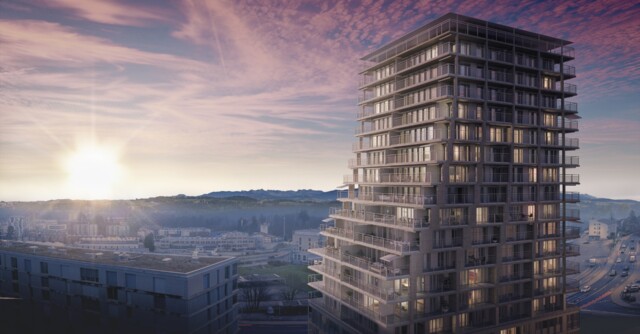
    A look at other projects illustrates the potential. In Switzerland, the 100 metre high “Rocket” is currently being planned in Winterthur, which is set to become the world’s tallest purely timber skyscraper. In contrast to the planned skyscraper in Milwaukee, the Rocket will use only wood, without any additional reinforcement in the form of steel or concrete. This shows that the use of wood as a load-bearing material in building construction is becoming increasingly important worldwide.

    Future prospects for high-rise construction
    The timber skyscraper in Milwaukee is being built in several phases in order to optimise the structure and meet the high safety requirements. The architects are using state-of-the-art techniques and materials to design the building efficiently and sustainably. The building is not only intended to set new standards for timber construction, but also to be a model for the future development of high-rise buildings worldwide.

    The combination of sustainability and technological progress makes the planned timber skyscraper a milestone in the construction industry and a symbol of the architectural possibilities of the 21st century.

  • Modular timber system revitalises vacant buildings

    Modular timber system revitalises vacant buildings

    There are many vacant buildings and brownfield sites in Switzerland that offer great potential for temporary use. Such temporary uses help to make unused areas attractive again and at the same time conserve building land and resources. However, these vacant buildings are often not immediately usable as they only consist of steel or concrete shells and offer neither climatic nor acoustic conditions for utilisation.

    To overcome this challenge, researchers at Bern University of Applied Sciences and partners have developed a modular construction system made of wood. The aim is to quickly and easily utilise these brownfield sites for various uses such as studios, shops, co-working spaces or flats.

    Modular system for flexible use
    The modular system is based on prefabricated modules that can be assembled into rooms as required. A digital generator visualises the composition of the modules in 3D. All components are manufactured in a digital production chain and then assembled into various modular solutions.

    The first result of this project is a prototype of a room module with a surface area of 3.6 by 3.6 metres. It consists of a load-bearing structure and prefabricated elements for the floor, walls and roof. This prototype is already in use in the former “Dispo” factory building in Nidau, where a physiotherapist has set up his practice.

    Challenges and solutions
    The biggest challenge in developing the modular system was to create a module that is quick and easy to assemble. Two people with no previous technical knowledge should be able to assemble the module within a day and dismantle it just as quickly. The connection of the wall elements in particular presented the team with technical challenges, which they were able to solve by using short screw threads. This enabled them to develop a stable yet easy-to-remove fastening.

    Future prospects for the modular system
    The project is now entering the next phase. Based on the experience gained with the prototype, the modules will be further optimised. Tests and measurements are planned to make the system ready for series production. In collaboration with partners from industry, the modular construction kit should soon be available on a larger scale and offer scope for new uses throughout Switzerland.

  • Rolex invests one billion francs in new giant factory in Bulle

    Rolex invests one billion francs in new giant factory in Bulle

    The world-famous luxury watch manufacturer Rolex is planning a massive expansion in western Switzerland. A gigantic production facility is to be built in Bulle, in the canton of Fribourg, by 2029. Covering an area of 104,000 square metres – the equivalent of almost 15 football pitches – Rolex plans to produce luxury watches from 2029 to meet the growing demand for its products. The new factory is expected to create 2,000 jobs and thus make a significant contribution to the regional economy.

    Land sale approved
    The General Council of Bulle has approved the sale of the construction site to the Rolex Group by a large majority. Rolex is investing a total of one billion francs in the project and paid 31.4 million francs for the 100,000 square metre site. The planning application has now been submitted and the first visualisations of the planned buildings have been published.

    Innovative construction concept and sustainability
    The new plant will consist of four production buildings connected by a central building. In addition to the administration, this central area will also house catering facilities as well as meeting and rest areas. A striking head-end building at the southern end of the site will house the main entrance.

    Rolex attaches particular importance to environmental friendliness and sustainable design. The factory is to achieve the highest standard of the British Breeam label – a first for an industrial building in Switzerland. The buildings will be arranged so that they are integrated into a park that serves as protection from emissions from the nearby motorway.

    Fifth Rolex production site
    With the new site in Bulle, Rolex is expanding its already highly integrated production chain. The luxury watch manufacturer already operates production sites in Geneva, Chêne-Bourg, Plan-les-Ouates and Biel. Most of the watch components, from movements and cases to dials and bracelets, are produced in-house at these sites.

    Temporary solution in Romont
    In order to expand production capacity before 2029, Rolex will temporarily set up a factory in Romont. Around 250 to 300 employees are to be employed there from the beginning of 2025, most of whom will be newly recruited and trained. These employees will move there once the factory in Bulle is completed.

    With the new factory in Bulle, Rolex is strengthening its position as one of the world’s leading luxury watch manufacturers and investing in the future of the Swiss production site.

  • Design of the area surrounding the Kronenareal has been finalised

    Design of the area surrounding the Kronenareal has been finalised

    Back to the roots has prevailed among eight submitted projects in the anonymous competition for the landscaping of the Kronenareal in Dietikon. The project by the two Zurich firms for agricultural architecture, Skala Landschaft Stadt Raum GmbH, and for architecture, S2 Architekten GmbH, received the vote of the competition’s interdisciplinary jury, the administration of the town of Dietikon announced in a press release. The immediate neighbours of the area directly affected by the redesign were also invited to take part in the assessment process as guests.

    According to the press release, Back to the roots impressed with its “sensitive and poetic overall vision of the historic site”. The Kronenareal is interpreted as part of a network of open spaces and connected to the pedestrian zones of the city centre in the east and, in places, to the Reppisch in the west. A fountain is planned as a special element on Zehntenplatz. Hedingerplatz will be designed for multifunctional uses. The pine trees on the site will be integrated into the future design.

    Landscape architect Lars Ruge will present back to the roots at the opening of the competition exhibition. The vernissage will take place on 23 August from 5 pm at the Forum for Urban Development, Innovation and Culture at Zentralstrasse 12 in Dietikon. The event is open to the public. All projects will be exhibited in the forum until 8 September.

  • Starting signal for the “FORUM UZH”

    Starting signal for the “FORUM UZH”

    Construction work has begun on the “FORUM UZH”, a pioneering project of the University of Zurich. The new building will create pioneering teaching and research facilities to meet the increasing demands of modern higher education. The project is a central component of the urban expansion of the Zurich university area. In addition to learning and working areas, publicly accessible cafeterias, libraries and commercial areas will also be created.

    The concept of the new building is characterised by sustainability. The timber-concrete hybrid construction method significantly reduces CO2 emissions and ensures a high quality of stay. The greening of the roof surface in combination with a photovoltaic system makes a positive contribution to the urban climate. The creation of a town square with planting further enhances the urban space.

    Focus on sustainability
    The “FORUM UZH” is orientated towards the highest sustainability standards. With the Minergie-P certificate and SGNI gold certification, the building is a pioneer in ecological construction. The combination of environmentally friendly building materials and energy-efficient technology makes it a model project that will play an important role in Zurich’s urban landscape. Construction is progressing according to plan, with the building due to be occupied from mid-2030.

  • Additional loan for administration building at Seetalplatz Lucerne

    Additional loan for administration building at Seetalplatz Lucerne

    In 2021, the people of Lucerne voted in favour of the construction of an administration building on Seetalplatz and approved a special loan of CHF 177.4 million. Due to staff growth and unexpected construction requirements, the cantonal government is now requesting an additional credit of CHF 14.25 million. In particular, the increased number of employees in the cantonal administration, especially in the Asylum and Refugee Service, requires an expansion of office space.

    In addition to the increase in space, structural adjustments will be made in order to fulfil the ecological requirements of Lucerne’s climate policy. These include an extension of the photovoltaic system from the roof area to the building façade as well as a possible extension of the building in the inner courtyard, which will lead to an improved utilisation of the property. In addition, further cost increases will arise due to building permit requirements.

    Central point of contact for the population
    Once completed in 2026, the administration building will house more than 2,000 cantonal employees and offer centralised services for the population at an easily accessible location in Lucerne North. The ground-breaking ceremony took place in September 2023 and construction work is progressing according to plan.

    The Cantonal Council will decide on the additional loan in the October session.